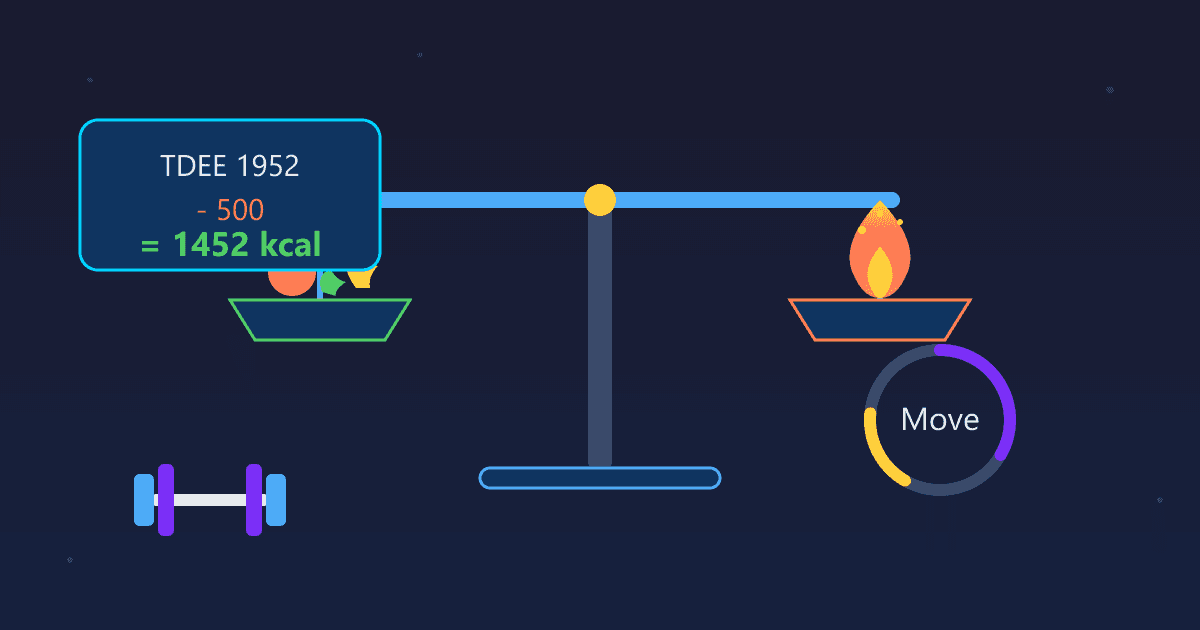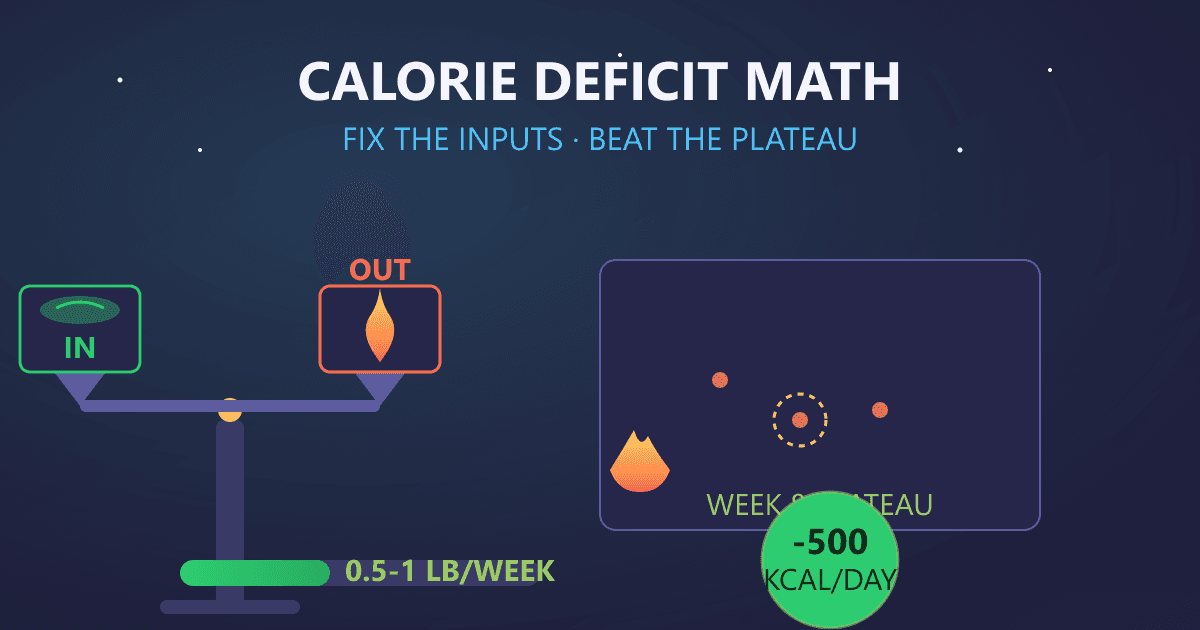
How big should your calorie deficit actually be? For sustainable weight loss, research supports a 300-500 calorie daily deficit, producing 0.5-1 pound of loss per week. But here's what most people get wrong: that number must be calculated from your actual TDEE, not a guess. After tracking my own weight loss for six months, I found the three calculation errors that cause most plateaus—overestimating exercise calories, underestimating food intake, and failing to recalculate as weight drops. Fixing these errors ended an eight-week plateau and produced 23 pounds of loss over the following five months.
Eight weeks into my weight loss attempt, I was ready to throw my scale out the window.
Try Weight Calculator — free, no sign-up, and it runs entirely in your browser.
I was eating 1,600 calories daily. My TDEE calculator said I burned 2,400 calories. That should have been an 800-calorie deficit—over 1.5 pounds per week. Instead, after two months, I'd lost exactly 4 pounds. Not the 13+ pounds the math predicted.
I blamed my metabolism. I blamed genetics. I blamed water retention, hormones, stress, and the alignment of the planets. What I didn't do was question my numbers.
When I finally did, I discovered I was making the same mistakes almost everyone makes. The deficit calculation isn't hard. But the inputs are almost universally wrong. Fix the inputs, and the math starts working.
Here's what I learned about calorie deficits—the real math, the common errors, and why your weight loss might not be matching your expectations.
How Big Should Your Calorie Deficit Actually Be?
Let's start with what the science actually says:
For sustainable weight loss: 300-500 calories below your true TDEE. This produces 0.5-1 pound of fat loss per week.
For faster loss (with trade-offs): 500-750 calories below TDEE. This produces 1-1.5 pounds per week but increases hunger, muscle loss risk, and metabolic adaptation.
Aggressive deficits (1000+ calories): Not recommended for most people. Higher risk of muscle loss, metabolic slowdown, nutrient deficiencies, and unsustainability. The initial rapid loss often leads to rebound weight gain.
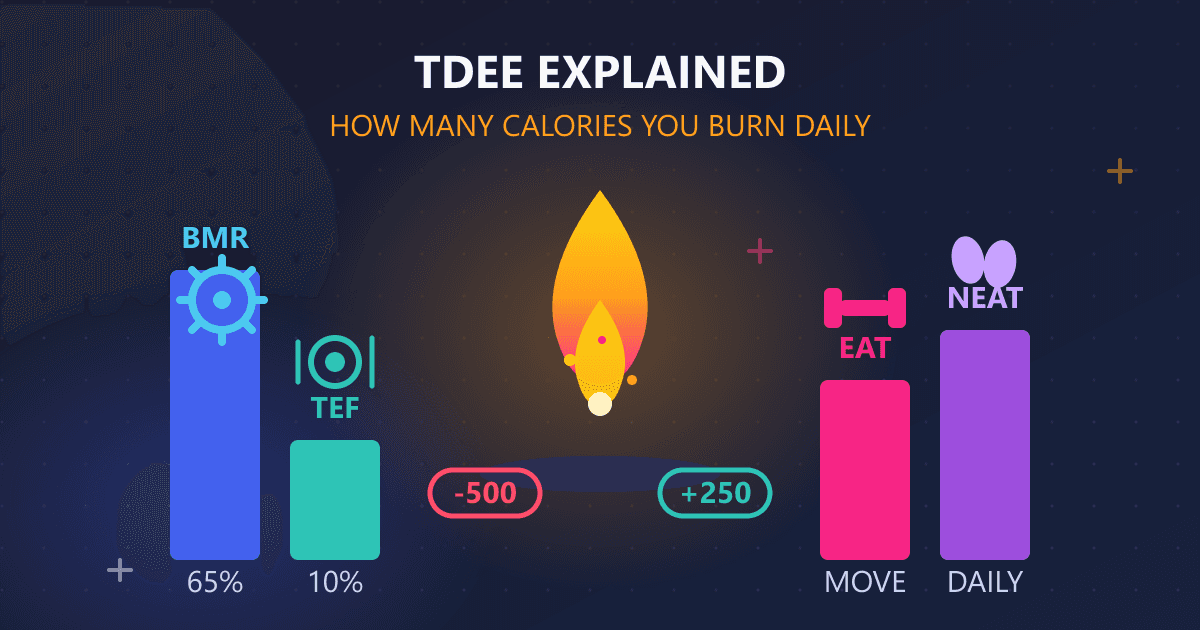
The key number in all of these is "TDEE"—Total Daily Energy Expenditure. That's how much you actually burn, including your base metabolism, daily activity, and exercise.
Here's the problem: Almost everyone overestimates their TDEE.
If you think you burn 2,400 calories but actually burn 2,100, your "500-calorie deficit" is actually only 200 calories. That's the difference between losing a pound per week and losing a pound per month.
My initial TDEE estimate was 2,400. My actual TDEE, measured over months of careful tracking, was 2,050. I wasn't in an 800-calorie deficit. I was in a 450-calorie deficit. The math worked perfectly—it just wasn't the math I thought I was doing.
Why I Thought I Was in a Deficit But Wasn't Losing Weight
The eight-week plateau forced me to examine every assumption. Here's what I found:
Error #1: Activity Level Overestimation Online calculators ask you to select an activity level: sedentary, lightly active, moderately active, very active. I selected "moderately active" because I worked out 4-5 times per week.
Wrong choice.
"Moderately active" assumes physical activity throughout your day—think construction worker or restaurant server. I have a desk job. The gym sessions, while real exercise, don't change that my other 23 hours involve minimal movement.
The correct selection: "Sedentary" or "Lightly Active" as a baseline, with exercise calories added separately and conservatively.
This single adjustment dropped my estimated TDEE from 2,400 to 2,100. A 300-calorie difference that explains nearly half my plateau.
Error #2: Exercise Calorie Overestimation My fitness tracker said I burned 450 calories in my typical workout. I logged all of those and ate some of them back.
Research shows fitness trackers overestimate calorie burn by 20-40%. That 450-calorie workout was probably 300 calories. And my tracker counted some calories that were already in my base metabolism calculation—double-counting.
Adjusted workout calorie estimate: 200 calories net (above what I'd burn sitting still). That's less than half what I was logging.
Error #3: Food Intake Underestimation I was tracking calories meticulously. Scanning barcodes, measuring portions, logging everything.
Except: I wasn't weighing food. I was eyeballing "a tablespoon of olive oil" (actual amount: closer to two tablespoons). I estimated "about a cup of rice" (actual amount: 1.4 cups). I nibbled while cooking without logging.
Studies show self-reported calorie intake is typically 20-50% below actual intake. I was logging 1,600 calories but probably eating 1,900-2,000.
The Real Math:
- True TDEE: ~2,050 calories
- Actual intake: ~1,900 calories
- Actual deficit: ~150 calories/day
- Expected weekly loss: 0.3 pounds
- Actual weekly loss over 8 weeks: 0.5 pounds/week
The plateau wasn't a plateau. I was losing weight—just much slower than expected because my inputs were wrong.
What Is Metabolic Adaptation and How Does It Wreck Your Progress?
Even after fixing the input errors, I noticed weight loss slowed over time. This is metabolic adaptation—and it's real, though often overstated.
What Actually Happens: When you eat in a calorie deficit, your body makes adjustments:
- Non-exercise activity thermogenesis (NEAT) decreases—you fidget less, move less spontaneously
- Thermic effect of food decreases—you're eating less, so you burn fewer calories digesting
- Your smaller body requires fewer calories to maintain
- Hormonal changes (leptin, thyroid) slightly reduce metabolic rate
These adaptations are survival mechanisms. Your body doesn't know you're trying to look better; it thinks food is scarce.
How Much Does It Matter? Research suggests metabolic adaptation accounts for roughly 50-150 calories per day beyond what your smaller body requires. It's real, but it's not "starvation mode" that stops all weight loss.
The bigger issue is that most people don't recalculate their TDEE as they lose weight. If you start at 200 pounds with a TDEE of 2,400, and you lose 20 pounds, your new TDEE might be 2,200. The deficit that worked initially is now too small.
My Experience: Starting weight: 195 pounds Starting TDEE: 2,050 calories Initial intake: 1,550 calories Initial deficit: 500 calories
After losing 15 pounds: New weight: 180 pounds New TDEE: 1,950 calories (calculated, including some metabolic adaptation) Same intake: 1,550 calories New deficit: 400 calories
My rate of loss naturally slowed from 1 pound/week to 0.8 pounds/week. That's not a plateau—that's math.
To maintain the same rate, I either had to reduce intake to 1,450 or increase activity to raise TDEE back up. I did a bit of both.
The Math Most People Get Wrong
Let me break down the specific calculations and where errors enter:
Step 1: Calculate BMR (Basal Metabolic Rate) This is what you'd burn lying in bed all day. The Mifflin-St Jeor equation is most accurate:
For men: BMR = (10 × weight in kg) + (6.25 × height in cm) - (5 × age) + 5 For women: BMR = (10 × weight in kg) + (6.25 × height in cm) - (5 × age) - 161
My BMR calculation: (10 × 88.6) + (6.25 × 178) - (5 × 36) + 5 = 1,817 calories
Common Error: Using an older equation (Harris-Benedict) that overestimates by 5-10%.
Step 2: Apply Activity Multiplier Sedentary (desk job, minimal walking): BMR × 1.2 Lightly active (some walking, light exercise 1-3x/week): BMR × 1.375 Moderately active (physically active job or exercise 3-5x/week): BMR × 1.55
My TDEE with sedentary multiplier: 1,817 × 1.2 = 2,180 calories
Common Error: Selecting "moderately active" when you're sedentary with some exercise. The multipliers assume consistent activity, not desk job plus gym.
Step 3: Add Exercise Separately (Conservatively) Rather than using activity multipliers, add exercise calories individually:
- 30 min moderate cardio: 200-250 calories
- 45 min strength training: 150-200 calories
- 60 min vigorous cardio: 350-400 calories
Cut these estimates by 20-30% from what trackers report.
My adjustment: Added ~150 calories for workout days (4 days/week), averaged across the week = ~85 calories/day
Revised TDEE: 2,180 + 85 = 2,265 calories
Common Error: Trusting fitness tracker calorie estimates, which are typically 25-40% too high.
Step 4: Calculate Target Intake For 1 lb/week loss: TDEE - 500 = target intake My target: 2,265 - 500 = 1,765 calories
Common Error: Starting with too aggressive a deficit. 1,000+ calorie deficits are unsustainable and trigger greater metabolic adaptation.
Step 5: Actually Hitting That Target Weigh food with a kitchen scale. Use verified database entries (USDA, not user-submitted). Track cooking oils, sauces, beverages. Log everything immediately.
Common Error: Eyeballing portions (consistently 20-50% underestimated) and forgetting to log small items.
Use the calorie calculator to get your baseline numbers right.
How I Fixed My Calorie Deficit Calculation
After identifying the errors, here's the system that produced consistent results:
New Methodology:
- Calculated BMR using Mifflin-St Jeor: 1,817 calories
- Applied sedentary multiplier (1.2): 2,180 calories
- Added conservative exercise estimate (+85 avg/day): 2,265 calories
- Set deficit at 500 calories: 1,765 target intake
- Weighed all food with a digital scale
- Used only verified database entries
- Logged every single item including oil, sauces, beverages
Results:
- Weeks 1-4: Lost 4.2 pounds (1.05 lbs/week)
- Weeks 5-8: Lost 3.8 pounds (0.95 lbs/week)
- Weeks 9-12: Lost 3.5 pounds (0.88 lbs/week)
The gradual slowdown was expected—my body was smaller and required recalculation.
Recalculation at Week 12 (new weight 183 lbs):
- New BMR: 1,774 calories
- New TDEE: 2,200 calories
- New target: 1,700 calories
This adjustment maintained the deficit as my body changed.
Over six months, I lost 23 pounds with consistent, predictable progress. No dramatic plateaus, no mysterious stalls—just math that actually reflected reality.
Is a 1000-Calorie Deficit Safe? What the Research Says
The temptation to cut more aggressively is real. If 500 calories produces 1 pound per week, won't 1,000 calories produce 2 pounds?
Technically yes, but the trade-offs are significant:
Muscle Loss Increases Research shows muscle loss accelerates at deficits beyond 500-750 calories, especially without adequate protein and resistance training. Losing muscle reduces your metabolic rate, making future weight maintenance harder.
Metabolic Adaptation Intensifies Greater deficits trigger greater adaptive responses. Your body downregulates metabolism more aggressively when it perceives severe restriction.
Sustainability Plummets Studies consistently show that aggressive deficits lead to worse long-term outcomes. The initial rapid loss is frequently followed by regain when the restriction becomes unbearable.
Nutrient Deficiency Risk Eating under 1,200 calories makes it difficult to meet micronutrient needs without supplementation.
My Recommendation: Start with a 300-500 calorie deficit. If you have significant weight to lose and handle it well, you can push to 500-750. Going beyond that produces diminishing returns and increasing risks.
The TDEE calculator and BMR calculator can help you set appropriate targets.
How Often Should You Recalculate Your Deficit?
I recalculate every time I lose 10-15 pounds or every 6-8 weeks, whichever comes first.
Why Recalculation Matters:
At 195 pounds, my sedentary TDEE was approximately 2,180 calories. At 180 pounds, it dropped to approximately 2,050 calories. At 172 pounds (goal), it will be approximately 1,970 calories.
If I kept eating 1,765 calories throughout:
- At 195 lbs: 415 calorie deficit (0.8 lbs/week)
- At 180 lbs: 285 calorie deficit (0.5 lbs/week)
- At 172 lbs: 205 calorie deficit (0.4 lbs/week)
Without adjustment, my rate of loss would naturally decline even with perfect adherence. That's not a plateau—that's the math changing underneath you.
The Recalculation Process:
- Input new weight into BMR formula
- Apply same activity multiplier
- Subtract 500 for new target intake
- Adjust portions accordingly
Each 10-15 pound loss typically requires reducing intake by 75-125 calories to maintain the same deficit percentage.
Which Macros Matter Most When Cutting Calories?
Within your calorie target, macro distribution affects body composition and hunger:
Protein: Most Important Target: 0.7-1.0 grams per pound of body weight Why: Preserves muscle, highest satiety per calorie, highest thermic effect (25-30% of protein calories are burned digesting it)
At my weight, I target 150-180g protein daily. This is non-negotiable for me.
Fiber: Underrated Target: 25-35 grams daily Why: Promotes fullness, slows digestion, supports gut health
I aim for 30g minimum, mostly from vegetables and legumes.
Fat: Minimum Threshold Target: At least 0.3-0.4 grams per pound of body weight Why: Hormonal health (especially for women), vitamin absorption, satiety
Below this minimum, hormonal disruption can actually impair weight loss.
Carbs: Variable Whatever calories remain after protein and fat targets are met.
There's no magic to low-carb vs. moderate carb for fat loss. Total calories determine weight change. Carb level determines how you feel and perform. I perform better with moderate carbs, so I include them.
The macro calculator and protein calculator can help set these targets appropriately.
Why Am I Not Losing Weight in a Calorie Deficit?
If you're tracking diligently and not seeing results, here are the most common reasons:
1. You're Not Actually in a Deficit This is the answer 90% of the time. Reread the math errors section. Audit your tracking for a week with obsessive precision: weigh everything, use verified entries, log immediately.
2. Water Retention Is Masking Fat Loss High sodium days, new exercise routines, menstrual cycles, stress—all cause water fluctuations that hide fat loss on the scale. Solution: Track weekly averages over 3-4 weeks, not daily weights.
3. You're Losing Fat but Gaining Muscle Possible if you're new to resistance training, but often overstated. Most people can't gain muscle fast enough to completely offset fat loss. The scale should still trend down over time.
4. Weekends Erase Weekdays Five days at 1,600 calories (8,000 total) plus two days at 3,000 calories (6,000 total) equals 14,000 weekly—the same as eating 2,000 daily. No deficit.
5. Medical Issues (Rare but Real) Hypothyroidism, PCOS, and certain medications can affect metabolism. If you've truly been in a verified deficit for 4+ weeks with no scale or measurement change, consult a doctor.
My Diagnostic Process: When I hit that eight-week plateau, I spent one week tracking with extreme precision: kitchen scale for everything, photographs of meals, immediate logging. My "1,600 calories" was actually 2,050. The problem was the input, not my metabolism.
Frequently Asked Questions About Calorie Deficits
How long does it take to see results from a calorie deficit?
With a true 500-calorie daily deficit, expect to see 1-2 pounds of loss in the first week (including water), then approximately 1 pound per week thereafter. Give any new deficit at least 3-4 weeks before concluding it's not working—water fluctuations can mask progress for weeks.
Will eating too few calories stop weight loss?
Not directly—thermodynamics still applies. However, very low calorie diets increase metabolic adaptation, muscle loss, and adherence failure. "Starvation mode" as popularly understood is a myth, but the body does make efficiency adaptations that can slow loss by 100-200 calories daily.
Is 1200 calories enough?
For most adults, 1200 calories is below the recommended minimum for adequate nutrition. Women under 5'4" with very sedentary lifestyles might have TDEEs near 1400-1500, making 1200 a reasonable deficit. For most people, 1200 is too aggressive and unsustainable. The calorie calculator can help determine your appropriate minimum.
Should I eat back exercise calories?
Partially. If your TDEE calculation uses a sedentary baseline, add back 50-75% of estimated exercise calories. Trackers overestimate, so eating back 100% often eliminates your deficit. I add back roughly half my tracker's estimate.
Why do I lose weight fast at first then slow down?
Initial rapid loss is largely water and glycogen, especially if you reduced carbs. True fat loss follows at roughly 0.5-1 pound per week with a proper deficit. After this phase, ensure you're still in a deficit—your smaller body burns fewer calories.
Can I take diet breaks without ruining progress?
Yes. Periodic 1-2 week maintenance phases (eating at TDEE, not above) can reduce metabolic adaptation and improve long-term adherence. Research on "diet breaks" shows they don't significantly slow overall progress and may improve outcomes. I take maintenance weeks every 8-12 weeks.
Do different foods affect weight loss differently at the same calories?
For pure weight loss, a calorie is a calorie. However, food composition affects hunger, energy, and body composition. 100 calories of protein keeps you fuller than 100 calories of sugar and preserves more muscle. Eat for satiety and nutrition, not just calorie counts.
How do I know if my metabolism is damaged?
"Damaged metabolism" is mostly a myth. Metabolic adaptation is real but modest (50-150 calories). If you've been dieting for extended periods and feel truly terrible—extreme fatigue, hair loss, loss of menstrual cycle, severe hunger—you may need a reverse diet (gradual calorie increase) before attempting another deficit. Consult a healthcare provider.
The Bottom Line
Calorie deficit math isn't hard. The formula works perfectly. What fails is the inputs.
Most people overestimate how much they burn and underestimate how much they eat. The combination creates phantom deficits that don't exist. The math says you should lose weight, but the real math—with accurate numbers—shows you're barely in a deficit at all.
After fixing my calculations:
- I dropped my TDEE estimate by 350 calories (activity level correction)
- I reduced exercise calorie estimates by 40% (tracker overestimation)
- I found 300+ hidden calories through weighing food (portion underestimation)
My "800-calorie deficit" was actually 150 calories. Once I accepted the real numbers and set a true 500-calorie deficit, the scale moved predictably: 23 pounds over six months.
The plateau that had me blaming my genetics was actually just bad math.
If you're stuck, audit your numbers:
- Use the TDEE calculator with conservative activity selection
- Weigh your food for one week with a kitchen scale
- Cut exercise calorie estimates by 30-40%
- Track every single thing, including cooking oils and sauces
The answer is almost always in the inputs. Fix those, and the math will finally work.
Personal results from tracking June 2025 through January 2026. Individual responses vary based on metabolism, compliance, and starting point. Consult a healthcare provider before beginning any weight loss program, especially if you have underlying health conditions.