Back-to-Lay Calculator: Lock In Profits Through Exchange Trading (2026)
Back-to-Lay Calculator: Guarantee Profits Through Exchange Trading
Back-to-lay trading lets you lock in guaranteed profit when your selection's odds shorten. By backing first at higher odds, then laying at lower odds, you create a position where you win regardless of the final outcome. Our calculator shows you exactly how much to lay and what profit you'll secure.
What Is Back-to-Lay Trading?
Back-to-lay is a two-step exchange trading strategy. First, you back a selection at a certain price (betting it will win). Later, when the odds drop, you lay the same selection at lower odds (betting against it). The difference in odds creates profit. If calculated correctly, you "green up" - guaranteeing profit no matter what happens.
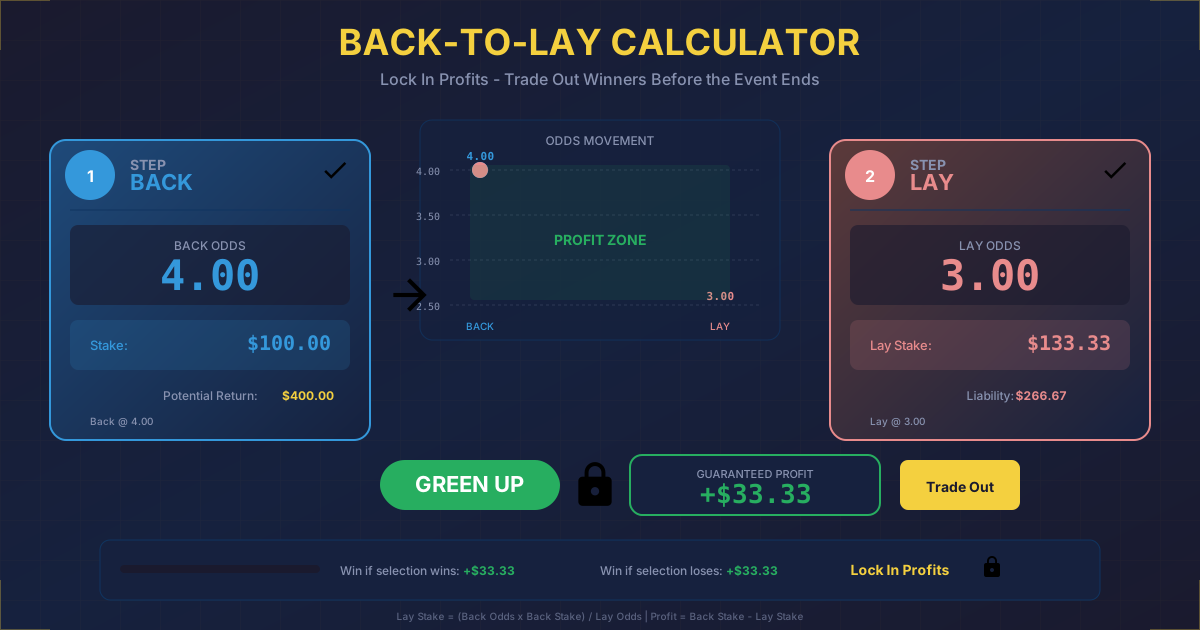
Quick Answer: Back-to-lay means back first at higher odds, then lay at lower odds when price moves in your favor. Formula for equal profit across outcomes: Lay Stake = (Back Stake × Back Odds) / Lay Odds. Example: Back $100 at 4.00, lay at 3.00. Lay stake = ($100 × 4.00) / 3.00 = $133.33. If wins: $300 back profit - $266.67 lay liability = $33.33. If loses: $133.33 lay profit - $100 back loss = $33.33 (minus commission). Guaranteed profit either way.
How to Use Our Calculator
Use the Back-to-Lay Calculator →
Step-by-Step Instructions
- Enter Back Bet Details: Input odds and stake of your original back bet
- Enter Current Lay Odds: Input the current available lay odds
- Set Commission Rate: Enter your exchange commission
- Choose Distribution: Equal profit or weighted toward one outcome
- Calculate Lay Stake: Get exact stake to green up position
Input Fields
| Field | Description | Example |
|---|---|---|
| Back Odds | Original back bet odds | 4.00 |
| Back Stake | Amount backed | $100 |
| Lay Odds | Current lay odds | 3.00 |
| Commission Rate | Exchange fee | 5% |
| Distribution | Equal or weighted | Equal |
Understanding Back-to-Lay Mechanics
The Basic Concept
Step 1: BACK at Higher Odds
You back Team A at 5.00 for $100
If wins: Profit $400
If loses: Lose $100

Step 2: Wait for Price to Drop
Team A plays well, price drops to 3.00

Step 3: LAY at Lower Odds
Calculate lay stake to distribute profit
Lay at 3.00 for calculated amount

Result: Guaranteed profit regardless of outcome
This is called "greening up" or "trading out"
Why Prices Move
Prices Drop (Good for Back-to-Lay):
- Selection performing well
- Favorable news (injuries to opponents)
- Market overreaction earlier
- Sharp money coming in
- In-play advantage (scored goal, etc.)

Prices Rise (Bad for Back-to-Lay):
- Selection performing poorly
- Negative news
- Opposition playing better
- Market correction
- In-play disadvantage
Calculating Your Lay Stake
Equal Profit Distribution
Formula for Equal Green Across Outcomes:

Lay Stake = (Back Stake × Back Odds) / Lay Odds

This distributes profit equally

Example:
Back: $100 at 4.00
Lay odds now: 3.00

Lay Stake = ($100 × 4.00) / 3.00
Lay Stake = $400 / 3.00
Lay Stake = $133.33

Verification:
If Selection WINS:
Back profit: $100 × (4.00 - 1) = $300
Lay loss: $133.33 × (3.00 - 1) = $266.67
Net: $300 - $266.67 = $33.33 profit

If Selection LOSES:
Back loss: $100
Lay profit: $133.33 (before commission)
Net before commission: $33.33
After 5% commission: $133.33 × 0.95 - $100 = $26.67

Note: Commission affects lose scenario
Accounting for Commission
More Accurate Formula:

For truly equal profit after commission:

Lay Stake = (Back Stake × Back Odds) / (Lay Odds - Commission)

Example with 5% commission:
Back: $100 at 4.00
Lay odds: 3.00
Commission: 5% (0.05)

Lay Stake = ($100 × 4.00) / (3.00 - 0.05)
Lay Stake = $400 / 2.95
Lay Stake = $135.59

This ensures equal NET profit both ways
Calculating Total Green
Total Guaranteed Profit:

Profit = Back Stake × ((Back Odds - Lay Odds) / Lay Odds)

Then subtract commission from appropriate scenario

Example:
Back: $100 at 5.00
Lay: 3.50

Theoretical Profit = $100 × ((5.00 - 3.50) / 3.50)
Theoretical Profit = $100 × (1.50 / 3.50)
Theoretical Profit = $100 × 0.429
Theoretical Profit = $42.90 per outcome (before commission)

The bigger the odds movement, the bigger the profit
Real-World Examples
Example 1: Pre-Match to In-Play Trade
Situation:
Selection: Argentina to beat Saudi Arabia
Pre-match back: 1.40 for $200
Half-time score: 0-1 (Saudi Arabia leads!)
Argentina lay odds now: 2.20

Wait... this is LAY-to-BACK (prices went wrong way)
Let's use correct scenario:

Pre-match back: 3.50 for $100
Half-time: Argentina leads 2-0
Argentina lay odds now: 1.30
Commission: 5%
Calculation:
Lay Stake = (Back Stake × Back Odds) / (Lay Odds - Commission)
Lay Stake = ($100 × 3.50) / (1.30 - 0.05)
Lay Stake = $350 / 1.25
Lay Stake = $280

Liability: $280 × (1.30 - 1) = $84

Outcome A - Argentina WINS:
Back profit: $100 × (3.50 - 1) = $250
Lay loss: $84
Net: $250 - $84 = $166 profit

Outcome B - Argentina DOESN'T WIN:
Back loss: $100
Lay profit: $280 × 0.95 = $266
Net: $266 - $100 = $166 profit

Guaranteed $166 profit regardless!
Result:
Original position: Risk $100 for $250 profit (if Argentina wins)
After green up: Guaranteed $166 profit either way

Traded away $84 potential extra profit
in exchange for eliminating all risk

This is the power of back-to-lay
Example 2: Tennis In-Play Trading
Situation:
Match: Djokovic vs Qualifier
Pre-match: Back Djokovic at 1.25 for $500
Qualifier wins first set
Djokovic lay odds now: 1.75
Commission: 5%
Calculation:
Wait - odds ROSE from 1.25 to 1.75
This is a LOSING position for back-to-lay

Current position:
If Djokovic wins: $500 × (1.25 - 1) = $125 profit
If Djokovic loses: -$500 loss

Option 1: Hold and hope Djokovic wins
Option 2: Lay to cut losses

If we lay to cut losses:
Lay Stake = ($500 × 1.25) / (1.75 - 0.05)
Lay Stake = $625 / 1.70 = $367.65

If Djokovic WINS:
Back profit: $125
Lay loss: $367.65 × 0.75 = $275.74
Net: $125 - $275.74 = -$150.74

If Djokovic LOSES:
Back loss: $500
Lay profit: $367.65 × 0.95 = $349.27
Net: $349.27 - $500 = -$150.73

"Green" is now red - guaranteed -$150 loss
But cuts potential -$500 loss if Djokovic loses
Result:
This illustrates the flip side:
When prices move AGAINST you,
you can lay to LIMIT losses

Original risk: -$500 if lose
After trade: -$150 guaranteed

Not a profit, but damage control
Sometimes cutting losses is correct play
Example 3: Horse Racing Pre-Race Drift
Situation:
Selection: Horse at morning line 8.00
Back: $50 at 8.00
Just before race: Horse now 5.00
Commission: 5%
Calculation:
Lay Stake = ($50 × 8.00) / (5.00 - 0.05)
Lay Stake = $400 / 4.95
Lay Stake = $80.81

Liability: $80.81 × 4.00 = $323.24

If Horse WINS:
Back profit: $50 × 7.00 = $350
Lay loss: $323.24
Net: $350 - $323.24 = $26.76

If Horse LOSES:
Back loss: $50
Lay profit: $80.81 × 0.95 = $76.77
Net: $76.77 - $50 = $26.77

Guaranteed ~$26.77 profit
Result:
Morning line to post-time trading:
- Backed at 8.00, price dropped to 5.00
- Locked in ~$27 guaranteed profit
- Original position risked $50 for $350

Trade-off:
Gave up $323 potential extra profit
Gained certainty of $27

Professional traders do this constantly
Small certain profits accumulate
Example 4: Partial Green Up
Situation:
Selection: Liverpool to win
Back: $200 at 3.00
Liverpool scores, lay odds now 1.80
You want to keep some exposure
Goal: Green up 50%, leave 50% riding
Commission: 5%
Calculation:
Full lay stake for complete green:
Full Lay = ($200 × 3.00) / (1.80 - 0.05)
Full Lay = $600 / 1.75 = $342.86

For 50% green:
Half Lay Stake = $342.86 / 2 = $171.43

Liability: $171.43 × 0.80 = $137.14

If Liverpool WINS:
Back profit: $200 × 2.00 = $400
Lay loss: $137.14
Net: $400 - $137.14 = $262.86 profit

If Liverpool DOESN'T WIN:
Back loss: $200
Lay profit: $171.43 × 0.95 = $162.86
Net: $162.86 - $200 = -$37.14 loss
Result:
Partial green creates asymmetric outcome:
Win: +$262.86
Lose: -$37.14

You've protected downside significantly
while keeping most upside exposure

Full green would give ~$62 guaranteed
Instead: -$37 risk for +$262 potential

This is personal preference/strategy
Trading Strategies
Scalping (Small Price Movements)
Strategy: Capture 1-3 tick movements

Example:
Back at 2.02, target lay at 2.00

For $1000 back:
Profit per tick = ~$10

Risks:
- Need high volume to be meaningful
- Commission eats into small profits
- Price may move against you
- Requires constant attention

Best for:
- Large bankrolls
- Fast markets
- High liquidity events
Swing Trading (Larger Movements)
Strategy: Capture significant price swings

Example:
Back horse at 6.00
Wait for market to bring down to 4.00

$100 back creates ~$33 green

Approach:
- Research for value opportunities
- Back selections likely to shorten
- Patient waiting for price moves
- Accept not all trades complete

Risks:
- Price may never drop
- Event may happen before trade
- Requires selection skill
In-Play Trading
Strategy: Trade based on live action

Back before match, lay during:
- After your selection scores/leads
- When momentum shifts favorably
- At strategic timing points

Example - Football:
Back home team at 2.50
They score at 30 minutes
Lay at 1.60

Advantages:
- Largest price movements in-play
- Information advantage possible
- Multiple entry/exit points

Disadvantages:
- Fast-moving, emotional
- Prices change rapidly
- Need to watch live
Understanding Green Book
What Is Green Book?
"Green Book" = All Outcomes Profitable

When you successfully back-to-lay:
Your betting slip shows GREEN numbers
for every possible outcome

Visual Example:
Selection: Team A to Win
Status: GREENED UP

If Team A Wins: +$45.00
If Team A Doesn't Win: +$45.00

All green = guaranteed profit
This is the goal of back-to-lay
Red Book (Losing Position)
"Red Book" = All Outcomes Unprofitable

If you back then price rises (wrong direction):

Example:
Backed at 2.00, price rises to 2.50

If you green up now:
Win scenario: +$X
Lose scenario: +$X (both negative)

You'd lock in guaranteed loss
Sometimes better than potential bigger loss
Decision depends on your analysis
When to Green Up vs Hold
Factors Favoring Green Up
Green Up When:
- Significant profit available
- Uncertainty about final outcome
- Need to free up capital
- Risk tolerance reached
- Information changed negatively
- Close to start time

Example Threshold:
"I green up when profit > 50% of original stake"
Back $100, green at $50+ profit available
Factors Favoring Hold
Hold Position When:
- Believe more profit possible
- Price hasn't moved enough
- High confidence in selection
- Small green relative to potential
- Long time until event

Example Thinking:
"Backed at 5.00, now 4.00, expect 2.50"
Current green: ~$25
Potential green at 2.50: ~$60
May be worth holding if confident
Common Mistakes to Avoid
-
Waiting Too Long: Greedy traders wait for "just a bit more" price movement and miss the opportunity entirely when price reverses.
-
Not Accounting for Commission: Your green isn't as big as raw numbers suggest. Always factor in 2-5% commission on the winning side.
-
Trading Illiquid Markets: Without liquidity, you can't execute your lay. Back bets in thin markets may trap you.
-
Emotional Trading: In-play trading especially triggers emotional decisions. Stick to your strategy, not your feelings.
-
Over-Trading: Every trade has commission cost. Trading back-and-forth repeatedly eats into profits quickly.
-
Ignoring the Original Edge: Back-to-lay works best when your initial back bet has value. Random backs rarely produce consistent green-up opportunities.
Frequently Asked Questions
Do I need to green up every back bet?
No. Only green up when it makes strategic sense - significant profit available, uncertainty increased, or you need the capital. Holding to see the result is valid too.
What if the price moves against me?
You can lay to cut losses (creates guaranteed smaller loss vs potential larger loss), or hold hoping price reverses. There's no obligation to trade.
How much price movement is needed for profitable green?
Generally, 10%+ price movement creates meaningful green after commission. Smaller moves may not be worth trading due to commission costs.
Can I back-to-lay on any exchange market?
Yes, any market where you can both back and lay. Liquidity matters - ensure enough lay liquidity exists when you want to green up.
Is this the same as "cash out"?
Bookmaker cash out uses similar math but at worse rates. Exchange green-up typically offers better value because you control the timing and price.
What's the tax implication of green-up profits?
Varies by jurisdiction. In many places, betting profits (including trading profits) are tax-free. Consult local tax advice.
Pro Tips
- Back selections you believe will shorten in price - this is where skill meets opportunity
- Set target green-up levels before placing back bets to remove emotional decision-making
- Use partial green-ups to balance guaranteed profit with continued exposure
- Track all your trades to understand your true win rate and average profit per trade
- Remember that not every back will offer green-up opportunity - some you simply hold or lose
Related Calculators
- Betting Exchange Calculator - Exchange fundamentals
- Lay Bet Calculator - Lay bet mechanics
- Arbitrage Calculator - Guaranteed profits
- Cash Out Calculator - Compare to bookmaker offers
- Matched Betting Calculator - Free bet extraction
Conclusion
Back-to-lay trading transforms sports betting from gambling into something closer to financial trading. By backing at higher odds and laying at lower odds, you create positions with guaranteed profit regardless of outcome. Our calculator ensures your lay stakes are perfectly calibrated to achieve your desired green.
Success requires not just understanding the math, but developing skill in identifying selections likely to shorten, timing your trades well, and managing the emotional aspects of watching prices move. Master these elements, and back-to-lay becomes a powerful tool for consistent profit.