Single Deck Blackjack Calculator: Strategy Adjustments and Better Odds (2026)
Single Deck Blackjack Calculator: Master the Most Player-Friendly Game
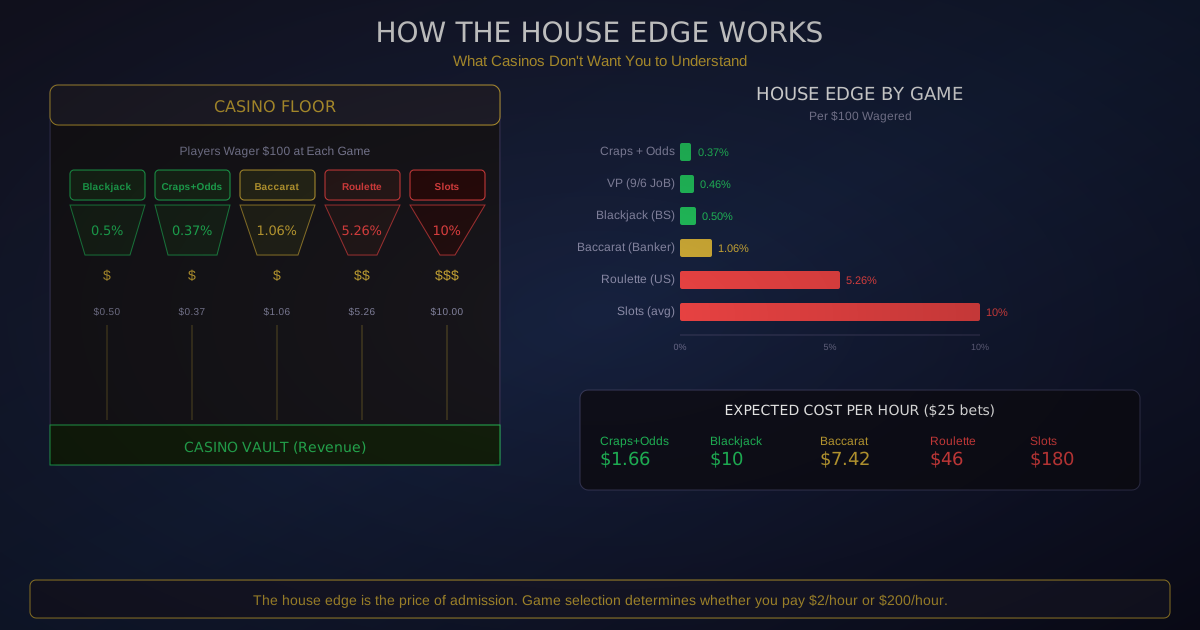
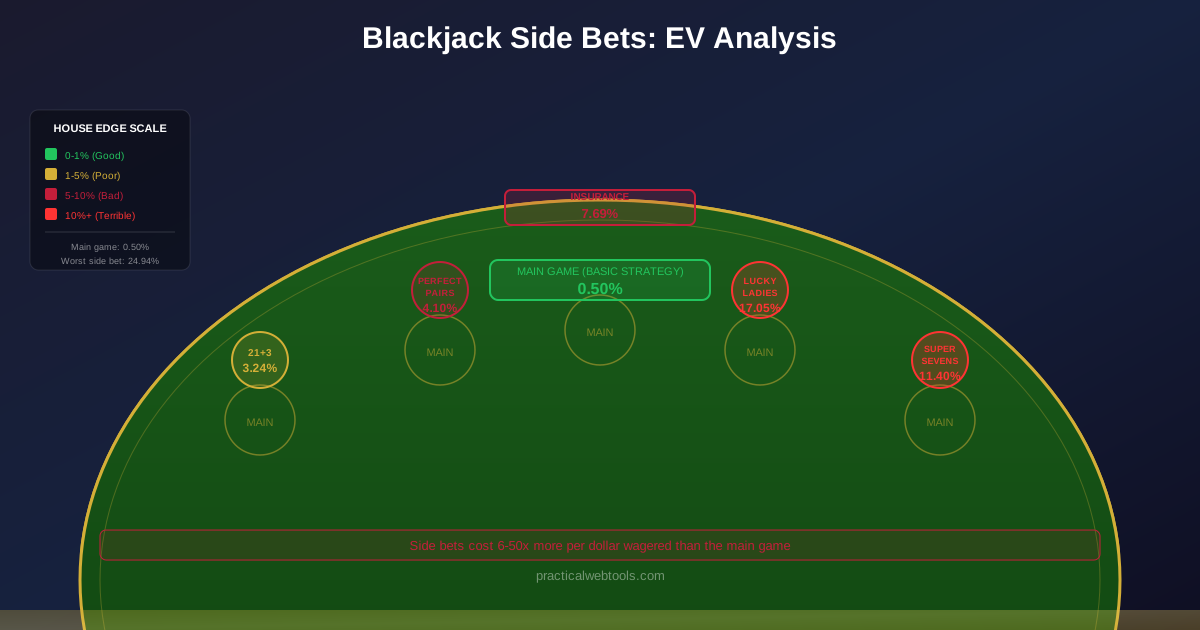
Single deck blackjack offers the lowest house edge in the casino when played correctly - as low as 0.15% compared to 0.5%+ for multi-deck games. But the strategy differs from standard basic strategy, and casinos add rule modifications to protect themselves. Our calculator shows the optimal plays and true house edge for any single deck variation.
What Is Single Deck Blackjack?
Single deck blackjack is played with just one 52-card deck, unlike standard games using 6 or 8 decks. Fewer cards means more predictable outcomes, better odds for players, and more effective card counting. However, casinos compensate with rule changes like 6:5 blackjack payouts. Understanding these tradeoffs is essential for finding genuinely advantageous games.
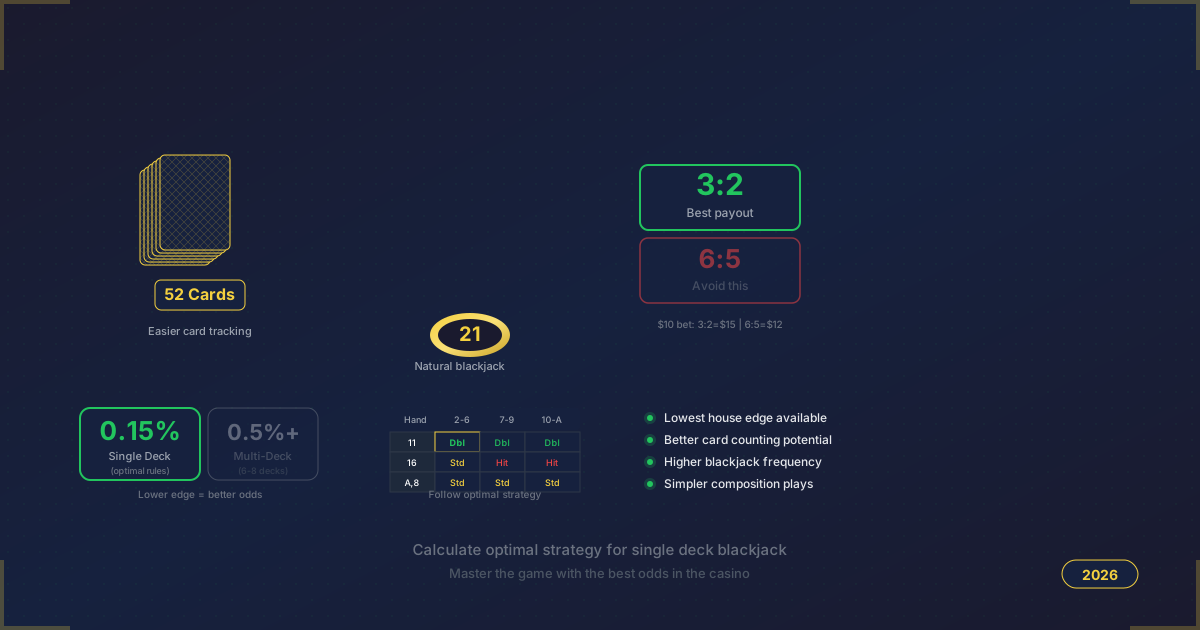
Quick Answer: Single deck blackjack has a base house edge of ~0.15% with standard rules (3:2 blackjack, dealer stands soft 17). Key strategy changes from multi-deck: double 11 vs A, double 9 vs 2, double A-2 through A-7 vs more dealer cards, split 2-2 vs 3. NEVER play single deck with 6:5 blackjack payout - this increases house edge to ~1.45%, worse than many multi-deck games. Look for 3:2 single deck games for the best odds in the casino.
How to Use Our Calculator
Use the Single Deck Blackjack Calculator →
Step-by-Step Instructions
- Enter Your Hand: Your two cards
- Enter Dealer Upcard: Dealer's visible card
- Select Rules Variant: 3:2 vs 6:5, S17 vs H17, etc.
- Get Optimal Play: See correct decision with EV
- View Adjustments: Compare to multi-deck strategy
Input Fields
| Field | Description | Example |
|---|---|---|
| Player Hand | Your two cards | 9, 6 (15) |
| Dealer Upcard | Dealer's shown card | 7 |
| Blackjack Payout | 3:2 or 6:5 | 3:2 |
| Dealer Rule | Stands/Hits soft 17 | S17 |
| Double After Split | Allowed or not | Yes |
| Resplit Aces | Allowed or not | No |
Why Single Deck Offers Better Odds
Card Removal Effect
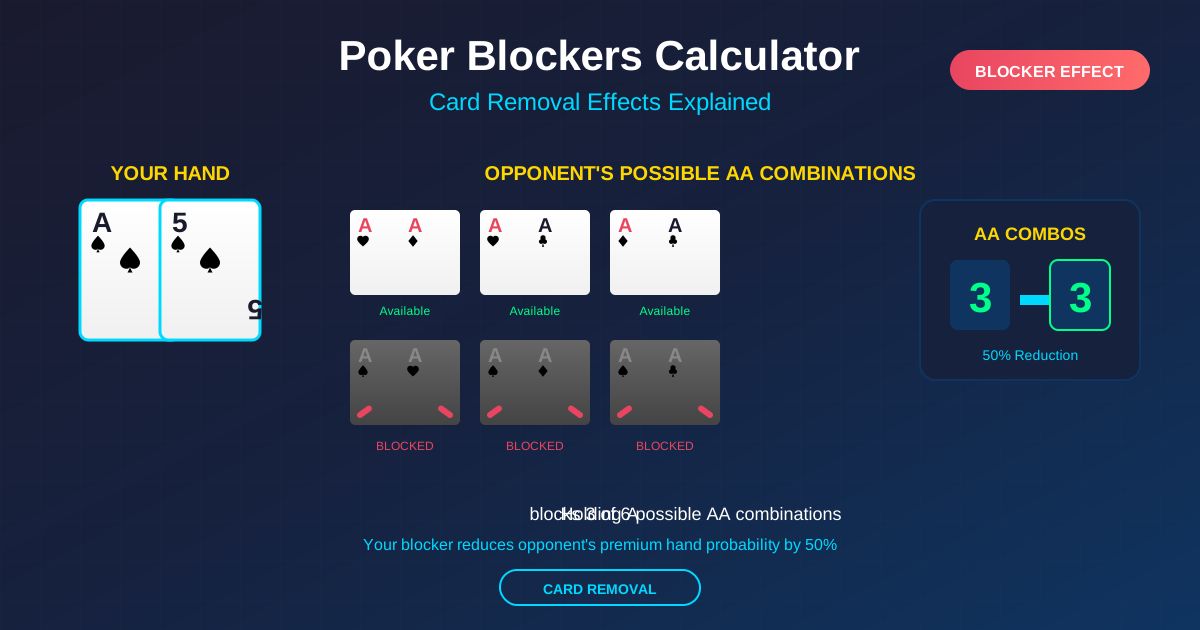
Card removal impacts single deck significantly:

Multi-deck (8 decks):
One Ace removed = 31 Aces remain from 416 cards
Ace probability: 31/415 = 7.47%
Minimal change from original 7.69%

Single deck:
One Ace removed = 3 Aces remain from 51 cards
Ace probability: 3/51 = 5.88%
Significant change from original 7.69%

Why this matters:
- Card counting more effective
- Deck composition changes rapidly
- Strategic decisions have more impact
- Player can adjust more profitably
Blackjack Frequency
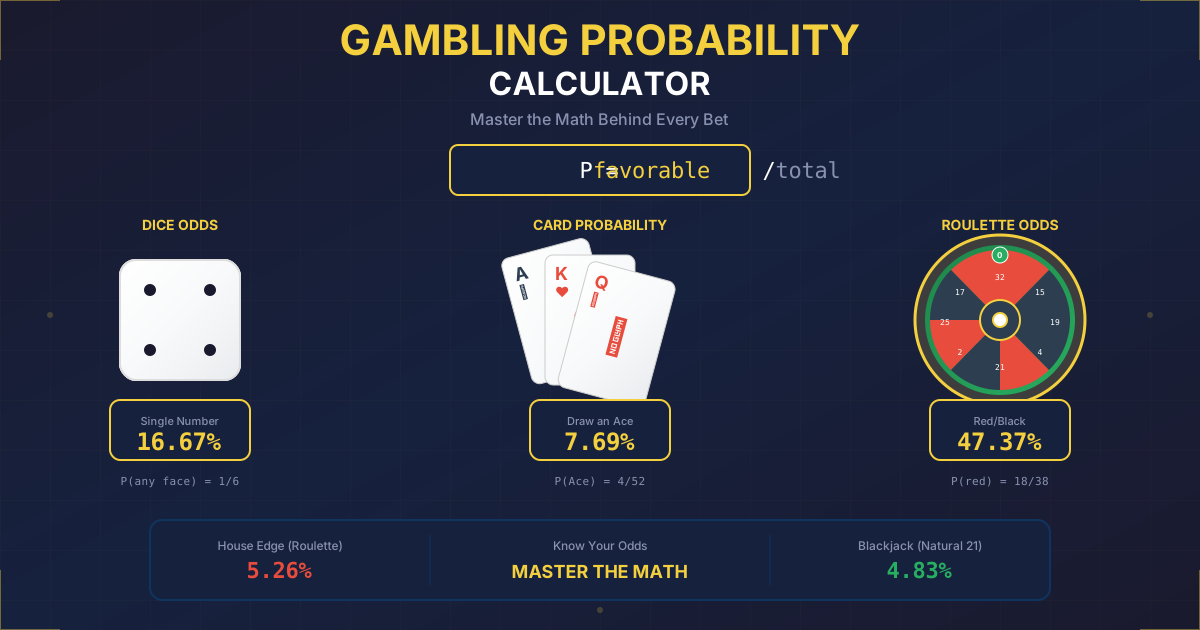
Natural blackjack probability:

Single deck:
P(Blackjack) = (4/52 × 16/51) + (16/52 × 4/51)
P(Blackjack) = 0.0483 = 4.83%

Eight decks:
P(Blackjack) = (32/416 × 128/415) + (128/416 × 32/415)
P(Blackjack) = 0.0475 = 4.75%

Single deck blackjack frequency: +0.08%
At 3:2 payout: Worth ~0.02% to player

Small advantage, but every bit counts
Doubling Opportunities
More favorable doubling in single deck:

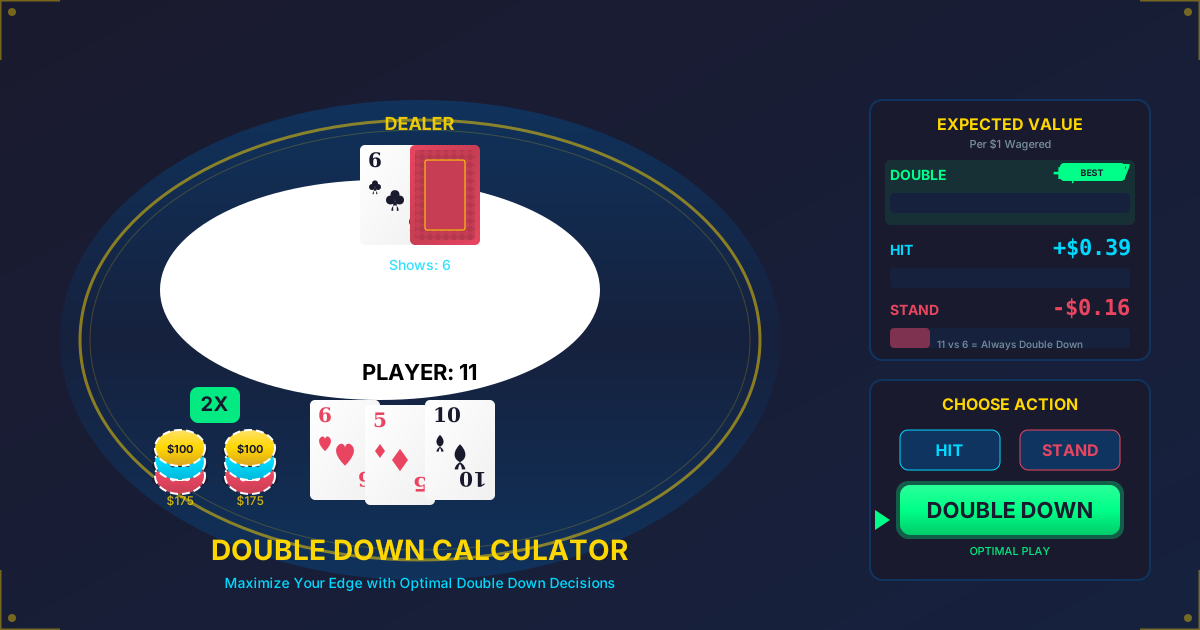
Example: Player 11 vs Dealer 6
Need 10-value card for 21

Single deck:
16 ten-values in 49 remaining cards
Probability: 32.65%

Eight decks:
128 ten-values in ~410 remaining cards
Probability: 31.22%

Better draw probability =
More profitable doubles in single deck
Strategy Differences from Multi-Deck
Key Strategy Changes
Single deck changes from standard basic strategy:

DOUBLING CHANGES:
11 vs A: DOUBLE (Stand in multi-deck)
9 vs 2: DOUBLE (Hit in multi-deck)
8 vs 5: DOUBLE (Hit in multi-deck)
8 vs 6: DOUBLE (Hit in multi-deck)
A-2 vs 4: DOUBLE (Hit in multi-deck)
A-3 vs 4: DOUBLE (Hit in multi-deck)
A-6 vs 2: DOUBLE (Hit in multi-deck)

SPLITTING CHANGES:
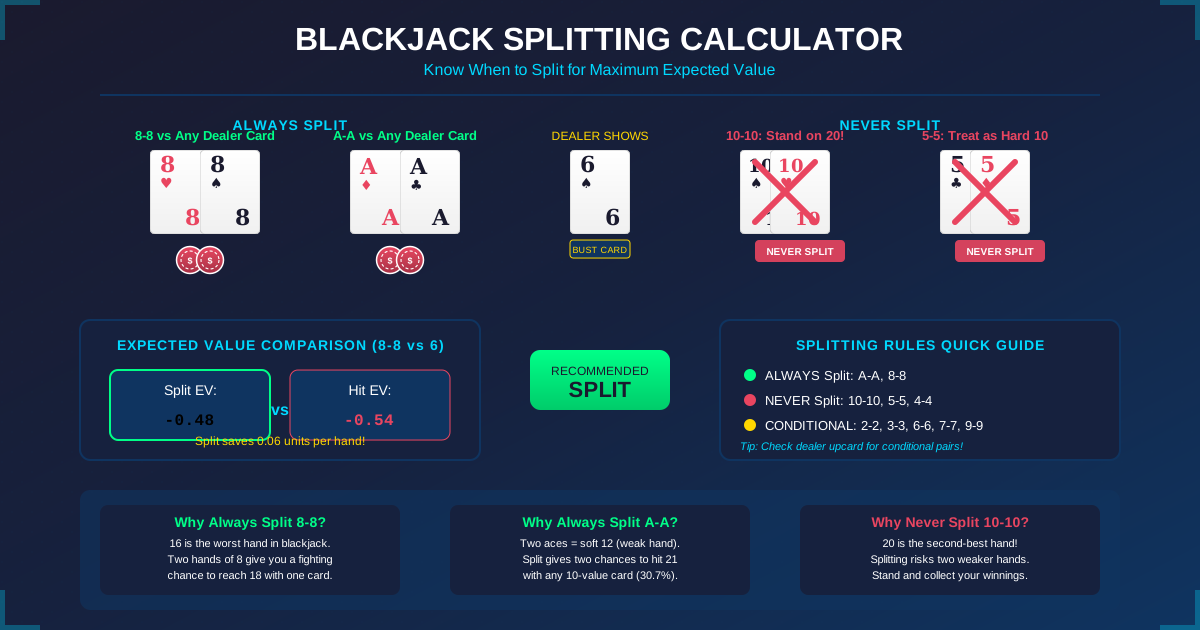
2-2 vs 3: SPLIT (Hit in multi-deck)
3-3 vs 3: SPLIT (Hit in multi-deck)
4-4 vs 4: SPLIT (Hit in multi-deck)
6-6 vs 2: SPLIT (Hit in multi-deck)
7-7 vs 8: SPLIT (Stand in some multi-deck)

STANDING CHANGES:
A-7 vs A: DOUBLE (Stand in multi-deck)

These changes optimize for single deck math
Complete Strategy Chart
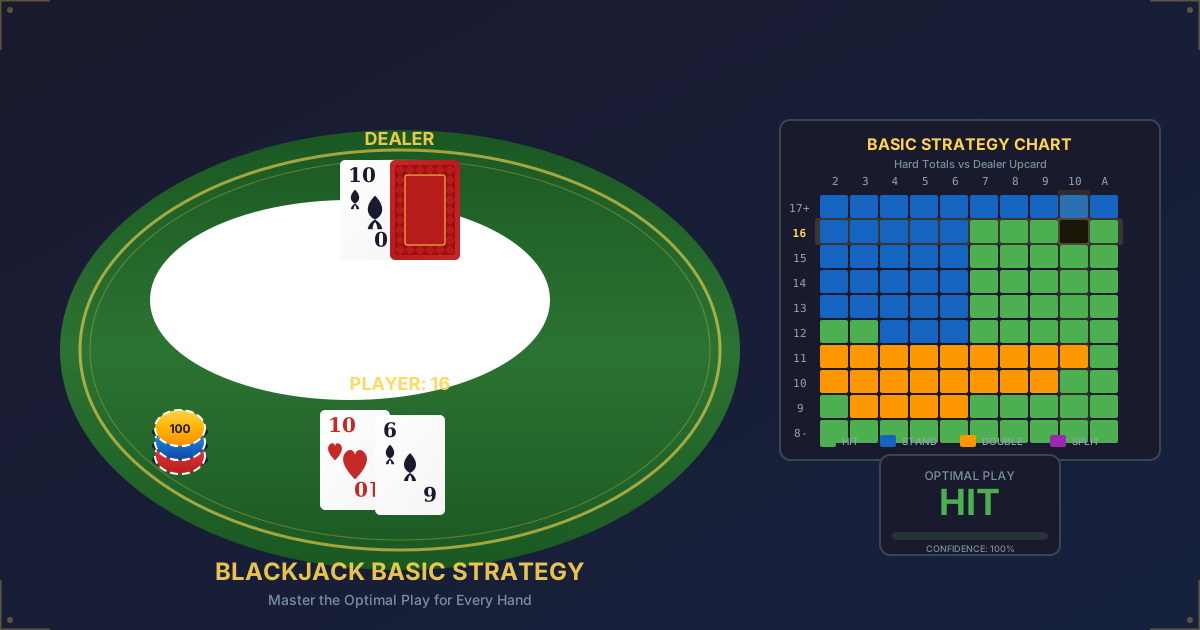
Single Deck Basic Strategy (3:2, S17, DAS):

HARD HANDS:
     2    3    4    5    6    7    8    9   10    A
8   H    H    H    D    D    H    H    H    H    H
9   D    D    D    D    D    H    H    H    H    H
10  D    D    D    D    D    D    D    D    H    H
11  D    D    D    D    D    D    D    D    D    D
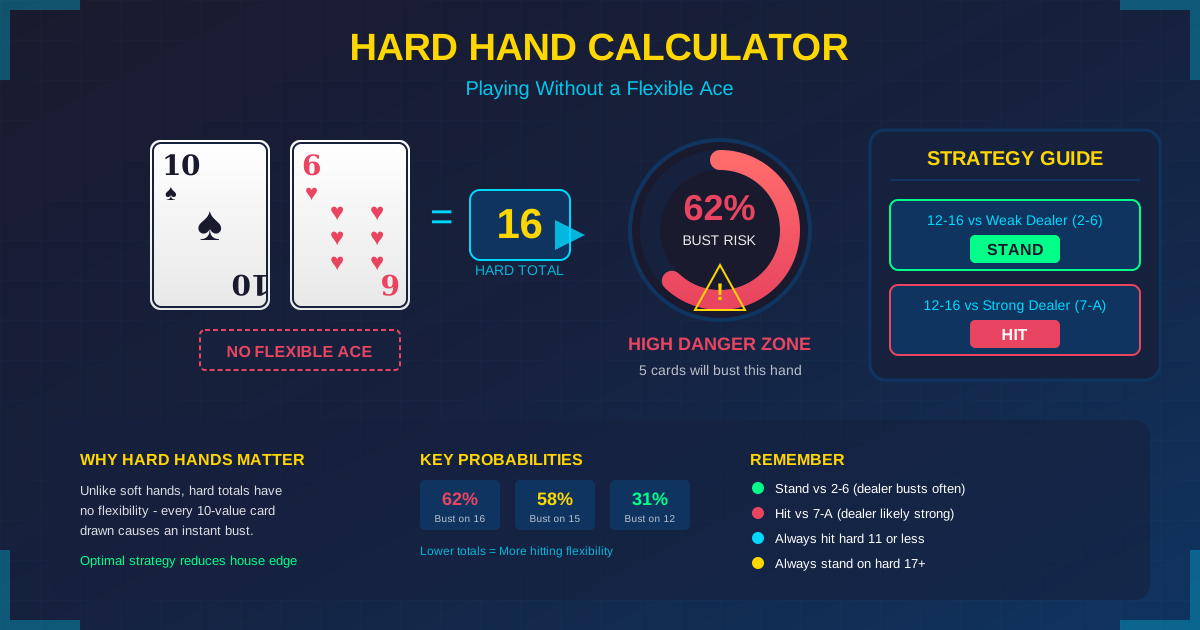
12  H    H    S    S    S    H    H    H    H    H
13  S    S    S    S    S    H    H    H    H    H
14  S    S    S    S    S    H    H    H    H    H
15  S    S    S    S    S    H    H    H    H    H
16  S    S    S    S    S    H    H    H    H    H
17+ S    S    S    S    S    S    S    S    S    S

SOFT HANDS:
     2    3    4    5    6    7    8    9   10    A
A-2 H    H    D    D    D    H    H    H    H    H
A-3 H    H    D    D    D    H    H    H    H    H
A-4 H    H    D    D    D    H    H    H    H    H
A-5 H    H    D    D    D    H    H    H    H    H
A-6 D    D    D    D    D    H    H    H    H    H
A-7 S    D    D    D    D    S    S    H    H    S
A-8 S    S    S    S    D    S    S    S    S    S
A-9 S    S    S    S    S    S    S    S    S    S

PAIRS:
     2    3    4    5    6    7    8    9   10    A
2-2 P    P    P    P    P    P    H    H    H    H
3-3 P    P    P    P    P    P    P    H    H    H
4-4 H    H    P    P    P    H    H    H    H    H
5-5 D    D    D    D    D    D    D    D    H    H
6-6 P    P    P    P    P    P    H    H    H    H
7-7 P    P    P    P    P    P    P    H    S    H
8-8 P    P    P    P    P    P    P    P    P    P
9-9 P    P    P    P    P    S    P    P    S    S
T-T S    S    S    S    S    S    S    S    S    S
A-A P    P    P    P    P    P    P    P    P    P

H=Hit, S=Stand, D=Double, P=Split
The 6:5 Blackjack Trap
Why 6:5 Destroys Your Edge
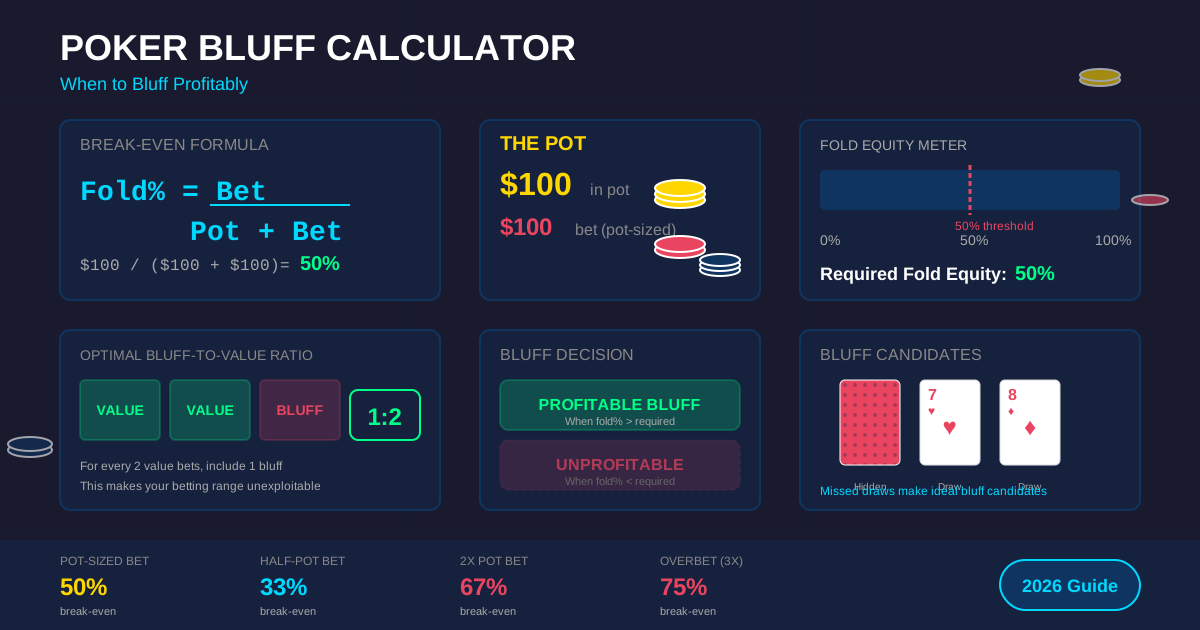
Blackjack payout comparison:

At 3:2 (1.5x):
$10 bet wins $15 on blackjack

At 6:5 (1.2x):
$10 bet wins $12 on blackjack

Difference: $3 per blackjack

Impact on house edge:
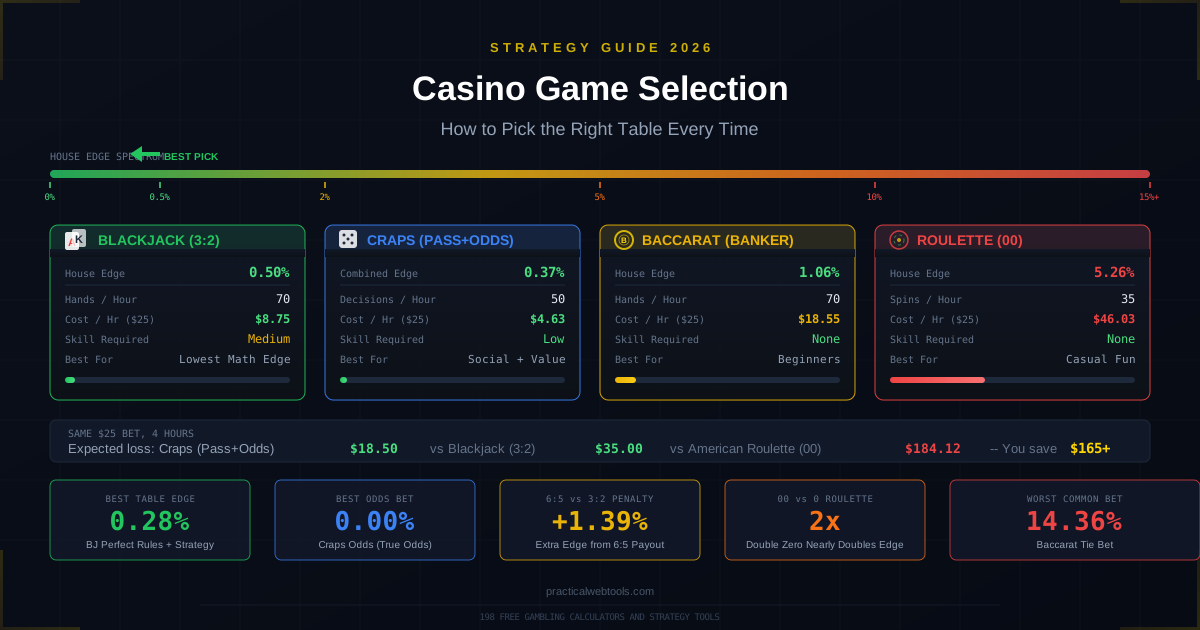
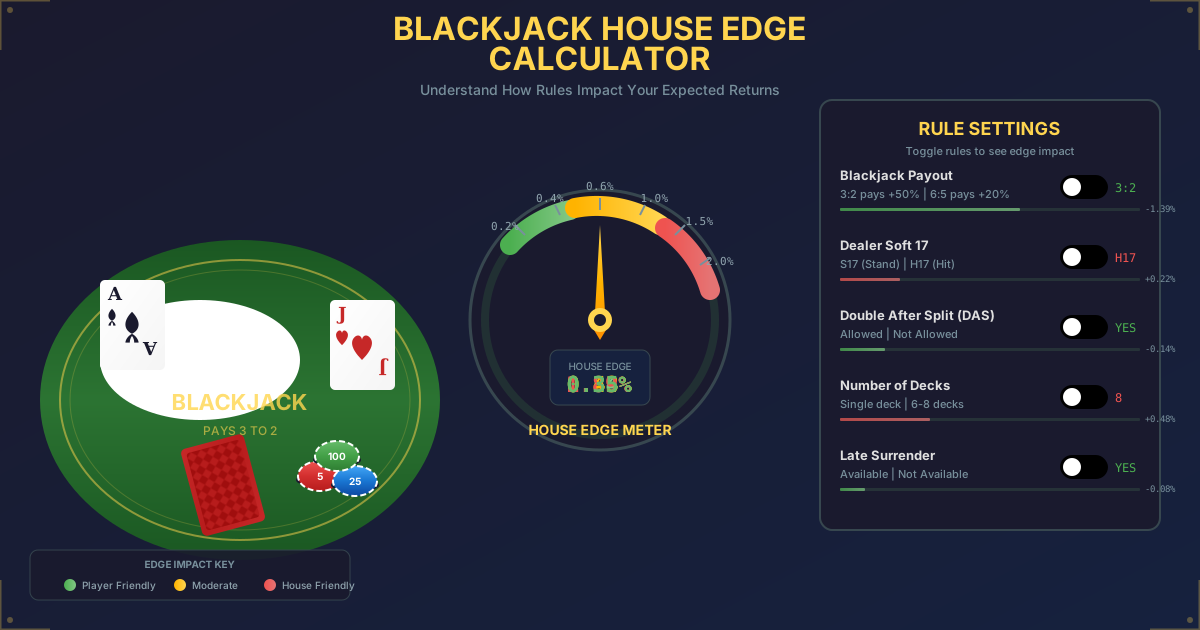
3:2 single deck: ~0.15% house edge
6:5 single deck: ~1.45% house edge

That's a 1.3% swing from one rule change!

You get blackjack ~4.8% of hands
1.3% × ~5% = massive long-term cost
Why Casinos Use 6:5
Casino perspective:

Single deck with 3:2 is beatable
Card counters gain significant edge
Even basic strategy players win more

6:5 solution:
- Keeps "single deck" marketing appeal
- Drastically increases house edge
- Protects against counting
- Players often don't notice

Red flags for 6:5 games:
- Usually on low minimum tables
- Marketed as "Single Deck Blackjack!"
- Fine print shows 6:5 payout
- Always check before sitting down
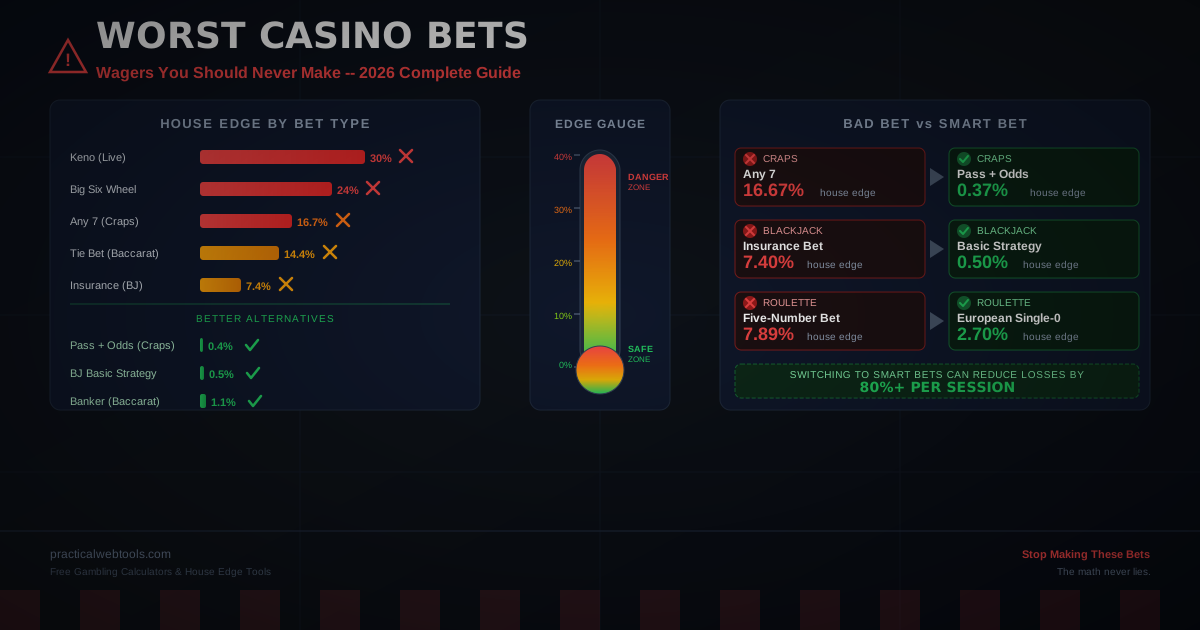
Never Play 6:5
6:5 single deck vs alternatives:

6:5 single deck: 1.45% house edge
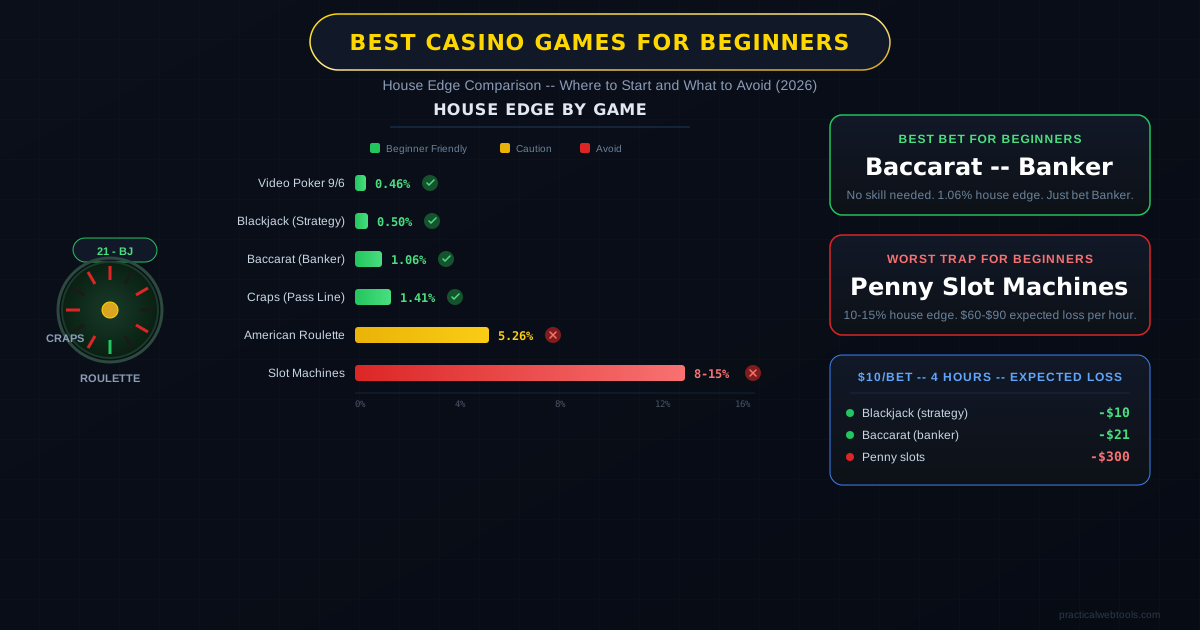
8-deck with 3:2: 0.43% house edge
6-deck with 3:2: 0.40% house edge

You're BETTER OFF playing multi-deck 3:2
than single deck 6:5!

The only good single deck game:
3:2 blackjack payout (hard to find)

Walking away > Playing 6:5
Real-World Examples
Example 1: Basic Strategy Adjustment
Situation:
Your hand: 11 (7-4)
Dealer shows: Ace
Single deck, 3:2, S17
Calculation:
Multi-deck strategy: STAND (or Hit)
Many charts show hit or stand vs Ace

Single deck strategy: DOUBLE

Why different?
In single deck:
- You have 7 and 4
- Need 10-value for 21
- 16 ten-values remain in 49 cards
- Probability: 32.65%

Dealer Ace blackjack:
- If dealer has blackjack, push or insurance
- If no blackjack, double has good EV

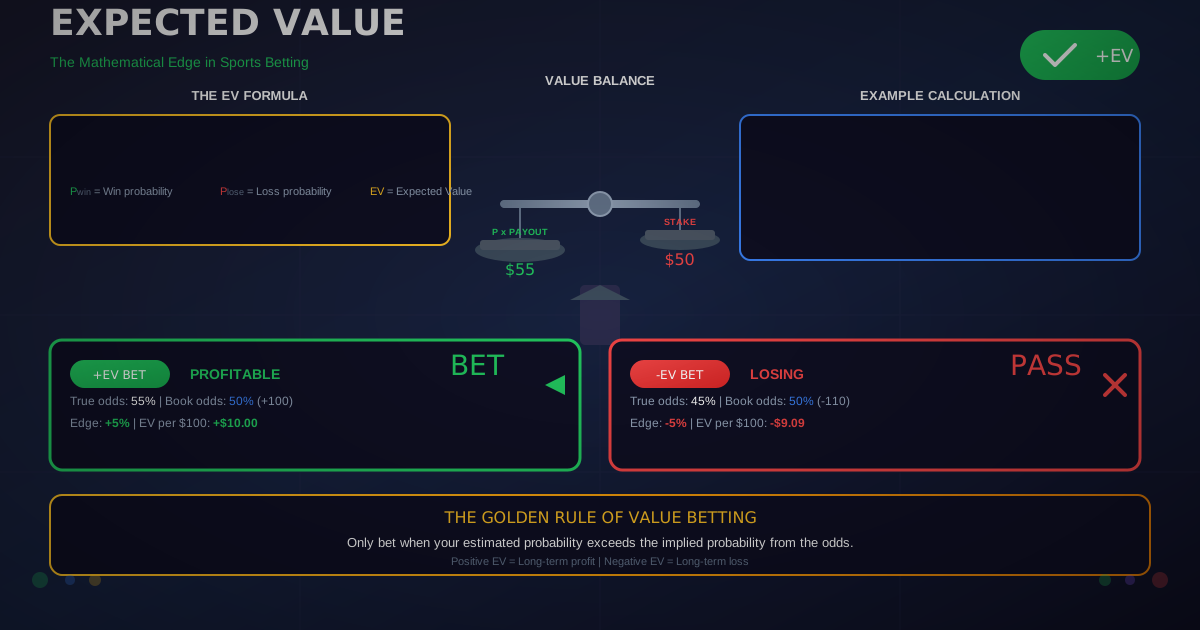
Expected value analysis:
Doubling 11 vs A (single deck): +0.135
Standing 11 vs A: -0.021
Hitting 11 vs A: +0.123

Double has best EV by narrow margin
Result:
Correct play: DOUBLE

This is one of the key single-deck adjustments
You'd lose EV hitting or standing here
The extra double opportunities are why
single deck has lower house edge
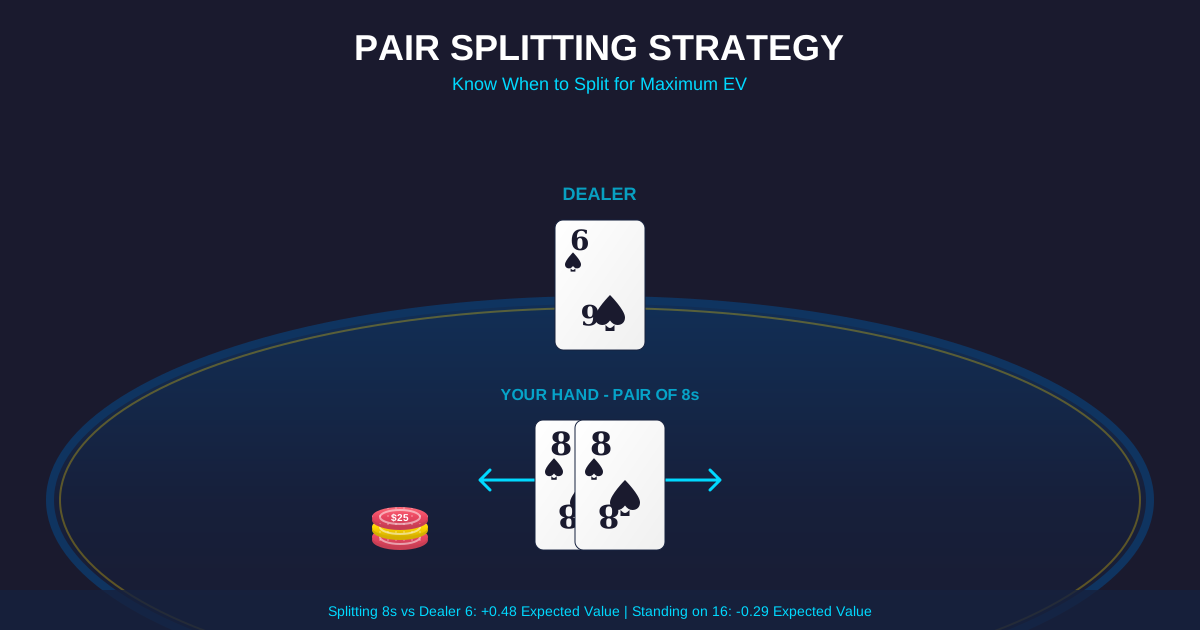
Example 2: Pair Split Decision
Situation:
Your hand: 2-2
Dealer shows: 3
Single deck, 3:2, S17, DAS allowed
Calculation:
Multi-deck strategy: HIT
(Too weak to split vs 3)

Single deck strategy: SPLIT

Why different?
Card removal matters more:
- Two 2s removed from deck
- Remaining deck richer in high cards
- Each split hand has better chance

Expected values (single deck):
Splitting: -0.102
Hitting: -0.167

Splitting loses less money long-term

With DAS (double after split):
Can double if you draw favorable card
Adds more value to splitting
Result:
Correct play: SPLIT (with DAS)

Key insight:
Single deck makes splitting more valuable
because deck composition changes faster

Without DAS: Still split vs 3 in single deck
The adjustment is that important
Example 3: Soft Double Decision
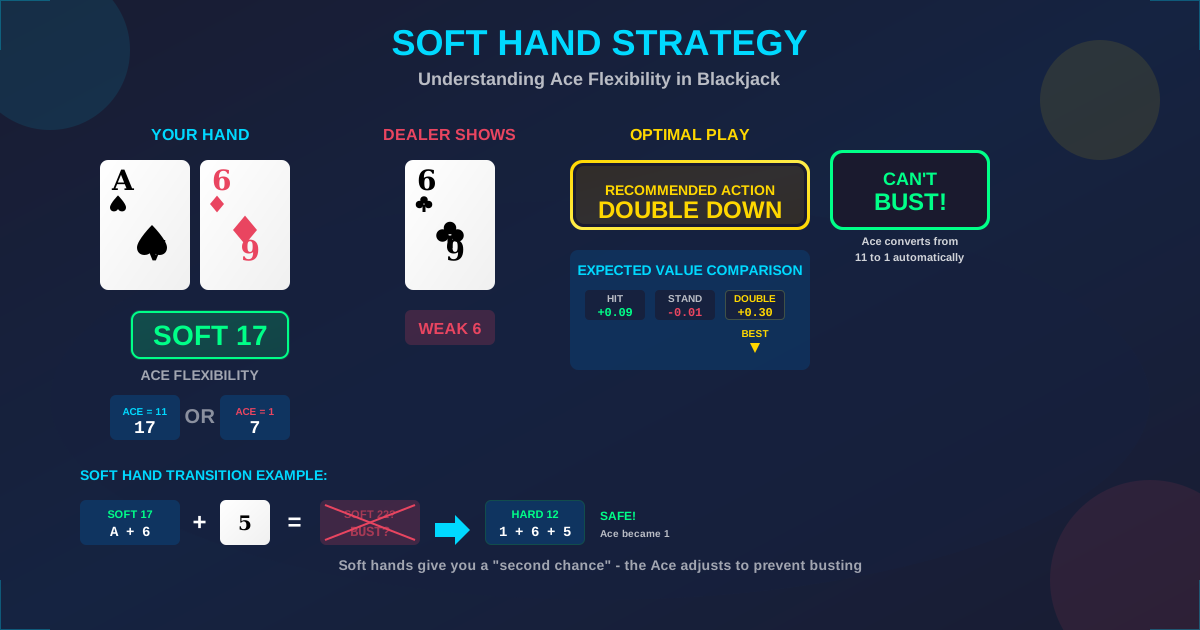
Situation:
Your hand: A-6 (soft 17)
Dealer shows: 2
Single deck, 3:2, S17
Calculation:
Multi-deck strategy: HIT
(Only double vs 3-6)

Single deck strategy: DOUBLE

Why different?
Single deck A-6 vs 2:

Doubling down gets one more card
Good outcomes: 2,3,4 (19-21)
Bad outcomes: 5,6,7,8,9,10 (12-17)

But dealer 2 busts ~35% of time
And you can't bust soft 17

Expected values:
Doubling A-6 vs 2: +0.008
Hitting A-6 vs 2: -0.003

Small edge, but double is correct
Result:
Correct play: DOUBLE

This shows the precision of single deck strategy
Even marginally +EV doubles are correct
Accumulating small edges = lower house edge
Example 4: 6:5 vs 3:2 Comparison
Situation:
Playing 100 hands
$25 bets
Expected blackjacks: ~5
Comparing 6:5 vs 3:2 payout
Calculation:
With 3:2 payout:
5 blackjacks × $25 × 1.5 = $187.50

With 6:5 payout:
5 blackjacks × $25 × 1.2 = $150.00

Difference per 100 hands: $37.50

Projected over session:
500 hands = $187.50 lost to 6:5 rule
1000 hands = $375 lost to 6:5 rule

Annual cost (100 hours at 100 hands/hr):
10,000 hands × $3.75/100 = $375/year
At $25 bets (modest!), costs $375/year
Result:
6:5 costs $375 per year at $25 bets

This is why 6:5 is unacceptable:
- Looks like "single deck advantage"
- Actually worse than multi-deck
- Casino profits from player ignorance

Always verify payout before playing
Finding Good Single Deck Games
What to Look For
Ideal single deck rules:

Must have:
✓ 3:2 blackjack payout (non-negotiable)
✓ Dealer stands on soft 17 (S17)

Should have:
✓ Double on any two cards
✓ Double after split (DAS)
✓ Late surrender

Nice to have:
✓ Resplit aces
✓ Surrender

Avoid:
✗ 6:5 blackjack payout
✗ Dealer hits soft 17 (H17)
✗ No DAS
✗ Double 10-11 only
Where to Find Them
Good single deck games:

Las Vegas:
- Downtown casinos (some)
- Off-strip locals casinos
- Becoming increasingly rare

Regional casinos:
- Some Midwest properties
- Occasional promotional games

Online:
- Select live dealer games
- Verify rules before playing

Warning:
Most "single deck" games are 6:5
True 3:2 single deck is rare
Usually higher minimums ($25-100)
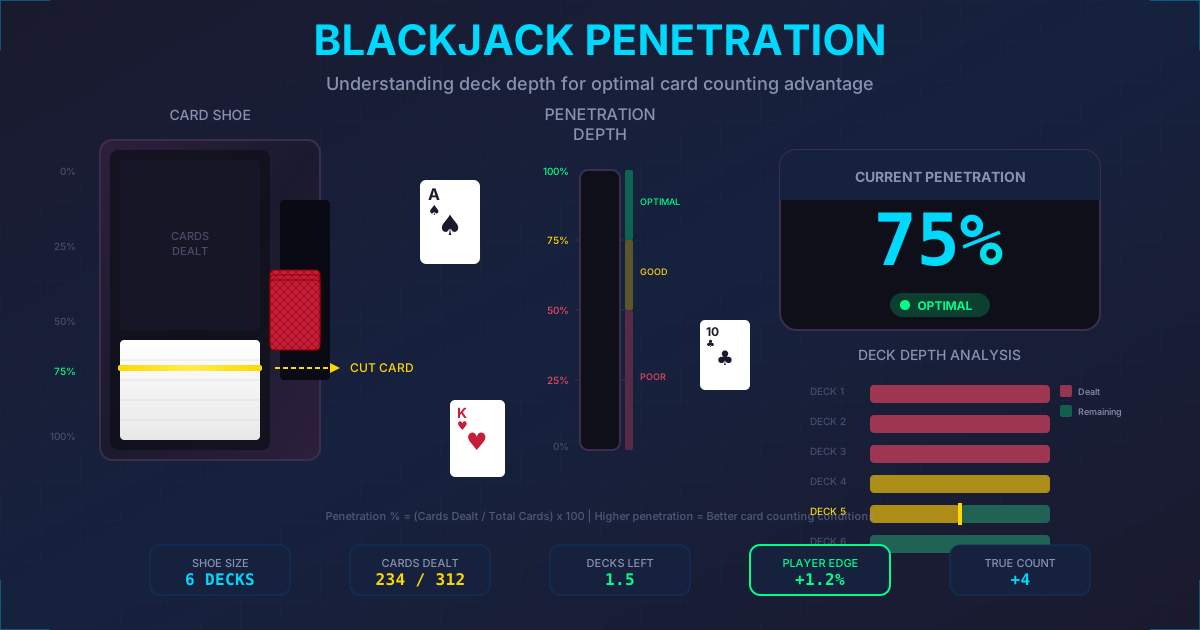
Card Counting Advantage
Why Counters Love Single Deck
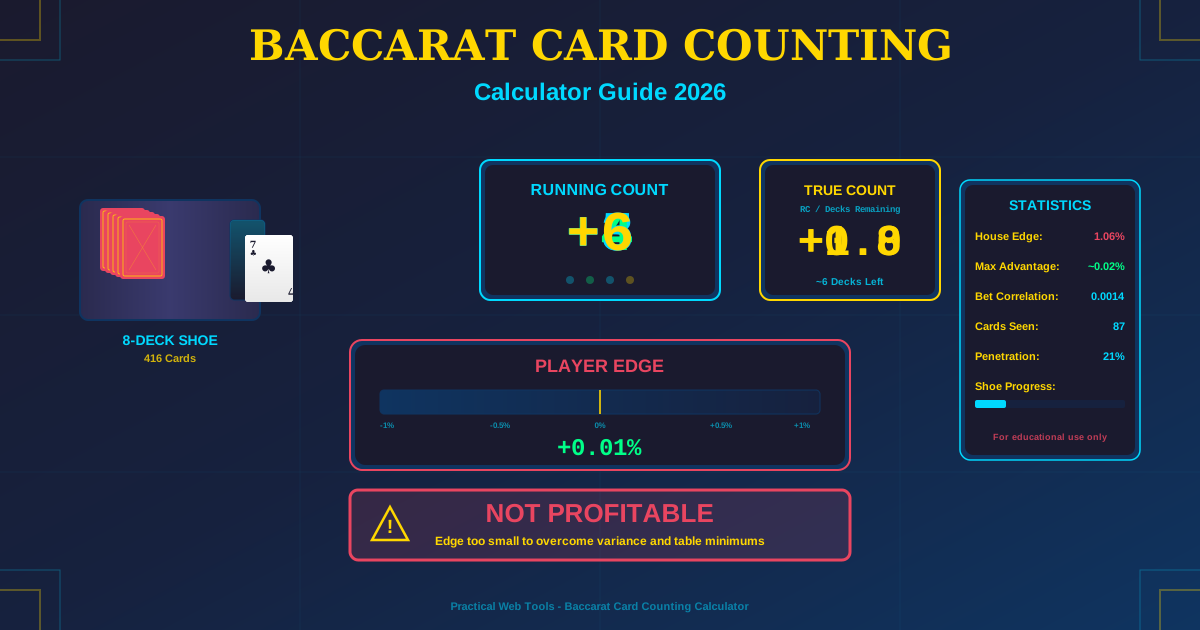
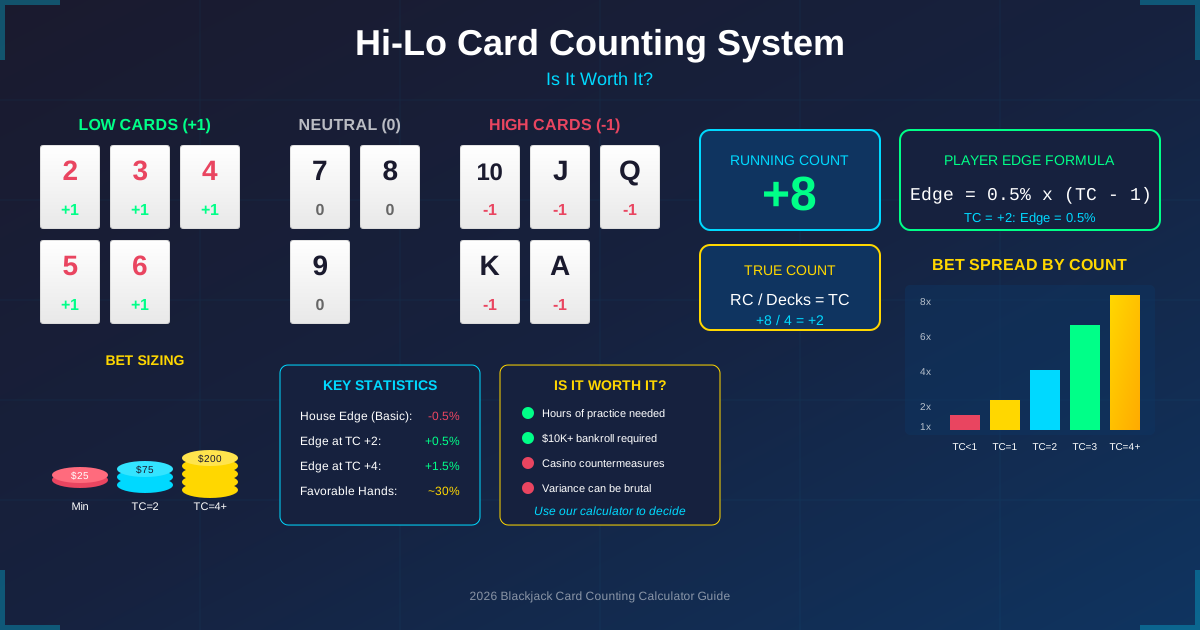
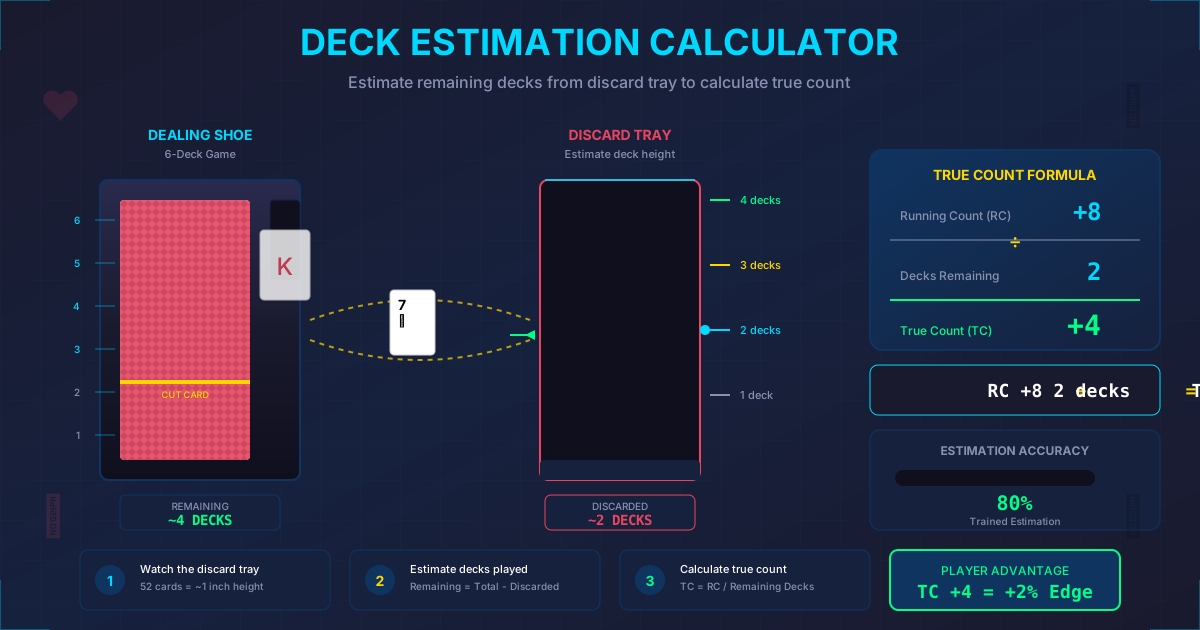
Counting effectiveness by deck number:

8 decks: True count swings small
1 deck: True count swings large

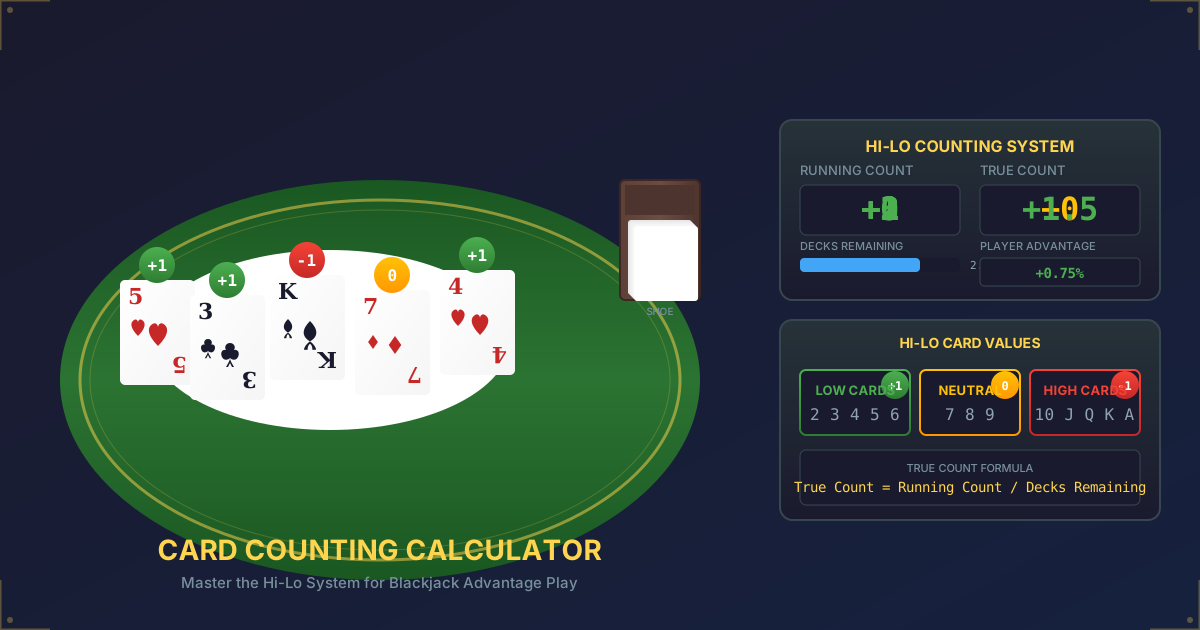
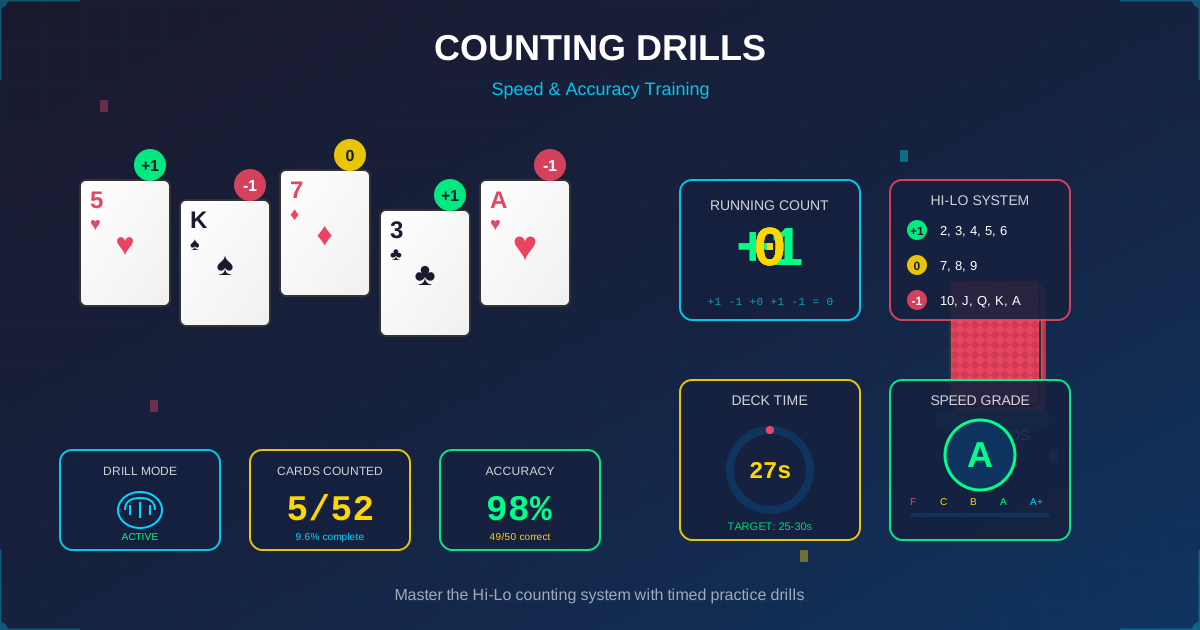
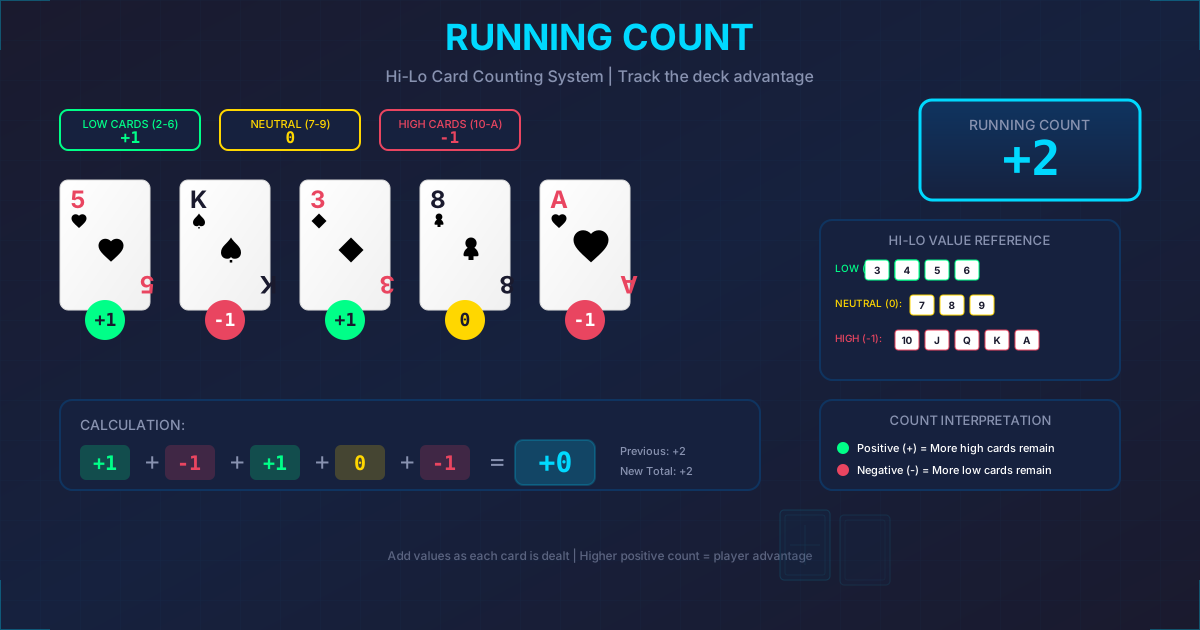
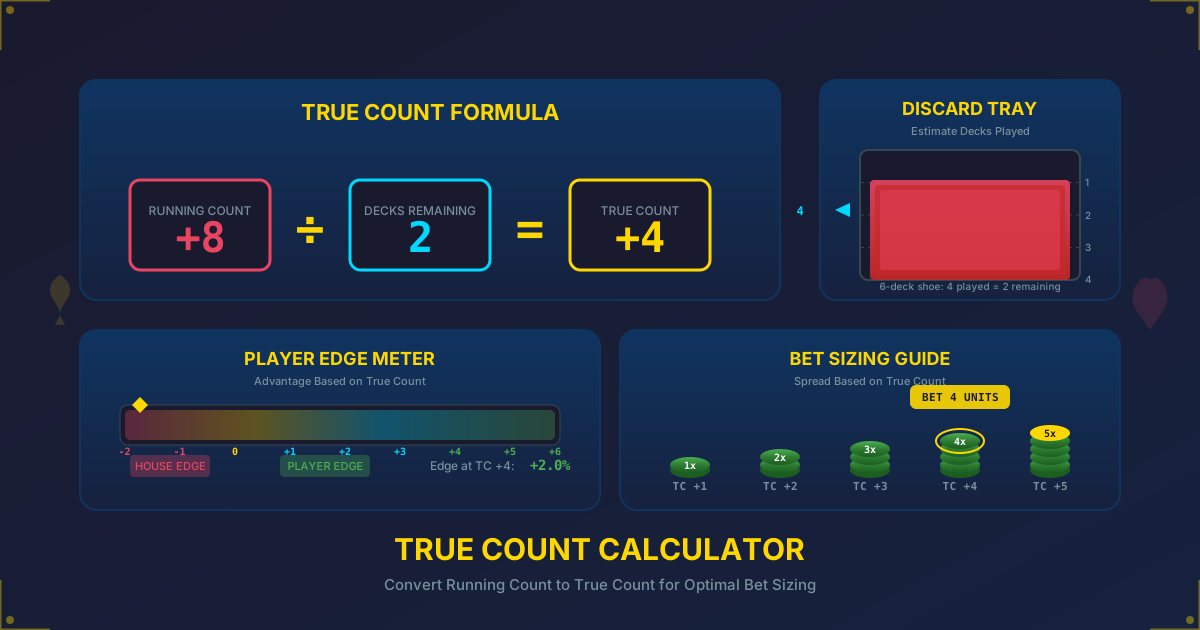
Example Hi-Lo count:
Running count +5

8 decks (4 decks remaining):
True count = +5/4 = +1.25
Modest advantage

1 deck (half deck remaining):
True count = +5/0.5 = +10
Massive advantage!

Single deck reaches playable counts faster
And extreme counts more often
Casino Countermeasures
Why single deck is heavily watched:

Casino knows:
- Counters target single deck
- Small deck = bigger swings
- Easy to gain advantage

Common restrictions:
1. 6:5 payout (kills counting EV)
2. Frequent shuffles
3. Low bet spreads allowed
4. Heavy scrutiny/backing off
5. CSM (continuous shuffle)

Reality:
Good single deck games are rare
And heavily protected when found
Casual counters get better EV elsewhere
Common Mistakes to Avoid
-
Playing 6:5 Single Deck: This is the biggest trap. 6:5 single deck has worse odds than 8-deck 3:2 games. Always verify payout before sitting.
-
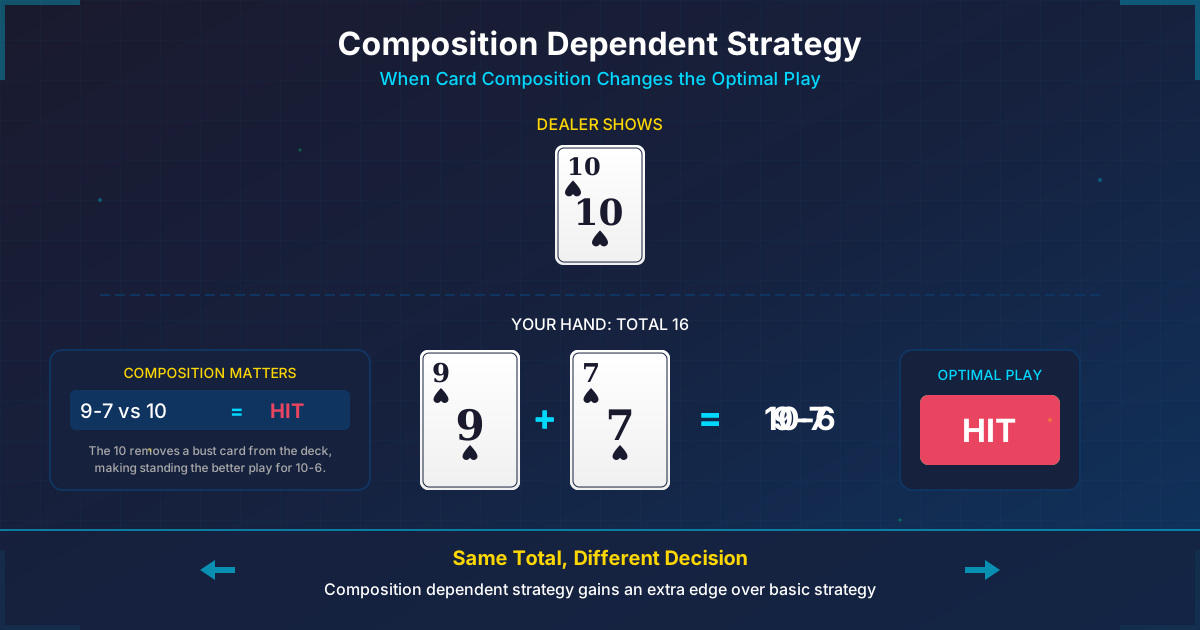
Using Multi-Deck Strategy: Single deck has approximately 20 different plays. Using multi-deck strategy costs you EV on every misplayed hand.
-
Assuming All Single Deck Is Good: Single deck is only advantageous with proper rules. Bad rules (6:5, H17, no DAS) can make it worse than multi-deck.
-
Ignoring Rule Variations: House edge varies dramatically: 3:2 S17 DAS = 0.15% vs 6:5 H17 no DAS = 1.75%. Check all rules.
-
Overvaluing Single Deck: The advantage is real but small (~0.3% vs 6-deck). Rule quality matters more than deck number.
-
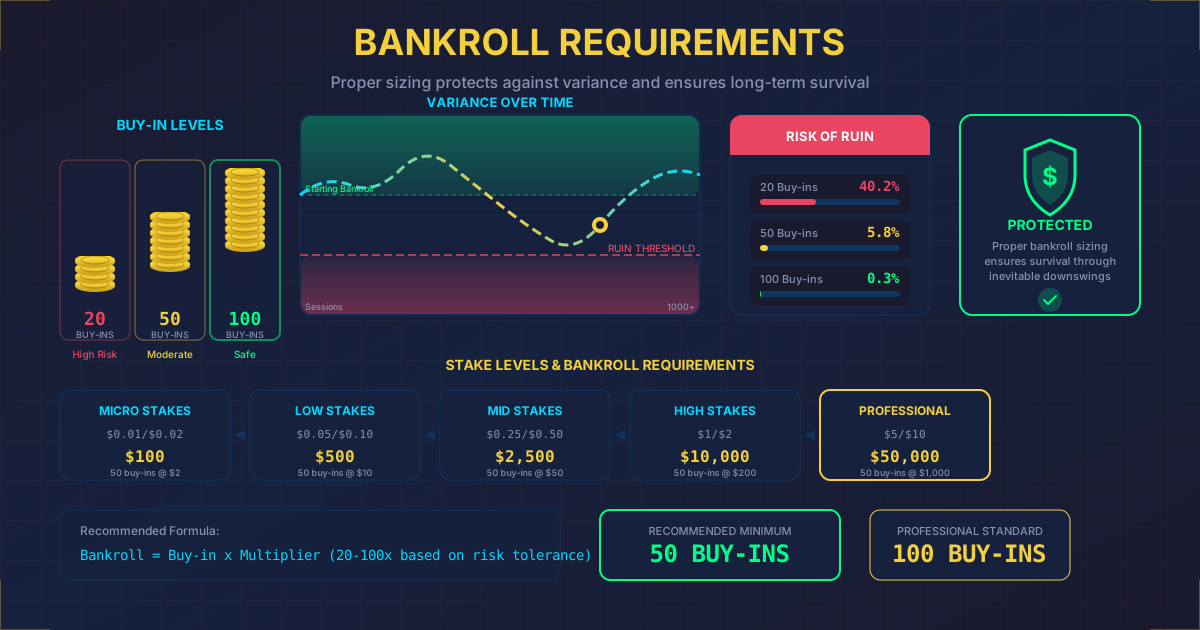
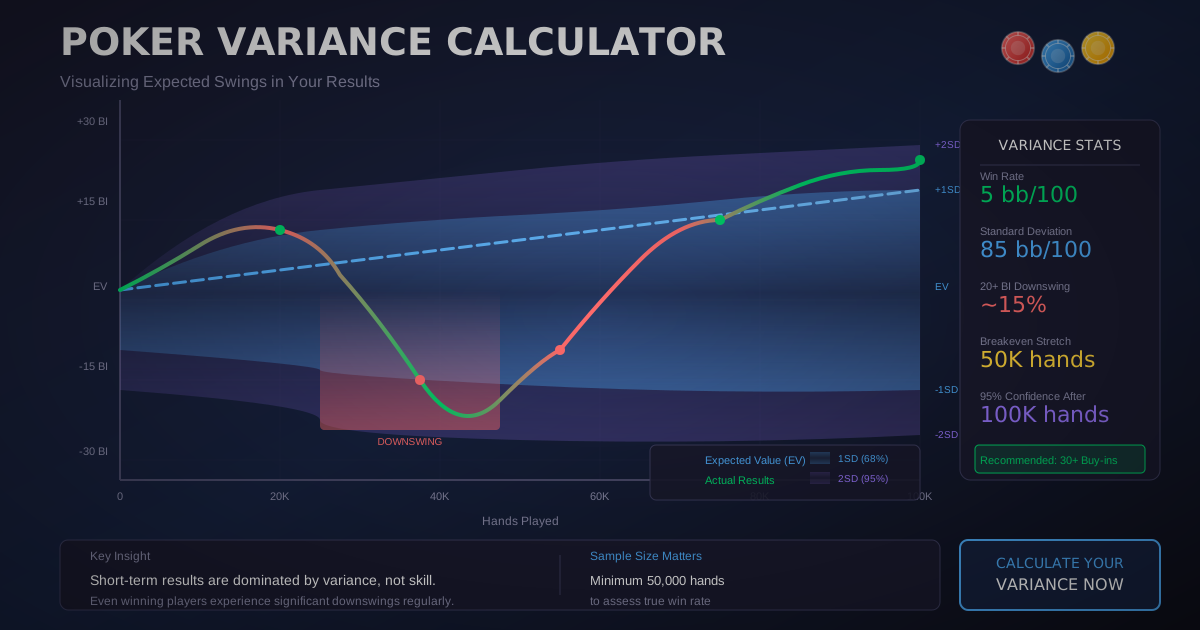
Not Adjusting Bet Sizing: Single deck variance is higher due to deck penetration. Bankroll swings can be larger.
Frequently Asked Questions
Is single deck blackjack better than multi-deck?
Only with proper rules. Single deck 3:2 S17 has ~0.15% house edge versus ~0.45% for 6-deck. But single deck 6:5 has ~1.45% edge - much worse than multi-deck 3:2.
What's the most important rule to check?
Blackjack payout. 3:2 is mandatory for single deck to be advantageous. 6:5 adds ~1.3% to house edge, erasing all single deck benefits.
Why is single deck strategy different?
Card removal effects are more significant. Removing cards from 52 changes probabilities more than removing from 416. This affects doubling and splitting math.
Can I count cards in single deck?
Yes, and it's more effective. But casinos protect single deck games heavily. Expect more scrutiny, lower limits, and faster shuffles if you spread bets.
Where can I find 3:2 single deck?
Increasingly rare. Some downtown Las Vegas casinos, select regional properties, and certain online live dealer games. Always verify rules before playing.
How much is the edge difference worth?
At $25 bets, 100 hands/hour: Single deck 3:2 loses ~$3.75/hour. Eight deck 3:2 loses ~$11.25/hour. Savings: ~$7.50/hour or ~$750 over 100 hours.
Pro Tips
- Always verify 3:2 blackjack payout before sitting - most "single deck" games are 6:5 traps
- Print or memorize the single deck strategy chart - it differs from multi-deck in ~20 plays
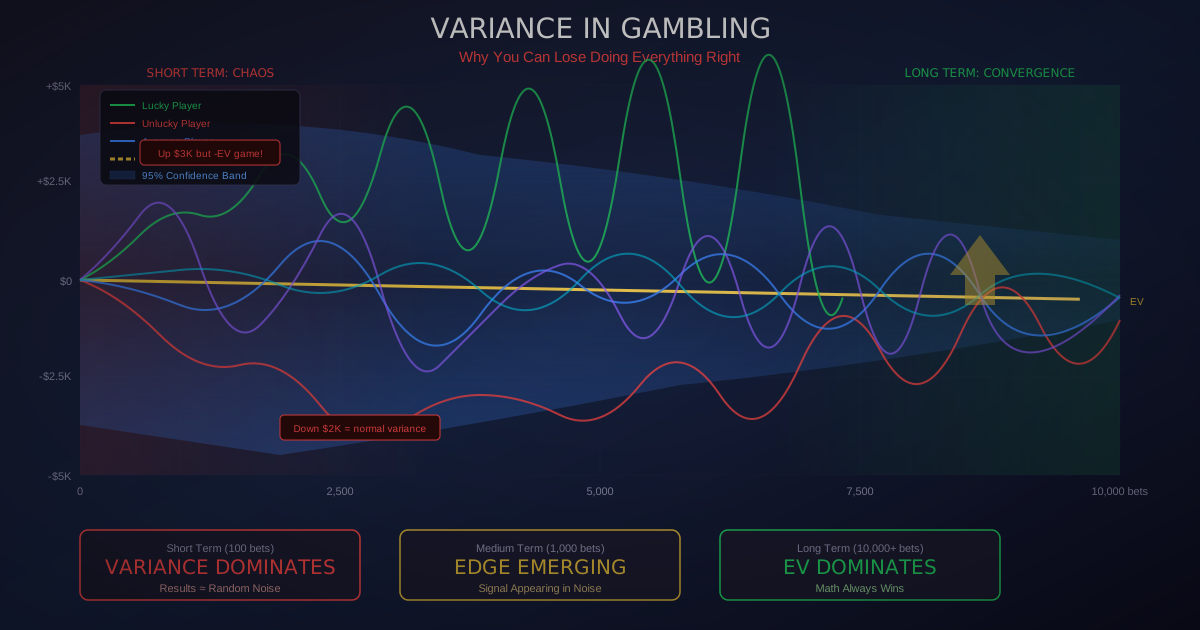
- Expect higher variance in single deck due to deck penetration and composition swings
- If counting, be subtle - single deck gets more heat than any other game
- Consider 6-deck 3:2 over single deck 6:5 every time - the math is clear
Related Calculators
- Blackjack Basic Strategy Calculator - Multi-deck strategy
- Card Counting Calculator - Counting systems
- House Edge Calculator - Rule impact analysis
- Bankroll Calculator - Session sizing
- Expected Value Calculator - Decision EV
Conclusion
Single deck blackjack can be the best game in the casino - or one of the worst. The difference is entirely in the rules. A 3:2 single deck game with S17 and DAS offers just 0.15% house edge, while a 6:5 game flips to 1.45% or higher. Understanding the strategy adjustments and avoiding rule traps is essential for taking advantage of single deck opportunities.
Our calculator provides exact strategy for any single deck variation, showing optimal plays and true house edge. Don't assume single deck means better odds - verify the rules and play the correct strategy for genuine advantage.