Gambling Addiction Risk Calculator: Self-Assessment Tool for Responsible Gaming (2026)
Gambling Addiction Risk Calculator: A Self-Assessment for Healthier Gambling
Gambling should be entertainment, not a source of distress. But for some, what begins as occasional fun can develop into problematic patterns. This self-assessment tool helps you honestly evaluate your gambling behavior against established criteria, providing insight into whether your relationship with gambling is healthy.
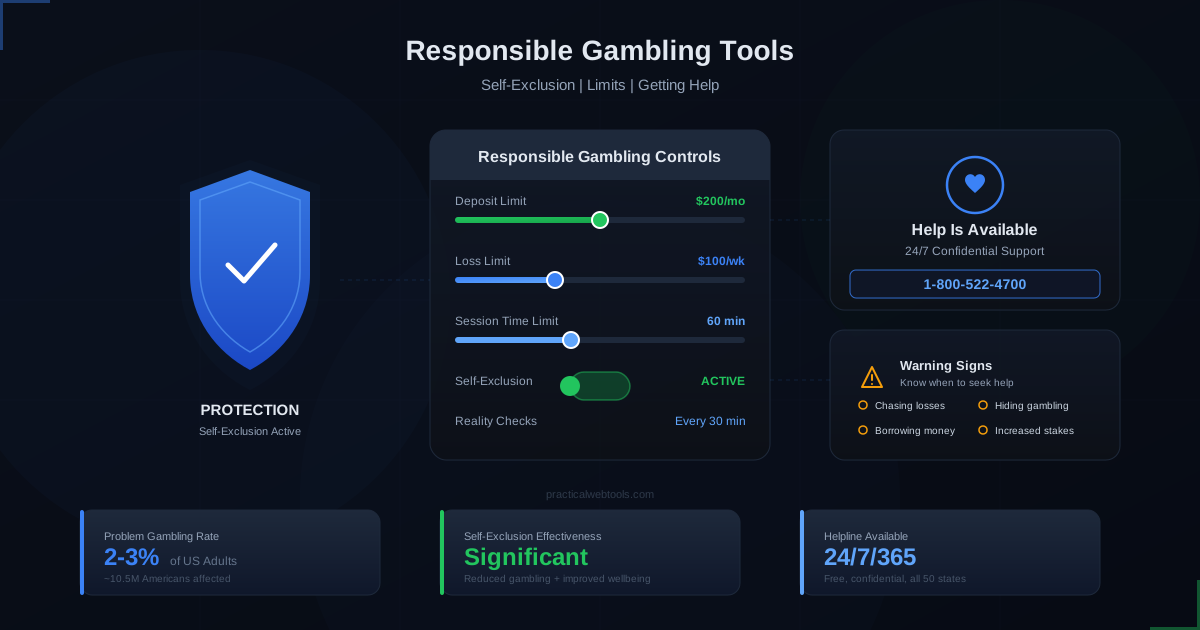
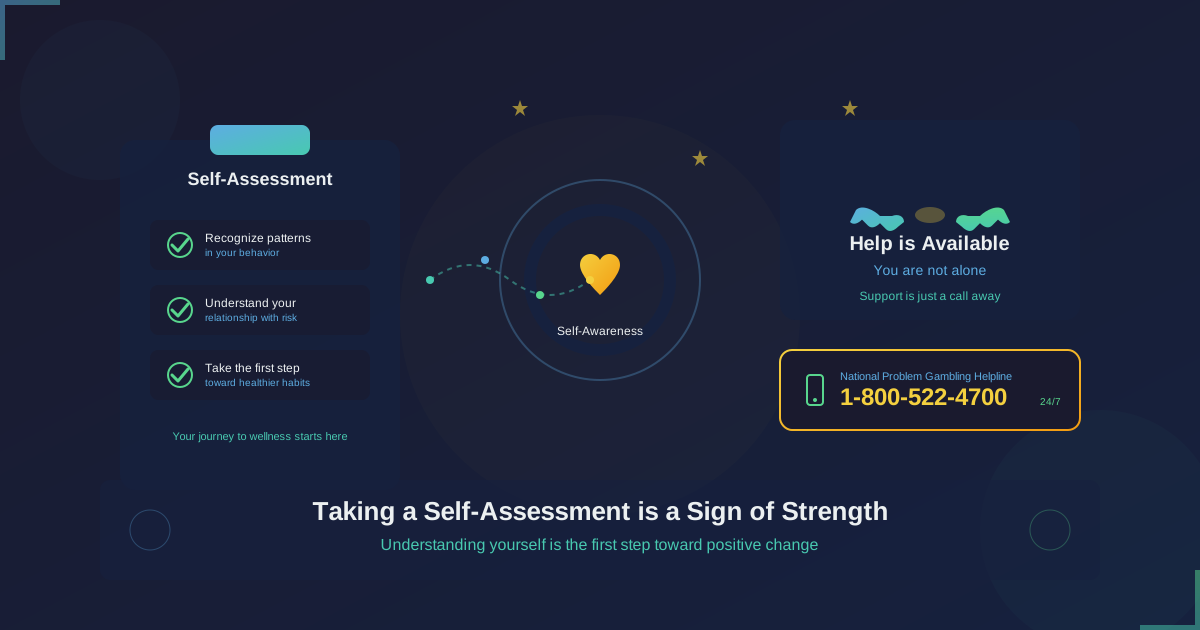
If you're concerned about your gambling, help is available 24/7:
National Problem Gambling Helpline: 1-800-522-4700 Text: 1-800-522-4700 | Chat: ncpgambling.org/chat
Important Disclaimer
This tool is for educational self-reflection only and does not provide medical diagnosis. Problem gambling is a recognized disorder that requires professional evaluation and treatment. If this assessment raises concerns, please consult a qualified mental health professional or contact the resources listed throughout this article. Only a licensed professional can diagnose gambling disorder.
What Is Problem Gambling?
Problem gambling, clinically known as gambling disorder, is characterized by persistent and recurrent problematic gambling behavior leading to clinically significant impairment or distress. It exists on a spectrum - from occasional risky behavior to severe addiction. Recognizing where you fall on this spectrum is the first step toward maintaining control or seeking help.
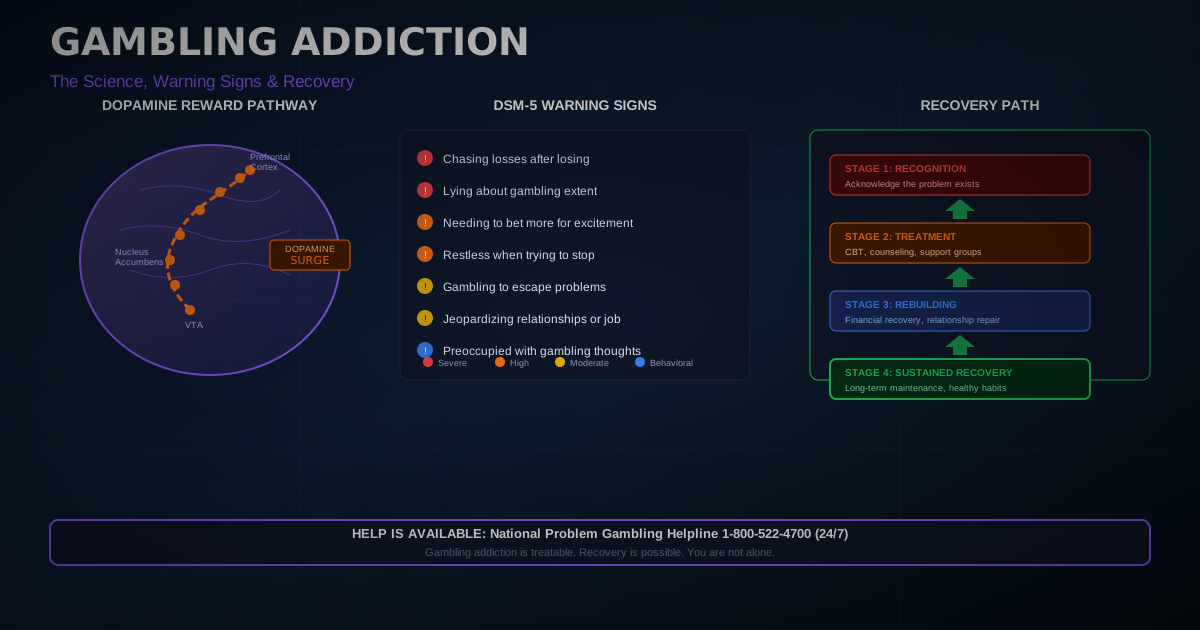
Quick Answer: Problem gambling is identified through behavioral patterns, not amount wagered. Key warning signs: preoccupation with gambling, needing to gamble with increasing amounts, unsuccessful attempts to control gambling, restlessness when trying to stop, gambling to escape problems, chasing losses, lying about gambling, jeopardizing relationships or work, and relying on others for money due to gambling. Experiencing 4+ of these criteria in a 12-month period may indicate gambling disorder. This assessment is not diagnostic - professional evaluation is essential.
How to Use This Self-Assessment
Use the Gambling Risk Assessment →
Assessment Approach
- Answer Honestly: Self-assessment only works with truthful responses
- Consider the Past Year: Focus on the last 12 months of behavior
- Reflect Carefully: Some questions require honest self-examination
- No Judgment: This is for your awareness, not condemnation
- Seek Help if Needed: Concerning results warrant professional consultation
What the Assessment Measures
| Area | What It Examines | Why It Matters |
|---|---|---|
| Control | Ability to limit gambling | Loss of control is a key warning sign |
| Preoccupation | Time spent thinking about gambling | Mental space consumed by gambling |
| Tolerance | Need to increase bets for excitement | Similar to substance tolerance patterns |
| Withdrawal | Distress when not gambling | Emotional dependence indicator |
| Consequences | Impact on life areas | Gambling affecting other domains |
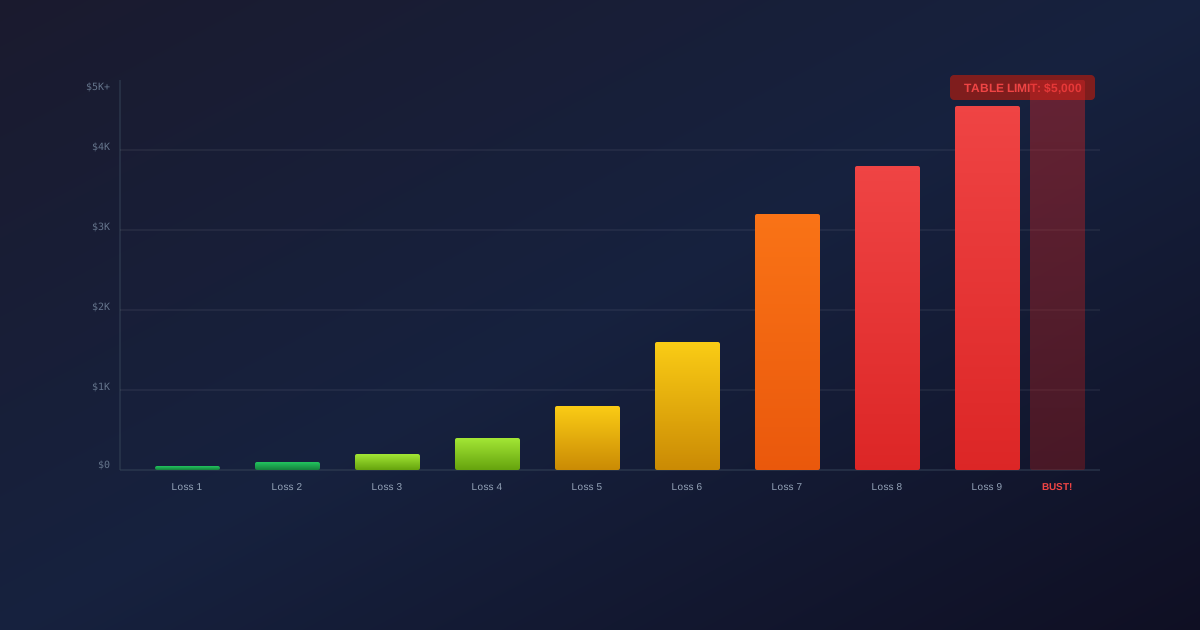
| Chasing | Betting to recover losses | High-risk behavior pattern |
The DSM-5 Criteria for Gambling Disorder
Clinical Diagnostic Criteria
Gambling Disorder requires 4+ criteria in 12 months:

1. TOLERANCE
   Need to gamble with increasing amounts
   to achieve desired excitement

2. WITHDRAWAL
   Restless or irritable when attempting
   to cut down or stop gambling

3. LOSS OF CONTROL
   Repeated unsuccessful efforts to control,
   cut back, or stop gambling

4. PREOCCUPATION
   Often preoccupied with gambling
   (reliving, planning, obtaining money)

5. ESCAPE
   Often gambles when feeling distressed
   (helpless, guilty, anxious, depressed)

6. CHASING
   After losing money, often returns another
   day to get even ("chasing" losses)

7. LYING
   Lies to conceal the extent of
   involvement with gambling

8. JEOPARDIZING RELATIONSHIPS
   Has jeopardized or lost significant
   relationship, job, or opportunity

9. FINANCIAL BAILOUT
   Relies on others to provide money
   to relieve desperate financial situations

Severity Levels:
Mild: 4-5 criteria met
Moderate: 6-7 criteria met
Severe: 8-9 criteria met
Understanding Each Criterion
1. TOLERANCE
   Early sign: $20 bets used to be exciting
   Now need: $100 bets for same feeling

   What to watch:
   - Gradually increasing bet sizes
   - Needing bigger wins to feel satisfied
   - Regular betting no longer exciting

2. WITHDRAWAL
   When you stop or reduce gambling:
   - Restlessness
   - Irritability
   - Difficulty concentrating
   - Sleep problems

   Not everyone experiences withdrawal
   But its presence is concerning

3. LOSS OF CONTROL
   Setting limits you consistently break:
   - "Just one hour" becomes all night
   - "Just $50" becomes $500
   - Telling yourself to stop but continuing

4. PREOCCUPATION
   Gambling occupies mental space:
   - Planning next gambling session
   - Reliving past wins/losses
   - Researching gambling constantly
   - Thinking about money for gambling

5. ESCAPE
   Using gambling to:
   - Avoid problems
   - Relieve bad feelings
   - Escape from stress
   - Numb emotional pain

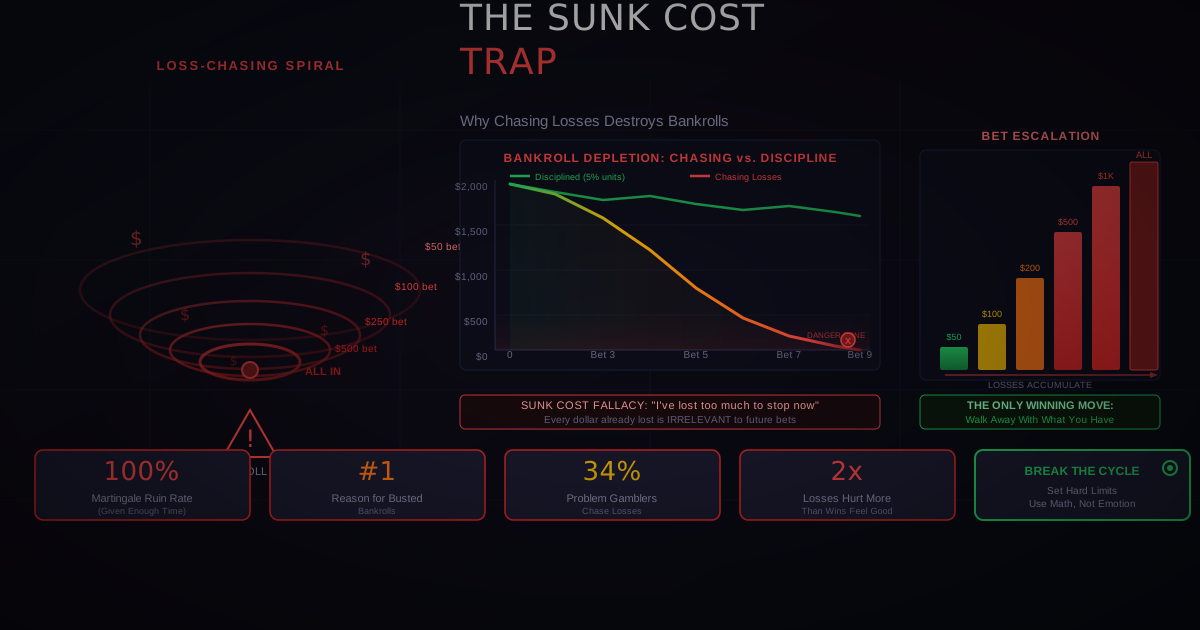
6. CHASING LOSSES
   The belief you can win it back:
   - Increasing bets after losses
   - Returning specifically to recover money
   - "Due to win" thinking
   - Ignoring mounting losses

7. LYING
   Concealing gambling from others:
   - Hiding amount spent
   - Lying about where you were
   - Minimizing when asked
   - Secret accounts or credit cards

8. JEOPARDIZING RELATIONSHIPS
   Gambling causing real-world damage:
   - Arguments with family
   - Missing important events
   - Job performance suffering
   - Lost opportunities

9. FINANCIAL BAILOUT
   Needing rescue from gambling debt:
   - Borrowing from family/friends
   - Taking loans for gambling losses
   - Multiple times being "saved"
   - Repeated financial crises
Self-Assessment Questions
Behavioral Patterns
Answer YES or NO for the past 12 months:

Control Questions:
□ Have you made multiple unsuccessful
  attempts to control or stop gambling?
□ Do you gamble longer or more than
  you intended more often than not?
□ Do you have trouble walking away
  from gambling when you're losing?

Preoccupation Questions:
□ Do you spend significant time thinking
  about gambling when not doing it?
□ Do you often plan your next gambling
  session in advance?
□ Do you feel restless or irritable when
  trying to cut down?

Consequence Questions:
□ Has gambling caused problems in
  relationships with family or friends?
□ Has gambling affected your work,
  school, or other responsibilities?
□ Have you borrowed money or sold
  things to get gambling money?

Emotional Questions:
□ Do you gamble to escape problems
  or relieve unpleasant feelings?
□ After losing, do you feel compelled
  to return to win the money back?
□ Do you feel guilty or ashamed
  about your gambling?

Honesty Questions:
□ Have you lied to family members,
  friends, or others about gambling?
□ Have you hidden evidence of gambling
  (receipts, bank statements)?
Scoring Interpretation
Self-Assessment Results Guide:

0-1 YES answers:
Low risk - Gambling appears recreational
Continue monitoring your behavior
Maintain healthy boundaries

2-3 YES answers:
Moderate risk - Some concerning patterns
Consider setting stricter limits
Be honest about behavior trends
May benefit from talking to someone

4-6 YES answers:
Elevated risk - Multiple warning signs
Strongly recommend professional assessment
Contact helpline for guidance
Consider taking a gambling break

7+ YES answers:
High risk - Significant concern
Professional help recommended
Contact helpline: 1-800-522-4700
You are not alone - help exists

IMPORTANT: This is screening, not diagnosis
Any level of concern warrants attention
Risk Factors for Problem Gambling
Personal Risk Factors
Higher risk individuals include:

Mental Health:
- Depression or anxiety
- ADHD
- Bipolar disorder
- Substance use history
- Other addictions

Personality Traits:
- High impulsivity
- Competitive nature
- Sensation-seeking
- Difficulty with boredom

Life Circumstances:
- Financial stress
- Relationship problems
- Job loss or dissatisfaction
- Isolation or loneliness
- Major life transitions

Age and Gender:
- Young adults (18-25) higher risk
- Men historically higher rates
- Women's rates increasing
- Earlier gambling exposure = higher risk
Environmental Risk Factors
Situational factors that increase risk:

Access:
- Proximity to gambling venues
- Online gambling availability
- 24/7 gambling access
- Frequent gambling advertisements

Social:
- Friends/family who gamble heavily
- Normalization in social circle
- Peer pressure to gamble
- Work culture involving gambling

Financial:
- Irregular income
- Financial desperation
- Belief gambling solves money problems
- Access to easy credit

Gambling-Specific:
- Starting young
- Early big wins
- Skill-based game misconceptions
- Superstitious beliefs about gambling
Warning Signs Others Might Notice
Observable Behavioral Changes
Signs family/friends may observe:

Financial Red Flags:
- Unexplained money problems
- Borrowing frequently
- Selling possessions
- Hidden bank statements
- Multiple ATM withdrawals

Time-Related Changes:
- Being away unexpectedly
- Vague about whereabouts
- Missing events or appointments
- Irregular sleep patterns
- Spending more time alone

Mood Changes:
- Increased irritability
- Anxiety or depression
- Secretive behavior
- Defensive when asked about gambling
- Extreme highs and lows

Relationship Impacts:
- Withdrawal from family
- Breaking promises
- Lying or deception
- Neglecting responsibilities
- Arguments about money
If You're Concerned About Your Results
Immediate Steps
If this assessment raised concerns:

1. Don't Panic
   Recognizing a problem is the first step
   Help is available and effective
   Many people recover fully

2. Reach Out
   National Helpline: 1-800-522-4700
   Available 24/7, confidential
   Trained counselors can help

3. Consider Self-Exclusion
   Most casinos offer voluntary exclusion
   Online gambling sites have limits
   Physical separation helps

4. Tell Someone You Trust
   Break the isolation
   Accountability helps
   You don't have to do this alone

5. Seek Professional Help
   Therapists specializing in gambling
   Gamblers Anonymous meetings
   Treatment programs available
Professional Resources
National Resources:

National Council on Problem Gambling (NCPG)
Helpline: 1-800-522-4700
Website: ncpgambling.org
Services: 24/7 helpline, treatment referrals

Gamblers Anonymous
Website: gamblersanonymous.org
Services: 12-step support groups, meetings

Gam-Anon
Website: gam-anon.org
Services: Support for family members

International Resources:

GamCare (UK)
Helpline: 0808 8020 133
Website: gamcare.org.uk

Gambling Help Online (Australia)
Helpline: 1800 858 858
Website: gamblinghelponline.org.au
Treatment Approaches
Evidence-Based Treatments:

Cognitive Behavioral Therapy (CBT):
- Identifies gambling triggers
- Challenges distorted thinking
- Develops coping strategies
- Most studied and effective approach

Motivational Interviewing:
- Explores ambivalence about change
- Builds internal motivation
- Non-judgmental approach
- Often combined with CBT

Gamblers Anonymous:
- Peer support model
- 12-step program
- Free and widely available
- Long-term community support

Medication (when appropriate):
- May address co-occurring conditions
- Naltrexone shows some promise
- Always combined with therapy
- Prescribed by specialists

Financial Counseling:
- Addresses gambling debt
- Rebuilds financial health
- Practical money management
- Often part of comprehensive treatment
Maintaining Healthy Gambling Habits
Harm Reduction Strategies
If you choose to continue gambling:

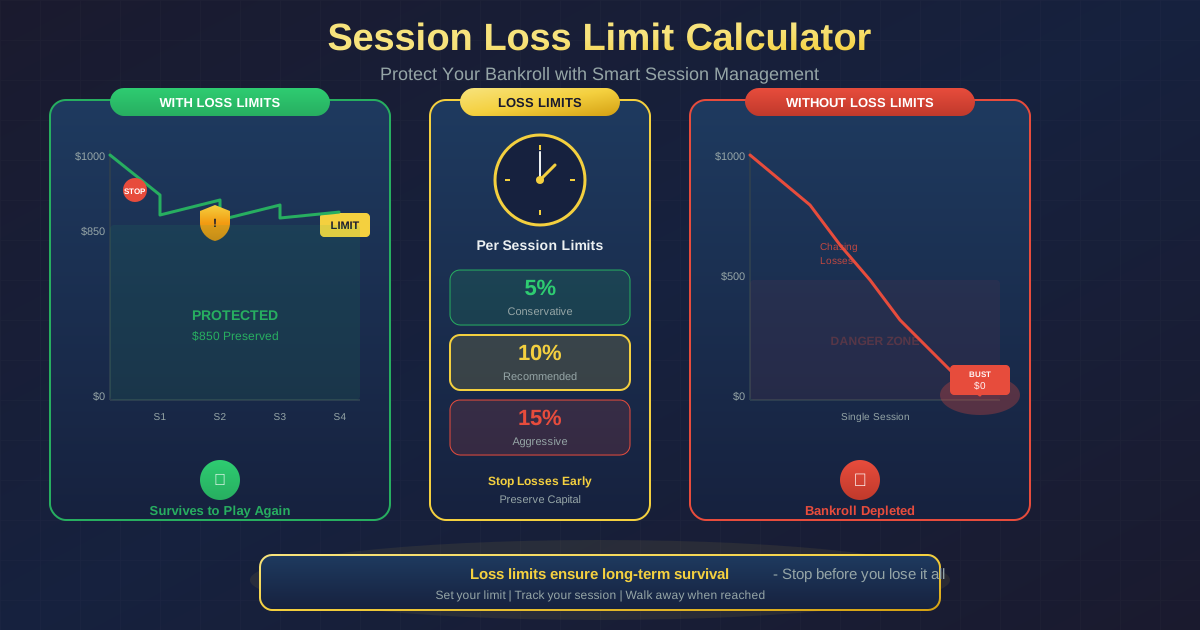
Set Hard Limits:
- Decide budget BEFORE playing
- Never exceed predetermined limit
- Leave cards/extra money at home
- Set time limits and honor them

Maintain Perspective:
- Gambling is entertainment, not income
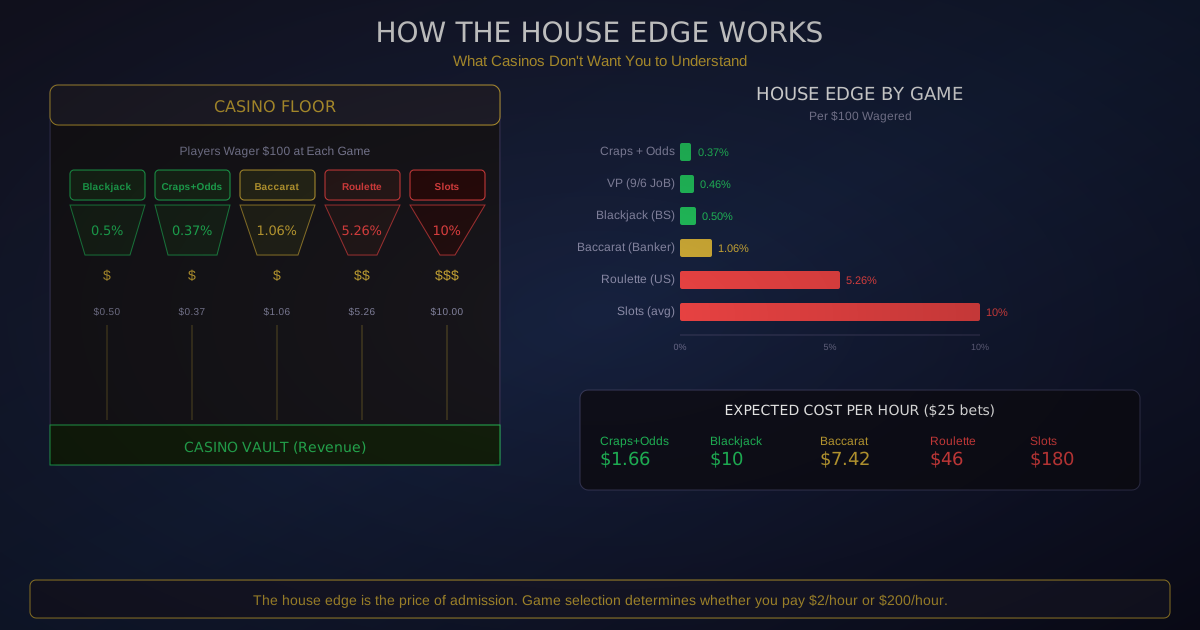
- Expect to lose (house always has edge)
- Wins are luck, not skill (most games)
- Don't chase losses ever

Protect Relationships:
- Never gamble relationship money
- Don't hide gambling from partner
- Keep gambling from affecting duties
- Prioritize family and friends

Watch for Warning Signs:
- Regular self-assessment
- Be honest with yourself
- Notice if limits are slipping
- Seek help early if concerned
When to Stop Completely
Consider stopping entirely if:

- You can't stick to limits
- Gambling causes relationship problems
- You're gambling to escape feelings
- You're lying about gambling
- You're chasing losses
- You've borrowed money for gambling
- Gambling is affecting work/school
- You feel out of control

Stopping isn't failure - it's wisdom
Some people cannot gamble safely
That's okay and it's nothing to be ashamed of
Supporting Someone with Gambling Problems
How to Help a Loved One
If you're concerned about someone:

DO:
- Express concern from a place of love
- Listen without judgment
- Learn about problem gambling
- Offer to help find resources
- Set boundaries for yourself
- Take care of your own wellbeing

DON'T:
- Bail them out financially
- Make excuses for their behavior
- Lecture or criticize
- Expect immediate change
- Enable continued gambling
- Neglect your own needs

Resources for Family:
Gam-Anon: gam-anon.org
National Helpline: 1-800-522-4700
Family counseling services
Frequently Asked Questions
Is problem gambling really an addiction?
Yes. Gambling disorder is classified in the DSM-5 alongside substance-related disorders. Brain imaging studies show similar patterns of activation in gambling and substance addictions. It's a recognized medical condition, not a moral failing.
Can I become addicted to any type of gambling?
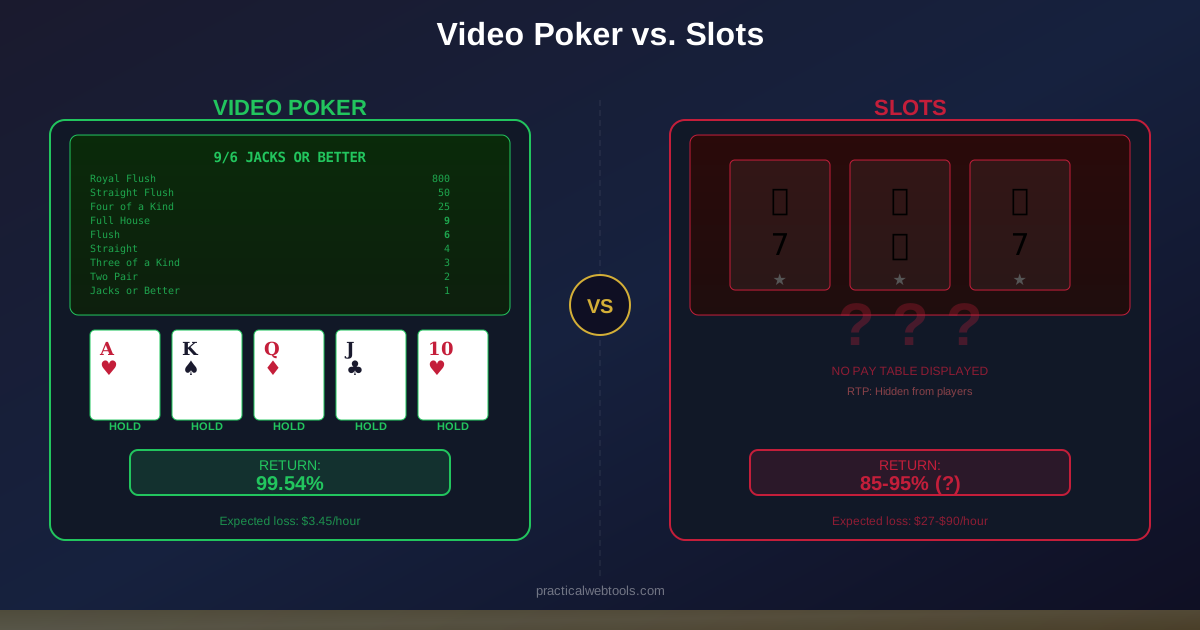
Yes, though some forms carry higher risk. Fast-paced games with quick outcomes (slots, video poker) are associated with higher addiction rates. However, sports betting, casino games, poker, and lottery can all become problematic.
Is online gambling more addictive?
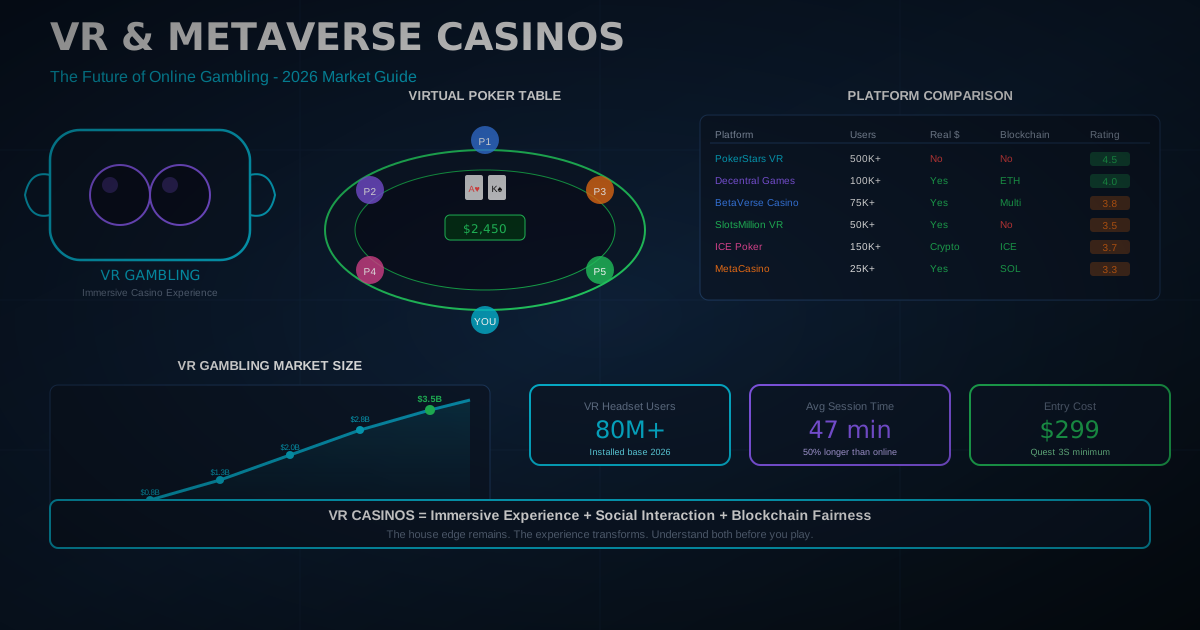
Online gambling's constant availability, privacy, and speed can accelerate problematic patterns. The lack of physical cash and social cues may also reduce natural barriers. However, the individual's vulnerability matters more than the medium.
Can people recover from gambling addiction?
Absolutely. With proper treatment, many people achieve and maintain recovery. Treatment success rates are comparable to other addictions. Recovery is possible at any stage.
How is gambling addiction treated?
Primarily through cognitive behavioral therapy (CBT), support groups like Gamblers Anonymous, and addressing co-occurring conditions. Financial counseling is often part of comprehensive treatment. Some medications may help in certain cases.
What if I'm not sure I have a problem?
If you're questioning your gambling, that's worth exploring. Consider speaking with a counselor who specializes in gambling - an assessment can provide clarity. The helpline (1-800-522-4700) is confidential and can help you evaluate your situation.
Final Thoughts
Taking this self-assessment shows courage and self-awareness. Whether your results suggest concern or not, continuing to monitor your relationship with gambling is wise. Most people who gamble do so without problems, but staying informed helps ensure gambling remains a source of entertainment rather than distress.
If this assessment raised any concerns, please reach out. Problem gambling is treatable, and recovery is absolutely possible. You don't have to face this alone.
National Problem Gambling Helpline: 1-800-522-4700 Available 24/7 | Confidential | Free
Take the Responsible Gambling Assessment →
This article is for educational purposes only and does not constitute medical advice, diagnosis, or treatment. If you're concerned about gambling behavior, please consult a qualified healthcare professional.