Raffle Odds Calculator: Calculate Your Chances of Winning Any Prize Draw (2026)
Raffle Odds Calculator: Know Your Real Chances Before You Buy
Raffles seem simple - buy tickets, hope to win. But understanding the actual mathematics transforms random hoping into informed decision-making. Our raffle odds calculator shows your exact probability of winning based on tickets purchased, total entries, and prize structure, helping you decide if the raffle is worth your money.
What Are Raffle Odds?
Raffle odds represent the probability of your ticket being drawn from all entries. Unlike fixed-odds gambling, raffle odds depend entirely on total participation - more tickets sold means lower odds for everyone. The fundamental calculation is straightforward, but understanding how multiple tickets, multiple prizes, and expected value interact requires deeper analysis.
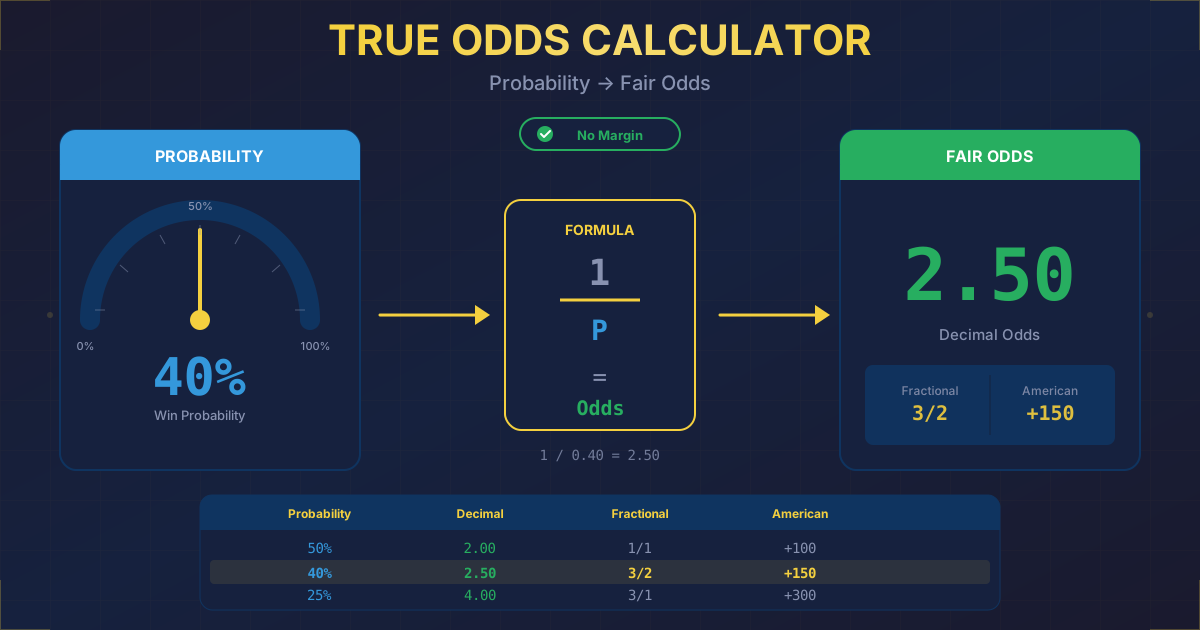
Quick Answer: Basic raffle odds = Your Tickets / Total Tickets. If you buy 5 tickets and 1,000 total are sold, your odds are 5/1000 = 0.5% or 1 in 200. For multiple prizes without replacement: P(win at least one) = 1 - [(T-Y)/T × (T-Y-1)/(T-1) × ... for each prize], where T = total tickets and Y = your tickets. Expected value = (Prize Value × Win Probability) - Ticket Cost.
How to Use Our Calculator
Use the Raffle Odds Calculator →
Step-by-Step Instructions
- Enter Total Tickets: How many tickets will be in the draw
- Enter Your Tickets: How many you're purchasing
- Enter Number of Prizes: How many winners will be drawn
- Set Prize Value: Total value of prizes
- Calculate Odds: See your winning probability and expected value
Input Fields
| Field | Description | Example |
|---|---|---|
| Total Tickets Sold | All entries in raffle | 2,500 |
| Your Tickets | How many you're buying | 10 |
| Number of Prizes | Winners to be drawn | 3 |
| Prize Value | Value of each prize | $5,000 |
| Ticket Price | Cost per entry | $20 |
| Drawing Method | With or without replacement | Without |
Basic Raffle Mathematics
Single Prize Calculation
Simple Raffle Odds:

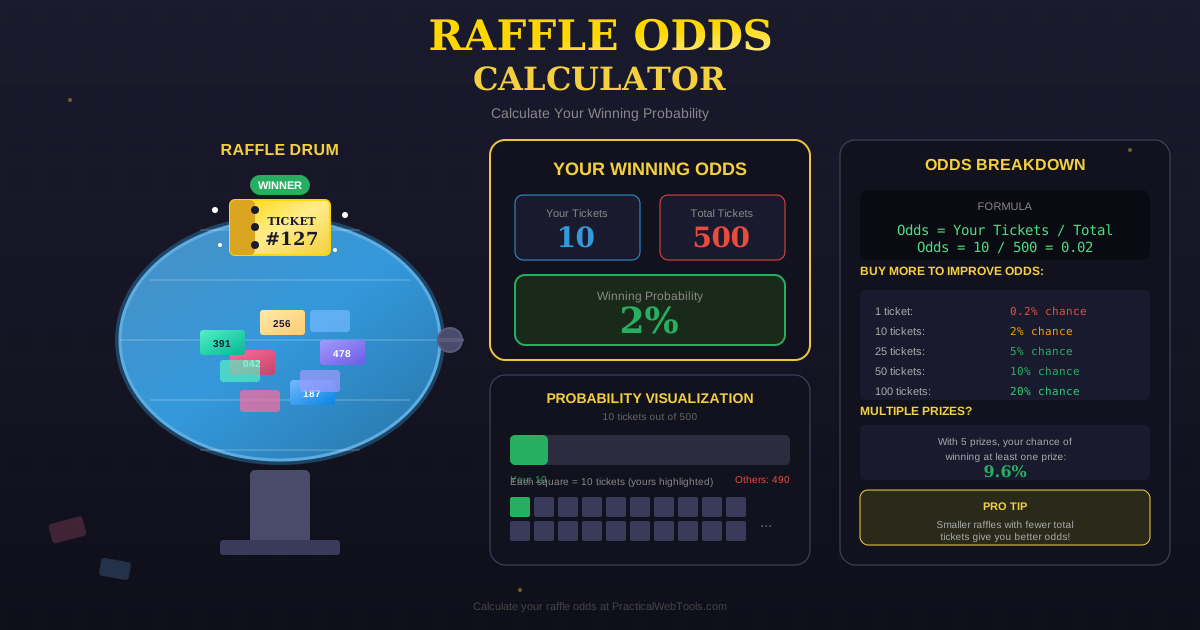
P(Win) = Your Tickets / Total Tickets

Example:
You buy: 10 tickets
Total sold: 500 tickets

P(Win) = 10/500 = 2% = 1 in 50

Odds increase linearly with tickets bought:
1 ticket: 0.2% (1 in 500)
5 tickets: 1% (1 in 100)
10 tickets: 2% (1 in 50)
25 tickets: 5% (1 in 20)
50 tickets: 10% (1 in 10)
Multiple Prizes (Without Replacement)
When multiple prizes are drawn:

Each drawn ticket is removed
Remaining players' odds improve slightly

P(Win at least one) = 1 - P(Win none)

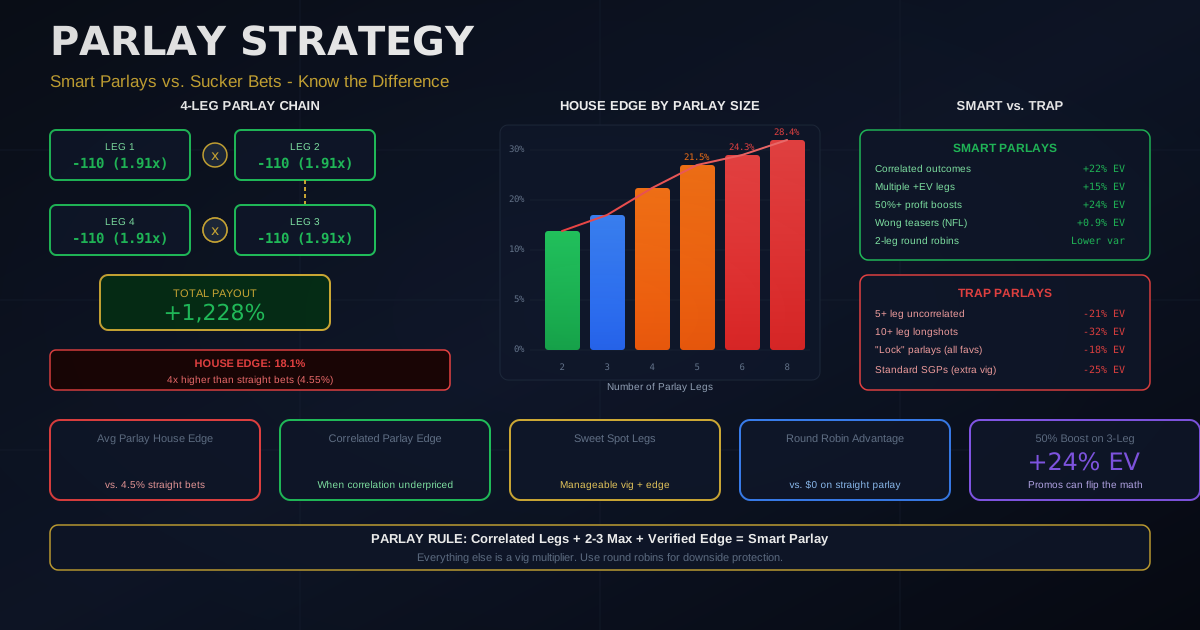
P(Win none) = [(T-Y)/T] × [(T-Y-1)/(T-1)] × ...

Where:
T = Total tickets
Y = Your tickets
Multiply for each prize drawn

Example: 3 prizes from 500 tickets, you have 10

P(miss 1st) = 490/500 = 0.98
P(miss 2nd | missed 1st) = 489/499 = 0.98
P(miss 3rd | missed both) = 488/498 = 0.98

P(win none) = 0.98 × 0.98 × 0.98 = 0.9412
P(win at least one) = 1 - 0.9412 = 5.88%

Slightly better than 3 × 2% = 6% due to removal
Expected Value Calculation
Raffle Expected Value:

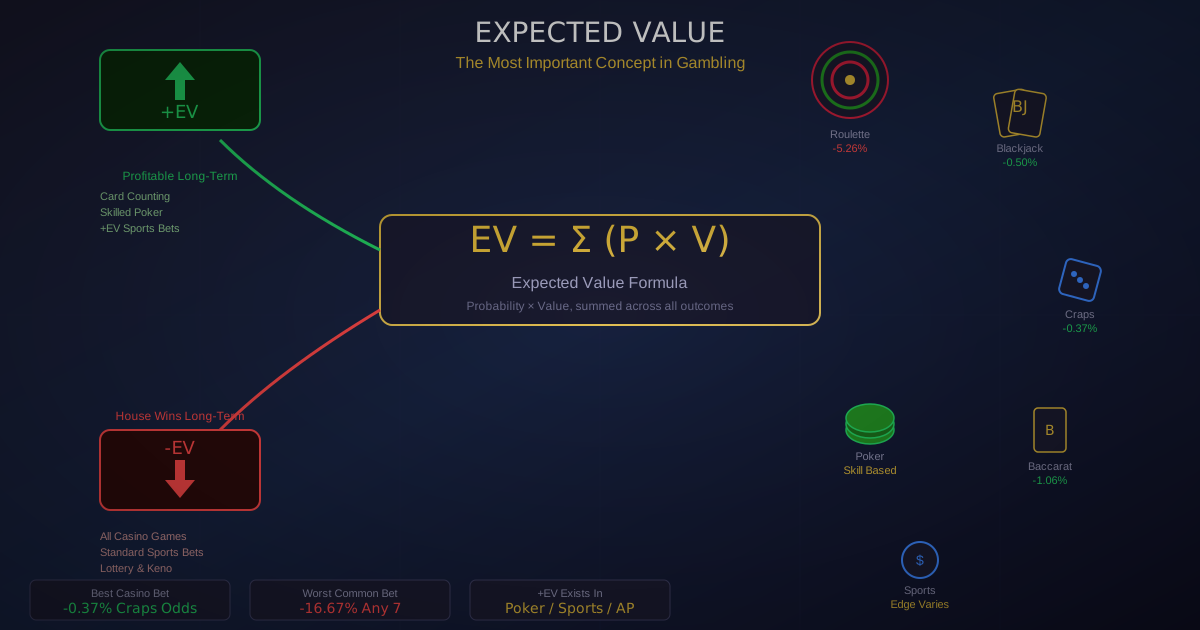
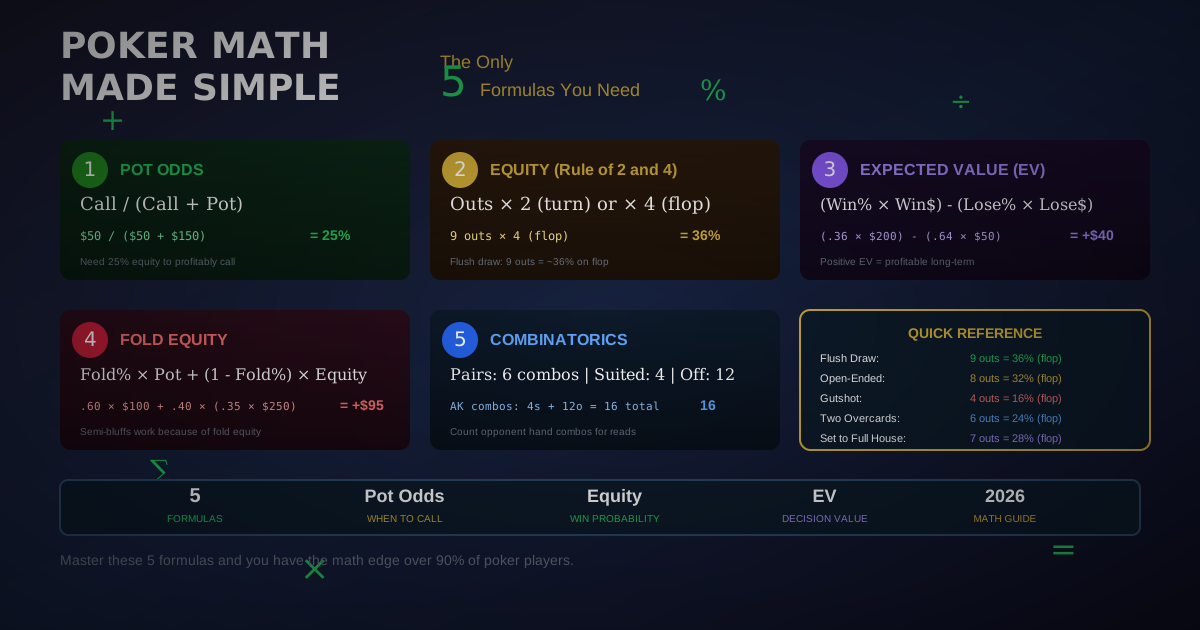
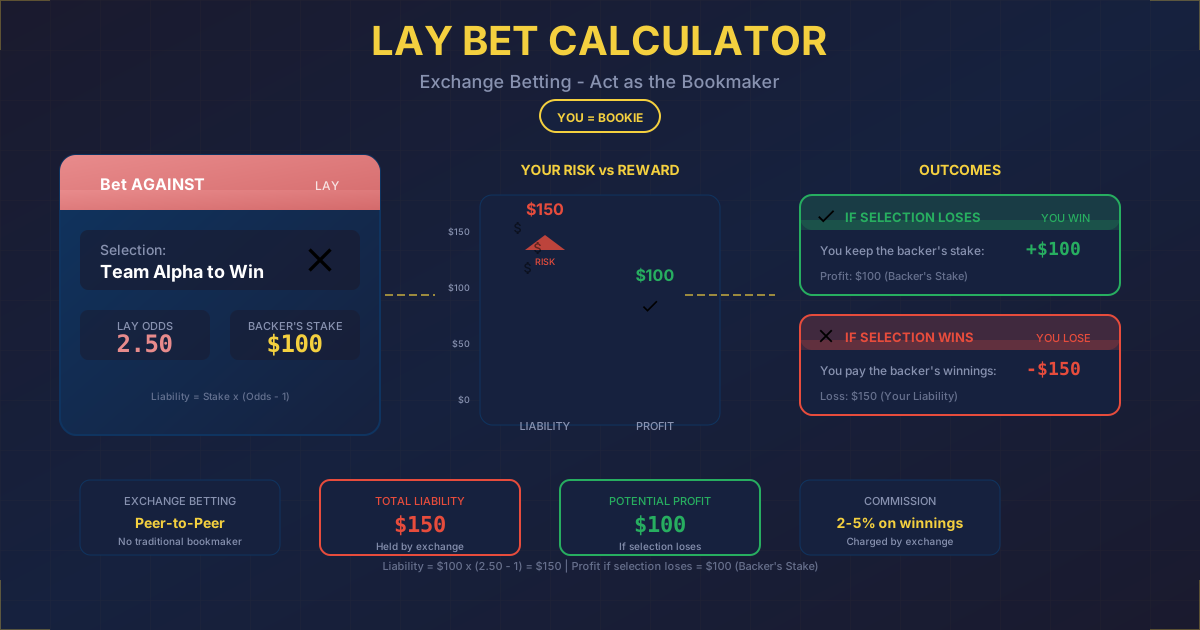
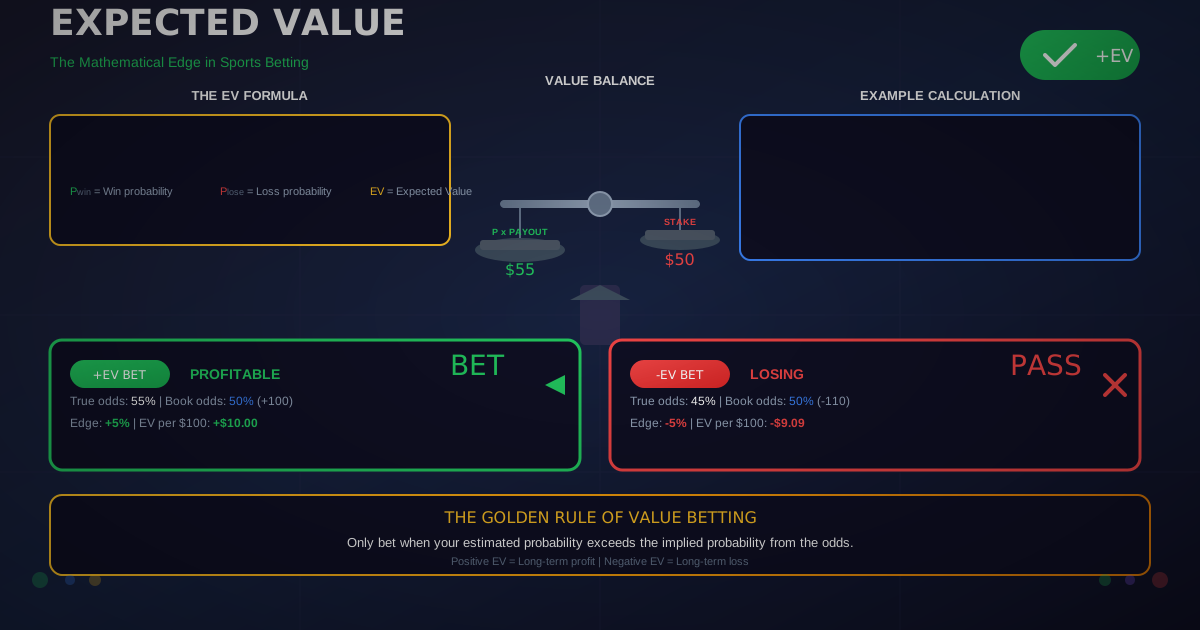
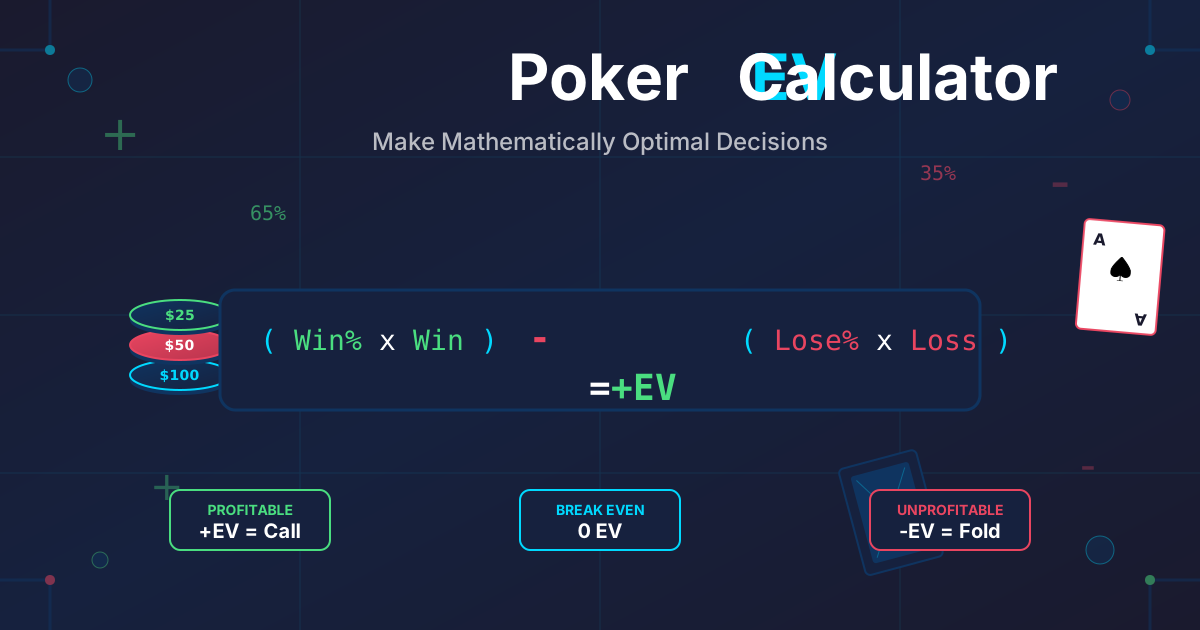
EV = (Prize Value × Win Probability) - Ticket Cost

Example:
Prize: $10,000
Your odds: 2% (10 tickets from 500)
Ticket cost: $25 each (10 × $25 = $250 total)

EV = ($10,000 × 0.02) - $250
EV = $200 - $250
EV = -$50

Negative EV means raffle favors organizer
(Which is how charity raffles work)

Break-even analysis:
Need: Prize × Probability ≥ Cost
$10,000 × P ≥ $250
P ≥ 2.5%

You need 12.5 tickets for break-even EV
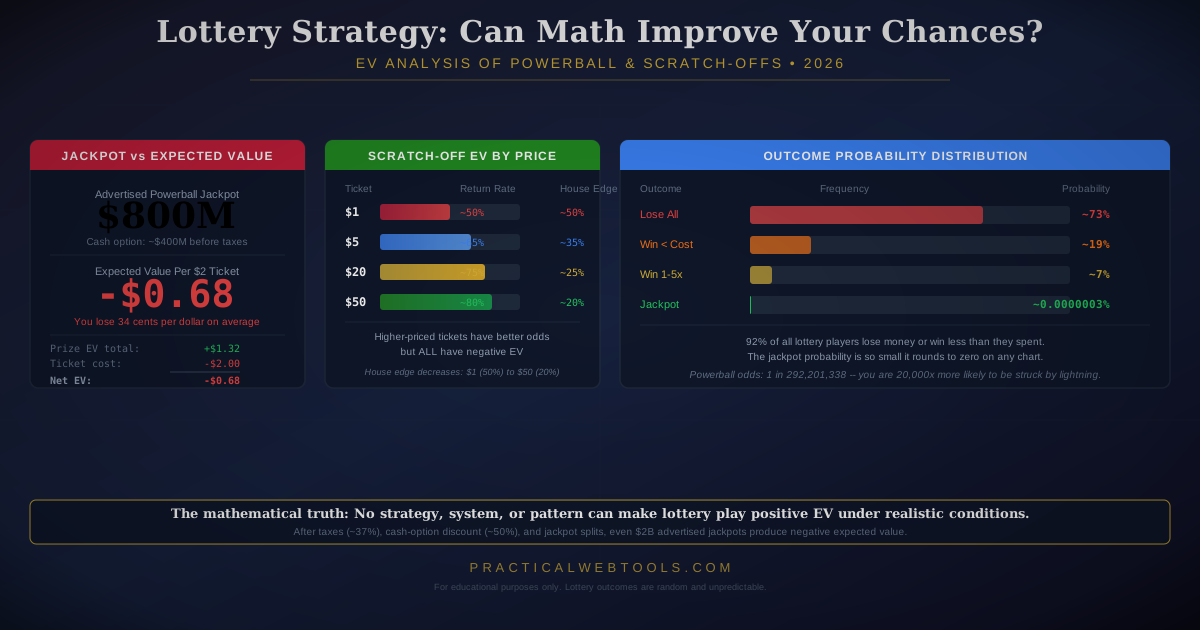
Raffle vs Lottery Comparison
Key Differences
Raffle:
- Fixed number of entries
- Odds depend on participation
- Usually local/small scale
- Often for charity
- Better odds typically

Lottery:
- Open number of entries
- Fixed odds regardless of sales
- State/national scale
- Government revenue
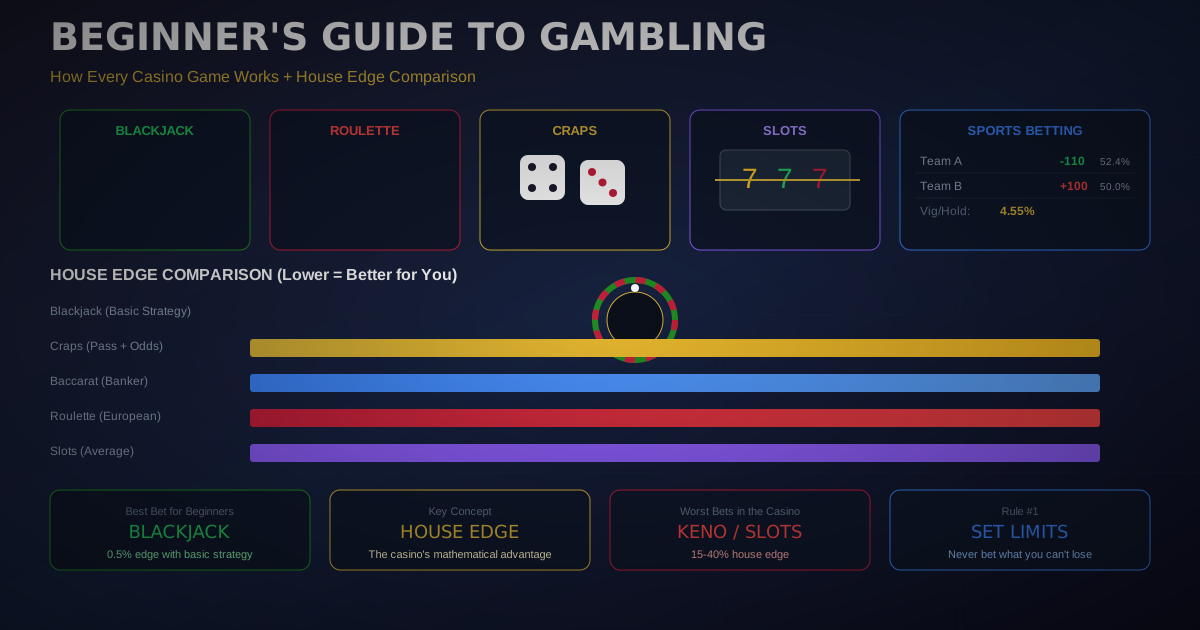
- Much worse odds

Example Comparison:
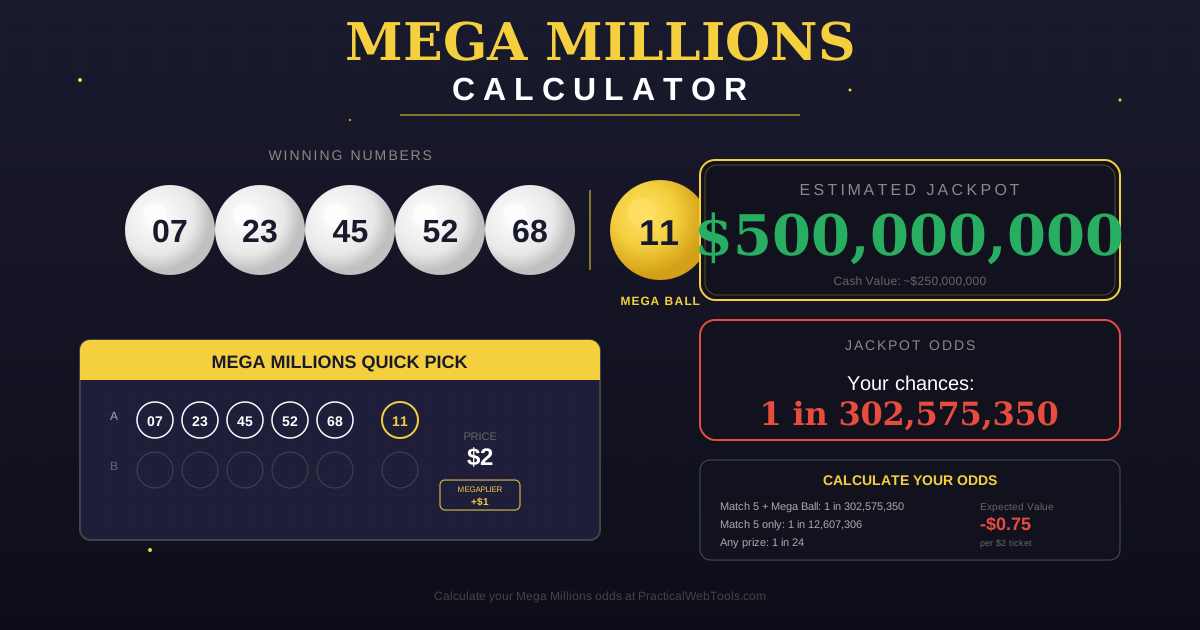
Raffle: 1 in 500 odds (typical)
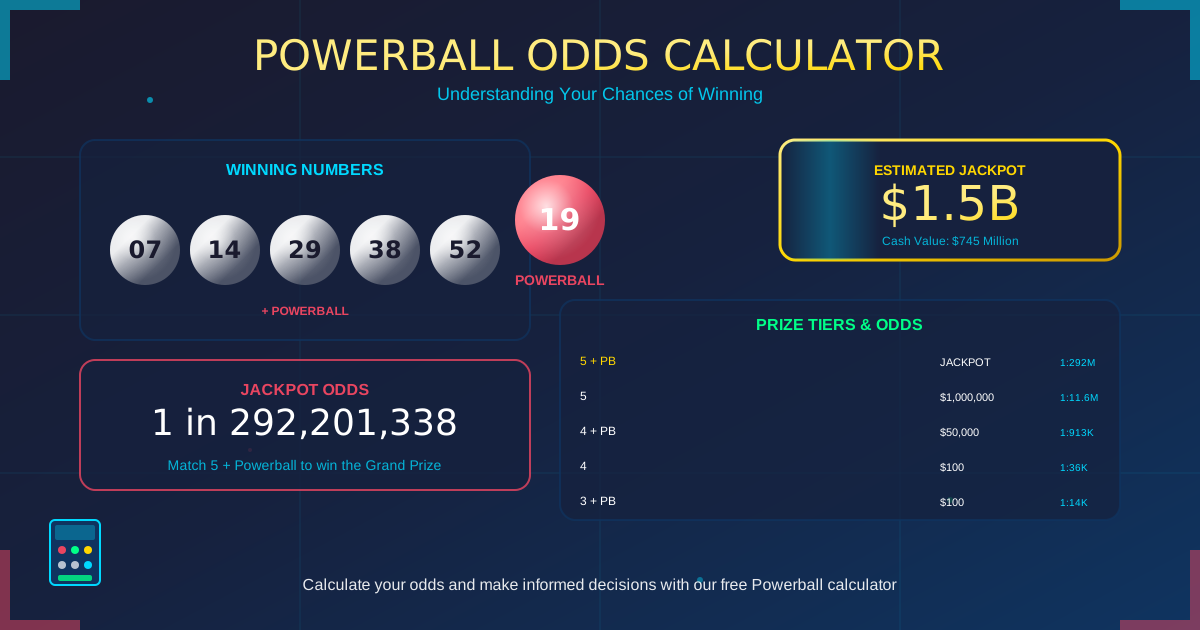
Mega Millions: 1 in 302,575,350

Raffle odds are 605,000x better!
Why Raffles Are Different
Raffle advantages:
- Smaller pools = better odds
- Clear ticket limits
- Single winner (usually)
- Local community benefit
- Transparency

Raffle disadvantages:
- Lower prize values
- Limited availability
- May not be well-run
- No ongoing play option
Real-World Examples
Example 1: Car Raffle Analysis
Situation:
Prize: New car worth $45,000
Tickets: 1,500 maximum sold
Ticket price: $100 each
You're considering: 5 tickets ($500)
Calculation:
Your odds:
P(Win) = 5/1,500 = 0.333% = 1 in 300

Expected Value:
EV = ($45,000 × 0.00333) - $500
EV = $150 - $500
EV = -$350

Break-even tickets needed:
$45,000 × (X/1,500) = $100X
$30X = $100X
Never breaks even if all tickets sold!

Analysis:
Even buying ALL 1,500 tickets ($150,000)
you'd only win $45,000 car

Organizer makes: $150,000 - $45,000 = $105,000
Players collectively lose: $105,000
Result:
This raffle has 70% house edge
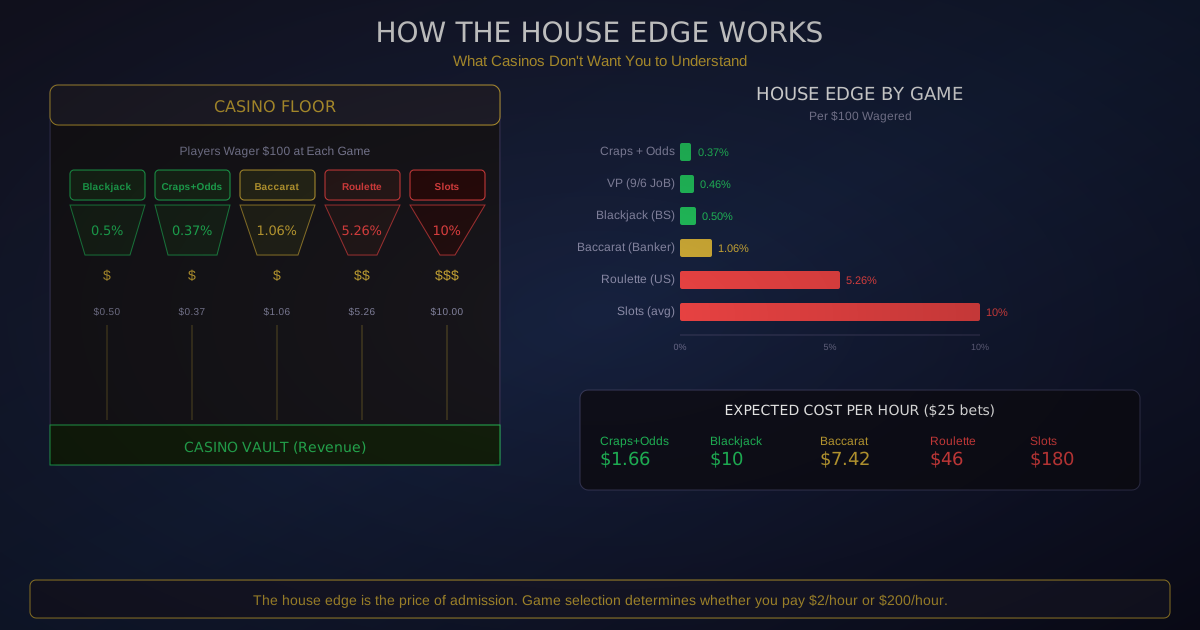
Much worse than most casino games!
But: Proceeds go to charity
Value proposition includes donation element
Example 2: 50/50 Raffle
Situation:
50/50 raffle at sports event:
Half of pot goes to winner
Estimated total pot: $8,000
Winner gets: $4,000
Tickets: $5 each
Estimated entries: 1,600 tickets
You buy: 10 tickets ($50)
Calculation:
Your odds:
P(Win) = 10/1,600 = 0.625% = 1 in 160

Expected Value:
EV = ($4,000 × 0.00625) - $50
EV = $25 - $50
EV = -$25

Interestingly, EV is always -50% of cost
because only half the pot is prize

Every player's EV = -50% of tickets bought
(Unless very few participate)
Result:
50/50 raffles have exactly 50% house edge
By design, half goes to organizer
Still better odds than lottery
$25 loss supports the organization
Example 3: Multiple Prize Charity Raffle
Situation:
Charity gala raffle:
1st prize: $10,000
2nd prize: $3,000
3rd prize: $1,000
Total tickets: 400
Ticket price: $50
You buy: 8 tickets ($400)
Calculation:
Probability of winning each prize:

1st Prize (8/400 = 2%):
If you don't win 1st, your odds for 2nd improve

Using exact calculation:
P(win 1st) = 8/400 = 0.02
P(win 2nd | miss 1st) = 8/399 = 0.02005
P(win 3rd | miss 1st and 2nd) = 8/398 = 0.0201

P(win at least one):
= 1 - P(miss all three)
= 1 - (392/400 × 391/399 × 390/398)
= 1 - (0.98 × 0.98 × 0.98)
= 1 - 0.9412
= 5.88%

Expected prize value:
= (0.02 × $10,000) + (0.02 × $3,000) + (0.02 × $1,000)
= $200 + $60 + $20
= $280 (approximate, ignoring dependencies)

EV = $280 - $400 = -$120
Result:
5.88% chance of winning something
Expected return: $280 on $400 spent
30% effective house edge
Charitable donation offset: $120 goes to cause
Example 4: Small Prize Pool Raffle
Situation:
Office raffle:
Prize: $200 gift card
Total tickets: 50
Ticket price: $5
Everyone buys equal tickets
You buy: 2 tickets ($10)
Calculation:
Your odds:
P(Win) = 2/50 = 4% = 1 in 25

Expected Value:
EV = ($200 × 0.04) - $10
EV = $8 - $10
EV = -$2

Total pot: 50 × $5 = $250
Prize: $200
Surplus: $50 (office party fund?)

Break-even analysis:
If only 40 tickets sold:
Your odds: 2/40 = 5%
EV = ($200 × 0.05) - $10 = $0 (break-even!)
Result:
Small raffles can approach fair value
-$2 EV is minimal for social participation
Low ticket count dramatically improves odds
4% chance is actually reasonable
Optimal Ticket Strategy
How Many Tickets to Buy
Marginal analysis:

Each additional ticket adds:
- Incremental probability
- Same incremental cost
- Diminishing relative improvement

Example: 1,000 ticket raffle, $10/ticket

1st ticket: 0% → 0.1% (+0.1% absolute)
10th ticket: 0.9% → 1.0% (+0.1% absolute)
100th ticket: 9.9% → 10% (+0.1% absolute)

Absolute improvement constant
Relative improvement decreases:
- 1st ticket: infinite improvement
- 10th ticket: 11% relative improvement
- 100th ticket: 1% relative improvement

No optimal number mathematically
Decision depends on budget and desire
When More Tickets Makes Sense
Buy more tickets when:
- Prize value is high relative to cost
- Total ticket pool is small
- You want higher certainty of winning
- Budget allows without financial stress
- It's for charity you support anyway

Buy fewer tickets when:
- Expected value is very negative
- Many tickets already sold
- Prize isn't valuable to you personally
- Money could be better spent elsewhere
Special Raffle Situations
Unlimited Ticket Raffles
Some raffles have no ticket limit:

Risk: Unknown final odds
Could buy 10 tickets expecting 1%
Then 10,000 total sold = only 0.1%

Strategy:
- Wait until end if possible
- Ask about current sales
- Set spending limit regardless
- Assume worst-case participation
Early Bird Raffles
Early purchase bonuses:
"Buy before Friday, get double entries"

Analysis:
If 1,000 total entries normally
Early bird: 500 bought, doubled to 1,000
+ Late buyers: 300
= 1,300 total effective entries

Your 10 early tickets (20 entries):
Odds = 20/1,300 = 1.54%

Compare to 10 regular tickets:
Odds = 10/1,300 = 0.77%

Early bird doubles your effective odds
Worth taking if planning to buy anyway
Guaranteed Winner Raffles
"Drawing continues until winner"
vs
"If ticket not present, redraw"

Guaranteed winner:
All tickets have stated odds

Must be present:
If 20% no-shows, effective odds improve
Your 1 in 100 becomes ~1 in 80

Factor in presence rate when evaluating
Common Mistakes to Avoid
-
Ignoring Total Ticket Count: Your odds depend entirely on total entries. 10 tickets from 100 (10%) is very different from 10 from 10,000 (0.1%).
-
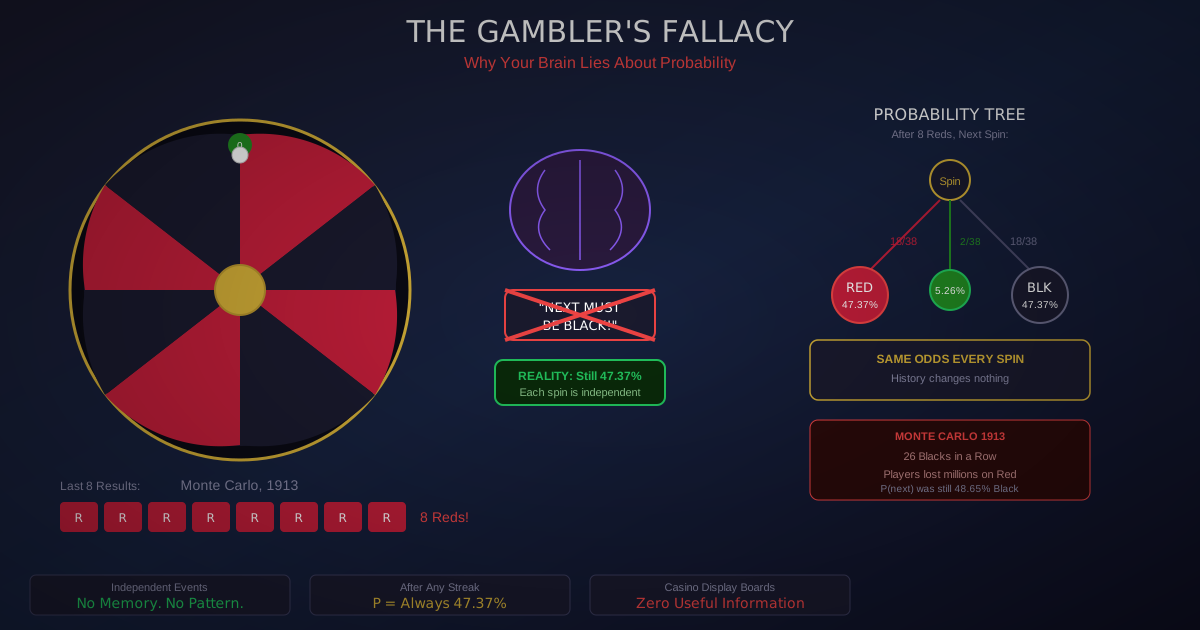
Assuming "Due to Win": Each raffle is independent. Losing previous raffles doesn't increase your odds in the next one.
-
Overspending for Marginal Odds: Going from 1% to 2% by doubling your spend rarely makes mathematical sense unless the raffle already has positive EV.
-
Not Considering the Charity Angle: If it's a charity raffle, part of your "loss" is actually a donation. Evaluate total value, not just prize value.
-
Buying Into Unlimited Raffles Blindly: Without knowing total entries, you can't calculate odds. Assume high participation for conservative planning.
-
Treating Raffles as Investments: Even favorable raffles are gambling. Budget raffle spending as entertainment, not expected returns.
Frequently Asked Questions
How do I calculate my raffle odds?
Divide your tickets by total tickets sold. If you have 5 tickets out of 200 total, your odds are 5/200 = 2.5% or 1 in 40.
Do my odds improve if I buy tickets at different times?
No. What matters is the final ratio when the drawing happens. Early or late purchase doesn't change the mathematics (unless there's an early bird bonus).
Are charity raffles worth it?
Depends on your perspective. Expected value is usually negative, but part of your ticket cost supports the charity. Consider it part donation, part gamble.
Should I buy multiple tickets or just one?
Multiple tickets increase your absolute odds proportionally but cost more. There's no mathematical optimum - it depends on your budget and how much you want to win.
What's a good raffle to enter?
Look for small ticket pools (better odds), valuable prizes, and causes you support. Avoid unlimited entry raffles without knowing expected participation.
How do raffles compare to lottery?
Raffles typically have much better odds (1 in hundreds vs 1 in millions) but smaller prizes. Dollar for dollar, raffles usually offer better expected value.
Pro Tips
- Always find out the total ticket count before buying - this determines your actual odds
- For charity raffles, calculate how much you'd donate anyway and treat that as separate from gambling
- Early bird bonuses are mathematically valuable - use them if you're planning to participate
- Small local raffles often have the best odds due to limited participation
- Set a raffle budget and stick to it - the excitement can lead to overspending
Related Calculators
- Lottery Expected Value Calculator - Compare to lottery
- Mega Millions Calculator - See lottery math
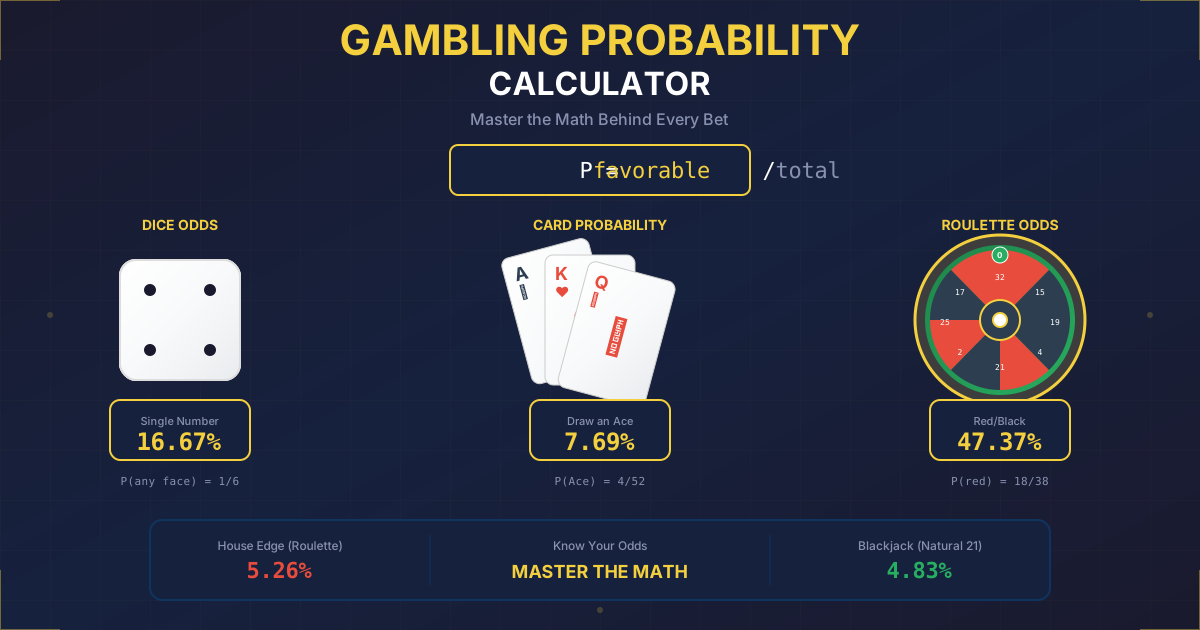
- Gambling Probability Calculator - General probability
- Expected Value Calculator - Calculate any bet's value
- Odds Converter - Convert probability formats
Conclusion
Raffle odds are refreshingly simple compared to other gambling mathematics. Your tickets divided by total tickets gives you the answer. The complexity comes in evaluating whether that probability justifies the cost, accounting for multiple prizes, and recognizing the charitable or social value beyond pure expected value.
Our calculator handles the math instantly, whether it's a simple one-prize drawing or a complex multi-prize charity gala. Understanding these odds helps you participate thoughtfully - enjoying the excitement while keeping expectations realistic.