Bankroll Volatility Tracker Calculator: Monitor Betting Swings (2026)
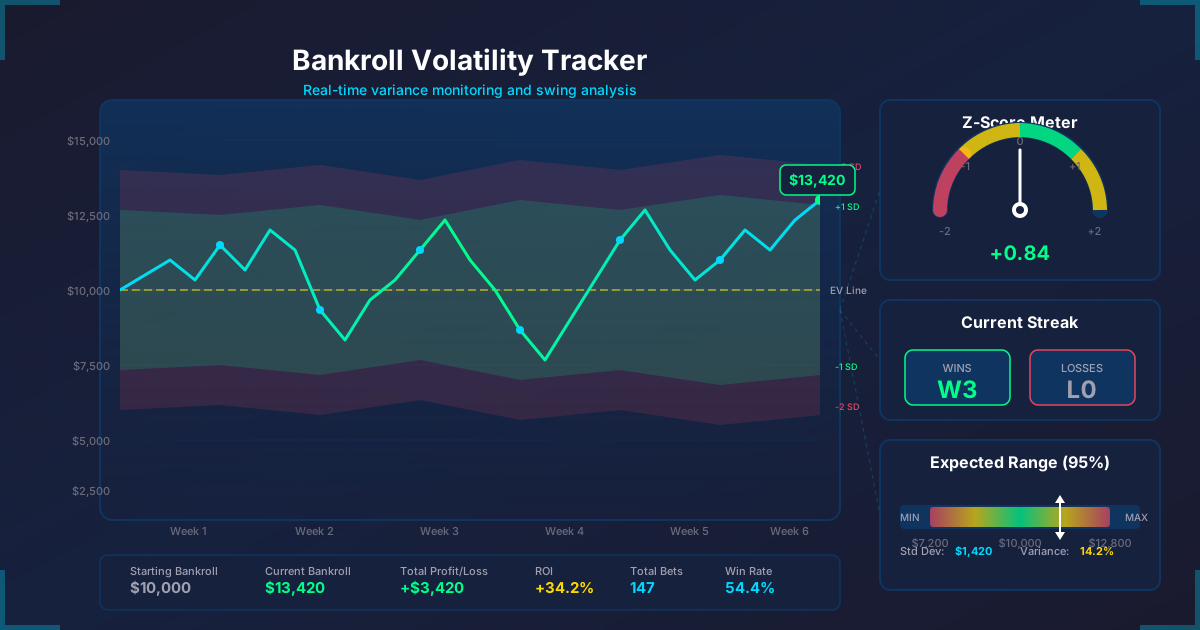
Bankroll Volatility Tracker: Understand Your Swings
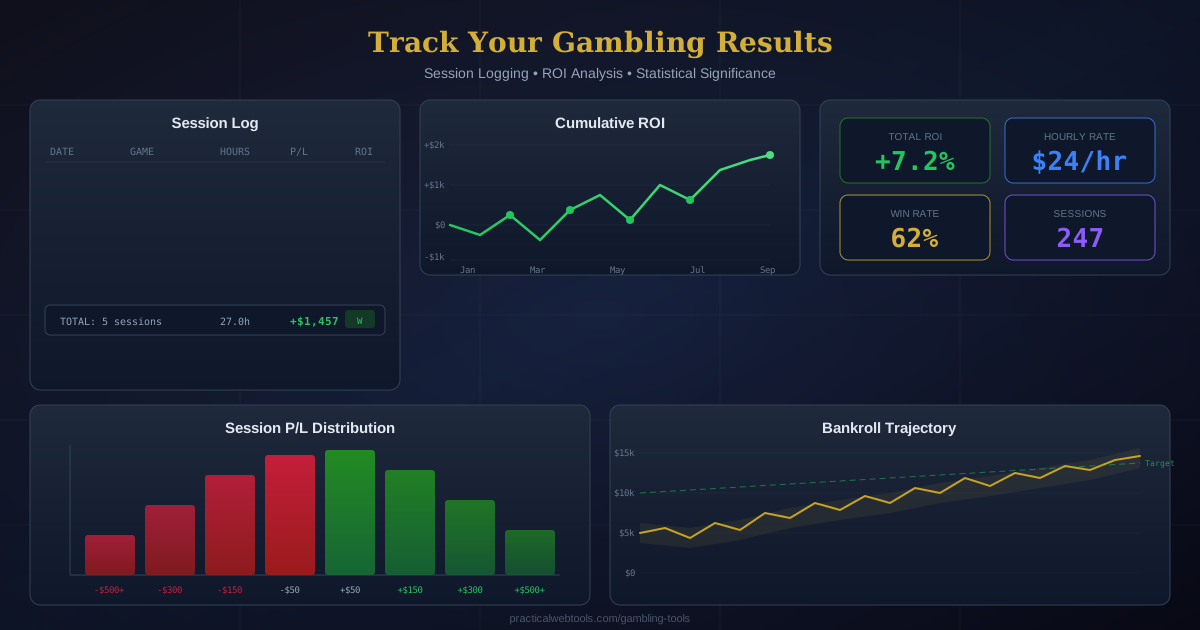
Volatility tells you whether your bankroll swings are normal or concerning. Our tracker calculates standard deviation, analyzes your results distribution, and helps determine if you're running good, bad, or right on expectation.
What Is Bankroll Volatility?
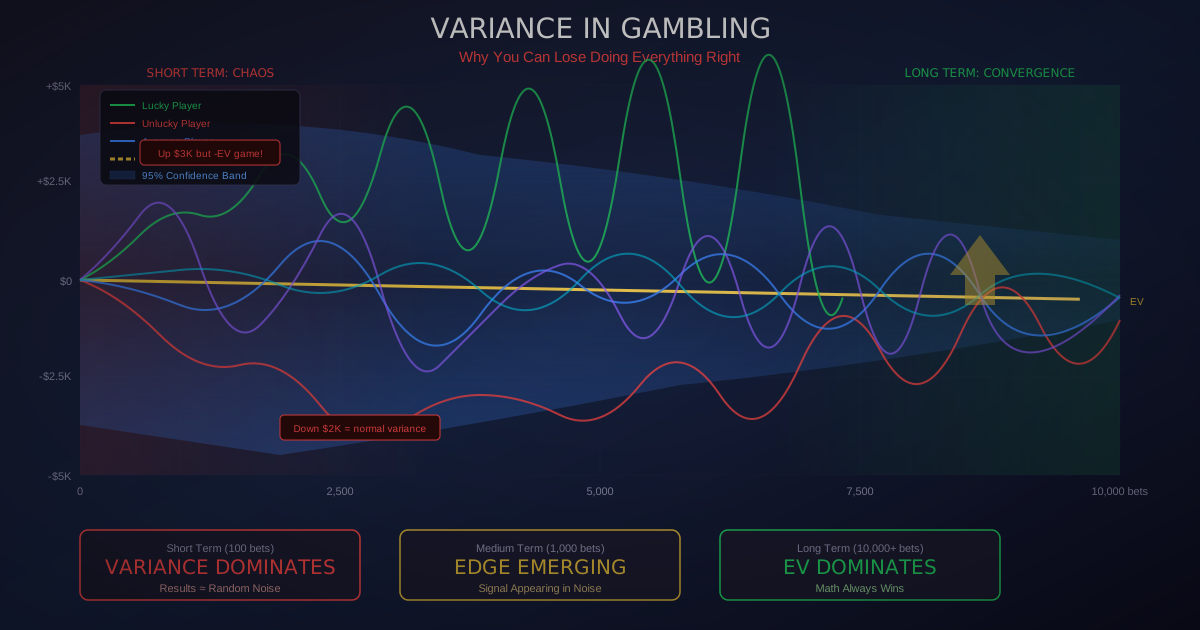
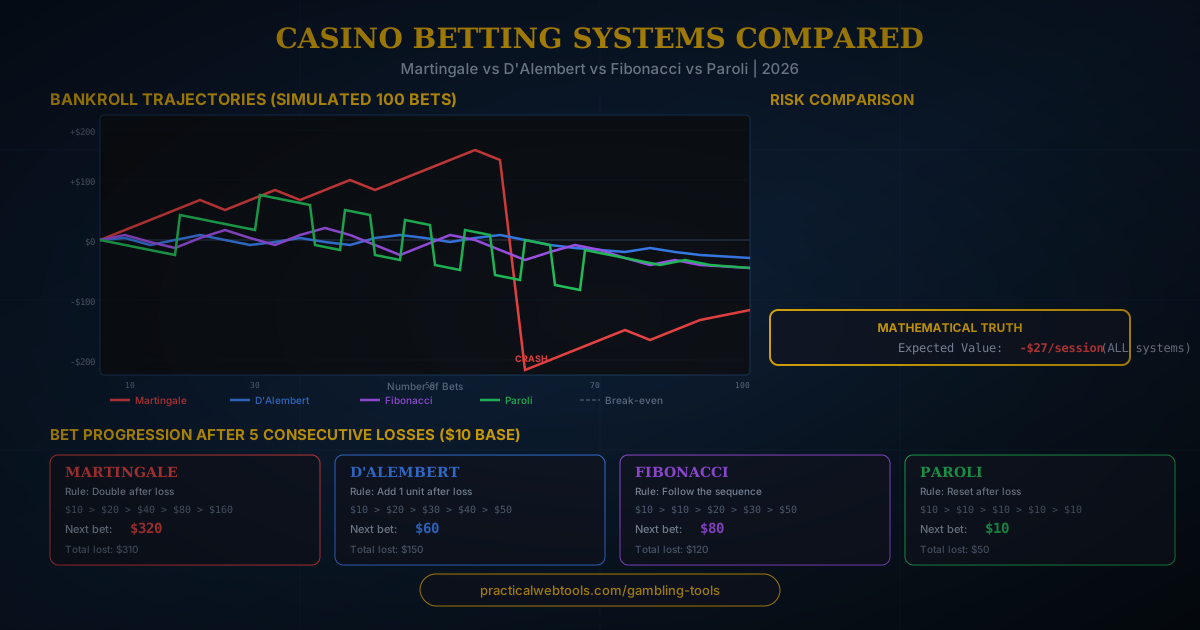
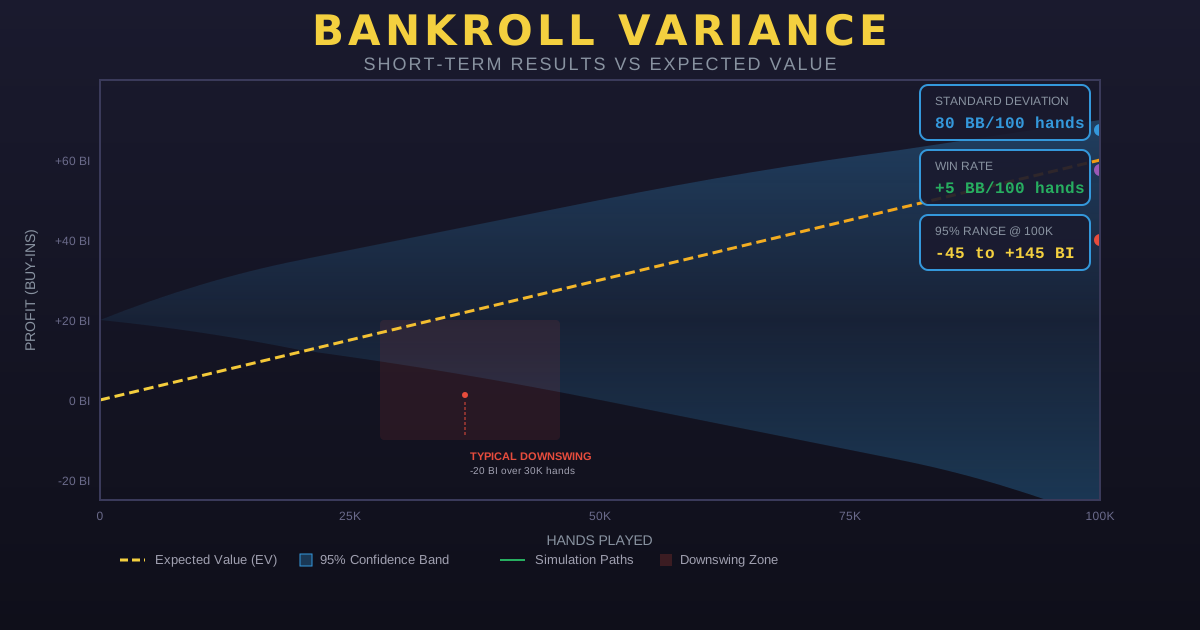
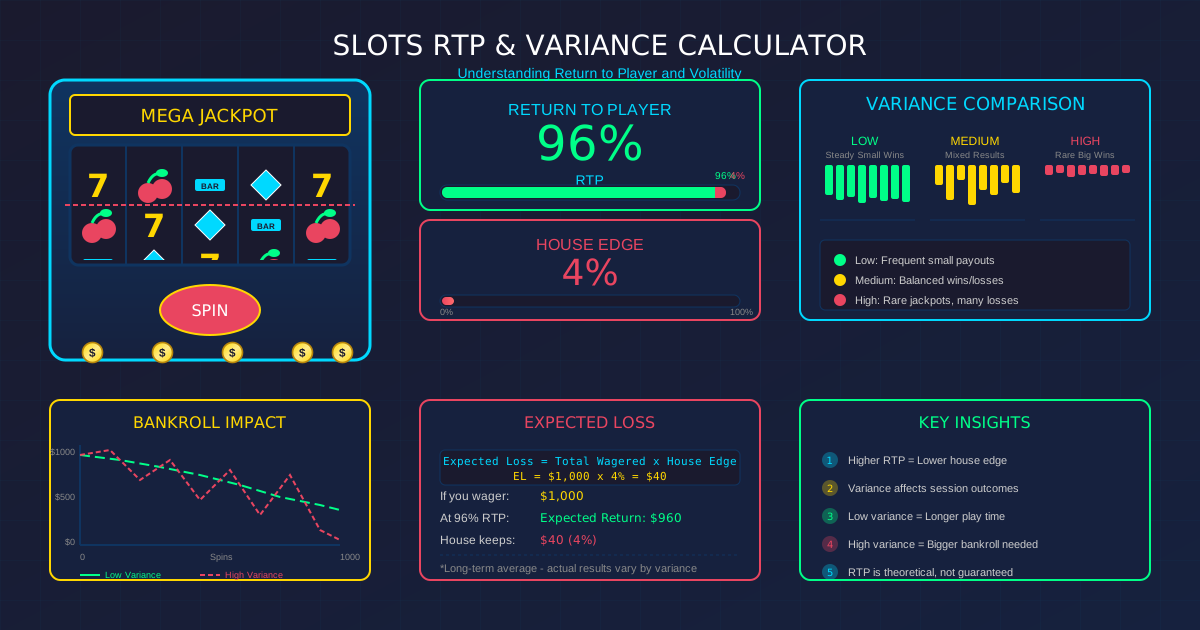
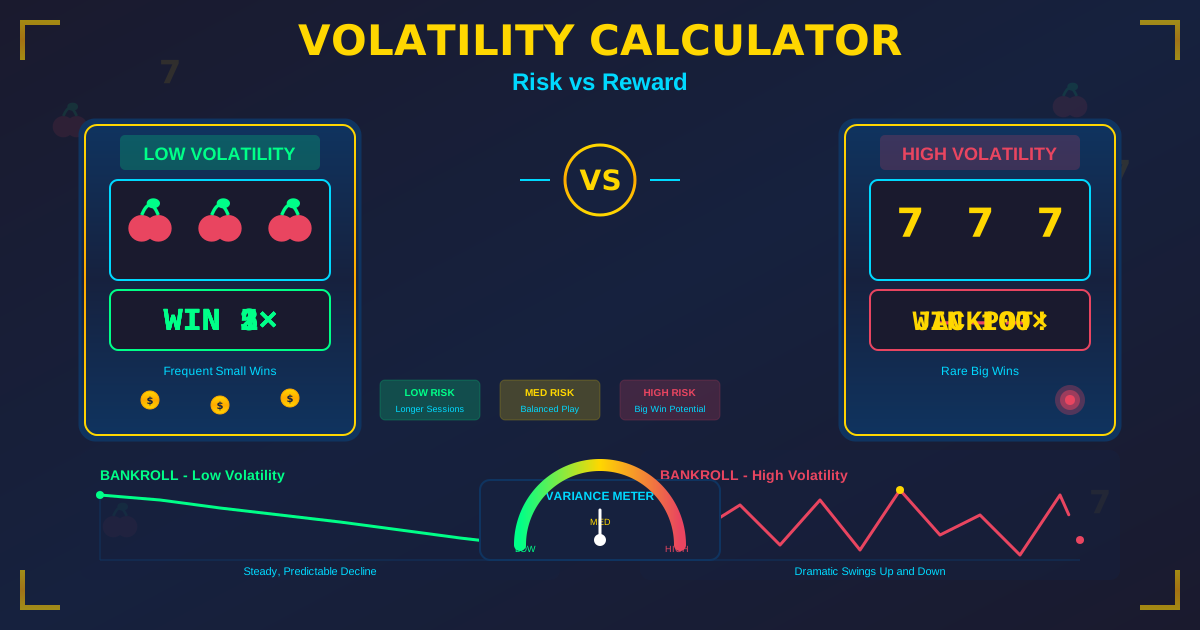
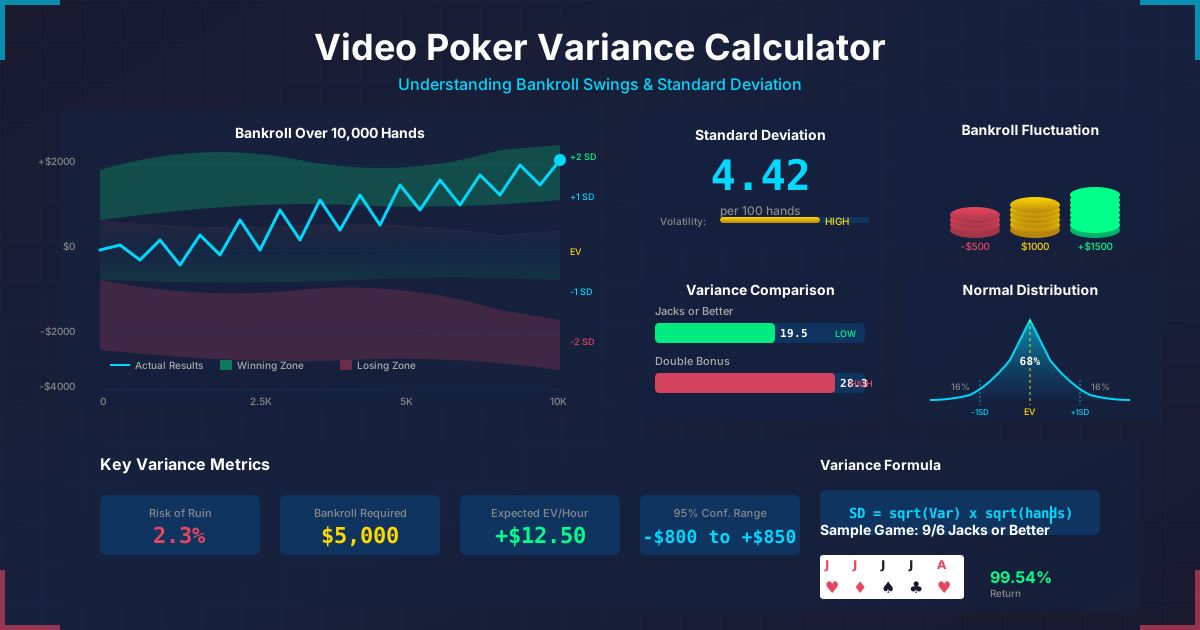
Volatility measures how much your bankroll fluctuates around expected results. High volatility means bigger swings; low volatility means steadier results. Understanding your personal volatility helps with bankroll management and emotional control.
Quick Answer: Volatility = Standard Deviation of results. If your average bet is $100 and standard deviation is $200, expect swings of ±$200 (68% of time) or ±$400 (95% of time) per betting session. Track your actual results against these ranges to determine if you're within normal variance or experiencing a statistical outlier.
How to Use Our Volatility Tracker
Use the Bankroll Volatility Tracker Calculator →
Input your betting history to analyze volatility patterns.
Step-by-Step Instructions
-
Enter Session Results: Win/loss amounts
-
Input Time Period: Days, weeks, or sessions
-
View Standard Deviation: Result spread
-
Analyze Distribution: Where your results fall
-
Compare to Expected: Are you running hot/cold?
Input Fields Explained
| Field | Description | Example |
|---|---|---|
| Session Results | Individual outcomes | +$150, -$80, +$220 |
| Number of Sessions | Data points | 50 |
| Average Result | Mean outcome | +$45 |
| Standard Deviation | Volatility measure | $185 |
| Current Streak | Win/loss run | 4 wins |
| Z-Score | How unusual results are | +1.2 |
Understanding Standard Deviation
Basic Concept
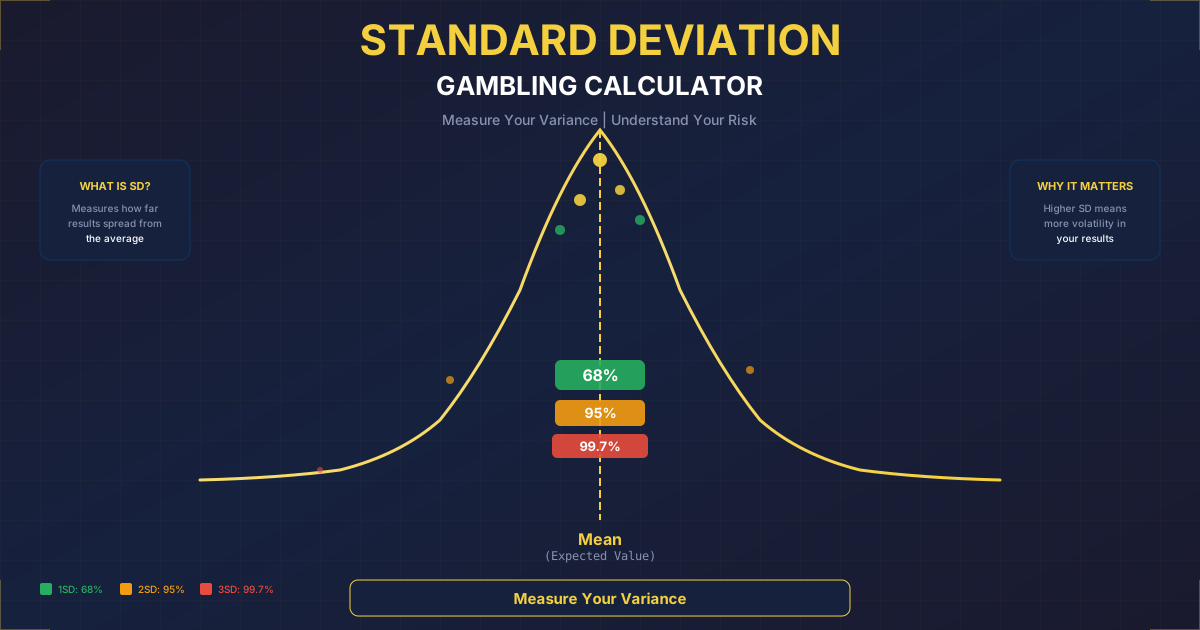
Standard deviation measures the spread of results around the average:
| Range | Probability |
|---|---|
| Within 1 SD | 68% of results |
| Within 2 SD | 95% of results |
| Within 3 SD | 99.7% of results |
Calculation
Standard Deviation = √[Σ(Result - Average)² / N]

Example with 5 sessions (+$100, -$50, +$200, -$100, +$150):
Average = $60
Variance = [(100-60)² + (-50-60)² + (200-60)² + (-100-60)² + (150-60)²] / 5
         = [1,600 + 12,100 + 19,600 + 25,600 + 8,100] / 5
         = 13,400
SD = √13,400 = $115.76
Volatility by Betting Type
Expected Volatility Ranges
| Betting Type | Typical SD (% of action) |
|---|---|
| Sports -110 bets | 10-15% |
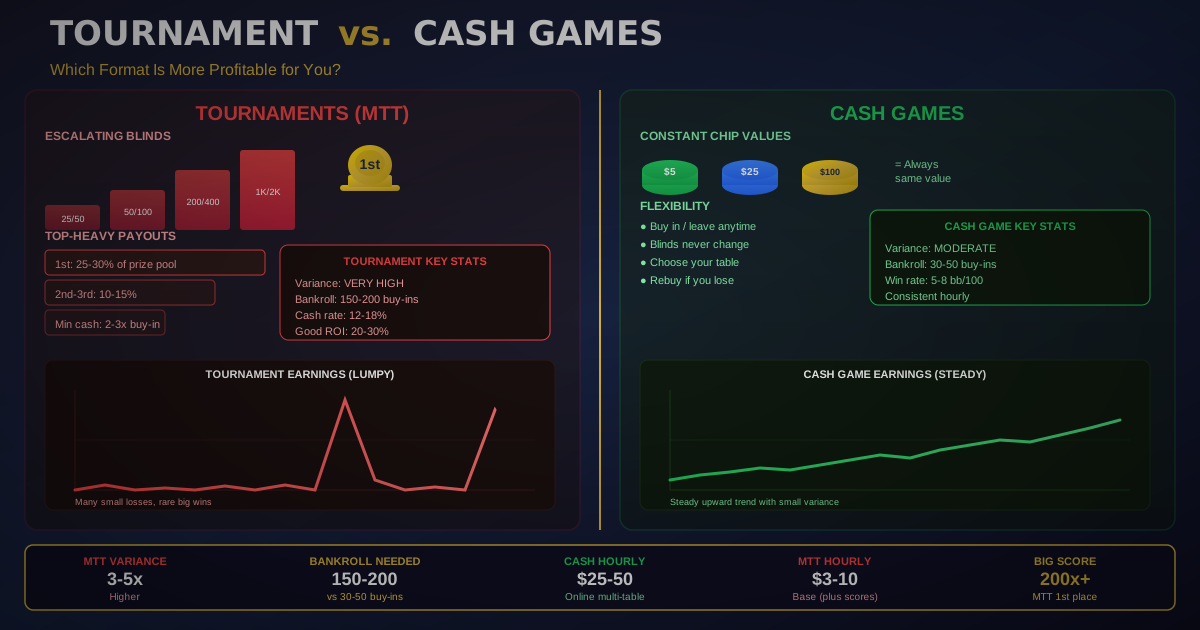
| Poker cash games | 30-50% |
| Poker tournaments | 100-200% |
| Blackjack (basic strategy) | 15-20% |
| Slot machines | 50-150% |
| DFS cash games | 20-30% |
| DFS GPPs | 100-300% |
Why Some Bets Are More Volatile
| Factor | Impact on Volatility |
|---|---|
| Odds length | Higher odds = higher volatility |
| Prize structure | Top-heavy = more volatile |
| Field size | Larger field = more variance |
| Skill edge | Smaller edge = variance matters more |
Analyzing Your Results
Z-Score Calculation
Z-score tells you how many standard deviations your results are from expected:
Z = (Actual Result - Expected Result) / SD

Example:
Expected: +$500 over 100 bets
Actual: +$1,200
SD: $300
Z = ($1,200 - $500) / $300 = +2.33

Result: 2.33 SD above expectation (very lucky)
Interpreting Z-Scores
| Z-Score | Meaning | Probability |
|---|---|---|
| -3.0 | Extremely unlucky | 0.1% |
| -2.0 | Very unlucky | 2.3% |
| -1.0 | Somewhat unlucky | 15.9% |
| 0 | Right on expectation | 50% (within ±1) |
| +1.0 | Somewhat lucky | 15.9% |
| +2.0 | Very lucky | 2.3% |
| +3.0 | Extremely lucky | 0.1% |
Real-World Examples
Example 1: Sports Bettor Analysis
Data: 200 bets at $100, -110 odds Expected edge: +2% Results: +$800
Calculations:
- Expected return: 200 × $100 × 2% = +$400
- Standard deviation: ~$1,400 (typical for this volume)
- Z-score: ($800 - $400) / $1,400 = +0.29
Interpretation: Slightly above expectation, well within normal variance.
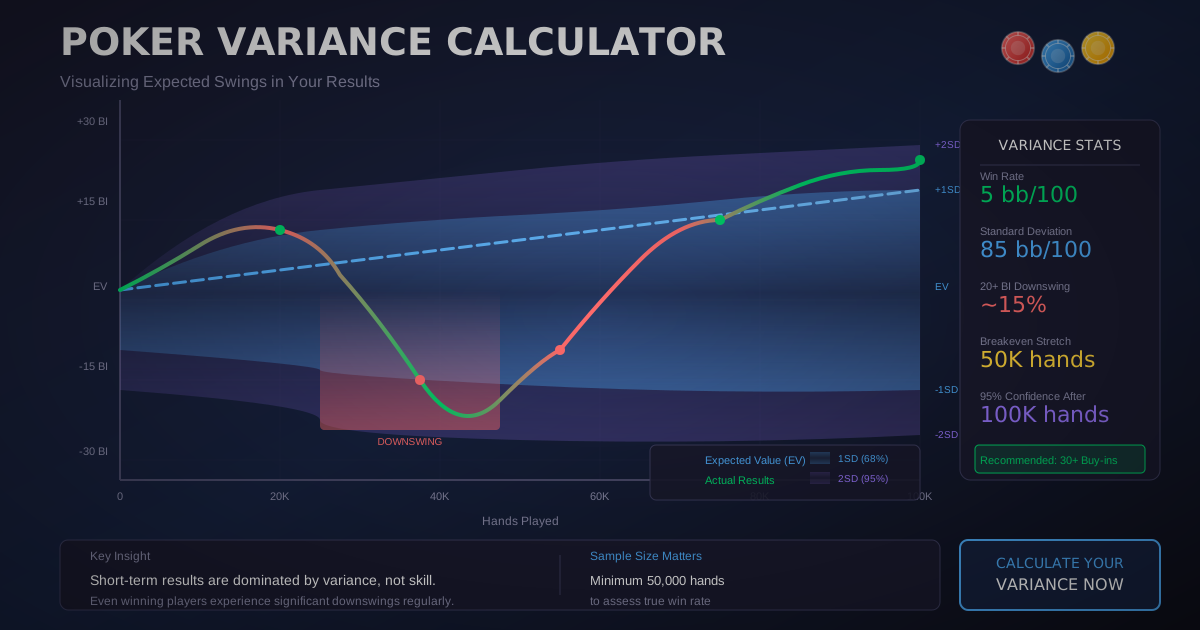
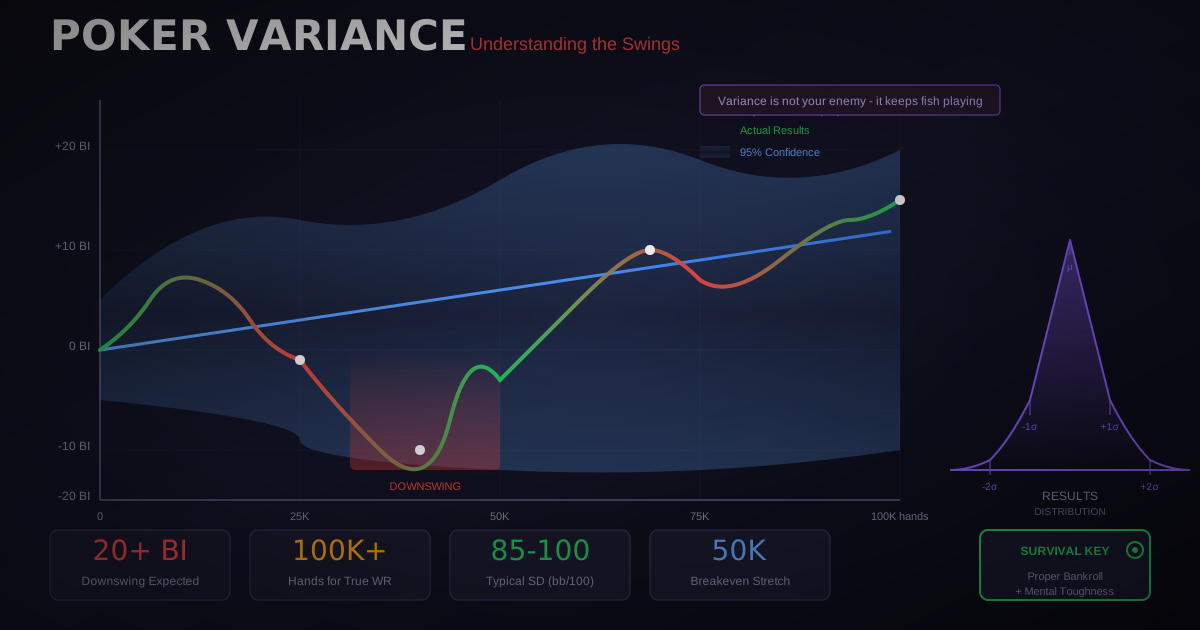
Example 2: Poker Player Downswing
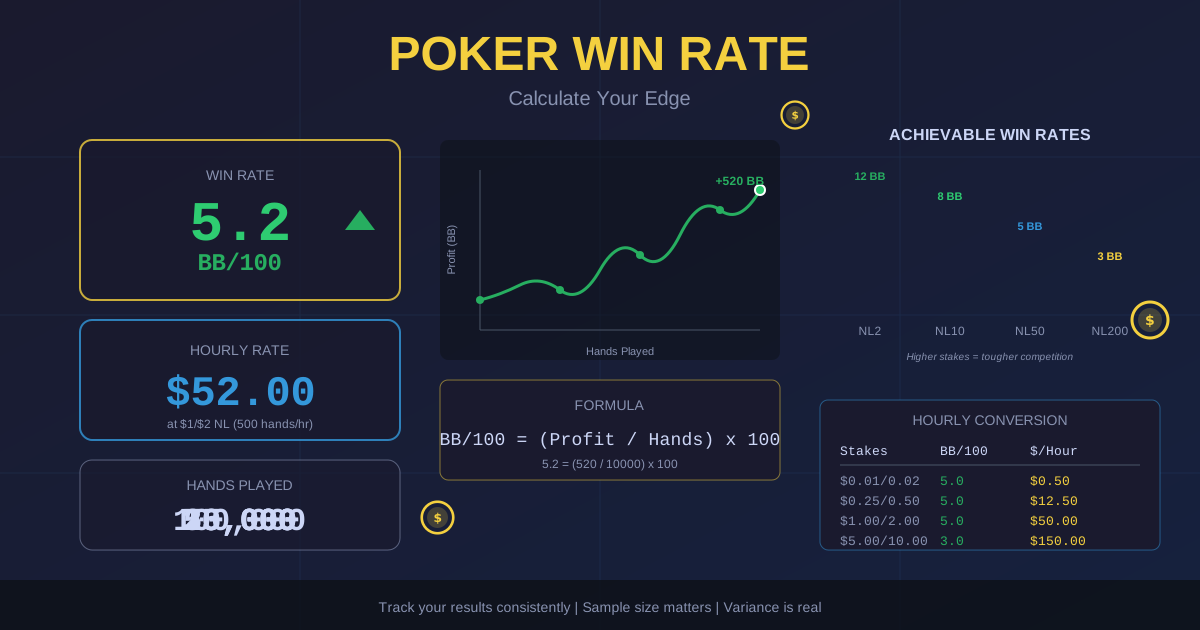
Data: 50,000 hands, $1/$2 Expected win rate: 5 bb/100 Actual: -3 bb/100
Calculations:
- Expected: +$5,000
- Actual: -$3,000
- SD for 50K hands: ~$8,000
- Z-score: (-$3,000 - $5,000) / $8,000 = -1.0
Interpretation: One standard deviation below expectation—frustrating but normal.
Example 3: DFS GPP Variance
Data: 50 GPP entries, $20 each ($1,000) Expected ROI: +10% Results: +$2,500
Calculations:
- Expected: +$100
- SD for GPPs: ~$600 per $1,000 action
- Z-score: ($2,500 - $100) / $600 = +4.0
Interpretation: Extremely lucky—4 SD above expectation suggests major bink or exceptional run.
Streak Analysis
Expected Streak Lengths
| Win Rate | Expected Losing Streak (100 bets) |
|---|---|
| 55% | 7-8 losses |
| 50% | 8-9 losses |
| 45% | 9-10 losses |
| 40% | 10-12 losses |
Streak Probability
P(losing streak of N) = (1 - win rate)^N

At 55% win rate:
5 losses: 0.45^5 = 1.8%
7 losses: 0.45^7 = 0.4%
10 losses: 0.45^10 = 0.03%
When to Worry
| Streak Length | At 55% Win Rate |
|---|---|
| 5 losses | Normal (1.8% any given stretch) |
| 8 losses | Unlucky but possible (0.2%) |
| 12+ losses | Very rare—reevaluate if edge exists |
Bankroll Management Connection
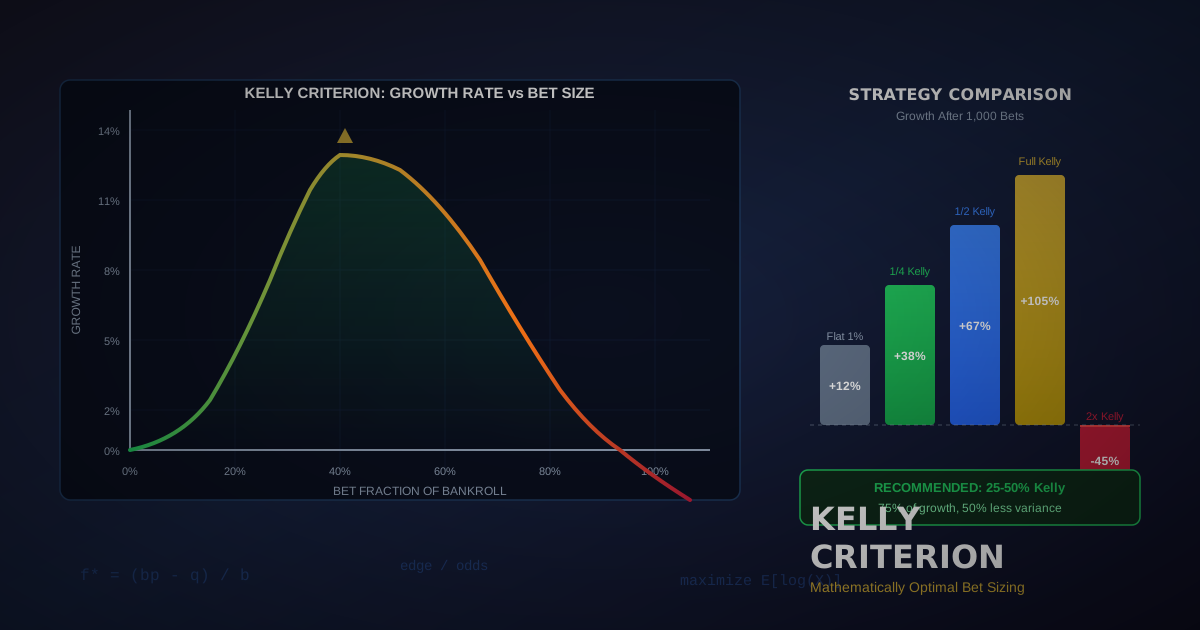
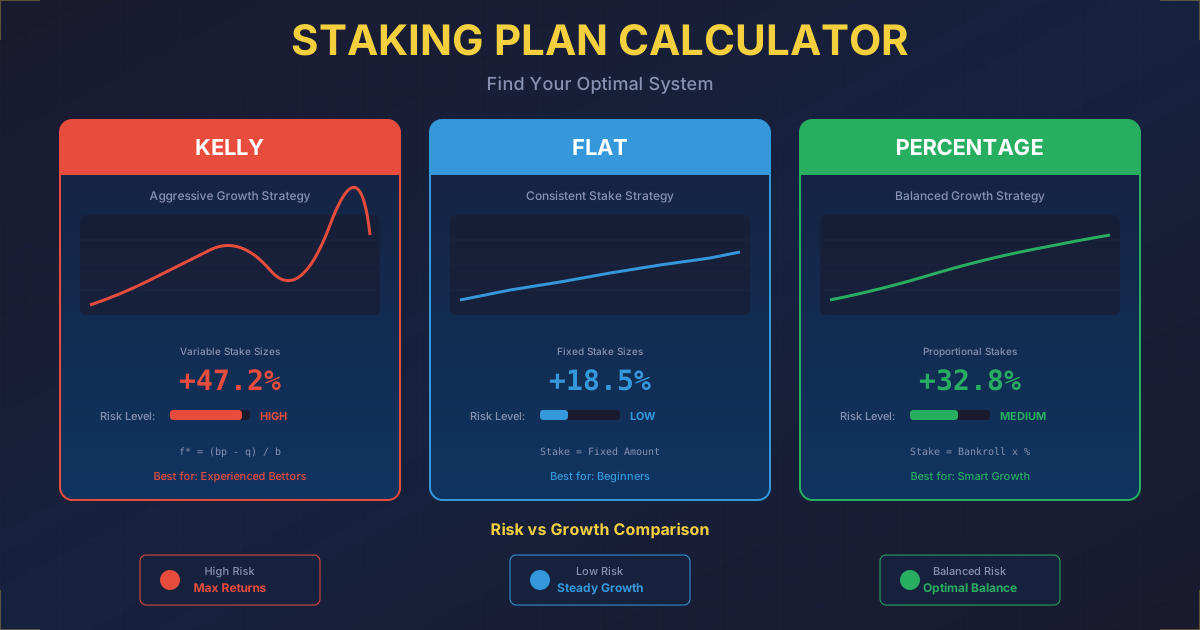
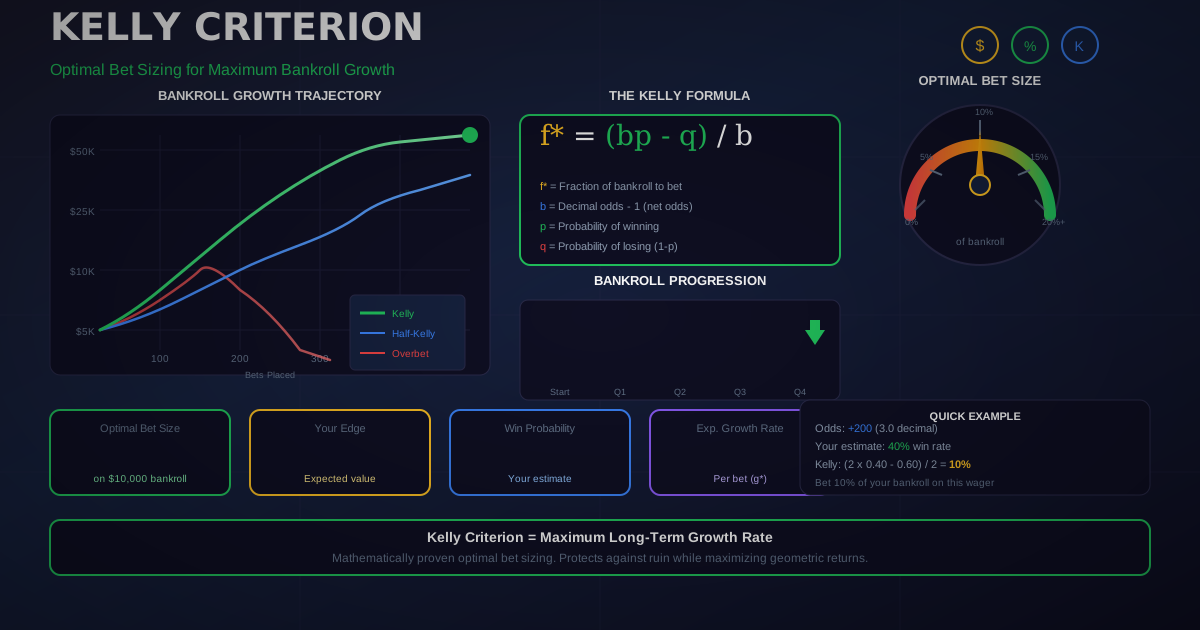
Kelly Criterion and Volatility
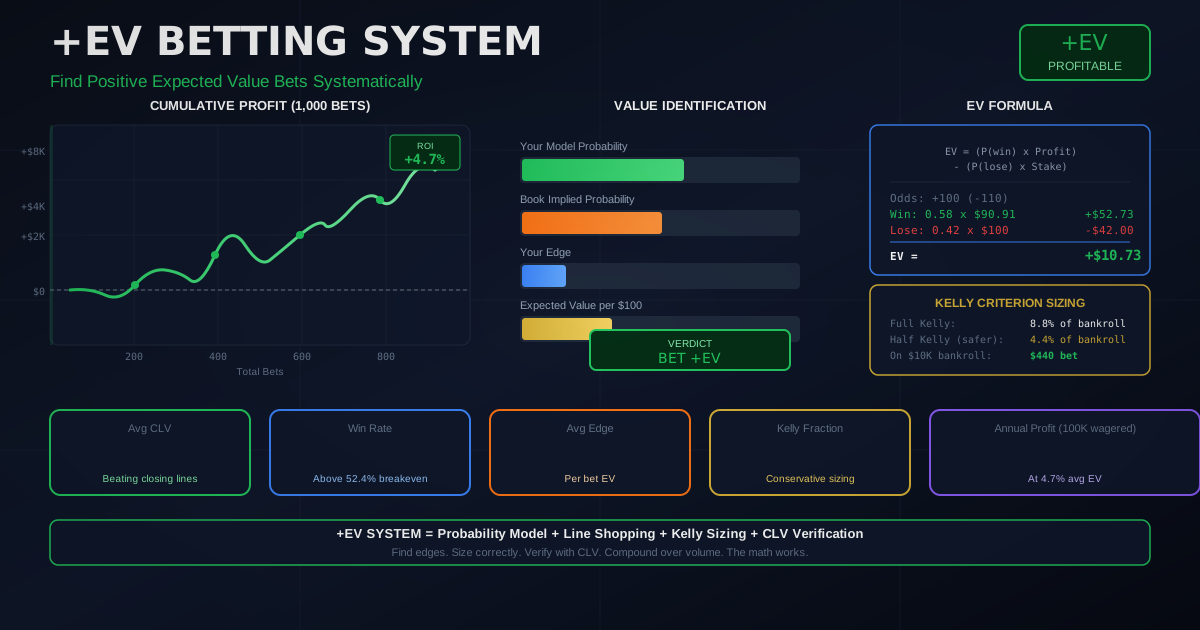
Recommended bet size = Edge / Odds
But actual sizing depends on volatility tolerance

High volatility = fraction of Kelly recommended
Conservative: 1/4 Kelly
Moderate: 1/2 Kelly
Aggressive: Full Kelly (risky)
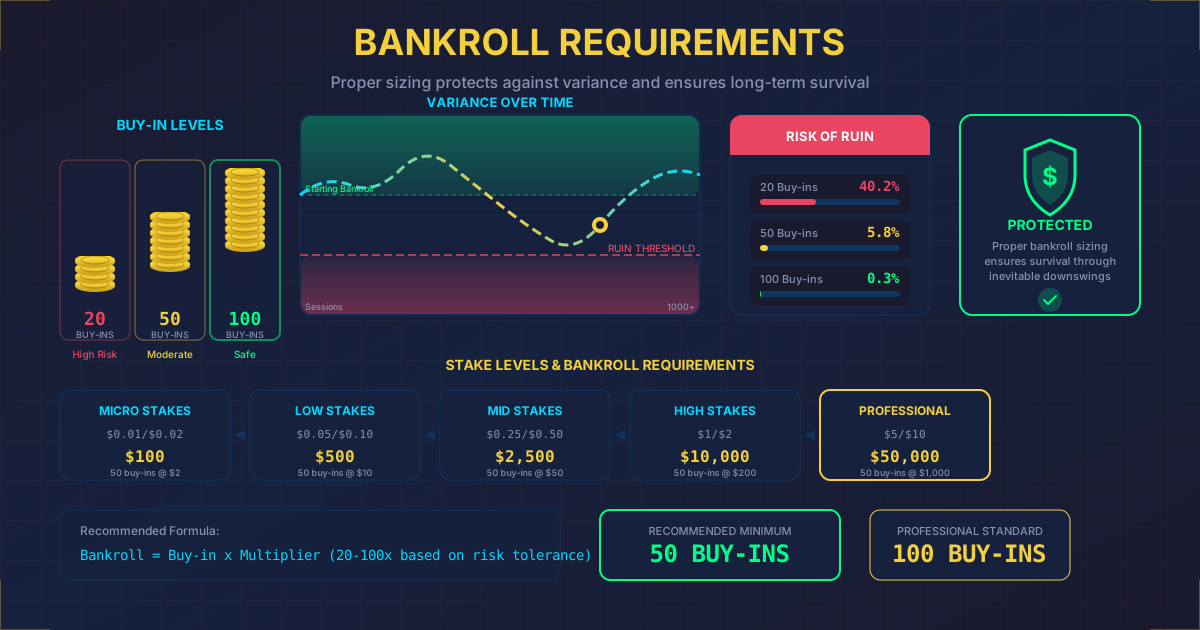
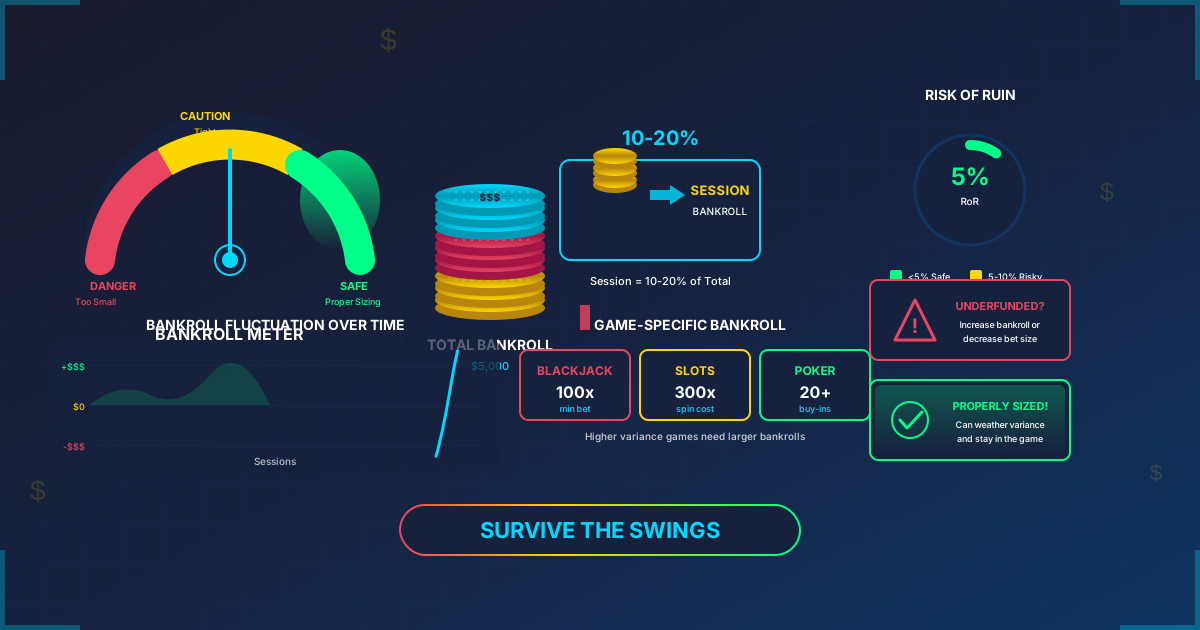
Volatility-Adjusted Bankroll
| Risk Tolerance | Bankroll Multiple |
|---|---|
| Conservative | 50× typical bet |
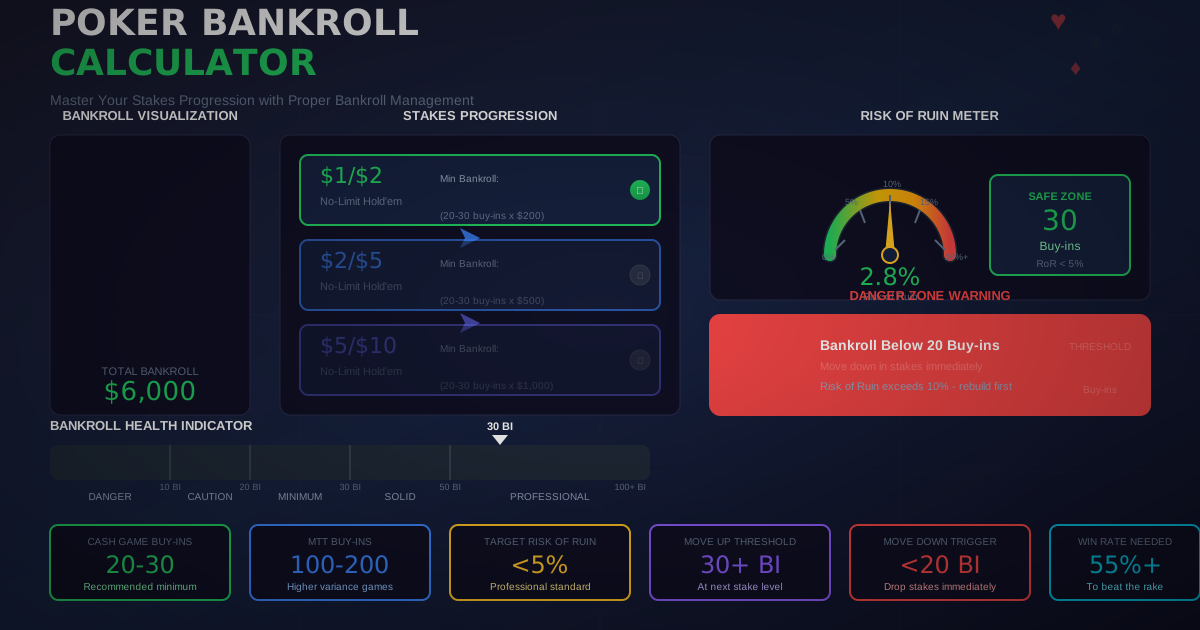
| Moderate | 25-30× typical bet |
| Aggressive | 15-20× typical bet |
Common Volatility Mistakes
1. Confusing Variance for Edge
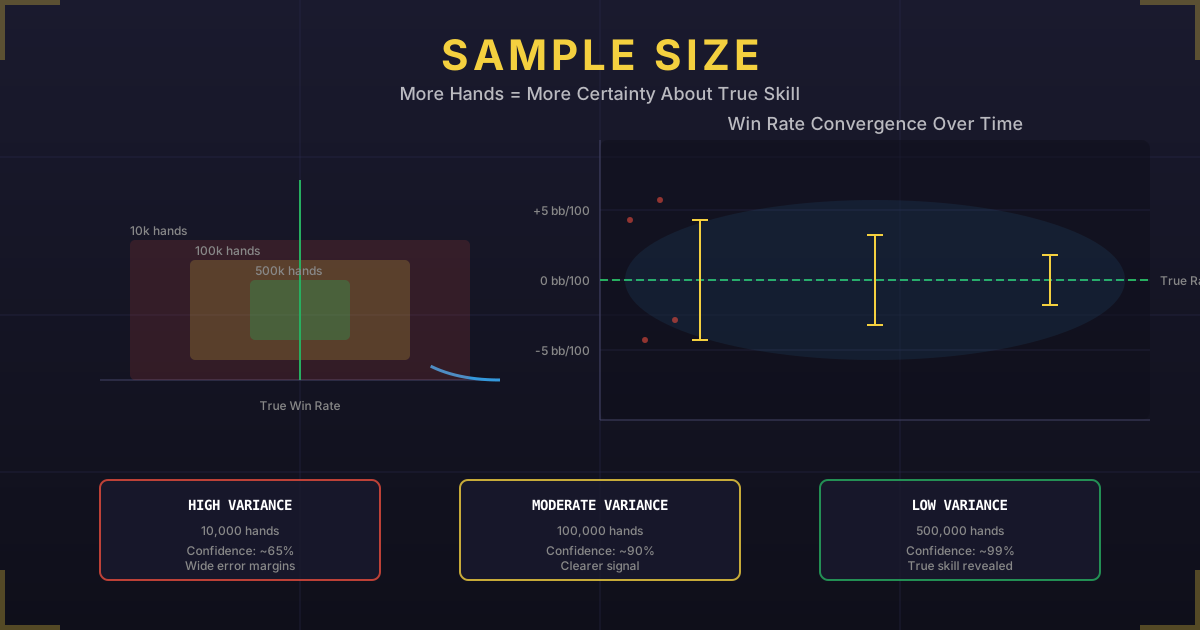
Mistake: Winning = having edge Problem: Short-term results dominated by luck Fix: Track results over 500+ bets minimum
2. Ignoring Positive Variance
Mistake: Assuming all wins are skill Problem: Overconfidence, oversized bets Fix: Calculate Z-score to see luck factor
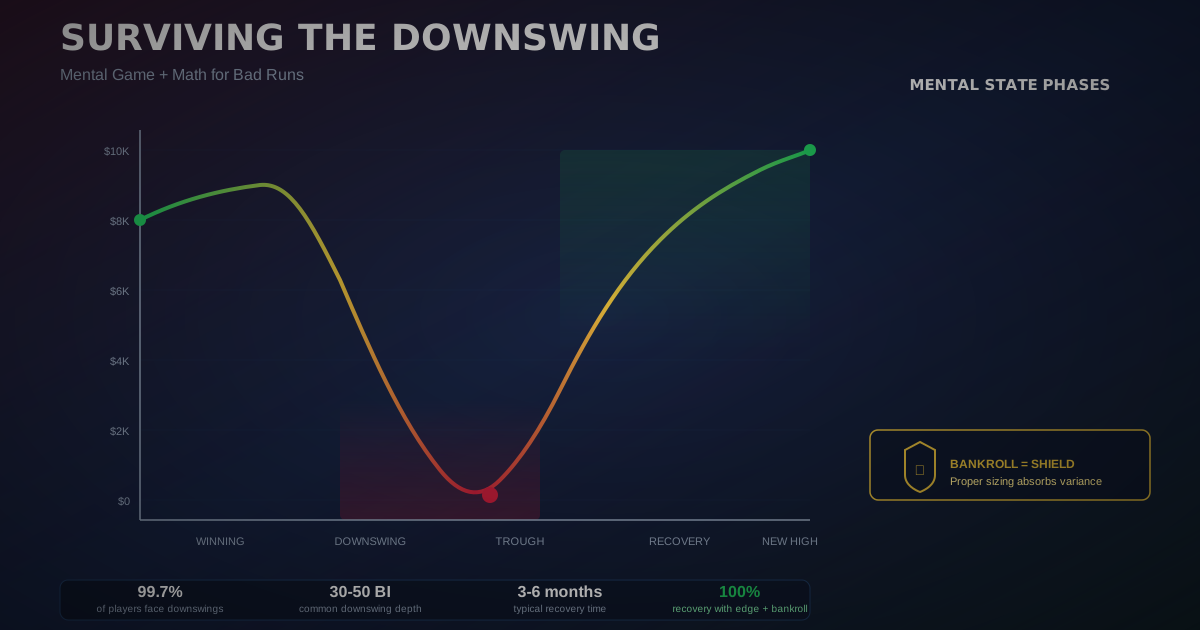
3. Panic During Downswings
Mistake: Changing strategy mid-downswing Problem: Abandoning edge to emotional decisions Fix: Pre-plan acceptable variance ranges
4. Insufficient Sample Size
Mistake: Drawing conclusions from 50 bets Problem: Variance swamps signal Fix: Need 1,000+ bets for meaningful analysis
Frequently Asked Questions
How many bets do I need to know my true win rate?
For sports betting: 1,000+ bets to narrow variance. For poker: 100,000+ hands. True edge takes a long time to emerge from noise.
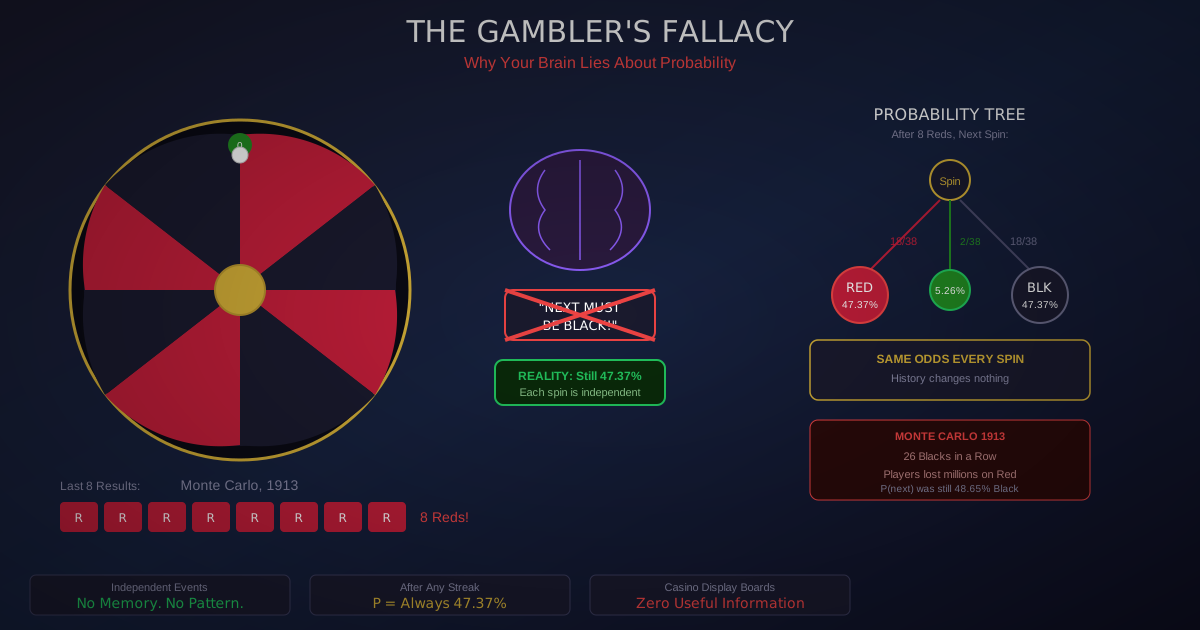
Is my losing streak normal?
Probably. At 55% win rate, 7-8 game losing streaks are expected in every 100 bets. 10+ is unusual but possible.
How do I know if I have an edge?
If your results consistently exceed expectation over large sample (1000+ bets) with positive Z-score, you likely have an edge. Short-term anything is possible.
Should I bet less during downswings?
Only if bankroll demands it. If you have edge, same bet sizing remains optimal. Reducing bets during normal variance is theoretically wrong.
What Z-score indicates skill vs luck?
Z-scores over ±2 suggest something unusual—either real edge (positive) or fundamental leak (negative). Between ±1 is normal variance.
Can I predict future volatility?
Past volatility indicates likely future volatility for the same bet types. But specific short-term outcomes remain unpredictable.
Advanced Concepts
Sharpe Ratio for Betting
Sharpe Ratio = (Return - Risk-Free Rate) / Standard Deviation

For betting, risk-free rate = 0
Sharpe = Expected Return / SD

Higher Sharpe = more efficient return per unit of risk
Coefficient of Variation
CV = Standard Deviation / Mean

Measures volatility relative to average return
Lower CV = more consistent results
Downside Deviation
Focus only on negative variance:
Downside SD = √[Σ(Negative Results)² / N]

More relevant for risk-averse bettors
Pro Tips
-
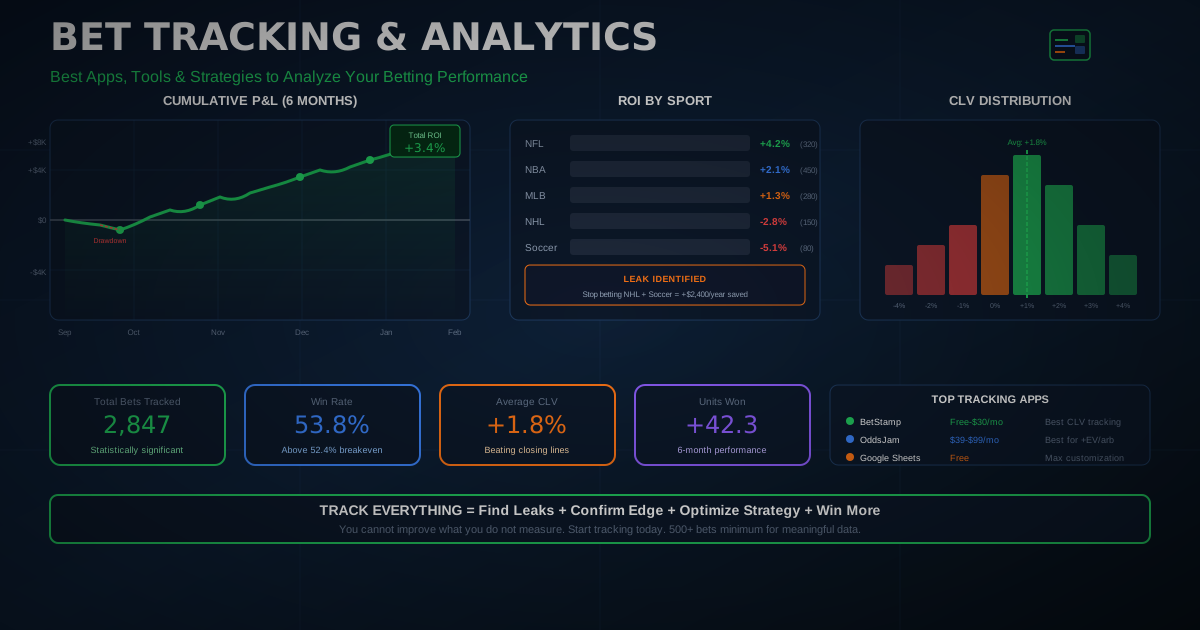
Track everything: Every bet, every result
-
Calculate monthly: Review volatility patterns
-
Know your SD: Before betting, estimate expected variance
-
Don't overreact: Z-scores within ±2 are normal
-
Separate luck from skill: Use statistics, not feelings
Related Calculators
- Bankroll Calculator - Bankroll sizing
- Probability Calculator - Probability basics
- Expected Value Calculator - EV analysis
- Sports Betting ROI Calculator - ROI tracking
- Poker Variance Calculator - Poker variance
Conclusion
Bankroll volatility tracking transforms emotional reactions into data-driven decisions. Our calculator measures your actual variance, compares it to expected ranges, and helps you understand whether you're running hot, cold, or right on schedule. Track your standard deviation, analyze Z-scores, and make bankroll decisions based on statistics rather than feelings.
Track Your Bankroll Volatility Now →
Understanding volatility is understanding that short-term results tell you almost nothing about your true edge. Our tracker helps you separate signal from noise, survive inevitable downswings, and build confidence that comes from mathematical understanding rather than recent results.