Session Loss Limit Calculator: Stop-Loss Strategies for Casino Sessions (2026)
Session Loss Limit Calculator: Protect Your Bankroll with Smart Stop-Losses
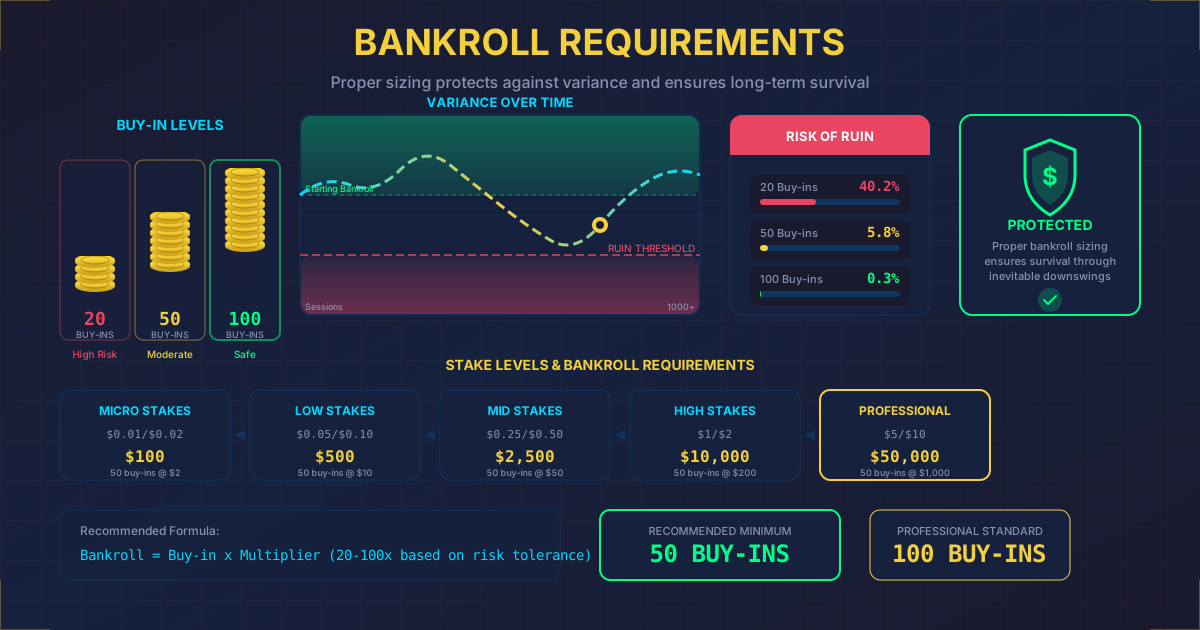
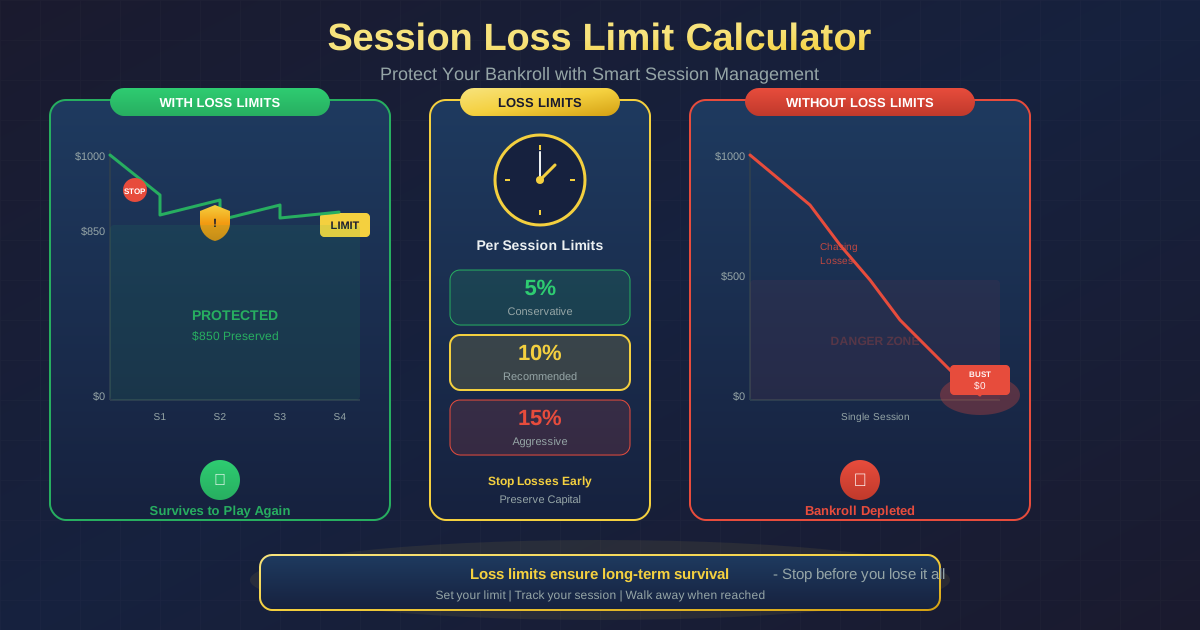
Every experienced gambler knows: the session you don't limit is the session that can devastate your bankroll. Setting proper loss limits isn't about being pessimistic - it's about mathematical survival. Our calculator determines optimal stop-loss amounts based on your bankroll, the game's variance, and your risk tolerance.
What Is a Session Loss Limit?
A session loss limit is a predetermined amount you'll allow yourself to lose before walking away from gambling. Unlike arbitrary amounts ("I'll quit if I'm down $500"), mathematically optimal limits consider your total bankroll, the game's variance, and your acceptable risk of ruin. Proper limits protect against both bad luck and emotional decision-making.
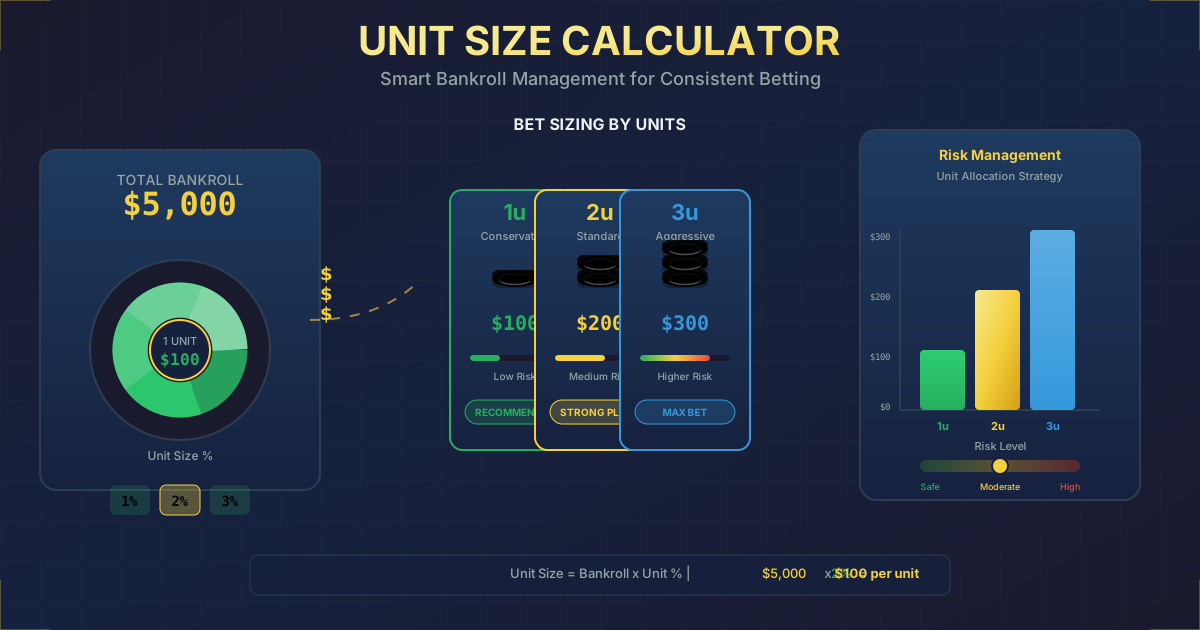
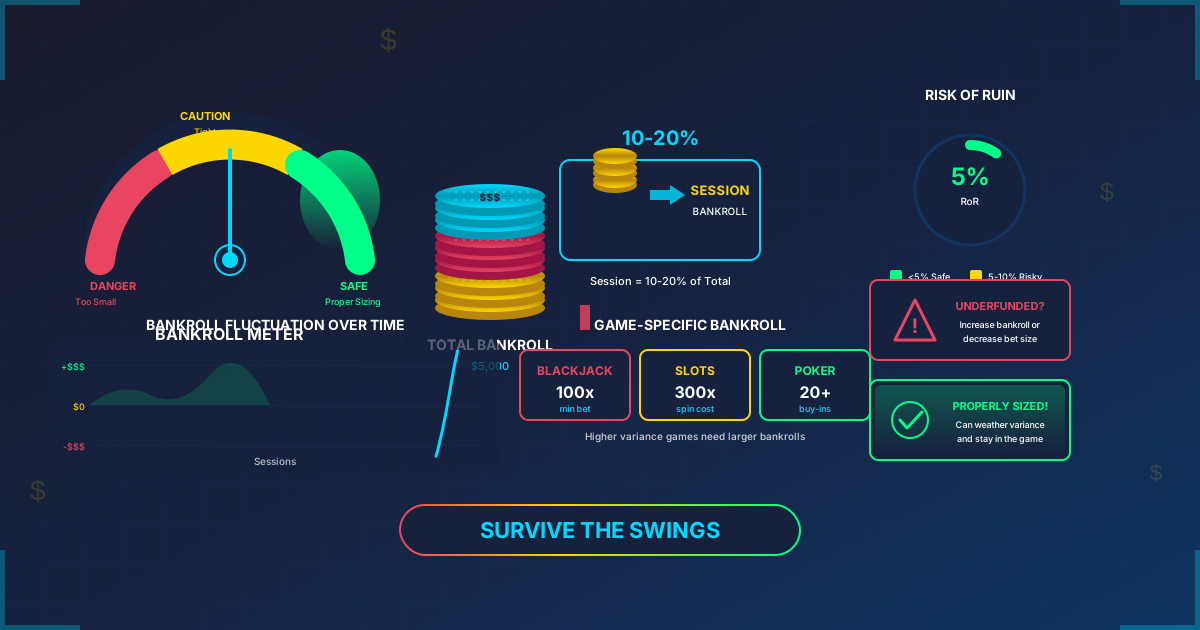
Quick Answer: Optimal session loss limit = 5-20% of total gambling bankroll, adjusted for game variance. Conservative formula: Limit = Bankroll × 0.05 for low variance games (blackjack), 0.10 for medium (craps), 0.15-0.20 for high variance (slots). A $5,000 bankroll playing slots should limit sessions to $750-1,000 loss. This ensures you survive ~20+ sessions minimum, allowing variance to play out.
How to Use Our Calculator
Use the Session Loss Limit Calculator →
Step-by-Step Instructions
- Enter Total Bankroll: Your gambling funds
- Select Game Type: Slots, blackjack, craps, etc.
- Enter Session Length: Planned hours of play
- Set Risk Tolerance: Conservative to aggressive
- Calculate Limit: Get recommended stop-loss
Input Fields
| Field | Description | Example |
|---|---|---|
| Total Bankroll | Available gambling funds | $5,000 |
| Game Type | What you're playing | Slots |
| Bet Size | Average wager | $5 |
| Session Hours | Planned duration | 4 hours |
| Hands/Spins per Hour | Game pace | 500 spins |
| Risk Tolerance | Conservative to aggressive | Moderate |
The Mathematics of Loss Limits
Why Limits Matter
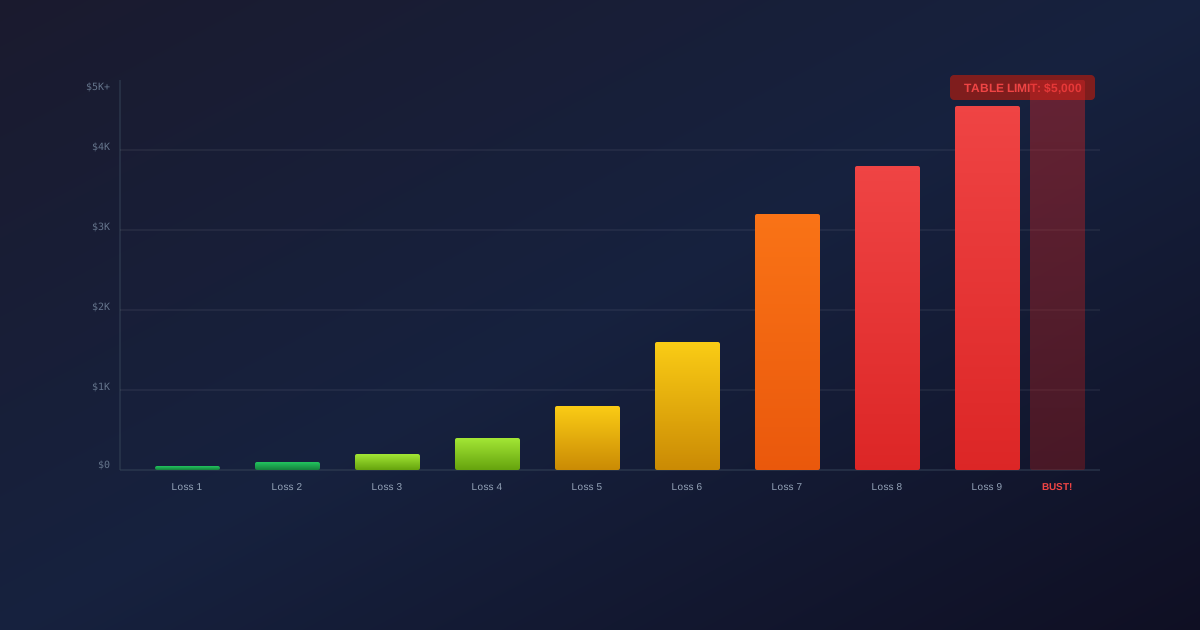
Without loss limits:

Bad session possibilities:
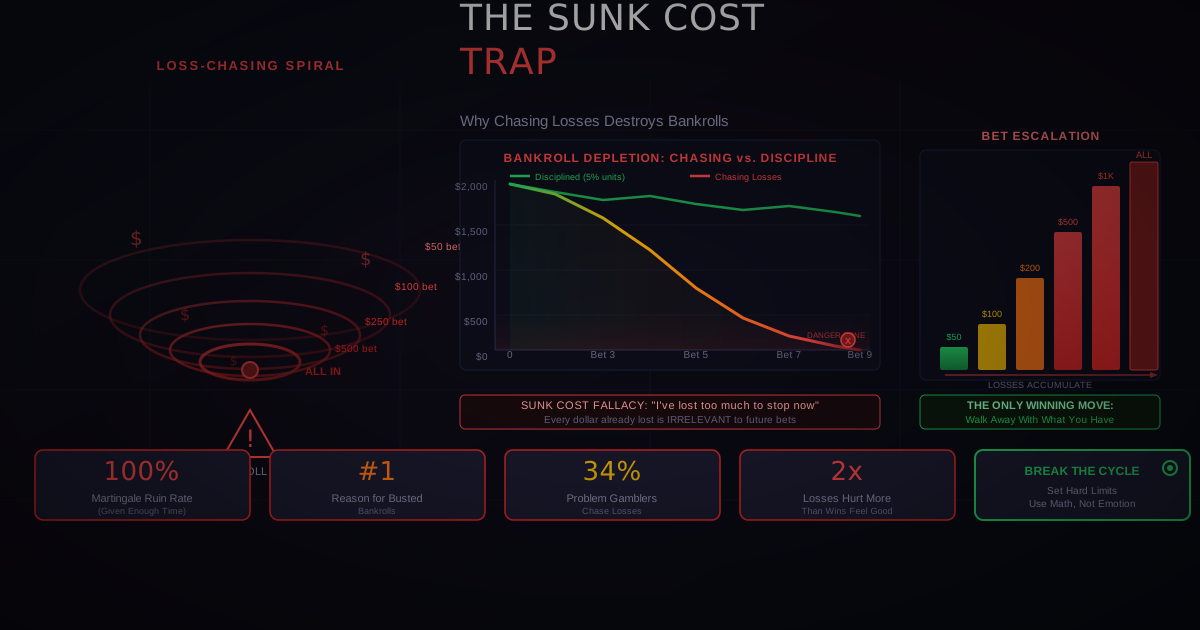
- Chase losses trying to recover
- Emotional betting escalates
- Entire bankroll at risk
- No future sessions possible

With proper limits:

Protected outcomes:
- Maximum damage capped
- Live to play another day
- Emotional pressure reduced
- Long-term survival ensured

Key insight:
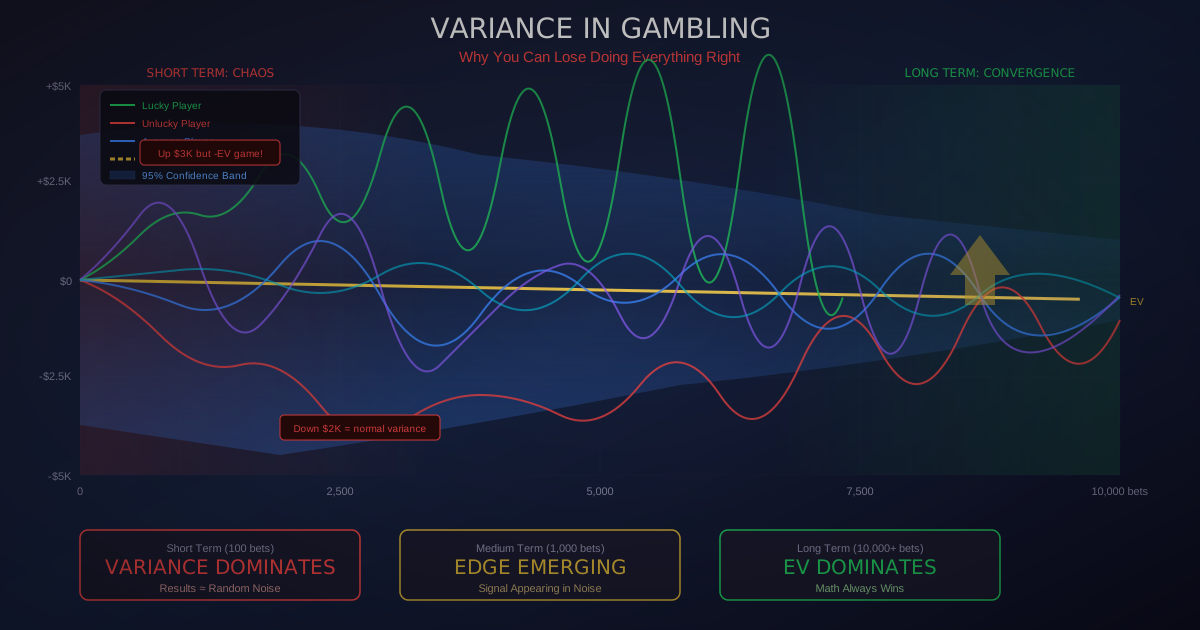
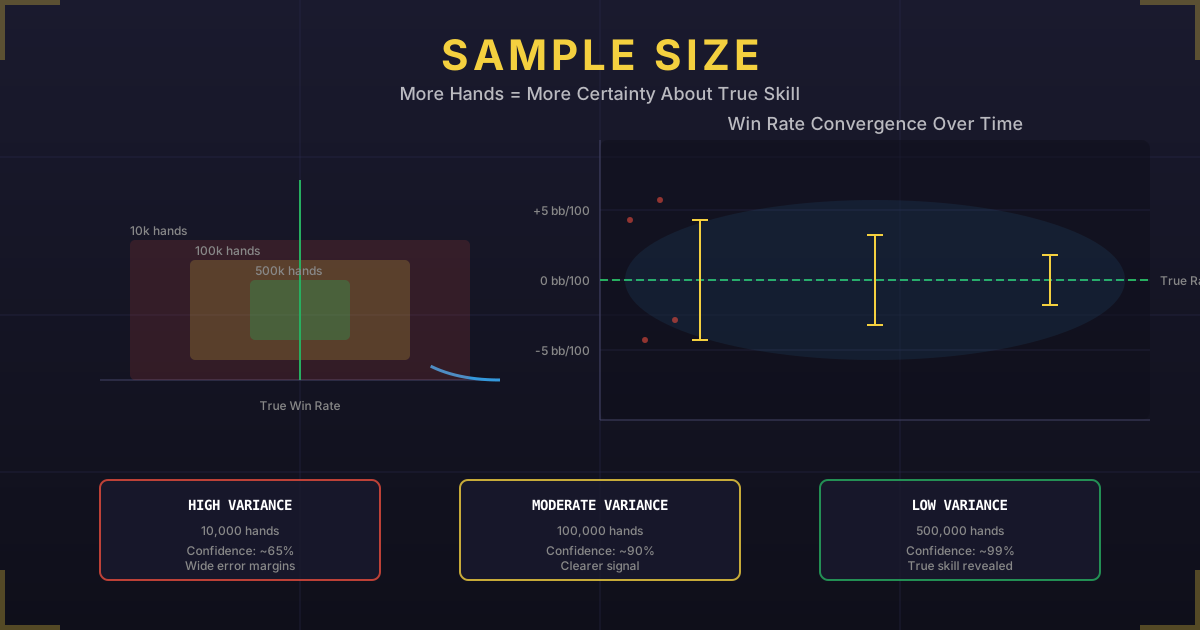
Variance requires multiple sessions
One session doesn't determine outcome
Limits ensure you get enough sessions
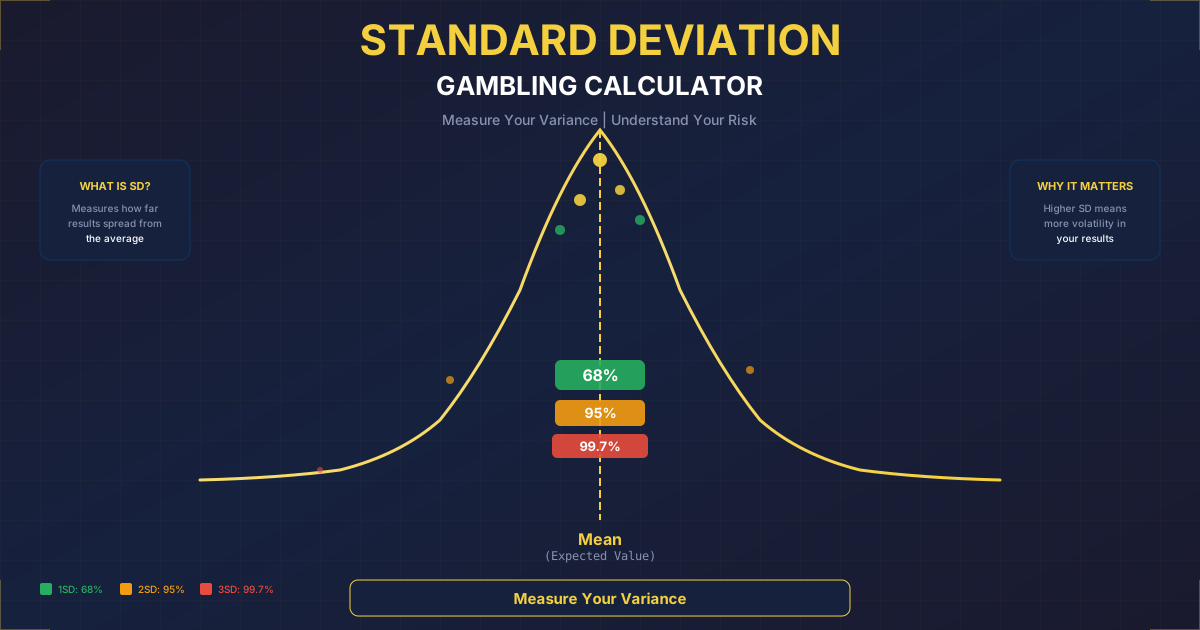
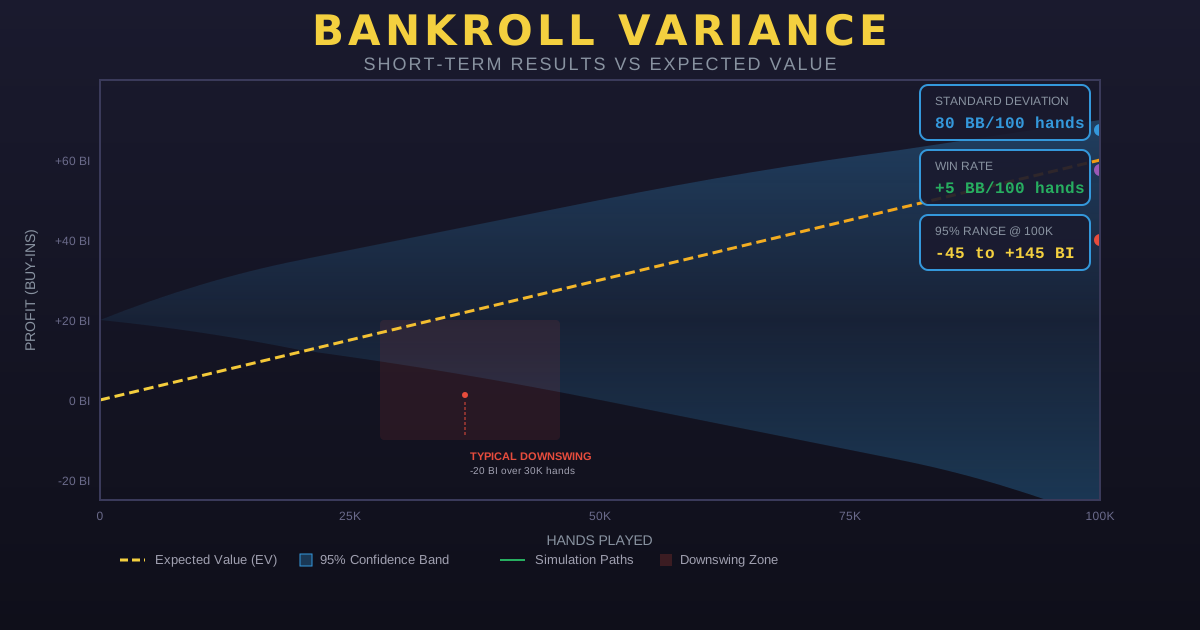
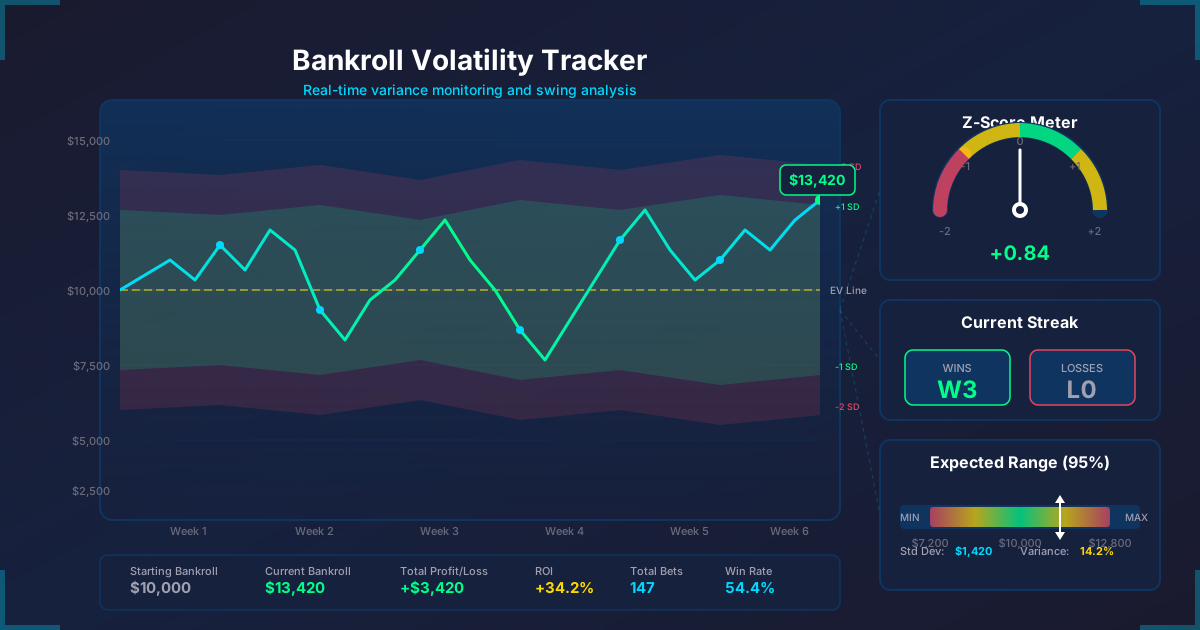
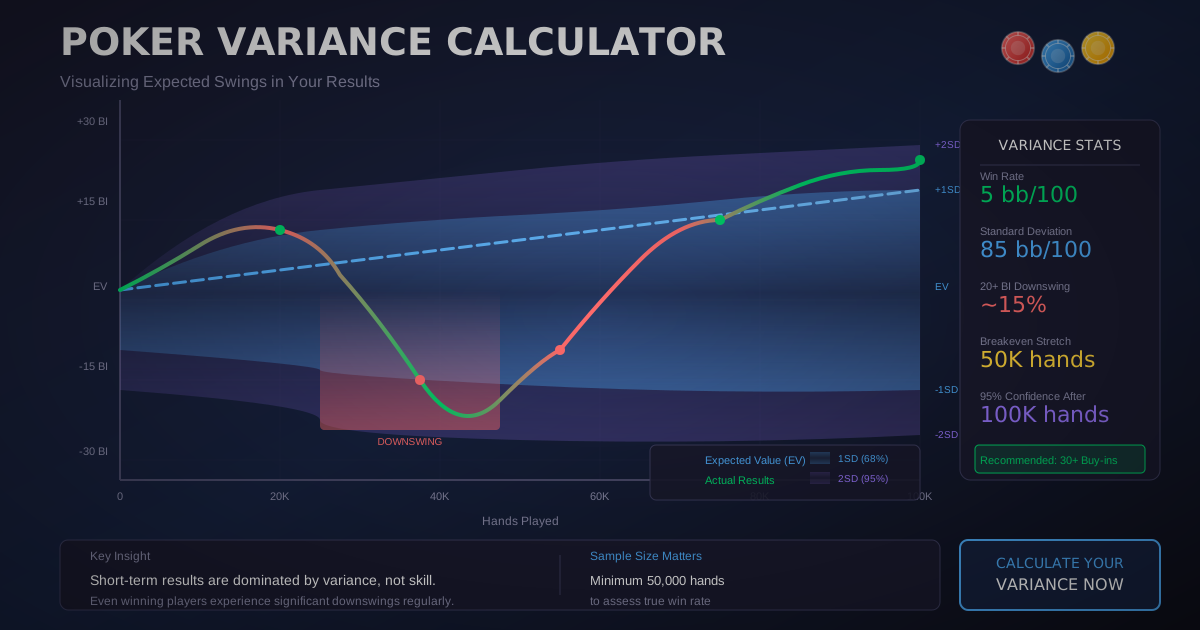
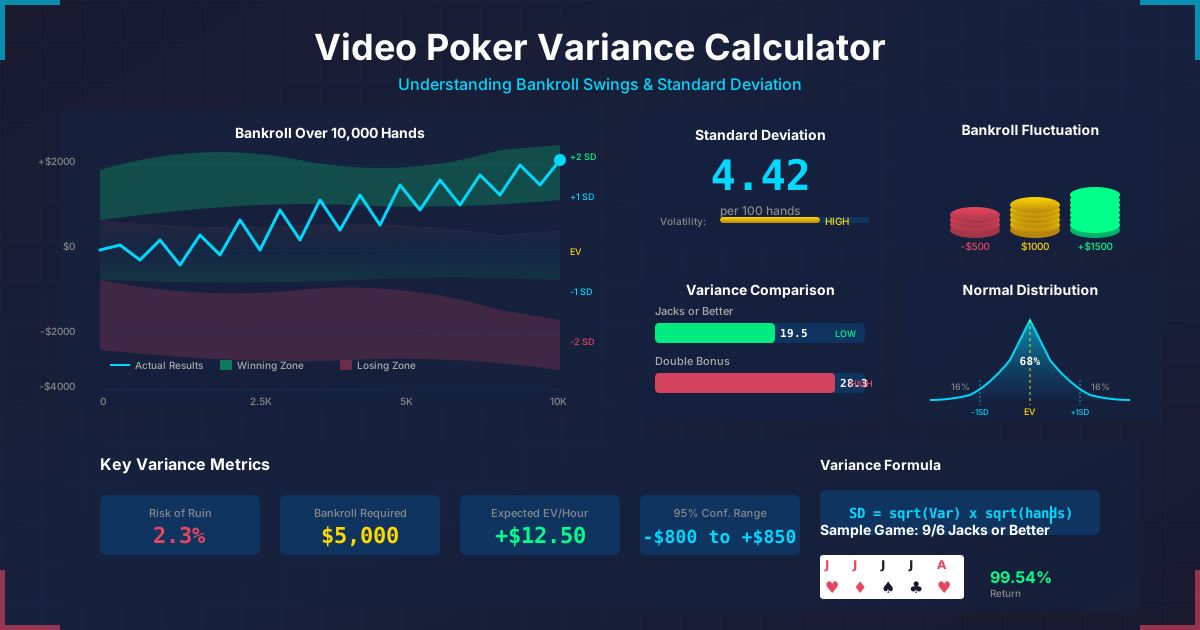
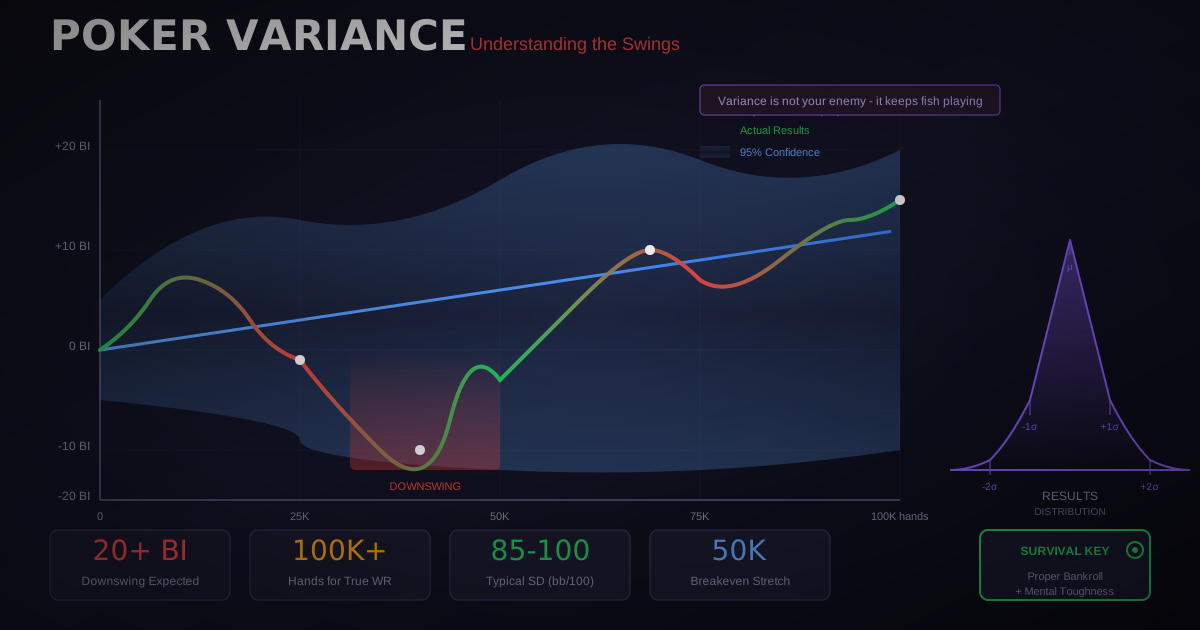
Standard Deviation and Sessions
Session variance calculation:

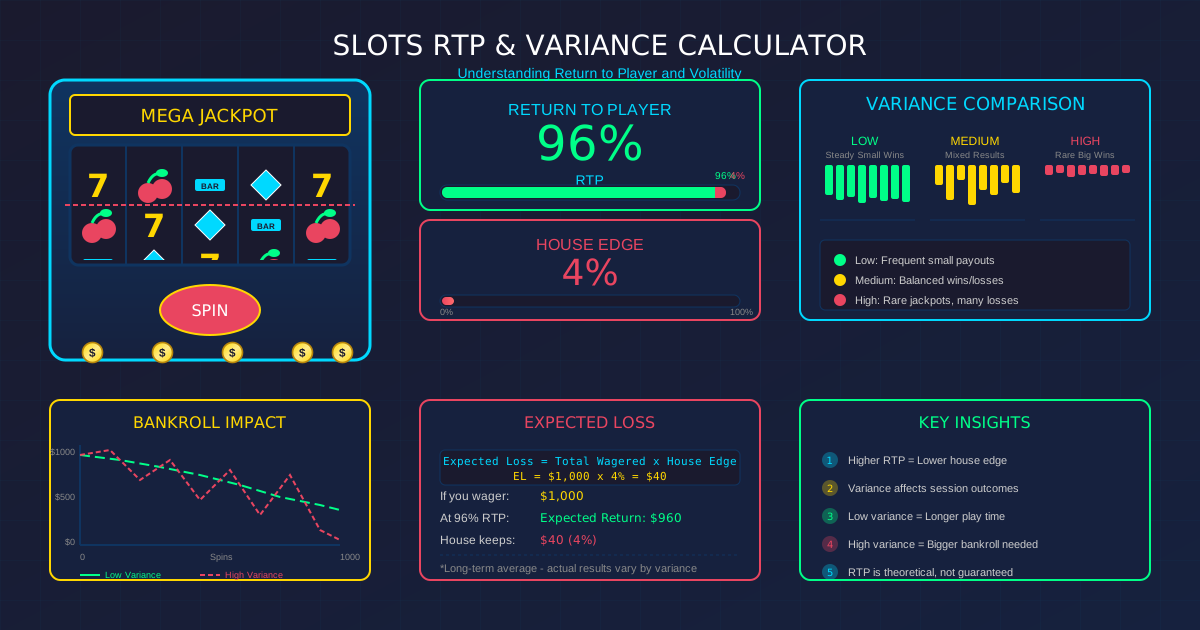
Expected loss per session:
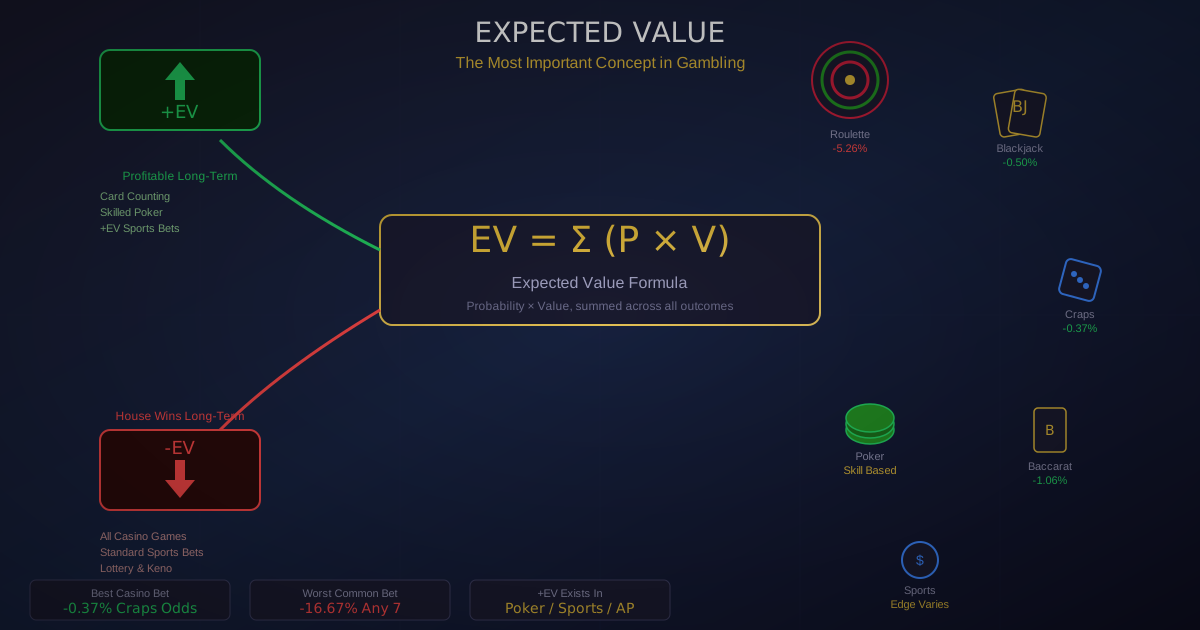
EL = Bets × Average Bet × House Edge

Standard deviation per session:
SD = Average Bet × √(Bets × Variance Factor)

Example (4-hour slots session):
Spins: 500/hr × 4 = 2,000 spins
Average bet: $2
House edge: 8%

Expected loss:
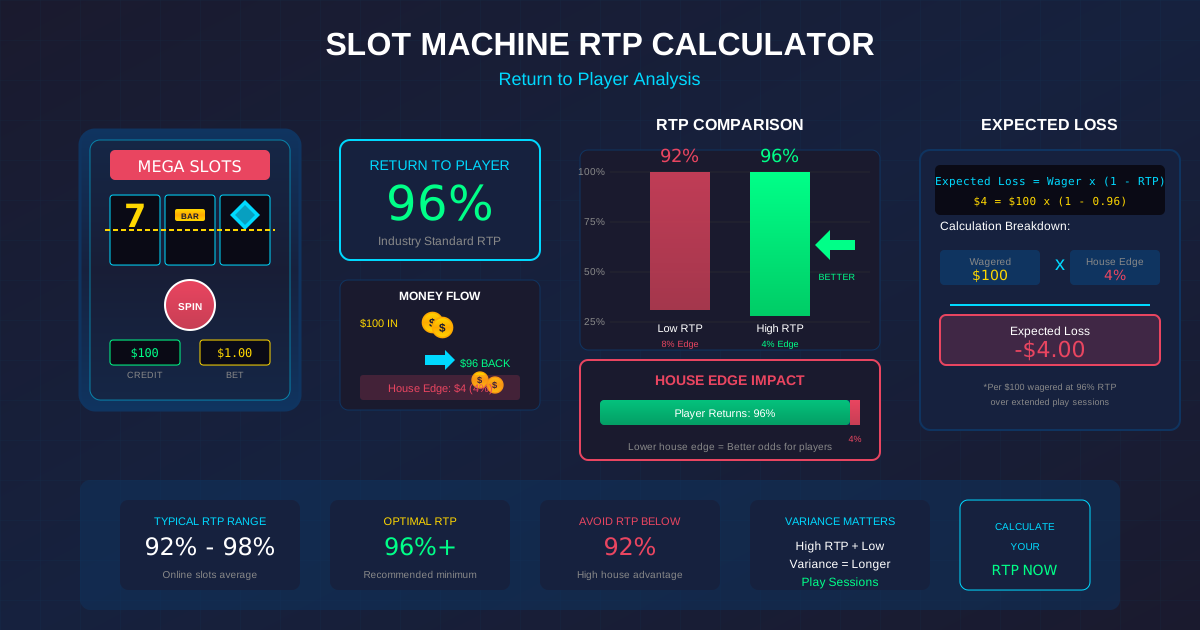
EL = 2,000 × $2 × 0.08 = $320

Standard deviation:
SD ≈ $2 × √(2,000 × 50) ≈ $632

One SD range: -$320 ± $632
95% of sessions: -$320 ± $1,264

Worst case (2 SD down): -$1,584
This suggests ~$1,500 session limit
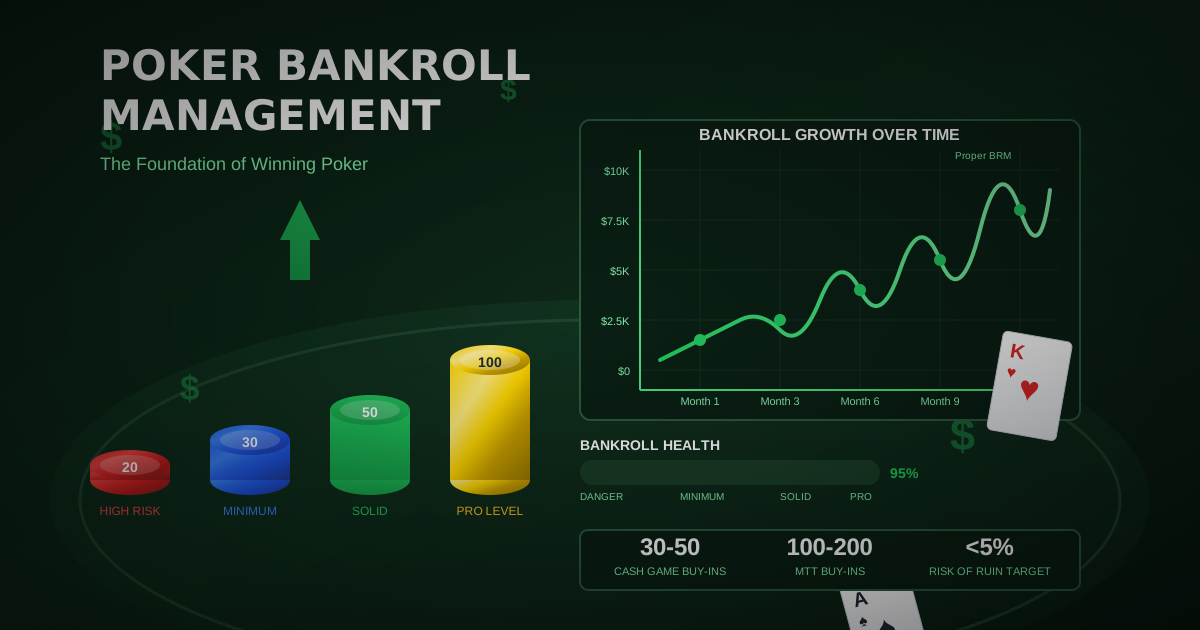
Bankroll Survival Formula
Sessions until ruin calculation:

If limit = L and bankroll = B:
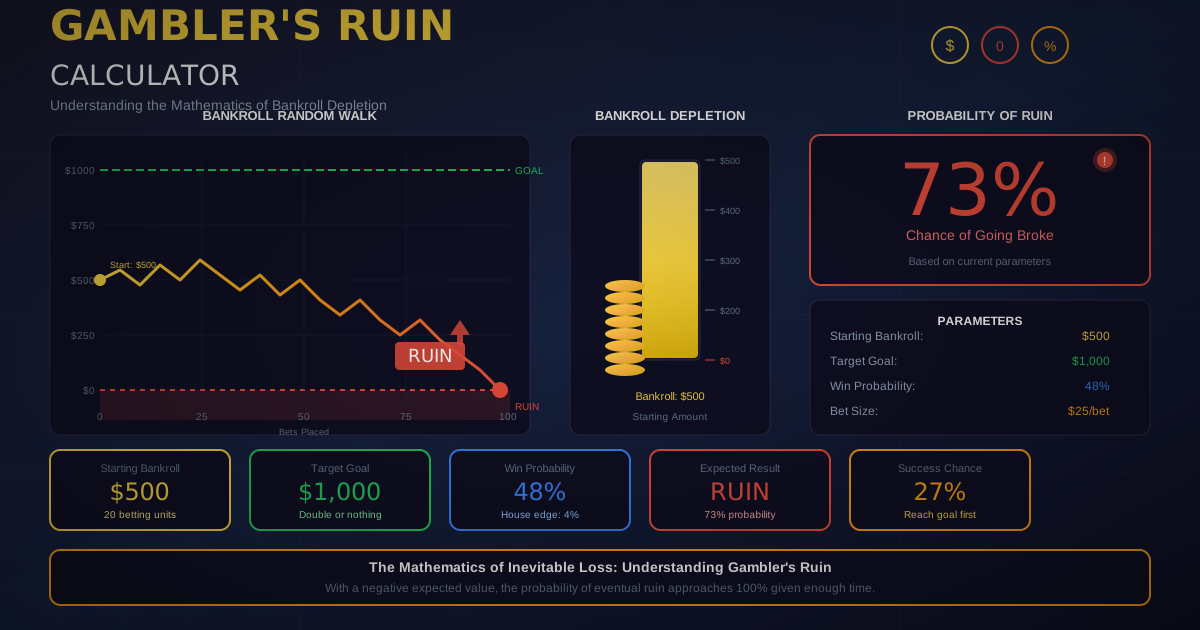
Minimum sessions = B / L

Example:
Bankroll: $5,000
Session limit: $500
Minimum sessions: 10

But variance affects this:
Some sessions win, extending play
Some sessions hit limit, shortening

Expected sessions before ruin:
Depends on win rate and variance
Generally: Expect 1.5-2x minimum

With $5,000 and $500 limits:
Expect 15-20 sessions typically
This provides adequate sample size
Loss Limit Strategies
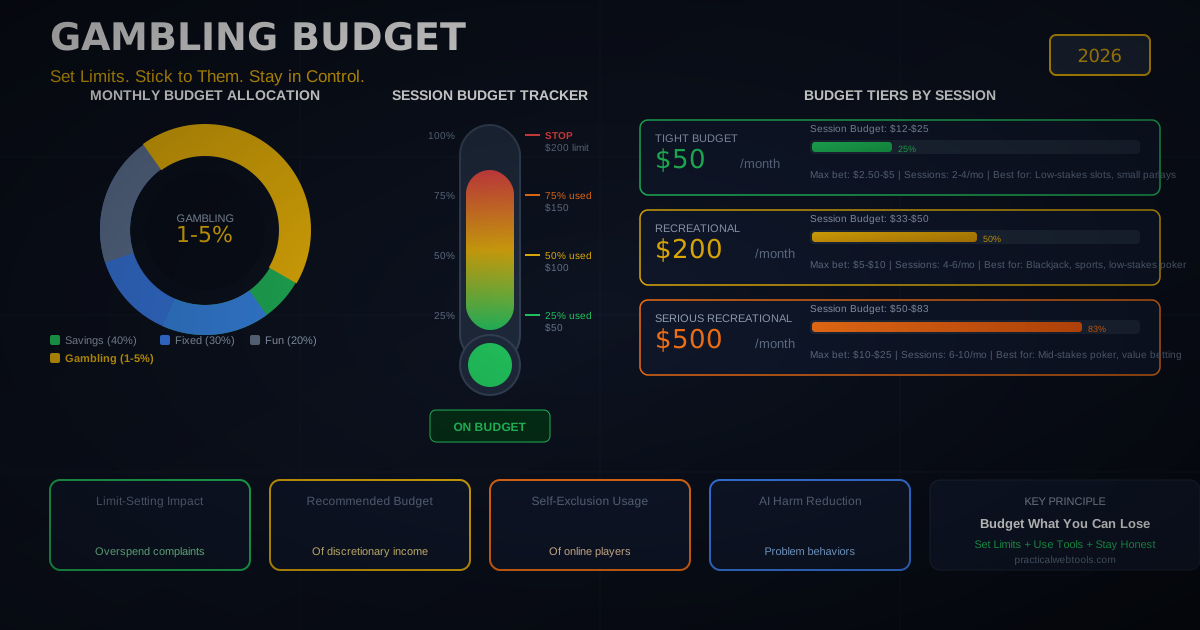
Percentage-Based Limits
Simplest approach:

Set limit as % of bankroll:
Conservative: 5% per session
Moderate: 10% per session
Aggressive: 20% per session

Example at $10,000 bankroll:
Conservative: $500 limit
Moderate: $1,000 limit
Aggressive: $2,000 limit

Pros:
✓ Simple to calculate
✓ Scales with bankroll
✓ Easy to follow

Cons:
✗ Ignores game variance
✗ Same for all games
✗ May be too restrictive for low-variance
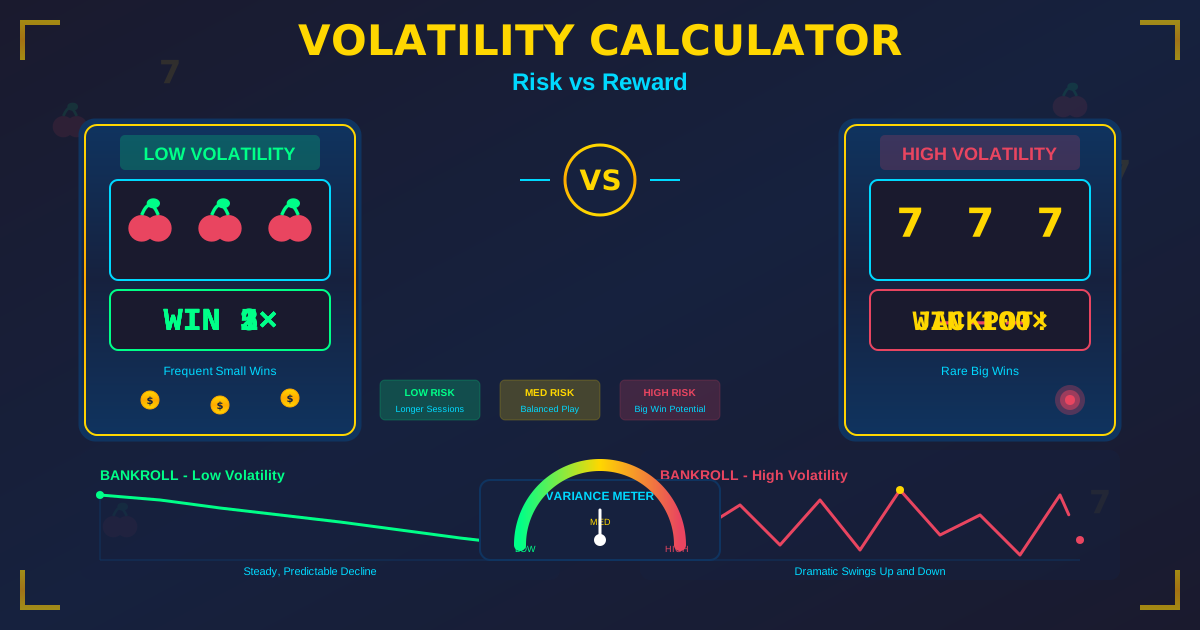
Variance-Adjusted Limits
Better approach - adjust for game:

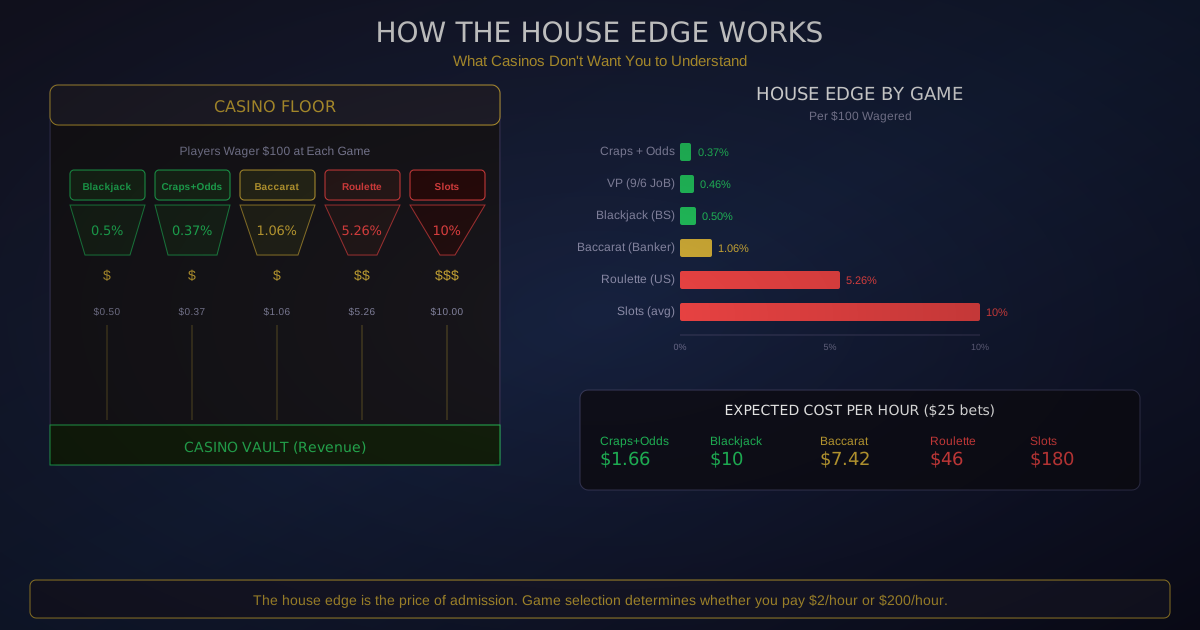
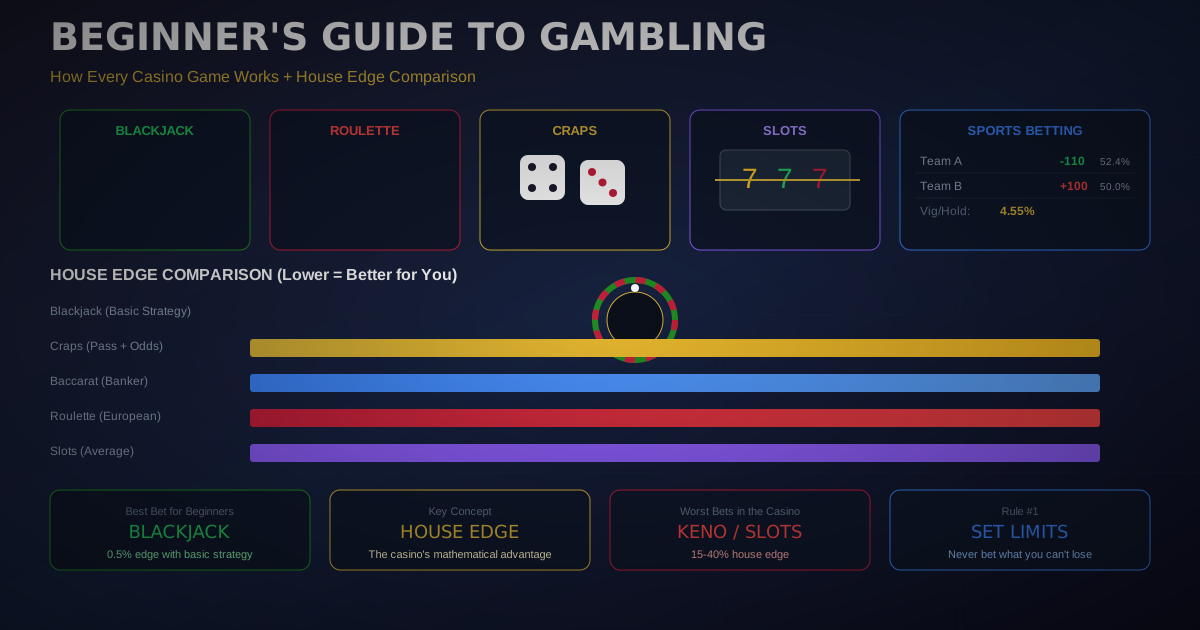
Low variance (blackjack, baccarat):
5-7% of bankroll
SD is low, swings are small
Tighter limit doesn't constrain play

Medium variance (craps, roulette):
8-12% of bankroll
Moderate swings expected
Balance between limit and play

High variance (slots, keno):
15-20% of bankroll
Large swings are normal
Tighter limits end sessions too fast

Why this matters:
$500 blackjack limit = plenty of hands
$500 slots limit = might hit in minutes
Adjust for game characteristics
Time-Based Limits
Duration-adjusted approach:

Base limit: 10% of bankroll
Adjust for session length:

1 hour session: 5% limit
2 hour session: 7.5% limit
4 hour session: 10% limit
8 hour session: 15% limit

Rationale:
Longer sessions = more variance exposure
Need higher limits for extended play

Example:
$5,000 bankroll, 4-hour slots session
Base: 10% = $500
Variance adjustment: +5% (slots)
Time adjustment: 0% (4 hours standard)
Final limit: 15% = $750
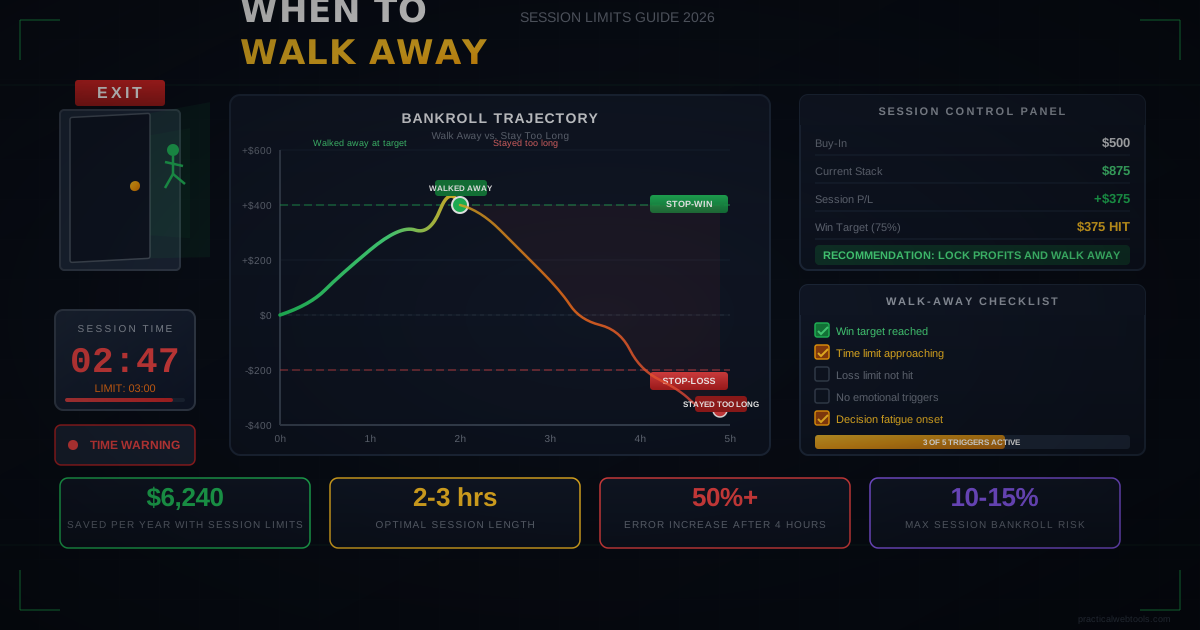
Profit Target Integration
Combined win/loss limits:

Loss limit: Stop if down X%
Win target: Stop if up Y%

Common ratios:
Conservative: 1:1 (lose 5%, win 5%)
Moderate: 1:2 (lose 10%, win 20%)
Aggressive: 1:3 (lose 10%, win 30%)

Why win targets matter:
Locking in profits is discipline too
Variance can take back wins quickly
Target + limit = complete strategy

Example session rules:
Bankroll: $2,000
Loss limit: $200 (10%)
Win target: $400 (20%)
Quit on first trigger
Real-World Examples
Example 1: Casual Slot Player
Situation:
Total bankroll: $3,000 (entertainment fund)
Game: Video slots (high variance)
Average bet: $1.25
Session plan: 4 hours
Visits: Monthly casino trips
Calculation:
Variance category: High
Base limit: 15% = $450

Session math:
Spins per hour: ~400
4 hours = 1,600 spins
Total action: 1,600 × $1.25 = $2,000

Expected loss at 8% edge:
$2,000 × 0.08 = $160

Standard deviation:
~$500 for this session length

2 SD downswing: $160 + $1,000 = $1,160
Very possible in high variance slots

Recommended limit: $500-600
(Above expected loss, below catastrophic)
Result:
Set session loss limit: $500

Why this works:
- Protects 83% of bankroll
- Survives at least 6 sessions
- Allows normal variance
- Caps catastrophic outcomes

Session rules:
- Buy in: $500 max
- If lost: Walk away
- No ATM visits
- Return next month
Example 2: Blackjack Basic Strategy Player
Situation:
Total bankroll: $10,000 (dedicated gambling)
Game: Blackjack (low variance)
Average bet: $50
Session plan: 3 hours
Frequency: Weekly player
Calculation:
Variance category: Low
Base limit: 7% = $700

Session math:
Hands per hour: ~80
3 hours = 240 hands
Total action: 240 × $50 = $12,000

Expected loss at 0.5% edge:
$12,000 × 0.005 = $60

Standard deviation:
~$420 for this session

2 SD downswing: $60 + $840 = $900

But at $50 bets, that's just 18 hands
Blackjack variance is low
$700 limit is 14 bets - reasonable
Result:
Set session loss limit: $700

Why this works:
- 7% of bankroll
- Survives 14+ sessions minimum
- Weekly play = 14 weeks runway
- More than adequate for blackjack variance

Bankroll progression:
If consistent, $60/session loss expected
After 50 sessions: -$3,000 expected
Bankroll can handle this easily
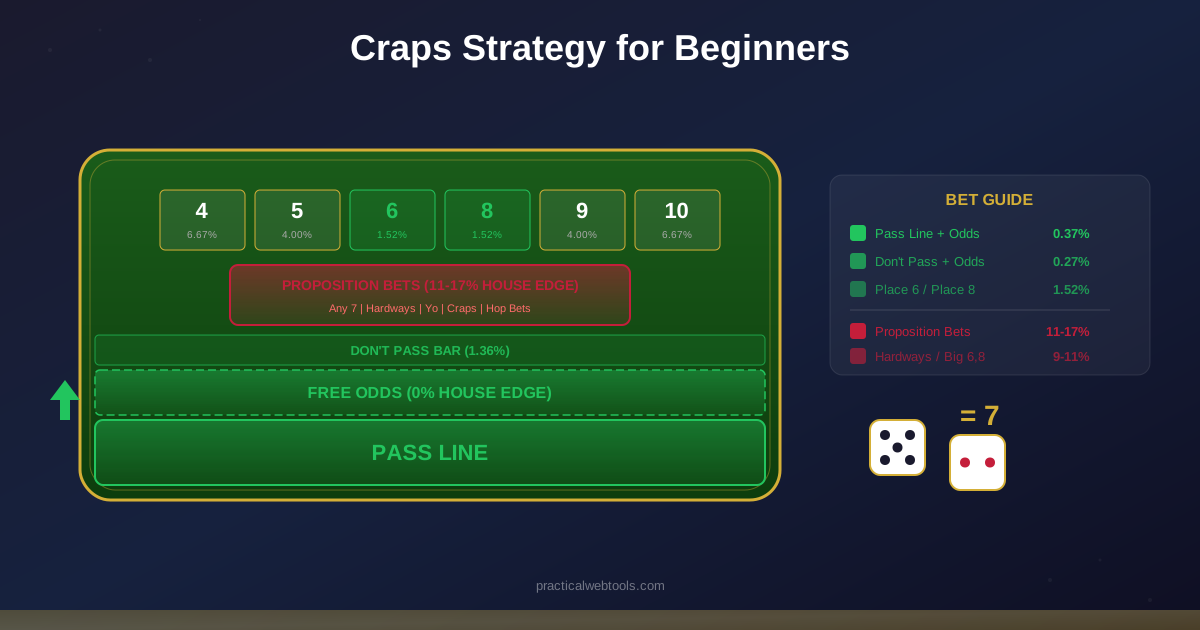
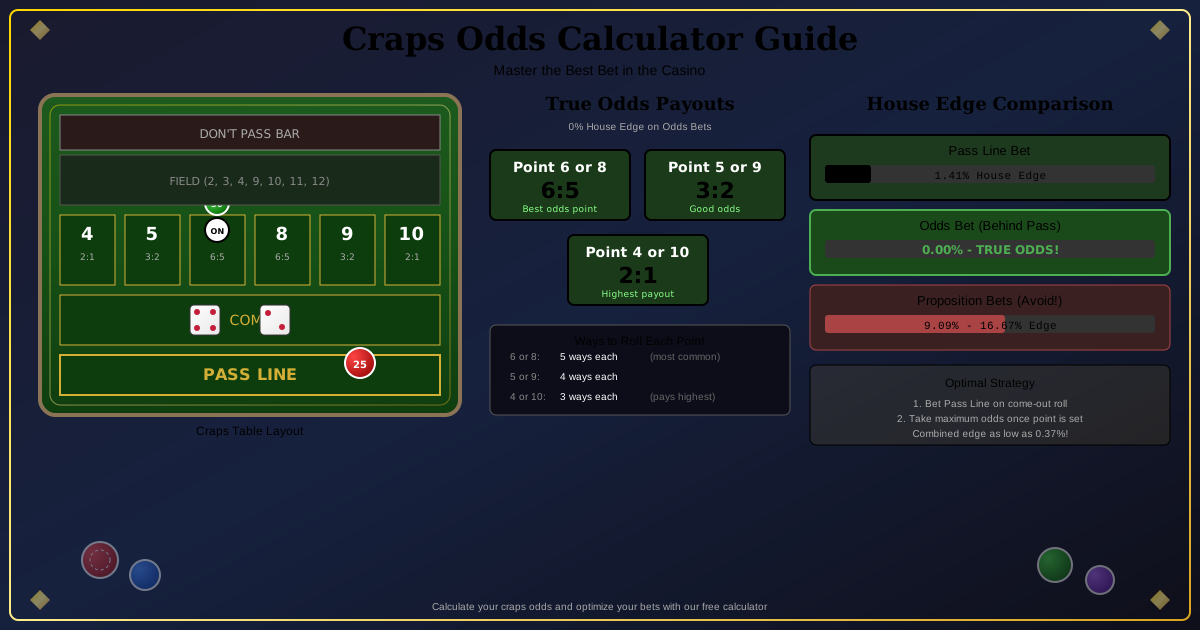
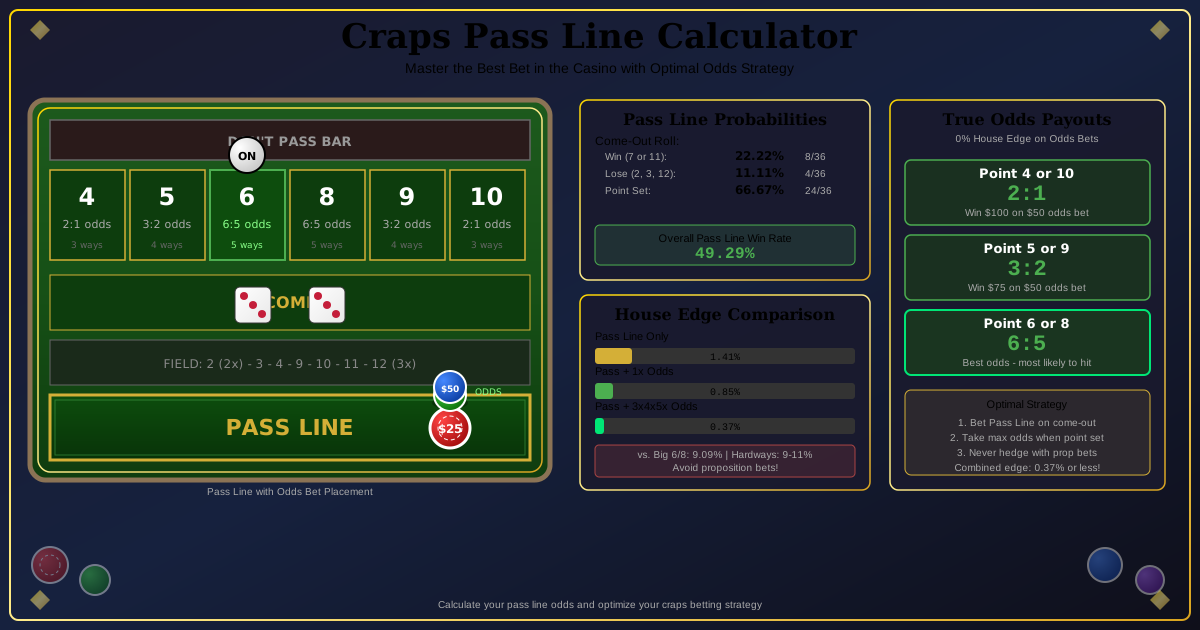
Example 3: Craps Player with Aggressive Strategy
Situation:
Total bankroll: $8,000
Game: Craps with odds bets (medium variance)
Average bet: $30 (with $100 odds)
Session plan: 5 hours
Playing: Pass line with max odds
Calculation:
Variance category: Medium-high (due to odds)
Base limit: 12% = $960

Session math:
Decisions per hour: ~30
5 hours = 150 decisions
Average total bet: ~$80 (pass + odds)
Total action: 150 × $80 = $12,000

Expected loss (combined edge ~0.6%):
$12,000 × 0.006 = $72

Standard deviation with full odds:
~$1,200 for this session

2 SD downswing: $72 + $2,400 = $2,472
Ouch - odds add variance!
Result:
Set session loss limit: $1,000-1,200

Why this works:
- Odds bets have zero edge but high variance
- Need higher limit for this style
- Protects 85%+ of bankroll
- Still get 7+ sessions minimum

Alternative approach:
Reduce odds during losing streaks
Switch from 3-4-5x to 2x odds
Lowers variance and limit needs
Example 4: Tournament Poker Player Converting to Cash
Situation:
Total bankroll: $15,000 (MTT + cash combined)
Converting more to cash games
Stakes: $1/$2 NLHE
Buy-in: $300
Sessions: 4-6 hours
Calculation:
Cash game session limits differ:

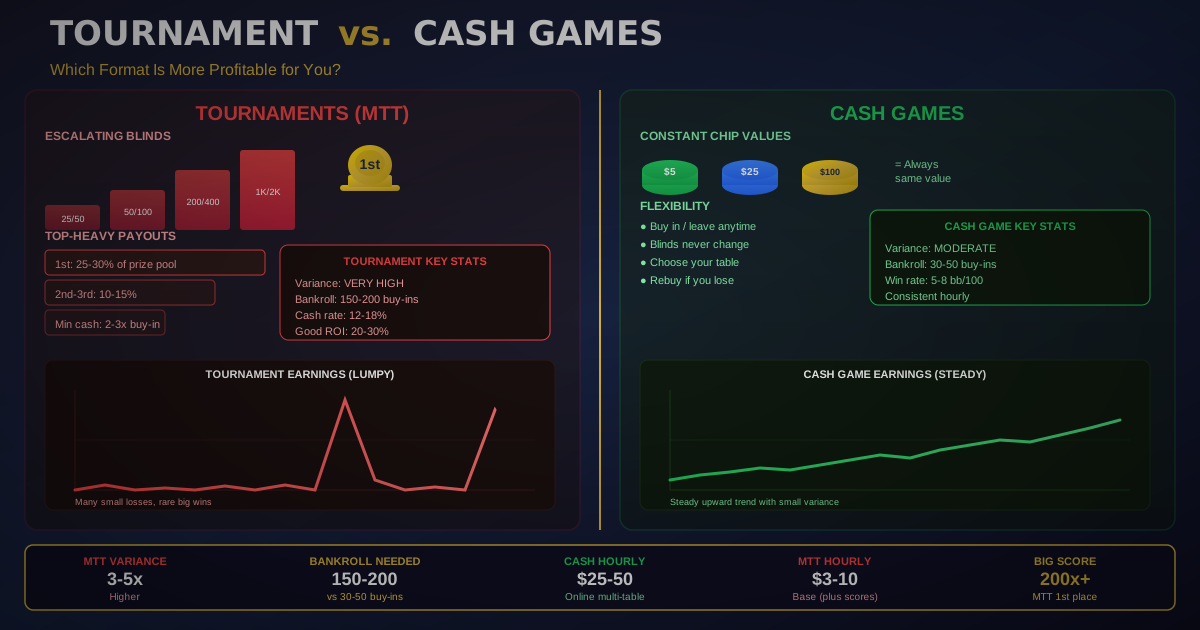
Tournament thinking:
$100 = 1 buy-in = fixed risk
Lose and done, rebuy or leave

Cash game reality:
Can rebuy infinitely
Tilt and chase risk is real
Need hard stop-loss

Recommended approach:
Limit = 1-2 buy-ins for new cash player
$300-600 session limit

Why so tight?
Learning cash dynamics
Avoiding tilt rebuys
Building discipline
Result:
Set session loss limit: $500 (1.67 buy-ins)

Buy-in structure:
- First buy-in: $300
- One top-up allowed: $200
- Maximum session exposure: $500
- No more bullets after second buy

If limit hit:
- Leave immediately
- No "winning it back"
- Review session hands
- Return another day

This builds discipline before loosening limits
Implementing Stop-Loss Discipline
Pre-Session Commitment
Before playing:

1. Check total bankroll
2. Calculate appropriate limit
3. Bring only that amount
4. No credit cards/ATM access
5. Tell someone your limit

Physical implementation:
- Leave cards in car/safe
- Bring cash only
- Preset notification alerts
- Session time limit backup

Mental preparation:
- Accept the limit as firm
- Plan non-gambling activity after
- No negotiating with yourself
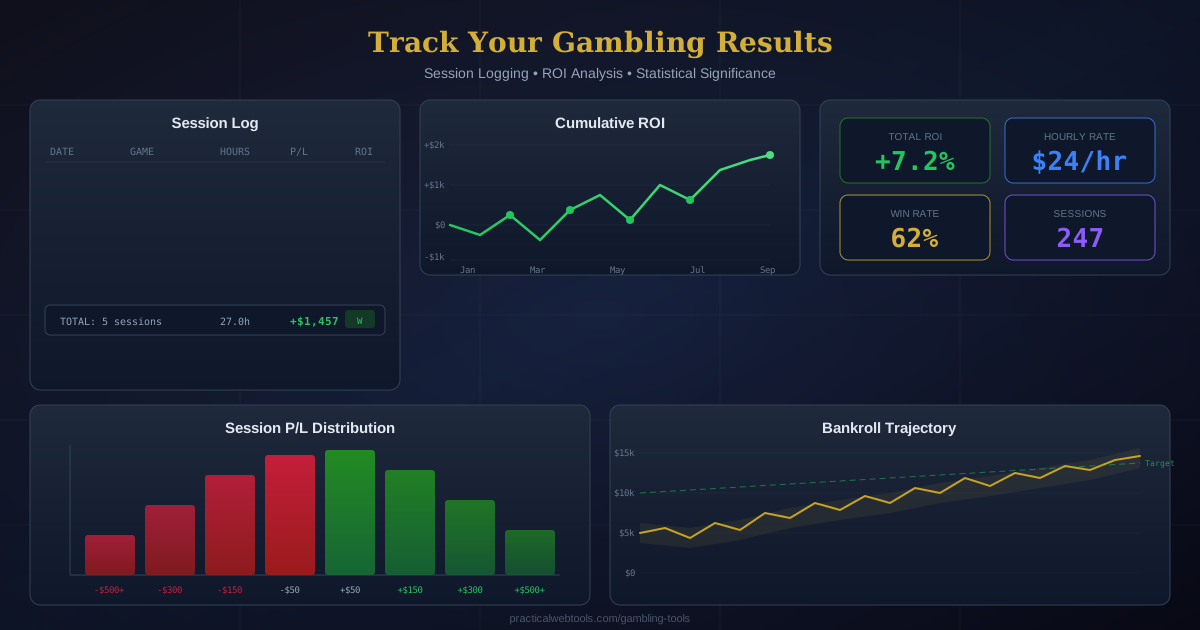
During Session Tracking
Track as you play:

Running tally:
Starting point → Current position

Example session log:
Start: $500
After 1 hour: $420 (-$80)
After 2 hours: $350 (-$150)
After 3 hours: $275 (-$225)
WARNING: 45% of limit used

Decision points:
At 50% of limit: Check emotions
At 75% of limit: Plan exit
At 90% of limit: Prepare to leave
At 100% of limit: Leave immediately
Post-Session Protocol
After hitting limit:

Immediate actions:
1. Cash out remaining chips
2. Leave gaming floor
3. Get receipt/documentation
4. Physical separation from tables

Next 30 minutes:
- No return to gaming
- Exit casino or go to restaurant
- Review session mentally
- Acknowledge limit worked

Later analysis:
- Was play good despite result?
- Any tilt hands to review?
- Was limit appropriate?
- Adjust for next session?
Common Mistakes to Avoid
-
"Just One More" Thinking: When you hit your limit, you're most likely to be emotional and tilted. This is exactly when you should NOT continue playing.
-
Increasing Limits Mid-Session: Never raise your loss limit after you've started losing. This defeats the entire purpose of having a limit.
-
Setting Limits Too Low: A limit that triggers from normal variance isn't useful. Limits should protect against catastrophe, not normal play.
-
Setting Limits Too High: A limit that never triggers doesn't help. If you'd never hit your limit, it's not really a limit.
-
Not Actually Following Limits: A limit you ignore is worse than no limit - it creates false security while providing no protection.
-
Forgetting Win Targets: Loss limits protect downside, but win targets protect upside. Both are needed for complete session management.
Frequently Asked Questions
How do I choose my loss limit percentage?
Start conservative (5-10%) and adjust based on experience. High variance games need higher percentages. Your emotional tolerance matters too - a limit that stresses you is too high.
Should I use the same limit for every session?
Ideally, base it on current bankroll percentage each time. As bankroll changes, limits should scale. Fixed dollar amounts become wrong as bankroll fluctuates.
What if I hit my limit in the first hour?
That's variance, and it happens. Leave anyway. The purpose of a limit is protecting against bad sessions. An early bad session still uses your allotted loss amount.
Can limits be flexible for special occasions?
Generally no. Special occasions are exactly when emotional decision-making increases. Stick to limits, or consciously choose a higher (but still limited) amount before starting.
How do loss limits relate to bankroll management?
Loss limits protect individual sessions. Bankroll management protects long-term. Both are needed: limits prevent catastrophic sessions, bankroll rules ensure you can play many sessions.
Do professional gamblers use loss limits?
Yes, but differently. Pros set limits based on edge deterioration (stopping when they're not playing well) rather than just dollar amounts. Recreational players need dollar limits.
Pro Tips
- Calculate your limit BEFORE arriving at the casino when you're thinking clearly
- Physically separate your limit money from additional funds - don't bring more than your limit
- Set a time limit backup - sometimes session fatigue causes losses before dollar limit hits
- Review sessions where you hit limits - look for patterns or leaks in your play
- Adjust limits seasonally as your bankroll grows or shrinks
Related Calculators
- Bankroll Requirements Calculator - Total bankroll sizing
- Risk of Ruin Calculator - Long-term survival odds
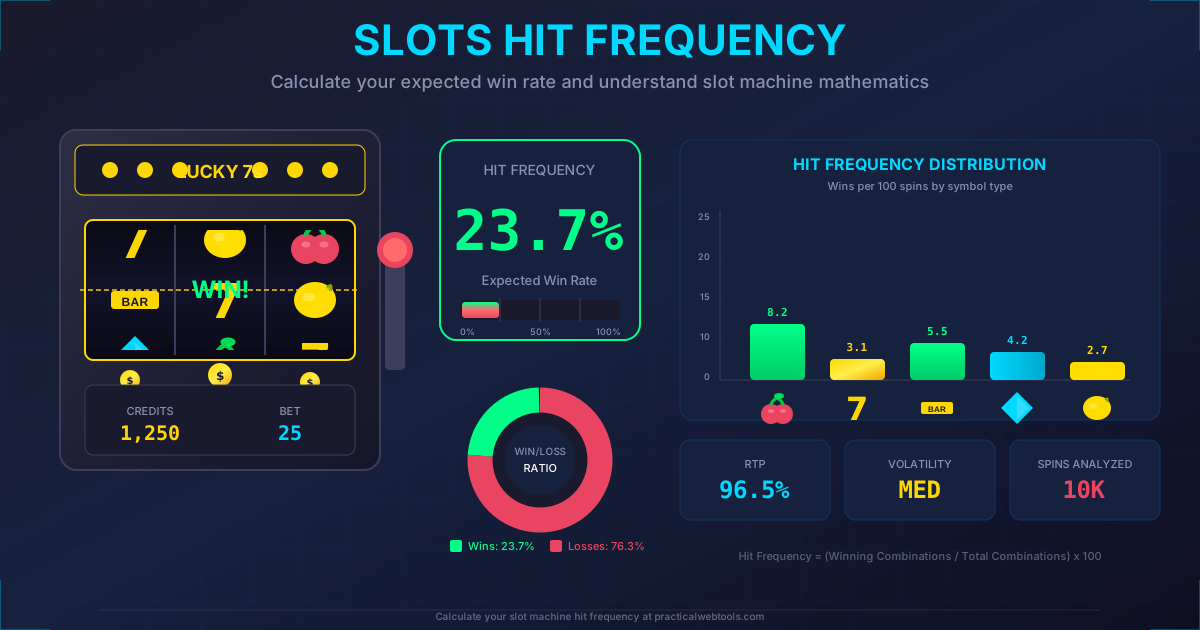
- Gambling Variance Calculator - Session variance estimates
- House Edge Calculator - Expected loss rates
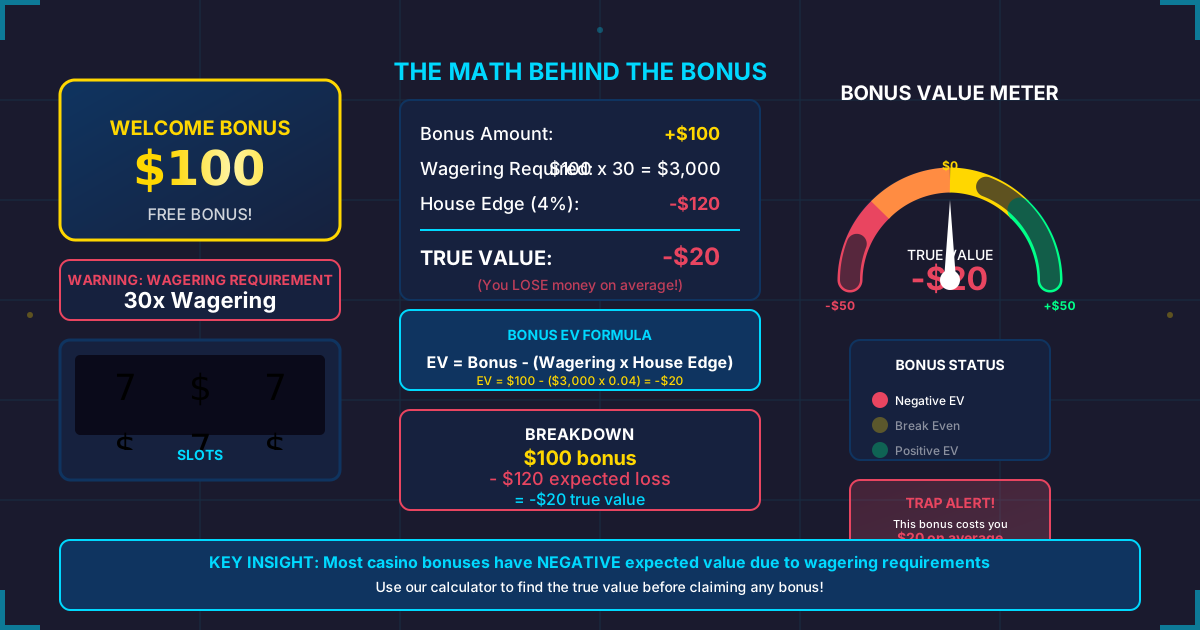
- Expected Value Calculator - Game-specific math
Conclusion
Session loss limits are the most important tool for recreational gambling survival. Without them, one bad session can devastate months of bankroll building. With proper limits, you guarantee yourself multiple sessions to experience variance - and potentially the wins that make gambling enjoyable.
Our calculator determines optimal limits based on your specific situation: bankroll size, game choice, session length, and risk tolerance. The math is clear: limits that protect 80-95% of your bankroll per session ensure long-term survival and sustainable play.