Bonus Abuse Calculator: Calculate True Value of Casino and Sportsbook Bonuses (2026)
Bonus Abuse Calculator: Find the True Value Behind Wagering Requirements
Casino and sportsbook bonuses look attractive on the surface - "100% match up to $500!" sounds great until you read the fine print. Wagering requirements can transform a seemingly generous bonus into a mathematical trap. Our calculator reveals the true expected value of any bonus offer, helping you decide which promotions are actually worth claiming.
What Is Bonus Abuse?
Bonus abuse (or bonus hunting) is the practice of systematically claiming gambling bonuses and optimizing play to extract maximum value. The key is understanding wagering requirements - the amount you must bet before withdrawing bonus funds. When the math works in your favor, bonuses become profitable. When it doesn't, you're better off declining.
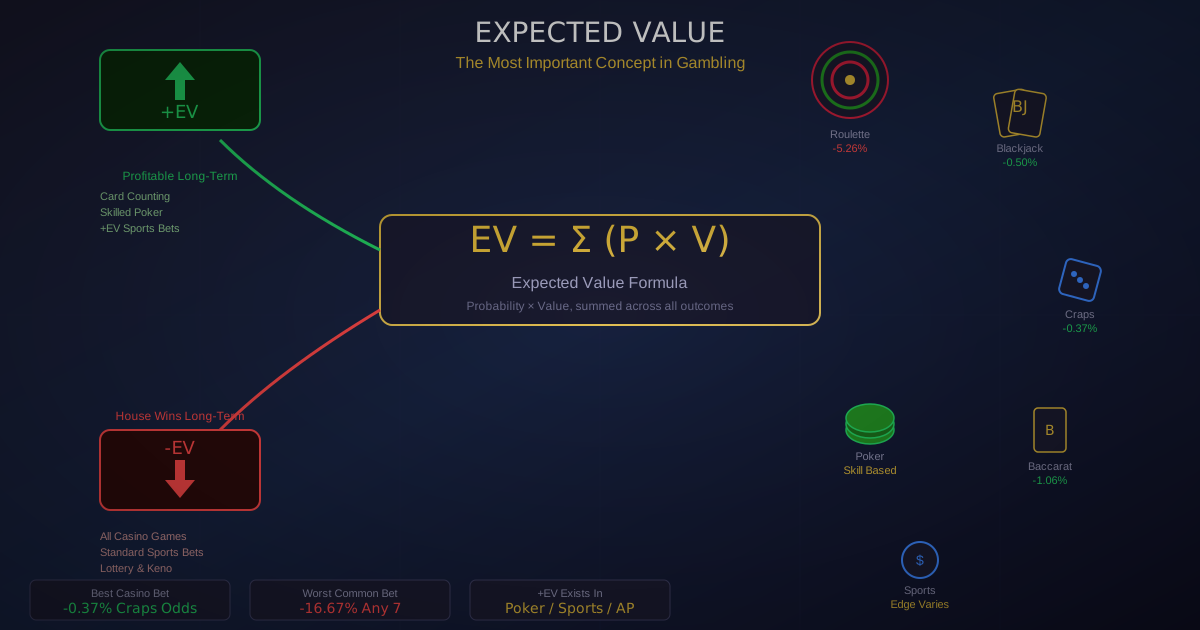
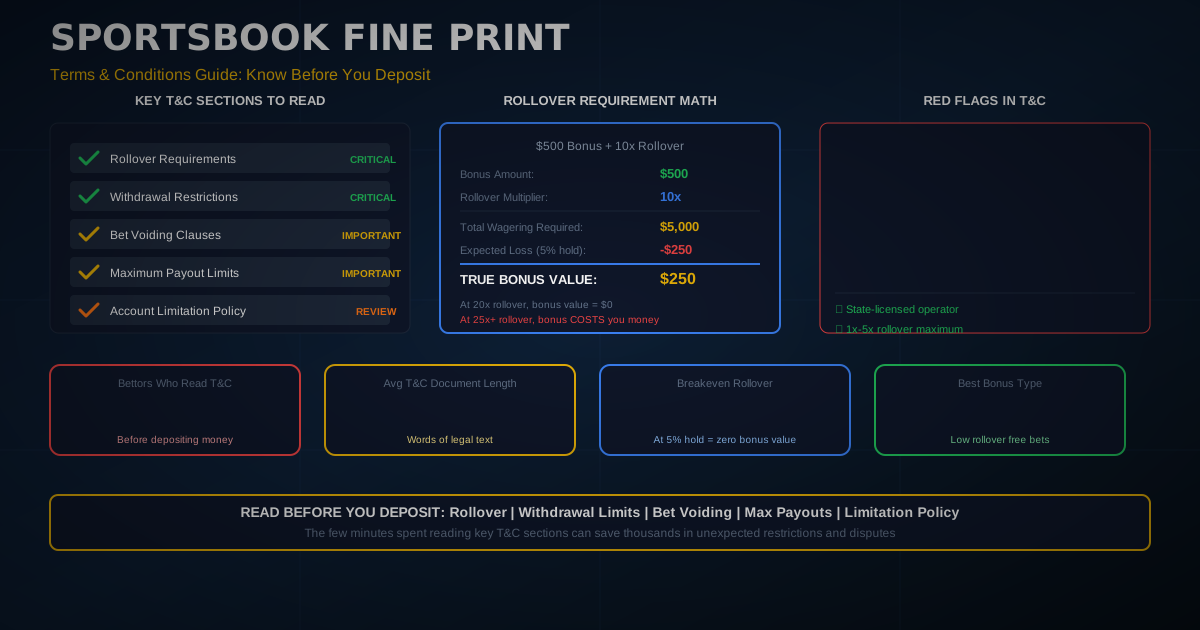
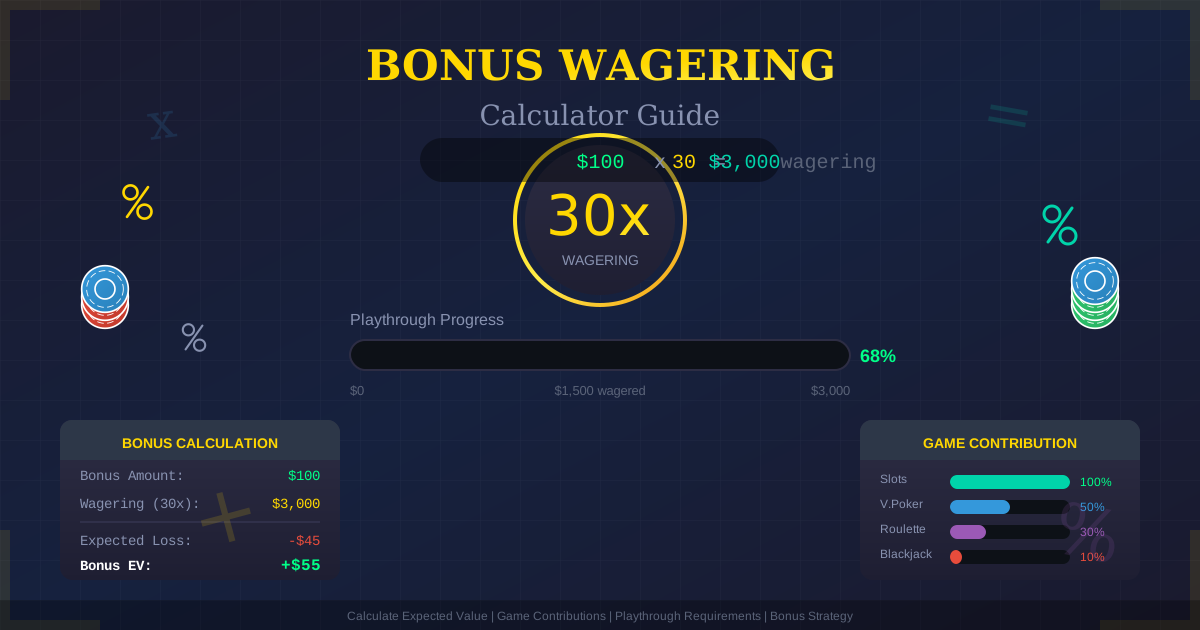
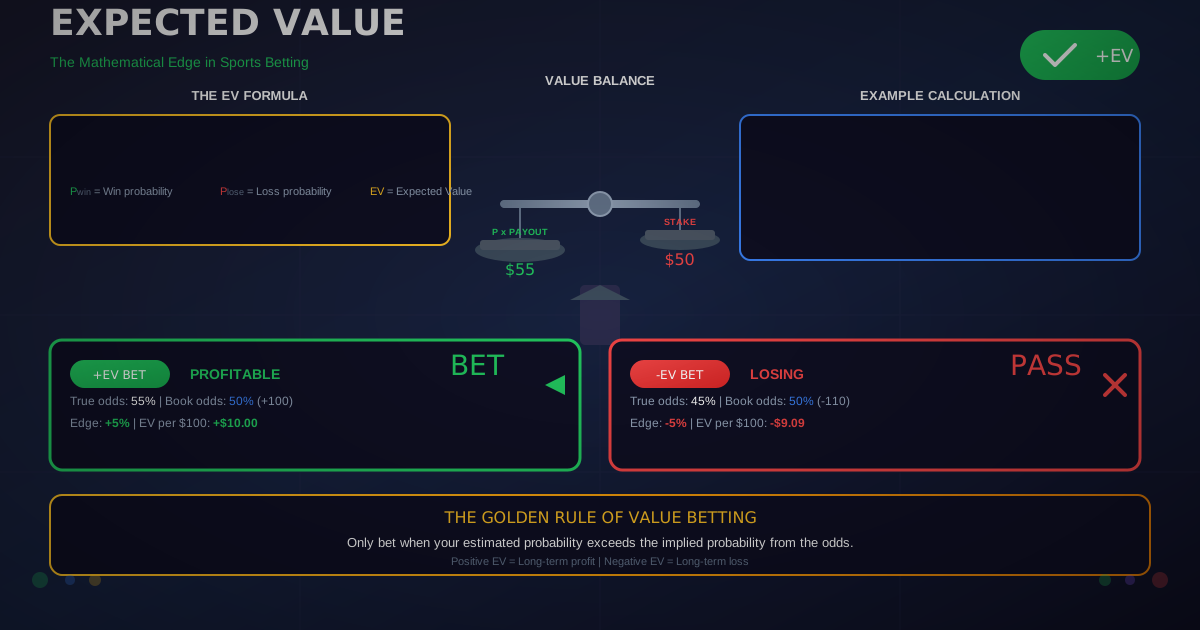
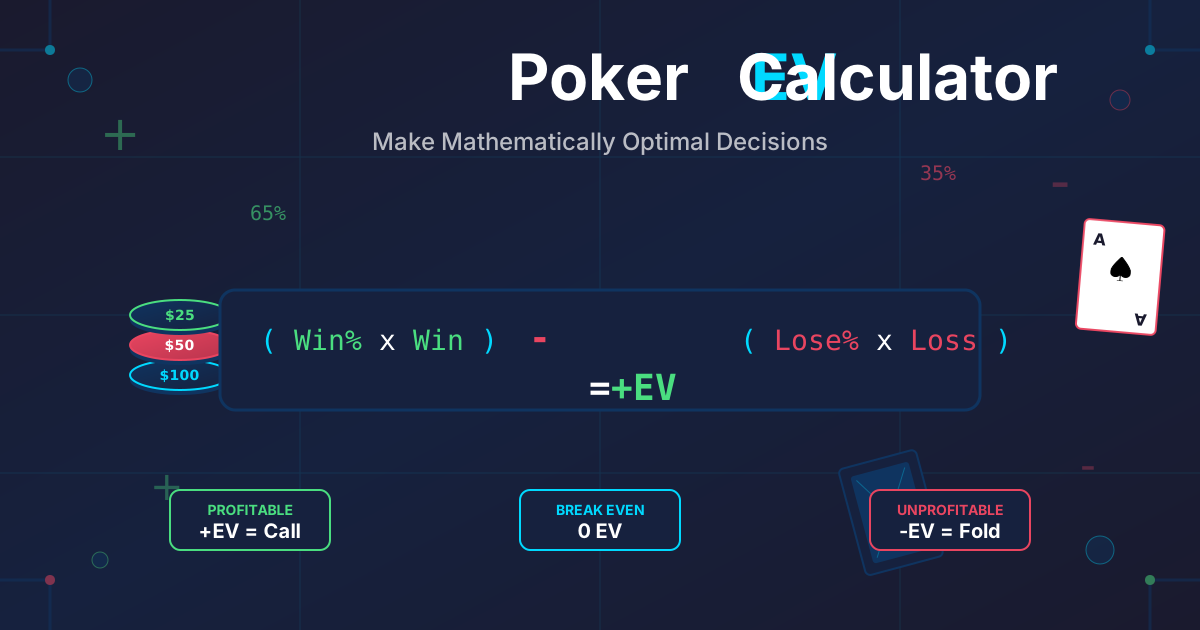
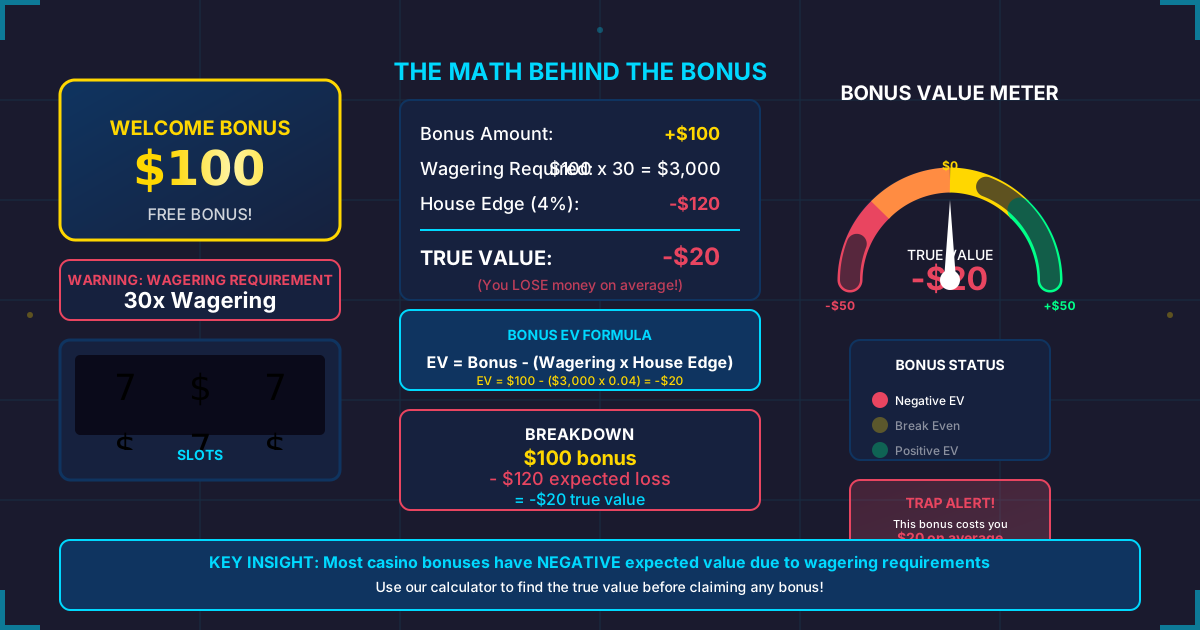
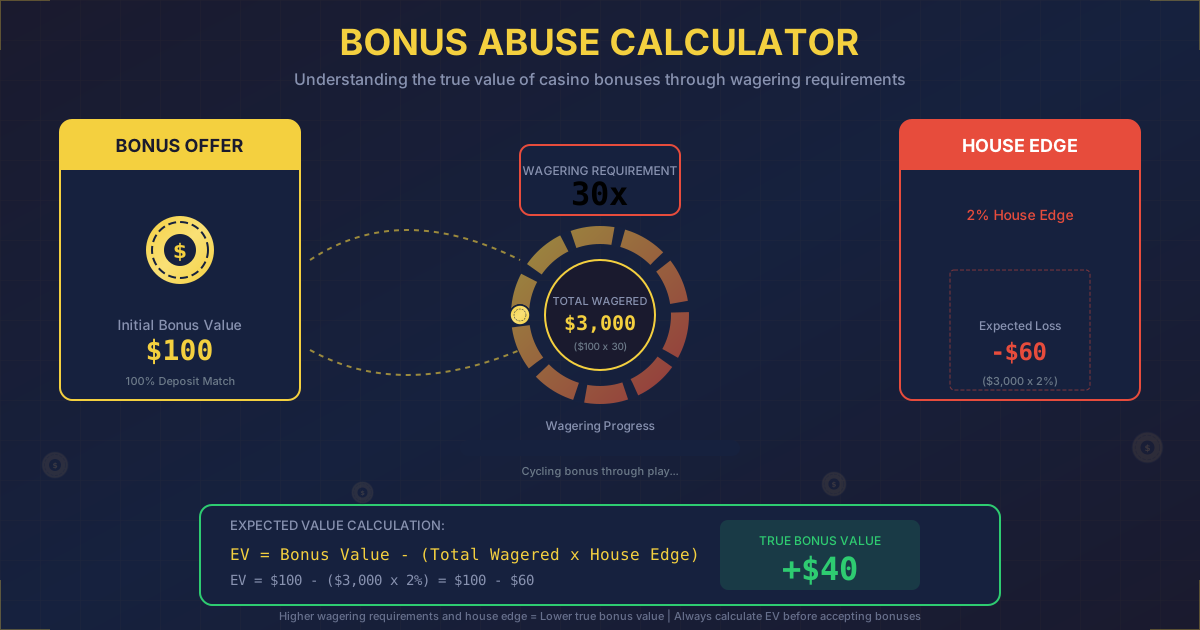
Quick Answer: Bonus Expected Value = Bonus Amount - (Wagering Requirement × House Edge). For a $100 bonus with 30x wagering on slots (5% house edge): EV = $100 - ($3,000 × 0.05) = $100 - $150 = -$50. This bonus has negative EV and should be avoided. For positive EV, you need: Wagering × House Edge < Bonus Amount. Formula: Max Wagering for break-even = Bonus / House Edge. At 1% house edge, a $100 bonus breaks even at 100x wagering.
How to Use Our Calculator
Use the Bonus Abuse Calculator →
Step-by-Step Instructions
- Enter Bonus Amount: The promotional credit value
- Enter Wagering Requirement: Multiplier (e.g., 30x)
- Select Game Type: Slots, blackjack, roulette, etc.
- Enter House Edge: Expected loss percentage
- Calculate EV: See true bonus value
Input Fields
| Field | Description | Example |
|---|---|---|
| Bonus Amount | Promotional credit | $200 |
| Wagering Multiple | Times bonus must be wagered | 30x |
| House Edge | Game's expected loss rate | 2% |
| Deposit Required | Initial deposit amount | $200 |
| Game Weighting | Contribution to wagering | 100% |
| Time Limit | Days to complete wagering | 30 |
Bonus Mathematics
The Wagering Requirement Formula
Wagering Requirement Calculation:

Total Wagering = Bonus × Multiplier

Example:
$100 bonus with 35x wagering
Total Wagering = $100 × 35 = $3,500

Expected Loss = Total Wagering × House Edge

At 3% house edge:
Expected Loss = $3,500 × 0.03 = $105

Bonus EV = Bonus - Expected Loss
Bonus EV = $100 - $105 = -$5

This bonus loses $5 on average!
Break-Even Calculation
Break-Even Point:

For bonus to have zero EV:
Bonus = Wagering × House Edge
Bonus = (Bonus × Multiplier) × House Edge
1 = Multiplier × House Edge
Multiplier = 1 / House Edge

Break-even multipliers by game:
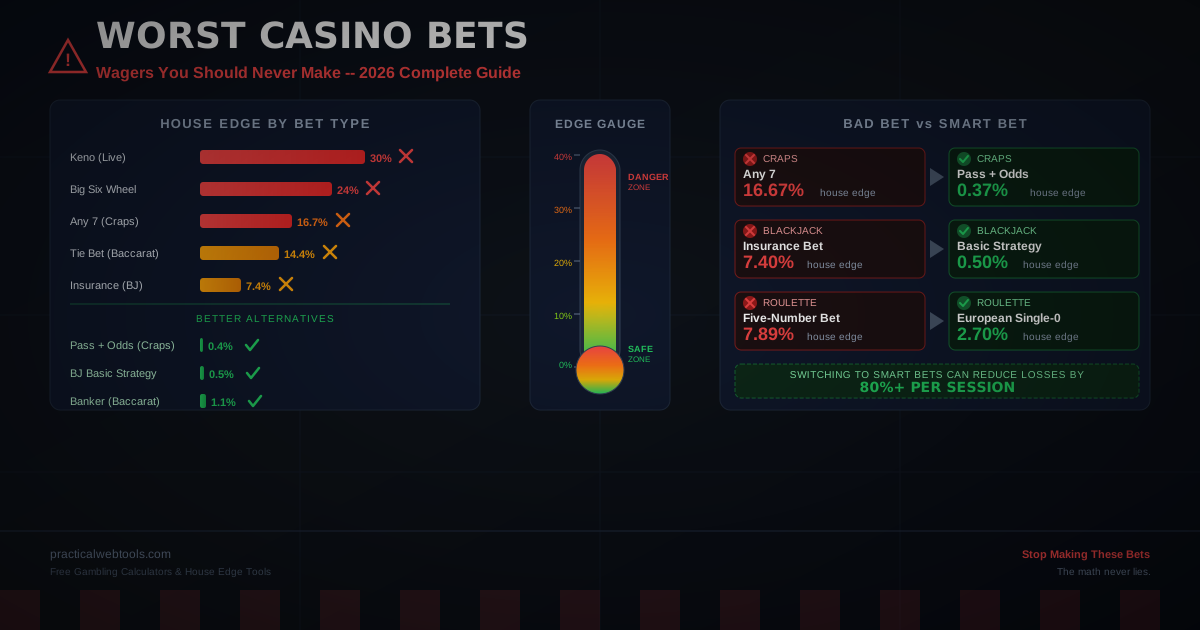
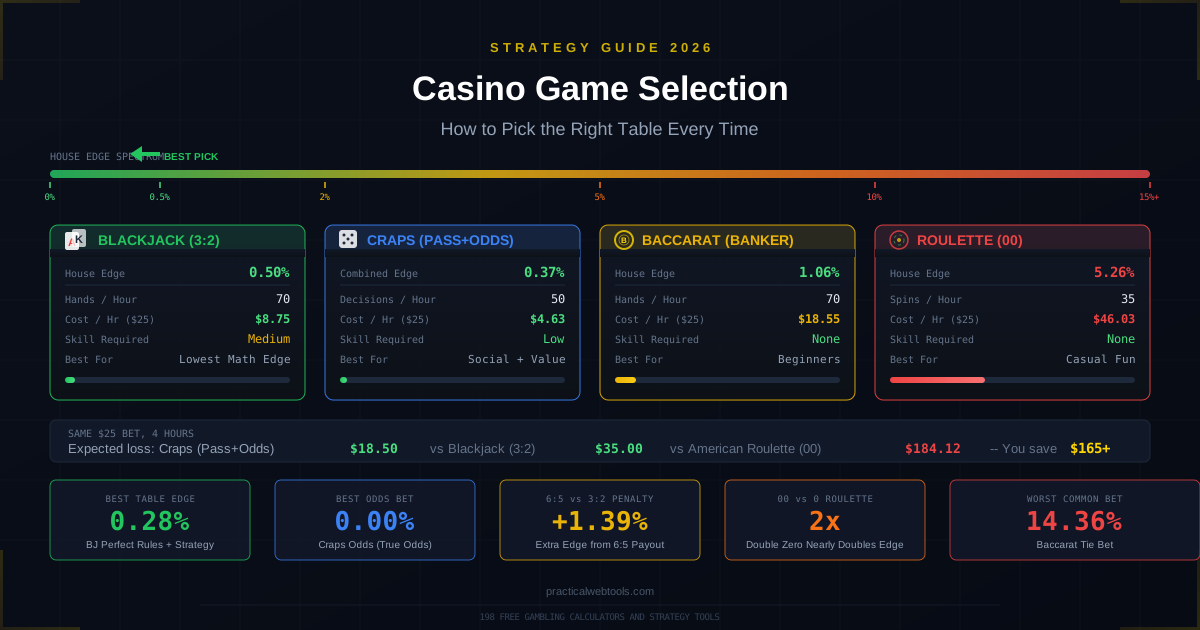
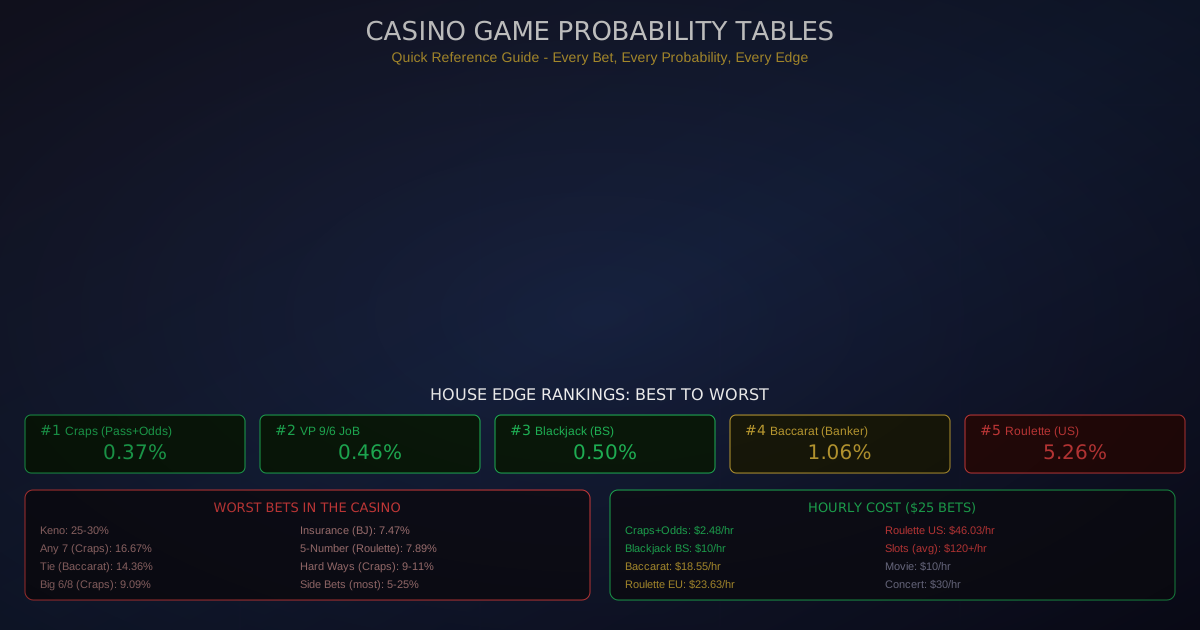
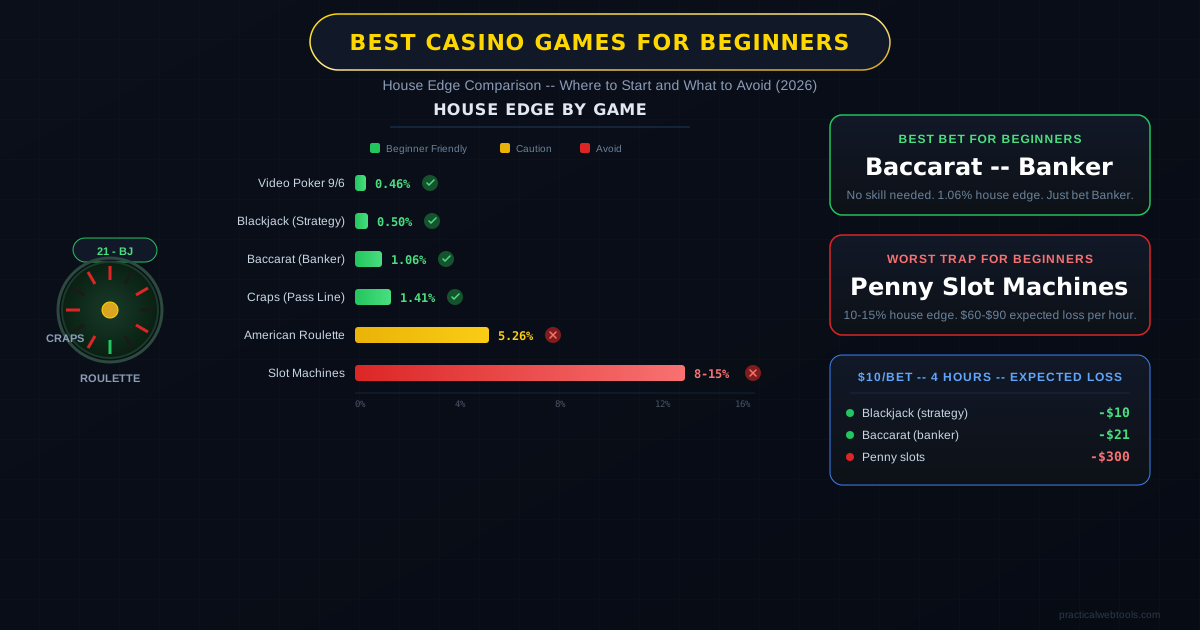
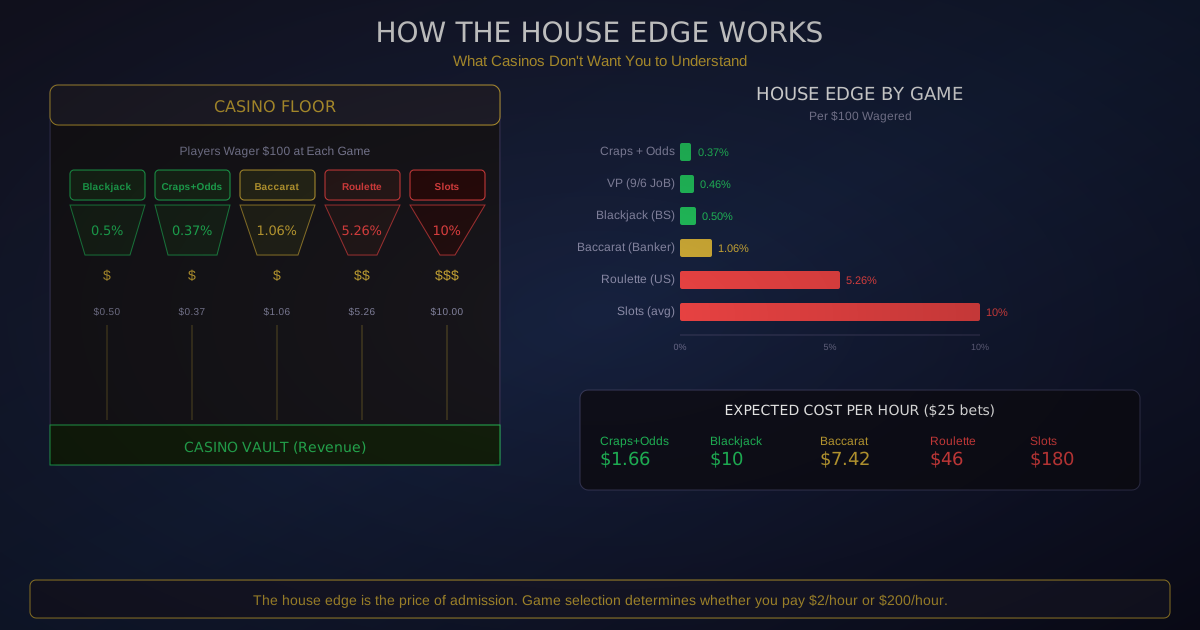
Slots (5% edge): 1/0.05 = 20x
Roulette (2.7%): 1/0.027 = 37x
Blackjack (0.5%): 1/0.005 = 200x
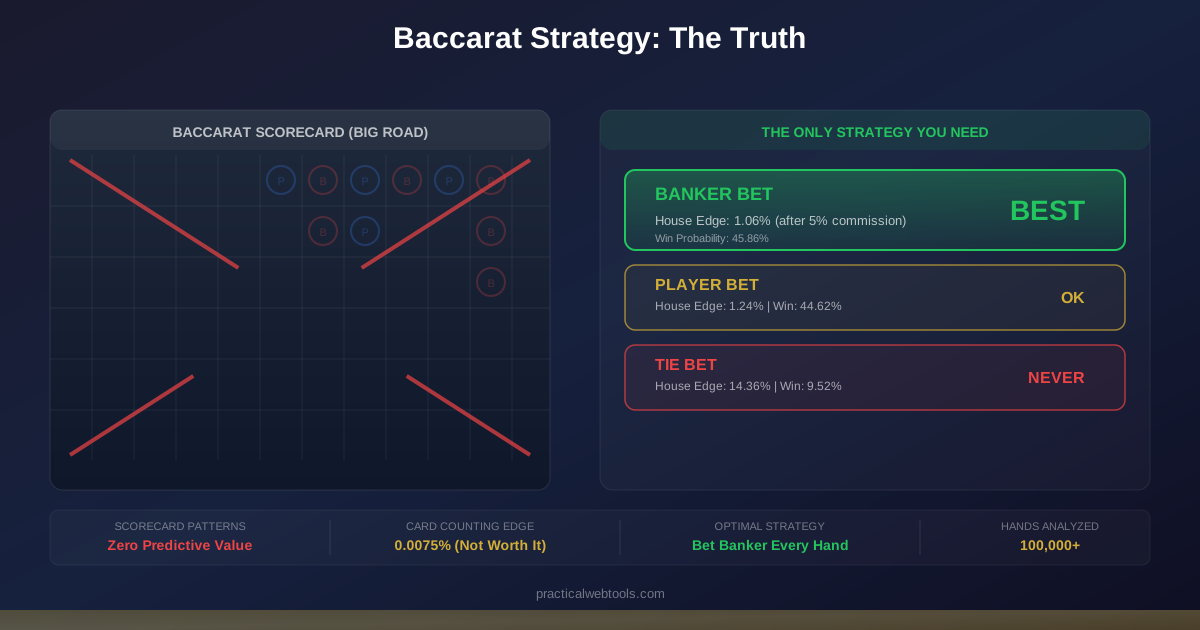
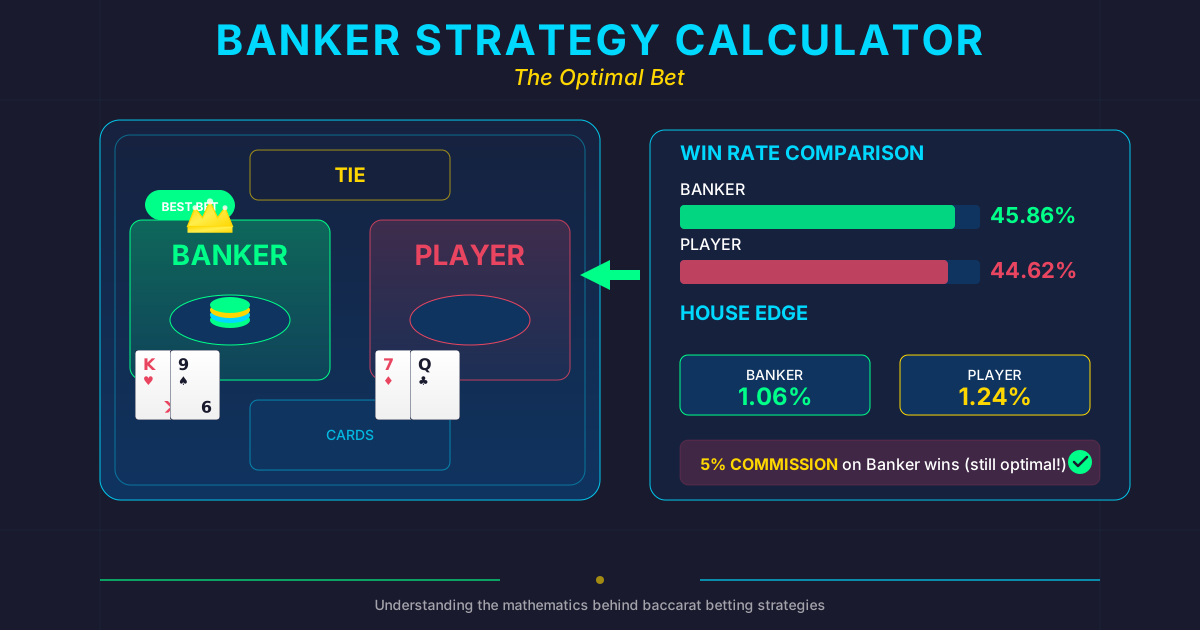
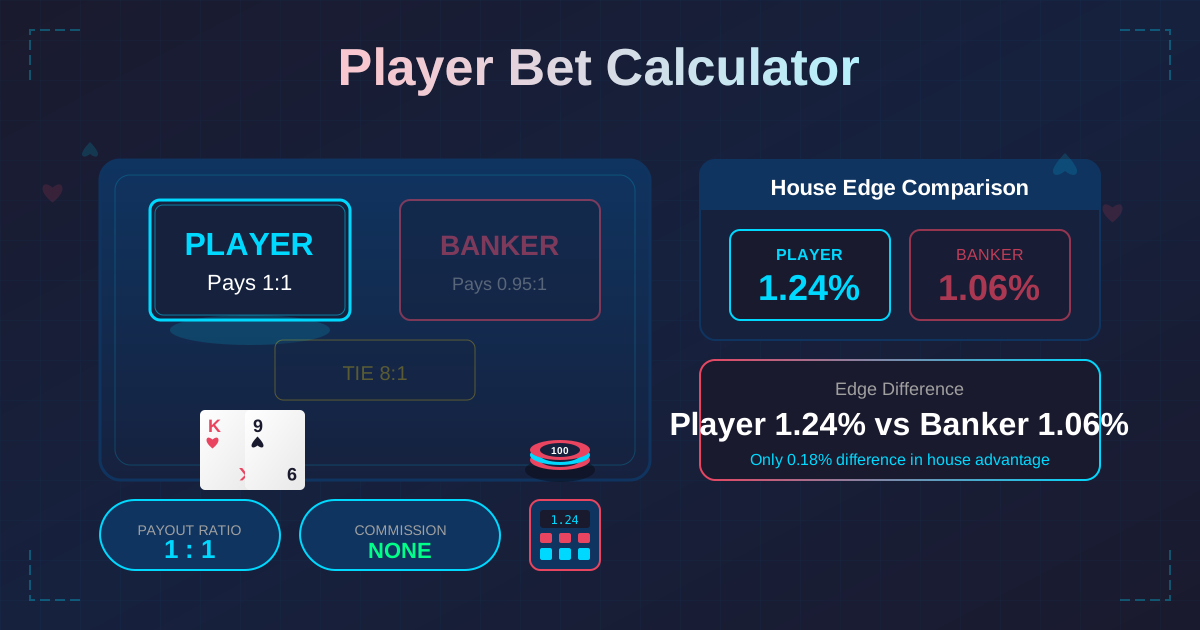
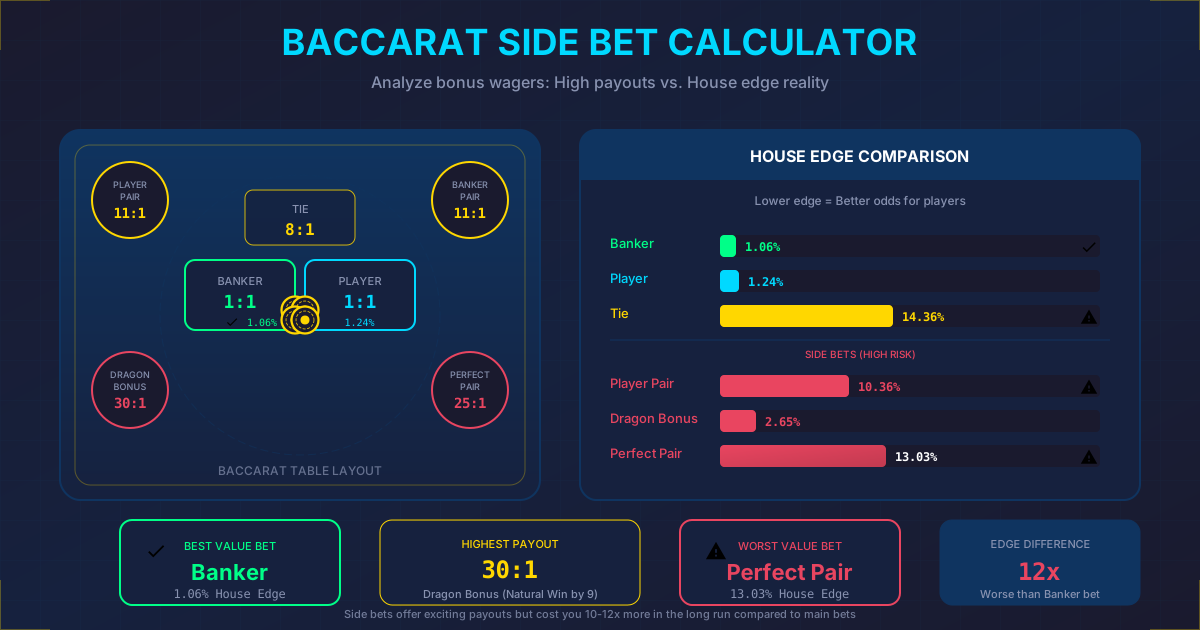
Baccarat (1.06%): 1/0.0106 = 94x

Any multiplier BELOW these = Positive EV
Any multiplier ABOVE these = Negative EV
Game Weighting Impact
Many casinos weight games differently:

Example weights:
Slots: 100%
Roulette: 20%
Blackjack: 10%
Baccarat: 10%

$100 bonus, 30x wagering, playing blackjack:

Effective wagering = 30x / 10% = 300x
Total wagering needed = $100 × 300 = $30,000

At 0.5% edge:
Expected loss = $30,000 × 0.005 = $150

Bonus EV = $100 - $150 = -$50

Game weighting destroys blackjack bonus value!
Types of Bonuses
Deposit Match Bonuses
How it works:
"100% match up to $500"
Deposit $500, get $500 bonus = $1,000 total

Typical terms:
- 30-50x wagering on bonus
- Sometimes wagering on deposit + bonus
- 7-30 day time limit
- Game restrictions

Value calculation:
$500 bonus, 40x wagering, slots
Total wagering: $500 × 40 = $20,000
Expected loss: $20,000 × 0.05 = $1,000
EV: $500 - $1,000 = -$500

This common offer is deeply negative!
No-Deposit Bonuses
How it works:
"$25 free - no deposit required"
Get bonus just for signing up

Typical terms:
- Higher wagering (60-100x)
- Low maximum withdrawal ($100-500)
- Strict game restrictions

Value calculation:
$25 bonus, 80x wagering, $100 max withdrawal
Total wagering: $25 × 80 = $2,000
Expected loss: $2,000 × 0.05 = $100

But bonus is only $25 to begin with!
You'd need luck to clear wagering AND
hit the max withdrawal cap

EV is hard to calculate due to cap
Generally small positive if you complete it
Free Spins Bonuses
How it works:
"100 free spins on [Slot Name]"
Each spin has fixed value (usually $0.10-0.25)

Typical terms:
- Spin value predetermined
- Winnings converted to bonus
- Bonus has separate wagering
- Often on high-variance slots

Value calculation:
100 spins × $0.20 = $20 potential
Average slot return: 95%
Expected from spins: $20 × 0.95 = $19

If winnings have 40x wagering:
Wagering on average $19 = $760
Expected loss: $760 × 0.05 = $38

EV = $19 - $38 = -$19

Free spins rarely have positive EV
Cashback Bonuses
How it works:
"10% cashback on losses"
Get back percentage of net losses

Why this is different:
- No wagering requirement typically
- Only triggers on losses
- Reduces effective house edge

Value calculation:
Play $10,000 at 2% edge
Expected loss: $200
Cashback: $200 × 10% = $20

Effective house edge:
Original: 2%
After cashback: 2% - (2% × 10%) = 1.8%

Cashback bonuses are usually positive EV
because they directly reduce house edge
Real-World Examples
Example 1: Standard Casino Welcome Bonus
Situation:
Offer: 100% match up to $300
Wagering: 35x bonus only
Game: Slots (5% house edge)
Time limit: 30 days
Max bet during wagering: $5
Calculation:
Deposit: $300
Bonus: $300
Total funds: $600

Wagering required:
$300 × 35 = $10,500

Expected loss on wagering:
$10,500 × 0.05 = $525

Bonus EV:
$300 - $525 = -$225

You're expected to lose $225 chasing this bonus!
Result:
This bonus has negative expected value

Why people still claim it:
1. They don't understand the math
2. Variance can produce wins
3. Entertainment value

When it makes sense:
- Planning to play anyway
- Variance seekers
- Low-stakes entertainment

When to skip:
- EV-focused players
- Limited bankroll
- Can't complete wagering
Example 2: Low Wagering Bonus
Situation:
Offer: 50% match up to $200 (rare!)
Wagering: 15x bonus only
Game: Slots (5% house edge)
Time limit: 7 days
Calculation:
Deposit: $400
Bonus: $200
Total funds: $600

Wagering required:
$200 × 15 = $3,000

Expected loss:
$3,000 × 0.05 = $150

Bonus EV:
$200 - $150 = +$50!

Positive expected value bonus!
Result:
This is a good bonus to claim

Break-even analysis:
At 5% edge, break-even is 20x
This bonus at 15x is below break-even
= Positive EV

Expected hourly value:
If completing $3,000 wagering in 10 hours
EV = $50 / 10 = $5/hour

Not huge, but guaranteed positive
Example 3: Sportsbook Rollover Bonus
Situation:
Offer: $500 deposit bonus
Wagering: 10x on sports bets
Minimum odds: -200 (+100 to proceed)
Time limit: 60 days
Calculation:
Sports betting edge analysis:

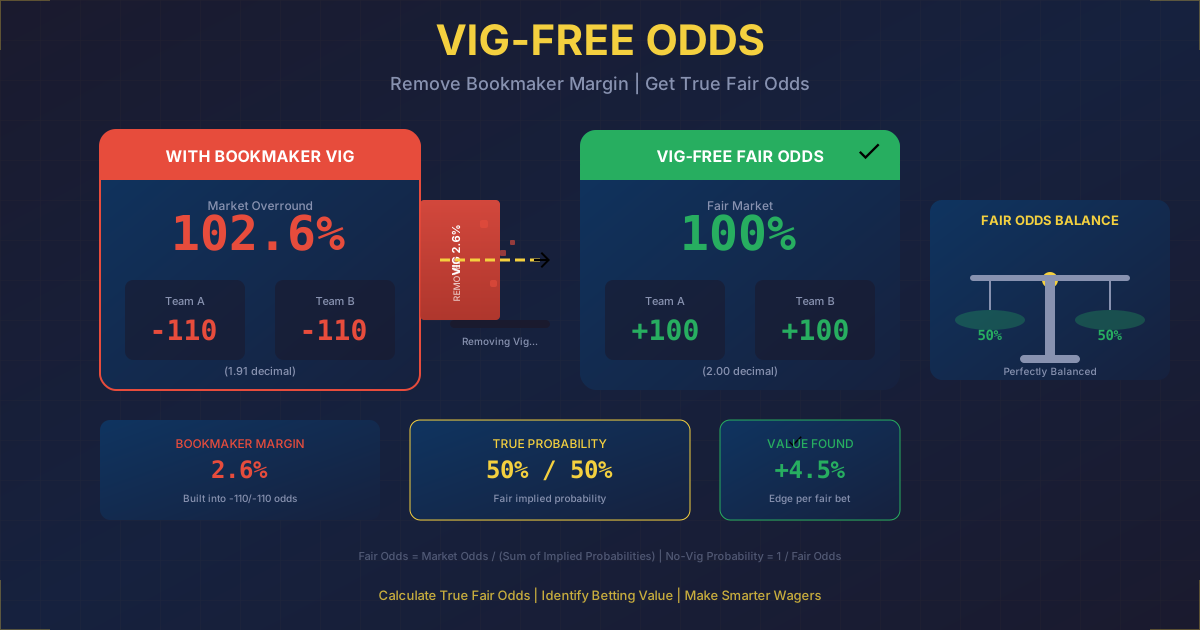
At -110 odds (standard juice):
House edge ≈ 4.5%

Total wagering: $500 × 10 = $5,000
Expected loss: $5,000 × 0.045 = $225
Bonus EV: $500 - $225 = +$275

But wait - if you're a winning bettor:
Positive edge negates or exceeds house edge
EV becomes even higher

If break-even bettor:
EV = $500 - $225 = +$275

If +2% edge bettor:
EV = $500 - ($5,000 × -0.02 × 0.045...)
Actually: $500 + $100 - $225 = +$375
Result:
Sports bonuses often have better EV because:
1. Lower wagering requirements (5-15x)
2. Sports bets can have player edge
3. Longer time limits

Key: Low wagering + skill edge = Best bonuses
Example 4: Sticky vs Non-Sticky Bonus
Situation:
Two offers available:

Offer A (Non-sticky):
$100 bonus, 40x wagering
Can withdraw bonus after wagering

Offer B (Sticky):
$200 bonus, 30x wagering
Bonus removed at withdrawal
Calculation:
Offer A (Non-sticky):
Wagering: $100 × 40 = $4,000
Expected loss: $4,000 × 0.05 = $200
EV: $100 - $200 = -$100

Offer B (Sticky):
Wagering: $200 × 30 = $6,000
Expected loss: $6,000 × 0.05 = $300
But bonus is forfeited at withdrawal!

Sticky bonus EV is harder to calculate:
- Bonus provides "insurance" during play
- Can bet more aggressively
- Value comes from completed wagering survival

Simplified: Sticky bonus worth ~50% of face
EV ≈ $100 - $300 = -$200

Offer A is better despite higher wagering
Result:
Non-sticky bonuses generally better because:
1. You keep the bonus after wagering
2. Clearer math
3. No psychological pressure

Sticky bonuses require:
1. Different strategy (higher variance plays)
2. Understanding you'll forfeit bonus
3. Focus on hitting big wins
Finding Profitable Bonuses
What Makes a Bonus +EV
Checklist for positive EV:

1. Low wagering multiplier
   Target: Under 20x for slots
   Target: Under 100x for blackjack

2. Low house edge games allowed
   Best: Blackjack (0.5%)
   Good: Baccarat (1.06%)
   Okay: Roulette (2.7%)

3. Reasonable time limit
   Need time to complete wagering safely

4. No max bet restrictions
   Or high max bet (reduces variance impact)

5. No max withdrawal limits
   Caps reduce effective EV

Formula reminder:
EV = Bonus - (Wagering × House Edge)
Positive when: Wagering < Bonus / House Edge
Red Flags to Avoid
Warning signs of bad bonuses:

1. Wagering on deposit + bonus
   $200 deposit + $200 bonus at 35x =
   ($200 + $200) × 35 = $14,000 wagering
   vs $200 × 35 = $7,000 bonus-only

2. Very short time limits
   7 days for 50x wagering
   Requires rushing, increases variance

3. Low game weightings
   Blackjack at 5% contribution
   Effectively 20x becomes 400x

4. Progressive jackpot restrictions
   If playing jackpot games doesn't count

5. Max withdrawal caps
   $500 cap on bonus winnings
   Reduces expected value significantly

6. Vague or changing terms
   "Management reserves the right..."
   Avoid casinos with suspicious practices
Bonus Strategy Optimization
Game Selection Strategy
Optimal game choice depends on:

High wagering (40x+): Use lowest edge
- Blackjack (if weighted reasonably)
- Baccarat banker
- Some video poker

Medium wagering (20-40x): Balance edge and weighting
- Often slots make sense
- Check if blackjack is viable

Low wagering (under 20x): Maximize entertainment
- Play what you enjoy
- Slots are often fine
- Positive EV regardless

Always calculate actual EV before deciding
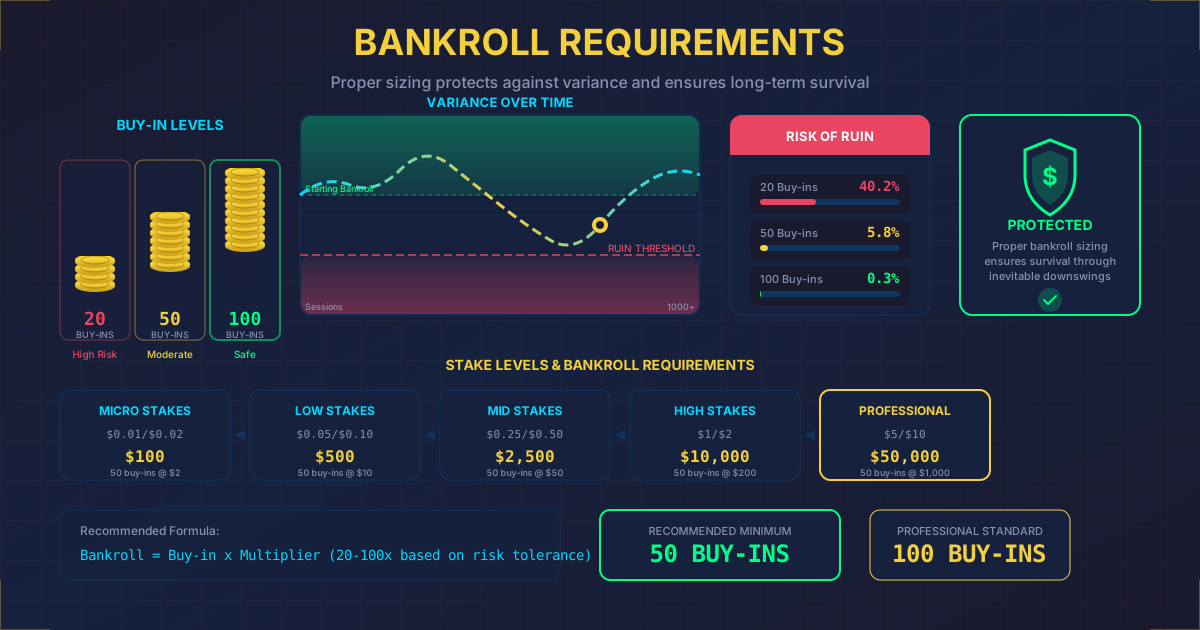
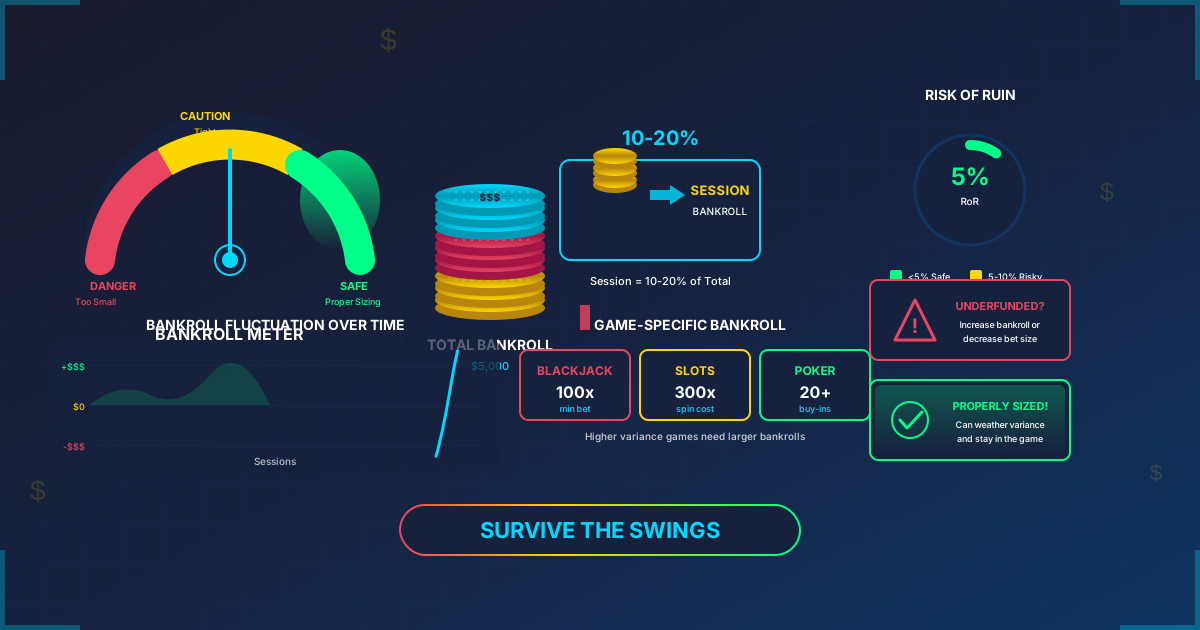
Bankroll Management for Bonuses
Managing bust risk:

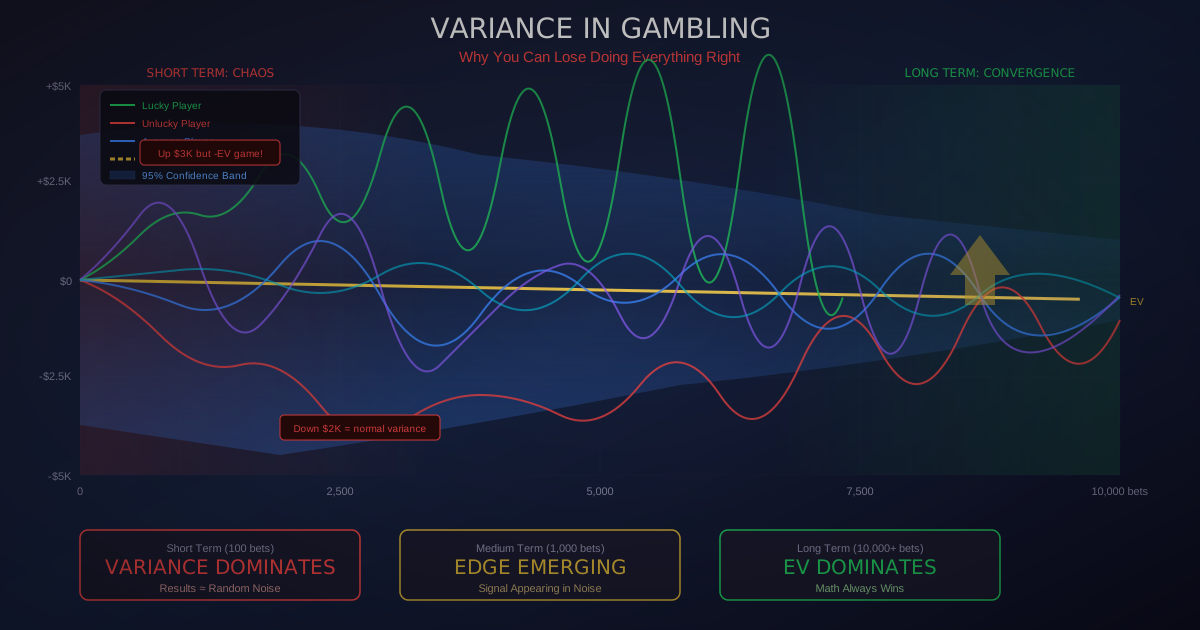
Problem: Variance can bust you before
clearing wagering requirements

Solution: Adequate bankroll + strategy

Example:
$200 bonus, 30x wagering = $6,000 total
Starting balance: $400 ($200 deposit + $200 bonus)

Bust probability depends on:
- Bet size
- Game variance
- Wagering amount

Conservative: 2% of balance per bet
$400 × 0.02 = $8 max bet

This gives you ~50 bets to recover from downswings
while grinding through wagering
Common Mistakes to Avoid
-
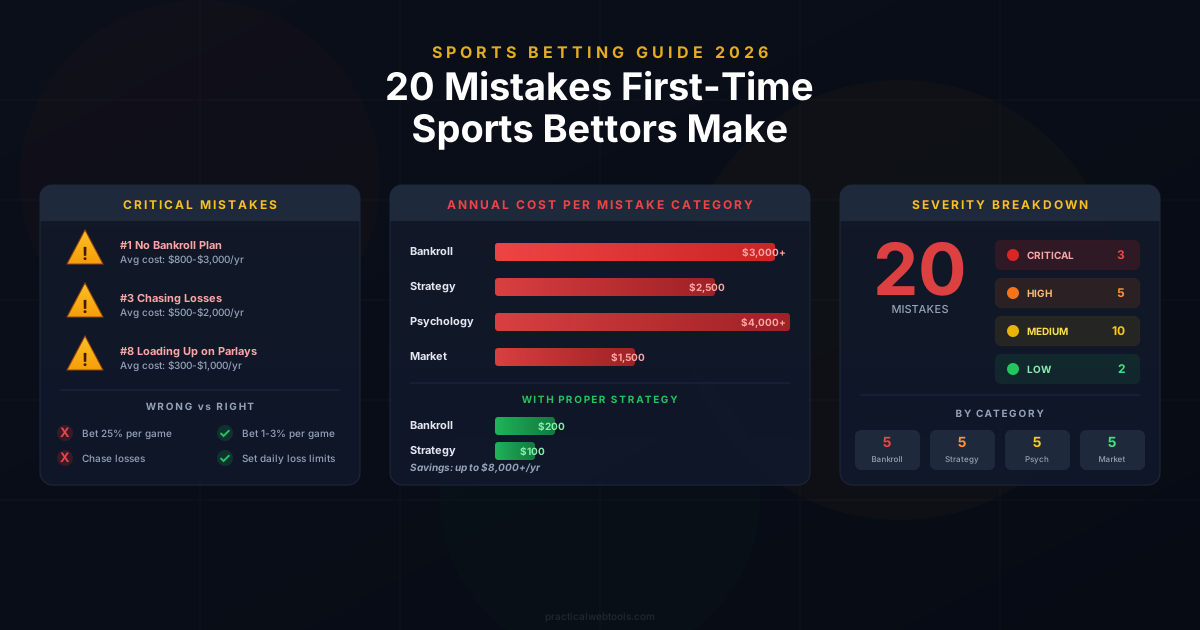
Ignoring Wagering Requirements: That 100% match becomes worthless at 60x wagering on slots. Always calculate true EV before claiming.
-
Playing High Edge Games: Choosing games with 10%+ house edge to clear wagering quickly destroys bonus value mathematically.
-
Not Reading Full Terms: Game weightings, max bets, and withdrawal caps significantly affect true bonus value.
-
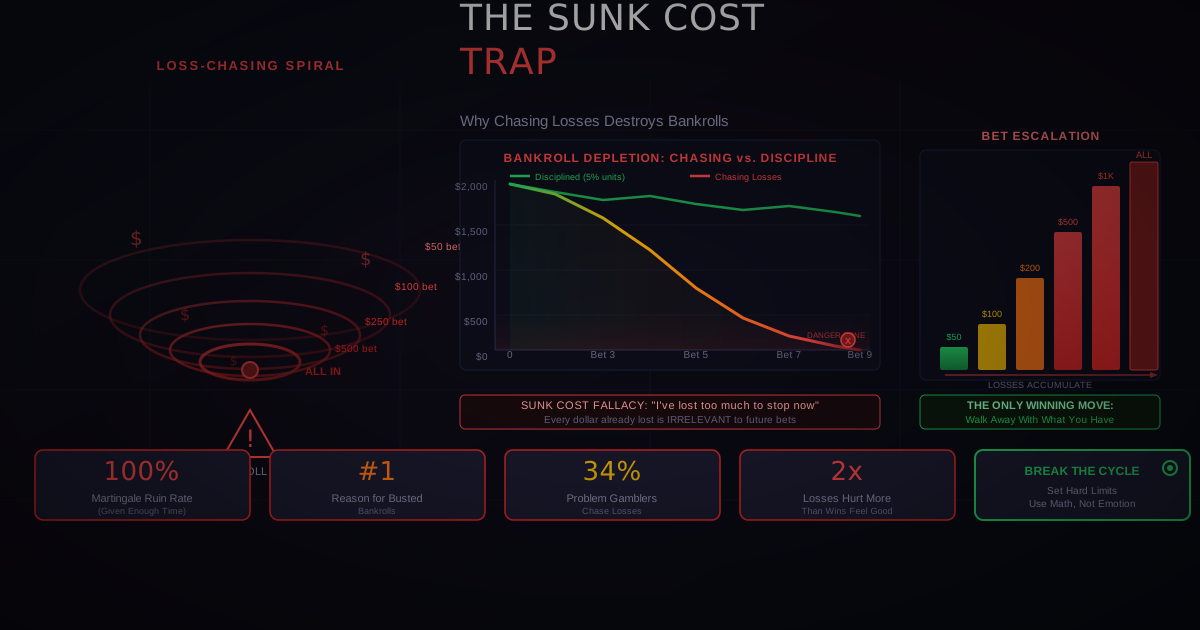
Chasing Losses During Wagering: Increasing bets to recover losses during bonus play accelerates the mathematically expected loss.
-
Claiming Every Bonus Offered: Many bonuses have negative EV. Declining a bad bonus is better than accepting it.
-
Underestimating Time Commitment: Clearing $20,000 in wagering takes significant time. Calculate hourly EV before committing.
Frequently Asked Questions
Are casino bonuses worth it?
Most are not. Standard 35-50x wagering requirements with 5% house edge slots produce negative expected value. Look for bonuses under 20x wagering or use lower-edge games.
How do I calculate bonus expected value?
EV = Bonus Amount - (Total Wagering × House Edge). If the result is positive, the bonus has mathematical value. If negative, you're expected to lose money chasing the bonus.
What's a good wagering requirement?
Under 20x for slots (5% edge) breaks even. Under 10x is solidly positive EV. Most mainstream casinos offer 30-50x, which is negative EV for players.
Do sportsbook bonuses work differently?
Yes, generally better. Sports bonuses typically have 5-15x wagering at ~4.5% house edge, making them more often positive EV compared to casino bonuses.
Can I just not complete the wagering?
Some casinos allow withdrawal of deposit (not bonus) early, forfeiting the bonus. Others lock all funds until wagering completion. Read terms carefully.
Is bonus hunting legal?
Yes, it's legal to strategically claim bonuses. However, casinos can limit or close accounts of suspected bonus abusers. Multi-accounting is against terms of service.
Pro Tips
- Track all bonuses in a spreadsheet with EV calculations, deadlines, and progress
- Focus on sportsbook bonuses - typically better terms than casino offers
- Look for cashback offers - they reduce house edge without wagering requirements
- Calculate hourly EV to decide if your time is better spent elsewhere
- Build reputation at sites before attempting large bonus claims
Related Calculators
- Wagering Requirement Calculator - Detailed rollover analysis
- Expected Value Calculator - General EV calculations
- House Edge Calculator - Game-specific edges
- Bankroll Calculator - Proper bankroll sizing
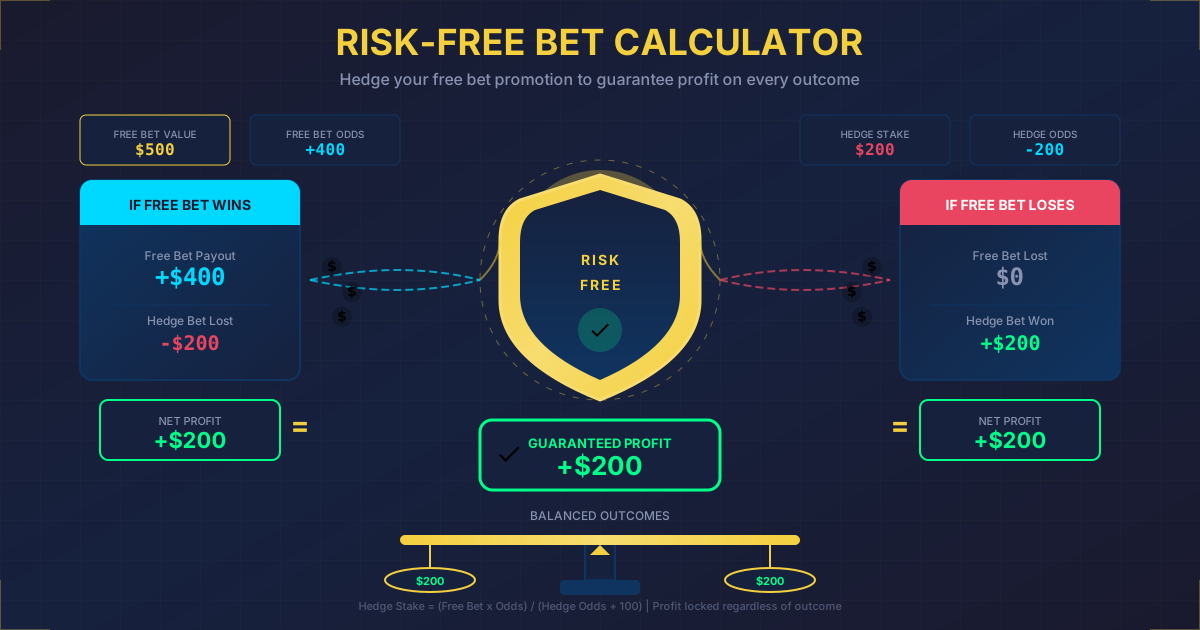
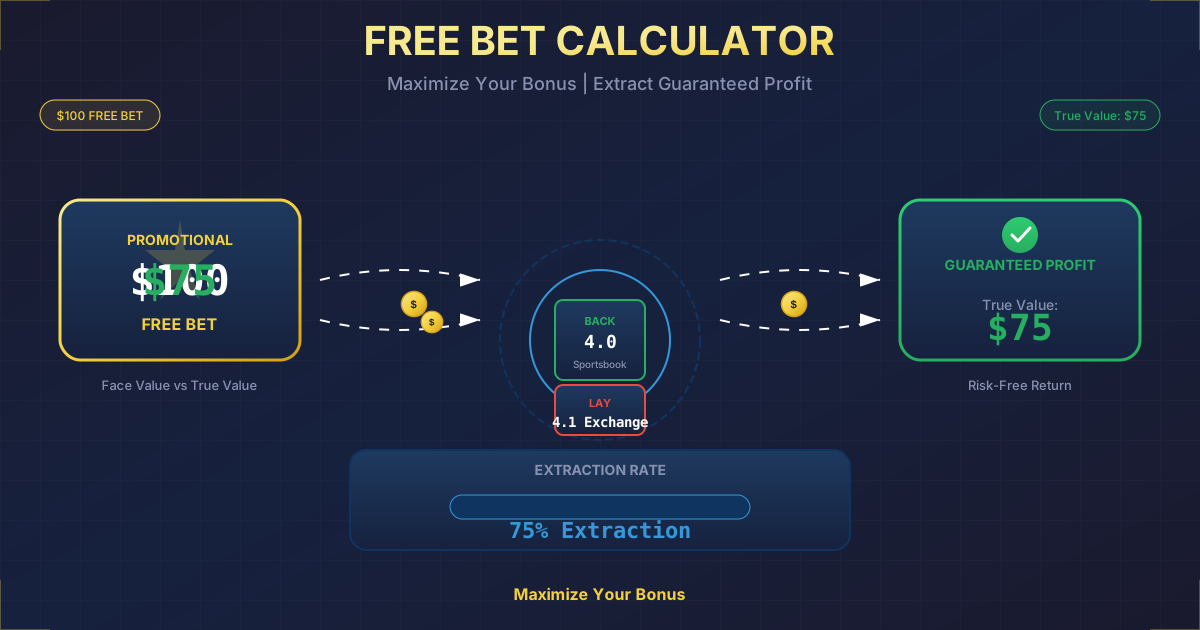
- Free Bet Calculator - Sports promotion value
Conclusion
Casino and sportsbook bonuses aren't free money - they're mathematical propositions with calculable expected values. Most standard deposit bonuses with 30x+ wagering requirements are negative EV, meaning you're expected to lose money chasing them. But low-wagering offers, cashback deals, and sportsbook bonuses can provide genuine positive expected value.
Our calculator cuts through the marketing to reveal true bonus value. Input the terms, see the math, and make informed decisions. The house doesn't offer bonuses to lose money - but understanding the mathematics lets you identify the rare occasions when they do.