Bingo Odds Calculator: Pattern Probability Analysis (2026)
Bingo Odds Calculator: Understanding Your Chances
Bingo odds depend on three factors: how many cards you have, how many total cards are in play, and how many balls must be called for your pattern. Our calculator reveals the mathematics behind this social game and how to maximize your winning probability.
What Are Bingo Odds?
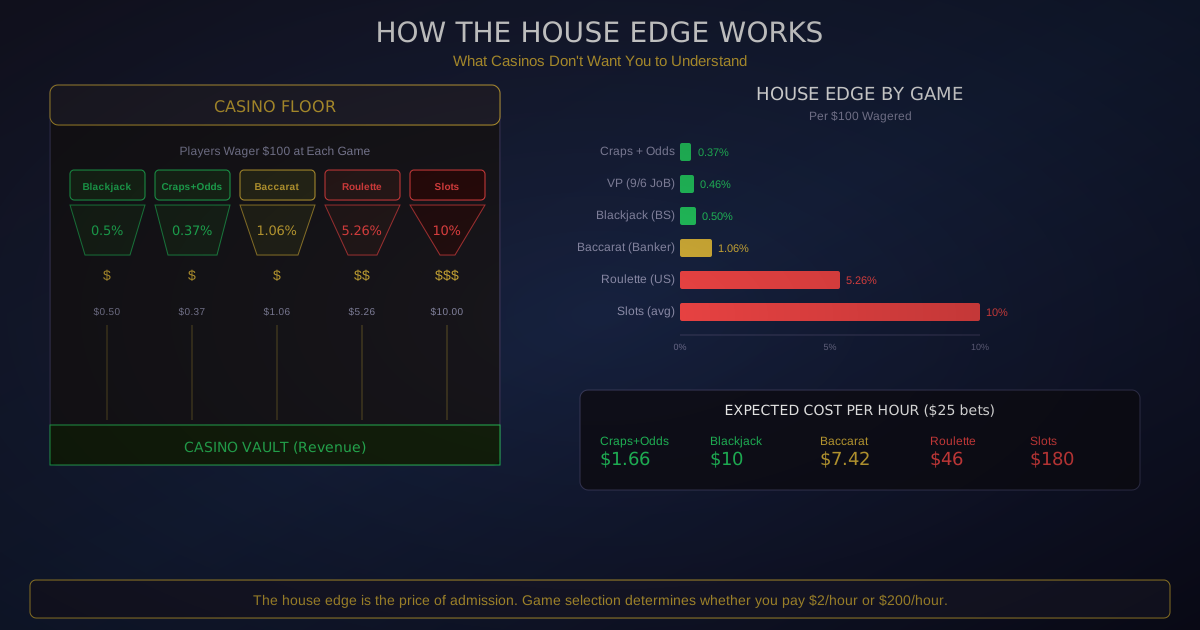
Bingo odds represent your probability of completing a winning pattern before other players. Unlike casino games with fixed house edge, bingo is player-versus-player—the house takes a percentage of sales and distributes the rest as prizes. Your odds depend primarily on your share of cards in play.
Quick Answer: Bingo odds = your cards ÷ total cards in play. 10 cards among 100 players with 10 each = 1% chance per game. More cards = better odds. Pattern complexity affects balls needed. Blackout needs ~45-55 balls average. Single line needs ~10-15 balls. House keeps 20-50% of sales.
How to Use Our Calculator
Use the Bingo Odds Calculator →
Calculate your winning probability.
Step-by-Step Instructions
-
Enter Your Cards: How many you're playing
-
Enter Total Cards: All cards in game
-
Select Pattern: Straight line, X, blackout, etc.
-
View Win Probability: Your chances
-
Calculate EV: Expected value
Input Fields Explained
| Field | Description | Example |
|---|---|---|
| Your Cards | Cards playing | 6 |
| Total Cards | All in game | 300 |
| Pattern | Win condition | Single Line |
| Win Probability | Your chance | 2.0% |
| Avg Balls to Win | Expected calls | 12.4 |
| Prize Pool | Available | $500 |
| Expected Value | Your EV | -$0.40 |
Basic Probability
Card Share Calculation
Fundamental bingo math:

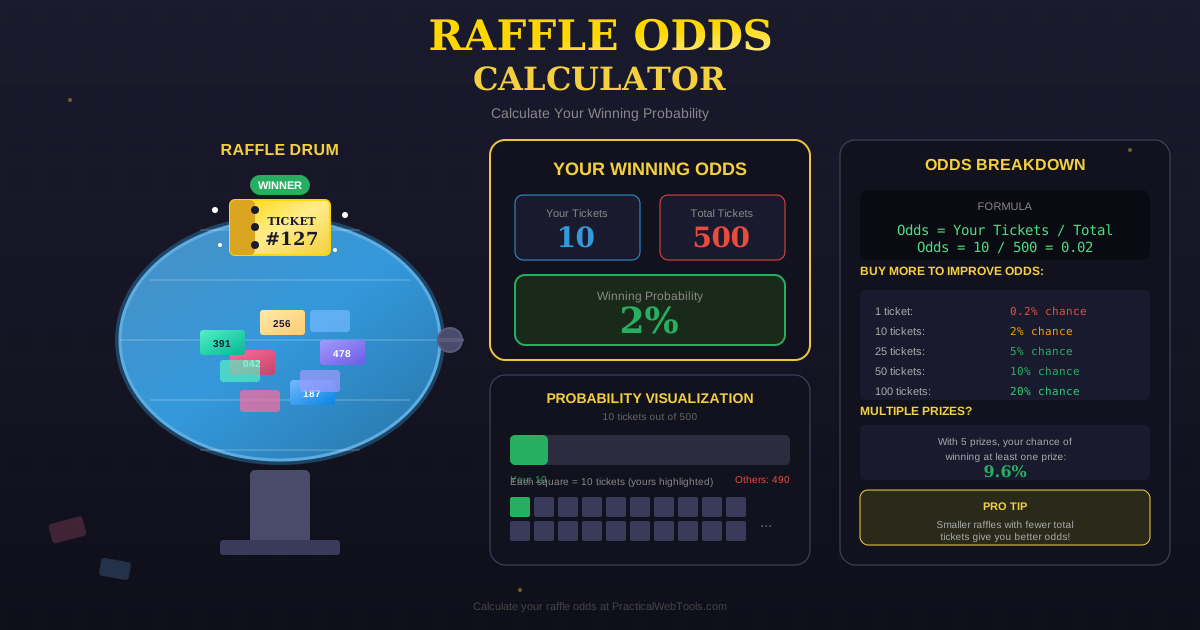
Your odds = Your cards / Total cards

Example:
You: 6 cards
Others: 50 players × 6 cards = 300
Total: 306 cards

Your probability: 6/306 = 1.96%

Simple and fair
Your share of tickets
Multiple Card Benefits
Buying more cards:

1 card among 300: 0.33%
3 cards among 300: 1.00%
6 cards among 300: 2.00%
12 cards among 300: 4.00%

Linear improvement
Double cards = double odds
But cost doubles too
Why Card Count Matters Most
Primary strategy factor:

More cards = better odds
Only controllable variable

You control:
- Number of cards bought
- Which sessions to play

You don't control:
- Other players' cards
- Ball draw order
- Pattern requirements
Pattern Analysis
Different Patterns, Different Odds
Pattern complexity:

Single line (5 squares):
Average balls to win: ~12-15
Fastest pattern

Corners (4 squares):
Average balls: ~20-25
Specific positions

Letter/Shape patterns:
Average balls: ~25-35
More specific squares

Blackout (25 squares):
Average balls: ~45-55
Most balls needed
Expected Balls by Pattern
Mathematical expectations:

5-square line:
First bingo: ~12 balls average
Wide variation

24-square blackout:
First bingo: ~48 balls average
Less variation (more squares = more predictable)

These are multi-card game averages
Individual card needs more balls
Pattern Probability Formula
Simplified calculation:

For N numbers needed from B balls:
P = C(numbers marked, needed) / C(balls called, needed)

This gets complex quickly
Simulations often used
Our calculator handles the math
House Edge Analysis
How Bingo Houses Profit
Bingo economics:

Card sales: $1,000
House take: 40% ($400)
Prize pool: 60% ($600)

Your share:
6 cards / 300 total = 2%
Expected prize: $12
Card cost: $6
EV: +$6

Wait—positive EV?

Yes, but:
This is prize pool EV
House already took 40%
Net to players = -40%
True Expected Value
Complete calculation:

Card cost: $6 (6 × $1)
House take: 40% = $2.40 lost immediately
Prize pool share: $3.60 expected
Net EV: $3.60 - $6 = -$2.40

Alternatively:
EV = Card cost × -House edge
EV = $6 × -40% = -$2.40

House edge: 40% (varies by venue)
Venue Comparison
House edge varies:

Commercial halls: 30-50%
Charitable games: 20-40%
Online bingo: 15-30%
Indian casinos: 25-40%

Check prize pool percentage
Published by many operators
Strategy Considerations
Optimal Card Count
How many cards to play:

Balance:
More cards = better odds
But cards cost money
And harder to track

Practical limits:
Beginners: 3-6 cards
Intermediate: 6-12 cards
Experienced: 12-24+ cards

Electronic daubing helps
Track more cards
Session Selection
When to play:

Fewer players = better odds
Late night sessions
Weekday games
Bad weather days

Same prize pool:
Fewer players to split
Better individual odds
Card Distribution
Card selection strategy:

Spread numbers evenly:
Avoid duplicated numbers
Cover more of the 75 balls

Reality check:
Random is random
Patterns don't help predict
Only card count matters
Real-World Examples
Example 1: Small Hall Game
Community bingo night:
Players: 30
Cards each: 6 average
Total cards: 180

You buy: 12 cards
Your share: 12/192 = 6.25%

Prize: $200
Expected win: $12.50
Card cost: $12
House edge: 40%

EV: $12 × 0.60 = $7.20
Net: $7.20 - $12 = -$4.80
Example 2: Large Commercial Hall
Saturday night session:
Players: 200
Cards each: 10 average
Total cards: 2,000

You buy: 10 cards
Your share: 10/2,010 = 0.50%

Prize: $5,000
Expected win: $25
Card cost: $10
House edge: 35%

EV: $10 × 0.65 = $6.50
Net: $6.50 - $10 = -$3.50
Example 3: Blackout Jackpot
Progressive game:
Jackpot: $10,000 (must blackout in 50 balls)
Additional requirement
Only ~5% of games qualify

Your adjusted EV:
$10,000 × 5% × 0.5% share
= $2.50 jackpot EV
+ Regular game EV

Progressive adds small value
But requirement is rare
Example 4: Online Bingo
Lower house edge venue:
Players: 50
Cards: 4 each average
Total: 200 cards

You buy: 8 cards
Share: 8/208 = 3.85%

Prize: $300
House edge: 20%

Expected: $300 × 80% × 3.85%
= $9.24 expected prize
Cost: $8
EV: $9.24 - $8 = +$1.24

Positive if house edge low enough
Rare but possible
Electronic vs Paper
Daubing Comparison
Paper cards:
Manual marking
Miss risk
Limited cards

Electronic daubers:
Auto-marking
No misses
Many more cards

Electronic advantage:
Play 30+ cards
Never miss a number
Focus on multiple games
Speed Implications
Fast callers:

Paper struggles at 15+ cards
Electronic handles unlimited

Speed games:
Electronic almost required
Paper at disadvantage
Fewer wins for paper players
Common Mistakes
1. Too Many Paper Cards
Mistake: Buying more than you can track Problem: Missing numbers costs games Fix: Know your limit
2. Ignoring Card Count Reality
Mistake: Feeling lucky with 3 cards Problem: 3 cards among 300 = 1% Fix: Understand your actual odds
3. Chasing Jackpots
Mistake: Playing only for progressives Problem: Low hit probability Fix: Balance regular and special games
4. Ignoring House Edge
Mistake: Thinking bingo is break-even Problem: 20-50% house edge Fix: Budget for expected losses
Frequently Asked Questions
How is my winning chance calculated?
Your cards divided by total cards in play. 10 cards among 200 = 5% chance of winning.
Does card selection matter?
Random selection is random. Spreading numbers doesn't mathematically help. Only card COUNT affects odds.
What's the house edge in bingo?
Typically 20-50%. House keeps this percentage of card sales; rest becomes prize pool.
Should I buy more cards?
More cards = better odds. But linear relationship—doubling cards doubles cost AND doubles chance. Net EV unchanged.
Are electronic daubers better?
For playing many cards, yes. Eliminates human error. Essential for high-volume play.
Why do some sessions have better odds?
Fewer players = better individual odds on same prize pool. Low-attendance sessions favor remaining players.
Pro Tips
-
Count total cards: Know your true odds
-
Choose small sessions: Fewer competitors
-
Use electronic: If playing many cards
-
Check house edge: Varies by venue
-
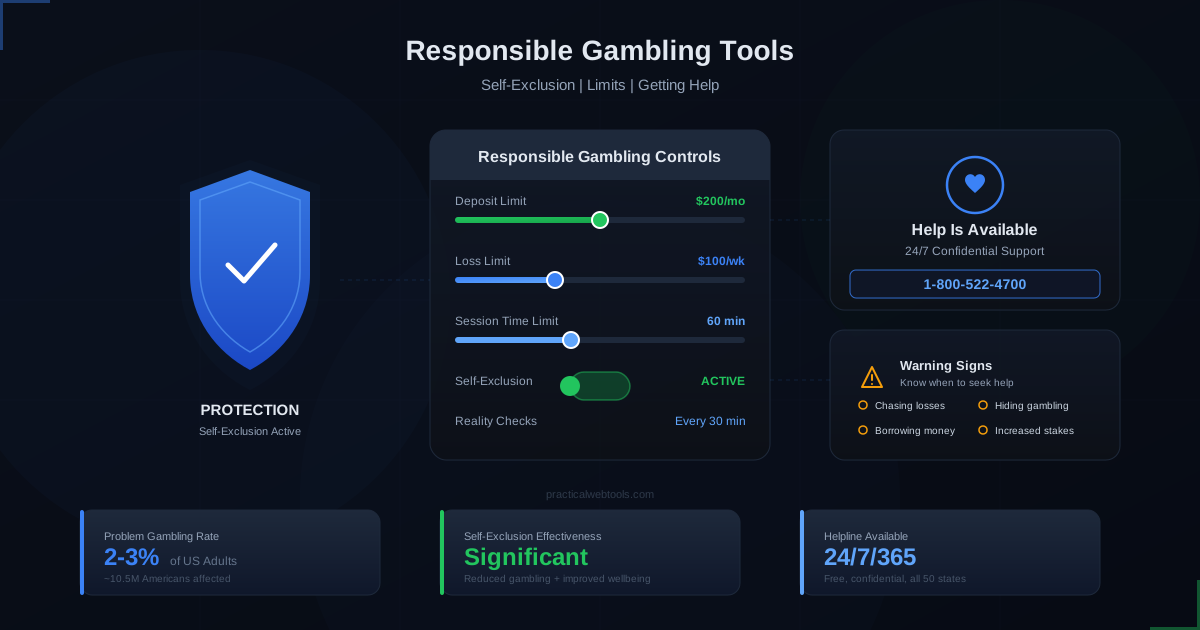
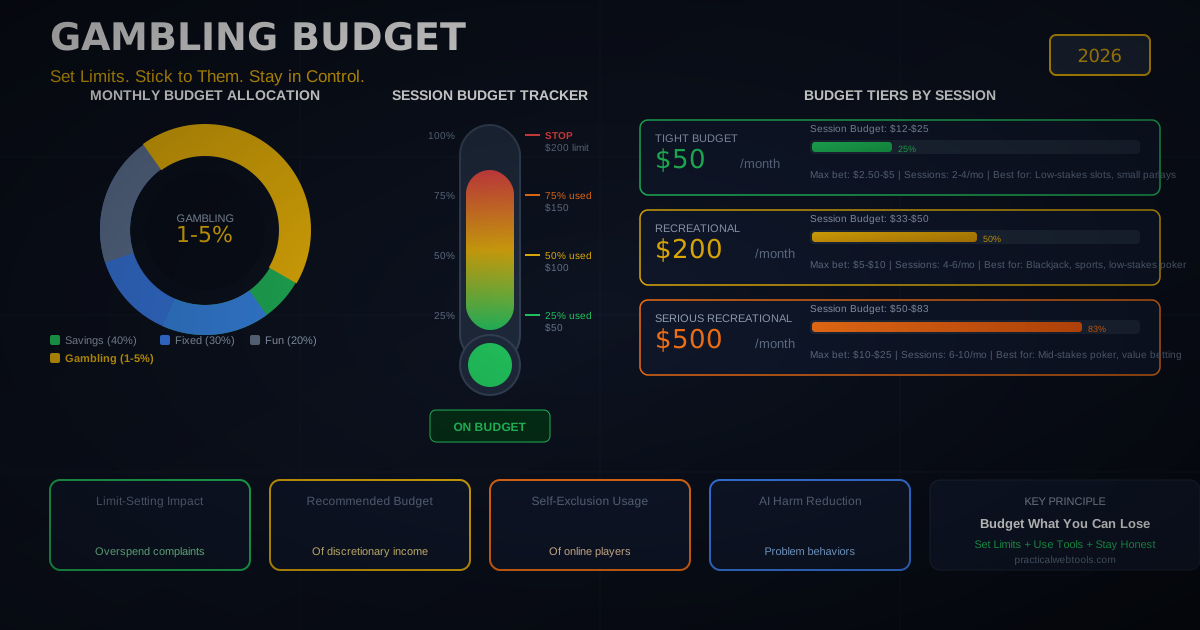
It's entertainment: Budget accordingly
Related Calculators
- Keno Odds Calculator - Similar game
- Lottery Odds Calculator - Number games
- Expected Value Calculator - Bet analysis
- Probability Calculator - General odds
- Gambling Budget Calculator - Responsible play
Conclusion
Bingo odds are fundamentally simple—your cards divided by total cards in play. Our calculator reveals how card count affects winning probability, why session selection matters, and how the 20-50% house edge affects expected value despite the social, entertaining atmosphere.
Your 6 cards among 300 total gives you a 2% chance per game—but the house has already taken 40% of card sales. Our calculator shows the complete mathematics behind this social gambling game.