Blackjack Deck Estimation Calculator: Remaining Cards Analysis (2026)
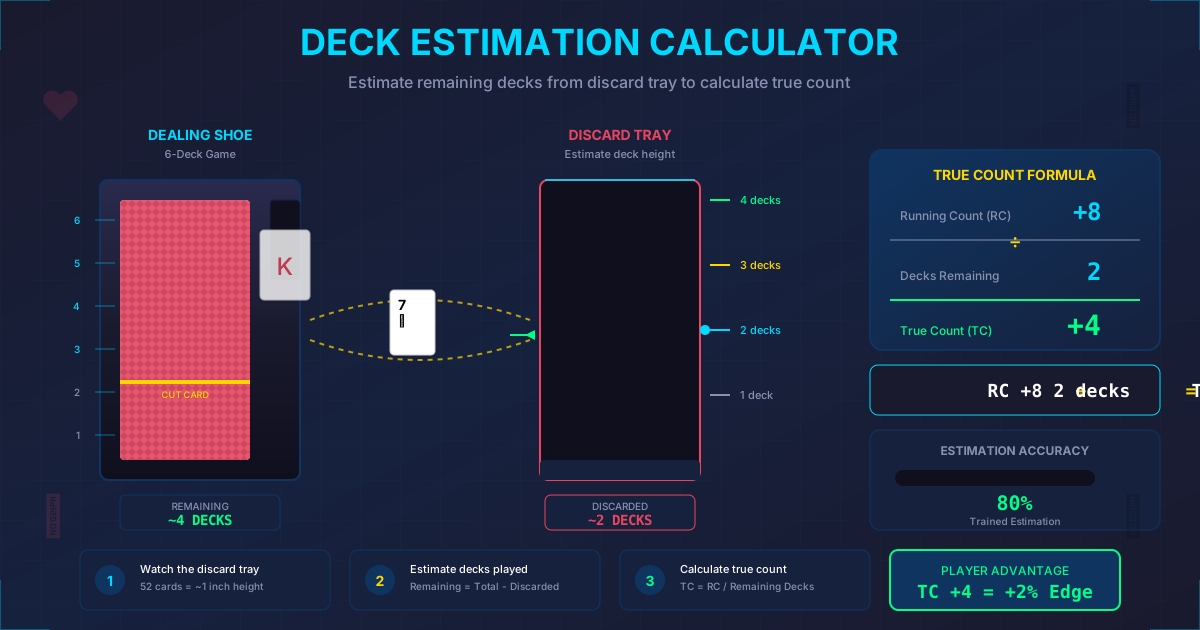
Blackjack Deck Estimation Calculator: The True Count Key
Deck estimation converts running count to true count—the number that actually guides betting decisions. Our calculator helps practice this essential skill of accurately judging how many decks remain in the shoe.
What Is Deck Estimation?
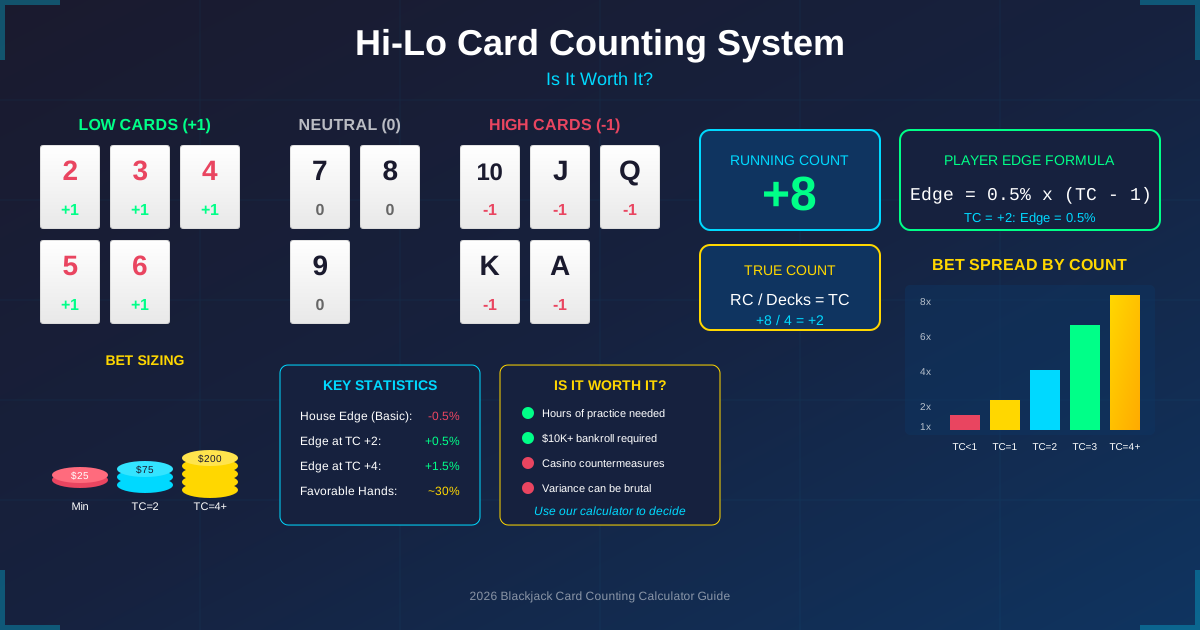
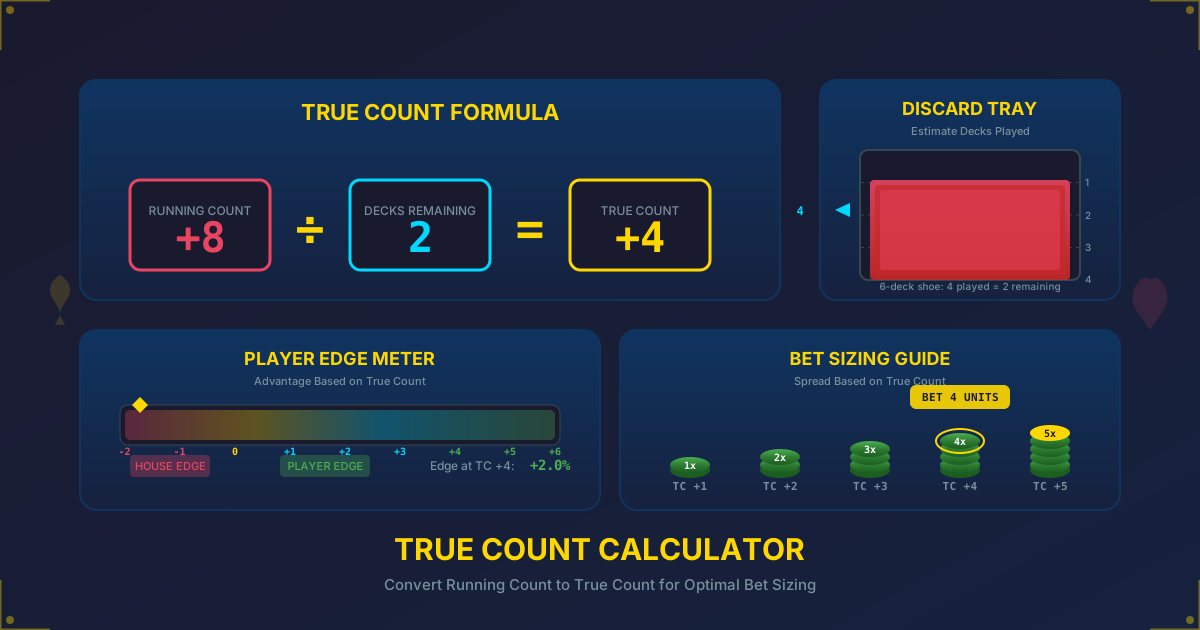
Deck estimation is judging how many undealt decks remain in the shoe by observing the discard tray. This count is essential for converting running count to true count: RC ÷ decks remaining = TC. Accurate estimation is crucial for proper bet sizing.
Quick Answer: True Count = Running Count ÷ Decks Remaining. Must estimate remaining decks from discard tray. Example: RC +8, discard shows ~2 decks, 4 decks remain. TC = +8 ÷ 4 = +2. Estimation accuracy within 0.5 decks is professional standard. Practice with physical decks until automatic.
How to Use Our Calculator
Use the Deck Estimation Calculator →
Practice estimating remaining decks and calculating true count.
Step-by-Step Instructions
-
View Discard Visual: Simulated tray
-
Estimate Dealt Decks: Your guess
-
Calculate Remaining: Total minus dealt
-
Input Running Count: Your tracked count
-
Compute True Count: RC ÷ remaining
Input Fields Explained
| Field | Description | Example |
|---|---|---|
| Total Decks | Shoe size | 6 decks |
| Discard Estimate | Dealt decks | ~2.5 decks |
| Decks Remaining | Calculated | 3.5 decks |
| Running Count | Your count | +7 |
| True Count | Final result | +2.0 |
| Estimation Error | Your accuracy | ±0.25 decks |
Deck Estimation Techniques
Visual Reference Points
Single deck height:
Approximately 2cm / 0.8 inches
About finger width

6-deck shoe measurements:
Full shoe: ~12cm / 4.7 inches
Each deck: ~2cm / 0.8 inches

Discard tray:
Empty = 0 decks dealt
Half deck = thin stack
Full deck = finger width
2 decks = two fingers
Fraction Estimation
Learn quarter-deck amounts:

0.25 decks: Very thin
0.50 decks: Noticeable stack
0.75 decks: Almost finger width
1.00 deck: One finger width

Practice identifying:
1.25, 1.50, 1.75, 2.0 decks
Build visual memory
Checkpoint Method
6-deck shoe checkpoints:

1/4 dealt (1.5 decks): 4.5 remaining
1/3 dealt (2 decks): 4 remaining
1/2 dealt (3 decks): 3 remaining
2/3 dealt (4 decks): 2 remaining
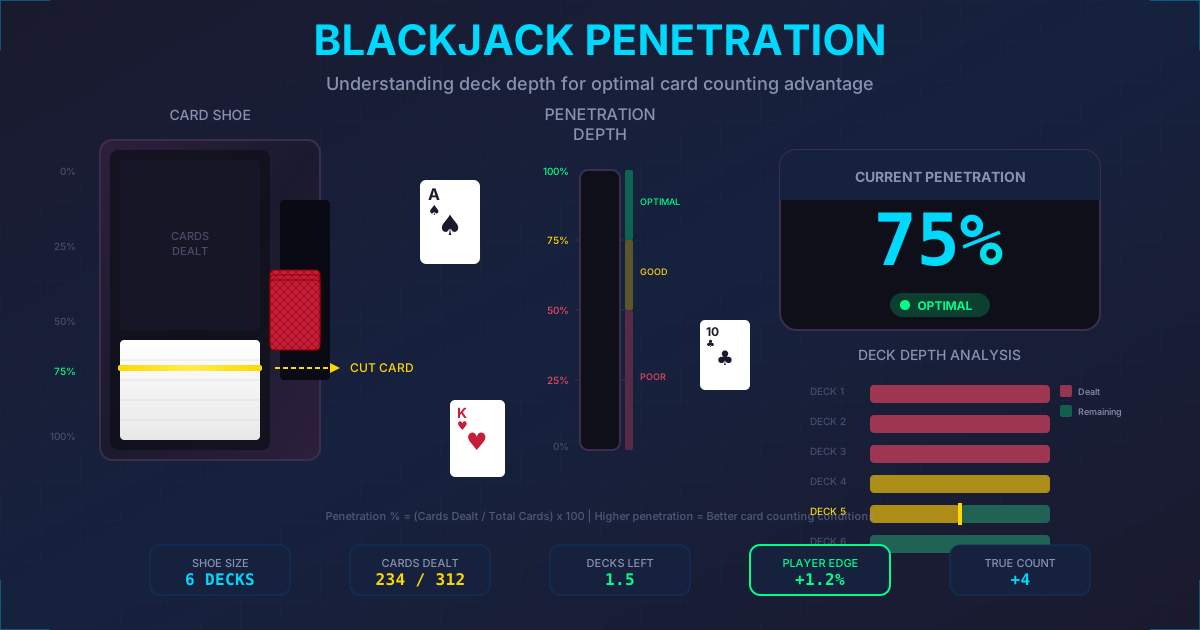
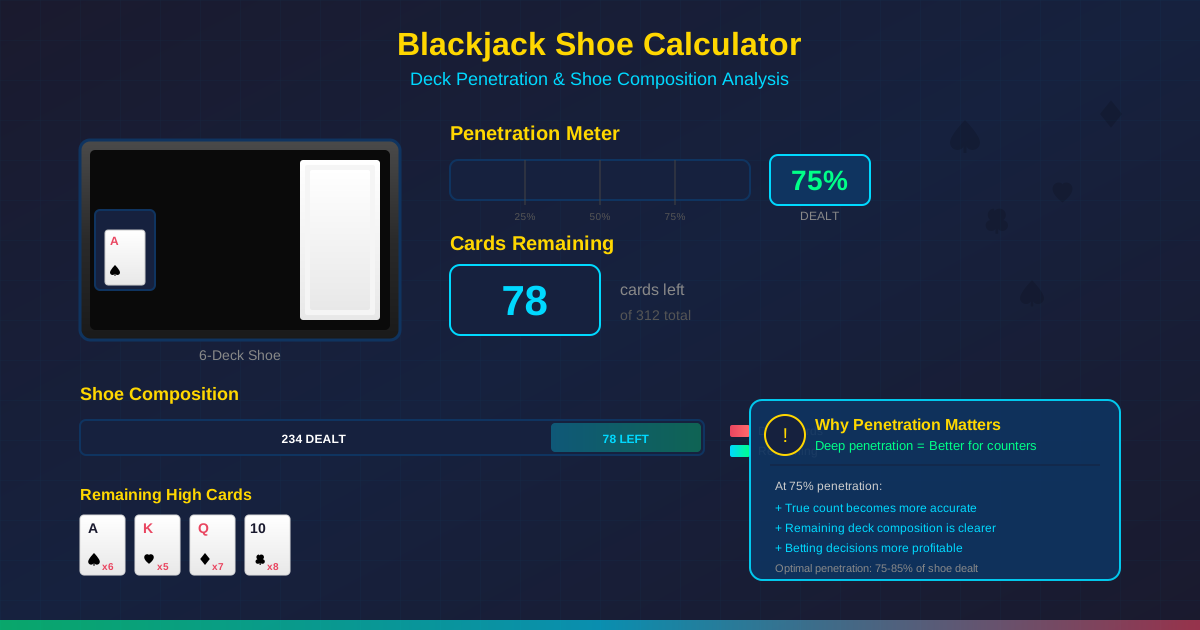
3/4 dealt (4.5 decks): 1.5 remaining

Memorize these references
Interpolate between them
True Count Conversion
The Formula
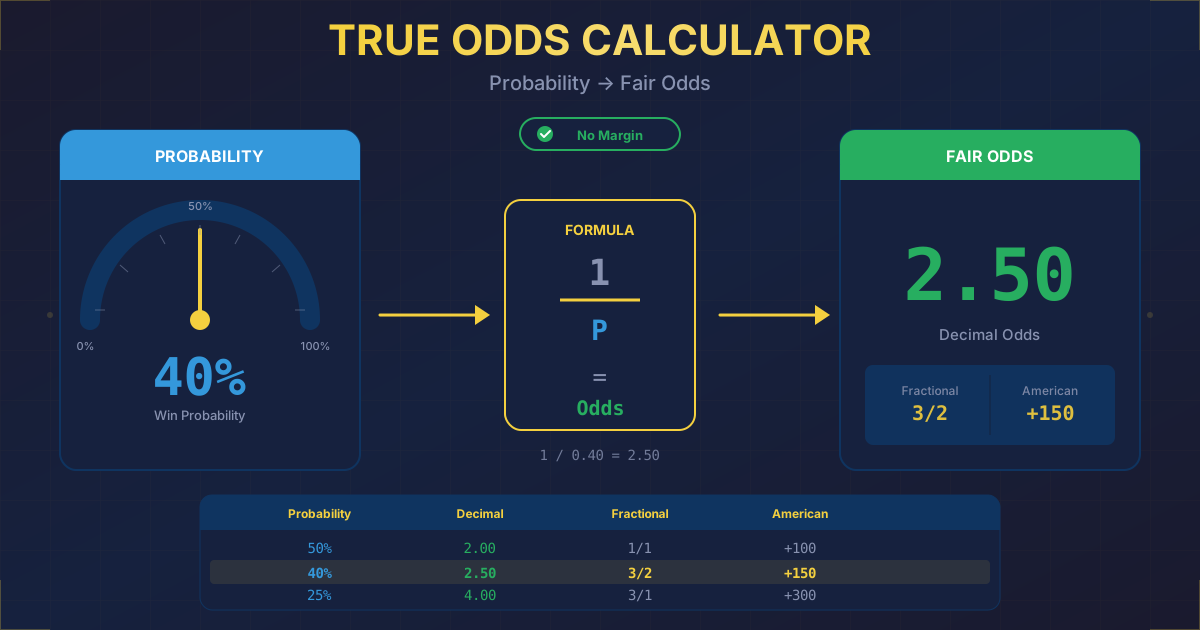
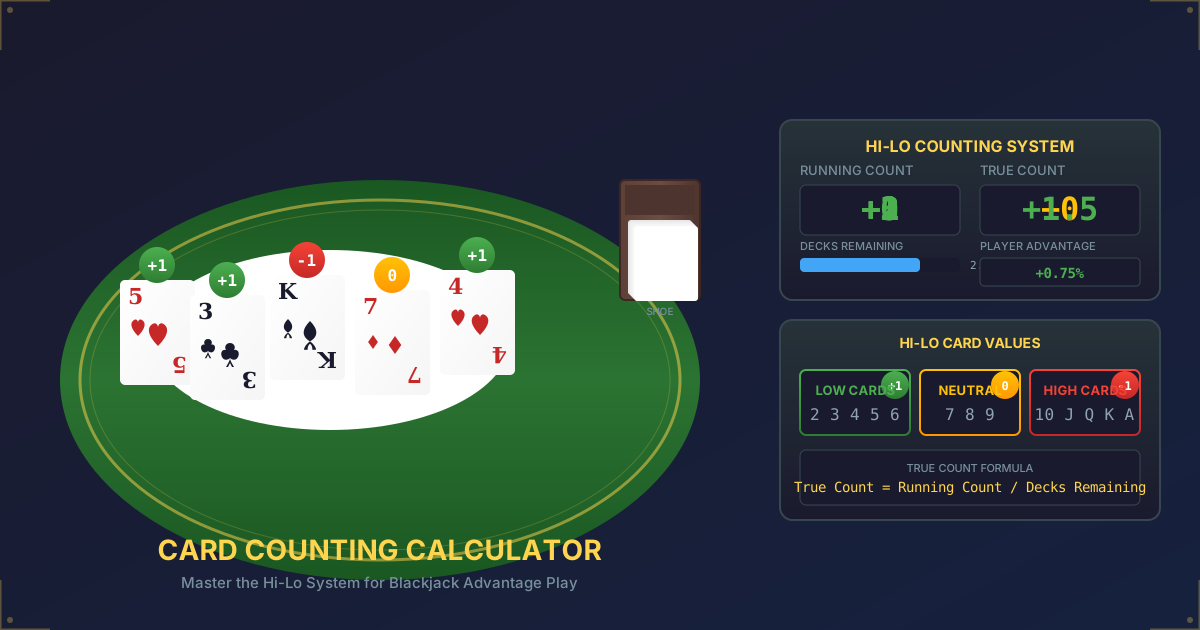
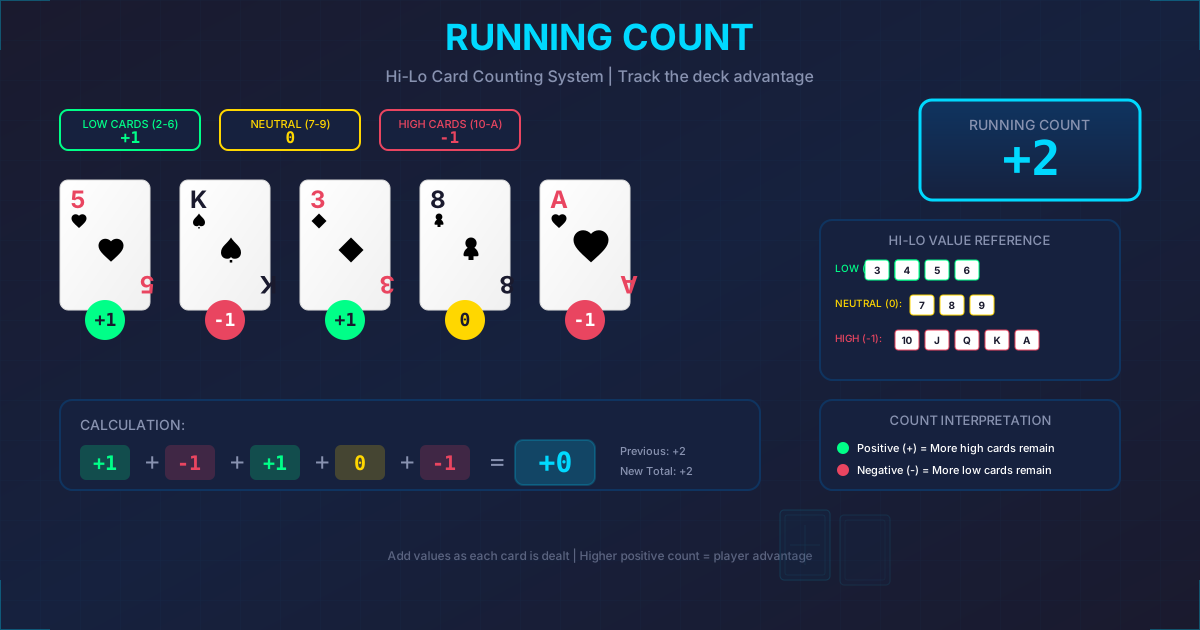
True Count = Running Count ÷ Decks Remaining

Examples:
RC +6, 3 decks left: TC = +2
RC +6, 2 decks left: TC = +3
RC +6, 1 deck left: TC = +6

Same RC, different TC
Deck estimation is critical
Why True Count Matters
Running count +8:
- 4 decks remaining: TC +2 (small edge)
- 2 decks remaining: TC +4 (significant edge)
- 1 deck remaining: TC +8 (huge edge)

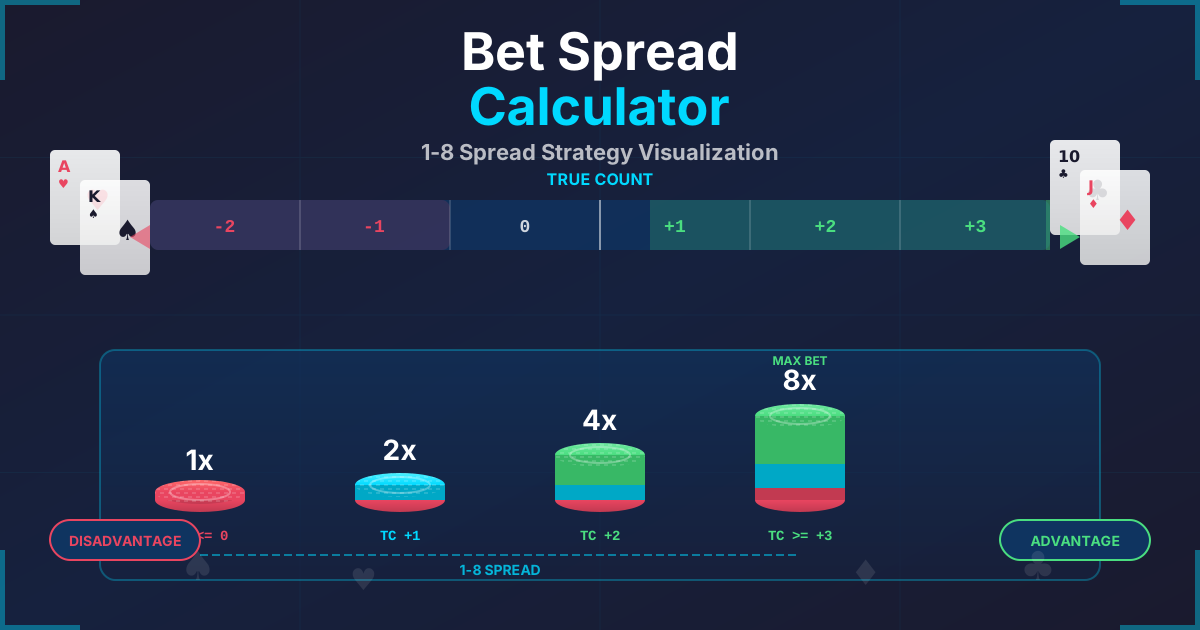
Bet sizing based on TC, not RC:
TC +1: 2 units
TC +2: 4 units
TC +3: 6 units
TC +4: 8 units

Same RC = very different bets
Estimation Impact
RC +8, actual 2 decks remaining:
Correct TC: +4 (bet 8 units)

If you estimate 3 decks:
Calculated TC: +2.67 (bet 4-5 units)
Under-betting when you have edge

If you estimate 1 deck:
Calculated TC: +8 (bet max)
Over-betting, inappropriate
Practice Methods
Physical Deck Practice
Materials needed:
- 6-8 decks of cards
- Discard tray or box

Exercise:
1. Stack random amount in tray
2. Estimate without counting
3. Count cards to verify
4. Note your error
5. Repeat 50+ times

Goal: Within ±0.25 decks
Casino Simulation
At home setup:
- Use shoe or dealing device
- Deal hands to positions
- Track running count
- Periodically estimate remaining

Compare:
Your estimate vs actual count
Track accuracy over time
Rapid Fire Drills
Flash card style:
Partner stacks random decks
You estimate immediately
Get answer in 2-3 seconds

Speed + accuracy needed
Casino doesn't wait
Real-World Scenarios
Example 1: Early in Shoe
Situation:
- 6-deck shoe
- Thin discard (~0.5 decks dealt)
- Running count: +3
Calculation:
Decks remaining: 6 - 0.5 = 5.5
True count: +3 ÷ 5.5 = +0.55

Round to: TC ≈ +1 (barely positive)
Bet: Minimum or 1-2 units
Early count means little
Example 2: Mid-Shoe Count
Situation:
- 6-deck shoe
- Discard shows ~2.5 decks
- Running count: +9
Calculation:
Decks remaining: 6 - 2.5 = 3.5
True count: +9 ÷ 3.5 = +2.57

Round to: TC ≈ +2.5
Bet: 4-5 units
Significant but moderate edge
Example 3: Deep Penetration
Situation:
- 6-deck shoe
- Discard shows ~4.5 decks
- Running count: +6
Calculation:
Decks remaining: 6 - 4.5 = 1.5
True count: +6 ÷ 1.5 = +4

TC = +4 (strong edge)
Bet: 8 units (or maximum)
Deep penetration amplifies count
Example 4: Estimation Error Impact
Same RC +8, different estimates:
Actual remaining: 2.0 decks
Correct TC: +4

Your estimates:
1.5 decks → TC +5.3 (over-bet)
2.0 decks → TC +4 (correct)
2.5 decks → TC +3.2 (under-bet)
3.0 decks → TC +2.7 (significantly under)

±0.5 deck error = ±1 TC error
Accuracy matters for proper betting
Professional Standards
Accuracy Requirements
Amateur: ±1 deck (not profitable)
Intermediate: ±0.5 decks (marginally useful)
Proficient: ±0.25 decks (functional)
Professional: ±0.1-0.2 decks (optimal)

Practice until consistently ±0.25
Then refine to ±0.1
Speed Requirements
Estimation time: 1-2 seconds
Must be automatic
Cannot stare at discard

Glance, estimate, convert
All in real-time
While playing naturally
Combined Skills
Full counting sequence:
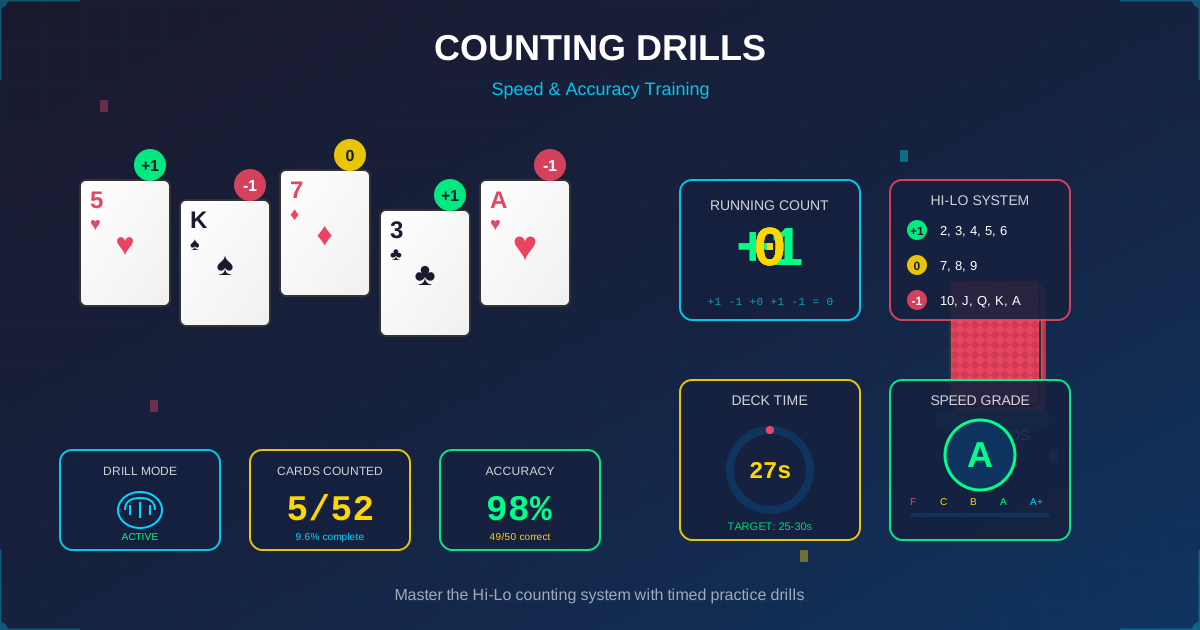
1. Maintain running count (automatic)
2. Estimate decks (1-second glance)
3. Calculate true count (instant math)
4. Determine bet size (memorized)
5. Act naturally (camouflage)

All happens in 3-5 seconds
Common Mistakes
1. Ignoring Cut Card Depth
Mistake: Assume all 6 decks dealt Problem: Dealer cuts 1-2 decks off Fix: Note where cut card placed
2. Estimating Dealt vs Remaining
Mistake: Confuse which to estimate Problem: Calculate backwards Fix: Estimate dealt, subtract from total
3. Rounding Too Aggressively
Mistake: "About 2 decks" for 1.5 or 2.5 Problem: True count error compounds Fix: Use quarter-deck precision
4. Not Practicing Enough
Mistake: Wing it at the table Problem: Consistent errors cost money Fix: 1,000+ practice estimates first
Frequently Asked Questions
How accurate do I need to be?
Within ±0.25 decks is functional. Professional advantage players target ±0.1 decks for optimal betting.
Should I estimate dealt or remaining?
Estimate dealt decks in discard, then subtract from total shoe. Remaining = Total - Dealt.
What if the discard tray is hard to see?
Use cut card position as backup reference. Some casinos have visible trays, others don't.
How often should I re-estimate?
Every few rounds or when making betting decisions. Count changes continuously but major bets need current TC.
Does penetration affect estimation importance?
Yes. Deep penetration (4+ decks dealt) means smaller remaining deck estimates—more precision needed.
Can I use deck estimation for single/double deck?
Yes, but fractions matter more. Half-deck errors are huge in 2-deck games.
Pro Tips
-
Physical practice: Use real cards, not apps
-
Quarter-deck precision: Learn 0.25, 0.5, 0.75 visually
-
Checkpoints: Memorize 1/4, 1/3, 1/2, 2/3, 3/4 depths
-
Glance don't stare: Quick natural looks only
-
Continuous calibration: Verify when possible
Related Calculators
- Blackjack True Count Calculator - TC conversion
- Blackjack Running Count Calculator - RC tracking
- Blackjack Card Counting Calculator - Full system
- Blackjack Counting Drills Calculator - Speed practice
- Blackjack Bet Spread Calculator - Sizing strategy
Conclusion
Deck estimation bridges running count to true count—transforming raw card tracking into actionable betting information. Our calculator helps practice this essential skill, training accurate remaining-deck estimates for proper true count calculation.
Practice Deck Estimation Now →
That +8 running count means nothing without knowing how many decks remain. Our calculator develops the visual estimation skills needed to convert running count to true count instantly—the key to profitable card counting.