Blackjack Running Count Calculator: Card Counting Foundation (2026)
Blackjack Running Count Calculator: The Foundation of Card Counting
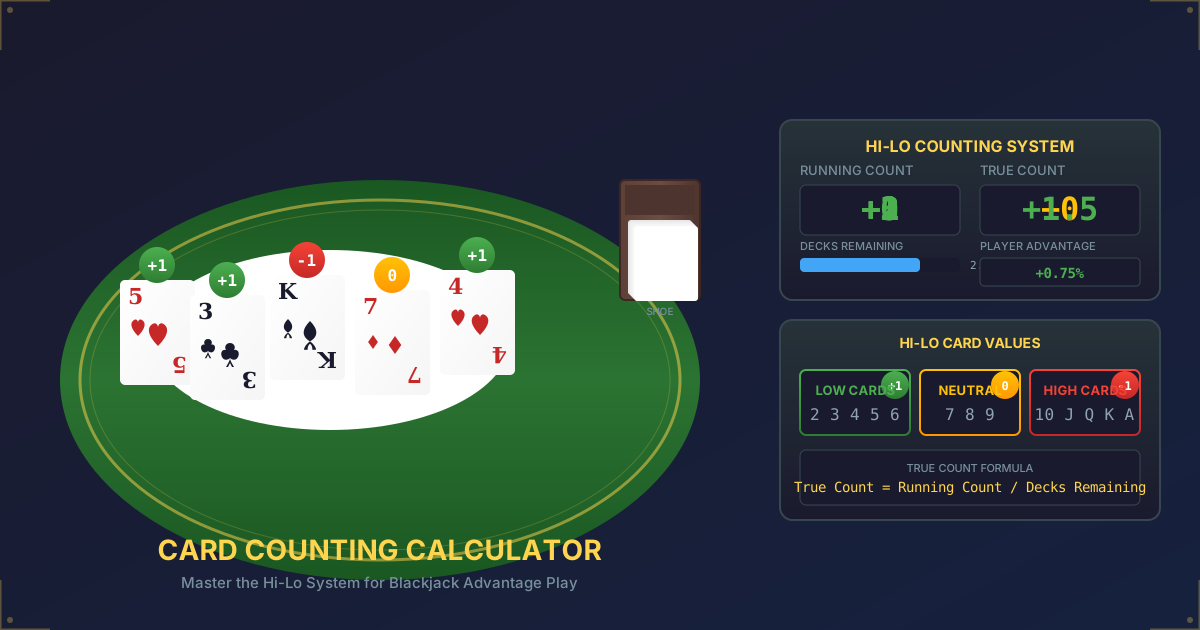
The running count is where card counting begins—a real-time tally of high versus low cards dealt. Our calculator helps practice Hi-Lo counting fundamentals, tracking each card's impact on the count.
What Is Running Count?
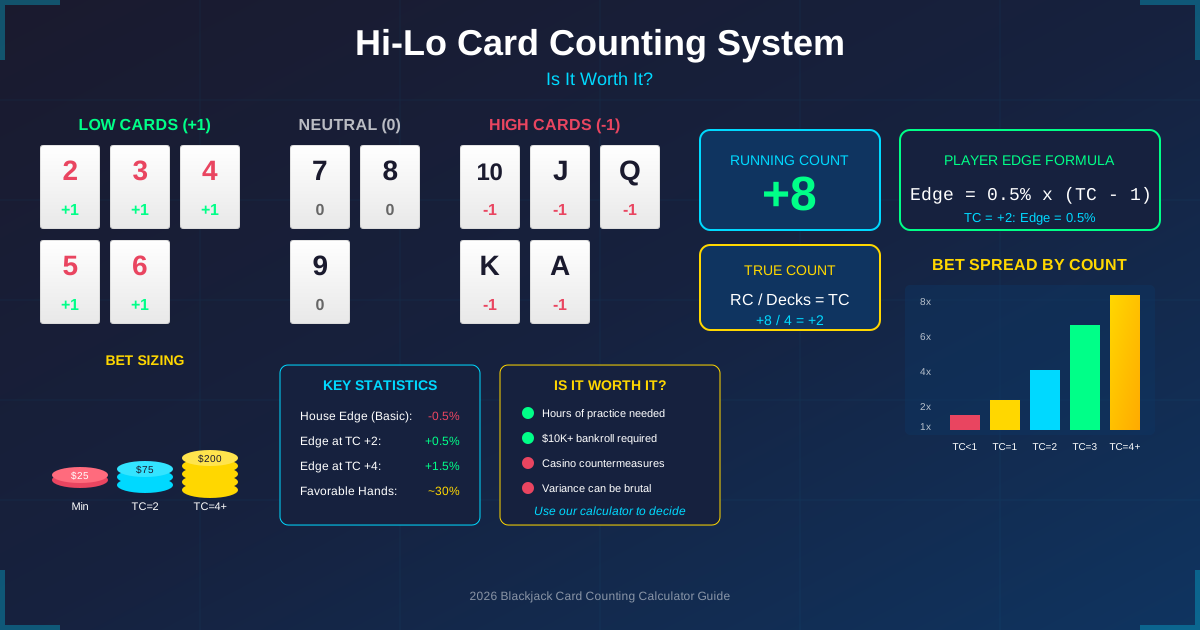
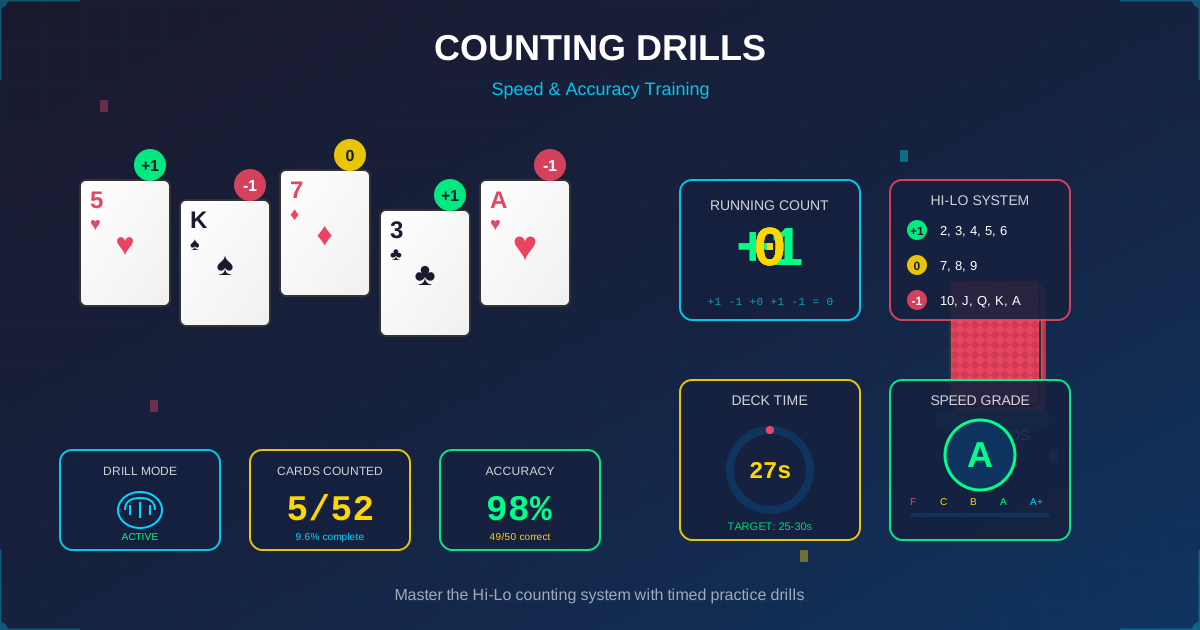
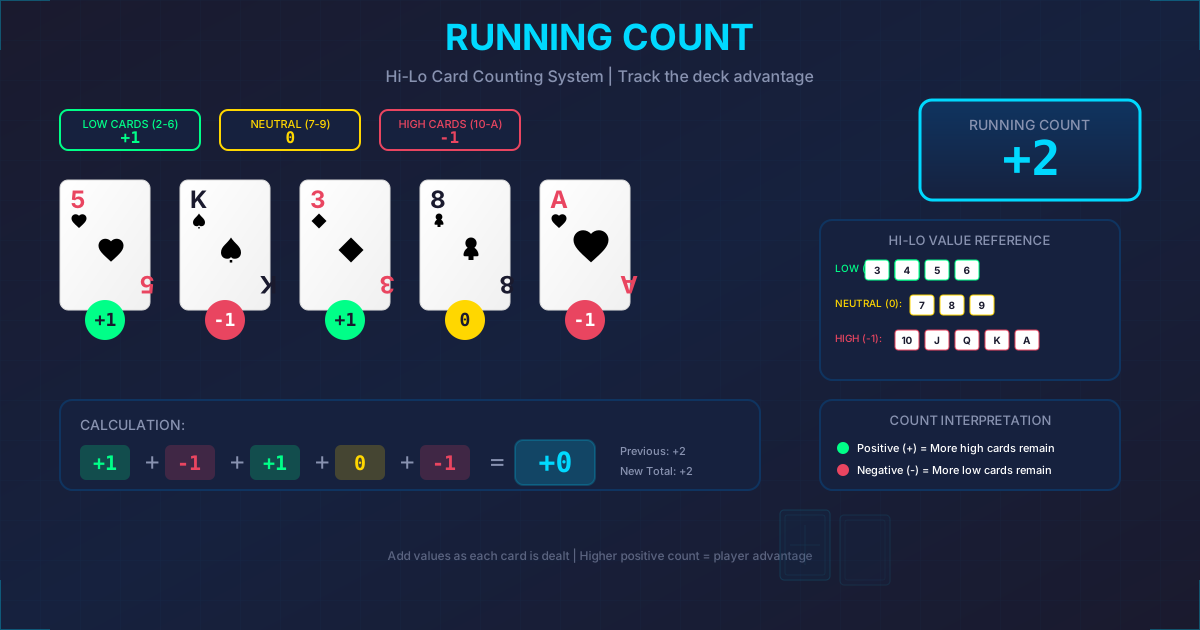
Running count is the cumulative total of card values seen during play using a counting system like Hi-Lo. Low cards (2-6) add +1, high cards (10-A) subtract -1, and 7-9 are neutral. This running total indicates deck favorability.
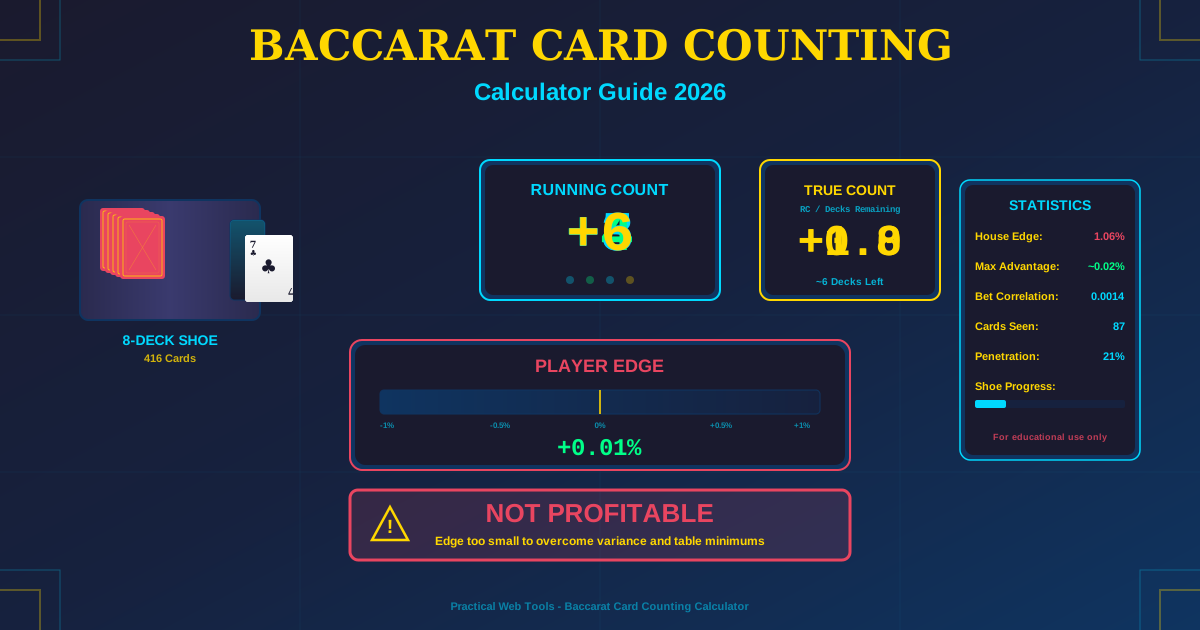
Quick Answer: Running count (RC) = sum of Hi-Lo values for all cards seen. 2-6 = +1, 7-9 = 0, 10-A = -1. Positive RC means excess low cards dealt = more highs remain = player advantage. Negative RC means excess highs dealt = more lows remain = dealer advantage. RC is foundation—convert to True Count for betting decisions.
How to Use Our Calculator
Use the Running Count Calculator →
Track cards and practice maintaining accurate running count.
Step-by-Step Instructions
-
Input Cards Seen: Enter each card
-
Track Running Total: Count updates live
-
Verify Accuracy: Check your mental count
-
Practice Speed: Work toward automatic
-
Review Statistics: Cards remaining breakdown
Input Fields Explained
| Field | Description | Example |
|---|---|---|
| Card Dealt | Card to add | King |
| Card Value | Hi-Lo value | -1 |
| Running Count | Current total | +4 |
| Cards Seen | Total dealt | 28 |
| Deck Progress | Penetration | 54% |
| Count Status | Player edge indicator | Positive |
Hi-Lo Card Values
The System Breakdown
Low Cards (2-6): +1
These cards favor the dealer
When removed, player advantage increases

2: +1  (helps dealer draw to 17+)
3: +1  (helps dealer draw to 17+)
4: +1  (helps dealer draw to 17+)
5: +1  (most valuable low card)
6: +1  (helps dealer draw to 17+)

Neutral Cards (7-9): 0
Don't significantly help either side
Don't track in Hi-Lo

7: 0
8: 0
9: 0

High Cards (10-A): -1
These cards favor the player
When removed, player advantage decreases

10: -1 (blackjack component)
J:  -1 (blackjack component)
Q:  -1 (blackjack component)
K:  -1 (blackjack component)
A:  -1 (blackjack component + options)
Why This Works
High cards benefit player:
- More blackjacks (pay 3:2)
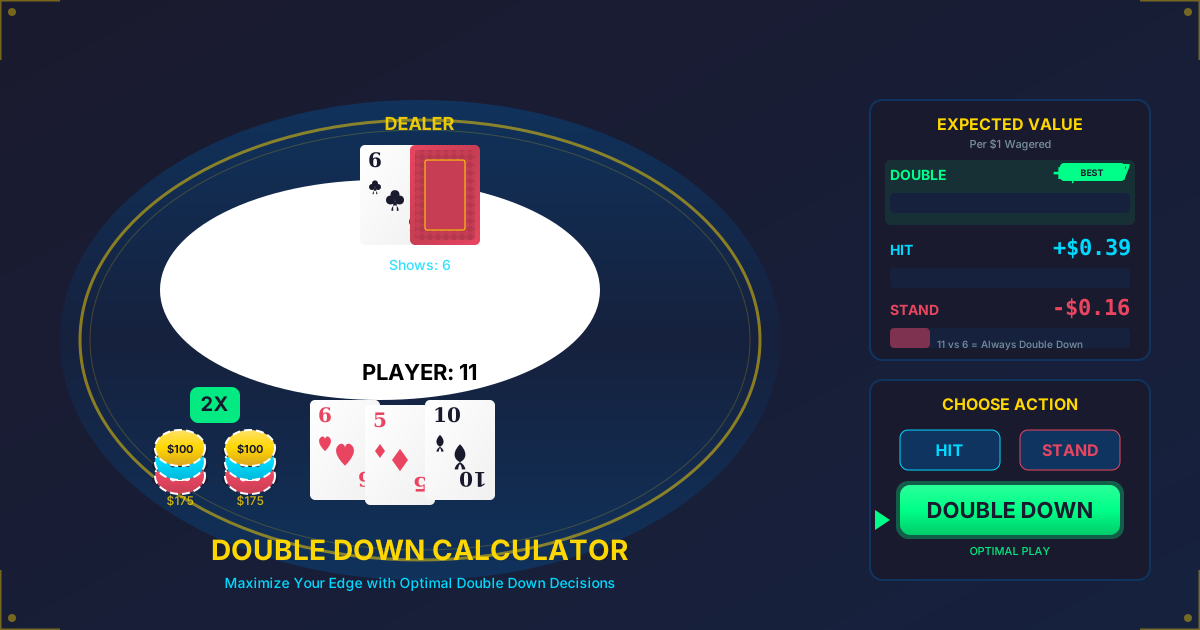
- Better double downs
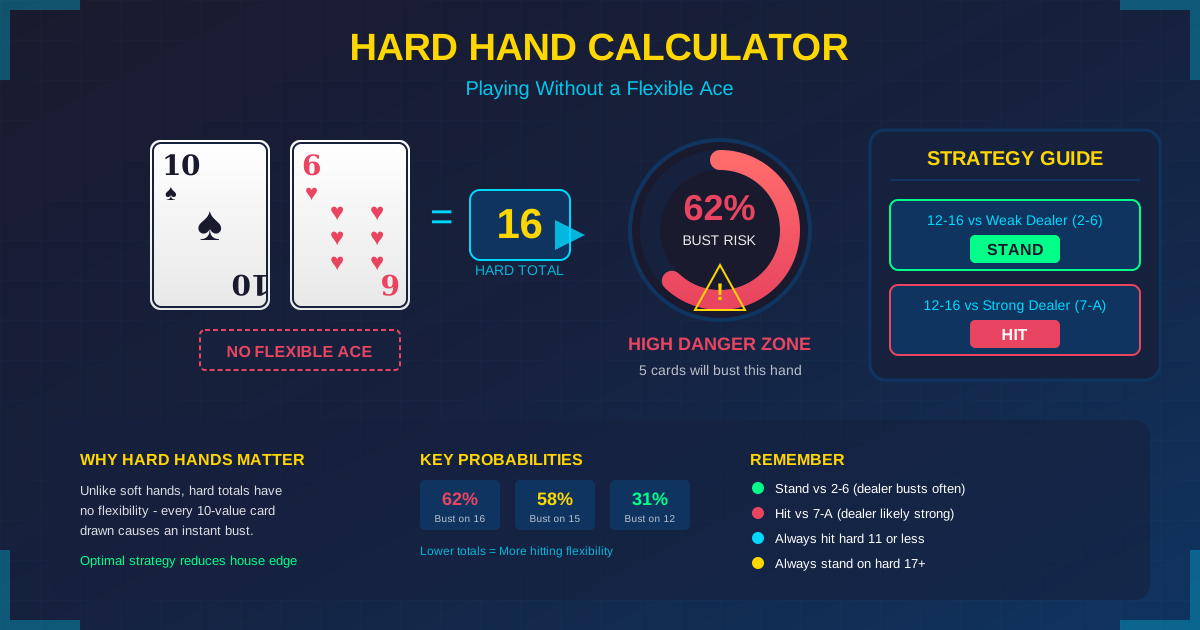
- Dealer busts more (must hit 16)

Low cards benefit dealer:
- Easier to reach 17+ from any start
- Survive stiff hands (12-16)
- Players bust more aggressively

Tracking the ratio reveals advantage
Running Count in Practice
Starting Fresh
New shoe begins:
Running Count = 0

Every deck starts balanced:
20 low cards (+20)
20 high cards (-20)
12 neutral (0)
Net: 0
Building the Count
Cards dealt: K, 5, 8, 3, A, 7, 6, 10

K: RC = 0 + (-1) = -1
5: RC = -1 + (+1) = 0
8: RC = 0 + (0) = 0
3: RC = 0 + (+1) = +1
A: RC = +1 + (-1) = 0
7: RC = 0 + (0) = 0
6: RC = 0 + (+1) = +1
10: RC = +1 + (-1) = 0

Running count after 8 cards: 0
Tracking Through Hands
Dealer shows: 6 (RC: +1)
Player 1: K-5 (hits, gets 8)
         K(-1) + 5(+1) + 8(0) = 0
         RC: +1 + 0 = +1

Player 2: A-4 (hits twice, gets 7, 3)
         A(-1) + 4(+1) + 7(0) + 3(+1) = +1
         RC: +1 + 1 = +2

Dealer: 6-10-5 (busts)
        6(+1) already counted as upcard
        10(-1) + 5(+1) = 0
        RC: +2 + 0 = +2

End of round: RC = +2
Running Count Interpretation
Positive Running Count
RC > 0 means:
More low cards dealt than high
More high cards remain
Player advantage increasing

RC +5 in single deck:
Significant player edge
Increase bet size

RC +5 in 6-deck shoe:
Small edge per deck
Need True Count conversion
Negative Running Count
RC < 0 means:
More high cards dealt than low
More low cards remain
Dealer advantage increasing

RC -4 in any game:
Player at disadvantage
Bet minimum or leave
Running Count Magnitude
Single deck:
RC ±2-3: Noticeable edge shift
RC ±5+: Significant advantage/disadvantage

6-deck shoe:
RC ±6-10: Moderate edge shift
RC ±15+: Significant per-deck impact

Must convert to True Count for accuracy
Real-World Examples
Example 1: First Round Tracking
Six-player table, cards dealt:
Player 1: 9-7 (hits, gets K)
         9(0) + 7(0) + K(-1) = -1

Player 2: 3-4 (hits, gets 5, stands)
         3(+1) + 4(+1) + 5(+1) = +3

Player 3: A-K (blackjack)
         A(-1) + K(-1) = -2

Player 4: 10-6 (stands)
         10(-1) + 6(+1) = 0

Player 5: 8-8 (splits, gets 10, A)
         8(0) + 8(0) + 10(-1) + A(-1) = -2

Player 6: 2-2 (hits, gets 7, 10)
         2(+1) + 2(+1) + 7(0) + 10(-1) = +1

Dealer: 5-10-6 (21)
        5(+1) + 10(-1) + 6(+1) = +1

Total running count: -1 + 3 + (-2) + 0 + (-2) + 1 + 1 = 0
Example 2: Multi-Round Session
Tracking across several rounds:
Round 1: RC = +3
Round 2: RC = +3 + (-2) = +1
Round 3: RC = +1 + (+4) = +5
Round 4: RC = +5 + (-1) = +4
Round 5: RC = +4 + (+2) = +6

At +6 in 6-deck shoe:
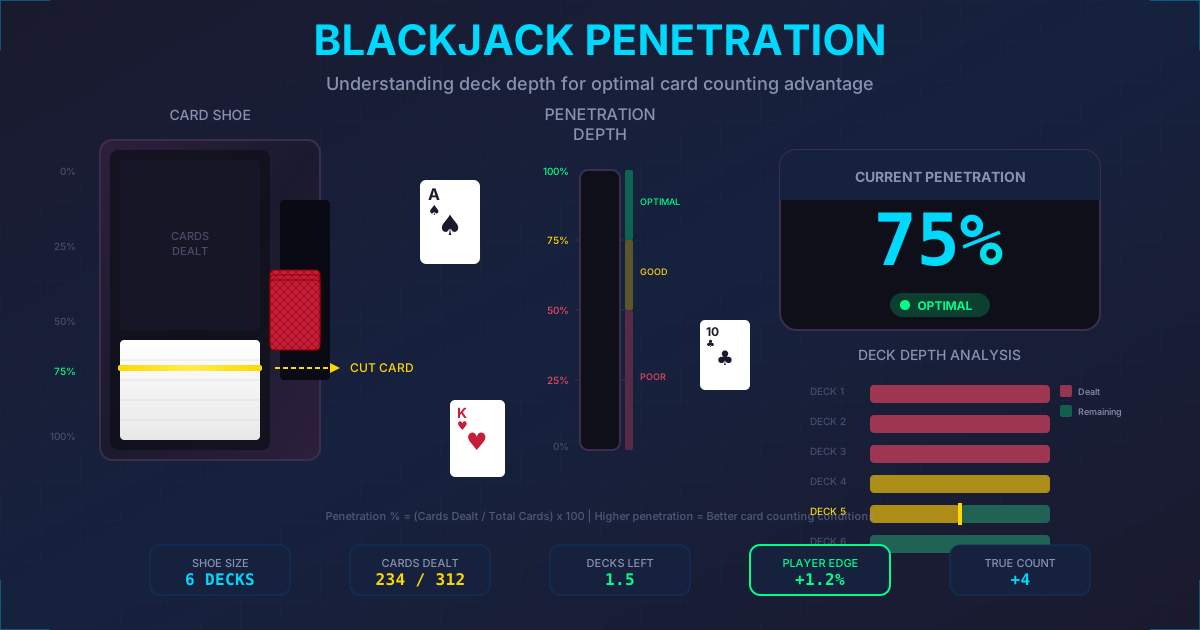
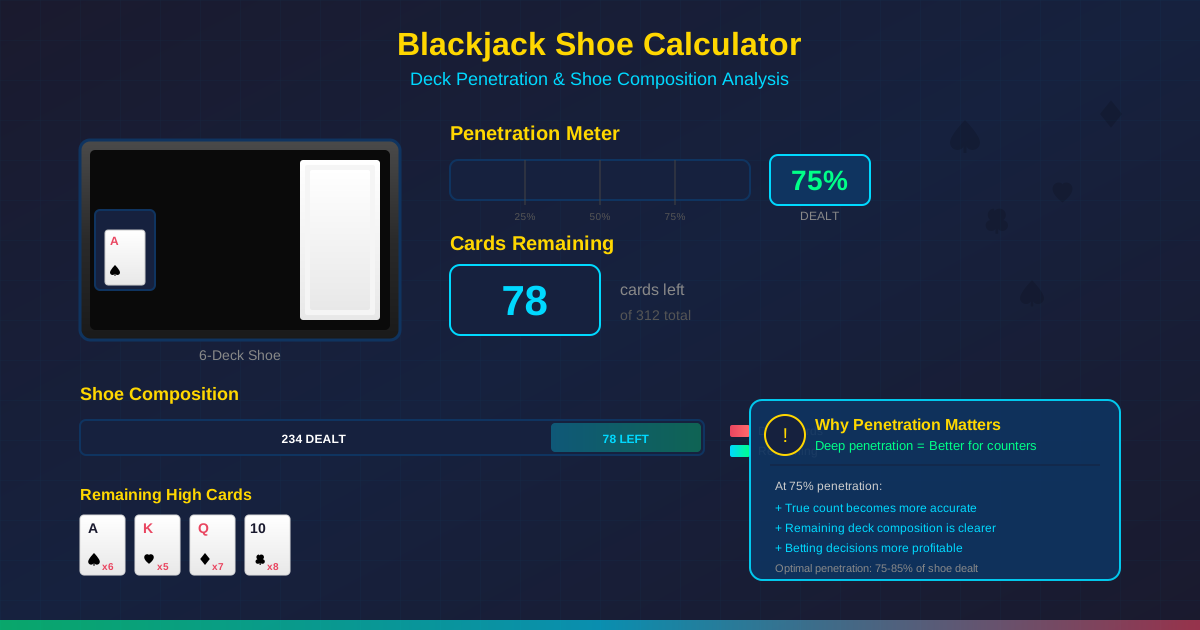
~2 decks dealt (104 cards)
~4 decks remaining
True Count: +6 / 4 = +1.5

Small but positive edge
Slight bet increase warranted
Example 3: Verification Check
End of single deck should equal 0:
Tracked through entire deck
Your running count: +2

This means:
Either missed two +1 cards (counted as 0)
Or miscounted two -1 cards (as +1)
Or combination of errors

Must recount to verify
Errors compound through session
Example 4: Speed Counting
Fast pair cancellation:
Common canceling pairs:
K-5: -1 + +1 = 0
A-3: -1 + +1 = 0
10-2: -1 + +1 = 0
Q-4: -1 + +1 = 0
J-6: -1 + +1 = 0

Any high + any low = 0
Look for these to skip counting

Also neutral pairs:
7-8: 0 + 0 = 0
8-9: 0 + 0 = 0
9-7: 0 + 0 = 0
Running Count vs True Count
Why True Count Matters
Running count: Raw total
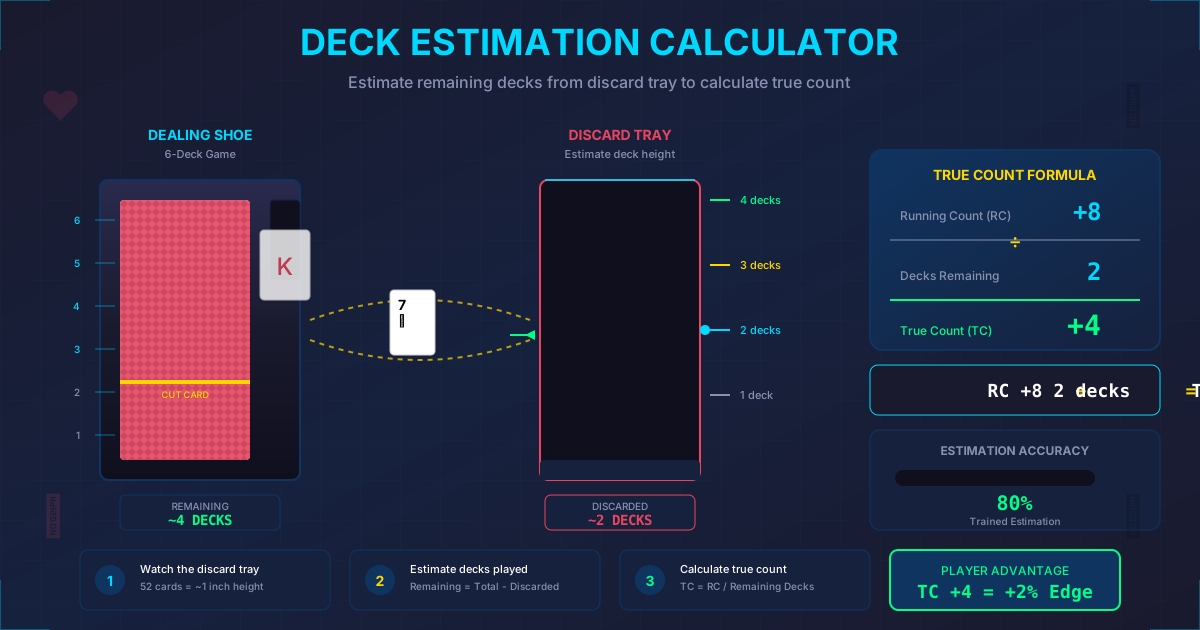
True count: Count per deck remaining

RC +10 means different things:
- 1 deck remaining: TC +10 (huge edge)
- 5 decks remaining: TC +2 (small edge)

Betting and strategy need True Count
Running Count is just the first step
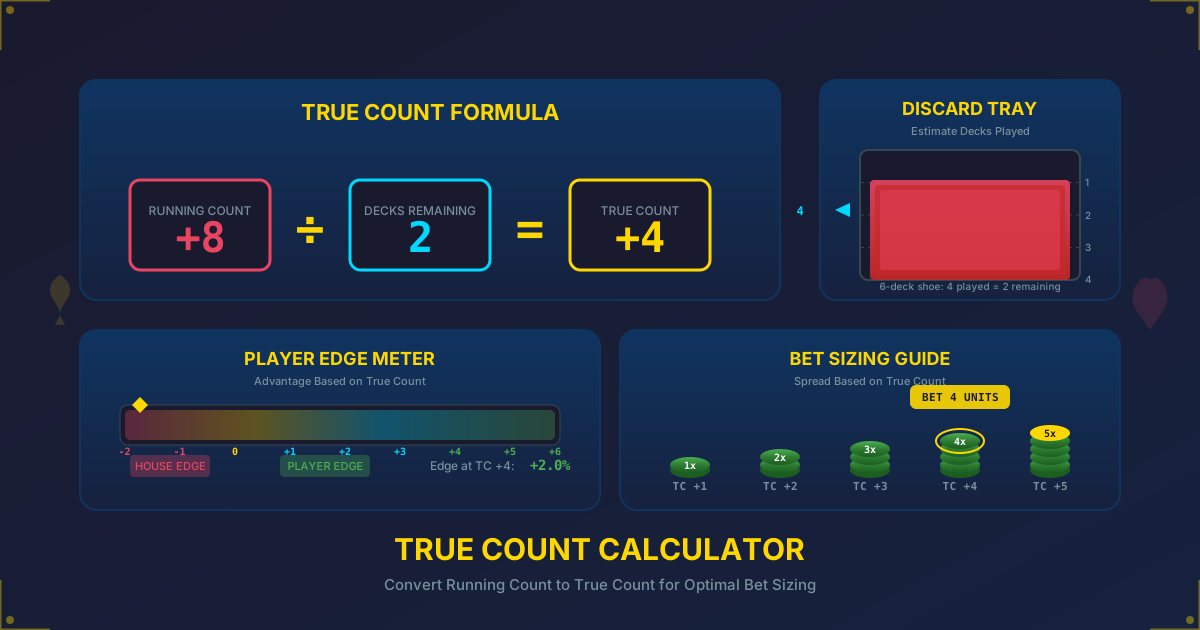
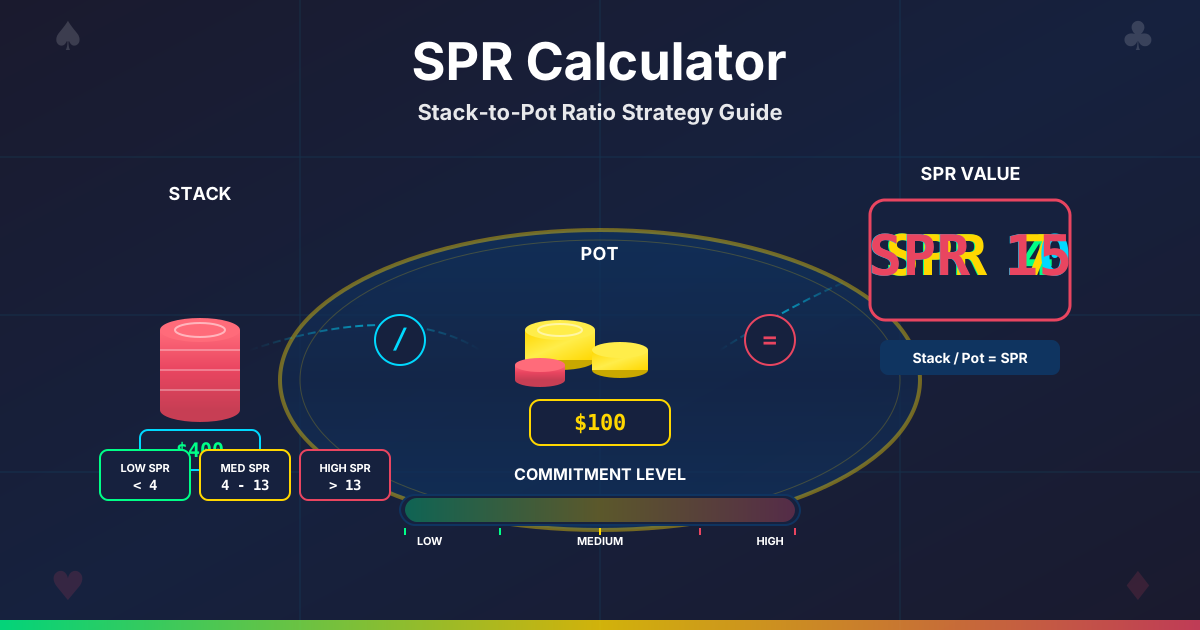
Conversion Formula
True Count = Running Count / Decks Remaining

Example:
RC: +8
Cards dealt: ~156 (3 decks)
Decks remaining: 6 - 3 = 3
TC: +8 / 3 = +2.67

Bet sizing based on TC
Not on raw RC
Common Mistakes
1. Losing Count Under Pressure
Mistake: Get distracted, forget count Problem: Must restart from 0 or guess Fix: Practice until automatic, use anchors
2. Counting Visible Cards Only
Mistake: Miss face-down or mucked cards Problem: Incomplete count Fix: Count all cards as revealed
3. Not Verifying Accuracy
Mistake: Assume you're counting correctly Problem: Errors compound unnoticed Fix: Check that deck ends at 0
4. Betting on Running Count Alone
Mistake: RC +10, bet big in 6-deck Problem: True count might only be +2 Fix: Always convert to True Count
Frequently Asked Questions
How do I keep the running count in my head?
Practice constantly. Start with single cards, then pairs, then full hands. Use anchors (remember count at key moments).
What if I lose count mid-shoe?
Estimate based on what you recall, or assume 0. One lost count isn't catastrophic—accuracy over many sessions matters.
Should I count all cards or just my hand?
All visible cards—every hand, including dealer's. The more information, the more accurate your count.
How fast should I count?
Casino speed: count entire round in 5-10 seconds. Practice until counting is subconscious, like reading.
Does running count tell me when to hit or stand?
Indirectly. True count (derived from RC) affects some strategy deviations, but basic strategy covers most situations.
Can I practice running count at home?
Yes. Deal cards face up, track count, verify at 0 end. Repeat until 100% accurate at speed.
Pro Tips
-
Pair cancellation: High + low = skip both
-
Count as dealt: Don't wait for round end
-
Verify constantly: Single deck must end at 0
-
Practice silently: No lip movement in casinos
-
Use anchors: Remember count at key points
Related Calculators
- Blackjack True Count Calculator - TC conversion
- Blackjack Counting Drills Calculator - Speed practice
- Blackjack Card Counting Calculator - Full system
- Blackjack Basic Strategy Calculator - Foundation plays
- Blackjack Expected Value Calculator - EV analysis
Conclusion
Running count is the foundation of card counting—a real-time tally of high versus low cards that indicates deck composition. Our calculator helps practice this fundamental skill, building toward accurate, automatic counting at casino speed.
That +6 running count means nothing until you convert to true count and apply proper bet sizing. Our calculator reinforces the Hi-Lo fundamentals, helping you build the counting foundation needed for effective blackjack advantage play.