Blackjack Switch Calculator: Two-Hand Swap Strategy (2026)
Blackjack Switch Calculator: The Power to Rearrange Your Cards
Blackjack Switch lets you play two hands and swap the second cards between them—turning two mediocre hands into one great hand and one throwaway. But dealer 22 pushes to balance this power. Our calculator shows when to switch and optimal strategy for this innovative variant.
What Is Blackjack Switch?
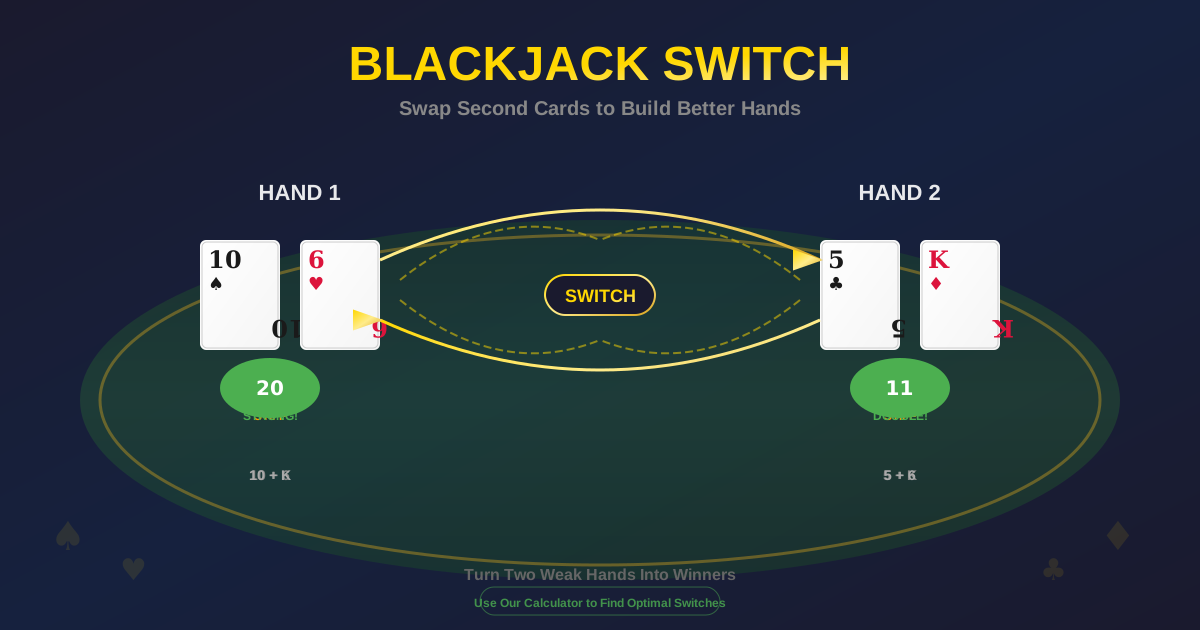
Blackjack Switch requires betting on two hands simultaneously, then allows you to switch the second card dealt to each hand. For example, you could turn 10-6 and 5-K into 10-K and 5-6. The catch: dealer 22 pushes instead of busting, and blackjacks pay 1:1.
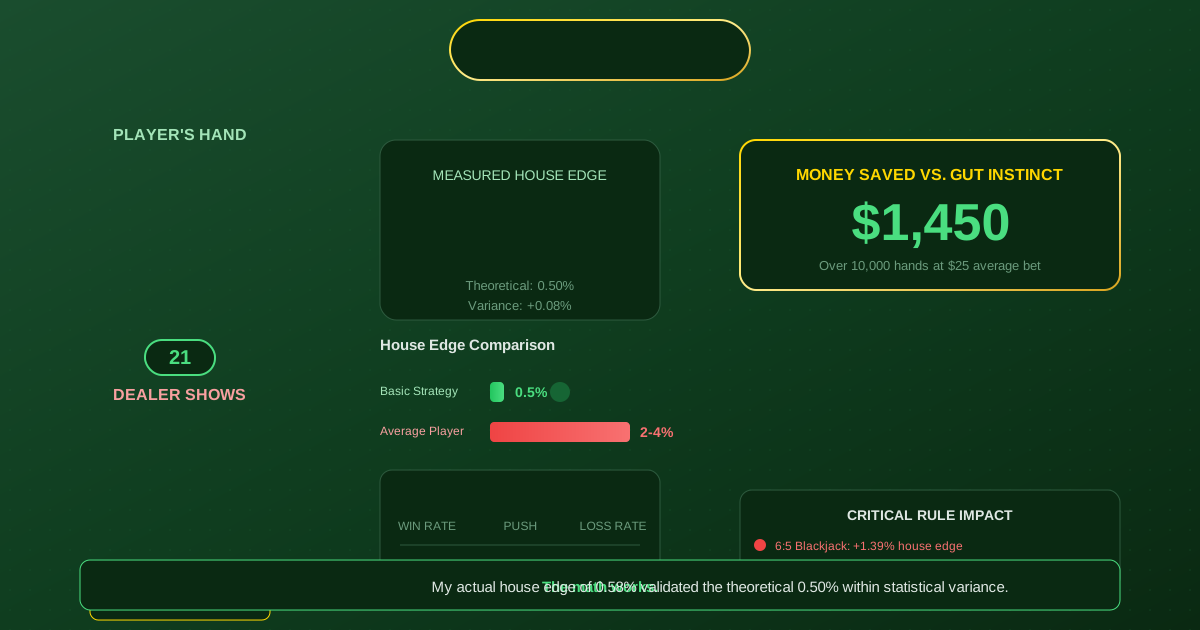
Quick Answer: Blackjack Switch = play two hands, can swap second cards. Example: Turn 6-10 and K-5 into 6-5 and K-10 (making 11 and 20). Push-22: dealer 22 ties all bets. Blackjack pays 1:1 (not 3:2). House edge: ~0.58%. Switch creates massive advantage—compensated by push-22. Always switch to improve total value.
How to Use Our Calculator
Use the Blackjack Switch Calculator →
Determine when switching improves expected value.
Step-by-Step Instructions
-
Enter Both Hands: Four cards total
-
View Switch Options: Original vs switched
-
See Combined EV: Both scenarios
-
Get Recommendation: Switch or keep
-
View Strategy: Play each hand
Input Fields Explained
| Field | Description | Example |
|---|---|---|
| Hand 1 | First two cards | 10♠6♦ |
| Hand 2 | Second two cards | 5♣K♥ |
| Dealer Up | Showing | 9♣ |
| Original Totals | Current | 16, 15 |
| Switched Totals | After swap | 11, 20 |
| Recommendation | Optimal | SWITCH |
| Combined EV | Both hands | +0.35 |
The Switch Mechanic
How It Works
Four cards dealt:
Hand 1: [A] [B]  →  [A] [D]
Hand 2: [C] [D]  →  [C] [B]

Only SECOND cards swap
First cards stay

Example:
Before: 6-10 and K-5
After:  6-5 and K-10
Totals: 11 and 20 (better!)
What You Can Create
Switching possibilities:

Two 16s → 21 and 11
Two 15s → 20 and 10
Two bust hands → One playable

Turn trash into treasure
One hand sacrificed for other
Net improvement overall
When Switching Helps Most
Best switch scenarios:

Low + High combination:
6-K and 5-10 → 6-5 and K-10
Creates 11 (double) + 20 (stand)

Pairs to splits:
10-8 and 8-3 → 10-3 and 8-8
Creates 13 + split opportunity

Stiffs to soft:
7-10 and A-6 → 7-6 and A-10
Creates 13 + 21!
Push-22 Rule
How It Balances
Dealer 22 = push (not bust):

Standard blackjack:
Dealer 22 = you win (bust)

Blackjack Switch:
Dealer 22 = push (tie)
All bets returned
Even strong hands

This offsets switch value
~8.5% of hands affected
Why Push-22 Is Necessary
Switch advantage:

Without push-22:
Player edge would be huge
Switching creates +EV easily

With push-22:
~8.5% of wins become pushes
Balances switch power
Creates ~0.58% house edge
Impact on Strategy
Push-22 considerations:

Don't count on dealer bust-22
Those are pushes now
Slightly more conservative play

But don't over-adjust
Most strategy unchanged
Switch decisions separate
Switch Strategy
The Decision Framework
When to switch:

Calculate combined hand value
Compare original vs switched
Choose higher total expected value

Factors:
- Hand totals
- Double opportunities
- Split opportunities
- Dealer upcard
Always Switch Examples
Clear switches:

10-6 and 5-K → 10-K and 5-6
(16+15=31 → 20+11=31, but 20+11 better)

9-7 and 4-A → 9-A and 4-7
(16+15=31 → 20+11=31, soft 20 + 11)

8-6 and 5-10 → 8-10 and 5-6
(14+15=29 → 18+11=29, 18 + double)
Never Switch Examples
Keep original:

10-10 and 9-9 → Don't switch
(Two 20 and 18 already good)

A-10 and 8-7 → Don't switch
(Blackjack 21 + 15 is fine)

9-9 and 10-10 → Don't switch
(Already optimal totals)
Complex Switch Decisions
Borderline cases:

10-7 and 5-9:
Original: 17, 14
Switched: 10-9, 5-7 = 19, 12

19+12 vs 17+14
Switch for the 19? Maybe...
Depends on dealer upcard
Basic Strategy Modifications
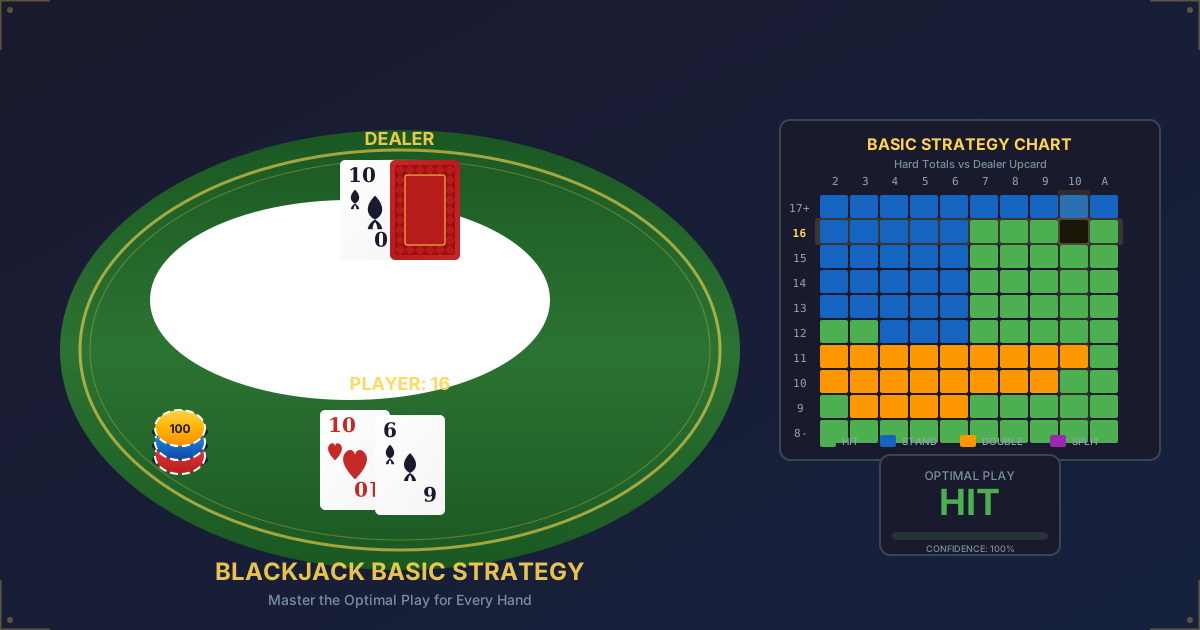
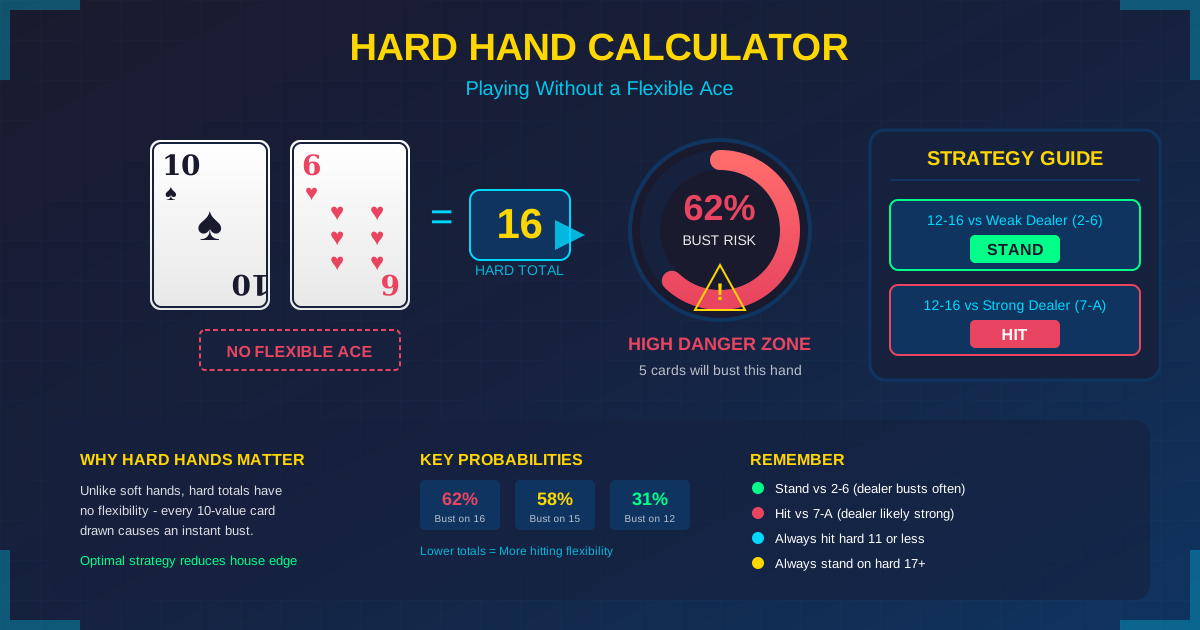
Hard Total Strategy
Similar to standard BJ:

Stand 17+ always
Hit 12-16 vs strong dealer
Double 9-11 vs weak dealer

Key difference:
Two hands to optimize
Switch before applying strategy
Soft Total Strategy
Soft hands:

Hit soft 17 and below
Stand soft 18 vs weak, hit vs strong
Stand soft 19-21

Doubling:
Soft 17-18 vs weak dealer
More valuable with two hands
Splitting Strategy
Pairs after switch:

May create split opportunities
8-8, A-A still split
10-10 never split (as usual)

Switch can CREATE pairs:
10-8 and 8-5 → 10-5 and 8-8
Now you can split 8s!
Real-World Examples
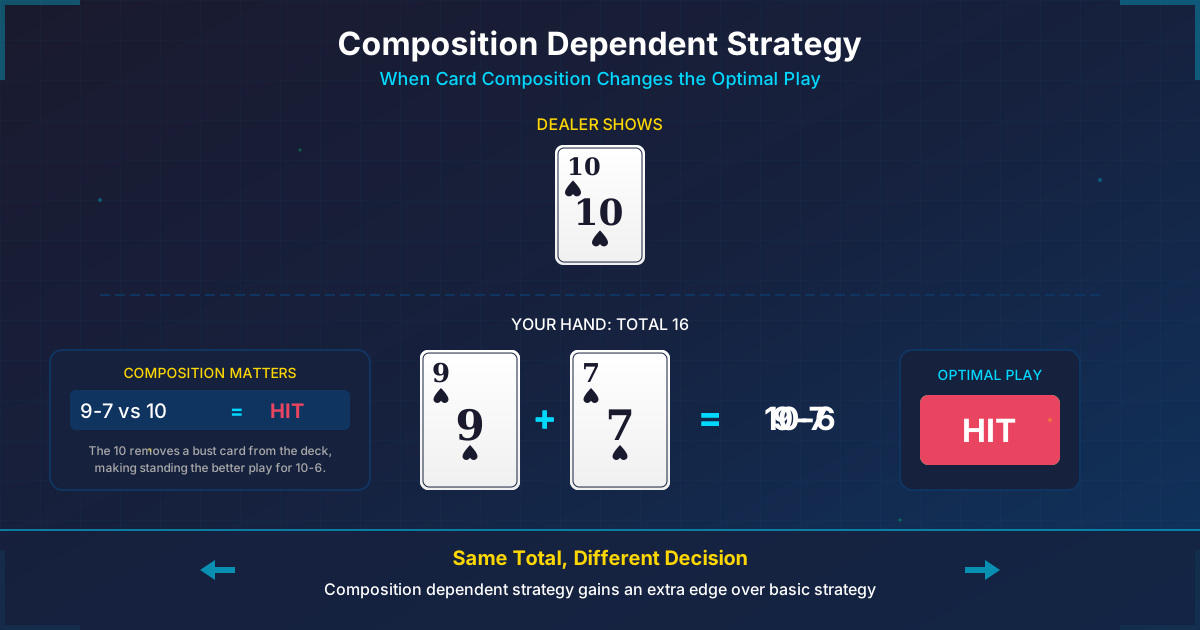
Example 1: Classic Switch
Turning two losers into winners:
Hand 1: 9♠ 7♦ = 16
Hand 2: 5♣ K♥ = 15
Dealer shows: 10

Original: Two stiff hands
Both likely to lose

After switch:
Hand 1: 9♠ K♥ = 19
Hand 2: 5♣ 7♦ = 12

19 = strong standing hand
12 = hit, hope for best

Switch is clearly better
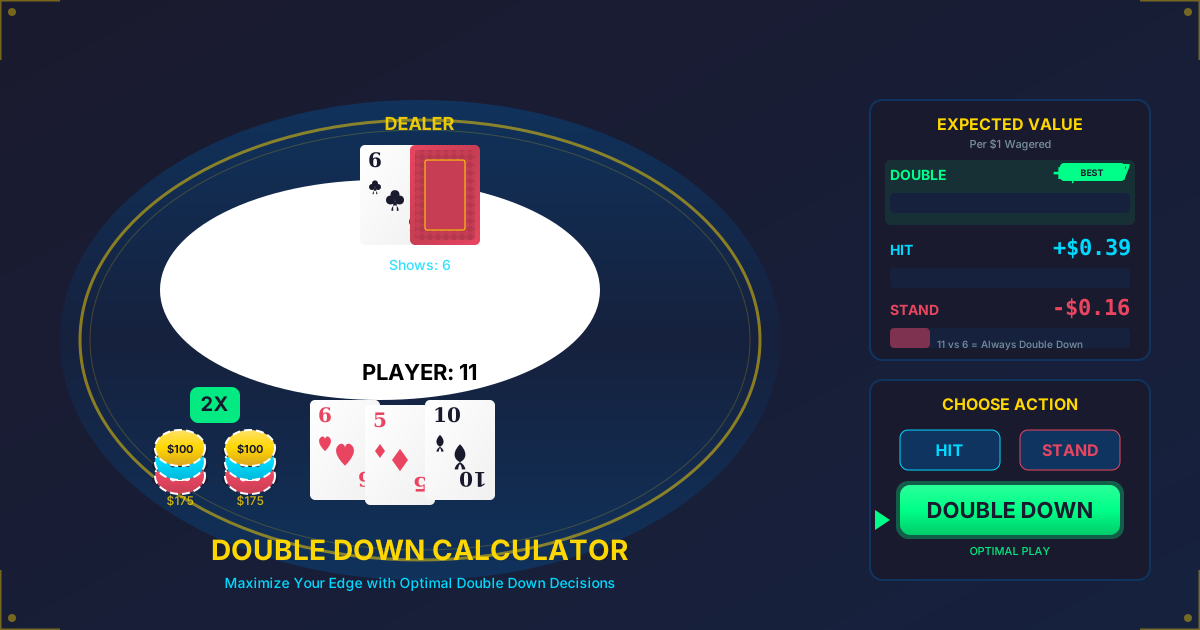
Example 2: Creating a Double
Switch for double down opportunity:
Hand 1: 6♦ 10♠ = 16
Hand 2: 4♣ 5♥ = 9
Dealer shows: 6

Original: 16 + 9

After switch:
Hand 1: 6♦ 5♥ = 11
Hand 2: 4♣ 10♠ = 14

11 vs 6 = great double!
14 vs 6 = stand, dealer busts

Switch creates double opportunity
Example 3: Switch Creates Blackjack
Best possible outcome:
Hand 1: K♠ 7♦ = 17
Hand 2: 4♣ A♥ = 15

After switch:
Hand 1: K♠ A♥ = 21 (BJ!)
Hand 2: 4♣ 7♦ = 11

Blackjack (pays 1:1) + 11 to double
Far better than 17 + soft 15

Always make this switch
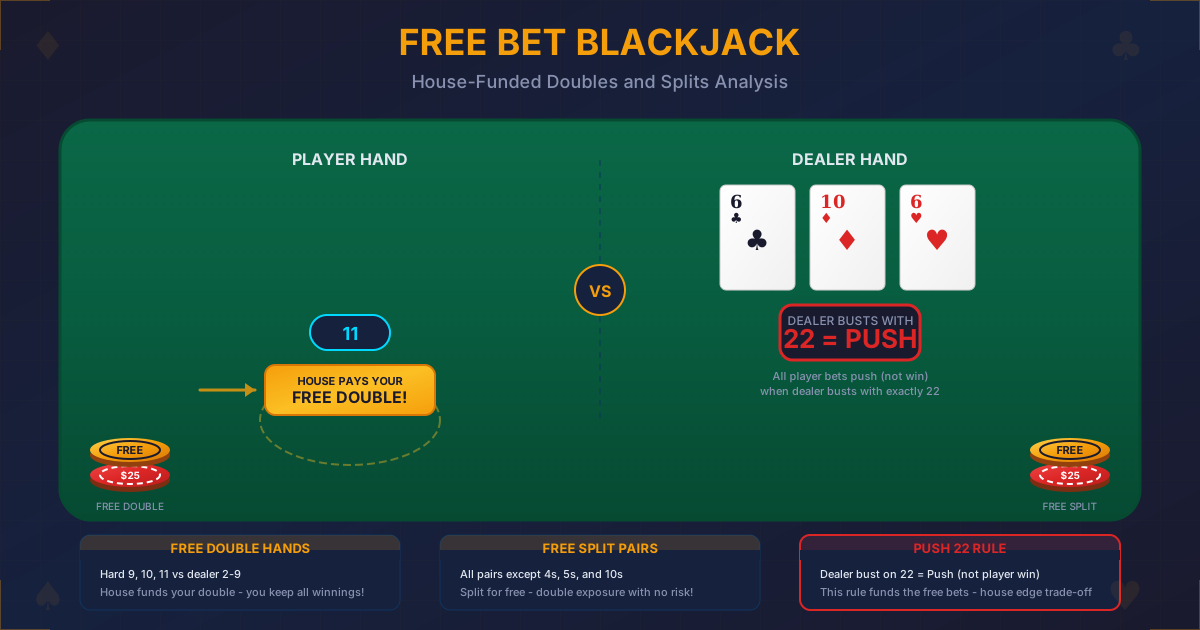
Example 4: Push-22 Scenario
When the balancing rule hurts:
Your hands after optimal play:
Hand 1: 19
Hand 2: 20

Dealer draws: 6, 6, 10 = 22

Standard blackjack:
Both hands WIN (dealer bust)

Blackjack Switch:
Both hands PUSH (push-22)

$25 each = $50 should win
Instead: $0 (push)

This is how house maintains edge
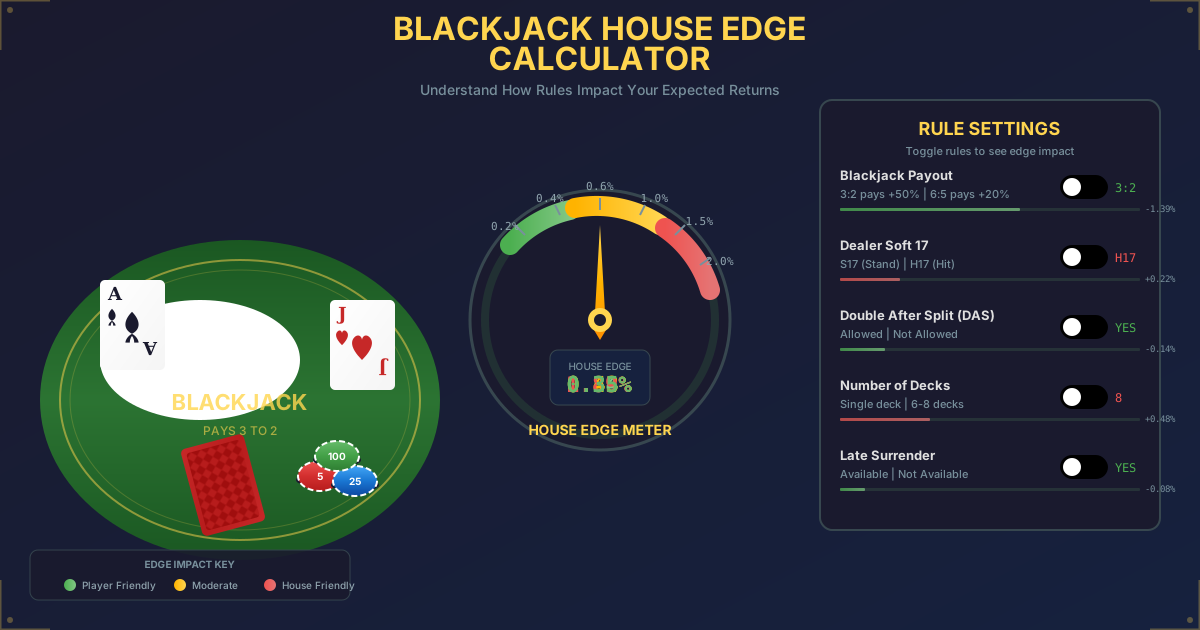
House Edge Analysis
Edge Breakdown
Blackjack Switch edge:

Switch power: -10% advantage
Push-22: +8.5% to house
Blackjack 1:1: +1.5% to house

Net house edge: ~0.58%

Very competitive!
Lower than many variants
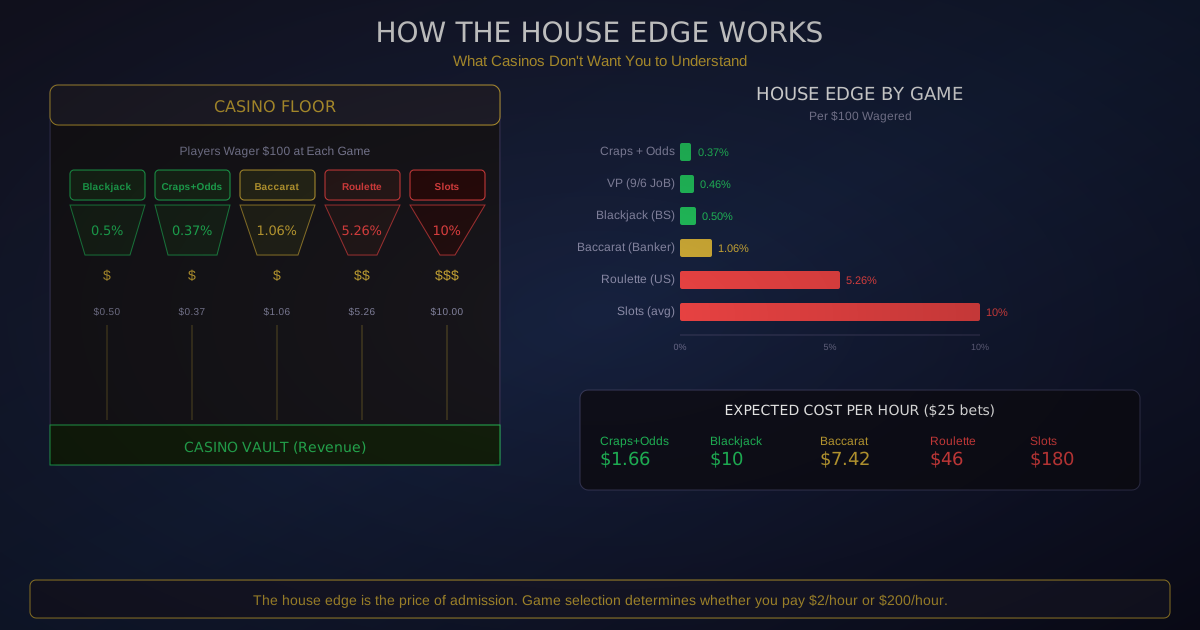
Comparison to Other Games
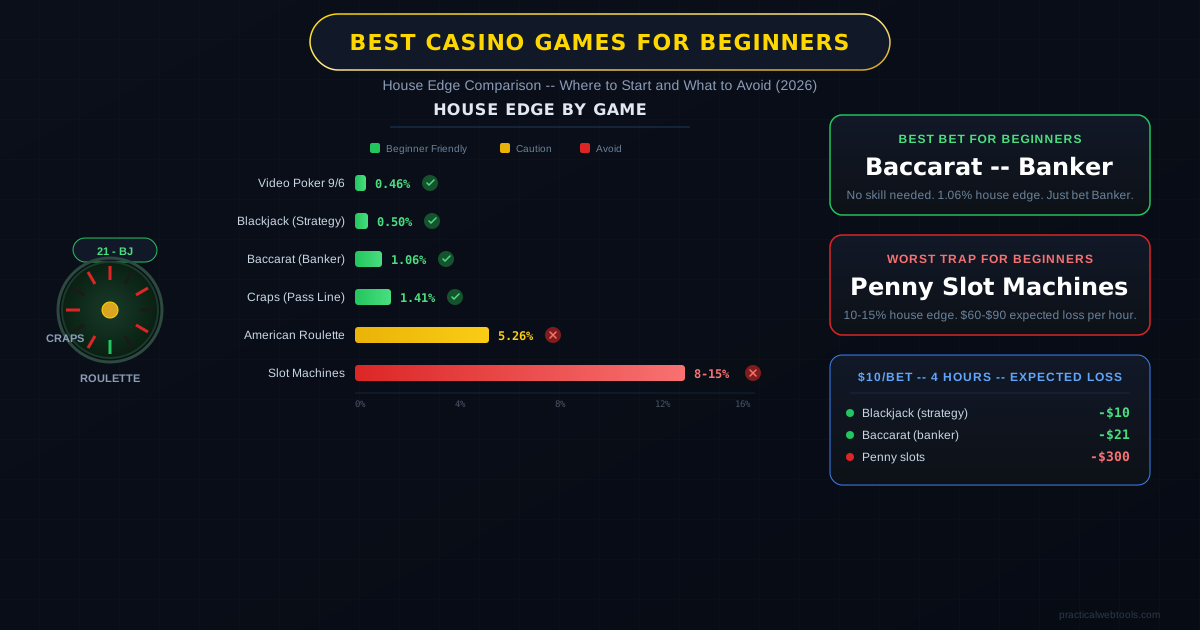
Game comparison:

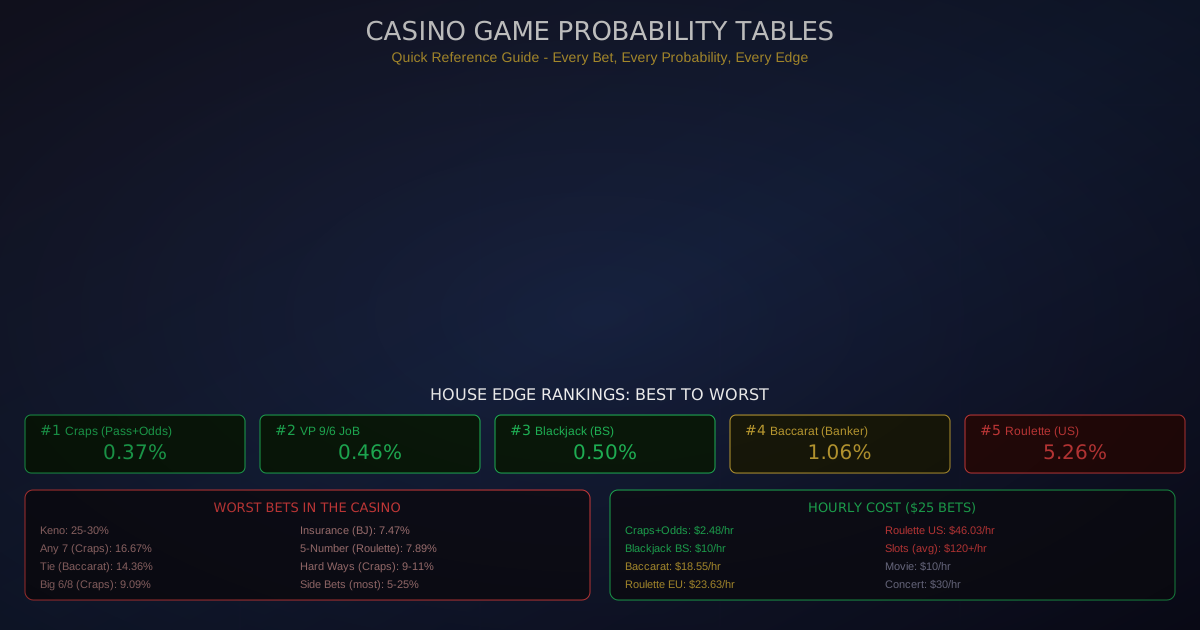
Standard 6-deck BJ: 0.50%
Blackjack Switch: 0.58%
Free Bet BJ: 1.04%
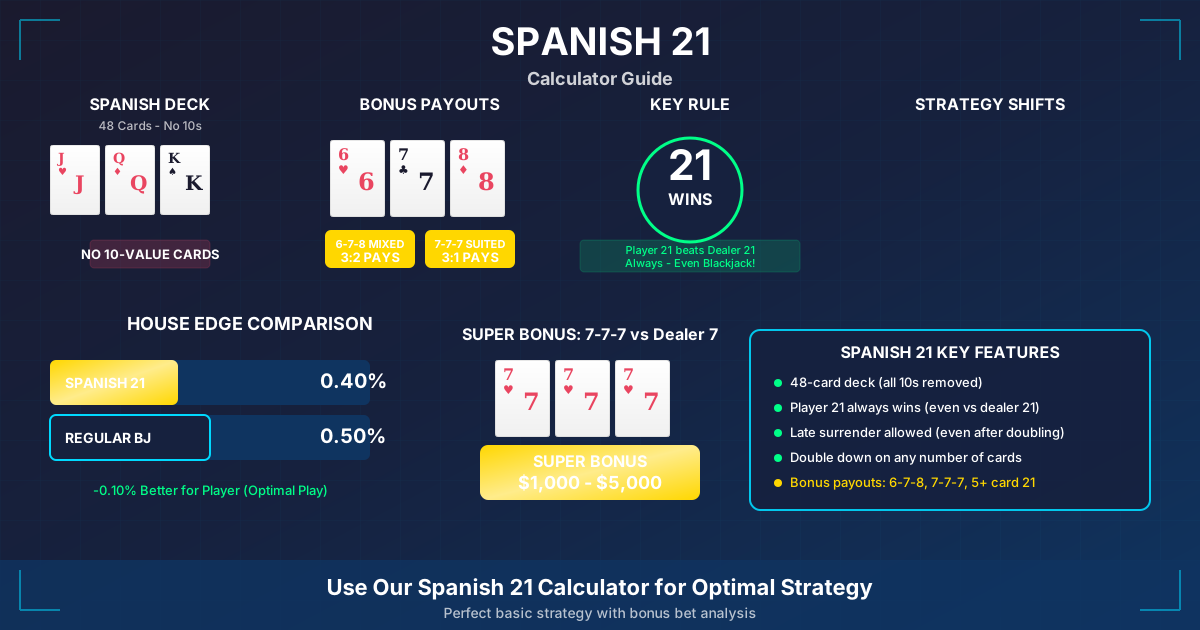
Spanish 21: 0.40%

Switch is excellent value
For fun and entertainment
Perfect Strategy Impact
Strategy skill matters:

Perfect switch + play: 0.58%
Poor switch decisions: 1.5%+
Random switching: 2%+

Switch decisions crucial
Big skill component
Learn the patterns
Advanced Concepts
Creating Split Opportunities
Switch to make pairs:

10-8 and 3-8 → 10-3 and 8-8
Now split 8s vs weak dealer

9-A and 9-6 → 9-9 and A-6
Split 9s or keep soft 17?

Evaluate split value
Compared to current totals
Total Value Optimization
General principle:

Sum of optimized hands > sum of random
21 + 11 > 17 + 15
Even if totals equal

Why?
21 is nearly unbeatable
11 is perfect double

Distribution matters
Not just sum
Dealer Upcard Influence
Switch may vary by upcard:

vs Dealer 6 (weak):
Prioritize doubles
Create 10, 11 hands

vs Dealer 10 (strong):
Prioritize high totals
Create 19, 20 hands
Common Mistakes
1. Not Switching When Should
Mistake: Keeping two medium hands Problem: Missing optimization Fix: Always evaluate switch
2. Switching Good Hands
Mistake: Breaking up 20 and 18 Problem: Already optimal Fix: Don't fix what isn't broken
3. Ignoring Double Potential
Mistake: Not creating 10s and 11s Problem: Missing double value Fix: Factor in double opportunity
4. Forgetting Push-22
Mistake: Counting on dealer bust-22 Problem: Those are pushes Fix: Adjust expectations
Frequently Asked Questions
How do I decide whether to switch?
Compare the combined expected value of both hands in each scenario. Generally, creating one strong hand (19-21) plus a double opportunity beats two mediocre hands.
What's the catch with Blackjack Switch?
Push-22 (dealer 22 ties instead of busting) and blackjack pays 1:1 instead of 3:2. These rules offset the massive advantage of switching cards.
Is Blackjack Switch better than regular blackjack?
Similar house edge (~0.58% vs ~0.50%). More strategic decisions and creativity. Entertainment value is high. Mathematically comparable.
Can I not switch if I don't want to?
Yes, switching is optional. If your hands are already optimal, keep them. But usually switching improves combined value.
How often does push-22 happen?
About 8.5% of hands where dealer would normally bust. This represents significant value transfer to the house.
Is card counting effective in Switch?
Modified approach needed. You're managing two hands, and push-22 changes count-based advantages. Still possible but more complex.
Pro Tips
-
Create 20-21 first: Then optimize second hand
-
Value doubles highly: 11 vs weak dealer is gold
-
Don't break good hands: 19+ usually stays
-
Practice switch vision: See optimal quickly
-
Remember push-22: ~8.5% of wins become ties
Related Calculators
- Blackjack Odds Calculator - Standard game
- Blackjack Strategy Calculator - Basic strategy
- Free Bet Blackjack Calculator - Free doubles
- Double Exposure Calculator - See dealer cards
- House Edge Calculator - Compare games
Conclusion
Blackjack Switch offers the unique ability to rearrange your cards—turning two weak hands into one powerhouse plus a secondary play. Our calculator shows when switching creates value, explains why push-22 is necessary for balance, and proves this variant offers competitive odds with added strategy depth.
Calculate Blackjack Switch Odds Now →
Your 10-6 and 5-K become 10-K and 5-6 with one switch—that's a 20 and an 11 instead of two stiff hands. Our calculator reveals the creative power of card swapping and why this variant rewards strategic thinking.