Blackjack True Count Calculator: Card Counting Guide (2026)
Blackjack True Count Calculator: The Key to Accurate Counting
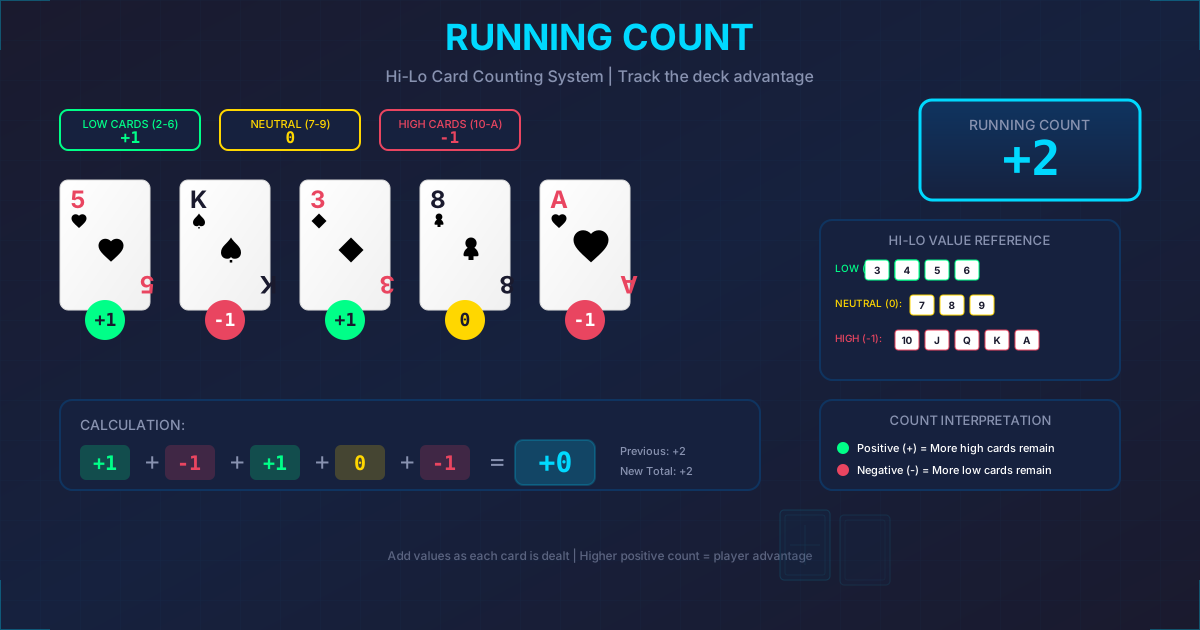
The true count is what separates amateur counters from professionals. Converting running count to true count accounts for remaining decks, giving you accurate advantage information. Our calculator makes this conversion instant.
What Is True Count?
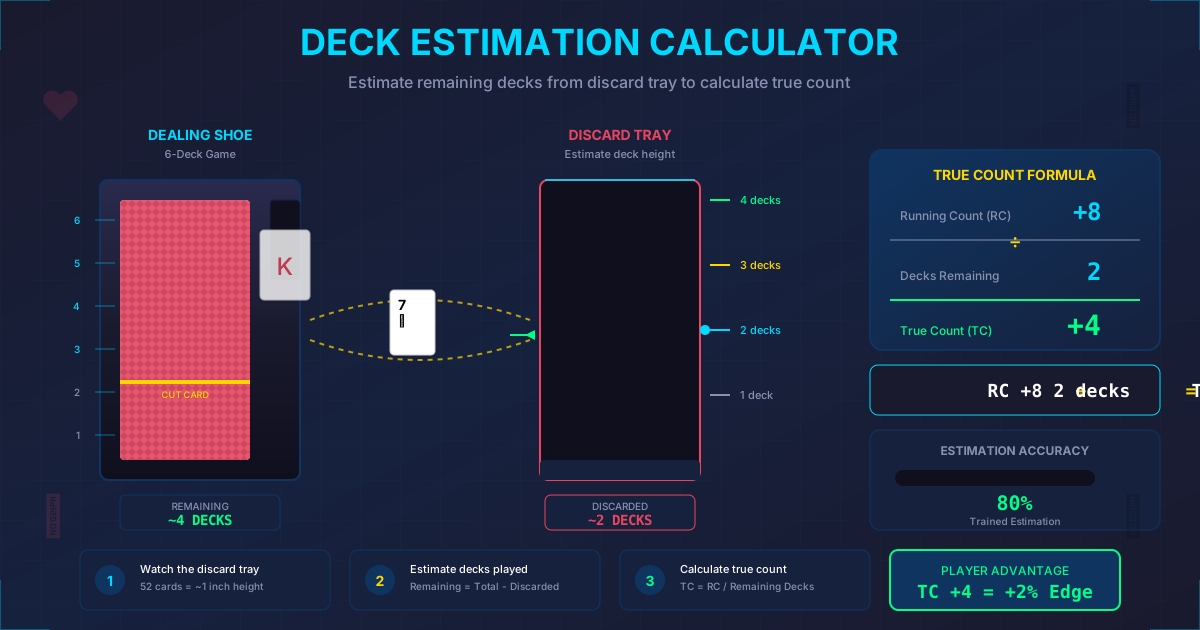
True count normalizes the running count by dividing by remaining decks. This tells you the actual card composition advantage per deck, not just total count.
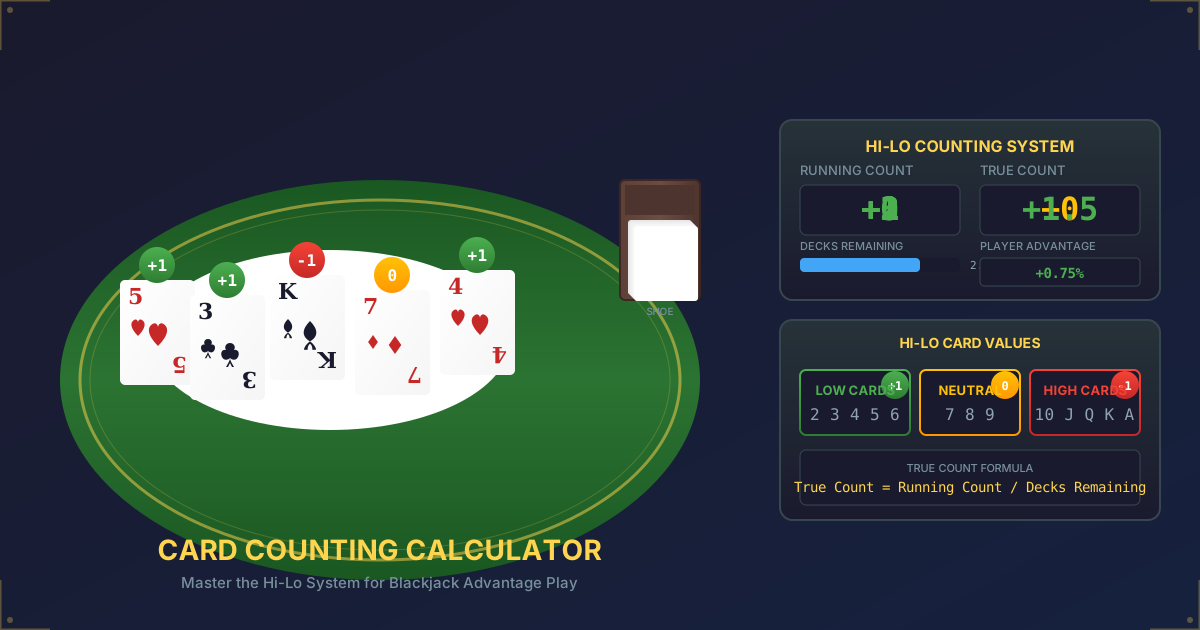
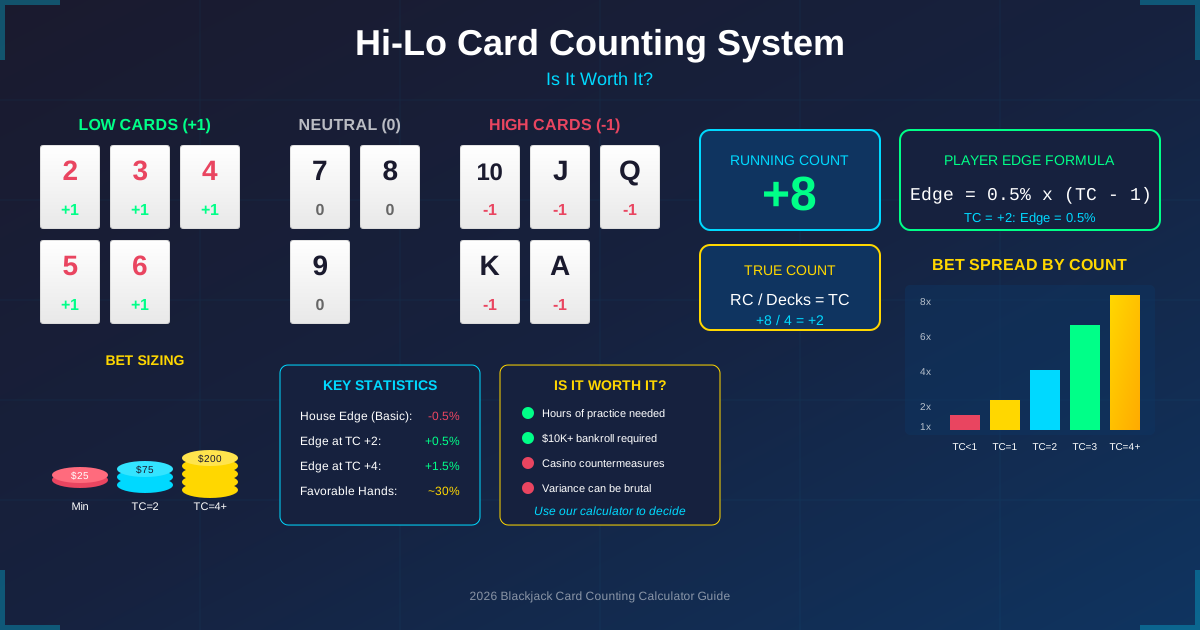
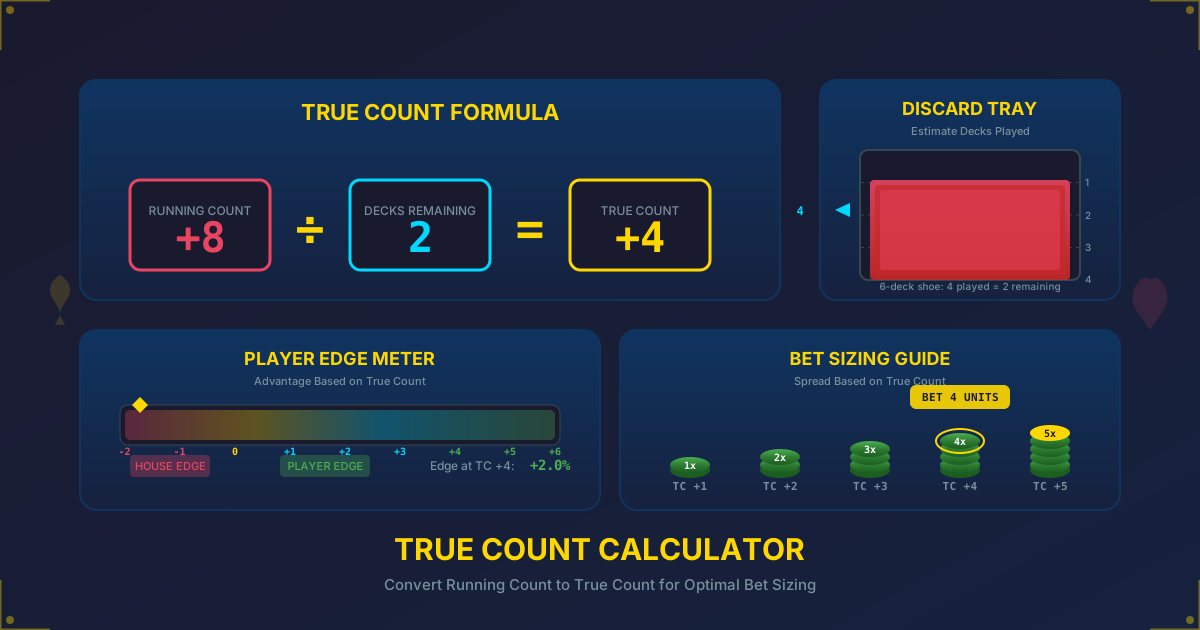
Quick Answer: True Count = Running Count ÷ Remaining Decks. A running count of +6 with 2 decks left gives a true count of +3. Each +1 true count represents approximately +0.5% player edge. True count determines both betting decisions and strategy deviations.
How to Use Our True Count Calculator
Use the Blackjack True Count Calculator →
Enter running count and remaining decks for instant true count.
Step-by-Step Instructions
-
Enter Running Count: Your current count
-
Input Remaining Decks: Estimate from discard tray
-
View True Count: Normalized per-deck count
-
See Player Edge: Approximate advantage
-
Get Bet Sizing: Recommended wager
Input Fields Explained
| Field | Description | Example |
|---|---|---|
| Running Count | Raw Hi-Lo count | +8 |
| Decks Remaining | Estimate to 0.5 | 2.0 |
| True Count | Calculated | +4 |
| Player Edge | Approximate | +1.5% |
| Suggested Bet | Based on edge | 4 units |
True Count Formula
Basic Calculation
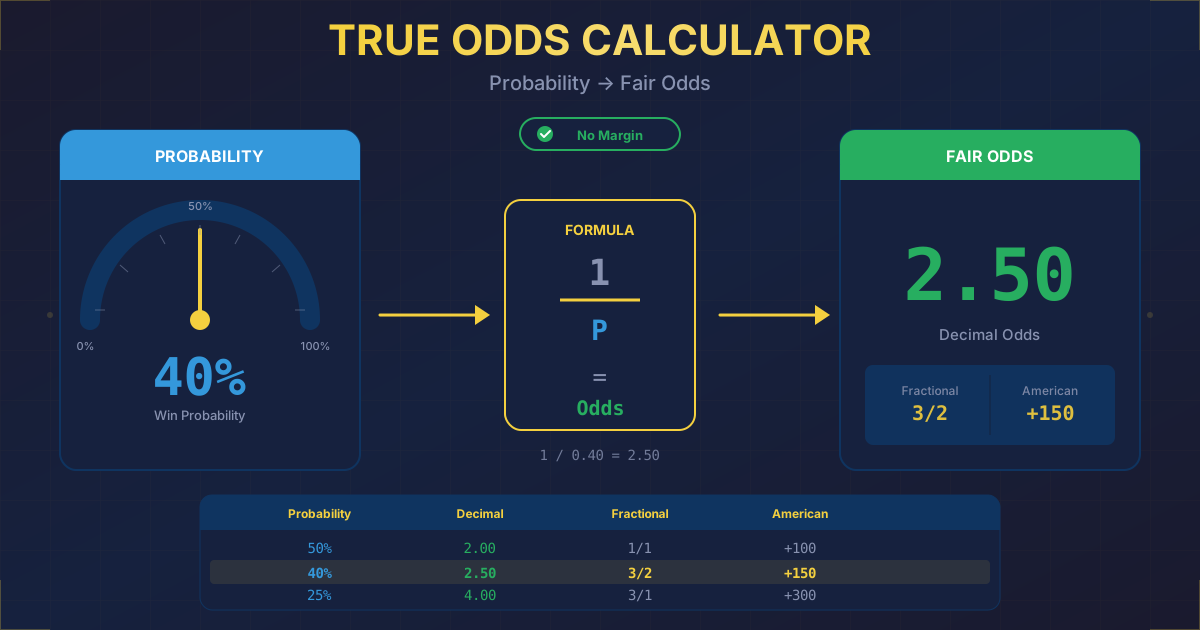
True Count = Running Count ÷ Decks Remaining
Examples
| Running Count | Decks Remaining | True Count |
|---|---|---|
| +6 | 3 | +2 |
| +6 | 2 | +3 |
| +6 | 1 | +6 |
| +10 | 2.5 | +4 |
| -4 | 2 | -2 |
Why Division Matters
A +6 running count means different things:
- 6 decks remaining: +1 TC (minimal advantage)
- 2 decks remaining: +3 TC (significant advantage)
- 1 deck remaining: +6 TC (major advantage)
Same count, wildly different edges.
Estimating Remaining Decks
Using the Discard Tray
| Decks Dealt | 6-Deck Remaining | 8-Deck Remaining |
|---|---|---|
| 1 | 5.0 | 7.0 |
| 2 | 4.0 | 6.0 |
| 3 | 3.0 | 5.0 |
| 4 | 2.0 | 4.0 |
| 5 | 1.0 | 3.0 |
Estimation Tips
- Watch the discard tray: Visualize deck heights
- Practice with cut cards: Know where penetration ends
- Round to nearest 0.5: Precision beyond that is overkill
- Err slightly low: Underestimating remaining decks is safer
True Count and Player Edge
Edge per True Count
| True Count | Approximate Edge |
|---|---|
| TC 0 | -0.5% (house edge) |
| TC +1 | 0% (break-even) |
| TC +2 | +0.5% |
| TC +3 | +1.0% |
| TC +4 | +1.5% |
| TC +5 | +2.0% |
| TC +6+ | +2.5%+ |
Rule of thumb: Each TC = ~0.5% edge change
When You Have Advantage
| True Count | Edge | Action |
|---|---|---|
| TC ≤ 0 | Negative | Minimum bet |
| TC +1 | ~0% | Small bet |
| TC +2 | +0.5% | Increase bet |
| TC +3 | +1.0% | Bigger bet |
| TC +4+ | +1.5%+ | Maximum bet |
Bet Sizing by True Count
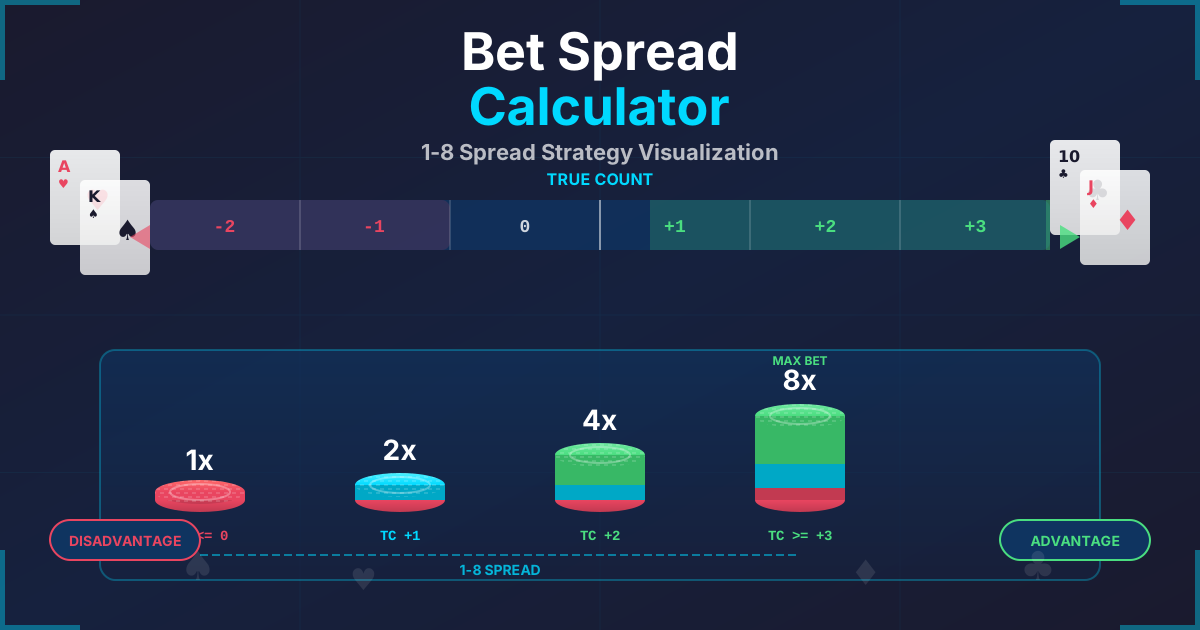
Standard Bet Ramp
| True Count | Bet (Units) | $25 Unit |
|---|---|---|
| TC ≤ 0 | 1 | $25 |
| TC +1 | 1 | $25 |
| TC +2 | 2 | $50 |
| TC +3 | 4 | $100 |
| TC +4 | 6 | $150 |
| TC +5+ | 8 | $200 |
Aggressive Ramp
| True Count | Bet (Units) |
|---|---|
| TC ≤ 0 | 1 |
| TC +1 | 2 |
| TC +2 | 4 |
| TC +3 | 8 |
| TC +4+ | 12 |
Higher variance, higher expected profit.
Real-World True Count Examples
Example 1: Early Shoe
Situation:
- 6-deck shoe
- 1 deck dealt (5 remaining)
- Running count: +5
True Count:
TC = +5 ÷ 5 = +1
Interpretation: Minimal advantage, small bet appropriate.
Example 2: Deep Penetration
Situation:
- 6-deck shoe
- 4 decks dealt (2 remaining)
- Running count: +6
True Count:
TC = +6 ÷ 2 = +3
Interpretation: Significant advantage (+1%), increase bet substantially.
Example 3: Negative Count
Situation:
- 8-deck shoe
- 2 decks dealt (6 remaining)
- Running count: -6
True Count:
TC = -6 ÷ 6 = -1
Interpretation: House has extra advantage, minimum bet or consider leaving.
Penetration Impact
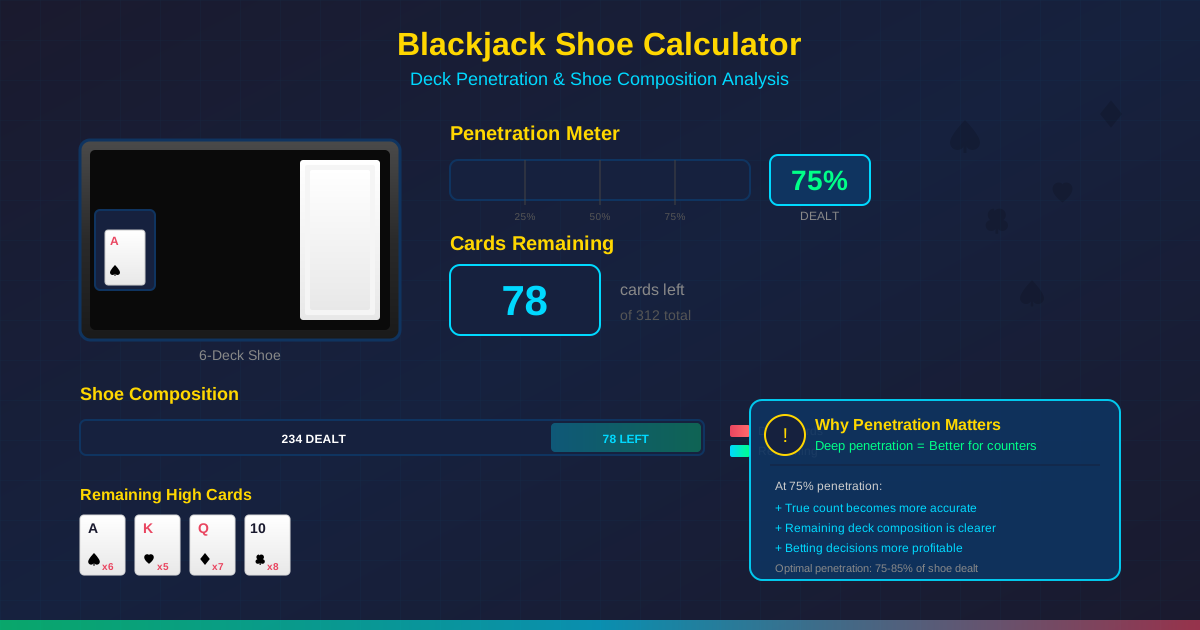
What Is Penetration?
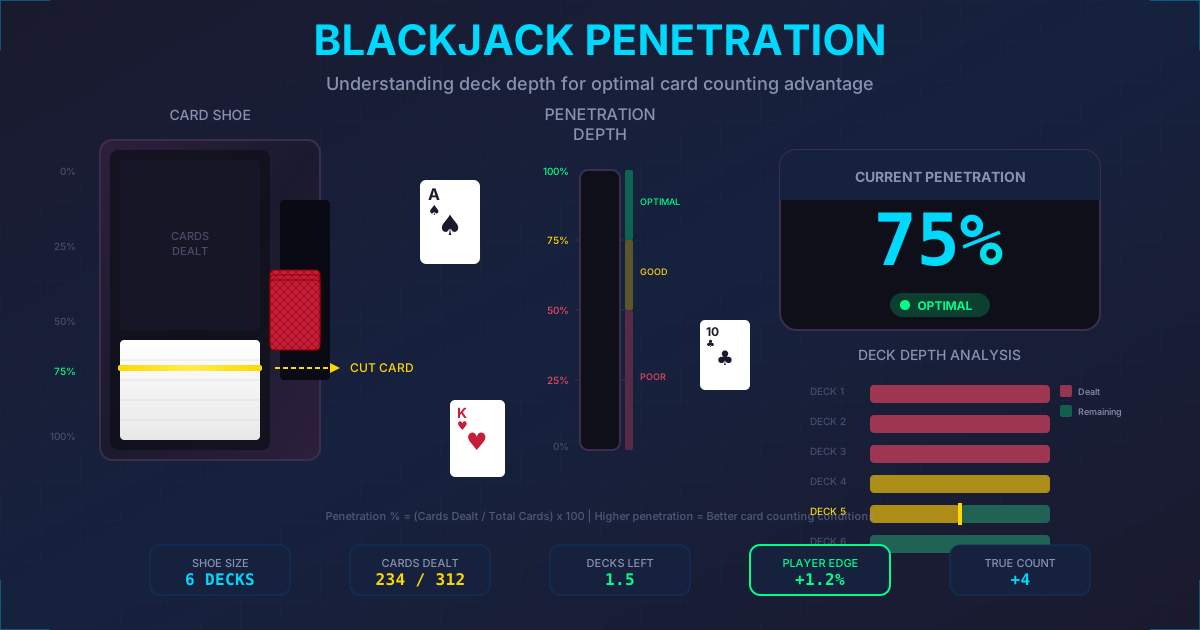
Penetration is how deep into the shoe the casino deals before shuffling.
| Penetration | Decks Dealt | Quality |
|---|---|---|
| 50% | 3 of 6 | Poor |
| 67% | 4 of 6 | Average |
| 75% | 4.5 of 6 | Good |
| 83% | 5 of 6 | Excellent |
Why Penetration Matters
Better penetration means:
- More high TC opportunities: Count develops further
- Higher true counts possible: Running count accumulates
- More betting opportunities: More hands at advantage
- Higher hourly EV: More money won per hour
Poor penetration can make counting unprofitable.
Common True Count Mistakes
1. Not Converting to True Count
Mistake: Betting based on running count Problem: +10 RC with 5 decks left is only TC +2 Fix: Always divide by remaining decks
2. Over-Precise Deck Estimation
Mistake: "Exactly 2.37 decks remaining" Problem: Wastes mental energy, slows decisions Fix: Round to nearest 0.5 deck
3. Ignoring Negative True Counts
Mistake: Staying and betting at TC -3 Problem: Giving away edge to the house Fix: Minimum bet or Wong out
4. Telegraphing Count Changes
Mistake: Bet jumping from $25 to $200 instantly Problem: Casino notices count-based betting Fix: Gradual increases, camouflage techniques
Frequently Asked Questions
Why not just use running count?
Running count doesn't account for deck size. +10 in a single deck is huge; +10 in an 8-deck shoe barely matters.
How accurate does my deck estimation need to be?
Within 0.5 decks is fine. The edge difference between TC +3.0 and TC +2.8 is negligible.
When should I leave the table?
Most counters Wong out (leave) when true count drops to -1 or -2, returning when it rises again.
Does true count matter for strategy changes?
Yes! Many strategy deviations (insurance, hitting/standing on 16, etc.) are based on true count, not running count.
Can the casino see me calculating?
If you're obvious, yes. Practice until conversion is automatic—you should know true count within 1 second.
What's a "favorable" true count?
TC +2 or higher gives meaningful player advantage (0.5%+). TC +4 and above is ideal.
Strategy Deviations by True Count
Key Deviations (Hi-Lo)
| Situation | Basic Strategy | Deviation Trigger |
|---|---|---|
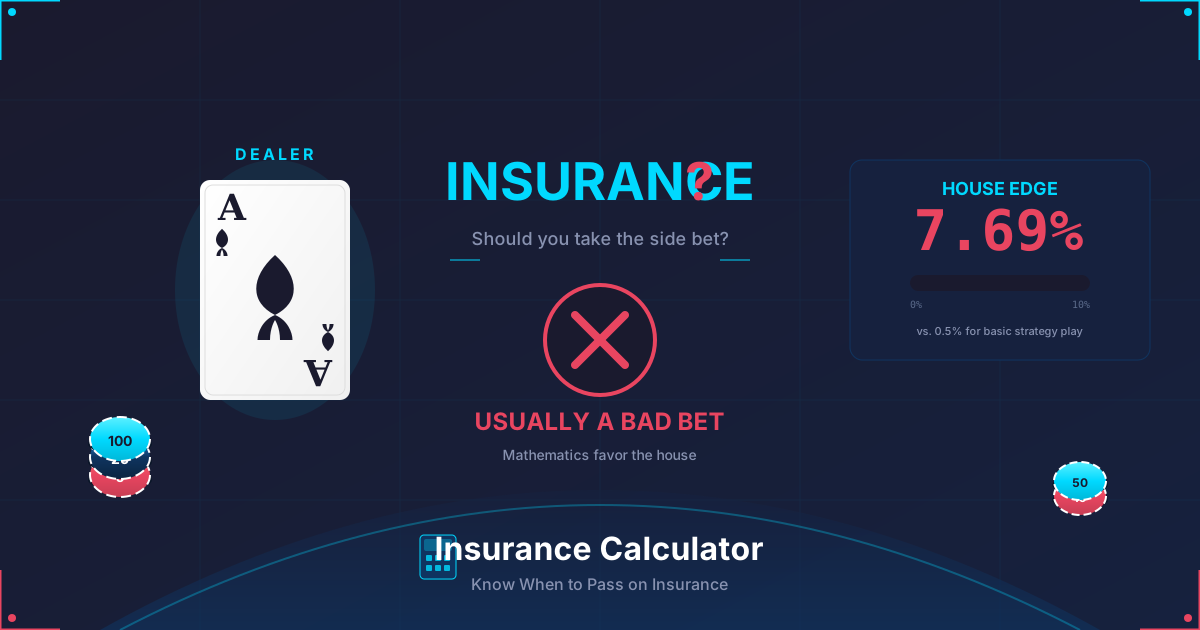
| Insurance | Never | Take at TC +3 |
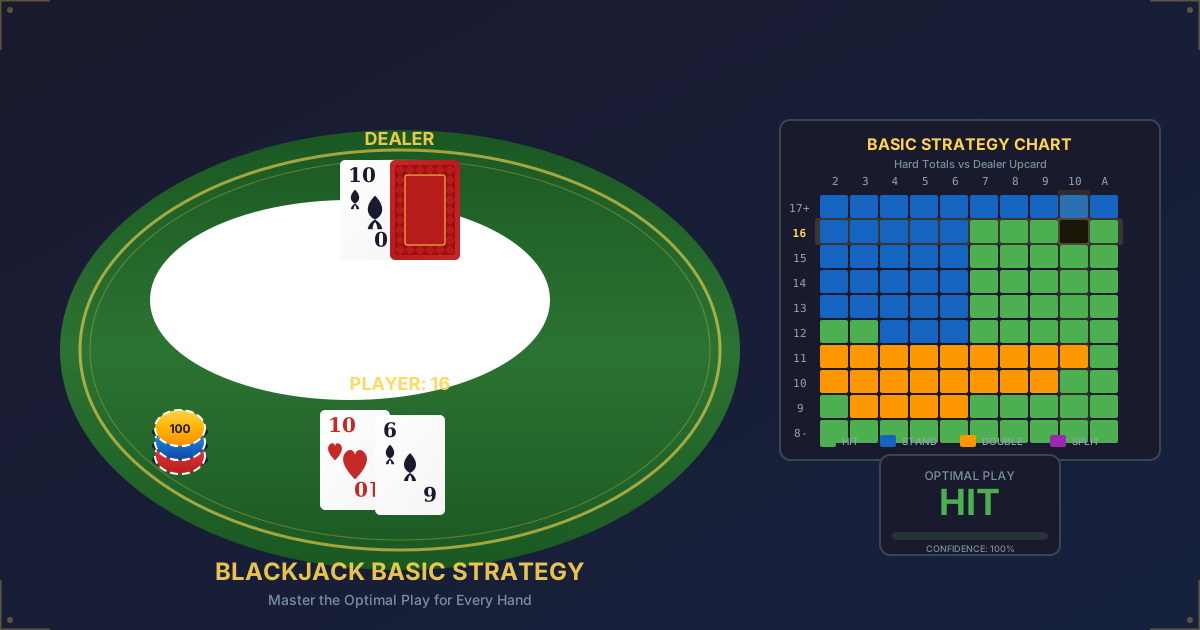
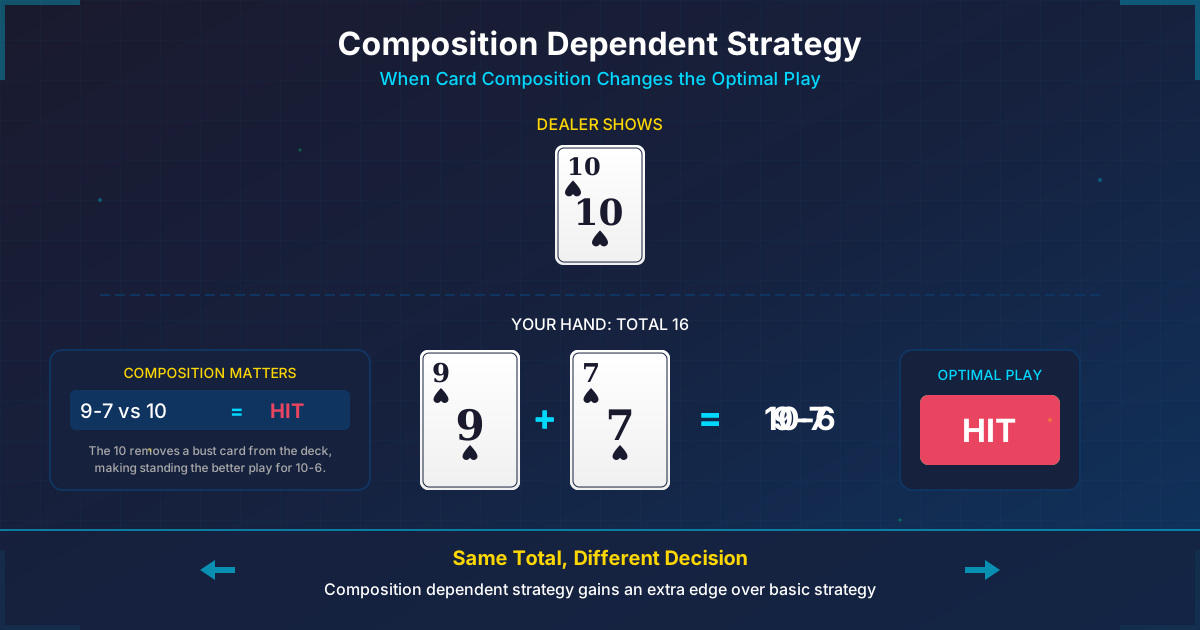
| 16 vs 10 | Hit | Stand at TC 0 |
| 15 vs 10 | Hit | Stand at TC +4 |
| 12 vs 3 | Hit | Stand at TC +2 |
| 10 vs 10 | Hit | Double at TC +4 |
| 9 vs 2 | Hit | Double at TC +1 |
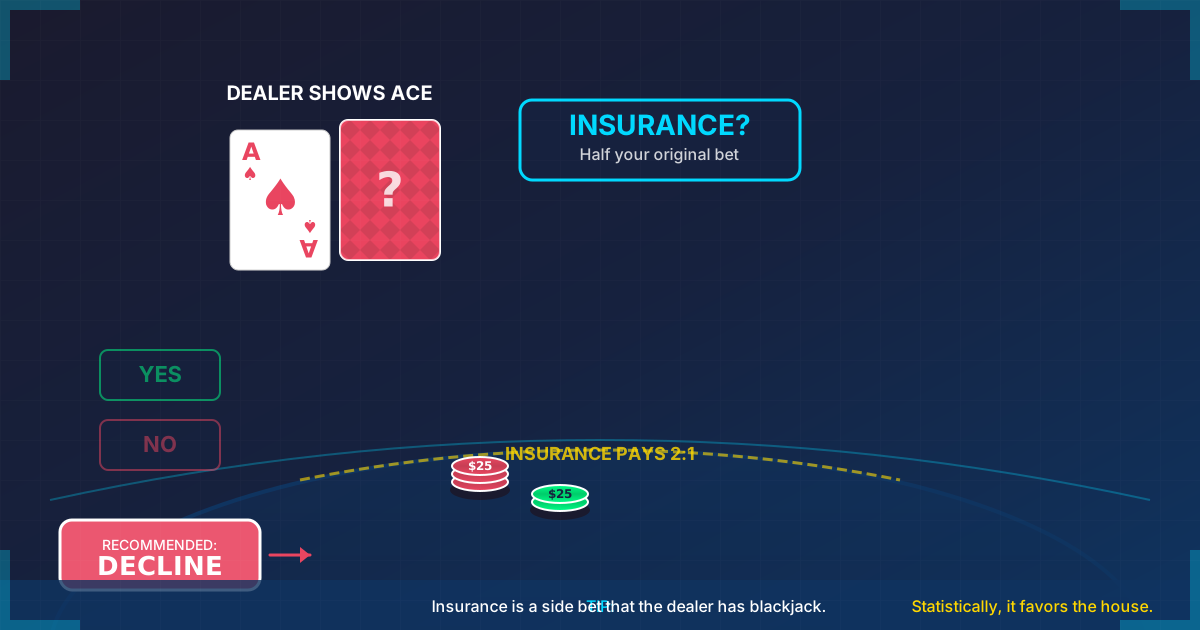
When to Take Insurance
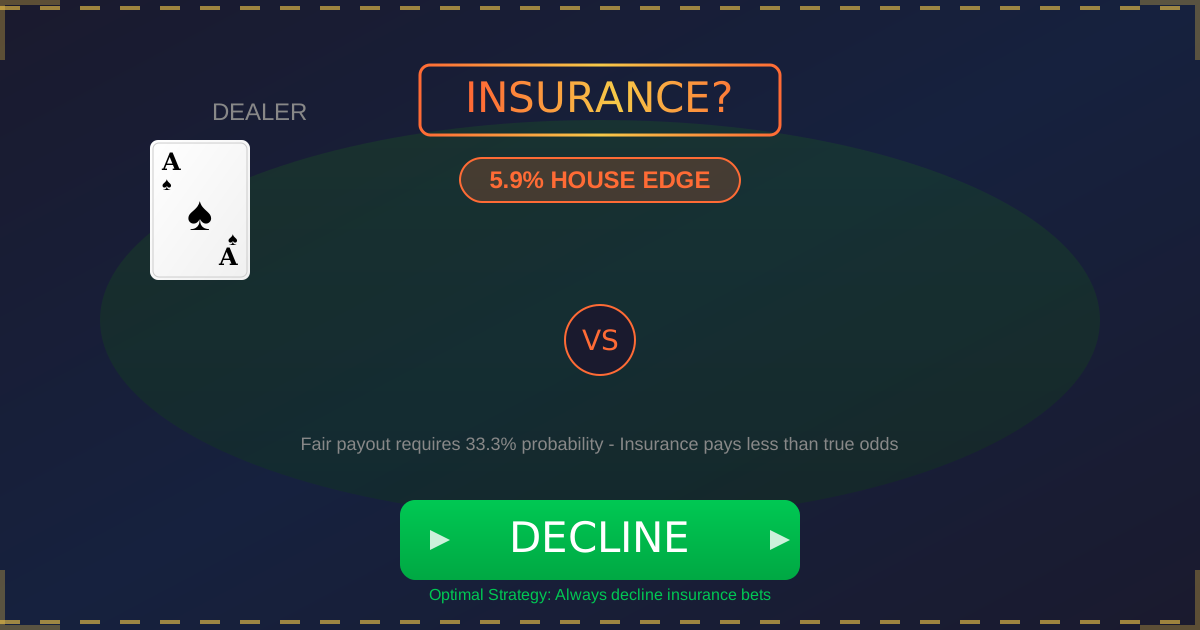
Insurance becomes profitable at TC +3:
- At TC +3, remaining deck has high ace density
- Insurance bet pays 2:1
- Break-even requires >1/3 tens—TC +3 gets close
Advanced True Count Concepts
Flooring vs. Rounding
| Method | Example | Usage |
|---|---|---|
| Rounding | 2.6 → 3 | Simpler |
| Flooring | 2.6 → 2 | Slightly more accurate |
| Half-deck | 2.5 → 2.5 | Most accurate |
True Count Theorem
The "true count theorem" states:
- True count remains statistically stable through a shoe
- A TC +3 shoe is expected to remain around +3 (with variance)
- This is why true count is more useful than running count
Unbalanced Counts (Ko)
Unbalanced systems like KO don't require true count conversion:
- Running count already approximates advantage
- Simpler to use but slightly less accurate
- Trade-off: ease vs precision
Pro Tips for True Count
-
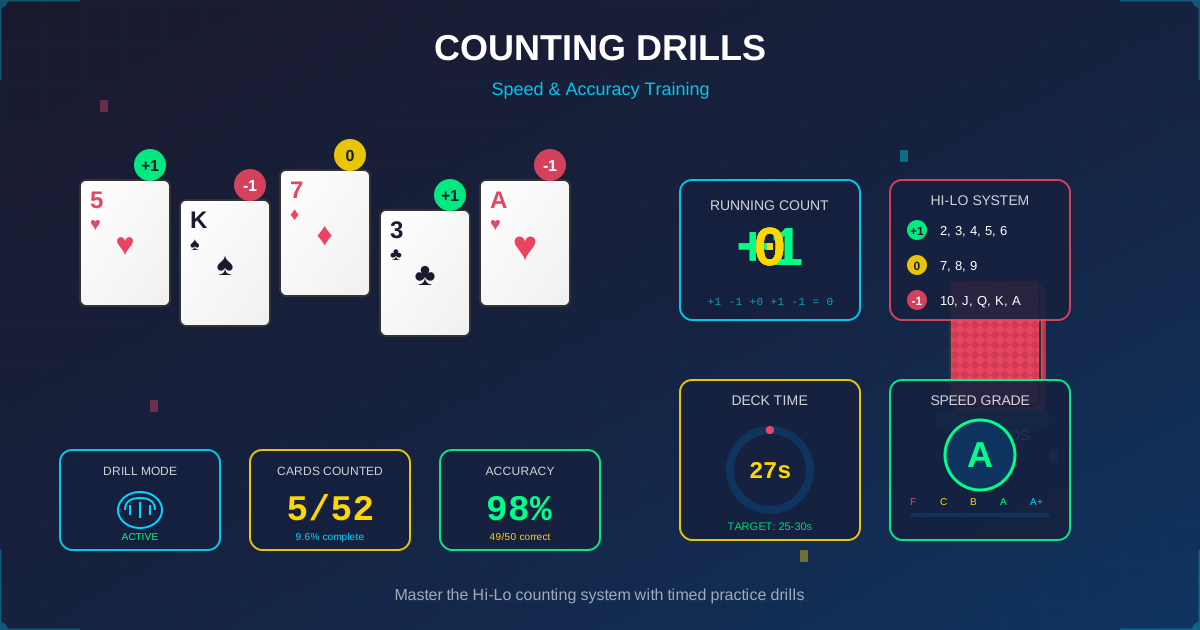
Practice deck estimation: Use real decks at home
-
Make conversion automatic: Drill until instant
-
Round appropriately: 0.5 deck precision is enough
-
Watch penetration: Poor penetration = leave
-
Adjust bet smoothly: Don't telegraph count changes
Related Blackjack Calculators
- Blackjack Card Counting Calculator - Running count
- Blackjack Bet Spread Calculator - Bet sizing
- Blackjack House Edge Calculator - Rule impacts
- Blackjack Basic Strategy Calculator - Optimal plays
- Blackjack Bankroll Calculator - Session planning
Conclusion
True count is the foundation of profitable card counting. Our calculator converts running count to true count instantly, showing your edge and suggested bet size. Master this conversion, and you'll know exactly when you have the advantage.
Calculate Your True Count Now →
The difference between amateur and professional counters often comes down to true count mastery. Practice until conversion is automatic, adjust bets accordingly, and let the math work in your favor.