Bonus Poker Calculator: Four-of-a-Kind Pay Boost Analysis (2026)

Bonus Poker Calculator: Chasing Premium Quads
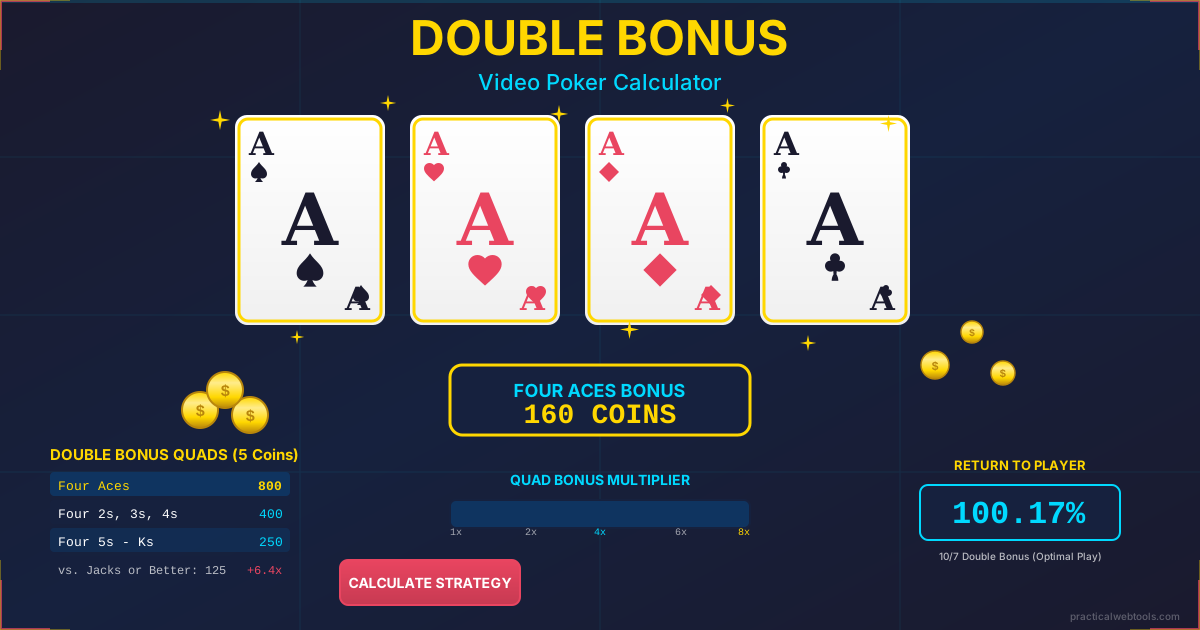
Bonus Poker enhances four-of-a-kind payouts—quads of aces, 2s/3s/4s, and 5s-through-Kings all pay differently. Our calculator shows how these bonus payouts affect strategy, reveals optimal hold decisions, and compares the value of different quad types.
What Is Bonus Poker?
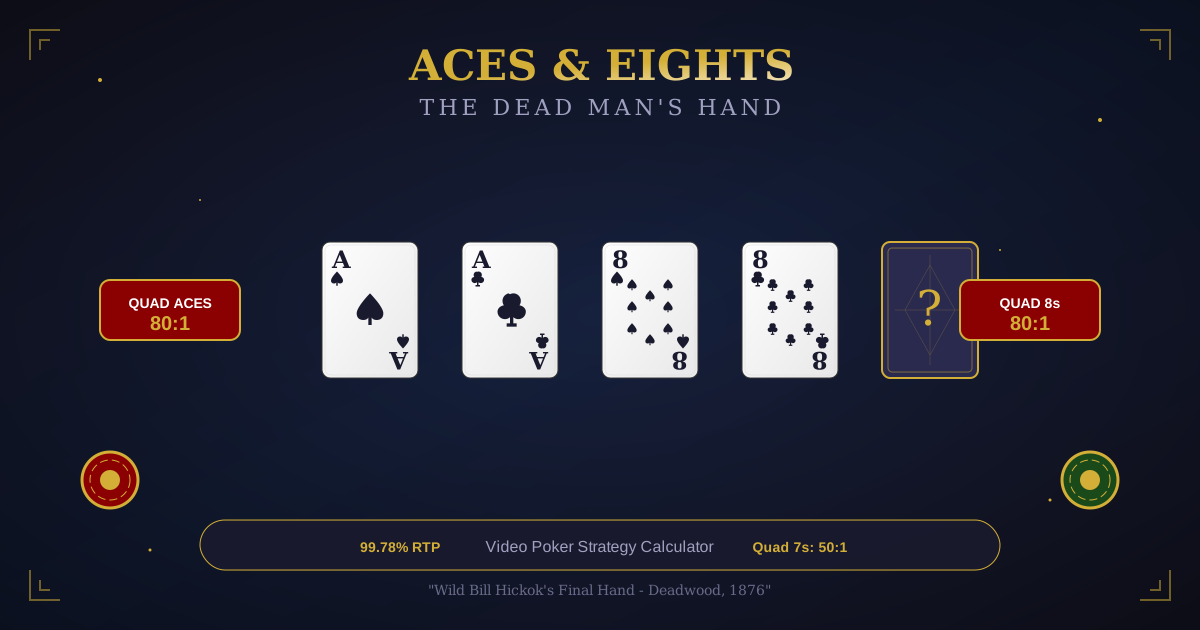
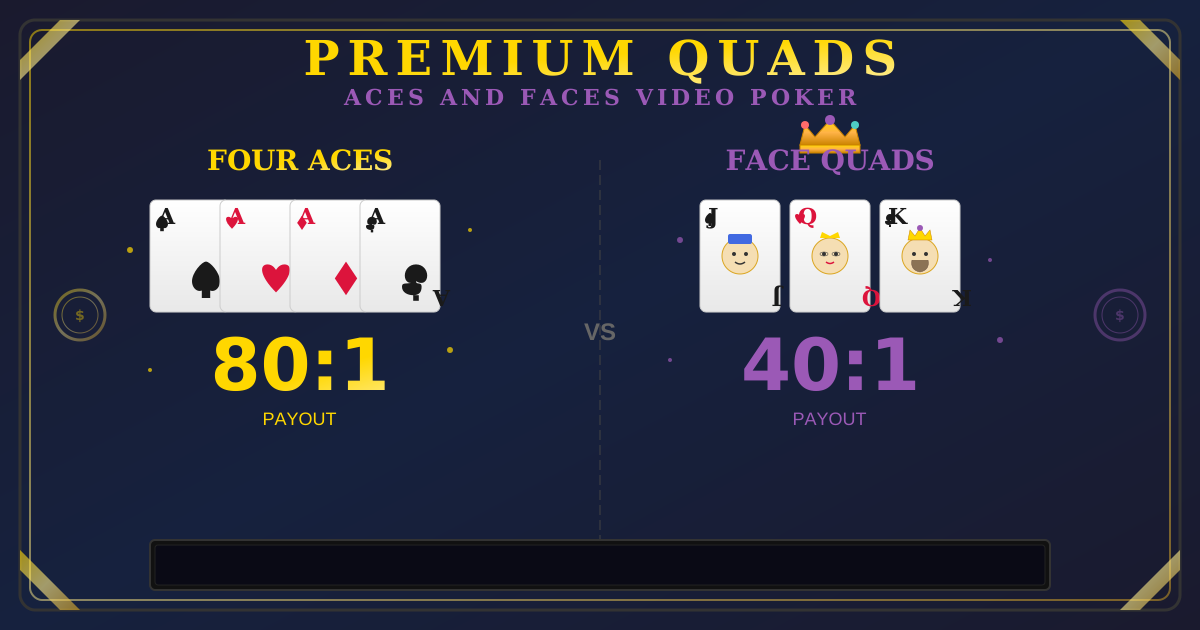
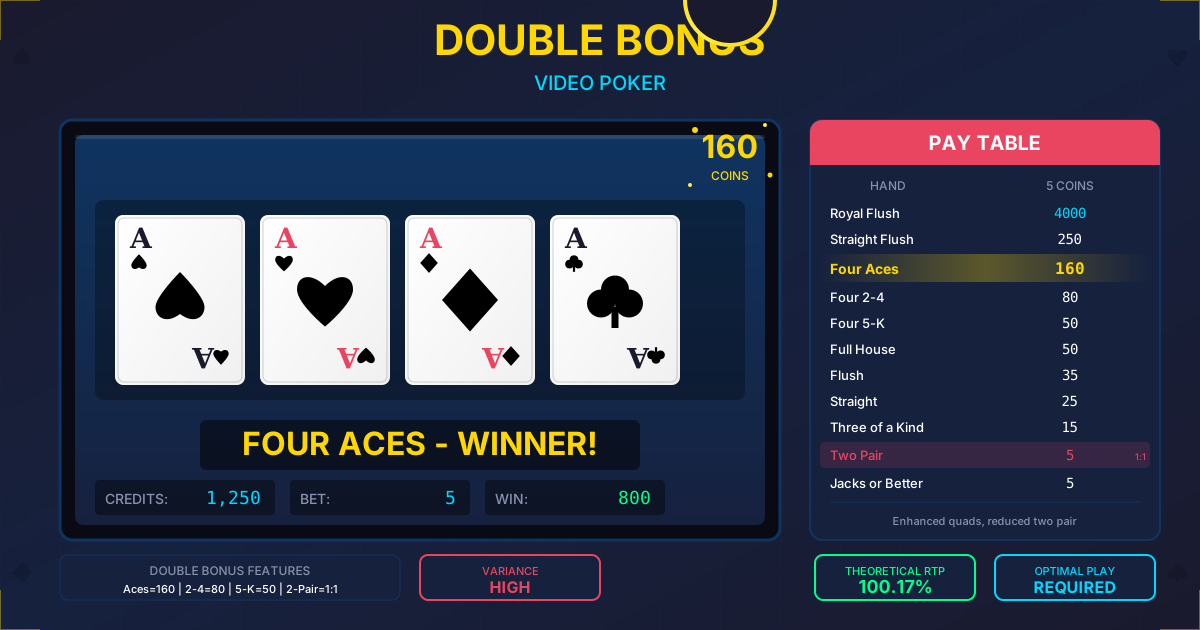
Bonus Poker is a video poker variant based on Jacks or Better but with enhanced four-of-a-kind payouts. Quad aces pay 80:1 (vs 25:1 in JoB), quad 2s/3s/4s pay 40:1, and other quads pay 25:1. Other hands pay the same as standard Jacks or Better.
Quick Answer: Bonus Poker = enhanced quad payouts. Quad aces: 80:1. Quad 2-3-4: 40:1. Quad 5-K: 25:1. Other hands: same as Jacks or Better. Full pay (8/5): 99.17% return. Hold strategy: favor low pairs slightly for quad potential. Aces priority increased. Variance higher than JoB.
How to Use Our Calculator
Use the Bonus Poker Calculator →
Calculate optimal holds with bonus quad values.
Step-by-Step Instructions
-
Enter Your Hand: Five cards dealt
-
Select Pay Table: 8/5, 7/5, or 6/5
-
View Optimal Hold: Best cards to keep
-
See EV Comparison: Each holding option
-
Check Quad Potential: Four-of-a-kind odds
Input Fields Explained
| Field | Description | Example |
|---|---|---|
| Your Hand | Five cards | A♠ A♦ 7♣ 4♥ 2♠ |
| Pay Table | Version | 8/5 Bonus |
| Optimal Hold | Best keep | AA |
| EV | Expected return | 0.87 |
| Quad Potential | 4-of-kind chance | 0.43% |
| Return Rate | Machine RTP | 99.17% |
Pay Table Comparison
Standard Bonus Poker Pay Tables
Hand           | 8/5  | 7/5  | 6/5
---------------|------|------|------
Royal Flush    | 800  | 800  | 800
Straight Flush | 50   | 50   | 50
4 Aces         | 80   | 80   | 80
4 2s/3s/4s     | 40   | 40   | 40
4 5s-Ks        | 25   | 25   | 25
Full House     | 8    | 7    | 6
Flush          | 5    | 5    | 5
Straight       | 4    | 4    | 4
3 of a Kind    | 3    | 3    | 3
Two Pair       | 2    | 2    | 2
Jacks or Better| 1    | 1    | 1

Return:         99.17% 98.01% 96.87%
Bonus Poker vs Jacks or Better
Comparison:

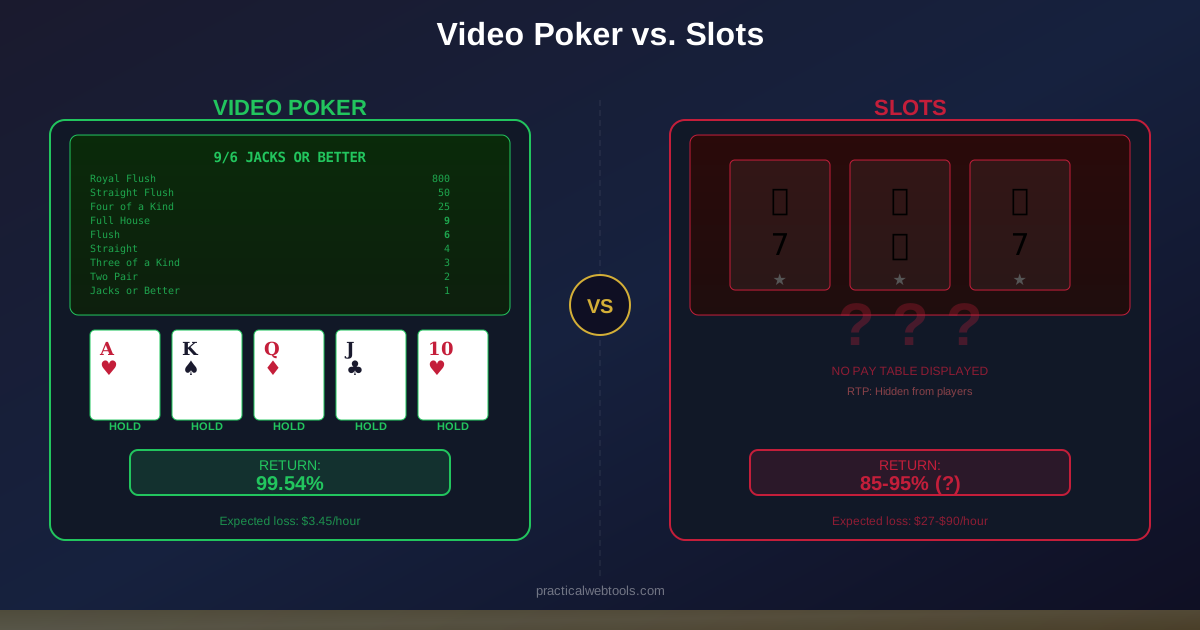
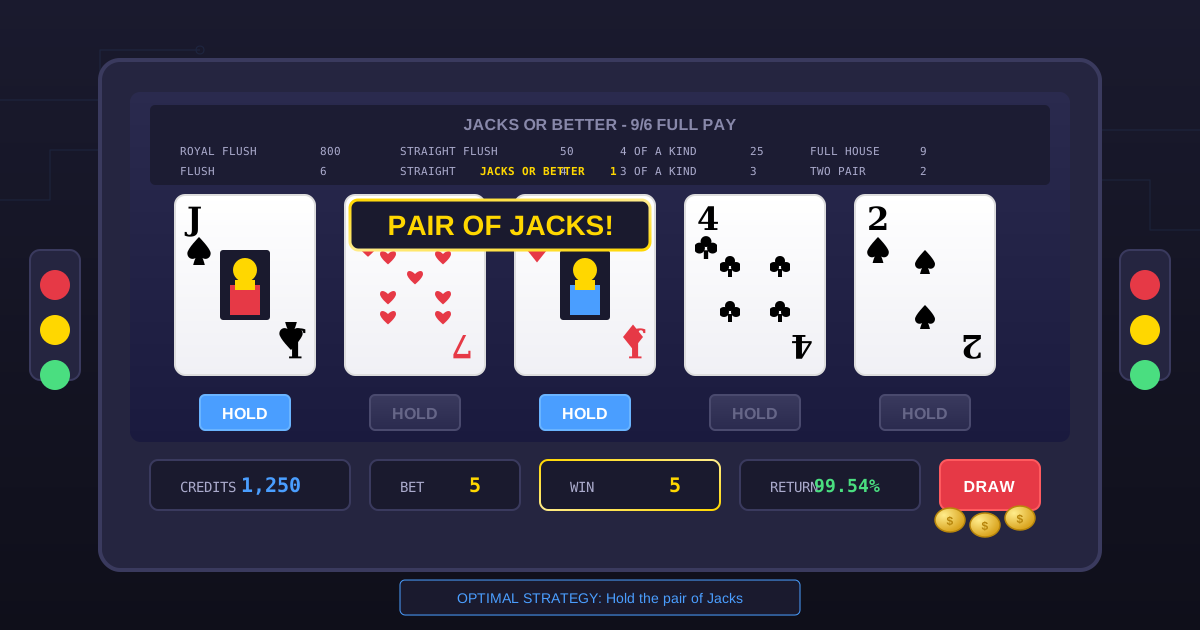
Jacks or Better (9/6):
All quads pay 25:1
Full house 9:1
Flush 6:1
Return: 99.54%

Bonus Poker (8/5):
Ace quads 80:1
Low quads 40:1
Other quads 25:1
Full house 8:1
Flush 5:1
Return: 99.17%

Lower full house/flush
Higher quad payouts
Net slightly lower return
Why Play Bonus Poker?
Appeal factors:

Higher jackpot potential
Quad aces = 80 coins exciting
More variance = more swings

Trade-offs:
Slightly lower return
Need full house/flush hits
Balance with quad excitement
Strategy Adjustments
Hold Priority Changes
vs Jacks or Better:

Higher priority for:
- Pair of aces (80:1 quad potential)
- Low pairs 2/3/4 (40:1 quad potential)

Lower priority for:
- High cards to straight/flush
- Full house draws slightly

Small adjustments only
Most plays identical to JoB
Key Strategy Differences
Specific hand changes:

A♠ A♦ vs 4-card flush:
JoB: Sometimes hold flush draw
Bonus: More often hold aces

2♣ 2♦ vs 4-card straight:
JoB: Sometimes hold straight
Bonus: More often hold 2s

Pair 3s vs 3-card royal:
Close decision in both
Bonus: Slightly favor pair
Pair Holding Priority
Pair value in Bonus Poker:

Aces: Highest value (80:1 quad)
2s/3s/4s: Enhanced (40:1 quad)
5s-10s: Standard (25:1 quad)
Jacks-Kings: Standard + pair payout

Hold order:
AA > Low pairs > High pairs
For pure quad value
Detailed Strategy
High Card Situations
No pair, no draw:

Keep order:
A > K > Q > J (as usual)

But ace priority increased:
A-high more valuable
80:1 quad potential
vs 25:1 for K/Q/J quads

Practical difference small
Most decisions unchanged
Pair vs Draw Decisions
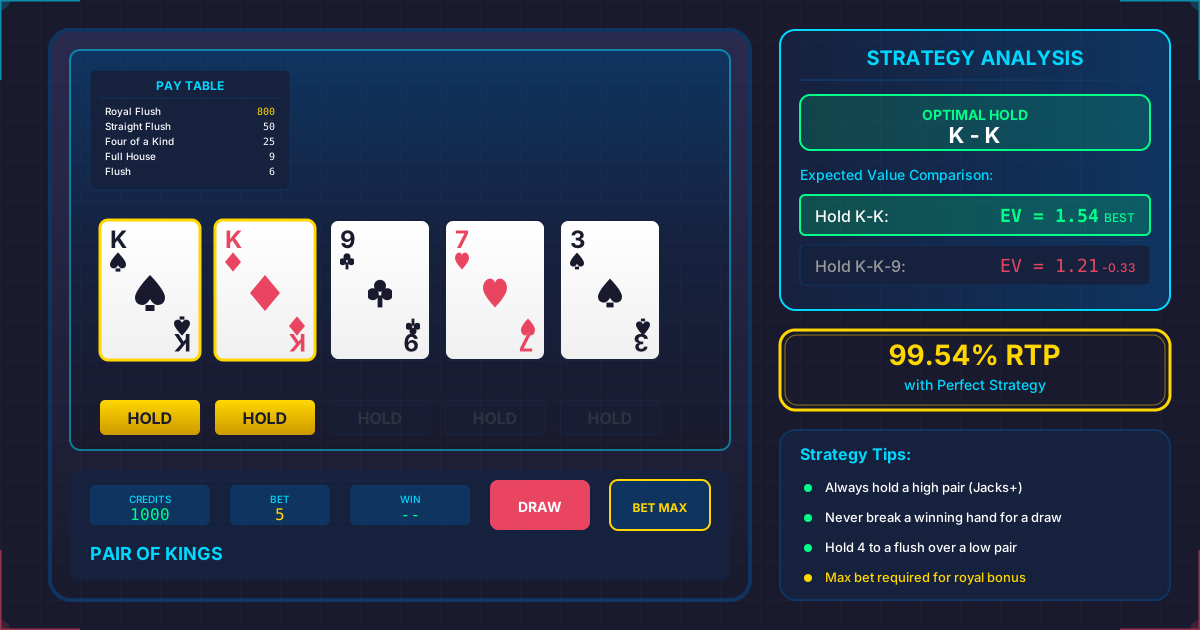
Pair of aces vs 4-flush:
A♠ A♦ 7♠ 5♠ 2♠

JoB (9/6): Close, often flush
Bonus (8/5): Hold aces

Expected values:
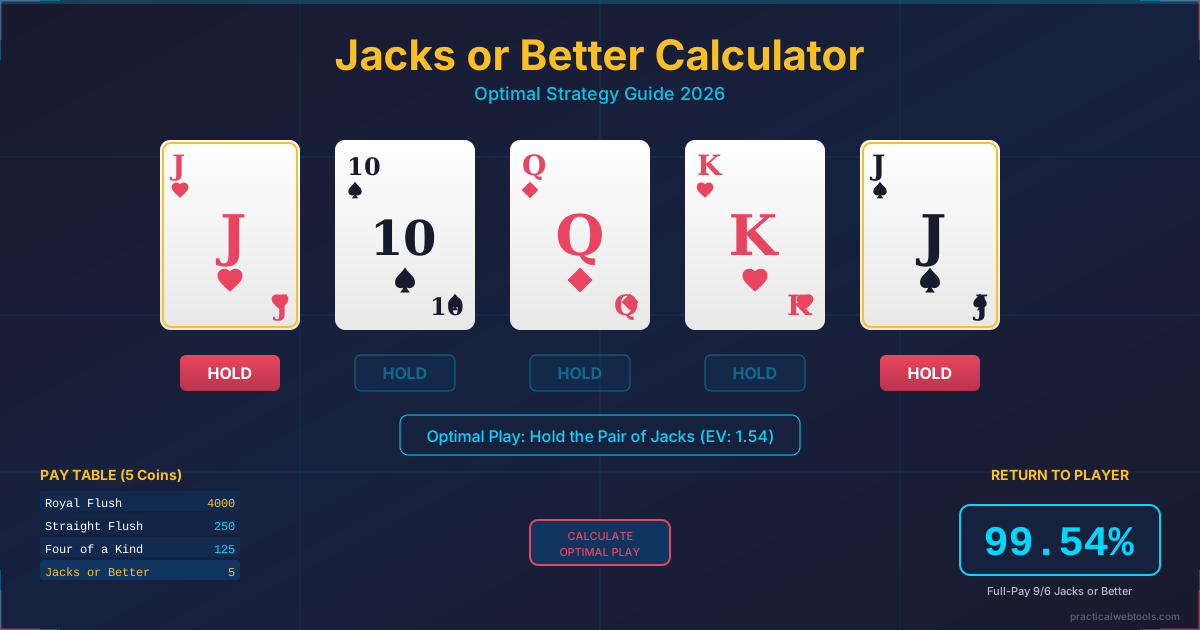
Hold aces: 1.54
Hold flush draw: 1.22

Clear aces hold in Bonus
Two Pair Situations
Two pair including aces:
AA + 33 dealt

Already made hand: 2 coins
Hold both pairs: Standard play

Quad potential on redraw:
Very low (~0.1%)
Not worth breaking two pair

Two pair always held
Real-World Examples
Example 1: Ace Pair Decision
Aces vs flush draw:
Hand: A♥ A♣ 9♥ 6♥ 3♥

Option 1: Hold AA
EV with 80:1 ace quad: 1.54
Quad aces chance: ~0.43%

Option 2: Hold 4-flush
EV: 1.22
Flush chance: ~19%

Decision: HOLD ACES
Higher EV in Bonus Poker
Example 2: Low Pair Priority
2s vs straight draw:
Hand: 2♠ 2♦ 5♣ 6♥ 7♠

Option 1: Hold 22
EV with 40:1 quad: 0.82

Option 2: Hold straight draw
EV: 0.68

Decision: HOLD 2s
Low pair value enhanced
Example 3: Standard Hold
Middle pair - no change:
Hand: 8♠ 8♦ J♣ Q♥ 3♠

Option 1: Hold 88
EV: 0.82

Option 2: Hold JQ
EV: 0.47

Decision: HOLD 8s
Standard play, same as JoB
25:1 quad still worth it
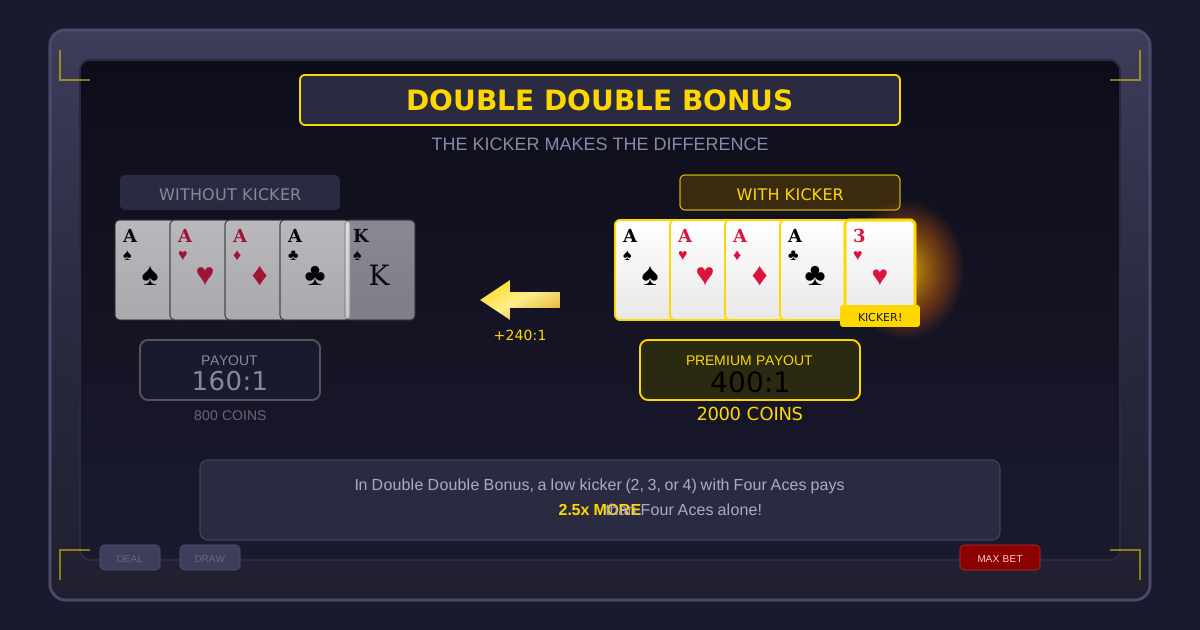
Example 4: Quad Hit
The bonus payout:
Initial: A♠ A♦ 7♣ 4♥ 2♠
Held: A♠ A♦
Drew: A♥ A♣ K♦

FOUR ACES!

5-coin bet: 400 coins win
($1.25 bet = $100 win)

vs Jacks or Better:
Would pay 125 coins
($1.25 bet = $31.25 win)

Bonus pays 3.2× more
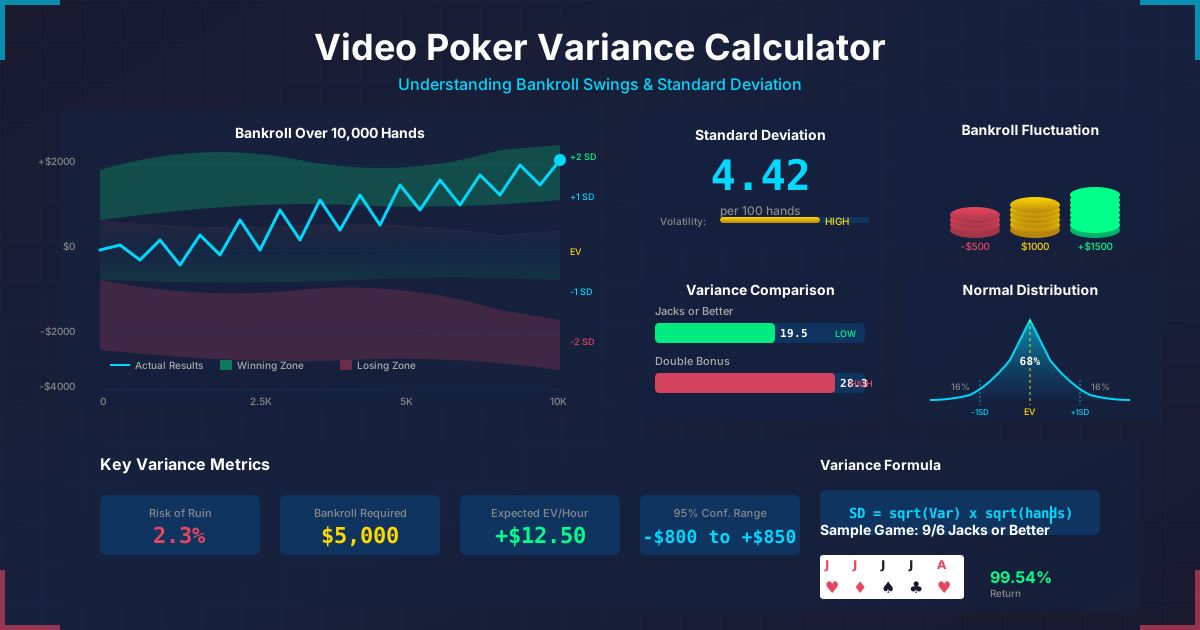
Variance Analysis
Higher Variance Than JoB
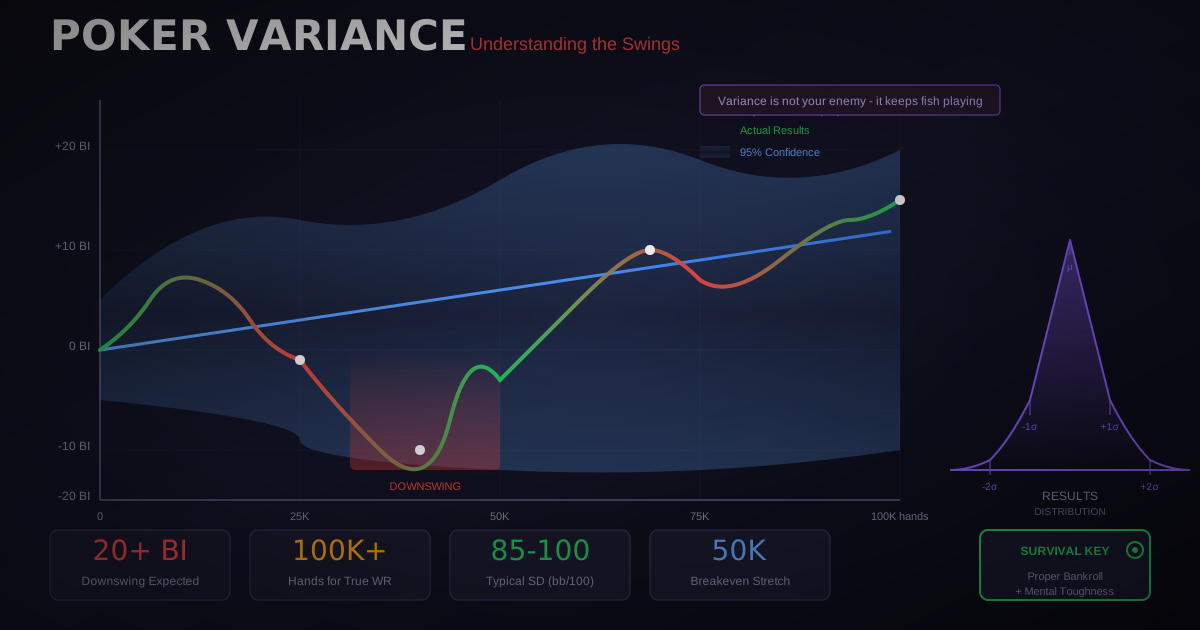
Variance comparison:

Jacks or Better:
Steady returns
Smaller swings
Lower variance

Bonus Poker:
Quad-dependent
Bigger swings
Higher variance

More losing streaks
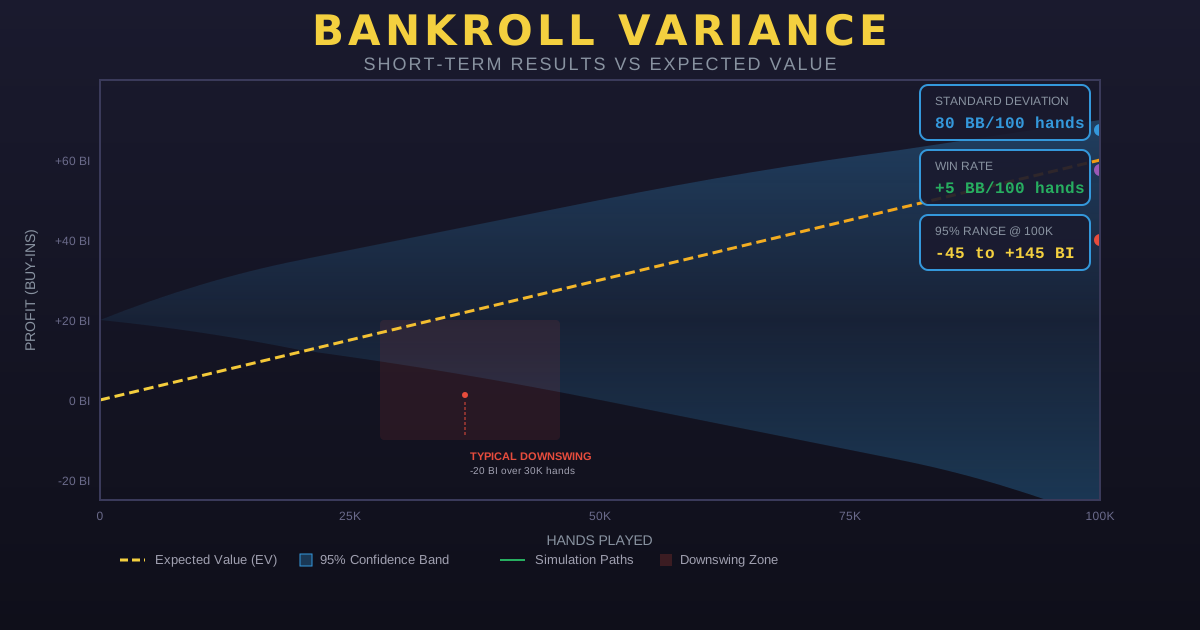
But bigger wins possible
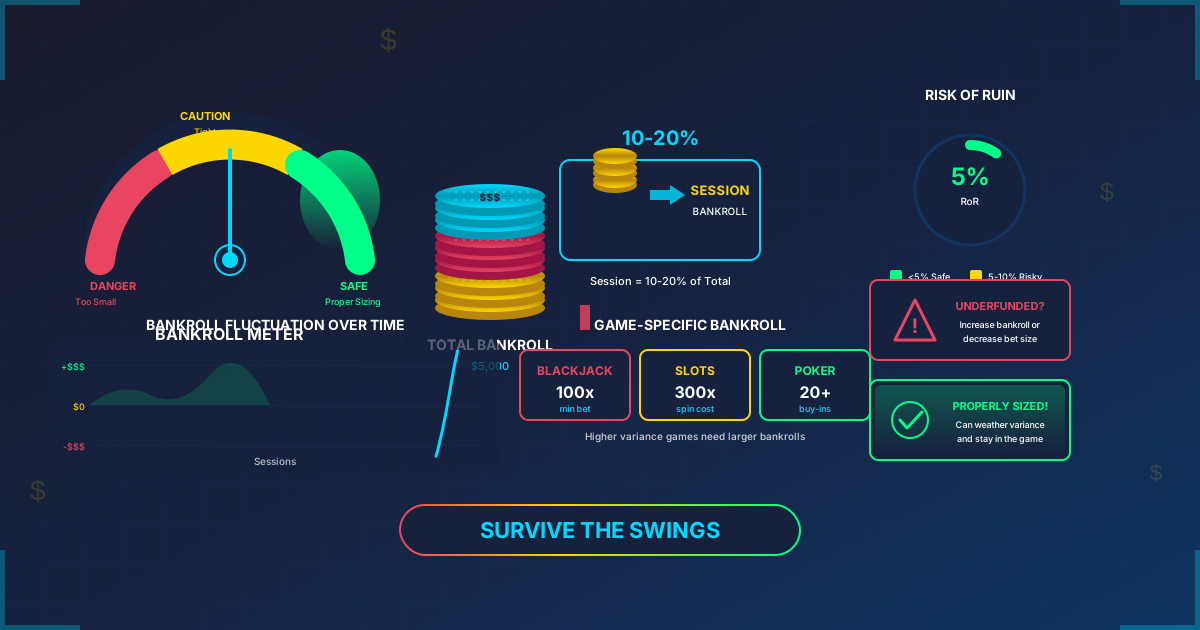
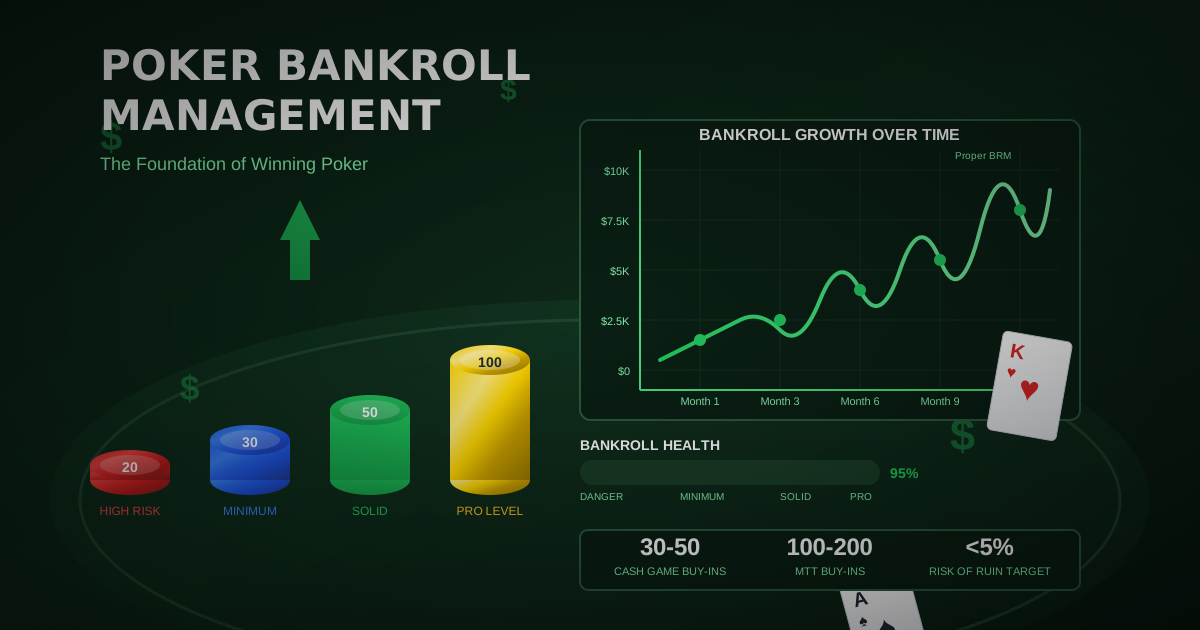
Bankroll Requirements
Session bankroll:

JoB (9/6): 20× max bet
Bonus (8/5): 30× max bet

Higher variance needs
More bankroll cushion

$1 machines:
JoB: $100 session roll
Bonus: $150 session roll
Win Frequency
How often you win:

JoB: ~45% of hands
Bonus: ~45% of hands
(Similar base game)

But distribution differs:
More losing streaks
Compensated by big quads

Need patience
Finding Good Pay Tables
What to Look For
Best Bonus Poker:

8/5 Bonus (99.17%)
Best available version

7/5 Bonus (98.01%)
Acceptable if no 8/5

6/5 Bonus (96.87%)
Avoid if possible
Where to Find 8/5
Location tips:

Higher limits often better pay
Downtown vs Strip (Vegas)
Online may have full pay
Check before sitting down

Quick check:
Look at full house payout
8:1 = good
7:1 or less = worse
Red Flags
Avoid these:

5/4 Bonus Poker
Under 95% return

6/5 with lower quads
Reduces advantage

Always verify pay table
Before committing bankroll
Common Mistakes
1. Overvaluing Quads
Mistake: Breaking hands for quad potential Problem: Quads are rare (~0.4%) Fix: Only adjust close decisions
2. Wrong Pay Tables
Mistake: Playing 6/5 or worse Problem: 2%+ extra house edge Fix: Find 8/5 or 7/5 machines
3. Ignoring Full House Value
Mistake: Undervaluing made hands Problem: Full house still important Fix: Don't chase quads over made hands
4. JoB Strategy Exactly
Mistake: Identical to Jacks or Better Problem: Missing small EV gains Fix: Adjust ace/low pair priority
Frequently Asked Questions
Is Bonus Poker better than Jacks or Better?
Lower return (99.17% vs 99.54% for full pay versions) but more exciting with enhanced quad payouts. Choose based on preference.
Should I always hold aces?
Almost always, especially vs flush/straight draws. Pair of aces has enhanced value due to 80:1 quad potential.
Why are 2-3-4 quads special?
Pay 40:1 vs 25:1 for 5-K quads. Historical reasons—these are "kicker quads" in some poker games with special significance.
How often will I hit quad aces?
About 1 in 5,761 hands for any specific quad. With proper strategy, quad aces hit roughly once every 10,000+ hands.
What's the house edge on 8/5 Bonus?
0.83% (99.17% return). Better than most casino games but slightly worse than 9/6 Jacks or Better.
Do strategy changes matter much?
Small impact—maybe 0.1% difference between JoB and Bonus strategy. Most hands play identically.
Pro Tips
-
Find 8/5 machines: 99.17% return
-
Hold aces over flush draws: Enhanced value
-
Low pairs slightly better: 40:1 quad potential
-
Don't overadjust: Most plays same as JoB
-
Higher variance: Need bigger bankroll
Related Calculators
- Jacks or Better Calculator - Standard game
- Deuces Wild Calculator - Wild cards
- Double Bonus Poker Calculator - More bonus
- Video Poker Odds Calculator - General
- Expected Value Calculator - Bet analysis
Conclusion
Bonus Poker enhances four-of-a-kind payouts—80:1 for aces, 40:1 for 2s/3s/4s—creating more exciting quad potential. Our calculator shows the subtle strategy shifts: favor ace pairs and low pairs slightly more than in Jacks or Better. Find 8/5 pay tables for 99.17% return.
Calculate Bonus Poker Odds Now →
Your pair of aces just became more valuable with 80:1 quad potential instead of 25:1. Our calculator reveals why holding aces over that four-card flush is even more correct in Bonus Poker.