Closing Line Value Calculator: Measure Your Betting Edge (2026)
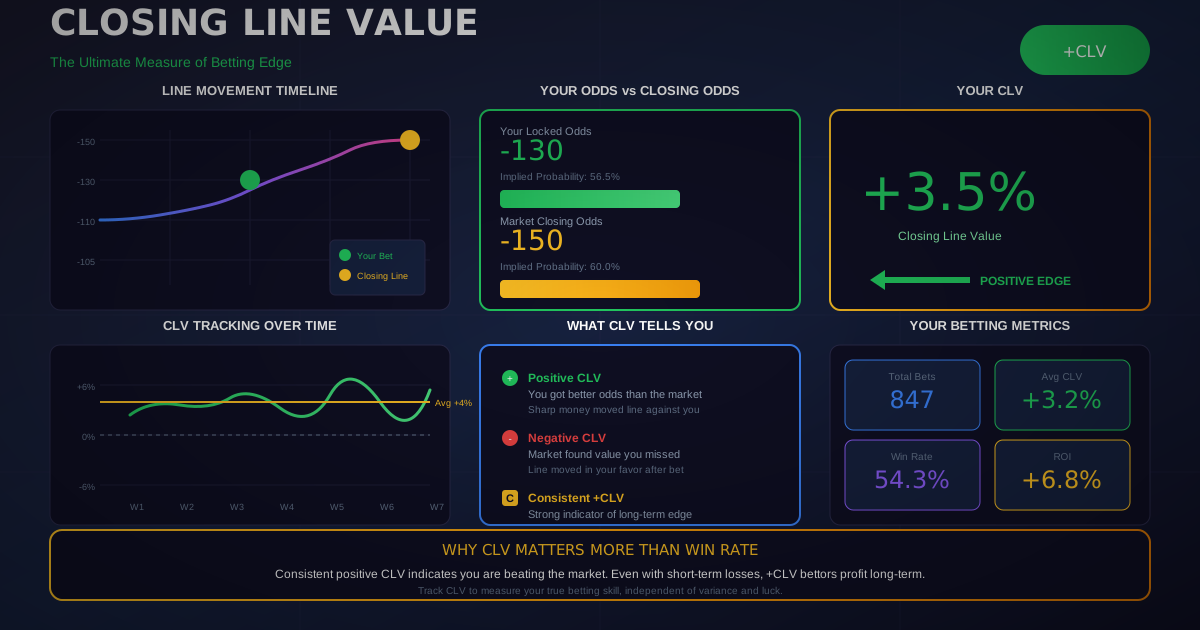
Closing Line Value Calculator: The Ultimate Measure of Betting Skill
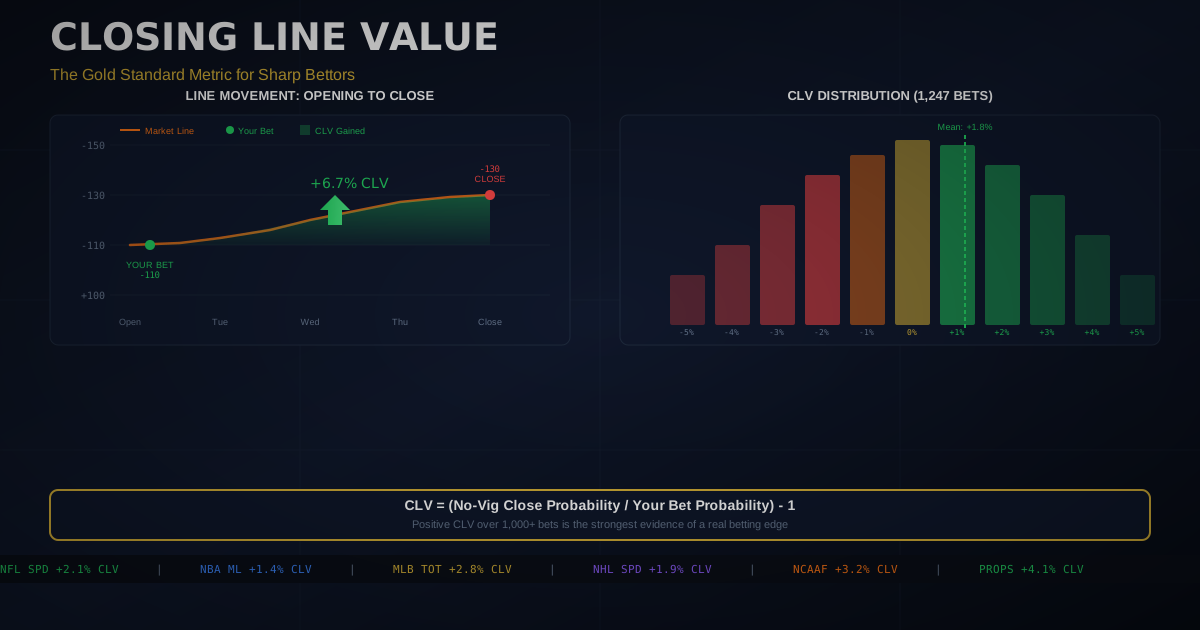
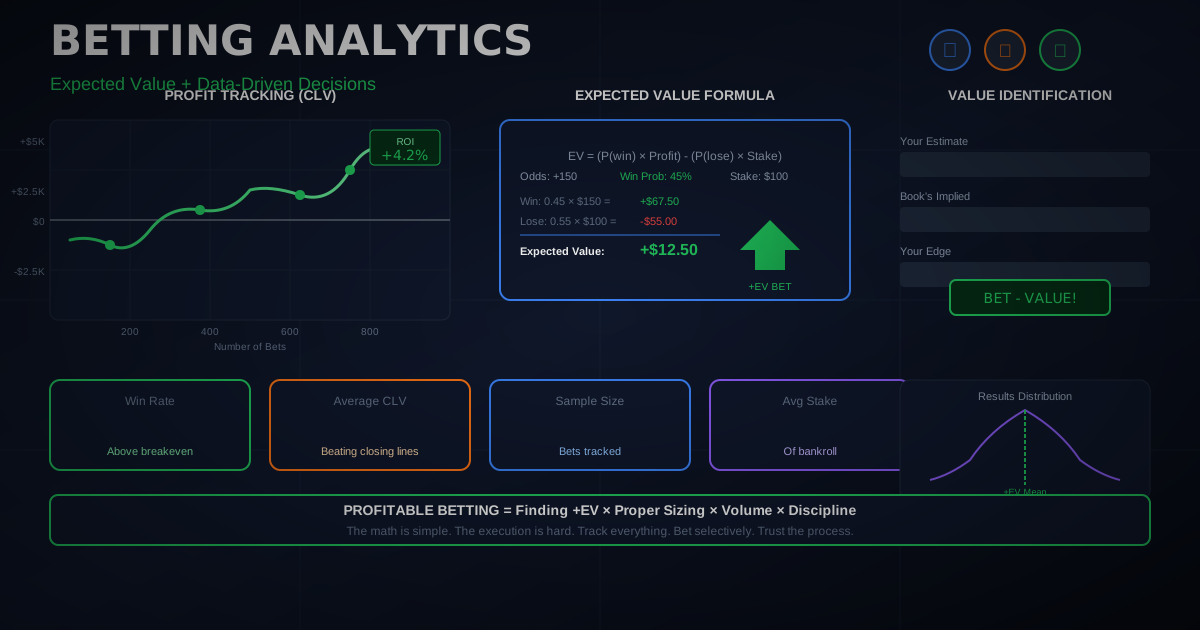
Closing Line Value (CLV) is considered the gold standard for measuring betting skill. Our free calculator tracks whether you're consistently betting at better odds than the market's final price—the strongest indicator of long-term profitability.
What Is Closing Line Value?
CLV measures the difference between the odds you bet and the final odds before game time. Consistently getting better odds than the closing line proves you have an edge.
Quick Answer: If you bet Chiefs -3 (-110) and the line closes at Chiefs -3.5 (-110), you have positive CLV because you got a better number. Over time, bettors with consistent positive CLV profit, while those with negative CLV lose—regardless of short-term results.
How to Use Our Free CLV Calculator
Use the Closing Line Value Calculator →
Enter your bet odds and the closing line to measure your edge.
Step-by-Step Instructions
-
Enter Your Bet Odds: The line when you placed your wager
-
Enter Closing Line: The final odds before game start
-
Input Stake (Optional): See dollar value of your CLV
-
View Results: See CLV percentage and expected value
Input Fields Explained
| Field | Description | Example |
|---|---|---|
| Your Odds | Line when you bet | -110 |
| Closing Odds | Final line at kickoff | -115 |
| Bet Type | Spread, moneyline, total | Spread |
| Stake | Amount wagered | $100 |
Why CLV Matters More Than Win Rate
The Predictive Power of CLV
Studies of professional betting syndicates show:
| CLV Average | Long-Term Expectation |
|---|---|
| +3% or more | Highly profitable |
| +1% to +3% | Profitable |
| 0% to +1% | Breakeven to slight profit |
| -1% to 0% | Slight loss |
| Below -1% | Losing bettor |
Key insight: Short-term win rates are noisy. CLV is a stable measure of skill.
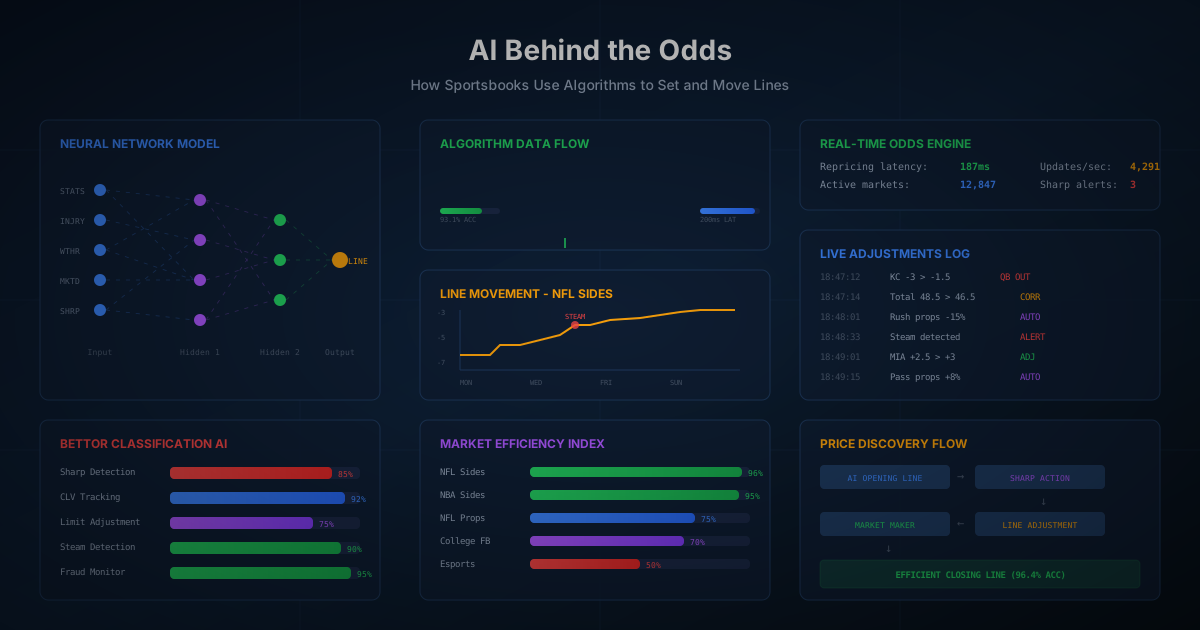
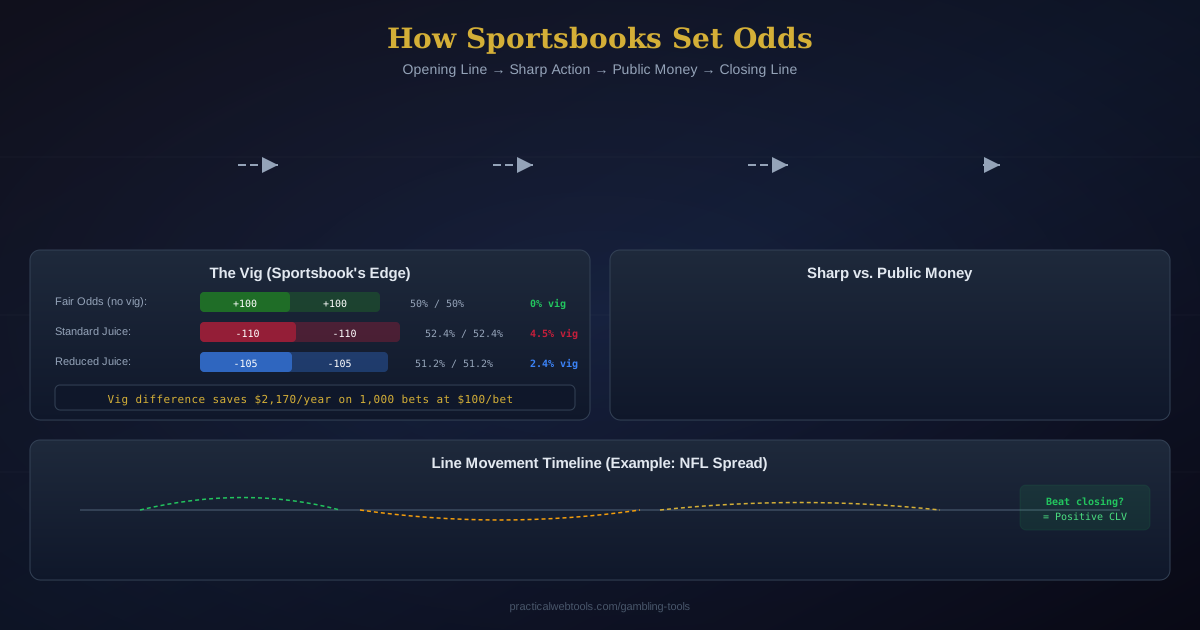
Why Closing Lines Are "Sharp"
Closing lines are efficient because:
- All available information is priced in
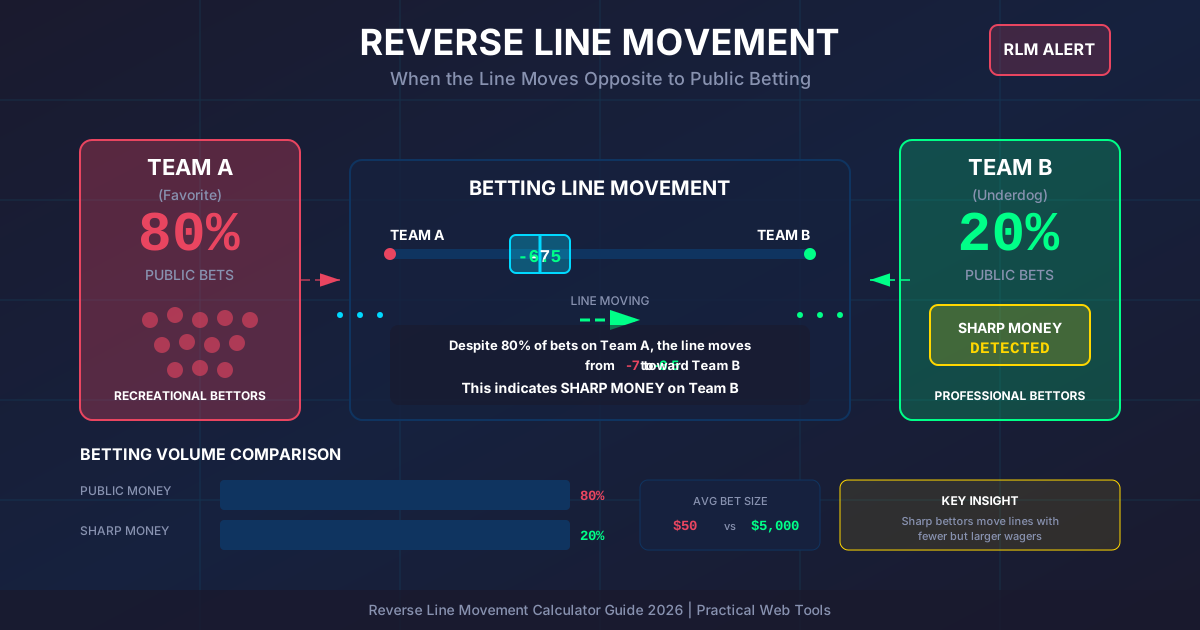
- Sharp money has moved the line to its "true" value
- The market has had maximum time to correct
- Sportsbooks adjust based on sophisticated action
Beating this final price means you identified value the market missed.
CLV Calculation Methods
Percentage CLV (Most Common)
For Point Spreads:
CLV% = (Your Implied Prob - Closing Implied Prob) / Closing Implied Prob × 100
For Moneylines:
CLV% = (Your No-Vig Odds - Closing No-Vig Odds) / Closing No-Vig Odds × 100
Example Calculations
Spread Example:
- Your bet: Chiefs -3 (-110) → 52.38% implied
- Closing line: Chiefs -3.5 (-110) → 52.38% implied
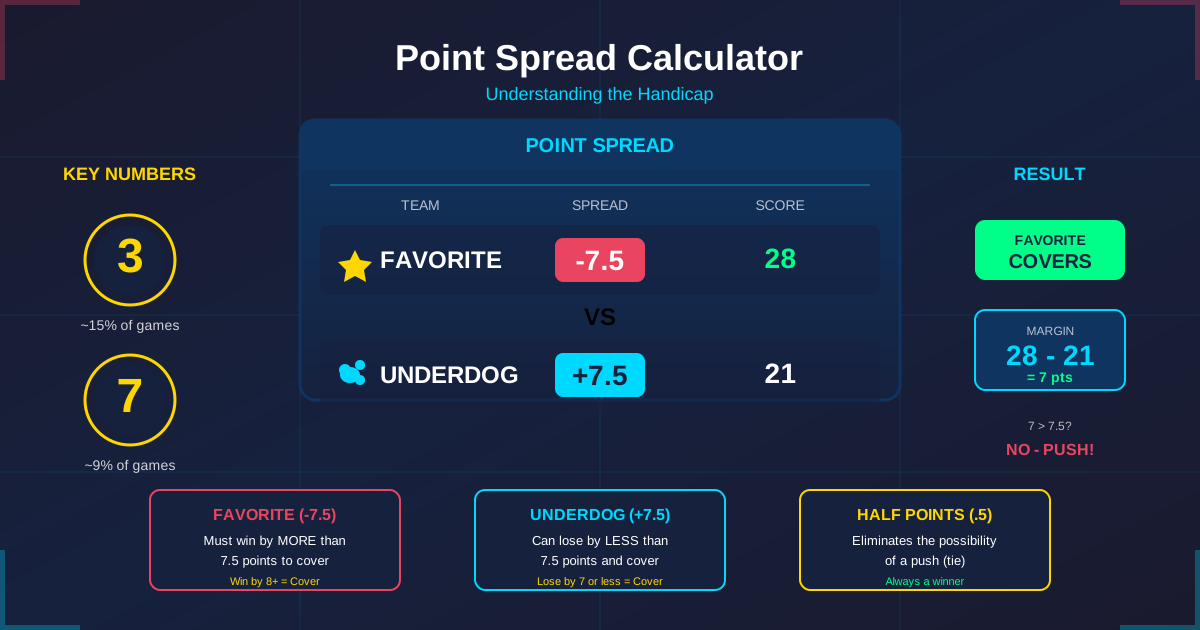
The half-point improvement has value even at same juice. At -3, you win pushes that would lose at -3.5.
Moneyline Example:
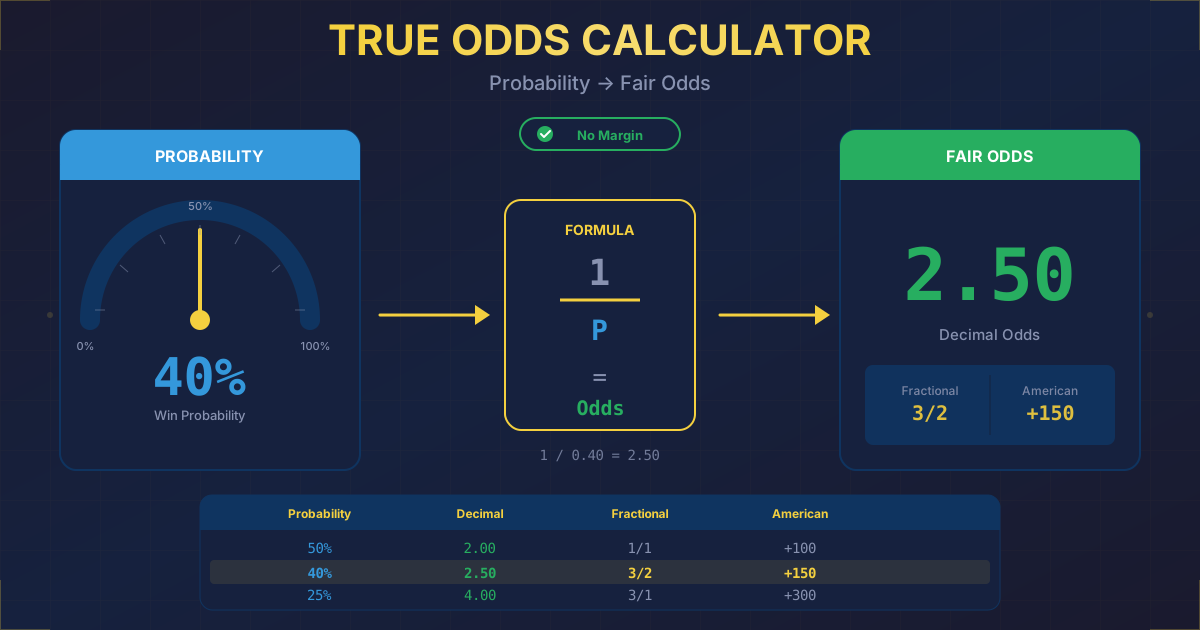
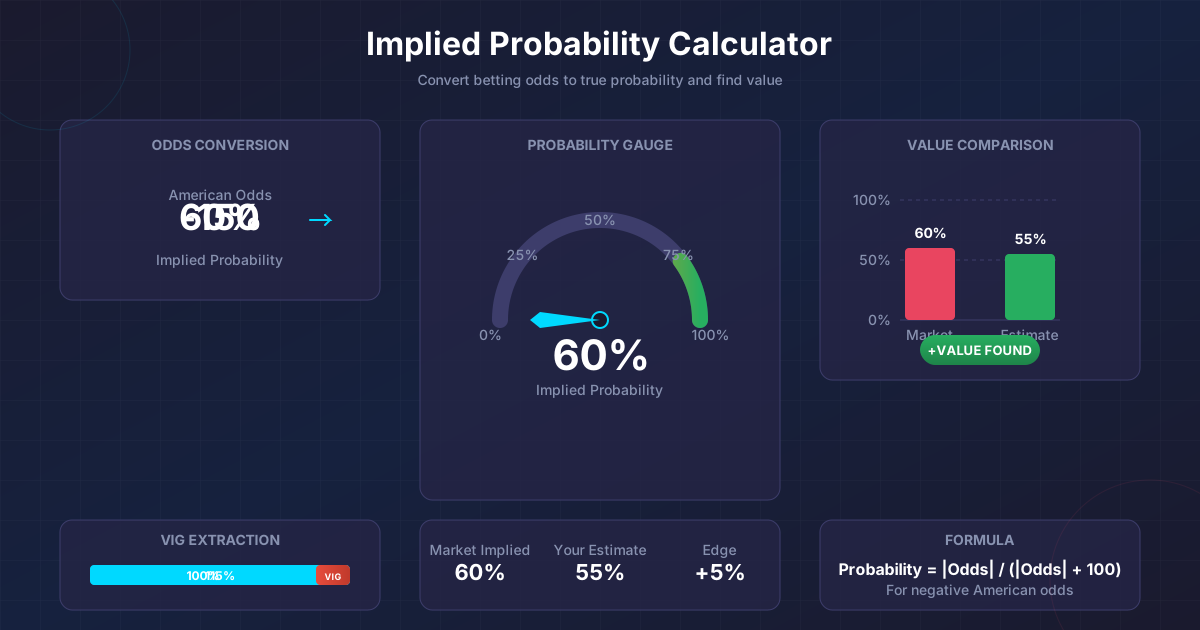
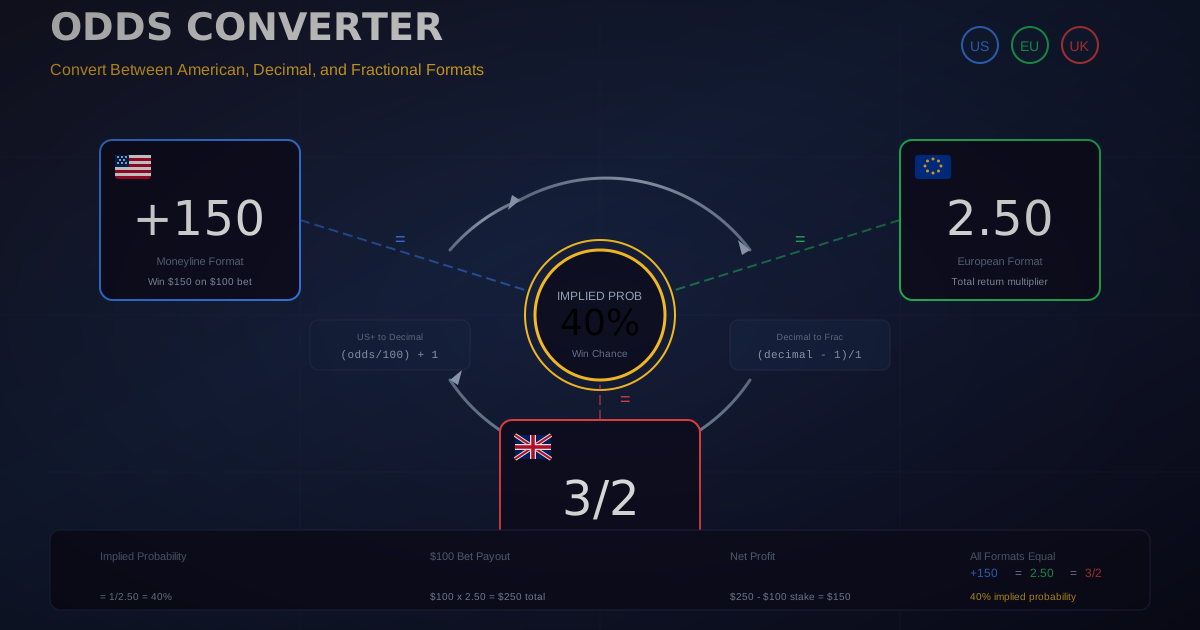
- Your bet: Underdog +150 → 40% implied
- Closing line: Underdog +130 → 43.48% implied
- CLV: (43.48% - 40%) / 40% = +8.7% CLV
You got 8.7% better odds than the closing market price.
Real-World CLV Examples
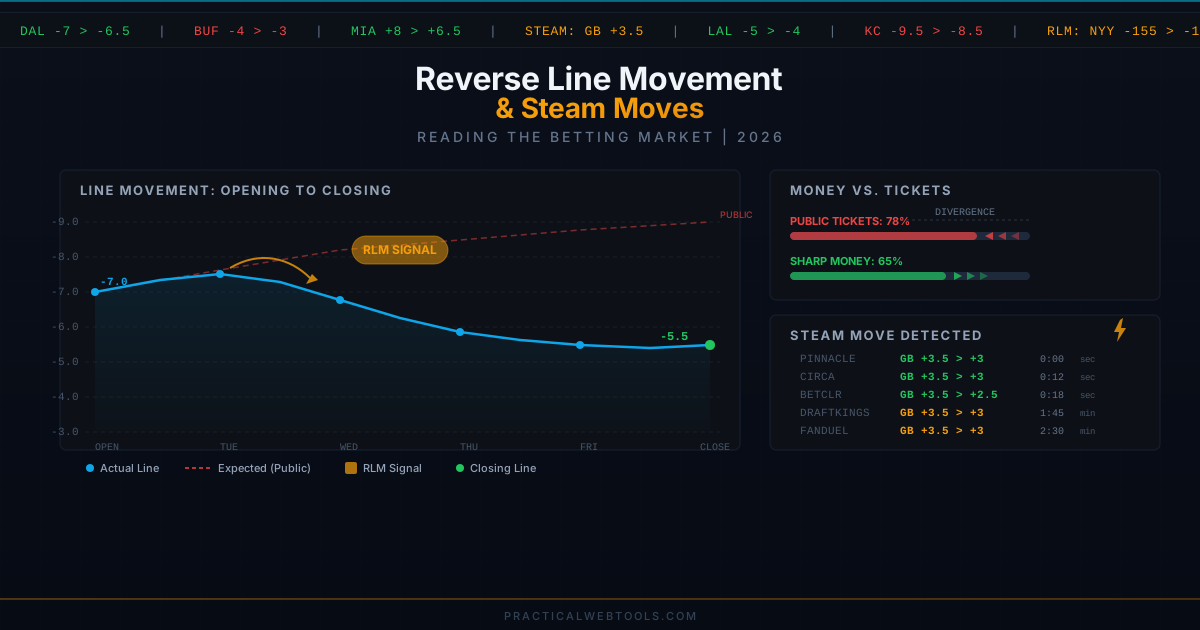
Example 1: Catching Line Movement
Monday:
- You bet: Bills -2.5 (-110)
- Reason: Early value before public money
Sunday (Close):
- Closing line: Bills -4 (-110)
CLV Calculation:
- You got 1.5 points better than close
- Approximately +3-4% CLV on this bet
Outcome: Even if the Bills win by 3 (you win, closing bettors push), your bet was +EV.
Example 2: Fading Public Action
Situation: Heavy public favorite expected to move
Your bet: Underdog +6.5 (-110) at open
Closing line: Underdog +5 (-110)
Result: +1.5 points of positive CLV. You beat the market.
Example 3: Steam Move
You notice: Sharp action on a totals market
Your bet: Over 47.5 (-110)
Closing line: Over 49 (-110)
CLV: Approximately +3% from beating the sharp-driven move
Building a CLV Tracking System
What to Track
For each bet, record:
- Bet details (team, spread/ML/total, odds)
- Time of bet
- Closing line
- Outcome (win/loss/push)
- CLV percentage
Sample Tracking Spreadsheet
| Date | Bet | Your Odds | Close Odds | CLV% | Stake | Result |
|---|---|---|---|---|---|---|
| 1/15 | KC -3 | -110 | -120 | +2.1% | $100 | Win |
| 1/16 | NYG +7 | -110 | -105 | -1.2% | $100 | Loss |
| 1/17 | Over 48 | -108 | -115 | +1.8% | $100 | Win |
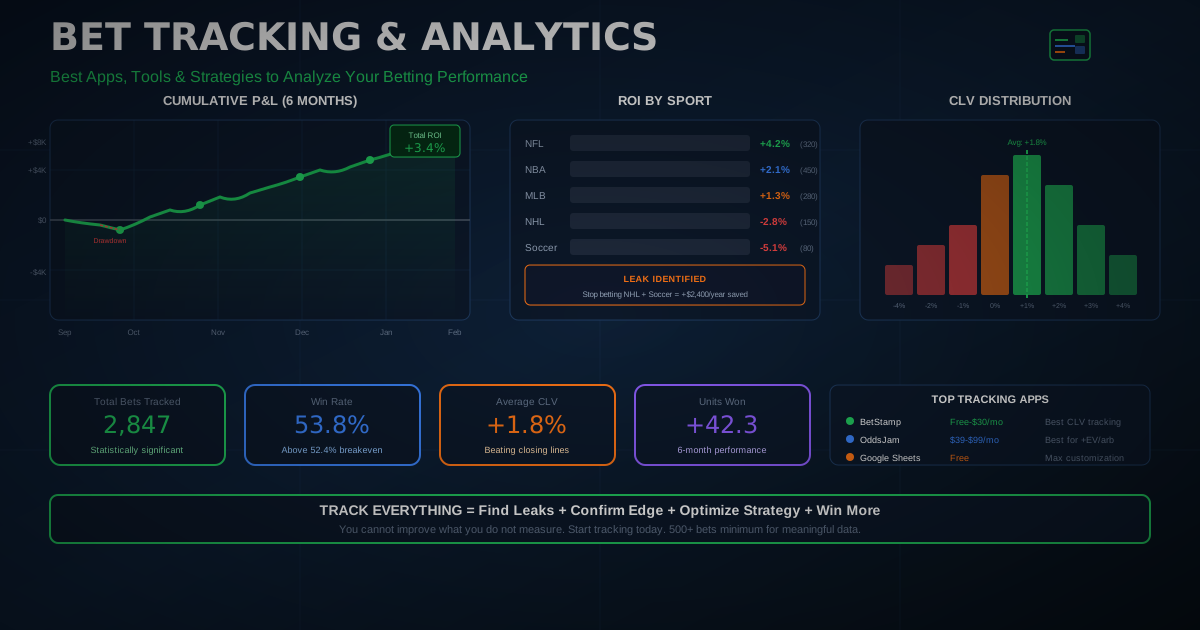
Running CLV Average: +0.9%
Interpreting Your CLV
| Your Average CLV | Interpretation |
|---|---|
| +2% or higher | Excellent—you're finding real value |
| +1% to +2% | Good—you have an edge |
| 0% to +1% | Marginal—edge may exist but small |
| -1% to 0% | Concerning—you may be betting bad lines |
| Below -1% | Problem—consistently taking bad odds |
CLV vs. Win Rate
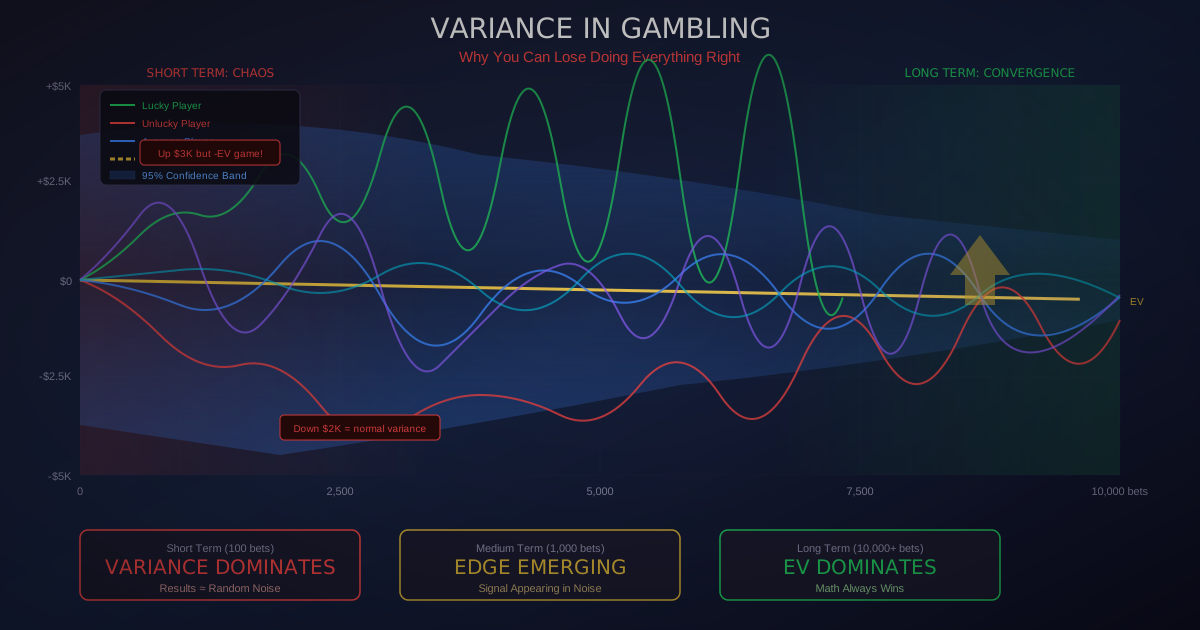
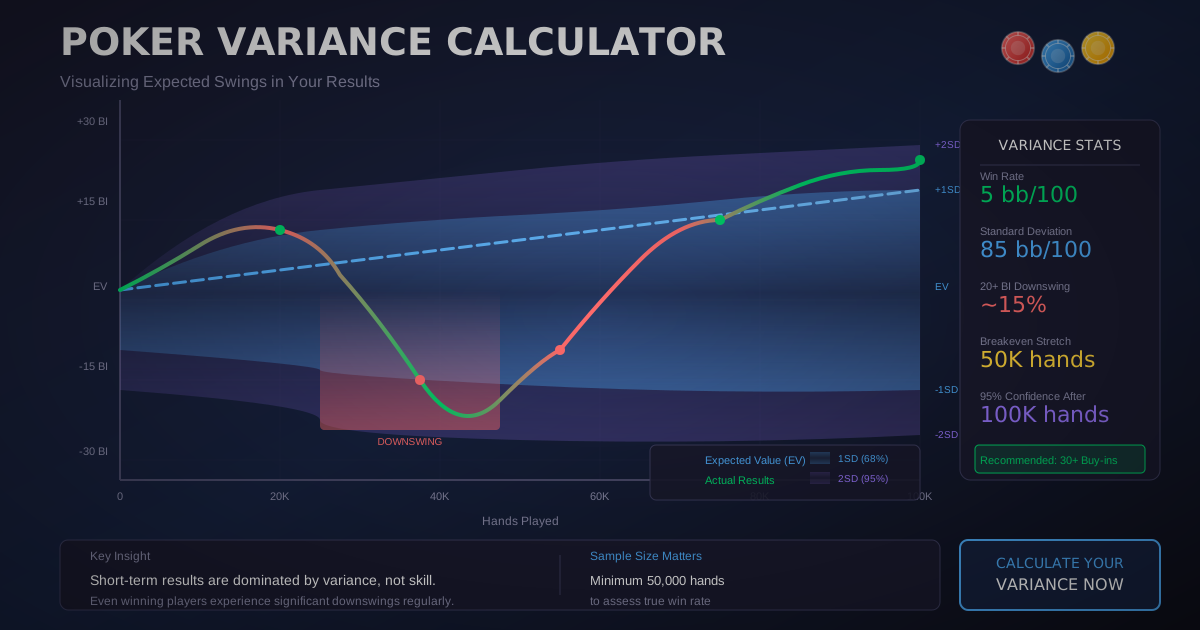
Short-Term Noise
| Scenario | Win Rate | CLV | Reality |
|---|---|---|---|
| Lucky bad bettor | 55% | -2% | Will regress, eventually lose |
| Unlucky sharp | 48% | +2% | Will regress, eventually profit |
| Consistent winner | 53% | +1.5% | Sustainable edge |
CLV filters out luck. A 100-bet sample with positive CLV is more meaningful than a 100-bet sample with high win rate but negative CLV.
Why This Matters
Professional bettors focus on CLV because:
- Win rate varies wildly short-term
- CLV stabilizes quickly (50-100 bets)
- CLV directly measures edge
- You can't control outcomes, only process
Strategies for Positive CLV
1. Bet Early
Lines at release have the most inefficiency:
- Books have less information
- Sharp money hasn't corrected errors
- More edge available to capture
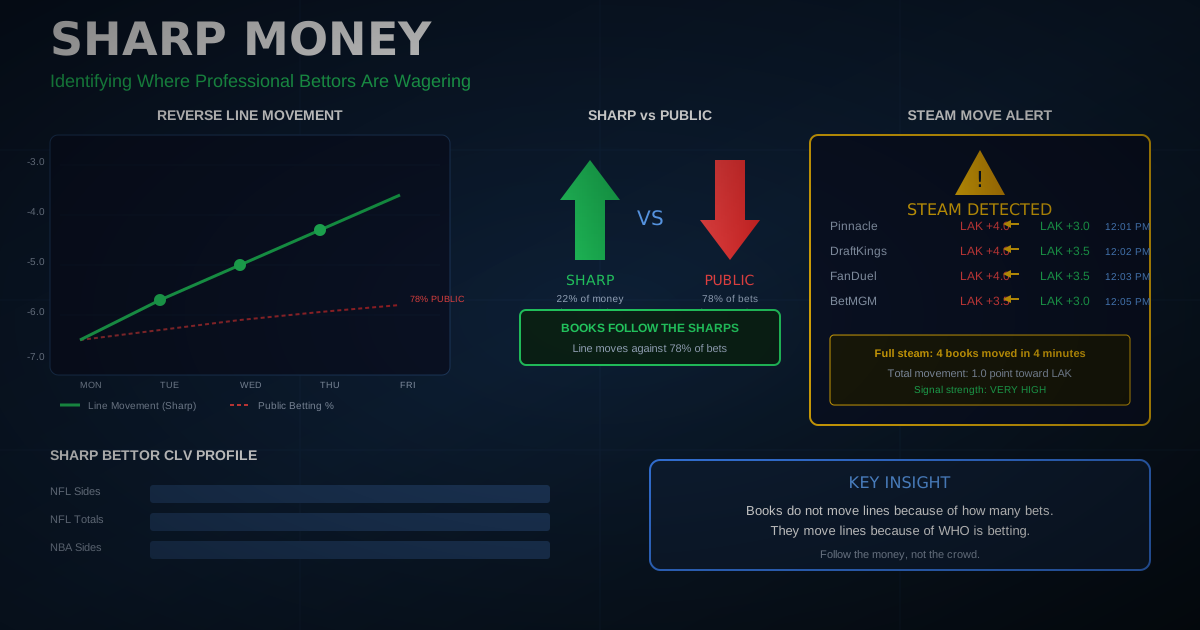
2. Identify Sharp vs. Public Movement
Sharp movement (follow):
- Large line move on small handle
- Occurs at market-leading books
- Often early in the week
Public movement (fade):
- Gradual shift toward popular teams
- Larger on prime-time games
- Creates value on the other side
3. Act on News Quickly
Before lines adjust:
- Injury reports
- Weather changes
- Lineup announcements
The faster you act, the more CLV you capture.
4. Use Multiple Sportsbooks
Different books close at different lines:
- Bet the best number available
- Some books are slower to adjust
- More options = more CLV opportunities
Common CLV Mistakes
-
Ignoring CLV Entirely: Many bettors only track wins and losses, missing the bigger picture of their actual edge.
-
Cherry-Picking CLV Data: Only counting CLV when it's positive distorts your true performance.
-
Betting Right Before Close: Late bettors rarely get positive CLV because lines are most efficient at close.
-
Chasing Steam After It's Done: By the time you see a line move, the CLV opportunity is gone.
-
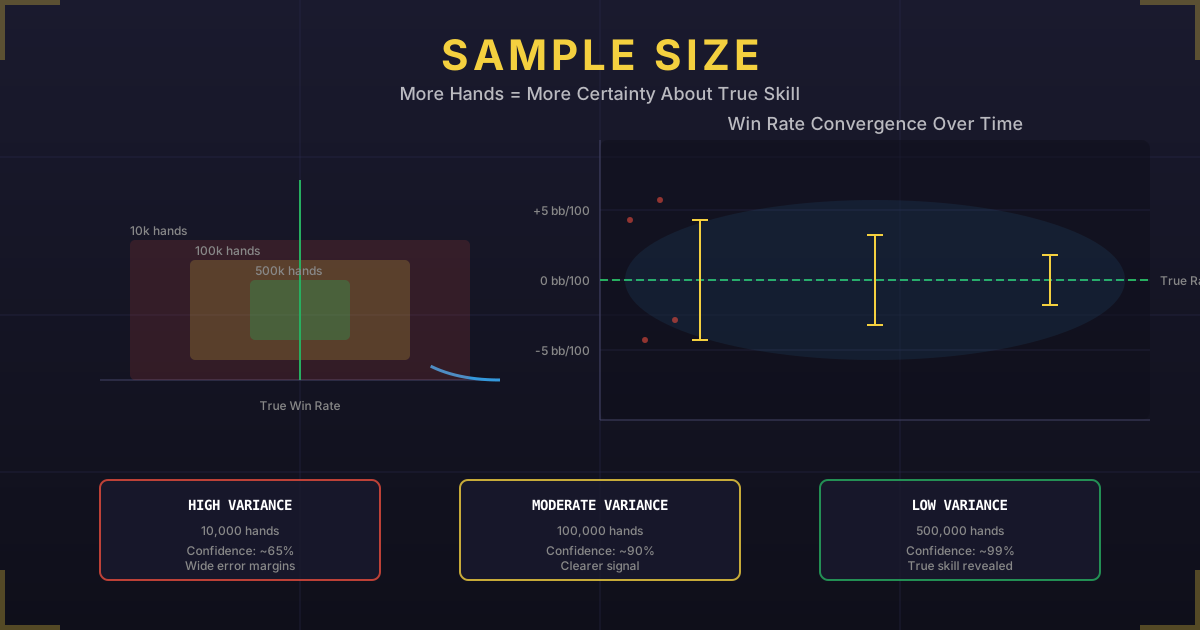
Small Sample Conclusions: 20 bets isn't enough to determine CLV edge. Need 100+ for meaningful data.
Frequently Asked Questions
Can I profit with negative CLV?
Short-term, yes (luck). Long-term, no. Negative CLV means you're consistently paying more for bets than their true value—a losing proposition mathematically.
How many bets until CLV is meaningful?
Generally 100+ bets for a reliable CLV average. Below that, variance in outcomes and line movements creates noise.
Does CLV guarantee profits?
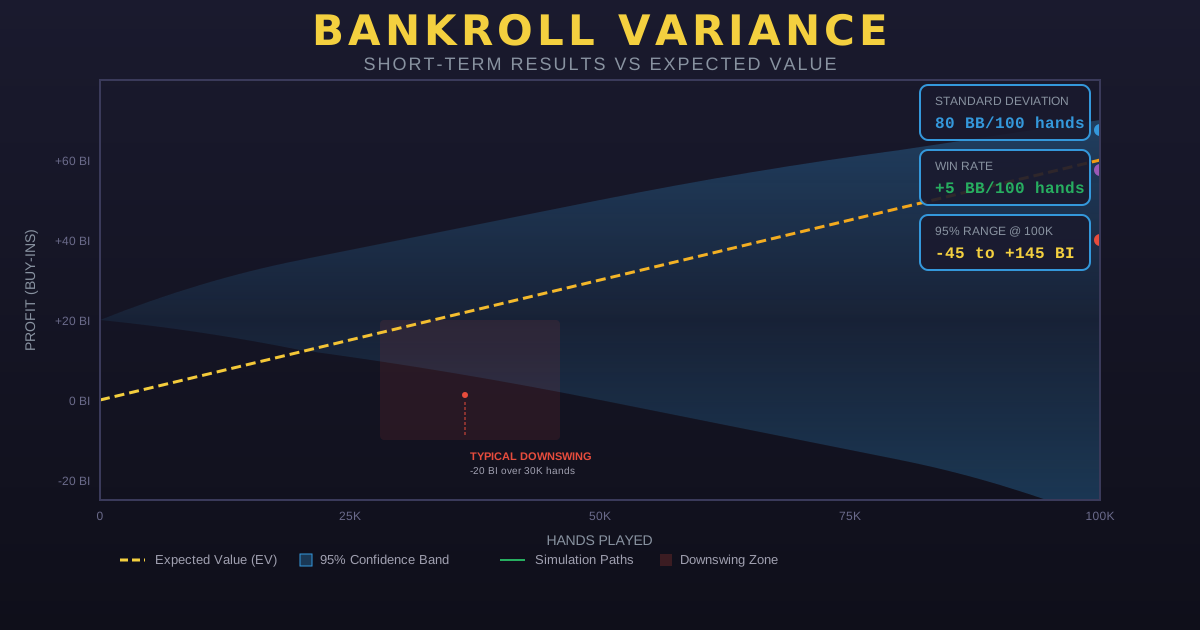
CLV strongly predicts profits but doesn't guarantee them. Extreme variance can cause short-term losses even with positive CLV. Over large samples, positive CLV almost always means profit.
What's a realistic CLV target?
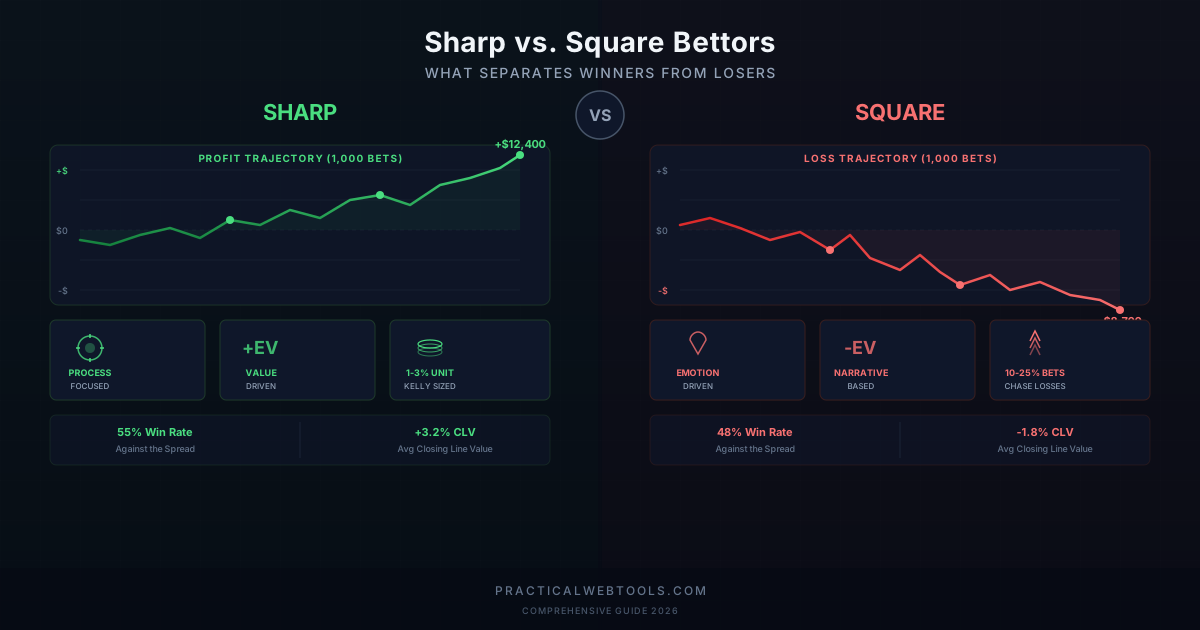
Professional bettors average +1-3% CLV. Anything consistently above +2% is excellent. Recreational bettors should aim for at least breakeven CLV.
Should I track CLV on all bet types?
Yes, but CLV is most meaningful on point spreads and totals. Moneyline CLV requires converting to no-vig odds for accurate comparison.
Does the closing line account for late scratches?
Major changes may adjust the closing line. For CLV purposes, use the final line available before kickoff barring extraordinary circumstances.
Pro Tips for CLV Tracking
-
Automate When Possible: Use spreadsheets with formulas to calculate CLV instantly
-
Compare Across Markets: Track CLV separately for spreads, totals, and moneylines
-
Note Time of Bet: Early bets typically have more CLV potential
-
Review Monthly: Analyze patterns—are certain bet types or sports giving you better CLV?
-
Don't Overreact: A bad CLV week doesn't mean your process is wrong. Look at 50+ bet samples.
CLV and Bankroll Growth
Expected Return from CLV
If you average +2% CLV on every bet:
| Annual Volume | Expected Profit |
|---|---|
| $10,000 | $200 |
| $50,000 | $1,000 |
| $100,000 | $2,000 |
This assumes the market is perfectly efficient at close. In reality, your actual returns may vary based on outcomes.
Compounding CLV Edge
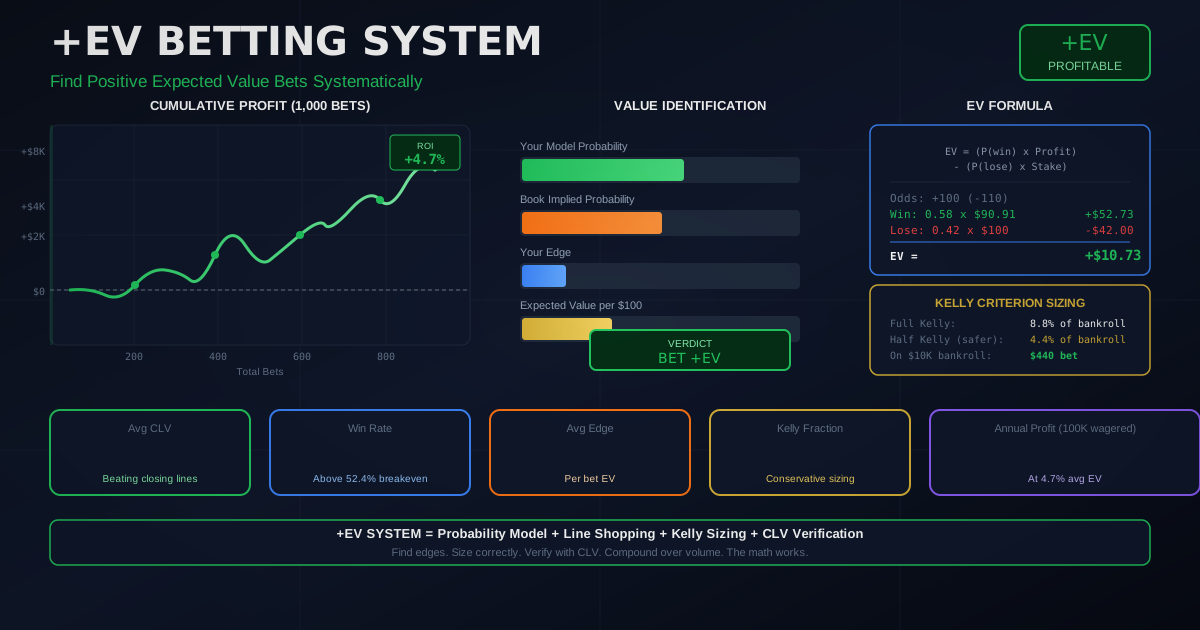
Consistent +CLV bets compound like interest:
- Each bet has positive expected value
- Reinvesting profits accelerates growth
- Small edges become significant over volume
Related Sports Betting Calculators
- Vig Calculator - Measure the juice
- Expected Value Calculator - Is this bet profitable?
- Implied Probability Calculator - Convert odds
- Kelly Criterion Calculator - Optimal bet sizing
- Odds Converter - Compare formats
Conclusion
Closing Line Value is the most reliable indicator of sports betting skill. While anyone can get lucky in the short term, only bettors with genuine edge consistently beat the closing line. Our free calculator helps you track CLV over time, revealing whether you're truly finding value or just getting lucky.
Calculate Your Closing Line Value Now →
Start tracking CLV today. Over your next 100 bets, you'll learn more about your true edge than years of just counting wins and losses. The closing line doesn't lie—it tells you exactly where you stand as a bettor.