Coast FIRE is the amount you need invested today so compound growth alone funds your retirement—typically $150,000-$350,000 for most workers under 40. Once you hit this number, you can stop aggressive retirement saving and let compound interest do the rest over 25-35 years.
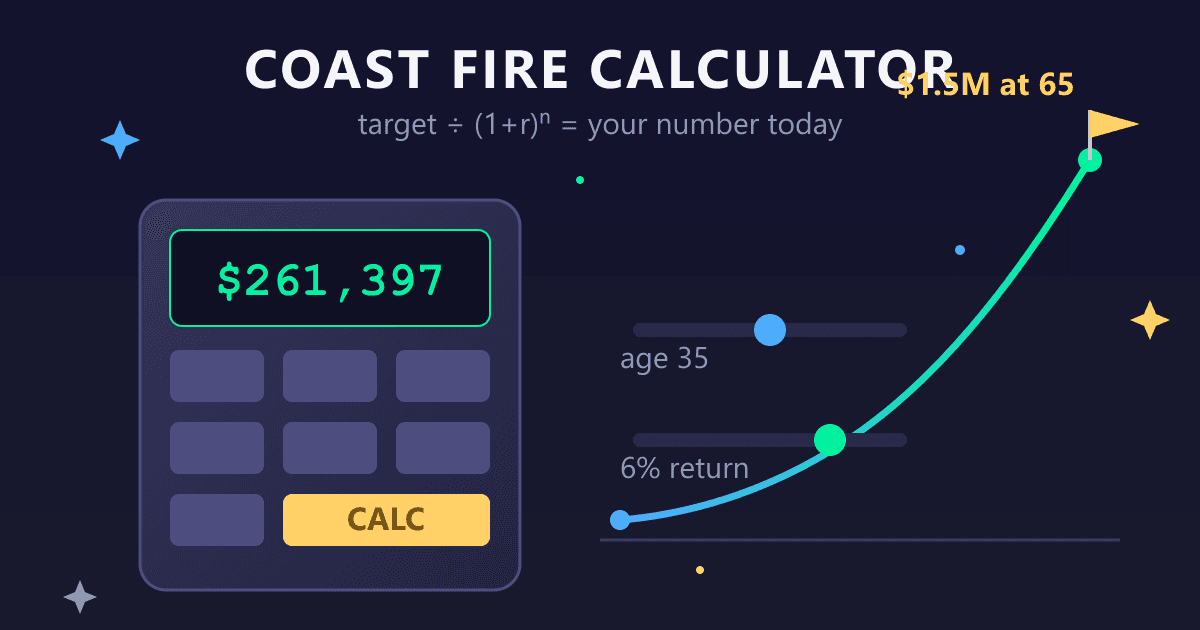
For example, a 35-year-old with $261,397 invested at a 6% real return will reach $1.5 million by age 65 without contributing another dollar. That is the power of Coast FIRE: cross a specific threshold once, and retirement funding becomes automatic.
Try Barista FIRE Calculator — free, no sign-up, and it runs entirely in your browser.
With 68% of Americans unable to contribute to savings as expected due to inflation and over half having paused retirement contributions entirely, Coast FIRE offers a realistic alternative to decades of aggressive saving. You work to cover today's bills, not tomorrow's nest egg.
Use this guide to understand the math, avoid common pitfalls, and calculate your personal Coast FIRE number.
→ Calculate your Coast FIRE number now with our free Coast FIRE Calculator.
What Is Coast FIRE?
Coast FIRE is a milestone within the broader Financial Independence, Retire Early (FIRE) movement. It represents the point at which you have saved enough that compound growth will carry your portfolio to your target retirement number—without any additional contributions.
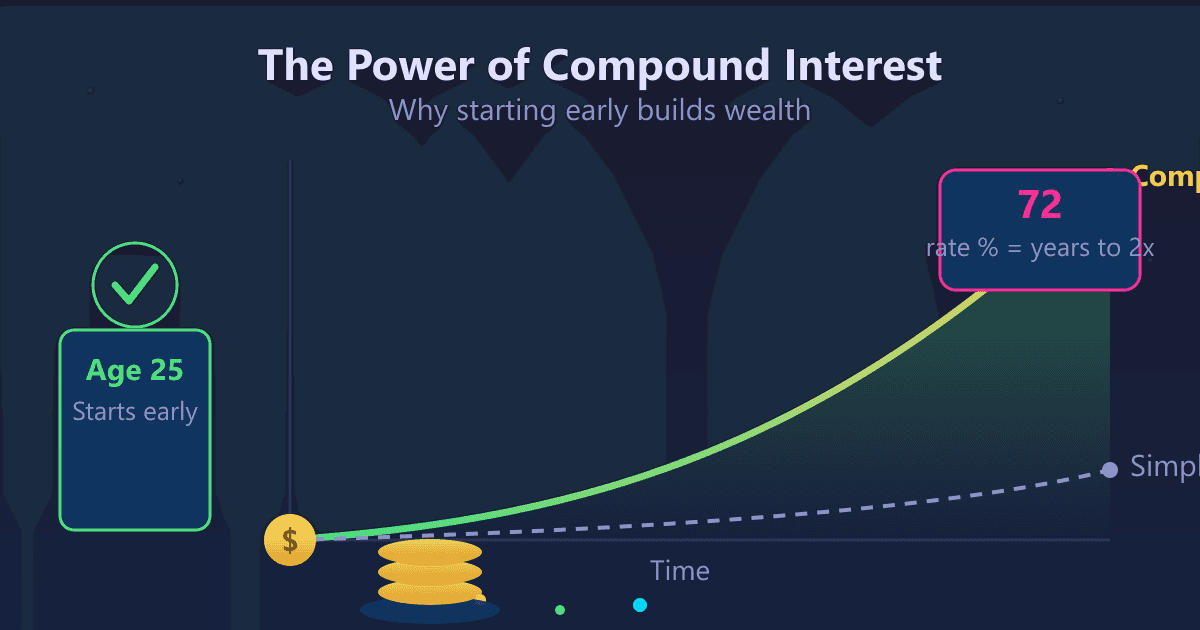
The concept works because money invested early has decades to grow. A 30-year-old with $200,000 invested, assuming a 7% real return, would see that sum grow to over $1 million by age 65 without adding another dollar.
This differs from traditional FIRE, which focuses on accumulating 25-30 times your annual expenses so you can stop working entirely. Coast FIRE acknowledges that most people still need income for current expenses—they just do not need to save aggressively for retirement anymore. You work to cover today’s bills, not tomorrow’s nest egg.
Once you reach your Coast FIRE number, you might switch to part-time work, pursue a passion project that pays less, take extended time off between jobs, or simply enjoy the relief of knowing retirement is handled.
How Do You Calculate Your Coast FIRE Number?
Calculating your Coast FIRE number requires four inputs: your target retirement portfolio value, your expected real rate of return, your current age, and your planned retirement age.
The formula works backward from your retirement goal:
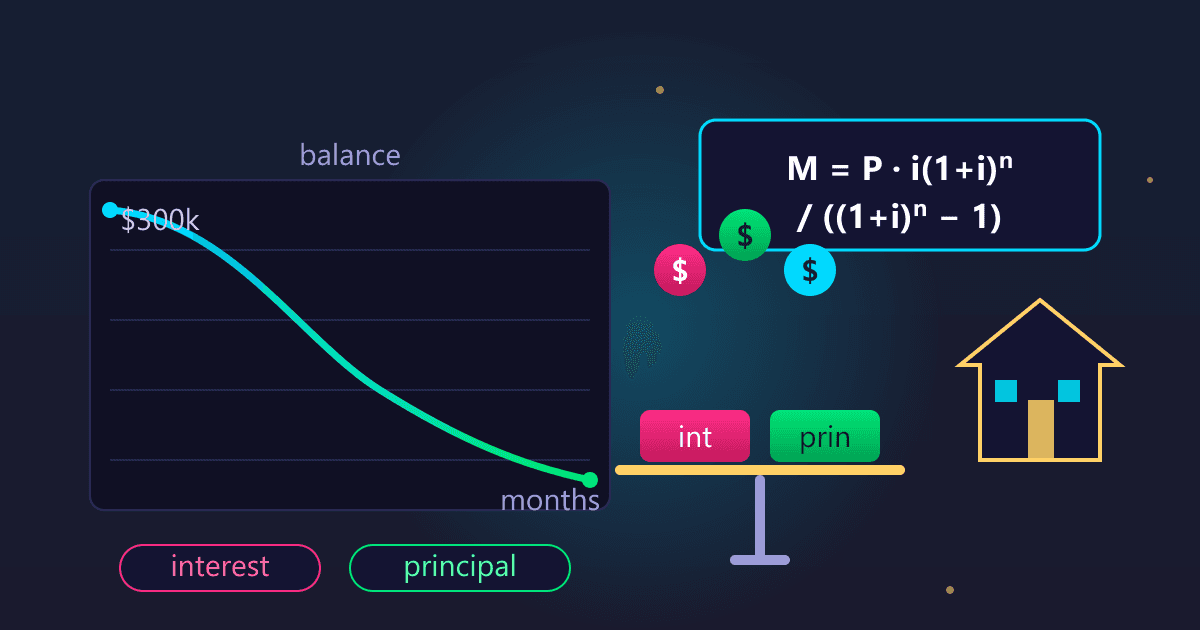
Coast FIRE Number = Target Portfolio ÷ (1 + Real Return Rate)^Years Until Retirement
Example: Someone who wants $1.5 million at age 65, is currently 35, and assumes a 6% real return (after inflation) would calculate:
$1,500,000 ÷ (1.06)^30 = $261,397
If this person has $261,397 invested today, compound growth alone should bring them to $1.5 million by 65. They have reached Coast FIRE.
What Return Rate Should I Use for Coast FIRE?
The return rate you assume dramatically affects your Coast FIRE number. Historical stock market returns average around 10% nominally, but inflation typically runs 2-3%, bringing real returns to roughly 7%.
Most financial planners recommend using 5-7% real returns for long-term projections. The lower end accounts for potentially lower future returns, sequence of returns risk, and the reality that few people hold 100% stocks throughout their investing lives.
- 5% (Conservative): Requires more savings upfront but builds in margin for error.
- 6% (Moderate): The most common recommendation, balancing realism and achievability.
- 7% (Optimistic): Reduces your Coast FIRE target but leaves less room if markets underperform.
Why Coast FIRE Matters in 2026
Only 35% of Americans felt on track for retirement in 2026, according to Federal Reserve data. The perceived “magic number” for comfortable retirement dropped to $1.26 million in 2026, down $200,000 from the previous year’s $1.46 million estimate. This shift suggests growing awareness of strategies like Coast FIRE that do not demand eight-figure portfolios.
Generational differences also matter. Gen Z expects to retire at age 54 on average—earlier than any previous generation’s expectations. Front-loading retirement savings, then coasting, is especially attractive for younger workers.
Average Retirement Savings by Age
| Age Group | Average 401(k) Balance | Median Balance |
|---|---|---|
| 20s | $115,162 | $36,812 |
| 30s | $249,774 | $91,128 |
| 40s | $545,424 | $213,645 |
| 50s | $970,570 | $441,611 |
| 60s | $1,148,441 | $539,068 |
Source: Vanguard 2024 How America Saves report
2026 Retirement Contribution Limits
If you have not yet reached Coast FIRE, maximizing contributions accelerates your timeline. The IRS increased limits for 2026 and announced 2026 numbers:
- 2025: 401(k) employee contribution limit rises to $23,500 (up $500 from 2024). IRA contributions remain $7,000 for those under 50. Catch-up for 50+ stays $7,500 for 401(k)s.
- SECURE 2.0 change: workers ages 60-63 can contribute $11,250 in catch-up contributions—well above the $7,500 limit for other 50+ savers.
- 2026: 401(k) limit jumps to $24,500; IRA limit increases to $7,500 for those under 50.
What Is the Difference Between Coast FIRE and Other FIRE Types?
| FIRE Type | Definition | Typical Target |
|---|---|---|
| Traditional FIRE | 25-30x annual expenses to stop working entirely | $1.5M for $60k spending |
| Lean FIRE | ~20x a stripped-down budget | $800k-$1M |
| Fat FIRE | 30x+ of a higher lifestyle budget | $3M+ for $100k spending |
| Barista FIRE | Work part-time for current expenses and health insurance | Varies by lifestyle |
| Coast FIRE | Retirement savings "done"—compound growth handles the future | $150k-$400k depending on age |
The key difference: Traditional FIRE requires accumulating your full retirement amount before stopping work. Coast FIRE requires only enough invested today that compound growth reaches your target by retirement age—typically 10-25% of the final number.
Ready to find your number? Use our free Coast FIRE Calculator to see when you can stop worrying about retirement savings.
What Are the Biggest Coast FIRE Mistakes?
The five most common Coast FIRE mistakes cost people years of unnecessary saving or leave them short at retirement:
-
Using overly optimistic return assumptions: Expecting 10%+ annual returns when 5-7% real is more realistic can leave you $200,000+ short at retirement.
-
Ignoring inflation: A million dollars today will not have the same purchasing power in 30 years. Always use real returns (after inflation) or inflate your target by 2-3% annually.
-
Underestimating healthcare costs: If you leave full-time employment before Medicare (65), budget $500-$1,500+ monthly for health insurance—that is $6,000-$18,000 per year.
-
Lifestyle inflation after reaching Coast FIRE: Without mandated savings, spending creep can delay full financial independence.
-
Stopping contributions at market peaks: Hitting your number during a bull market and then seeing a 20-30% correction can set you back years. Build a 10-20% buffer above your calculated minimum.
What Can You Do After Reaching Coast FIRE?
Reaching Coast FIRE is a milestone, not a mandate to stop working. Many continue their careers unchanged while enjoying the psychological freedom of knowing retirement is handled. Others make significant lifestyle changes:
- Reduce work hours: Go part-time or negotiate flexible schedules without worrying about retirement impact.
- Pursue passion projects: Switch to lower-paying work you love, since you only need to cover current expenses.
- Take career breaks: Extended time off between jobs no longer jeopardizes your retirement.
- Geographic flexibility: Relocate to lower cost-of-living areas or live abroad for lifestyle over salary.
- Continue contributing: Capture employer matching, tax benefits, or accelerate toward full FIRE.
Should I Include Social Security in Coast FIRE Calculations?
Whether to include Social Security depends on your age and risk tolerance. The conservative approach: exclude it entirely if you are under 40, include 50-70% if mid-career, and include full benefits only within 15 years of claiming.
| Your Age | Social Security Recommendation |
|---|---|
| Under 40 | Exclude entirely—any benefit is a bonus |
| 40-55 | Include 50-70% of projected benefits |
| Within 15 years of claiming | Full projected benefits reasonable |
Current projections show the Social Security trust fund facing potential insolvency by 2033, which could trigger automatic benefit cuts of approximately 23% if Congress does not intervene. Planning conservatively protects you regardless of political outcomes.
Frequently Asked Questions
How do I calculate my Coast FIRE number? Divide your target retirement portfolio by (1 + expected real return rate) raised to the power of years until retirement. Example: wanting $1.2 million at 65 with a 6% return and 25 years to go: $1,200,000 / (1.06)^25 = $279,578. That is your Coast FIRE target. Use our Coast FIRE Calculator to run the math instantly.
What return rate should I use for Coast FIRE calculations? Most financial professionals recommend 5-7% real (after-inflation) returns for long-term planning. A 6% assumption is the most common middle ground. Avoid using historical nominal returns of 10%+ without adjusting for inflation—this could leave you $100,000+ short.
Does Coast FIRE work if I have a pension? Yes. Calculate your Coast FIRE number for the gap between your pension income and total retirement spending needs, rather than your full retirement budget. Example: if your pension provides $30,000 annually and you need $60,000, you only need investments to cover the $30,000 difference.
Should I stop contributing to my 401(k) after reaching Coast FIRE? Not necessarily. Even after reaching Coast FIRE, 401(k) contributions offer tax benefits and employer matching. Most Coast FIRE adherents reduce contributions to capture the full employer match rather than stopping entirely—free money is still free money.
What if the market crashes after I reach Coast FIRE? Build a 10-20% buffer above your minimum target. If you reach Coast FIRE during a bull market, a subsequent 30% correction could push you back below the threshold. A $300,000 target should have $330,000-$360,000 invested for cushion.
Can I reach Coast FIRE in my 20s? Yes, and it is dramatically easier due to time. A 25-year-old with 40 years until retirement at a 7% return needs only $67,000 invested to coast to $1 million. At 30, that number rises to $95,000. At 35, $134,000. Starting early is the biggest advantage in Coast FIRE.
How does Coast FIRE account for healthcare before Medicare? Coast FIRE addresses retirement savings, not current expenses. If you leave employer-sponsored health insurance before 65, budget $500-$1,500+ monthly ($6,000-$18,000 annually) for individual premiums. You still need income to cover this—Coast FIRE just means retirement is handled.
What is the difference between Coast FIRE and Barista FIRE? Coast FIRE means your retirement savings will grow to your target through compound interest alone. Barista FIRE typically means working part-time specifically for benefits and current expenses. Many people practice both simultaneously—reaching Coast FIRE, then working a Barista FIRE lifestyle afterward.
Calculate Your Coast FIRE Number
Understanding your Coast FIRE number transforms abstract retirement planning into a concrete milestone. Rather than facing an endless marathon of saving, you identify a specific target that, once reached, changes your relationship with work and money.
The math is straightforward, but the implications are profound. Knowing that compound growth will handle your future retirement frees mental bandwidth, reduces financial stress, and opens options you might not have considered.
Use our free Coast FIRE Calculator to see exactly how much you need invested today. Enter your current savings, age, and retirement goals to find out whether you are already Coast FIRE—or how close you might be.