Craps Lay Bet Calculator: Betting Against Numbers (2026)

Craps Lay Bet Calculator: Betting Against the Point
Lay bets win when seven rolls before your target number—betting against the shooter. Our calculator shows payouts, commission costs, and why wrong-way bettors enjoy some of the lowest house edges in craps.
What Is a Lay Bet?
A lay bet is the opposite of a buy bet: you're betting a specific number will NOT hit before seven. You put up more than you win (laying odds against the number), and pay a 5% commission on potential winnings. Lay bets have house edges of 2.44-4%.
Quick Answer: Lay bet = betting 7 rolls before your number. Lay 4/10: Pay 2:1 to win 1, edge 2.44%. Lay 5/9: Pay 3:2 to win 1, edge 3.23%. Lay 6/8: Pay 6:5 to win 1, edge 4.00%. Commission: 5% of potential win. True odds favor you. Seven is most common roll.
How to Use Our Calculator
Enter your lay bet to calculate commission and expected value.
Step-by-Step Instructions
-
Select Number: 4, 5, 6, 8, 9, or 10
-
Enter Win Amount: What you want to win
-
View Lay Amount: What you must risk
-
Calculate Commission: 5% fee
-
See Total Cost: Bet + commission
Input Fields Explained
| Field | Description | Example |
|---|---|---|
| Lay Number | Target to avoid | 4 |
| Win Amount | Desired profit | $20 |
| Lay Amount | What you risk | $40 |
| Commission | 5% of win | $1 |
| Total Required | Lay + comm | $41 |
| House Edge | Casino advantage | 2.44% |
Lay Bet Odds and Payouts
Lay 4 or 10
Your number: 4 (or 10)
Ways to roll 4: 3 (1-3, 2-2, 3-1)
Ways to roll 7: 6

Probability you win: 6/9 = 66.67%
Probability you lose: 3/9 = 33.33%

True odds: 2:1 (you lay 2 to win 1)

Lay $40 to win $20
Commission: $20 × 5% = $1
House edge: 2.44%
Lay 5 or 9
Your number: 5 (or 9)
Ways to roll 5: 4 (1-4, 2-3, 3-2, 4-1)
Ways to roll 7: 6

Probability you win: 6/10 = 60%
Probability you lose: 4/10 = 40%

True odds: 3:2 (lay 3 to win 2)

Lay $30 to win $20
Commission: $20 × 5% = $1
House edge: 3.23%
Lay 6 or 8
Your number: 6 (or 8)
Ways to roll 6: 5 (1-5, 2-4, 3-3, 4-2, 5-1)
Ways to roll 7: 6

Probability you win: 6/11 = 54.55%
Probability you lose: 5/11 = 45.45%

True odds: 6:5 (lay 6 to win 5)

Lay $24 to win $20
Commission: $20 × 5% = $1
House edge: 4.00%
Commission Calculation
Standard 5% on Win
Commission = Potential Win × 5%

Lay $100 on 4 to win $50:
Commission: $50 × 5% = $2.50
Total outlay: $100 + $2.50 = $102.50

Win: +$50
Lose: -$102.50
Commission Timing
When to pay:
Most casinos: Pay upfront with bet
Some casinos: Pay only on winning bets

Upfront is more common
Affects practical bankroll
Vig on Lay vs Buy
Buy bet: Commission on bet amount
Lay bet: Commission on win amount

Buy $40 on 4: $40 × 5% = $2 vig
Lay $40 on 4: $20 win × 5% = $1 vig

Lay commission is smaller
Because you risk more to win less
Why Lay Bets Work
Seven Advantage
Most common roll: 7
Probability: 6/36 = 16.67%

Lay bets win when 7 hits
Seven is always the favorite
You're backing the favorite

Trade-off: Must risk more to win less
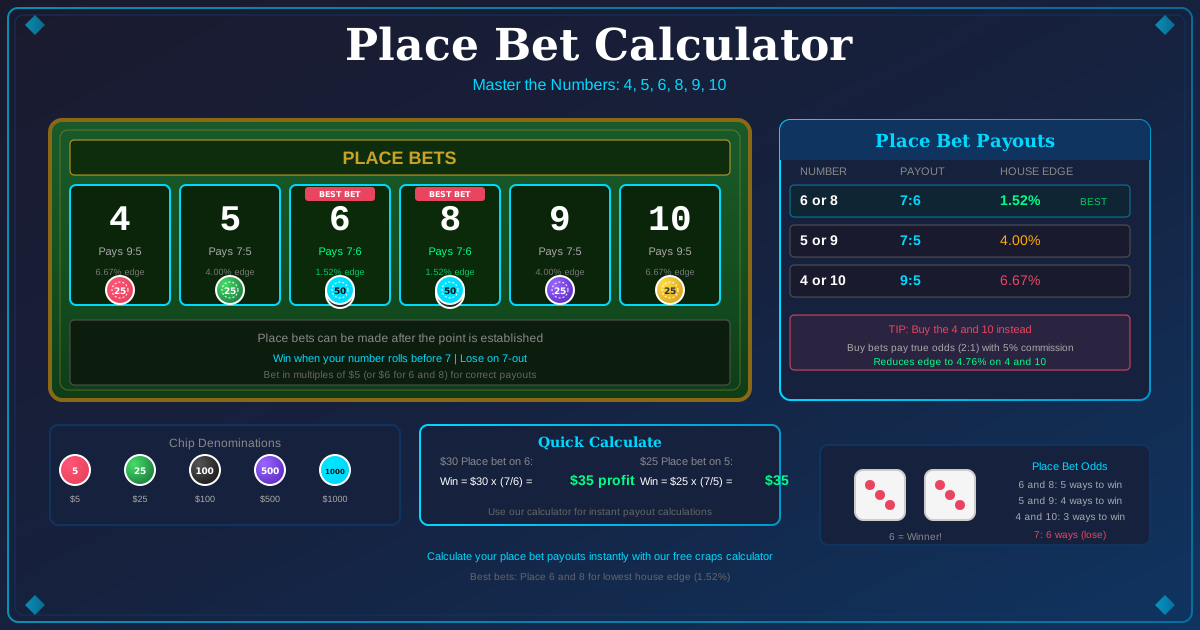
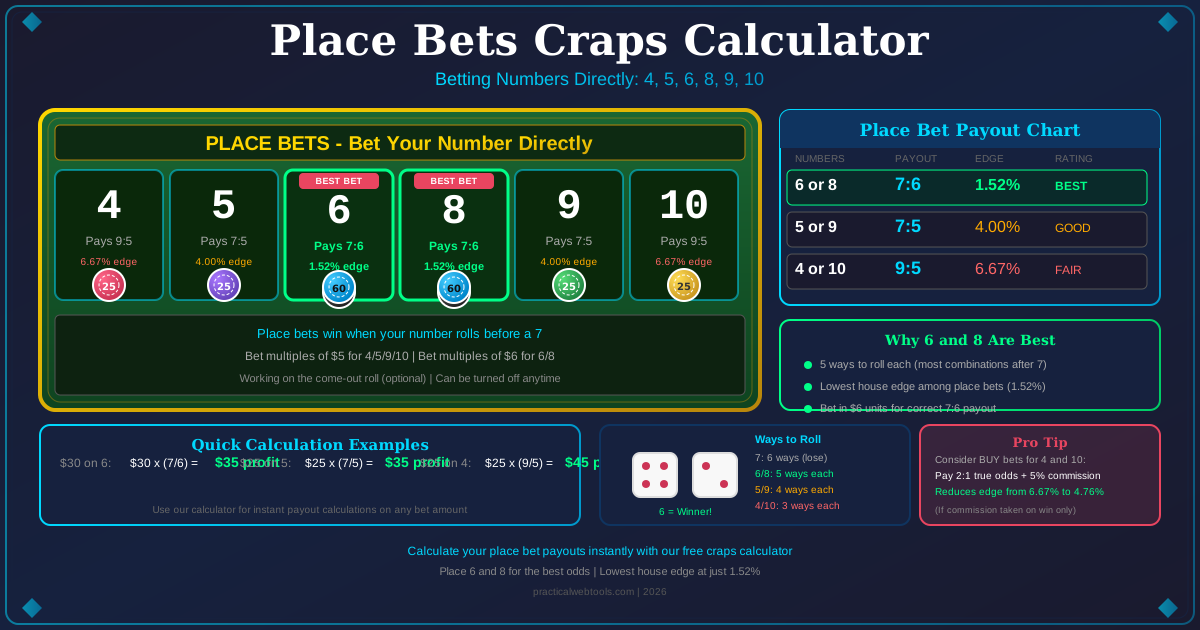
Comparing to Place Bets
Place bet on 6:
Win when 6 hits (5/36)
Lose when 7 hits (6/36)
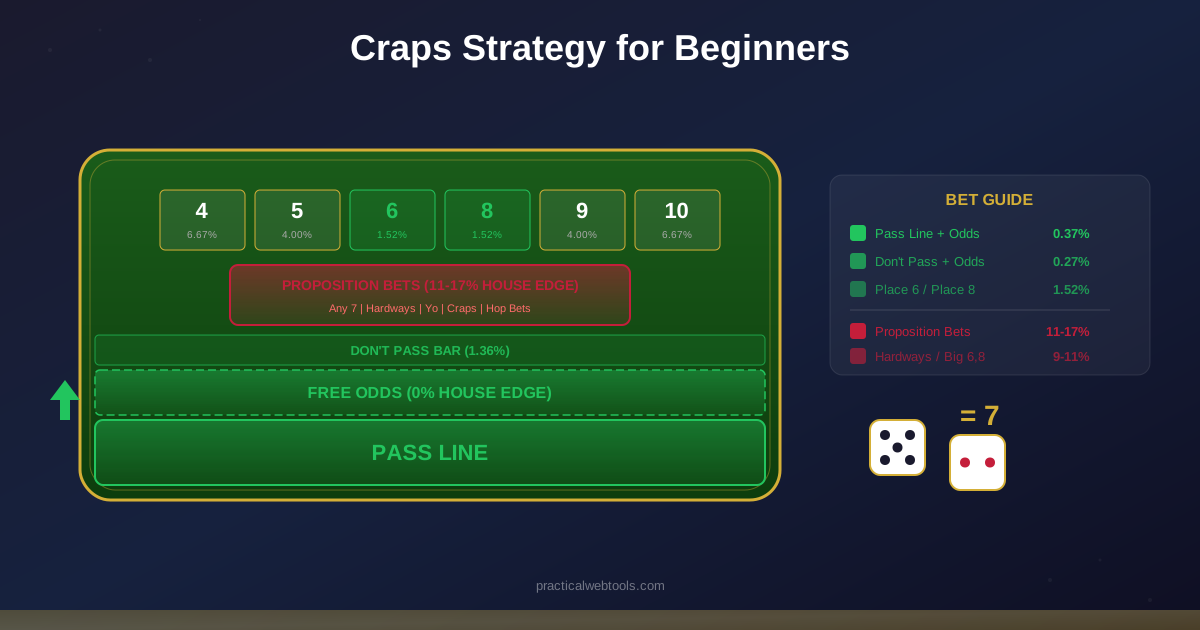
House edge: 1.52%

Lay bet on 6:
Win when 7 hits (6/36)
Lose when 6 hits (5/36)
House edge: 4.00%

Lay is higher edge despite probability
Because you must risk more
Dark Side Advantage
Wrong bettors (don't pass + lay):
More frequent wins
Smaller amounts
Consistent grinding

Right bettors:
Less frequent wins
Larger payouts
More volatile

Lay bets suit conservative play
Real-World Examples
Example 1: Laying the 4
You lay $40 on 4 to win $20:
Commission: $20 × 5% = $1
Total at risk: $41

Resolution:
7 rolls first: Win $20
4 rolls first: Lose $41

Expected value:
Win: 66.67% × $20 = $13.33
Lose: 33.33% × $41 = $13.67
EV: -$0.34 per resolution

House edge: 2.44%
Example 2: Multiple Lay Bets
Lay $60 each on 4, 5, 6 (win amounts: $30, $40, $50):
Lay 4: $60 to win $30, comm $1.50
Lay 5: $60 to win $40, comm $2.00
Lay 6: $60 to win $50, comm $2.50

Total at risk: $186

If 7 rolls:
Win all three: $30 + $40 + $50 = $120
Net: $120 - $6 (comm) = $114

If any number rolls:
That lay loses, others stay
Rolling 4: Lose $61.50, two bets continue
Example 3: Lay vs Don't Come
Comparing lay 6 to don't come:
Don't Come:
$10 bet, point becomes 6
Lay 6:5 odds behind ($6 for potential $5)
Total risk: $16, win $15
No commission on odds

Lay Bet:
$24 to win $20
Commission: $1
Total: $25, win $20

Don't Come + odds is better
0% edge on odds portion
But requires point establishment
Example 4: Session Planning
Laying 4 and 10 with $500 bankroll:
Lay 4: $100 to win $50, comm $2.50
Lay 10: $100 to win $50, comm $2.50
Total risk: $205

Scenarios:
7 first: Win $100 (both pay)
4 first: Lose $102.50, 10 still working
10 first: Lose $102.50, 4 still working

With 66.67% individual win rate
Session often profits modestly
Big swings possible if run bad
Strategy Considerations
When to Lay
Good scenarios:
- Want high probability wins
- Conservative session goal
- Combining with don't pass
- Long roll without numbers

Seven is your friend
But winning small amounts
Number Selection
Best lay: 4 or 10
Edge: 2.44%
Win rate: 66.67%
Payout: 1:2

Worst lay: 6 or 8
Edge: 4.00%
Win rate: 54.55%
Payout: 5:6

4/10 are mathematically best
Despite lower win amount
Combining with Don't Strategy
Don't Pass line bet: $10
Point is 6
Lay additional on 4 and 10

Multiple ways to win
Seven covers all
Comprehensive dark side approach
Common Mistakes
1. Ignoring Commission in Calculations
Mistake: Calculate win without commission Problem: Overstates actual profit Fix: Always include 5% vig in math
2. Laying 6/8 Primarily
Mistake: Lay numbers that hit most often Problem: 4% edge vs 2.44% on 4/10 Fix: Lay 4/10 for best edge
3. Insufficient Bankroll
Mistake: Lay $100 with $150 bankroll Problem: One loss devastates Fix: Risk fraction of bankroll per lay
4. Not Understanding Risk/Reward
Mistake: "I risk more than I can win?" Problem: Misunderstanding probability Fix: Higher win rate justifies laying odds
Frequently Asked Questions
Why risk more to win less?
Because you win more often. Laying 4, you win 66.67% of decisions. The math favors frequency over size.
Is the commission worth it?
For 4/10, yes—2.44% edge is excellent. For 6/8, the 4% edge is higher but still reasonable.
Can I take down a lay bet?
Yes, lay bets can be removed or reduced at any time. They're working on every roll.
When does commission apply?
Most casinos charge upfront. Some charge only on winning bets—ask the dealer.
How does laying compare to don't pass?
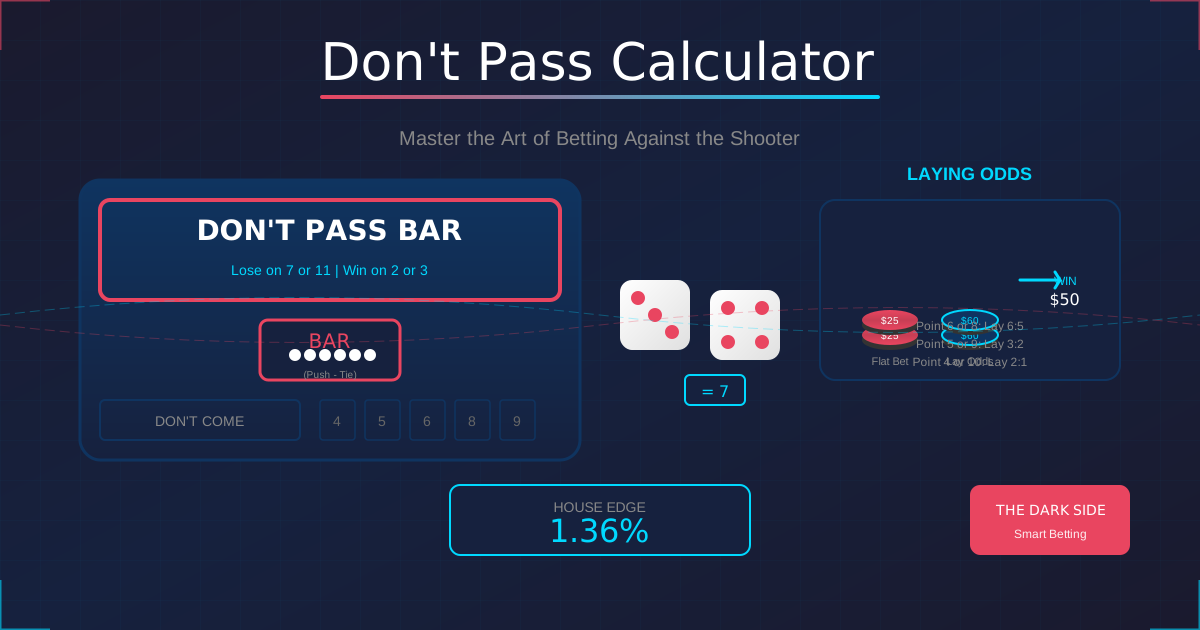
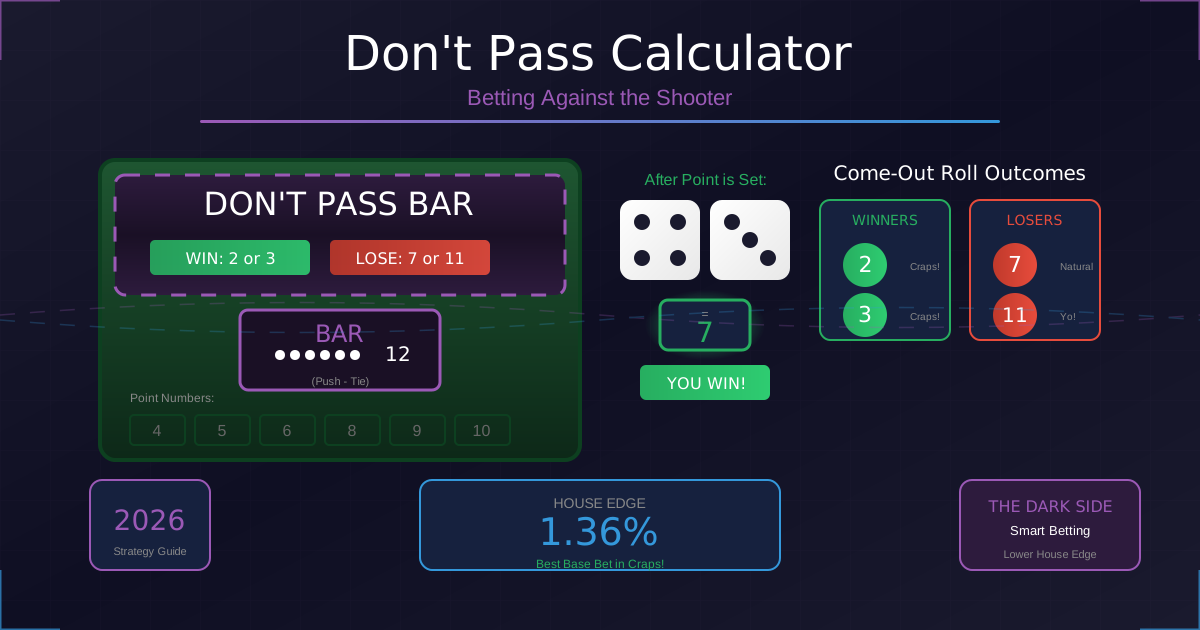
Don't pass has 1.36% edge, lower than any lay. But lay lets you bet against specific numbers after the point.
What's a "no 4"?
Some casinos call lay bets "no" bets—"No 4" means betting against 4. Same thing, different terminology.
Pro Tips
-
Lay 4/10 only: Best edge at 2.44%
-
Combine with don't pass: Comprehensive dark side
-
Mind commission timing: Upfront vs on win
-
Size for variance: You'll risk a lot
-
Seven is coming: More likely than any number
Related Calculators
- Craps Odds Calculator - All bet types
- Craps Buy Bet Calculator - Opposite of lay
- Craps Don't Pass Calculator - Dark side base
- Craps Place Bet Calculator - Number betting
- Craps Expected Value Calculator - EV analysis
Conclusion
Lay bets let you back the seven against specific numbers—paying true odds minus a 5% commission. Our calculator shows exact payouts and proves why laying 4 or 10 offers some of the best edges for wrong-way bettors.
Calculate Lay Bet Payouts Now →
Risking $40 to win $20 seems backwards until you realize you'll win twice as often. Our calculator reveals the math behind lay bets—where backing the seven puts probability on your side.