D'Alembert Betting Calculator: Flat Progression System Analysis (2026)
D'Alembert Betting Calculator: The Gentlest Progression
The D'Alembert system is the safest negative progression—increase bet by one unit after a loss, decrease by one after a win. No exponential growth, no catastrophic busts. Our calculator reveals why this gentle approach still can't overcome the mathematical house edge.
What Is the D'Alembert System?
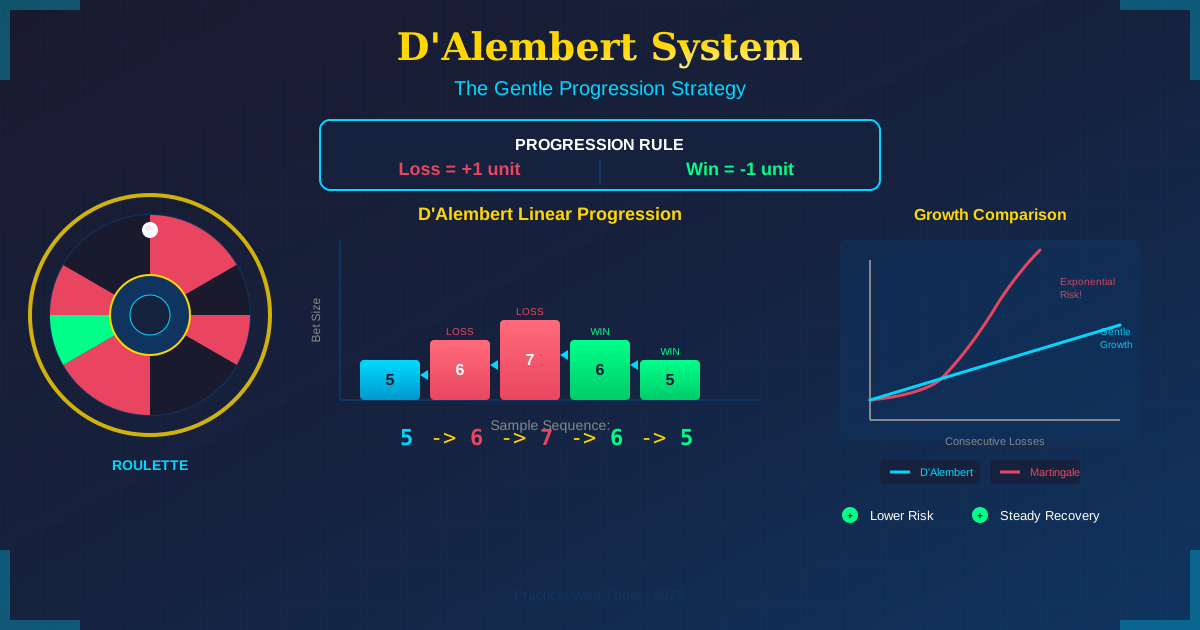
The D'Alembert (or Pyramid) system is a negative progression betting strategy where you add one unit after each loss and subtract one unit after each win. Named after French mathematician Jean le Rond d'Alembert, it assumes wins and losses should eventually balance out.
Quick Answer: D'Alembert = +1 unit after loss, -1 unit after win. Gentlest progression. No exponential growth. Example: $10 base, lose → bet $20, lose → bet $30, win → bet $20. Much safer than Martingale. Still can't beat house edge. Best for entertainment value.
How to Use Our Calculator
Use the D'Alembert Calculator →
Calculate D'Alembert progression and outcomes.
Step-by-Step Instructions
-
Enter Base Unit: Starting bet size
-
Enter Bankroll: Total available
-
Track Wins/Losses: Current position
-
View Current Bet: Unit level
-
Calculate Expected Value: Long-term result
Input Fields Explained
| Field | Description | Example |
|---|---|---|
| Base Unit | Starting bet | $10 |
| Current Level | Units above base | 3 |
| Current Bet | Actual wager | $40 |
| Session Wins | Wins so far | 12 |
| Session Losses | Losses so far | 14 |
| Net Position | Current status | -$40 |
How D'Alembert Works
The Basic Rules
D'Alembert progression:

Start: Base bet (e.g., $10)
After LOSS: Add 1 unit (+$10)
After WIN: Subtract 1 unit (-$10)
Minimum: Base bet (never below)

Simple, linear progression
No exponential growth
Example Sequence
$10 base unit:

Bet $10, LOSE → Bet $20
Bet $20, LOSE → Bet $30
Bet $30, WIN → Bet $20
Bet $20, LOSE → Bet $30
Bet $30, WIN → Bet $20
Bet $20, WIN → Bet $10 (base)

Smooth up and down
Never gets extreme
The Balancing Theory
D'Alembert's reasoning:

"If I've lost more than won,
I should win more going forward
to balance out"

The flaw:
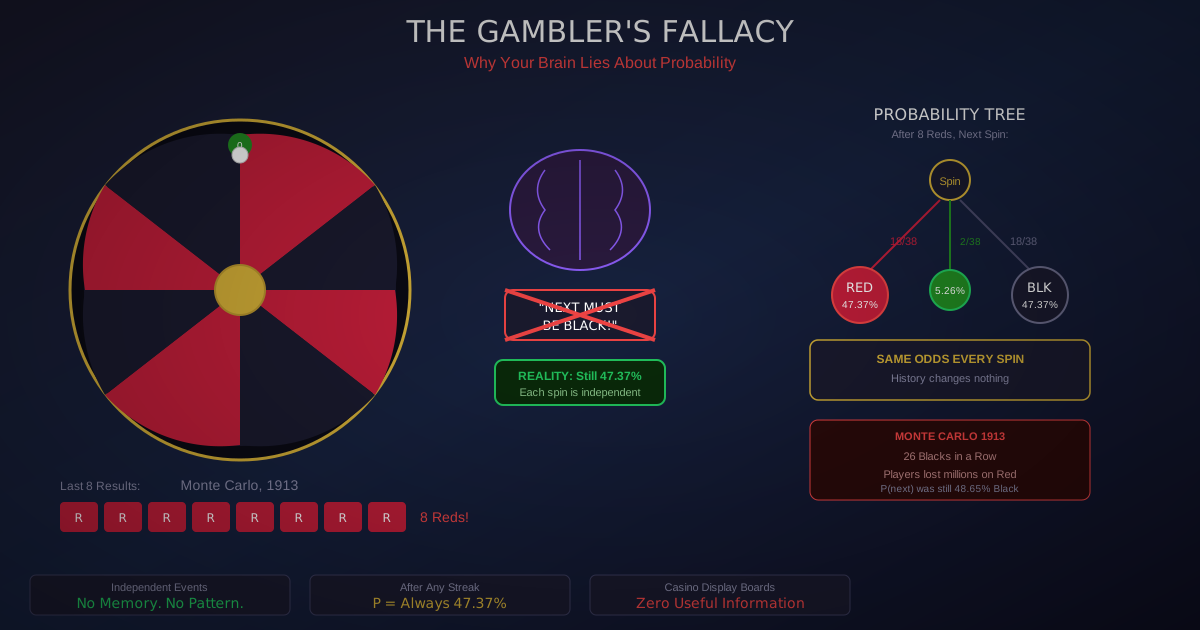
Each spin is independent
Past doesn't affect future
Gambler's fallacy at core
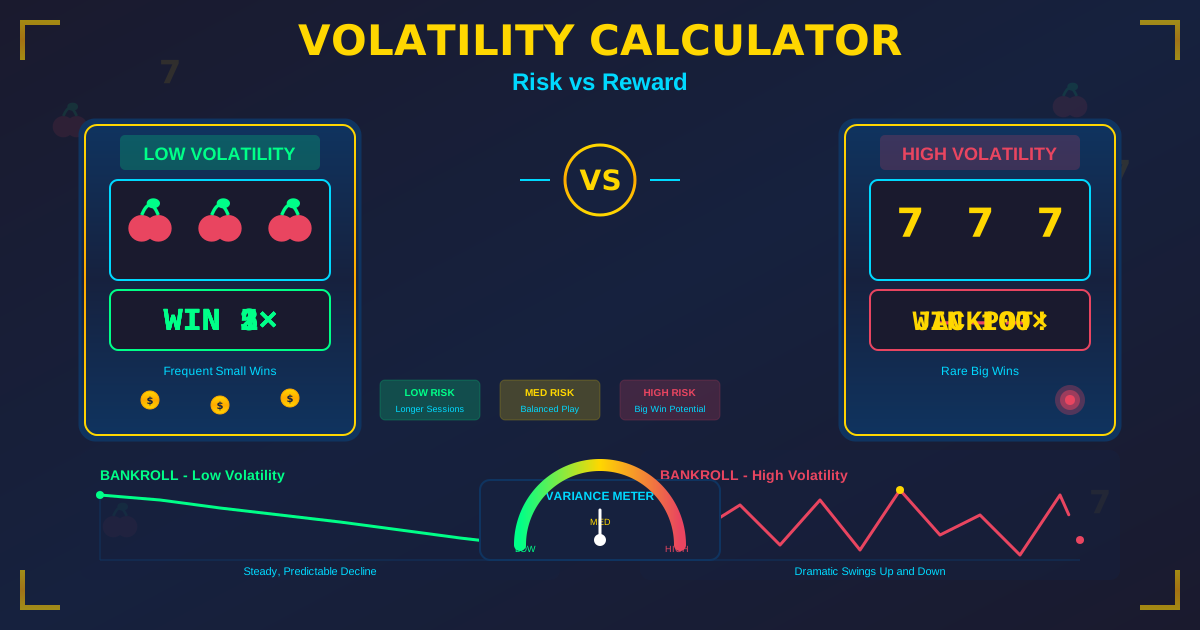
D'Alembert vs Other Systems
Progression Comparison
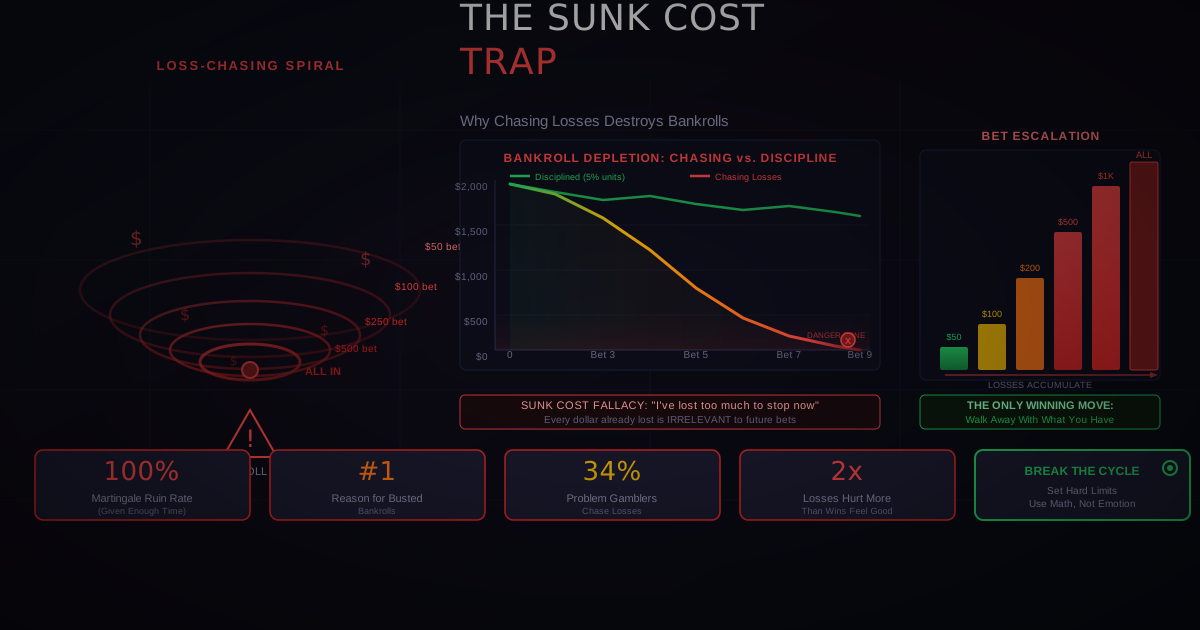
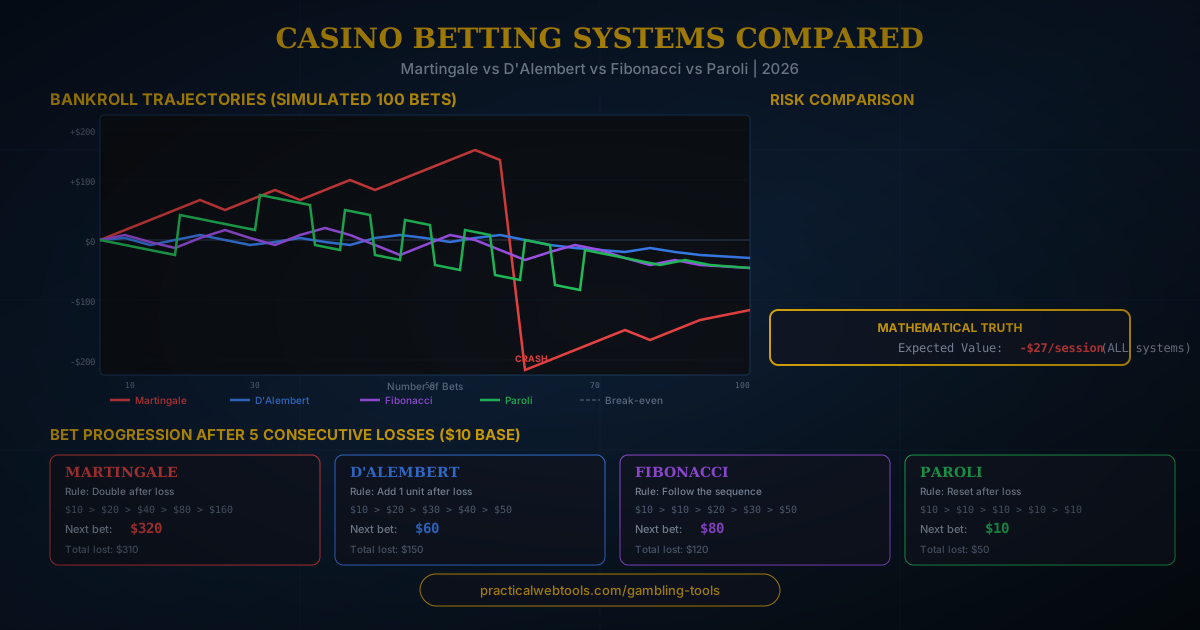
After 6 consecutive losses ($10 base):

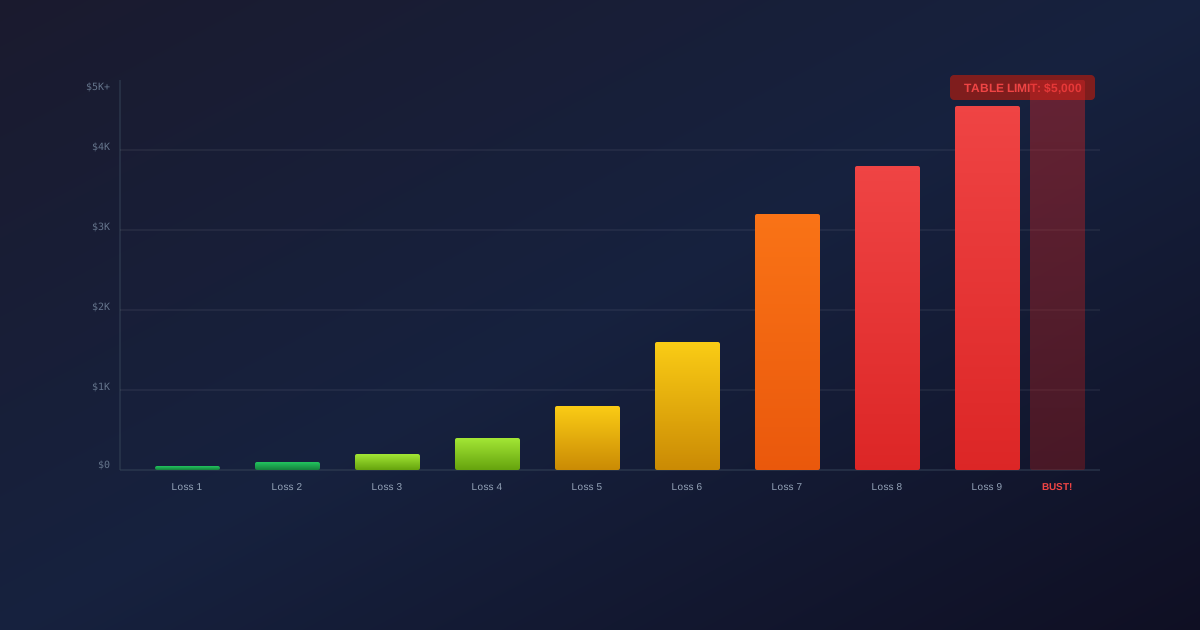
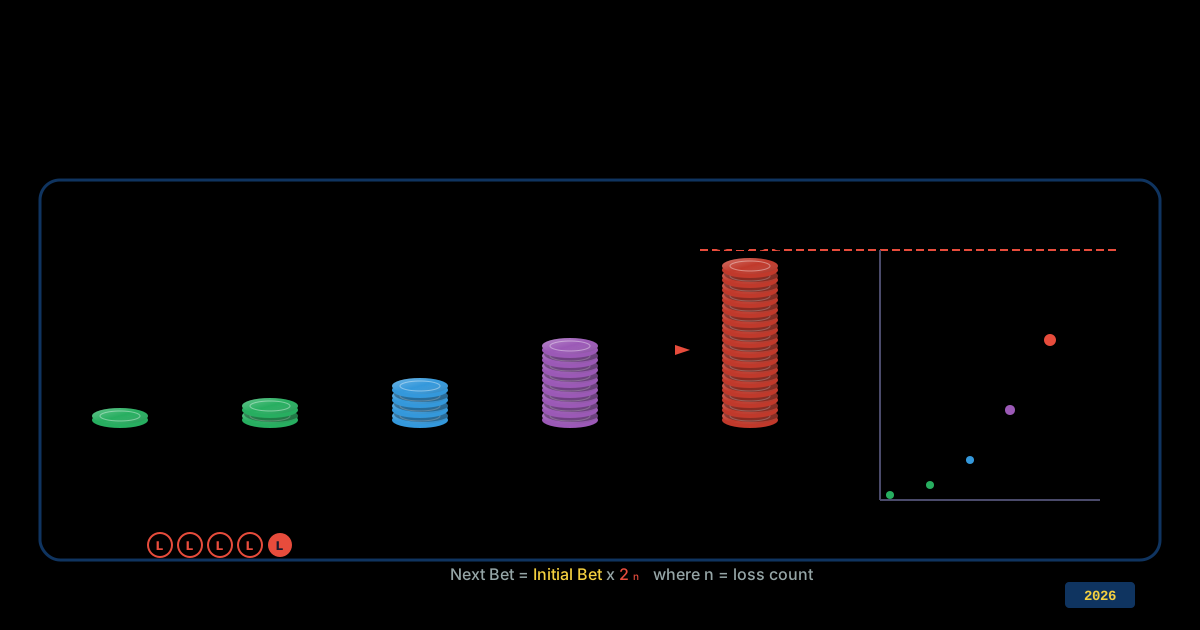
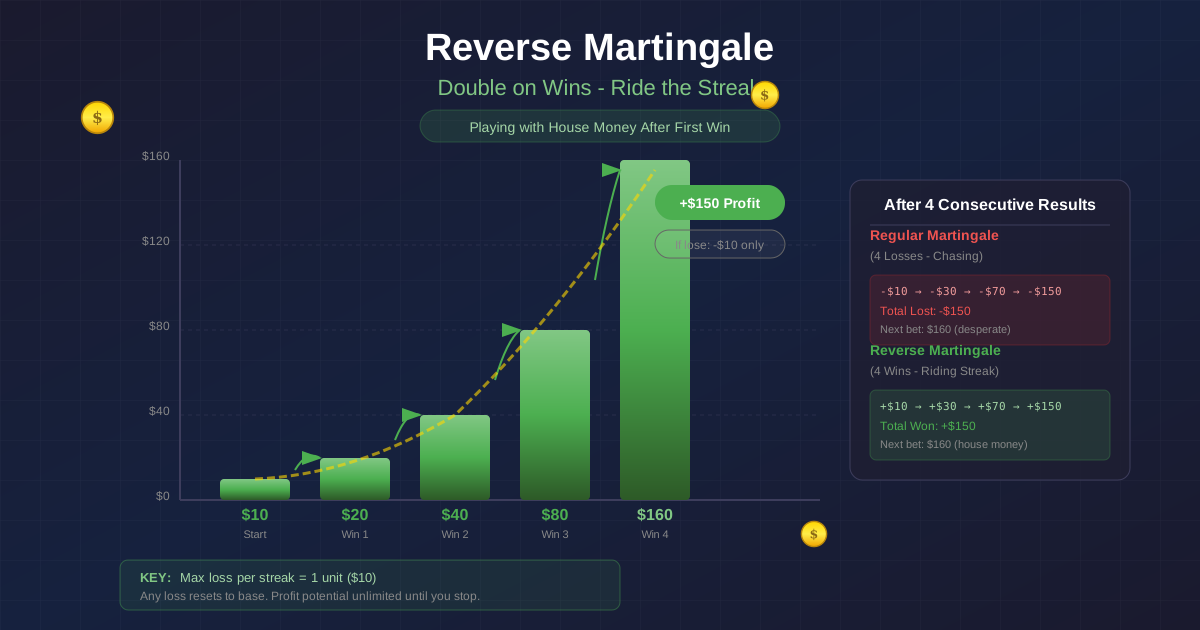
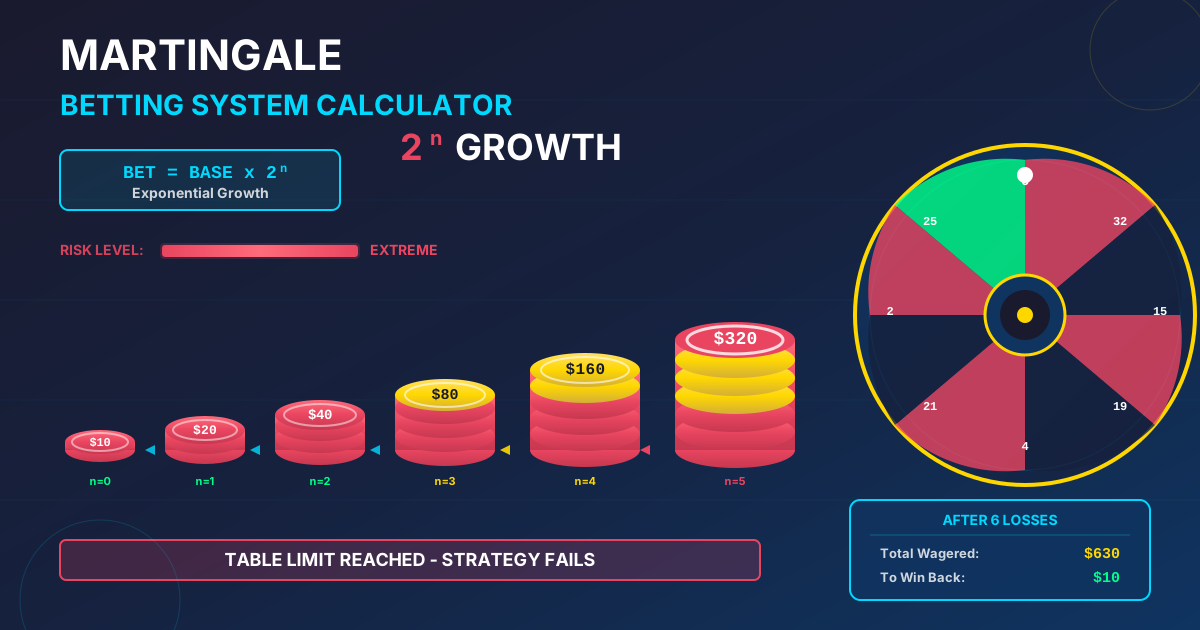
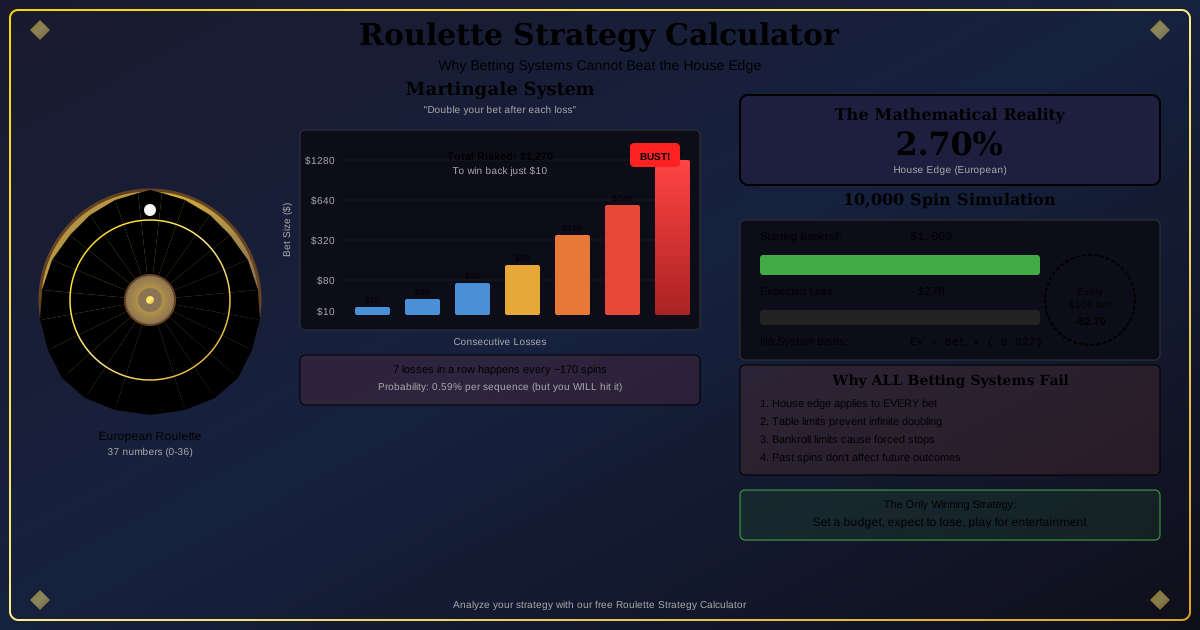
Martingale: $10 → $640 next (×64)
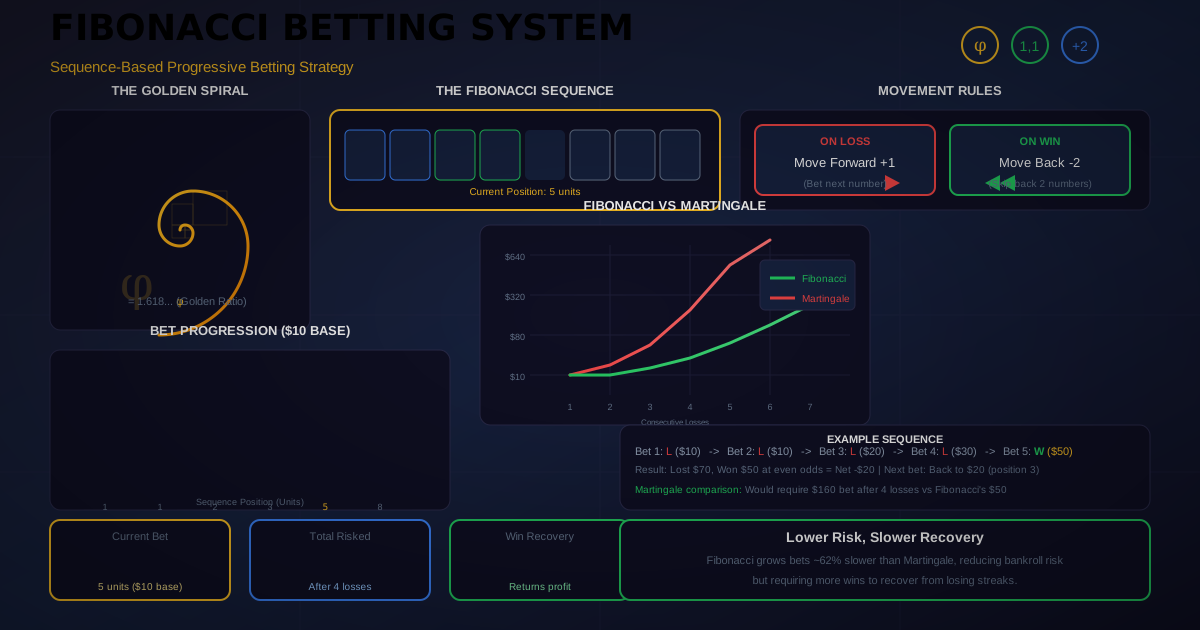
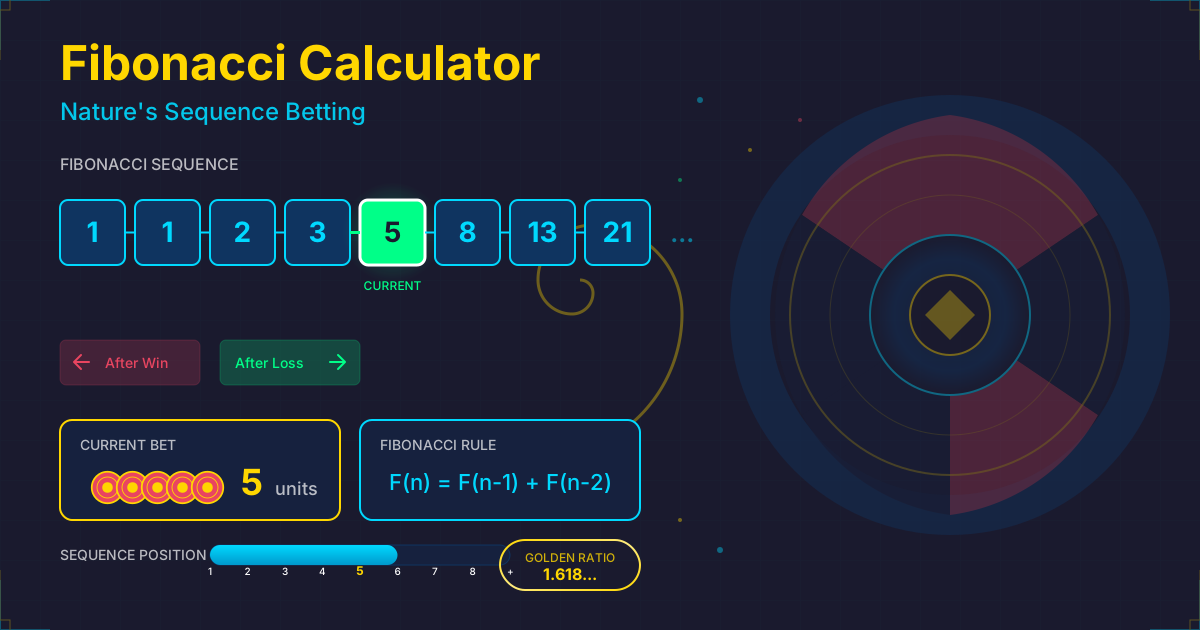
Fibonacci: $10 → $80 next (×8)
D'Alembert: $10 → $70 next (×7)

D'Alembert grows linearly
Martingale grows exponentially
Much safer bankroll-wise
Risk Profile
Bankroll exposure after 10 losses:

Martingale: $10,230 total risked
Fibonacci: $1,430 total risked
D'Alembert: $550 total risked

D'Alembert is most conservative
Lowest short-term risk
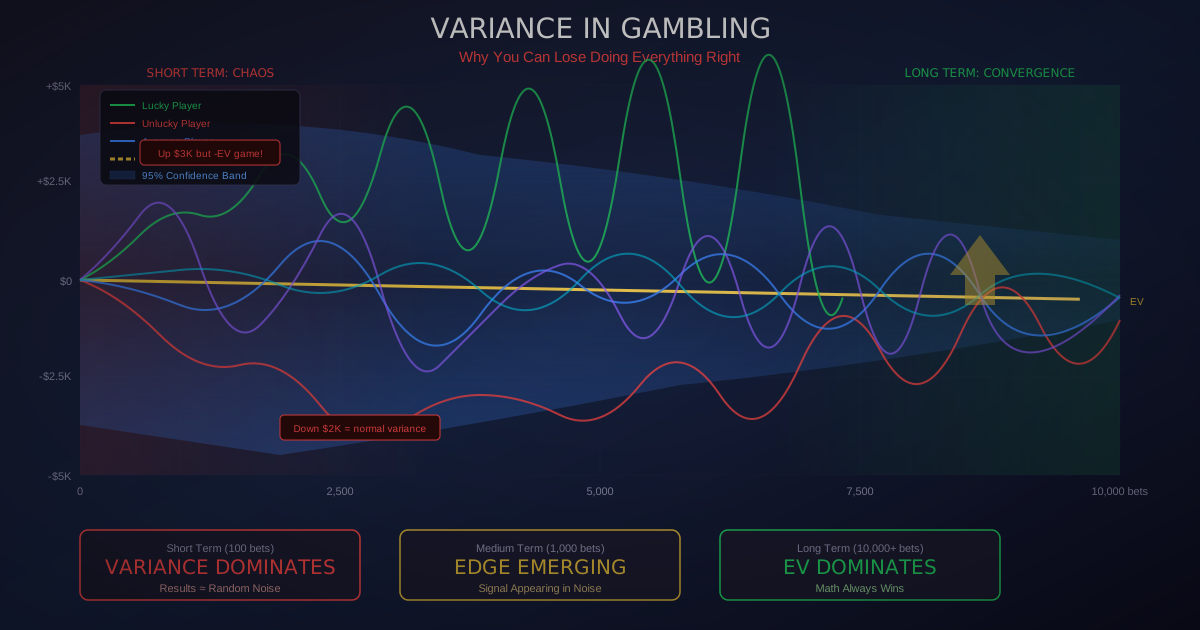
Same long-term edge applies
Mathematical Analysis
Why It Seems to Work
The appealing logic:

Equal wins and losses = profit

10 wins, 10 losses:
You're betting more on later wins
After losses pushed bets up

Win on bigger bets = net positive
Seems mathematically sound
Why It Doesn't
The flaw:

Wins and losses aren't guaranteed equal
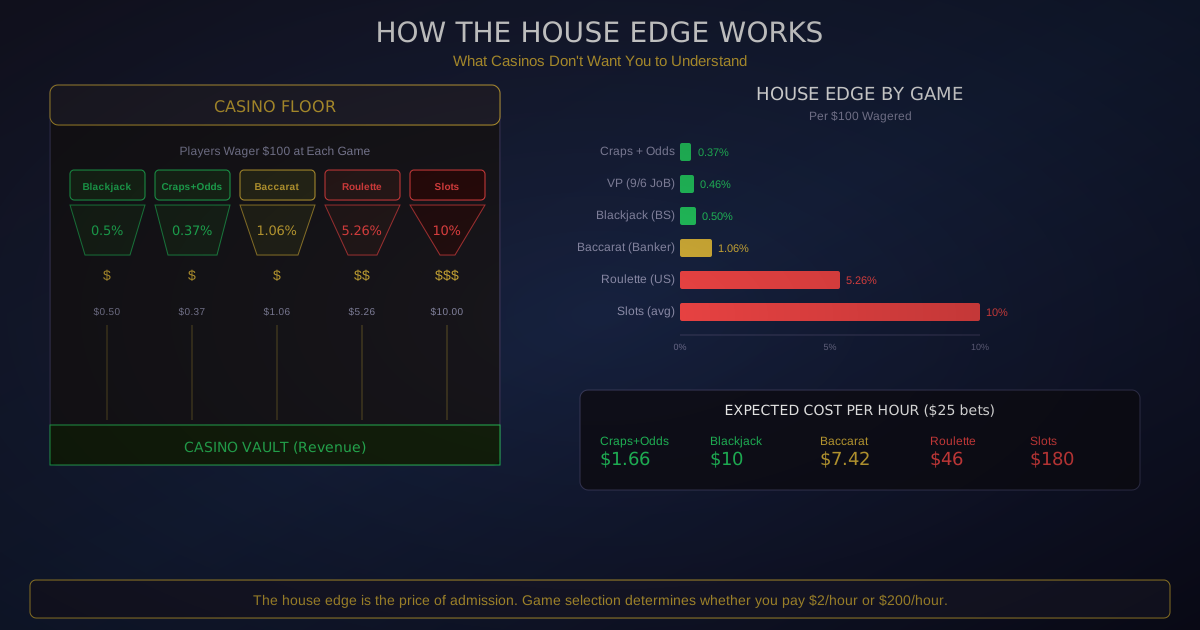
House edge means more losses

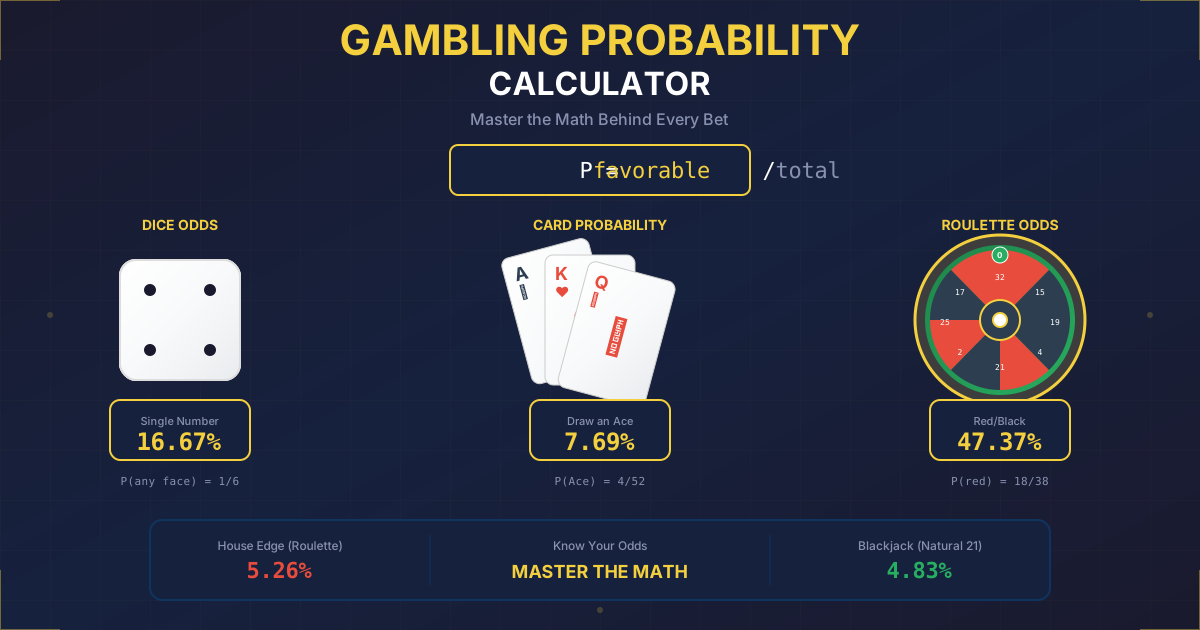
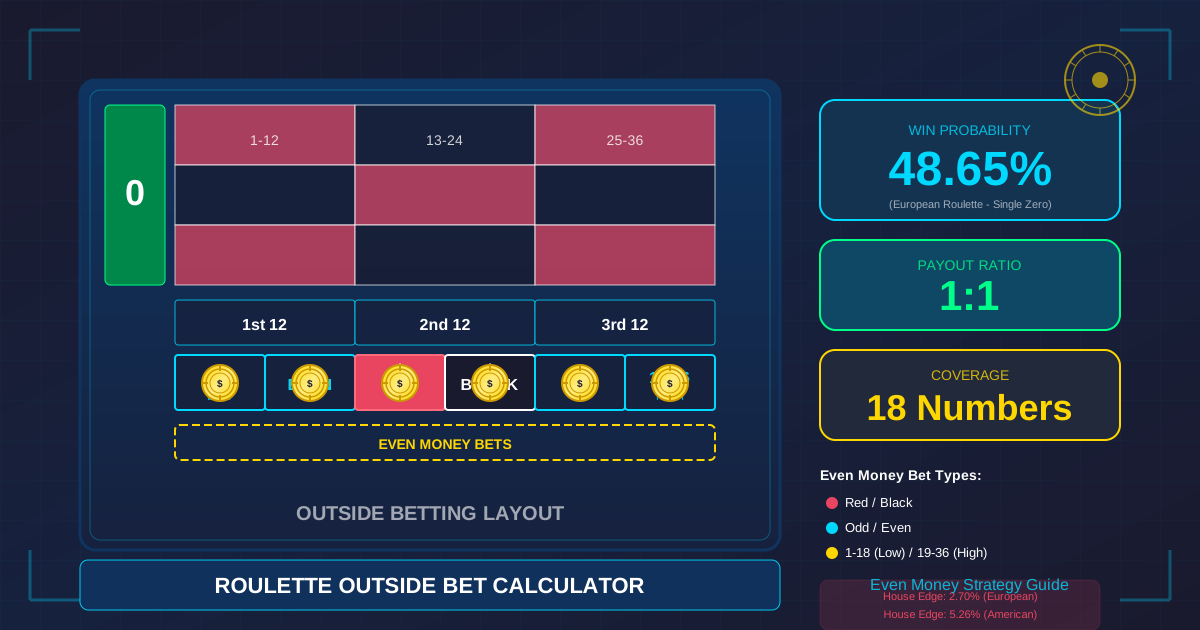
At 48.65% win rate (European roulette):
More losses than wins expected
Progression never fully reverses
Edge accumulates normally
Expected Value
D'Alembert EV:

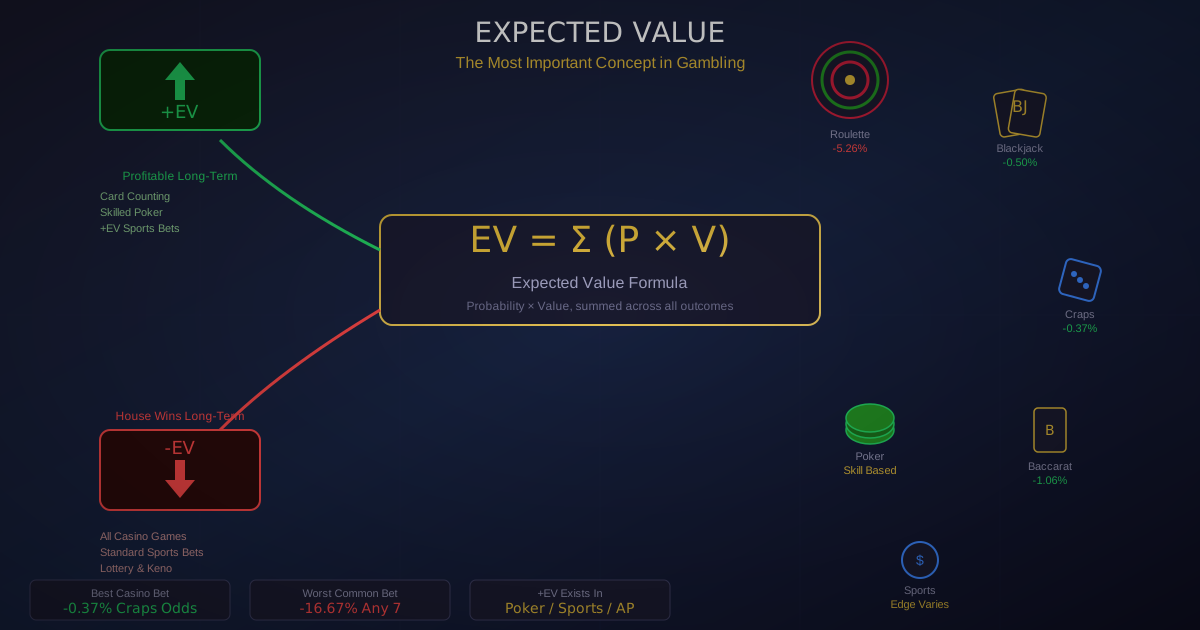
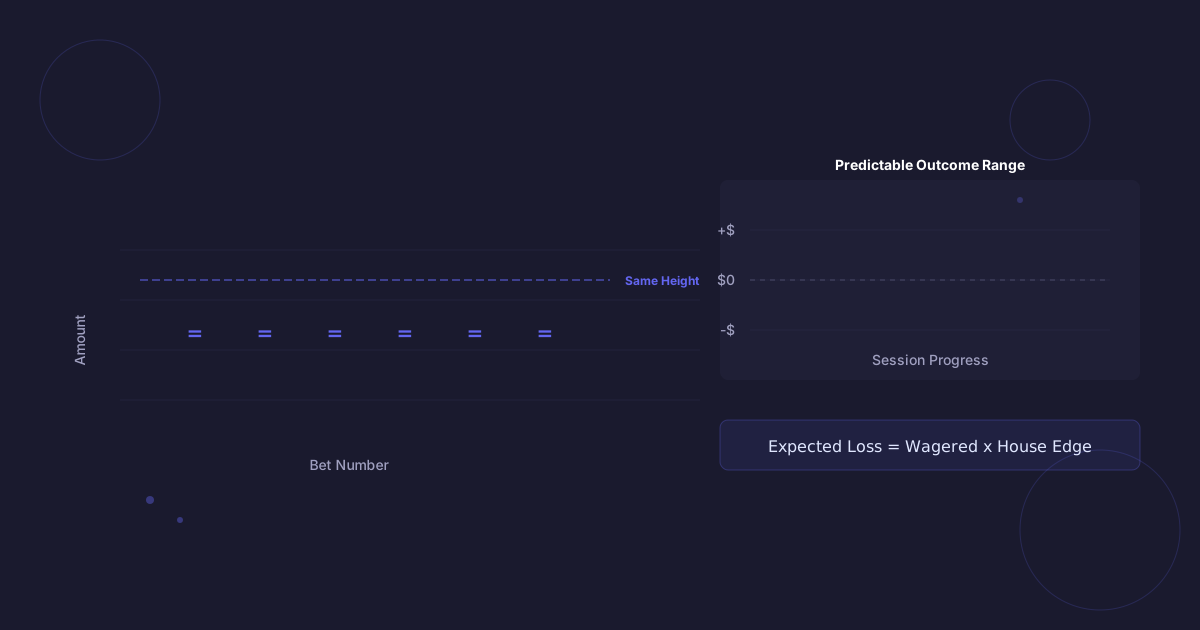
Same as flat betting
House edge unchanged

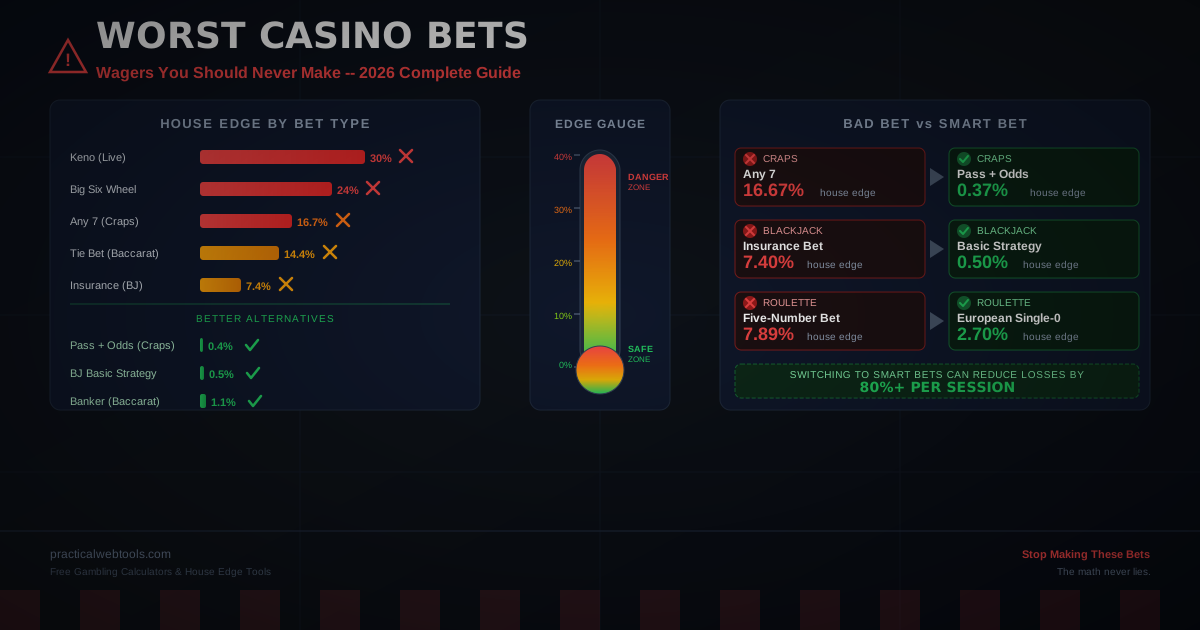
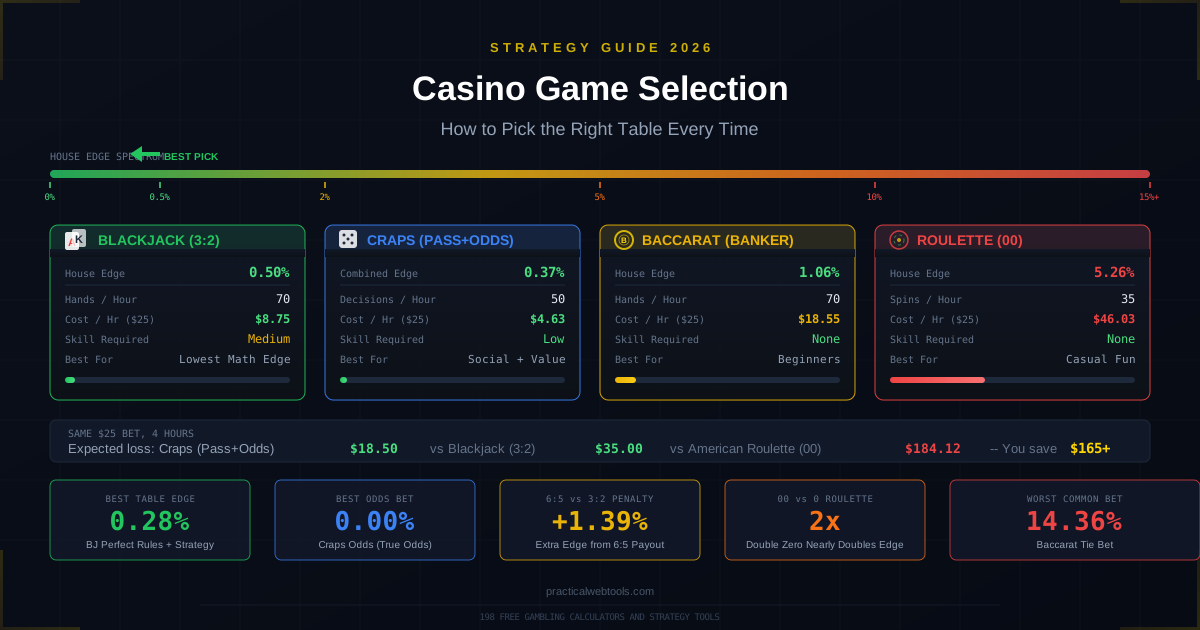
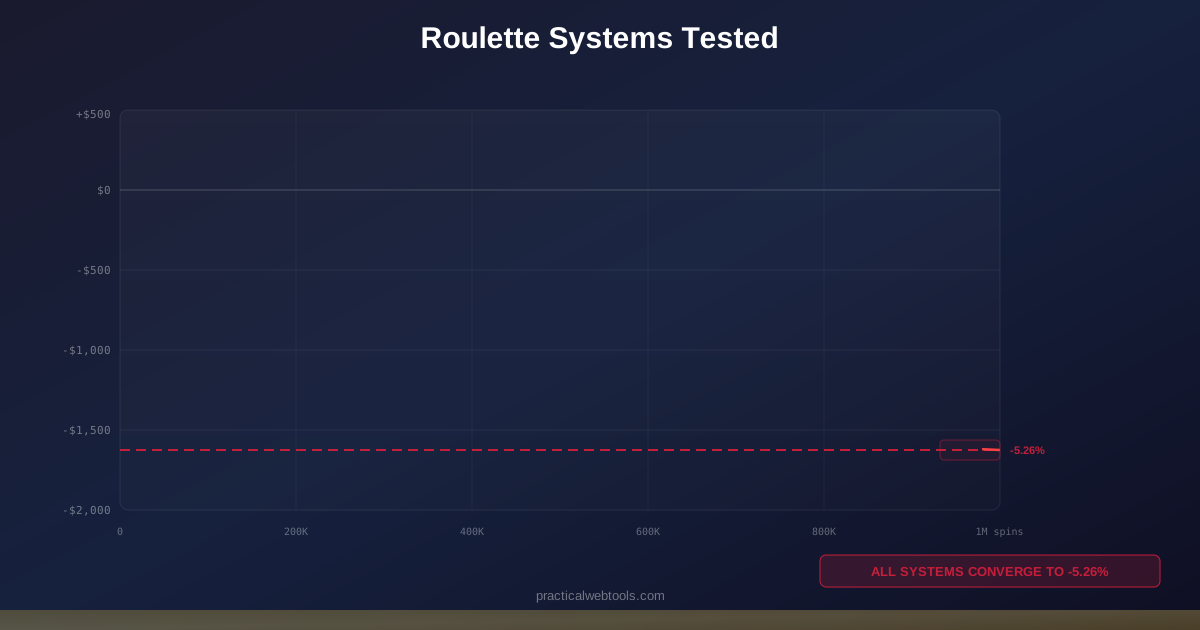
Per bet: -2.70% (European)
Per bet: -5.26% (American)

System only changes sizing
Not mathematical expectation
Bet Progression Detail
Linear Growth
D'Alembert after consecutive losses:

Loss 1: $10 → Next bet $20
Loss 2: $20 → Next bet $30
Loss 3: $30 → Next bet $40
Loss 4: $40 → Next bet $50
Loss 5: $50 → Next bet $60
Loss 10: $100 → Next bet $110

Linear growth: +$10 each time
Compare to Martingale: ×2 each time
Recovery Path
Getting back to base:

At $60 bet (5 losses down):
Win 1: Bet $50
Win 2: Bet $40
Win 3: Bet $30
Win 4: Bet $20
Win 5: Bet $10 (back to base)

5 wins needed to fully recover
Same number as losses incurred
Real-World Examples
Example 1: Balanced Session
Wins equal losses:
$10 base, 5 wins and 5 losses

L: $10 → L: $20 → W: $30 → W: $20 →
L: $10 → L: $20 → W: $30 → L: $20 →
W: $30 → W: $20

Total bet: $200
Won: $130 (wins at higher bets)
Lost: $80 (some losses at lower bets)
Net: +$50

System "worked" this session
Example 2: Losing Session
More losses than wins:
$10 base, 4 wins and 6 losses

L: $10 → L: $20 → L: $30 → W: $40 →
L: $30 → L: $40 → W: $50 → L: $40 →
W: $50 → W: $40

Total bet: $350
Won: $180
Lost: $170
Net: +$10

Still up despite more losses
Due to bet sizing
Example 3: Deep Loss
Extended losing streak:
$10 base, 10 consecutive losses

$10+$20+$30+$40+$50+$60+$70+$80+$90+$100
= $550 total lost

Now betting $110
Need 10 wins to recover
Each win reduces bet by $10
Long climb back
Example 4: Long-Term Reality
1000 bets at roulette:
$10 base, European roulette
Expected wins: ~486.5
Expected losses: ~513.5

Higher bets after losses
Lower bets after wins
Net expected loss: ~$270

Same as flat betting $10 × 1000 × 2.7%
System doesn't change edge
Strategy Considerations
Best Use Case
Why D'Alembert for entertainment:

Slow progression
Bankroll lasts longer
More spins per session
Less stressful experience
Same expected loss
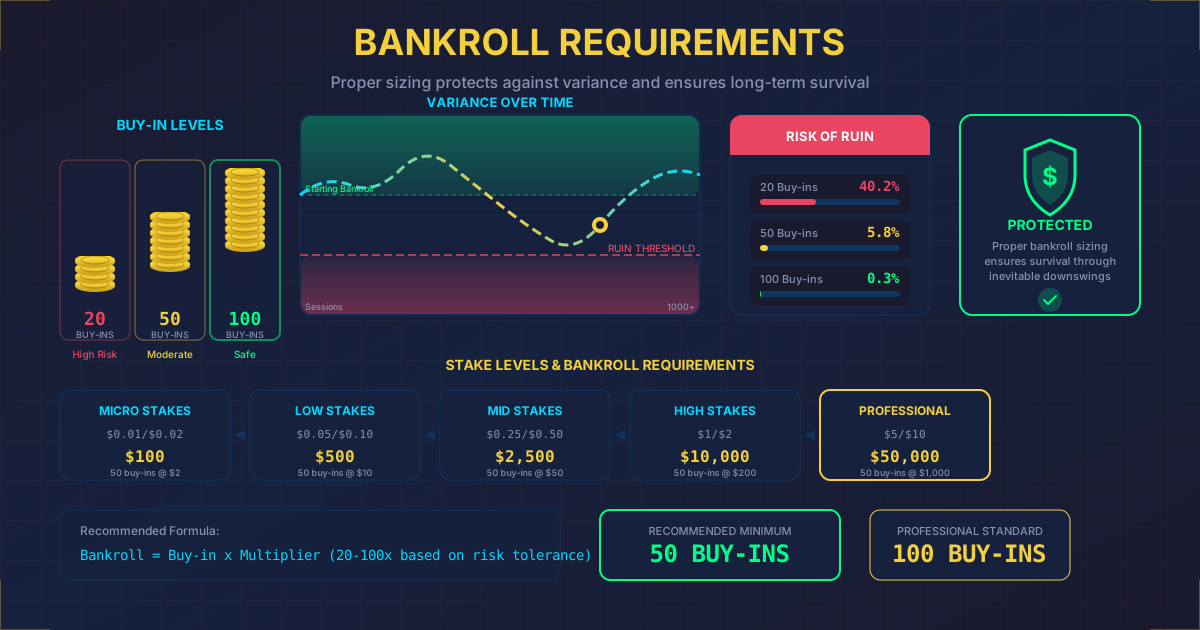
Bankroll Requirements
Recommended bankroll:

20× base unit minimum
$10 base = $200 bankroll
Survives ~15 net losses
More conservative than alternatives
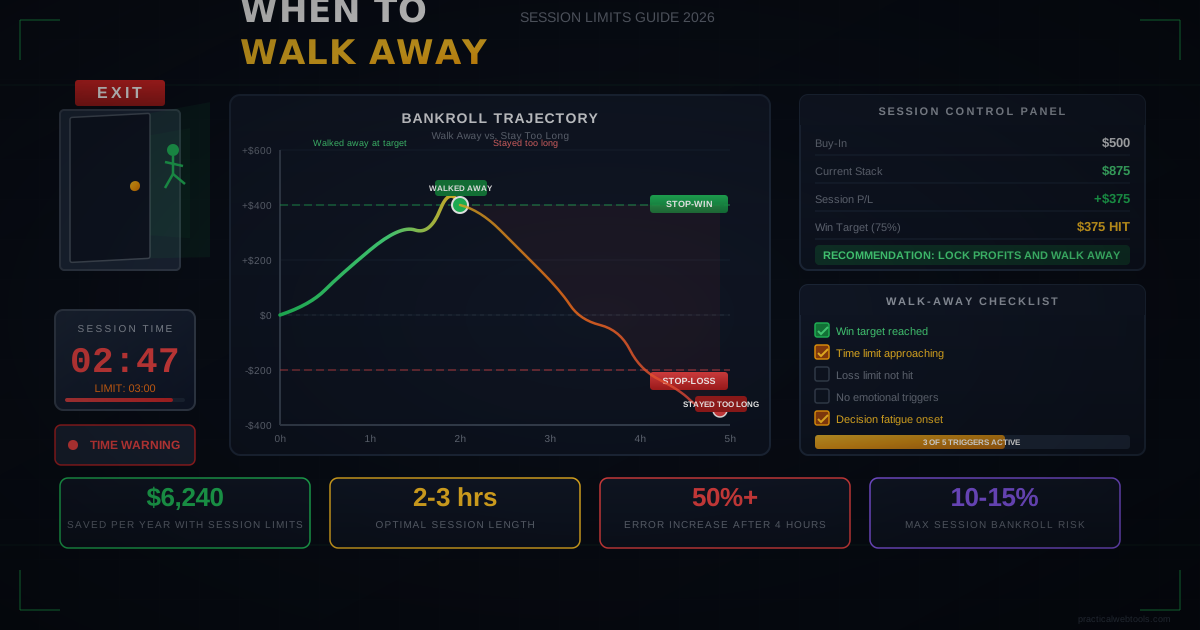
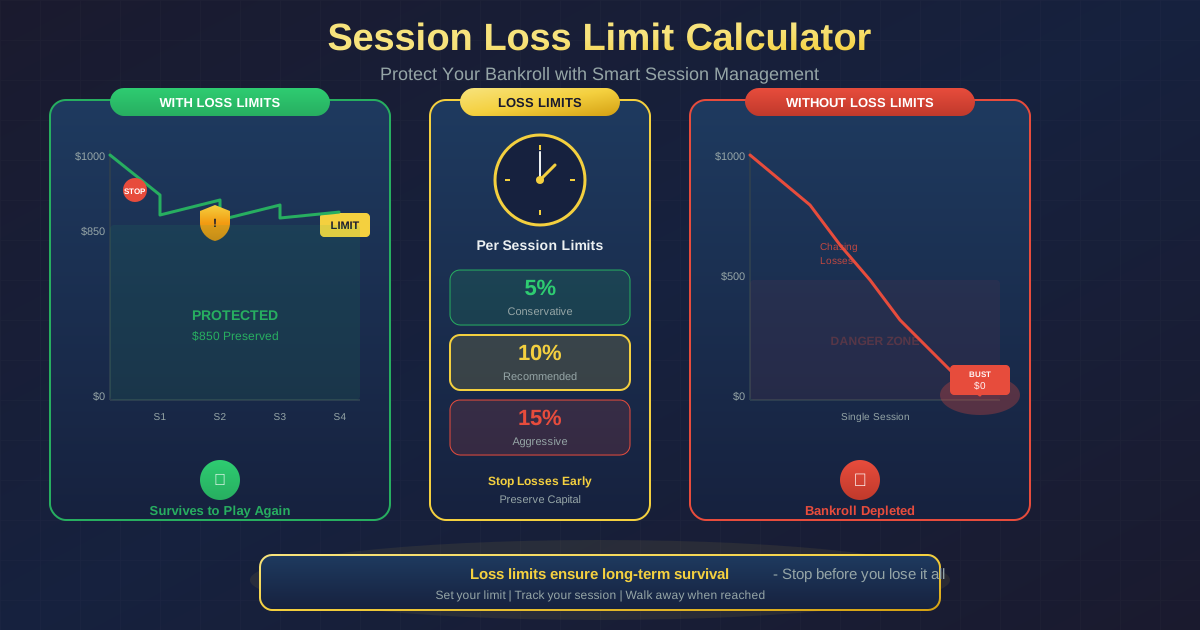
Session Limits
Smart D'Alembert play:

Set win goal (e.g., +10 units)
Set loss limit (e.g., -20 units)
Walk away at either
Don't chase indefinitely
Common Mistakes
1. Believing It's Mathematically Sound
Mistake: "Balance guarantees profit" Problem: House edge prevents balance Fix: Understand it's entertainment
2. No Minimum Floor
Mistake: Going below base bet Problem: System requires base floor Fix: Never bet less than 1 unit
3. Unlimited Sessions
Mistake: Playing until even Problem: Could take forever Fix: Set time/loss limits
4. Too Large Base Unit
Mistake: $50 base with $500 bankroll Problem: Only 10 loss cushion Fix: Base should be 1/20+ of bankroll
Frequently Asked Questions
Is D'Alembert the safest system?
Among negative progressions, yes. Linear growth (+1 unit) is much safer than exponential (×2). Still loses to house edge long-term.
Why is it called the Pyramid system?
Bet sizes go up and down like a pyramid—increasing after losses, decreasing after wins, centering around the base.
Does D'Alembert work for even money bets?
It's designed for even money bets (red/black, odd/even, pass line). Same principle could apply to other bets but payouts differ.
Can I use D'Alembert profitably?
Short term: possibly. Long term: no. The house edge applies to every bet regardless of sizing strategy.
How is D'Alembert different from Martingale?
Martingale doubles (×2) after losses—exponential growth. D'Alembert adds one unit (+1)—linear growth. Much slower progression.
What's the reverse D'Alembert?
Positive progression: +1 after win, -1 after loss. Rides winning streaks, cuts losing streaks. Different variance profile, same edge.
Pro Tips
-
Safest progression: Linear, not exponential
-
Same house edge: System can't change math
-
Entertainment focused: Longer play time
-
Set limits: Don't play forever
-
Small base unit: 1/20 of bankroll
Related Calculators
- Martingale Calculator - Compare systems
- Fibonacci Calculator - Another progression
- Roulette Odds Calculator - Base probabilities
- Bankroll Calculator - Risk management
- Expected Value Calculator - True EV
Conclusion
The D'Alembert system offers the gentlest negative progression—just add one unit after losses, subtract one after wins. Our calculator shows why this conservative approach provides longer entertainment and lower variance while still facing the same mathematical house edge as any other system.
Calculate D'Alembert Betting Now →
After 10 losses, you're betting $110 instead of Martingale's $10,240. Our calculator proves D'Alembert is about bankroll preservation and entertainment, not beating the house.