DFS Lineup Optimizer Calculator: Build Winning Lineups (2026)
DFS Lineup Optimizer Calculator: Maximize Your Edge
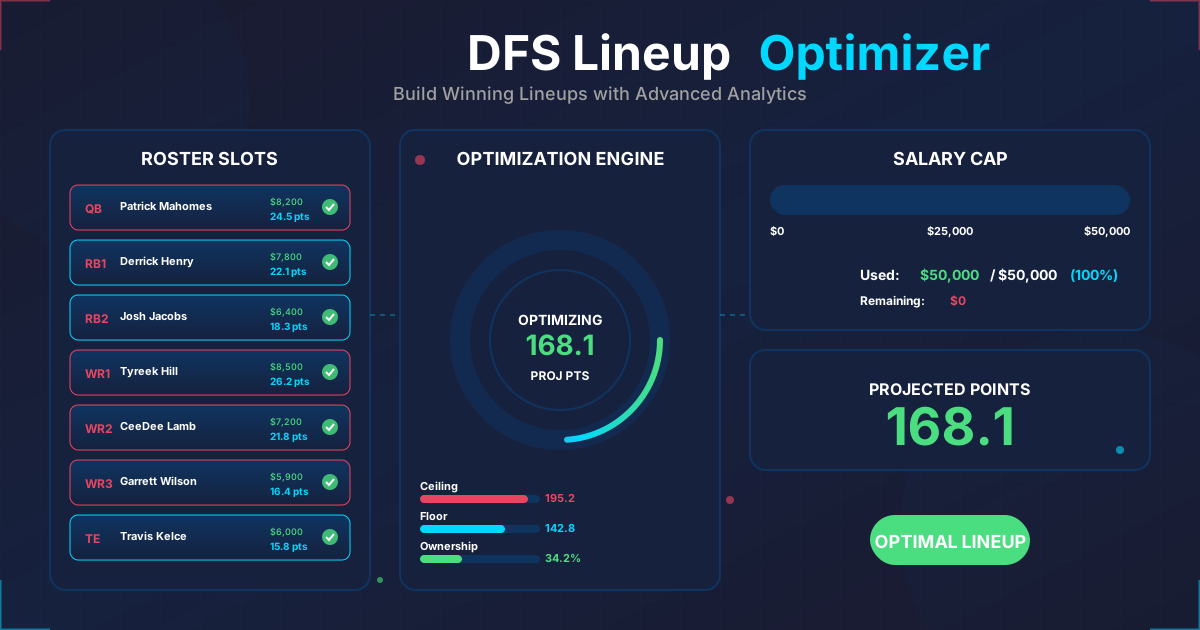
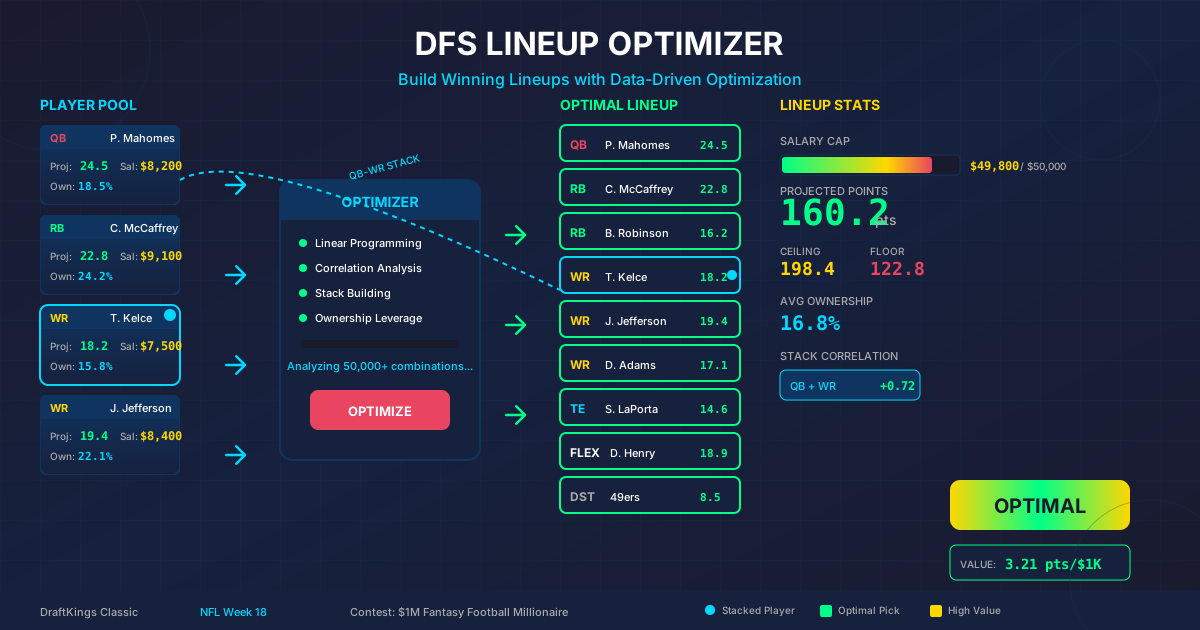
Building optimal DFS lineups requires balancing salary, projections, ownership, and correlation. Our optimizer calculator helps you construct lineups that maximize expected value while fitting within salary constraints.
What Is DFS Lineup Optimization?
Lineup optimization uses mathematical algorithms to select the best combination of players within salary cap constraints. The goal: maximize projected points (cash games) or find contrarian builds with high ceilings (GPPs).
Quick Answer: Enter player projections and salaries, set your constraints (positions, salary cap, stacking rules), and the optimizer finds lineups maximizing total projected points. For GPPs, add ownership data to find leverage. Key insight: optimal isn't just highest projection—it's highest projection per dollar spent that also correlates correctly.
How to Use Our Lineup Optimizer
Use the DFS Lineup Optimizer Calculator →
Input player data and constraints to generate optimized lineups.
Step-by-Step Instructions
-
Import Player Pool: Projections and salaries
-
Set Salary Cap: DraftKings ($50K) or FanDuel ($60K)
-
Configure Positions: Required roster slots
-
Add Constraints: Stacking, exposure limits
-
Generate Lineups: View optimal builds
Input Fields Explained
| Field | Description | Example |
|---|---|---|
| Salary Cap | Total budget | $50,000 |
| Positions | Required slots | QB, RB, RB, WR, WR, WR, TE, FLEX, DST |
| Projections | Expected points | 22.5 |
| Salary | Player cost | $7,200 |
| Ownership | Expected % rostered | 25% |
| Ceiling | Upside projection | 32.0 |
Optimization Basics
The Core Problem
Maximize: Σ(Player Projections)
Subject to: Σ(Player Salaries) ≤ Salary Cap
           Roster positions filled correctly
           Custom constraints met
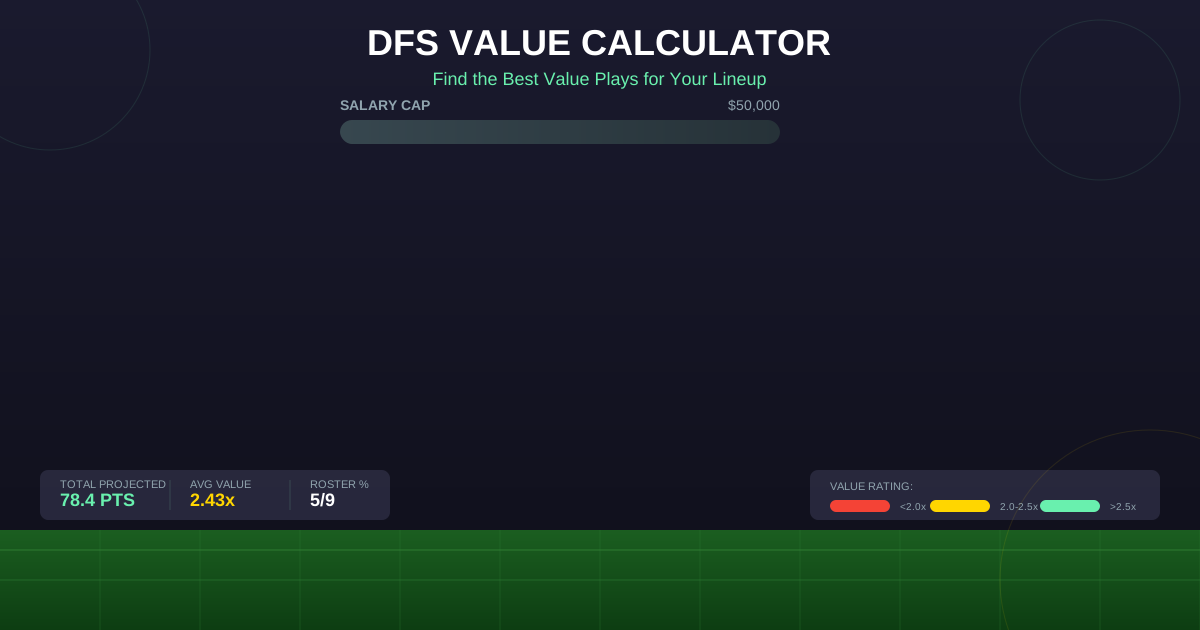
Value Calculation
Value = Projection / (Salary / 1000)

Example:
Player A: 18 pts at $6,000 = 3.0 pts/$1K
Player B: 22 pts at $8,500 = 2.6 pts/$1K

Player A offers more value per dollar
Cash Game Optimization
Primary Goals
| Priority | Focus |
|---|---|
| 1 | Floor—consistent point production |
| 2 | Value—maximize points per dollar |
| 3 | Reliability—low variance players |
| 4 | Full salary usage—minimize leftover |
Cash Game Settings
| Setting | Recommended |
|---|---|
| Projection type | Floor/median |
| Ownership weight | Low/ignore |
| Stacking | Minimal |
| Salary remaining | <$200 ideally |
Sample Cash Lineup Strategy
| Position | Target | Example |
|---|---|---|
| QB | Safe floor | Kirk Cousins type |
| RB1 | Workhorse | Heavy volume, low sharing |
| RB2 | Value | Good matchup, salary saver |
| WRs | Target share | High volume receivers |
| TE | Safe or punt | Either pay up or minimum |
| FLEX | Best value | Highest floor remaining |
| DST | Vegas implied | Favorite at home |
GPP Optimization
Primary Goals
| Priority | Focus |
|---|---|
| 1 | Ceiling—maximum upside |
| 2 | Leverage—differentiation from field |
| 3 | Correlation—stacking for boom/bust |
| 4 | Game environment—high totals, close spreads |
GPP Settings
| Setting | Recommended |
|---|---|
| Projection type | Ceiling/upside |
| Ownership weight | High (inverse) |
| Stacking | Aggressive |
| Uniqueness | Prioritized |
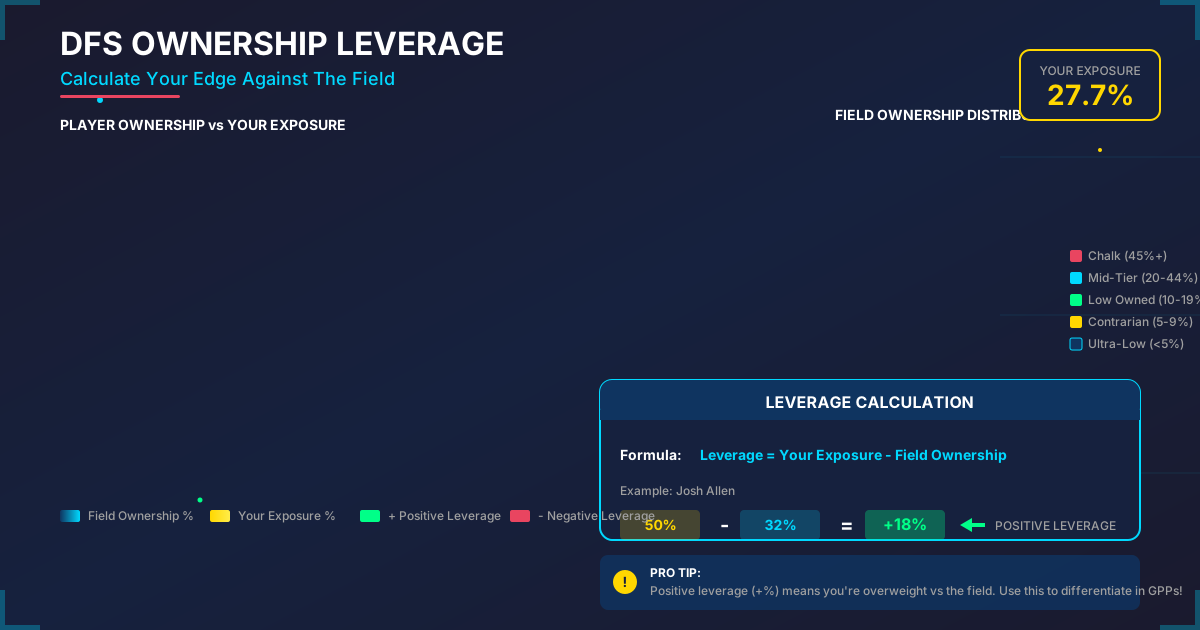
Leverage Calculation
Leverage = (Your Exposure) - (Field Ownership)

Player at 5% ownership, you roster in 20% of lineups:
Leverage = +15% (good differentiation)

Player at 35% ownership, you roster in 40%:
Leverage = +5% (minimal differentiation)
Stacking Strategies
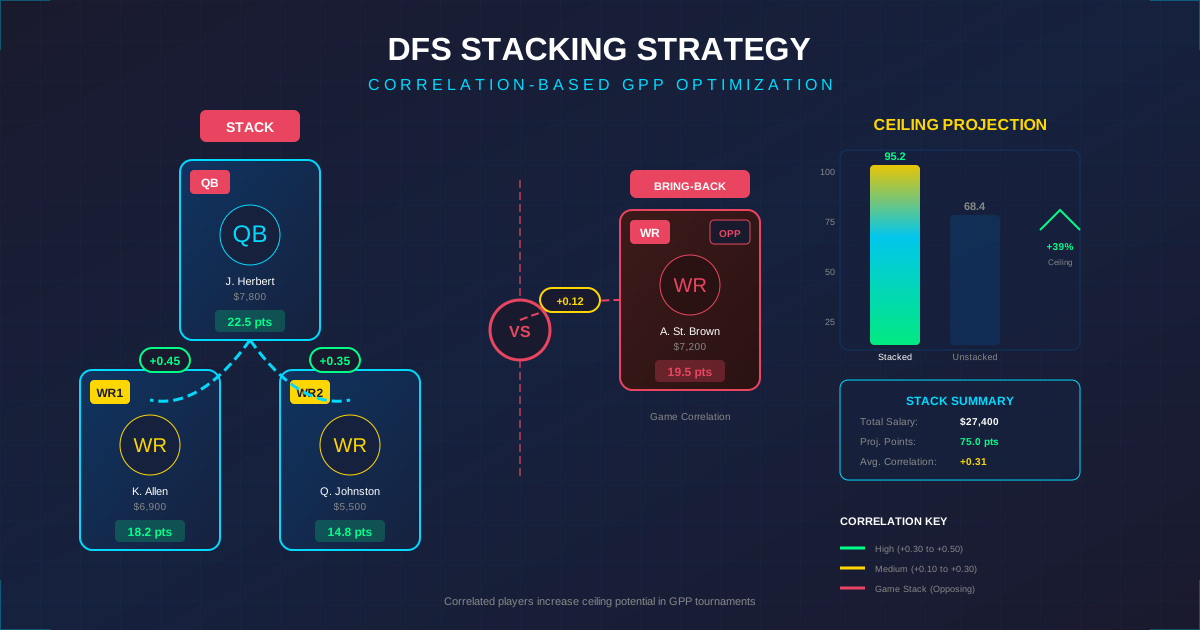
QB-WR Stack
| Stack Type | Correlation | Use Case |
|---|---|---|
| QB + WR1 | +0.4 to +0.6 | Core GPP stack |
| QB + WR1 + WR2 | Higher | Tournament upside |
| QB + WR + opposing WR | Balanced | Game stack |
Game Stack
Shootout game stack:
QB1 + WR1 + WR2 (team A)
+ WR1 (team B, bring-back)

Correlated to high-scoring game
Running Back Stacks
| Stack | When to Use |
|---|---|
| RB + DST | Blowout game, defensive TD potential |
| RB + opposing WR | Hedge game script |
Real-World Examples
Example 1: Cash Game Build
Contest: $5 Double Up Goal: Cash 50%+, maximize floor
Optimizer settings:
- Use floor projections
- Ignore ownership
- Minimize correlation
- Maximize salary usage
Result:
| Position | Player | Salary | Projection |
|---|---|---|---|
| QB | Stafford | $6,800 | 18.5 |
| RB | CMC | $9,200 | 22.0 |
| RB | Jacobs | $6,400 | 15.5 |
| WR | Hill | $8,600 | 19.0 |
| WR | Diggs | $7,200 | 16.5 |
| WR | McLaurin | $5,800 | 13.0 |
| TE | Kelce | $7,500 | 16.0 |
| FLEX | Pollard | $5,200 | 12.5 |
| DST | Bills | $3,300 | 8.0 |
| Total | $50,000 | 141.0 |
Example 2: GPP Build
Contest: $20 GPP, 50K entries Goal: Differentiation + upside
Optimizer settings:
- Use ceiling projections
- Weight ownership heavily (inverse)
- Require QB-WR stack
- Add game stack bring-back
Result:
| Position | Player | Salary | Ceiling | Own% |
|---|---|---|---|---|
| QB | Hurts | $7,800 | 32.0 | 18% |
| RB | Swift | $5,600 | 24.0 | 8% |
| RB | Stevenson | $5,200 | 22.0 | 6% |
| WR | A.J. Brown | $7,400 | 28.0 | 22% |
| WR | DeVonta Smith | $6,200 | 24.0 | 12% |
| WR | D. Moore (bring-back) | $5,800 | 26.0 | 7% |
| TE | Goedert | $4,800 | 18.0 | 5% |
| FLEX | Achane | $4,600 | 22.0 | 15% |
| DST | Eagles | $2,600 | 12.0 | 4% |
| Total | $50,000 | 208.0 | — |
Example 3: Showdown Captain
Contest: Single-game Showdown Strategy: Captain leverage
Settings:
- Captain = 1.5× points, 1.5× salary
- Look for low-owned captain with upside
- Stack with game flow correlation
Advanced Optimization Concepts
Multi-Lineup Generation
For 150-lineup GPP entry:
1. Optimize first lineup
2. Lock/exclude players at exposure limits
3. Optimize next lineup
4. Repeat with variance

Result: Diverse lineup set with controlled exposure
Exposure Management
| Player Type | Max Exposure |
|---|---|
| Core plays | 40-60% |
| Leverage plays | 20-35% |
| Contrarian plays | 5-15% |
| Chalk avoidance | 0-5% |
Correlation Matrix
| Pair | Typical Correlation |
|---|---|
| QB-WR same team | +0.45 |
| QB-RB same team | +0.10 |
| RB-WR same team | -0.05 |
| QB-opposing QB | +0.15 |
| WR-opposing WR | +0.20 |
Common Optimization Mistakes
1. Over-Optimizing to Projections
Mistake: Trusting projections as exact Problem: Projections have huge error bars Fix: Use projection ranges, not point estimates
2. Ignoring Correlation
Mistake: Max points without correlation logic Problem: Uncorrelated lineups have lower ceilings Fix: Build correlated stacks for GPPs
3. Same Build for Cash and GPP
Mistake: One strategy for all contests Problem: Cash needs floor, GPP needs ceiling Fix: Optimize separately for contest type
4. Chasing Last Week's Points
Mistake: Weighting recent performance too heavily Problem: Regression to mean Fix: Use sustainable underlying metrics
Frequently Asked Questions
How accurate are DFS projections?
Even the best projections have wide error ranges. A 20-point projection might actually range from 8 to 35 points. Use projections as guides, not gospel.
Should I use the same optimizer for cash and GPPs?
Use different settings. Cash games prioritize floor and value. GPPs prioritize ceiling and leverage. Same tool, different configurations.
How many lineups should I enter in GPPs?
Depends on field size and your edge. Single entry for small fields. 150+ lineups for large-field GPPs where lineup diversity matters.
What's more important: projections or ownership?
For cash: projections. For GPPs: both matter equally. Low-owned ceiling players are GPP gold.
Can I optimize for best ball drafts?
Yes, but adjust for scoring: ignore correlation (weekly scoring). Focus on season-long ceiling and draft position value.
Should I ever leave salary on the table?
Rarely in cash games. In GPPs, leaving $100-300 can be fine if it enables better leverage or correlation.
Pro Tips
-
Cash = floor: Build for the median outcome
-
GPP = ceiling + leverage: Differentiate from the field
-
Correlation matters: QB-WR stacks aren't optional in GPPs
-
Game environment: High totals and close spreads increase scoring
-
Late swap: Update lineups with news close to lock
Related Calculators
- DFS Ownership Leverage Calculator - Ownership analysis
- Expected Value Calculator - EV math
- Probability Calculator - Probability basics
- Bankroll Calculator - Bankroll management
- Sports Betting ROI Calculator - ROI tracking
Conclusion
DFS lineup optimization transforms guesswork into mathematical precision. Our calculator handles the complex salary/projection/correlation balancing, letting you focus on player evaluation and game theory. Build separate strategies for cash and GPPs, understand correlation dynamics, and use leverage to differentiate in tournaments. The edge in DFS comes from process—our optimizer helps systematize that process.
Optimize Your DFS Lineup Now →
Winning DFS players don't just pick good players—they build optimally constructed lineups that balance value, correlation, and differentiation. Our optimizer makes that process accessible, whether you're building one cash lineup or generating 150 GPP entries. Input your projections, set your constraints, and let the math do the heavy lifting.