DFS Stacking Calculator: Correlation Strategy for GPPs (2026)
DFS Stacking Calculator: Correlated Lineups for GPP Success
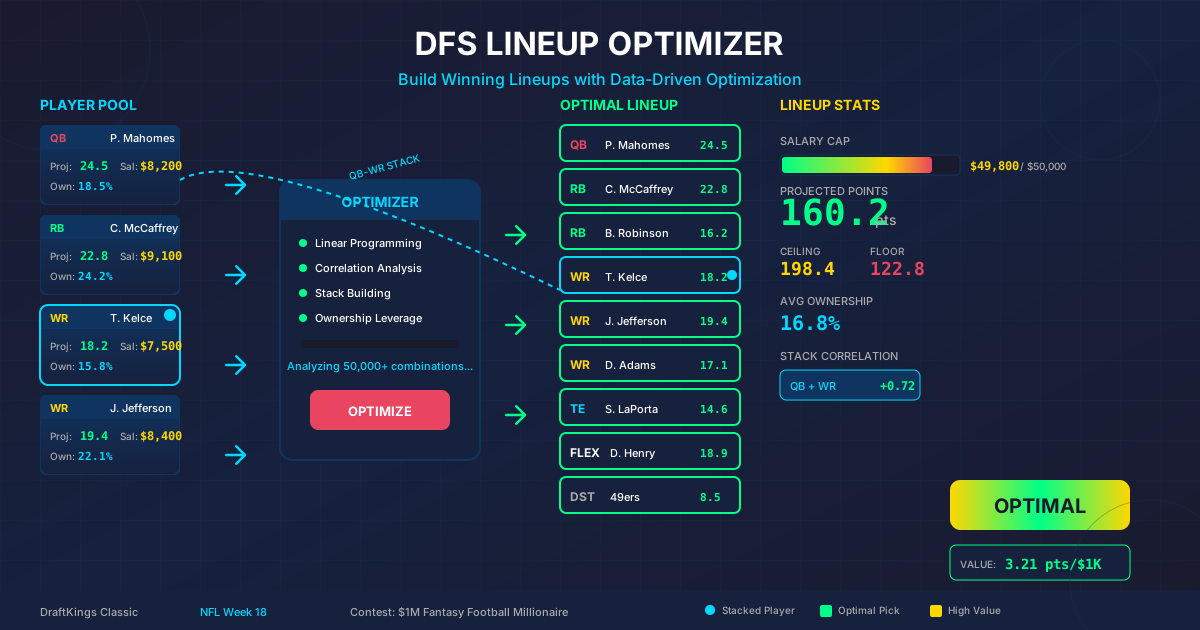
Stacking—playing positively correlated players together—is essential for DFS tournaments. Our calculator helps you identify optimal stack combinations, understand correlation strength, and build lineups with maximum ceiling potential.
What Is DFS Stacking?
Stacking means rostering players whose performance correlates positively. When your QB throws a touchdown, your stacked WR scores too. This correlation increases variance—exactly what you need to win large-field GPPs.
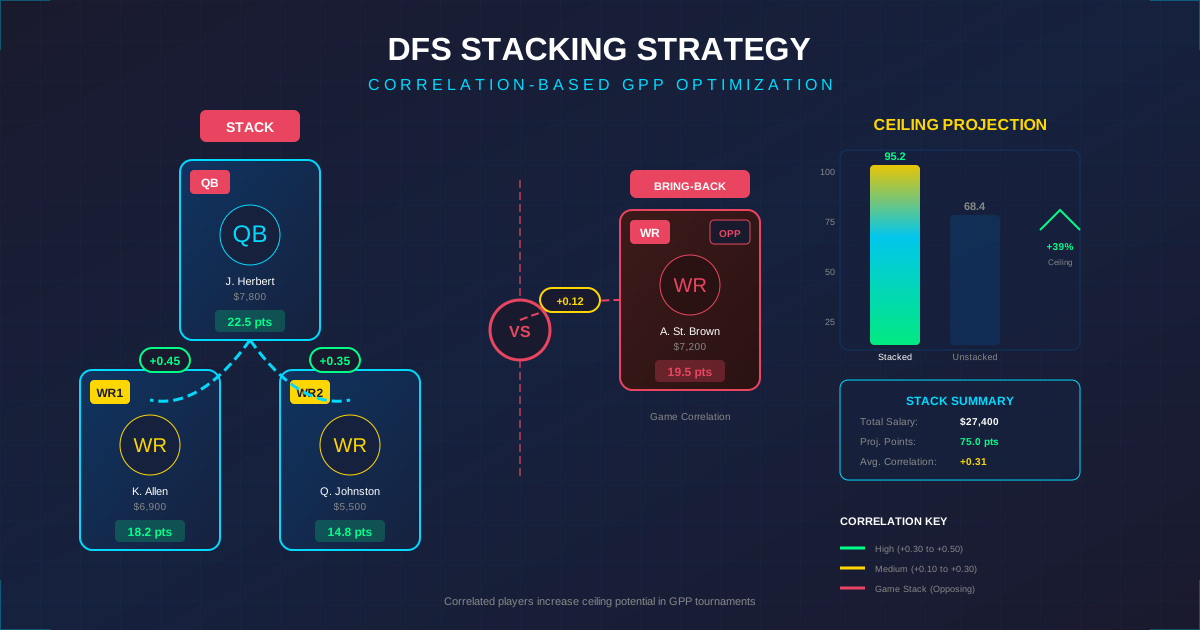
Quick Answer: QB-WR1 correlation is ~0.4-0.5, meaning when QB scores above average, WR1 likely does too. A 3-man stack (QB+WR1+WR2) from a team in a projected shootout maximizes your lineup's ceiling. Bring-backs (opposing WR) add game correlation. Stacking is mandatory for GPPs—uncorrelated lineups rarely win large fields.
How to Use Our Stacking Calculator
Use the DFS Stacking Calculator →
Enter players and matchup data to analyze stack correlations and ceiling projections.
Step-by-Step Instructions
-
Select Game: High-total matchups
-
Choose Stack Core: QB + pass catchers
-
Add Bring-Back: Opposing team player
-
View Correlation: Stack strength
-
Analyze Ceiling: Maximum point potential
Input Fields Explained
| Field | Description | Example |
|---|---|---|
| QB | Quarterback | Josh Allen |
| WR1 | Primary receiver | Stefon Diggs |
| WR2 | Secondary receiver | Gabe Davis |
| Bring-back | Opposing player | Ja'Marr Chase |
| Stack Correlation | Combined strength | +0.65 |
| Ceiling Projection | Maximum output | 125 pts |
| Game Total | Vegas O/U | 54.5 |
Understanding Correlation
Correlation Coefficients
| Player Pair | Typical Correlation |
|---|---|
| QB - WR1 | +0.40 to +0.55 |
| QB - WR2 | +0.30 to +0.45 |
| QB - TE | +0.25 to +0.40 |
| QB - RB | +0.05 to +0.15 |
| WR1 - WR2 (same team) | -0.10 to +0.10 |
| QB - Opposing QB | +0.15 to +0.25 |
| QB - Opposing WR | +0.10 to +0.20 |
| RB - Team DST | +0.10 to +0.20 |
What Correlation Means
Correlation = 0.5 means:
When QB scores 1 SD above average,
WR1 scores 0.5 SD above average on average

High correlation = outcomes move together
Negative correlation = outcomes move opposite
Zero correlation = independent outcomes
Stack Types
2-Man Stack (QB + WR1)
| Aspect | Value |
|---|---|
| Correlation | +0.45 average |
| Ceiling boost | Moderate |
| Ownership | Often chalky |
| Best use | Cash games, smaller GPPs |
3-Man Stack (QB + WR1 + WR2)
| Aspect | Value |
|---|---|
| Correlation | +0.55 combined |
| Ceiling boost | High |
| Ownership | More unique |
| Best use | Large GPPs |
Game Stack (3+1)
| Aspect | Value |
|---|---|
| Structure | QB + 2WR + opposing WR |
| Correlation | +0.60+ |
| Ceiling boost | Very high |
| Reasoning | Correlated to high-scoring game |
Naked Stack (QB + 2WR, no bring-back)
| Aspect | Value |
|---|---|
| Structure | All from one team |
| Risk | One-sided game = disaster |
| Reward | Domination upside |
| Best use | Heavy favorite in shootout |
Game Selection
Ideal Stack Games
| Factor | What to Look For |
|---|---|
| Vegas total | 50+ points |
| Spread | Close (within 6 points) |
| Pace | Fast teams, high plays/game |
| Weather | Dome or good conditions |
| Defensive ranking | Poor pass defenses |
Stack Environment Scoring
Stack Score = Total + (7 - |Spread|) + Pace Rating

Example:
Total: 52 (+2)
Spread: -3 (+4)
Pace: Above average (+2)
Stack Score: +8 (excellent)
Bring-Back Strategy
Why Bring-Backs Work
If your stack's game hits 60+ points:
Your team: 35 points → stack crushes
Opponent: 25 points → bring-back scores too

Game correlation ensures you benefit from shootout
Optimal Bring-Back Selection
| Priority | Player Type |
|---|---|
| 1st | Opposing WR1 |
| 2nd | Opposing pass-catching RB |
| 3rd | Opposing TE |
| 4th | Opposing WR2 |
Correlation Impact
| Stack Type | Ceiling | Floor |
|---|---|---|
| Naked 3-man | Very high | Very low |
| 3+1 game stack | High | Moderate |
| 4+2 game stack | Highest | Higher floor |
Real-World Examples
Example 1: Classic Game Stack
Game: Bills vs. Bengals (52.5 total, -2.5 BUF)
Stack:
- QB: Josh Allen ($7,800)
- WR: Stefon Diggs ($7,400)
- WR: Gabe Davis ($5,600)
- Bring-back: Ja'Marr Chase ($8,200)
Correlation analysis:
- Allen-Diggs: +0.50
- Allen-Davis: +0.35
- Allen-Chase (game): +0.15
- Combined stack: +0.65
Ceiling projection: 130+ points from 4 players
Example 2: Leverage Stack
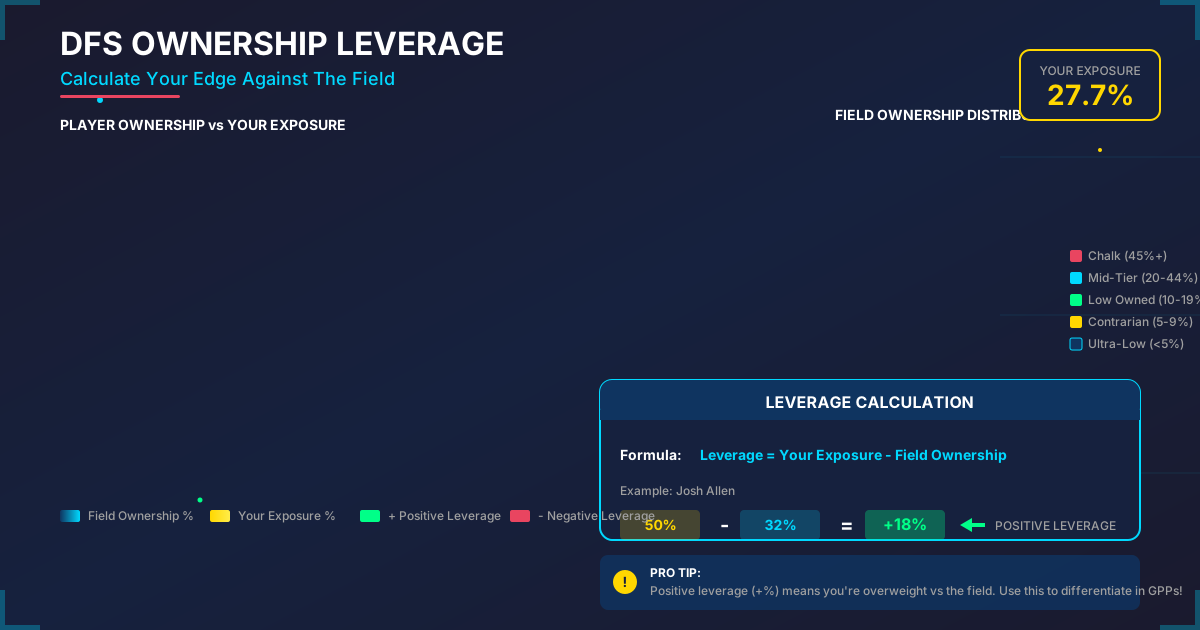
Popular stack: Mahomes-Kelce (25% owned) Leverage play: Burrow-Chase-Higgins (8% owned)
If both games hit similar scores:
- Chalk stack owners split prizes
- Your unique stack provides differentiation
Example 3: Running Back Stack
Game: 49ers heavy favorite (-10), 48 total
Stack:
- RB: Christian McCaffrey ($9,200)
- DST: 49ers ($3,800)
Correlation logic:
- Blowout = RB scores
- Blowout = Defensive TDs, turnovers
- Combined: +0.15 to +0.25
Advanced Stacking Concepts
Correlation Stacking Matrix
Build correlation matrix for your lineup:
       QB   WR1  WR2  BB   RB1  RB2  TE   DST
QB     1.0  0.5  0.4  0.15 0.1  0.0  0.3  0.0
WR1    0.5  1.0  0.0  0.05 0.0  0.0  0.1  0.0
...

Total lineup correlation = sum of pairwise correlations
Higher = more volatile = better for GPPs
Ownership-Weighted Stacking
Stack value = Ceiling × (1 / Ownership)

Popular stack: 130 ceiling, 20% owned
Value = 130 × 5 = 650

Unique stack: 120 ceiling, 4% owned
Value = 120 × 25 = 3,000

Unique stacks offer better GPP value
Partial Correlation
When QB throws TD to WR2 instead of WR1:
WR1 scores lower, WR2 scores higher
Net effect on QB-WR1-WR2 stack: smaller boost

This is why 3-man stacks have diminishing returns
vs 2-man stacks, not 3× the benefit
Common Stacking Mistakes
1. Stacking in Cash Games
Mistake: 3-man stack in 50/50 or double-up Problem: Variance hurts cash game consistency Fix: Minimal stacking (2-man max) for cash
2. Ignoring Game Environment
Mistake: Stacking low-total game Problem: Ceiling is capped regardless of correlation Fix: Stack into 50+ point games
3. Same Stack as Field
Mistake: Most popular stack at high ownership Problem: Splitting prize pool with many entries Fix: Find leverage through unique bring-backs or alternative games
4. Over-Correlating Lineups
Mistake: 5+ players from one game Problem: Extreme variance, low floor Fix: 3-4 players per game maximum
Frequently Asked Questions
Should I always stack in GPPs?
Yes. Uncorrelated lineups rarely win large fields. The ceiling boost from correlation is necessary for tournament success.
What about single-entry tournaments?
Stack aggressively but uniquely. In single-entry, you need differentiation from the optimal lineup consensus.
Do stacks work in NFL, NBA, and MLB?
Yes, but correlation varies. NFL has strongest stacking effects. NBA has team totals correlation. MLB has batter ordering correlation.
How many stacks should I run in 150-entry contests?
5-8 core stacks with variations (different bring-backs, flex options). Avoid over-diversifying into mediocre stacks.
Should I stack running backs?
Rarely primary, but RB-DST from blowout favorites can work. RB-WR same team has near-zero or negative correlation.
What ownership level is too high for a stack?
No hard rule, but 20%+ combined ownership means you need uniqueness elsewhere. 5-10% stack ownership is ideal for GPPs.
Pro Tips
-
Game script matters: Close games = more passing = more stack points
-
Ownership leverage: Same game, different teams = differentiation
-
Weather awareness: Wind/rain = run heavy = avoid pass stacks
-
Late swap: Adjust stacks based on inactive reports
-
Ceiling over floor: GPPs reward variance
Related Calculators
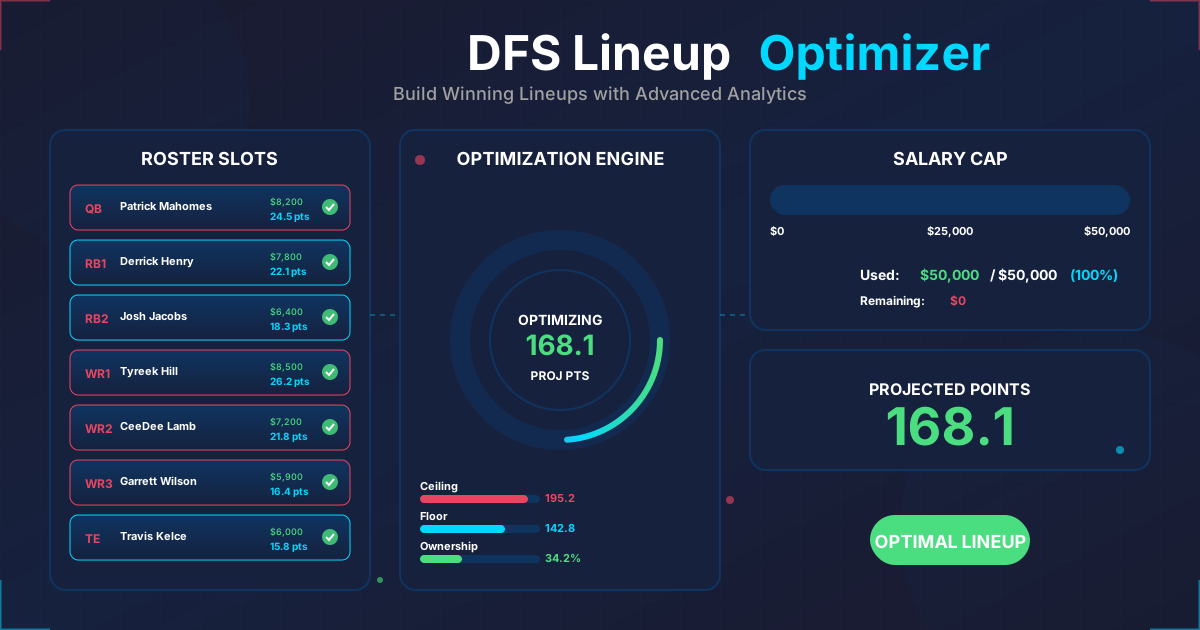
- DFS Lineup Optimizer - Full lineup builder
- DFS Ownership Leverage Calculator - Ownership analysis
- Expected Value Calculator - EV math
- Probability Calculator - Probability basics
- Bankroll Calculator - Bankroll management
Conclusion
Stacking is the foundation of GPP DFS strategy. Our calculator helps you identify optimal stack combinations, understand correlation strength between players, and select games that maximize ceiling potential. Build correlated lineups, find leverage through unique combinations, and accept the variance that comes with tournament-winning upside.
Calculate Stack Correlations Now →
GPP winners don't roster 9 independent players—they build correlated lineups that explode together. Our stacking calculator shows you exactly how players' outcomes relate, helping you construct lineups capable of taking down large-field tournaments. Stack smart, find leverage, and let correlation drive your ceiling.