DFS Value Calculator: Find the Best Lineup Plays (2026)
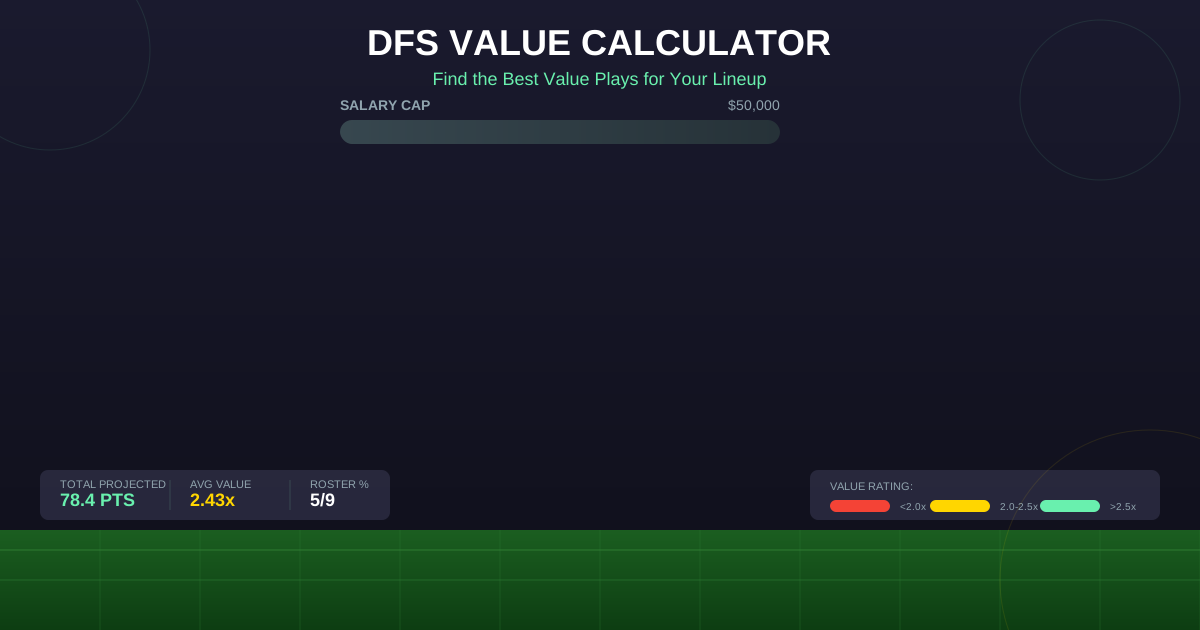
DFS Value Calculator: Maximize Your Lineup Potential
Finding value is the key to winning at daily fantasy sports. Our free DFS value calculator helps you identify players who provide the best projected points relative to their salary, giving you the edge in both cash games and tournaments.
What Is DFS Value?
DFS value measures how many projected fantasy points a player provides per dollar of salary. Higher value players give you more production for your salary cap, allowing you to fit more elite players into your lineup.
Quick Answer: DFS value = Projected Points / (Salary / 1000). A player projected for 20 points at $6,000 salary has a value of 3.33x. Generally, value above 3.0x is considered good, above 3.5x is excellent.
How to Use Our Free DFS Value Calculator
Use the DFS Value Calculator →
Enter player projections and salaries to identify the best value plays.
Step-by-Step Instructions
-
Select Sport: NFL, NBA, MLB, NHL, PGA, or Soccer
-
Enter Player Data: Input salary and projected points
-
View Value Score: See points per $1,000 salary
-
Compare Players: Rank players by value at each position
Input Fields Explained
| Field | Description | Example |
|---|---|---|
| Player Name | The player to evaluate | Josh Allen |
| Position | Player's position | QB |
| Salary | DraftKings/FanDuel cost | $7,800 |
| Projected Points | Expected fantasy output | 22.5 |
The Value Formula
Basic Value Calculation
Value Multiplier = Projected Points / (Salary / 1000)
Example:
- Player: Ja'Marr Chase
- Salary: $8,200
- Projected Points: 18.6
- Value: 18.6 / 8.2 = 2.27x
What's Good Value?
| Value Multiplier | Rating | Strategy |
|---|---|---|
| Below 2.0x | Poor | Avoid unless high ceiling |
| 2.0x - 2.5x | Below Average | Only for studs |
| 2.5x - 3.0x | Average | Baseline target |
| 3.0x - 3.5x | Good | Target these players |
| 3.5x+ | Excellent | Must-play in cash |
Sport-Specific Value Targets
NFL DFS Value Benchmarks
| Position | Average Value | Good Value | Excellent Value |
|---|---|---|---|
| QB | 2.5x | 3.0x | 3.5x+ |
| RB | 2.3x | 2.8x | 3.2x+ |
| WR | 2.2x | 2.7x | 3.0x+ |
| TE | 2.0x | 2.5x | 3.0x+ |
| DEF | 2.0x | 2.5x | 3.0x+ |
NBA DFS Value Benchmarks
| Position | Average Value | Good Value | Excellent Value |
|---|---|---|---|
| PG/SG/SF/PF/C | 4.5x | 5.0x | 5.5x+ |
| Utility | 4.5x | 5.0x | 5.5x+ |
NBA value targets are higher because of the scoring scale and salary structure.
MLB DFS Value Benchmarks
| Position | Average Value | Good Value | Excellent Value |
|---|---|---|---|
| P | 2.0x | 2.5x | 3.0x+ |
| C | 1.8x | 2.3x | 2.8x+ |
| IF/OF | 2.0x | 2.5x | 3.0x+ |
Real-World DFS Value Examples
Example 1: Identifying a Value Play
NFL Week 10: WR Comparison
| Player | Salary | Projection | Value |
|---|---|---|---|
| CeeDee Lamb | $9,200 | 18.4 | 2.0x |
| Nico Collins | $6,800 | 15.8 | 2.32x |
| Romeo Doubs | $4,400 | 13.2 | 3.0x |
Analysis: Romeo Doubs provides 50% more value than CeeDee Lamb. Using Doubs saves $4,800 in salary while sacrificing only 5.2 projected points. That salary can upgrade another position.
Example 2: Building a Balanced Lineup
$50,000 Salary Cap Challenge
| Position | Player | Salary | Proj | Value |
|---|---|---|---|---|
| QB | Dak Prescott | $7,200 | 21.6 | 3.0x |
| RB | Saquon Barkley | $8,400 | 19.3 | 2.3x |
| RB | Jaylen Warren | $4,800 | 13.9 | 2.9x |
| WR | Ja'Marr Chase | $8,200 | 18.6 | 2.27x |
| WR | Tank Dell | $5,600 | 15.2 | 2.71x |
| WR | Romeo Doubs | $4,400 | 13.2 | 3.0x |
| TE | Travis Kelce | $6,800 | 14.2 | 2.09x |
| FLEX | Zay Flowers | $5,400 | 13.8 | 2.56x |
| DST | Ravens | $3,200 | 8.4 | 2.63x |
Total: $50,000 | 138.2 projected points | Average value: 2.6x
Example 3: Cash Game vs. GPP Value
Cash Games (50/50, Double-Ups):
- Prioritize floor and consistency
- Target value plays with safe projections
- Avoid boom/bust players even with high value
GPPs (Tournaments):
- Value matters less than ceiling
- Can pay up for elite players with tournament upside
- Use value plays to enable studs
Advanced Value Concepts
Value vs. Ceiling
High value doesn't always mean best play:
- High Value, Low Ceiling: Safe but limited upside (good for cash)
- Low Value, High Ceiling: Risky but can win tournaments (good for GPP)
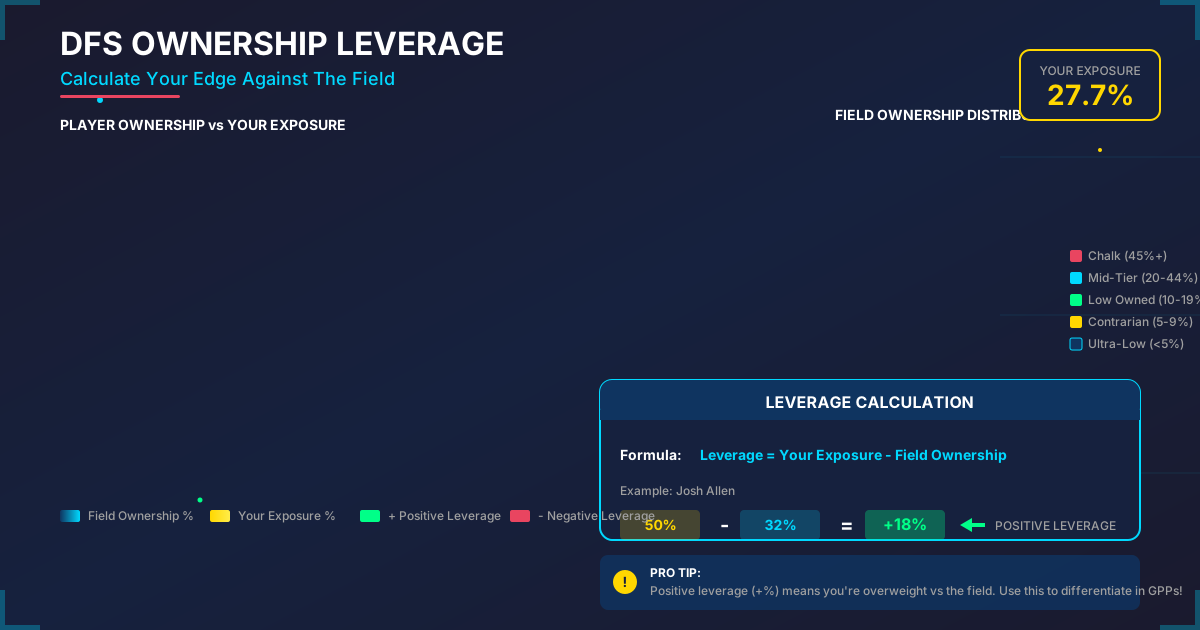
Ownership-Adjusted Value
In GPPs, factor in projected ownership:
Leverage Value = (Value × Ceiling) / Projected Ownership%
Low-owned value plays provide leverage when they hit.
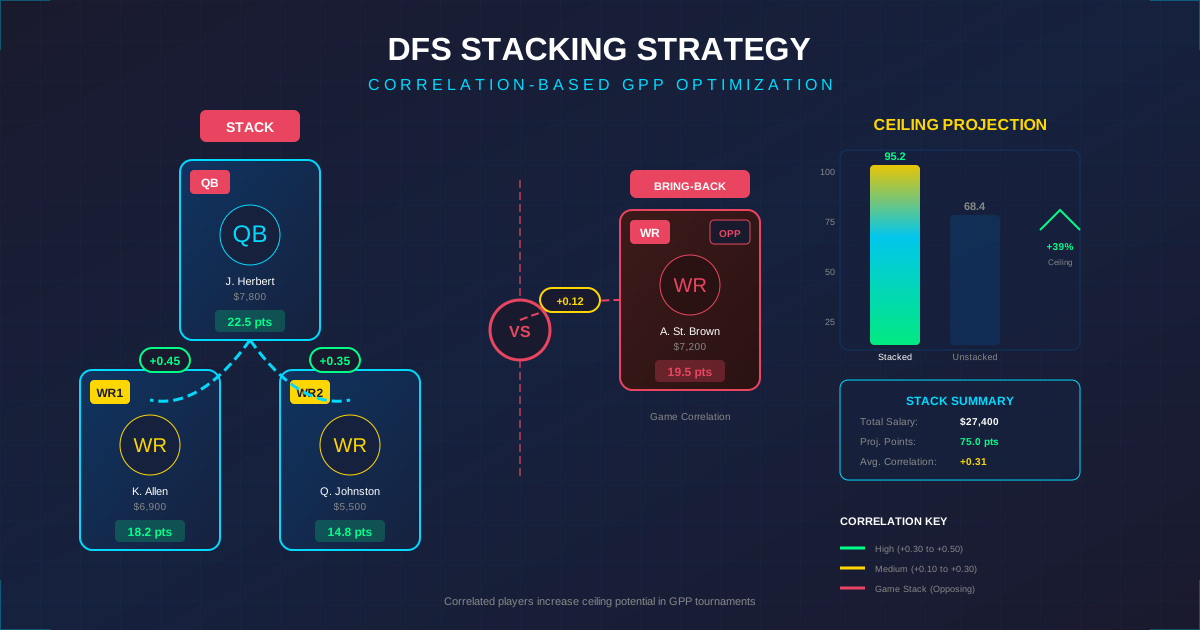
Correlation and Stacking
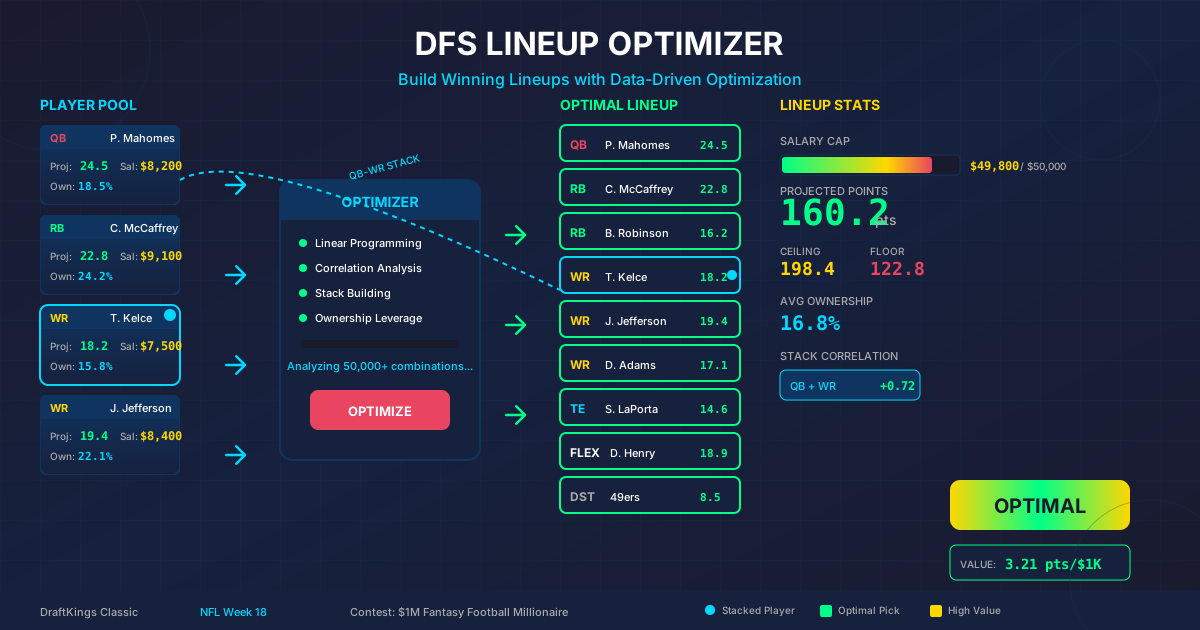
Value on correlated players amplifies:
- QB + WR1 stack
- QB + WR1 + opposing WR (game stack)
- RB + DST (positive game script)
Common DFS Value Mistakes
-
Chasing Value Over Talent: A $3,500 player with 3.5x value might still be worse than a $7,000 stud at 2.5x value if the stud has higher ceiling.
-
Ignoring Game Environment: Value in a low-total, defensive game is worth less than value in a shootout.
-
Not Adjusting for News: Yesterday's projection doesn't account for today's injury report. Recalculate value constantly.
-
Over-optimizing Value: Building a lineup of all 3.0x+ value plays often results in no elite players and low ceilings.
-
Using Value Equally for Cash and GPP: Cash games reward value; GPPs reward differentiated upside.
Frequently Asked Questions
What's the difference between DraftKings and FanDuel value?
Salary scales differ, but value ratios are comparable. DraftKings has higher salaries, so target 3.0x+ value. FanDuel has tighter salaries, so 2.7x+ is often good value.
Should I always play the highest value players?
No. In cash games, high-floor value is ideal. In tournaments, you need upside regardless of value. Mix value plays with ceiling plays.
How do I account for player volatility?
Use floor/ceiling projections, not just median. A player with 15-point projection but 8-22 range is different from one with 13-17 range, even at same value.
When does value matter most?
Value matters most when you're trying to fit expensive studs. If you want two $8,000+ players, you need 3.0x+ value elsewhere to make the lineup work.
How often do projections miss?
Projections are estimates with significant variance. Even good projections have ~15-20% error. Don't treat projected value as certain—it's a guide.
Should I make my own projections?
Building your own model can provide an edge over consensus. At minimum, adjust public projections based on your research and news.
Pro Tips for DFS Value Hunting
-
Monitor Injury News: Late scratches create value when backups get elevated
-
Check Vegas Totals: High-total games have more fantasy points available
-
Look for Role Changes: A WR2 becoming WR1 due to injury is instant value
-
Consider Weather: Dome games and good weather favor passing; value WRs accordingly
-
Use Multiple Sources: Don't rely on one projection source. Average several for accuracy.
Building a Value-Based Process
Pre-Slate (24-48 hours before lock)
- Download projections
- Calculate value for all players
- Identify clear value plays (3.0x+)
- Note studs you want to pay up for
Game Day
- Update for injury news
- Recalculate affected values
- Check ownership projections
- Build 2-3 core lineup structures
Lock Time
- Final injury checks
- Swap out any inactive players
- Confirm ownership leverage (GPP)
- Lock in lineups
Related DFS Calculators
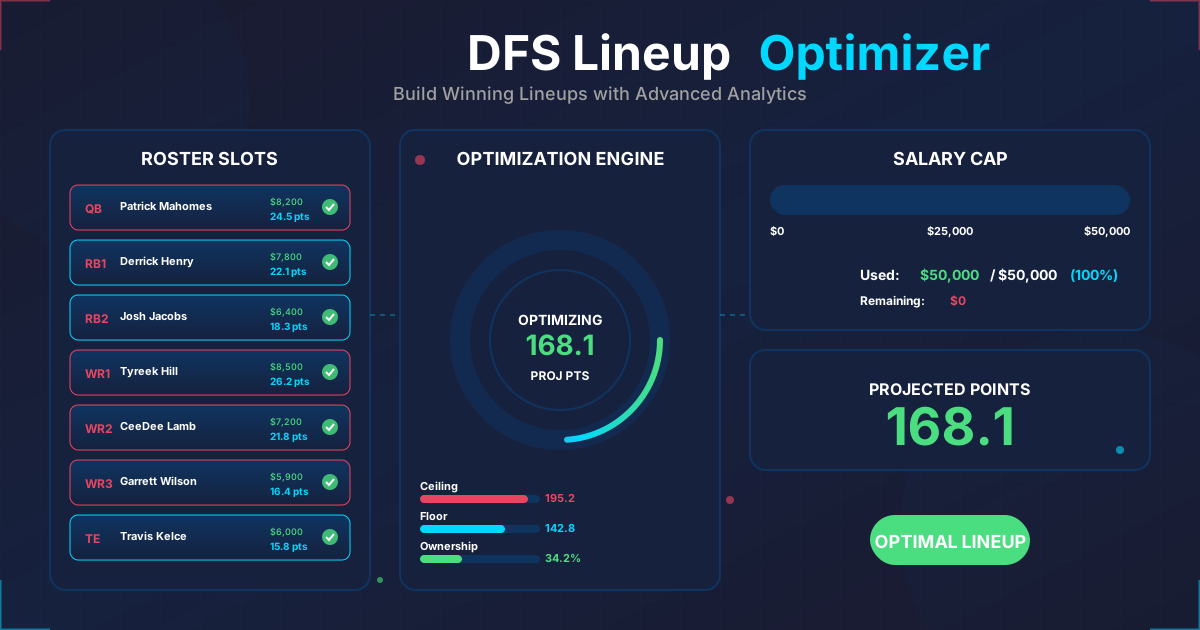
- DFS Lineup Optimizer - AI lineup builder
- DFS Ownership Calculator - Contrarian plays
- DFS Bankroll Calculator - Bankroll management
- DFS ROI Calculator - Track your results
- DFS Correlation Calculator - Stack building
Conclusion
Value is the foundation of successful DFS play. By consistently identifying players who provide more points per dollar, you can build lineups that maximize projection while fitting under the salary cap. Our free calculator makes value analysis instant and accurate.
Calculate DFS Player Value Now →
Start optimizing your lineups with data-driven value analysis. The best DFS players don't just pick names—they engineer lineups with mathematical precision.