Double Bonus Poker Calculator: Strategy & Payouts Guide (2026)
Double Bonus Poker Calculator: Chase the Quads
Double Bonus Poker enhances four-of-a-kind payouts while keeping the familiar Jacks or Better structure. The bonus quads create bigger wins but higher variance. Our calculator analyzes pay tables and provides optimal strategy for this popular variant.
What Is Double Bonus Poker?
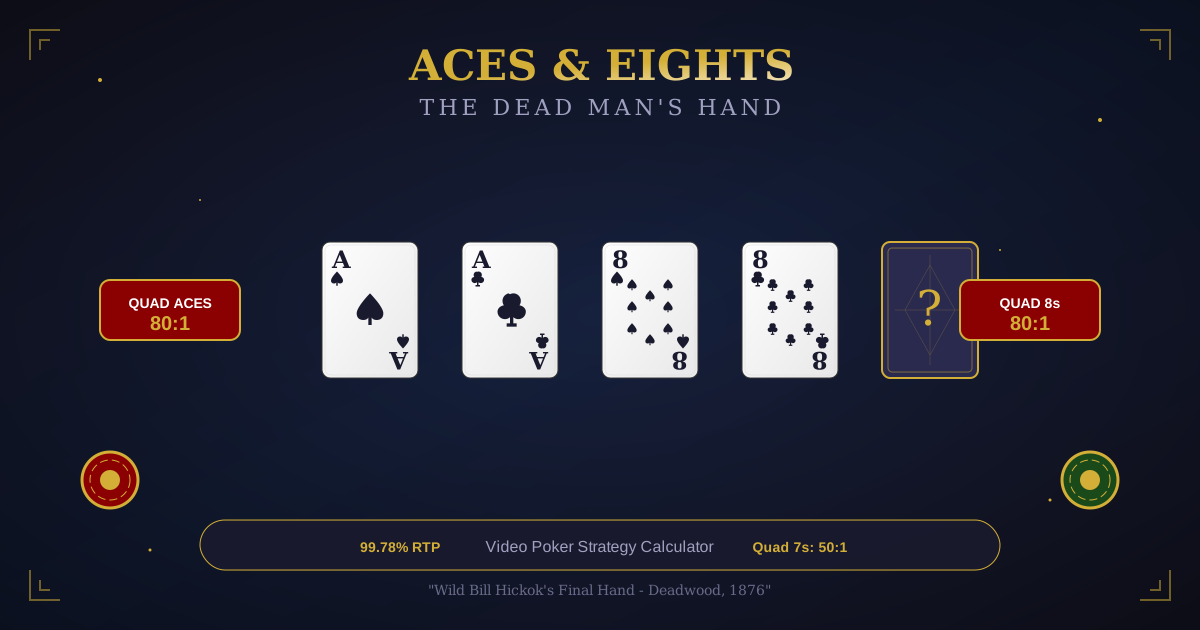
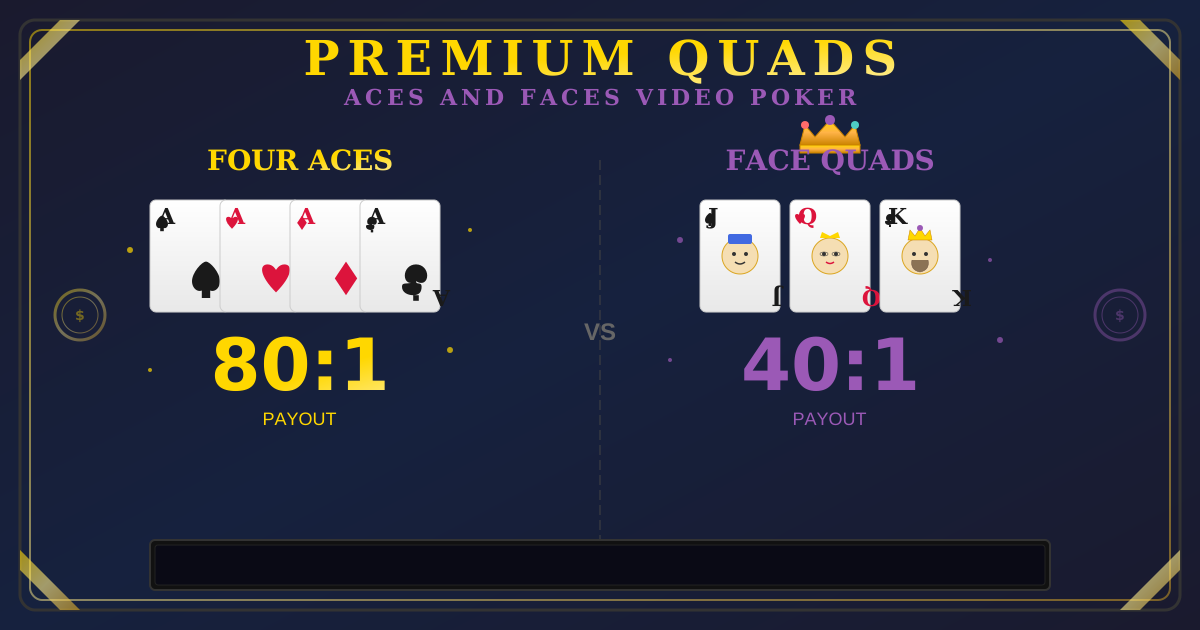
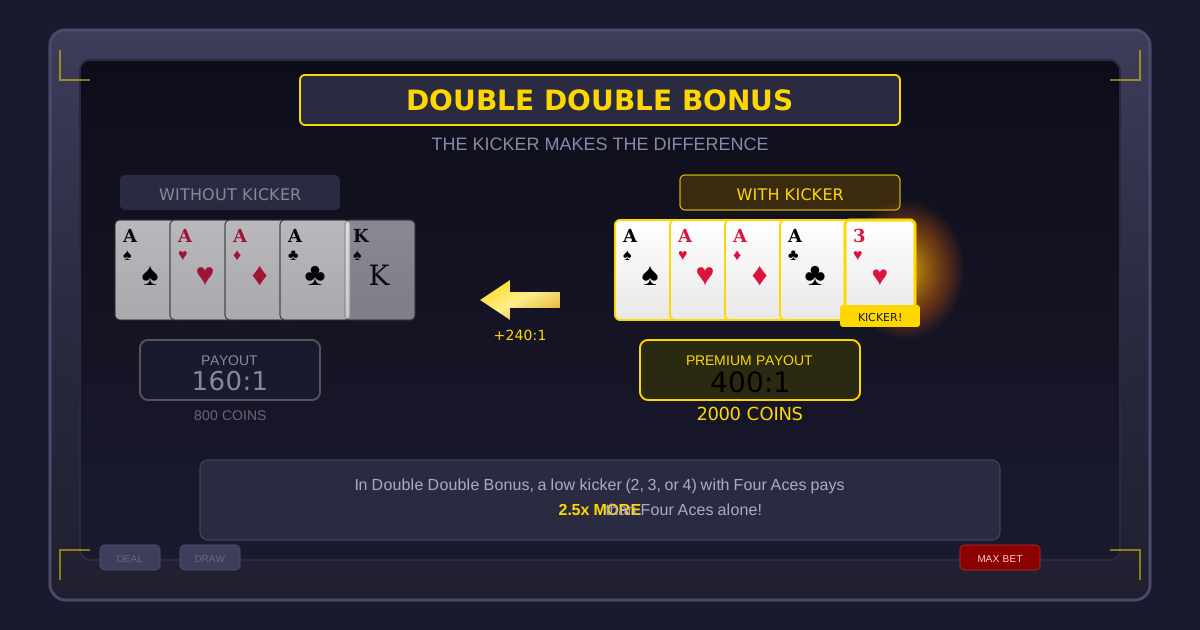
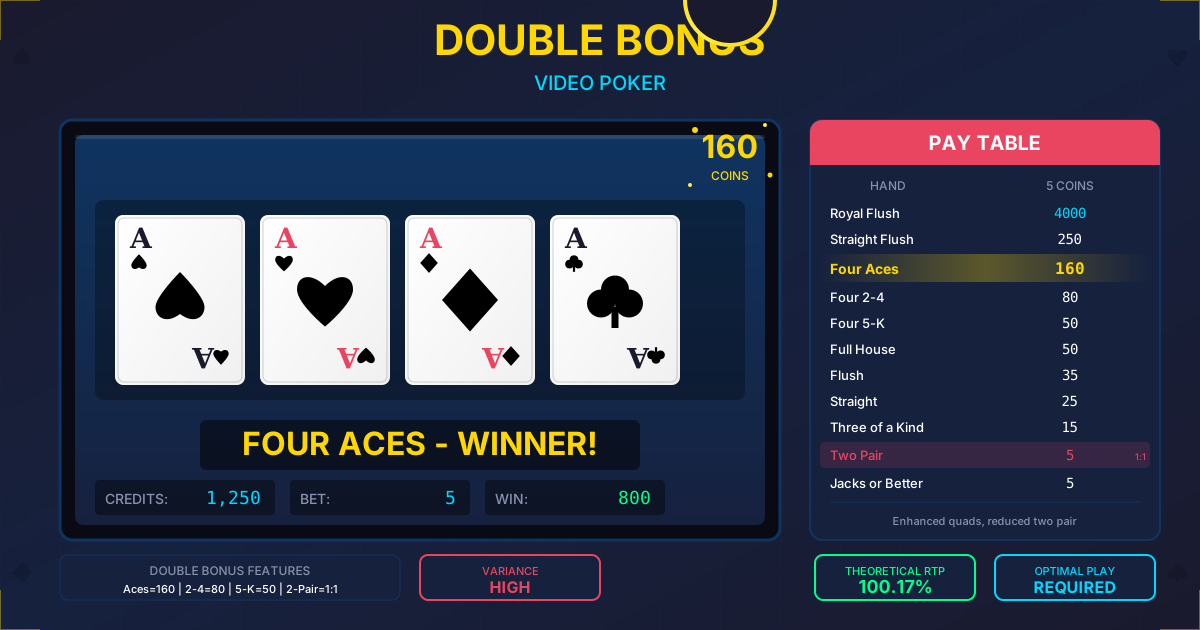
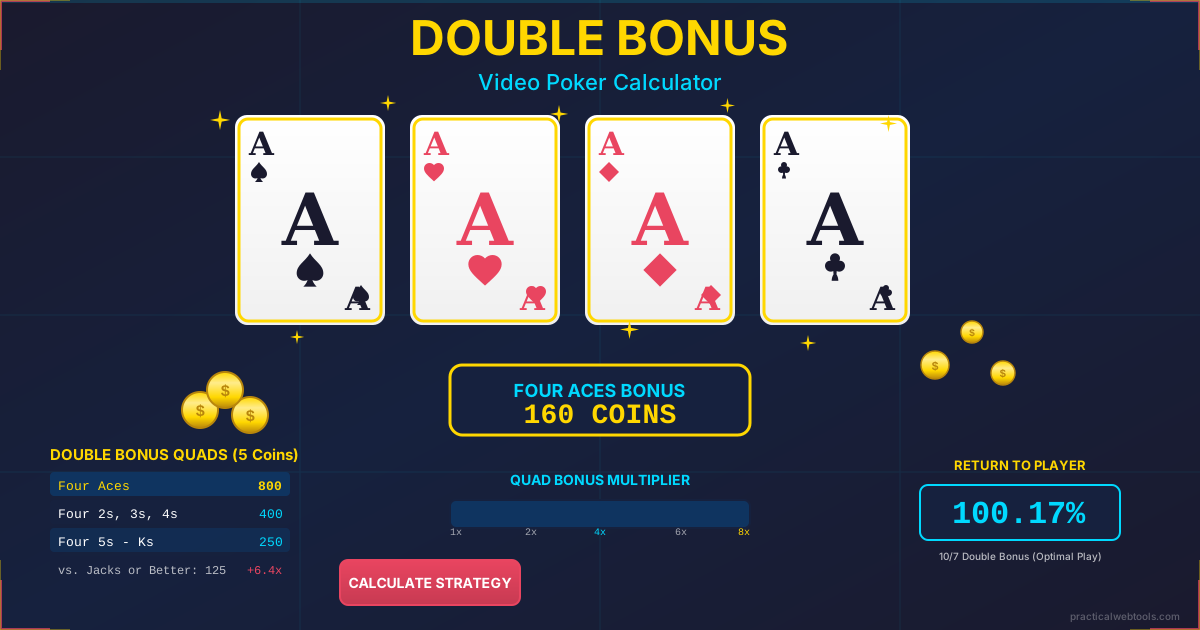
Double Bonus Poker pays enhanced amounts for four-of-a-kind hands, with different bonuses based on the quad's rank. Aces pay the most, followed by 2-4, then 5-K.
Quick Answer: Full-pay (10/7) Double Bonus returns 100.17% with perfect strategy—a positive expectation game. The trade-off is reduced two-pair payouts (1:1 instead of 2:1) and higher variance. You need bigger bankroll and more skill to profit.
How to Use Our Double Bonus Calculator
Use the Double Bonus Poker Calculator →
Enter pay table values to see expected return and optimal holds.
Step-by-Step Instructions
-
Enter Pay Table: Input all payout values
-
View Expected Return: See theoretical RTP
-
Input Your Hand: Get optimal hold strategy
-
Compare Machines: Find the best versions
Input Fields Explained
| Field | Description | Example |
|---|---|---|
| Full House | Per coin | 10 |
| Flush | Per coin | 7 |
| Two Pair | Per coin (usually 1) | 1 |
| Four Aces | Per coin | 160 |
| Expected Return | Theoretical RTP | 100.17% |
Double Bonus Pay Tables
Full-Pay 10/7 Double Bonus
| Hand | Payout (per coin) |
|---|---|
| Royal Flush | 800 (4,000 max coins) |
| Straight Flush | 50 |
| Four Aces | 160 |
| Four 2-4 | 80 |
| Four 5-K | 50 |
| Full House | 10 |
| Flush | 7 |
| Straight | 5 |
| Three of a Kind | 3 |
| Two Pair | 1 |
| Jacks or Better | 1 |
Expected Return: 100.17%
Common Pay Table Variations
| Version | Full House | Flush | Return |
|---|---|---|---|
| 10/7 (Full Pay) | 10 | 7 | 100.17% |
| 10/6 | 10 | 6 | 99.11% |
| 9/7 | 9 | 7 | 99.11% |
| 9/6 | 9 | 6 | 97.81% |
| 9/5 | 9 | 5 | 96.38% |
The 10/7 is rare—most common is 9/6 or 9/7.
Key Strategy Differences from Jacks or Better
Two Pair Only Pays 1:1
This changes everything:
Jacks or Better: Two pair pays 2:1, so you keep it Double Bonus: Two pair pays 1:1, so breaking it is sometimes correct
Break Two Pair for Quad Draws
Hand: A♠ A♥ 9♦ 9♣ 5♠
In Jacks or Better: Keep two pair (EV = 2.00) In Double Bonus: Keep pair of aces only (EV = 2.39)
Why? The enhanced four-of-a-kind payout for aces (160) makes drawing three cards worth more than a guaranteed 1:1 payout.
Ace Priority
Four aces pays 160, vs 50-80 for other quads:
- Always prioritize aces when deciding between pairs
- Don't break aces for straight/flush draws
- Hold ace kicker in some situations
Basic Strategy for Double Bonus
Simplified Strategy List
- Royal flush, straight flush, four of a kind
- Four to a royal
- Full house
- Flush, straight, three of a kind
- Four to a straight flush
- Two pair (keep both if no better option)
- High pair (J-A)
- Three to a royal
- Four to a flush
- Pair of aces (prioritize over low pairs)
- Low pair (2-10)
- Four to an outside straight
- Three to a straight flush
- Two suited high cards
- One or two unsuited high cards
- Discard everything
Breaking Two Pair Rules
| Two Pair | Action |
|---|---|
| Aces + any | Keep aces only |
| 2-4 pair + any | Keep low pair only |
| Two high pairs | Keep higher pair |
| Two low pairs | Usually keep both |
Real-World Double Bonus Examples
Example 1: Breaking Two Pair
Hand: A♥ A♣ 7♠ 7♦ K♥
Options:
- Keep two pair: EV = 1.00
- Keep aces only: EV = 2.39
Correct: Keep aces only. The 160-coin four aces payout justifies breaking the two pair.
Example 2: Aces vs. Four to Flush
Hand: A♠ 5♦ 8♦ J♦ Q♦
Options:
- Keep four to flush: EV = 1.28
- Keep ace only: EV = 0.47
Correct: Keep the four to flush. Flush draw beats a single ace.
Example 3: Low Pair Decisions
Hand: 3♠ 3♥ 10♦ J♣ Q♠
Options:
- Keep pair of 3s: EV = 0.76
- Keep 10-J-Q: EV = 0.50
Correct: Keep the 3s. Low pairs (especially 2-4) have quad bonus value.
Example 4: Straight vs. Quads Draw
Hand: 2♠ 2♥ 3♦ 4♣ 5♠
Options:
- Keep straight: 5.00
- Keep pair of 2s: EV = 0.78
Correct: Keep the made straight. A 5-coin guaranteed return beats drawing for quads.
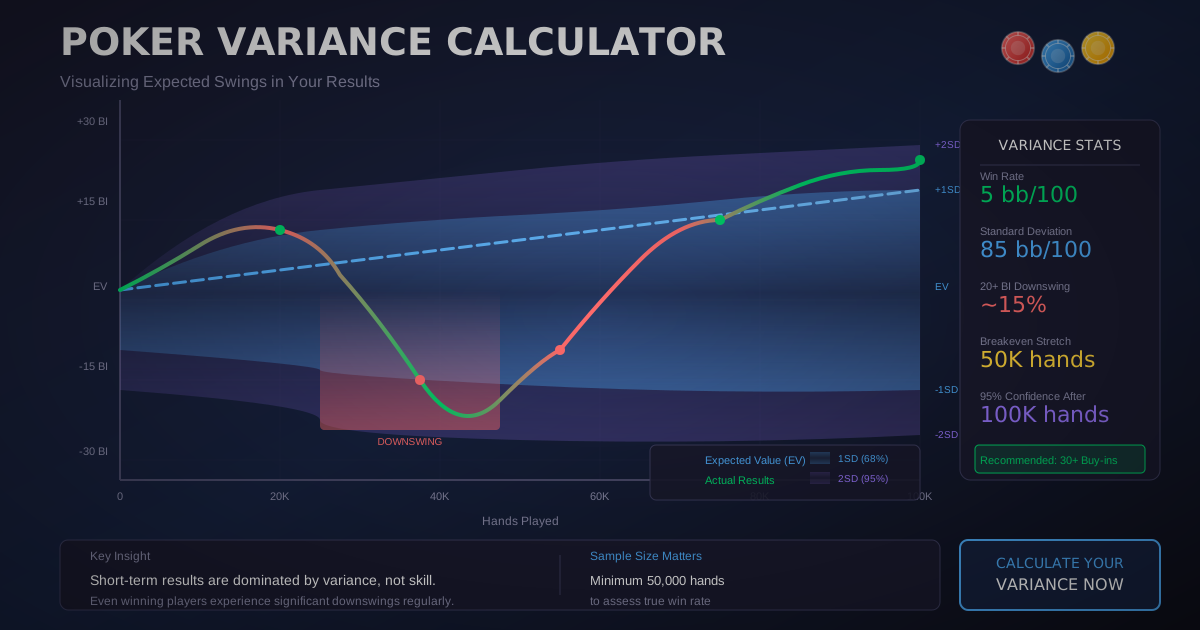
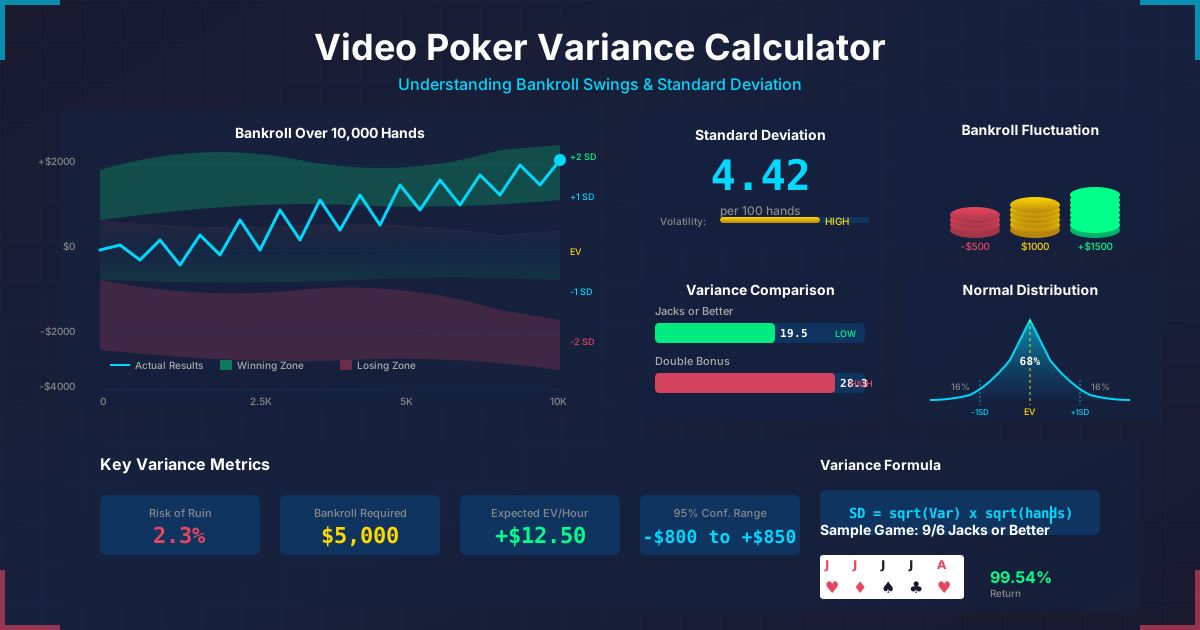
Variance Analysis
Why Double Bonus Is Higher Variance
| Factor | Jacks or Better | Double Bonus |
|---|---|---|
| Two pair pays | 2:1 | 1:1 |
| Quad payouts | 25 all | 50-160 |
| Royal contribution | 2% | 2% |
| Quad contribution | 6% | 11% |
More return concentrated in rare hands = higher variance.
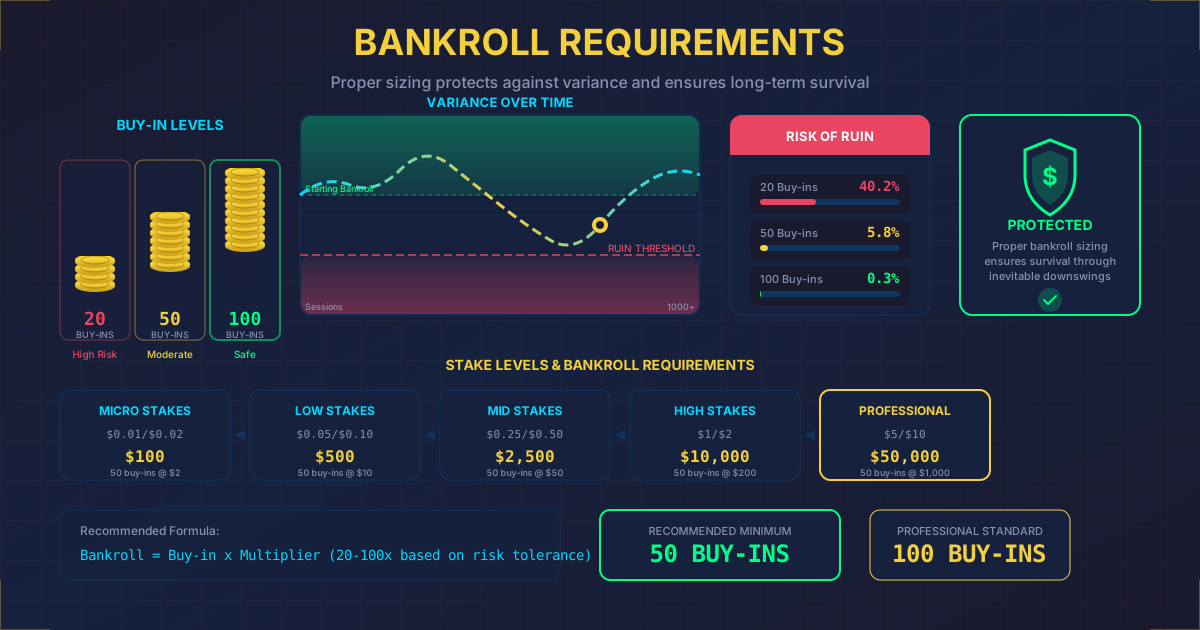
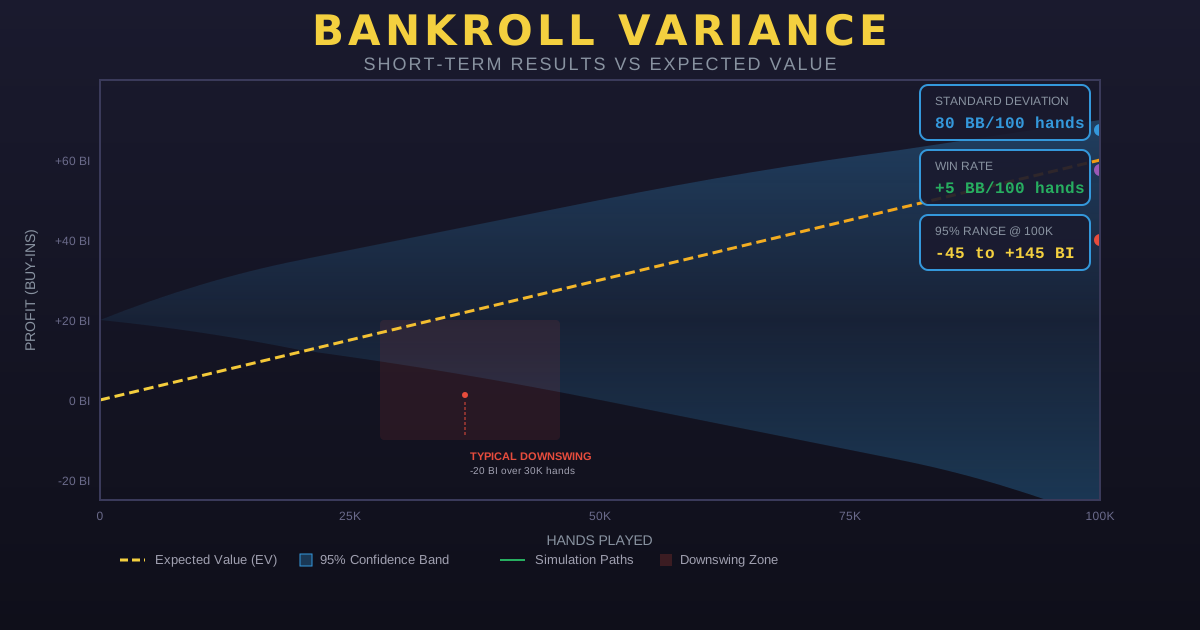
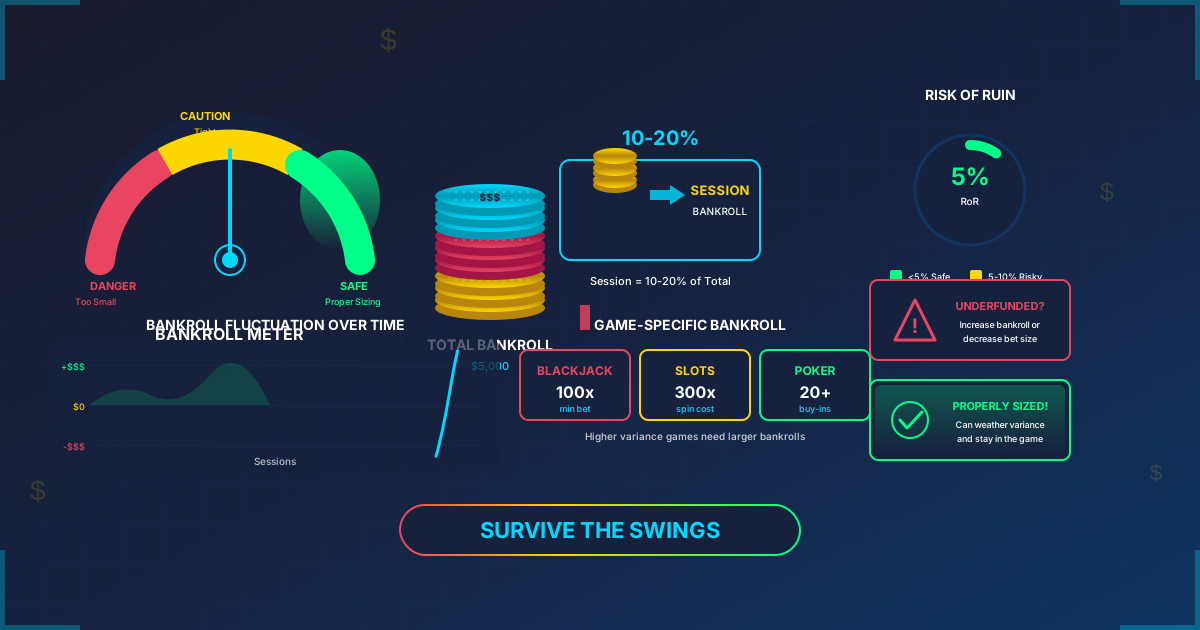
Bankroll Requirements
| Denomination | JoB Bankroll | DB Bankroll |
|---|---|---|
| $0.25 | $200-300 | $400-500 |
| $0.50 | $400-600 | $800-1,000 |
| $1.00 | $800-1,200 | $1,600-2,000 |
| $5.00 | $4,000-6,000 | $8,000-10,000 |
Expect 1.5-2× the bankroll of Jacks or Better.
Finding 10/7 Double Bonus
Where to Look
Las Vegas:
- High-limit rooms occasionally
- Station Casinos historically
- Downtown more likely than Strip
Online:
- Some regulated sites offer 10/7
- Verify pay table before depositing
Identifying Full Pay
Check these three values:
- Full House: 10
- Flush: 7
- Four Aces: 160
If any are lower, it's not full pay.
Common Double Bonus Mistakes
1. Playing Like Jacks or Better
Mistake: Keeping two pair always Reality: Break two pair when you have aces or 2-4 Fix: Learn DB-specific strategy
2. Undervaluing Aces
Mistake: Breaking aces for straight draws Reality: Aces have massive quad value Fix: Prioritize ace pairs almost always
3. Insufficient Bankroll
Mistake: Same bankroll as Jacks or Better Reality: Variance is 1.5× higher Fix: Bring 50-75% more
4. Chasing Non-Ace Quads
Mistake: Breaking good hands for non-ace quad draws Reality: Only aces pay 160; others pay 50-80 Fix: Only break strategically for 2-4 pair
5. Ignoring Two Pair Payout
Mistake: Not realizing two pair only pays even money Reality: This fundamentally changes strategy Fix: Understand the pay table implications
Frequently Asked Questions
Is Double Bonus better than Jacks or Better?
Full-pay DB (100.17%) beats full-pay JoB (99.54%) mathematically. But DB requires more skill, bigger bankroll, and is harder to find.
Why does two pair only pay 1:1?
The extra payout on four-of-a-kind has to come from somewhere. The casino reduces two pair to fund the quad bonuses.
Should I always break two pair for aces?
Usually, yes. The 160-coin four aces payout makes keeping aces alone worth more than two pair's 1:1 payout.
How much more volatile is Double Bonus?
Roughly 50% more volatile than Jacks or Better. Expect bigger swings in both directions.
Can I beat Double Bonus long-term?
With 10/7 pay tables and perfect strategy, yes—you have 0.17% edge. Finding machines and playing perfectly are the challenges.
Is the strategy much harder?
Moderately harder. The main changes involve two pair decisions and ace handling. Most hands play similarly to JoB.
Advanced Double Bonus Concepts
Expected Value by Hand
| Hand Type | Contribution to Return |
|---|---|
| Royal Flush | 1.98% |
| Straight Flush | 0.56% |
| Four Aces | 4.35% |
| Four 2-4 | 2.56% |
| Four 5-K | 4.01% |
| Full House | 10.61% |
| Flush | 7.04% |
| Straight | 5.07% |
| Three of a Kind | 22.28% |
| Two Pair | 12.85% |
| Jacks or Better | 28.87% |
Quads contribute ~11% vs ~6% in Jacks or Better.
Kicker Strategy
Sometimes hold kickers with pairs:
Hand: A♠ A♥ 2♣ 7♦ J♠
- Normally: Keep aces only
- Advanced: Some arguments for keeping ace-2 (2s are bonus quads)
This is an edge case—basic strategy keeps aces only.
Pro Tips for Double Bonus
-
Find 10/7 or don't play: Lower pay tables lose the edge
-
Master two pair breaks: This is where DB differs most
-
Bring extra bankroll: Variance demands it
-
Value aces highly: 160-coin quads are your profit center
-
Practice with trainers: Strategy is more nuanced than JoB
Related Video Poker Calculators
- Jacks or Better Calculator - Classic VP
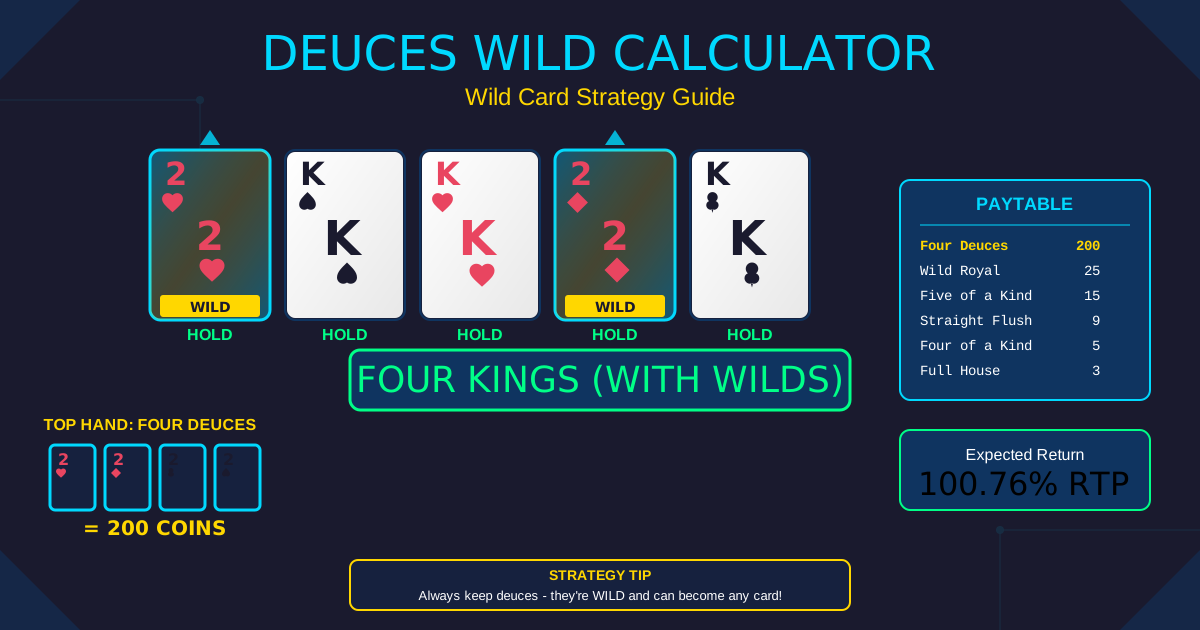
- Deuces Wild Calculator - Wild card strategy
- Double Double Bonus Calculator - Even higher variance
- Video Poker Pay Table Calculator - Compare all games
- Video Poker Bankroll Calculator - Session planning
Conclusion
Double Bonus Poker offers positive expectation at full-pay 10/7—but demands strategic adjustments and bigger bankroll than Jacks or Better. Our calculator analyzes any pay table, shows expected return, and provides optimal holds for the unique two-pair and ace decisions.
Calculate Your Double Bonus Strategy Now →
The enhanced quad payouts make Double Bonus exciting, but the 1:1 two pair changes everything. Master the strategy differences, find full-pay machines, and enjoy one of video poker's most rewarding variants.