Double Exposure Blackjack Calculator: See Both Dealer Cards (2026)
Double Exposure Blackjack Calculator: When You See Everything
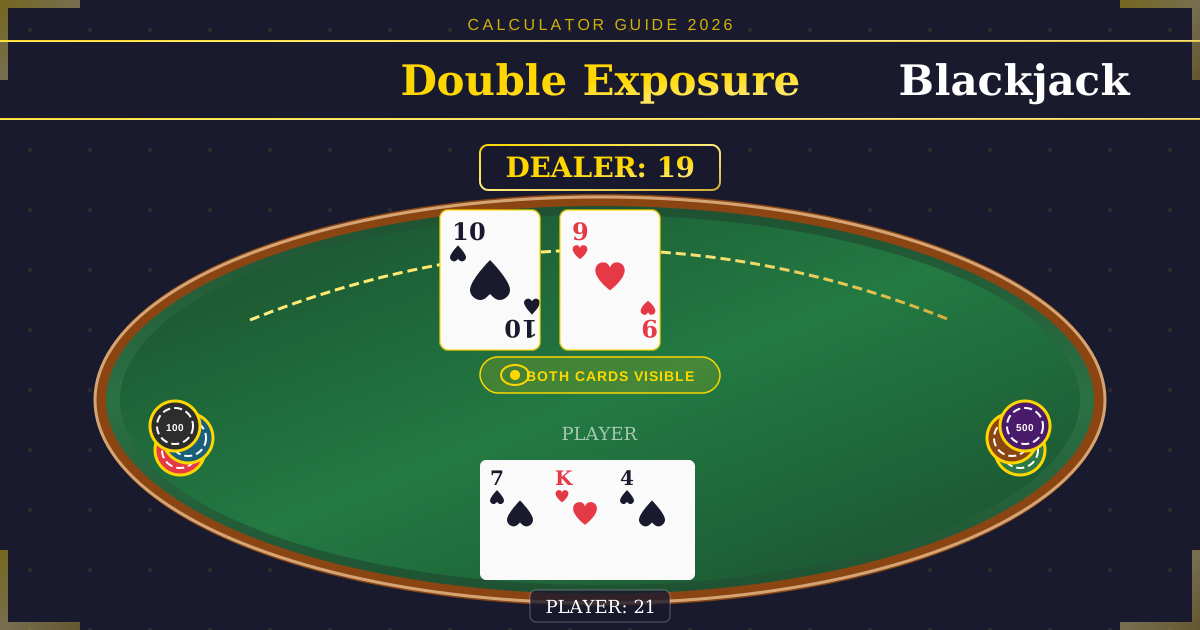
Double Exposure Blackjack shows you both dealer cards upfront—seemingly a massive advantage. But modified rules (dealer wins ties, blackjack pays even money) balance the scales. Our calculator reveals optimal strategy for this transparent variant and why the house edge isn't as low as you'd expect.
What Is Double Exposure Blackjack?
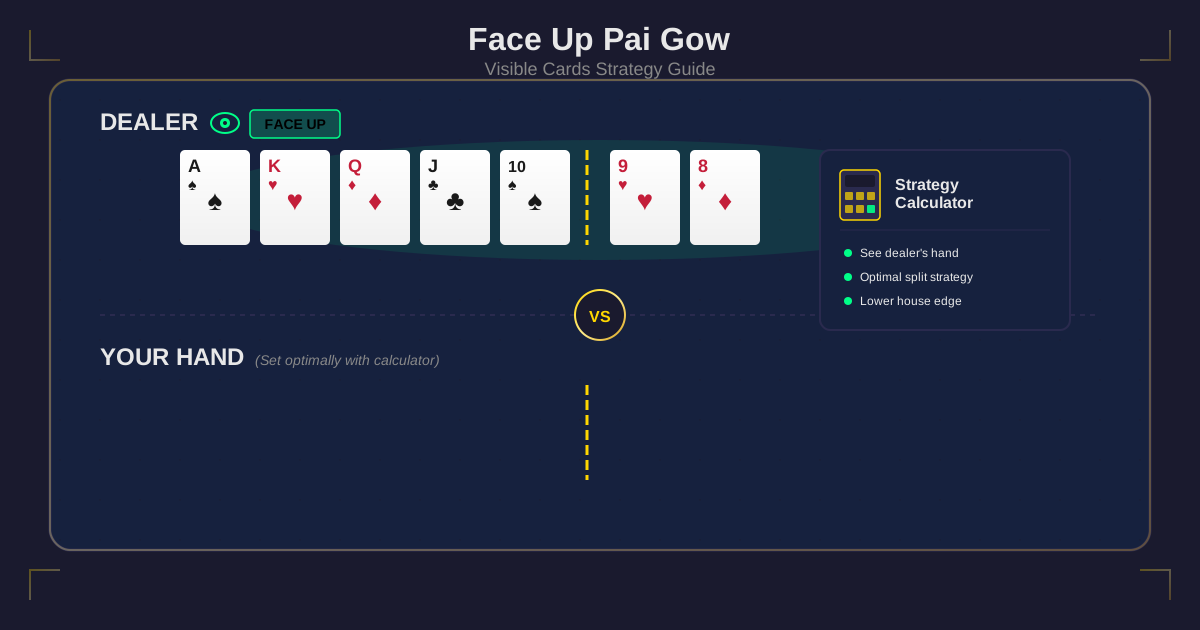
Double Exposure Blackjack (also called Face Up 21 or Dealer Disclosure) deals both dealer cards face-up. To compensate, dealer wins most ties, blackjack pays 1:1 instead of 3:2, and some tables restrict doubling and splitting. Despite seeing all cards, house edge runs 0.69% or higher.
Quick Answer: Double Exposure shows both dealer cards. Compensation: dealer wins ties (except natural 21), blackjack pays 1:1. House edge: ~0.69%. Strategy changes dramatically—hit 19 vs dealer 20, stand on 12 vs dealer 13. Perfect information doesn't mean perfect odds. Split/double less often. Surrender not offered.
How to Use Our Calculator
Use the Double Exposure Calculator →
Calculate optimal strategy with full dealer information.
Step-by-Step Instructions
-
Enter Your Hand: Two cards
-
Enter Dealer Total: Both cards visible
-
See Exact Decision: No guessing
-
View Win Probability: Precise odds
-
Calculate EV: Expected value
Input Fields Explained
| Field | Description | Example |
|---|---|---|
| Your Hand | Two cards | 10♠6♦ |
| Dealer Total | Both visible | 19 |
| Dealer Blackjack? | Natural 21 | No |
| Decision | Optimal play | Hit |
| Win Probability | Exact chance | 38.5% |
| House Edge | Game edge | 0.69% |
Rule Modifications
What Balances Seeing Cards?
Compensating rules:

1. Dealer wins ties (push = loss)
   Except both natural blackjacks = push

2. Blackjack pays 1:1 (not 3:2)
   Major value reduction

3. Dealer hits soft 17
   More dealer improvement

4. Split restrictions vary
   Some limit re-splits

5. No surrender offered
   Can't bail on bad hands
Tie Impact Analysis
Tie frequency in blackjack:
~8% of hands end in ties

Standard blackjack:
Ties push (no win/loss)

Double Exposure:
Ties = you lose
~8% extra losses

Value surrendered:
-8% on ~half of ties = -4%
Blackjack Payout Reduction
Standard blackjack:
3:2 payout = +50% on wins

Double Exposure:
1:1 payout = +0% extra

Frequency of blackjacks:
~4.8% of hands

Value lost:
4.8% × 0.5 extra = -2.4%
Strategy Fundamentals
The Core Difference
Standard blackjack:
Decide based on ONE dealer card
Multiple dealer outcomes possible

Double Exposure:
Decide based on EXACT dealer total
Perfect information

Example:
Your 16 vs dealer upcard 10
Standard: Might bust, might win
Double Exposure: Know if 16 or 20
Hard Total Strategy
Your hand vs Dealer total:

vs Dealer 17: Stand on 12+
vs Dealer 18: Stand on 13+
vs Dealer 19: Stand on 14+
vs Dealer 20: Stand on 15+, hit 14
vs Dealer 21: Hit everything (you lose anyway)
vs Dealer bust (22+): Stand on anything

Key insight:
Beat the specific total
Not the average outcome
Soft Total Strategy
Soft hands (with Ace):

vs Dealer 17: Stand soft 17+
vs Dealer 18: Stand soft 18+
vs Dealer 19: Hit soft 18, stand 19+
vs Dealer 20: Hit soft 19, stand 20+
vs Dealer bust: Stand on anything

More hitting required
When dealer has strong total
Splitting Strategy
Modified split rules:

Always split: A-A, 8-8
Never split: 10-10, 5-5
Split vs weak dealers: 2-2, 3-3, 6-6, 7-7
Don't split vs strong: Most pairs

Key difference:
Know exact dealer strength
Not probabilistic
Real-World Examples
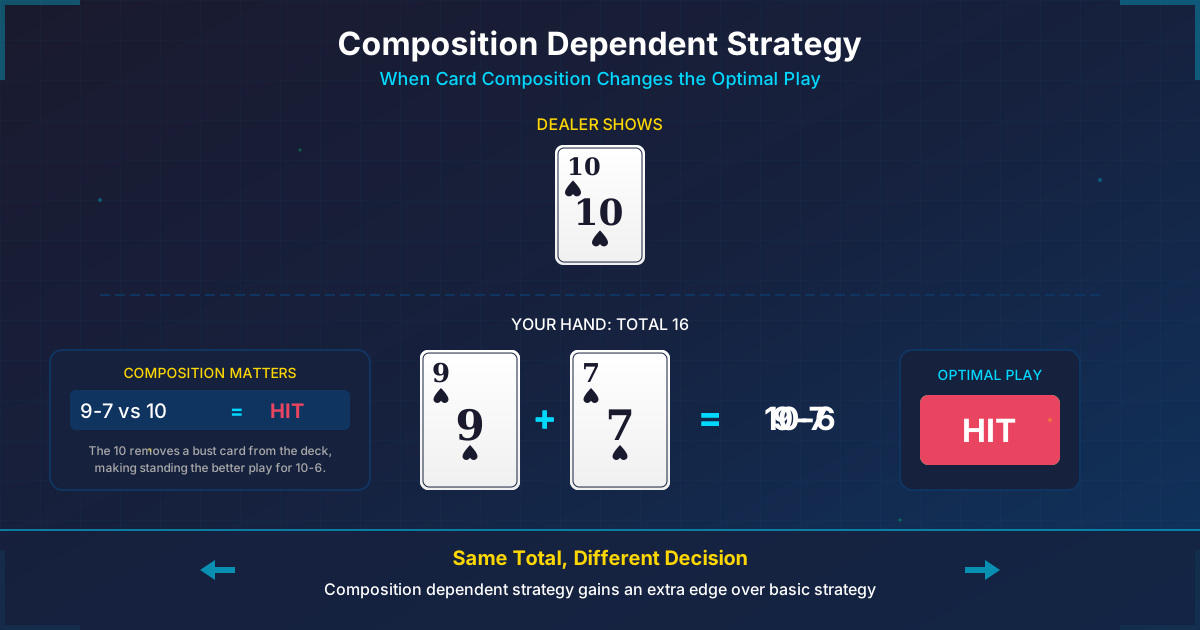
Example 1: Your 16 vs Dealer 19
Standard blackjack thinking doesn't apply:
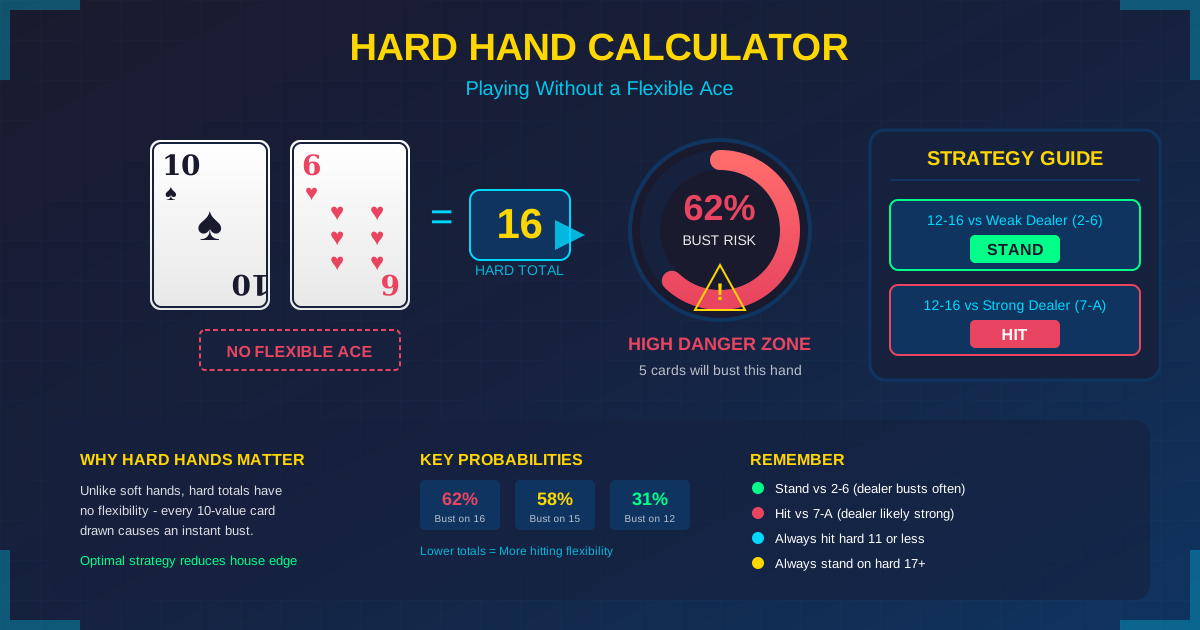
Your hand: 10-6 = 16
Dealer shows: 10-9 = 19

Standard BJ vs 10 upcard:
Dealer could have 12-21
Hit is usually correct

Double Exposure:
Dealer HAS 19
You MUST beat 19
Standing on 16 loses

Decision: HIT
Need 17+ to push, 20-21 to win
Busting loses same as standing
Example 2: Your 12 vs Dealer 13
Stand when dealer will bust:
Your hand: 10-2 = 12
Dealer shows: 10-3 = 13

Standard BJ vs 3:
Might hit, might stand

Double Exposure:
Dealer has 13
Must draw (hits until 17+)
High bust probability

Decision: STAND
Dealer busts ~39% with 13
Your 12 wins when dealer busts
Don't risk your own bust
Example 3: Blackjack Comparison
Same hand, different value:
Your hand: A-K = Blackjack

Standard blackjack:
$25 bet wins $37.50 (3:2)

Double Exposure:
$25 bet wins $25 (1:1)

Difference: -$12.50
Per blackjack hand

Major value reduction
Example 4: Tie Scenario
You had a winner that becomes a loser:
Your hand: K-Q = 20
Dealer shows: J-10 = 20

Standard blackjack:
TIE - push, money returned

Double Exposure:
LOSS - dealer wins ties

$25 bet lost
Not returned

This happens ~8% of hands
Complete Strategy Chart
Hard Totals
Hand | ≤16 | 17  | 18  | 19  | 20  | BJ
-----|-----|-----|-----|-----|-----|----
8    | H   | H   | H   | H   | H   | H
9    | D   | H   | H   | H   | H   | H
10   | D   | D   | H   | H   | H   | H
11   | D   | D   | D   | H   | H   | H
12   | S   | S   | S   | H   | H   | H
13   | S   | S   | S   | S   | H   | H
14   | S   | S   | S   | S   | H   | H
15   | S   | S   | S   | S   | S   | H
16   | S   | S   | S   | S   | H   | H
17+  | S   | S   | S   | S   | S   | S

H = Hit, S = Stand, D = Double
BJ = Dealer Blackjack (lose anyway)
Soft Totals
Hand  | ≤16 | 17  | 18  | 19  | 20  | BJ
------|-----|-----|-----|-----|-----|----
A-2   | H   | H   | H   | H   | H   | H
A-3   | H   | H   | H   | H   | H   | H
A-4   | H   | H   | H   | H   | H   | H
A-5   | H   | H   | H   | H   | H   | H
A-6   | D   | S   | H   | H   | H   | H
A-7   | D   | S   | S   | H   | H   | H
A-8   | S   | S   | S   | S   | H   | H
A-9   | S   | S   | S   | S   | S   | H
A-10  | BJ  | BJ  | BJ  | BJ  | BJ  | P

BJ = Your blackjack, P = Push
House Edge Analysis
Edge Breakdown
Double Exposure edge:

Seeing both cards: -10% advantage
Dealer wins ties: +8% to house
Blackjack 1:1: +2.4% to house
Dealer hits S17: +0.2% to house

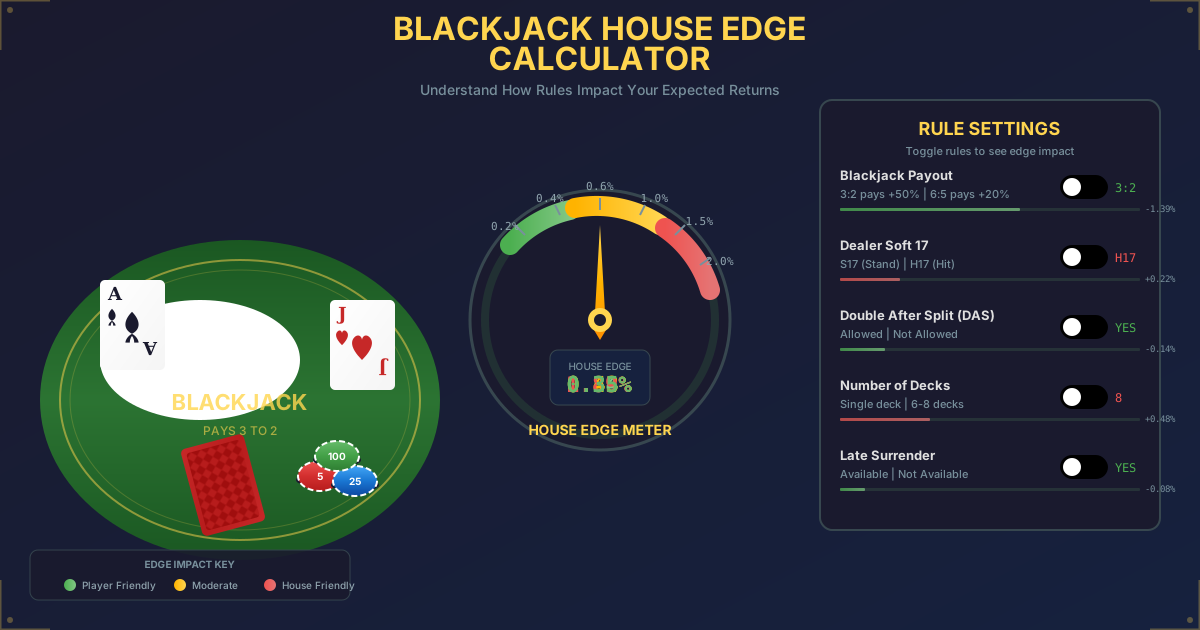
Net house edge: ~0.69%

With poor rules: Up to 1.5%
Rule variations matter
Comparison to Standard
Game comparison:

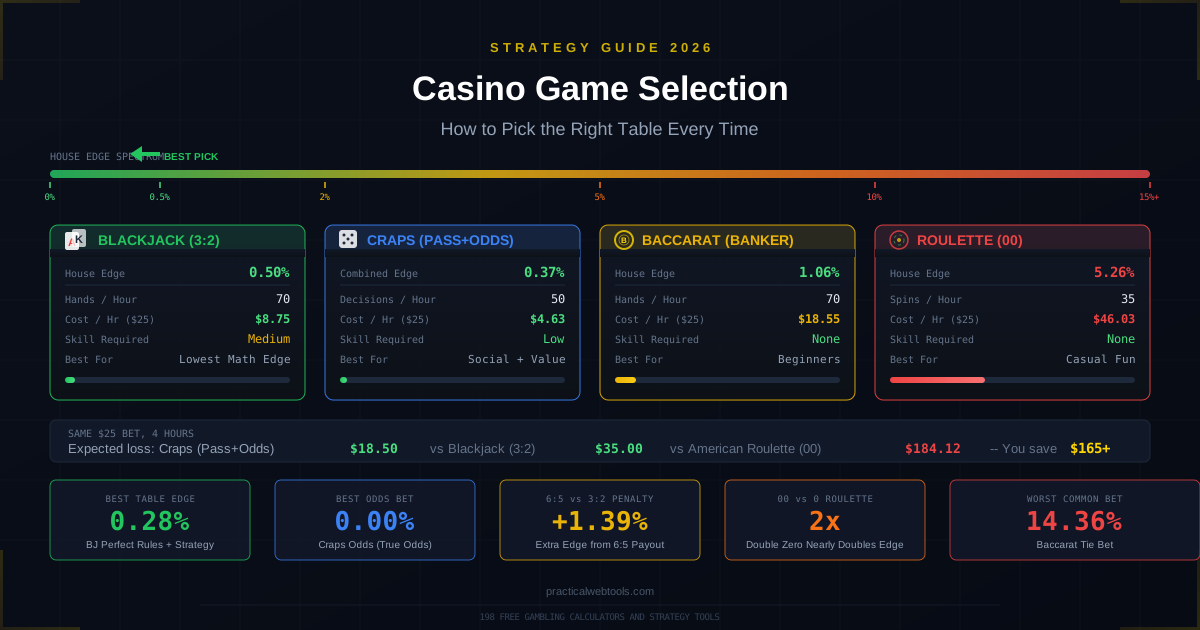
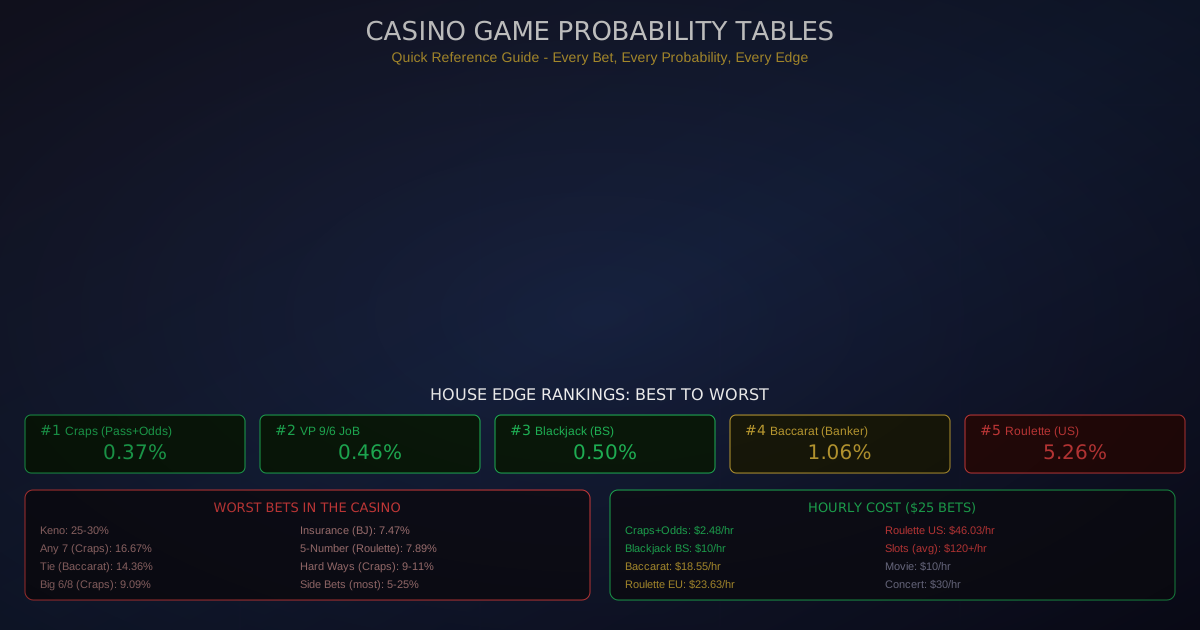
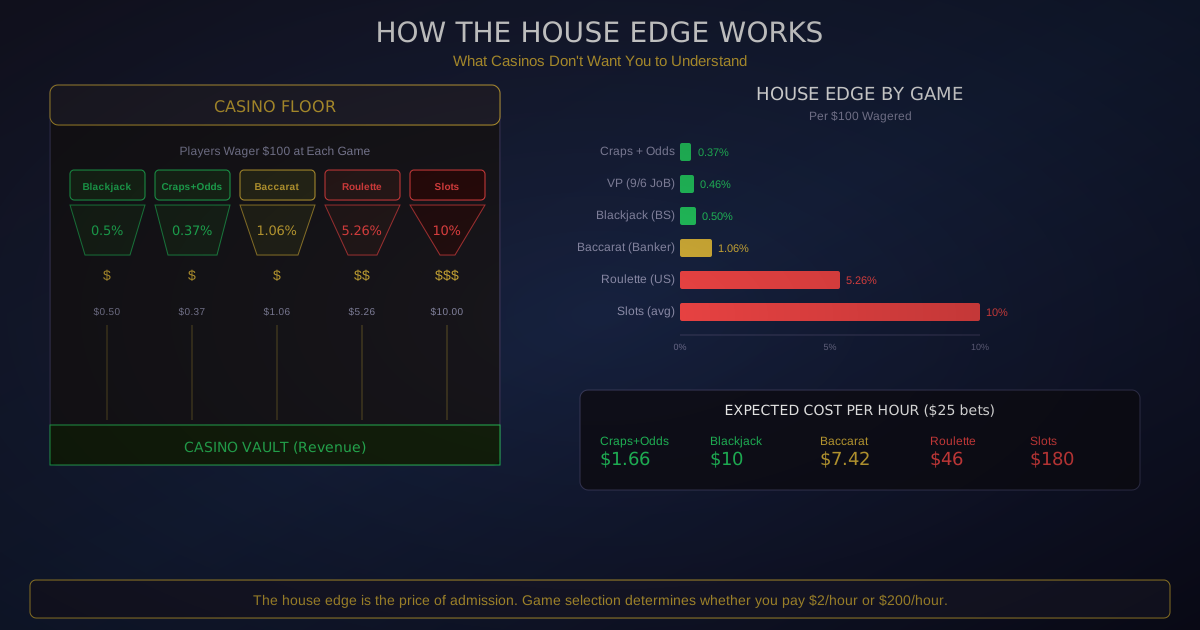
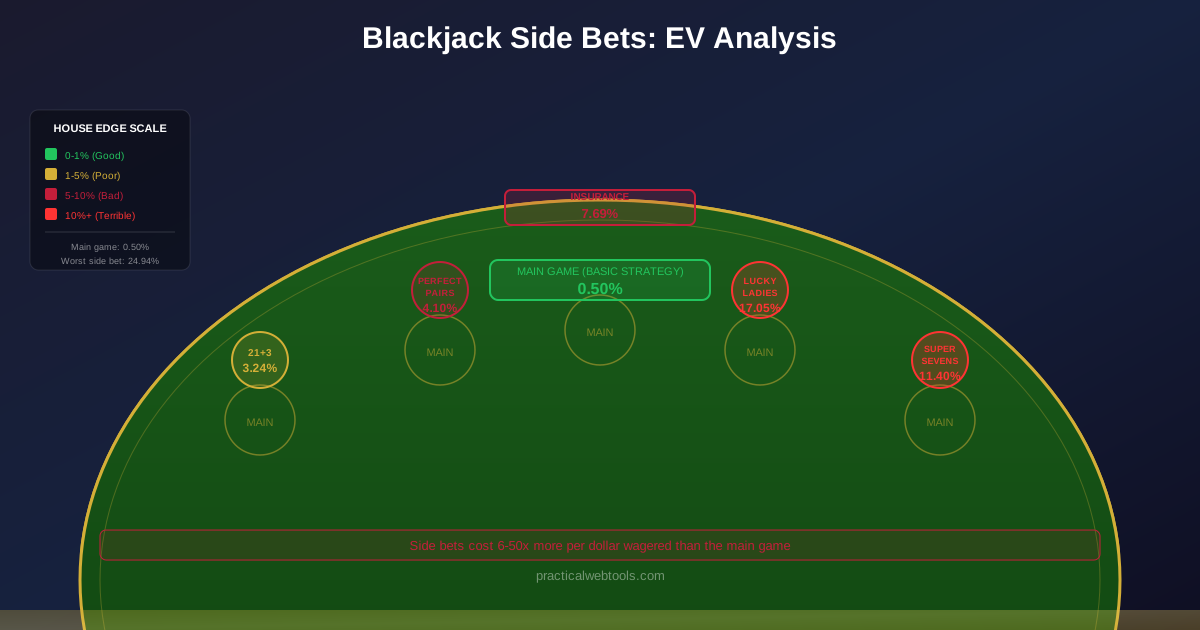
Standard 6-deck BJ: 0.50%
Double Exposure: 0.69%
Double Exposure (strict): 1.5%+

Despite perfect info
Not actually better
Compensation rules work
Why Not Lower Edge?
Information value offset:

Yes, you see everything
But so what?

When dealer has 20:
You still need 21 to win
Perfect info doesn't change cards

When dealer will bust:
Standing is obvious anyway
Info confirms, doesn't help

Ties becoming losses:
This is the real cost
~8% swing
Common Mistakes
1. Using Standard Strategy
Mistake: Playing like regular blackjack Problem: Completely different decisions Fix: Learn Double Exposure charts
2. Standing Too Early
Mistake: Stand on 12 vs dealer 20 Problem: Must hit to have any chance Fix: Hit until you can tie or beat
3. Expecting Lower Edge
Mistake: Assuming seeing cards = advantage Problem: Rules compensate fully Fix: Understand house edge is similar
4. Ignoring Tie Rule
Mistake: Planning for pushes Problem: Ties are losses Fix: Play to win, not tie
Frequently Asked Questions
Is Double Exposure better than regular blackjack?
Not for house edge. The compensation rules (ties lose, 1:1 blackjack) create a similar or higher edge than standard blackjack. The transparency is offset.
Why would I play this variant?
Some prefer knowing exactly what to beat. No uncertainty, pure math. Also, strategy is simpler—optimal play is obvious when you see everything.
Can I count cards in Double Exposure?
Yes, and it's easier with all cards visible. But casinos use multiple decks and shuffle frequently. Edge from counting is smaller due to base rule changes.
What's the biggest strategy change?
Hitting stiff hands against strong dealer totals. In standard BJ, you might stand on 16 vs 10. In Double Exposure, if dealer has 20, you hit 16 because standing loses anyway.
Why do ties go to dealer?
To offset the value of seeing both cards. Without this rule, the game would have a player advantage. The 8% tie rate creates significant edge transfer.
Is there surrender in Double Exposure?
Rarely. Most casinos don't offer it because seeing both cards would make surrender decisions too favorable for players.
Pro Tips
-
Play to beat, not tie: Ties lose anyway
-
Hit aggressively vs 19-20: Must improve
-
Stand early vs bust hands: Let dealer bust
-
Blackjack pays less: Factor into decisions
-
Perfect info ≠ advantage: Rules compensate
Related Calculators
- Blackjack Odds Calculator - Standard game
- Blackjack Strategy Calculator - Basic strategy
- Spanish 21 Calculator - Another variant
- Free Bet Blackjack Calculator - Free doubles
- House Edge Calculator - Compare games
Conclusion
Double Exposure Blackjack shows both dealer cards upfront—but don't mistake transparency for advantage. Compensation rules (dealer wins ties, blackjack pays 1:1) create a comparable house edge. Our calculator shows the counterintuitive strategy: hit 16 against dealer 20, stand on 12 against dealer 13.
Calculate Double Exposure Odds Now →
Seeing both dealer cards feels like cheating, but the ~0.69% house edge proves otherwise. Our calculator reveals why perfect information doesn't guarantee perfect outcomes—and why hitting your 19 against dealer 20 is sometimes correct.