Exchange Lay Bet Calculator: Master Betting Against Outcomes (2026)
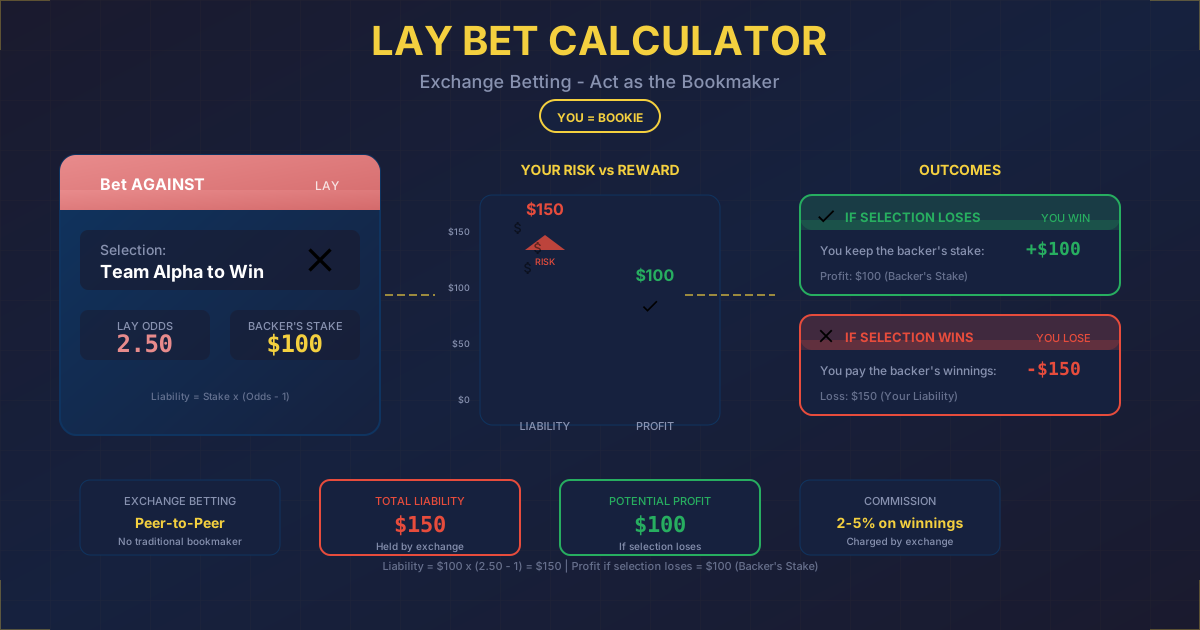
Exchange Lay Bet Calculator: Bet Against Any Selection
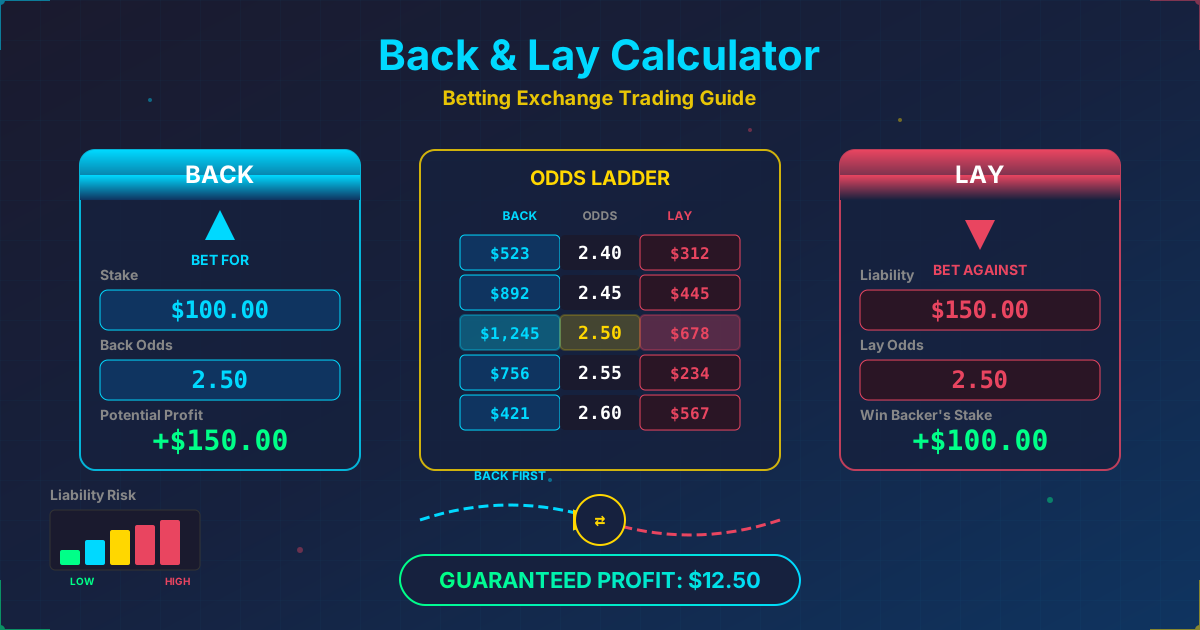
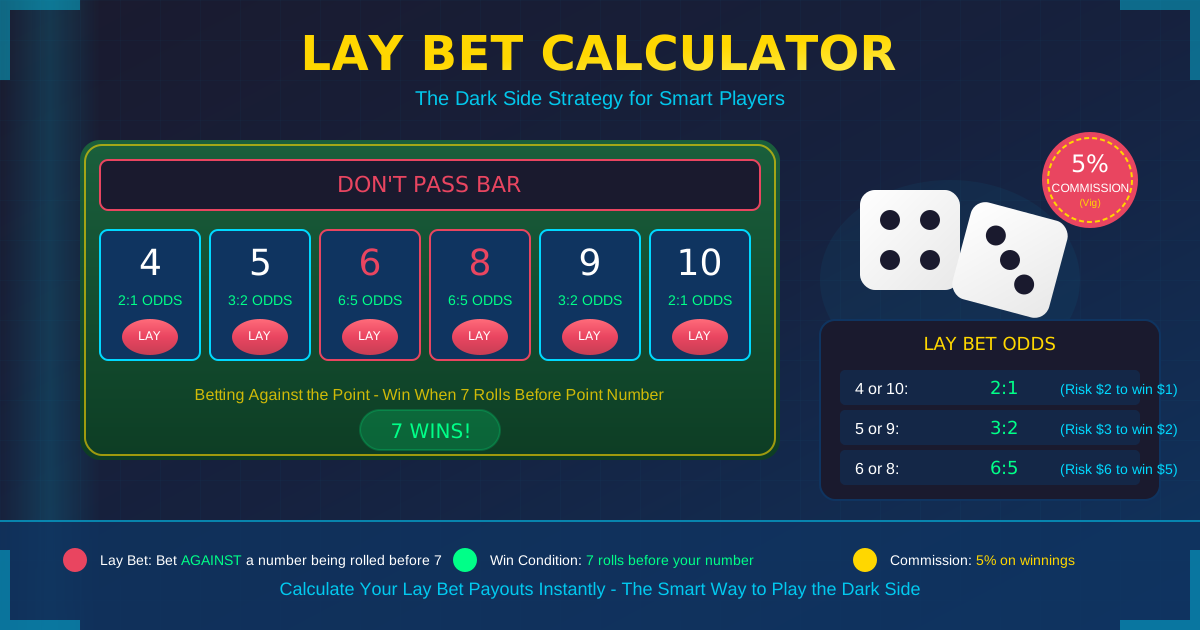
Lay betting turns traditional wagering upside down - instead of backing a selection to win, you bet against it. Available only on betting exchanges, lay betting lets you act as the bookmaker. Our lay bet calculator shows you exactly how much you're risking, your potential profit, and the effective odds you're offering.
What Is a Lay Bet?
A lay bet is a wager that an outcome will NOT happen. When you lay a selection on a betting exchange, you're accepting another bettor's back bet, essentially becoming the bookmaker for that specific wager. You win if the selection loses and lose if it wins. Your profit is the backer's stake, minus commission; your risk (liability) is the payout you'd owe if the selection wins.
Quick Answer: Lay betting means betting AGAINST an outcome. You win the backer's stake if the selection loses; you pay out (liability) if it wins. Liability Formula: Liability = Backer's Stake × (Lay Odds - 1). Example: Lay $100 at 3.50 odds. If selection loses, you win $100 (minus ~5% commission = $95). If selection wins, you lose $100 × (3.50 - 1) = $250. Always know your liability before placing a lay bet.
How to Use Our Calculator
Use the Exchange Lay Bet Calculator →
Step-by-Step Instructions
- Enter Lay Odds: Input the exchange lay odds
- Enter Backer's Stake: Amount the backer wants to bet
- Set Commission Rate: Your exchange's commission percentage
- Calculate Liability: See your maximum risk
- View All Outcomes: Compare profit vs loss scenarios
Input Fields
| Field | Description | Example |
|---|---|---|
| Lay Odds | Decimal odds you're offering | 2.80 |
| Backer's Stake | Amount being matched | $50 |
| Commission Rate | Exchange fee (typically 2-5%) | 5% |
| Your Bankroll | Optional - for sizing advice | $1,000 |
Understanding Lay Bet Mechanics
How Lay Bets Work
Traditional Back Bet:
- You bet on Team A to WIN
- If Team A wins: You get paid
- If Team A loses: You lose stake

Lay Bet (Opposite):
- You bet AGAINST Team A winning
- If Team A wins: You pay out (liability)
- If Team A loses: You collect backer's stake

You're the bookmaker:
- Accepting someone's back bet
- Offering them odds to win
- Taking their stake if they lose
The Liability Concept
Liability = What you owe if selection WINS

Formula:
Liability = Stake × (Odds - 1)

Example at Various Odds:
Stake: $100

At 1.50 odds: $100 × 0.50 = $50 liability
At 2.00 odds: $100 × 1.00 = $100 liability
At 3.00 odds: $100 × 2.00 = $200 liability
At 5.00 odds: $100 × 4.00 = $400 liability
At 10.00 odds: $100 × 9.00 = $900 liability

Key Insight:
Laying short-priced favorites = low liability
Laying longshots = high liability (risky!)
Profit and Loss Scenarios
Example Lay Bet:
Lay odds: 2.50
Backer's stake: $100
Commission: 5%

Scenario A - Selection LOSES (You Win):
Profit = Backer's stake × (1 - Commission)
Profit = $100 × 0.95 = $95

Scenario B - Selection WINS (You Lose):
Loss = Liability = $100 × (2.50 - 1) = $150

Risk/Reward Ratio:
Risk $150 to win $95
Effective lay odds: 1 + (150/95) = 2.58
Lay Betting vs Back Betting
Side-by-Side Comparison
Same Selection: Liverpool to Win
Odds: 2.00

BACK Bet ($100):
Win if Liverpool WINS
Win: $100 × (2.00 - 1) = $100 profit
Lose: -$100 (your stake)

LAY Bet ($100):
Win if Liverpool DOESN'T WIN (draw or lose)
Win: $100 × 0.95 = $95 profit (after commission)
Lose: $100 × (2.00 - 1) = -$100 (liability)

Back: Risk $100 for $100 profit (~50% chance)
Lay: Risk $100 for $95 profit (~50% chance)

At even odds, lay is slightly worse due to commission
At value odds, either can be profitable
When Each Makes Sense
Consider BACK Betting When:
- You believe selection will win
- Odds offer value on winning probability
- You want simple, straightforward bet

Consider LAY Betting When:
- You believe selection won't win
- Multiple outcomes beat you (draw, opponent wins)
- Odds are too short for selection's true chance
- Trading/hedging strategies
- Matched betting extraction
Calculating Lay Bet Returns
Complete Formula Set
INPUTS:
S = Backer's stake
O = Lay odds
C = Commission rate (decimal, e.g., 0.05)

CALCULATIONS:

Liability:
L = S × (O - 1)

Profit if Selection Loses:
P = S × (1 - C)

Return on Liability (ROL):
ROL = P / L

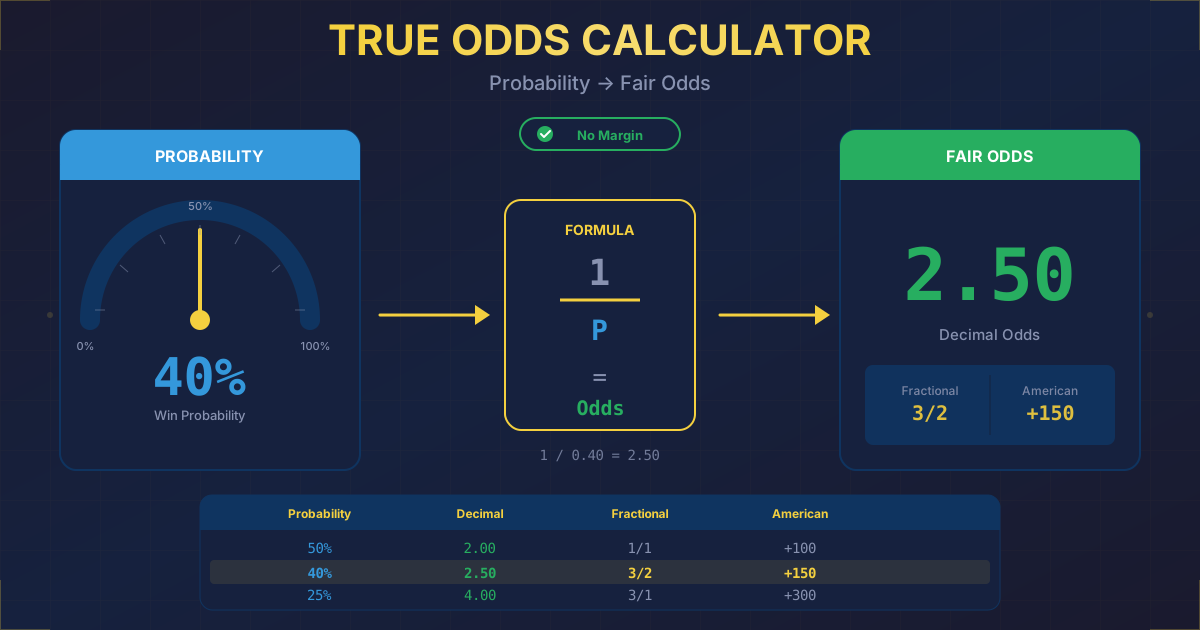
Implied Probability (Your Belief):
Selection Wins = 1 - (1/O)
Selection Loses = 1/O

Break-Even Win Rate:
Must lose less than: L / (L + P)
Worked Example
Lay Chelsea to Win:
Lay odds: 2.40
Backer's stake: $75
Commission: 5%

Step 1: Calculate Liability
L = $75 × (2.40 - 1) = $75 × 1.40 = $105

Step 2: Calculate Profit if Win
P = $75 × (1 - 0.05) = $75 × 0.95 = $71.25

Step 3: Determine Risk/Reward
Risk $105 to win $71.25
Ratio: 1.47:1 against you

Step 4: Break-Even Analysis
Need Chelsea to lose more than:
$105 / ($105 + $71.25) = 59.6% of time

Implied probability Chelsea wins: 1/2.40 = 41.7%
So you need Chelsea to NOT win: 58.3%+

Slight edge if true not-win probability > 59.6%
Real-World Examples
Example 1: Laying a Heavy Favorite
Situation:
Selection: Manchester City vs Norwich
Man City lay odds: 1.25
You believe Norwich can grab draw or shock win
Stake: $200 (backer wants to back Man City)
Commission: 5%
Calculation:
Liability:
L = $200 × (1.25 - 1) = $200 × 0.25 = $50

Profit if Man City doesn't win:
P = $200 × 0.95 = $190

Risk/Reward:
Risk $50 to win $190
Ratio: 3.8:1 in your favor!

Break-even:
Man City must NOT win 50/(50+190) = 20.8% of time

Implied by odds:
Man City wins 80%, doesn't win 20%

Analysis:
Very attractive risk/reward
But heavy favorites win often
Historical Man City win rate at home: 82%
Marginal value at best
Result:
If Norwich wins or draws: +$190
If Man City wins: -$50

This is classic lay-the-favorite strategy
Small liability, decent profit
But favorites win for a reason
Need genuine edge to profit long-term
Example 2: Laying a Moderate Underdog
Situation:
Selection: Roger Federer to beat young qualifier
Federer lay odds: 1.85
You think qualifier has a chance
Stake: $100
Commission: 5%
Calculation:
Liability:
L = $100 × (1.85 - 1) = $100 × 0.85 = $85

Profit if Federer loses:
P = $100 × 0.95 = $95

Risk/Reward:
Risk $85 to win $95
Ratio: 1.12:1 in your favor

Break-even:
Federer must lose 85/(85+95) = 47.2% of time

Implied by odds:
Federer wins 54%, loses 46%

If you believe qualifier wins 48%+, value exists
Result:
Good risk/reward ratio
Liability manageable
Clear logic: young qualifier on hot streak

Lay bets in this range often offer best value
Not too short (tiny profit)
Not too long (massive liability)
Example 3: Laying a Longshot
Situation:
Selection: 100/1 horse to win race
Lay odds: 101.00 (decimal)
Stake: $10 (backer betting small on longshot)
Commission: 5%
Calculation:
Liability:
L = $10 × (101 - 1) = $10 × 100 = $1,000!

Profit if horse loses:
P = $10 × 0.95 = $9.50

Risk/Reward:
Risk $1,000 to win $9.50
Ratio: 105:1 against you!

Break-even:
Horse must lose 1000/(1000+9.50) = 99.1% of time
Result:
WARNING: Extreme liability!
$10 lay = $1,000 at risk

Even if horse loses 99% of time:
Expected value = 0.99 × $9.50 - 0.01 × $1000
EV = $9.41 - $10 = -$0.59 per bet

Laying longshots seems "safe" but:
- Tiny profit per win
- Catastrophic rare losses
- Very negative expected value typically

AVOID laying longshots unless:
- You have specific insider edge
- Part of calculated trading strategy
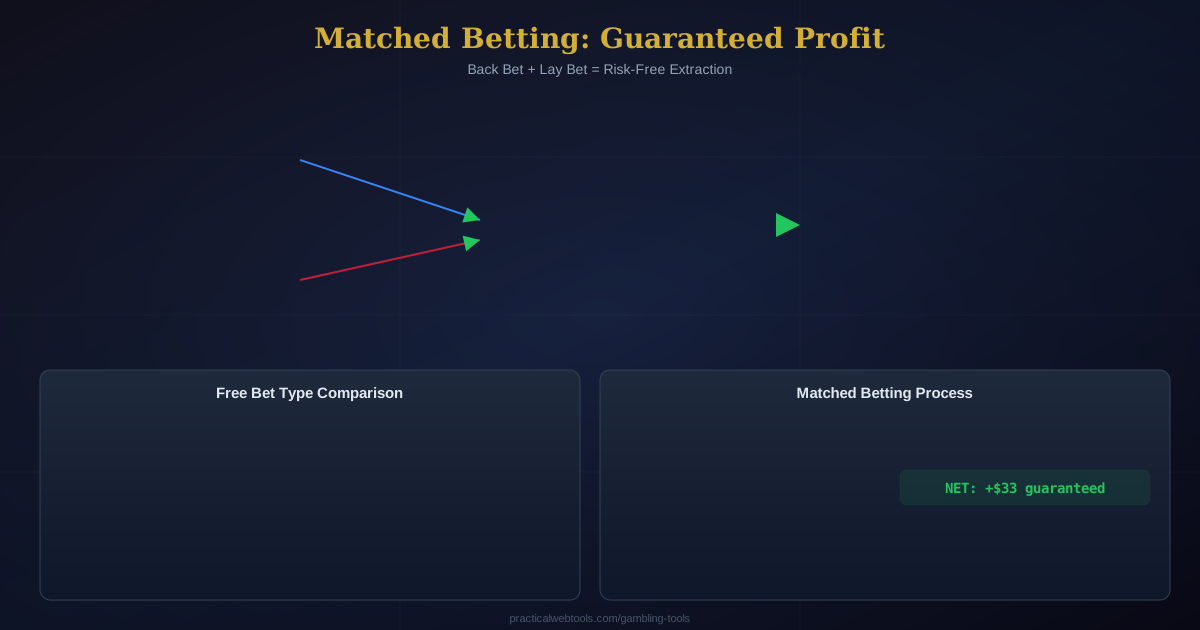
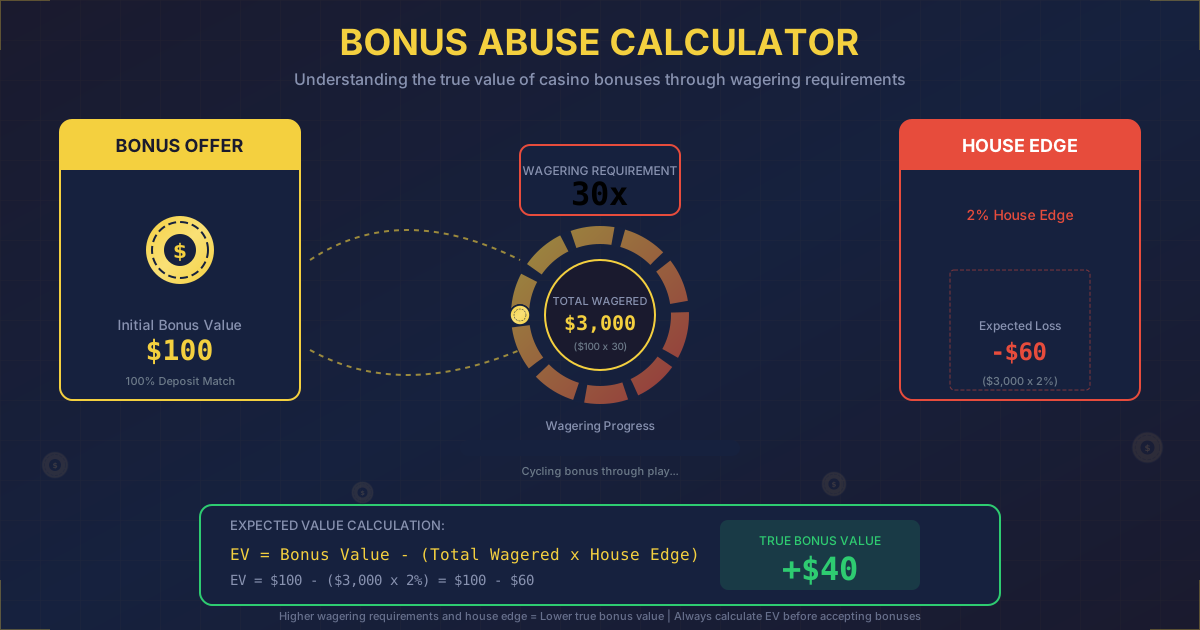
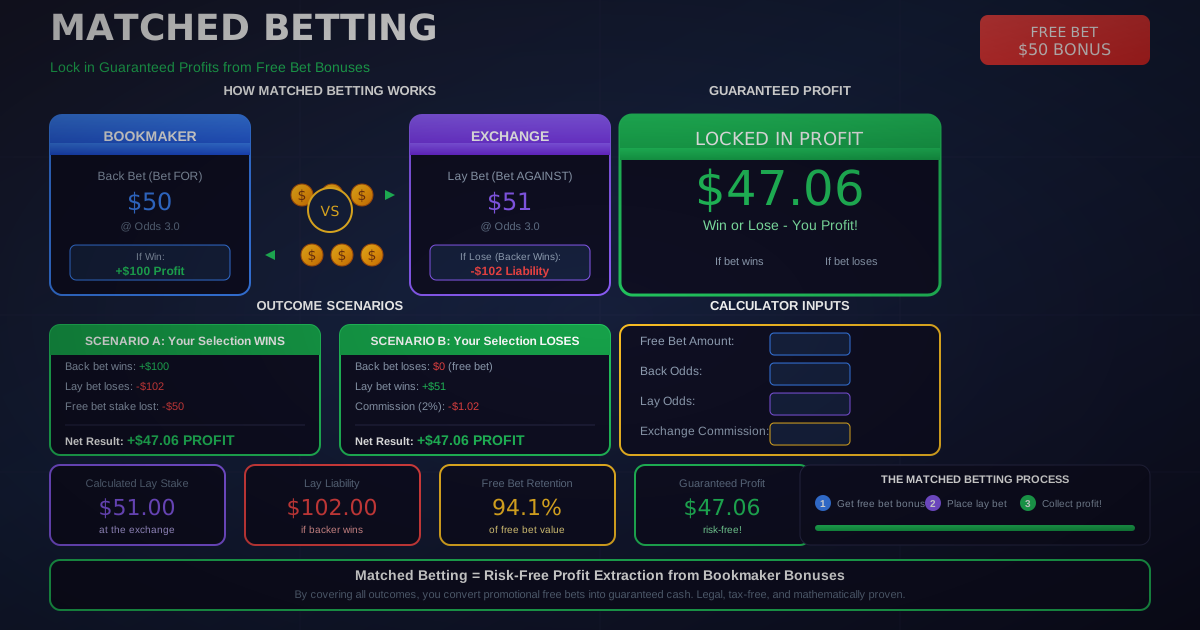
Example 4: Matched Betting with Lay
Situation:
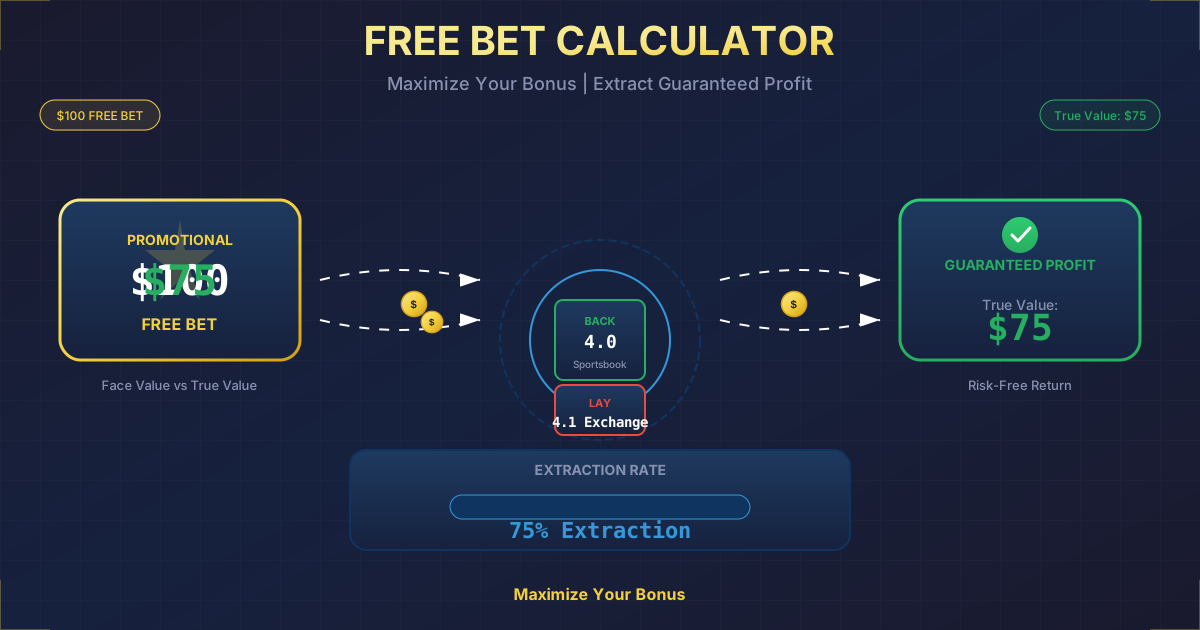
Free bet offer: $25 free bet at bookmaker
Selection: Tennis player at 2.30 bookmaker
Exchange lay odds: 2.35
Commission: 5%
Goal: Extract guaranteed profit from free bet
Calculation:
Step 1: Back with free bet
Back $25 at 2.30 (bookmaker)
If wins: $25 × (2.30 - 1) = $32.50 profit
If loses: $0 (free bet, no real money lost)

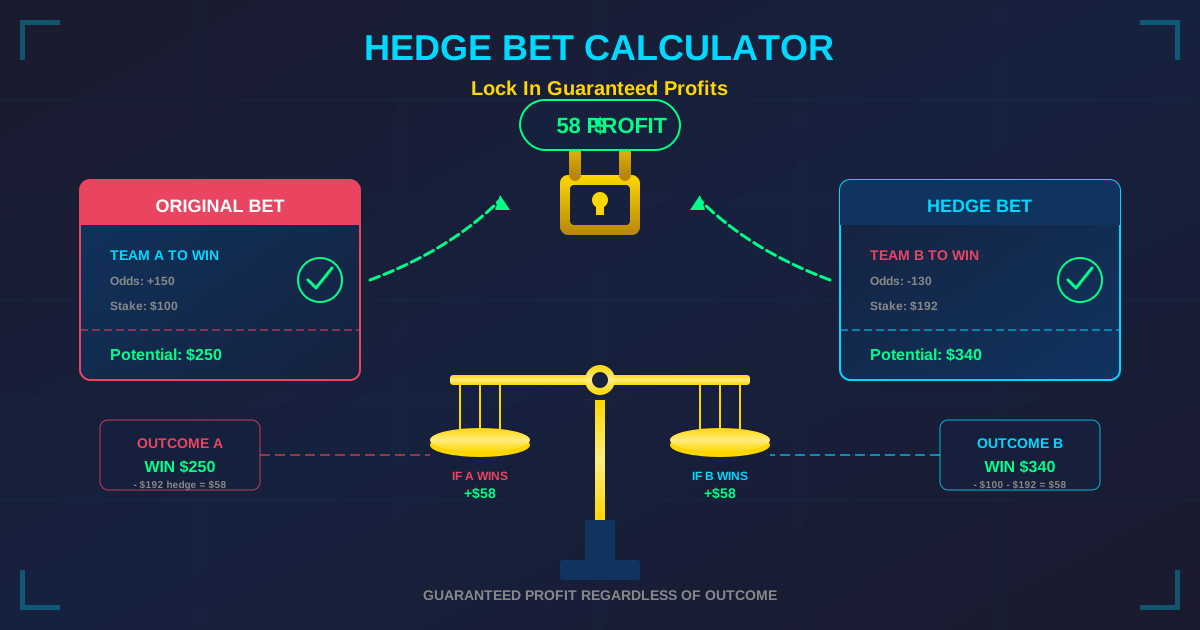
Step 2: Lay on exchange to hedge
Calculate lay stake for even outcome:
Lay stake = (Free bet × Back odds) / (Lay odds - Commission)
Lay stake = ($25 × 2.30) / (2.35 - 0.05)
Lay stake = $57.50 / 2.30 = $25

Liability: $25 × (2.35 - 1) = $33.75

Step 3: Calculate outcomes

If Selection WINS:
Bookmaker: +$32.50 (free bet winnings)
Exchange: -$33.75 (liability)
Net: -$1.25

If Selection LOSES:
Bookmaker: $0
Exchange: +$25 × 0.95 = +$23.75
Net: +$23.75

This simplified example shows small loss/profit
Real matched betting uses exact formulas
to guarantee profit either way
Lay Betting Strategies
Laying the Field Strategy
Concept: Lay multiple selections in same event

Example - Horse Racing:
Lay 3 horses at low odds

Horse A: Lay 1.50, stake $200, liability $100
Horse B: Lay 1.80, stake $150, liability $120
Horse C: Lay 2.20, stake $100, liability $120

Total liability if ANY wins: $100-$120
Total profit if ALL THREE lose: ~$450 × 0.95 = ~$427

Problem:
Need ALL lays to win
If any one horse wins, you lose
Risk compounds with multiple lays
Laying Short-Priced Favorites
Theory: Heavy favorites occasionally lose

Approach:
- Focus on odds 1.10 - 1.40 range
- Small liability, decent profit ratio
- Accept most will lose (favorites win)
- Profit from occasional upsets

Reality Check:
1.20 favorites win ~83% of time
Even with 5:1 profit/risk ratio
EV often slightly negative

Only works if:
- You identify specific overbet favorites
- Have edge on true probability
- Manage bankroll for losing streaks
In-Play Lay Betting
Concept: Lay selections after favorable start

Example:
Pre-match: Team A at 2.50 to back
After Team A scores early: 1.60 to back

If you backed at 2.50:
Lay at 1.60 to lock profit (back-to-lay)

If you didn't back:
Lay now at 1.60
Lower liability: Stake × 0.60
Betting on comeback/equalizer

In-play lay advantages:
- More information (score, momentum)
- Prices move significantly
- Can exit positions

Disadvantages:
- Fast-moving markets
- Emotional decisions
- Liquidity can disappear
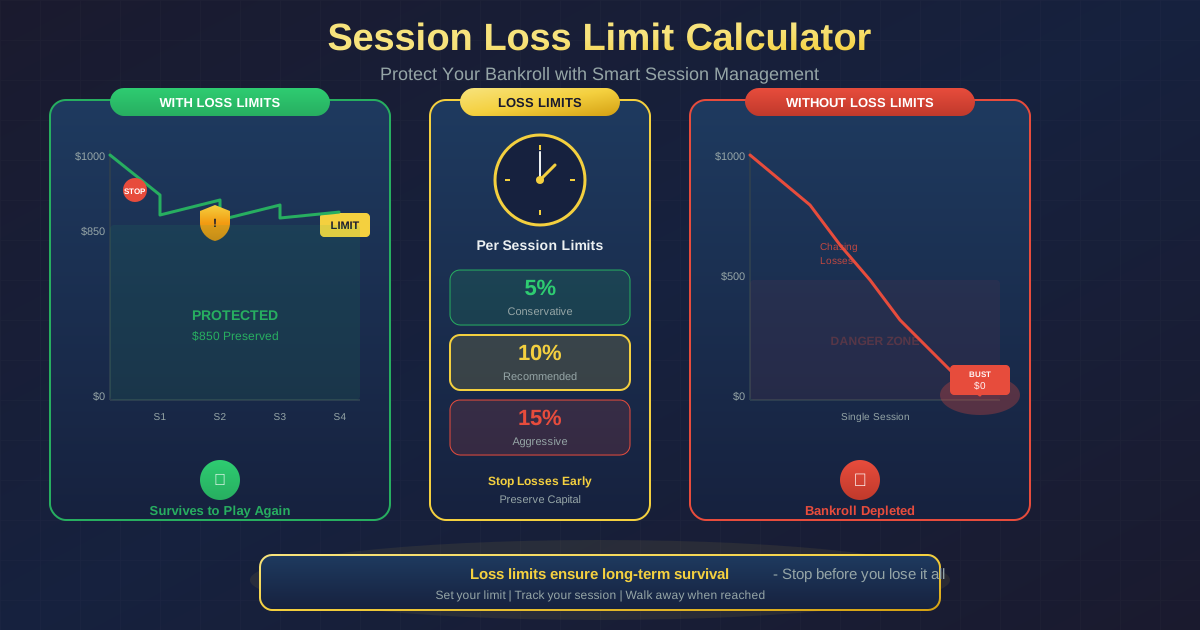
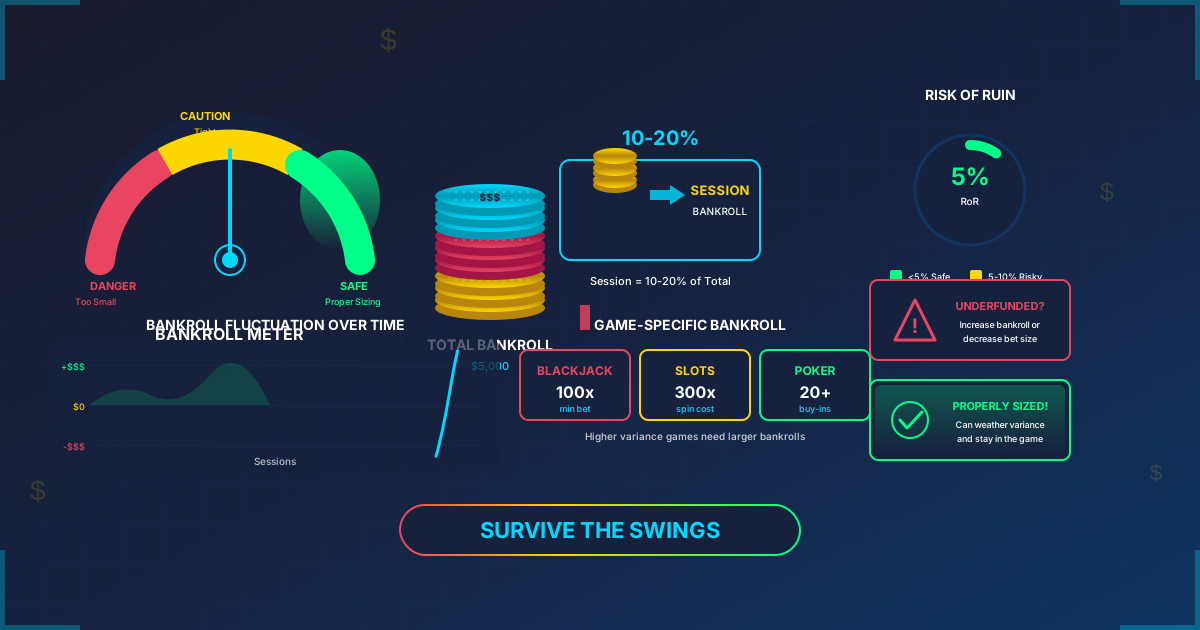
Liability Management
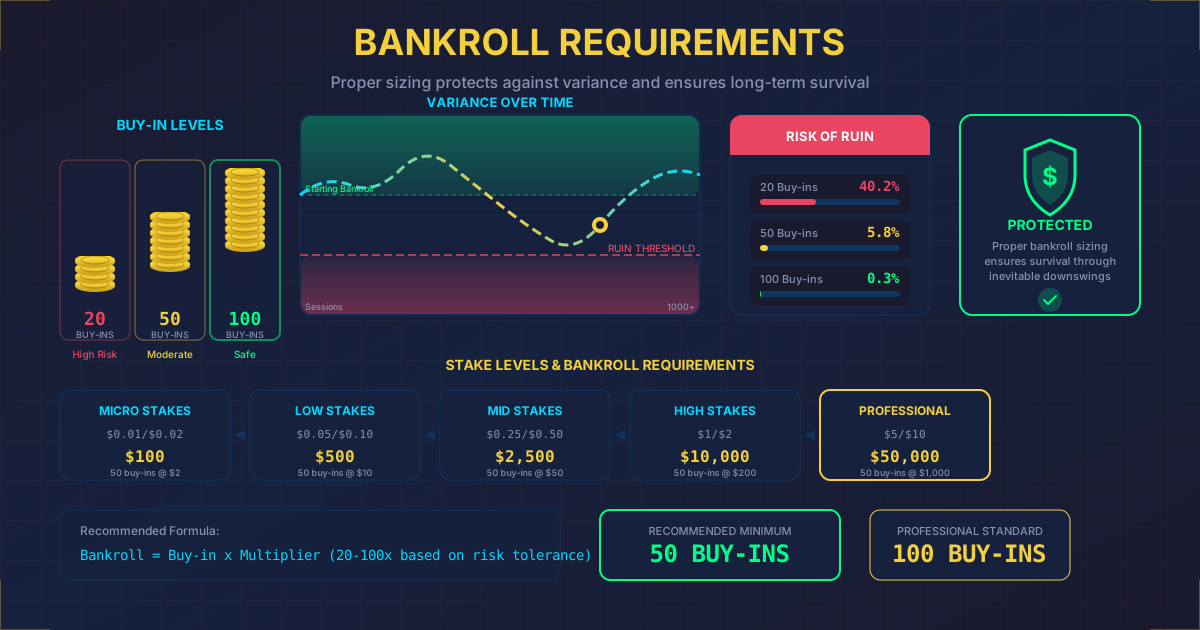
Setting Liability Limits
Conservative Approach:
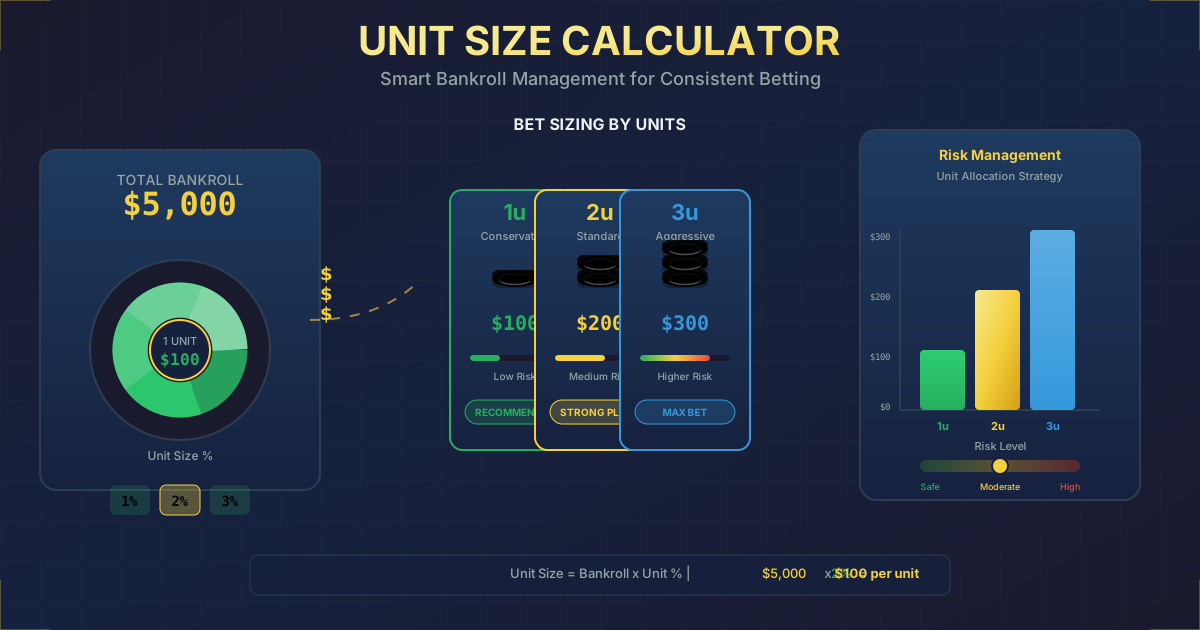
Maximum liability = 2% of bankroll

Example:
Bankroll: $5,000
Max liability: $100

At lay odds 2.00: Max stake $100
At lay odds 3.00: Max stake $50
At lay odds 5.00: Max stake $25

This limits damage from any single lay
Understanding True Exposure
Multiple Lay Bets in Same Event:

Event: Premier League match
Lay Home Win: $100 liability
Lay Away Win: $80 liability
Lay Draw: $120 liability

Maximum Loss = Single highest liability
(Only one can win)
Maximum loss: $120 (if draw)

But if laying DIFFERENT events:
All losses can compound
Liability adds up across events
Common Mistakes to Avoid
-
Underestimating Liability: Always calculate liability before clicking. A $50 lay at 8.00 odds is a $350 liability, not a $50 risk.
-
Laying Longshots Casually: "It can't possibly win" is famous last words. Massive liability for tiny profit is rarely worth it, even on 100/1 shots.
-
Ignoring Commission: Commission turns an even-odds situation into a slight disadvantage. Factor it into every calculation.
-
Overlaying in Same Event: Laying all outcomes in an event (home, away, draw) guarantees loss due to commission. One must win.
-
Emotional Laying: "I hate this team" isn't a betting strategy. Lay because the odds are wrong, not because of feelings.
-
Not Having Funds for Liability: Your exchange holds liability in escrow. If you don't have the funds, the bet won't place. Know your available balance.
Frequently Asked Questions
Why would anyone lay a bet?
Several reasons: You believe the selection won't win, you want to hedge a back bet, you're trading prices, or you're extracting value from bookmaker promotions through matched betting.
Is lay betting profitable long-term?
Like back betting, profitability depends on finding value. If your lay selections win less often than the odds imply (meaning the selection wins less than implied), you profit. It requires the same edge as backing.
What happens if I can't cover liability?
The exchange won't let you place the bet. Liability is held in escrow when the bet is placed. You need sufficient funds before the bet is accepted.
Can I lay bet on any outcome?
On exchanges, yes - you can lay anything with available liquidity. You can lay favorites, underdogs, overs, unders, any market where someone wants to back.
Is laying easier than backing?
Neither is inherently easier. Lay betting feels safer against longshots but isn't when you consider liability. Against favorites, it's basically backing the underdog with extra commission.
What's the minimum lay stake?
Typically $2-5 on major exchanges. But minimum stake with large liability still requires substantial funds. $5 lay at 20.00 = $95 liability required.
Pro Tips
- Treat laying as backing the opposite - "lay Team A" means you think draw or Team B win
- Keep liability per bet under 2% of your exchange bankroll to survive losing runs
- Use lay betting in matched betting strategies to extract guaranteed profit from bookmaker offers
- Compare lay odds across exchanges - Smarkets' 2% commission vs Betfair's 5% matters
- Watch for liquidity - your lay offer needs a backer to match, especially in thin markets
Related Calculators
- Betting Exchange Calculator - General exchange concepts
- Back-to-Lay Calculator - Trade out positions
- Matched Betting Calculator - Extract free bet value
- Arbitrage Calculator - Guaranteed profit opportunities
- Liability Calculator - Manage your risk
Conclusion
Lay betting is a powerful tool that traditional bookmakers don't offer. It lets you profit when favorites lose, hedge existing positions, and implement sophisticated trading strategies. But with power comes responsibility - liability management is crucial when a single upset can cost you multiples of your profit target.
Our calculator ensures you understand exactly what you're risking before placing any lay bet. Master the liability calculation, respect the mathematics, and lay betting becomes a valuable addition to your betting toolkit.