Exploitative Poker Calculator: Maximize EV Against Opponent Leaks (2026)

Exploitative Poker Calculator: Turn Opponent Weaknesses Into Your Profits
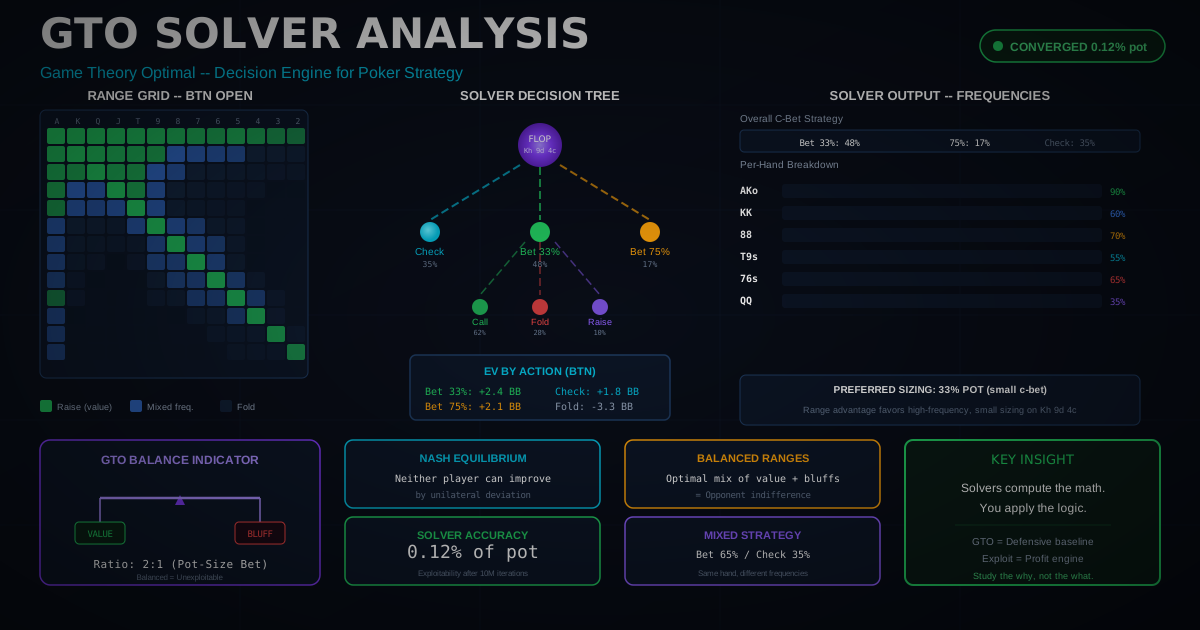
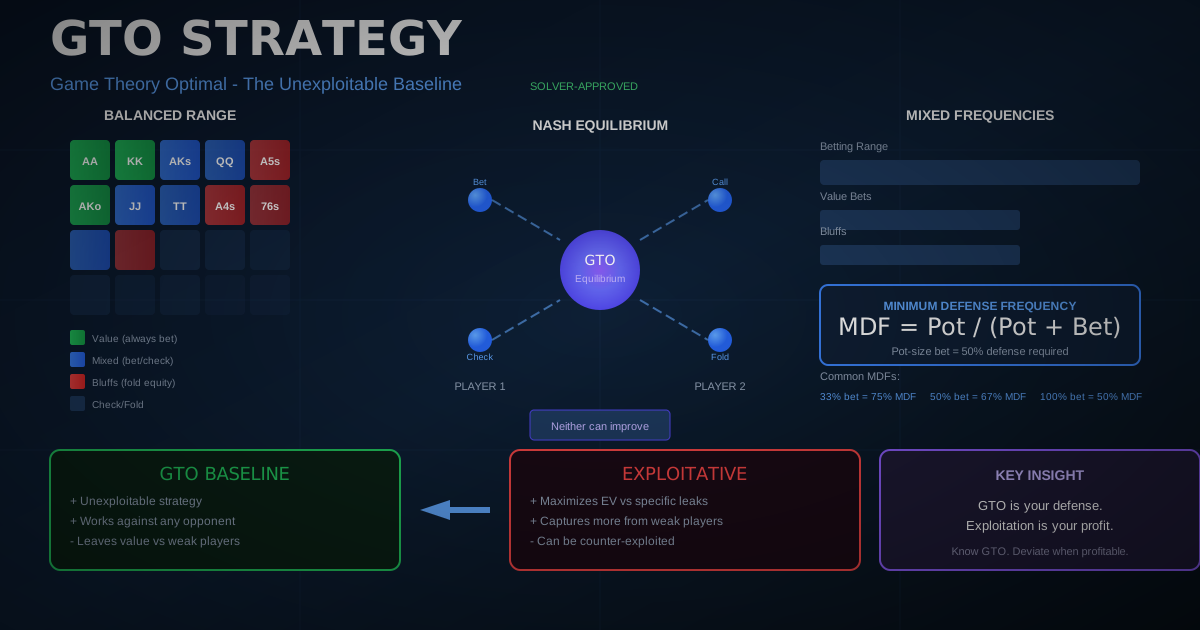
While GTO poker provides a bulletproof baseline, real money is made by exploiting opponent mistakes. Every fold that's too frequent, every call that's too wide, every bet that's too small represents profit waiting to be claimed. Our exploitative poker calculator quantifies exactly how much to deviate from balanced play to maximize your edge against imperfect opponents.
What Is Exploitative Poker?
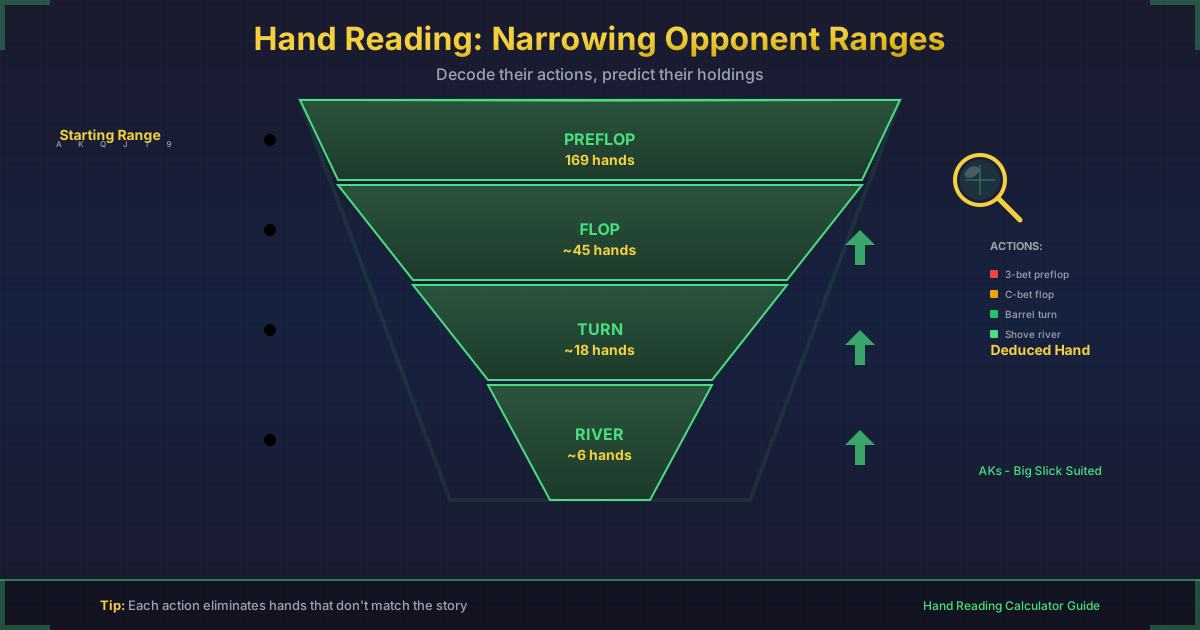
Exploitative poker is the strategy of deviating from game-theoretically optimal play to capitalize on specific opponent weaknesses. Instead of playing unexploitable poker that performs equally against all strategies, exploitative play targets identified leaks to extract maximum value.
Quick Answer: Exploitative EV = (Baseline GTO EV) + (Deviation Profit from Exploiting Leak). Against a player who folds 70% to c-bets (vs optimal 50%), increasing your c-bet frequency from 65% to 100% adds roughly +15% pot EV per c-bet opportunity. The larger the leak, the more aggressively you should exploit it.
How to Use Our Calculator
Use the Exploitative Poker Calculator →
Step-by-Step Instructions
- Identify the Opponent Leak: Select the tendency you've observed (overfolds, overcalls, bets too small, etc.)
- Input the Deviation Amount: Enter how far from optimal your opponent deviates
- Enter the Baseline Situation: Input pot size, position, and action context
- Calculate Optimal Exploitation: See how much to adjust your strategy and expected profit gain
Input Fields
| Field | Description | Example |
|---|---|---|
| Leak Type | Category of opponent mistake | Overfolds to aggression |
| Leak Magnitude | How far from optimal (%) | +20% over GTO fold frequency |
| Pot Size | Current pot | $100 |
| Your Position | Position relative to opponent | In position |
| Street | Current betting round | Flop |
| Opponent Type | Player classification | Tight-passive |
Core Exploitative Concepts
The Exploitation Framework
Every exploit follows this pattern:
1. Identify Leak → 2. Quantify Deviation → 3. Calculate Counter-Strategy → 4. Execute Profitably
Exploitation Categories:
| Opponent Does Too Much | Your Counter-Strategy |
|---|---|
| Folds to aggression | Bluff more frequently |
| Calls with weak hands | Value bet thinner, bluff less |
| Bets small | Call/raise wider |
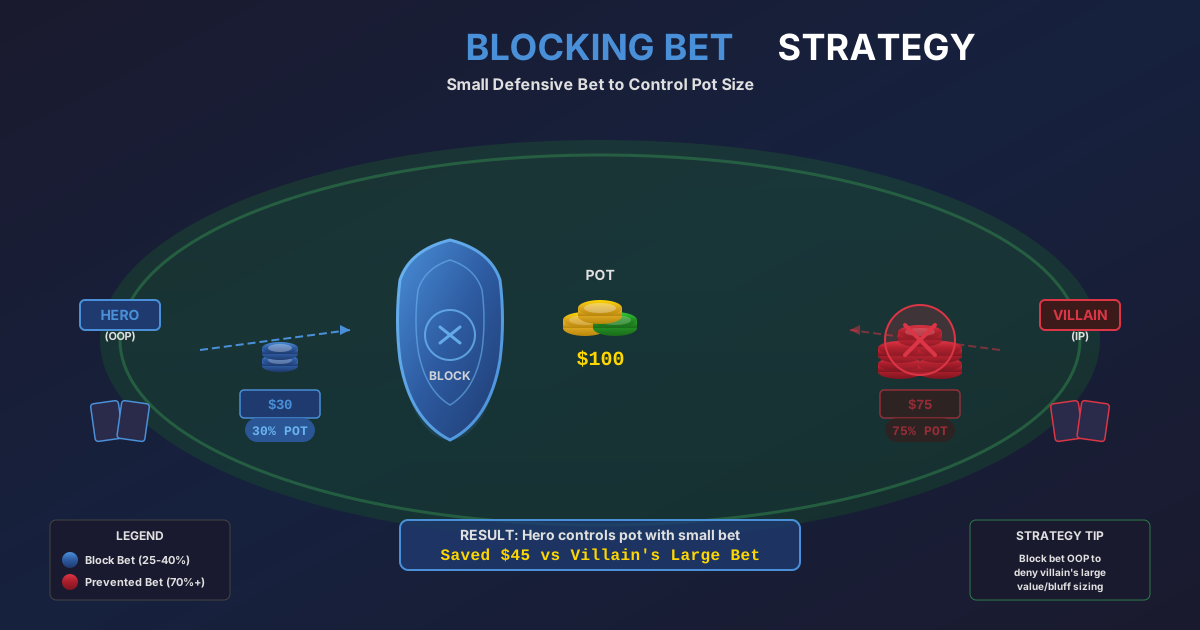
| Bets large | Tighten calling range |
| Opponent Does Too Little | Your Counter-Strategy |
|---|---|
| Never folds | Stop bluffing, value bet relentlessly |
| Rarely calls | Bluff aggressively, thin value less |
| Checks strong hands | Bet for thin value when checked to |
| Never raises | Value bet fearlessly, check back draws |
Quantifying Opponent Deviations
Fold Frequency Analysis:
GTO Fold Frequency (typical): 40-50%
Opponent Observed Fold Rate: 65%
Deviation: +15-25% overfold

Exploit: Increase bluff frequency by 15-25%
Call Frequency Analysis:
GTO Call Frequency (typical): 50-60%
Opponent Observed Call Rate: 75%
Deviation: +15-25% overcall

Exploit: Eliminate bluffs, add thin value bets
The Math Behind Exploitation
Bluff Frequency Against Overfolders
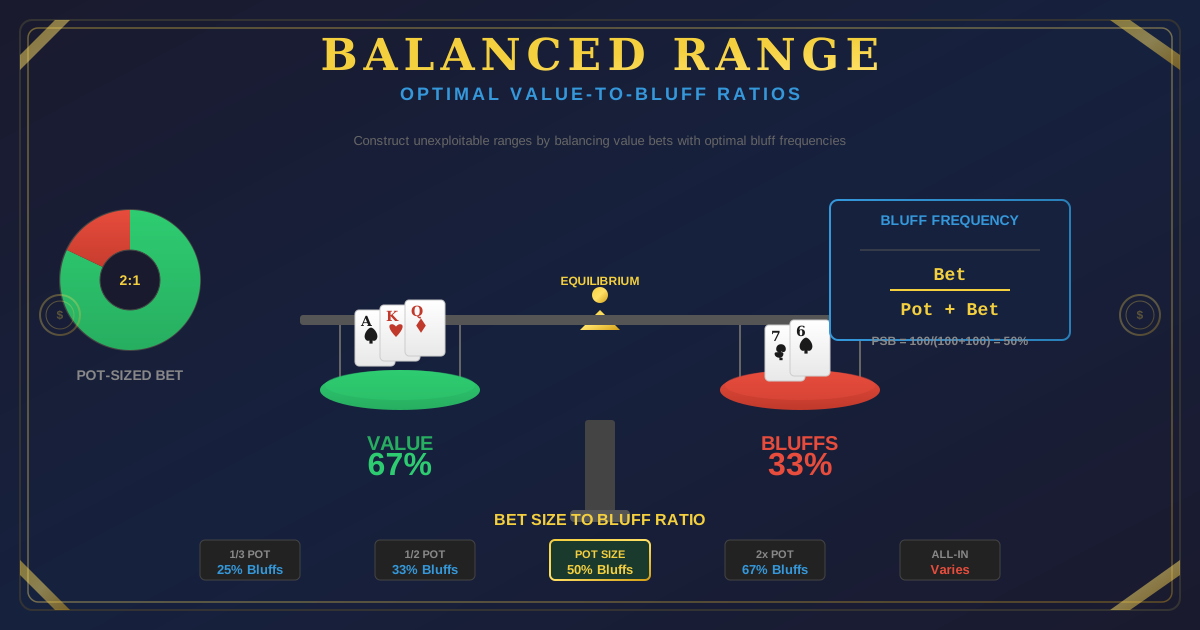
When opponents fold more than GTO dictates, your bluffs become more profitable:
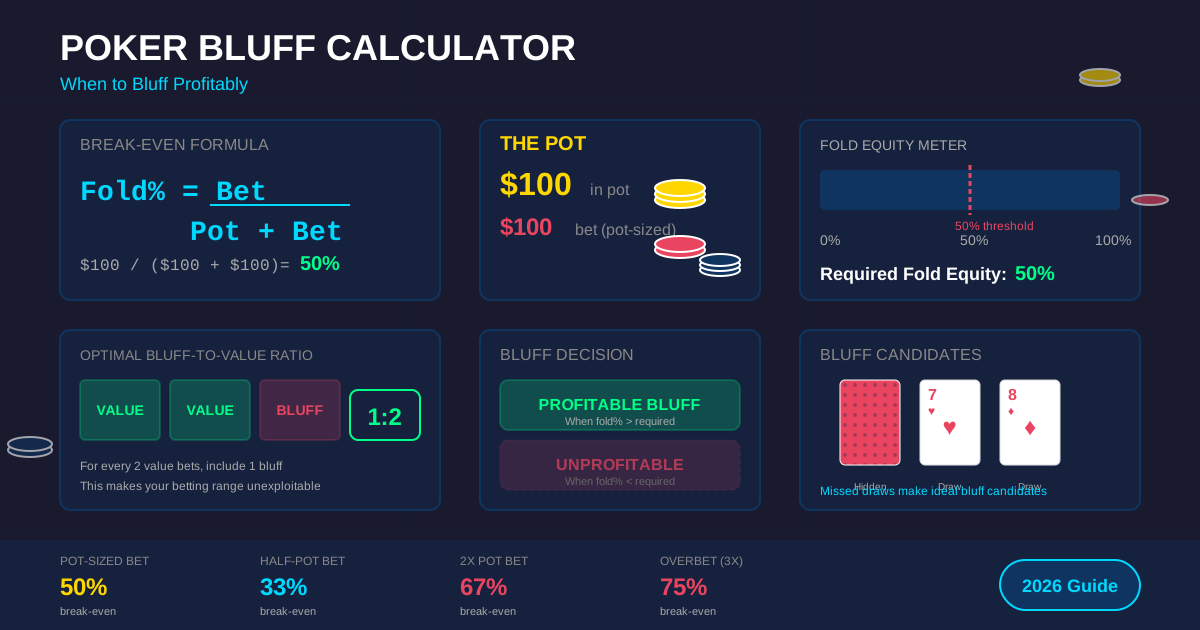
Standard Bluff Math:
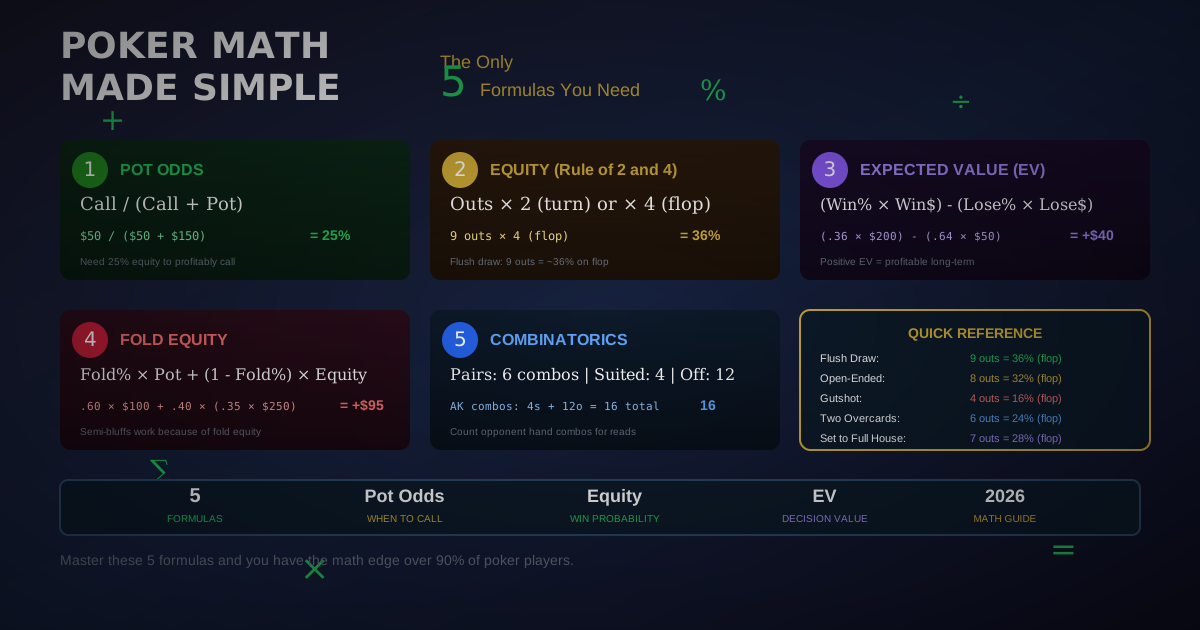
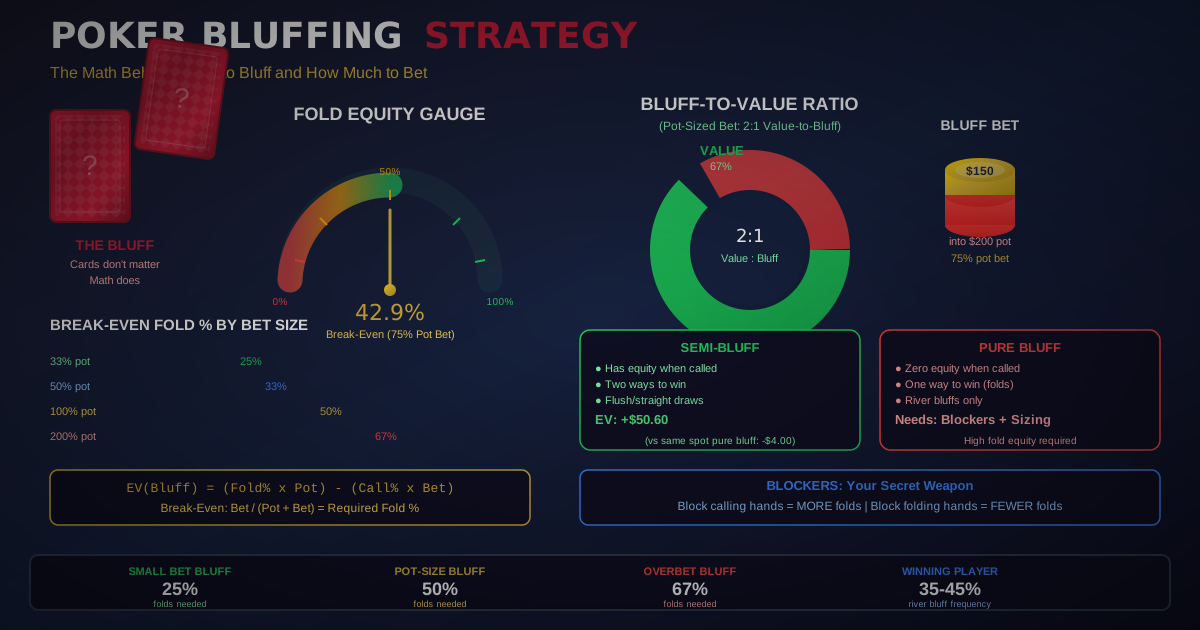
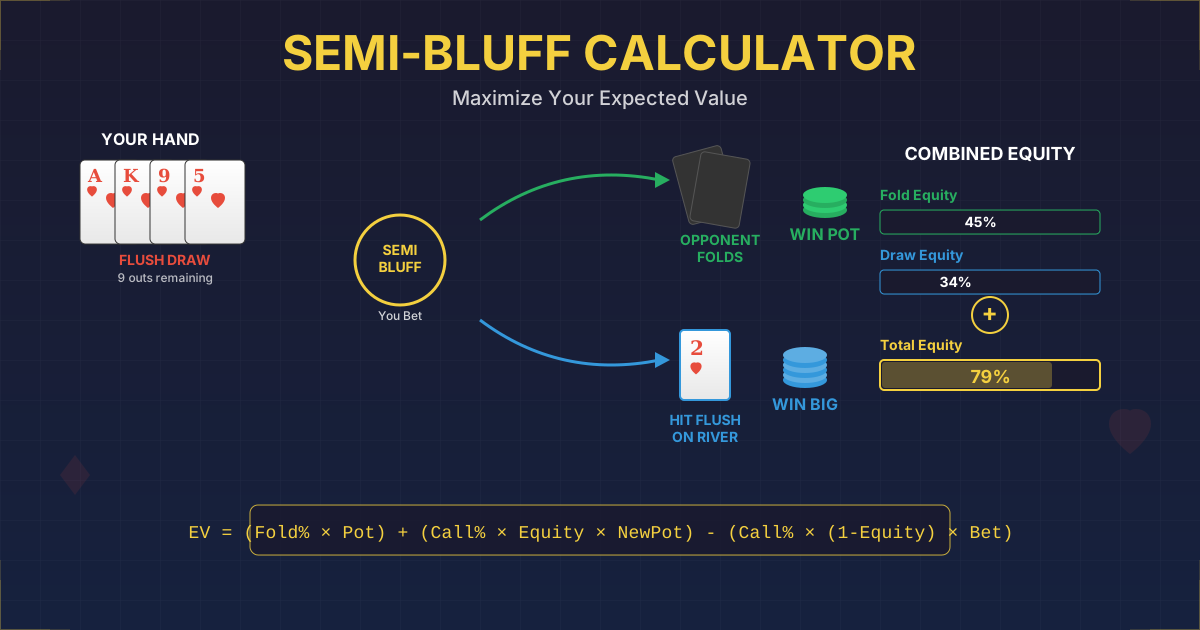
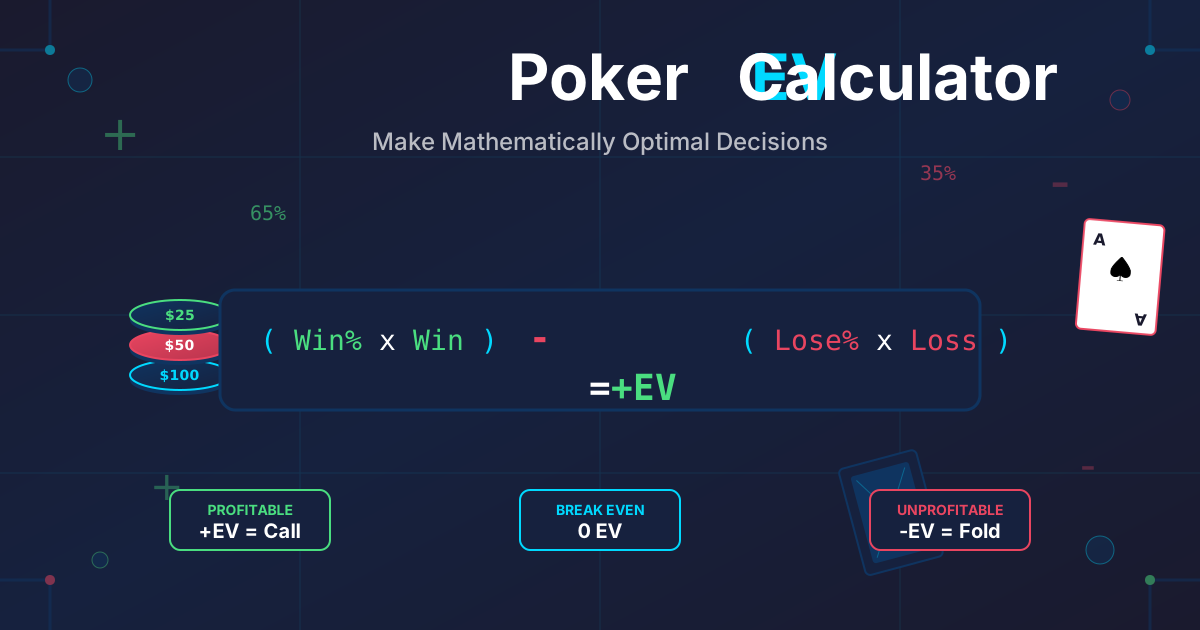
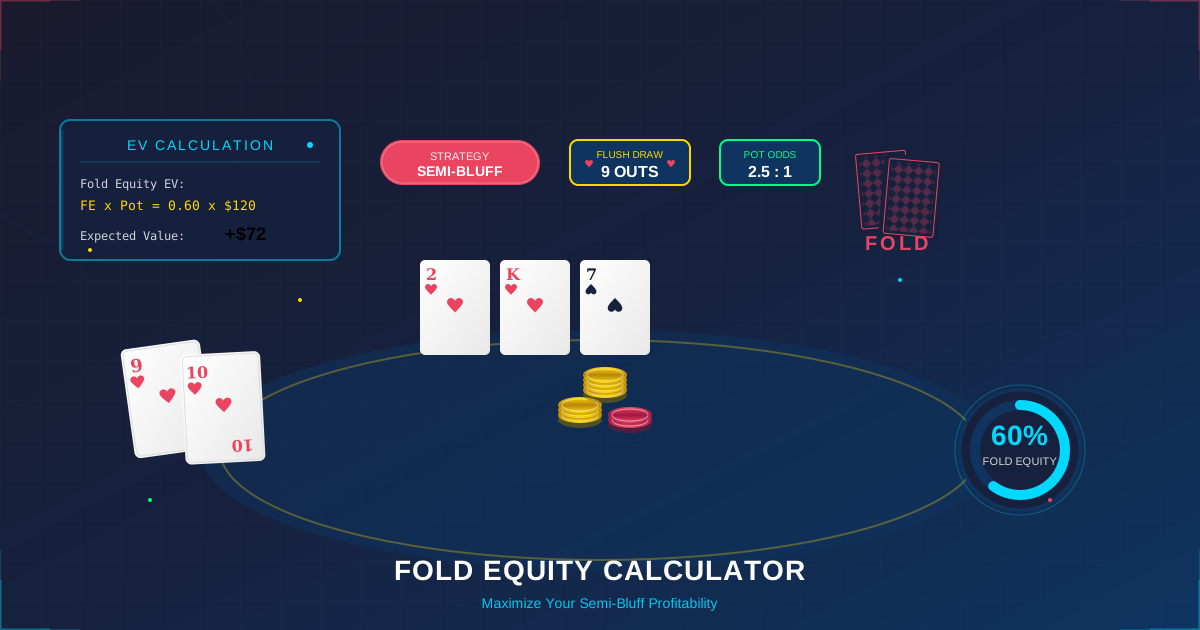
Bluff EV = (Fold% x Pot) - (Call% x Bet)
Against 40% Folder (GTO):
EV = (0.40 x $100) - (0.60 x $75) = $40 - $45 = -$5
Bluffing is slightly unprofitable
Against 65% Folder (Exploitable):
EV = (0.65 x $100) - (0.35 x $75) = $65 - $26.25 = +$38.75
Bluffing is highly profitable
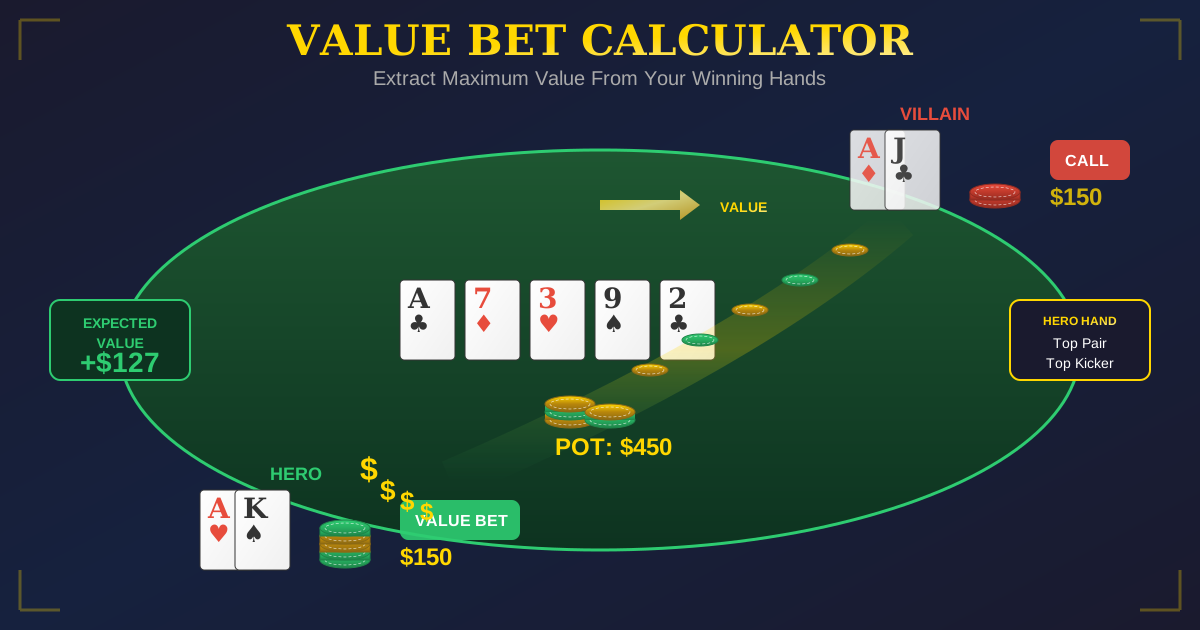
Value Bet Frequency Against Overcallers
When opponents call too much, even marginal hands become profitable bets:
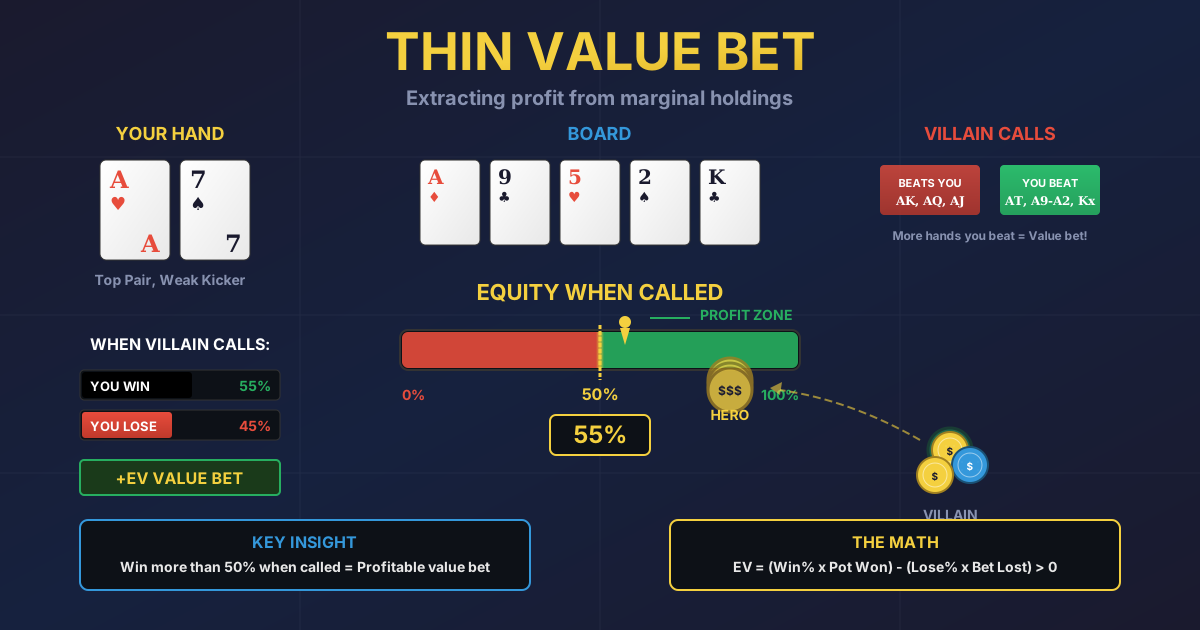
Standard Thin Value Math:
Thin Value EV = (Call% x Win% x (Pot + Bet)) - (Call% x Lose% x Bet)
Against GTO Caller (55% calls with correct range):
With 55% equity vs calling range:
EV = (0.55 x 0.55 x $150) - (0.55 x 0.45 x $50) = $45.38 - $12.38 = +$33
Against 80% Caller (Calling Station):
Wider calling range means you now have 65% equity
EV = (0.80 x 0.65 x $150) - (0.80 x 0.35 x $50) = $78 - $14 = +$64
Raise Frequency Against Passive Players
Players who rarely raise can be exploited with thin value bets:
Against Balanced Player:
Your TPTK gets raised 12% of the time
Risk of being raised keeps you honest
Against Never-Raiser:
Your TPTK never gets raised
Bet any hand with >50% equity vs calling range
Stack off confidently with strong hands
Player Type Exploitations
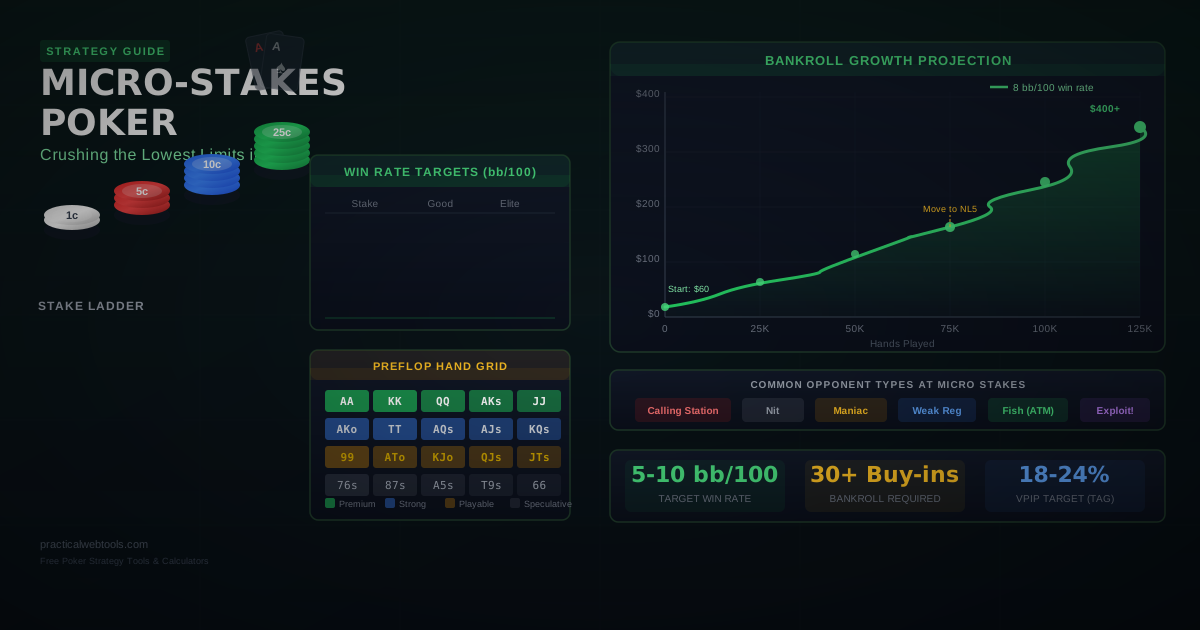
The Calling Station
Leak Profile:
- Calls with any piece of the board
- Rarely folds to any bet size
- Never bluffs river
Exploitation Strategy:
Bluff Frequency: 0% (eliminate all bluffs)
Value Bet Range: Top 60% of hands (widen significantly)
Bet Sizing: Larger with value (they call regardless)
River Strategy: Only bet for value, never bluff
EV Impact Example:
GTO bluffs at 30% frequency lose EV against station
Removing bluffs: Save 30% x Bet Size per bluff attempt
Adding thin value: Gain EV on previously checked hands
Net gain: +20-30% profit vs calling stations
The Nit (Ultra-Tight Player)
Leak Profile:
- Only plays premium hands
- Folds to any aggression without the nuts
- Rarely bluffs
Exploitation Strategy:
Bluff Frequency: 60-70% (exploit their folds)
Value Bet Range: Top 25% only (they only call with premium)
Bet Sizing: Smaller for bluffs, larger for value
Steal Frequency: Maximum in all positions
EV Impact Example:
Against nit who folds 75% to c-bets:
C-bet bluff EV = 0.75 x $60 - 0.25 x $40 = $45 - $10 = +$35
Bluff any two cards profitably
The Maniac (Hyper-Aggressive Player)
Leak Profile:
- Bets and raises too frequently
- Overbluffs all streets
- Rarely gives up on pots
Exploitation Strategy:
Bluff Frequency: 10% (only with very strong draws)
Value Bet Range: Narrow initially, then call/trap
Call Down Range: Wide (top pair good kicker+)
Check Strategy: Check strong hands to induce
EV Impact Example:
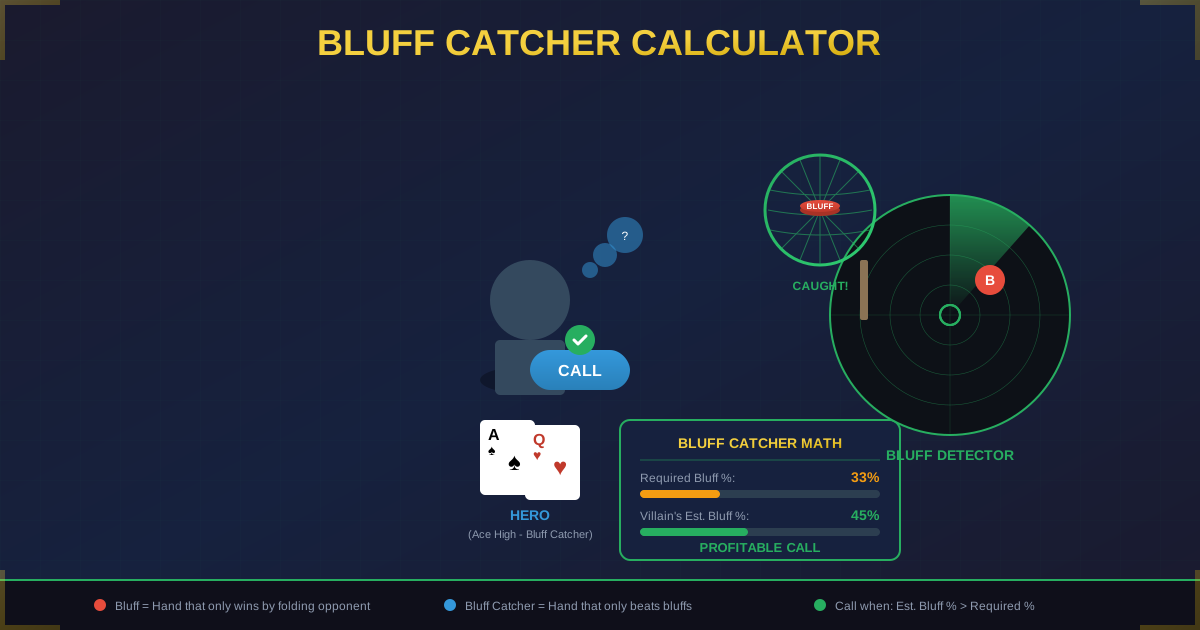
Maniac bluffs 60% of river bets (vs GTO 30%)
Your bluff-catcher wins 60% when calling
Calling EV = 0.60 x Pot - 0.40 x Call = significant profit
The Tight-Aggressive (TAG) Player
Leak Profile:
- Plays solid preflop ranges
- C-bets frequently but gives up
- Rarely bluffs multiple streets
Exploitation Strategy:
Float Frequency: High (they fold turns)
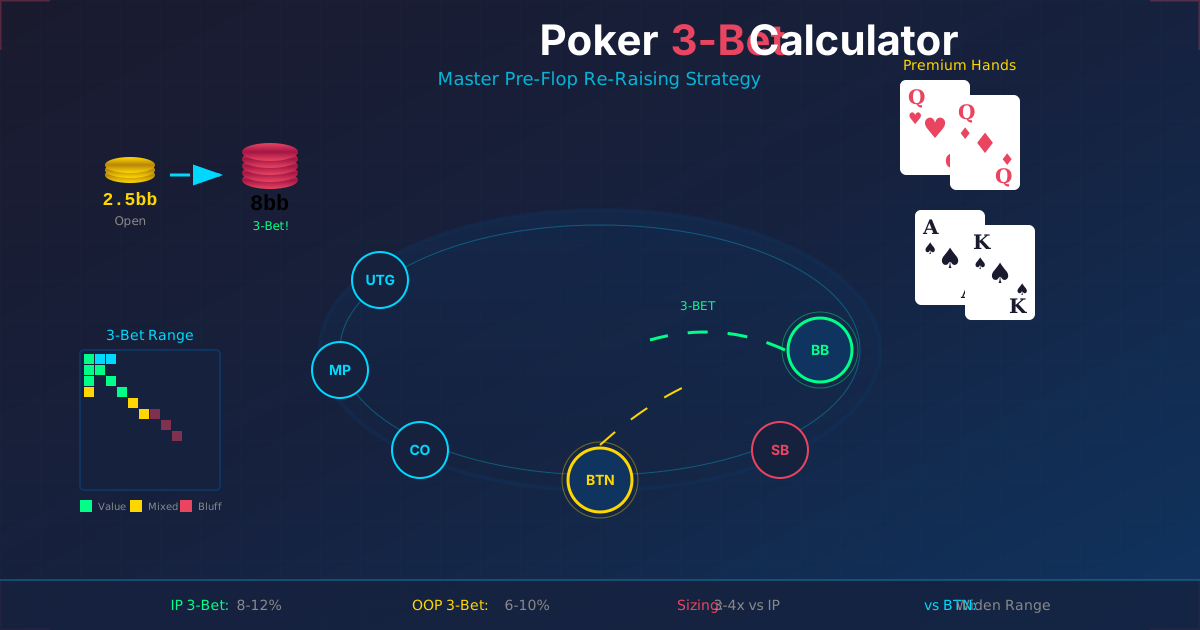
3-Bet Bluff Range: Wide in position
Respect Multi-Street Aggression: Fold marginal hands
Check-Raise Bluffs: Effective (they fold one-pair)
The Loose-Passive (Fish)
Leak Profile:
- Plays too many hands preflop
- Calls too much postflop
- Rarely raises without the nuts
- Predictable betting patterns
Exploitation Strategy:
Isolate: Raise wide to play pots heads-up
Value Bet: Three streets with any made hand
Bluff: Never (they don't fold)
Check-Raise: Only for value (they don't fold)
Situation-Specific Exploits
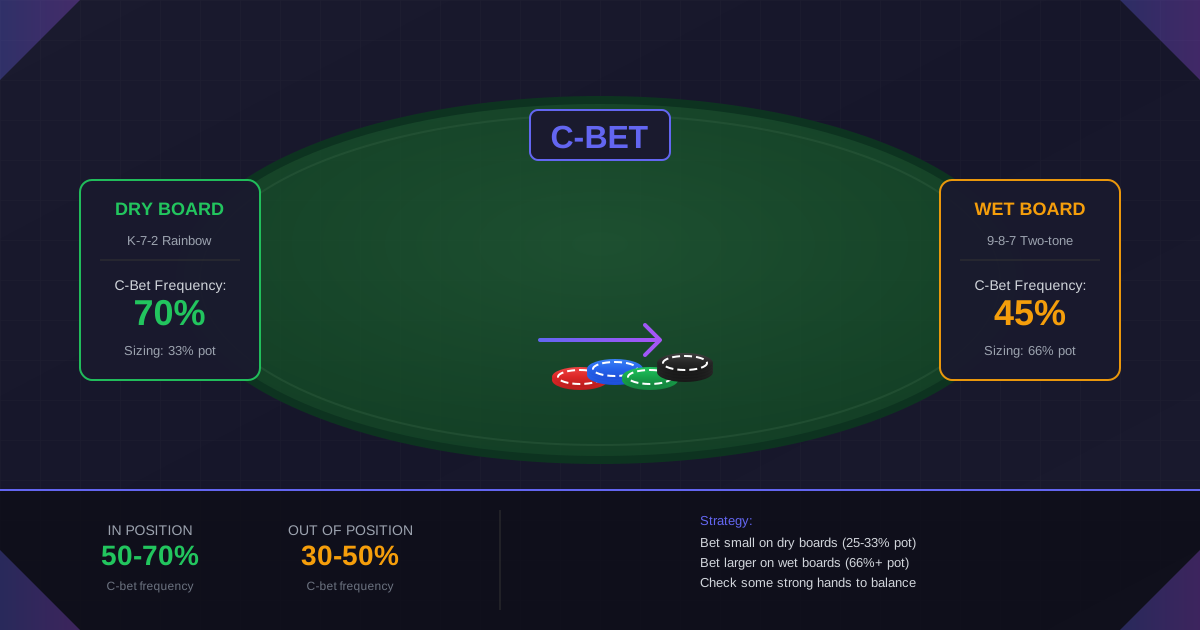
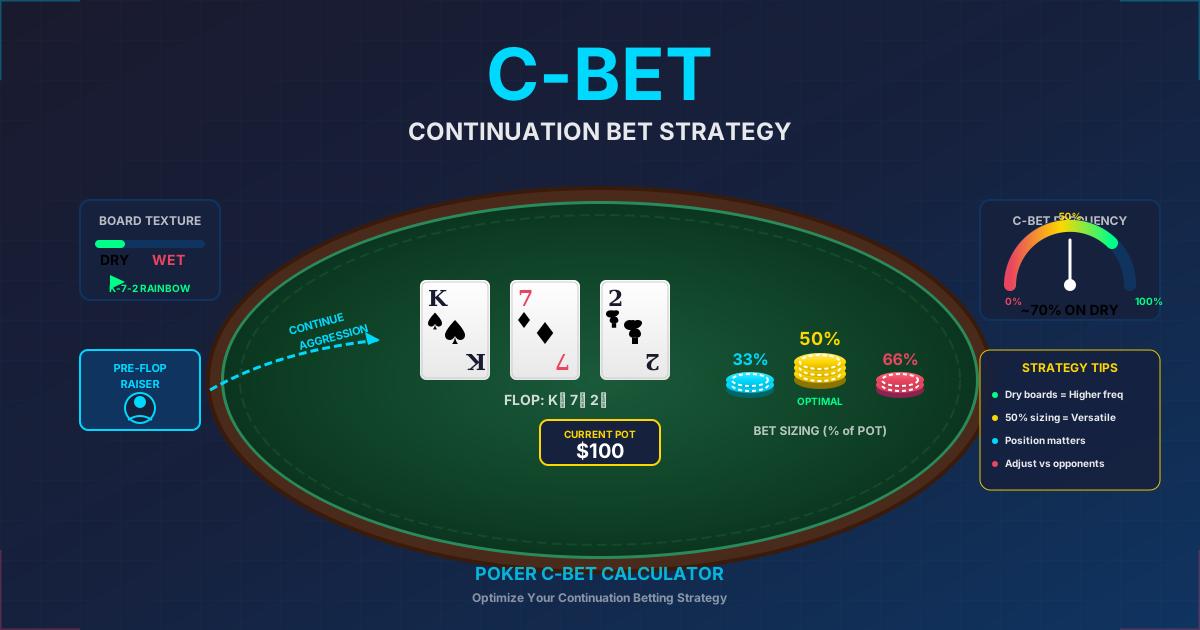
Exploiting C-Bet Tendencies
Opponent C-Bets 90%+ (Too Often):
Counter: Check-raise bluff frequently
Float with any pair or draw
Raise turn when they check
Opponent C-Bets 30% (Too Rarely):
Counter: Stab at pots when checked to
Don't slow-play strong hands
Respect their rare c-bets (strong range)
Exploiting Bet Sizing Tells
Opponent Bets Small with Value, Large with Bluffs:
Counter: Call small bets, fold to large bets
Raise small bets for value
Never raise their large bets
Opponent Bets Small with Bluffs, Large with Value:
Counter: Raise small bets as bluffs
Call large bets with strong hands only
Fold medium-strength to large bets
Exploiting Position Awareness
Opponent Doesn't Adjust for Position:
Counter: Steal blinds relentlessly
Call 3-bets wider in position
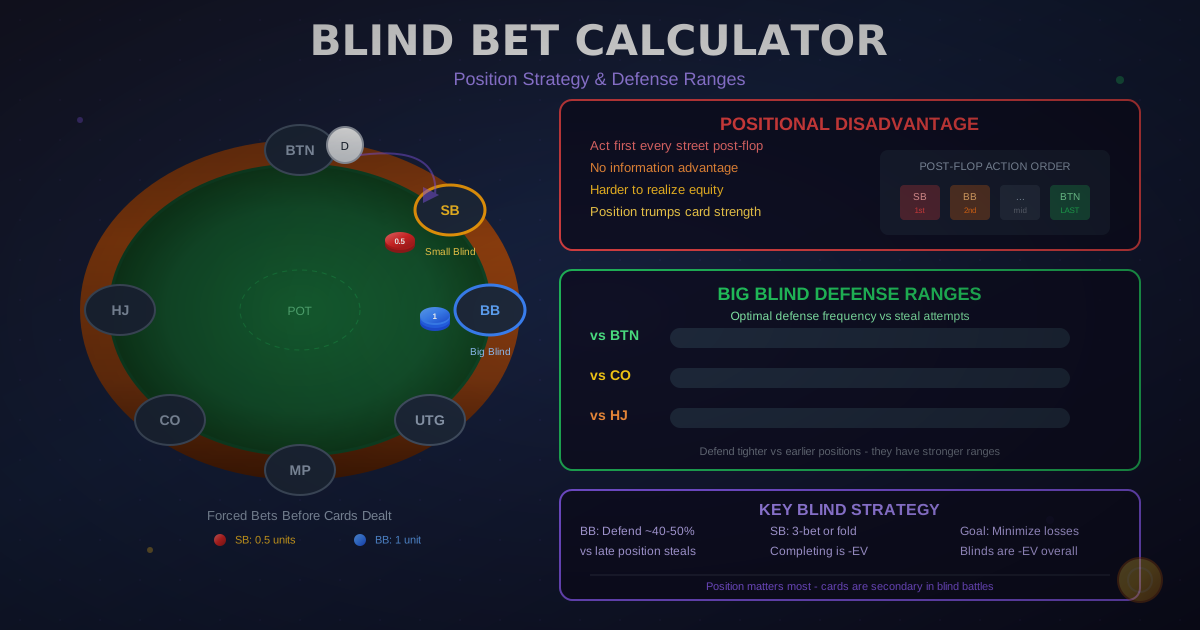
Fold more out of position
Pressure when they're OOP
Real-World Examples
Example 1: Exploiting the Overfolder
Setup: You open from the cutoff, a known tight player calls from the big blind. Flop: Kh 9c 4d. Pot is $50.
Opponent Profile:
- Folds to c-bets 72% of the time (vs optimal ~50%)
- Only continues with top pair or better
Your Hand: 7h6h (missed completely)
Exploitation Calculation:
Standard c-bet sizing: $35 (70% pot)
EV = (0.72 x $50) - (0.28 x $35)
EV = $36 - $9.80 = +$26.20
Result: C-bet any two cards. With 72% fold equity, your bluff shows immediate profit regardless of holdings.
Example 2: Value Betting the Calling Station
Setup: You raise AcTc, a calling station defends the BB. Board runs out: Ah 8c 5d 2s 7h. You've bet flop and turn, pot is $180.
Opponent Profile:
- Calls river with any pair, including bottom pair
- Never bluff-raises
- Call rate approximately 80%
Your Hand: Ace-Ten (top pair, good kicker)
Analysis:
Against 80% calling range including A2-A7, 8x, 5x, small pairs:
Your equity vs this wide range: ~75%

River bet EV ($130 bet):
EV = 0.80 x [(0.75 x $310) - (0.25 x $130)]
EV = 0.80 x [$232.50 - $32.50] = $160
Checking EV:
Win 75% of $180 = $135
Result: Betting $130 earns $160 vs checking's $135. Bet for value against stations.
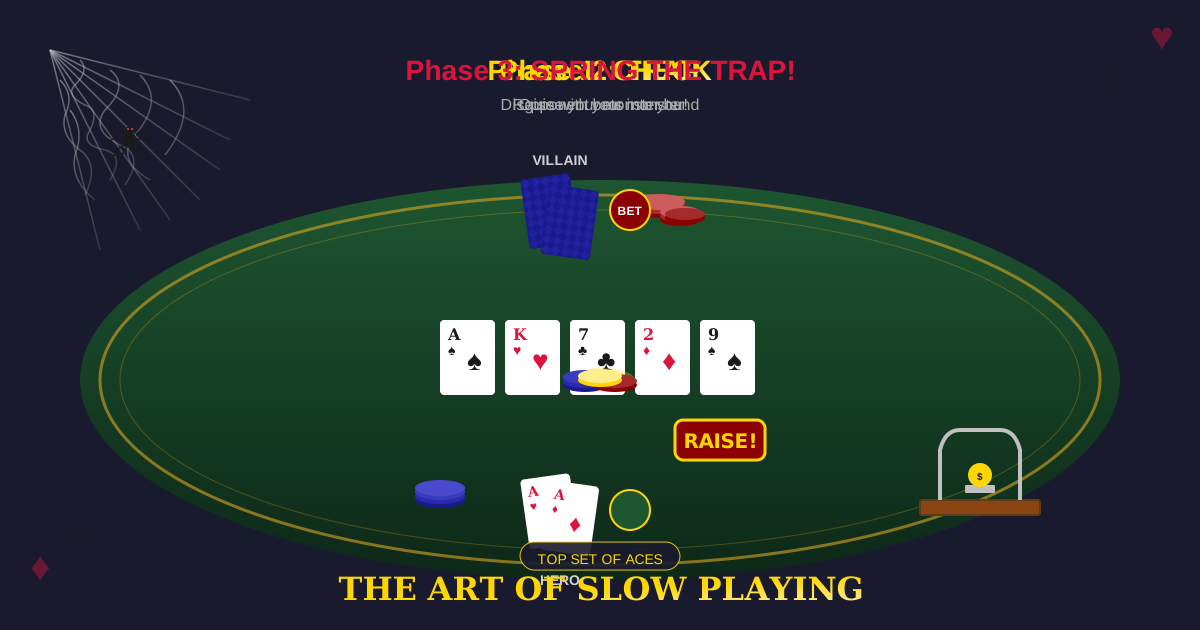
Example 3: Trapping the Maniac
Setup: You have KdKh in the big blind. Maniac raises from button, you 3-bet, he calls. Flop: Js 7h 2d. Pot is $120.
Opponent Profile:
- Bets 100% when checked to
- Bluffs 65% of betting range
- Raises c-bets with middle pair or better
Exploitation Strategy:
Option A - Standard C-Bet ($80):
He raises sometimes, calls with wide range
You win pot but miss value from his bluffs
Option B - Check to Induce ($0):
He bets 100% of time, often with nothing
You check-raise or call based on texture
Extracts maximum from his bluffing tendency
Result: Check to induce. Let the maniac bluff, then extract value.
Example 4: Attacking the Weak-Tight Player
Setup: Weak-tight player opens from early position, you call on button with 8s7s. Flop: Ac Qd 4c. He c-bets $30 into $45.
Opponent Profile:
- Opens very tight (AA-99, AK-AJ, KQ)
- C-bets 85% of flops
- Folds to raises 65% without top pair+
Your Hand: Complete air
Float Analysis:
His range on this board: AK, AQ, AJ (value), KK-JJ (might check)
When he c-bets: Mix of value and protection
If you raise: He folds worse than top pair (most of c-betting range is not top pair)
Calculation for $80 raise:
He folds 65% (KK-99, KQ that c-bet)
EV = (0.65 x $75) - (0.35 x $80)
EV = $48.75 - $28 = +$20.75
Result: Raise the flop as a bluff. His predictable tendencies make this profitable.
Example 5: Multi-Street Exploitation
Setup: TAG opens, you call with JhTh on button. Flop: 9h 8c 2d. He c-bets $25 into $35.
Opponent Profile:
- C-bets 75% of flops
- Bets turn only 40% (gives up without strong hands)
- Triple barrels only with value
Your Hand: Open-ended straight draw
Exploitation Plan:
Flop: Call (standard)
Turn (if he checks): Bet 60% pot (exploit high give-up rate)
River: Continue based on equity
Turn Bet Calculation (if he checks):
He checks 60% of turns = weak range
Your bet earns fold equity vs his capped range
EV of $50 turn bet when he checks:
= (0.70 x $85) - (0.30 x $50) = $59.50 - $15 = +$44.50
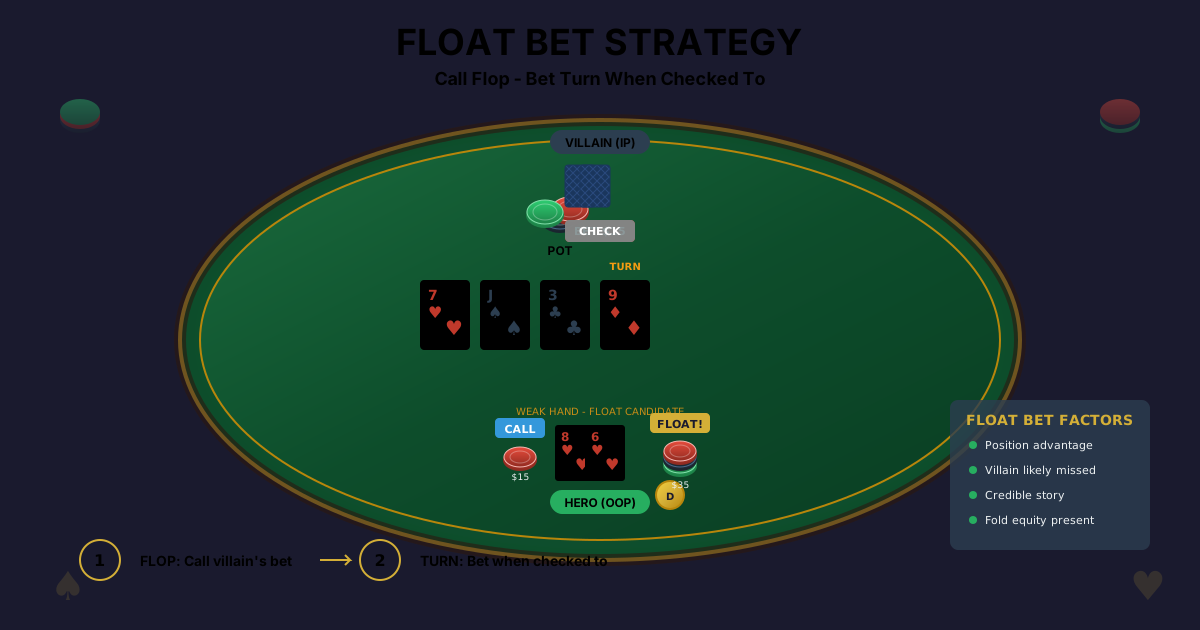
Result: Float flop, attack turn when checked to. Classic TAG exploitation.
Example 6: Exploiting Timing Tells
Setup: Online player takes 25 seconds (usually instant) then bets pot on river.
Timing Analysis:
Long tank + big bet often indicates:
- Difficult decision with marginal hand, OR
- Deliberate bluff (trying to look strong)

Most recreational players: Long tank = weakness
They have to convince themselves to bet
Counter-Strategy:
If your read suggests bluff:
Call wider than normal
Their timing tell adds information

If your read suggests value:
Fold marginal hands
Respect the delayed big bet
Building an Exploitation Database
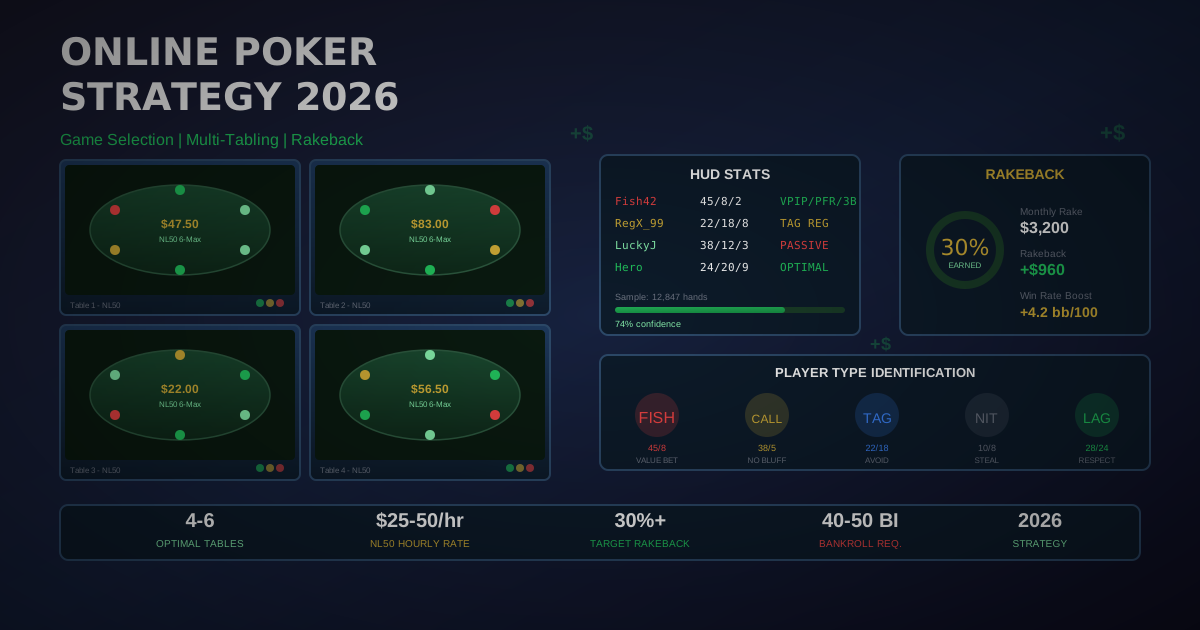
Tracking Key Statistics
| Statistic | GTO Baseline | Exploitable If |
|---|---|---|
| VPIP | 20-25% | >35% or <15% |
| PFR | 15-20% | >30% or <10% |
| 3-Bet % | 7-10% | >15% or <4% |
| Fold to 3-Bet | 55-60% | >70% or <40% |
| C-Bet Flop | 60-70% | >85% or <40% |
| Fold to C-Bet | 45-55% | >65% or <35% |
| WTSD | 25-30% | >40% or <20% |
| W$SD | 50-55% | >60% or <45% |
Creating Player Notes
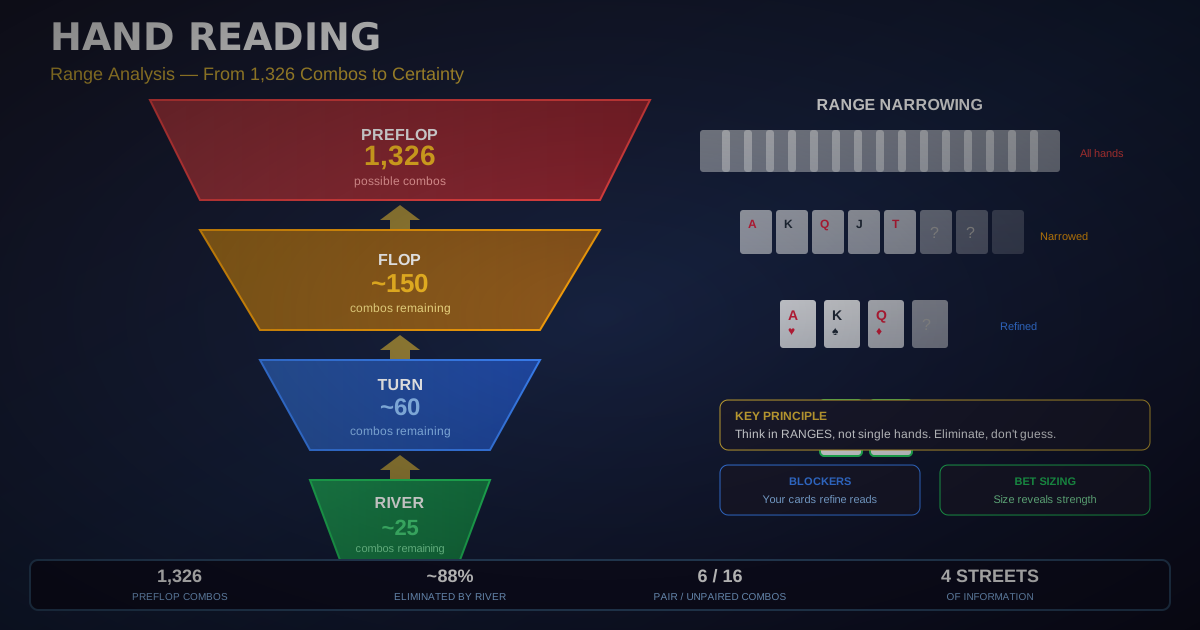
Effective exploitation requires organized observations:
Player: VillainX
Type: Loose-passive calling station
Leaks Identified:
- Never folds top pair (bet thin value)
- Minbets = draws (raise for value)
- Big river bets = nuts (fold everything)
- Doesn't 3-bet without AA/KK (call 3-bets lighter)
Exploitation: Value bet 3 streets, never bluff
Common Mistakes to Avoid
-
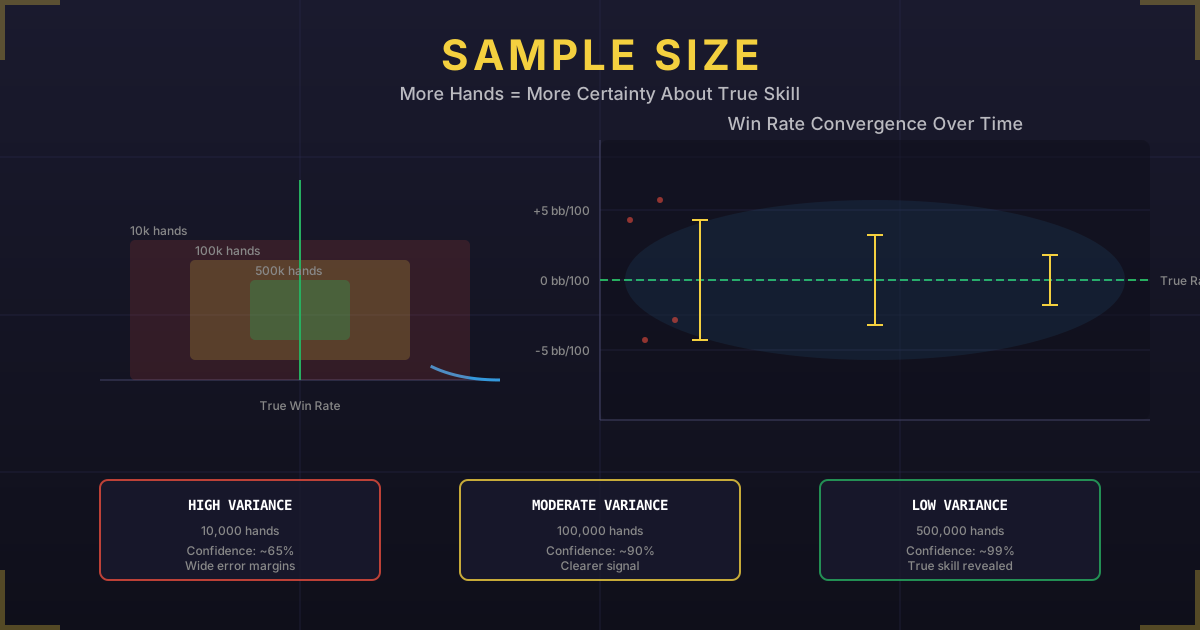
Over-Exploiting Without Sufficient Data: Making major adjustments based on small sample sizes leads to errors. Need 100+ hands minimum for reliable stats.
-
Ignoring When You're Being Exploited: While exploiting others, be aware good players may be exploiting you. Adjust when facing unusual lines.
-
Being Too Obvious: Exploitative strategies can become readable. Mix in some balanced play to prevent counter-exploitation.
-
Failing to Re-Evaluate: Player tendencies change. A tight player may loosen up; a calling station may start folding. Continuously update your reads.
-
Exploiting in Wrong Spots: Some exploits only work in specific situations. Don't bluff the calling station on the river just because you want to exploit someone.
-
Neglecting Game Selection: The best exploitation is choosing games with exploitable players. Don't grind against solid regulars when fish are available.
Frequently Asked Questions
When should I play exploitative vs GTO?
Play exploitatively against recreational players and weak regulars who have identifiable leaks. Play more GTO-aligned against strong players and unknowns. The weaker your opponents, the more exploitative you should be.
How many hands do I need to identify a reliable leak?
For basic tendencies (VPIP, PFR), 100 hands provides reasonable reliability. For specific actions (fold to 3-bet, river behavior), 200-500 observations are better. The more specific the stat, the larger sample needed.
Can I be exploited while playing exploitatively?
Yes. Exploitative strategies are inherently unbalanced. Strong opponents can counter-exploit your adjustments. Against thinking players, mix exploitative and balanced play.
What's the biggest exploit in low-stakes games?
Value betting relentlessly. Low-stakes players call too much. The simplest, most profitable exploit is betting for value with any hand that beats their calling range and never bluffing.
How do I exploit online players without physical tells?
Focus on betting patterns, timing tells, and HUD statistics. Online tells include bet sizing patterns, time taken for decisions, chat behavior, and deviations from standard lines.
Should I tell opponents about their leaks?
Never. Exploiting leaks is how you profit. Educating opponents removes your edge. If asked about strategy, give vague or slightly incorrect advice.
How do I balance exploitation with position play?
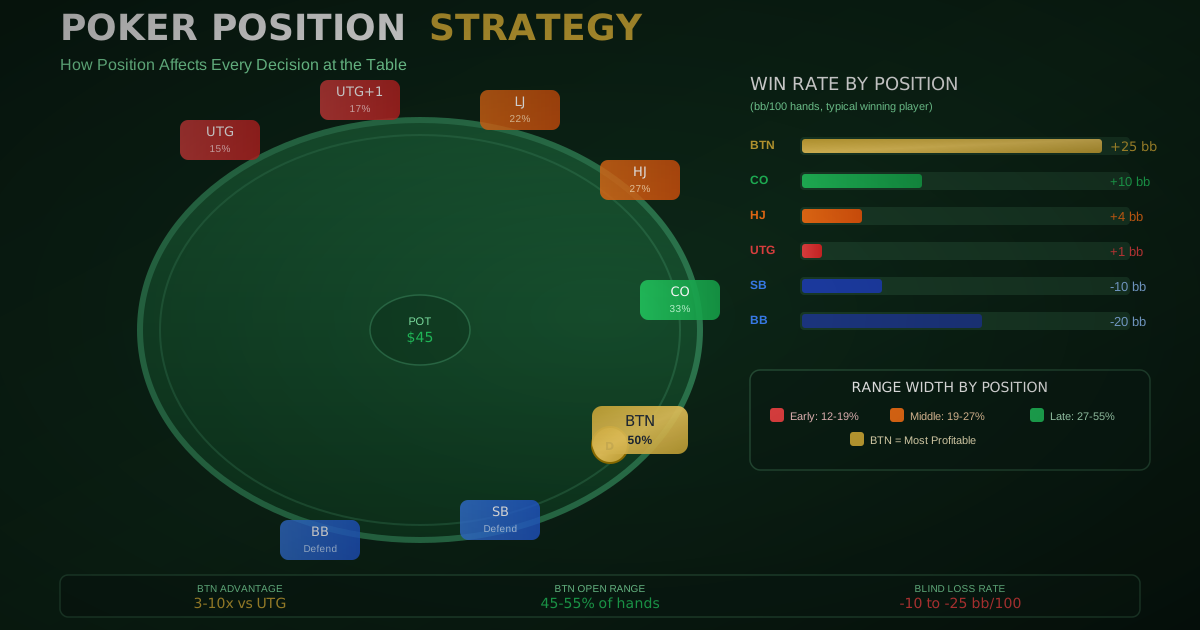
Positional advantage amplifies exploitation. In position, you can exploit more aggressively because you control the action. Out of position, be more conservative with exploits to avoid difficult spots.
What if my read is wrong?
Accept that reads are probabilistic, not certain. Even wrong reads provide information. If your exploit fails, update your player model and adjust. Don't compound errors by tilting.
Pro Tips
- Start with the biggest, most reliable leaks before targeting subtle tendencies
- Keep written notes on regular opponents, updating after each session
- Test your reads with small exploits before committing significant chips
- Remember that players adapt; the calling station you exploited last week may have tightened up
- Use HUD stats as supporting evidence, not the sole basis for exploitation
Related Calculators
- GTO Poker Calculator - Find game-theoretically optimal baselines
- Fold Equity Calculator - Quantify how often opponents fold
- Poker EV Calculator - Calculate expected value of decisions
- Bluff Frequency Calculator - Determine optimal bluffing rates
- Player Profiling Tool - Categorize opponent types
Conclusion
Exploitative poker is where real profits live. While GTO provides a defensive foundation, attacking opponent weaknesses generates maximum EV. Our exploitative poker calculator transforms observations into actionable adjustments, showing exactly how much to deviate and what profits to expect.
The best exploitative players combine keen observation with mathematical precision. They identify leaks, quantify their magnitude, calculate optimal counter-strategies, and execute profitably. By understanding both what to exploit and how much to exploit it, you'll extract every available chip from imperfect opponents.