Face Up Pai Gow Calculator: Visible Cards Strategy Guide (2026)
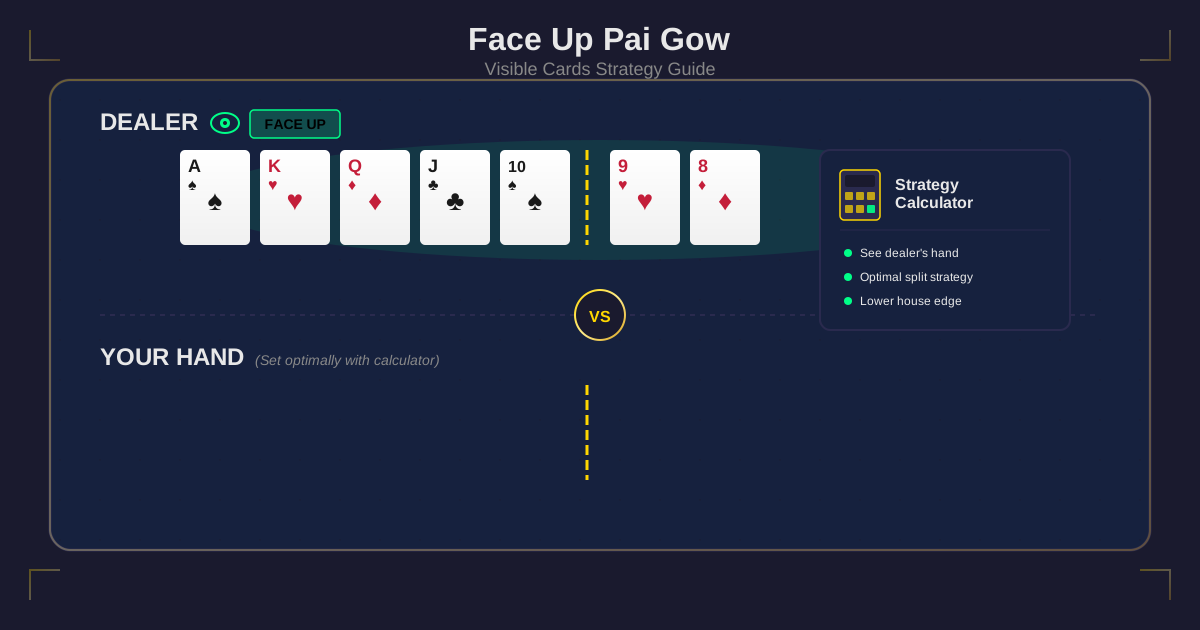
Face Up Pai Gow Calculator: Perfect Information Strategy
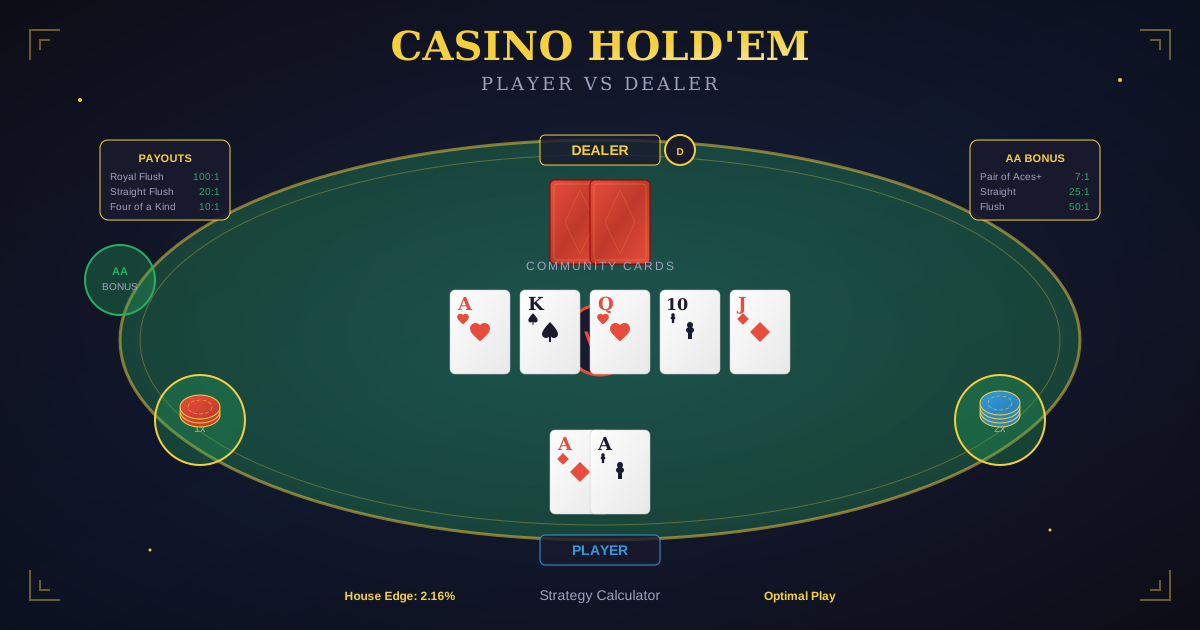
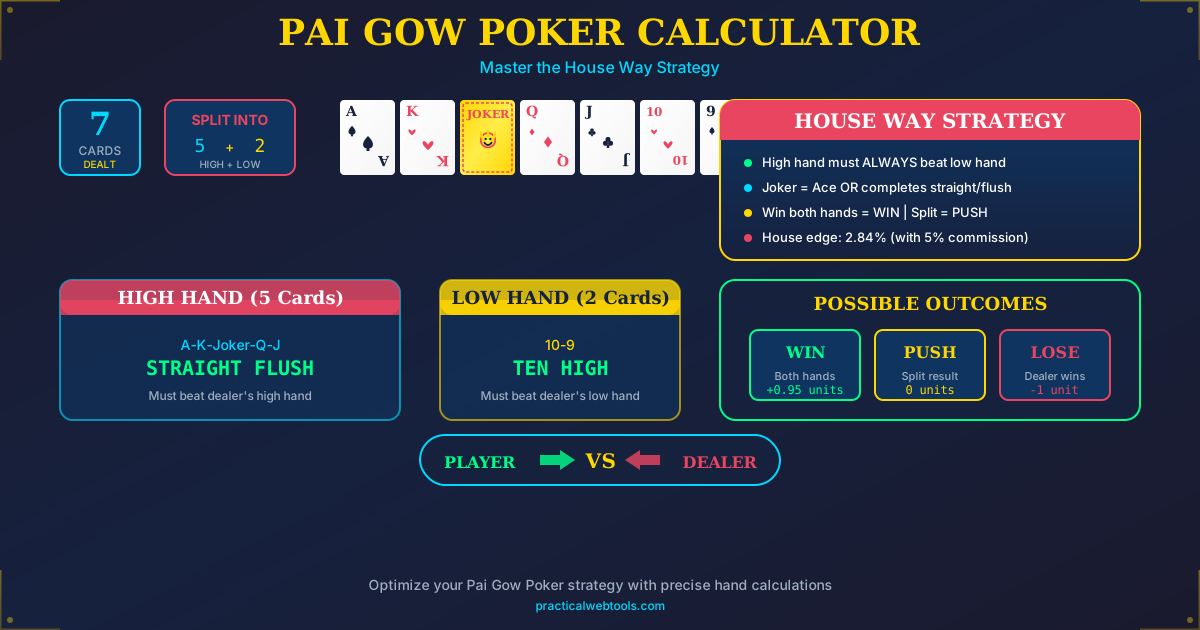
Face Up Pai Gow reveals the dealer's entire hand before you set yours—complete information changes everything. Our calculator shows how to exploit this transparency and why certain hands automatically push.
What Is Face Up Pai Gow?
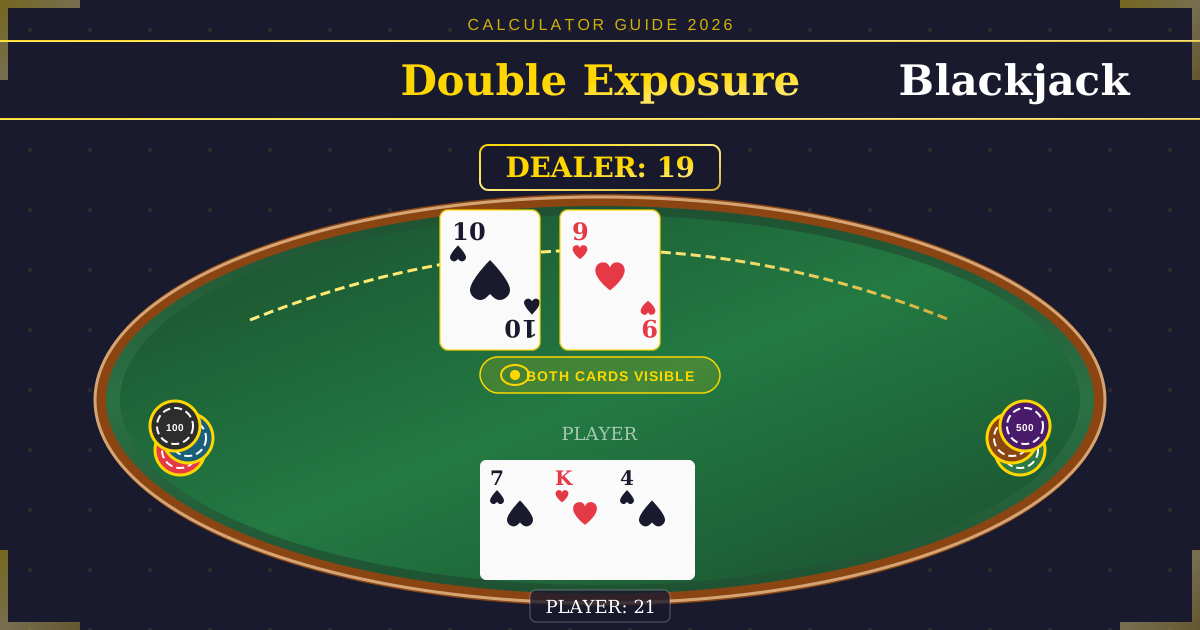
Face Up Pai Gow Poker is a variant where the dealer's seven cards are exposed before you arrange your hand. This perfect information comes with a catch: if dealer has ace-high (no pair) in the high hand, all bets push. The visible cards allow strategic optimization.
How to Use Our Calculator
Use the Face Up Pai Gow Calculator →
Calculate optimal hand settings with full dealer information.
Step-by-Step Instructions
-
Enter Your Seven Cards: Dealt hand
-
Enter Dealer's Seven Cards: All visible
-
See Dealer's Set Hands: How dealer arranged
-
View Optimal Setting: Best arrangement
-
Calculate Win Probability: Based on comparison
Input Fields Explained
| Field | Description | Example |
|---|---|---|
| Your Cards | Seven dealt | A♠ K♦ Q♣ J♥ 10♠ 5♦ 3♣ |
| Dealer Cards | Seven visible | K♠ K♦ 8♣ 7♥ 6♠ 4♦ 2♣ |
| Dealer High | Their 5-card | Pair of Kings |
| Dealer Low | Their 2-card | 8-7 |
| Optimal Setting | Your best | [arrangement] |
| Win Probability | Outcome | 62% |
Quick Answer: Face Up Pai Gow = dealer cards visible before you set. Ace-high dealer = push (all bets). Set your hand to beat what you see. No guessing—pure optimization. House edge: 1.1%. Visible cards enable perfect strategy. Beat both or split to win.
Key Rule Differences
Dealer Ace-High Push
Automatic push condition:

If dealer's high hand is ace-high
(no pair, ace is highest card)
All bets push automatically

This protects house from perfect info
Happens ~8% of hands
Significant edge adjustment
Visible Cards Advantage
What you see:

All 7 dealer cards exposed
How dealer will set them (house way)
Exact hands to beat

Perfect information
No uncertainty
Pure optimization problem
Hand Setting Order
Process:

1. Dealer cards revealed
2. Dealer sets hand (house way)
3. You see dealer's arrangement
4. You set your hand optimally
5. Hands compared

You always act last with full info
Strategy with Perfect Information
Beating Dealer High Hand
Primary goal:

Your 5-card must beat dealer's 5-card
Focus on this first
Set low hand to also beat dealer's low

With visible info:
Know exact target to beat
Optimize for specific hands
When to Push
Sometimes push is correct:

If you can't beat both dealer hands
Setting for guaranteed split
Avoid losing both hands

Example:
Dealer: Two pair high, A-K low
You: One pair only
Set to beat low hand, push high
Aggressive vs Conservative
Visible cards allow:

Aggressive: Go for both wins
Conservative: Guarantee split
Situational: Based on exact hands

Know when each applies
Calculate win probability
Optimal Play Examples
Example 1: Beat Both Clearly
Strong hand vs weak dealer:
Dealer hand:
High: K-J-8-7-5 (K high)
Low: 9-3

Your cards: A-A-K-Q-J-10-4

Set for:
High: A-K-Q-J-10 (beats K-high)
Low: A-4 (beats 9-3)

WIN BOTH HANDS
Clear victory setup
Example 2: Strategic Split
Can't beat high hand:
Dealer hand:
High: A-A-K-Q-J (pair of aces)
Low: 8-7

Your cards: K-K-Q-J-10-9-3

Can't beat AA high hand!

Set for:
High: K-K-Q-J-10 (loses to AA)
Low: 9-3 (beats 8-7)

PUSH (split outcome)
Best possible result
Example 3: Dealer Ace-High
Automatic push:
Dealer hand:
High: A-K-Q-J-9 (ace high, no pair)
Low: 8-7

Your cards: Any seven cards

RESULT: PUSH (automatic)

Ace-high rule applies
No decision needed
Bet returned
Example 4: Marginal Decision
Close optimization:
Dealer hand:
High: Q-Q-10-8-7 (pair queens)
Low: K-5

Your cards: K-K-J-J-9-6-2

Option A:
High: K-K-J-9-6 (beats QQ)
Low: J-2 (loses to K-5)
Split

Option B:
High: K-K-J-J-9 (beats QQ)
Low: 6-2 (loses to K-5)
Split

Same outcome—optimize low hand
Set A is better (J-2 > 6-2 for ties)
House Edge Analysis
Where Edge Comes From
Face Up Pai Gow edge sources:

Ace-high push rule: Major
Commission on wins: Standard 5%
Ties go to dealer: Minor

Total house edge: ~1.1%
Lower than many table games
Ace-High Impact
Without ace-high push:

Players would have huge edge
Perfect information = near-perfect play

With ace-high push:
~8% of hands auto-push
Removes easy player wins
Balances the transparency
Commission Effect
5% commission on wins:

Win $100 → Pay $5 → Net $95

This adds ~0.5% to house edge
Standard for pai gow games
Factor into decisions
Probability Analysis
Outcome Distribution
Expected results:

Player wins both: ~25%
Dealer wins both: ~15%
Push (split): ~52%
Ace-high push: ~8%

High push rate is normal
Don't be frustrated by splits
Part of pai gow nature
Win Rate Improvement
Face Up vs Regular:

Regular Pai Gow: ~29% win rate
Face Up Pai Gow: ~25% win rate

Wait—lower? Yes, because:
Ace-high pushes reduce wins
But also reduce losses
Net edge similar (~1.1% vs ~2.5%)
Common Mistakes
1. Ignoring Ace-High Rule
Mistake: Trying to set hand vs ace-high dealer Problem: It's an automatic push Fix: Recognize ace-high = no decision
2. Not Optimizing Fully
Mistake: Setting hand like regular pai gow Problem: Missing visible card advantage Fix: Use full information to optimize
3. Forcing Two Wins
Mistake: Always trying to beat both hands Problem: May create losing high hand Fix: Accept strategic pushes
4. Ignoring Commission
Mistake: Calculating wins at 1:1 Problem: 5% commission reduces net Fix: Factor commission into EV
Frequently Asked Questions
Why does ace-high push?
Without this rule, perfect information would give players massive edge. The push protects the house from guaranteed losses on weak dealer hands.
Is Face Up Pai Gow better than regular?
Similar edge (~1.1% vs ~2.5% with optimal). More predictable outcomes. Less variance. Matter of preference.
How often does dealer have ace-high?
About 8% of hands. Frequent enough to significantly impact expected value and game dynamics.
Can I count cards?
Cards are visible but shuffled each hand (usually). No counting advantage. Pure hand optimization.
Should I always try to win both hands?
No. When you can't beat dealer's high hand, optimize for the split. Guaranteed push beats risking total loss.
How does commission affect strategy?
5% on wins means marginal decisions slightly favor pushing. Don't sacrifice a push for a small win chance.
Pro Tips
-
Check for ace-high first: Saves decision time
-
Optimize for visible hands: Use perfect info
-
Accept strategic pushes: Better than losing
-
Commission matters: Factor 5% into close calls
-
Low hand matters: When high is locked
Related Calculators
- Pai Gow Poker Calculator - Standard game
- Fortune Pai Gow Calculator - Side bets
- Three Card Poker Calculator - Another poker variant
- House Edge Calculator - Compare games
- Expected Value Calculator - Bet analysis
Conclusion
Face Up Pai Gow transforms pai gow poker into a pure optimization puzzle—you see all 14 cards before setting your hand. Our calculator shows how to exploit this transparency while respecting the ace-high push rule that keeps the house edge at 1.1%.
Calculate Face Up Pai Gow Odds Now →
When you see the dealer's pair of queens with K-5 low, you know exactly what to beat. Our calculator reveals optimal hand settings for every visible combination.