Fair Odds Calculator: Remove Bookmaker Margin and Find True Prices (2026)

Fair Odds Calculator: Strip Away the Bookmaker's Profit Margin
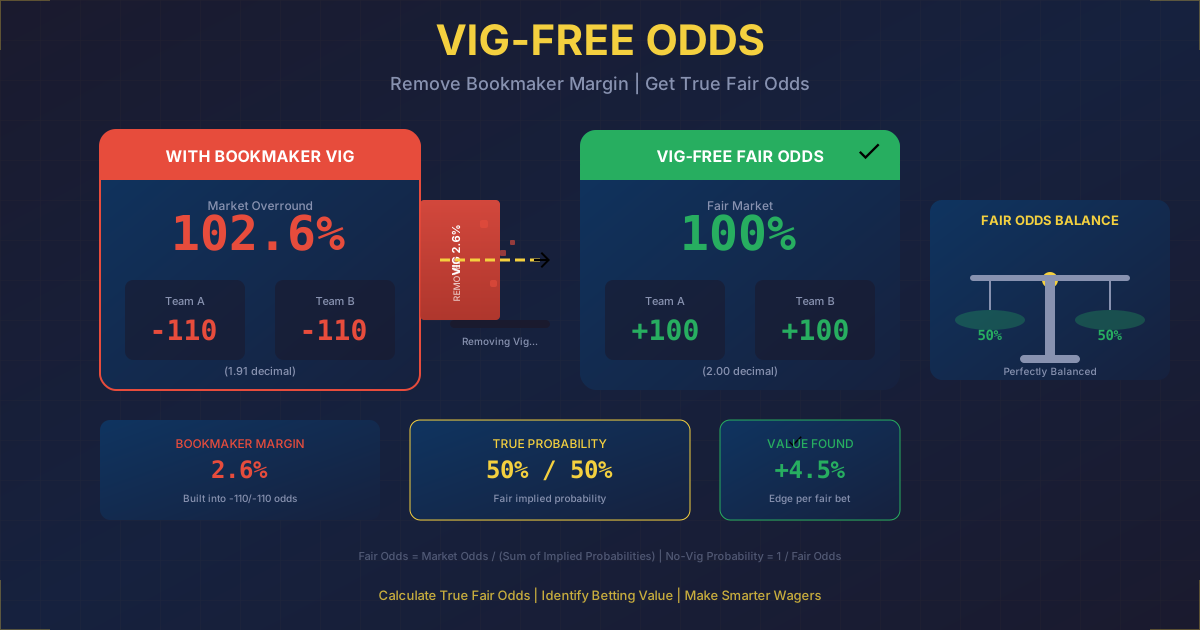
Every betting line has a hidden tax built in - the bookmaker's margin. This margin ensures the house profits regardless of outcome, but it also distorts the true probabilities. Our fair odds calculator removes this margin, revealing what the odds "should" be in a perfectly efficient market.
What Are Fair Odds?
Fair odds represent betting prices with zero bookmaker margin. In a fair market, all implied probabilities sum to exactly 100%. Real bookmaker odds sum to 102-108% or more, with the excess being their profit. Fair odds calculations remove this excess, distributing probabilities correctly and showing you what you'd pay in a margin-free world.
Quick Answer: Fair odds remove the bookmaker's built-in profit. Formula: Fair Odds = Offered Odds × Overround. First calculate overround: Overround = Sum of (1/each odds). Then: Fair Probability = (1/Odds) / Overround, and Fair Odds = 1 / Fair Probability. Example: Team A at 1.90 and Team B at 1.90 gives overround of 1.053 (105.3%). Fair odds for each: 1.90 × 1.053 / 2 = 2.00. Both teams are fairly priced at 2.00 (50/50).
How to Use Our Calculator
Use the Fair Odds Calculator →
Step-by-Step Instructions
- Enter All Odds: Input odds for every outcome in the market
- Calculate Overround: See the bookmaker's total margin
- View Fair Odds: Get margin-free prices for each outcome
- Compare to Offered: Identify which outcomes have best value
- Find Edge: See the gap between fair and offered
Input Fields
| Field | Description | Example |
|---|---|---|
| Number of Outcomes | 2 (moneyline) or 3 (1X2) | 2 |
| Outcome 1 Odds | First selection price | 2.20 |
| Outcome 2 Odds | Second selection price | 1.75 |
| Outcome 3 Odds | Third selection (if any) | 3.50 |
| Odds Format | Decimal, American, Fractional | Decimal |
Understanding Bookmaker Margin
What Is Overround?
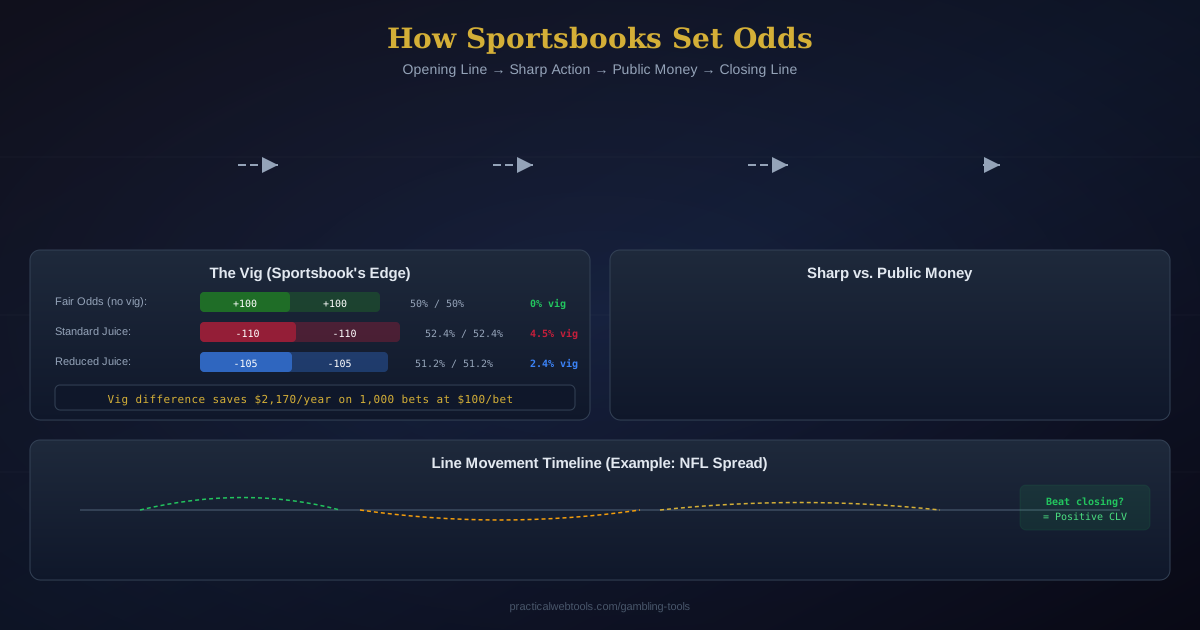
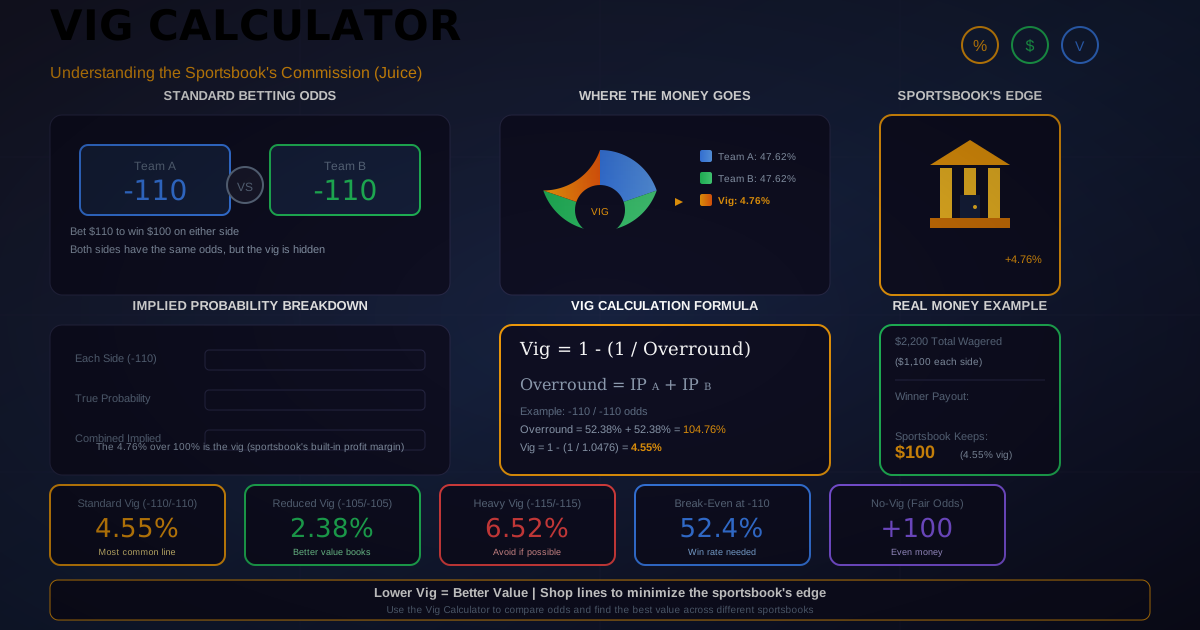
Overround = Sum of implied probabilities - 100%

Example Two-Way Market:
Team A: 1.91 (52.4% implied)
Team B: 1.91 (52.4% implied)

Total implied: 104.8%
Overround: 4.8%

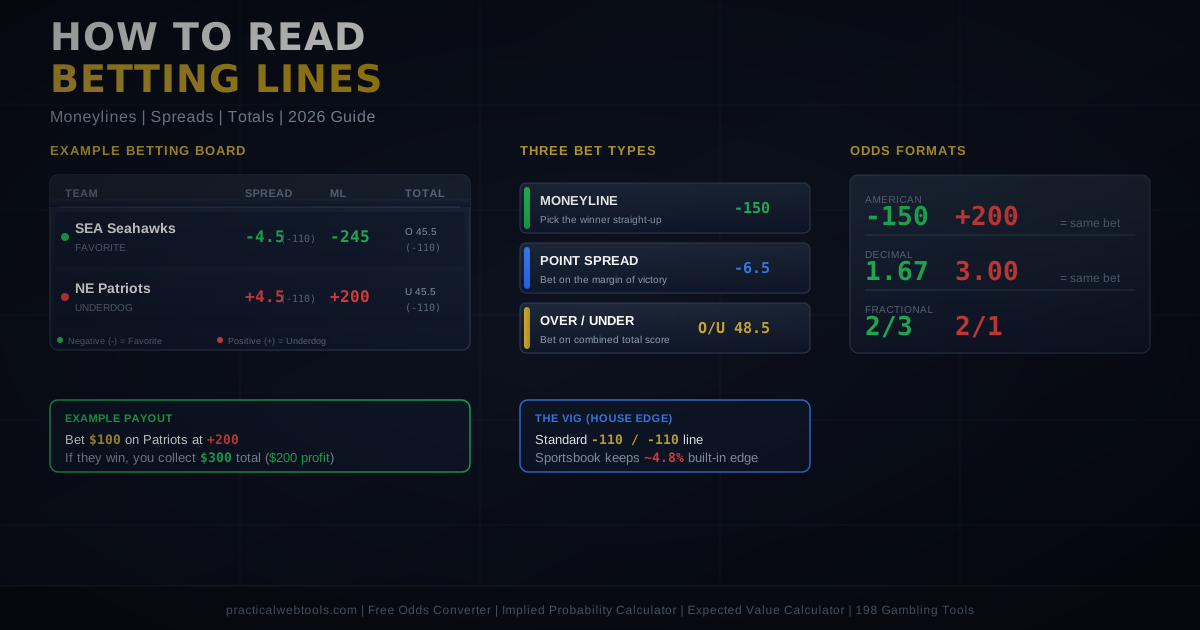
This 4.8% is the bookmaker's margin
They'll profit ~4.8% of all money wagered
regardless of which team wins
Margin in Different Markets
Typical Margins by Market Type:

Sharp Bookmakers (Pinnacle):
Two-way spreads: 2-3%
Three-way soccer: 3-4%
Totals: 2-3%

Standard Bookmakers:
Two-way spreads: 4-5%
Three-way soccer: 5-8%
Totals: 4-5%

Recreational Books:
May exceed 10% on some markets

Futures Markets:
Often 15-40%+ margin

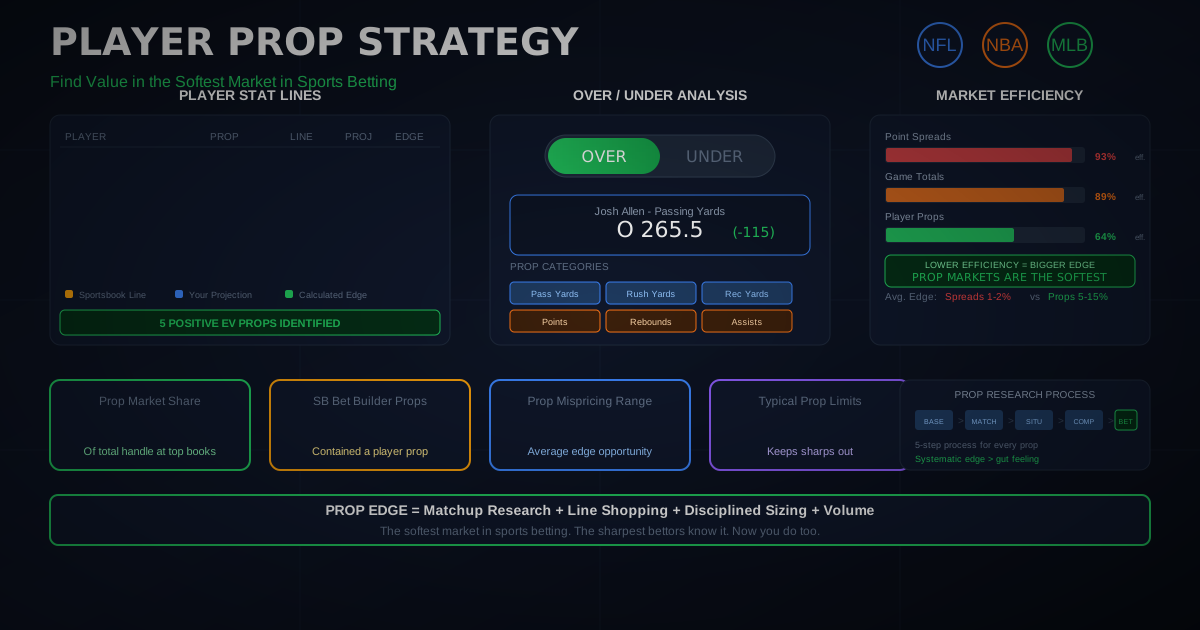
Props:
Typically 5-10%+
Why Margins Vary
Lower margins when:
- High liquidity (many bettors)
- Competitive market (many books)
- Sharp money active
- Standard markets (spreads, totals)

Higher margins when:
- Low liquidity
- Niche markets (props, futures)
- Recreational bettor-heavy
- Complex outcomes
Calculating Fair Odds
The Devigging Process
Step 1: Calculate Implied Probabilities
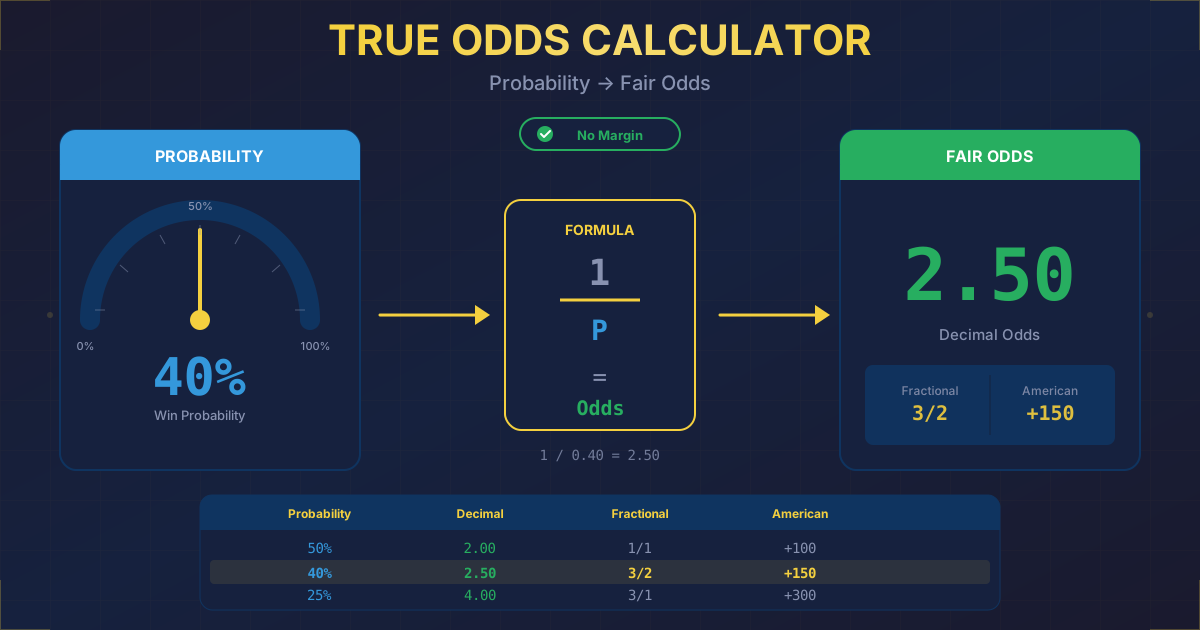
For each outcome: Implied = 1 / Decimal Odds

Step 2: Sum All Implied Probabilities
This sum will exceed 100% (the overround)

Step 3: Calculate Fair Probabilities
Fair Prob = Implied Prob / Sum of All Implied

Step 4: Convert to Fair Odds
Fair Odds = 1 / Fair Probability

Complete Example:
Team A: 2.10 → 1/2.10 = 47.6%
Team B: 1.80 → 1/1.80 = 55.6%
Sum: 103.2% (3.2% margin)

Fair probabilities:
Team A: 47.6% / 1.032 = 46.1%
Team B: 55.6% / 1.032 = 53.9%

Fair odds:
Team A: 1 / 0.461 = 2.17
Team B: 1 / 0.539 = 1.86
Three-Way Market Example
Soccer 1X2 Market:
Home: 2.40 (41.7%)
Draw: 3.30 (30.3%)
Away: 3.10 (32.3%)
Sum: 104.3% (4.3% margin)

Fair Probabilities:
Home: 41.7% / 1.043 = 40.0%
Draw: 30.3% / 1.043 = 29.0%
Away: 32.3% / 1.043 = 31.0%
Total: 100% ✓

Fair Odds:
Home: 2.50
Draw: 3.45
Away: 3.23

Original vs Fair:
Home: 2.40 → 2.50 (fair is 4% higher)
Draw: 3.30 → 3.45 (fair is 5% higher)
Away: 3.10 → 3.23 (fair is 4% higher)
Methods for Removing Margin
Method 1: Equal Distribution (Multiplicative)
Assumes margin is distributed equally

Formula:
Fair Odds = Offered Odds × (Sum / Number of Outcomes)

Or equivalently:
Fair Prob = Implied Prob / Overround

Best for: Even matchups, standard markets
Weakness: May not reflect actual margin distribution
Method 2: Proportional (Odds Ratio)
Margin distributed proportionally to odds

Higher odds carry more of the margin
(Longshots have more "vig" baked in)

Calculation more complex but often
more accurate for favorite/underdog splits
Method 3: Shin Method
Developed for horse racing markets
Accounts for insider information effects

Assumes some proportion of bettors have
perfect information, affecting odds structure

Most sophisticated but requires
iterative calculation
Which Method to Use
For Most Purposes:
Equal distribution works fine

For Research/Sharp Analysis:
Consider proportional or Shin methods

Reality:
Differences are often small
Equal distribution is industry standard
Real-World Examples
Example 1: NFL Moneyline
Situation:
Game: Cowboys vs Eagles
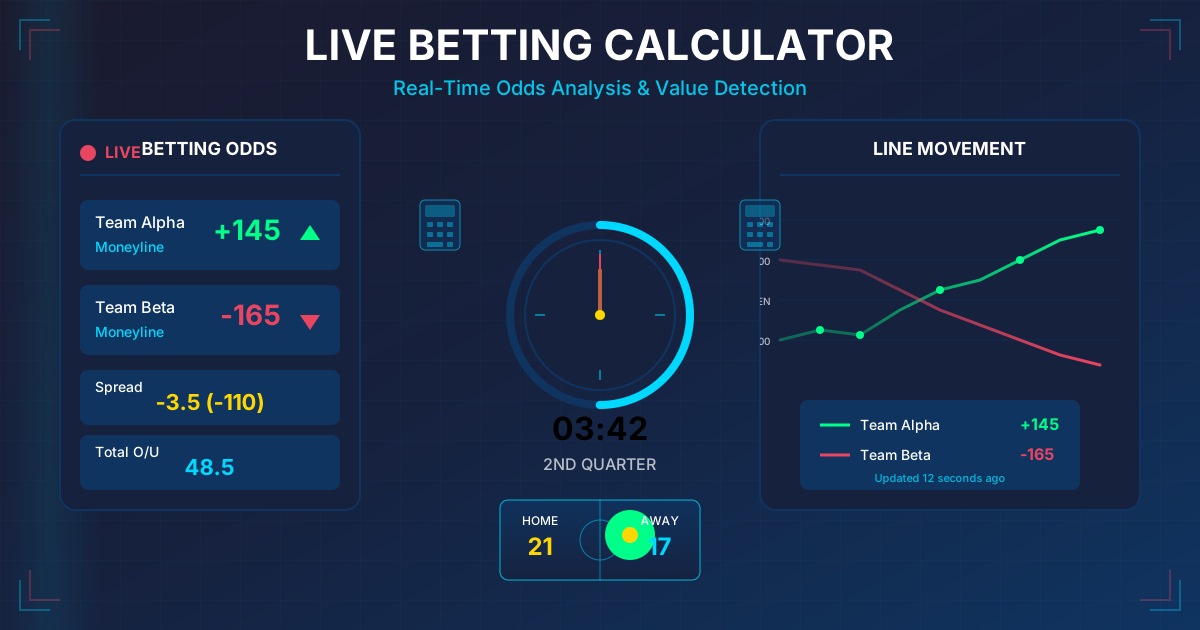
Cowboys: +145 (2.45 decimal)
Eagles: -165 (1.61 decimal)
Calculation:
Implied Probabilities:
Cowboys: 1/2.45 = 40.8%
Eagles: 1/1.61 = 62.1%
Total: 102.9%

Margin: 2.9%

Fair Probabilities:
Cowboys: 40.8% / 1.029 = 39.7%
Eagles: 62.1% / 1.029 = 60.3%

Fair Odds:
Cowboys: 1/0.397 = 2.52 (+152)
Eagles: 1/0.603 = 1.66 (-152)

Value Analysis:
Cowboys: 2.45 offered vs 2.52 fair = -2.8% EV
Eagles: 1.61 offered vs 1.66 fair = -3.0% EV

Both have slightly negative EV
No clear value either side at these prices
Example 2: Soccer 1X2 Value Hunting
Situation:
Match: Arsenal vs Tottenham

Bookmaker A:
Arsenal: 2.20
Draw: 3.50
Tottenham: 3.40

Bookmaker B:
Arsenal: 2.30
Draw: 3.40
Tottenham: 3.25
Calculation:
First, establish fair odds using Book A:
Implied: 45.5% + 28.6% + 29.4% = 103.5%

Fair probabilities:
Arsenal: 43.9%
Draw: 27.6%
Tottenham: 28.4%

Fair odds:
Arsenal: 2.28
Draw: 3.62
Tottenham: 3.52

Now compare both books to fair:
           | Fair  | Book A | Book B
Arsenal    | 2.28  | 2.20   | 2.30*
Draw       | 3.62  | 3.50   | 3.40
Tottenham  | 3.52  | 3.40   | 3.25

Best value: Arsenal at Book B (2.30 vs 2.28 fair)
Only outcome offering positive EV
Result:
Bookmaker B offers Arsenal above fair odds
Edge: (2.30/2.28) - 1 = +0.9%

Small but positive expected value
Other outcomes are negative at both books
Example 3: High Margin Market
Situation:
Prop Bet: Player to score first touchdown
Player A: 6.00
Player B: 7.00
Player C: 8.00
Player D: 10.00
Other: 3.50
Calculation:
Implied Probabilities:
A: 16.7%
B: 14.3%
C: 12.5%
D: 10.0%
Other: 28.6%
Total: 82.1%... wait

This doesn't exceed 100%?
Check: There's "No scorer" outcome missing
Or market is incomplete

Assuming complete market at 130% implied:

That's 30% margin - very high!
Fair odds would be 30% better across board

This illustrates why props are poor value
Example 4: Live Betting Analysis
Situation:
In-play soccer, 60th minute, score 1-1
Home: 2.80
Draw: 2.90
Away: 3.10
Calculation:
Implied: 35.7% + 34.5% + 32.3% = 102.5%

Low margin (2.5%) typical for in-play
Markets get more efficient during games

Fair odds:
Home: 2.87
Draw: 2.97
Away: 3.18

Very close to offered odds
Little value available
In-play markets are efficient
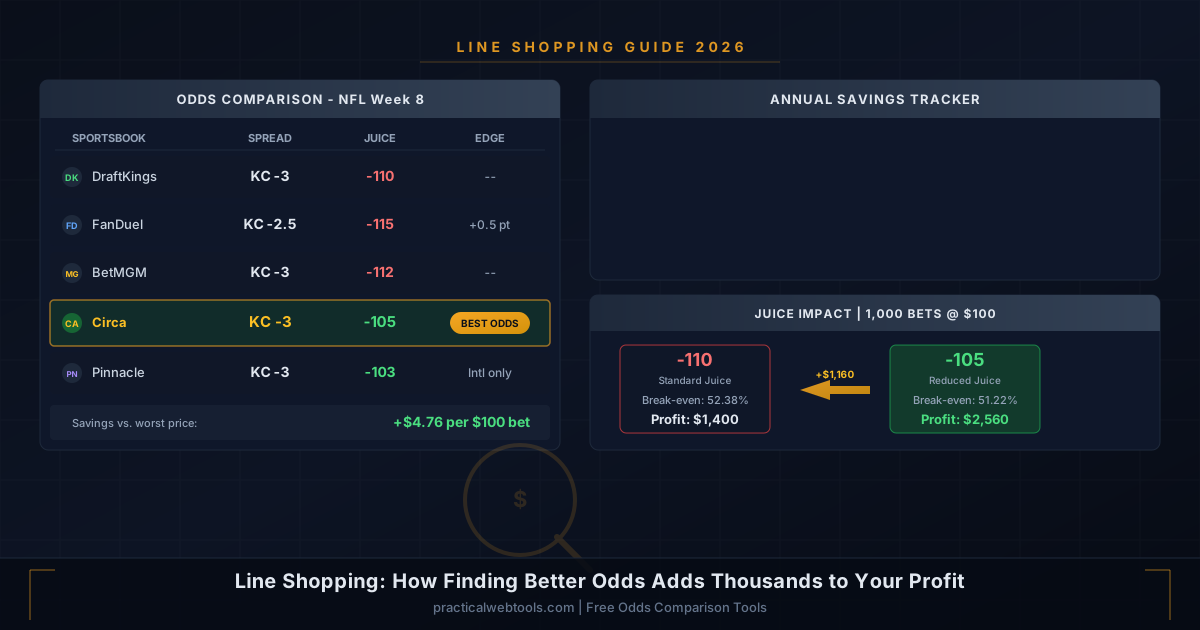
Using Fair Odds for Line Shopping
Comparing Across Bookmakers
Process:
1. Calculate fair odds from sharpest book
2. Compare all books to this fair baseline
3. Bet wherever offered > fair

Example:
Pinnacle (sharp): Team A 2.05, Team B 1.85
Fair odds (devigged): Team A 2.10, Team B 1.90

Other books:
Book A: Team A 2.00 (below fair)
Book B: Team A 2.15 (above fair!)
Book C: Team A 2.08 (below fair)

Book B offers value on Team A
Building a Fair Odds Database
For serious bettors:

1. Track fair odds from multiple sources
2. Weight by reliability:
   - Pinnacle/sharp books: High weight
   - Betting exchanges: Medium weight
   - Soft books: Low weight

3. Create consensus fair odds
4. Compare all opportunities against this

This systematic approach
finds consistent value
Common Mistakes to Avoid
-
Using Fair Odds from Soft Books: Fair odds calculated from high-margin books are less accurate. Use sharp bookmaker prices as your fair odds baseline.
-
Forgetting There Are Multiple Valid Methods: Equal distribution isn't always perfect. For extreme favorites/underdogs, proportional methods may be more accurate.
-
Treating Fair Odds as True Probability: Fair odds represent market consensus, not reality. Markets can be wrong. Fair odds remove margin but not market error.
-
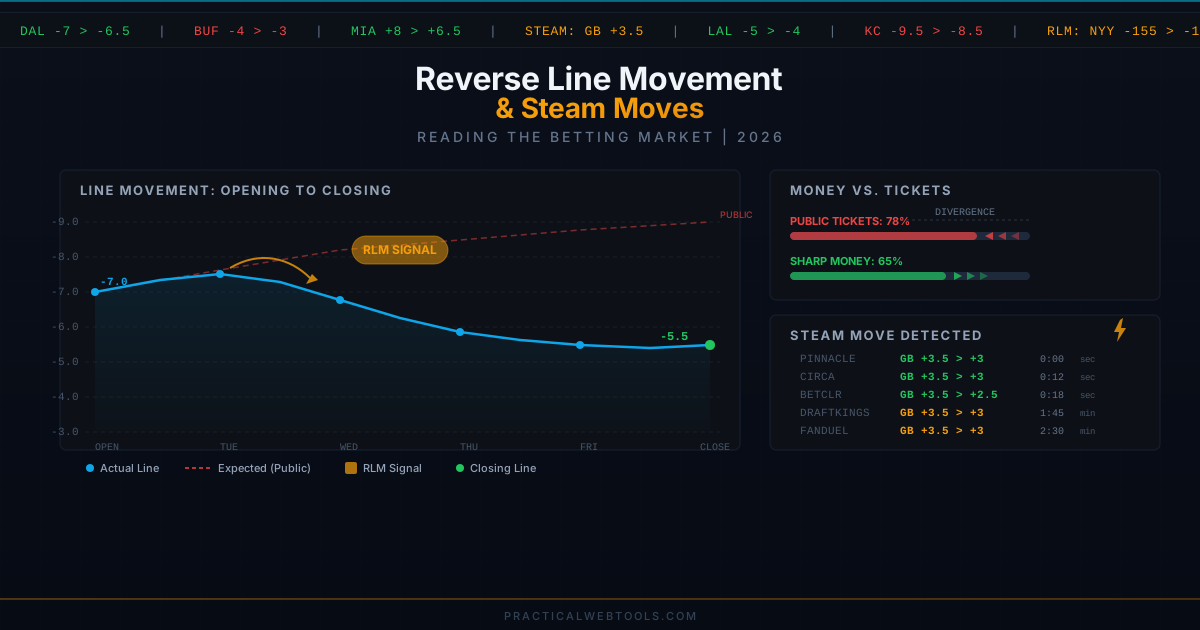
Ignoring Market Movement: Fair odds change as money moves lines. Yesterday's fair price isn't today's fair price.
-
Assuming Small Edges Are Reliable: A 0.5% edge vs fair odds might be within calculation error. Look for larger, more robust edges.
-
Comparing Different Market Types: Fair odds from spreads vs moneylines differ. Compare like to like.
Frequently Asked Questions
Why do fair odds matter if the bookmaker doesn't offer them?
Fair odds reveal true market probability. Comparing offered odds to fair odds shows your expected edge or disadvantage. Even if no book offers fair prices, knowing fair helps you find the best available.
Are fair odds the same as true probability?
No. Fair odds represent market consensus without margin. The market can still be wrong. True probability is what actually happens; fair odds are what the market believes.
How do I find the lowest-margin books?
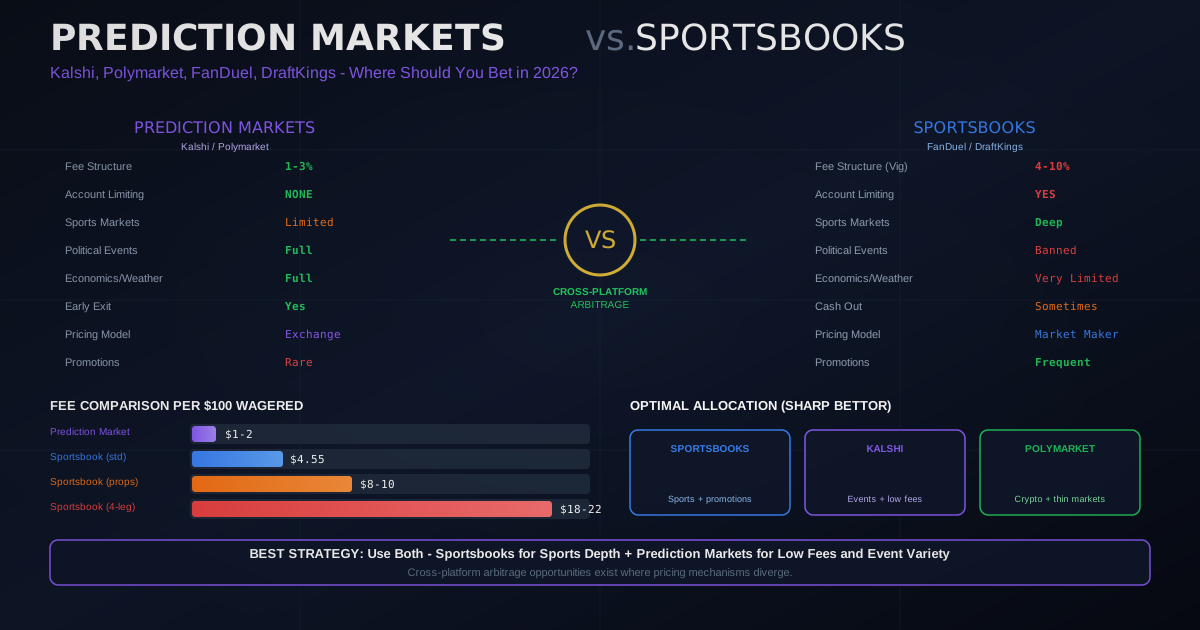
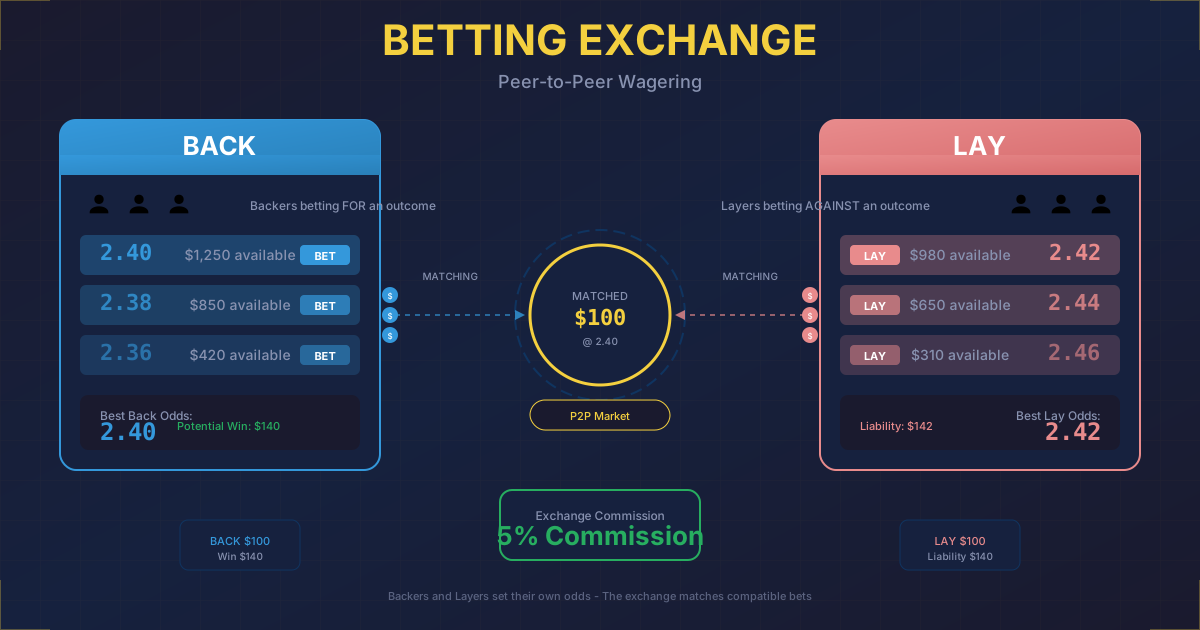
Pinnacle is known for lowest margins (2-3%). Betting exchanges also offer margin-free odds (you pay commission instead). Use oddschecker or similar to compare.
Can I profit by betting at fair odds?
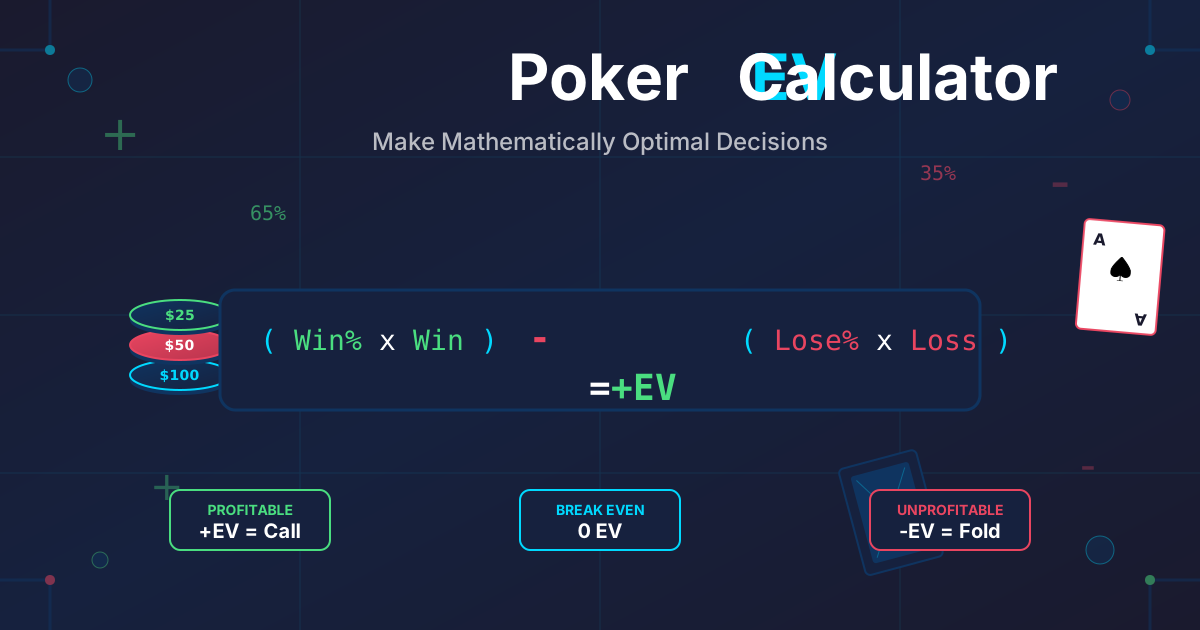
No. Fair odds by definition are break-even. You need odds BETTER than fair to profit. Fair odds are the benchmark; value requires exceeding them.
How much margin is acceptable?
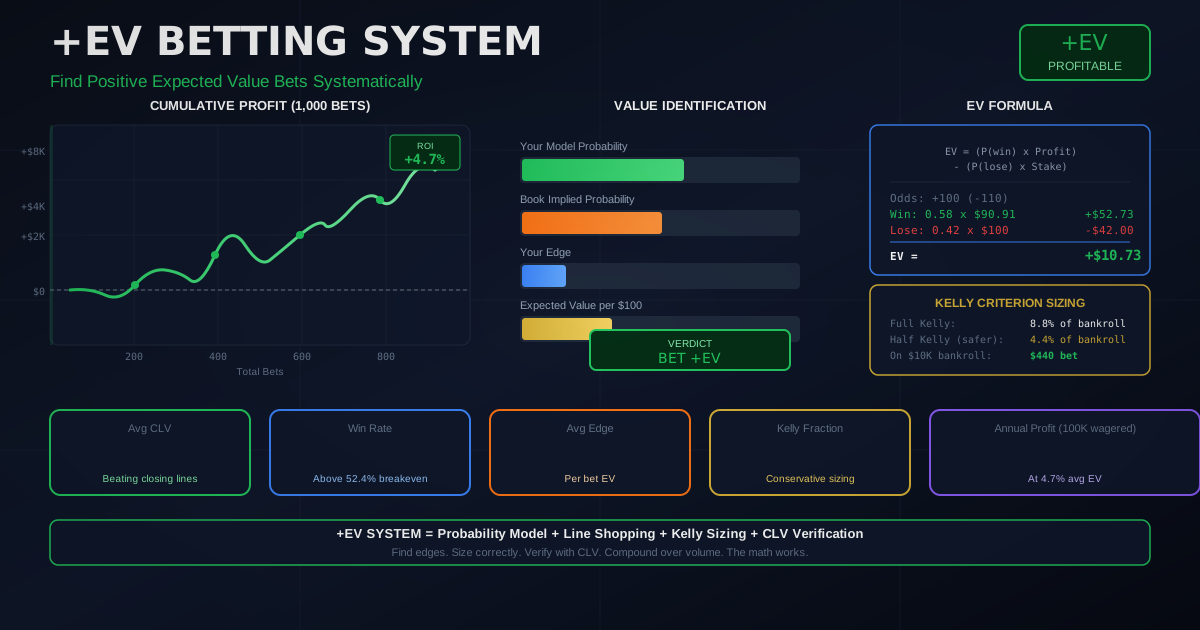
Depends on your edge. If you have 5% edge but pay 5% margin, you're break-even. Lower margin preserves more of your edge. Sharp bettors seek sub-3% markets.
Do fair odds apply to parlays?
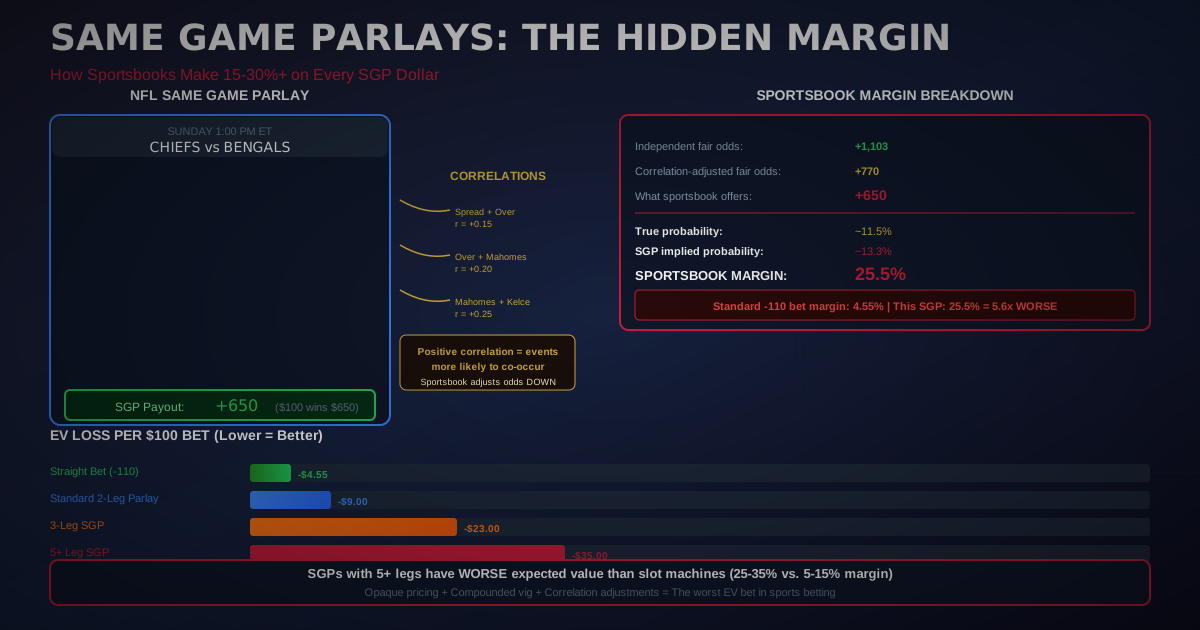
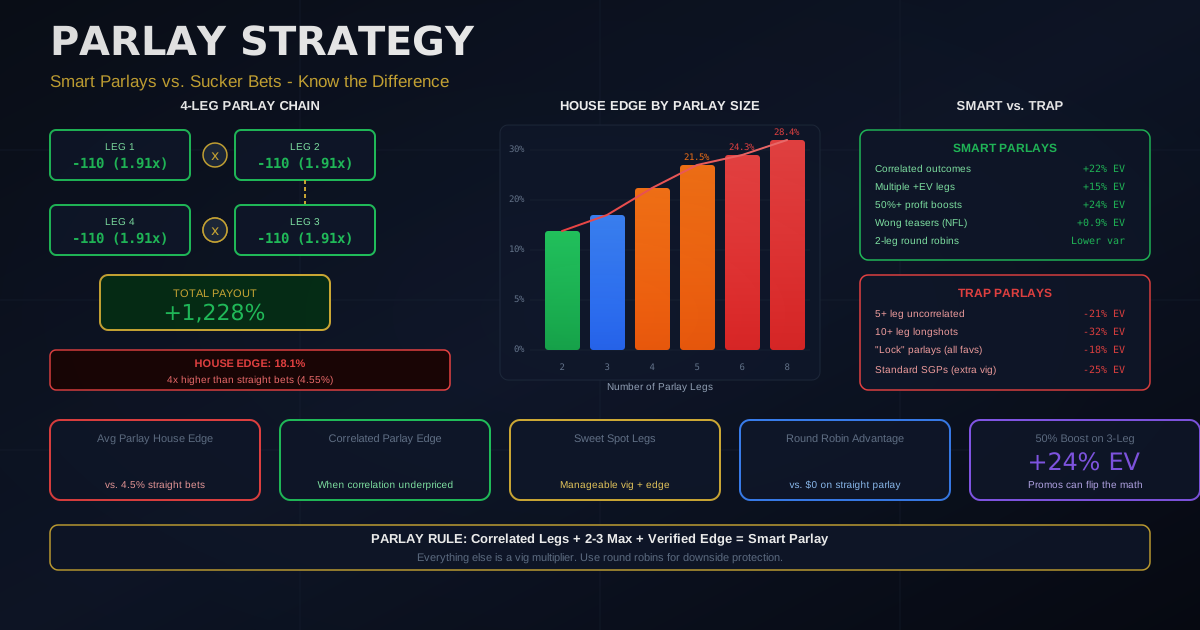
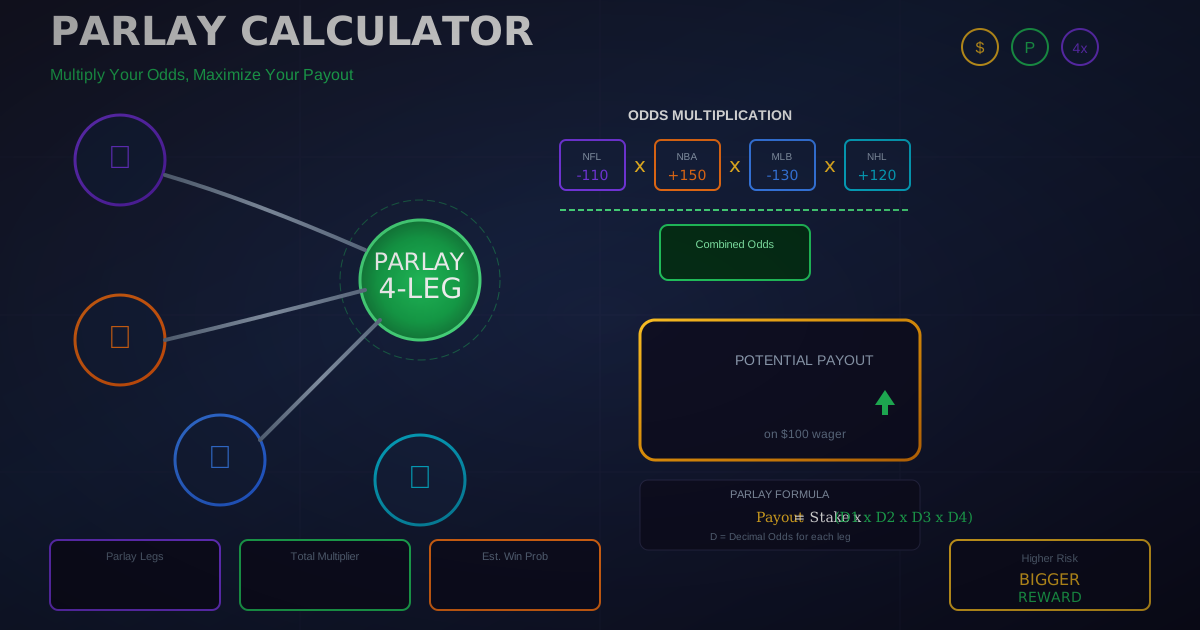
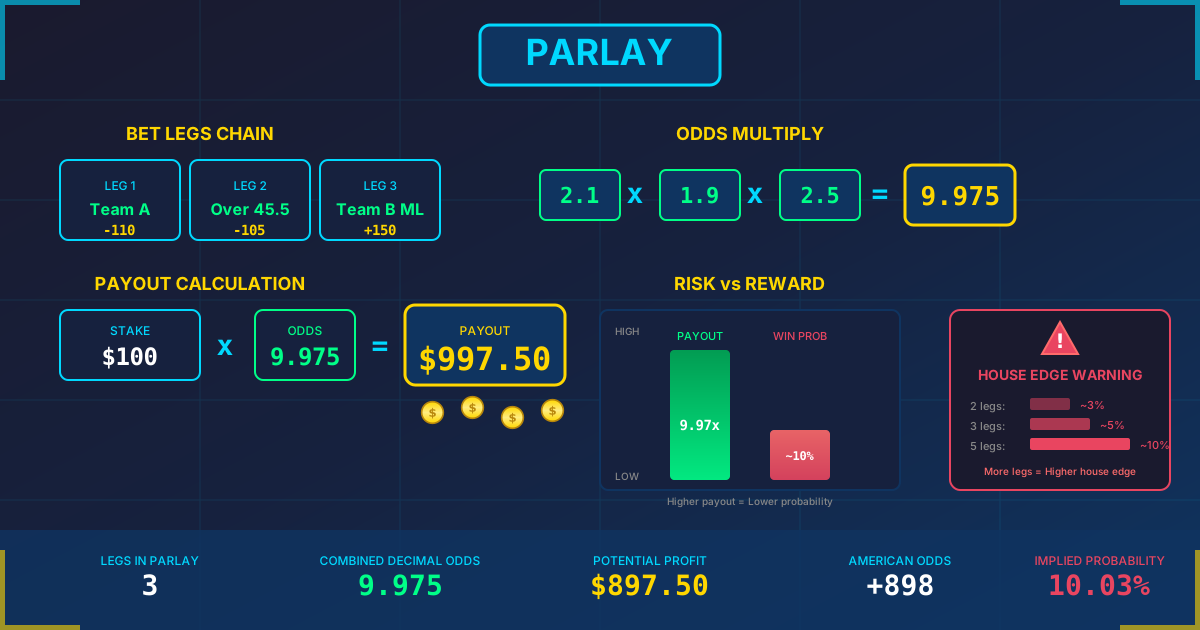
Each leg has its own fair odds. Parlay fair odds are the product. But parlay markets often have additional margin beyond individual legs.
Pro Tips
- Use Pinnacle lines to establish fair odds baseline - they consistently have the lowest margins
- Calculate fair odds before checking other bookmakers to avoid anchoring bias
- Track which books consistently offer above-fair prices on certain sports or markets
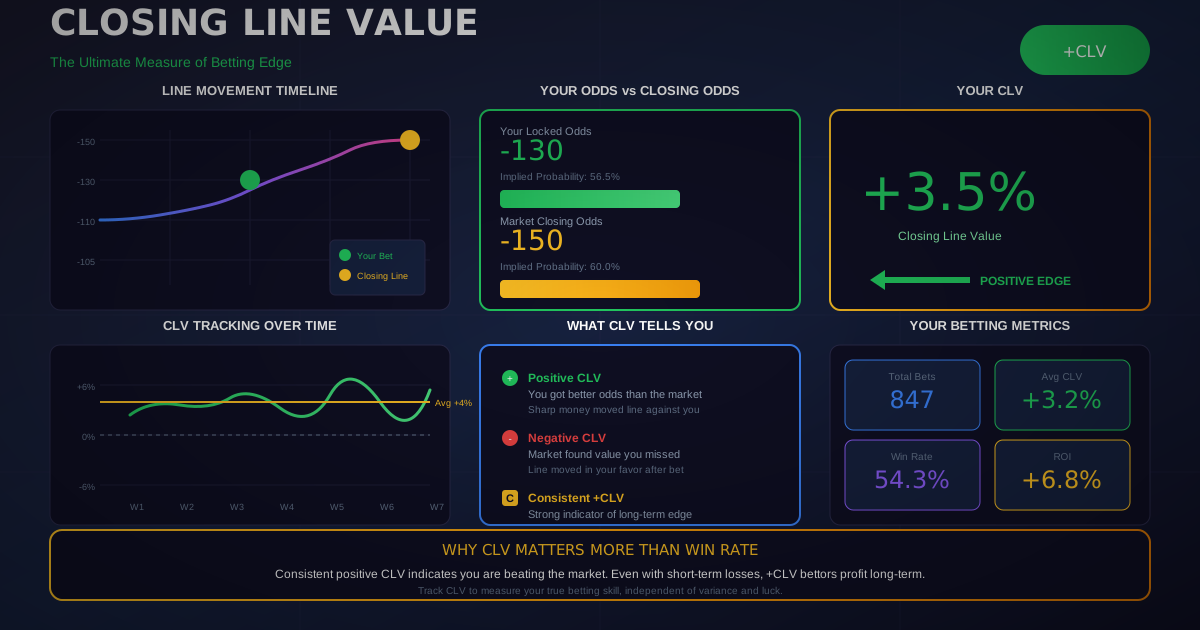
- Remember that closing line fair odds are typically most accurate - compare your bets to closing fair
- Build fair odds calculation into your workflow before every bet, not after finding a "good" price
Related Calculators
- Vig-Free Odds Calculator - Remove margin from lines
- True Odds Calculator - Convert probability to odds
- Implied Probability Calculator - Odds to probability
- Expected Value Calculator - Calculate bet profitability
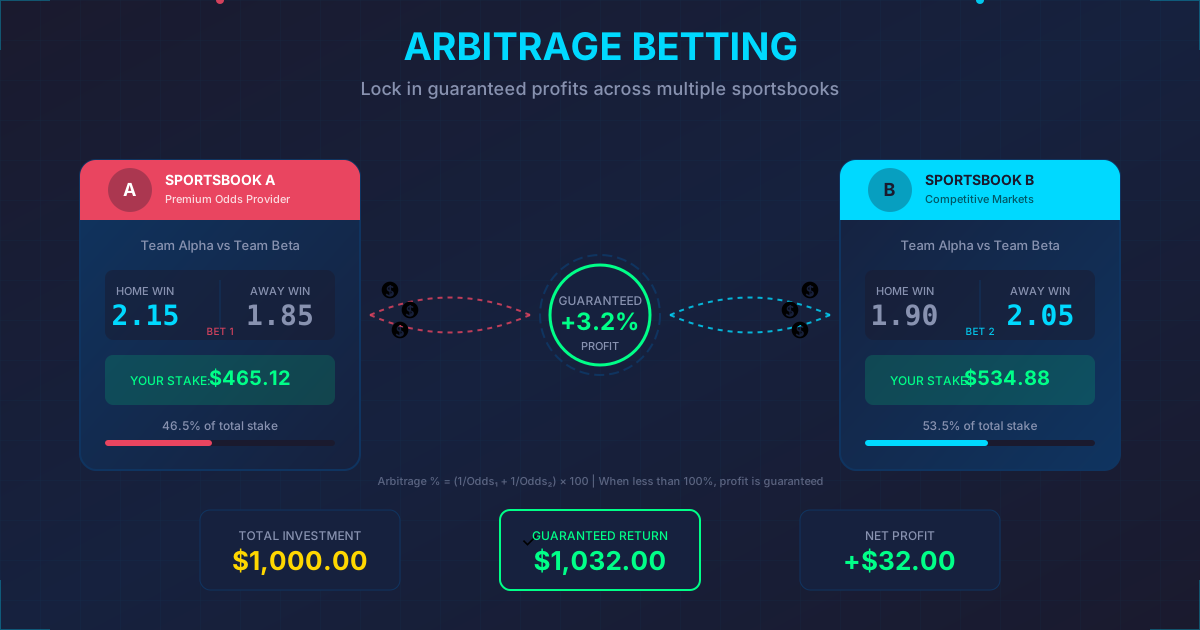
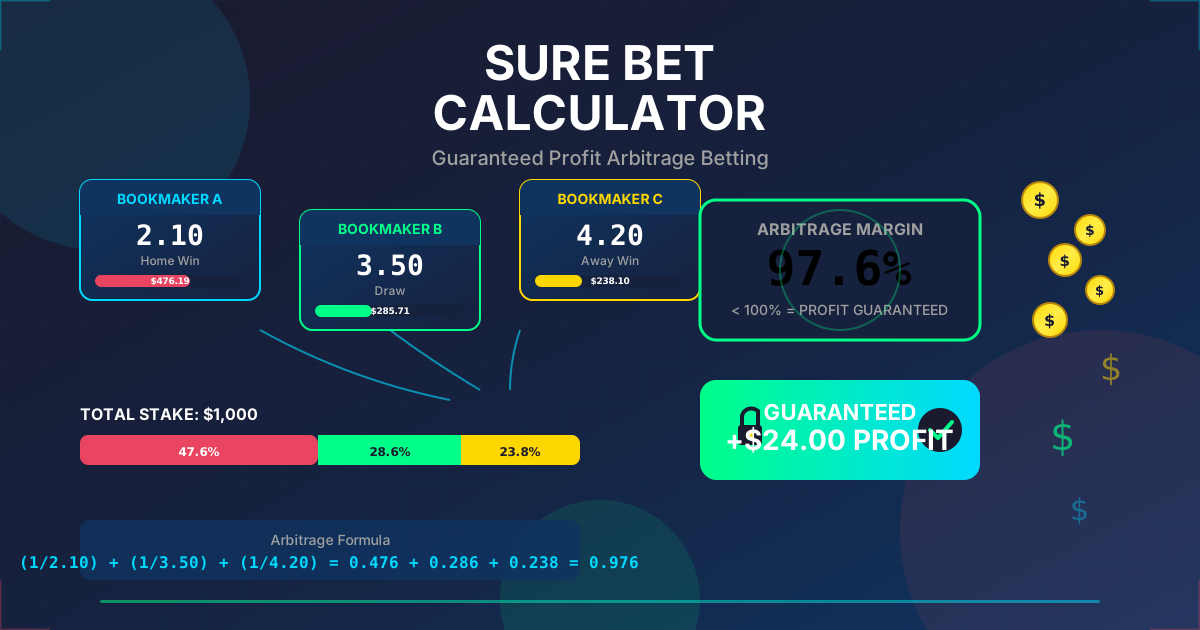
- Arbitrage Calculator - Find guaranteed profits
Conclusion
Fair odds are your benchmark for evaluating every bet. By stripping away the bookmaker's margin, you see what prices "should" be in an efficient market. When offered odds exceed fair odds, you've identified potential value. When they fall short, you're paying too much.
Our calculator makes fair odds calculation instant, letting you focus on finding edges rather than doing arithmetic. Remember: fair odds show market consensus, not guaranteed truth. The real skill is knowing when the market is wrong and having the discipline to act accordingly.