Fan Tan Calculator: Ancient Chinese Betting Game Analysis (2026)

Fan Tan Calculator: Understanding the Bead Counting Game
Fan Tan is an ancient Chinese game where beads are divided by four and the remainder determines the winner. Our calculator reveals the mathematics behind this simple yet elegant game and why all bets share the same 5% house edge.
What Is Fan Tan?
Fan Tan is a traditional Chinese gambling game where a handful of beads, buttons, or coins are covered by a cup. The dealer removes beads four at a time until 1-4 remain. Players bet on which number (1, 2, 3, or 4) will be left. It's pure chance with elegant simplicity.
Quick Answer: Fan Tan = count beads, remainder wins. Divide by 4, remainder is 1-4. All bets have 5% house edge. Even odds, but commission/reduced payout creates edge. Similar to roulette in simplicity. Can't improve odds. Equal probability for each outcome.
How to Use Our Calculator
Calculate odds and edge for all Fan Tan bet types.
Step-by-Step Instructions
-
Select Bet Type: Single number, pair, etc.
-
View Probability: Mathematical odds
-
See Payout: What it pays
-
Calculate House Edge: True cost
-
Compare Options: All identical edge
Input Fields Explained
| Field | Description | Example |
|---|---|---|
| Bet Type | Wager chosen | Single (3) |
| Outcome | Remainder | 3 |
| Probability | Win chance | 25% |
| Payout | If win | 2.85:1 |
| House Edge | True cost | 5.0% |
| Fair Payout | Break-even | 3:1 |
Game Mechanics
The Counting Process
How it works:

1. Beads placed under cup
2. Dealer removes 4 at a time
3. Continue until 1-4 remain
4. Remainder = winning number

Example:
45 beads total
45 ÷ 4 = 11 remainder 1
Number 1 wins
Possible Outcomes
Only four results:

1: One bead remains
2: Two beads remain
3: Three beads remain
4: Four beads remain (divisible)

Each has 25% probability
Perfectly fair outcomes
Bet Types
Single Number Bets
Bet on 1, 2, 3, or 4:

Probability: 25% (1 in 4)
Fair payout: 3:1
Actual payout: 2.85:1 (varies)

House edge: 5%
From reduced payout
Pair Bets (Nim)
Two numbers win:

Bet covers two adjacent numbers
Example: 1-2 Nim wins on 1 or 2

Probability: 50%
Fair payout: 1:1
Actual payout: 0.95:1

House edge: 5%
Same as single bets
Three-Way Bets (Kwok)
Three numbers win:

Cover three of four numbers
One number loses

Probability: 75%
Fair payout: 0.33:1
Actual payout: ~0.32:1

House edge: 5%
All bets equal
Ssh (Single Bet Variant)
Specific Fan Tan betting:

Bet on number to win outright
Or partial on neighbor
Complex payout structure

Same 5% edge overall
Just different structure
House Edge Analysis
Universal 5% Edge
All bets have same edge:

Single number: 5%
Nim (pairs): 5%
Kwok (three-way): 5%
Ssh variations: 5%

Why same edge?
Mathematical equivalence
Casino sets payouts
Creates uniform margin
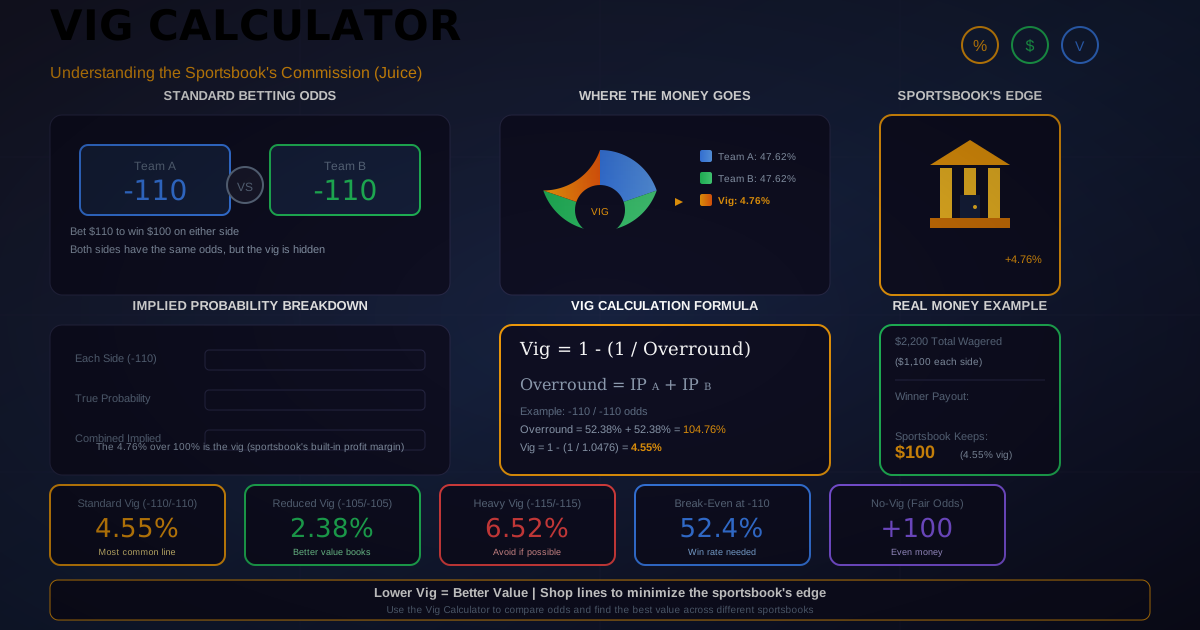
Edge Mechanics
How 5% is created:

Fair single bet: 3:1
Actual payout: 2.85:1

Loss: 3 - 2.85 = 0.15
Edge: 0.15/3 = 5%

Alternative:
Commission on wins
Same result
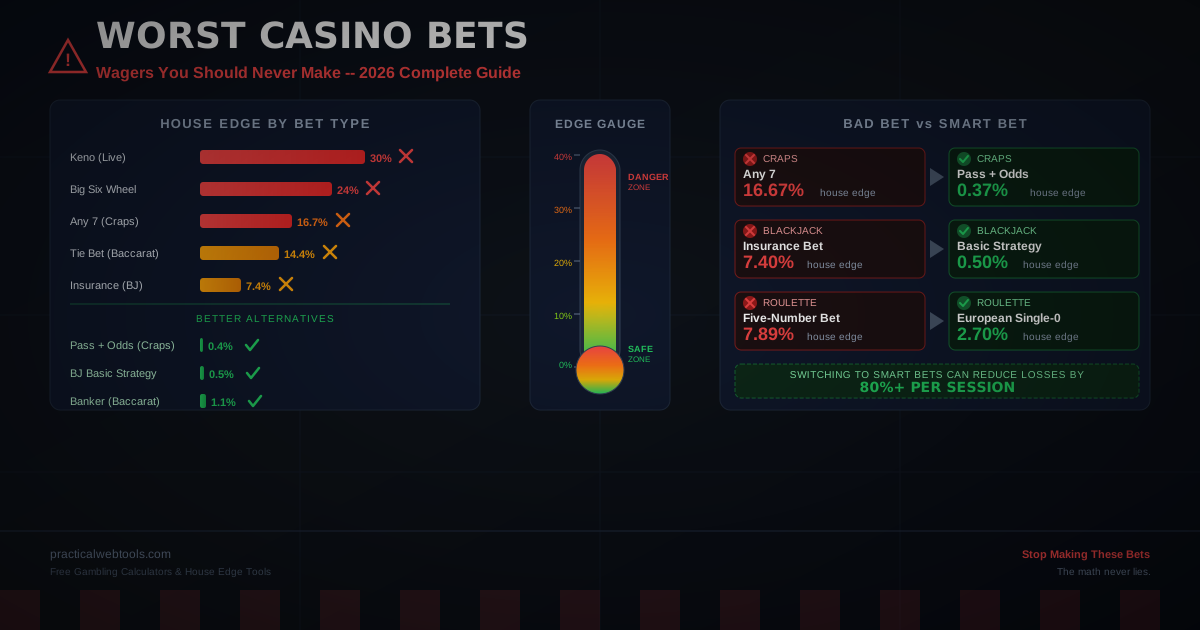
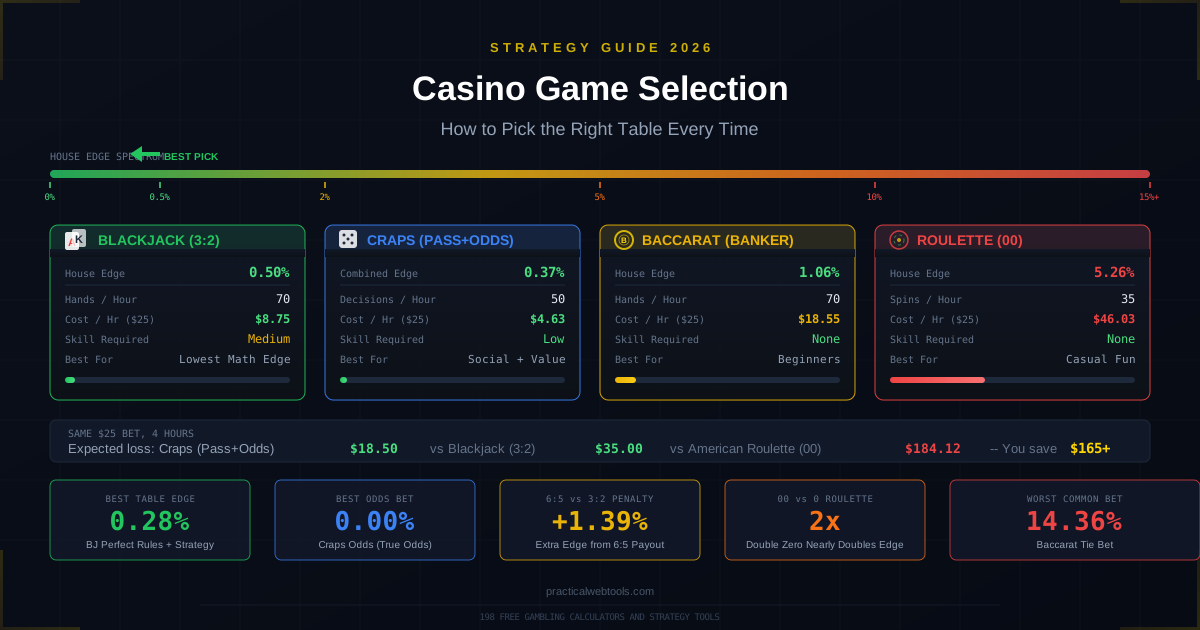
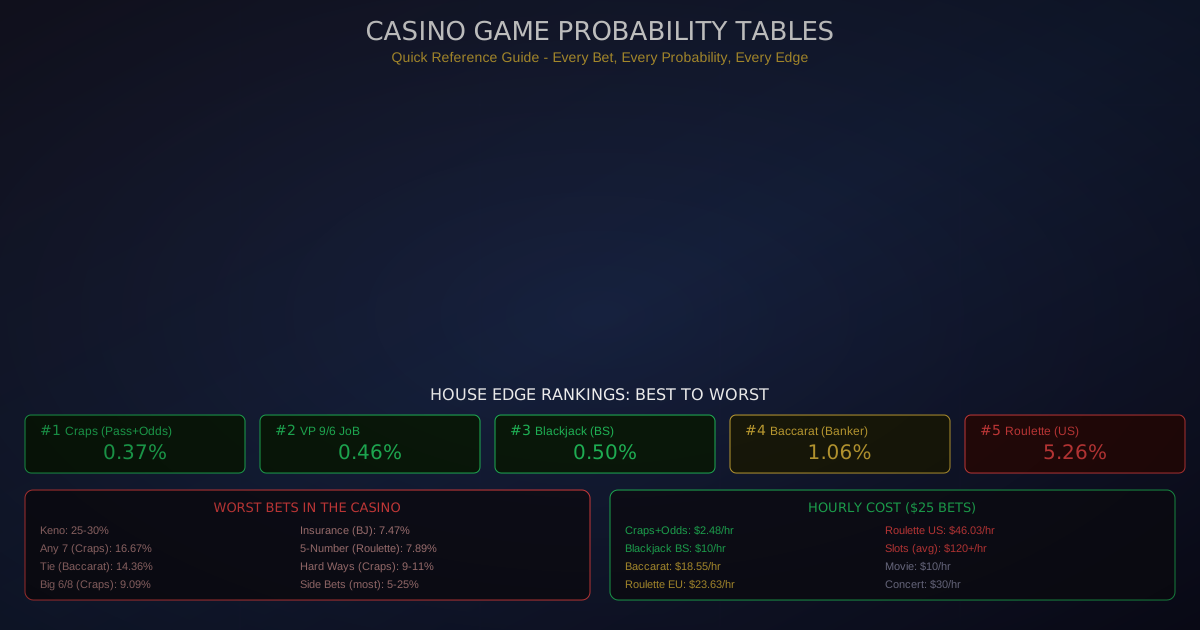
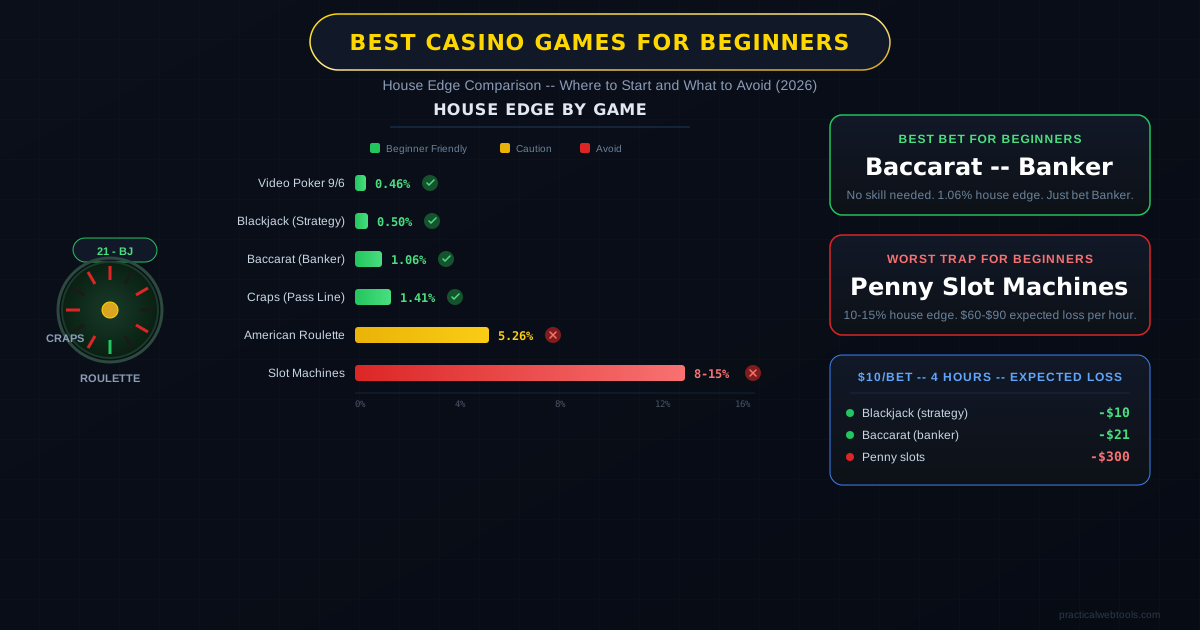
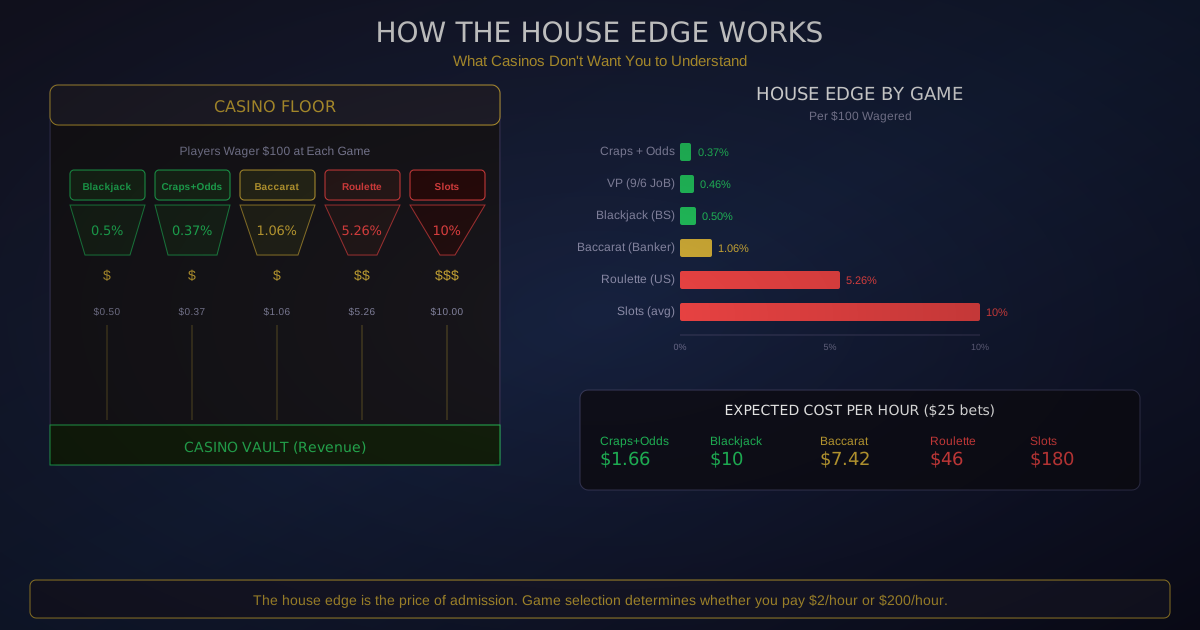
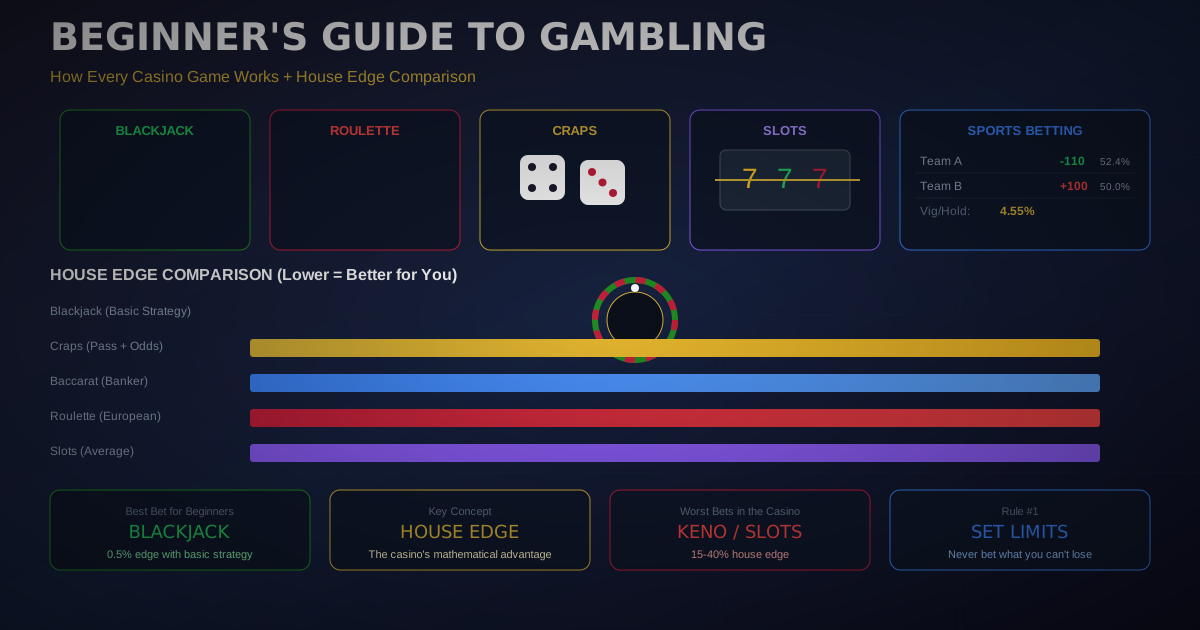
Comparison to Other Games
Fan Tan vs others:

Fan Tan: 5.0%
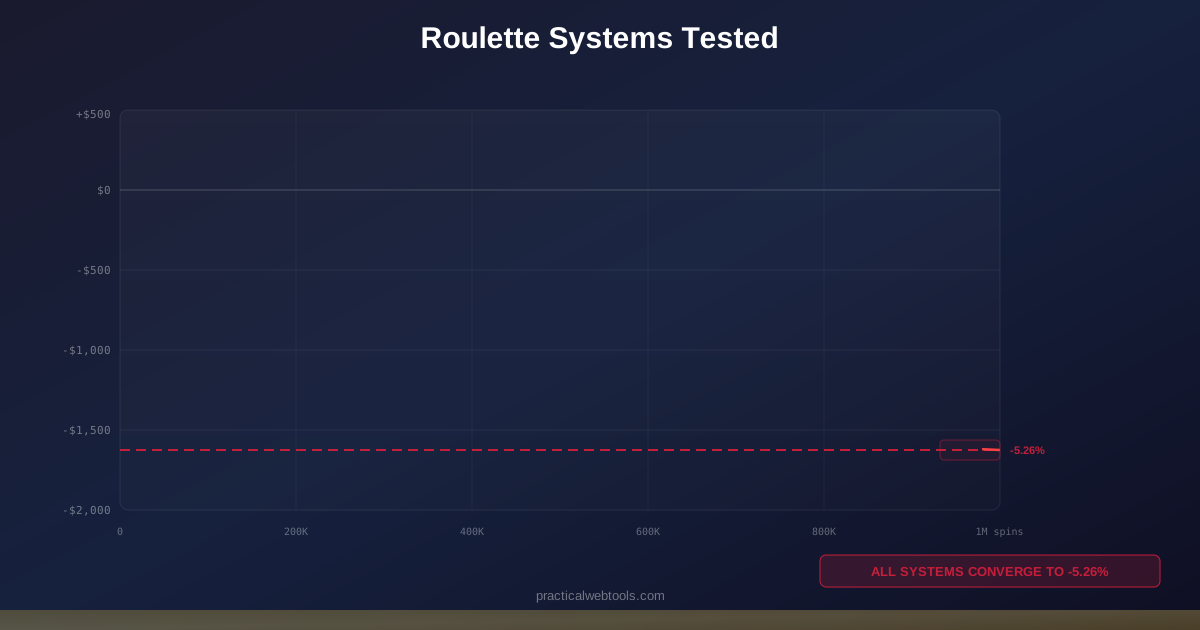
Roulette (US): 5.26%
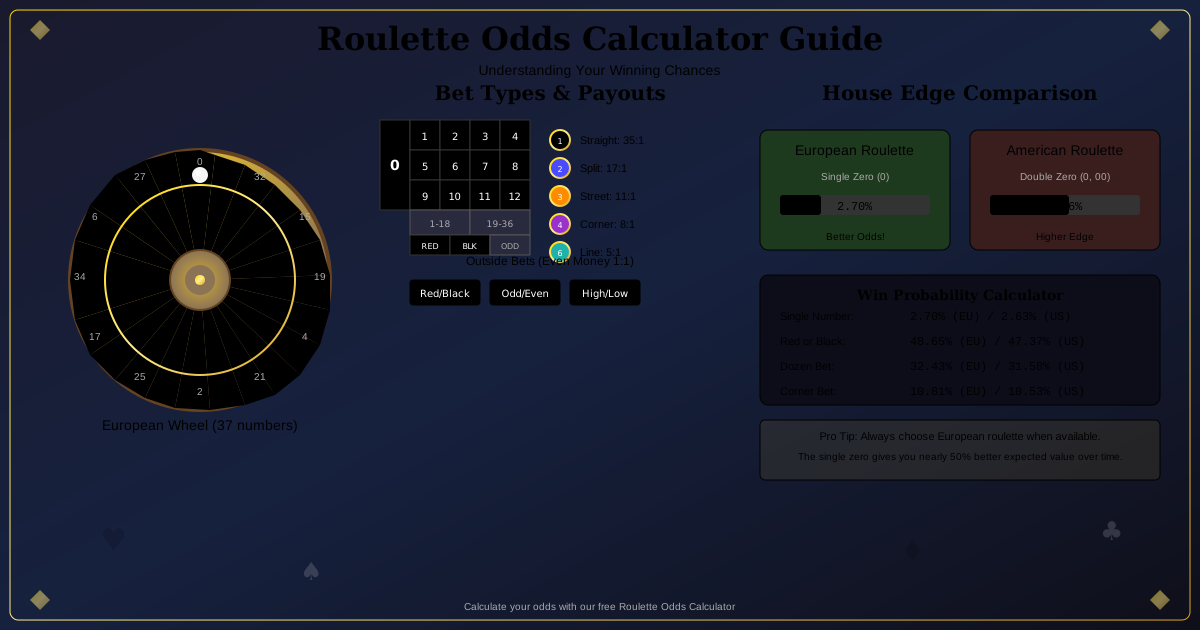
Roulette (EU): 2.70%
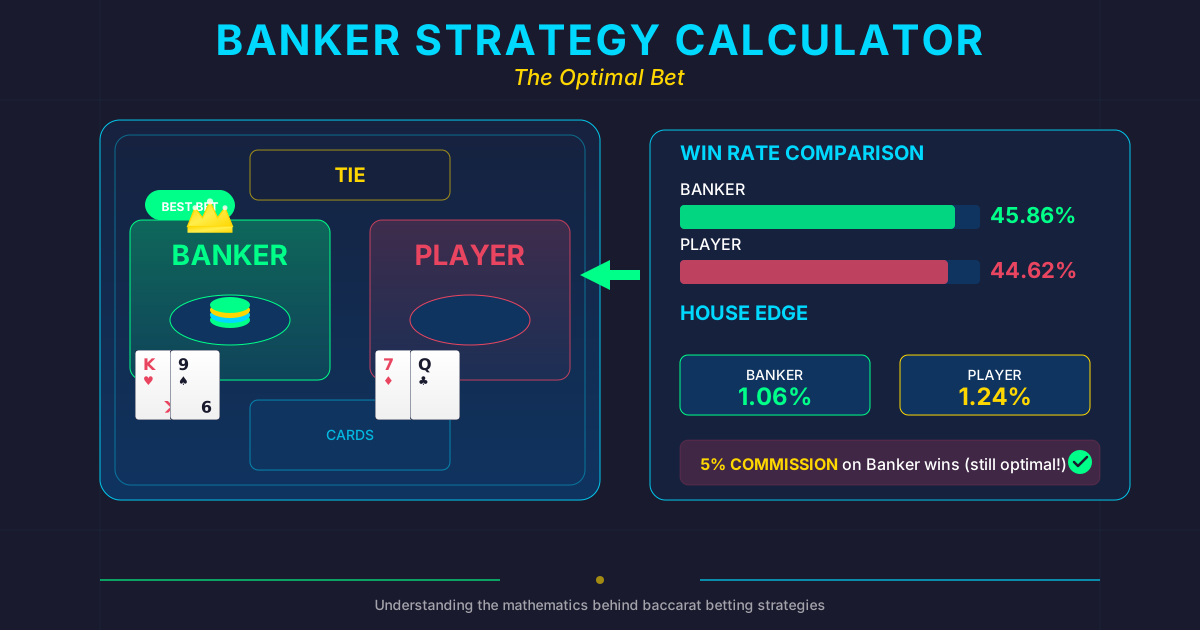
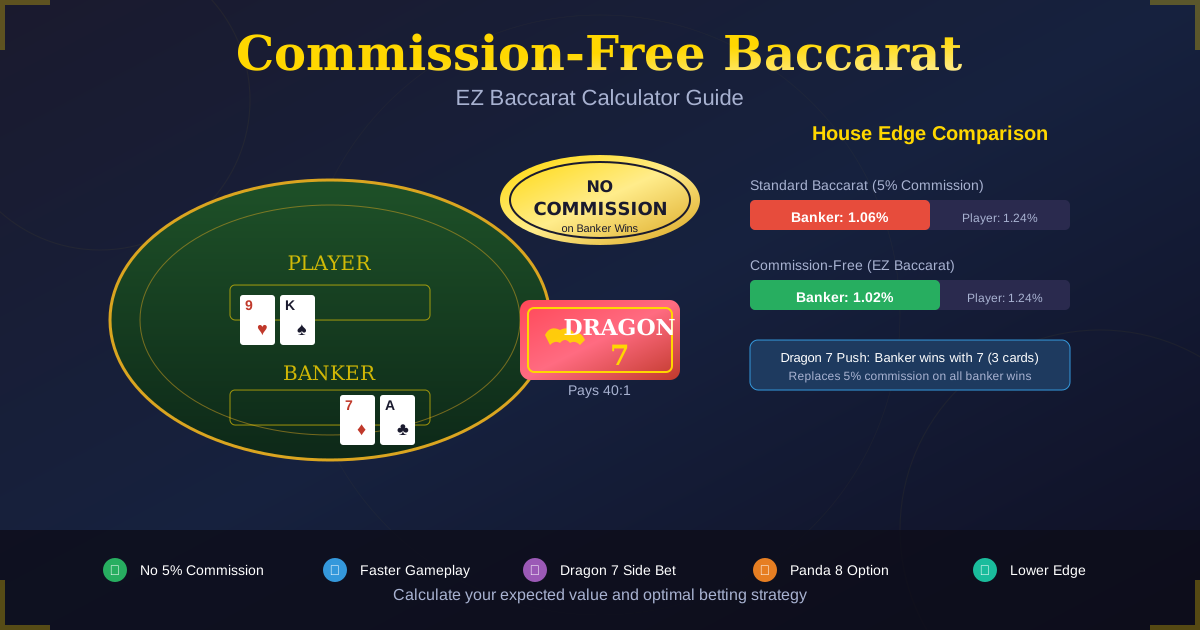
Baccarat: 1.1%
Craps pass: 1.4%

Moderate house edge
Not great, not terrible
Probability Analysis
Equal Distribution
Each number equally likely:

Number 1: 25%
Number 2: 25%
Number 3: 25%
Number 4: 25%

Perfect randomness
No bias possible
Pure chance game
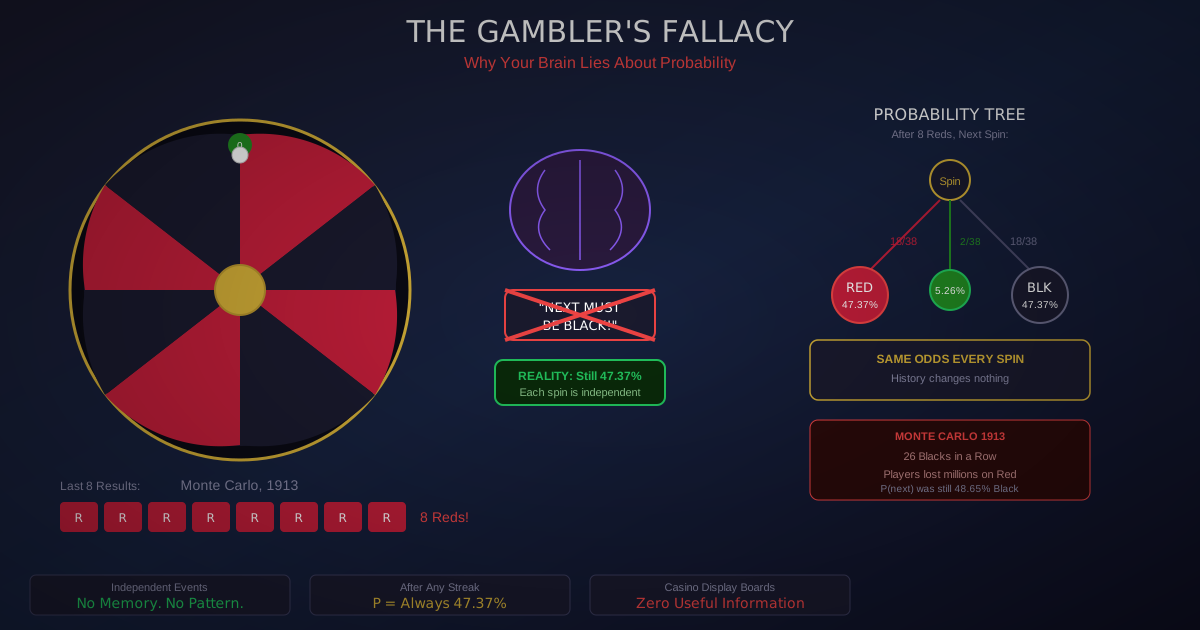
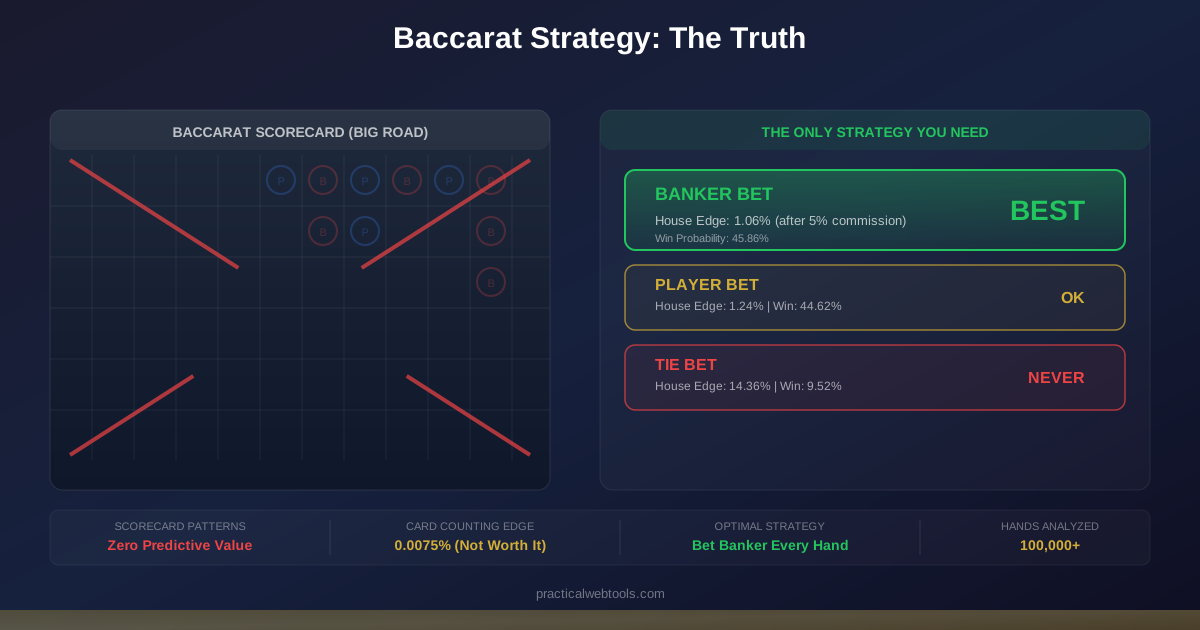
No Pattern Possible
Why strategies fail:

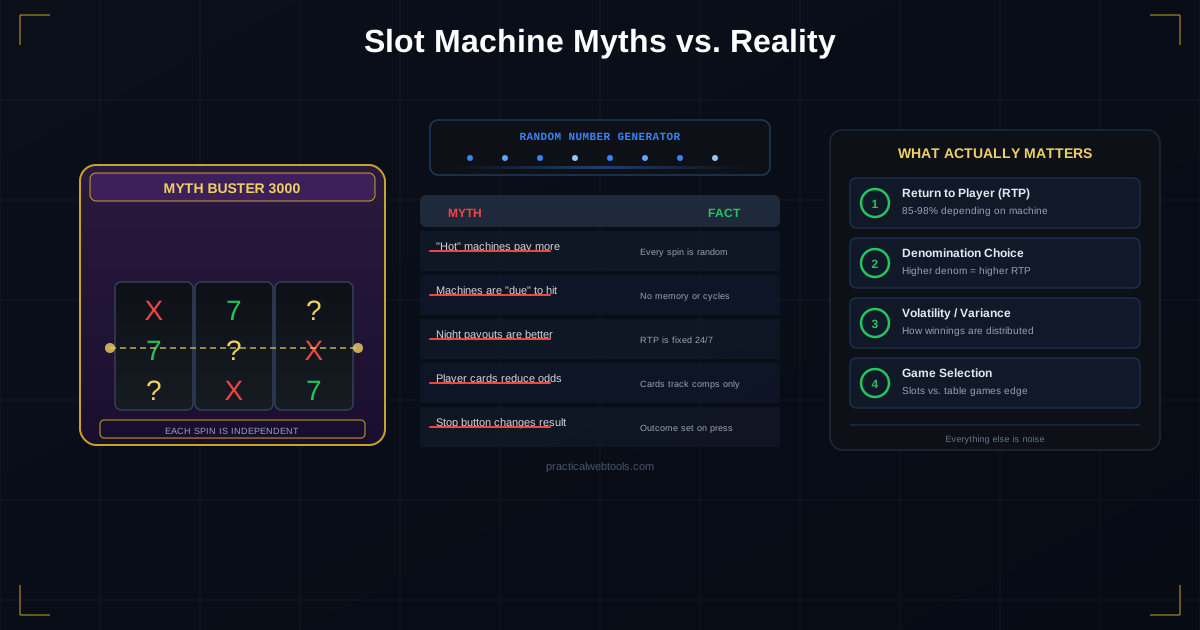
Each count is independent
Previous results don't matter
No "due" numbers

Like roulette:
Each spin is fresh
No memory in beads
Real-World Examples
Example 1: Single Number Bet
Standard play:
Bet: $20 on Number 3
Beads remaining: 3

Result: WIN

Payout: $20 × 2.85 = $57
Plus original: $77 total return

If lost: -$20
EV: 0.25($57) + 0.75(-$20) = -$1
Edge: 5%
Example 2: Nim Bet
Two-number coverage:
Bet: $20 on 1-2 Nim
Beads remaining: 2

Result: WIN

Payout: $20 × 0.95 = $19
Plus original: $39 total return

50% win rate
Same 5% edge as single
Example 3: Kwok Bet
Three-number coverage:
Bet: $20 on 1-2-3 Kwok
(Loses only on 4)
Beads remaining: 4

Result: LOSE

Lost: $20
75% win rate didn't save you
Same expected loss over time
Example 4: Session Expectations
Playing 100 rounds:
$10 bets on single number:
Expected wins: 25
Expected losses: 75

Wins: 25 × $28.50 = $712.50
Losses: 75 × $10 = $750

Net: -$37.50
Edge: 3.75%... wait

Let me recalculate properly:
Win $28.50, lose $10
EV = 0.25(28.50) + 0.75(-10)
EV = 7.125 - 7.50 = -$0.375
Per $10 bet = 3.75%

Note: Edge varies by payout
Check local rules
Strategy Considerations
No Optimal Strategy
Can't improve odds:

All bets have same edge
No skill element
Pure random outcome

Strategy = bet selection only
Which coverage you prefer
Not mathematical advantage
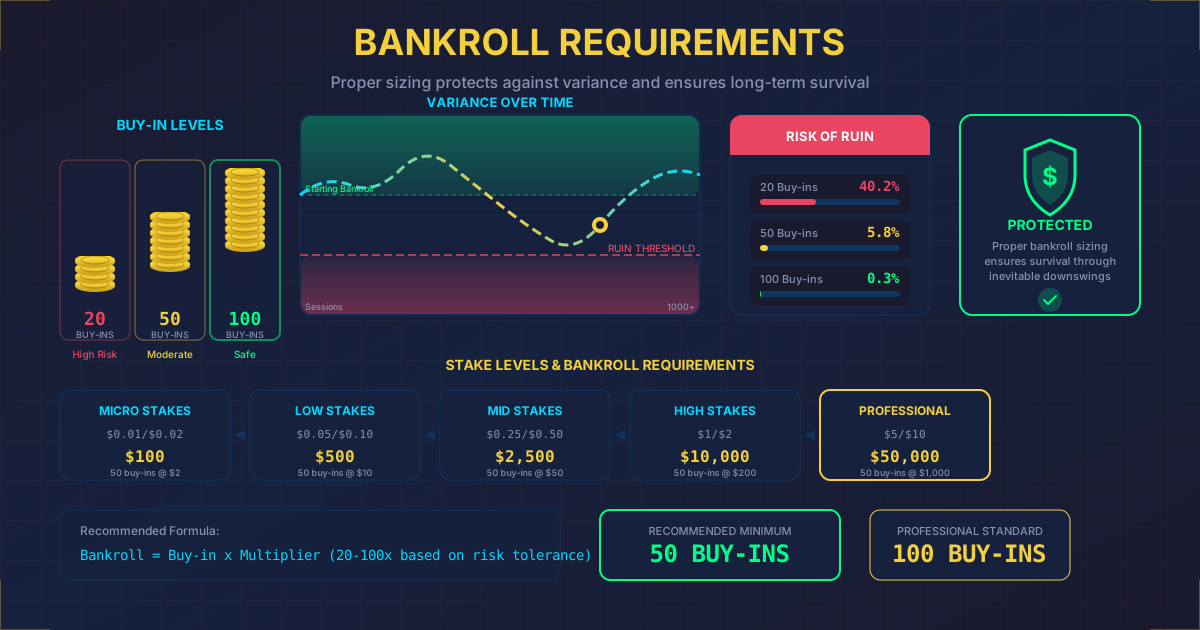
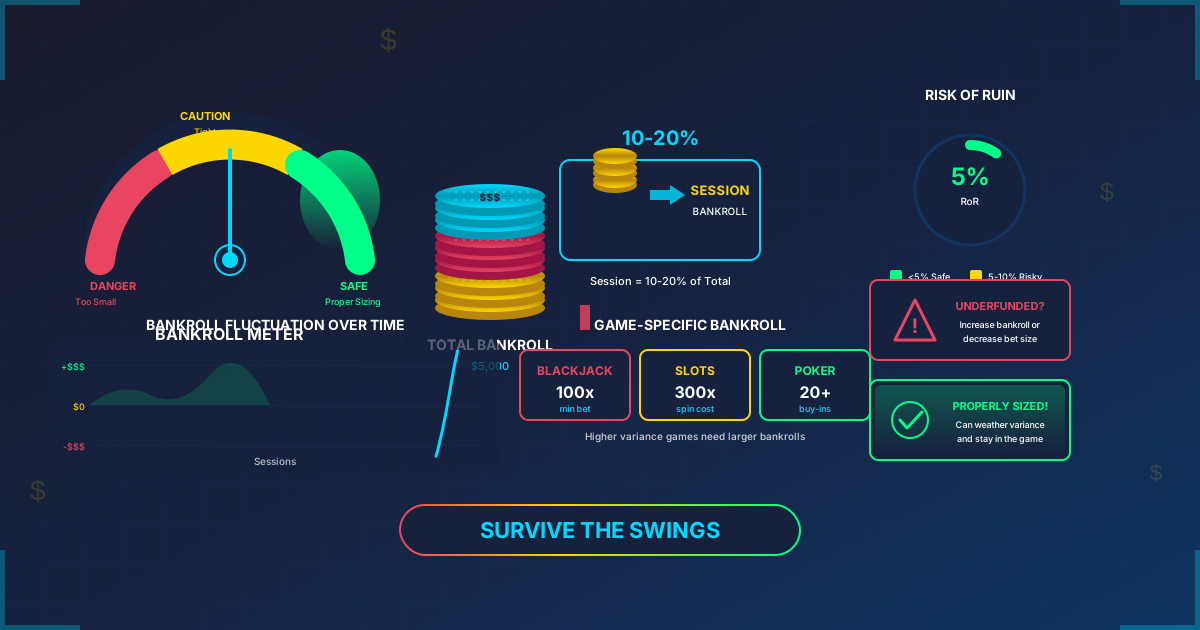
Bankroll Management
For session play:

Low-moderate variance
25× minimum for singles
Lower for Nim/Kwok

Example:
$500 bankroll
$20 bets = 25 units
Reasonable session length
Social Aspects
Fan Tan is often social:

Group betting allowed
Spectator atmosphere
Traditional in Asian casinos

Part of the experience
Not just mathematical
Common Mistakes
1. Expecting Patterns
Mistake: Tracking previous numbers Problem: Each round independent Fix: Accept randomness
2. Thinking One Bet Is Better
Mistake: Single vs Nim preference Problem: All have same edge Fix: Choose coverage you like
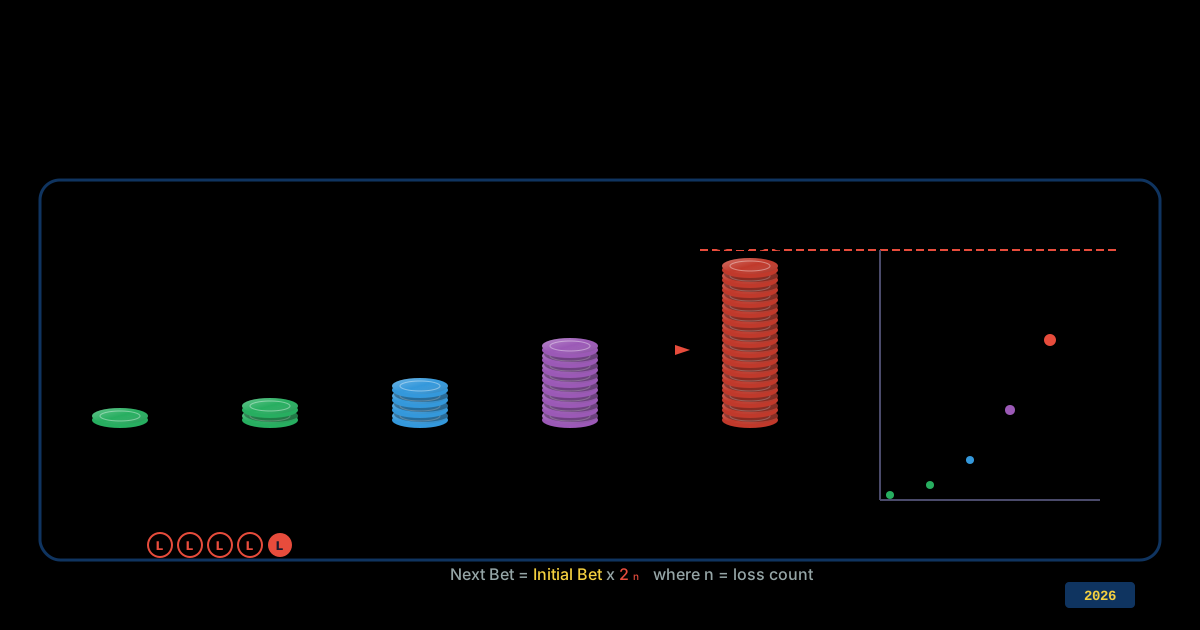
3. Chasing Losses
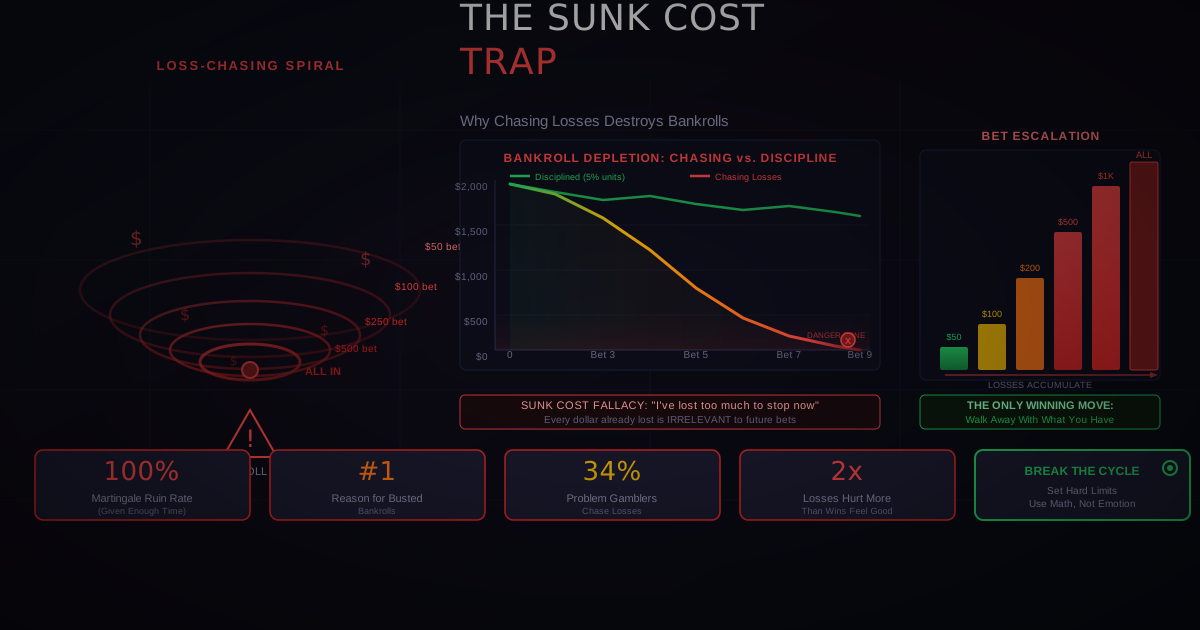
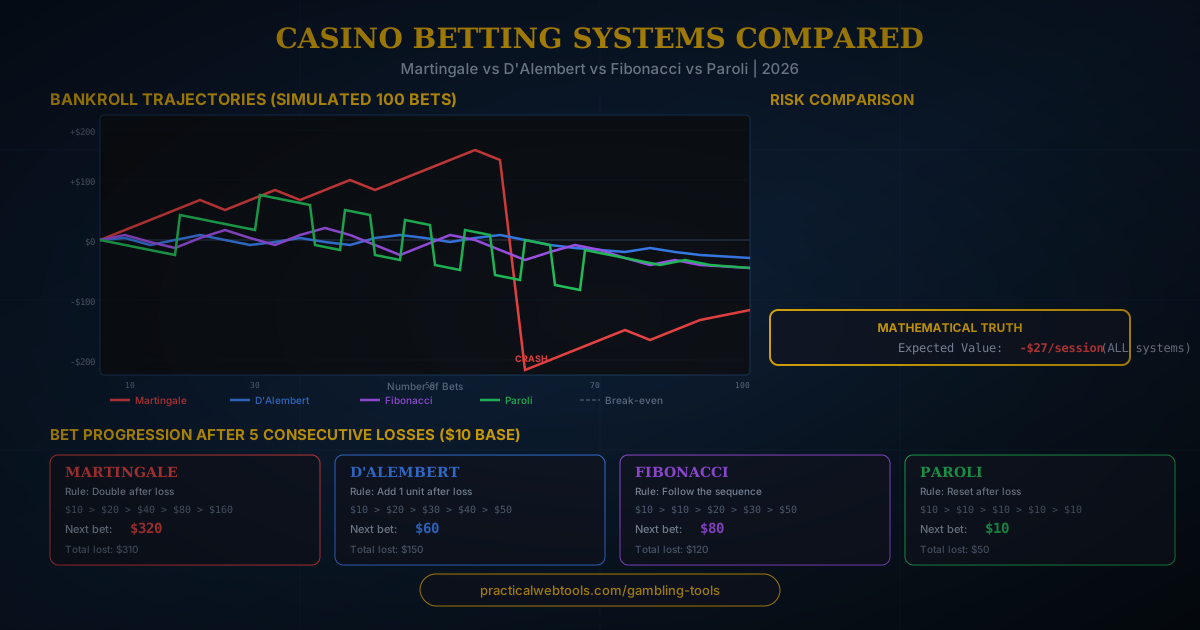
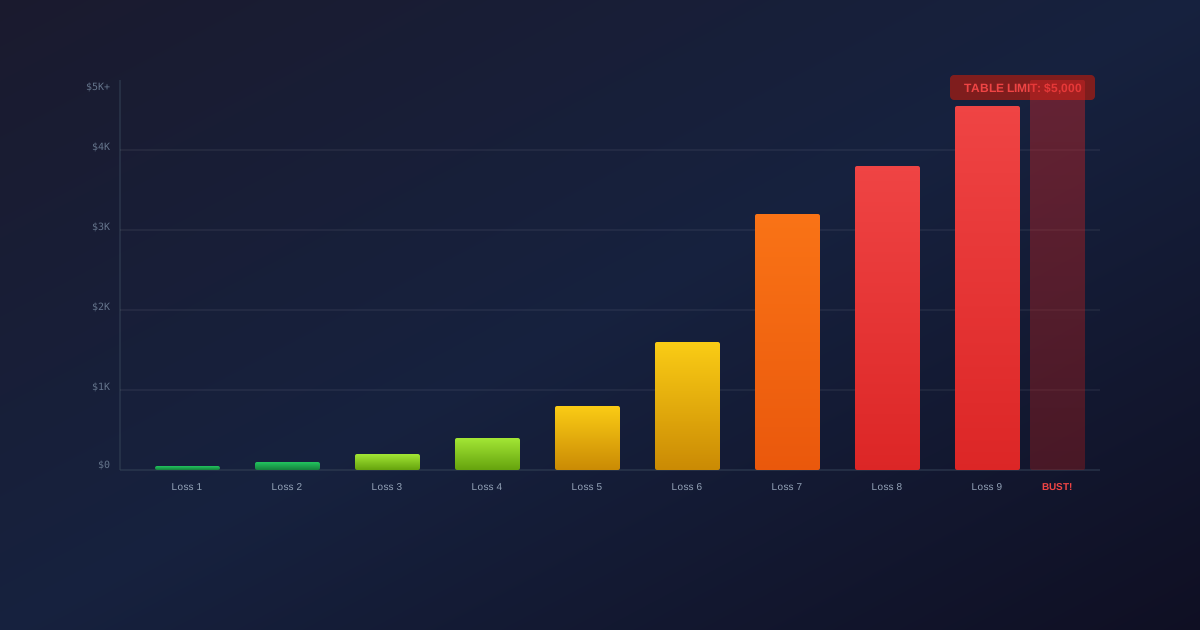
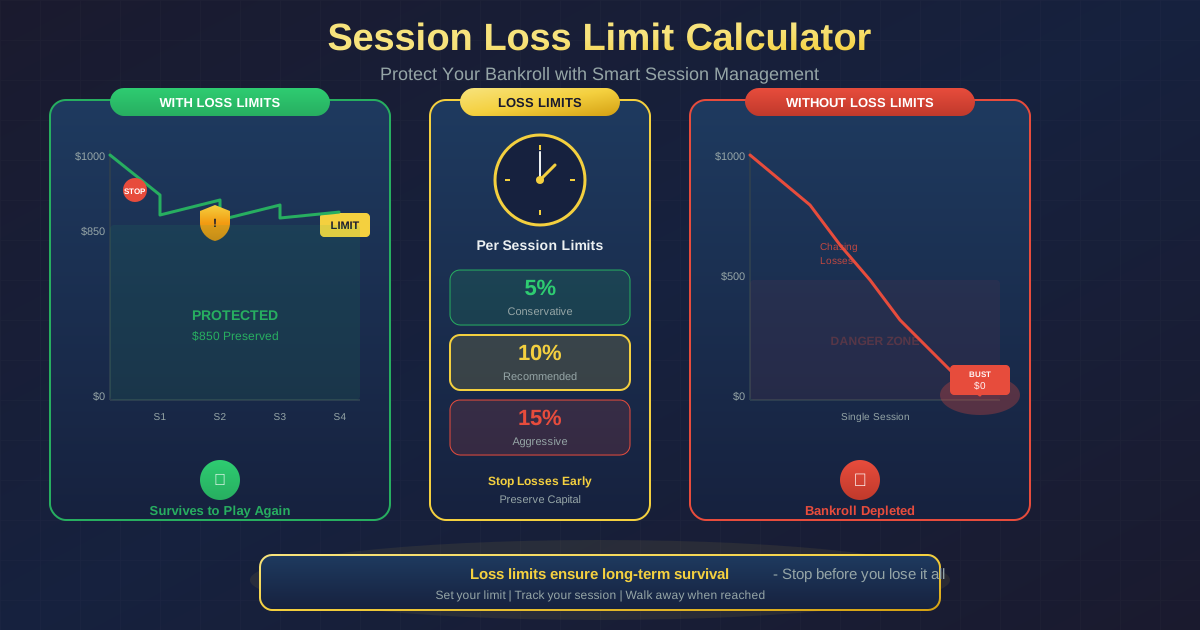
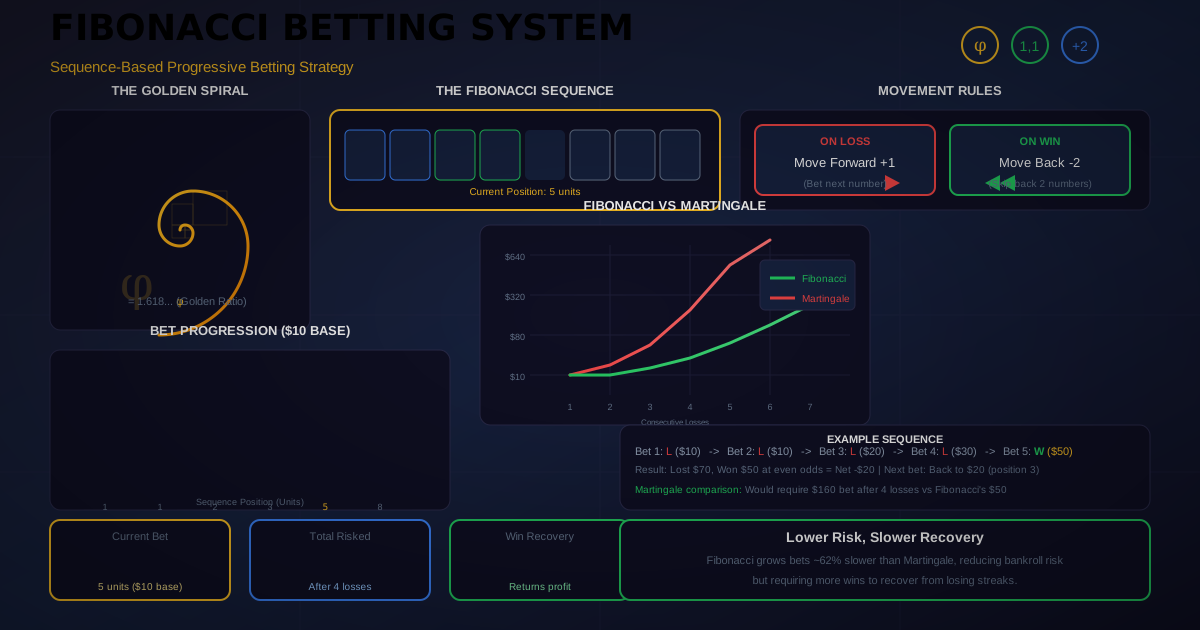
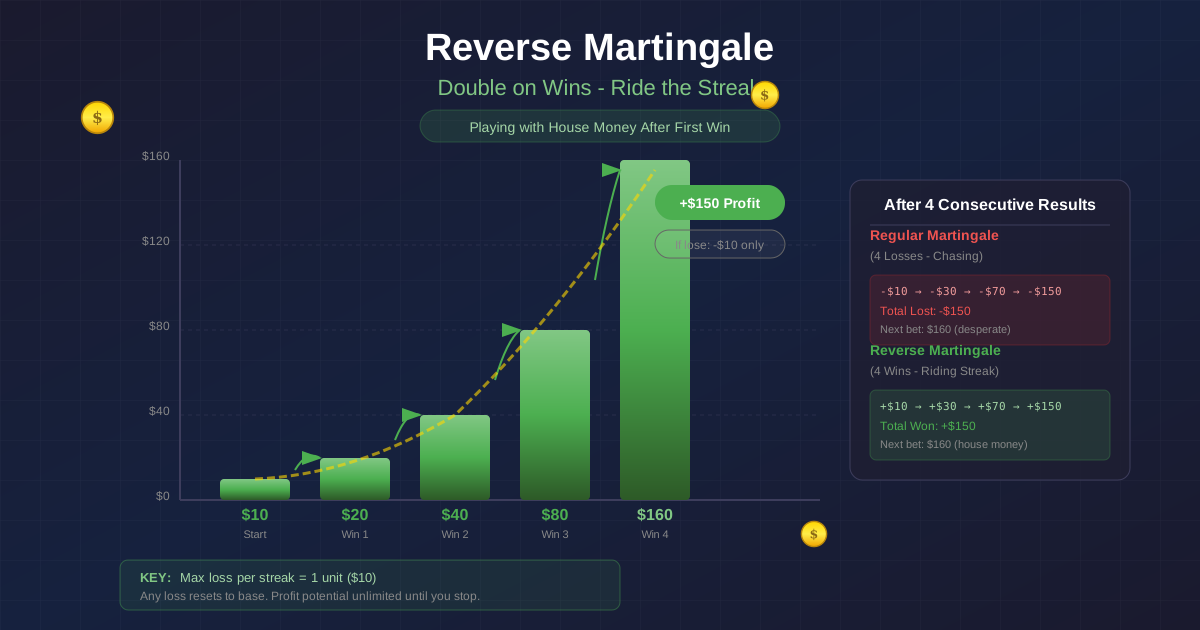
Mistake: Doubling after loss Problem: Edge remains 5% Fix: Flat betting preferred
4. Misunderstanding Nim/Kwok
Mistake: Thinking coverage reduces risk Problem: Same expected loss rate Fix: Understand EV equivalence
Frequently Asked Questions
Is Fan Tan beatable?
No. 5% house edge on all bets. No skill or strategy can overcome the mathematical disadvantage.
Which bet is best?
All bets have identical 5% house edge. Choose based on preference for payout size vs win frequency.
Can I count to predict outcomes?
No. The number of beads is random. Counting previous rounds provides no advantage.
Is Fan Tan better than roulette?
Similar edge (5% vs 5.26% US, 2.7% EU). Fan Tan is simpler with fewer bet types. Personal preference.
Why do casinos offer Fan Tan?
Popular in Asian markets. Simple to run. Consistent 5% margin. Cultural tradition.
Are online versions fair?
If licensed, yes. RNG determines outcome. Same probabilities as physical game.
Pro Tips
-
All bets equal: 5% edge
-
Choose by preference: Coverage vs payout
-
Accept randomness: No patterns
-
Budget appropriately: Entertainment expense
-
Simple game: No strategy needed
Related Calculators
- Roulette Odds Calculator - Similar simplicity
- Sic Bo Calculator - Another Asian game
- Baccarat Calculator - Lower edge option
- House Edge Calculator - Compare games
- Probability Calculator - General odds
Conclusion
Fan Tan's elegant simplicity—counting beads until 1-4 remain—creates a pure chance game where all bets share identical 5% house edge. Our calculator reveals why no bet type offers advantage and how the mathematics create this uniform margin.
Whether you bet on single numbers at 2.85:1 or Nim pairs at 0.95:1, the house takes the same 5% edge. Our calculator shows the mathematics behind this ancient game's enduring appeal.