Fibonacci Betting Calculator: Sequence-Based System Analysis (2026)
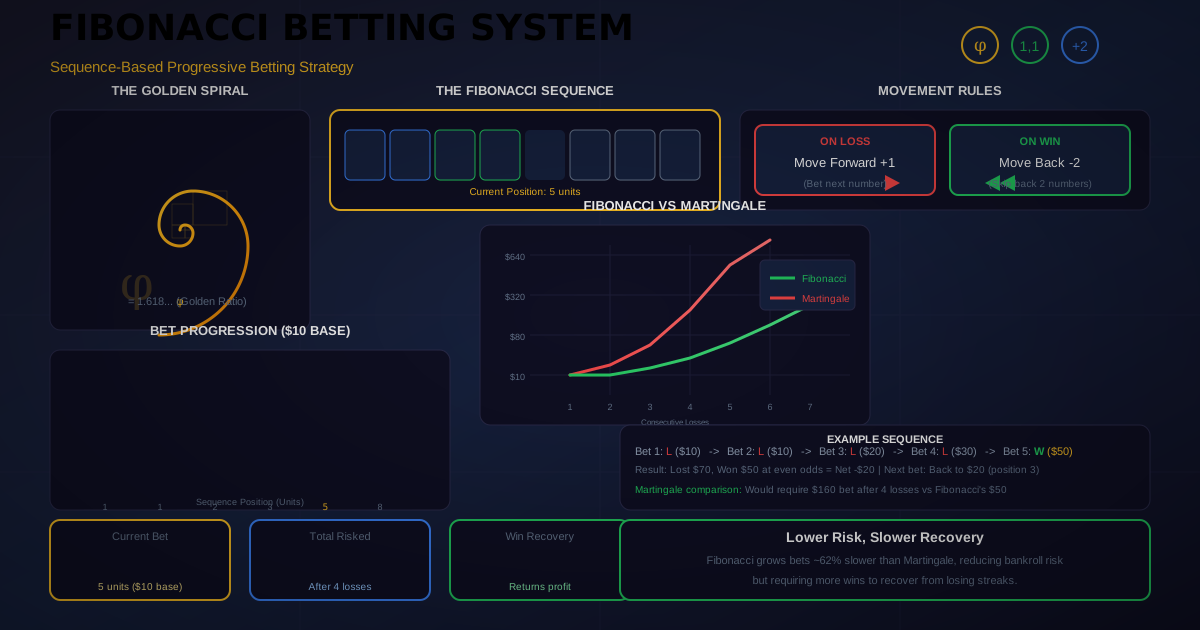
Fibonacci Betting Calculator: The Mathematical Sequence System
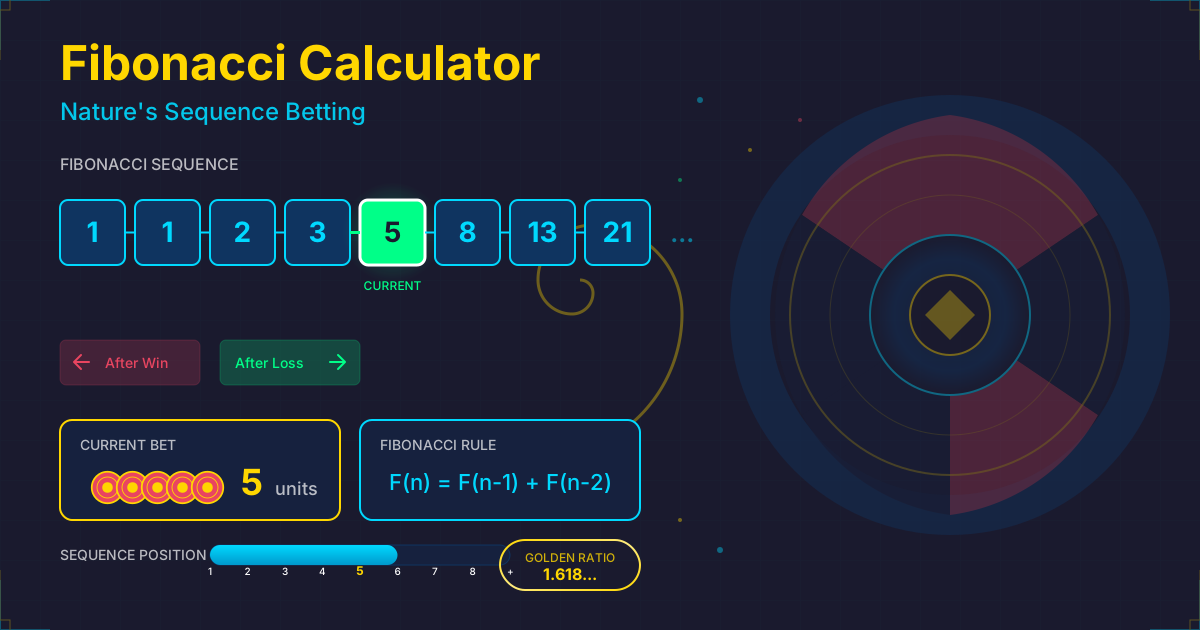
The Fibonacci betting system uses the famous mathematical sequence (1, 1, 2, 3, 5, 8, 13...) to determine bet sizes. After a loss, move forward in the sequence; after a win, move back two steps. Our calculator reveals why this gentler progression still can't overcome the house edge.
What Is the Fibonacci Betting System?
The Fibonacci system is a negative progression strategy where bet sizes follow the Fibonacci sequence. After each loss, you advance one step; after each win, you retreat two steps. It's slower-growing than Martingale but still aims to recover losses through eventual wins.
Quick Answer: Fibonacci betting = bet sizes follow 1,1,2,3,5,8,13,21,34,55... sequence. Loss = advance one step. Win = retreat two steps. Slower than Martingale progression. Still can't beat house edge. Less aggressive but same long-term result. Bankroll lasts longer, losses accumulate same way.
How to Use Our Calculator
Use the Fibonacci Calculator →
Calculate Fibonacci progression and risk.
Step-by-Step Instructions
-
Enter Base Unit: Multiplier value
-
Enter Bankroll: Total available
-
View Sequence: Bet progression
-
Calculate Position: After wins/losses
-
See Risk Profile: Bust probability
Input Fields Explained
| Field | Description | Example |
|---|---|---|
| Base Unit | Multiplier | $10 |
| Bankroll | Total funds | $1,000 |
| Current Step | Sequence position | 5 |
| Current Bet | At position | $50 |
| Total at Risk | Cumulative | $130 |
| Steps to Recover | After win | 2 back |
The Fibonacci Sequence
How It Works
The Fibonacci sequence:

1, 1, 2, 3, 5, 8, 13, 21, 34, 55, 89, 144...

Each number = sum of previous two
1+1=2, 1+2=3, 2+3=5, 3+5=8...

Applied to betting:
Unit 1: $10
Unit 1: $10
Unit 2: $20
Unit 3: $30
Unit 5: $50
Unit 8: $80
Movement Rules
After a LOSS:
Move forward 1 step in sequence
Bet the next Fibonacci number

After a WIN:
Move back 2 steps in sequence
Bet that Fibonacci number

Goal: Eventually return to start
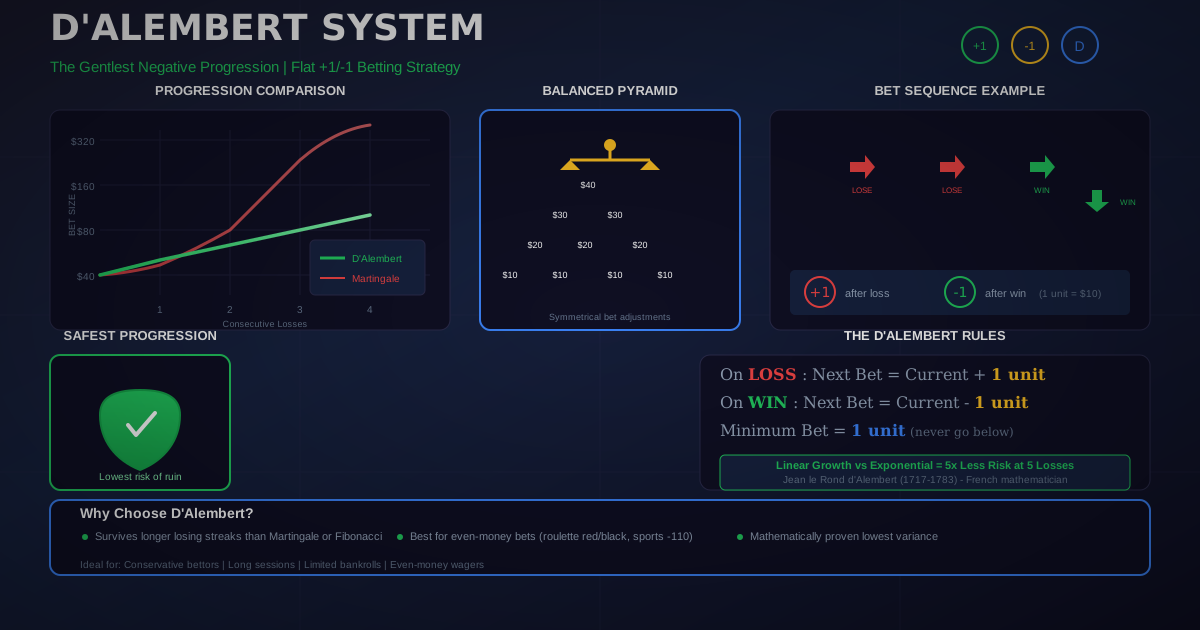
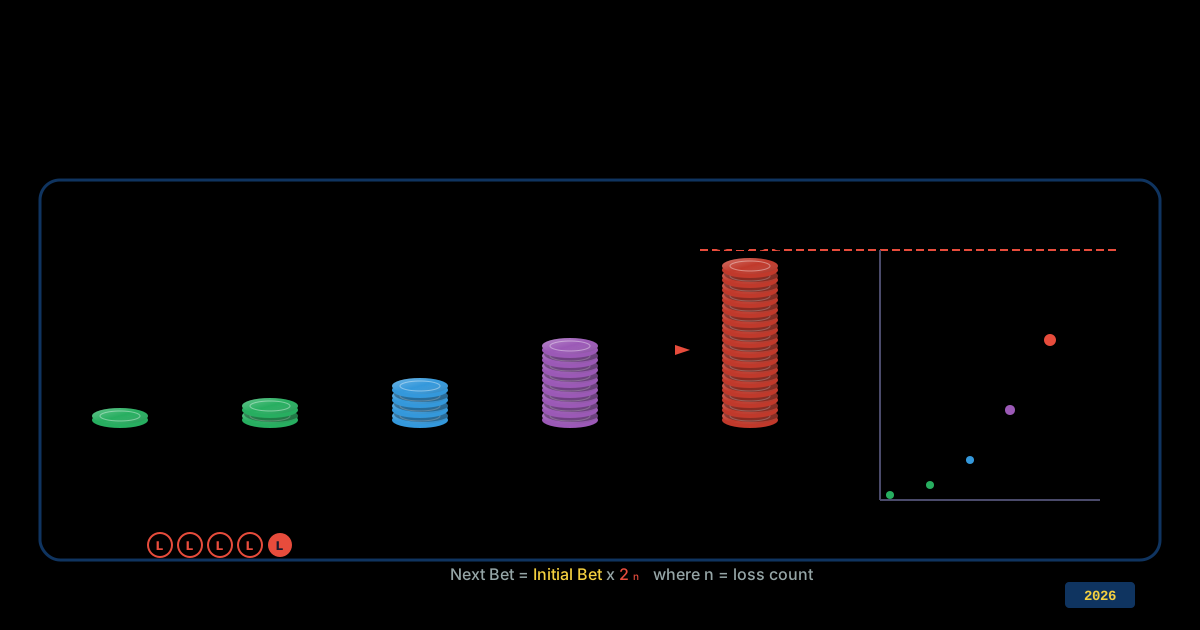
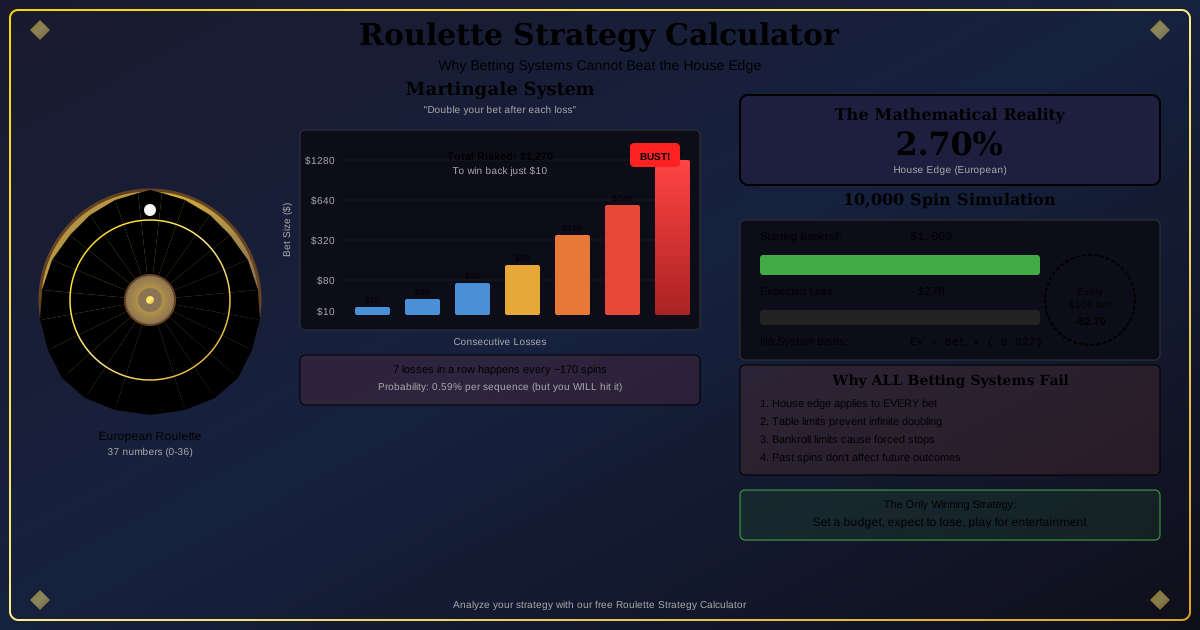
Fibonacci vs Martingale
Progression Comparison
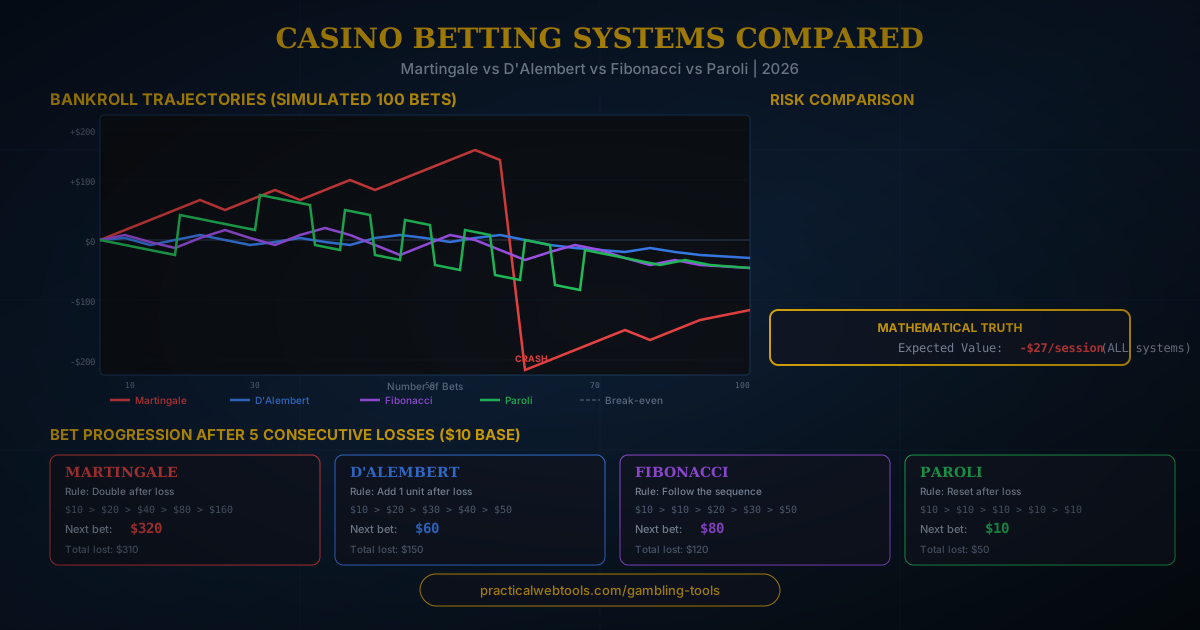
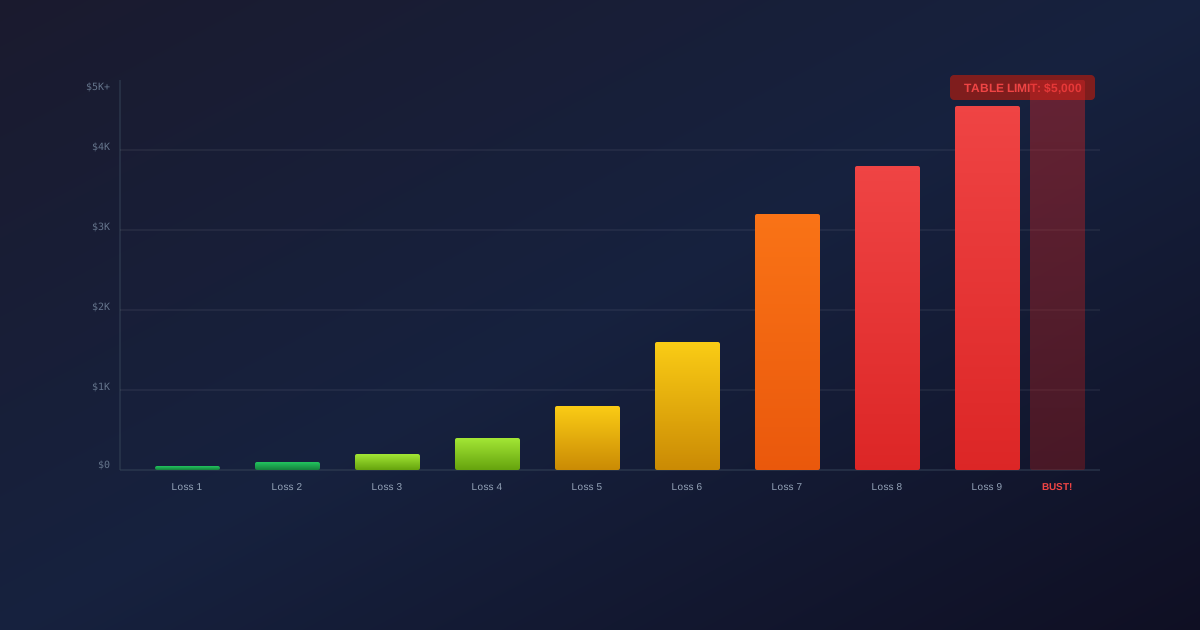
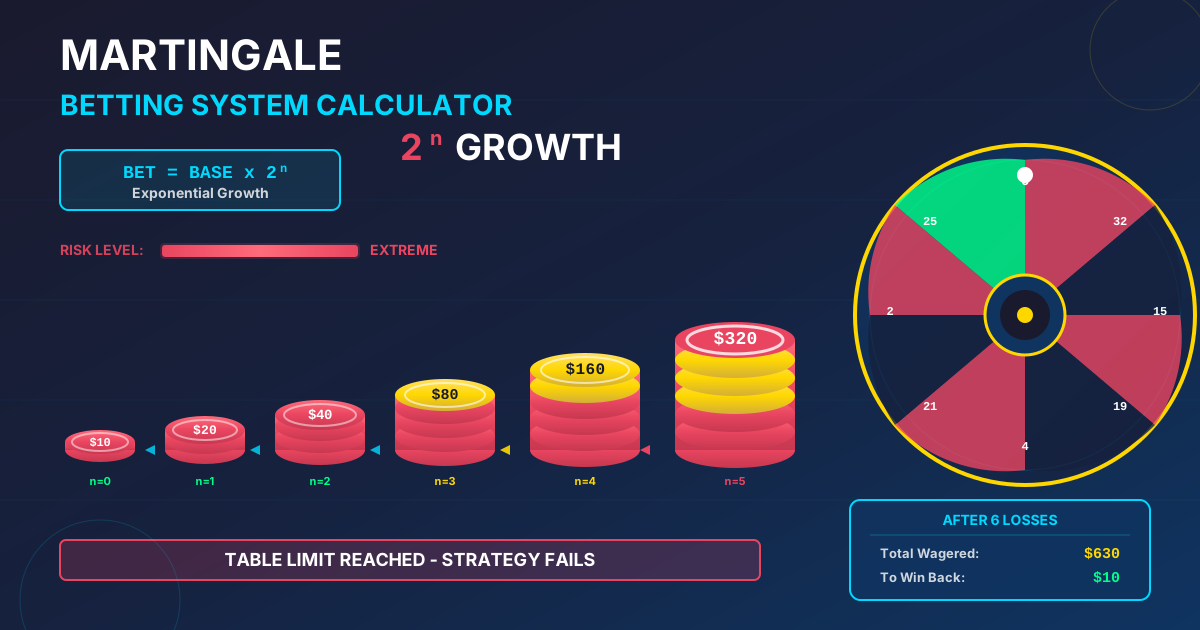
After 6 consecutive losses ($10 base):

Martingale:
$10 → $20 → $40 → $80 → $160 → $320
Total: $630

Fibonacci:
$10 → $10 → $20 → $30 → $50 → $80
Total: $200

Fibonacci grows slower
Less immediately dangerous
Recovery Comparison
Martingale: One win recovers all + 1 unit
Fibonacci: Multiple wins to recover

Martingale is all-or-nothing
Fibonacci requires winning streak
Different risk profile, same edge
Bet Progression Example
Win/Loss Sequence
Starting at step 1 ($10 unit):

Step 1: Bet $10, LOSE → Go to step 2
Step 2: Bet $10, LOSE → Go to step 3
Step 3: Bet $20, LOSE → Go to step 4
Step 4: Bet $30, WIN → Go back to step 2
Step 2: Bet $10, LOSE → Go to step 3
Step 3: Bet $20, WIN → Go back to step 1
Step 1: Bet $10, WIN → Stay/done

Total bet: $110
Wins: $30 + $20 + $10 = $60
Losses: $10 + $10 + $20 + $10 = $50
Net: +$10
Extended Loss Streak
10 consecutive losses ($10 base):

1: $10 (total: $10)
2: $10 (total: $20)
3: $20 (total: $40)
4: $30 (total: $70)
5: $50 (total: $120)
6: $80 (total: $200)
7: $130 (total: $330)
8: $210 (total: $540)
9: $340 (total: $880)
10: $550 (total: $1,430)

Compare to Martingale: $10,230
Much slower growth
Probability Analysis
Losing Streak Impact
Fibonacci position after losses:

5 losses: Position 6, betting $80
8 losses: Position 9, betting $340
10 losses: Position 11, betting $890
12 losses: Position 13, betting $2,330

Slower than Martingale
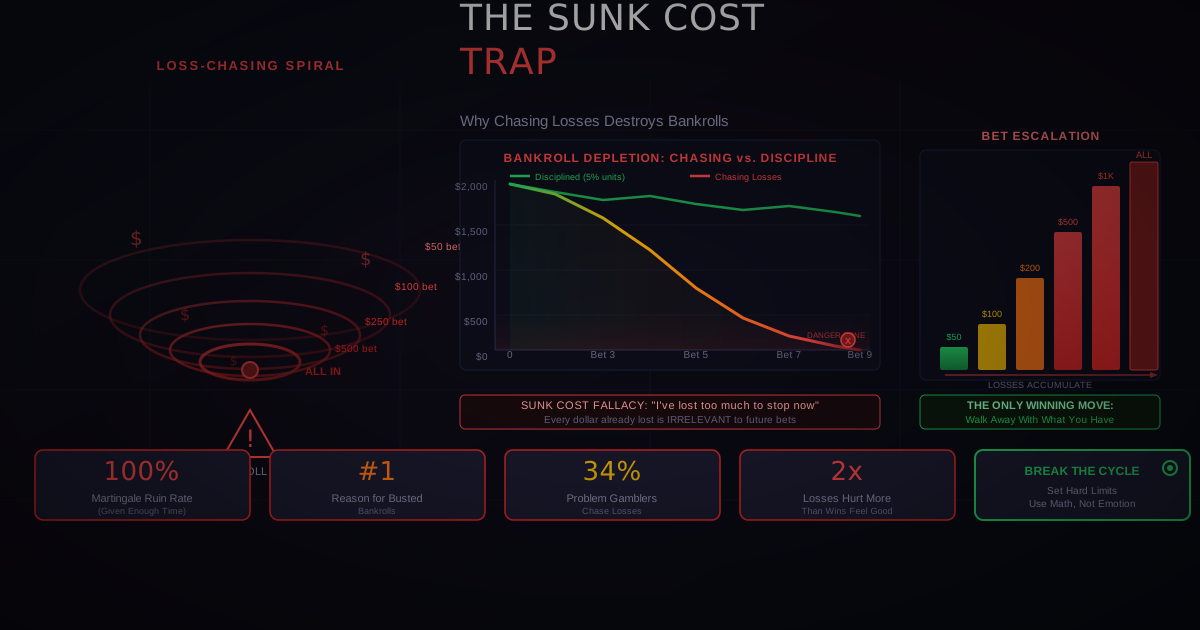
But still exponential long-term
Recovery Requirements
From position 8 (betting $210):

Need multiple wins to recover
Can't do it in one win
May need 3-4 wins in a row

If you lose while recovering
Back up the sequence again
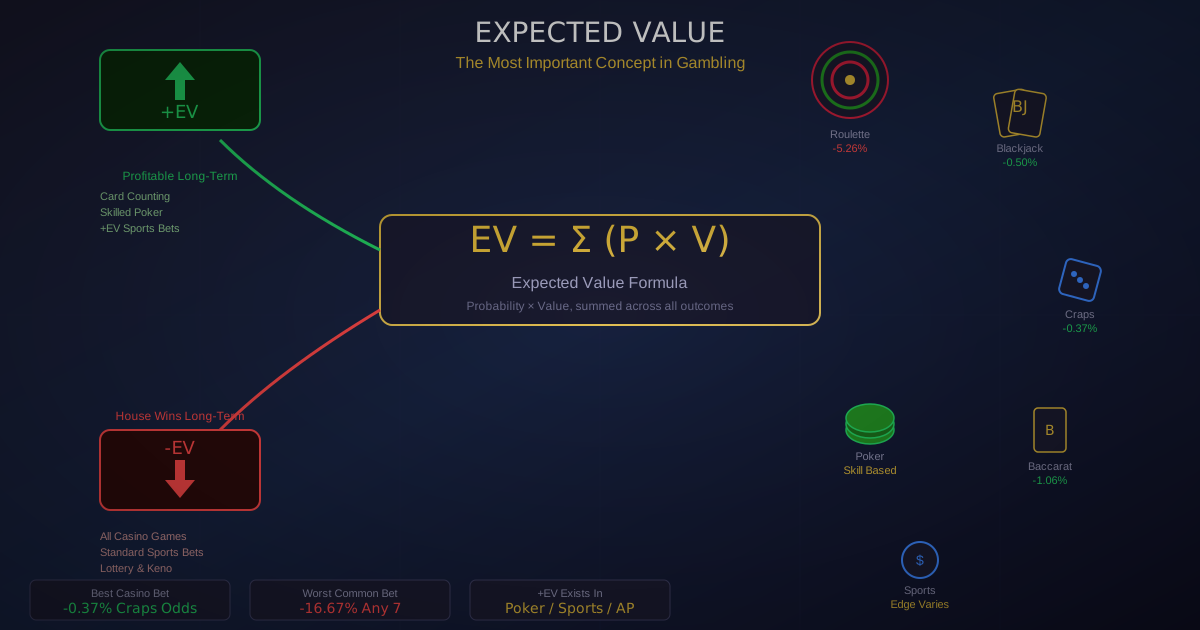
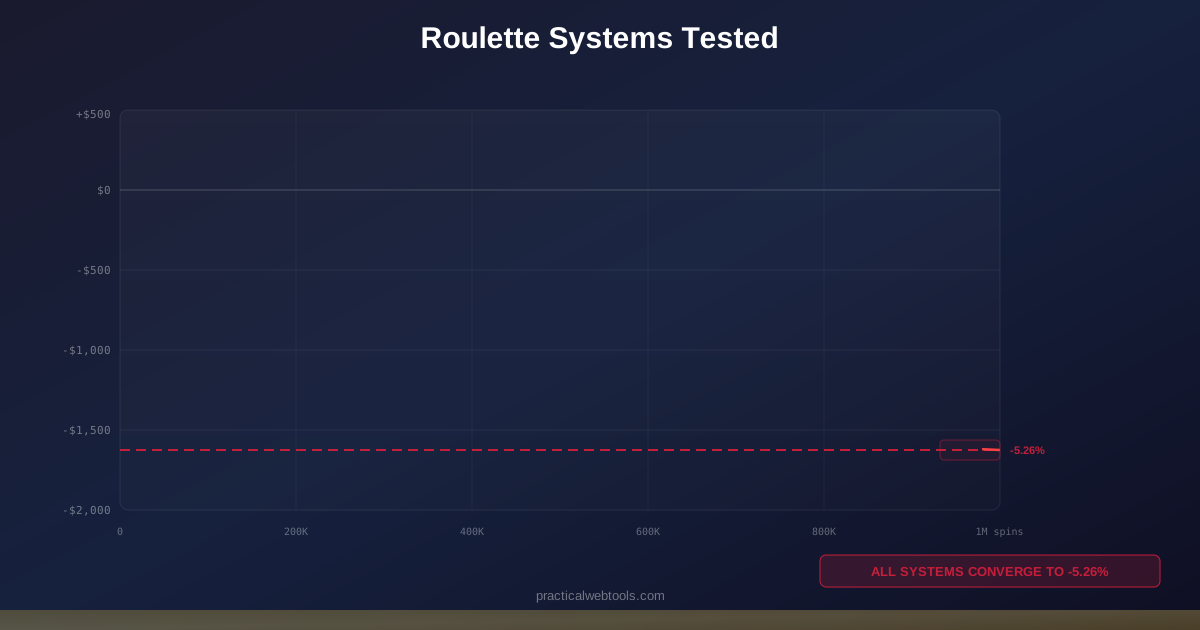
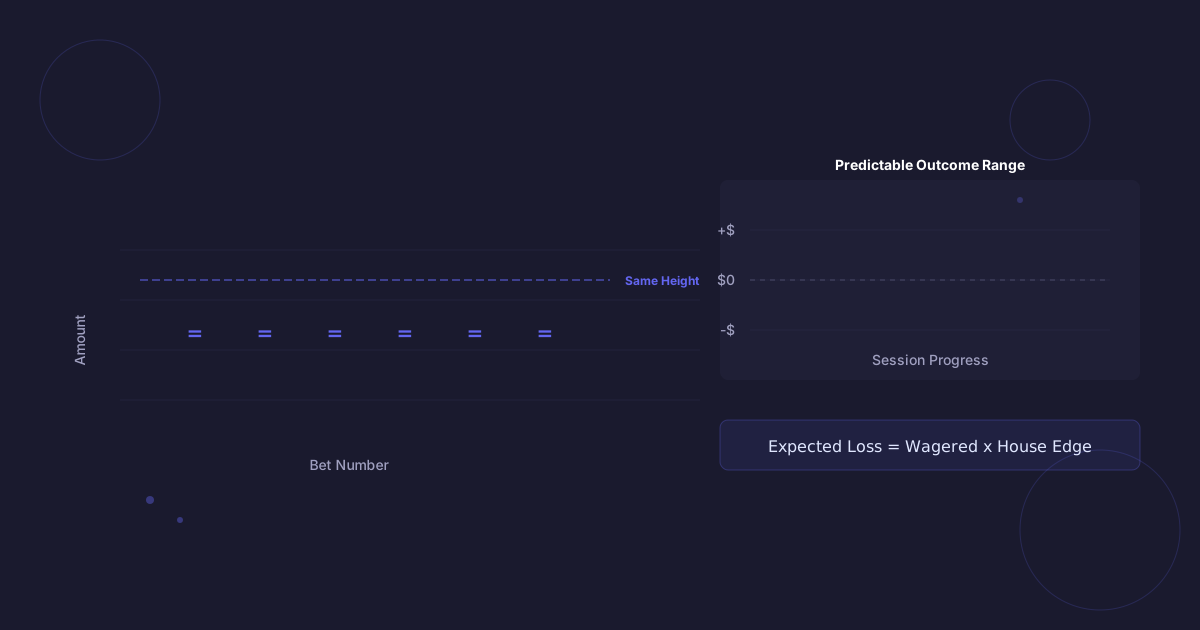
Expected Value
Fibonacci EV:

Exactly same as flat betting
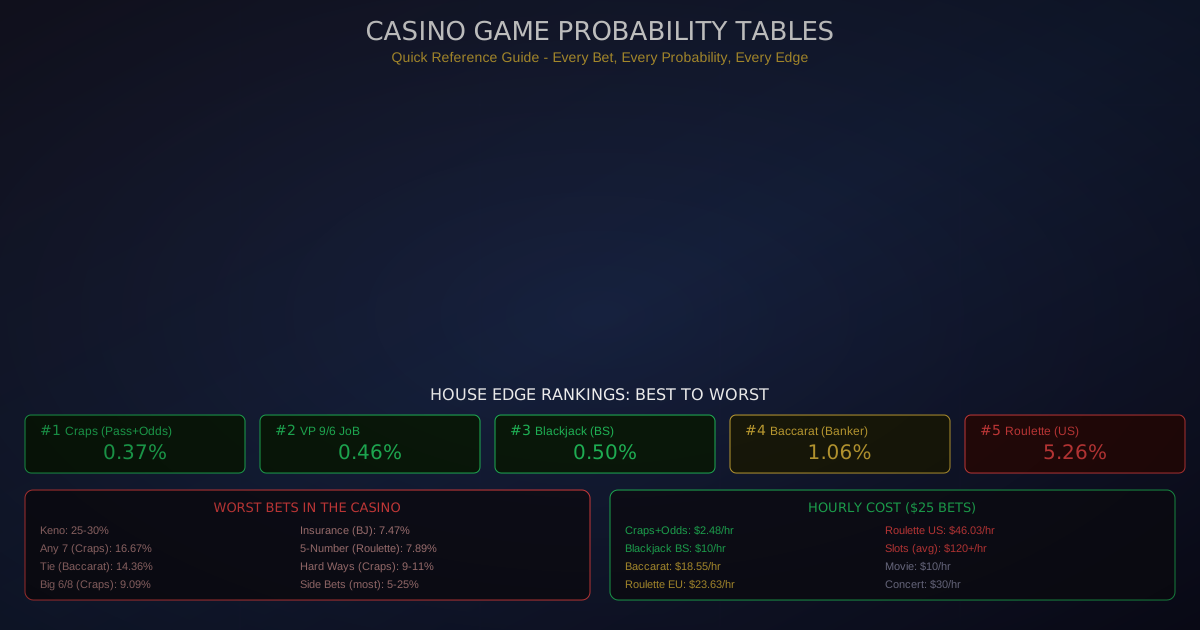
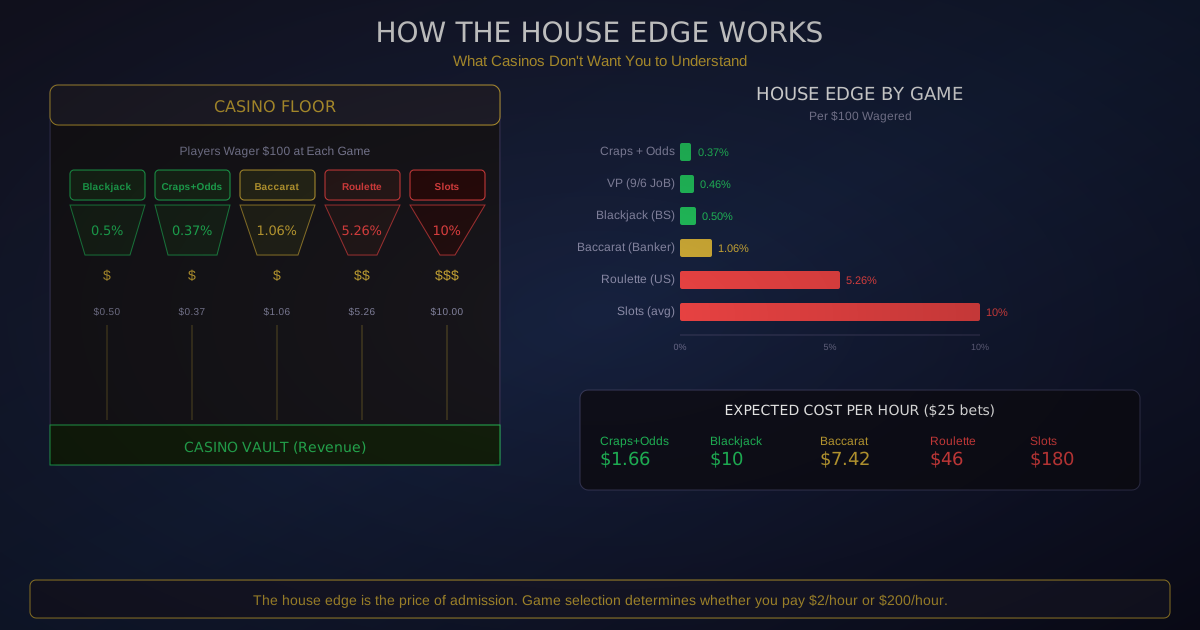
House edge unchanged

The sequence doesn't affect
The underlying mathematics
Only how bets are sized
Real-World Examples
Example 1: Successful Recovery
Getting back to start:
$10 base unit

L: $10 (step 1→2)
L: $10 (step 2→3)
L: $20 (step 3→4)
W: $30 (step 4→2)
W: $10 (step 2→start)

Total staked: $80
Won: $40
Lost: $40
Net: $0 (back to start)

Now start fresh
Example 2: Partial Recovery
Win doesn't clear debt:
L: $10 → L: $10 → L: $20 → L: $30 → L: $50
Total lost: $120

W: $80 (move back 2 to step 3)
Now at step 3: $20 bet

Still down $40
Need more wins
Example 3: Deep Hole
Extended losing streak:
8 consecutive losses:
Position 9, betting $340
Total lost: $540

Win $340 → Back to step 7
Now betting $130
Still lost $200

Need several more wins
Long way back
Example 4: Session Reality
100 spins at roulette:
$10 base, European roulette

Expected result:
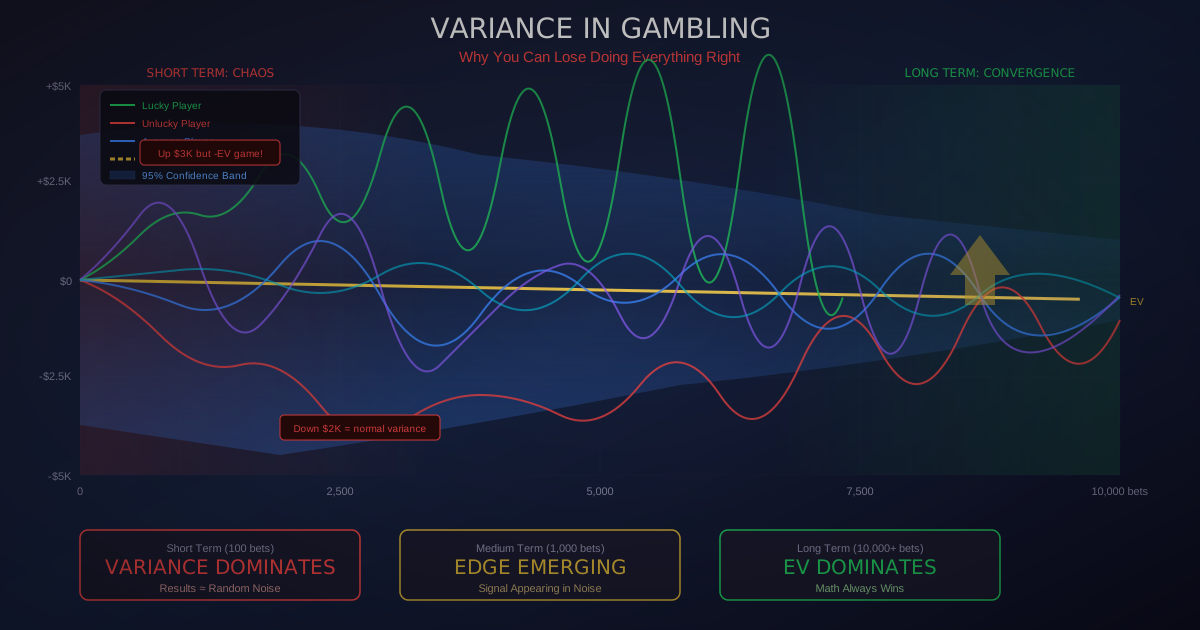
Same as flat betting $10
~$27 expected loss

Fibonacci just rearranges
When wins and losses happen
Not how much you lose overall
Strategy Considerations
Pros of Fibonacci
Advantages over Martingale:

Slower bet escalation
Larger bankroll survival
More spins possible
Less immediately catastrophic
Cons of Fibonacci
Disadvantages:

Multiple wins needed to recover
Can get stuck mid-sequence
Still can't beat edge
Grinding back is tedious
When to Use
If you insist on a system:

Fibonacci is gentler
Longer entertainment value
Same long-term loss
Lower variance experience
Common Mistakes
1. Expecting Edge Reduction
Mistake: "Fibonacci beats the house" Problem: No system changes edge Fix: Understand it's variance only
2. Wrong Step Movement
Mistake: Moving 1 step back on win Problem: Fibonacci requires 2 back Fix: Learn the rules correctly
3. Starting Mid-Sequence
Mistake: Beginning at step 5 Problem: Already exposed to loss Fix: Always start at step 1
4. No Stop-Loss
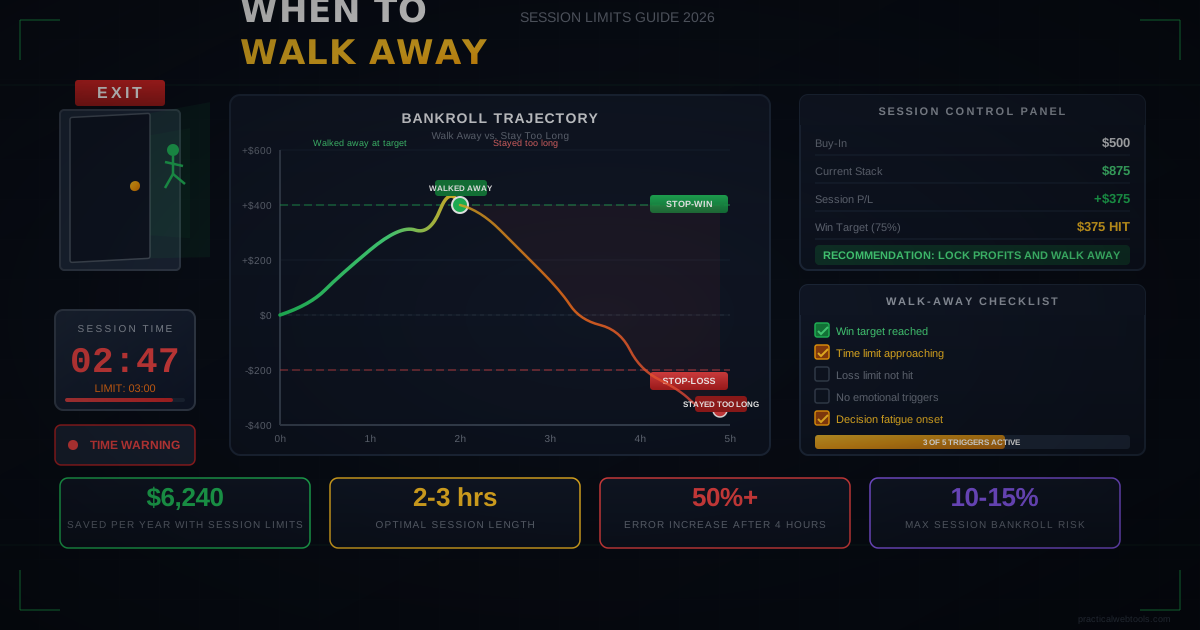
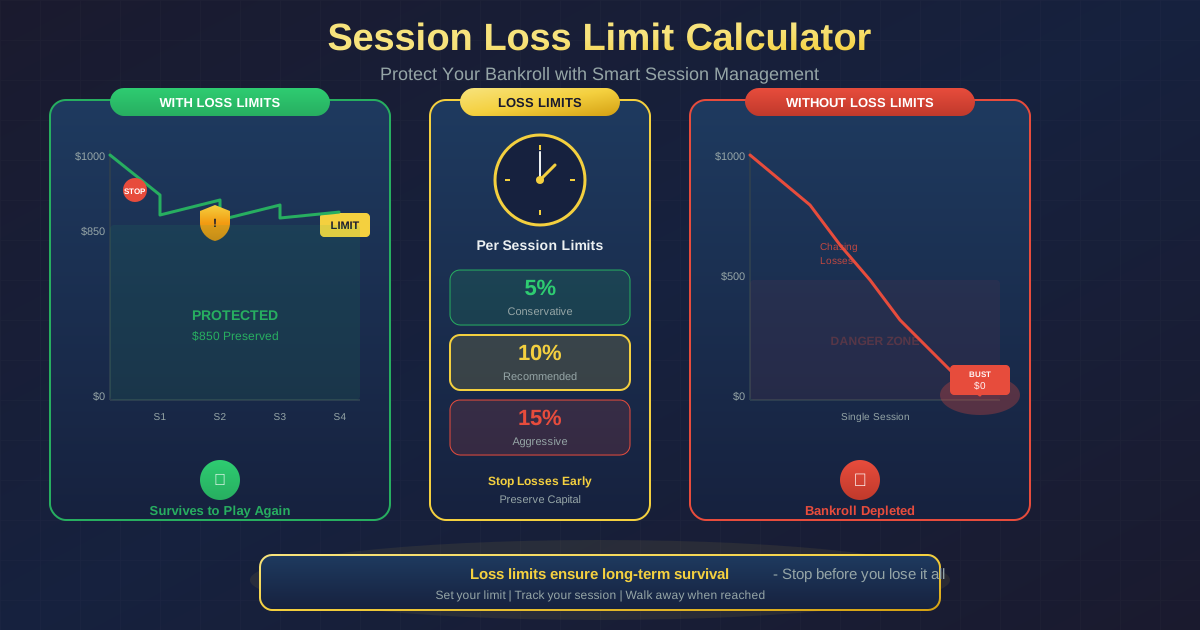
Mistake: Playing forever Problem: Eventually deep in sequence Fix: Set session limits
Frequently Asked Questions
Is Fibonacci better than Martingale?
Different, not better. Fibonacci grows slower but requires multiple wins to recover. Same expected loss long-term.
Does Fibonacci beat the house edge?
No. No betting system can change the mathematical edge. Fibonacci only changes bet sizing, not probability.
How much bankroll do I need?
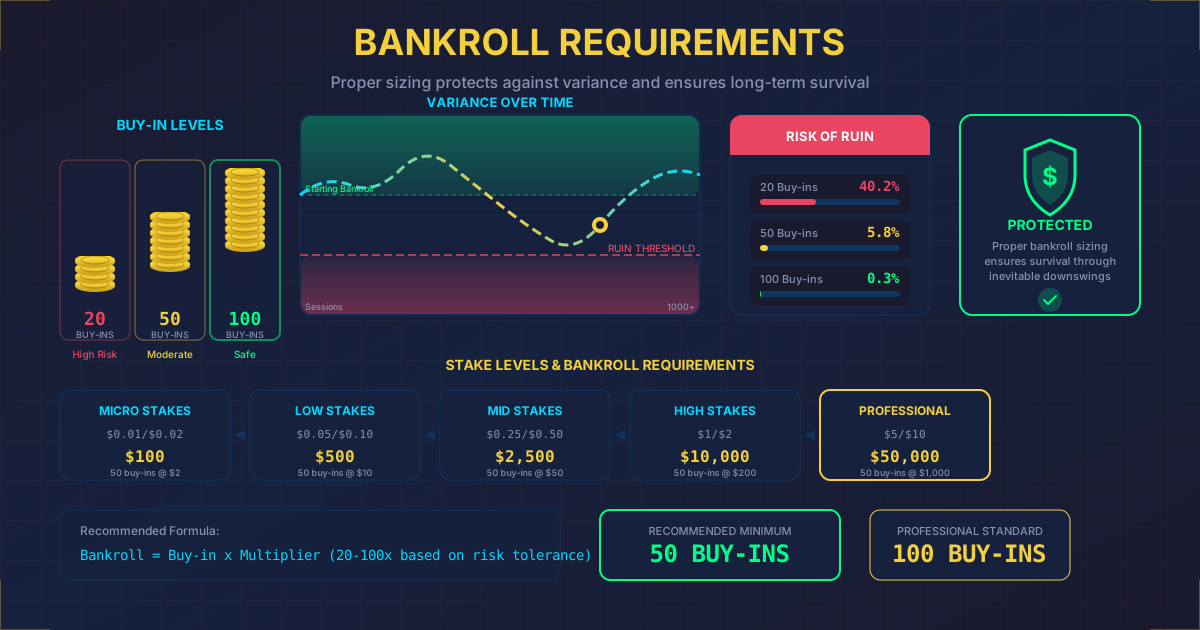
To survive 12 losing positions with $10 base: ~$3,770. More conservative than Martingale but still substantial.
What games work with Fibonacci?
Any even-money bet: roulette red/black, craps pass line, baccarat banker. Edge varies by game.
Why move back 2 steps on a win?
The math ensures recovery is possible. Moving back 1 wouldn't offset the progression properly.
Can I modify the sequence?
Some use 1,2,3,4,5... or other sequences. None overcome the house edge.
Pro Tips
-
Slower than Martingale: Less dangerous short-term
-
Same house edge: No system advantage
-
Multiple wins to recover: Not one-and-done
-
Back 2 on win: Correct movement rule
-
Entertainment value: Structures your session
Related Calculators
- Martingale Calculator - Compare systems
- Roulette Odds Calculator - Base probabilities
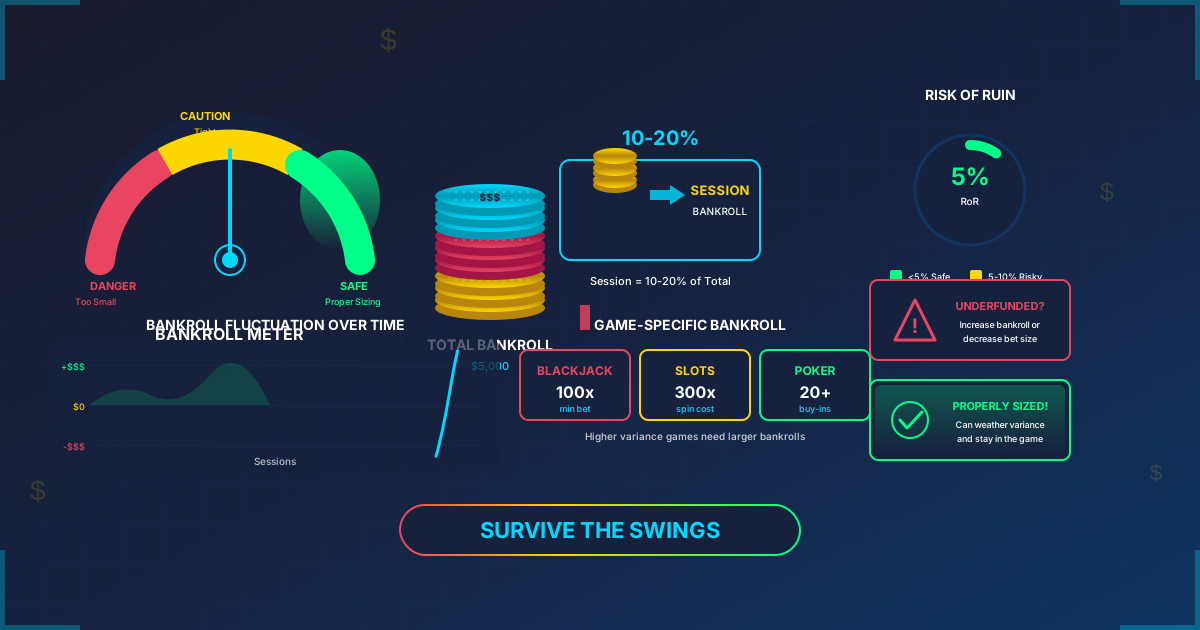
- Bankroll Calculator - Risk management
- Expected Value Calculator - True EV
- Betting Systems Calculator - All systems
Conclusion
The Fibonacci betting system offers gentler progression than Martingale—bets grow slower following the famous sequence. Our calculator shows why this mathematical elegance still can't overcome the house edge, even if it provides longer entertainment and more spins for your bankroll.
Calculate Fibonacci Betting Risk Now →
After 10 losses, you're betting $550 instead of Martingale's $10,240—but you still need multiple wins to recover. Our calculator proves the sequence is about variance management, not edge elimination.