Final Table ICM Calculator: Maximize Tournament Equity at the Final Table (2026)
Final Table ICM Calculator: Navigate the Biggest Pay Jumps in Poker
The final table is where tournament dreams are realized or shattered. With massive pay jumps between each position, every decision carries extraordinary weight. Our final table ICM calculator analyzes stack distributions, quantifies pay jump pressure, and reveals the mathematically optimal play for every situation you'll face at the final table.
What Is Final Table ICM?
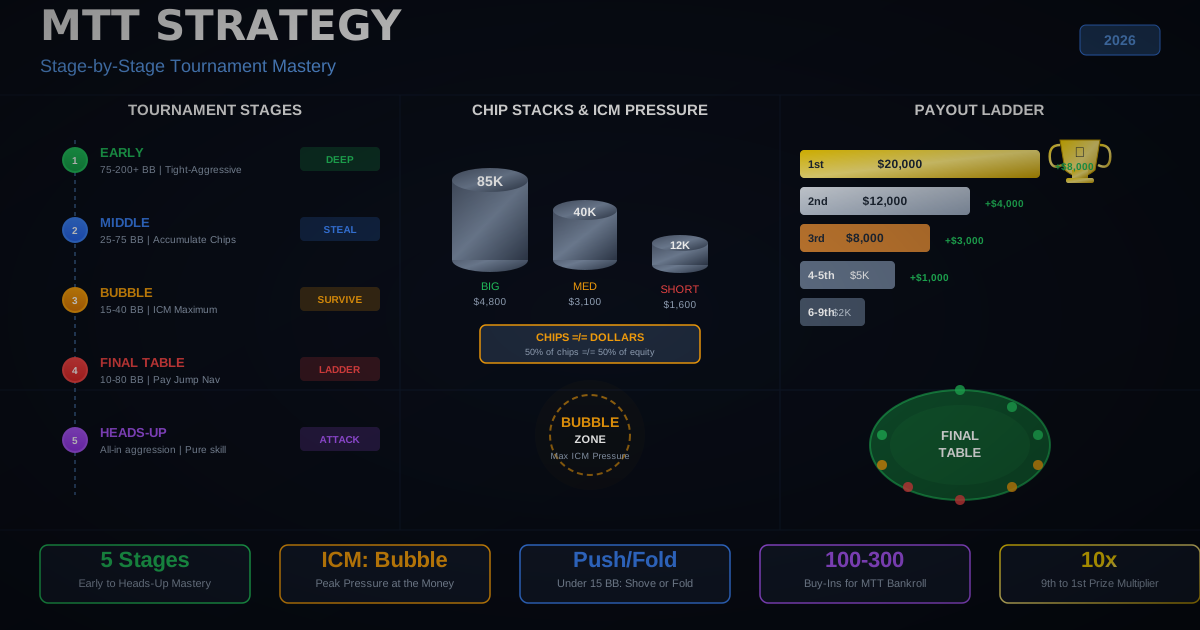
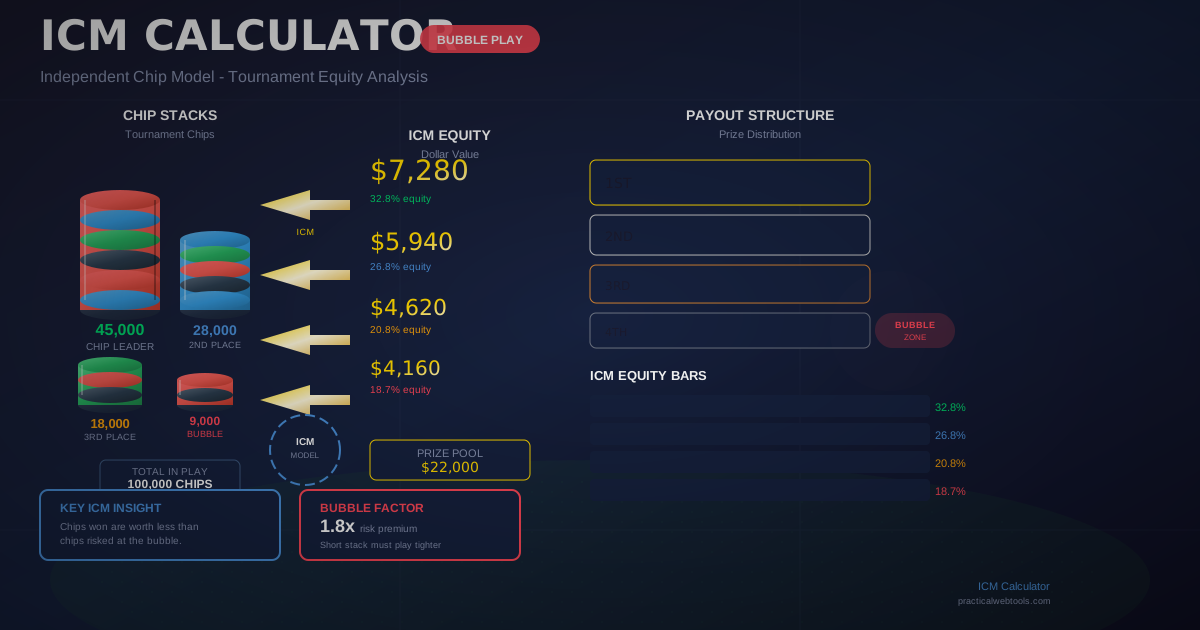
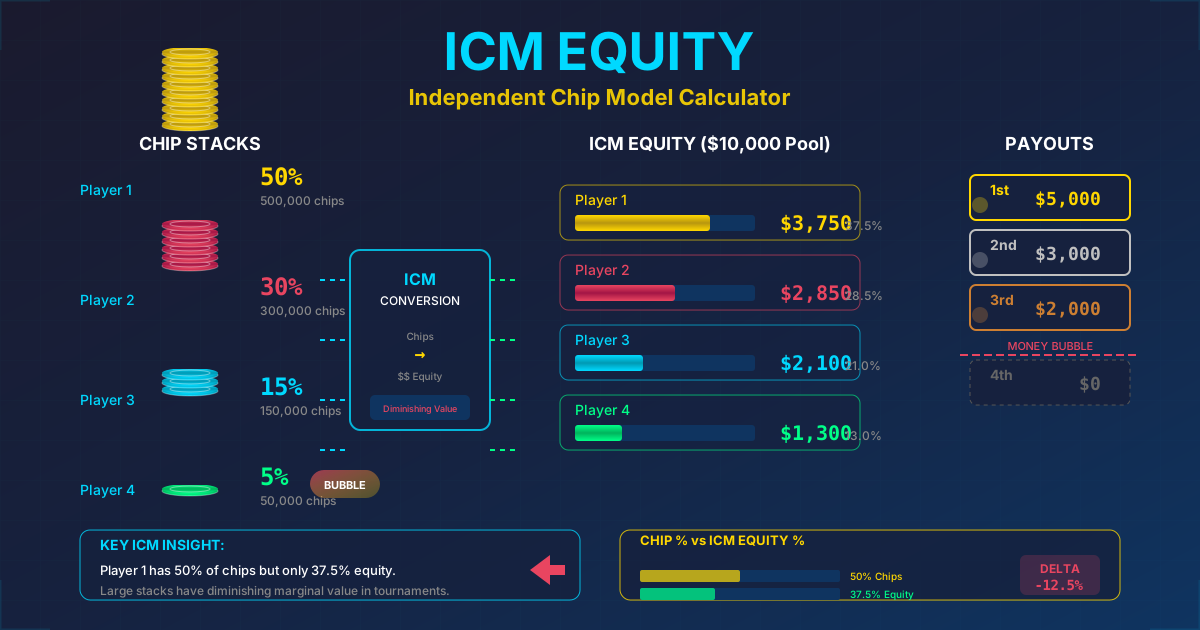
Final table ICM (Independent Chip Model) is the application of ICM principles specifically to final table situations where pay jumps are largest. Unlike bubble play where the goal is simply making the money, final table ICM involves navigating through multiple significant pay jumps while balancing chip accumulation against tournament survival.
Quick Answer: At a final table, ICM pressure is highest for middle stacks. A $10,000 tournament might pay: 9th=$400, 5th=$1,200, 3rd=$2,500, 1st=$8,000. Each position matters significantly. A medium stack risking elimination in a flip gives up $400-800 in ICM equity. Only take +cEV spots that are also +$EV after accounting for pay jumps.
How to Use Our Calculator
Use the Final Table ICM Calculator →
Step-by-Step Instructions
- Enter Payout Structure: Input payouts for 9th through 1st place
- Input All Stack Sizes: Enter chip counts for all remaining players
- Calculate ICM Values: See each player's tournament equity in dollars
- Analyze Decisions: Input specific hands to see ICM-adjusted expected values
- Evaluate Deals: Calculate fair chip chops or ICM deals
Input Fields
| Field | Description | Example |
|---|---|---|
| Players Remaining | Final table size | 9 |
| Payout 9th-1st | All remaining payouts | $400, $600, $800... |
| Stack Sizes | All chip counts | 250k, 180k, 150k... |
| Blinds | Current blind level | 5k/10k |
| Your Stack | Your chip count | 180k |
| Situation | Specific hand/action | UTG push with AK |
Understanding Final Table Payout Structures
Typical Payout Distribution
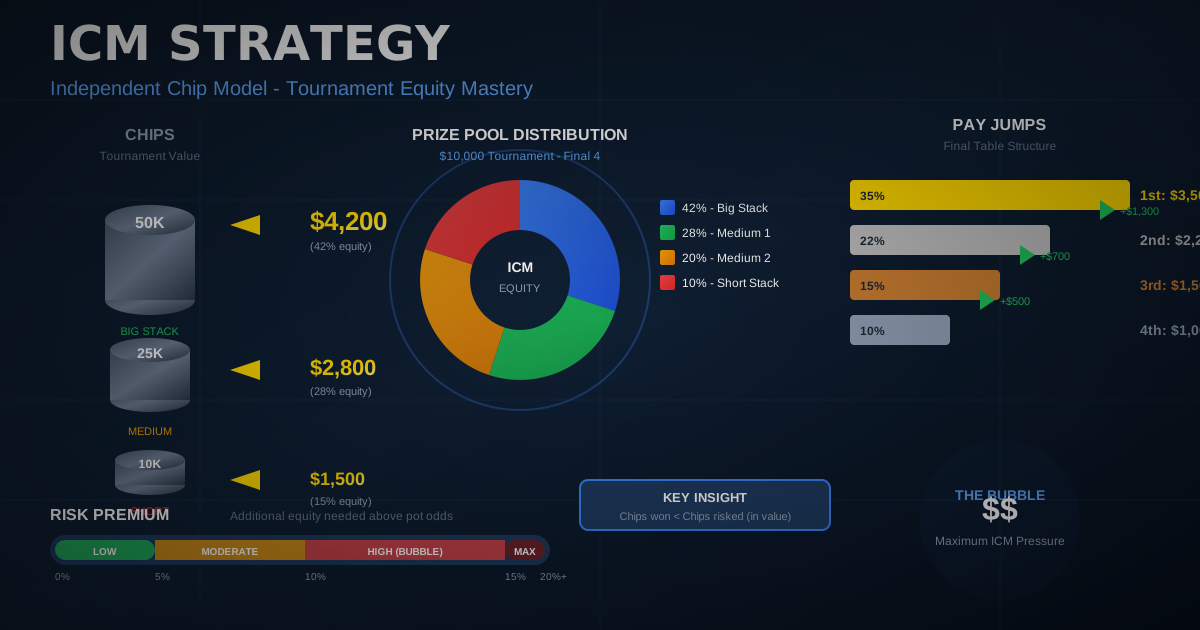
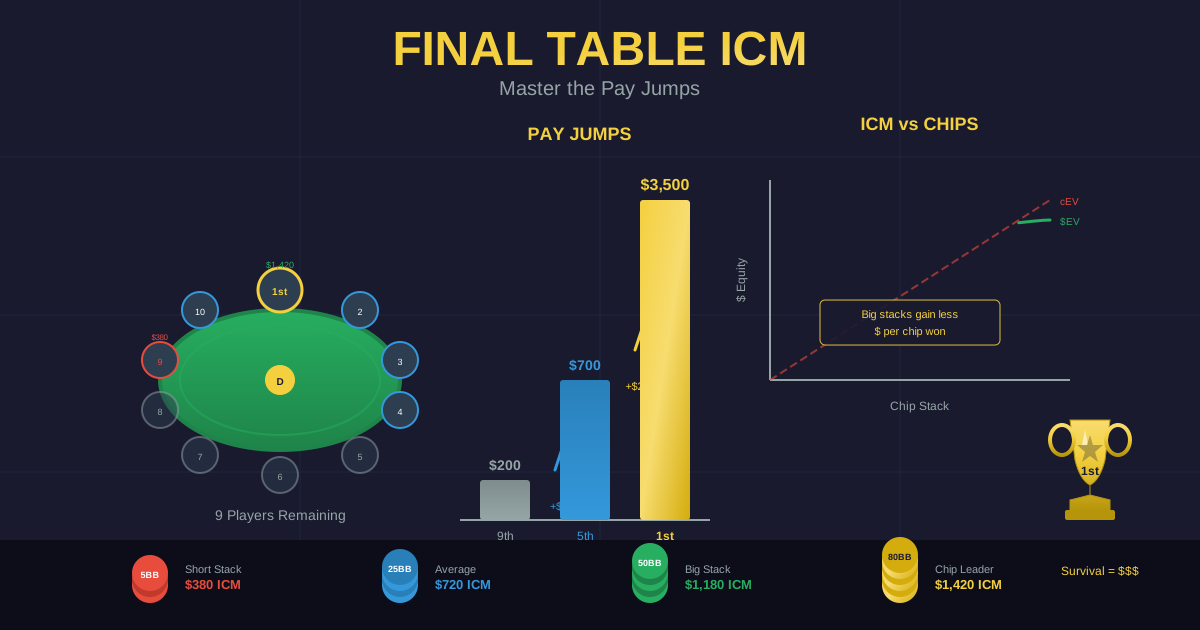
A standard $100 buy-in tournament with $10,000 prize pool:
1st: $3,500 (35%)
2nd: $2,100 (21%)
3rd: $1,400 (14%)
4th: $1,000 (10%)
5th: $700 (7%)
6th: $500 (5%)
7th: $350 (3.5%)
8th: $250 (2.5%)
9th: $200 (2%)
Pay Jump Significance
| Finish Position | Payout | Jump from Previous |
|---|---|---|
| 9th | $200 | Base |
| 8th | $250 | +$50 (25%) |
| 7th | $350 | +$100 (40%) |
| 6th | $500 | +$150 (43%) |
| 5th | $700 | +$200 (40%) |
| 4th | $1,000 | +$300 (43%) |
| 3rd | $1,400 | +$400 (40%) |
| 2nd | $2,100 | +$700 (50%) |
| 1st | $3,500 | +$1,400 (67%) |
The jumps become increasingly significant as you approach the top positions.
ICM Values vs Chip Counts
The Non-Linear Relationship
ICM equity doesn't scale linearly with chips:
9-Player Final Table Example (1,000,000 total chips):
Chip Leader: 300,000 chips (30%) → $2,450 ICM (24.5%)
2nd Stack: 180,000 chips (18%) → $1,720 ICM (17.2%)
3rd Stack: 150,000 chips (15%) → $1,520 ICM (15.2%)
4th Stack: 100,000 chips (10%) → $1,150 ICM (11.5%)
5th Stack: 90,000 chips (9%) → $1,070 ICM (10.7%)
6th Stack: 70,000 chips (7%) → $900 ICM (9%)
7th Stack: 50,000 chips (5%) → $720 ICM (7.2%)
8th Stack: 35,000 chips (3.5%) → $550 ICM (5.5%)
9th Stack: 25,000 chips (2.5%) → $420 ICM (4.2%)
Notice: Short stacks have higher ICM% than chip%, big stacks have lower ICM% than chip%.
The Risk Premium
Every all-in situation carries a "risk premium" in ICM terms:
Chip EV of Calling All-In: +20,000 chips
ICM Cost of Risking Elimination: -$350
Net ICM EV: Might be negative despite +cEV
Position-Based Final Table Strategy
Big Stack Strategy (Chip Leader)
As chip leader, you have unique advantages:
Offensive Power:
- Can apply pressure to everyone
- Opponents can't call without premium hands
- Other players fight each other
- You benefit from any elimination
Strategic Approach:
Open wider than normal (50-60% from late position)
Attack medium stacks (maximum leverage)
Avoid big confrontations with 2nd-3rd stacks
Let short stacks bust against each other
Target players who can't afford to gamble
Hands to Avoid:
Don't stack off with AK vs another big stack
Avoid flipping for tournament equity
You already have great ICM position
Only stack off with AA, KK, and sometimes QQ
Medium Stack Strategy (4th-6th)
Medium stacks face the most difficult final table decisions:
Core Challenges:
Too many chips to shove any two cards
Not enough to bully others
Vulnerable to big stack pressure
Can ladder up by surviving
Optimal Approach:
Play extremely tight against big stacks
Pick on shorter stacks selectively
Fold marginal hands that are normally calls
Preserve stack, wait for pay jumps
Typical Adjustments:
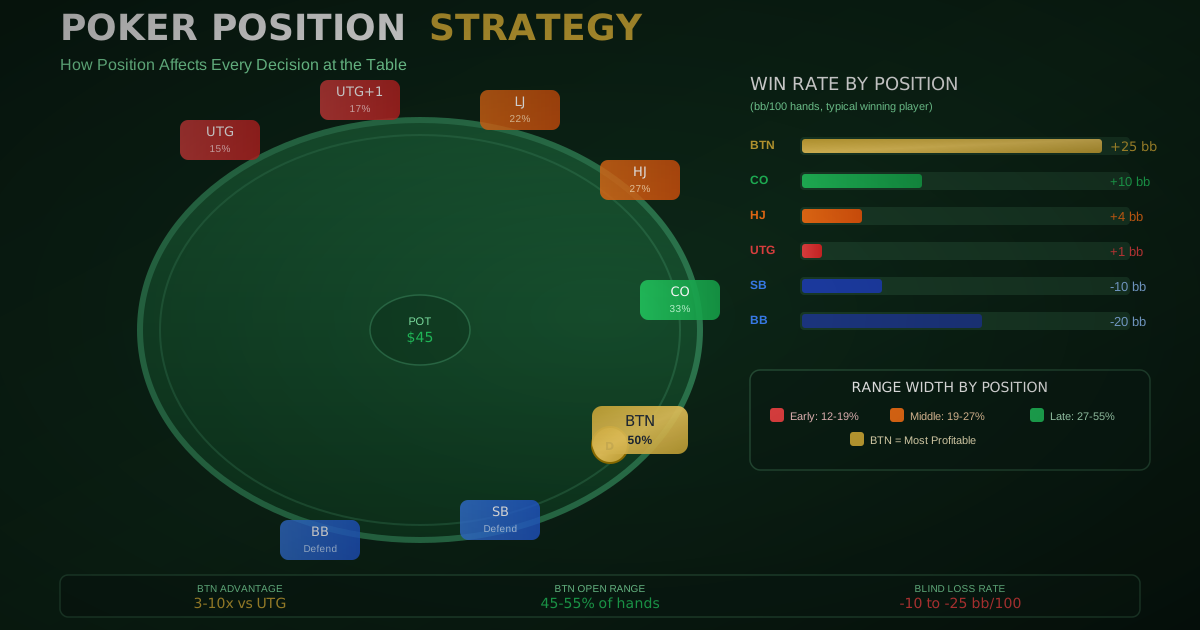
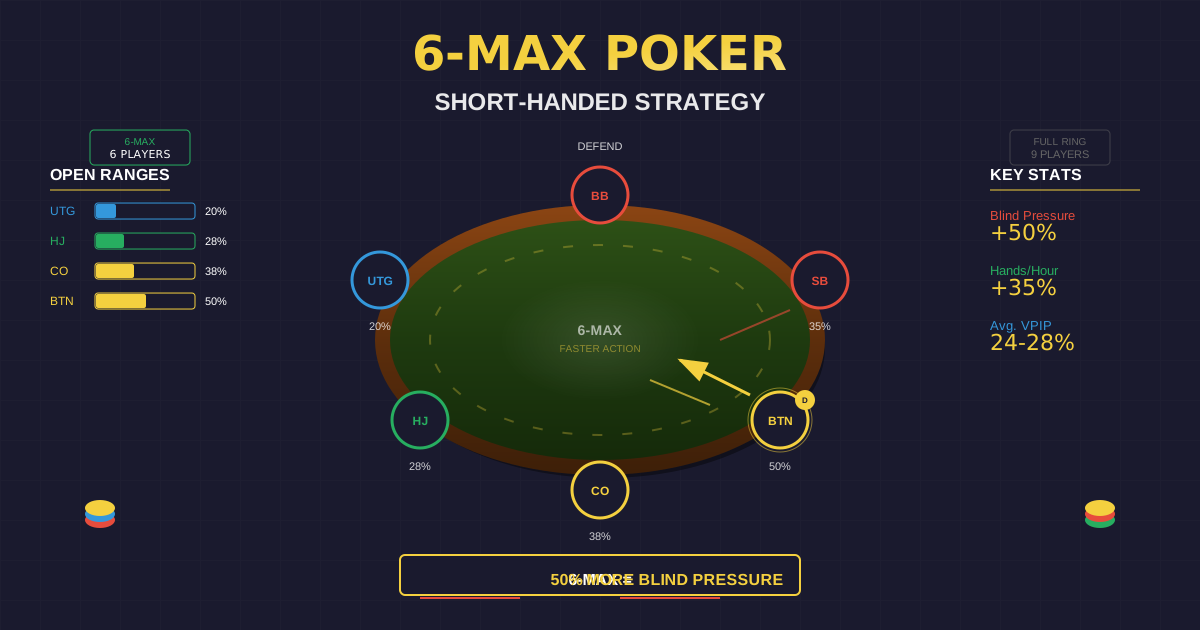
Standard BTN open range: 45%
Final table BTN open (as medium stack): 30%
Standard BB defense: 40%
Final table BB defense vs big stack: 25%
Short Stack Strategy (7th-9th)
Short stacks must balance survival with aggression:
The Paradox:
Survive = guaranteed ladder when others bust
Wait too long = blind away into oblivion
Push too much = bust before others
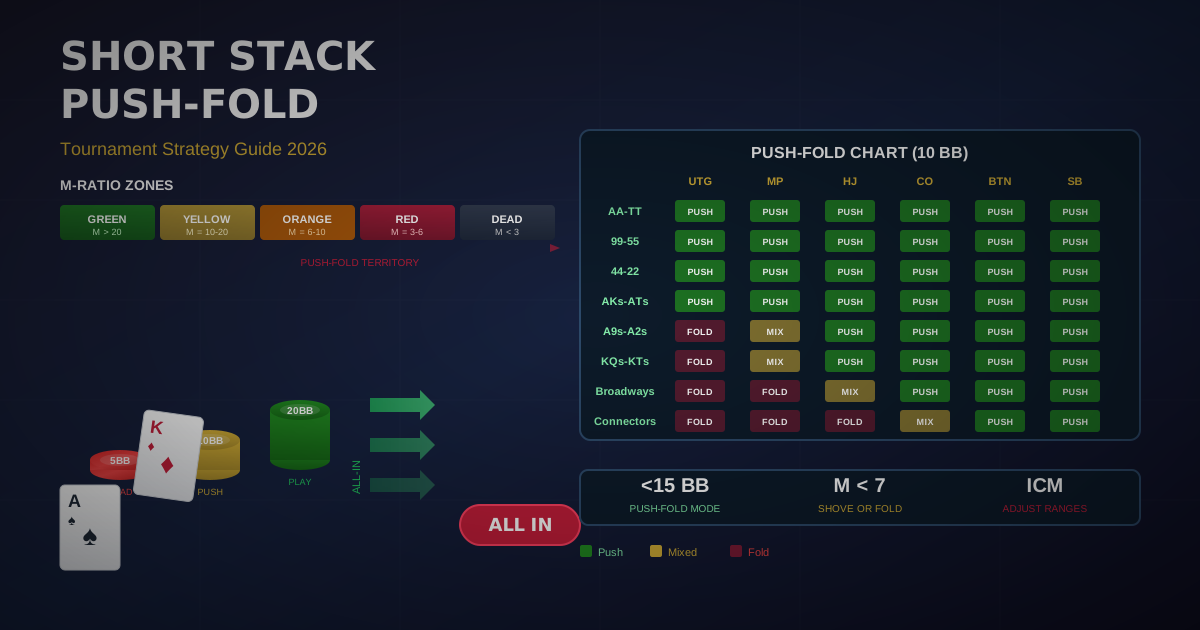
Push/Fold Adjustments:
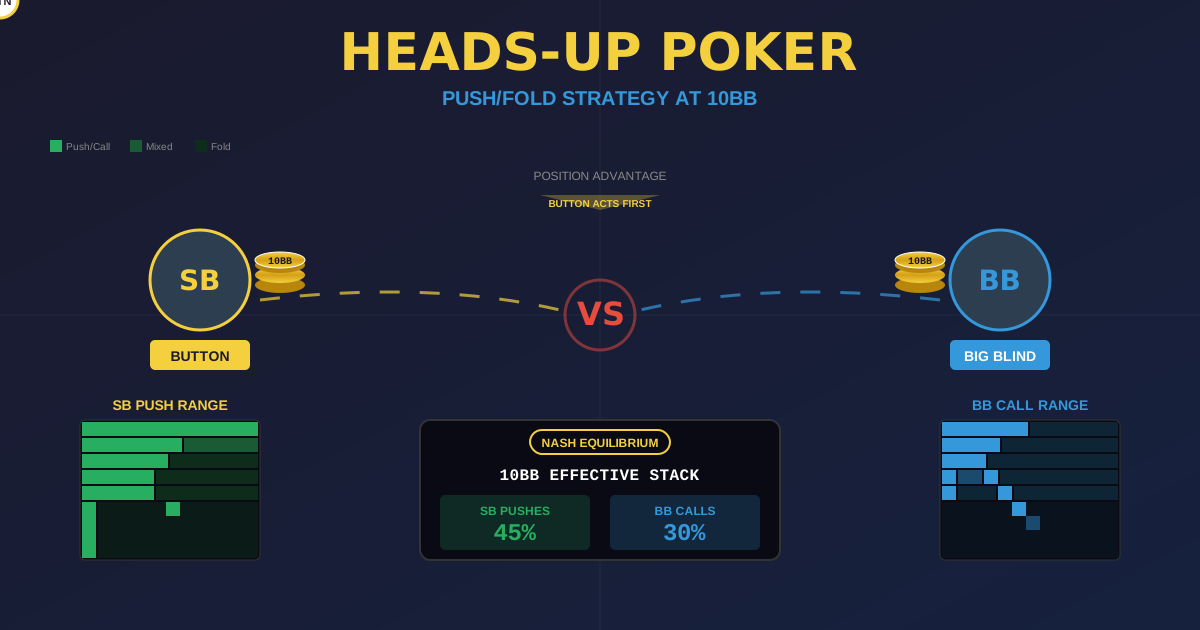
10 BB at normal table: Push ~30% of hands
10 BB at final table: Push ~20-25% of hands
Reason: Pay jumps for surviving > chip EV

Exception: When multiple shorter stacks exist
Then push wider to let them bust first
Stack Preservation vs Accumulation:
Multiple stacks shorter than you: Play tight
You're shortest: Must make moves
Similar short stacks: Moderate approach
Real-World Examples
Example 1: Chip Leader Decision
Setup: 6 players left. You have 400k (1st), next closest has 200k (2nd). 4th place stack (80k) pushes from UTG. You're in BB with AdQd.
Chip EV Analysis:
AQs vs typical UTG push range: 55-60% equity
Calling is clearly +cEV
ICM Analysis:
Current ICM: $2,800
If you win: ~$3,100 (+$300)
If you lose: ~$2,400 (-$400)

Risk/Reward: -400 vs +300 = bad deal
Plus: If 4th place busts to someone else, you gain ~$150 in ICM for free
Action: Fold AQs. Let others take the risk. You don't need this confrontation.
Example 2: Medium Stack Critical Decision
Setup: 7 players left. You have 120k (4th of 7). Big stack (300k) raises from CO. You're BB with JhJd.
Standard Play: 3-bet or call. JJ is strong.
Final Table ICM Analysis:
Your ICM: $1,650
Big stack can bust you
JJ vs CO opening range: ~55% equity

If you shove and get called:
Win (55%): Stack increases to ~250k, ICM ~$2,000
Lose (45%): Bust, ICM = $350 (7th place)

Expected ICM after shove: (0.55 × $2,000) + (0.45 × $350) = $1,257

You're risking $1,650 for EV of $1,257 = -$393 ICM
Action: Fold JJ against the big stack. The ICM cost is too high.
Example 3: Short Stack Desperation
Setup: 8 players left. You have 40k (8th of 8). Blinds are 4k/8k. You're UTG with Kc9c.
Analysis:
5 BB effective
Blinds coming in 2 hands
K9s = decent hand for shoving
Must make moves to survive
Push or Wait?
If you wait:
- Post BB next hand: 32k remaining
- Post SB after: 28k remaining
- Guaranteed to blind out without premium

K9s is strong enough to push:
- Fold equity against 7 players
- Decent equity if called (~45% vs calling range)
Action: Push all-in with K9s. You cannot afford to wait.
Example 4: Heads-Up Final Table Deal
Setup: Heads-up. You have 600k, opponent has 400k. 1st = $3,500, 2nd = $2,100.
Chip Chop Calculation:
Total chips: 1,000,000
You: 60%
Opponent: 40%

Prize pool remaining: $5,600
Chip chop:
You: $5,600 × 0.60 = $3,360
Opponent: $5,600 × 0.40 = $2,240
ICM Chop Calculation:
ICM values (using calculator):
You: $2,940
Opponent: $2,660

ICM chop is less favorable to chip leader
(because short stack's risk is hedged)
Negotiation:
Your chip chop: $3,360
Your ICM value: $2,940
Negotiate between these values based on skill edge
Example 5: 3-Way All-In Situation
Setup: 5 players left. Short stack (30k) pushes UTG. Medium stack (100k) calls from BTN. You have 150k in BB with AhKh.
Analysis:
You cover both players
If you call and win both: Chip leader
If you lose: Drop to 20k (short stack)
If you fold: UTG might bust, you gain ICM regardless
ICM Consideration:
Current ICM: $1,900
If you fold and UTG busts: ~$2,100
If you win triple-up: ~$2,400
If you lose: ~$1,300 (but still alive)

AKs equity 3-way: ~45%
Decision Framework:
EV of calling = (0.45 × $2,400) + (0.55 × $1,300) = $1,795
EV of folding and UTG busts = $2,100 (guaranteed gain)
But UTG might not bust (BTN has to win)
Action: Marginal spot. AKs is strong enough to consider calling, but folding is defensible.
Example 6: The Pay Jump Fold
Setup: 4 players left. You have exactly average stack (250k). Another average stack (240k) pushes all-in. You have QQ.
Standard Play: Easy call with QQ.
Final Table Reality:
4th: $1,000
3rd: $1,400
2nd: $2,100
1st: $3,500

If you bust in 4th: $1,000
If you fold and someone else busts: Guaranteed $1,400 (3rd or better)
Pay jump for folding: +$400 guaranteed

QQ vs push range: ~55%
If you call and win: ~$2,800 ICM
If you call and lose: $1,000
Calculation:
Call EV = (0.55 × $2,800) + (0.45 × $1,000) = $1,990
Fold EV = ~$1,850 (current ICM) but with guaranteed ladder potential
Action: Calling is +$EV but the margin is thin. Consider stack distributions and whether other players might bust first.
Deal-Making at Final Tables
Types of Deals
Chip Chop:
Divide prize pool proportionally by chip count
Simple but favors big stacks excessively
Common in home games and small stakes
ICM Deal:
Divide based on ICM equity calculations
Most mathematically fair
Standard in professional tournaments
Hybrid Deals:
ICM deal with extra for 1st place
"Leave $X for the winner"
Balances fairness with competitive finish
When to Make Deals
Consider Deals When:
- Prize jumps are significant
- Stacks are relatively even
- Variance reduction is valuable to you
- You're risk-averse
Avoid Deals When:
- You have significant chip lead
- You have skill edge on opponents
- You're comfortable with variance
- Other players want deals too badly
Calculating Fair Deals
3-Way Deal Example:
Players: A (400k), B (350k), C (250k)
Payouts: 1st=$5,000, 2nd=$3,000, 3rd=$1,800
Total remaining: $9,800

ICM Values:
Player A: $4,100
Player B: $3,750
Player C: $2,950

Leave $500 for 1st place:
Remaining pool: $9,300
Player A: $3,900 locked + chance at +$500
Player B: $3,550 locked + chance at +$500
Player C: $2,850 locked + chance at +$500
Common Mistakes to Avoid
-
Treating Chips Like Cash: Chips and dollars are not equivalent at final tables. A +cEV play can be -$EV after ICM adjustment.
-
Ignoring Short Stacks: Short stack eliminations boost everyone's ICM. Let them bust before taking risks yourself.
-
Big Stack Ego Plays: Chip leaders don't need to "crush" opponents. Grinding out ladders is perfectly profitable.
-
Calling Too Light: Final tables are not the time for hero calls. Pay jumps make marginal calls expensive.
-
Refusing Reasonable Deals: If a deal offers good value relative to your ICM, consider it. Pride shouldn't cost you money.
-
Over-Folding as Short Stack: While tight is right for medium stacks, short stacks must still make moves to survive.
Frequently Asked Questions
When should I accept a deal at a final table?
Accept deals when they offer equal or better value than your calculated ICM equity. Also consider: your skill edge (or deficit), variance tolerance, and the dollar amounts involved relative to your bankroll.
How do I calculate ICM at a final table?
Use an ICM calculator (like ours). Input all stack sizes and the remaining payout structure. The calculator simulates millions of outcomes to determine each player's equity.
Should the chip leader ever make a deal?
Sometimes. If the payouts are significant to you financially, locking up guaranteed money has value. However, chip leaders typically have the most to gain from playing it out.
How tight should I play at a final table?
Tighter than normal, especially with medium stacks. Adjust by 15-30% depending on your stack size and the pay jumps remaining. Big stacks can play looser; short stacks must balance tight play with aggression when necessary.
Is it ever correct to fold aces at a final table?
In extreme ICM situations, yes. As the massive chip leader at a short-handed final table, folding AA against another big stack can be correct if the ICM cost of potentially busting exceeds the EV gained.
How do pay jump percentages affect strategy?
Larger pay jumps increase ICM pressure and should tighten your strategy. Flatter payouts reduce pressure and allow more chip-EV-focused play.
What's the difference between early and late final table play?
Early final table (9-7 players) has smaller pay jumps and more ICM spreading across players. Late final table (4-2 players) has massive jumps, and every decision is magnified.
Should I adjust for antes at final tables?
Yes. Antes increase pot size and create more incentive to fight for pots. However, the ICM adjustment remains. You should still avoid marginal confrontations despite larger pots.
Pro Tips
- Calculate ICM values before the final table starts so you understand stack dynamics
- Identify which players are ICM-aware and which are not; exploit the unaware
- Big stacks should attack players who fold too much, not other big stacks
- When making deals, advocate for your fair share but be willing to negotiate
- Track final table results separately to analyze your pay jump navigation
Related Calculators
- ICM Calculator - Calculate tournament equity
- Tournament Bubble Calculator - Bubble-specific ICM
- Deal Calculator - Evaluate chop proposals
- Push/Fold Calculator - Short stack ranges
- Heads-Up Poker Calculator - Final table heads-up play
Conclusion
Final table ICM is the ultimate test of tournament poker skill. Players who understand pay jump dynamics and adjust their strategy accordingly consistently outperform those who rely purely on chip EV. Our final table ICM calculator provides the mathematical foundation for every decision you'll face at the final table.
Master final table play by understanding your position relative to pay jumps, identifying which confrontations are worth the risk, and knowing when to grind versus when to gamble. The final table is where tournament fortunes are determined, and ICM-aware players consistently finish in the money.