Gambler's Ruin Calculator: Probability of Losing Everything (2026)
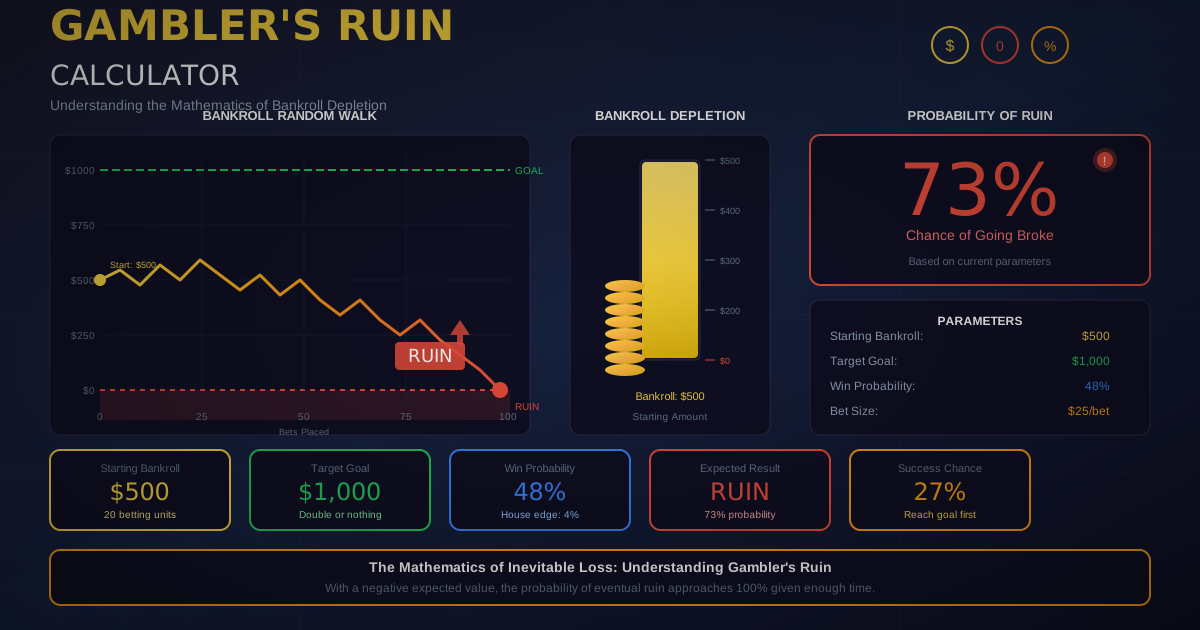
Gambler's Ruin Calculator: The Mathematics of Going Broke
Gambler's ruin is the mathematical certainty that a gambler with finite bankroll playing against infinite bankroll will eventually go broke, given enough time. But the real question is: what's the probability of ruin before reaching your goal? Our calculator answers this fundamental gambling math question.
What Is Gambler's Ruin?
Gambler's ruin is a classic probability problem examining a gambler with finite funds playing repeated bets. The key insight: even with fair or slightly favorable odds, a finite bankroll against an infinite one (like the casino) faces ruin risk. The formulas reveal how win probability, bet size, and bankroll interact to determine your survival chances.
Quick Answer: Gambler's ruin probability depends on win rate, bankroll, and goal. For fair games (50/50): Ruin Probability = (N - B) / N, where N = goal and B = starting bankroll. If you start with $500, goal is $1000, ruin probability = (1000-500)/1000 = 50%. For unfair games: Ruin = (1 - (q/p)^B) / (1 - (q/p)^N), where p = win prob, q = 1-p. Even tiny house edges dramatically increase ruin probability.
How to Use Our Calculator
Use the Gambler's Ruin Calculator →
Step-by-Step Instructions
- Enter Starting Bankroll: How much you begin with
- Enter Target Goal: What you want to reach
- Enter Win Probability: Chance of winning each bet
- Set Bet Size: Amount per wager
- Calculate Ruin: See probability of going broke
Input Fields
| Field | Description | Example |
|---|---|---|
| Starting Bankroll | Initial funds | $500 |
| Target Goal | What you want to reach | $1,000 |
| Win Probability | Per-bet win chance | 48% |
| Bet Size | Amount each wager | $10 |
| Time Horizon | Optional - number of bets | 1,000 |
The Classic Gambler's Ruin Formula
Fair Game (50/50)
When win probability = 50%:

P(Ruin) = (Goal - Bankroll) / Goal

Equivalently:
P(Reach Goal) = Bankroll / Goal

Example:
Bankroll: $200
Goal: $1,000

P(Ruin) = (1000 - 200) / 1000 = 80%
P(Success) = 200 / 1000 = 20%

Intuition:
If goal is 5x bankroll, you have 20% chance
in a perfectly fair game.
Unfair Game (p ≠ 50%)
When win probability = p (and loss = q = 1-p):

Let r = q/p (ratio of loss to win probability)

If r ≠ 1:
P(Ruin) = (1 - r^B) / (1 - r^N)

Where:
B = starting bankroll in units
N = goal in units

Example:
p = 48%, q = 52%, r = 52/48 = 1.083
Bankroll: 10 units
Goal: 20 units

P(Ruin) = (1 - 1.083^10) / (1 - 1.083^20)
P(Ruin) = (1 - 2.22) / (1 - 4.93)
P(Ruin) = -1.22 / -3.93
P(Ruin) = 0.31 = 31%... wait, check this

Actually: when r > 1 (house edge):
P(Ruin starting at B, goal N) = (r^N - r^B) / (r^N - 1)
P(Ruin) = (1.083^20 - 1.083^10) / (1.083^20 - 1)
P(Ruin) = (4.93 - 2.22) / (4.93 - 1)
P(Ruin) = 2.71 / 3.93 = 69%

69% ruin probability with just 2% disadvantage!
Simplified House Edge Impact
Approximation for small edges:

P(Ruin) ≈ 1 - (B/N) × e^(-edge × N)

Where edge is the house advantage

This shows exponential impact of:
- Larger goal (N)
- Larger house edge

Even 1% house edge becomes devastating
over large number of bets
Risk of Ruin with Positive EV
Yes, Winners Can Go Broke
Even with positive expectation, ruin is possible:

Example: 52% win rate, 1:1 payoff
Edge = +4%
Bankroll = 20 units
No goal (playing indefinitely)

Ruin probability still exists because:
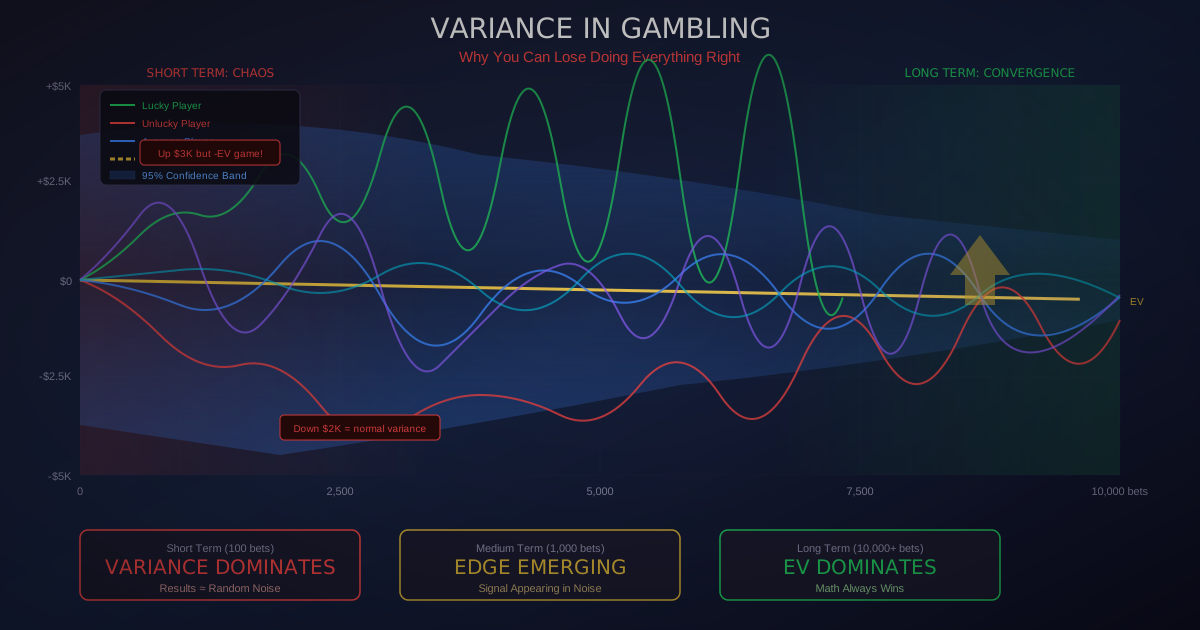
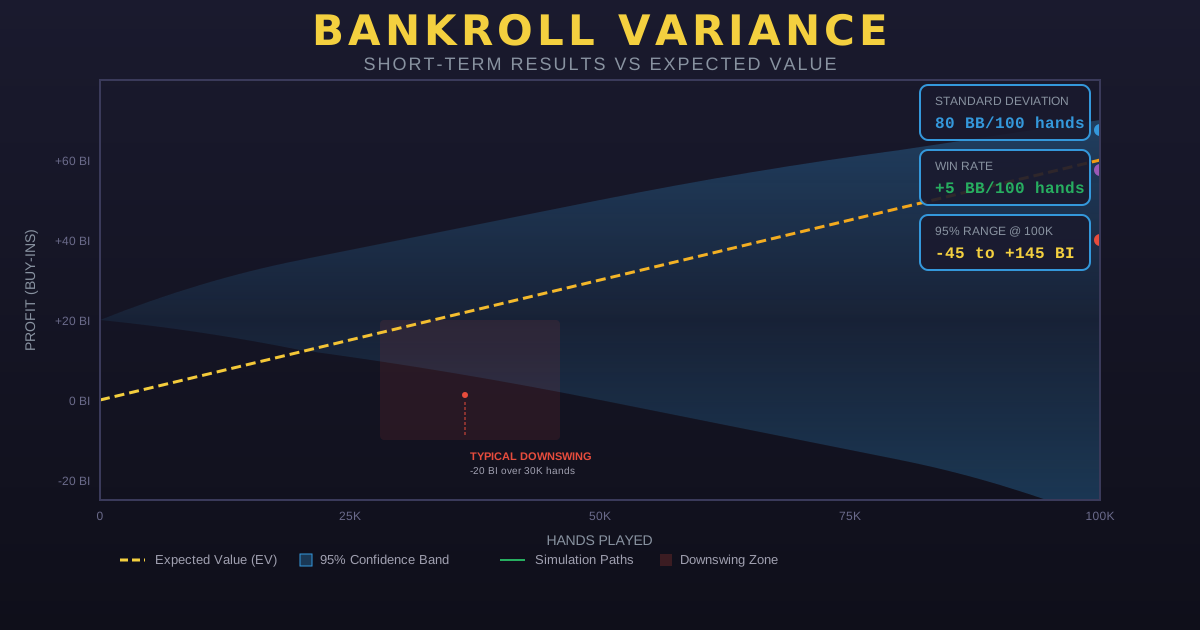
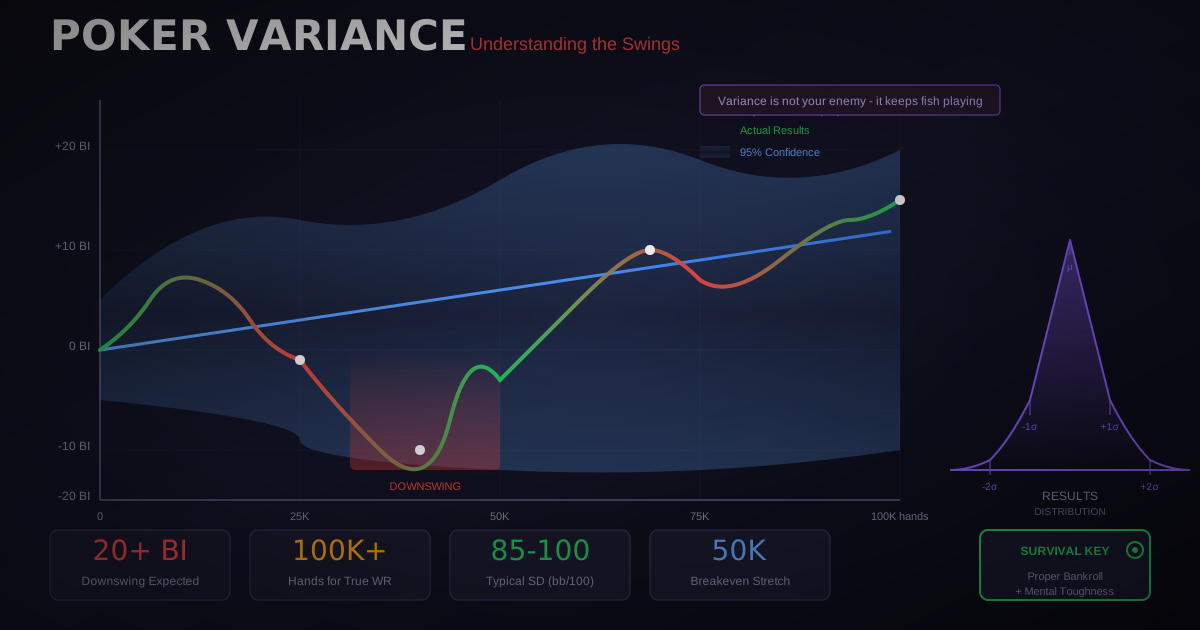
- Variance can exceed bankroll before edge manifests
- Bad runs happen despite positive EV
- Finite bankroll can't survive all downswings

Formula for infinite play with positive EV:
P(Eventual Ruin) = (q/p)^B

Where B = bankroll in bet units

Example: p=0.52, q=0.48, B=20
P(Ruin) = (0.48/0.52)^20
P(Ruin) = (0.923)^20
P(Ruin) = 0.20 = 20%

Even with 4% edge, 20% chance of ruin
from 20-unit bankroll!
How Much Bankroll to Minimize Ruin
For positive EV play, ruin probability:

P(Ruin) = (q/p)^B

To achieve target ruin probability:
B = ln(P_target) / ln(q/p)

Example: Want 1% ruin probability
p = 52%, q = 48%

B = ln(0.01) / ln(0.923)
B = -4.605 / -0.080
B = 58 units

Need 58 units to have only 1% ruin risk
with 52% win rate
Real-World Examples
Example 1: Casino Night Strategy
Situation:
Starting: $500
Goal: Double to $1,000
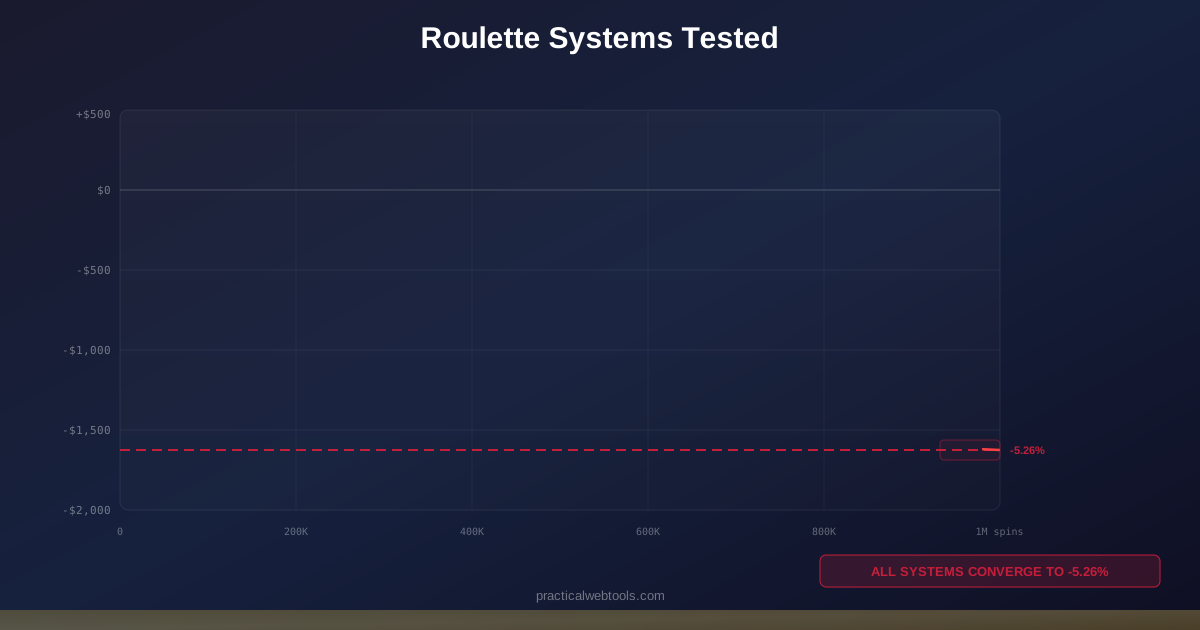
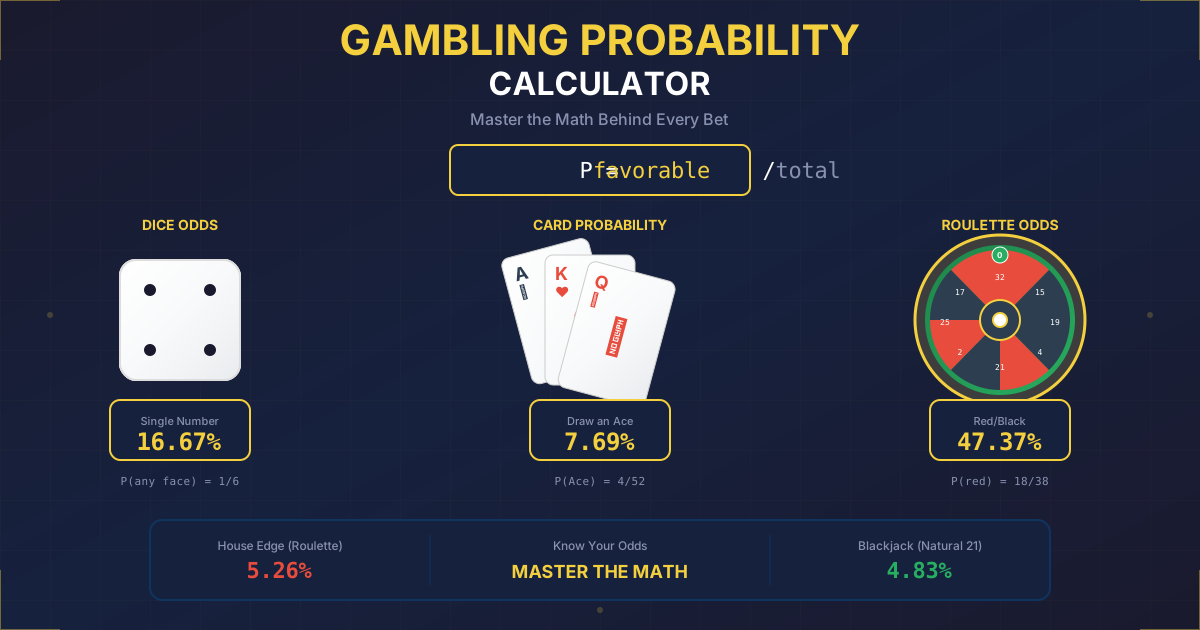
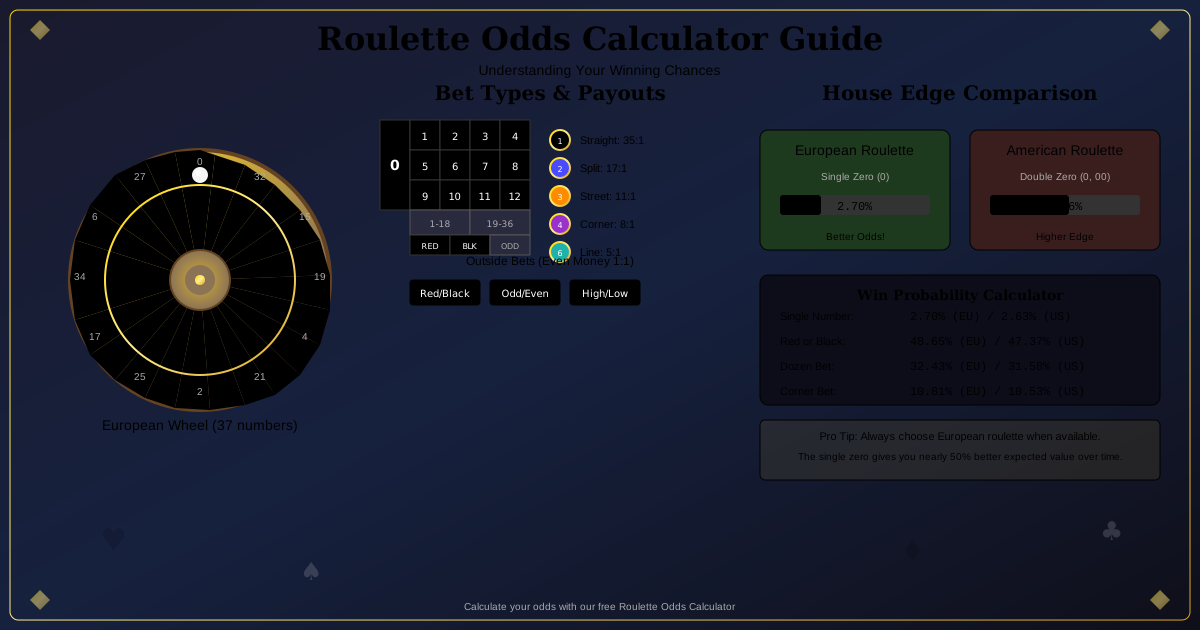
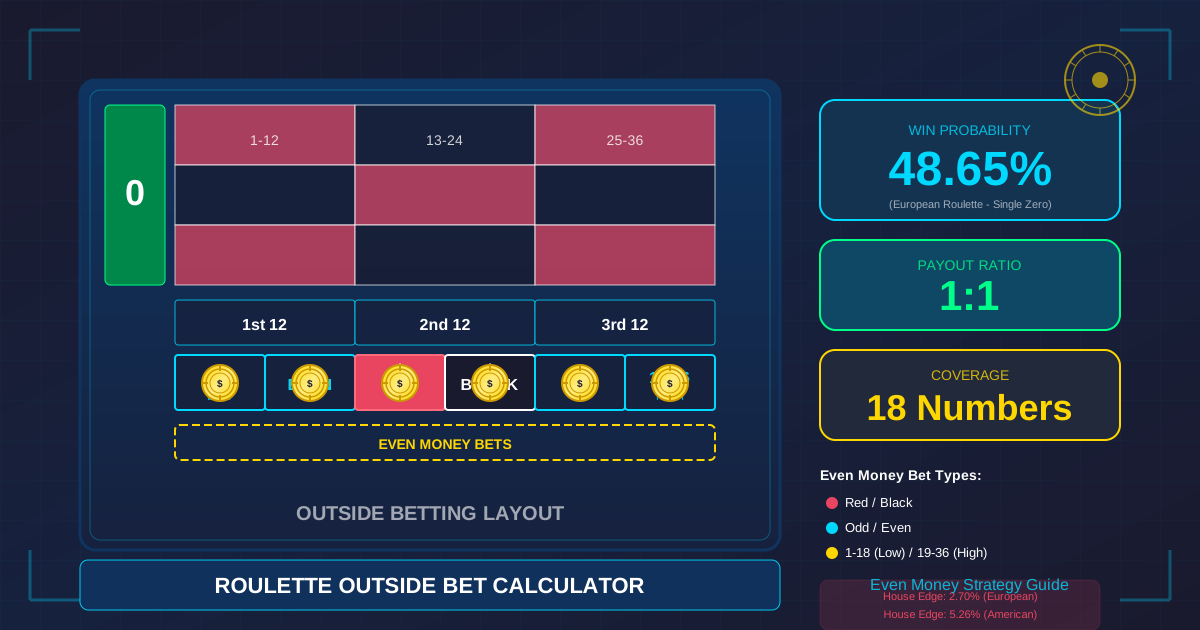
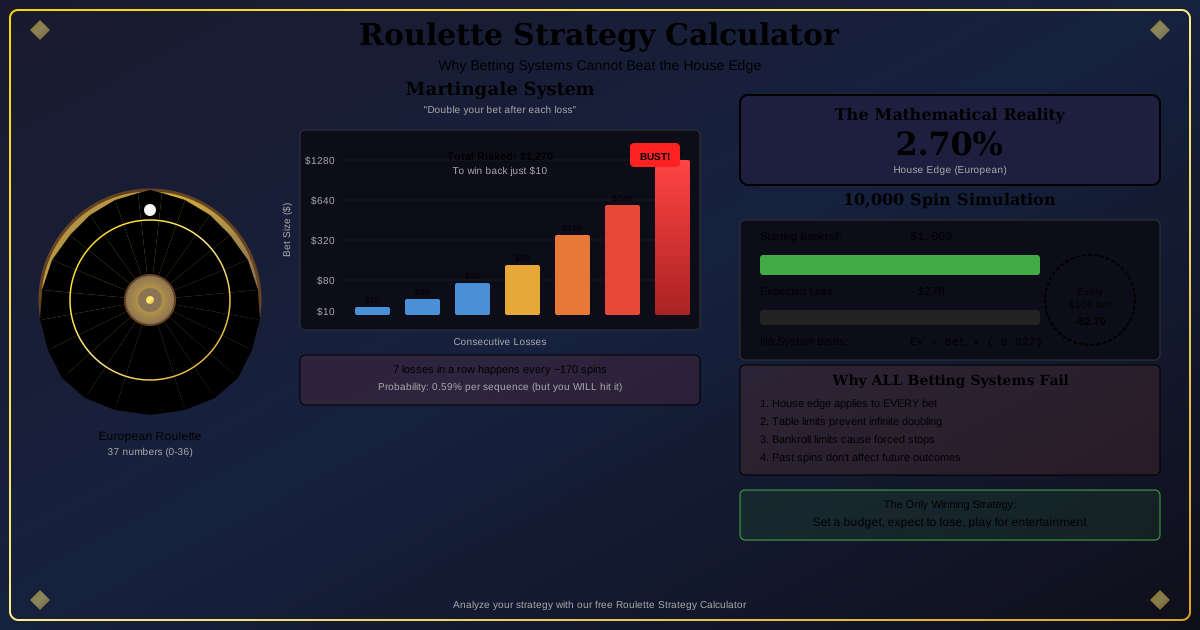
Game: Roulette (even money bets)
House edge: 5.26%
Bet size: $25 (20 units total)
Calculation:
p = 0.4737 (red/black win probability)
q = 0.5263
r = q/p = 1.111

B = 500/25 = 20 units
N = 1000/25 = 40 units

P(Ruin) = (r^N - r^B) / (r^N - 1)
P(Ruin) = (1.111^40 - 1.111^20) / (1.111^40 - 1)
P(Ruin) = (66.2 - 8.14) / (66.2 - 1)
P(Ruin) = 58.06 / 65.2
P(Ruin) = 89%
Result:
89% probability of losing $500 before doubling

Even though goal seems "just double my money,"
the house edge makes it nearly impossible.

Without house edge (fair coin):
P(Ruin) = (40-20)/40 = 50%

House edge nearly doubled ruin probability
from 50% to 89%
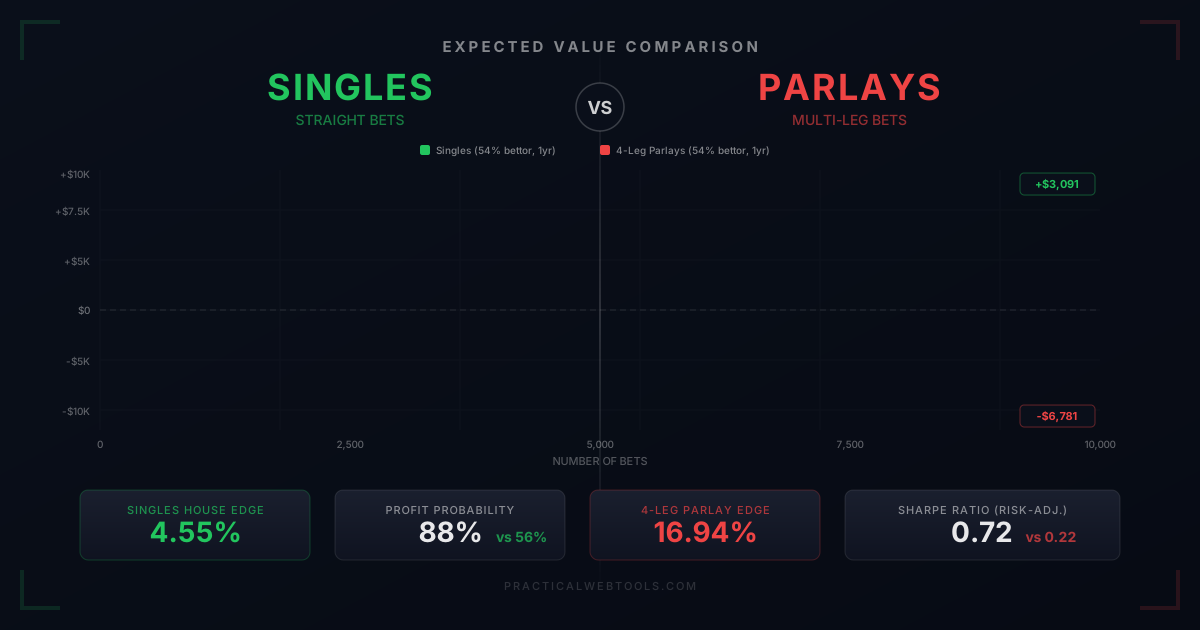
Example 2: Professional Bettor Analysis
Situation:
Starting bankroll: $10,000
No goal (indefinite betting career)
Win rate: 54%
Average bet: $200 (50 units)
Calculation:
Positive EV situation:
p = 0.54, q = 0.46
B = 50 units

P(Eventual Ruin) = (q/p)^B
P(Ruin) = (0.46/0.54)^50
P(Ruin) = (0.852)^50
P(Ruin) = 0.00027 = 0.027%

With 50-unit bankroll and 54% win rate:
Only 0.027% chance of eventual ruin
Result:
Very low ruin probability because:
- Positive edge (54%)
- Adequate bankroll (50 units)

If bankroll were only 20 units:
P(Ruin) = (0.852)^20 = 4.1%

If win rate were 52% instead:
P(Ruin) = (0.923)^50 = 1.8%

Both bankroll size and edge matter critically
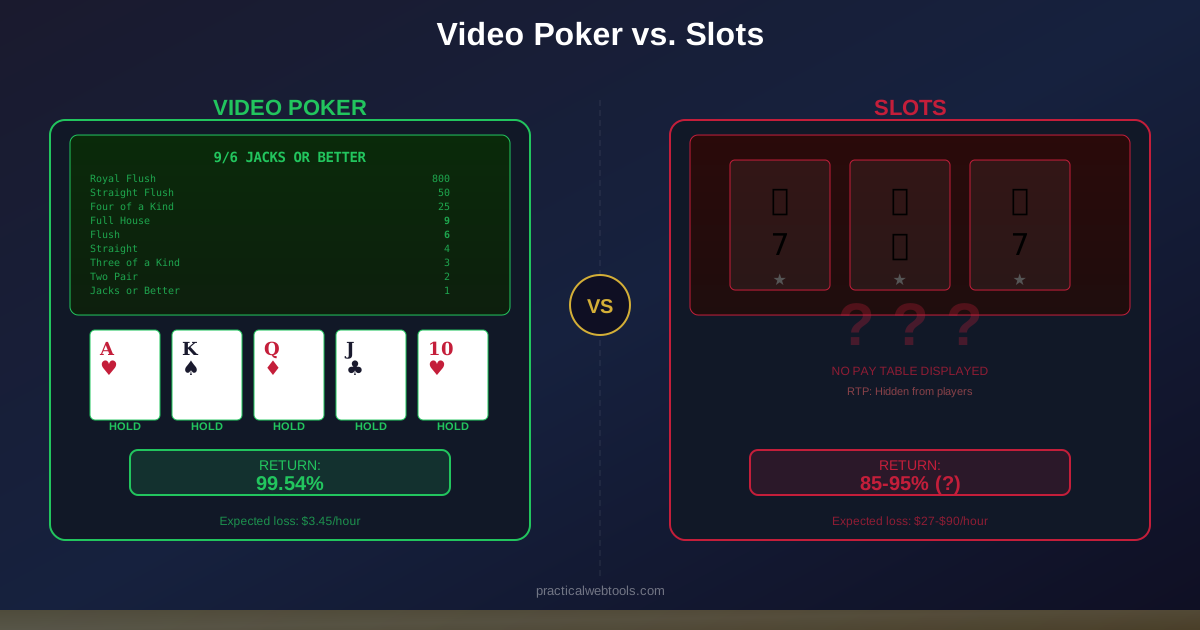
Example 3: Slot Machine Session
Situation:
Bankroll: $200
Goal: Win $300 (reach $500)
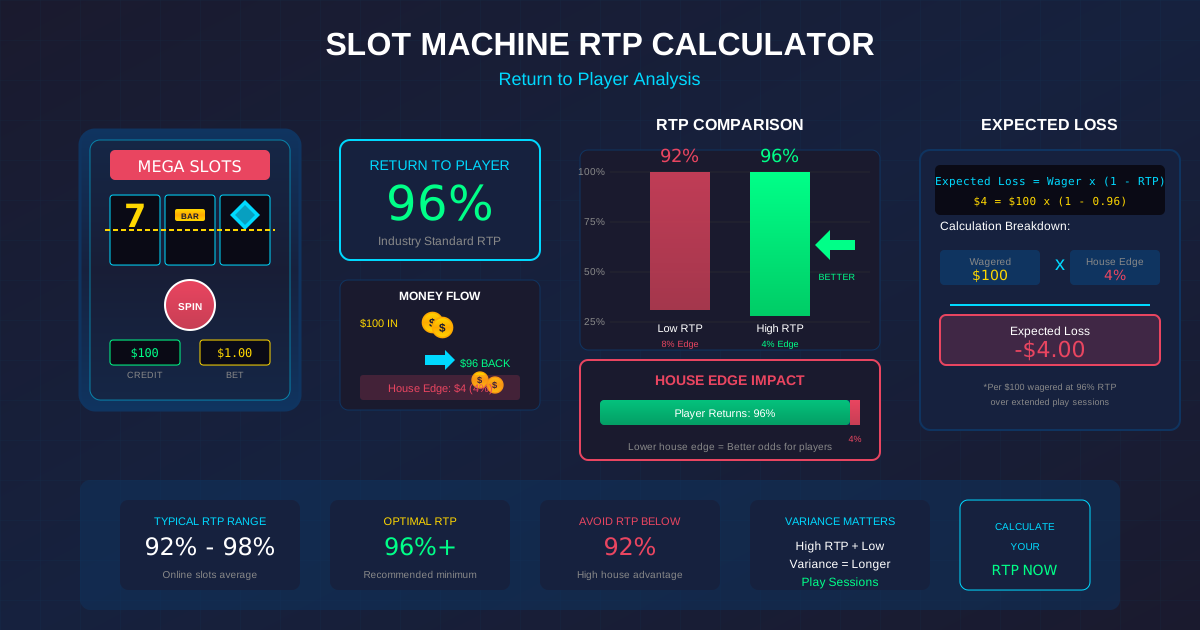
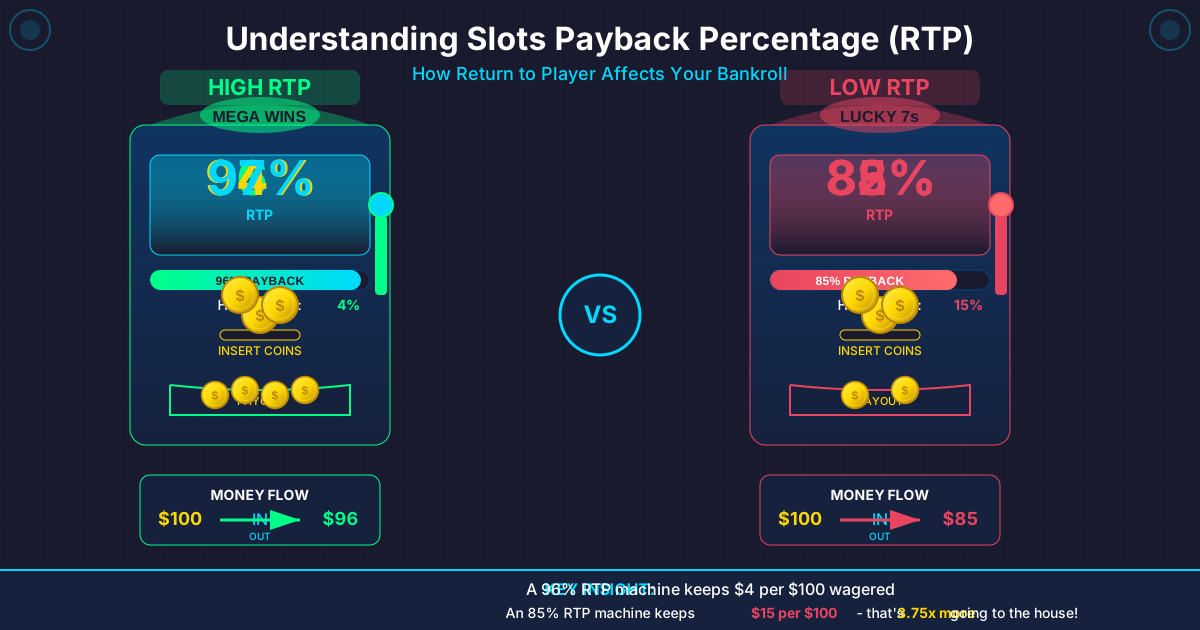
Slots: 92% RTP (8% house edge per unit)
Bet: $0.50 per spin
Spins until bankroll change of ±$300
Calculation:
This is more complex due to slot variance
Using simplified model:

Effective p ≈ 0.46 (accounting for structure)
Goal requires net +600 units
Starting with 400 units

The math gets complex, but simulation shows:
P(reaching $500 before $0) ≈ 15-20%

High house edge + high variance
= Very low success probability
Result:
~80-85% probability of losing $200

Slots have both:
- Negative expectation (house edge)
- High variance (occasional wins feel big)

The combination creates:
- Low success probability
- Occasional big wins (survivorship bias)
- Reliable long-term casino profit
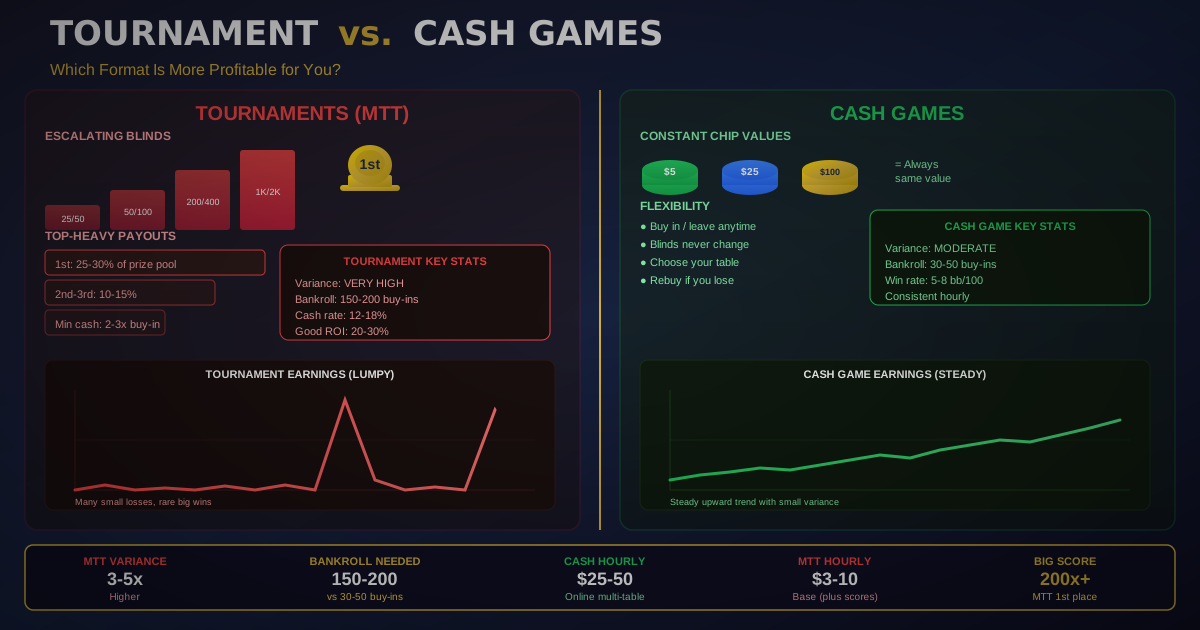
Example 4: Tournament vs Cash Game
Situation:
Poker player choosing strategy:

Option A: Cash game
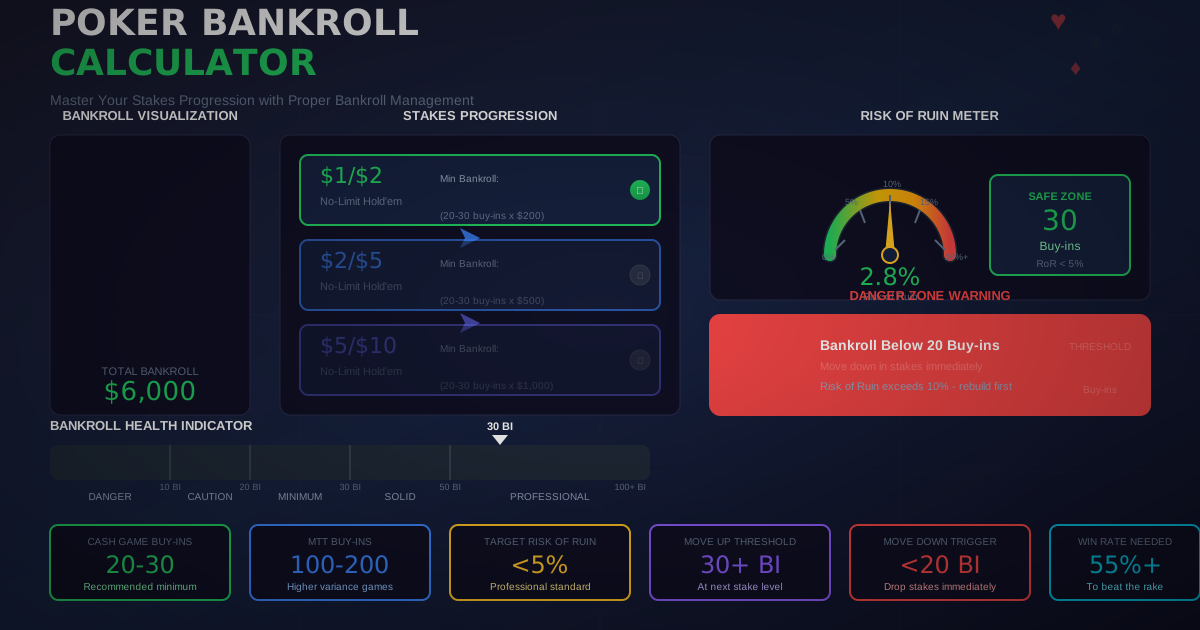
Bankroll: $2,000 (20 buy-ins)
Win rate: Small positive edge
Per-session variance: High

Option B: Tournament
Bankroll: Same $2,000
Entry fees: $100 each (20 entries)
Win probability per tournament: ~15% to cash
Top 3 finish: ~5% chance, big payout
Calculation:
Cash Game Ruin (20 buy-ins, small edge):
Assuming typical poker variance and 2bb/100 win rate
P(Ruin before doubling) ≈ 30-40%

Tournament Ruin:
Need to cash enough times to survive
P(zero cashes in 20 tournaments) = 0.85^20 = 3.9%

But winning enough to profit:
More complex, depends on payout structure
Generally 40-50% chance of profit
Result:
Tournaments: All-or-nothing each entry
- Ruin = Running out of entries without big score
- High variance, but limited downside per entry

Cash games: Gradual grind
- Ruin = Sustained losing (bad run + bad play)
- Lower variance, but continuous risk

Different risk profiles, similar underlying math
Strategies to Reduce Ruin Probability
Smaller Bet Sizing
Bet size directly affects unit calculations:

$500 bankroll, $1,000 goal

$50 bets: 10 units to 20 units
$25 bets: 20 units to 40 units
$10 bets: 50 units to 100 units

Smaller bets = More units = Lower ruin

At p=0.48:
$50 bets: P(Ruin) ≈ 85%
$25 bets: P(Ruin) ≈ 69%
$10 bets: P(Ruin) ≈ 54%

Same bankroll, same goal, different ruin rates
Lower Target Goals
Reducing ambition reduces ruin:

$500 to $1,000 (double): High ruin
$500 to $750 (50% gain): Lower ruin
$500 to $600 (20% gain): Even lower

At p=0.48, $25 bets:
Double ($500→$1000): 69% ruin
50% gain ($500→$750): 52% ruin
20% gain ($500→$600): 35% ruin

More modest goals = Better survival odds
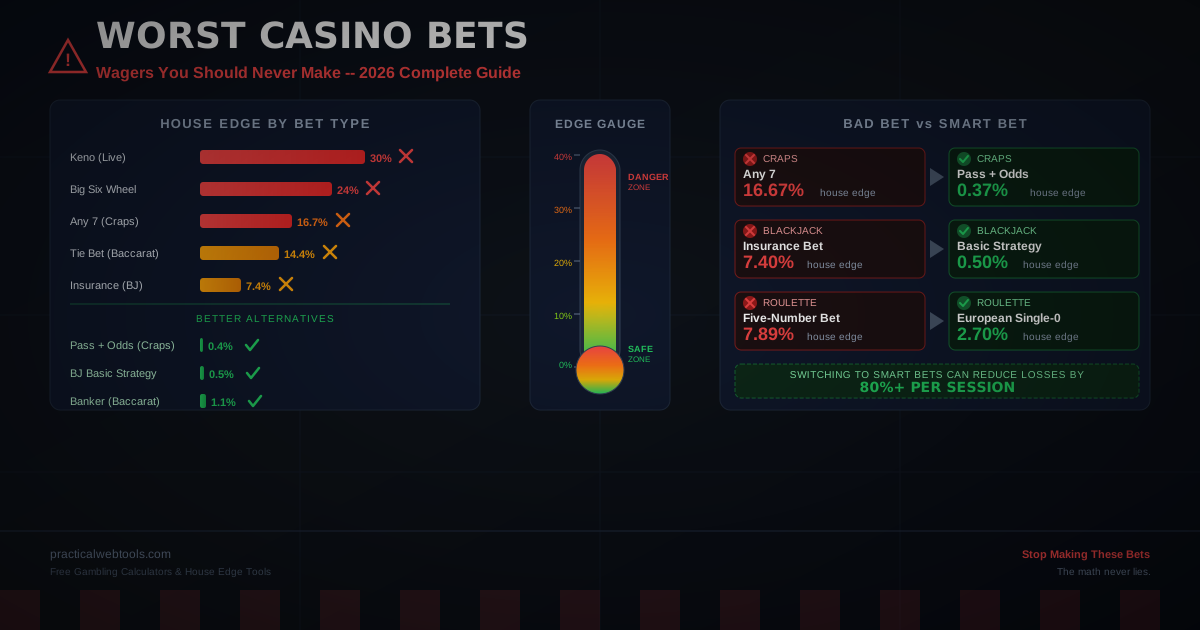
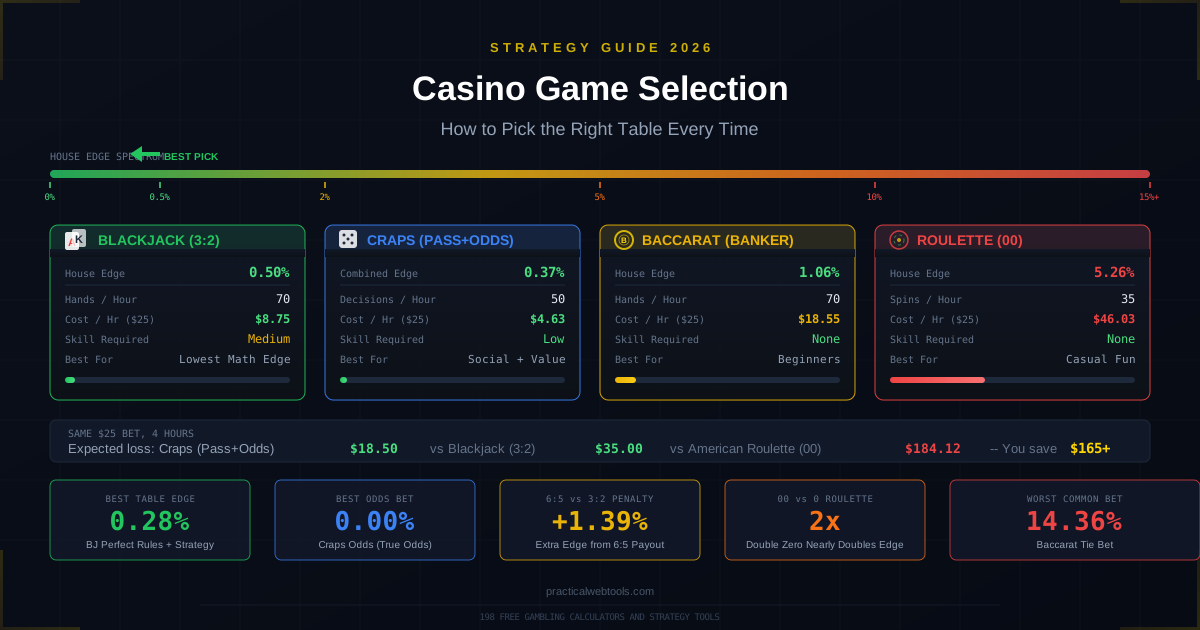
Game Selection
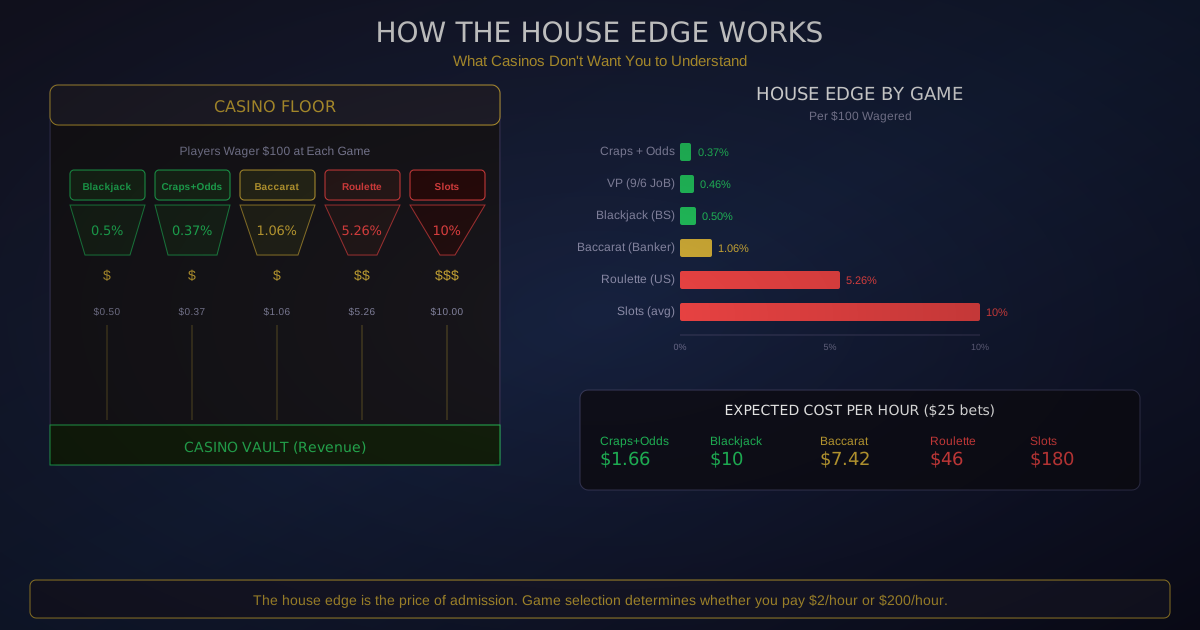
Choose games with lower house edge:

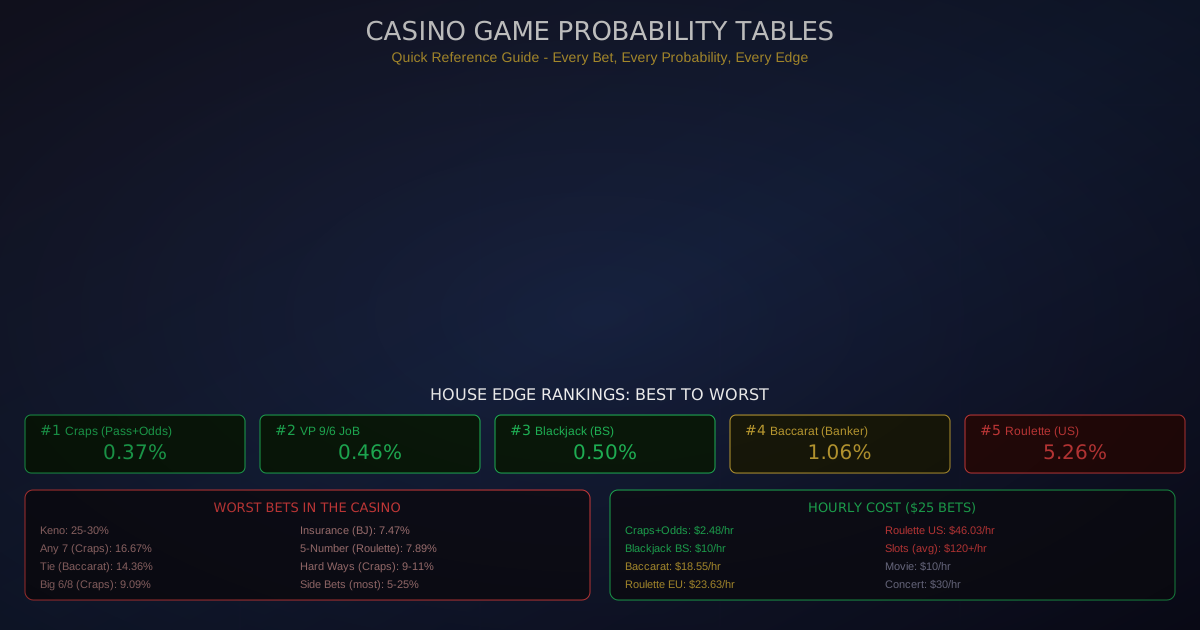
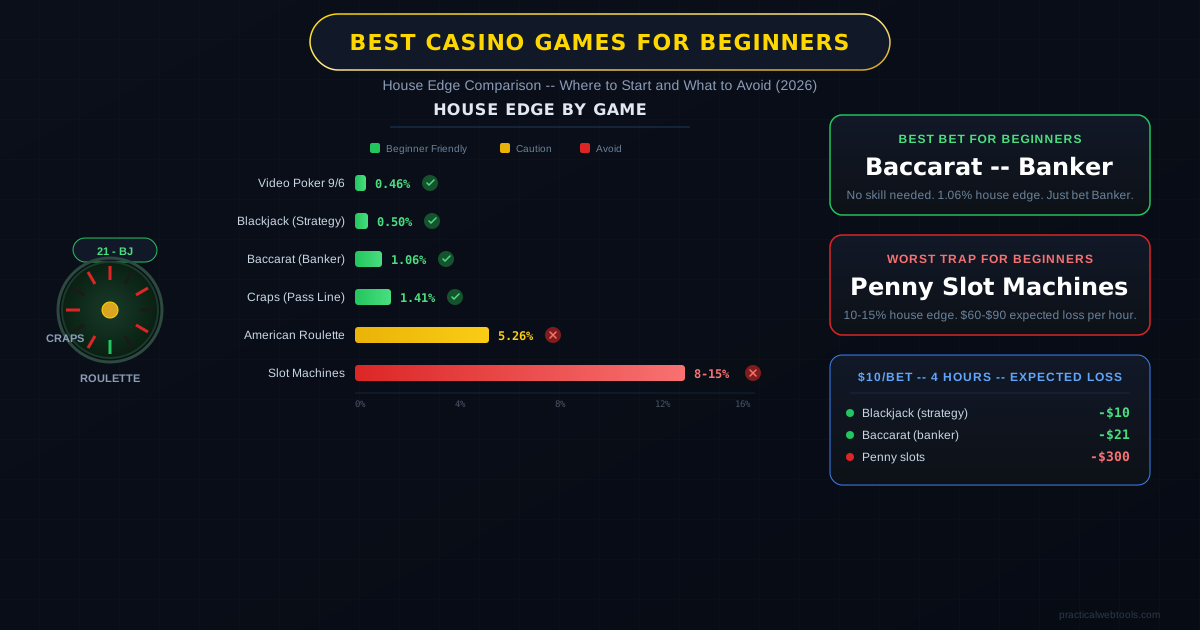
Roulette (5.26% edge):
P(double) ≈ 11%

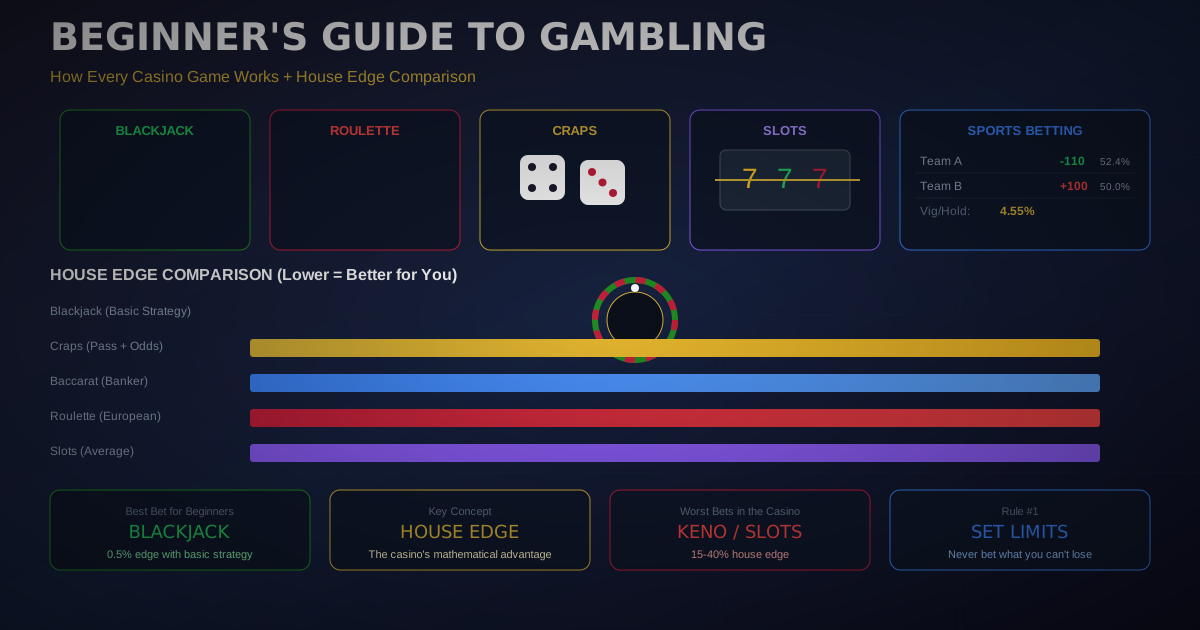
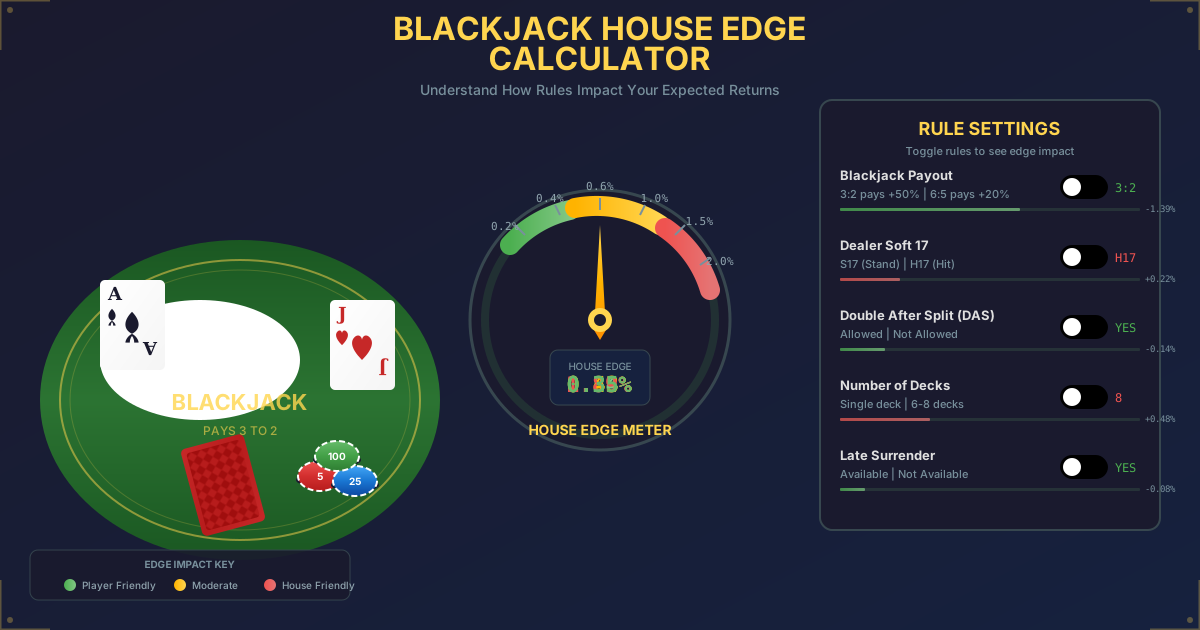
Blackjack perfect strategy (0.5% edge):
P(double) ≈ 42%

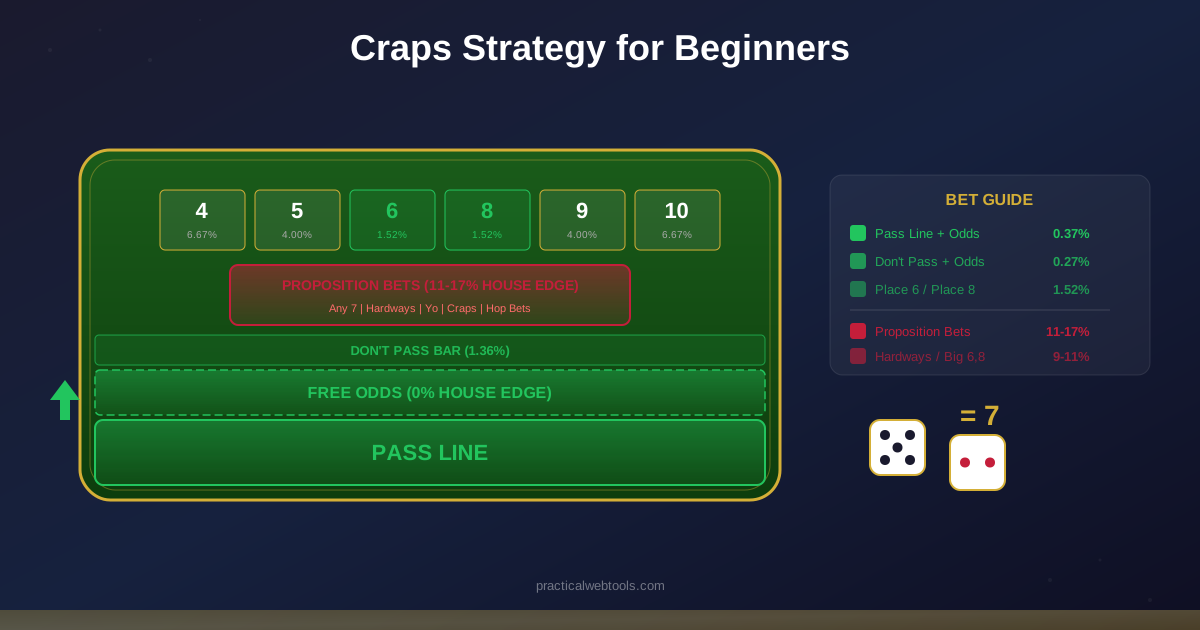
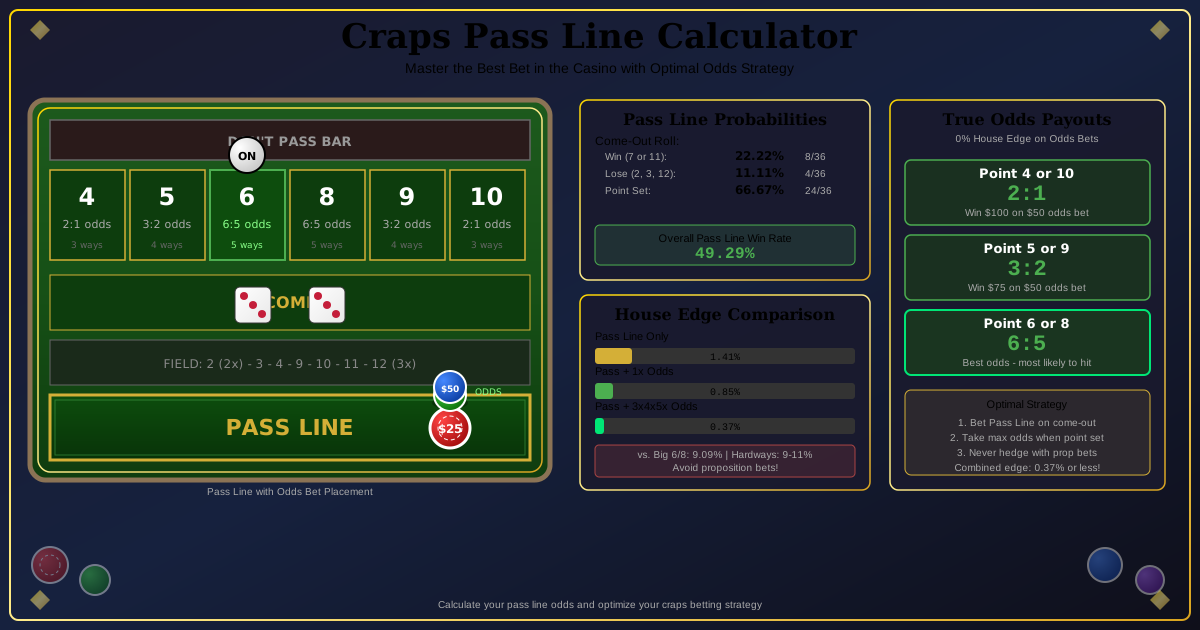
Craps pass line (1.4% edge):
P(double) ≈ 35%

Same bankroll, same goal, different games
House edge matters enormously
Positive EV Requirement
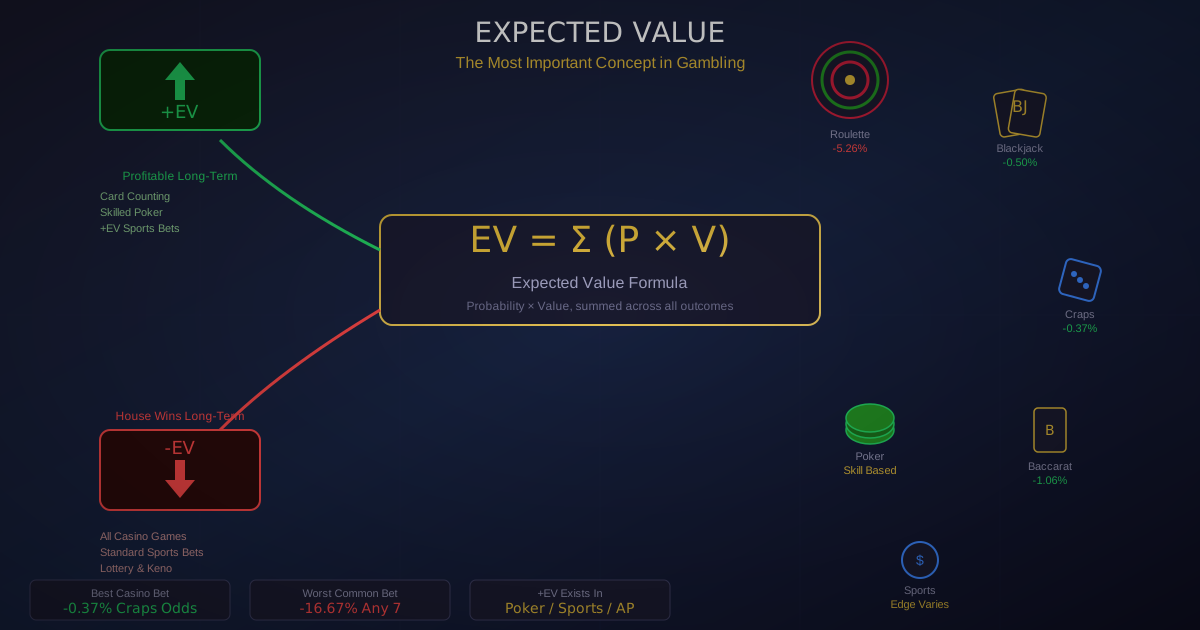
Only long-term solution to avoid ruin:

Negative EV: Eventual ruin certain (just timing)
Zero EV: Ruin possible, depends on goal
Positive EV: Ruin possible but not certain

If you must gamble long-term:
- Find genuine positive EV
- Size bankroll appropriately
- Accept variance will cause drawdowns

Without positive EV, math guarantees ruin
The Infinite Bankroll Problem
Why Casinos Don't Face Ruin
Classic gambler's ruin assumes:
- Gambler: Finite bankroll
- Opponent: Infinite bankroll

Casino properties:
1. Vastly larger bankroll than any gambler
2. House edge ensures positive expectation
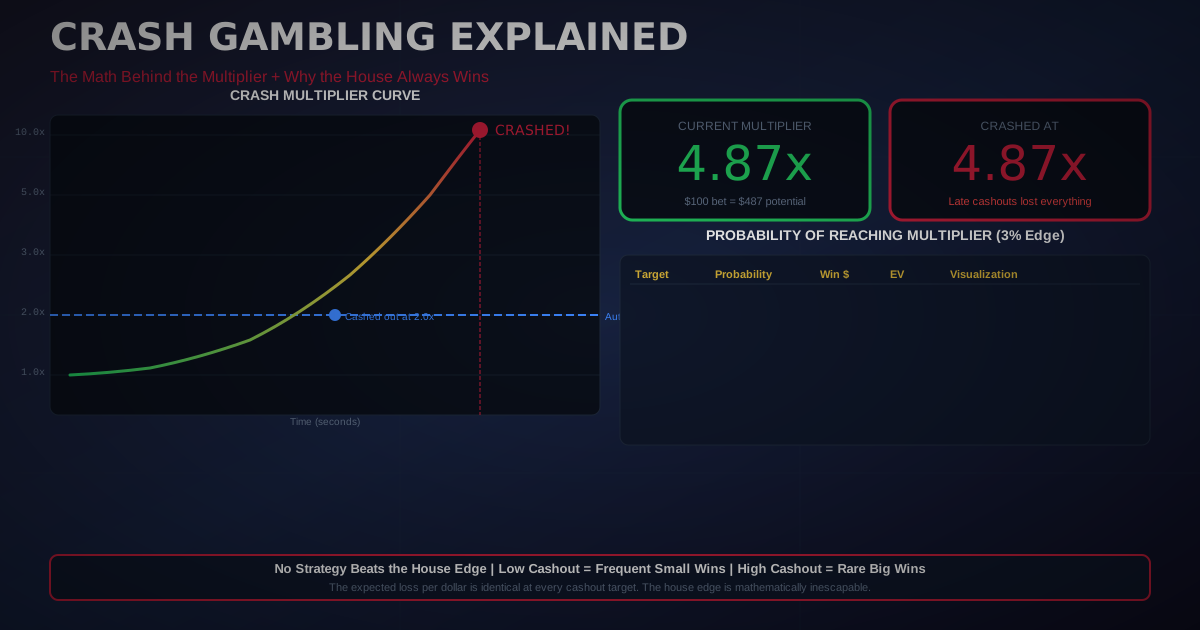
3. Volume creates reliable convergence
4. Can survive short-term variance

Even if one player gets lucky:
- Casino's "bankroll" is effectively infinite
- Other players' losses cover the winner
- Net expected value stays positive
Practical Limits
In reality, casinos have limits too:
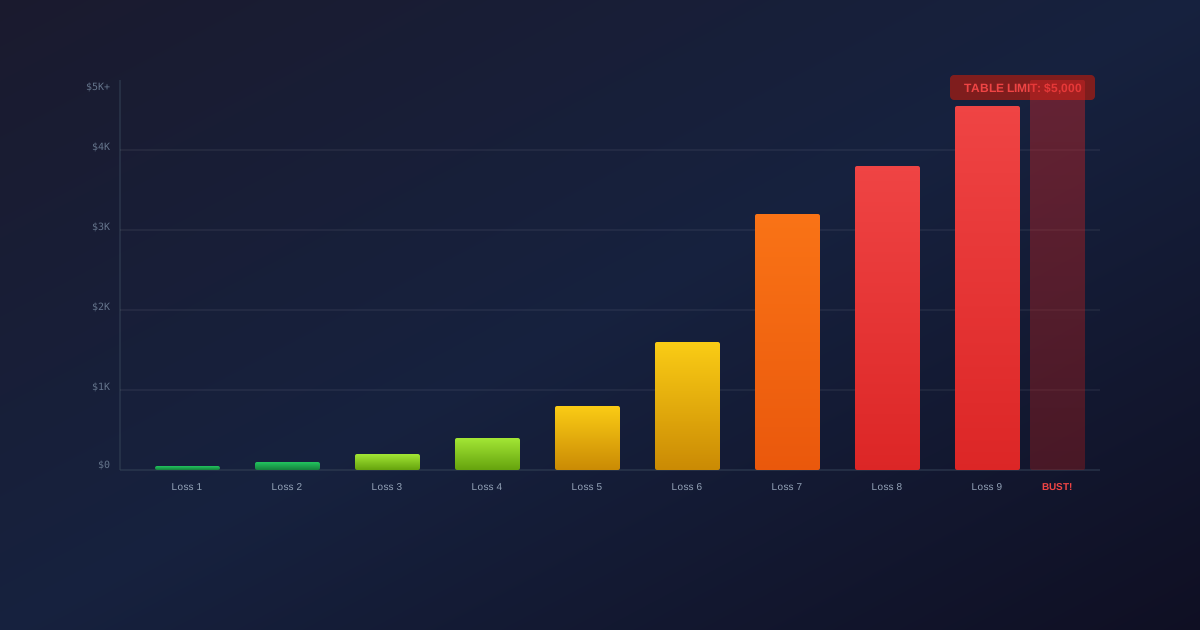
- Table maximums cap exposure
- Player bankrolls are finite
- Time constraints exist

But the key asymmetry remains:
Casino can wait forever (effectively)
Gambler cannot

This asymmetry is the house's true edge
beyond the mathematical house edge
Common Mistakes to Avoid
-
Ignoring Ruin When Winning: A winning session doesn't eliminate future ruin probability. Tomorrow's bets face the same mathematics.
-
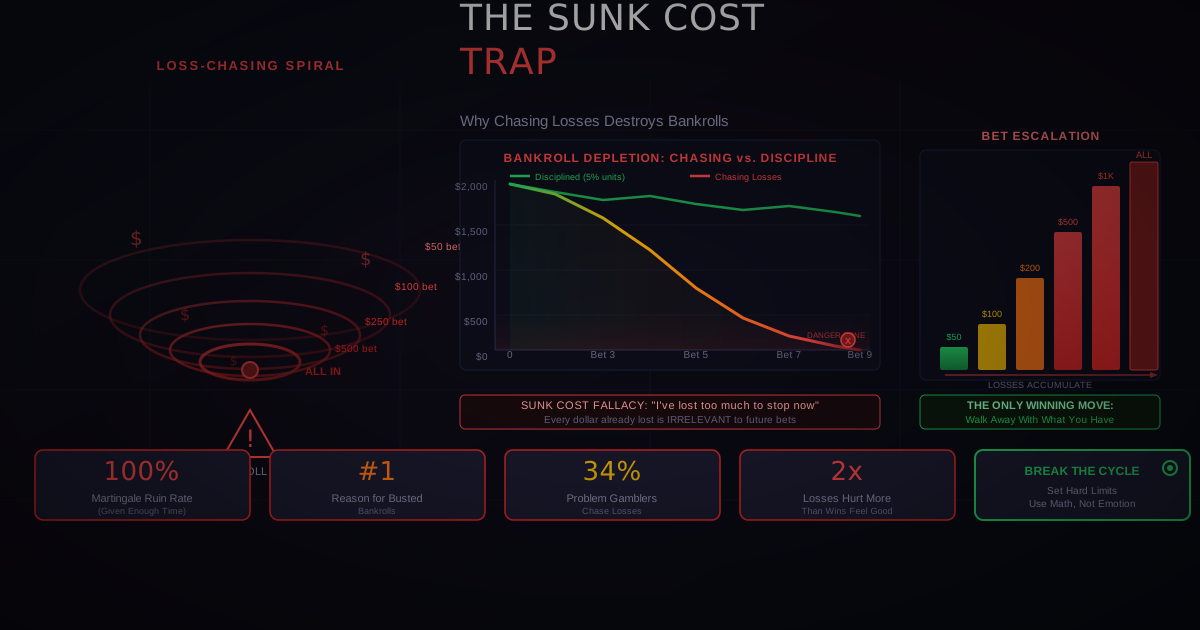
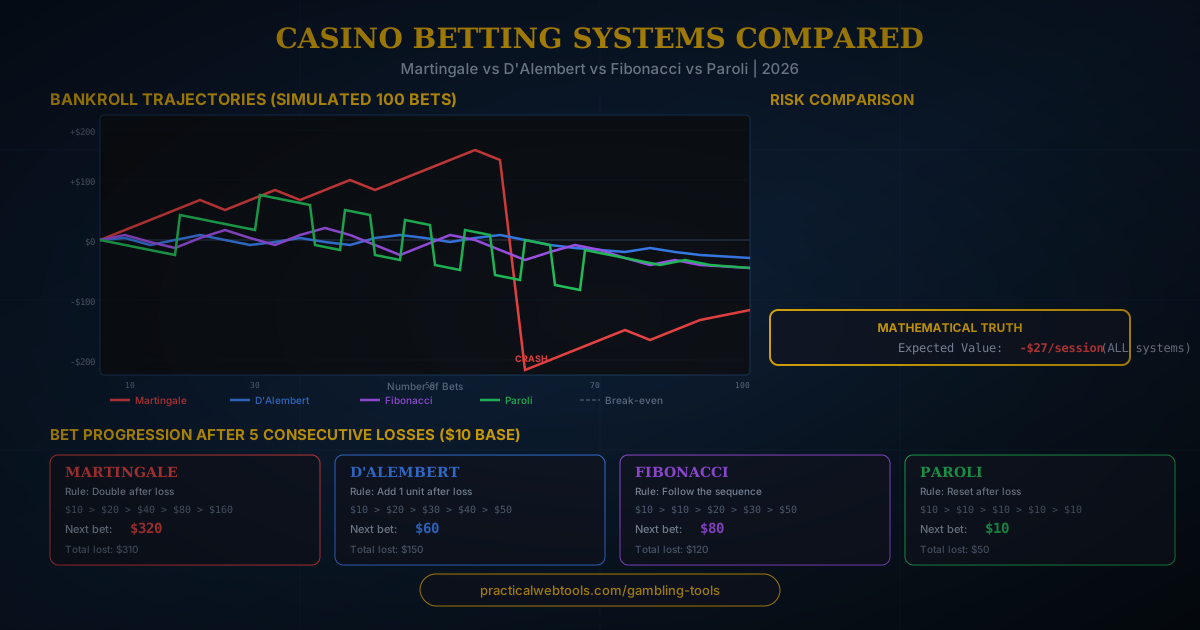
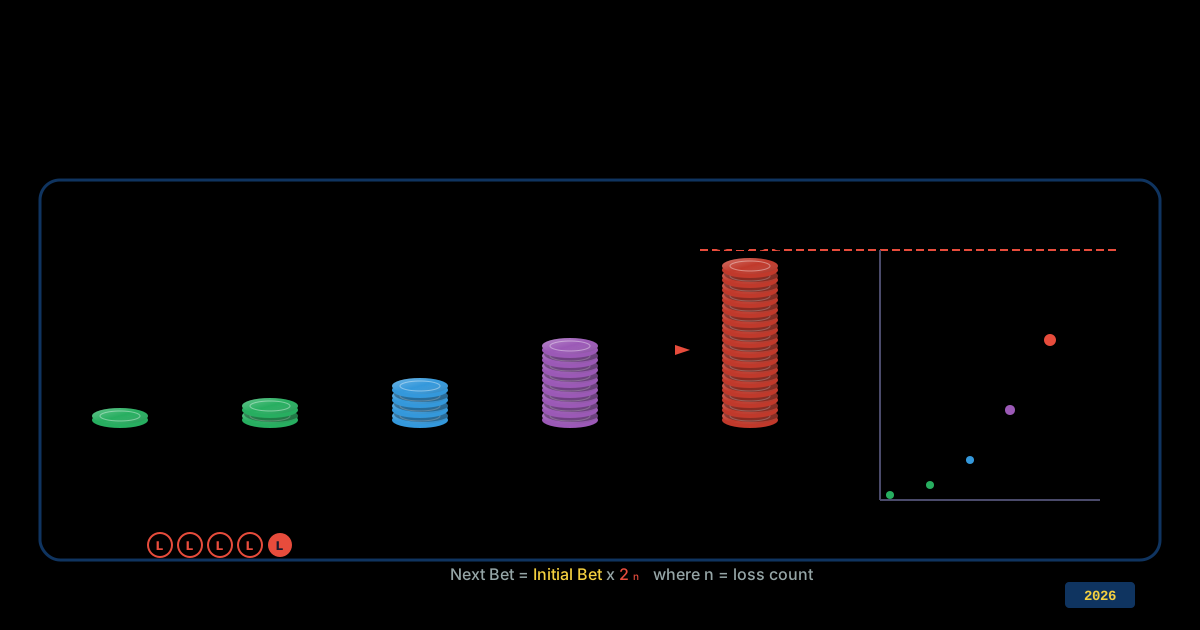
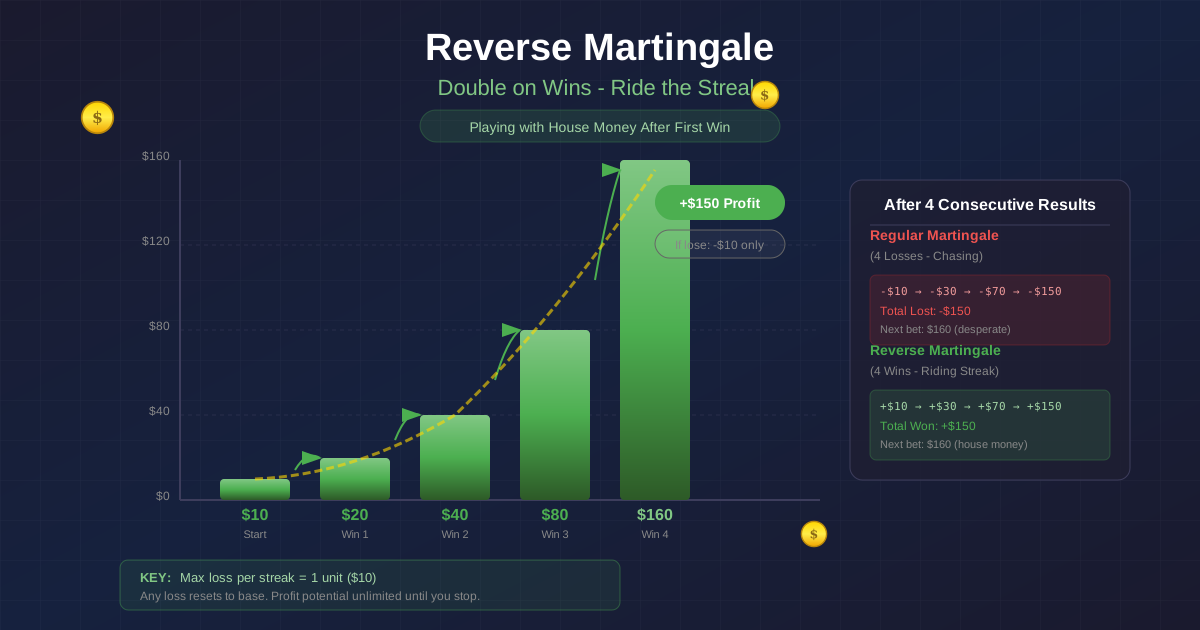
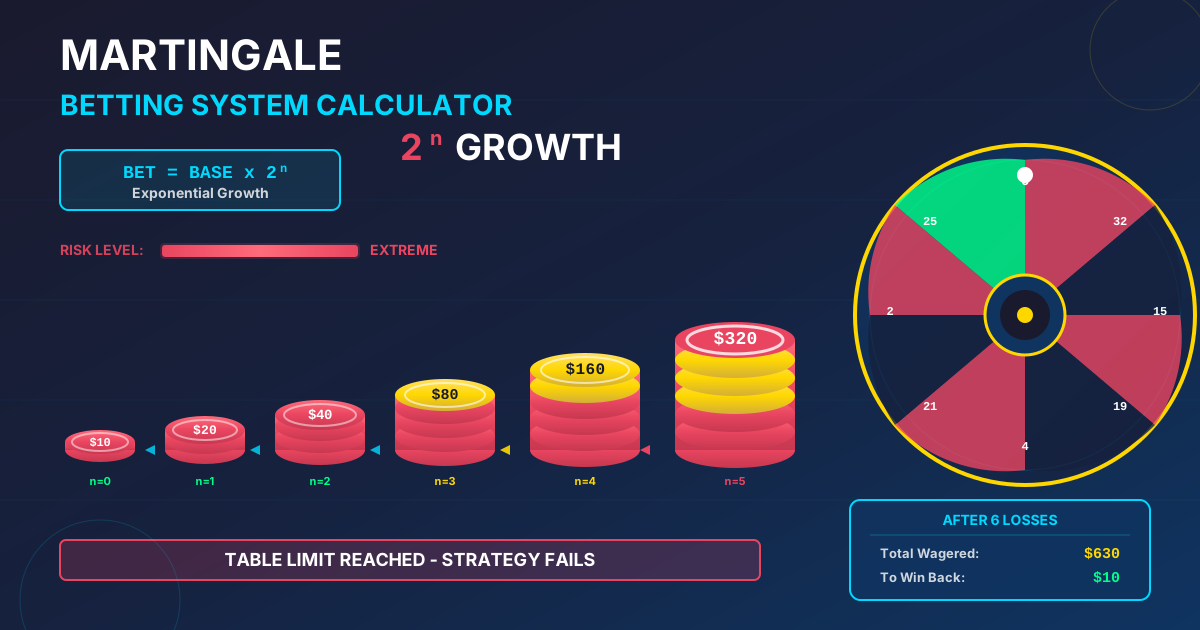
Betting More to Recover Faster: Increasing bet size after losses dramatically increases ruin probability, even if it feels "logical."
-
Setting Unrealistic Goals: Trying to turn $100 into $10,000 has near-certain ruin probability at any house edge.
-
Underestimating Edge Impact: Even 1% house edge compounds dramatically. Small edges create large ruin probability differences.
-
Confusing Session with Long-Term: Winning one session doesn't prove you've beaten gambler's ruin - it just means you haven't hit it yet.
-
Ignoring Variance: Even positive EV players go broke if bankroll is too small relative to bet size.
Frequently Asked Questions
Is gambler's ruin inevitable?
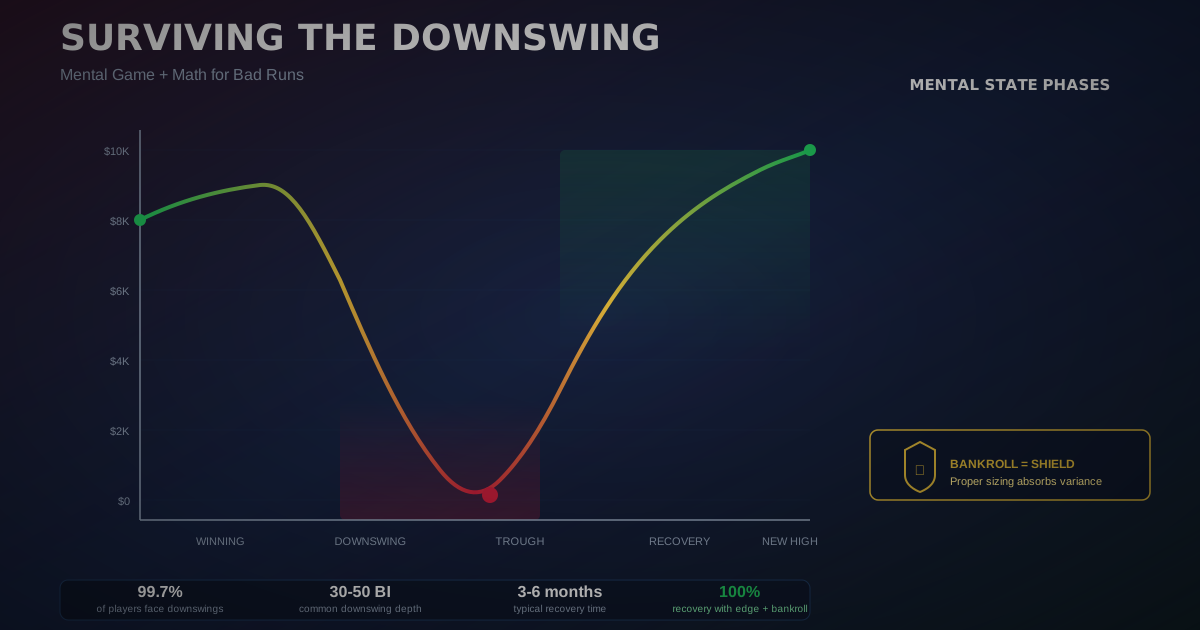
With negative expected value: Yes, given enough time, ruin is mathematically certain. With positive EV and adequate bankroll: No, ruin probability can be made arbitrarily small.
How does the house edge affect ruin probability?
Dramatically. Even small edges (1-2%) nearly double ruin probability compared to fair games. The larger the edge, the more certain your ruin.
Can I just quit when I'm ahead?
Theoretically yes, but most gamblers don't. Behaviorally, "quit while ahead" is difficult. And if you return later, the math continues from where you left off.
Does gambler's ruin apply to poker?
Yes, but poker can have positive expectation (skill game). Skilled players face ruin risk from variance despite positive EV if inadequately bankrolled.
What's the minimum bankroll to avoid ruin?
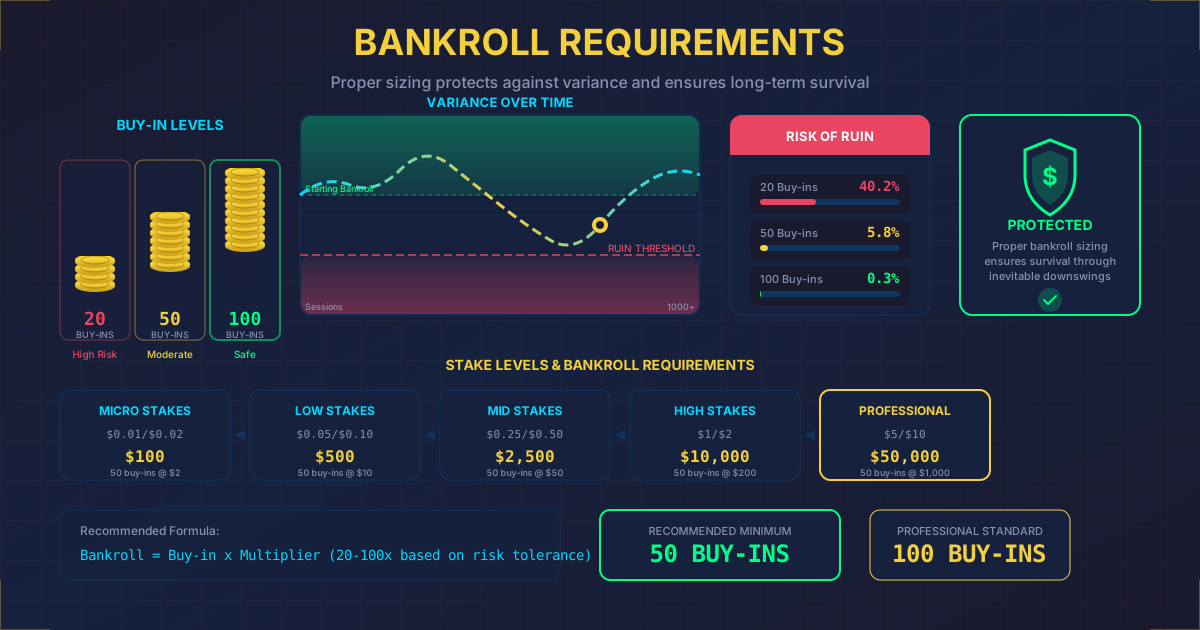
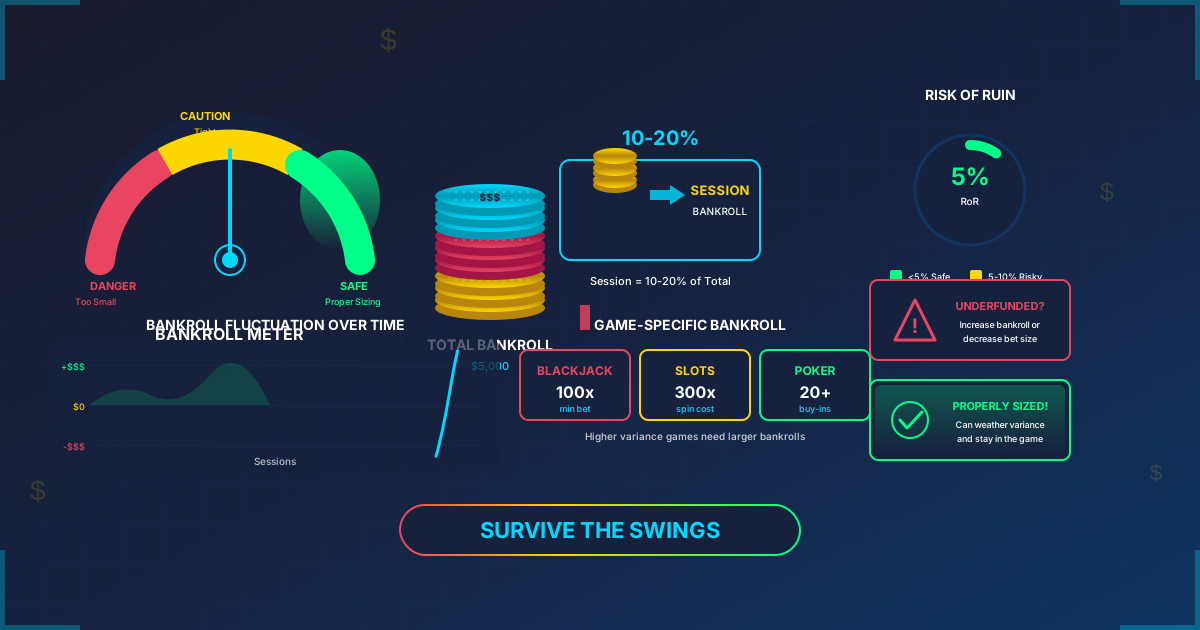
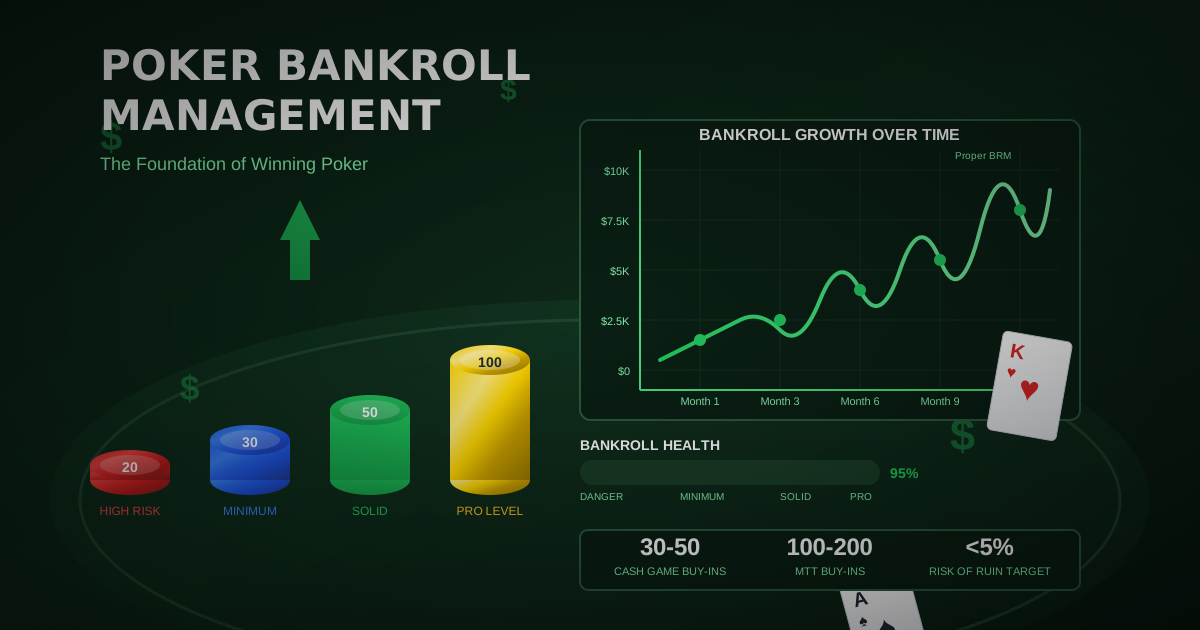
For positive EV: ~50-100 bet units keeps ruin probability under 1-5%. For negative EV: No bankroll size eliminates eventual ruin.
How long until ruin occurs?
Expected number of bets until ruin depends on edge and bet size. With 2% edge, expected duration before ruin is hundreds to thousands of bets, but actual timing is random.
Pro Tips
- Calculate your ruin probability BEFORE starting to gamble, not after
- If ruin probability exceeds 5-10% for your goals, reconsider the approach
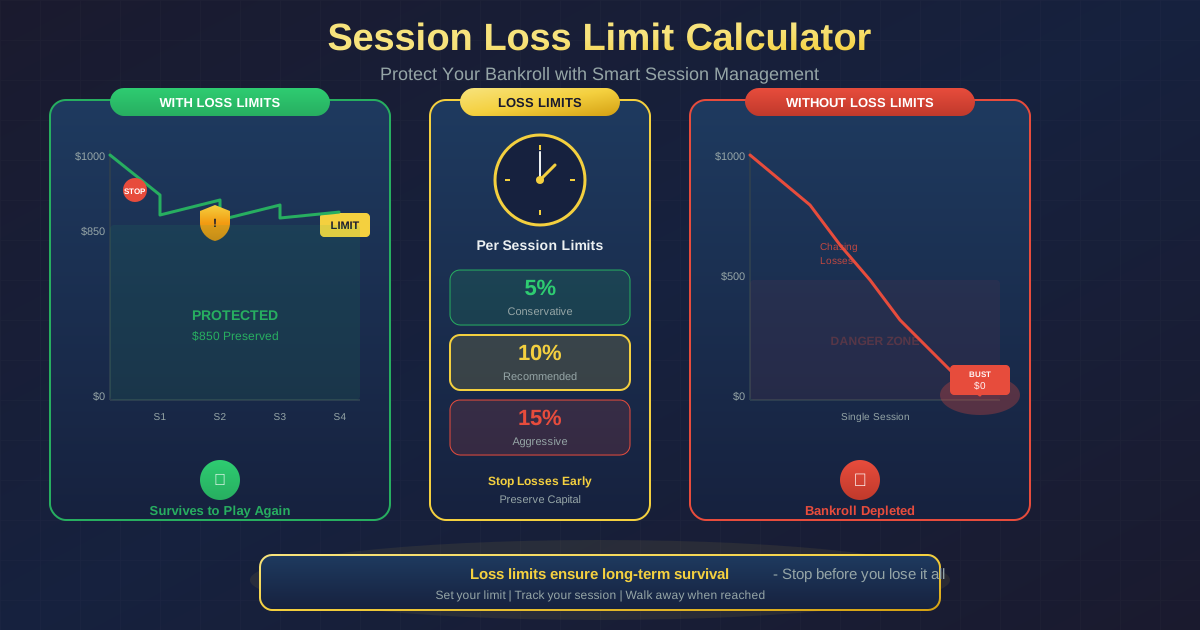
- Treat bankroll as a resource that must survive variance, not just "money to bet"
- Remember that casinos exist specifically because gambler's ruin mathematics favor them
- If gambling for entertainment, budget for ruin - assume you'll lose your bankroll
Related Calculators
- Risk of Ruin Calculator - Alternative ruin analysis
- Bankroll Calculator - Proper sizing
- Standard Deviation Calculator - Variance measurement
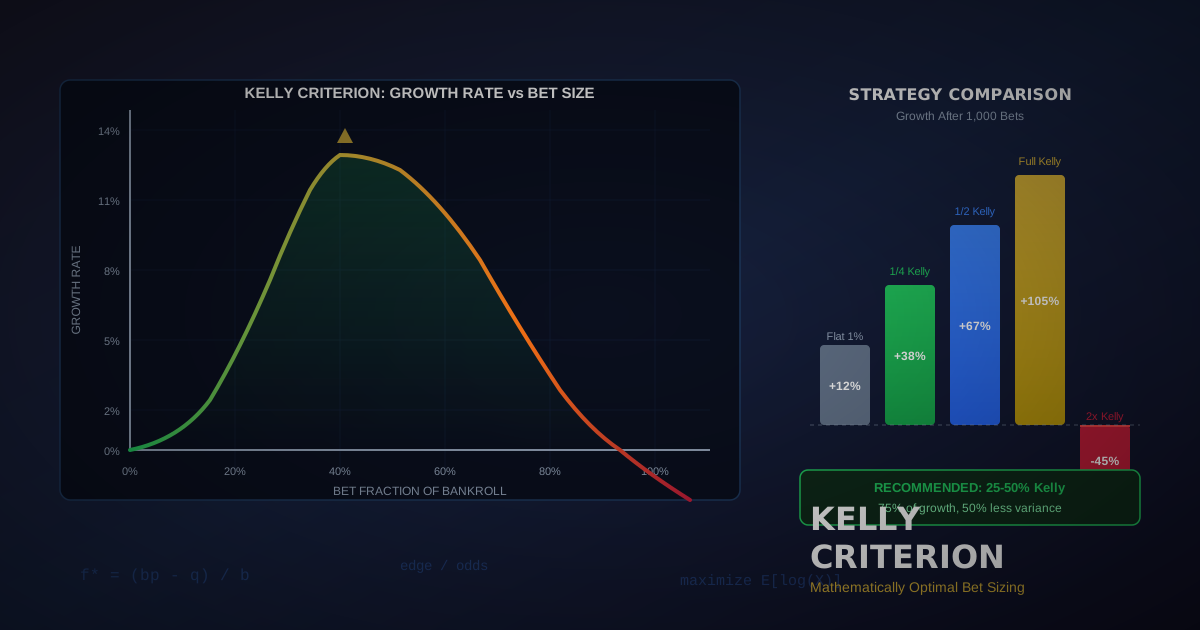
- Kelly Criterion Calculator - Optimal bet sizing
- Expected Value Calculator - Determine your edge
Conclusion
Gambler's ruin is the mathematical reality underlying all gambling. It explains why casinos are profitable despite paying winners, why most gamblers eventually lose, and why bankroll management matters even more than finding edge. Our calculator reveals your personal ruin probability given your specific situation.
The formulas are unforgiving: negative expected value guarantees ruin; inadequate bankroll makes ruin likely even with positive EV. Understanding this mathematics doesn't make gambling profitable, but it does make expectations realistic. The house doesn't need to win every bet - just enough to let gambler's ruin work its inevitable mathematics.