Gambling Standard Deviation Calculator: Measure Your Betting Variance (2026)
Gambling Standard Deviation Calculator: Understand Your Betting Variance
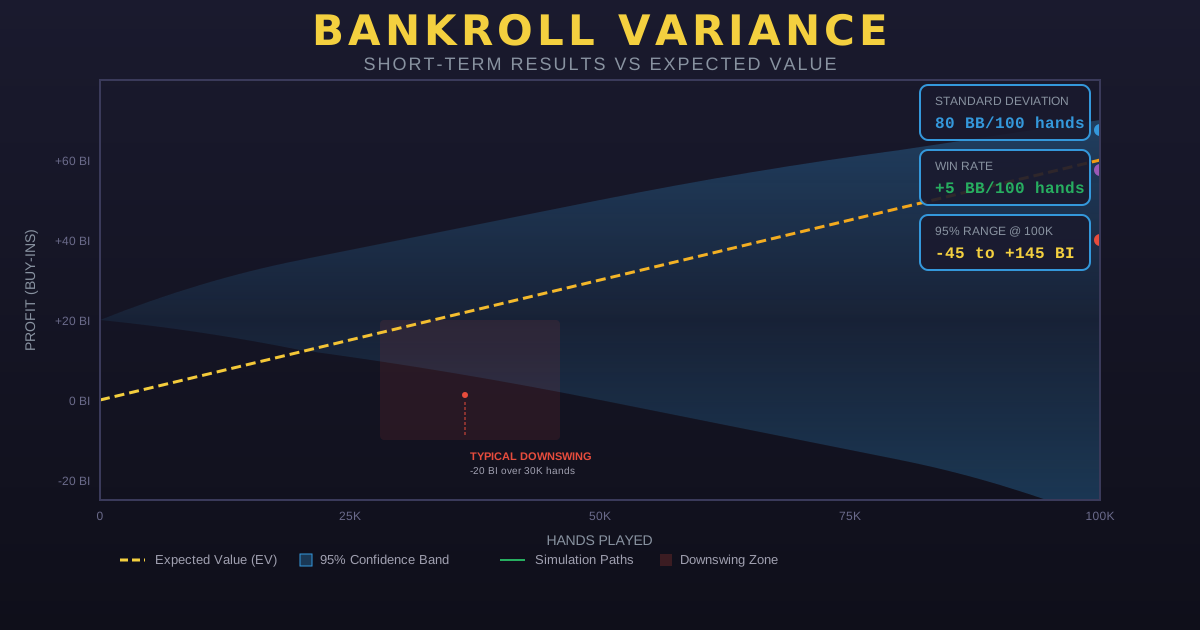
Standard deviation tells you how much your actual results will vary from expected value. In gambling, this variance determines whether you experience steady small wins and losses or wild swings. Our calculator measures the mathematical spread of your outcomes, helping you set realistic expectations and appropriate bankroll levels.
What Is Standard Deviation in Gambling?
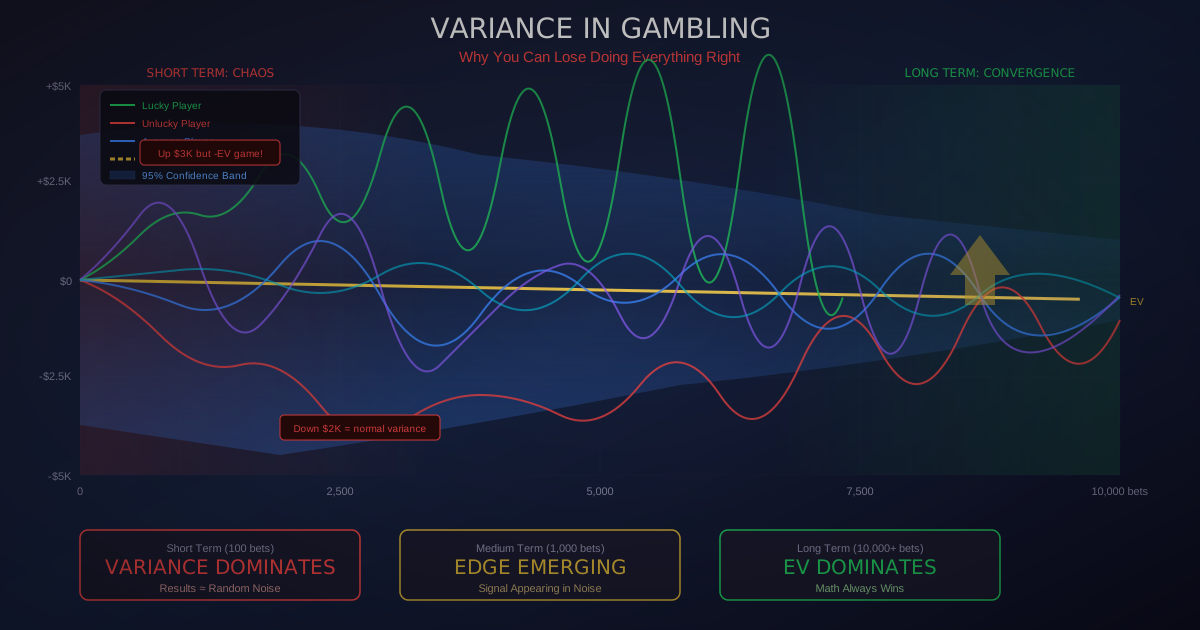
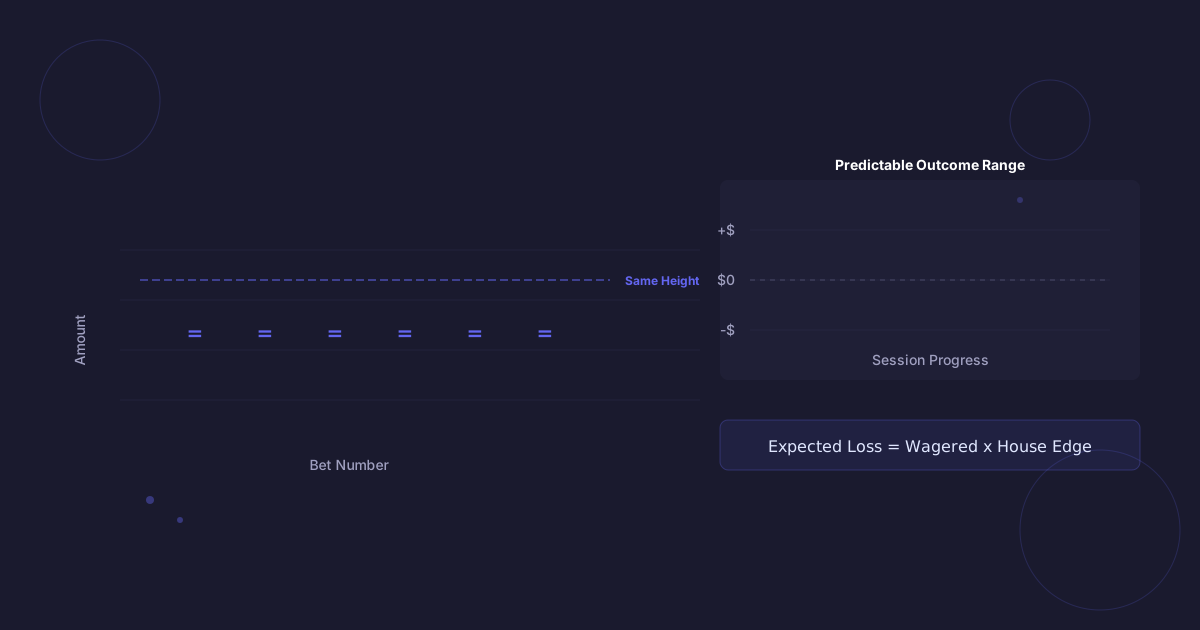
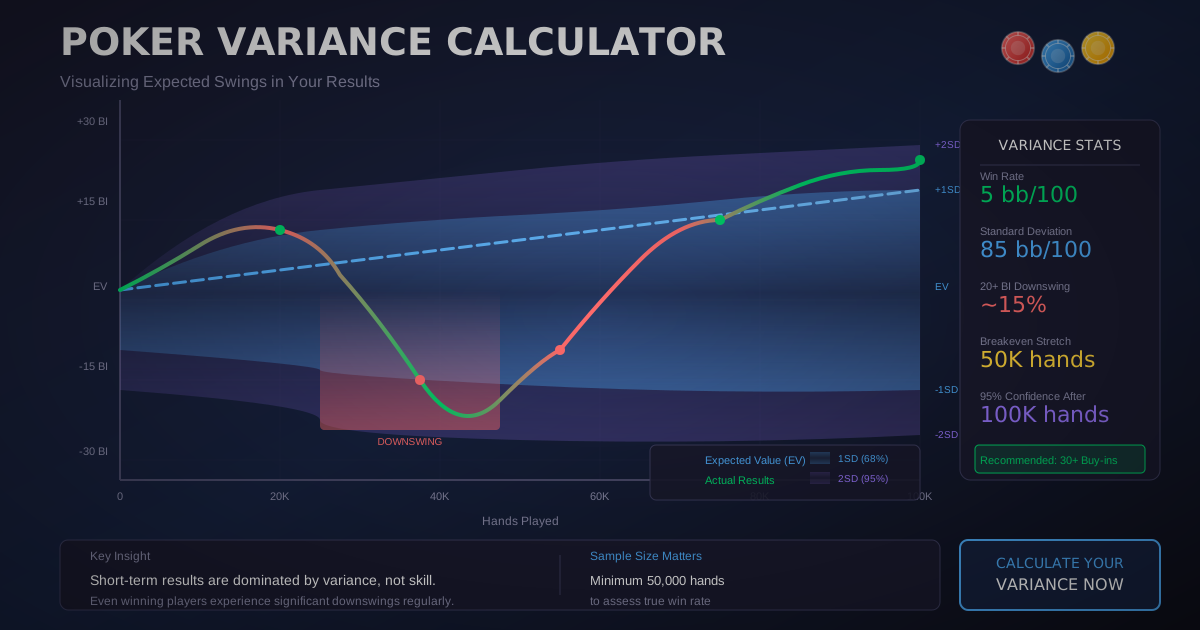
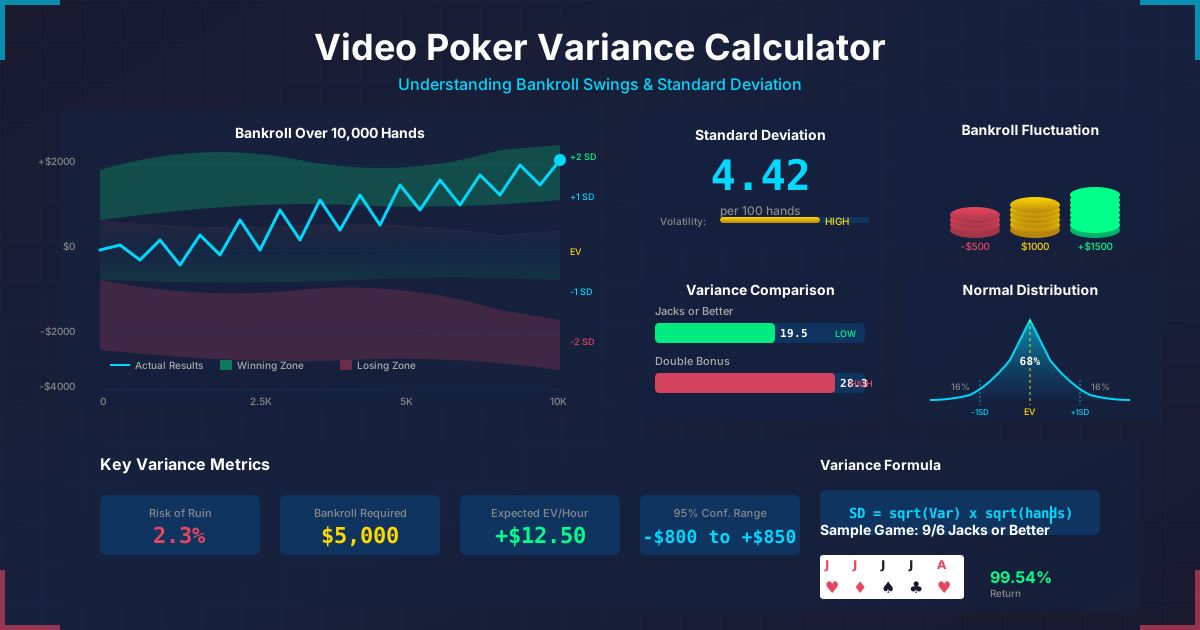
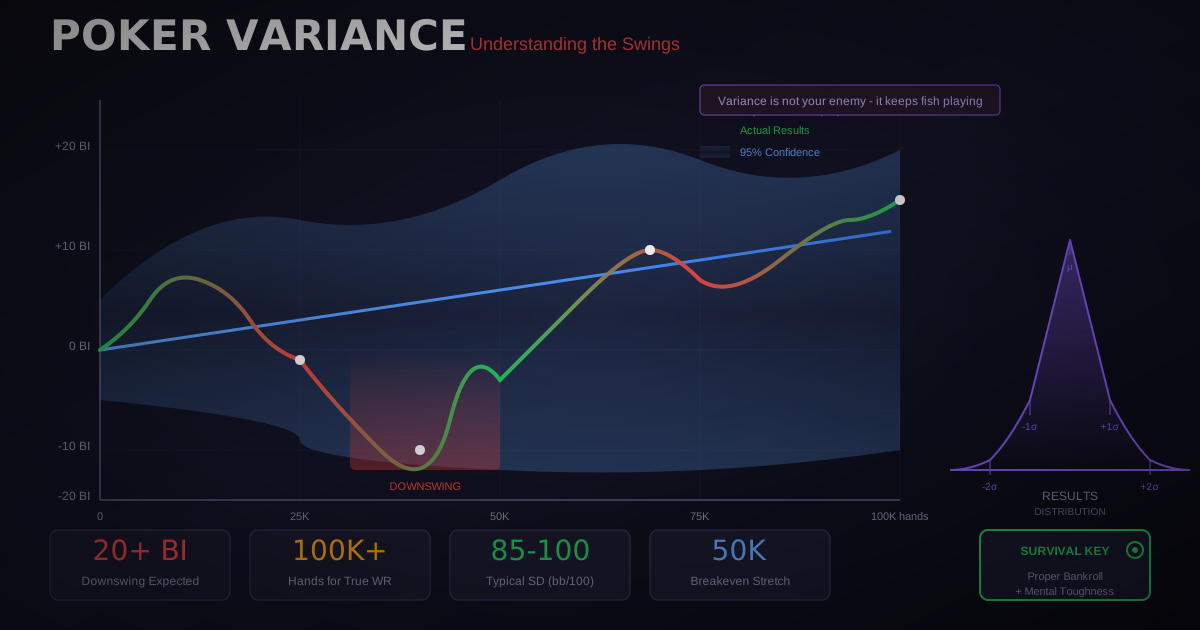
Standard deviation (SD) quantifies the dispersion of outcomes around the average. In gambling, it measures how far your actual results typically deviate from expected value. High standard deviation means volatile, unpredictable results; low standard deviation means consistent, predictable outcomes. Understanding SD helps you distinguish between luck and edge, and size your bankroll appropriately.
Quick Answer: Standard deviation for gambling equals √(n × p × (1-p)) × bet size for simple bets, where n is number of bets and p is win probability. For 100 even-money bets at $10: SD = √(100 × 0.5 × 0.5) × $10 = 5 × $10 = $50. This means 68% of the time, your results will be within $50 of expected value. After 100 coin flips at $10 each, expect results typically between -$50 and +$50.
How to Use Our Calculator
Use the Gambling Standard Deviation Calculator →
Step-by-Step Instructions
- Enter Bet Details: Input stake, odds, and number of bets
- Specify Win Probability: Enter your estimated win rate
- Calculate SD: Get standard deviation in dollars
- View Confidence Intervals: See typical outcome ranges
- Analyze Variance Impact: Understand swing potential
Input Fields
| Field | Description | Example |
|---|---|---|
| Number of Bets | How many wagers | 500 |
| Average Stake | Typical bet amount | $50 |
| Win Probability | Chance of winning | 52% |
| Win Amount | Profit when winning | $45.45 |
| Loss Amount | Amount lost when losing | $50 |
Understanding Standard Deviation
The Core Formula
For Binary Outcomes (Win/Lose):

SD per bet = √(p × (1-p)) × payout spread

For n bets:
Total SD = SD per bet × √n

Where:
p = probability of winning
payout spread = |win amount - lose amount|

Example:
$100 bets at 2.00 odds (50% win rate)
Win: +$100, Lose: -$100
SD per bet = √(0.5 × 0.5) × $200 = 0.5 × $200 = $100
For 100 bets: SD = $100 × √100 = $1,000
Interpreting Standard Deviation
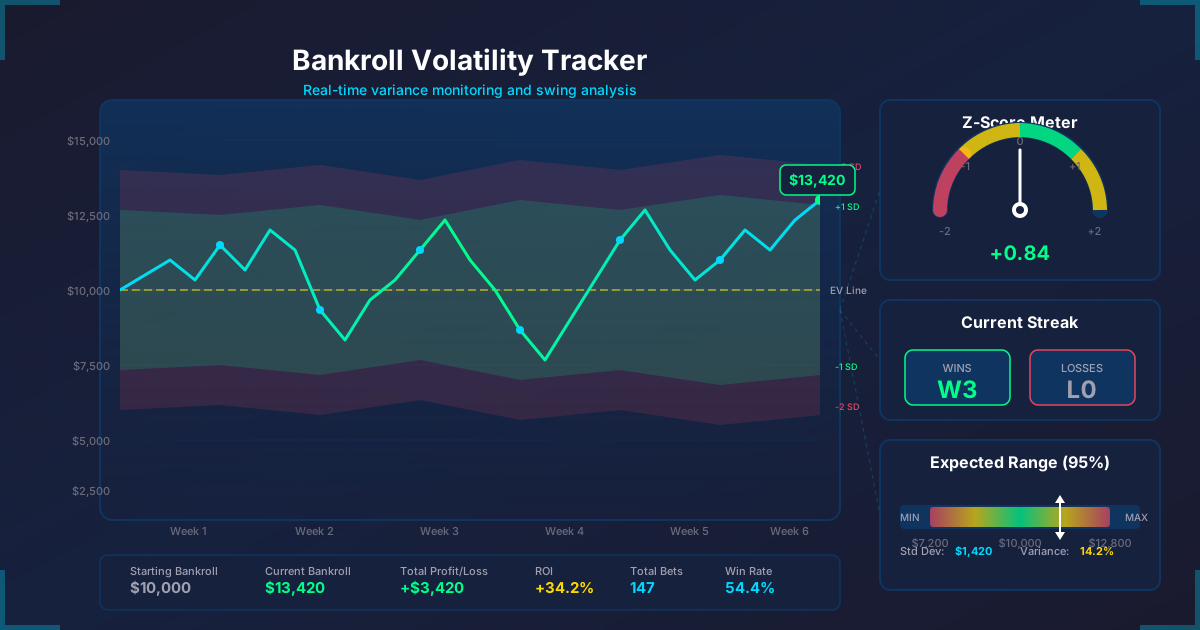
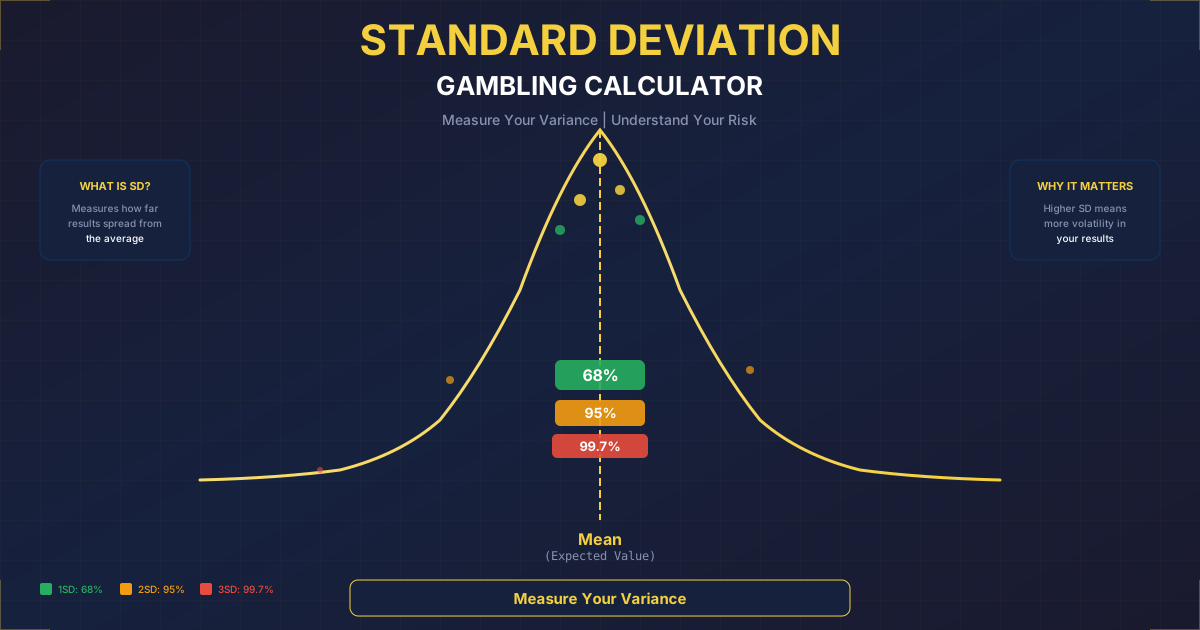
68-95-99.7 Rule (Normal Distribution):

Within 1 SD: 68% of outcomes
Within 2 SD: 95% of outcomes
Within 3 SD: 99.7% of outcomes

Example: EV = +$500, SD = $1,000

68% likely: -$500 to +$1,500
95% likely: -$1,500 to +$2,500
99.7% likely: -$2,500 to +$3,500

Even with positive EV (+$500),
95% range includes losing money (-$1,500)
This is why bankroll management matters
Variance vs Standard Deviation
Variance = SD²

Both measure spread, but:
- Variance is in squared units
- SD is in original units (dollars)

SD is more intuitive:
"Results typically vary by $500"
vs
"Variance is $250,000"

Use SD for practical analysis
Use Variance for mathematical calculations
Calculating Gambling SD
Even Money Bets
For 50/50 bets paying 1:1:

SD per bet = bet size
Total SD = bet size × √n

Example: 400 coin flip bets at $25
SD = $25 × √400 = $25 × 20 = $500

With 0 expected value:
68% of time: -$500 to +$500
95% of time: -$1,000 to +$1,000
Uneven Odds
General Formula:

SD = √[n × p × (1-p) × (W + L)²]

Where:
W = win amount
L = loss amount (positive number)
p = win probability

Example: Betting favorites at -150 (60% win)
Stake: $150 to win $100
n = 100 bets

p = 0.60, W = $100, L = $150
SD = √[100 × 0.60 × 0.40 × (100 + 150)²]
SD = √[100 × 0.24 × 62,500]
SD = √[1,500,000]
SD = $1,225

Expected Value: (0.60 × $100) - (0.40 × $150) = $0
So 68% of time: -$1,225 to +$1,225
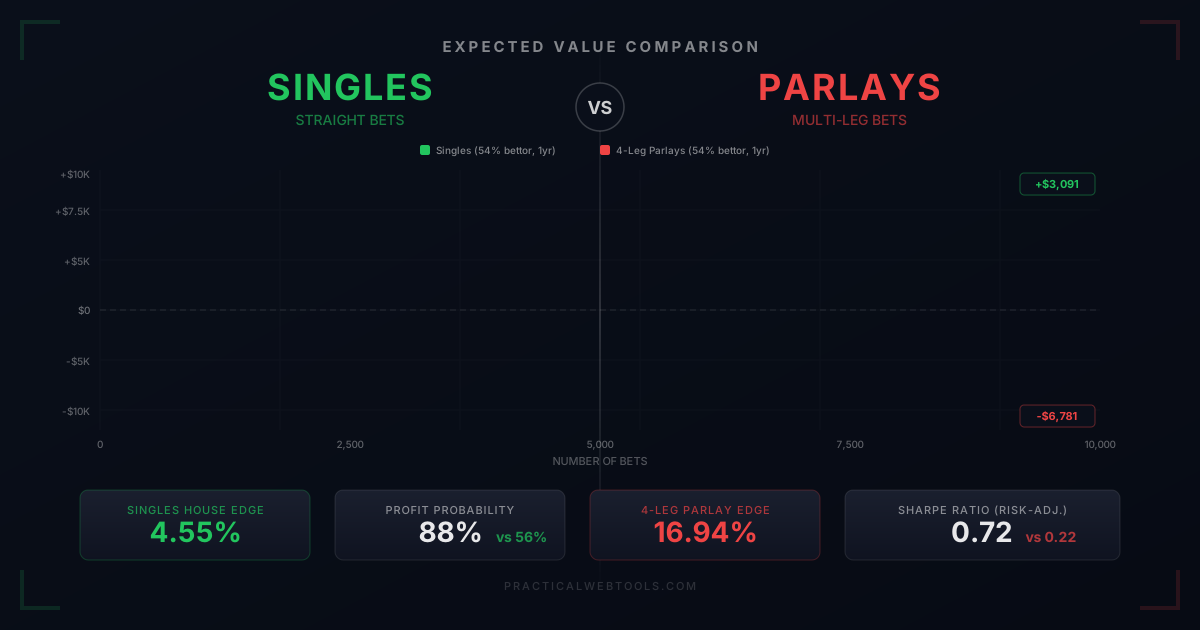
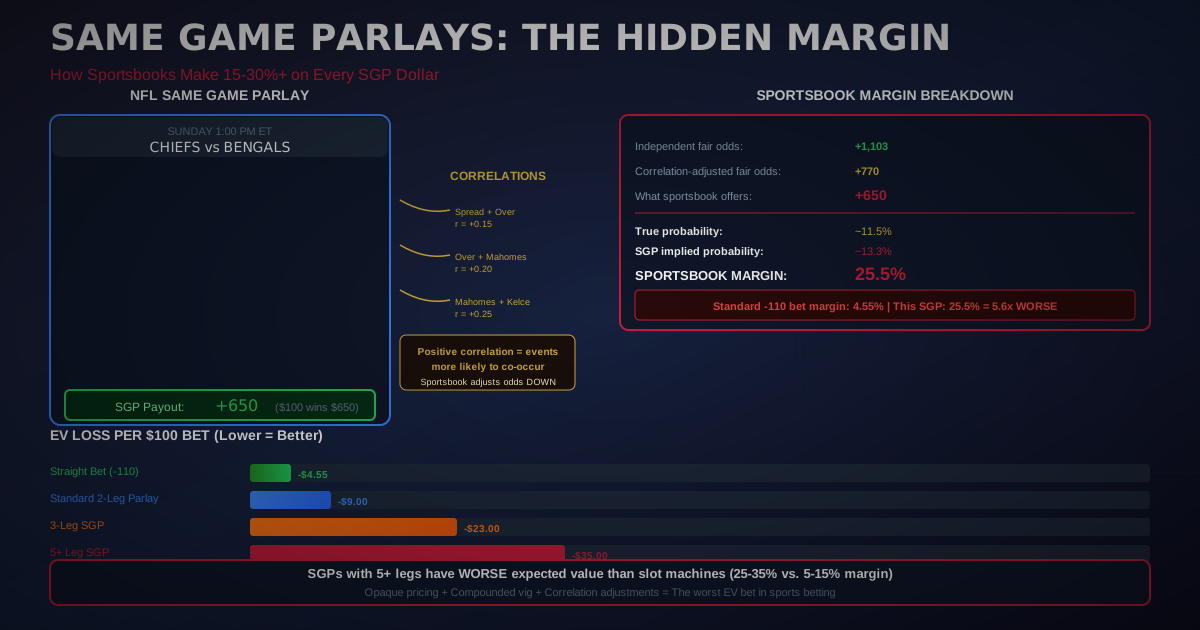
Parlays and High-Variance Bets
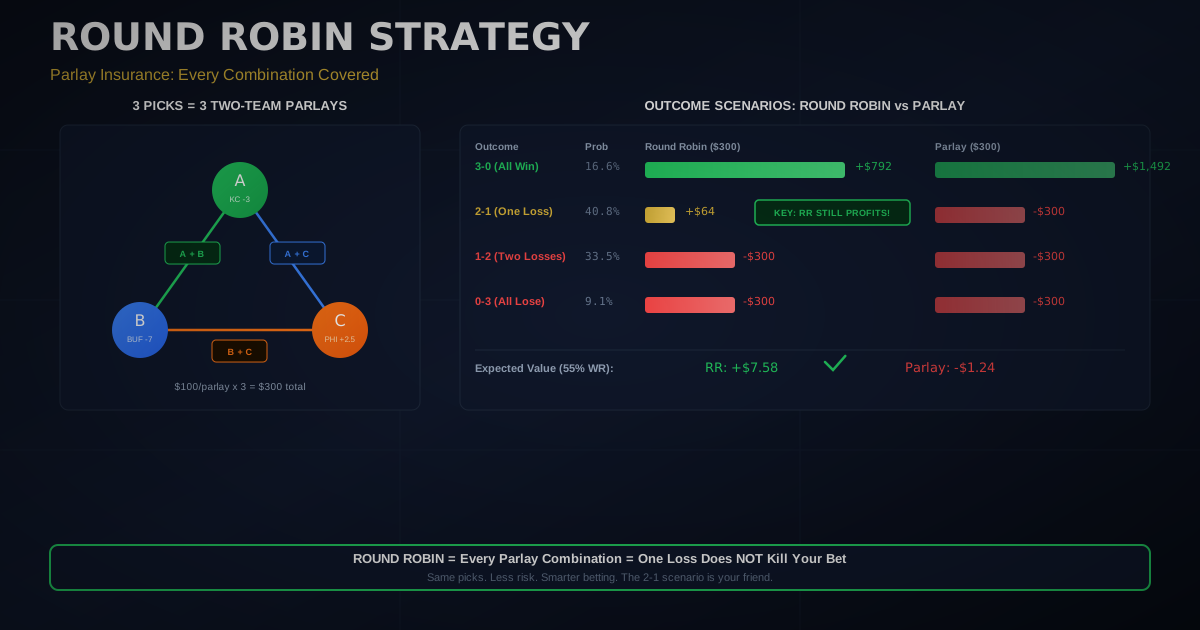
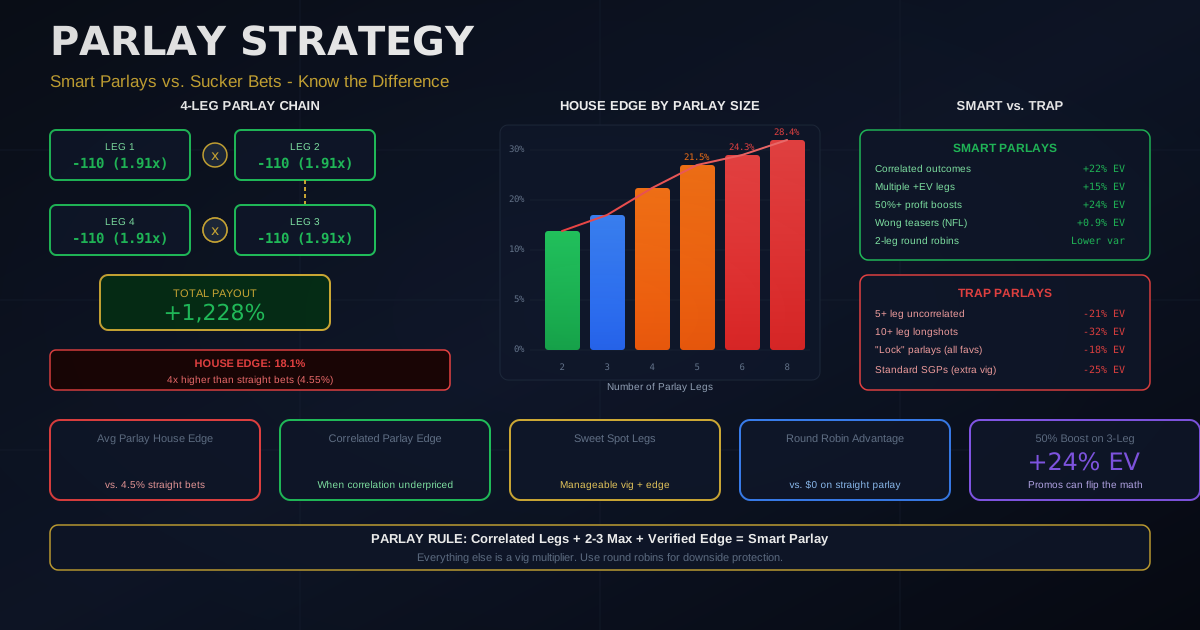
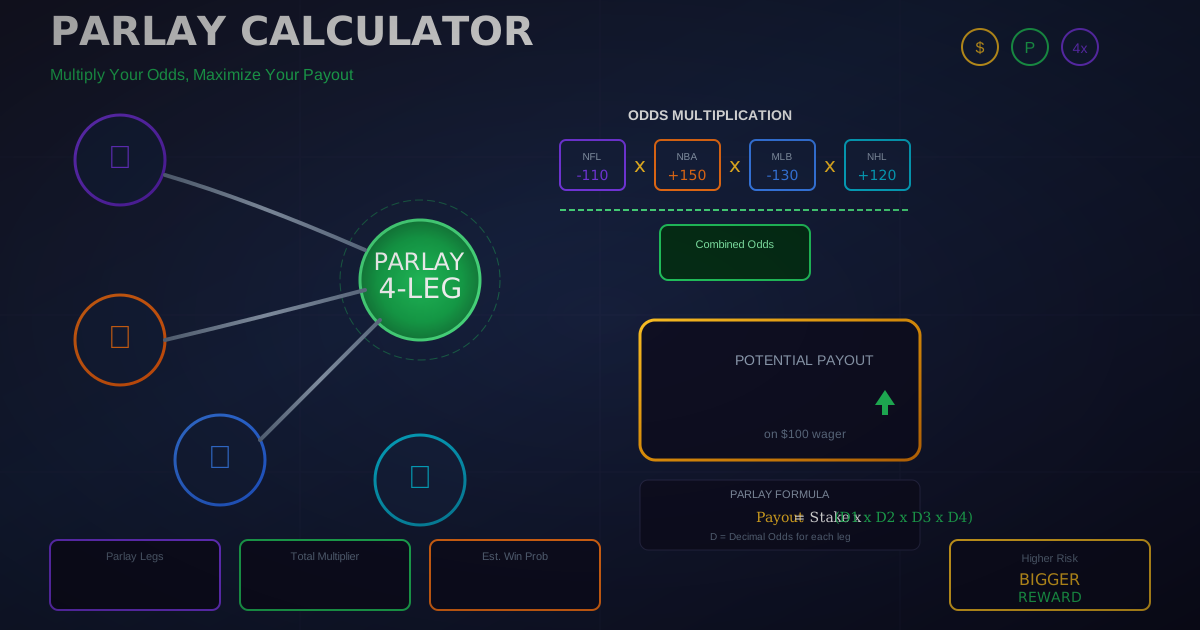
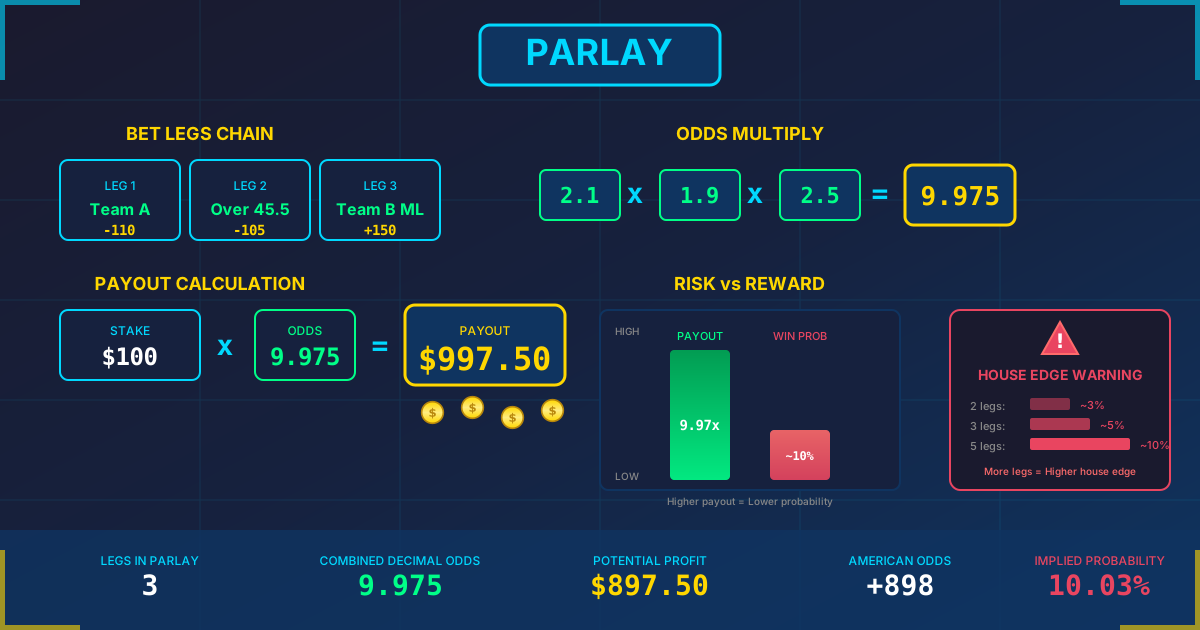
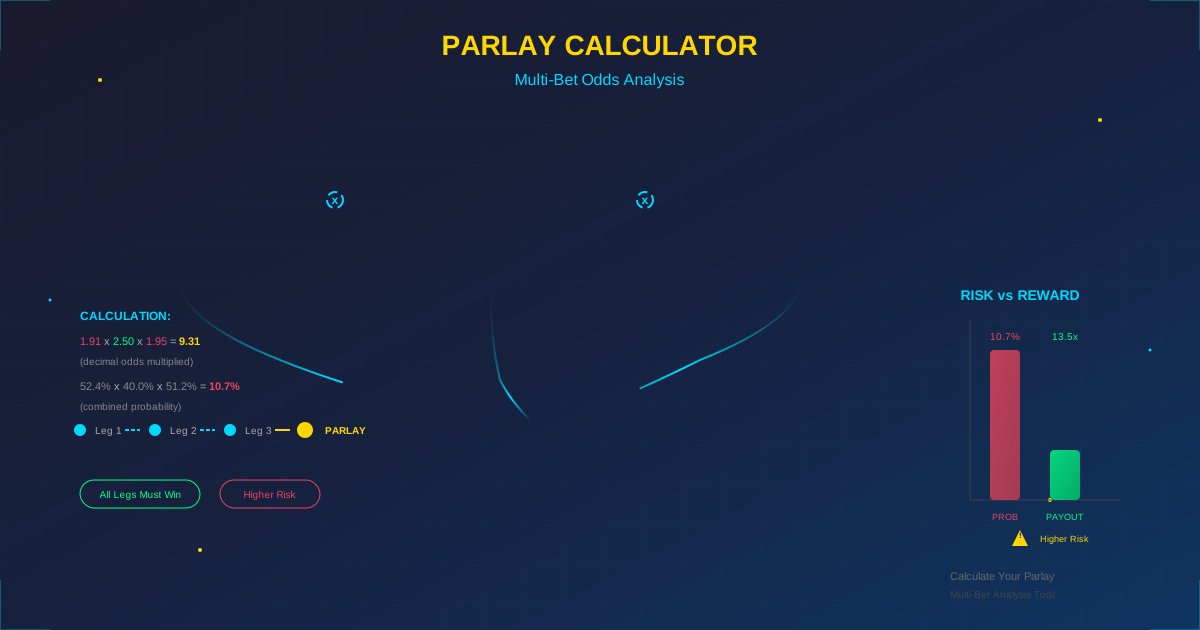
Parlays have massive variance:

Example: 3-team parlay, each leg 50%
Win probability: 0.5³ = 12.5%
Payout: 6:1

Stake: $100, Win: $600, Lose: $100
p = 0.125

SD per bet = √[0.125 × 0.875 × (600 + 100)²]
SD per bet = √[0.109 × 490,000]
SD per bet = $231

For 100 parlay bets:
Total SD = $231 × √100 = $2,310

Compare to straight bets:
Same expected value, but much higher swings
Real-World Examples
Example 1: Sports Bettor Analysis
Situation:
Bettor's season:
500 bets at average $100
Win rate: 53%
Odds average: -110 (win $91, lose $100)
Calculation:
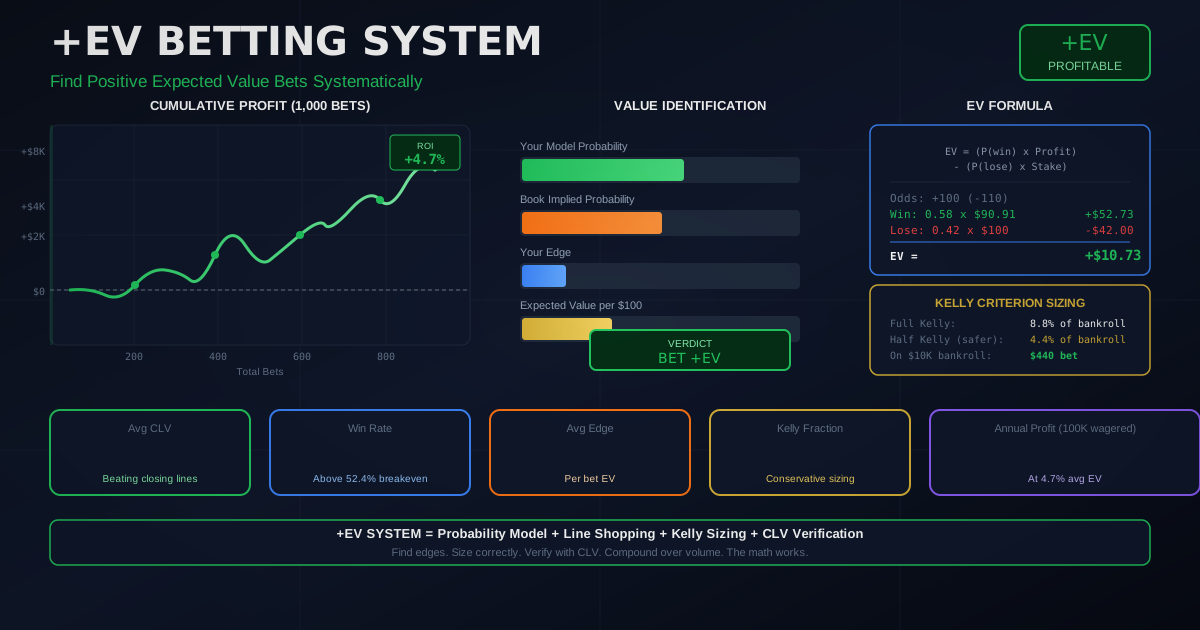
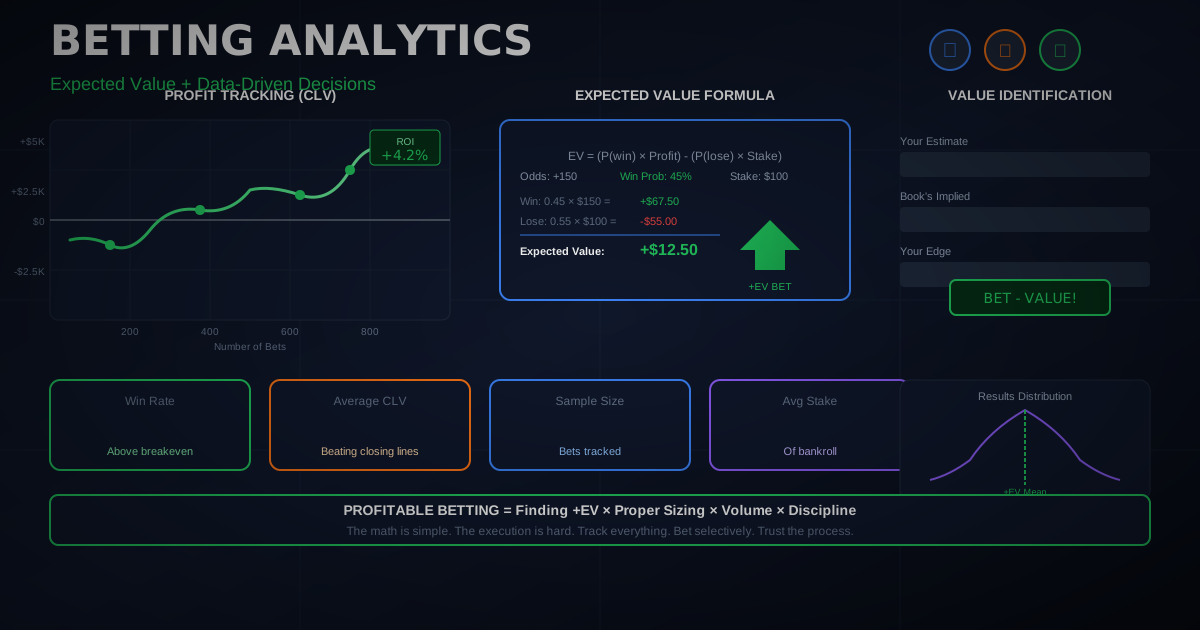
Expected Value:
EV = (0.53 × $91) - (0.47 × $100)
EV = $48.23 - $47 = $1.23 per bet
Total EV = 500 × $1.23 = $615

Standard Deviation:
Per bet SD = √[0.53 × 0.47 × (91 + 100)²]
Per bet SD = √[0.249 × 36,481]
Per bet SD = $95.31

Total SD = $95.31 × √500 = $2,131
Result:
Expected: +$615
SD: $2,131

68% confidence interval:
$615 ± $2,131 = -$1,516 to +$2,746

95% confidence interval:
$615 ± $4,262 = -$3,647 to +$4,877

Even with 53% win rate (positive EV),
there's ~16% chance of LOSING money over 500 bets!
This is why one season doesn't prove skill.
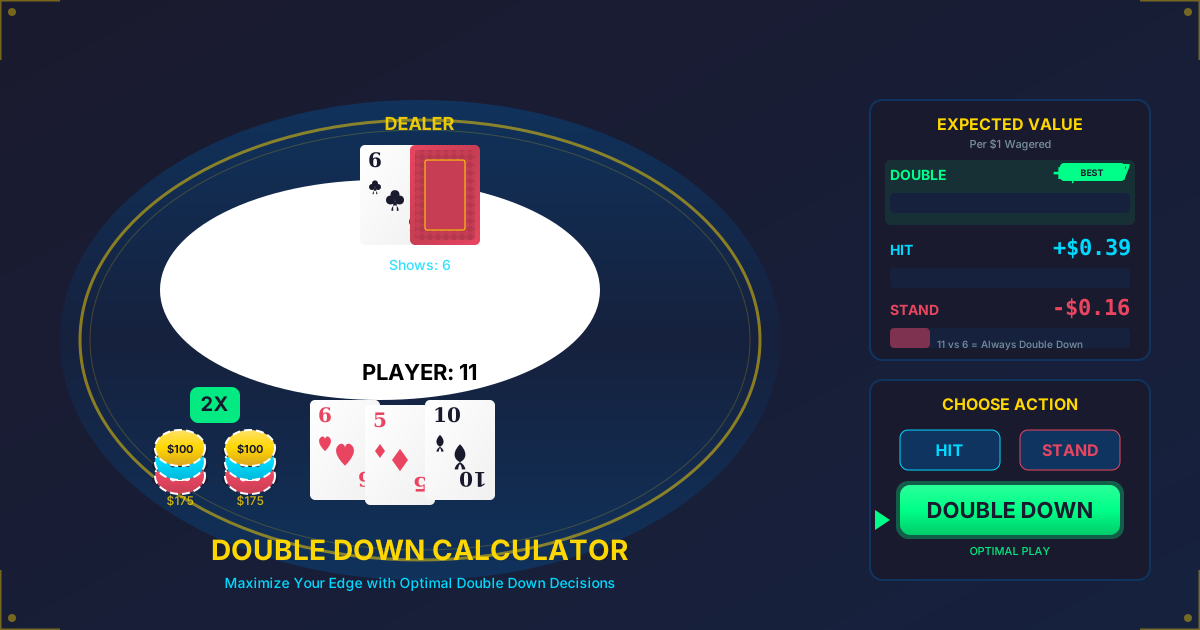
Example 2: Blackjack Session Variance
Situation:
Playing basic strategy blackjack:
House edge: 0.5%
100 hands at $50 average bet
Win rate approximately: 49.5%
Average win/loss: ~$50 (simplified)
Calculation:
Standard Deviation for blackjack:
Typical: 1.1 × bet size per hand

SD per hand = 1.1 × $50 = $55
Total SD = $55 × √100 = $550

Expected Value:
EV = -0.5% × $50 × 100 = -$25

Results Distribution:
Expected: -$25
SD: $550

68% range: -$575 to +$525
95% range: -$1,125 to +$1,075
Result:
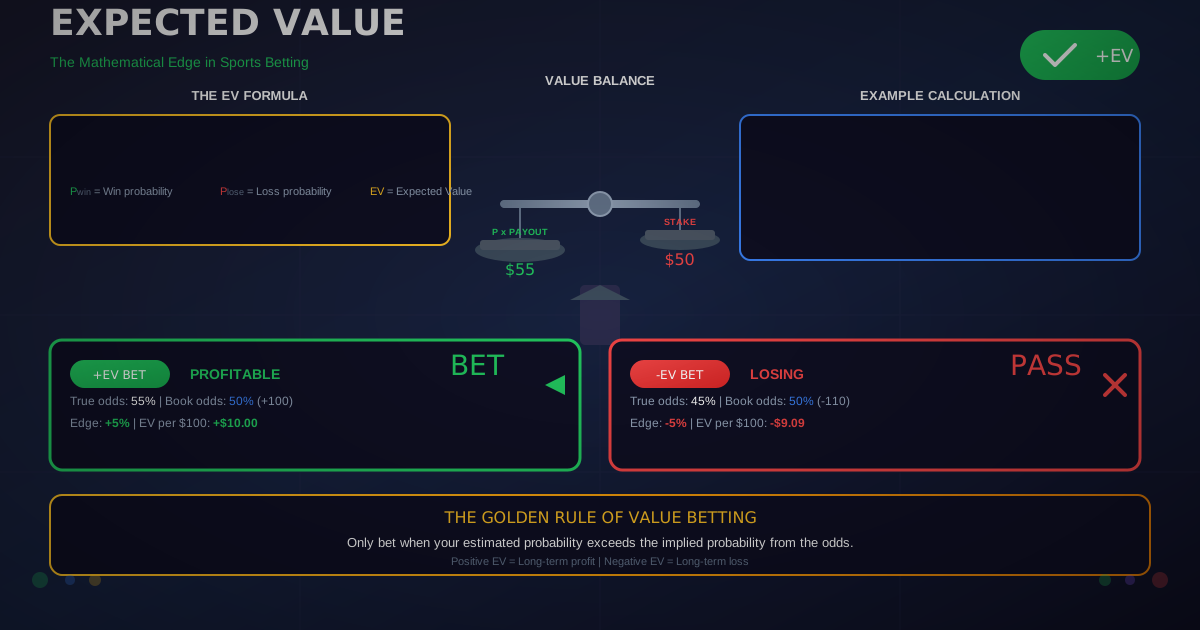
Despite negative EV (-$25 expected loss),
you have ~32% chance of ending ahead!

This is why recreational players often win sessions.
But over 10,000 hands, chance of profit drops to ~1%.

Short-term variance masks long-term expectation.
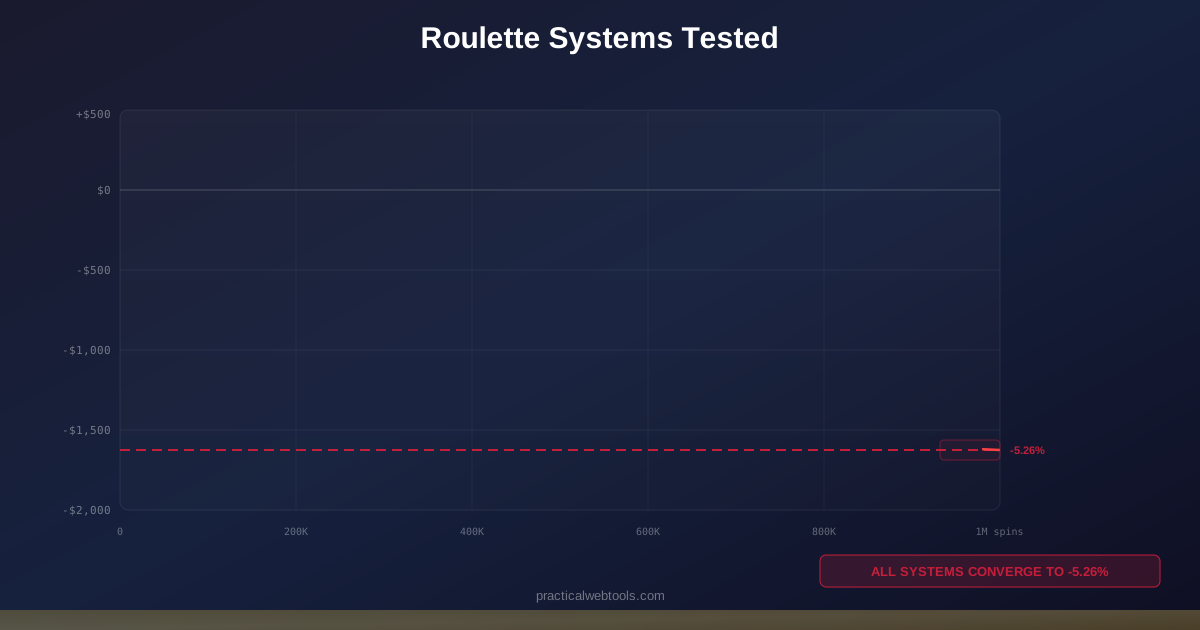
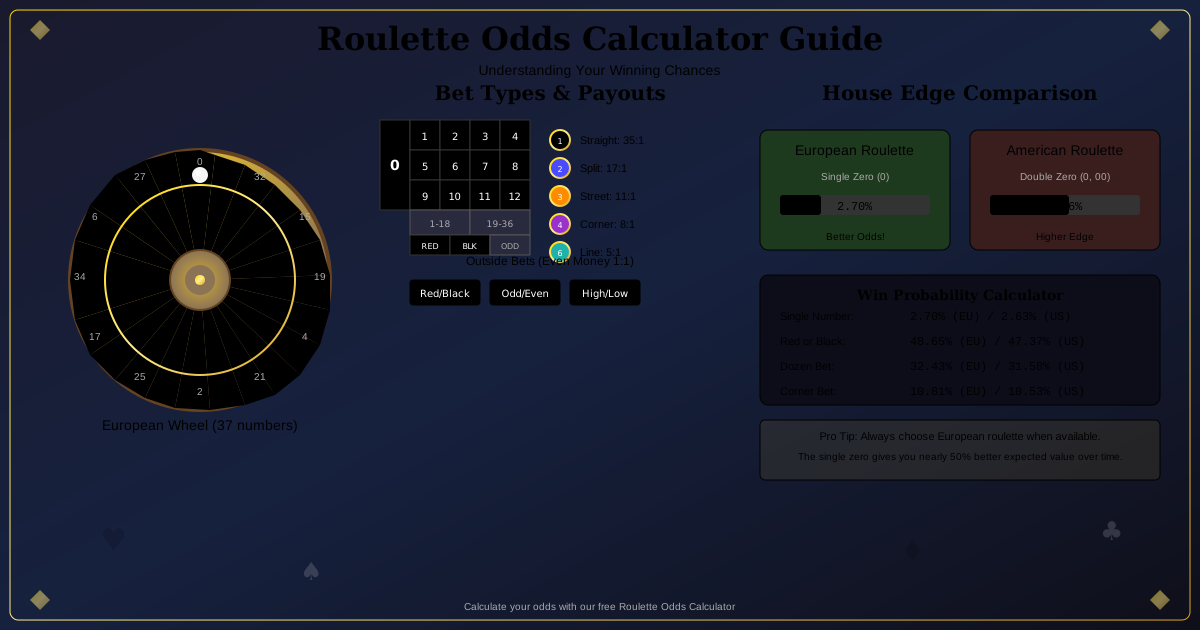
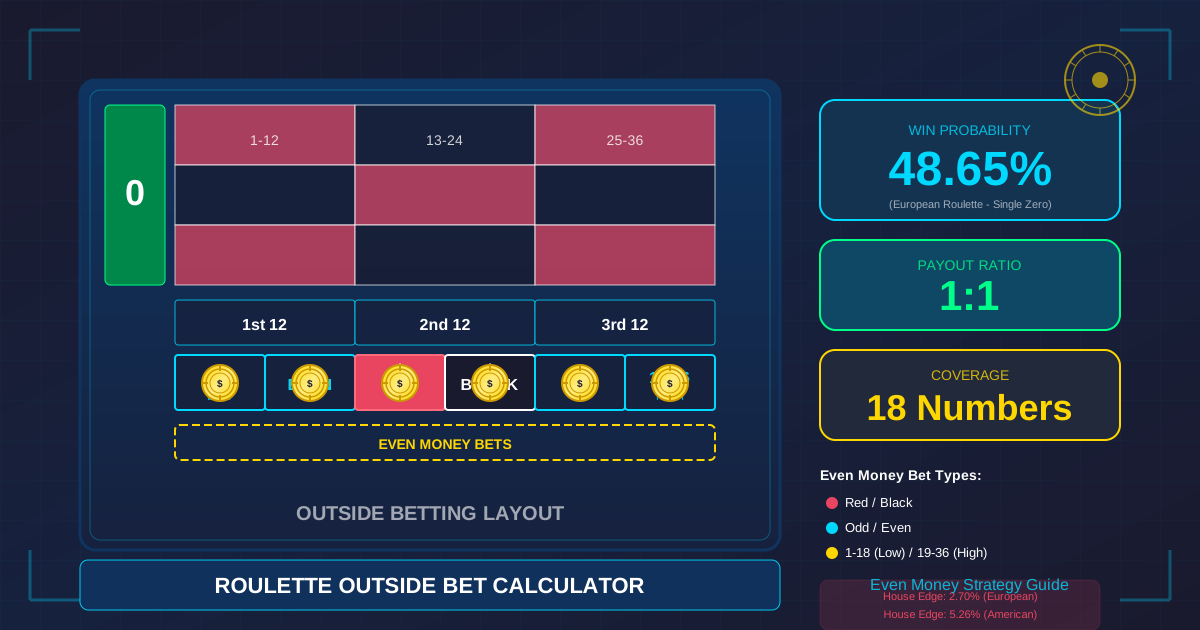
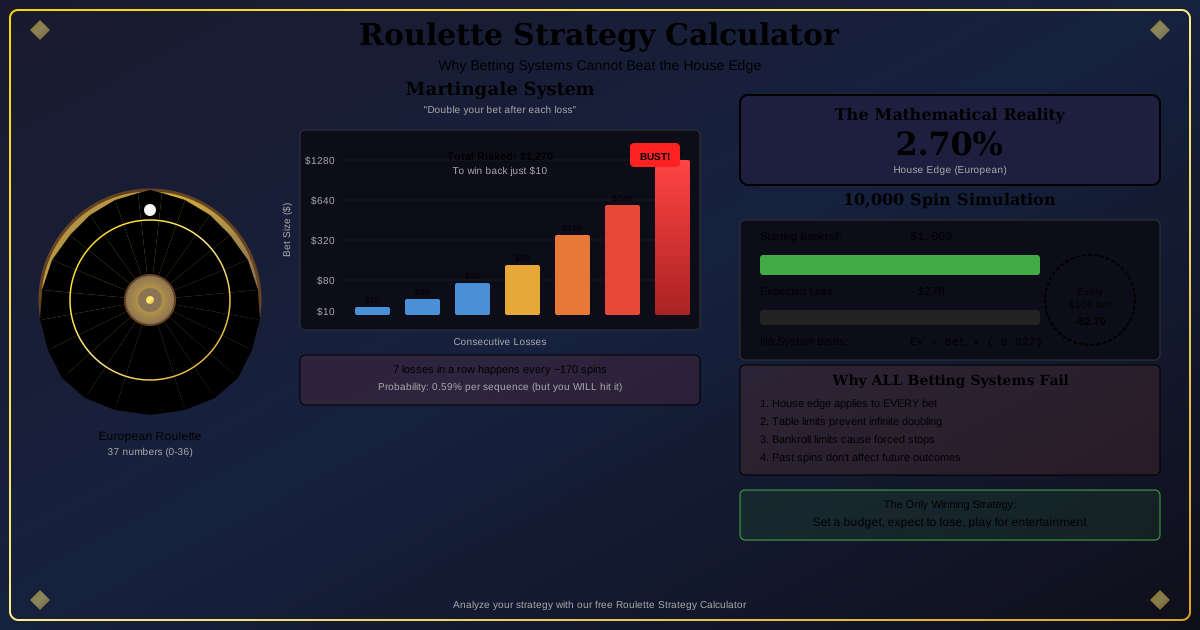
Example 3: Roulette Variance
Situation:
Betting $25 on red (American roulette)
100 spins
Win rate: 47.37%
Win: +$25, Lose: -$25
Calculation:
SD per spin:
SD = √[0.4737 × 0.5263 × ($50)²]
SD = √[0.249 × 2,500]
SD = $24.93 ≈ $25

For 100 spins:
Total SD = $25 × √100 = $250

Expected Value:
EV = (0.4737 × $25) - (0.5263 × $25)
EV = $11.84 - $13.16 = -$1.32 per spin
Total EV = -$132
Result:
Expected: -$132 (house edge)
SD: $250

68% range: -$382 to +$118
95% range: -$632 to +$368

About 30% chance of winning despite house edge
over 100 spins.

Over 10,000 spins:
SD = $25 × √10,000 = $2,500
EV = -$13,200
95% range: -$18,200 to -$8,200
(Now almost certain to lose)
Example 4: Comparing Two Betting Strategies
Situation:
Strategy A: 10 parlays at $100 (12.5% win, 6:1 payout)
Strategy B: 60 straight bets at $100 (50% win, 1:1 payout)

Both have same expected handle (~$6,000)
Both have similar expected value (~$0)
Calculation:
Strategy A (Parlays):
EV = 10 × [(0.125 × $600) - (0.875 × $100)]
EV = 10 × [$75 - $87.50] = -$125

SD per parlay = $231 (calculated earlier)
Total SD = $231 × √10 = $731

Strategy B (Straight bets):
EV = 60 × [(0.50 × $100) - (0.50 × $100)]
EV = $0

SD per bet = $100
Total SD = $100 × √60 = $775
Result:
Similar total SD, but very different experiences:

Strategy A: Likely to lose (only win if hit 2+ parlays)
- Most common outcome: Lose all 10 (-$1,000)
- Win 1: +$500
- Win 2+: Big win

Strategy B: Smooth distribution
- Results cluster around break-even
- Rarely big win or big loss
- More "boring" but predictable

Same variance, different distribution shapes!
Bankroll Implications
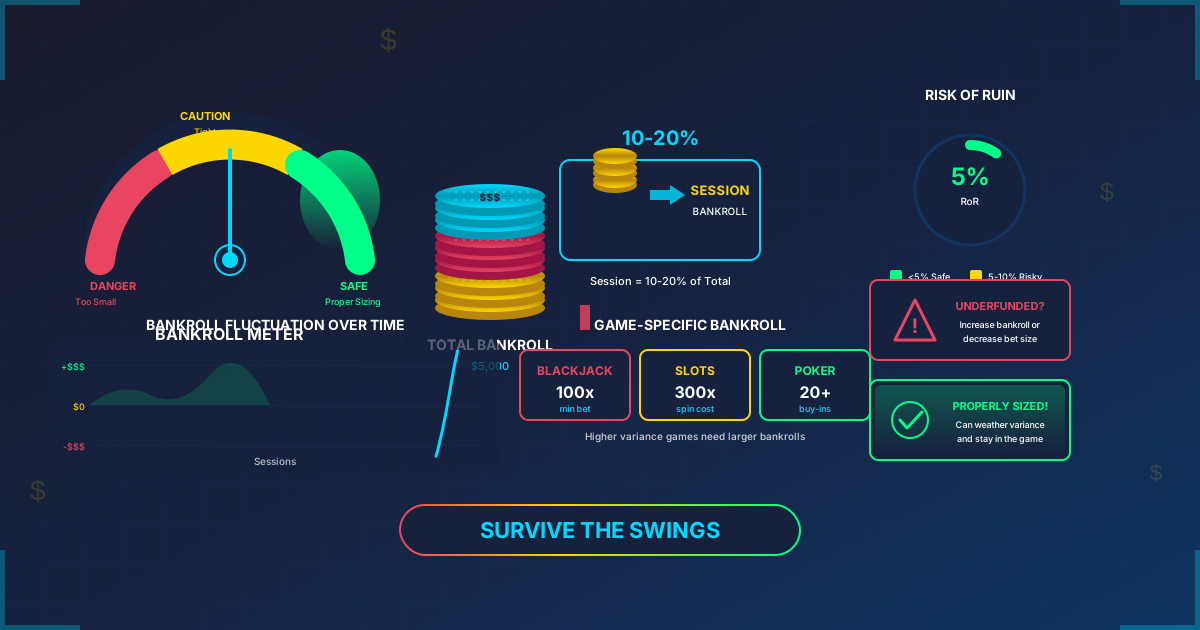
Sizing Based on Standard Deviation
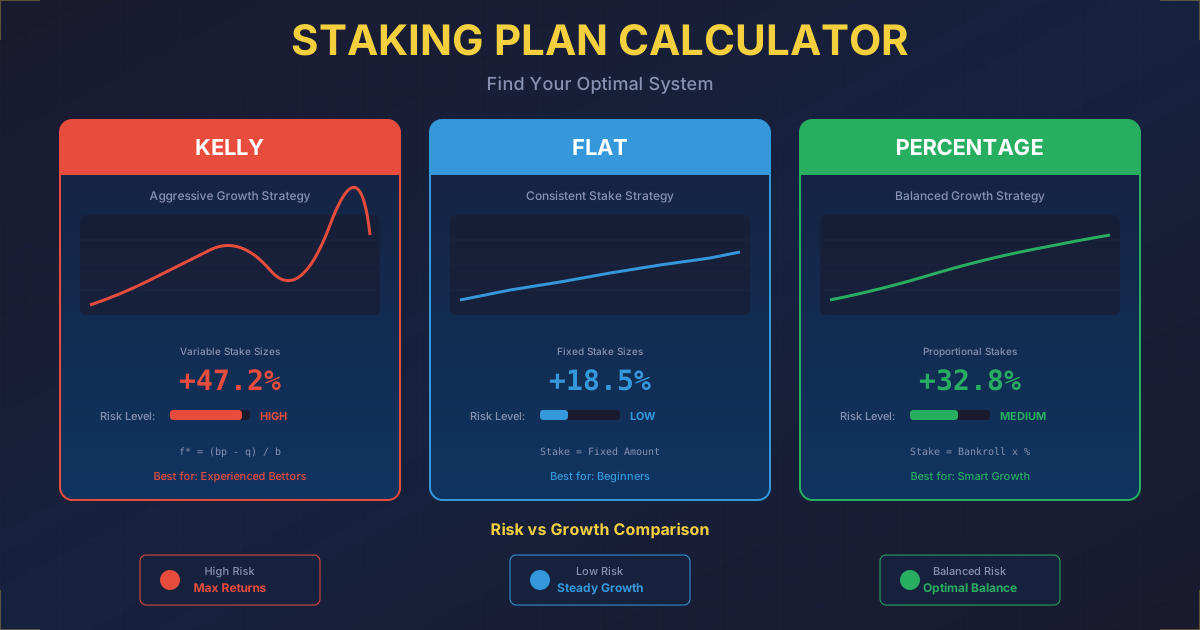
Conservative Approach:
Bankroll = 3 × Maximum Expected Drawdown
Maximum Drawdown ≈ 3 × SD (worst 99.7% case)

Example: SD = $2,000
Max Drawdown ≈ $6,000
Recommended Bankroll: $18,000

Aggressive Approach:
Bankroll = 2 × SD
More risk of ruin, faster potential growth

Standard Approach:
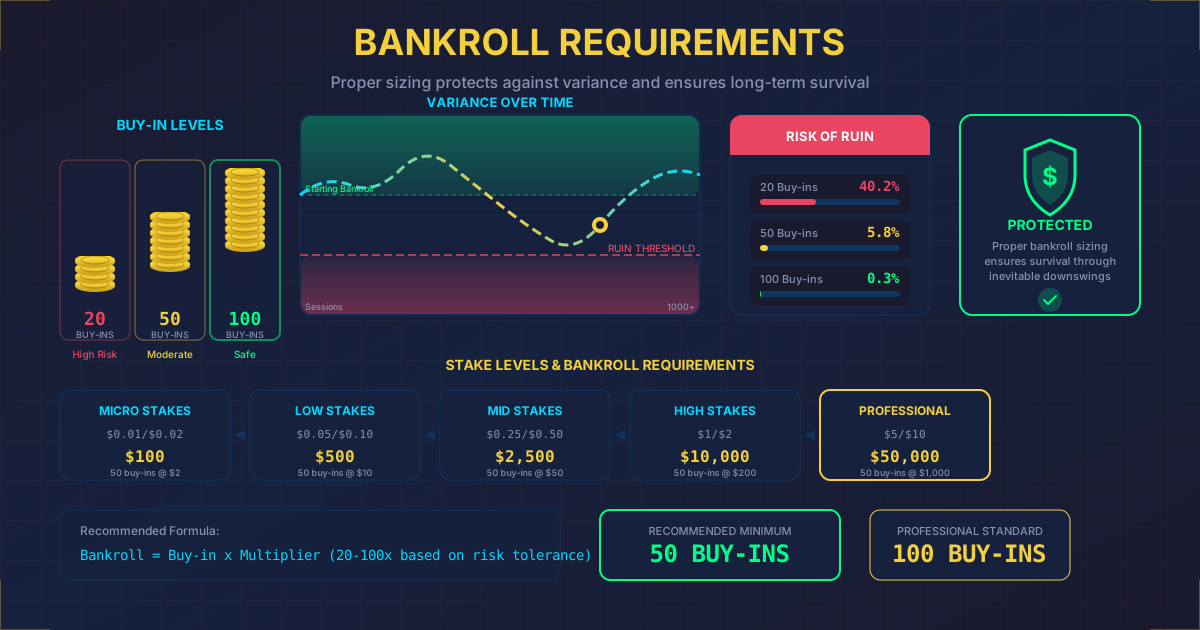
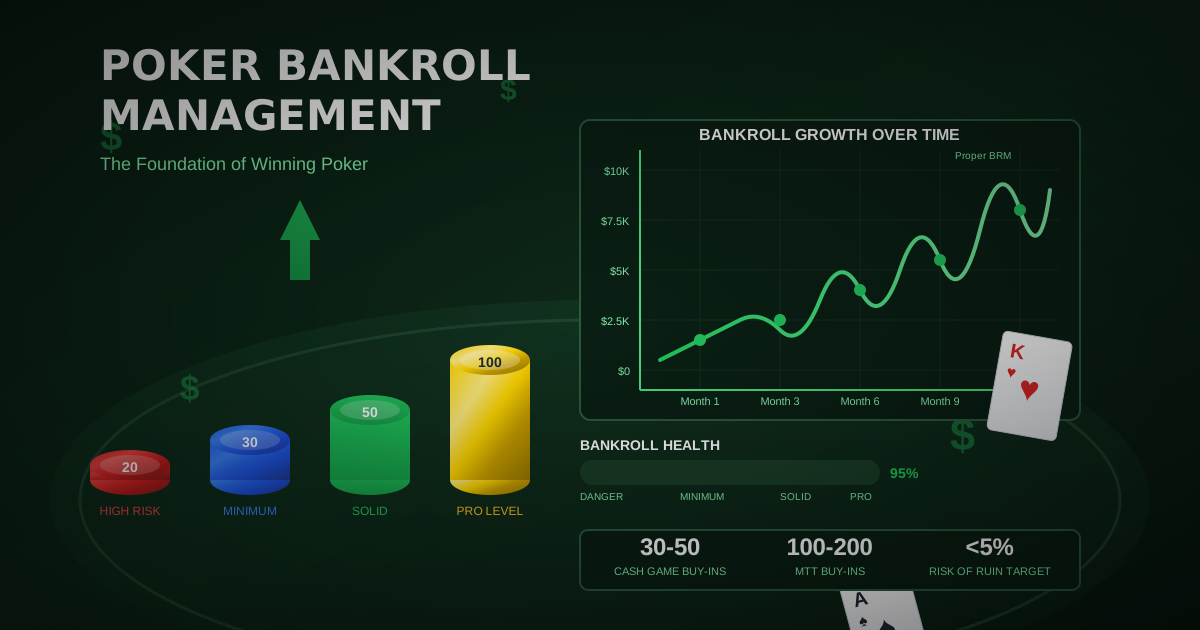
Bankroll = 50-100 × Average Bet Size
Accounts for typical variance patterns
Probability of Drawdown
Probability of X standard deviation drawdown:

1 SD drawdown: ~16% (common)
2 SD drawdown: ~2.3% (infrequent)
3 SD drawdown: ~0.15% (rare but happens)

For 500 bets with SD = $2,000:
1 SD down: Lose $2,000+ (happens to 16%)
2 SD down: Lose $4,000+ (happens to 2-3%)

Even skilled bettors face massive drawdowns
Recovery Time
After drawdown, how long to recover?

If EV = 1% and SD = 10% per bet:
Sharpe Ratio = EV/SD = 0.10

Expected bets to recover 2 SD loss:
Recovery bets ≈ (2 × SD / EV per bet)²

Example: $2,000 loss, EV = $10/bet
Recovery ≈ (200)² / EV contribution
Rough estimate: 400-800 bets

Large drawdowns take a long time to recover
even with positive expectation
Reducing Variance
Strategies for Lower SD
1. Smaller Bet Sizes
   SD scales linearly with bet size
   Half the bet = Half the SD

2. More Bets (Same Total Risk)
   SD grows as √n, not n
   100 small bets: SD = 10 × single bet SD
   vs 10 big bets: SD = 3.16 × single bet SD

3. Avoid High-Variance Markets
   Parlays, props, longshots = High SD
   Spreads, moneylines = Lower SD

4. Bet Favorites (Lower Payout Spread)
   -200 bets have less swing than +200
   (But different expected values)
When High Variance Is Acceptable
Higher variance acceptable when:
- You have large bankroll relative to bets
- Positive expected value is confirmed
- You emotionally handle swings
- Time horizon is long

Lower variance preferred when:
- Bankroll is limited
- Uncertain about edge
- Can't handle losing streaks emotionally
- Short betting time horizon
Common Mistakes to Avoid
-
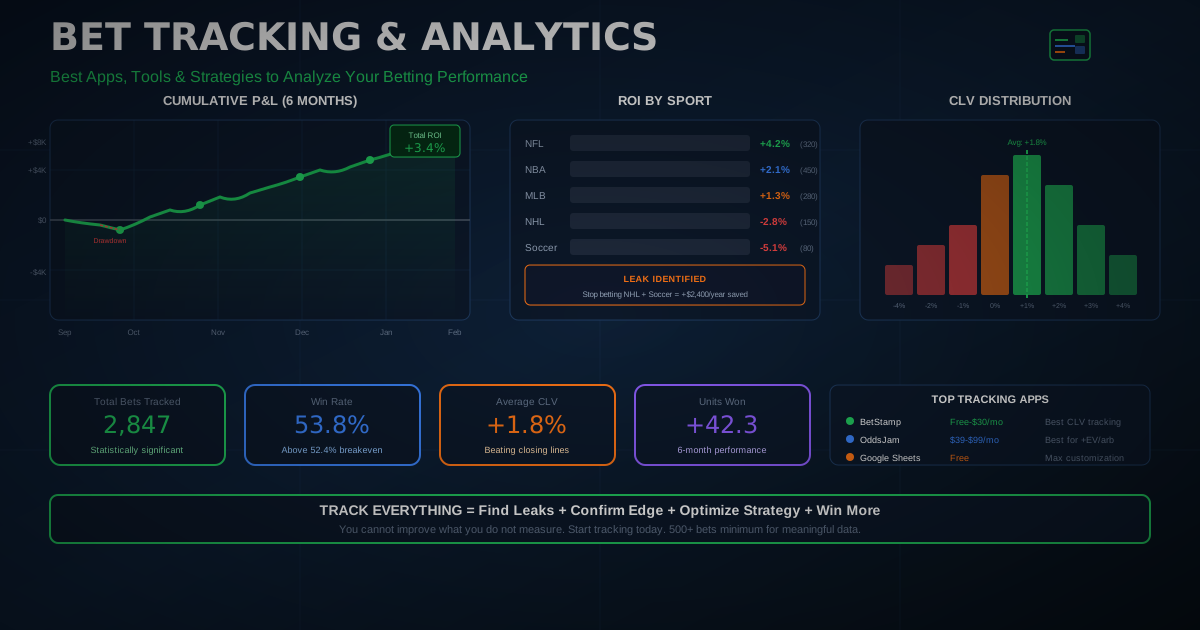
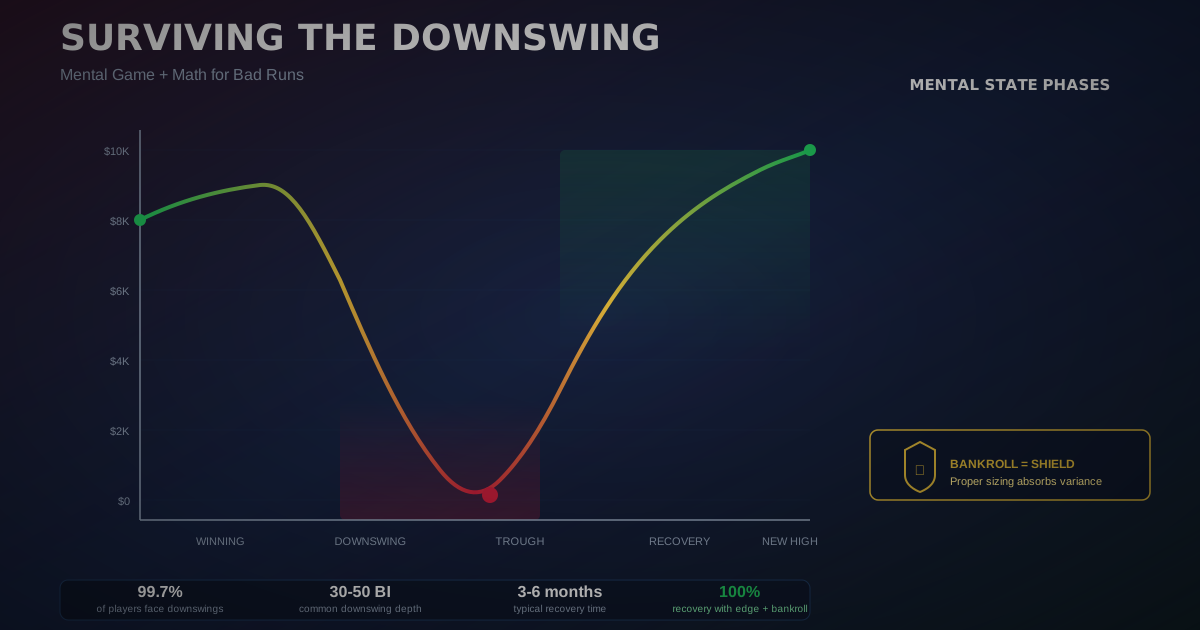
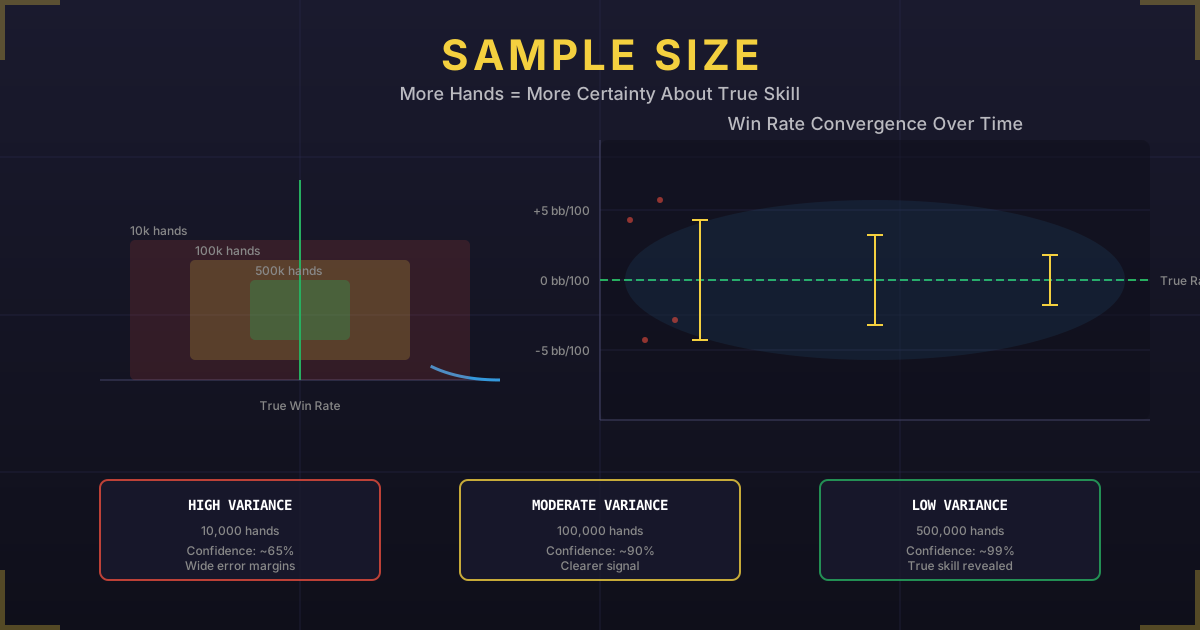
Confusing Variance with Skill: A winning month can be just positive variance, not skill. Track over 1000+ bets before drawing conclusions.
-
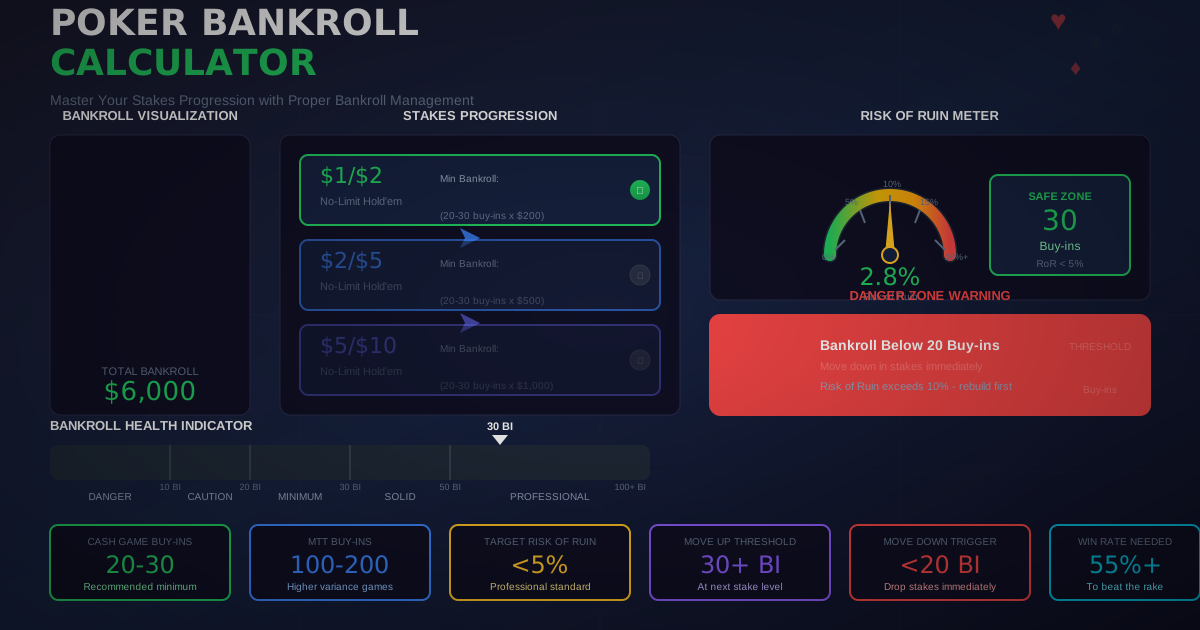
Ignoring SD in Bankroll Planning: Setting bankroll based only on expected value, not variance, leads to ruin. Plan for 2-3 SD downswings.
-
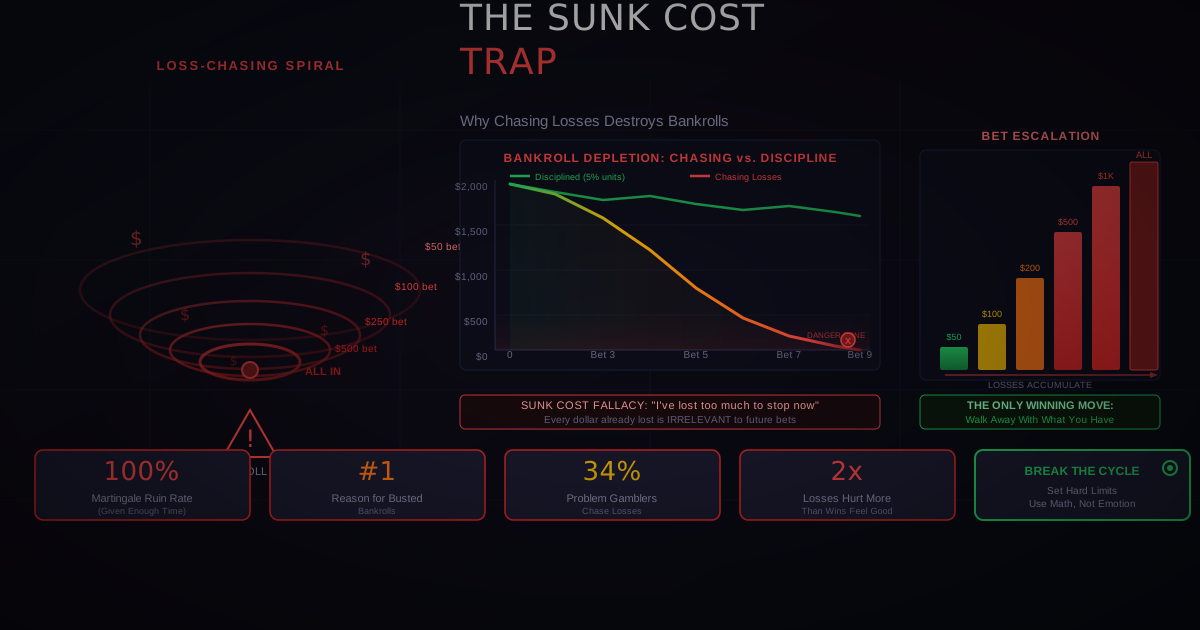
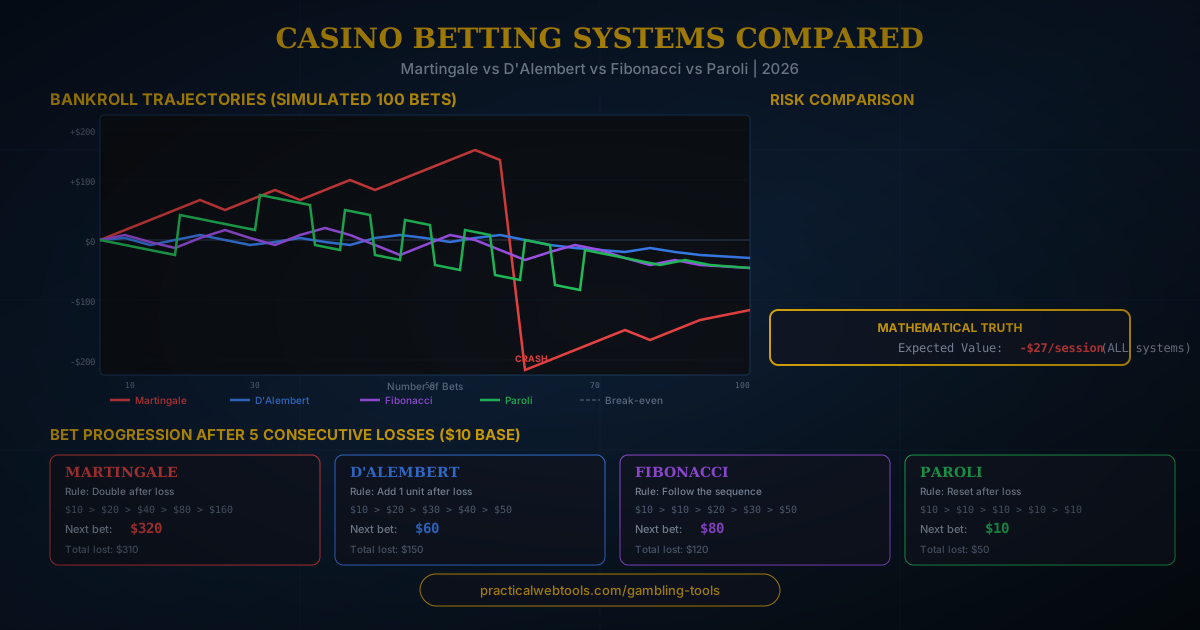
Chasing to Reduce Variance: After a loss, increasing bets to "get back to even" actually increases future variance and risk.
-
Underestimating Parlay Variance: Parlays have extreme SD. A few losses can devastate even a large bankroll.
-
Short-Term Result Analysis: Judging strategy after 50 bets is meaningless - SD is too high relative to EV. Need hundreds of bets minimum.
-
Assuming Normal Distribution Always: Some betting patterns (like parlays) have skewed distributions. Mean ± 2SD doesn't always work cleanly.
Frequently Asked Questions
How many bets do I need to overcome variance?
Roughly, you need (SD/EV)² bets for results to reliably reflect your edge. If EV is 2% of stakes and SD is 100%, you need 2,500+ bets.
Is lower variance always better?
Not necessarily. If you have positive EV, some variance is fine. The goal is appropriate variance for your bankroll, not minimum variance.
Can I reduce variance without reducing potential profit?
Somewhat, by betting more frequently at smaller stakes. Total EV stays similar, but SD relative to EV improves.
Why does SD grow with √n instead of n?
Because wins and losses partially cancel out over many bets. This is the mathematical basis for "law of large numbers" - more bets means more reliable average results.
How does SD relate to risk of ruin?
Higher SD relative to bankroll = higher risk of ruin. If SD is 50% of your bankroll, significant ruin risk exists even with positive EV.
Should I track my actual SD?
Yes, comparing actual SD to theoretical SD reveals if your results match expectations. Much higher actual SD might indicate measurement error or correlation issues.
Pro Tips
- Calculate theoretical SD before starting any betting system to know what swings to expect
- If actual results exceed 3 SD from expected, either you're lucky/unlucky or your assumptions are wrong
- Use SD to determine minimum sample size needed to evaluate a betting approach - typically 500-1000 bets
- When evaluating tipsters/systems, ask for SD along with ROI - high ROI with unknown SD is meaningless
- Remember that SD increases with √n, so doubling your bets only increases SD by 41%, not 100%
Related Calculators
- Bankroll Calculator - Sizing based on variance
- Risk of Ruin Calculator - Probability of going broke
- Expected Value Calculator - Calculate average returns
- Law of Large Numbers Calculator - Long-term convergence
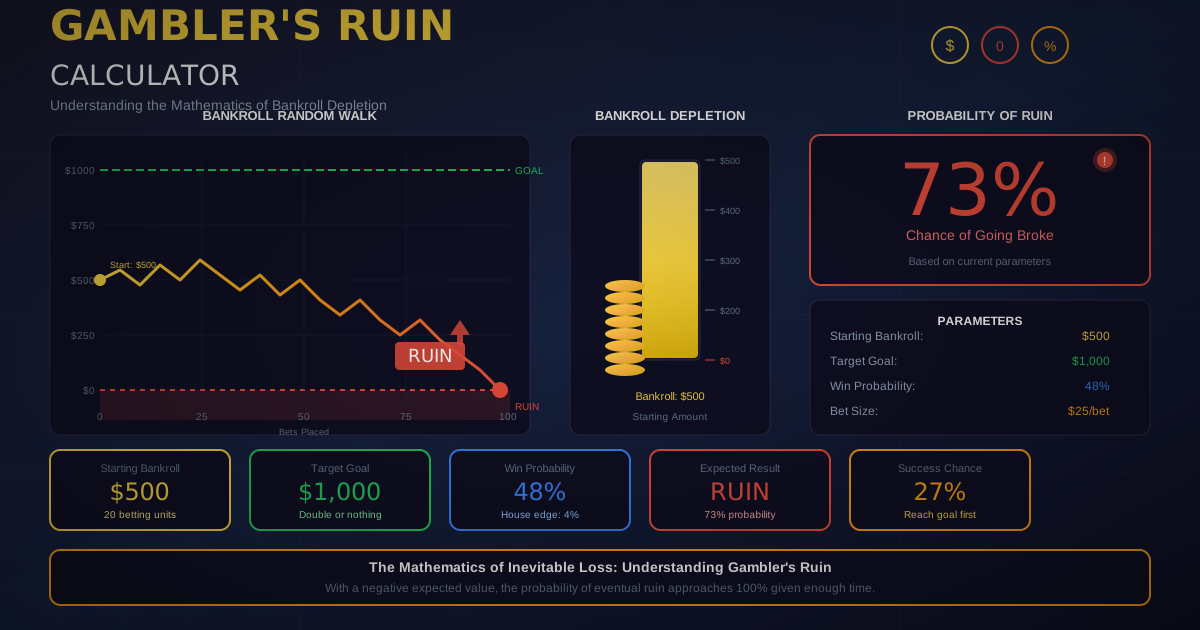
- Gambler's Ruin Calculator - Finite bankroll analysis
Conclusion
Standard deviation is the hidden factor that determines your gambling experience. Two bettors with identical expected value can have vastly different journeys based on variance. One might steadily grow their bankroll while another swings wildly between big wins and devastating losses.
Our calculator quantifies this uncertainty, helping you plan appropriate bankrolls, set realistic expectations, and understand why short-term results often contradict long-term math. In gambling, variance is certain - understanding it is your edge.