Heads-Up Poker Calculator: Dominate One-on-One Strategy (2026)
Heads-Up Poker Calculator: Master the Art of One-on-One Combat
Heads-up poker is the purest form of the game. No multi-way pots, no position complexity beyond two seats, just you versus one opponent in psychological and mathematical warfare. Our heads-up poker calculator provides Nash equilibrium ranges, push-fold charts, and EV calculations for every spot in heads-up play.
What Is Heads-Up Poker?
Heads-up poker refers to any poker format with exactly two players competing. This can occur naturally when a tournament reaches the final two players, in dedicated heads-up Sit and Go tournaments, in heads-up cash games, or in the blinds when everyone else folds.
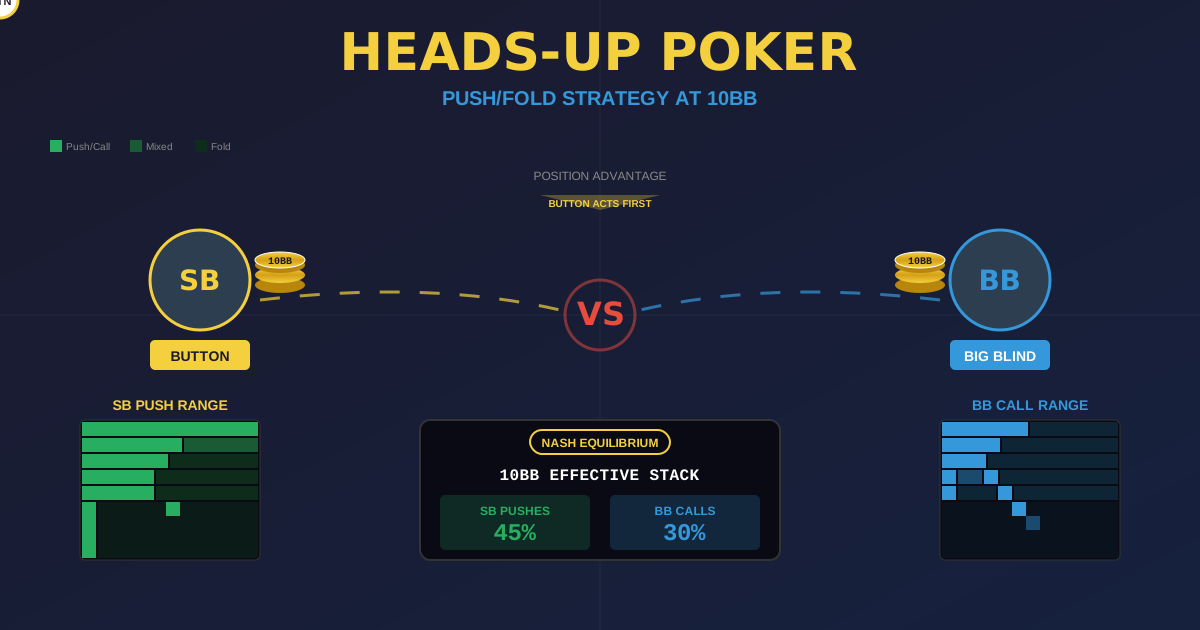
Quick Answer: Heads-up strategy revolves around aggression and position dominance. The small blind acts first preflop but last postflop. Nash equilibrium for heads-up push-fold: at 10BB, the SB should push approximately 40% of hands, and BB should call roughly 30%. Adjust wider as stacks shrink and tighter as stacks grow.
How to Use Our Calculator
Use the Heads-Up Poker Calculator →
Step-by-Step Instructions
- Enter Stack Sizes: Input your stack and opponent's stack in big blinds
- Select Position: Choose whether you're SB (button) or BB
- Specify the Action: Input the preflop situation (limp, raise, push)
- View Nash Ranges: See equilibrium push and call ranges
- Calculate Specific Hands: Input your hand to see optimal action
Input Fields
| Field | Description | Example |
|---|---|---|
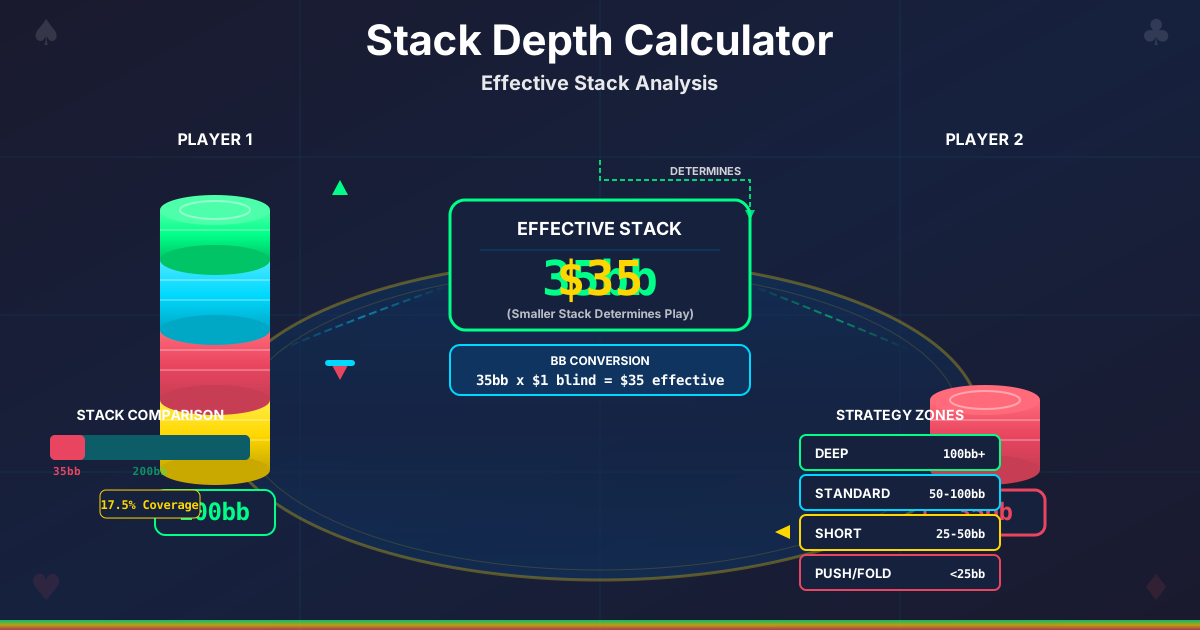
| Effective Stack | Smaller stack size in BBs | 15 BB |
| Your Position | SB (button) or BB | SB |
| Your Hand | Your two hole cards | Ac9s |
| Villain Tendencies | Opponent type (optional) | Passive, Aggressive, Unknown |
| Current Action | Facing bet, first to act | Open-push vs calling push |
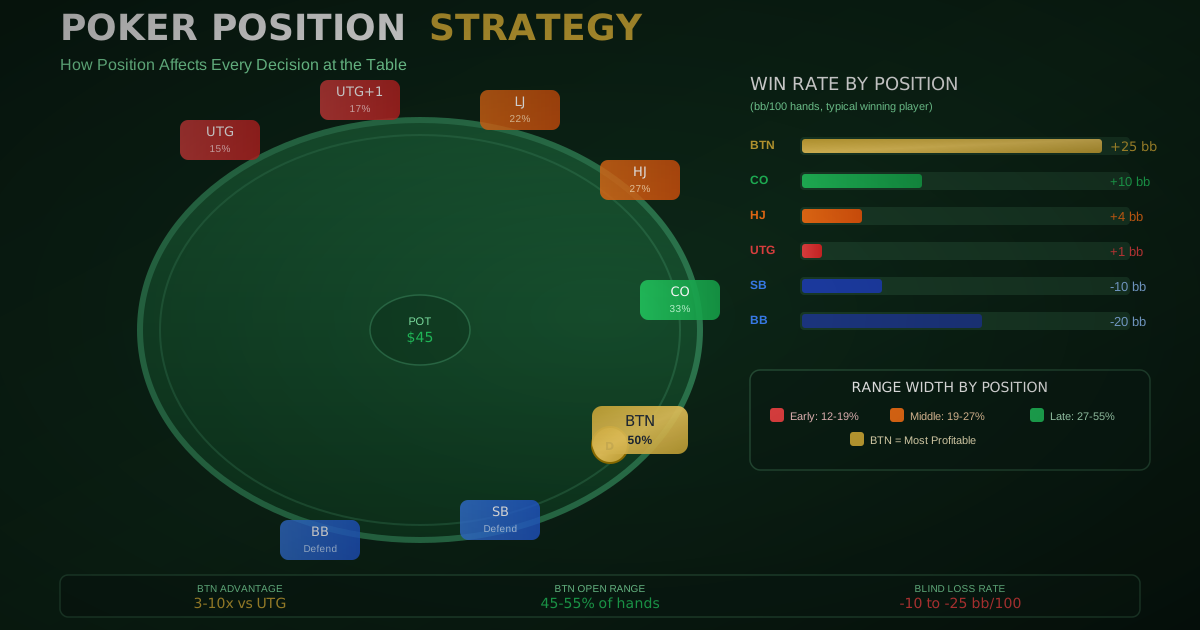
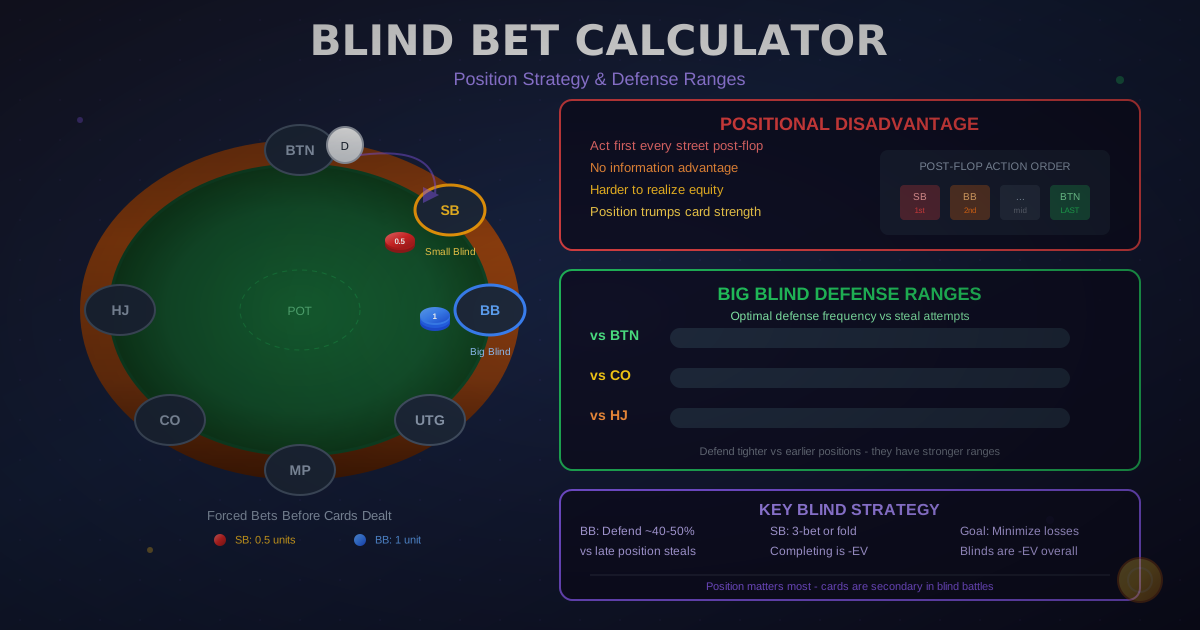
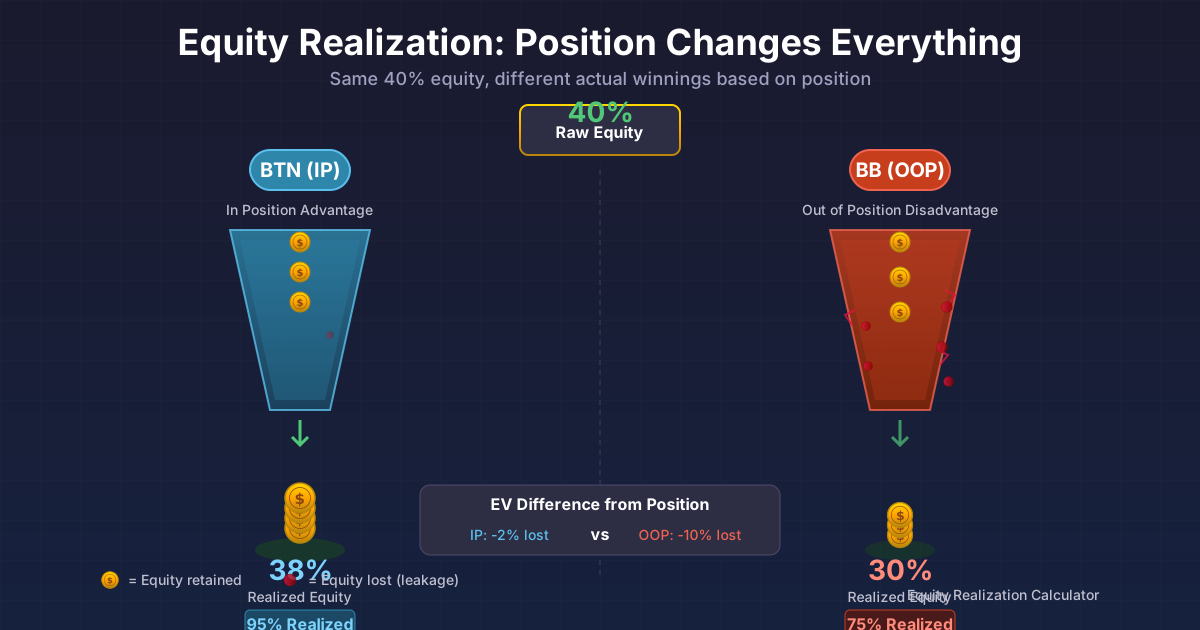
Heads-Up Position Dynamics
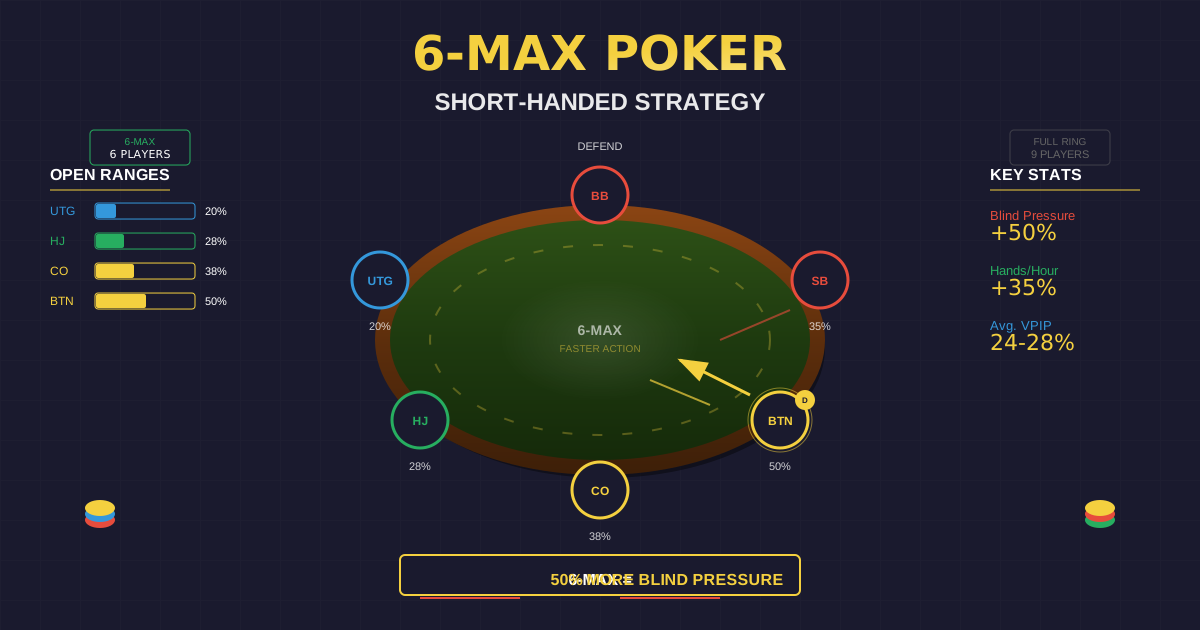
Small Blind (Button) Position
The SB is button heads-up, posting the small blind and acting first preflop:
Preflop:
- Posts small blind (typically 0.5 BB)
- Acts first, must decide: fold, limp, raise, or push
- Has position disadvantage preflop only
Postflop:
- Acts LAST on all streets
- Significant information advantage
- Can control pot size effectively
Big Blind Position
The BB posts the big blind and acts second preflop:
Preflop:
- Posts full big blind
- Acts last preflop, sees opponent's action first
- Can defend, 3-bet, or fold
Postflop:
- Acts FIRST on all streets
- Information disadvantage
- Must play more defensively
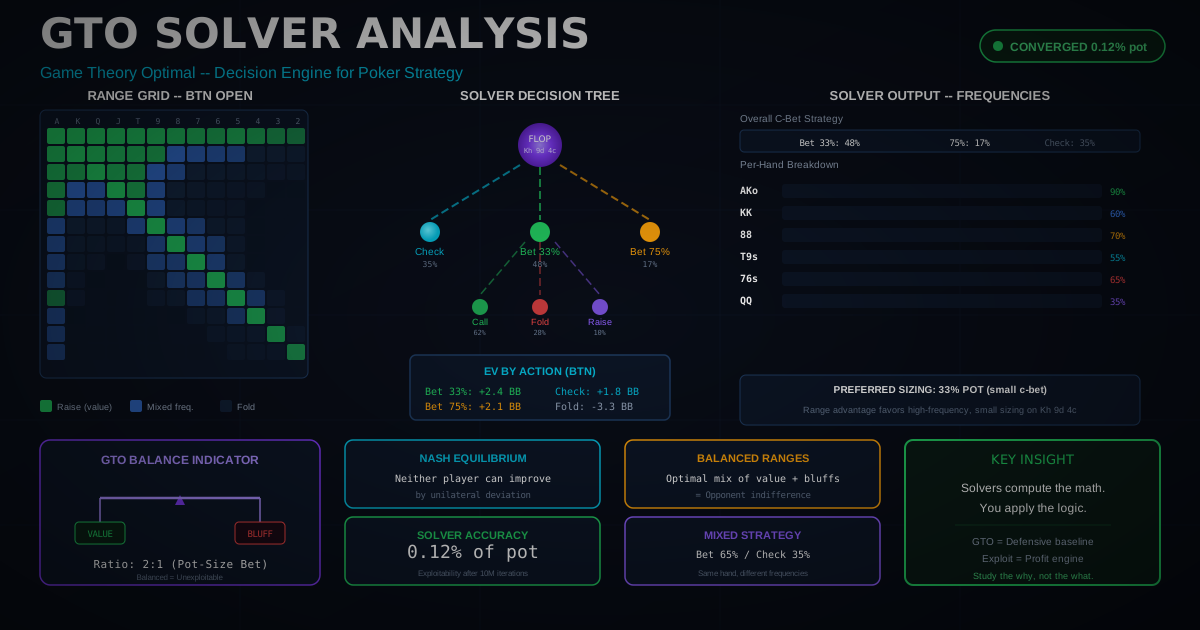
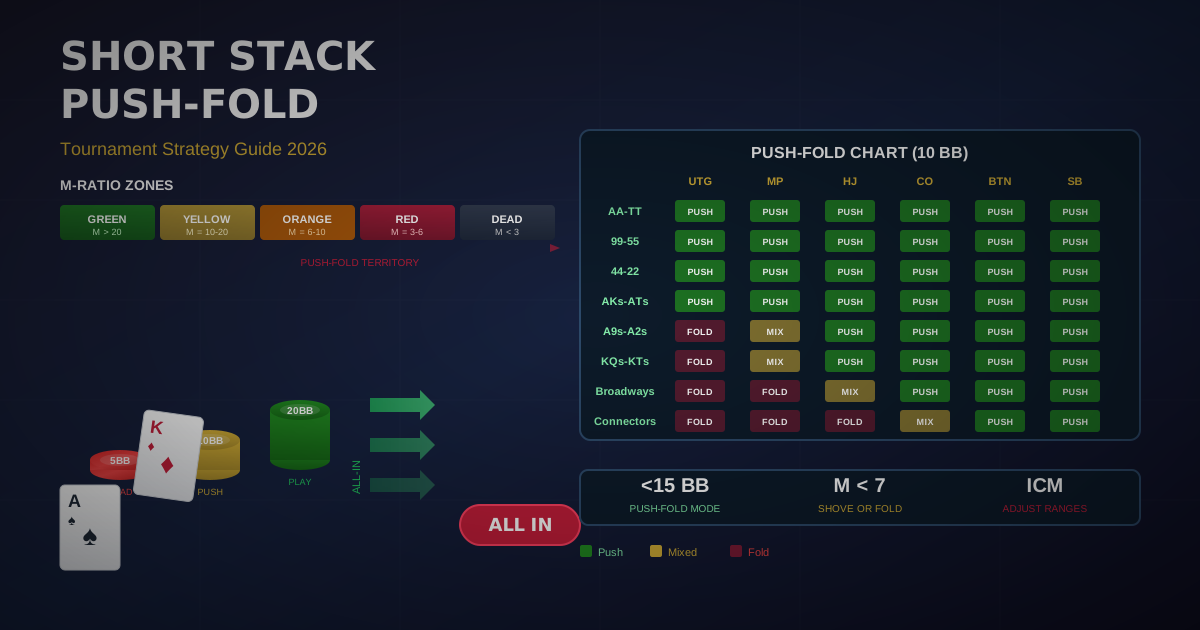
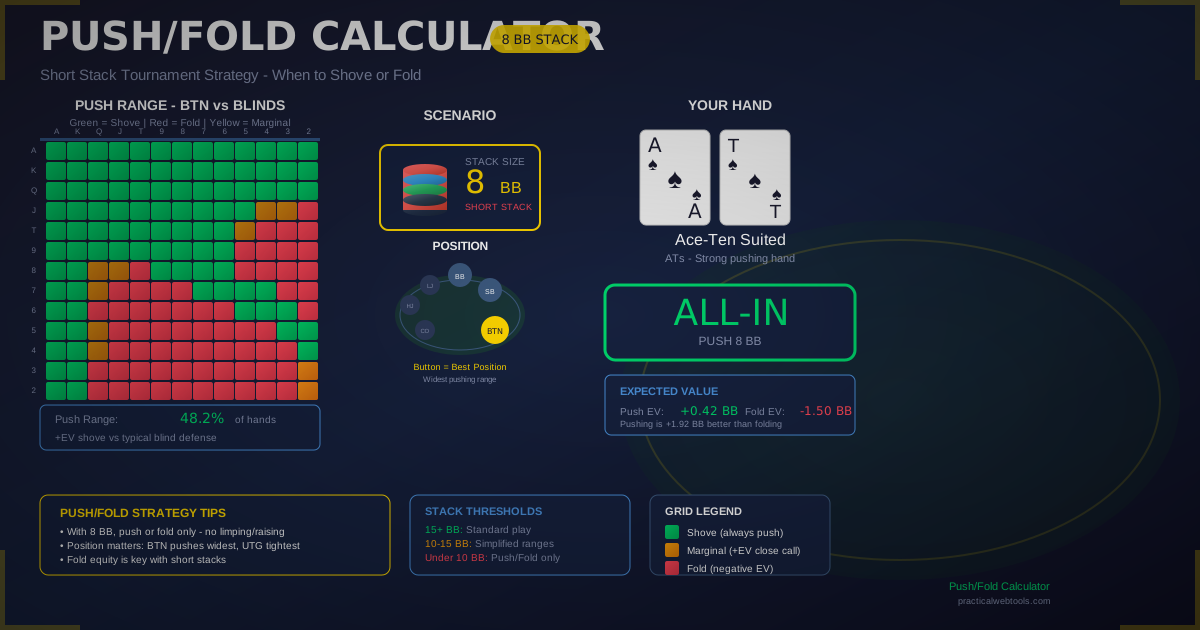
Nash Equilibrium Push-Fold Charts
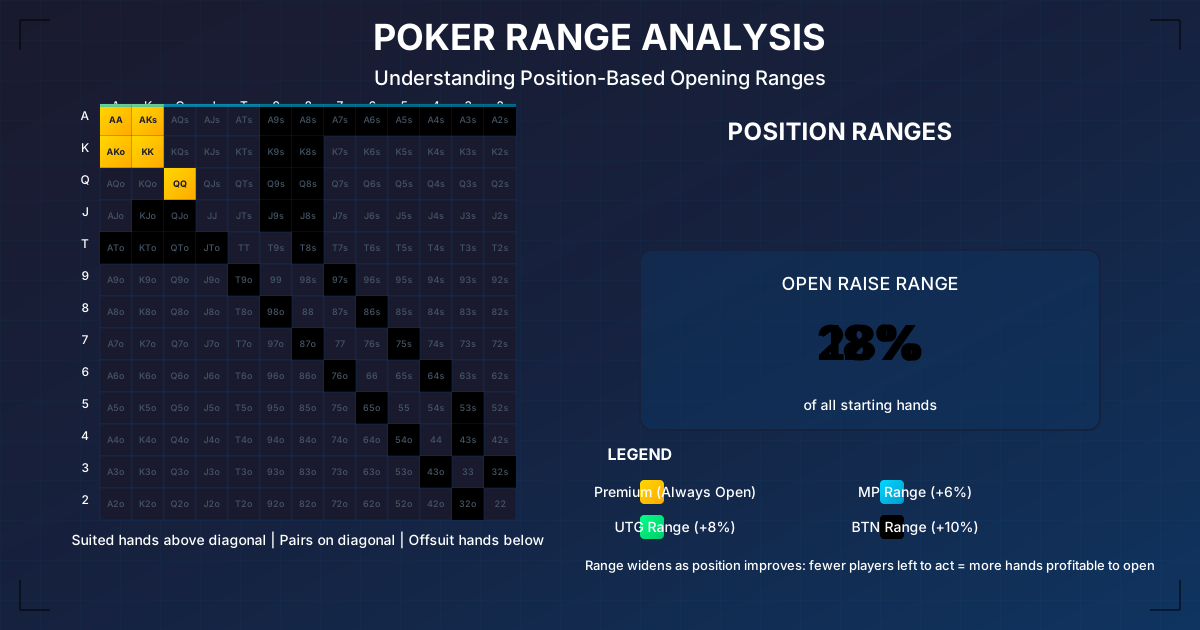
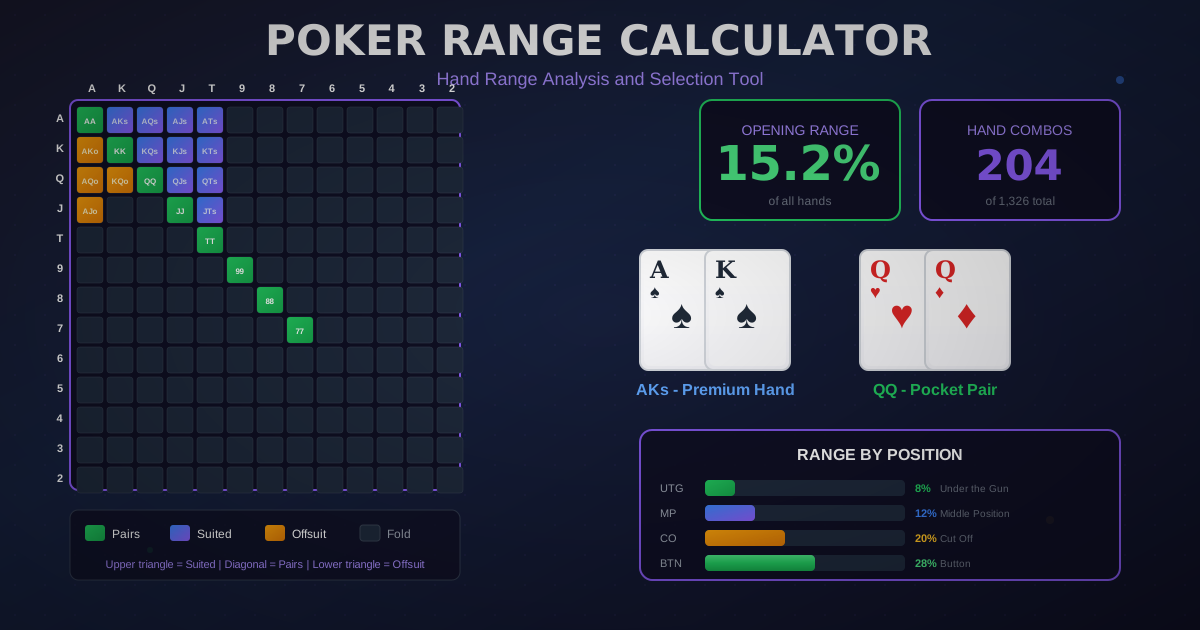
SB Pushing Ranges (By Stack Depth)
20 Big Blinds - SB Push Range (~25%):
Pairs: 22+
Broadway: A2s+, A7o+, KTs+, KJo+, QJs
Suited: 65s+, 75s+, 86s+, 97s+, T8s+
15 Big Blinds - SB Push Range (~35%):
Pairs: 22+
Aces: A2s+, A2o+
Broadway: K2s+, K7o+, Q8s+, QTo+, J9s+, JTo
Suited connectors: 54s+, 64s+, 75s+, 86s+
10 Big Blinds - SB Push Range (~45%):
Pairs: 22+
Aces: A2+
Kings: K2s+, K3o+
Queens: Q4s+, Q8o+
Jacks: J6s+, J8o+
Suited: T7s+, 97s+, 87s, 76s, 65s, 54s
7 Big Blinds - SB Push Range (~60%):
Pairs: 22+
Aces: Any
Kings: Any
Queens: Q2s+, Q3o+
Jacks: J2s+, J5o+
Tens: T4s+, T7o+
Suited: 94s+, 84s+, 74s+, 64s+, 53s+
5 Big Blinds - SB Push Range (~75%):
Nearly all hands except worst offsuit trash
Fold only: 72o, 82o, 83o, 92o, 93o type hands
BB Calling Ranges (Against SB Push)
Calling 20 BB Push (~15%):
Pairs: 66+
Aces: ATs+, AJo+
Broadway: KQs
Calling 15 BB Push (~20%):
Pairs: 44+
Aces: A8s+, ATo+
Broadway: KJs+, KQo, QJs
Calling 10 BB Push (~30%):
Pairs: 22+
Aces: A2s+, A5o+
Broadway: K9s+, KTo+, QTs+, QJo, JTs
Calling 7 BB Push (~40%):
Pairs: 22+
Aces: A2+
Kings: K5s+, K8o+
Queens: Q8s+, QTo+
Suited: J8s+, T8s+, 98s
Calling 5 BB Push (~55%):
Very wide range
Fold only: Worst offsuit hands without any connectivity
Heads-Up Strategy by Stack Depth
Deep Stacks (50+ BB)
At deep stacks, postflop skill matters most:
SB Strategy:
- Raise 2.5-3x with wide range (60-70% of hands)
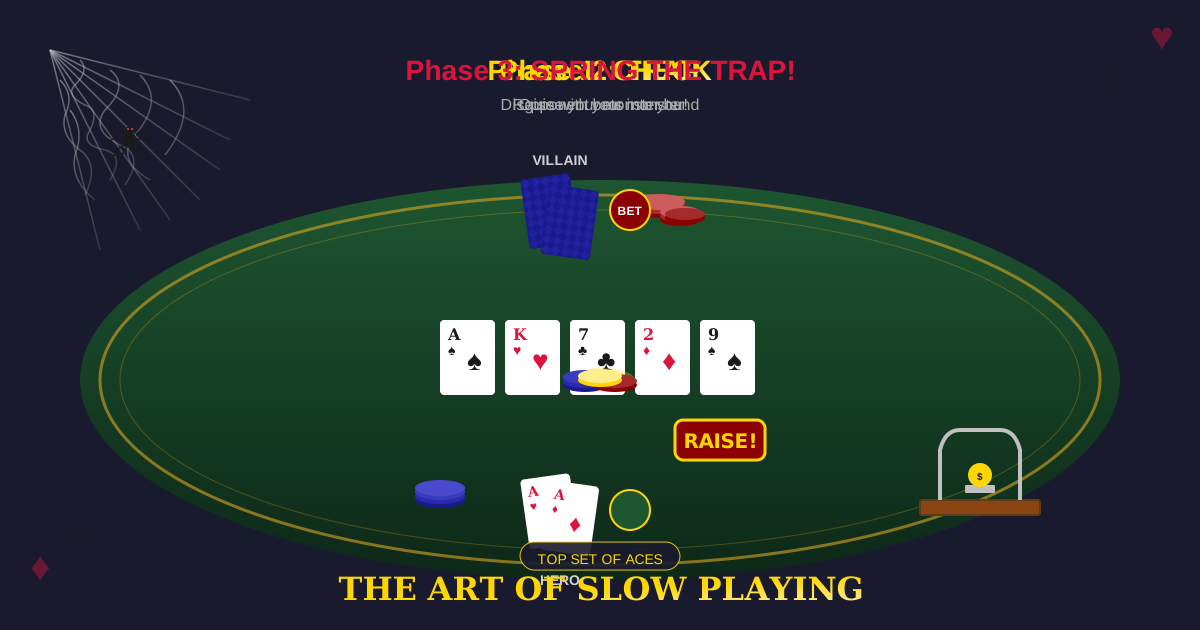
- Limp traps occasionally with monsters
- Three-bet when BB defends too wide
- Play small ball poker postflop
BB Strategy:
- Defend wide against minraises (70%+)
- Three-bet polarized range (premiums + some bluffs)
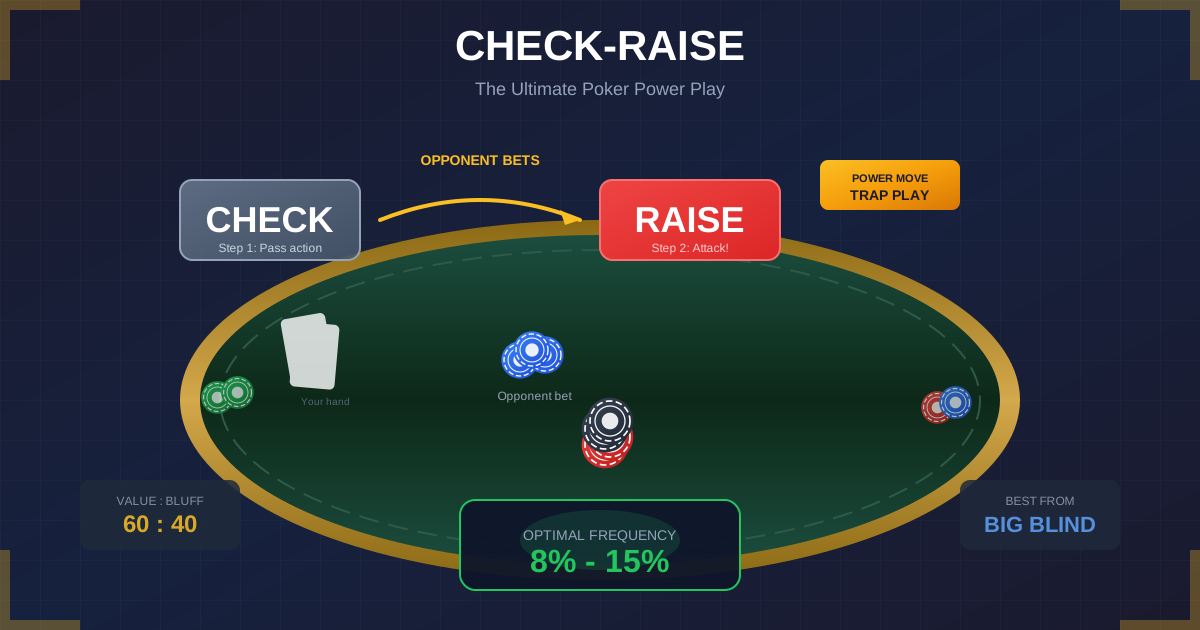
- Check-raise aggressively on favorable boards
- Exploit passive SB players
Medium Stacks (20-50 BB)
Transition zone between postflop play and push-fold:
SB Strategy:
- Open-raise 2-2.5x with strong range
- Begin incorporating open-pushes with 12-15 BB
- Mix limping with hands that play well postflop
- Avoid marginal spots out of position
BB Strategy:
- Three-bet or fold against raises
- Shove over limps with wide range
- Call raises tighter, defend position
- Check-raise bluff less (commitment issues)
Short Stacks (10-20 BB)
Push-fold territory begins:
SB Strategy:
- Push or fold becomes primary strategy
- Occasional min-raises with monsters
- Follow Nash charts for unexploitable play
- Adjust wider against tight BBs
BB Strategy:
- Call pushes according to Nash ranges
- Shove over limps very aggressively
- Don't defend small raises, demand all-in
- Patience against aggressive SBs
Micro Stacks (Under 10 BB)
Nearly pure push-fold:
SB Strategy:
- Push any two cards profitably at 3 BB
- Follow Nash charts strictly
- Occasional trappy limps with AA/KK
- No postflop, just math
BB Strategy:
- Call wide according to stack depth
- Auto-call with any ace at 3 BB
- Fold only worst hands at very short stacks
- Accept variance, play long-term
Real-World Examples
Example 1: Standard SB Push Decision
Setup: Heads-up SNG, 15 BB effective. You're SB with Kd7d.
Nash Analysis:
At 15 BB, SB Nash push range ≈ 35%
K7s is in the top 35% of hands
Action: Push
Calculation:
Push EV vs Nash calling range:
K7s equity vs ~20% calling range ≈ 42%
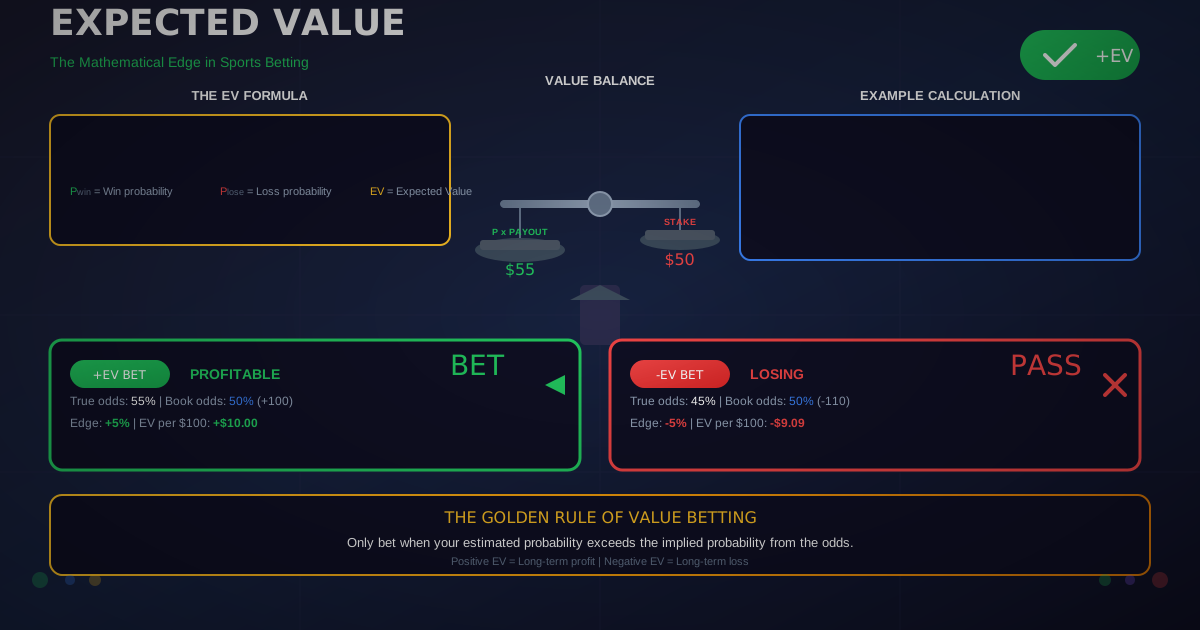
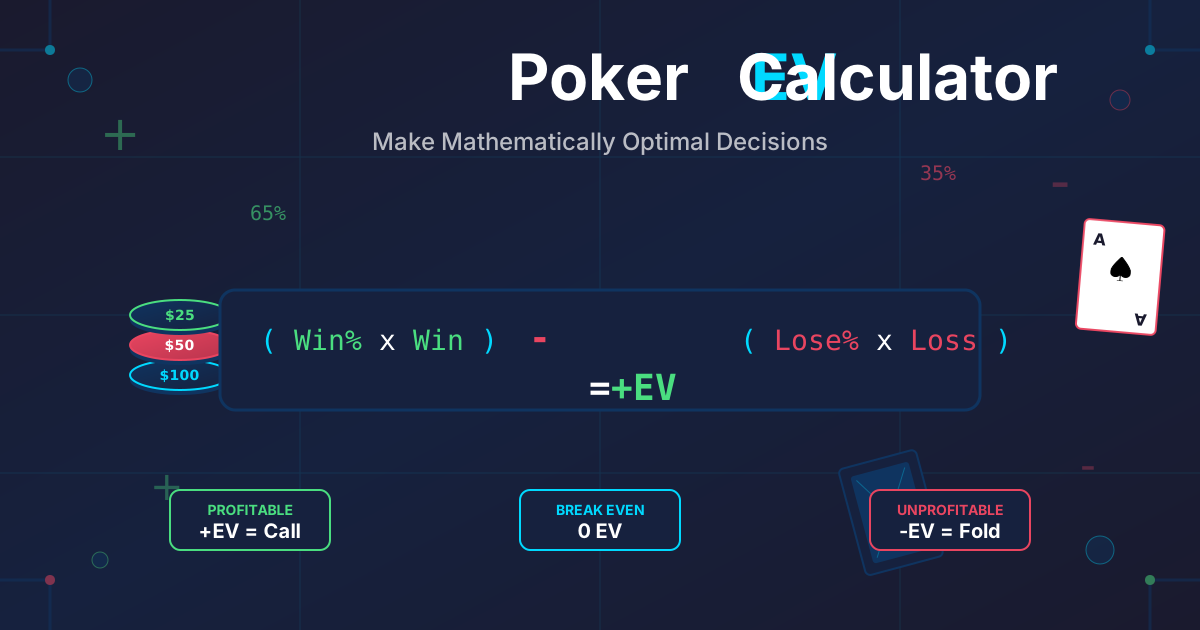
EV = (Fold% × 1.5 BB) + (Call% × [Win% × Pot - Lose%  × 15 BB])
EV = (0.80 × 1.5) + (0.20 × [0.42 × 31.5 - 0.58 × 15])
EV = 1.20 + (0.20 × [13.23 - 8.70])
EV = 1.20 + 0.91 = +2.11 BB
Result: Clear push for +2.11 BB EV.
Example 2: Marginal BB Call Decision
Setup: 10 BB effective, SB pushes. You're BB with Jc6c.
Nash Analysis:
At 10 BB, BB Nash calling range ≈ 30%
J6s is approximately rank 120/169 ≈ 71st percentile
J6s is NOT in the calling range
Action: Fold
Equity Check:
J6s vs SB 45% pushing range ≈ 38% equity
Need: 10 / (10 + 11.5) = 46.5% equity to call
38% < 46.5%
Action: Fold ✓
Example 3: Exploitative Adjustment
Setup: 12 BB effective. SB has been pushing 80% of hands. You're BB with Qc3c.
Standard Nash:
Q3s not in Nash calling range vs standard push
Would fold vs unknown
Exploitative Adjustment:
Against 80% range (vs 40% Nash):
Q3s equity vs 80% range ≈ 46%
Need: 12 / (12 + 13.5) = 47% equity
Very close to breakeven
Decision: Marginal call. Q3s gains value against wider range but still borderline. Prefer Q5s+ for comfortable calls.
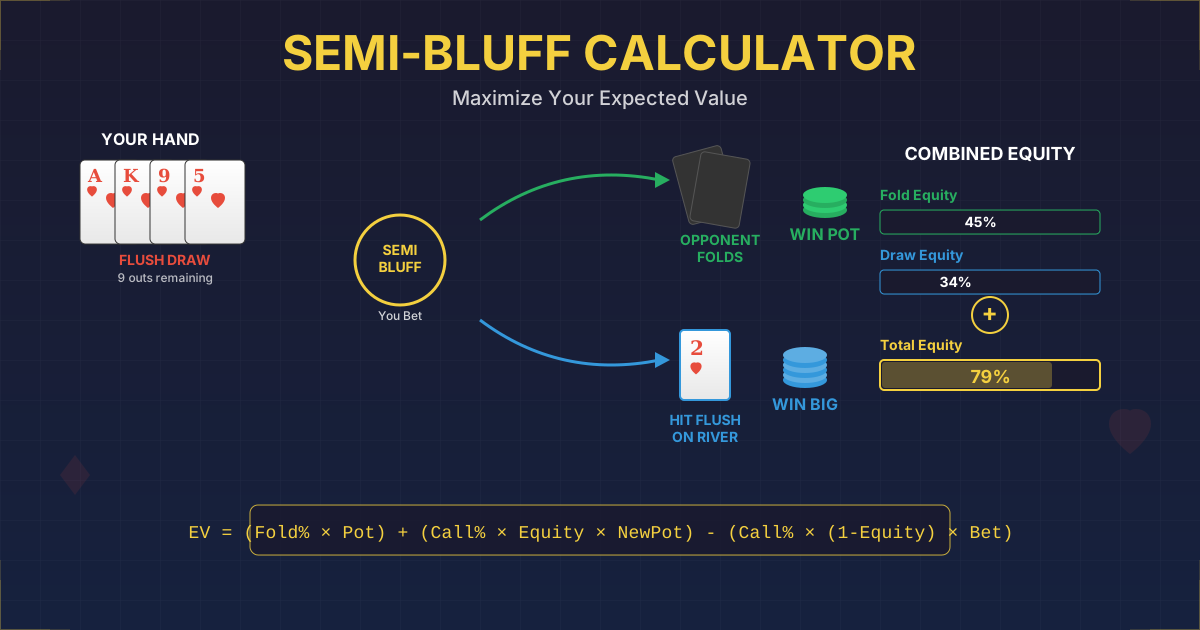
Example 4: Deep Stack Postflop Spot
Setup: 50 BB effective. SB raises to 2.5 BB, you call BB with 8h7h. Flop: Jh 6c 4h. Pot is 5 BB.
Analysis:
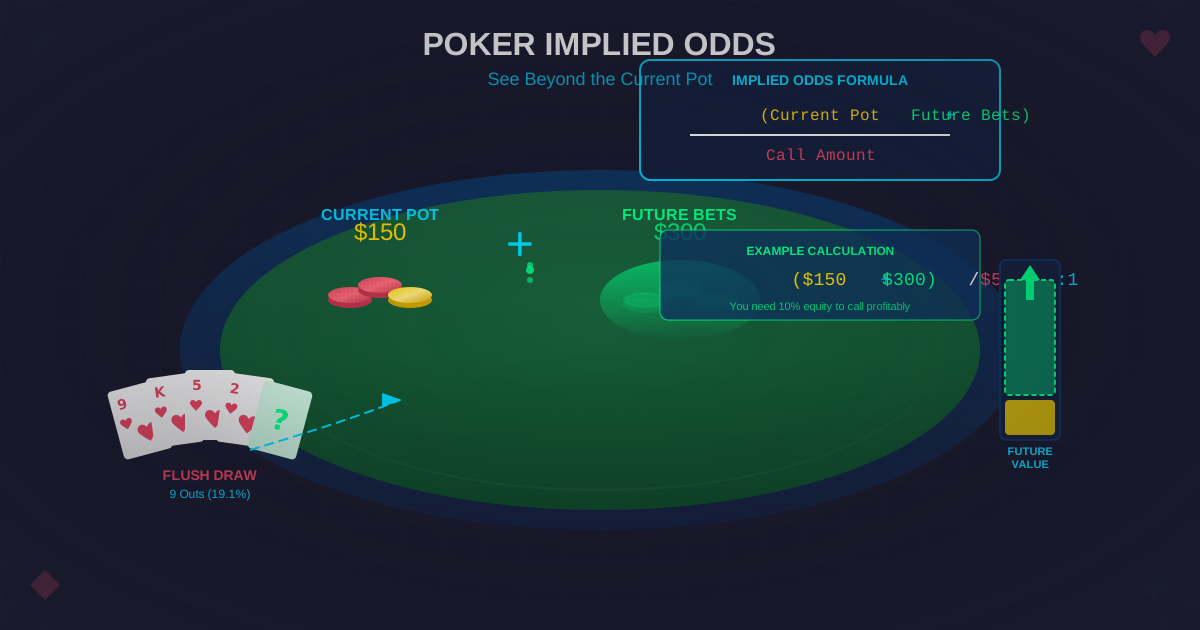
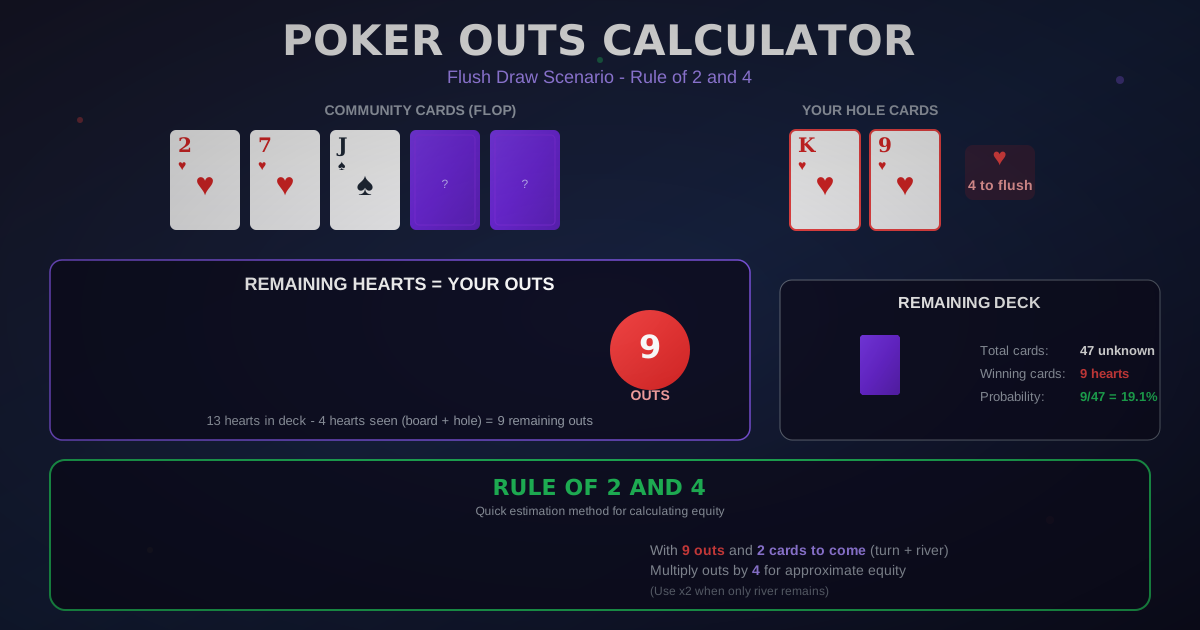
Your hand: Flush draw + gutshot (12 outs)
Equity: ~45% vs typical SB c-betting range

Options:
1. Check-call (passive, doesn't build pot)
2. Check-raise (aggressive, applies pressure)
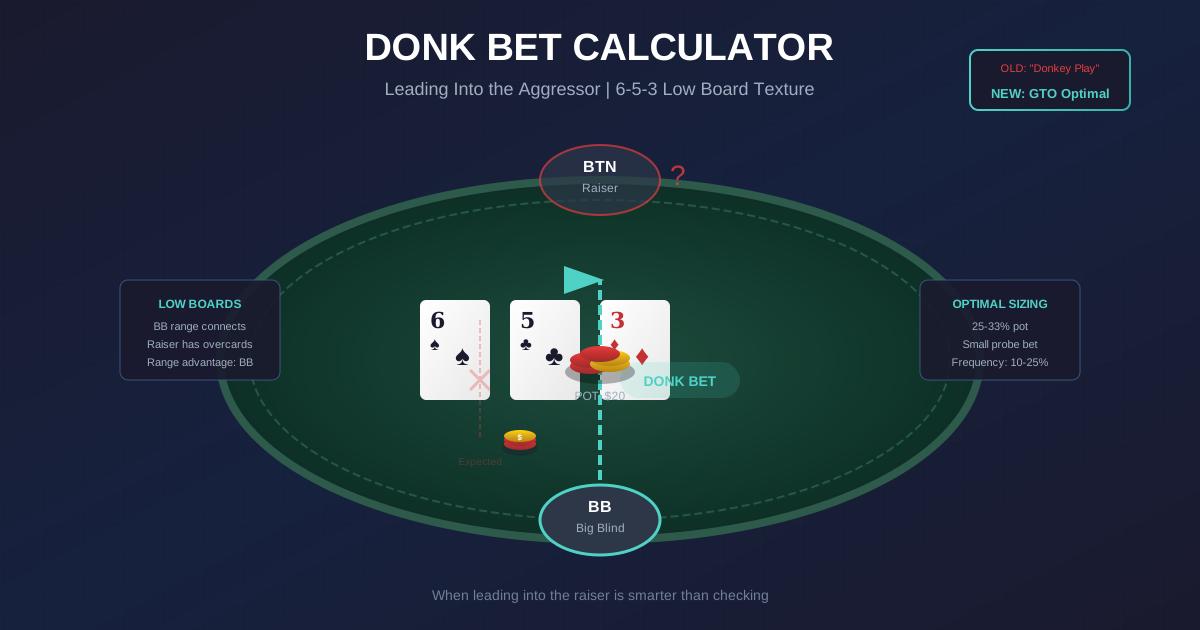
3. Lead donk bet (unusual, can work)
Check-Raise Analysis:
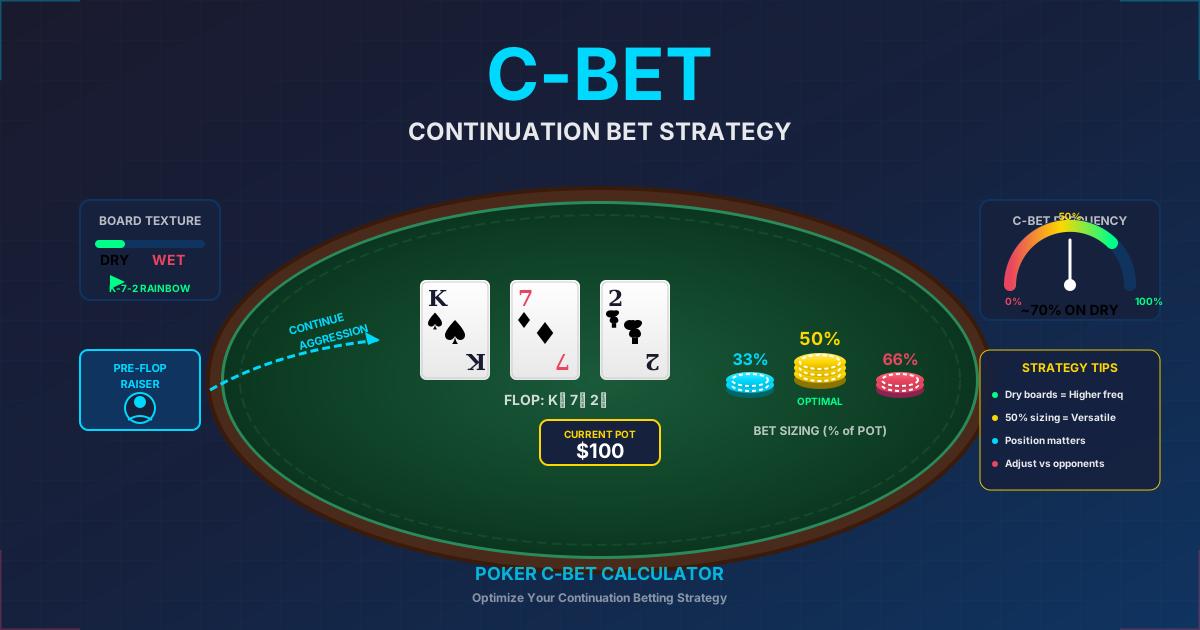
C-bet expected from SB ≈ 70%
Check-raise to 10 BB (vs 3 BB c-bet):
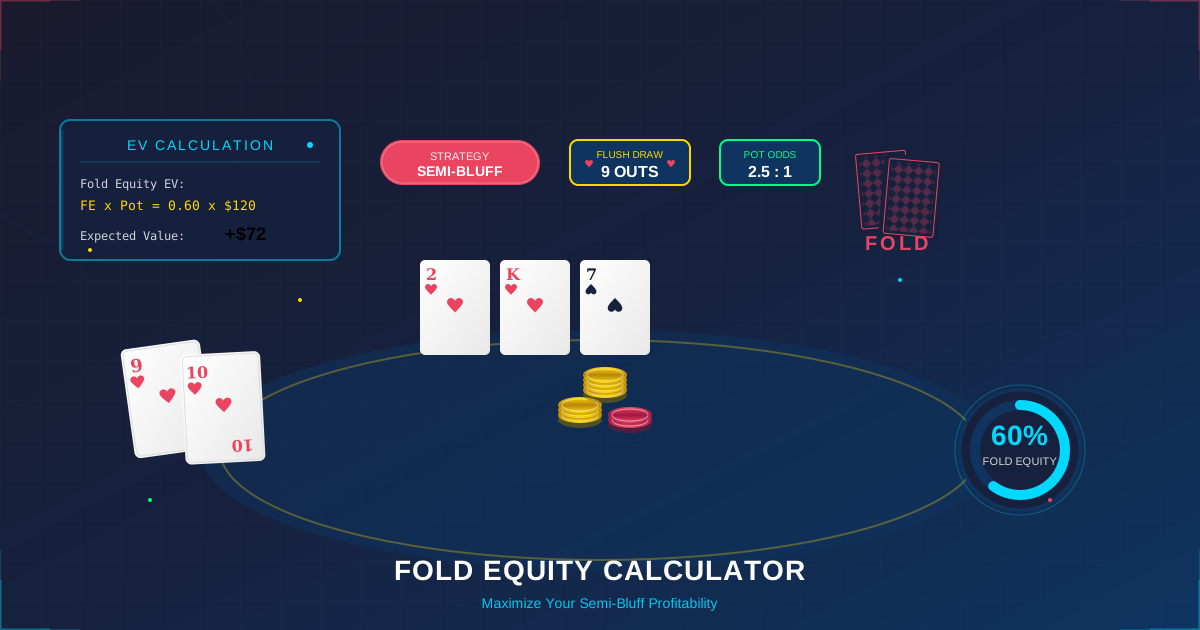
Fold equity vs c-bet range: ~40%
EV = (0.70 × 0.40 × 8 BB) + (0.70 × 0.60 × [0.45 × 25 - 0.55 × 7])
EV = 2.24 + (0.42 × [11.25 - 3.85])
EV = 2.24 + 3.11 = +5.35 BB
Result: Check-raise is highly profitable.
Example 5: Limping Strategy
Setup: 25 BB effective. You're SB and have been raising 100% of buttons. Villain is adjusting with more 3-bets.
Adjustment:
Introduce limping range:
- Limp AA/KK sometimes (trap 3-bets)
- Limp suited connectors (realize equity)
- Limp weak offsuit hands (reduce variance)
- Continue raising premium hands and air
Limp Range Example (25 BB):
Always Limp: AA (some), 76s-54s, K5o-K2o
Sometimes Limp: KK, A5s-A2s
Always Raise: QQ-JJ, AK-AJ, KQ, bluffs
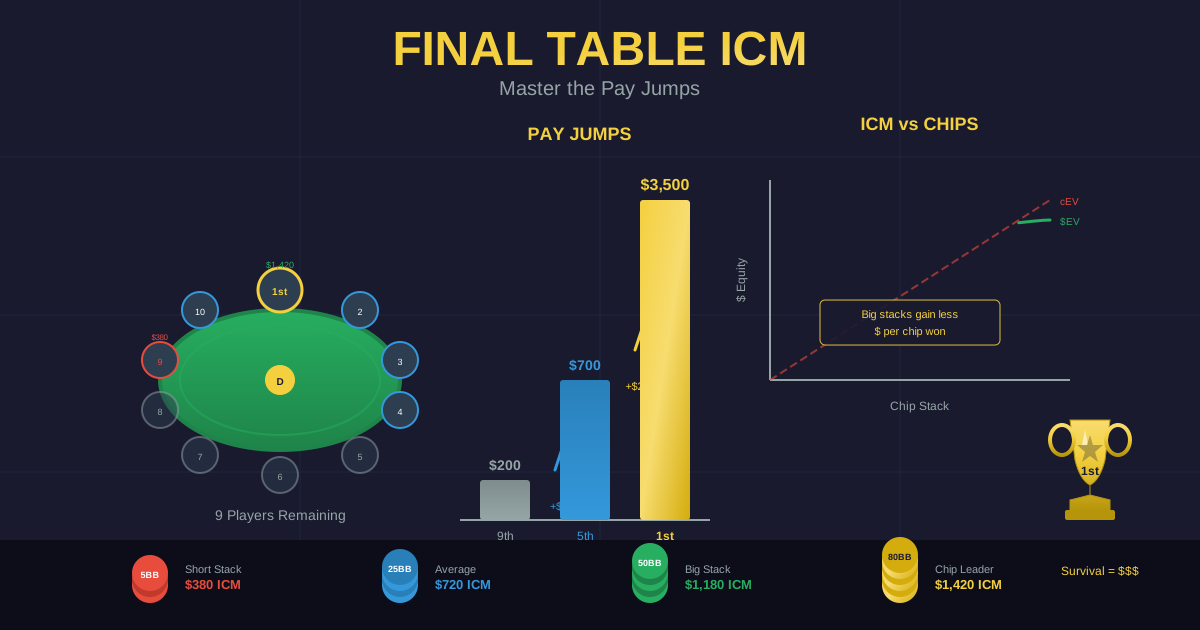
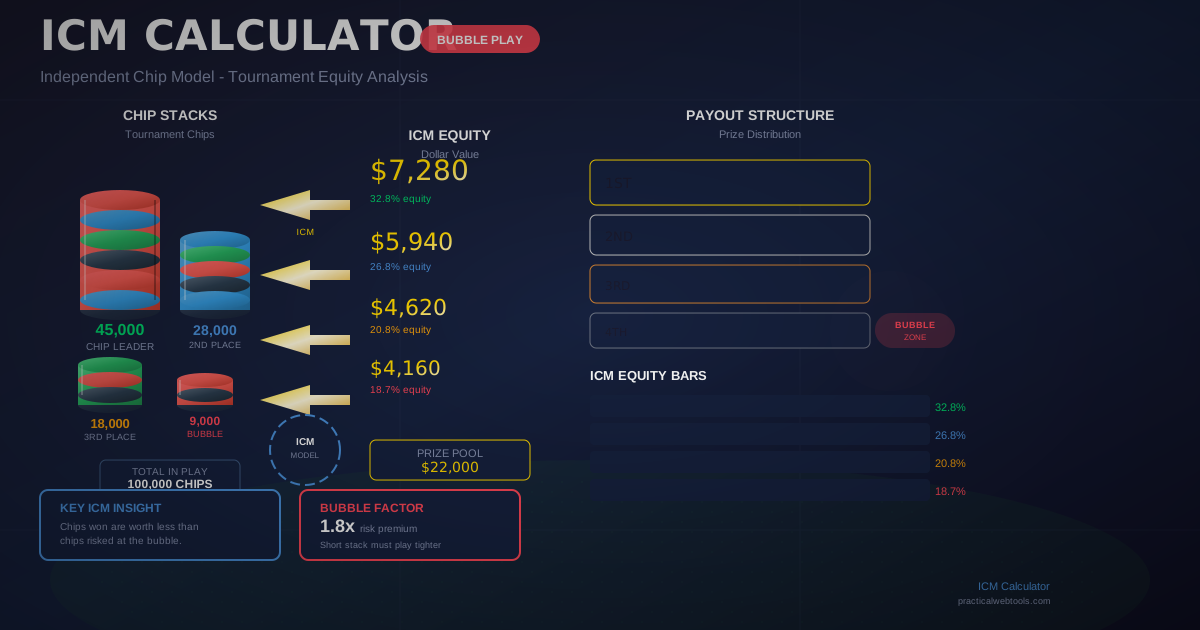
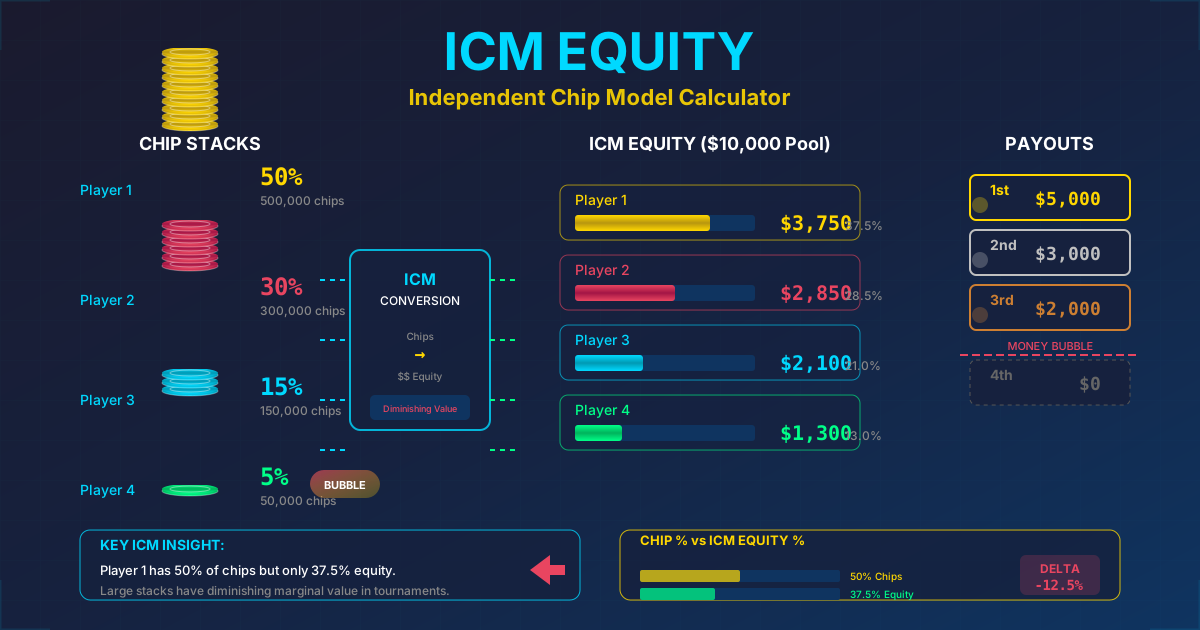
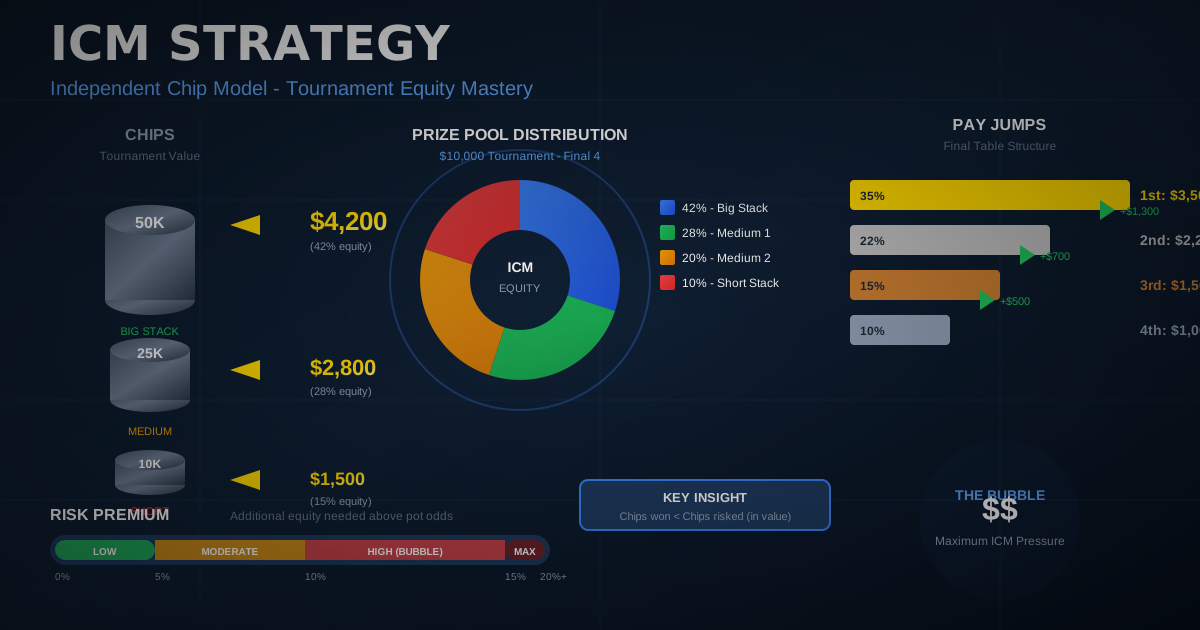
Example 6: ICM Considerations (Not Heads-Up Yet)
Setup: 3-handed in SNG, one player has 3 BB. You're on the bubble with 15 BB vs 12 BB.
ICM Adjustment:
Standard heads-up: Push wide for chip EV
ICM situation: Tighten up, let short stack bust

With 15 BB vs 12 BB, if short stack has 3 BB:
- Don't risk doubling middle stack
- Preserve chips, avoid confrontation
- Let short stack blind out
Result: ICM pressure tightens heads-up ranges significantly on the bubble.
Advanced Heads-Up Concepts
Adjusting to Opponent Tendencies
Against Passive Opponent:
Increase: Aggression, steal attempts, bluffs
Decrease: Trapping, slowplaying
Range: Wider value bets, thinner bluffs
Against Aggressive Opponent:
Increase: Trapping, calling down light
Decrease: Bluffing, light 3-betting
Range: Call tighter, value wider
Against Unknown:
Start: Nash equilibrium play
Observe: First 20-30 hands
Adjust: Exploit identified leaks
Metagame and History
Previous hands affect current decisions:
If you showed a bluff:
- Opponent may call lighter
- Reduce bluff frequency temporarily
- Increase value betting range

If opponent showed down weak:
- They may tighten up
- Increase aggression
- Expect tighter ranges
Timing and Sizing Tells
Heads-up amplifies tells:
Common Online Tells:
- Fast call = draw or medium hand
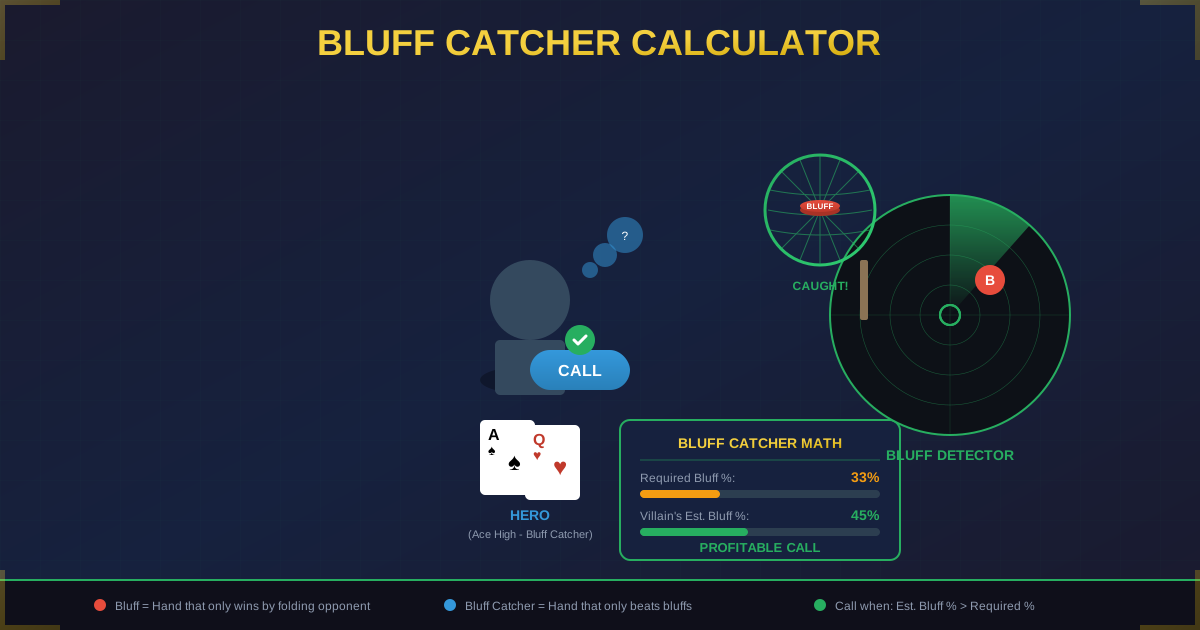
- Long tank then call = bluff catcher
- Unusual bet size = often strength
- Min-bet = weakness or trap
Common Mistakes to Avoid
-
Playing Too Tight: Heads-up favors aggression. If you're folding more than 30% of buttons, you're bleeding chips.
-
Ignoring Position Value: Position is massive heads-up. Being on the button allows much wider profitable plays.
-
Calling Too Wide from BB: While you must defend, calling with hands that can't realize equity loses money. Three-bet or fold marginal hands.
-
Static Strategy: Opponents adjust. If you never change gears, observant villains will exploit you.
-
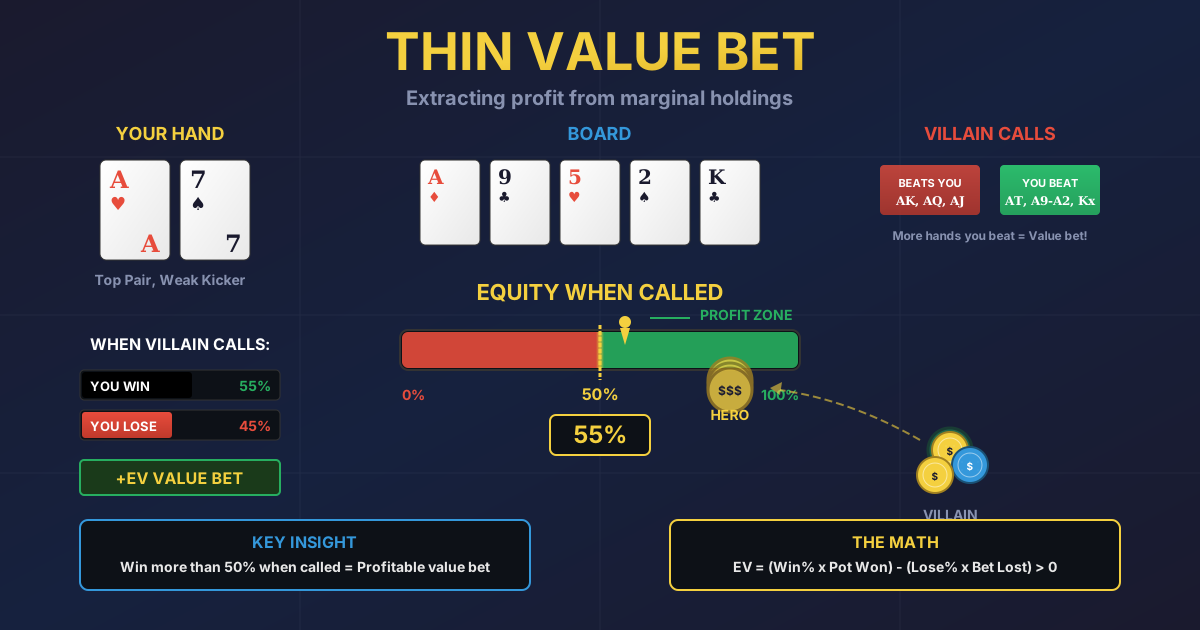
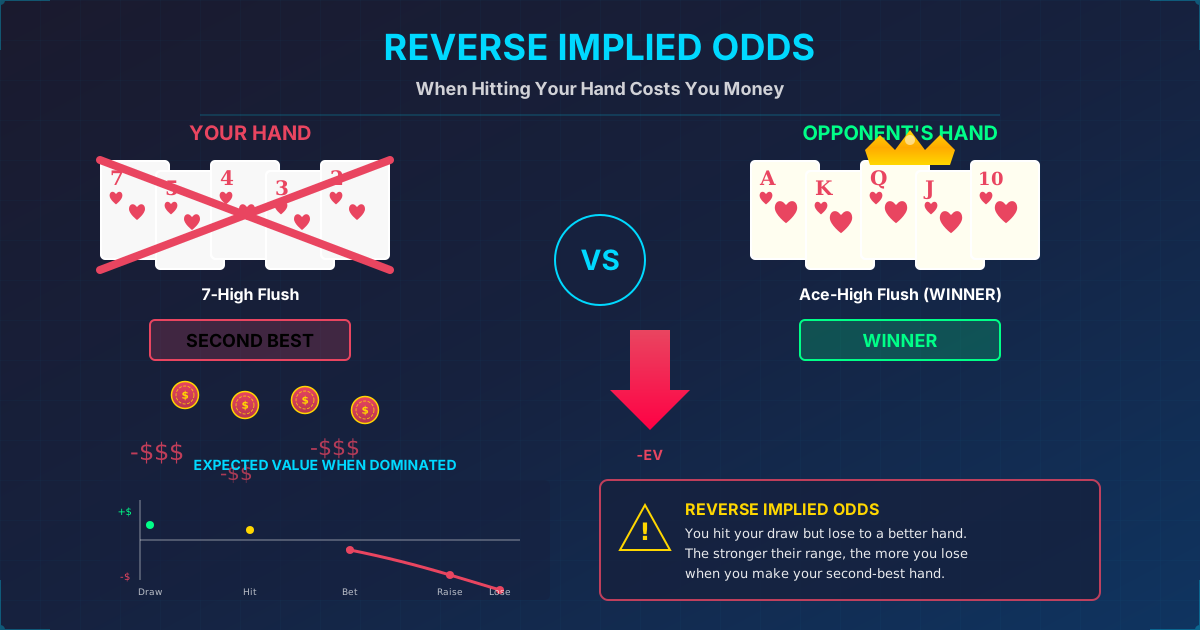
Overvaluing Hands Postflop: Top pair is not the nuts heads-up. Many boards favor draws and second pair has significant equity.
-
Ignoring Stack Depth: 10 BB and 30 BB are different games. Adjust your ranges dramatically for stack depth.
Frequently Asked Questions
What percentage of hands should I open from the SB?
At deep stacks (50+ BB), open 60-70% of hands. At medium stacks (20-50 BB), open 50-60%. At short stacks (under 20 BB), push your opening range according to Nash charts.
Should I ever limp from the SB?
Yes, especially at deeper stacks. Limping with suited connectors, small pairs, and occasionally monsters (AA/KK) creates a balanced limping range and reduces variance.
How do I beat a calling station heads-up?
Value bet relentlessly. Eliminate bluffs. Bet thin for value on every street. Let them pay you off. Don't try to outplay them postflop with air.
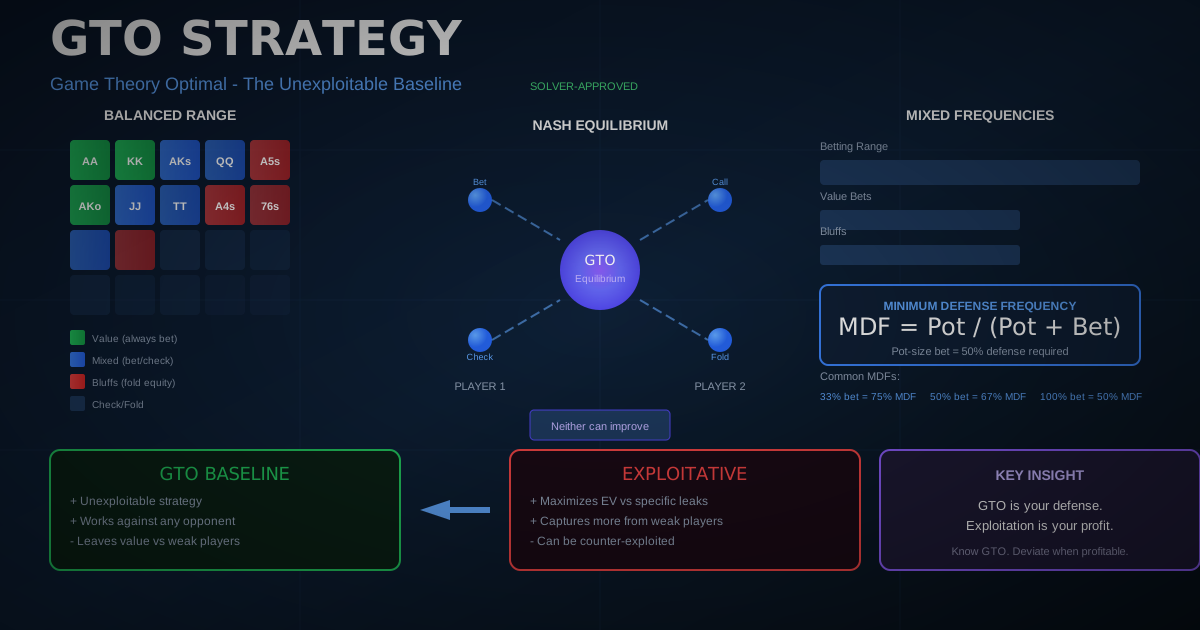
When should I deviate from Nash equilibrium?
Deviate when you have reliable reads. Against someone folding too much, push wider. Against someone calling too much, push tighter with value. Nash is your baseline against unknowns.
How important is suited versus offsuit in heads-up?
Suited cards gain 3-5% equity over offsuit versions. This matters more heads-up because you see more flops and can realize flush equity. Suited hands are significantly better for flatting.
What's the biggest edge in heads-up play?
Aggression combined with position. The SB player acting last postflop has an inherent advantage. Use it by applying pressure, betting for value, and making disciplined folds when beat.
How do I handle a hyper-aggressive opponent?
Let them hang themselves. Trap with strong hands, call down with medium strength, and avoid marginal confrontations. Their aggression gives you implied odds to play tighter preflop.
Should I always follow Nash charts?
Nash charts are unexploitable baselines. Against tough opponents or unknowns, follow them closely. Against weak players, deviate to exploit their specific leaks.
Pro Tips
- Keep a consistent timing pattern to avoid giving timing tells
- Mix your preflop actions to stay unpredictable (limp, min-raise, 2.5x, push)
- Track opponent's button raise frequency - most players don't steal enough
- At very short stacks (under 5 BB), push any two cards as SB
- Practice heads-up specifically; it's a different game than ring games
Related Calculators
- Push/Fold Calculator - Optimal short-stack ranges
- ICM Calculator - Tournament equity calculations
- Nash Equilibrium Calculator - Game theory ranges
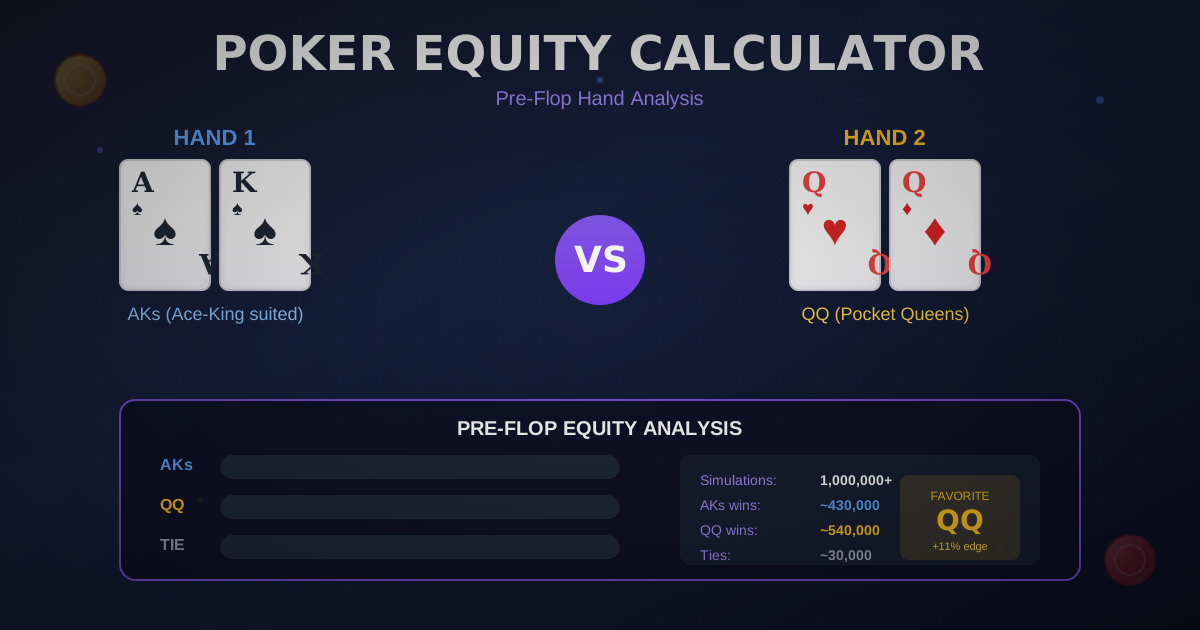
- Poker Equity Calculator - Hand vs hand equity
- SNG ROI Calculator - Track heads-up SNG profits
Conclusion
Heads-up poker rewards aggression, mathematical precision, and adaptive play. Our heads-up poker calculator provides the Nash equilibrium foundation you need while you develop reads and exploit opponent weaknesses. Whether you're grinding heads-up SNGs or battling for a tournament title, understanding one-on-one dynamics is essential.
Master the push-fold charts, understand position dynamics, and learn to adjust based on stack depth and opponent tendencies. Heads-up is where poker becomes truly personal, and the best players thrive in this direct confrontation.