Law of Large Numbers Calculator: Why the House Always Wins (2026)

Law of Large Numbers Calculator: The Mathematical Truth Behind Gambling
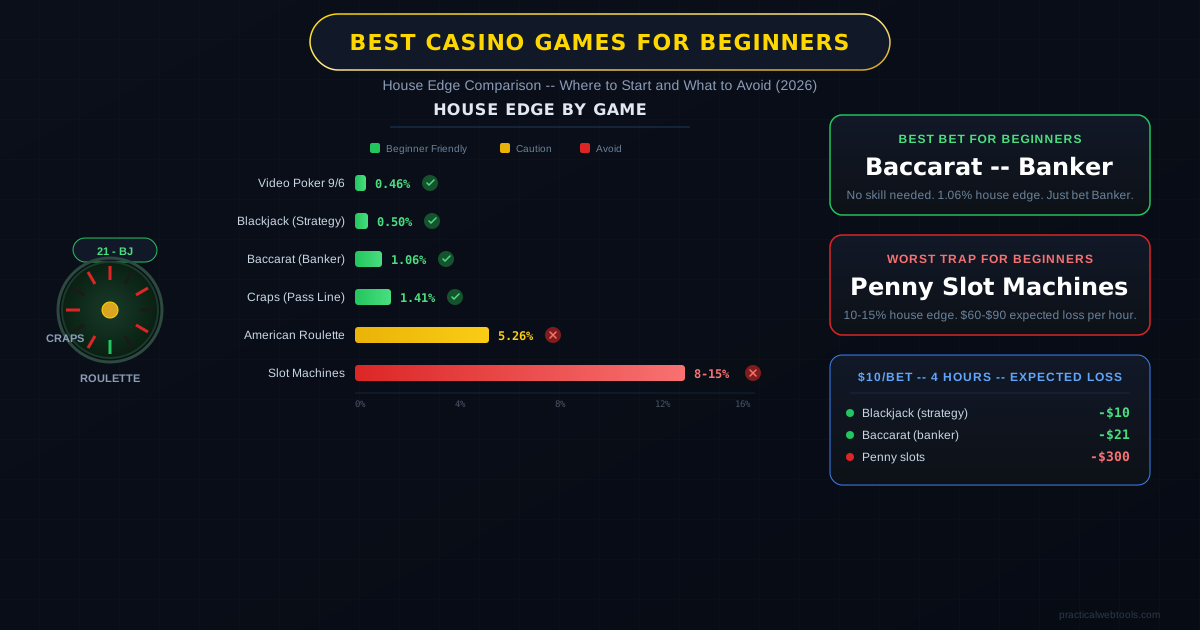
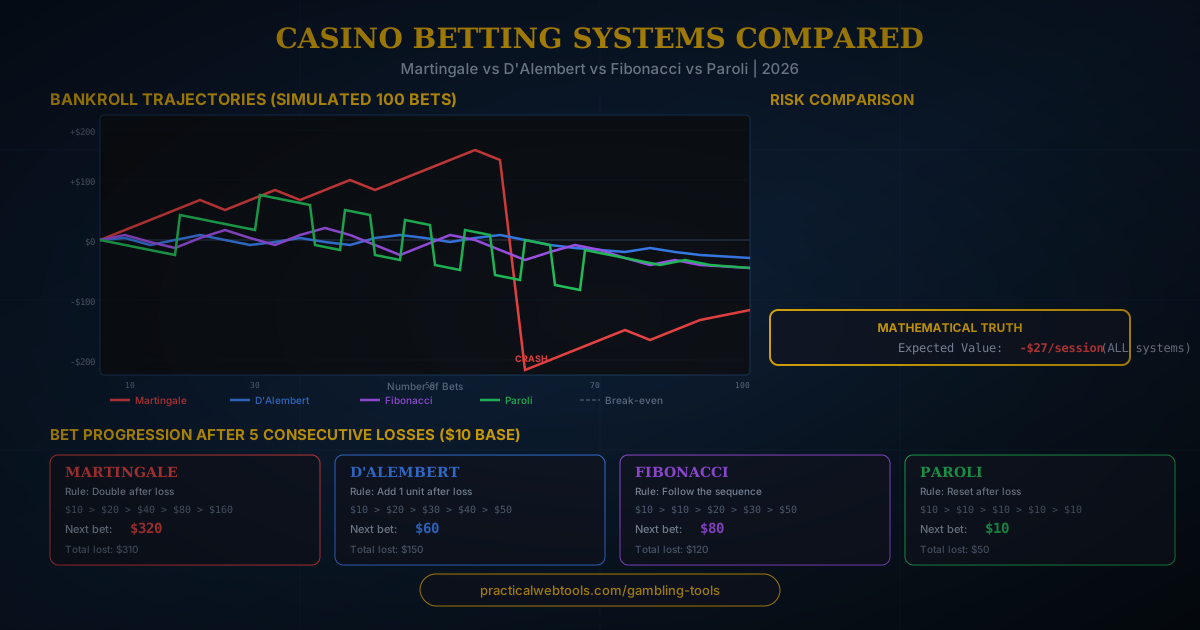
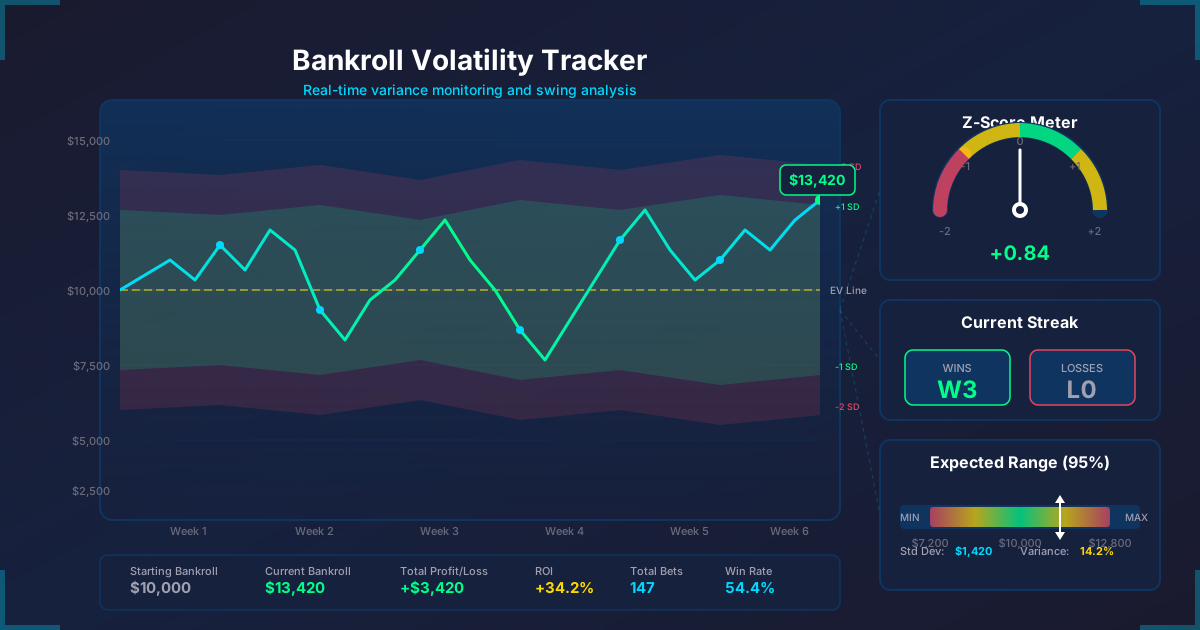
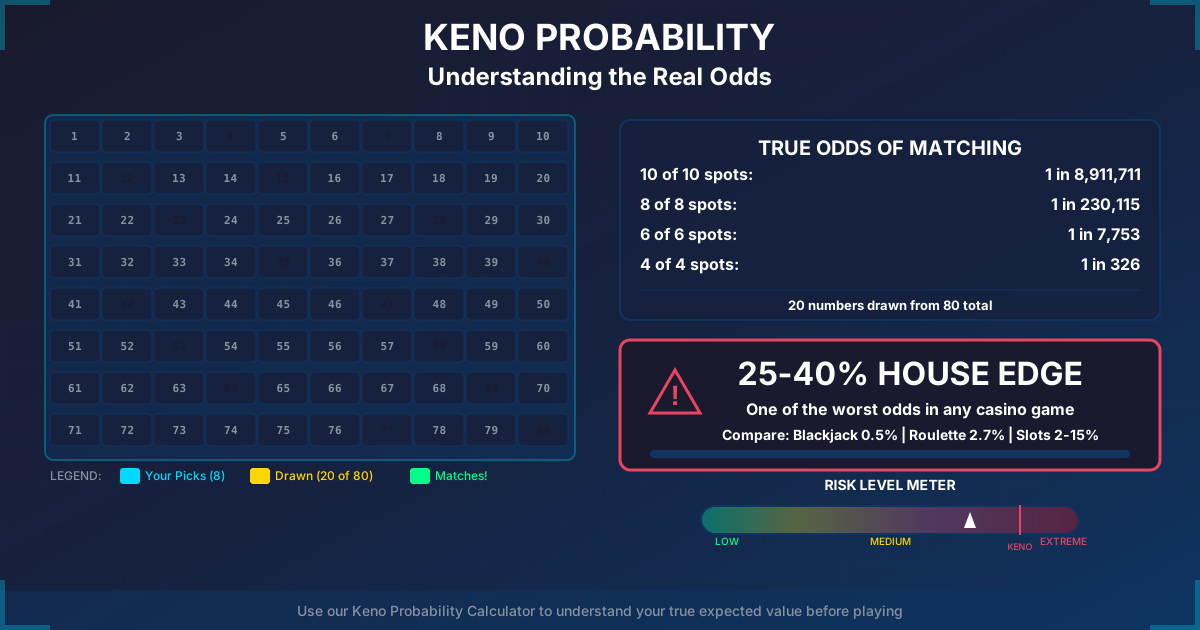
The law of large numbers is why casinos always profit despite individual winners. Over enough trials, actual results converge to mathematical expectation with near certainty. Our calculator shows how quickly (or slowly) your gambling results approach their expected value, revealing why short-term wins don't guarantee long-term success.
What Is the Law of Large Numbers?
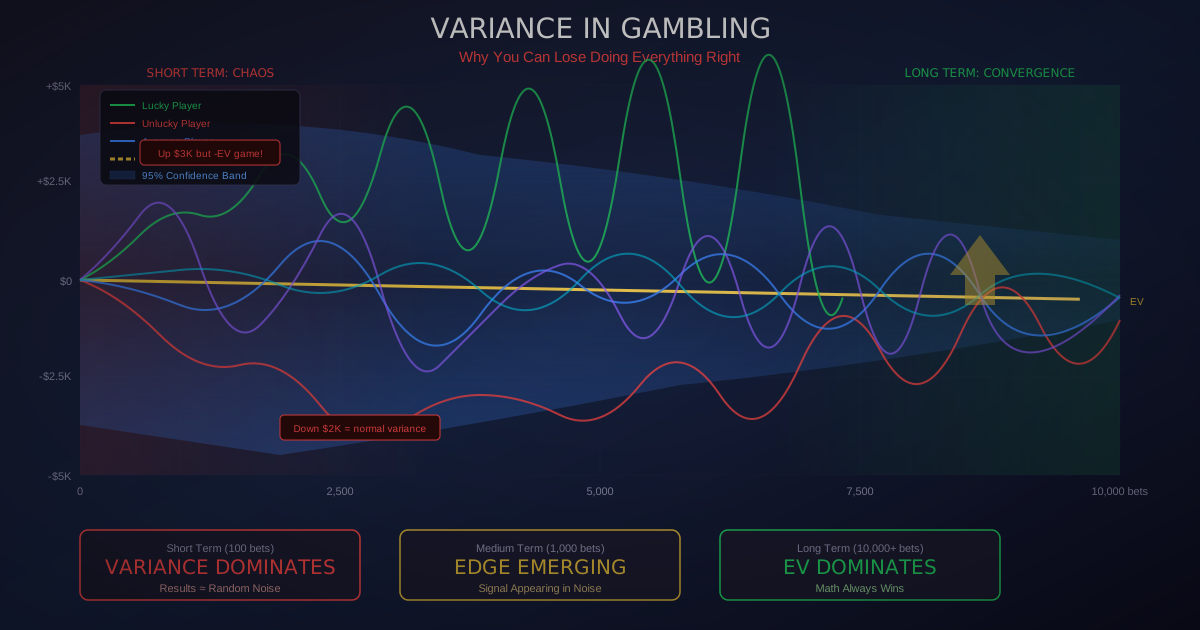
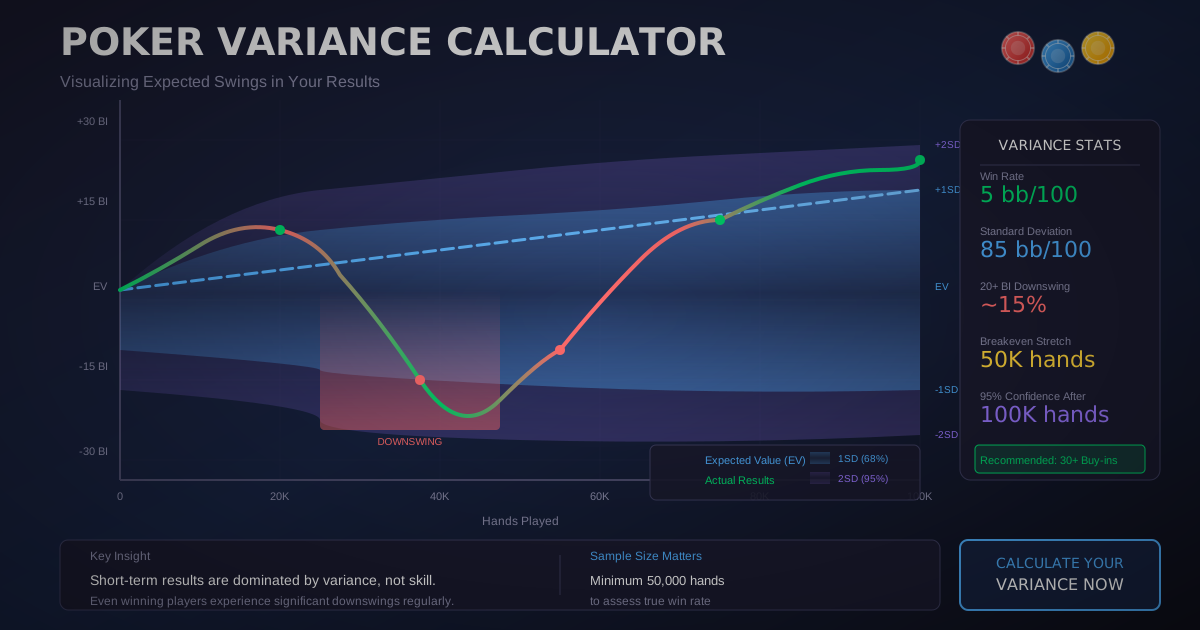
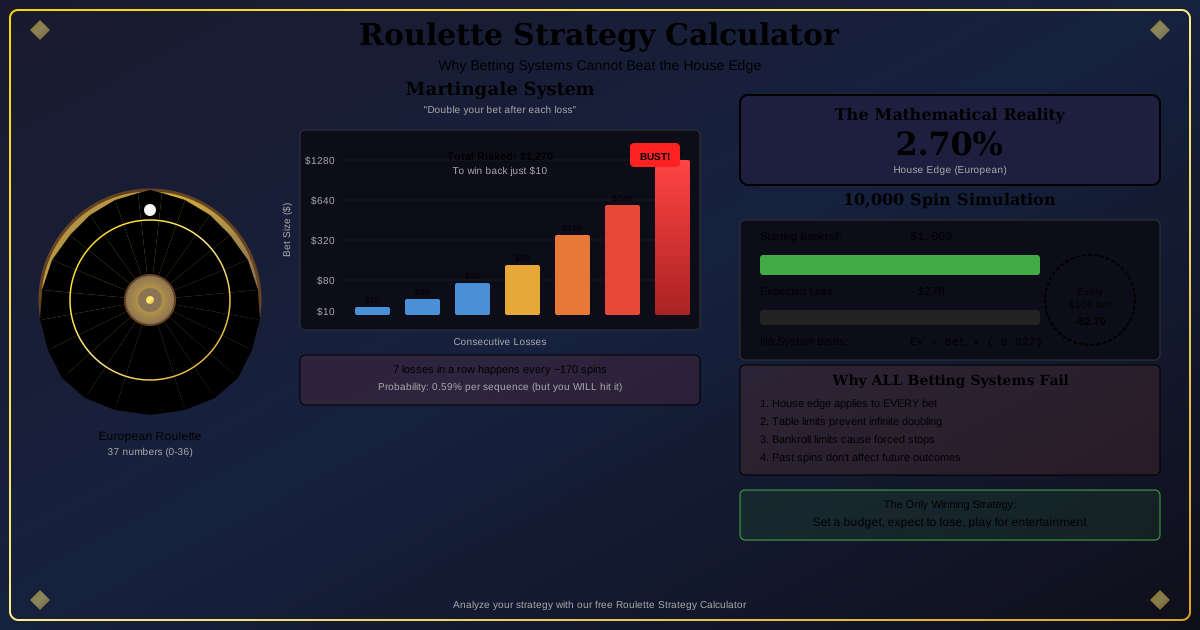
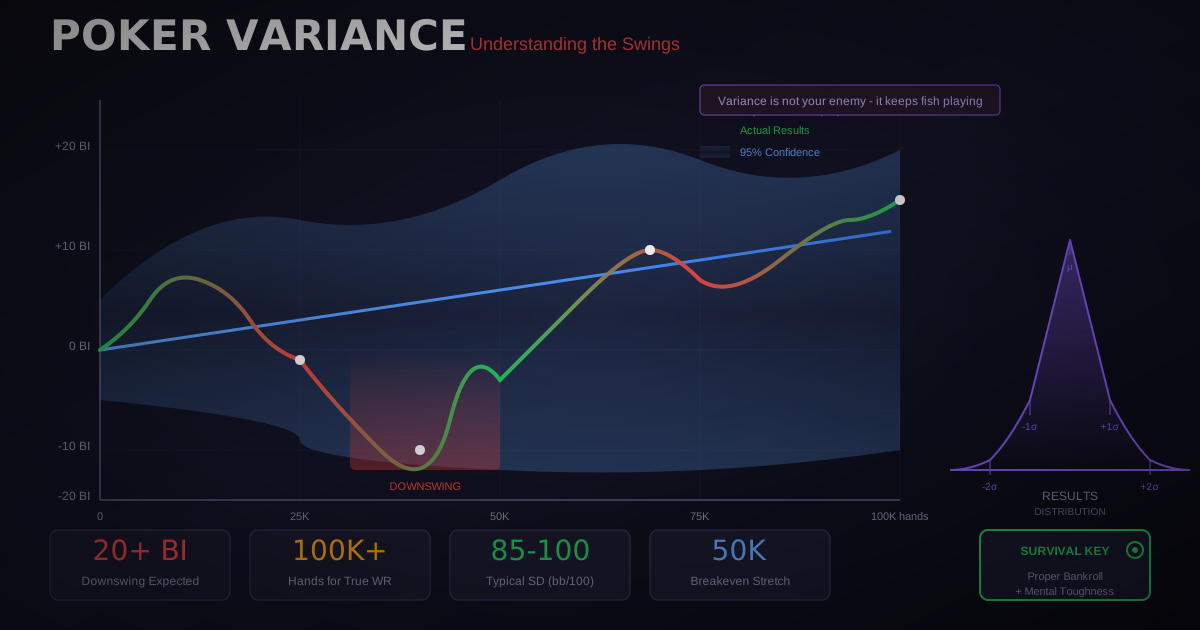
The law of large numbers (LLN) states that as the number of trials increases, the sample average approaches the expected value. In gambling terms: spin a roulette wheel 10 times and anything can happen; spin it 10 million times and the house edge will precisely manifest. This mathematical law explains why casinos are profitable businesses despite constant payouts to winners.
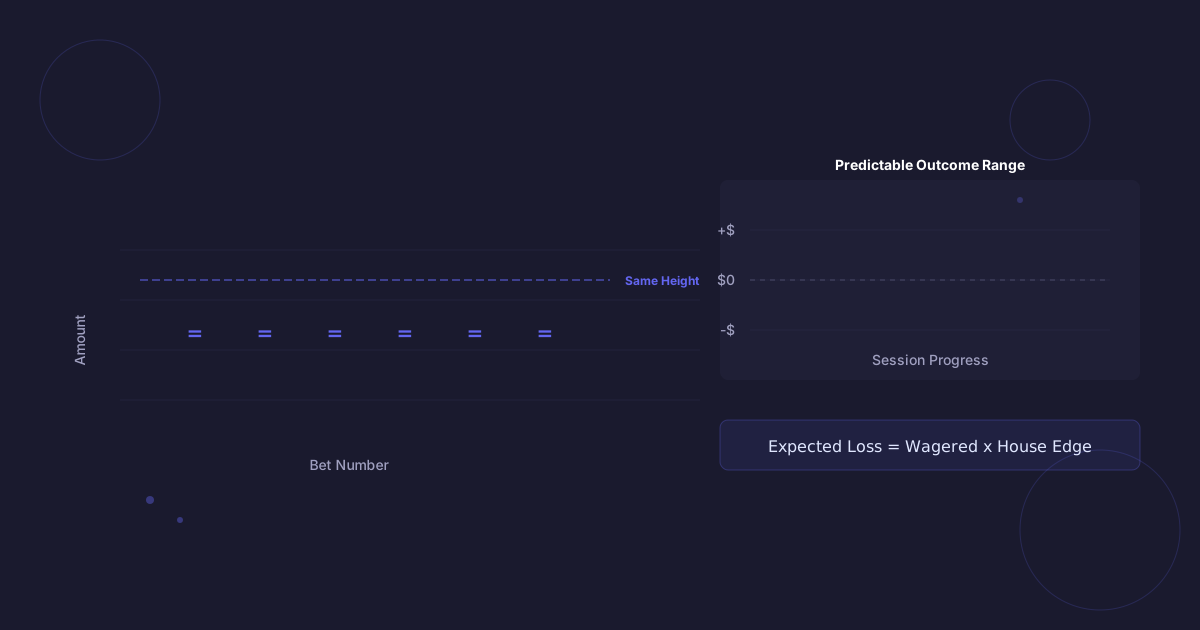
Quick Answer: The law of large numbers says your average result approaches expected value as trials increase. Formula: Sample Average → Expected Value as n → infinity. For practical purposes, variance from expected decreases by √n for each n trials. After 100 bets, variance/mean ratio is 1/10 of single bet. After 10,000 bets, it's 1/100. If house edge is -2%, after 10,000 bets you'll be very close to -2% of total wagered.
How to Use Our Calculator
Use the Law of Large Numbers Calculator →
Step-by-Step Instructions
- Enter Expected Value: Input the average outcome per trial
- Enter Standard Deviation: Input the variance per trial
- Select Number of Trials: Choose how many events
- Calculate Convergence: See how close results approach EV
- View Probability Bands: Understand confidence intervals
Input Fields
| Field | Description | Example |
|---|---|---|
| Expected Value | Average outcome per bet | -$0.05 |
| Standard Deviation | Variance per bet | $1.00 |
| Number of Trials | How many bets | 1,000 |
| Bet Size | Amount per wager | $10 |
| Target Confidence | Probability range | 95% |
Understanding the Mathematics
The Core Theorem
Weak Law of Large Numbers:

For independent trials with mean μ and variance σ²:

P(|X̄ₙ - μ| > ε) → 0 as n → ∞

In plain English:
The probability of being far from expected value
decreases to zero as trials increase.

Practical Formula:
Standard Error = σ / √n

Where:
σ = standard deviation per trial
n = number of trials
Convergence Speed
How quickly results approach expected value:

After n trials, typical deviation from EV:
Deviation ≈ σ × √n

As percentage of total:
Relative Deviation ≈ σ / (√n × μ)

Examples (if σ = $10, μ = -$0.50):

10 trials: ±$31.62 typical swing
100 trials: ±$100 typical swing
1,000 trials: ±$316 typical swing
10,000 trials: ±$1,000 typical swing

But relative to total wagered:
10 trials of $10 = $100 wagered, swing = ±31%
10,000 trials of $10 = $100,000 wagered, swing = ±1%

Percentage variance shrinks dramatically
The Square Root Law
Key insight: SD grows with √n, not n

This means:
- 4x trials = 2x standard deviation
- 100x trials = 10x standard deviation
- 10,000x trials = 100x standard deviation

While total variance grows:
Average variance shrinks!

Example:
1 bet: SD = $10 (100% of one bet)
100 bets: SD = $100 (10% of 100 bets)
10,000 bets: SD = $1,000 (1% of 10,000 bets)

Results become increasingly predictable
relative to total action
Gambling Applications
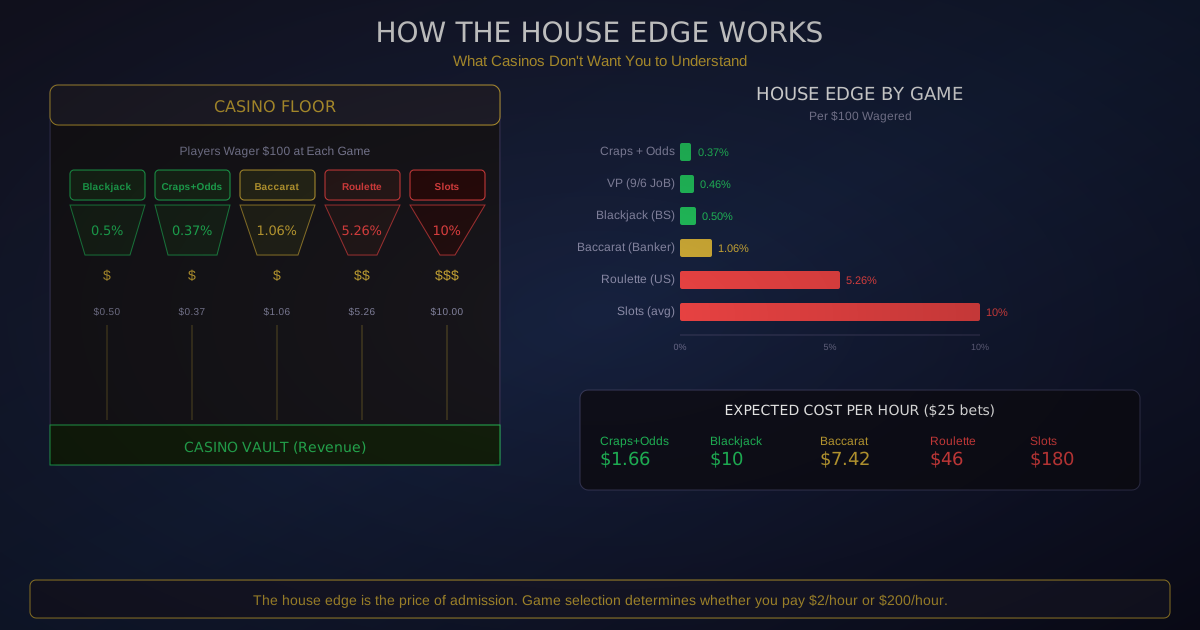
Casino Profitability
Why casinos never lose long-term:

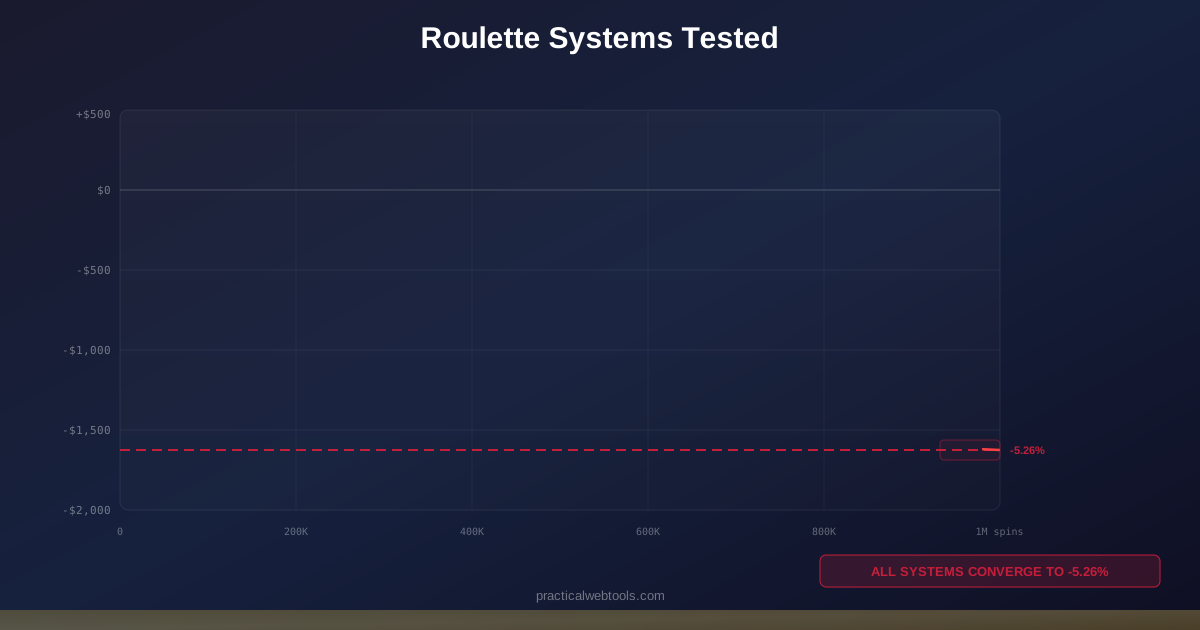
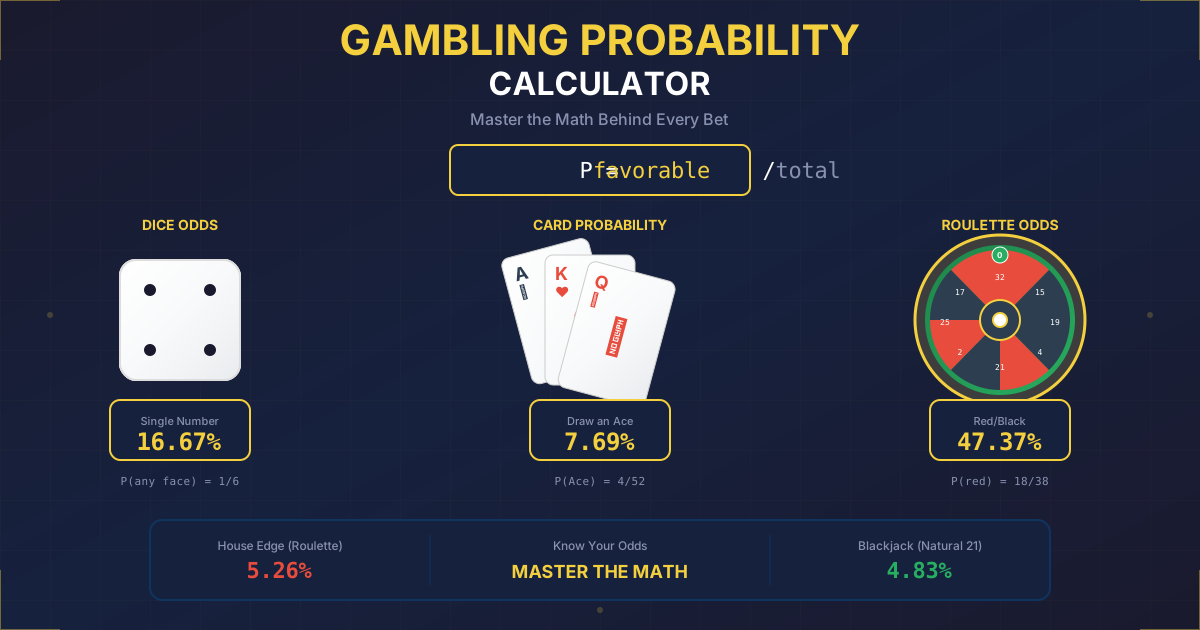
Single roulette spin (American):
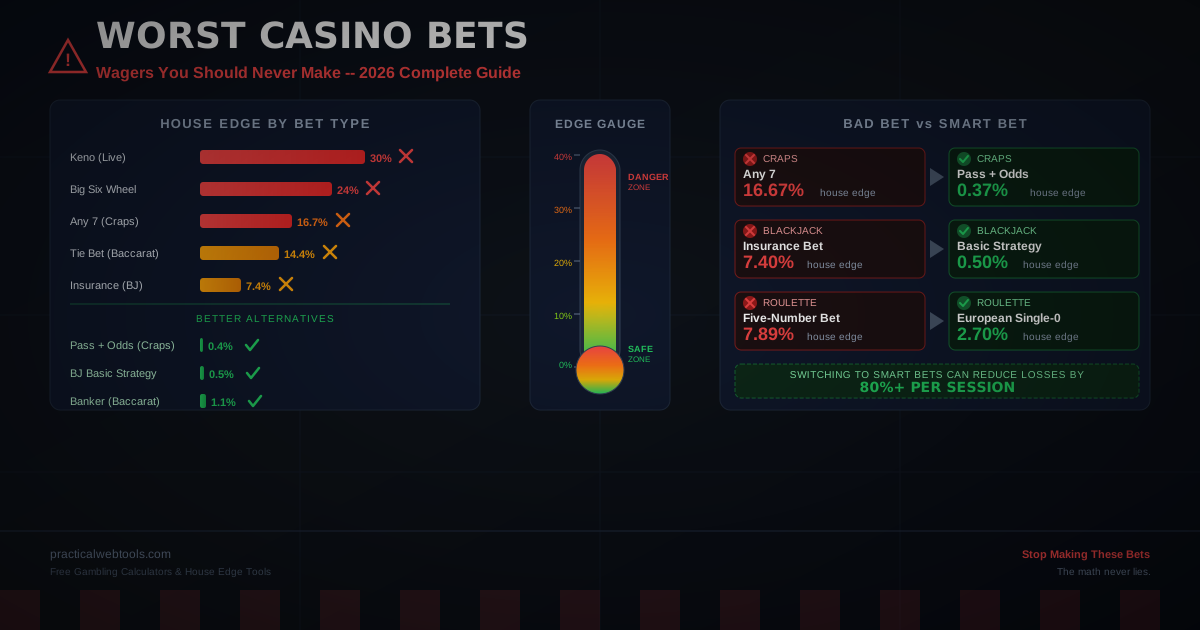
House edge: 5.26%
SD per $10 bet: ~$10

One player, 100 spins:
Expected profit for house: $52.60
SD: $100 (range: -$150 to +$250 for house)

100 players, 100 spins each (10,000 spins):
Expected profit: $5,260
SD: $1,000 (range: $3,260 to $7,260)

1,000 players per day, 365 days:
36.5 million spins
Expected profit: $1,921,900
SD: ~$19,219 (±1% variance)

At scale, house edge is virtually guaranteed
Individual Bettor Reality
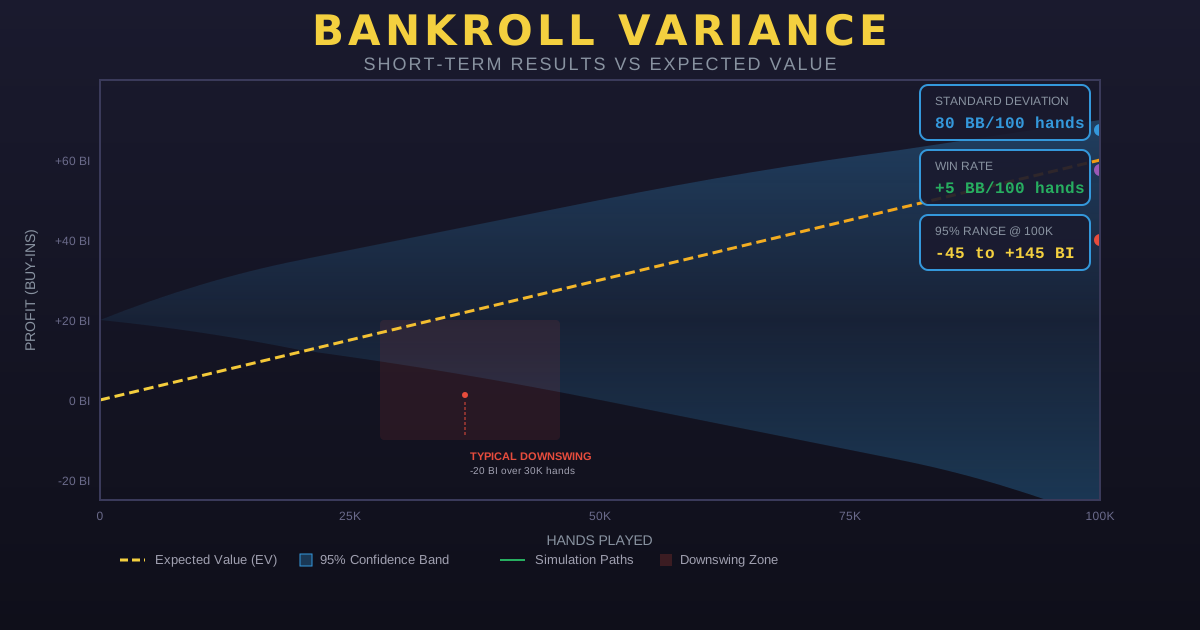
For a single bettor, convergence is slow:

If you bet $100 per week at -5% EV:
Year 1: $5,200 wagered, EV = -$260, SD ≈ $350
Year 5: $26,000 wagered, EV = -$1,300, SD ≈ $780
Year 10: $52,000 wagered, EV = -$2,600, SD ≈ $1,100

After 10 years, 95% confidence interval:
-$4,800 to -$400 (still wide range!)

Individual gamblers need 50,000+ bets
for truly reliable convergence
Casino gets 50,000 bets per day easily
Positive EV Betting
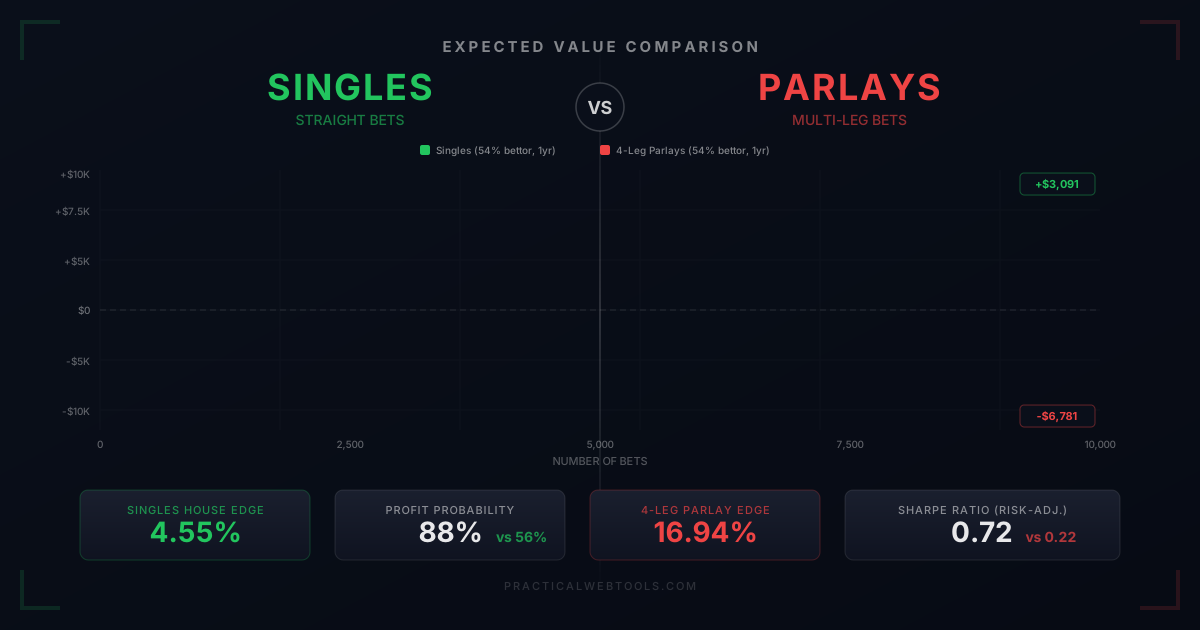
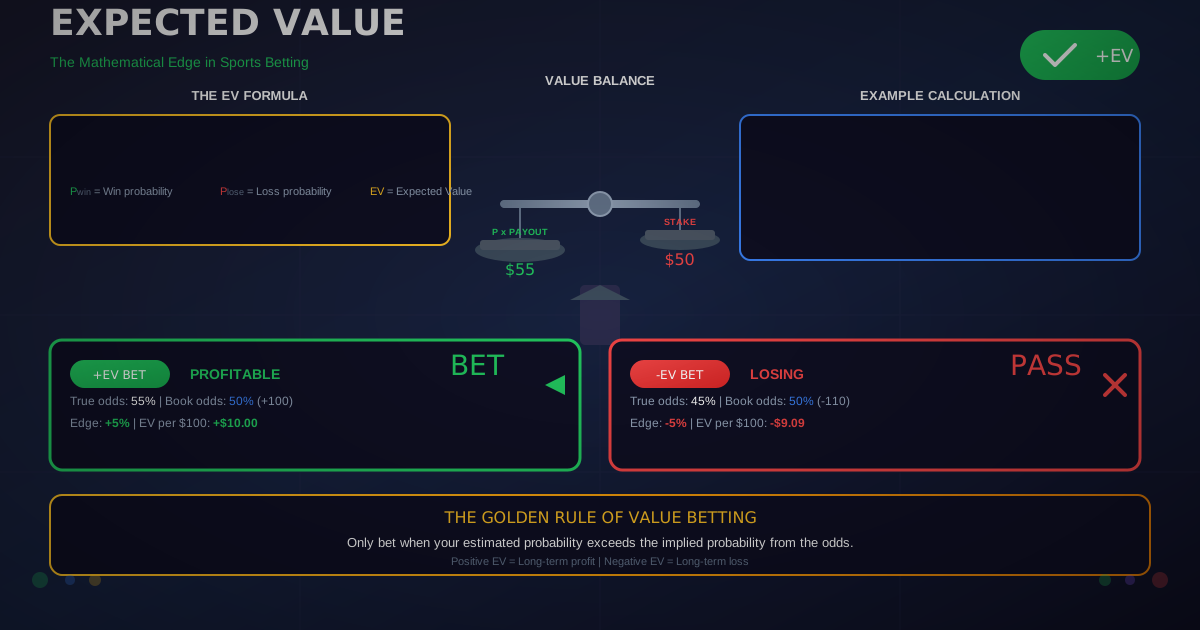
LLN also works for skilled bettors:

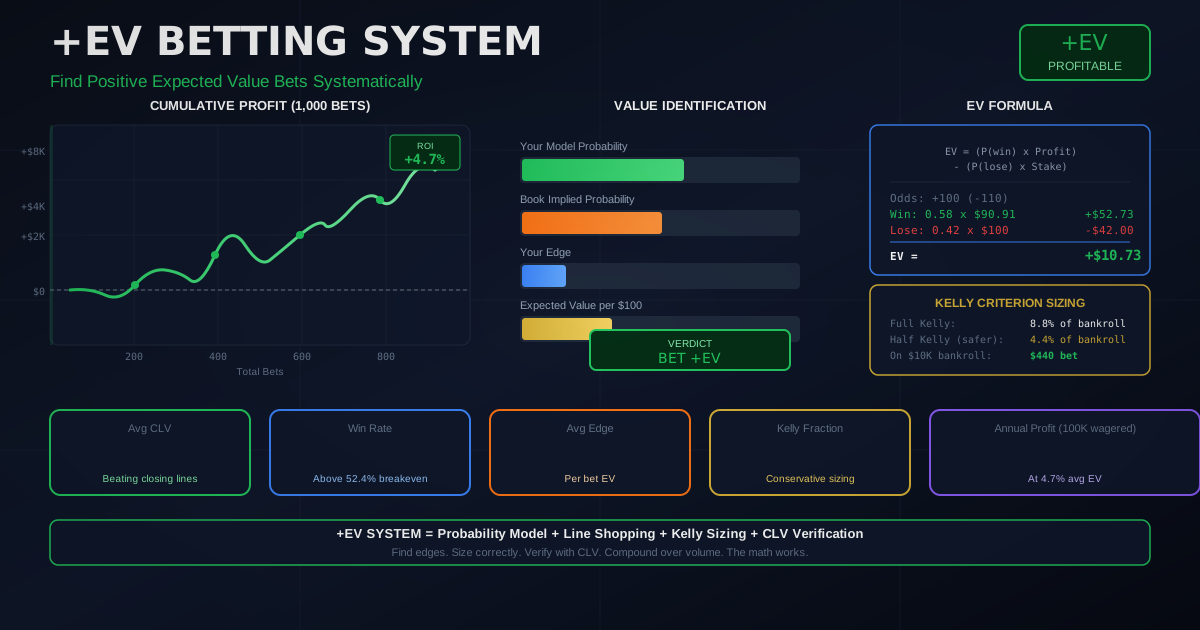
If you have +3% edge:
Need enough trials for edge to overcome variance

After 100 bets:
EV: +$30 (if $10 bets)
SD: ~$100
Could easily be negative

After 10,000 bets:
EV: +$3,000
SD: ~$1,000
Very likely positive (97%+)

Skilled bettors need volume
to realize their edge
Real-World Examples
Example 1: Roulette Evening Session
Situation:
Playing roulette for 4 hours
100 spins at $25 on red
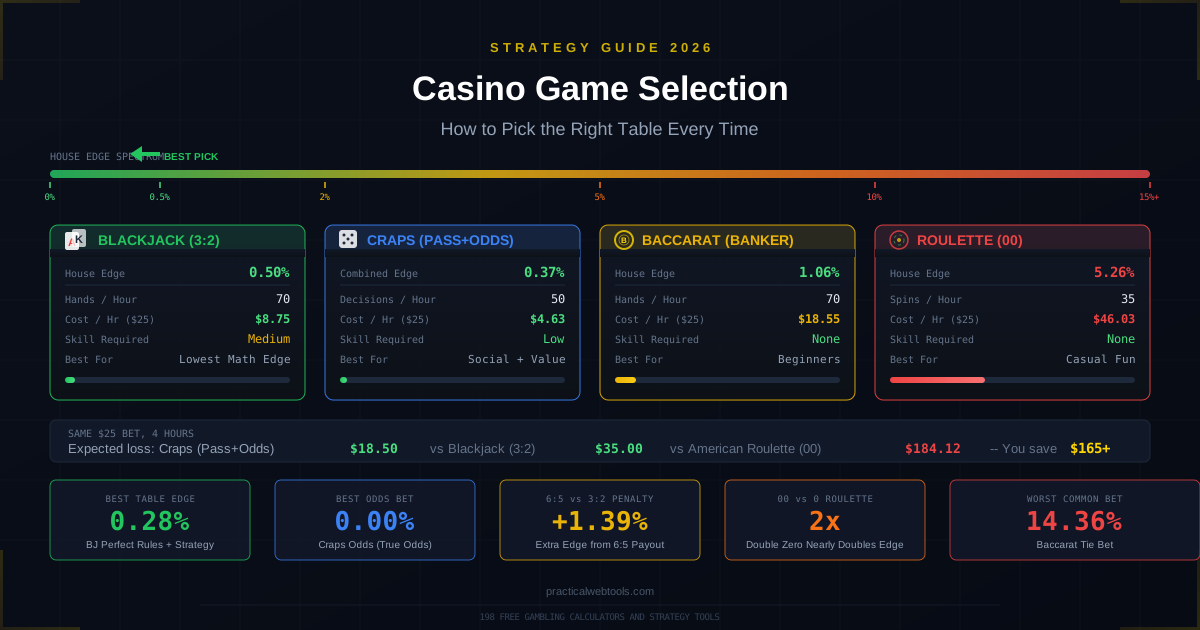
House edge: 5.26%
Calculation:
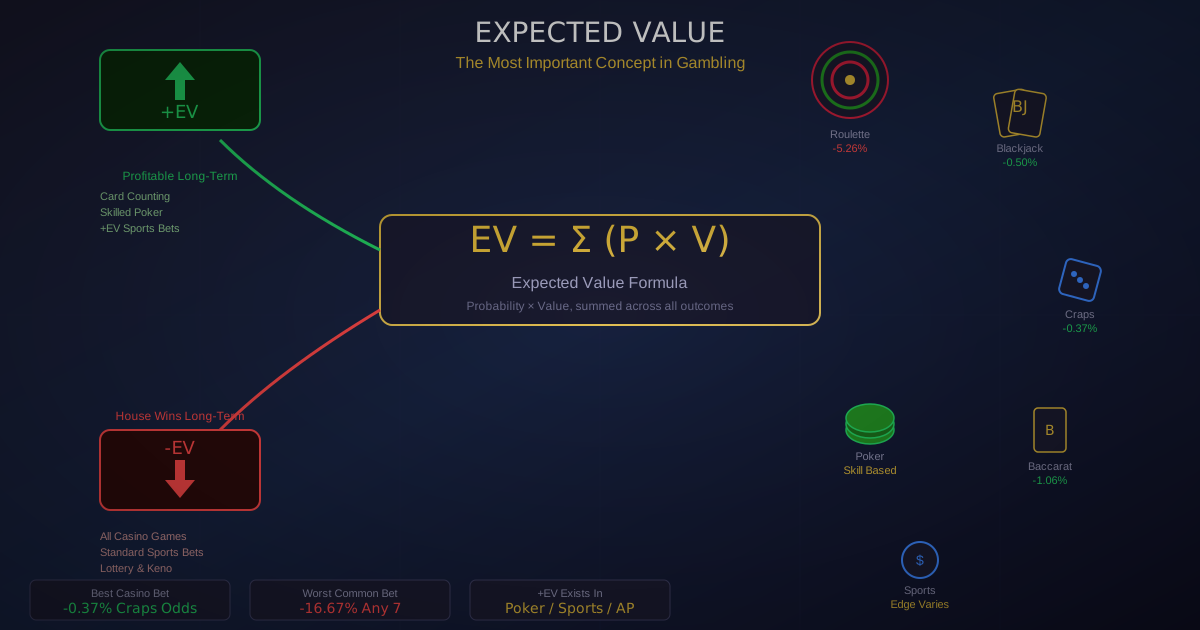
Expected Value:
EV per spin: $25 × -0.0526 = -$1.32
Total EV: 100 × -$1.32 = -$132

Standard Deviation:
SD per spin: ~$25
Total SD: $25 × √100 = $250

After 100 spins:
EV = -$132
SD = $250

95% confidence interval:
-$132 ± (1.96 × $250)
= -$132 ± $490
= -$622 to +$358
Result:
Even though expected loss is $132,
there's ~28% chance of winning the session!

This is why people keep playing -
short sessions often win.

But over 10,000 spins (100 sessions):
EV = -$13,200
95% interval: -$18,100 to -$8,300
Almost certain loss

LLN guarantees the house wins eventually
Example 2: Sports Betting Over One Year
Situation:
Betting 500 games at $110 to win $100
Win rate: 52% (slight edge)
Calculation:
Expected Value:
EV per bet: (0.52 × $100) - (0.48 × $110)
EV = $52 - $52.80 = -$0.80

Wait - that's negative!
Need 52.4% to break even at -110

Let's say true 54% winner:
EV = (0.54 × $100) - (0.46 × $110)
EV = $54 - $50.60 = $3.40 per bet
Total EV = 500 × $3.40 = $1,700

Standard Deviation:
SD per bet ≈ $105
Total SD = $105 × √500 = $2,348
Result:
Expected: +$1,700
SD: $2,348

95% interval: -$2,900 to +$6,300

Even with 54% win rate (real edge),
there's ~24% chance of losing money
over 500 bets!

After 5,000 bets:
EV = $17,000
SD = $7,424
95% interval: +$2,449 to +$31,551

Now 99%+ chance of being profitable
LLN working for the skilled bettor
Example 3: Slot Machine Reality
Situation:
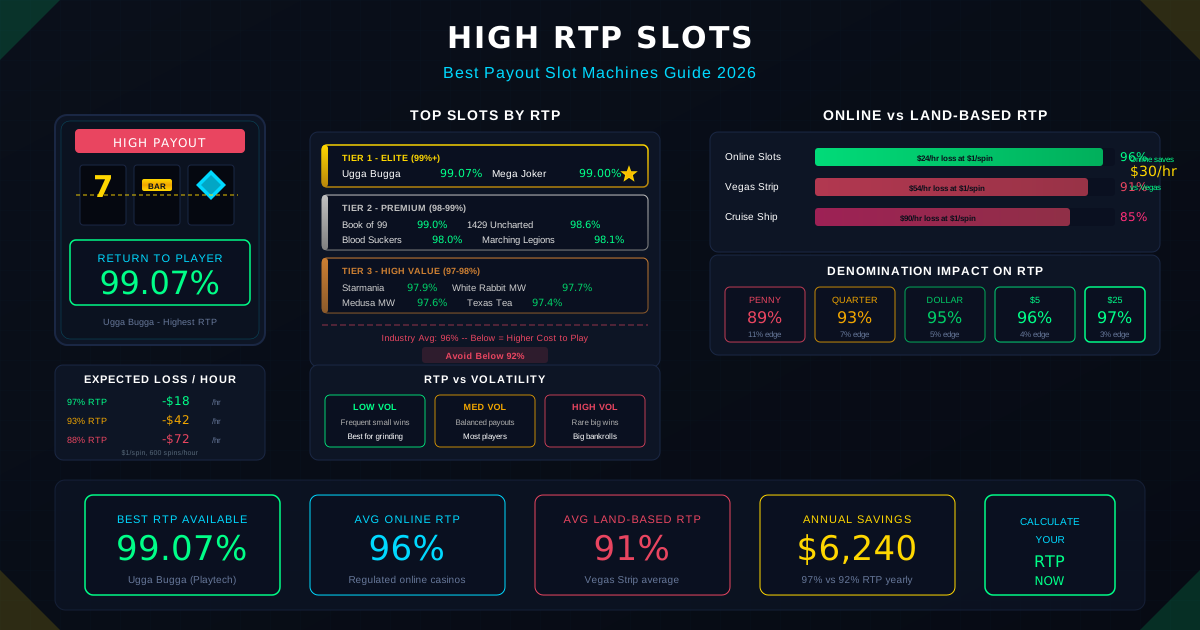
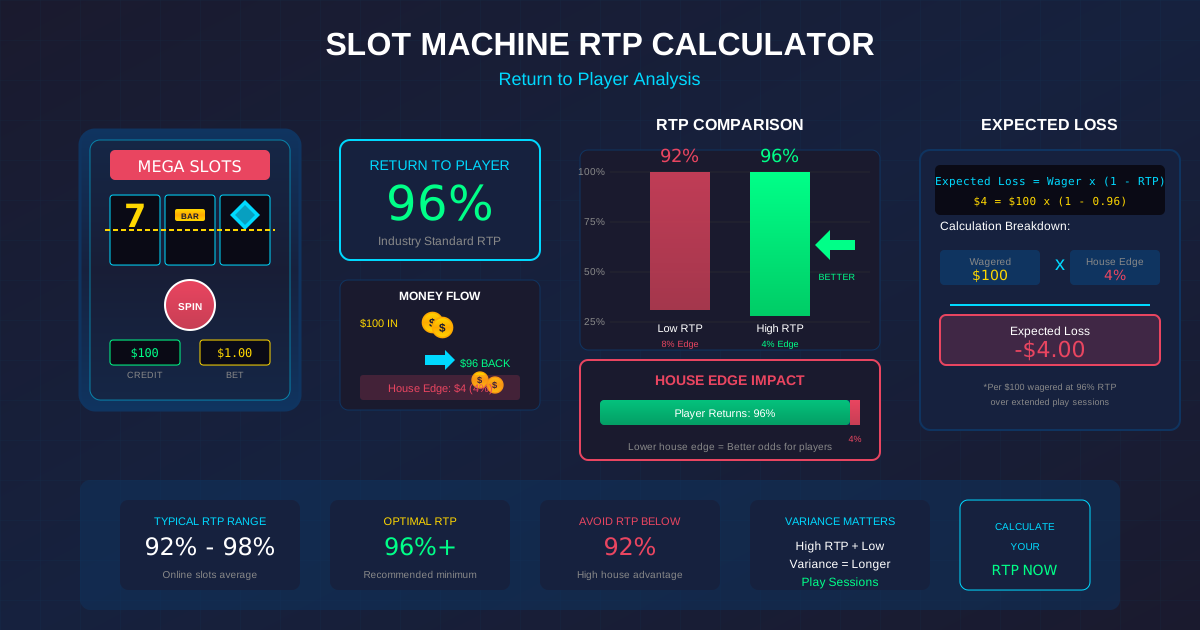
Slot machine with 92% RTP (8% house edge)
$1 spins, 600 per hour for 5 hours
3,000 total spins
Calculation:
Expected Value:
EV per spin: -$0.08
Total EV: 3,000 × -$0.08 = -$240

Standard Deviation (slots have high variance):
Typical slot SD: ~$3-5 per $1 spin
Using SD = $4

Total SD = $4 × √3,000 = $219
Result:
Expected: -$240
SD: $219

95% interval: -$669 to +$189

About 13% chance of walking away positive
from 5-hour slot session.

This is why slots stay popular -
short-term wins happen regularly.

But over 30,000 spins (10 sessions):
EV = -$2,400
95% interval: -$3,760 to -$1,040
Now almost certain to lose

Casinos count on players returning
Example 4: Comparing Trial Sizes
Situation:
Same negative EV game (-2% edge)
Comparing different sample sizes
$100 bets, SD = $100 per bet
Calculation:
10 bets:
EV = -$20
SD = $316
95% range: -$639 to +$599 (big winning possible)

100 bets:
EV = -$200
SD = $1,000
95% range: -$2,160 to +$1,760 (winning still possible)

1,000 bets:
EV = -$2,000
SD = $3,162
95% range: -$8,198 to +$4,198 (winning less likely)

10,000 bets:
EV = -$20,000
SD = $10,000
95% range: -$39,600 to -$400 (winning very unlikely)

100,000 bets:
EV = -$200,000
SD = $31,623
95% range: -$261,980 to -$138,020 (losing is certain)
Result:
As n increases:
- Absolute variance grows
- But relative variance shrinks
- Eventually, house edge dominates

The tipping point where house edge
reliably manifests: ~1,000+ bets
for typical -2% edge games

Below that: luck dominates
Above that: math dominates
Confidence Interval Calculations
Building Confidence Bands
For any number of trials n:

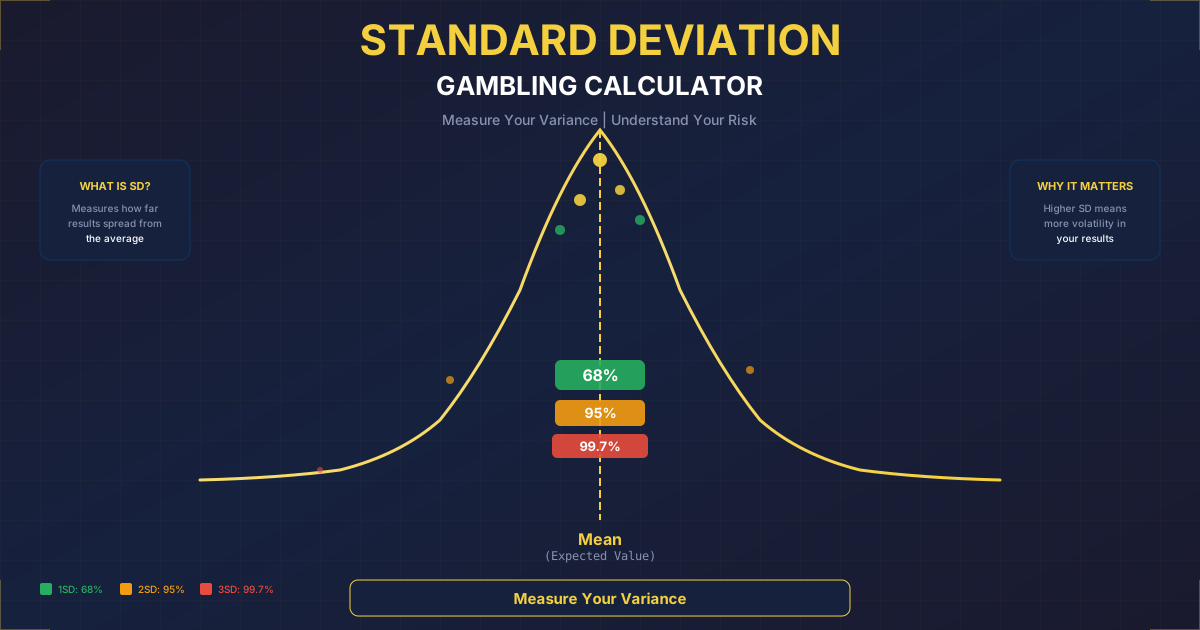
68% confidence: EV ± 1 × SD
95% confidence: EV ± 1.96 × SD
99% confidence: EV ± 2.576 × SD
99.9% confidence: EV ± 3.29 × SD

Where SD = σ × √n (σ is per-trial SD)

Example: 400 bets, EV = -$1/bet, σ = $50

Total EV = -$400
Total SD = $50 × √400 = $1,000

68%: -$1,400 to +$600
95%: -$2,360 to +$1,560
99%: -$2,976 to +$2,176
Probability of Profit
With negative EV, probability of profit:

P(profit) = P(Z > -EV/SD)

Where Z is standard normal

Example: EV = -$200, SD = $500
Z = 200/500 = 0.4
P(profit) = P(Z > -0.4) ≈ 66%

Example: EV = -$200, SD = $100
Z = 200/100 = 2.0
P(profit) = P(Z > -2.0) ≈ 2.3%

More trials → lower SD relative to EV
→ lower chance of profit (if EV negative)
Why Short-Term Differs from Long-Term
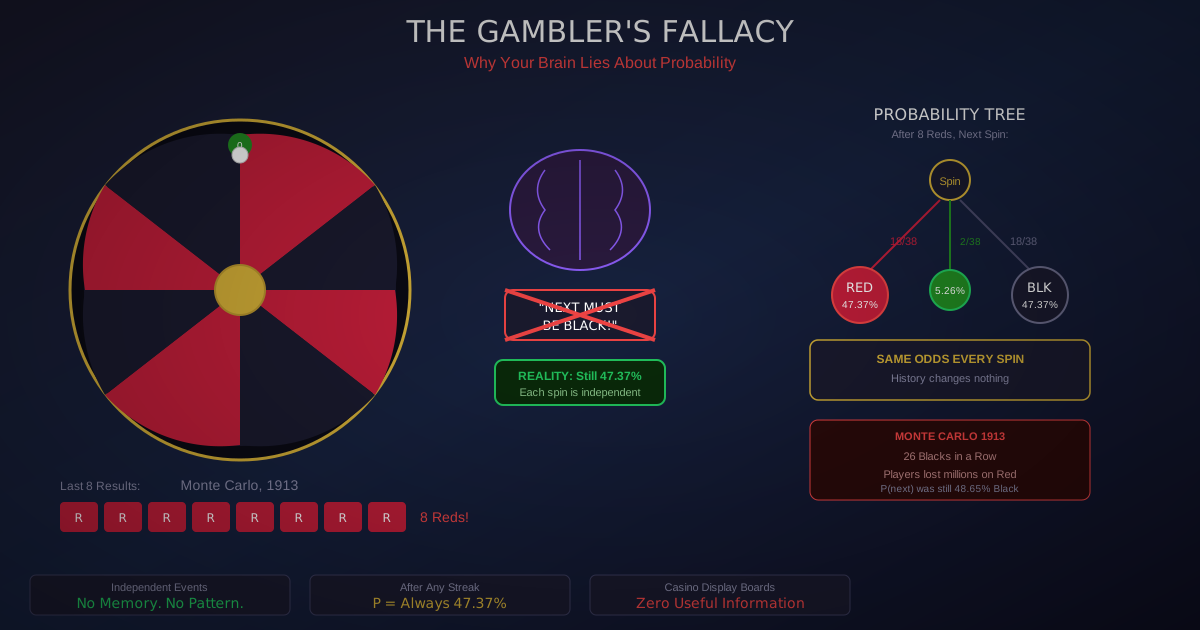
The Gambler's Delusion
Short-term thinking:

"I won $500 last week at the casino"
True, but irrelevant to long-term expectation

"This slot machine is due to pay out"
No, each spin is independent

"I'm on a hot streak"
Streaks don't change underlying odds

LLN says:
Your past results don't affect future odds
Only MORE trials bring convergence
Not hoping or waiting
Why Winners Keep Playing
Selection bias creates illusion:

1,000 gamblers start with $1,000
After 100 bets at -5% EV:

~400 are ahead (short-term winners)
~600 are behind

Winners: "Gambling works for me!"
Losers: Quietly stop

The winners keep playing...
After 1,000 bets:

~50 are still ahead
~950 are behind

LLN is catching up with everyone
But winners are still visible, losers are gone
Common Mistakes to Avoid
-
Expecting Fast Convergence: LLN is a limit theorem. It doesn't promise results after 100 or even 1,000 trials - it guarantees them only as trials approach infinity.
-
Believing Hot/Cold Streaks Matter: Past outcomes don't influence future independent events. A "cold" roulette number isn't "due" to hit.
-
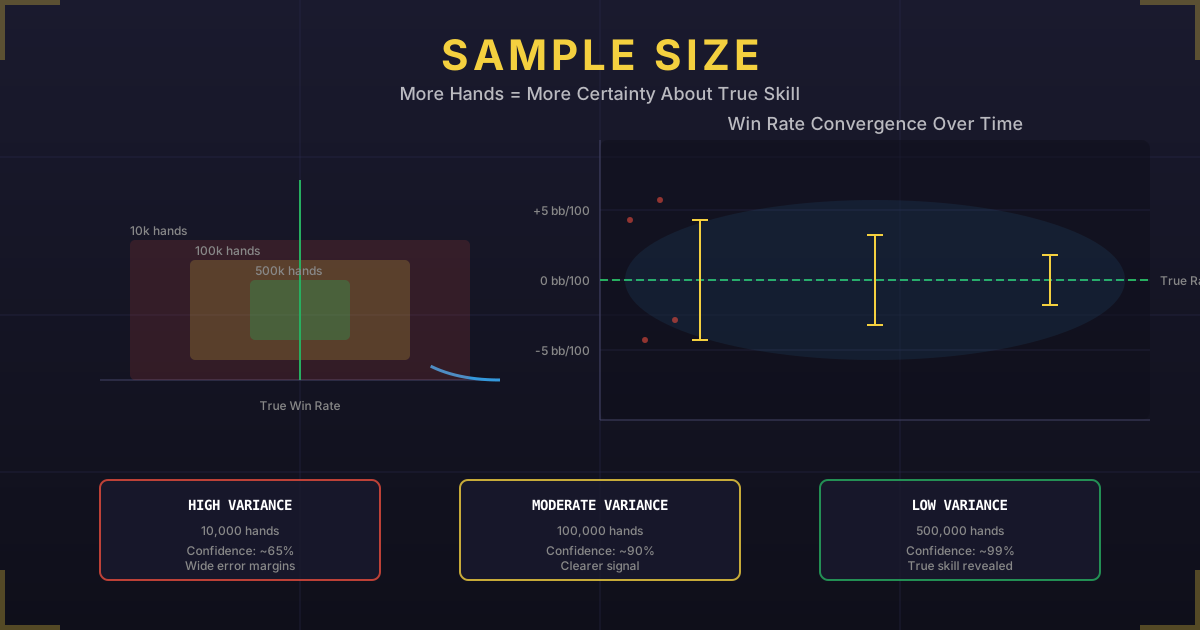
Thinking Small Samples Prove Edge: Winning over 50 bets doesn't prove skill - variance is still too high. Need 1,000+ bets minimum.
-
Ignoring Sample Size Differences: Casino gets millions of trials; you get hundreds. LLN works faster for them than for you.
-
Confusing Average with Individual: LLN says the average converges, not that individual outcomes become predictable. Each bet is still random.
-
Underestimating Required Trials: For 1% edge to reliably show, you need roughly 10,000+ bets. Most recreational bettors never reach meaningful sample sizes.
Frequently Asked Questions
How many bets until the law of large numbers kicks in?
There's no magic number - it's continuous convergence. But for practical purposes, 500-1,000 bets start showing patterns, and 10,000+ bets give reliable indication of true expectation.
Does the law of large numbers mean I'll eventually win?
Only if you have positive expected value. If EV is negative, LLN guarantees you'll eventually lose. It works for and against you depending on your edge.
Can I beat the law of large numbers?
No. It's a mathematical theorem, not a strategy. The only "solution" is to have positive expected value in the first place.
Why do some people seem to always win at gambling?
Survivorship bias. You see the winners; you don't see the many more losers. Also, some people genuinely have edge (professional sports bettors, poker players).
Does card counting violate the law of large numbers?
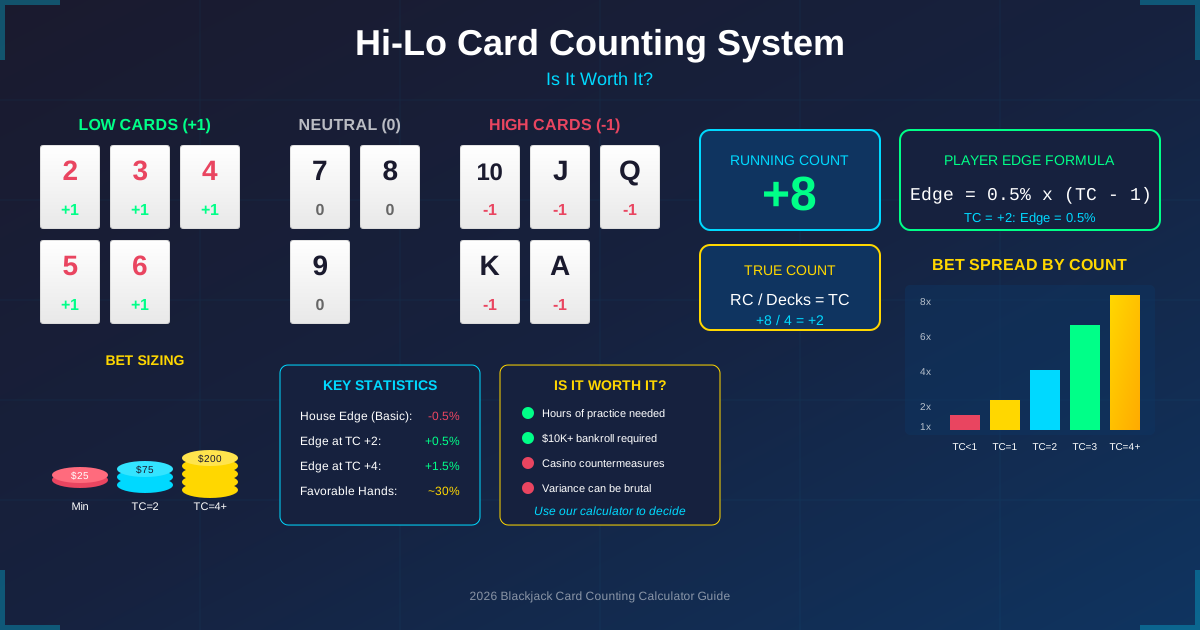
No - it changes the expected value. Card counting creates positive EV situations. LLN then works in the counter's favor over many hands.
How does the casino ensure the law works for them?
Volume. With thousands of customers making millions of bets, their results converge to expected house edge with near-certainty. Individual variance cancels out.
Pro Tips
- Think of each gambling session as one data point in a lifetime of sessions - individual results are noise
- If you genuinely believe you have positive EV, embrace volume to let LLN work for you
- Use confidence intervals, not point estimates, when evaluating your betting results
- Recognize that casinos exist because LLN is a mathematical certainty, not a theory
- Track your results meticulously - only with data can you determine if variance or edge explains your outcomes
Related Calculators
- Standard Deviation Calculator - Measure variance
- Expected Value Calculator - Calculate average outcomes
- Risk of Ruin Calculator - Probability of going broke
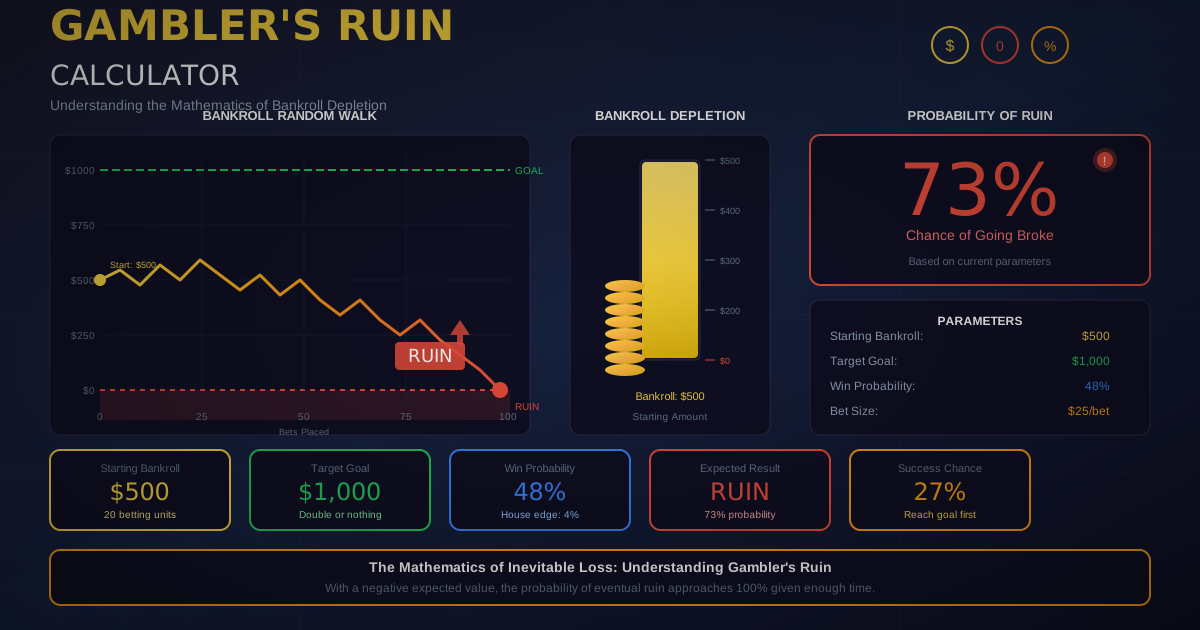
- Gambler's Ruin Calculator - Finite bankroll analysis
- Sample Size Calculator - How many bets to prove edge
Conclusion
The law of large numbers is the mathematical bedrock of casino profitability and the reality check every gambler needs. Short-term, anything can happen - you might win, the casino might lose. Long-term, mathematics is undefeated. Our calculator shows exactly how convergence works and why the house always wins over enough trials.
Understanding LLN doesn't make gambling more profitable, but it does make expectations realistic. If you gamble for entertainment, knowing the long-term math helps you budget appropriately. If you seek to profit, LLN shows why you need genuine edge AND substantial volume to overcome variance.