Multi-Way Pot Calculator: Navigate Complex Multi-Player Situations (2026)

Multi-Way Pot Calculator: Master the Complexity of Multi-Player Pots
Multi-way pots fundamentally change poker dynamics. Your flush draw is less likely to win, your bluffs rarely succeed, and proper hand selection becomes crucial. Our multi-way pot calculator analyzes equity distribution, adjusts pot odds for multiple opponents, and shows you how to extract maximum value when facing several players.
What Is a Multi-Way Pot?
A multi-way pot is any pot contested by three or more players. These situations arise when multiple players call preflop raises, when several limpers see a flop, or when the blinds and limpers create family pots. Multi-way pots require significantly different strategy than heads-up play.
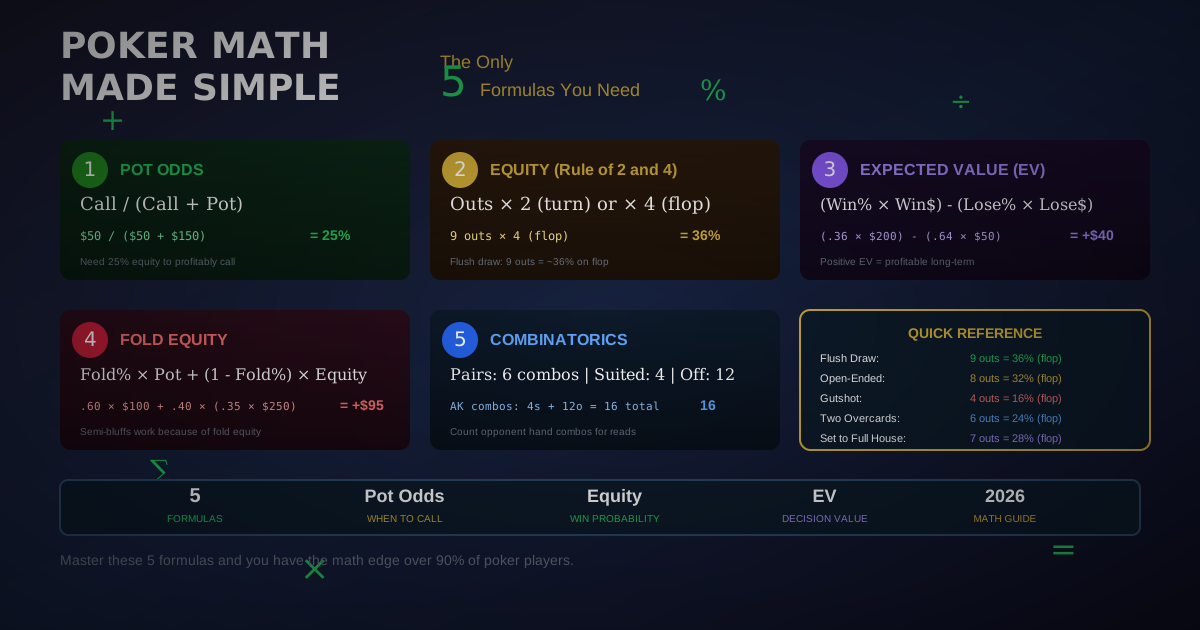
Quick Answer: In multi-way pots, your equity decreases while pot odds often improve. Against 3 opponents, pocket Aces drops from 85% (heads-up) to 64% equity. The key formula: Multi-way fold equity = (Fold%)^n where n = number of opponents. Against 3 players who each fold 50%, total fold equity = 0.5 x 0.5 x 0.5 = 12.5%. Bluff less, value bet more in multi-way pots.
How to Use Our Calculator
Use the Multi-Way Pot Calculator →
Step-by-Step Instructions
- Enter Your Hand: Input your hole cards
- Select Number of Opponents: Choose 2-8 opponents
- Input Opponent Ranges: Estimate ranges for each opponent
- Enter Board Cards: Add flop, turn, river as applicable
- Calculate Multi-Way Equity: See your equity against all opponents combined
Input Fields
| Field | Description | Example |
|---|---|---|
| Your Hand | Your two hole cards | AdKd |
| Number of Opponents | How many villains | 3 |
| Opponent 1 Range | First opponent's range | Top 20% |
| Opponent 2 Range | Second opponent's range | Top 30% |
| Opponent 3 Range | Third opponent's range | Top 40% |
| Board | Community cards | Kh Td 5c |
| Pot Size | Current pot | $80 |
How Multi-Way Pots Affect Equity
Equity Diminishes with Each Opponent
Your equity decreases as more players enter:
| Your Hand | Heads-Up Equity | 3-Way Equity | 4-Way Equity | 5-Way Equity |
|---|---|---|---|---|
| AA | 85% | 64% | 56% | 50% |
| KK | 83% | 59% | 49% | 42% |
| 80% | 54% | 44% | 37% | |
| AKs | 67% | 41% | 32% | 26% |
| JJ | 77% | 48% | 38% | 31% |
| TT | 75% | 44% | 33% | 26% |
| 99 | 72% | 40% | 29% | 23% |
Why Equity Drops
Mathematical Reality:
Heads-up: 1 opponent, you vs 1 range
3-way: 2 opponents, both can outdraw you
4-way: 3 opponents, triple the trouble
Each opponent adds ~12-18% chance someone beats you
Practical Impact:
- Premium pairs become vulnerable
- Drawing hands gain relative value
- Set mining becomes more profitable
- Bluffing becomes nearly impossible
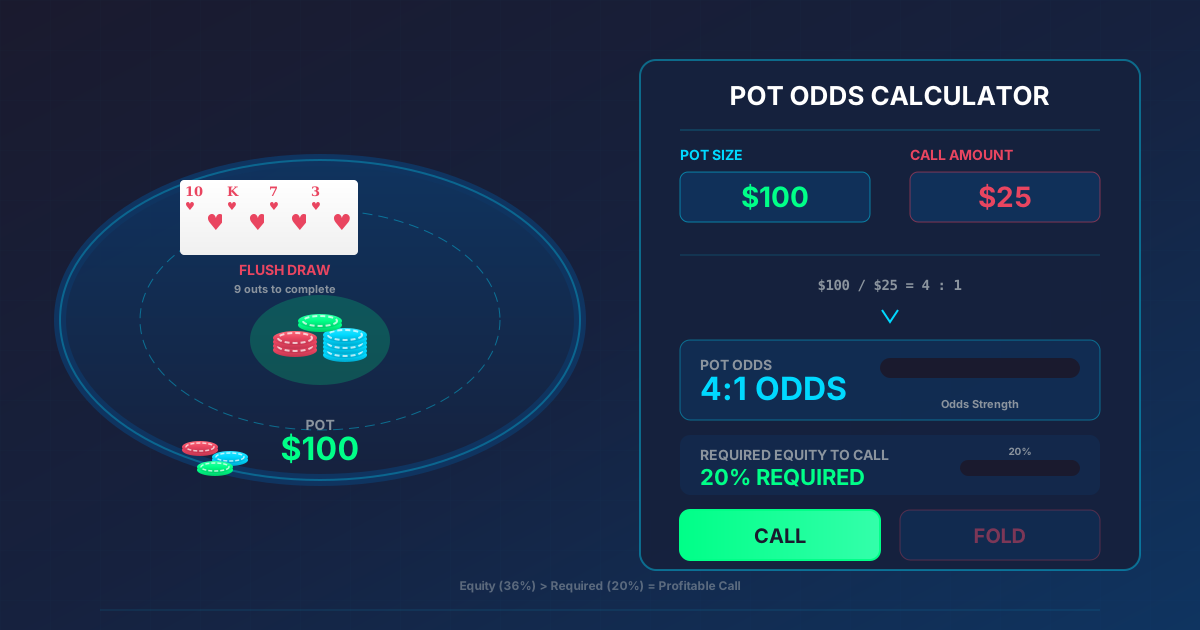
Pot Odds in Multi-Way Pots
Improved Pot Odds
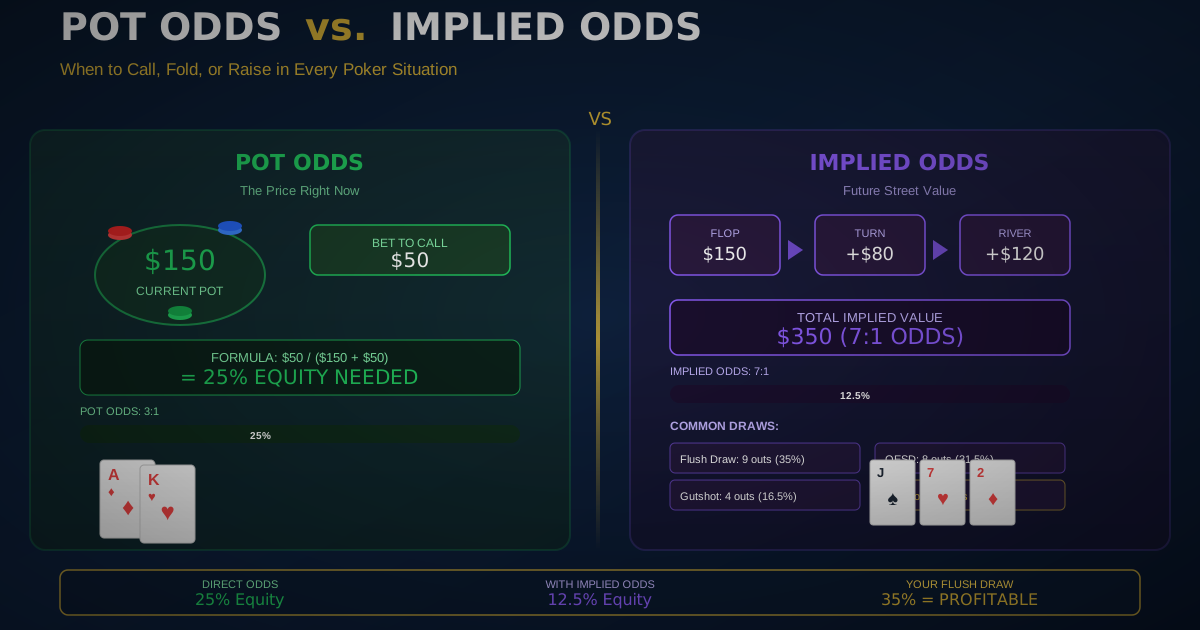
While equity drops, pot odds often improve:
Heads-Up Pot Example:
You raise $10, one caller
Pot = $25
You invest: $10 to win $25 (2.5:1)
Multi-Way Pot Example:
You raise $10, three callers
Pot = $45
You invest: $10 to win $45 (4.5:1)
The Multi-Way Pot Odds Equation
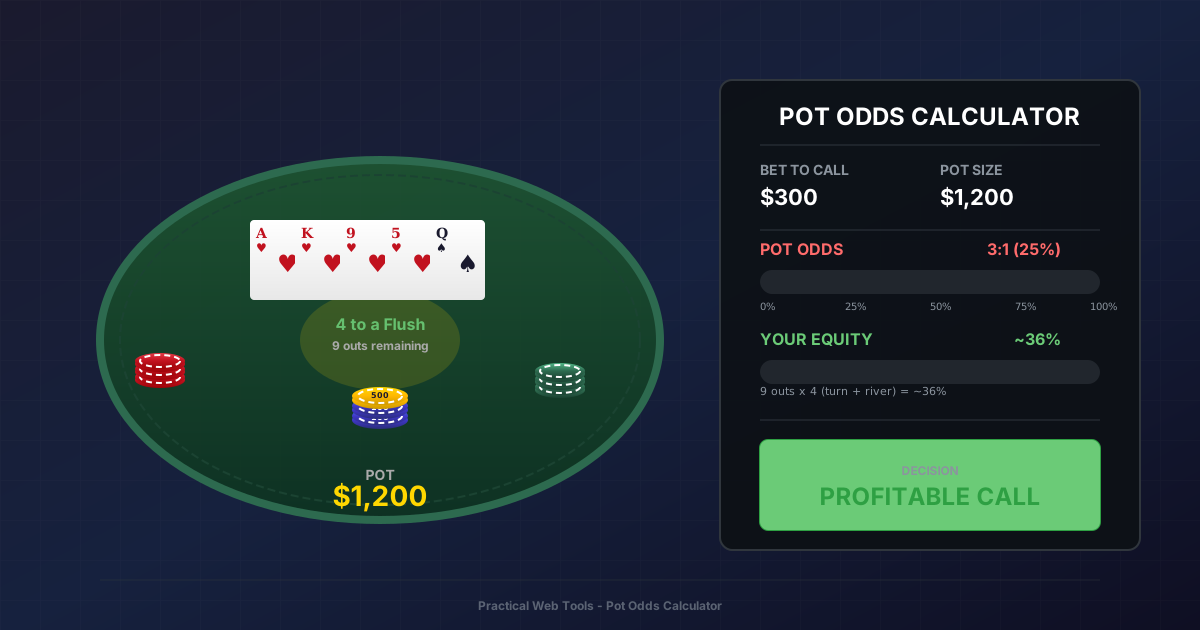
Calculate whether draws are profitable:
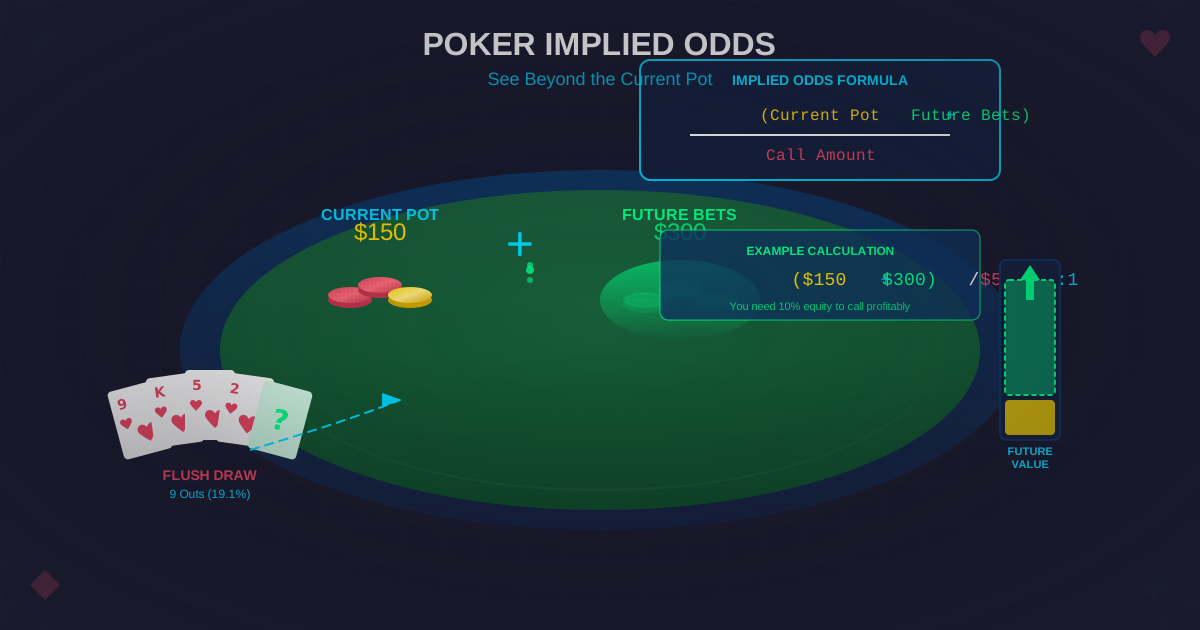
Required Equity = (Bet to Call) / (Pot + Bet to Call + Expected Future Bets)
Example: Flush Draw Multi-Way
Pot: $60 (4 players)
Bet: $30
Call needed: $30 into $120 pot (with expected calls from others)
Required equity: 30 / 150 = 20%
Flush draw equity: ~35%
Result: Clear call
Bluffing in Multi-Way Pots
Why Bluffs Fail Multi-Way
The math of multi-way bluffing is brutal:
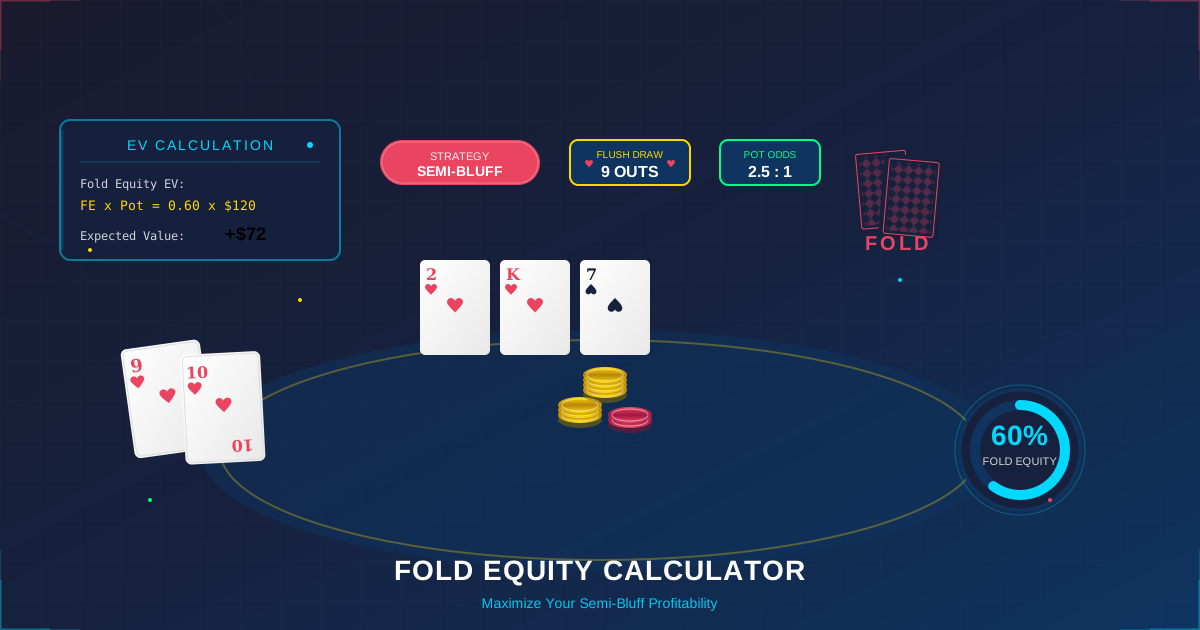
Fold Equity Formula:
Multi-way Fold Equity = (Fold%)^n
Where n = number of opponents
Example: Bluffing 3 Opponents
Assume each player folds 40% of range
Fold equity = 0.40 x 0.40 x 0.40 = 6.4%
You need: $50 bet to succeed 6.4% of the time
EV = (0.064 x $75) - (0.936 x $50) = -$42
Massive loss even with decent individual fold equity
When Bluffing Can Work
Rare Bluff Spots Multi-Way:
1. All opponents have capped ranges (limped pot, no one showed strength)
2. Board heavily favors your perceived range (A-A-K rainbow)
3. You have blockers to all likely hands
4. Opponents are weak-passive (will fold top pair)
Even Then:
Against 2 opponents with 60% fold each:
Fold equity = 0.60 x 0.60 = 36%
Still marginal at best
Reserve bluffs for heads-up
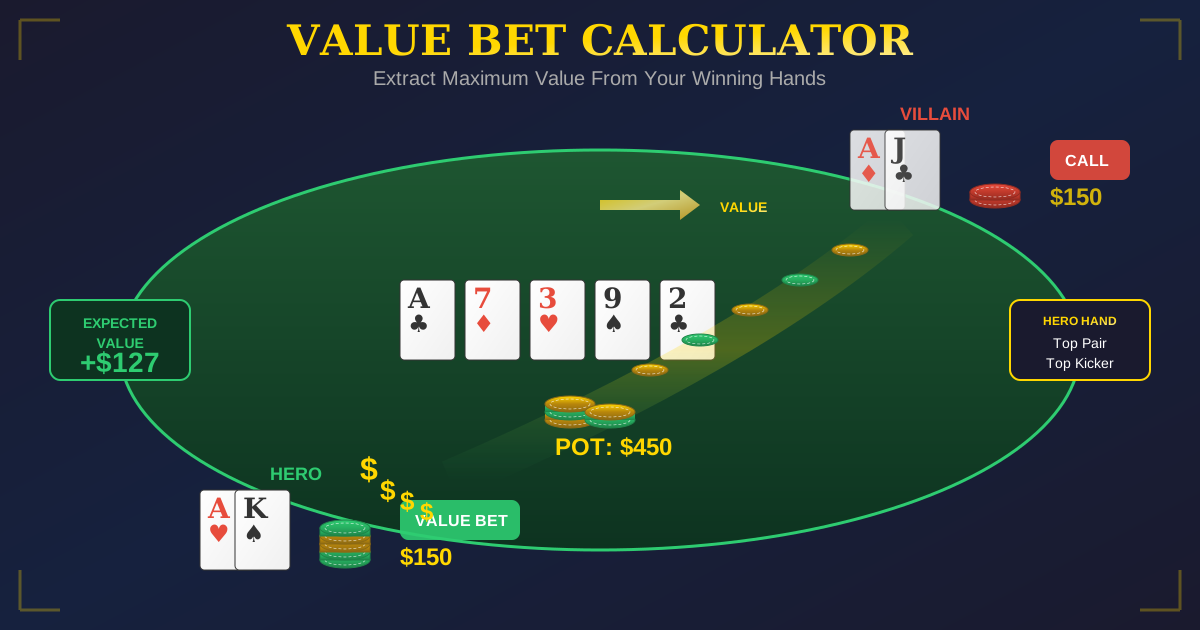
Value Betting Multi-Way
Multi-Way Value Strategy
Since bluffs don't work, focus entirely on value:
Value Betting Principles:
1. Bet for value with much stronger ranges
2. Don't bet medium hands (check for pot control)
3. Size larger when you have it
4. Multiple opponents = multiple potential payers
Hand Strength Requirements
| Heads-Up | Multi-Way Equivalent |
|---|---|
| Top pair good kicker | Two pair minimum |
| Two pair | Set |
| Set | Nut straight or better |
| Flush | Nut flush only |
| Full house | Always value bet |
Example: Value Betting Adjustment
Heads-Up (you'd bet):
Board: Kh Td 5c
Your hand: KdQd (top pair)
Bet for value vs most holdings
3-Way (reconsider):
Board: Kh Td 5c
Your hand: KdQd (top pair)
Check - likely to be beat by one of two opponents
3-Way (clear bet):
Board: Kh Td 5c
Your hand: Kd Th (top two pair)
Bet for value - strong enough to beat most hands
Real-World Examples
Example 1: Equity Calculation 4-Way
Setup: You have AdKd. Flop is Kh 8c 4d in a 4-way pot.
Your Equity:
Against 3 random opponent ranges (~25% each):
- Opponent 1: Second pair+, draws = 35% equity
- Opponent 2: Same = 35% equity
- Opponent 3: Same = 35% equity

Your equity vs field:
Approximately 38% to win, 62% to lose to at least one opponent
Analysis:
Despite top pair top kicker:
- You're not a favorite
- Someone likely has two pair, set, or strong draw
- Value bet cautiously, fold to strong resistance
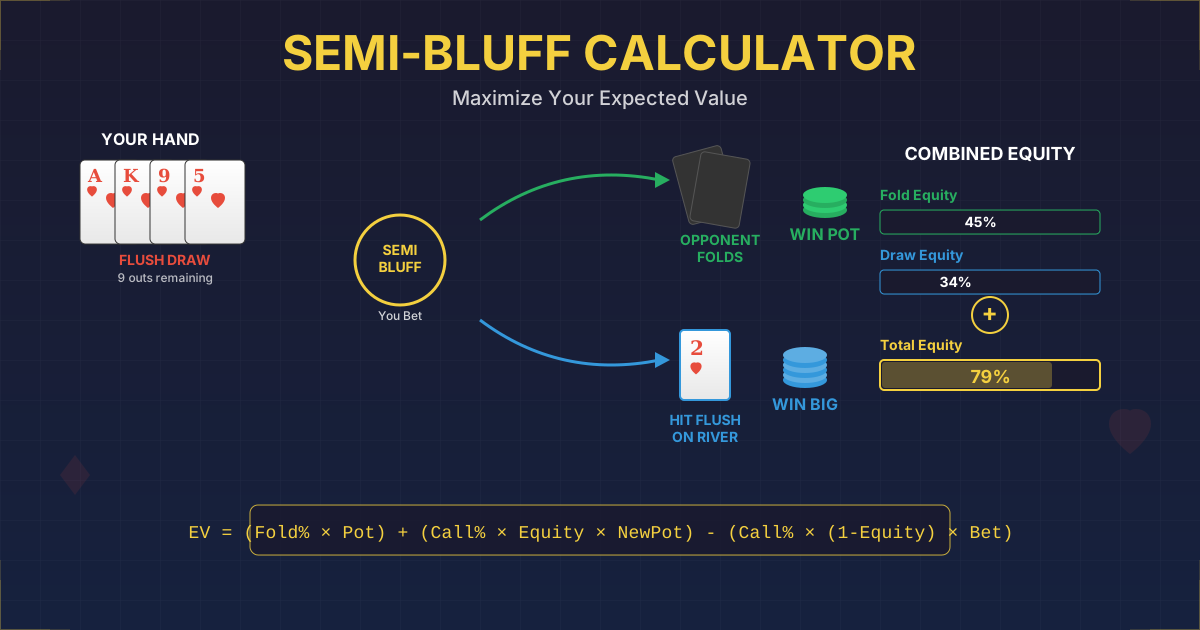
Example 2: Flush Draw Multi-Way
Setup: You have 9h8h on a Kh 5h 2c flop. Pot is $40, 4 players.
Equity:
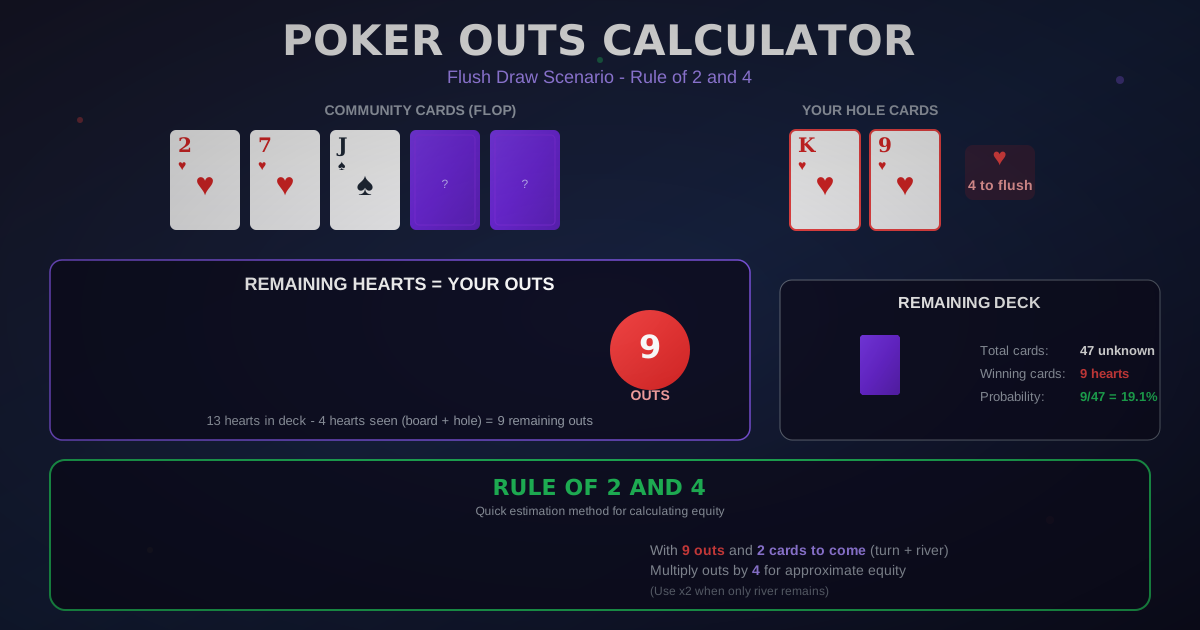
Flush draw = 9 outs = ~35% by river
Against 3 opponents, flush is likely best if hit
Equity remains ~35% (unlike pairs which diminish)
Pot Odds:
Opponent bets $30, pot is now $70
You need: 30 / 100 = 30% equity to call
You have: 35%
Clear call
Multi-Way Advantage:
If another opponent calls, pot grows to $130
Your equity remains 35%
You're now calling $30 to win $130+
Multi-way pots make drawing hands more profitable
Example 3: Set in Multi-Way Pot
Setup: You have 7d7c on a Ks 7h 3c flop. 5-way pot, $50.
Analysis:
Middle set is incredibly strong 5-way
Equity: ~85% to win vs field
Someone likely has Kx, possible flush draw
Value Betting:
Bet $35 (70% pot)
Expect calls from Kx, draws, weaker sets
Build pot while behind is unlikely
Multiple opponents = multiple value targets
Result: Sets are premium multi-way holdings. Bet for maximum value.
Example 4: Overpair Multi-Way
Setup: You have QdQc on a Jh 8c 4d flop. 3-way pot, $30.
Analysis:
Heads-up: QQ is extremely strong
3-way: QQ is merely good

Opponent ranges include:
- JT, J9, AJ, KJ (beat by your QQ)
- 88, 44 (you're crushed)
- JJ (you're crushed)
- AK, AQ (drawing live)
Strategy:
Bet for value/protection but cautiously
~50% pot ($15)
If raised, consider the source
Fold to strong aggression from tight players
Example 5: Bluff Spot Analysis
Setup: You have Ac5c on Ad Kd 9d 2h 6c river. 3-way pot, $100.
Bluff Consideration:
Board shows possible flush
You have no diamond
Both opponents checked turn and river to you
Fold Equity Estimate:
Opponent 1: Might fold non-diamond hands = 50%
Opponent 2: Same estimation = 50%
Combined: 50% x 50% = 25%
Bet Size for Bluff:
Pot is $100
Bet $75 to represent flush
Need: 75/175 = 42.9% fold equity
Have: 25%
Bluff is unprofitable - check back ace-high
Example 6: Limped Multi-Way Pot
Setup: 5 limpers see flop of Qc Tc 6s. Pot is $12.50. You're BB with Qd9d.
Analysis:
Top pair, weak kicker in family pot
5 opponents all have ranges that include:
- Better queens (KQ, AQ, QJ, QT)
- Two pair combos (QT, Q6, T6)
- Sets (QQ, TT, 66)
- Flush draws
- Straight draws
Strategy:
Check for pot control
Top pair weak kicker is marginal 5-way
If it checks through, bet turn for thin value
If someone bets, evaluate hand strength
Don't overcommit
Multi-Way Pot Starting Hand Selection
Hands That Improve Multi-Way
Premium Hands to Enter:
Pairs: All (set mining profitable)
Suited connectors: 54s-JTs (make straights, flushes)
Suited aces: A2s-A9s (nut flush potential)
Suited Broadway: All (dominating flush draws)
Hands That Lose Value:
Big pairs (AA-TT): Still good but vulnerable
Ace-high offsuit: Often outkicked
King-high offsuit: Frequently dominated
Unsuited connectors: Can't make flushes
Implied Odds Consideration
Multi-way pots create massive implied odds:
Set mining math (heads-up):
7.5:1 to flop set
Need ~15:1 implied to profit
Heads-up: Hard to extract

Set mining math (multi-way):
Same 7.5:1 odds
5 opponents = 5 potential payers
Much easier to extract 15:1 or more
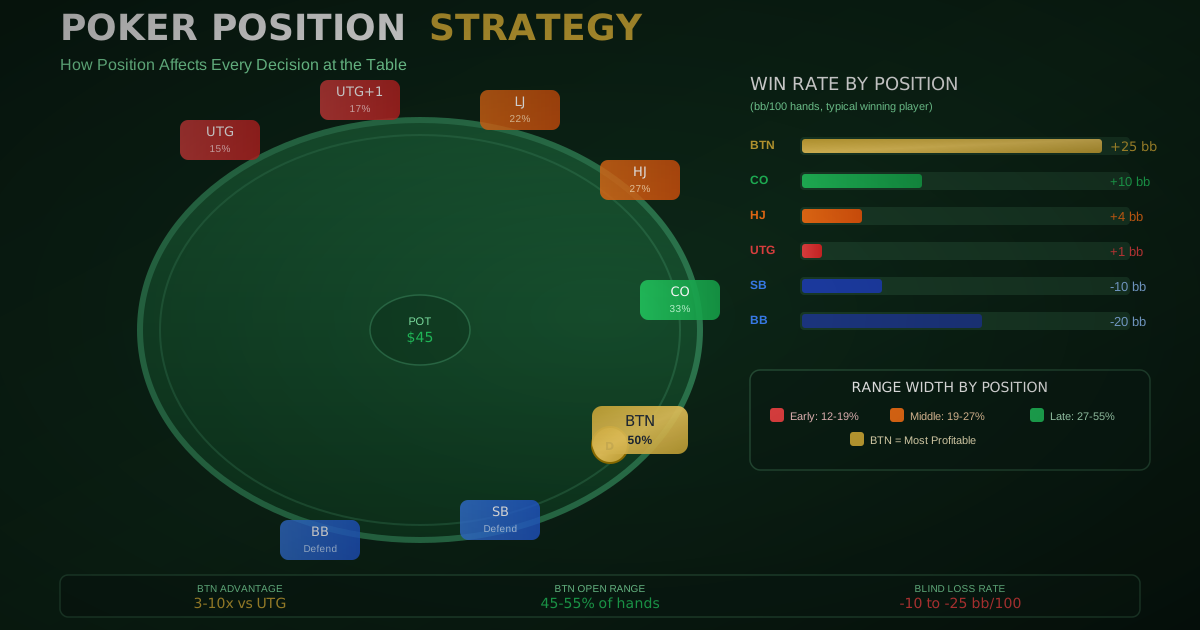
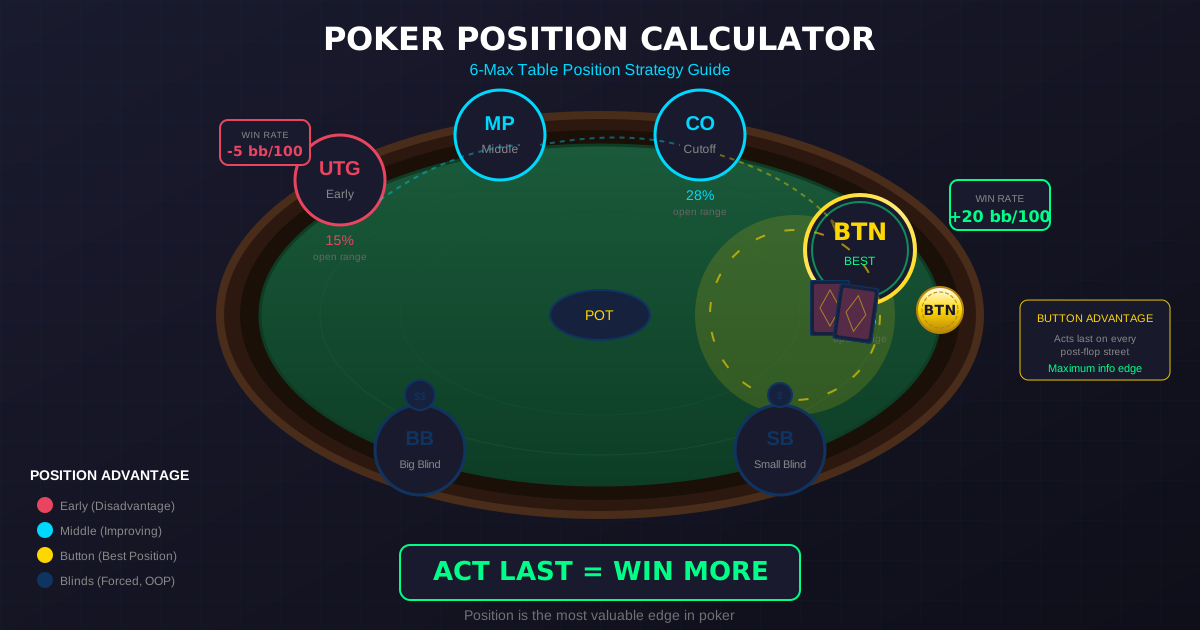
Position in Multi-Way Pots
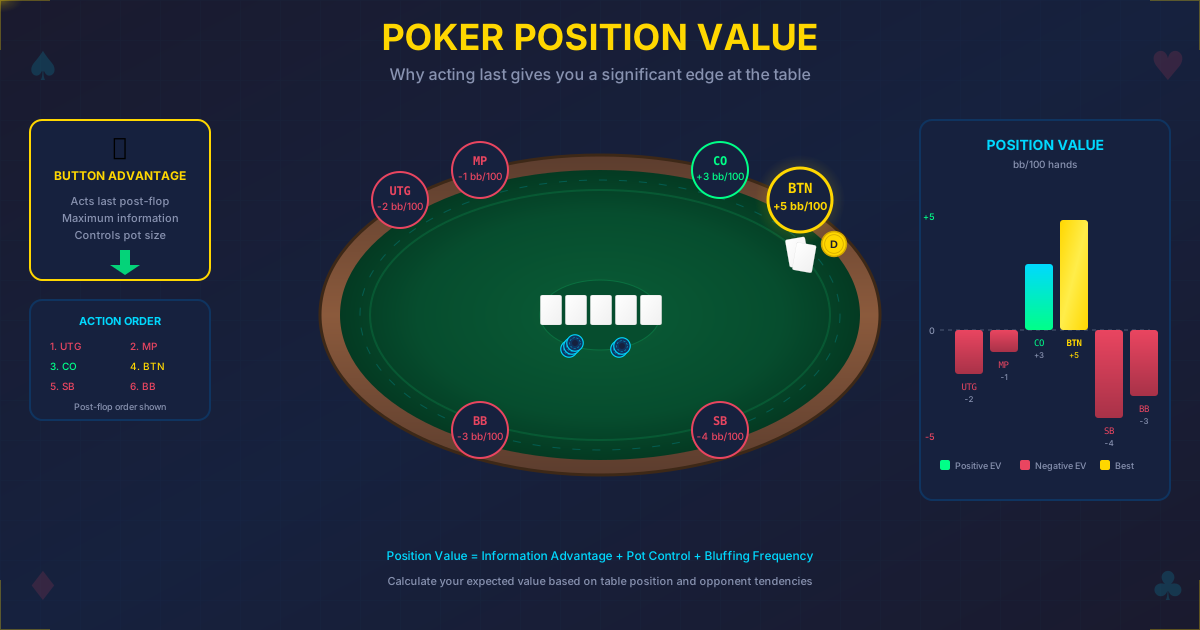
Position Value Increases
Position becomes even more valuable multi-way:
Late Position Advantages:
- See all opponent actions first
- Can control pot size better
- Easier to make value bets
- Can pick off weak leads
Early Position Challenges:
- Many players to act behind
- Hard to bluff successfully
- Must check strong hands sometimes
- Vulnerable to squeezes
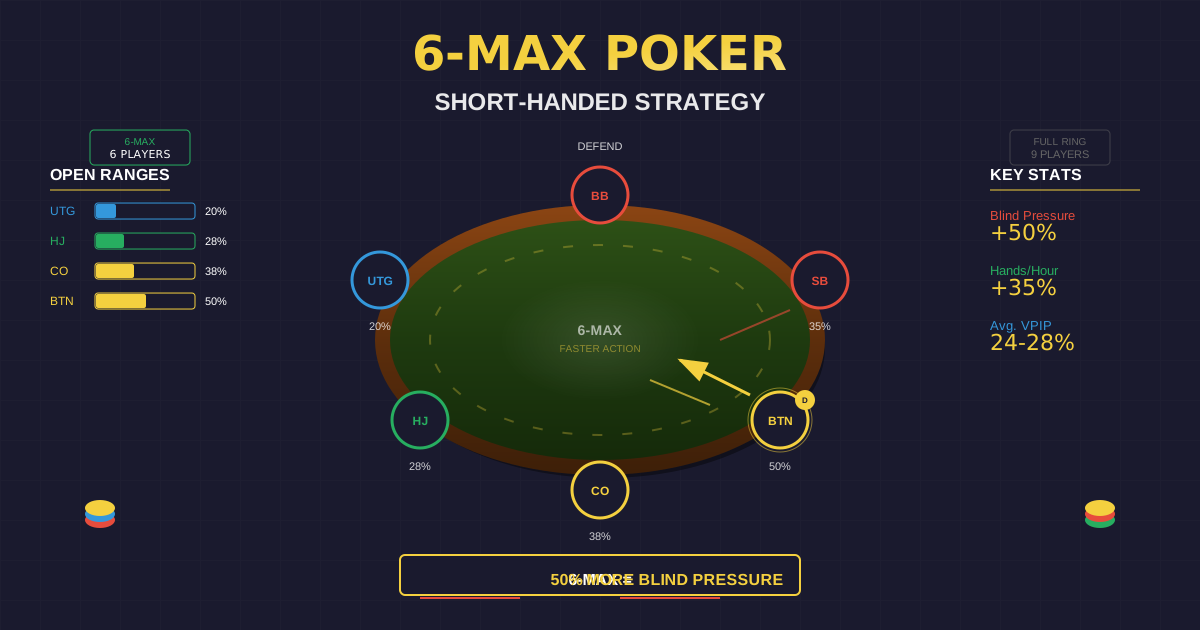
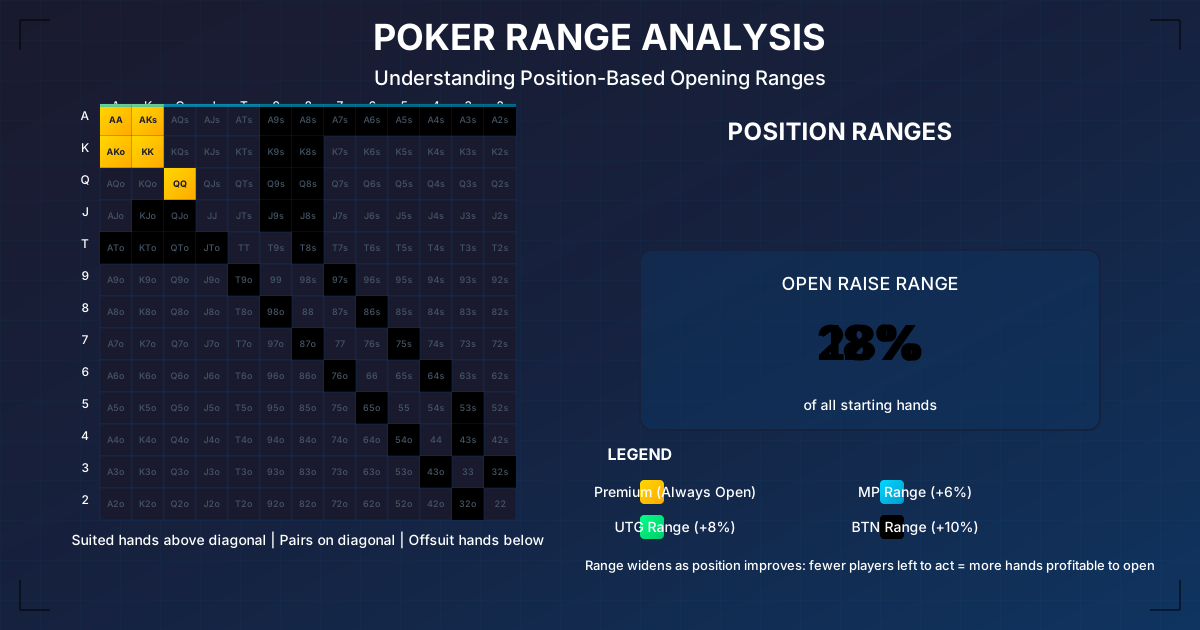
Multi-Way Position Strategy
Early Position:
Play very tight (top 10%)
Don't attempt to bluff
Bet only premium hands for value
Check and call with good but not great
Middle Position:
Slightly wider range (top 15%)
Still minimal bluffing
Value bet strong hands
Respect action from early positions
Late Position:
Widest range (top 25%+)
Occasional well-timed bluffs
Bet for thin value when checked to
Control pot size with draws
Common Mistakes to Avoid
-
Bluffing Multi-Way: The math doesn't support it. Each opponent multiplies the chance your bluff gets picked off.
-
Overvaluing One Pair: Top pair is often second-best multi-way. Don't stack off with overpairs in family pots.
-
Ignoring Pot Odds Improvement: While equity drops, pot odds improve. Draws are often profitable calls.
-
Playing Too Tight: Some hands gain value multi-way (suited connectors, pairs). Don't just play AA/KK.
-
Betting for "Protection": You can't protect against 4 opponents. Either bet for value or check.
-
Missing Value from Multiple Sources: With the nuts, bet big. Multiple opponents means multiple potential callers.
Frequently Asked Questions
Should I ever bluff in multi-way pots?
Rarely. Bluffing requires all opponents to fold, and the math becomes prohibitive with more than two players. Reserve bluffs for specific situations where all opponents have capped ranges.
How does my pocket pair equity change multi-way?
Dramatically. Pocket Aces goes from 85% heads-up to around 50% against four opponents. The more players, the more likely someone makes two pair, a set, or better.
Are drawing hands better or worse multi-way?
Better, relatively speaking. Your flush draw equity stays constant while made hands' equity decreases. Plus, pot odds improve significantly in multi-way situations.
Should I play tighter or looser preflop if expecting multi-way?
Play tighter with non-nut hands, looser with speculative hands. Avoid KJo type hands that flop marginal holdings. Embrace suited connectors and pairs that can flop the nuts.
How do I size my value bets multi-way?
Larger than heads-up when you have it. Multiple opponents can call, and you want to extract maximum value. Bet 70-100% pot with strong hands.
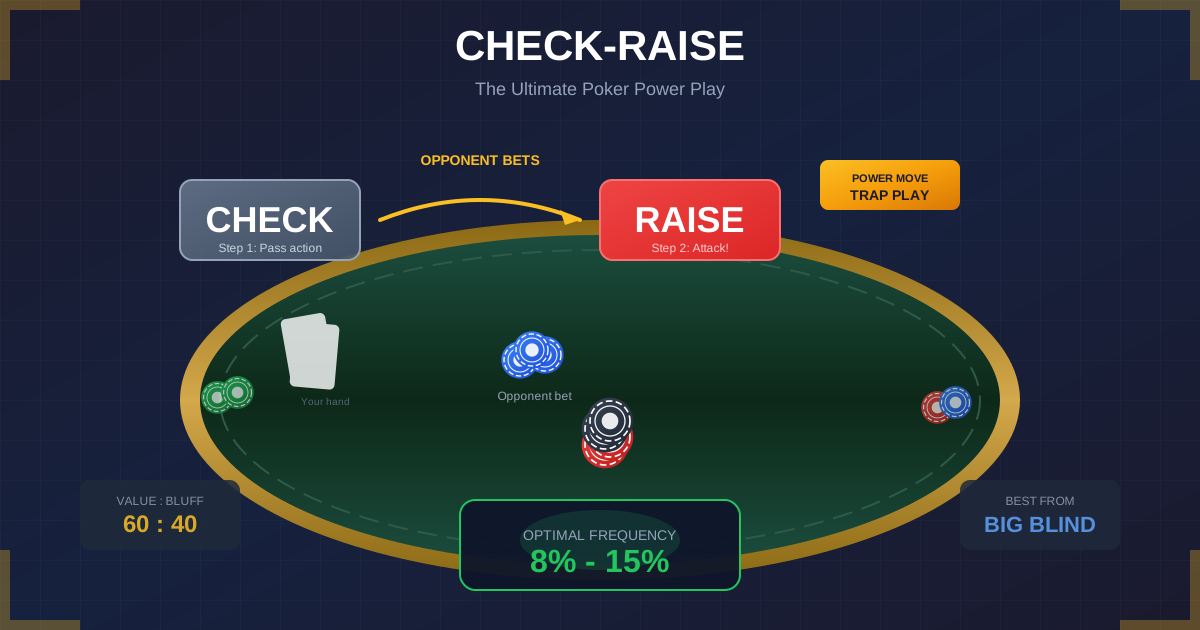
When is check-raising correct multi-way?
With very strong hands (sets, nut draws). Check-raising multi-way announces huge strength and can build a massive pot. Don't check-raise bluff multi-way.
How do I handle a multi-way pot out of position?
Cautiously. Check strong hands sometimes to control pot size. Don't lead bet without premium holdings. Let position players do the betting.
What's the biggest mistake people make multi-way?
Bluffing. It's not close. Players try heads-up strategies in multi-way pots and bleed chips when multiple opponents refuse to fold.
Pro Tips
- Track how often you win multi-way pots with one pair (hint: not often)
- Speculative hands with nut potential gain value as more players enter
- Position is even more important multi-way; play tighter up front
- When the pot is large and multi-way, assume someone has the goods
- Sets are the dream hand multi-way; embrace set mining with implied odds
Related Calculators
- Poker Equity Calculator - Calculate hand vs range equity
- Pot Odds Calculator - Determine if draws are profitable
- Implied Odds Calculator - Factor in future betting
- Set Mining Calculator - Determine profitable pair playing
- Fold Equity Calculator - Understand bluff mathematics
Conclusion
Multi-way pots require a fundamental strategy shift from heads-up play. Bluffs fail, equity diminishes, but pot odds improve for drawing hands. Our multi-way pot calculator quantifies these changes, showing you exactly how your equity and strategy should adjust with each additional opponent.
Master multi-way dynamics by tightening your made-hand requirements, widening your speculative-hand tolerance, and eliminating bluffs from your arsenal. The players who understand these adjustments profit from family pots while others bleed chips into the pool.