Pai Gow Poker Calculator: Strategy & House Way Guide (2026)
Pai Gow Poker Calculator: Set Your Hands Perfectly
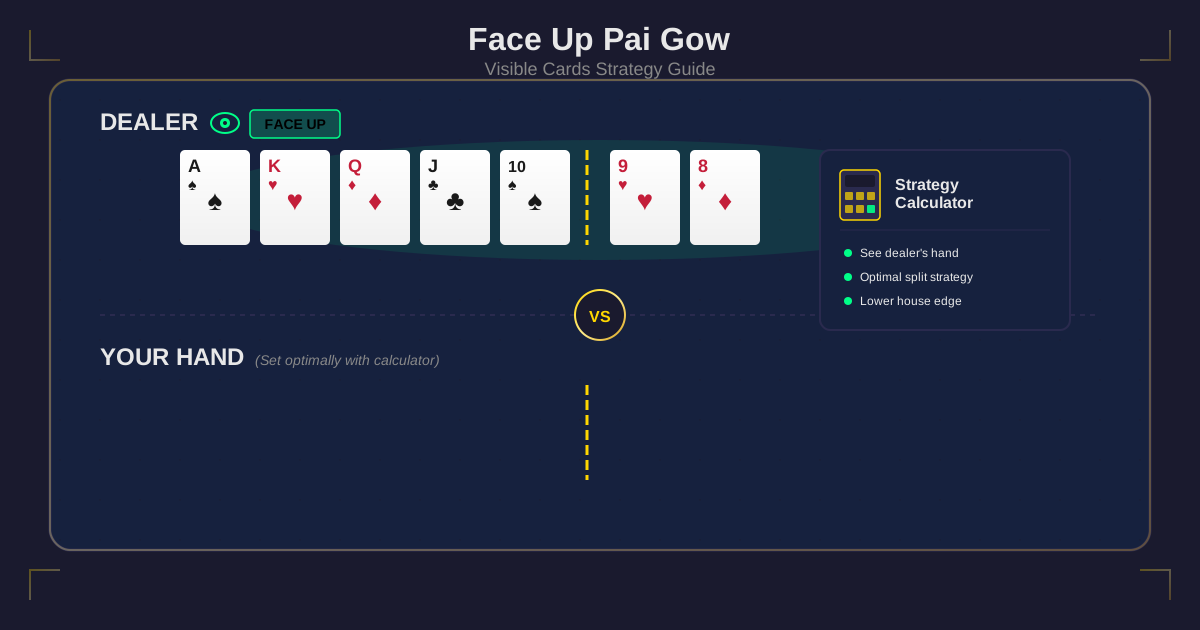
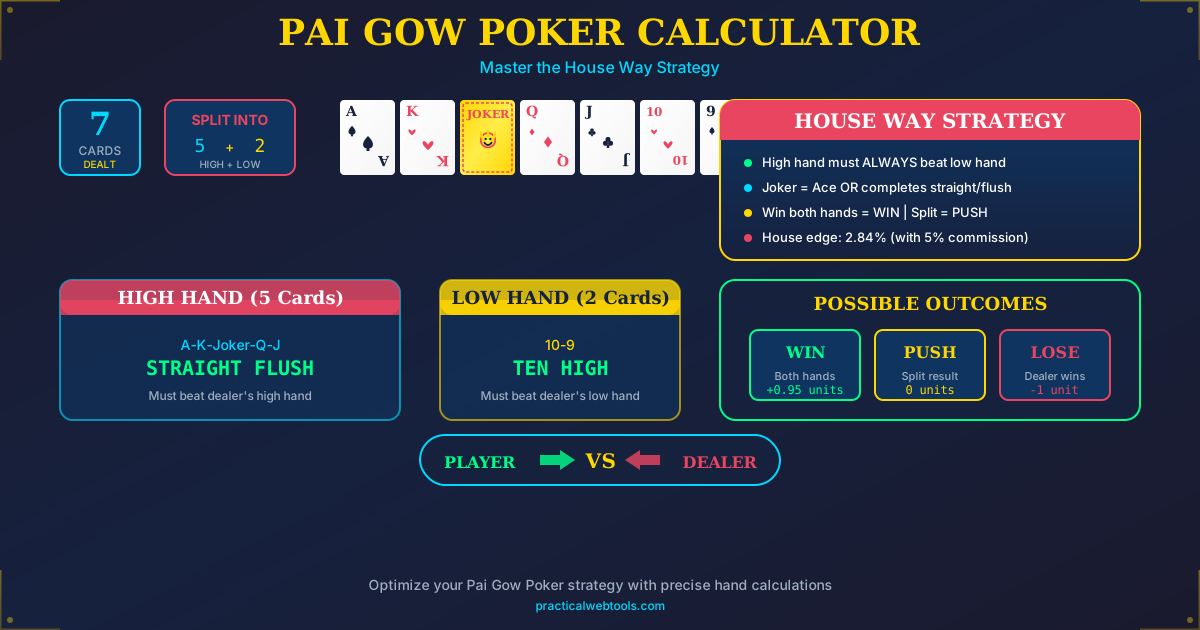
Pai Gow Poker combines poker hand rankings with ancient Chinese tile game strategy. Our calculator shows optimal hand settings for any seven cards, following house way or advanced strategy to minimize the 2.84% house edge.
What Is Pai Gow Poker?
Pai Gow Poker deals seven cards, which you set into a five-card "high hand" and two-card "low hand." You must beat the dealer's both hands to win. One win each = push.
Quick Answer: Pai Gow Poker has a 2.84% house edge (1.46% with optimal strategy). The key is setting hands correctly—your high hand must outrank your low hand. About 41% of hands push, making it a low-variance casino game perfect for long sessions.
How to Use Our Pai Gow Calculator
Use the Pai Gow Poker Calculator →
Enter your seven cards to see optimal high and low hand settings.
Step-by-Step Instructions
-
Enter Your Cards: Input all seven cards dealt
-
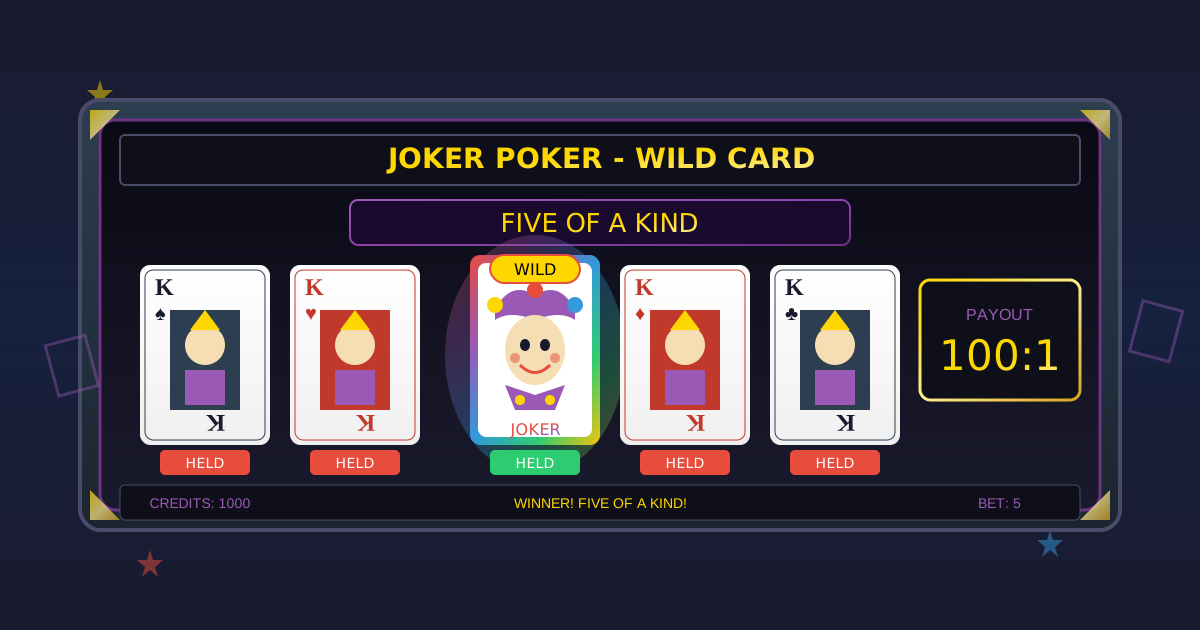
Include Joker: If dealt, it's a semi-wild card
-
View Optimal Setting: See recommended high and low hands
-
Compare to House Way: Check against casino strategy
-
Understand Why: Learn the strategic reasoning
Input Fields Explained
| Field | Description | Example |
|---|---|---|
| Cards | Your seven cards | A♠ K♠ Q♠ J♥ 10♦ 5♣ 3♦ |
| Joker | If dealt | Yes/No |
| High Hand | Five cards | A♠ K♠ Q♠ J♥ 10♦ |
| Low Hand | Two cards | 5♣ 3♦ |
| Strategy | Setting approach | House Way |
Pai Gow Poker Basics
Game Flow
- Receive seven cards (including joker possibility)
- Set into 5-card high hand and 2-card low hand
- High hand MUST beat low hand in poker rankings
- Compare both hands to dealer's
- Win both = win; lose both = lose; split = push
The Joker
The joker in Pai Gow is semi-wild:
- In straights/flushes: Completes the hand
- Otherwise: Counts as an ace
Example:
- Joker + 10♠ 9♠ 8♠ 7♠ = Straight flush (joker = J♠ or 6♠)
- Joker + K♣ K♦ = Three kings (joker = ace... wait, no—counts as pair of aces)
Correction: Joker only completes straights/flushes. Otherwise, it's an ace.
Hand Rankings
High Hand (5 Cards)
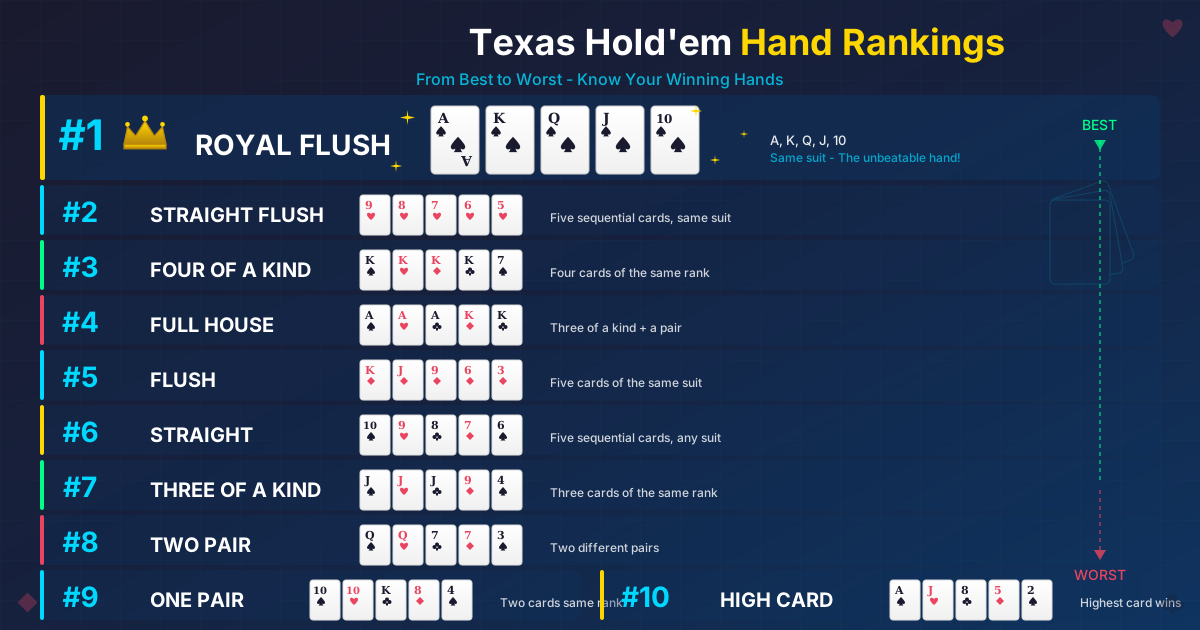
Standard poker rankings:
- Five aces (including joker)
- Royal flush
- Straight flush
- Four of a kind
- Full house
- Flush
- Straight
- Three of a kind
- Two pair
- One pair
- High card
Low Hand (2 Cards)
Only two rankings matter:
- Pair (best is A-A)
- High cards (best is A-K)
The Wheel: A-2-3-4-5 is the second-lowest straight (after "the wheel" in some house rules).
House Way Strategy
Basic House Way Rules
No pair:
- High card in low hand
- Set strongest possible high hand
One pair:
- Pair in high hand
- Two highest singles in low hand
Two pair:
- Usually split pairs (one each hand)
- Strong high pair + ace in low = keep together
Three of a kind:
- Keep trips in high hand
- Exception: Aces—split one ace to low hand
Straight or Flush:
- Keep complete in high hand
- Best two cards to low hand
Full house:
- Keep trips in high hand, pair to low
- Exception: Pair of aces—keep in high if needed
Four of a kind:
- Split based on rank:
- 2-6: Keep together, highest cards to low
- 7-10: Split unless ace/king for low
- J-K: Split
- Aces: Split one pair
Real-World Pai Gow Examples
Example 1: Two Pair
Cards: K♠ K♦ 8♥ 8♣ 4♦ 3♠ 2♥
House Way:
- High hand: 8♥ 8♣ 4♦ 3♠ 2♥ (pair of 8s)
- Low hand: K♠ K♦ (pair of kings)
Reasoning: Split pairs to strengthen both hands.
Example 2: Three of a Kind
Cards: Q♠ Q♥ Q♦ J♣ 9♥ 5♦ 2♣
House Way:
- High hand: Q♠ Q♥ Q♦ 5♦ 2♣ (trip queens)
- Low hand: J♣ 9♥ (J-9 high)
Reasoning: Keep trips in high, send best cards to low.
Example 3: Straight
Cards: K♥ Q♣ J♦ 10♠ 9♥ 4♦ 2♣
House Way:
- High hand: K♥ Q♣ J♦ 10♠ 9♥ (K-high straight)
- Low hand: 4♦ 2♣ (4-2 high)
Reasoning: Keep the made straight in high hand.
Example 4: Full House
Cards: A♠ A♥ A♦ 7♣ 7♥ 4♦ 2♠
House Way:
- High hand: A♠ A♥ 7♣ 7♥ 4♦ (aces and 7s, two pair)
- Low hand: A♦ 2♠ (ace high)
Wait—better option:
- High hand: 7♣ 7♥ 4♦ 2♠ A♦ (pair of 7s... no, worse)
Correct house way:
- High hand: 7♣ 7♥ A♦ 4♦ 2♠ (pair of 7s)
- Low hand: A♠ A♥ (pair of aces)
Reasoning: Send pair of aces to low hand for guaranteed strong low.
Example 5: With Joker
Cards: Joker A♠ K♣ Q♥ J♦ 9♠ 4♣
Analysis:
- Joker can make: A-K-Q-J-Joker (ace-high straight? No—Joker would be 10)
- Actually: Joker counts as ace if not completing straight/flush
- Best: Use joker as ace → pair of aces
House Way:
- High hand: K♣ Q♥ J♦ 9♠ 4♣ (K-Q-J-9-4 high)
- Low hand: Joker A♠ (pair of aces)
House Edge Analysis
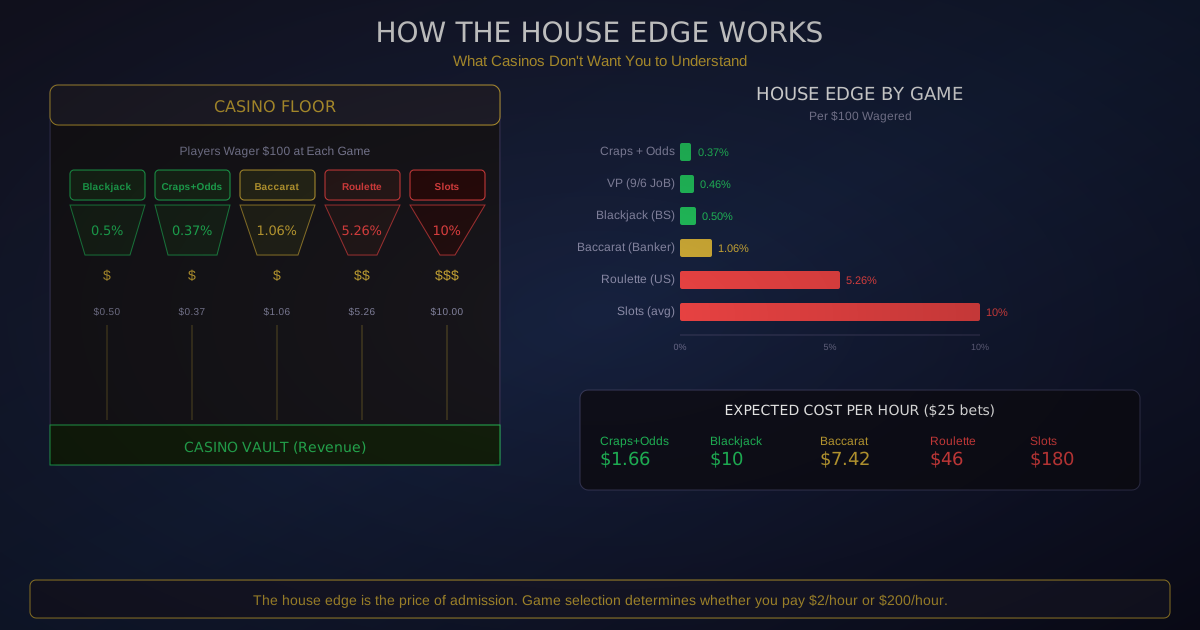
Standard House Edge: 2.84%
Where it comes from:
- You must win BOTH hands to win bet
- Dealer wins ties (copies)
- 5% commission on wins
Reducing House Edge
| Strategy | House Edge |
|---|---|
| Beginner/poor setting | 4%+ |
| Average setting | 2.84% |
| House way | 2.5% |
| Optimal strategy | 1.46% |
| Banking (if offered) | ~0.2% |
Outcome Frequencies
| Result | Frequency |
|---|---|
| Player wins both | 28.6% |
| Dealer wins both | 29.9% |
| Split (push) | 41.5% |
The high push rate makes Pai Gow low-variance.
Common Pai Gow Mistakes
1. Weak Low Hand
Mistake: K-K-J-10-9 high, 5-3 low Problem: Unbeatable high but guaranteed low loss Fix: Split to give low hand fighting chance
2. Fouling Your Hand
Mistake: Low hand outranks high hand Problem: Automatic loss (foul) Fix: Always verify high beats low
3. Breaking Up Full Houses Incorrectly
Mistake: Keeping full house in high, junk in low Problem: Weak low hand Fix: Usually send pair to low hand
4. Misusing the Joker
Mistake: Using joker as ace when straight is possible Problem: Missing stronger hand Fix: Always check for straight/flush first
Frequently Asked Questions
Is Pai Gow Poker beatable?
No—the house edge exists regardless of strategy. But optimal play reduces edge to ~1.46%, among the best casino games.
Why do so many hands push?
You must win BOTH hands. Even skilled play results in 41%+ pushes because setting is constrained.
Should I use house way?
House way is near-optimal (within 0.5% of perfect). For casual play, it's fine. For serious play, study optimal strategy.
Can I bank the game?
Some casinos allow player banking. When you bank, edge shifts in your favor—up to +0.2% advantage.
How does commission work?
5% commission on winning hands. $100 win = $95 net. Some casinos offer commission-free versions with rule changes.
What's a "copy"?
When your hand exactly matches dealer's hand (same rank). Dealer wins copies—part of their edge.
Advanced Pai Gow Strategy
When to Split Two Pair
| Pair Ranks | Action |
|---|---|
| Both low (2-6) | Split |
| High + low | Usually split |
| Both high (J+) | Split unless ace for low |
| High pair + ace | Consider keeping together |
Four of a Kind Decisions
| Quad Rank | Action |
|---|---|
| 2-6 | Keep together |
| 7-10 | Split if ace/king for low |
| J-A | Split into two pair |
Banking Strategy
If banking offered:
- Bank when you have sufficient bankroll
- House edge reverses when banking
- Some casinos require dealer banking every other hand
Pro Tips for Pai Gow
-
Learn house way first: It's 95%+ optimal
-
Don't sacrifice low hand: Two weak hands lose to one strong + one weak
-
Understand the joker: Straight/flush completion OR ace only
-
Embrace pushes: They're not losses
-
Bank if offered: Edge swings in your favor
Related Casino Calculators
- Casino House Edge Calculator - Compare games
- Poker Hand Rankings Calculator - Hand strength
- Three Card Poker Calculator - Similar game
- Caribbean Stud Calculator - Poker variant
- Bankroll Calculator - Session planning
Conclusion
Pai Gow Poker rewards thoughtful hand-setting with a reduced house edge. Our calculator shows optimal high and low hand configurations for any dealt cards. With 41% pushes and 1.46% optimal edge, it's one of the casino's best games for bankroll preservation.
Calculate Your Pai Gow Hands Now →
Master the house way, understand when to deviate, and enjoy Pai Gow's unique blend of poker and strategy. Low variance, social gameplay, and reasonable odds make it perfect for extended casino sessions.