Pick'em Poker Calculator: Two-Column Choice Strategy (2026)
Pick'em Poker Calculator: The Simplified Video Poker Choice
Pick'em Poker strips video poker to one decision—choose between two columns of partially-revealed cards. No draw/hold complexity, just pick the better option. Our calculator reveals optimal selection strategy and why this simplified game offers surprisingly good odds.
What Is Pick'em Poker?
Pick'em Poker deals two cards face-up, then shows two columns with one card visible in each. You pick a column, receive those two hidden cards, and the five-card hand is evaluated. There's only one decision—which column to choose—making it the simplest video poker variant.
Quick Answer: Pick'em Poker = choose between two columns. Given 2 cards, see 1 card from each column, pick one. Get that column's 2 cards for final 5-card hand. One decision only. Full pay: 99.95% return (excellent!). Simple strategy: pick the column with higher expected value. Pairs or better pays.
How to Use Our Calculator
Use the Pick'em Poker Calculator →
Determine optimal column selection.
Step-by-Step Instructions
-
View Your Two Cards: Given face-up
-
See Column Options: One visible each
-
Calculate Each Column's EV: Expected value
-
View Optimal Pick: Better choice
-
Check Win Potential: Hand possibilities
Input Fields Explained
| Field | Description | Example |
|---|---|---|
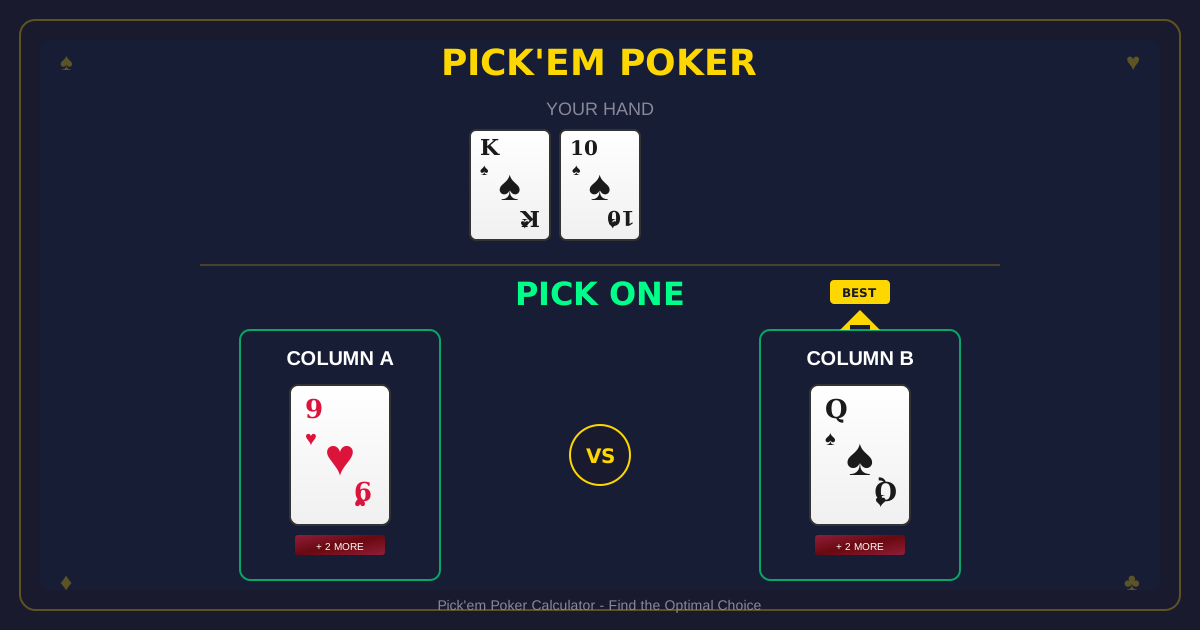
| Given Cards | Two face-up | K♠ 10♠ |
| Column A Visible | Showing | Q♠ |
| Column B Visible | Showing | 7♣ |
| Column A EV | Expected value | 1.24 |
| Column B EV | Expected value | 0.87 |
| Optimal Pick | Better choice | Column A |
Game Structure
How Dealing Works
Pick'em Poker dealing:

1. Two cards dealt face-up (yours)
2. Two stacks of 2 cards each appear
3. Top card of each stack visible
4. Bottom card of each stack hidden
5. You pick one stack
6. Get that stack's 2 cards
7. Final hand = 4 cards total

Wait—only 4 cards?
Yes! Pick'em uses 4-card hands
Evaluated with poker rankings
The Pick Decision
Your one choice:

See: K♠ 10♠ (given)
Stack A: Q♠ on top + ? hidden
Stack B: 7♣ on top + ? hidden

Pick A: Get Q♠ + hidden card
Pick B: Get 7♣ + hidden card

Which has better EV?
That's the entire game
Hand Evaluation
Four-card poker hands:

Royal Flush (9s+): 1199:1
Straight Flush: 199:1
Four of a Kind: 100:1
Full House: 18:1
Flush: 15:1
Straight: 11:1
Three of a Kind: 5:1
Two Pair: 3:1
Pair (9s or better): 2:1

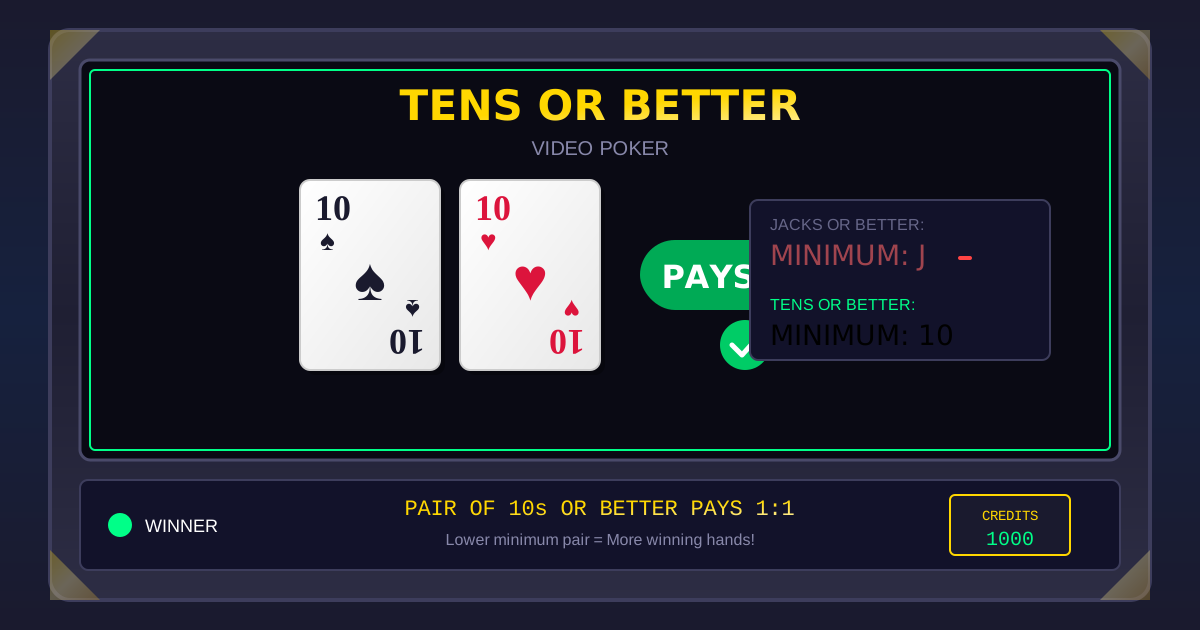
Note: Minimum pair is 9s
Not jacks like JoB
Pay Table
Full Pay Pick'em Poker
Hand              | Coins (5-coin max)
------------------|-------------------
Royal Flush       | 6000 (1199:1)
Straight Flush    | 1199 (199:1)
Four of a Kind    | 600 (100:1)
Full House        | 90 (18:1)
Flush             | 75 (15:1)
Straight          | 55 (11:1)
Three of a Kind   | 25 (5:1)
Two Pair          | 15 (3:1)
Pair 9s or Better | 10 (2:1)

Return: 99.95%
Comparison to Other VP
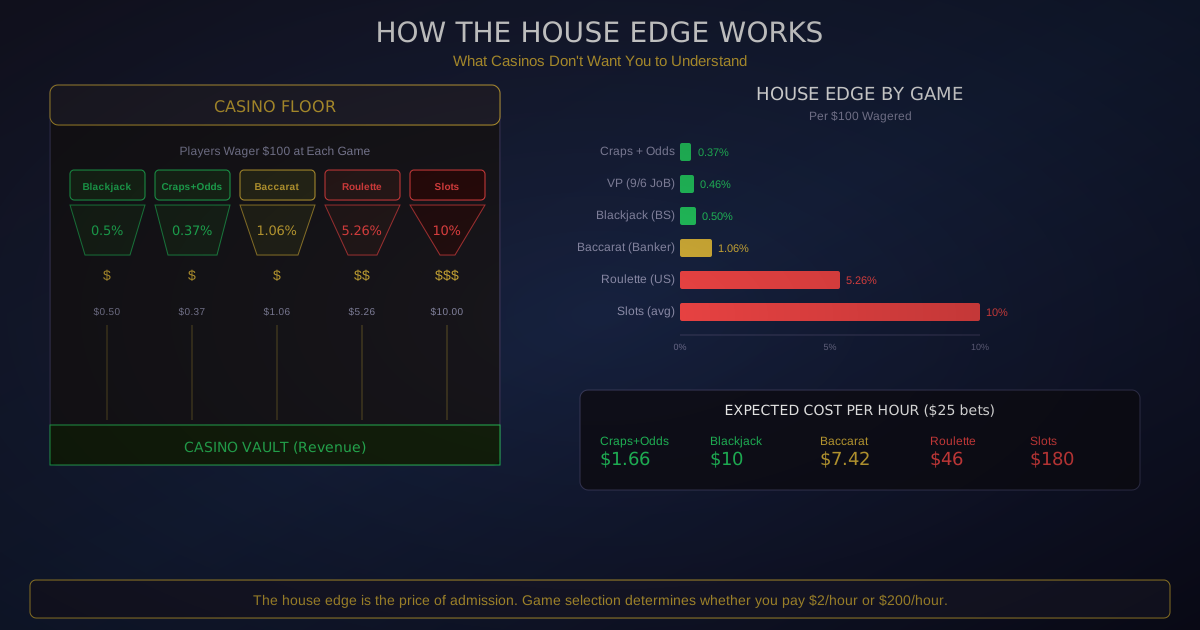
Return comparison:

Pick'em Poker: 99.95%
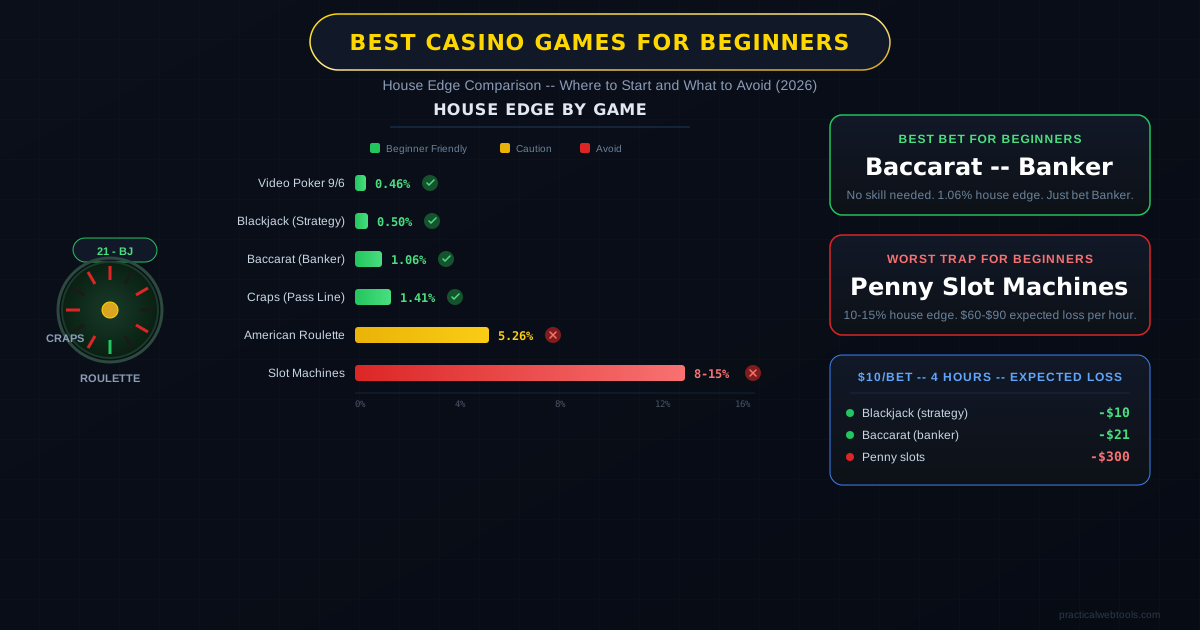
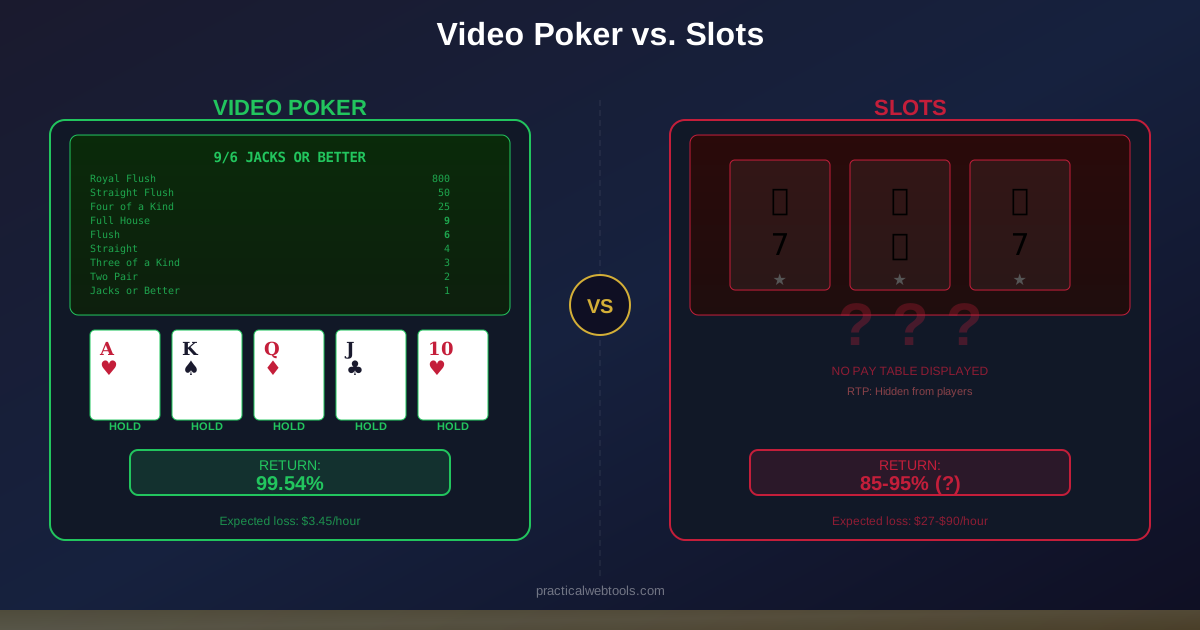
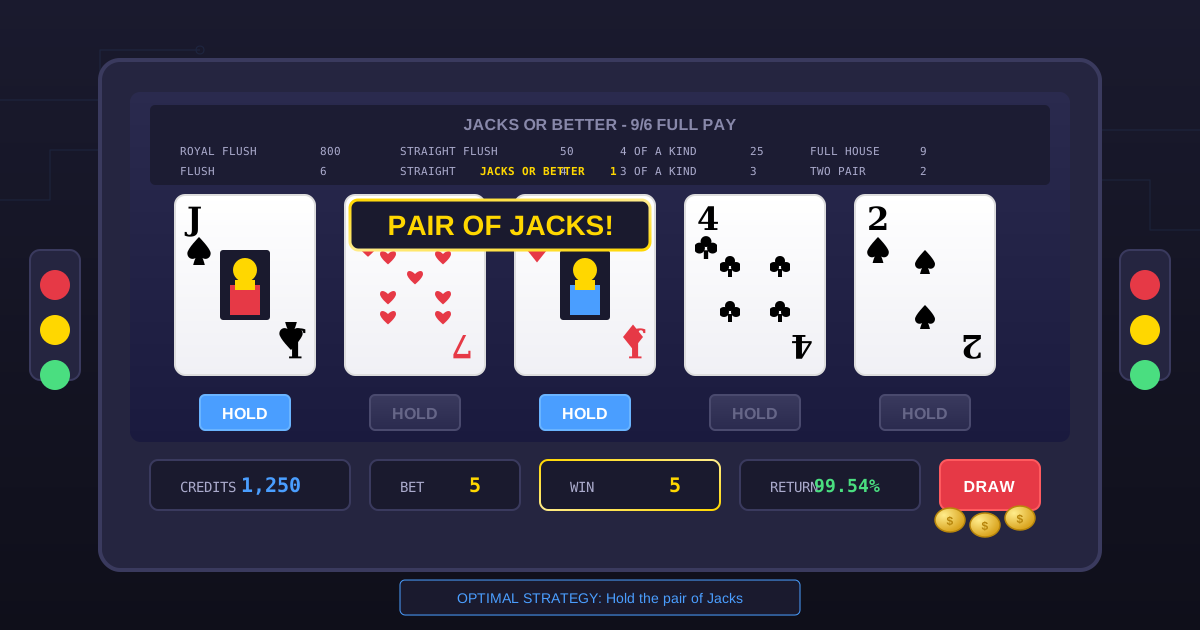
JoB 9/6: 99.54%
Bonus Poker 8/5: 99.17%

Pick'em is EXCELLENT
Second only to Deuces Wild
Very low house edge
Strategy Principles
Basic Selection Logic
Choosing the right column:

1. Made hand potential
   - Already have pair? Which helps?
   - Flush draw? Which card matches?

2. High card value
   - 9+ cards pay for pairs
   - Higher visible card often better

3. Straight possibilities
   - Connected cards help
   - Gaps hurt
When It's Obvious
Clear choices:

Given K♠ Q♠, options Q♣ vs 4♥:
Pick Q♣ (pair of queens!)

Given 10♥ J♥, options Q♥ vs 3♠:
Pick Q♥ (royal draw!)

Given 5♠ 6♠, options 7♠ vs K♦:
Pick 7♠ (straight flush draw!)
When It's Close
Tough decisions:

Given K♠ Q♦, options J♥ vs A♣:
Both add high cards
A♣ = higher card value
J♥ = straight potential

Calculator determines:
Consider all hidden card possibilities
A♣ usually slightly better
Strategy Examples
Example 1: Obvious Pair
Take the made hand:
Given: K♠ J♦
Column A shows: K♣
Column B shows: 8♥

Analysis:
A gives pair of kings (pays 2:1)
B gives just high cards

Decision: COLUMN A
Pair is guaranteed value
Example 2: Flush Draw
Chase the flush:
Given: A♠ 10♠
Column A shows: Q♠
Column B shows: Q♦

Analysis:
A: Three to royal flush!
B: Just a queen

Decision: COLUMN A
Royal draw worth chasing
Even though Q♦ also high
Example 3: High Card vs Straight
Competing draws:
Given: 9♥ 10♦
Column A shows: J♠
Column B shows: K♣

Analysis:
A: 9-10-J straight draw
B: Just K high

Decision: COLUMN A
Straight draw > lone K
Example 4: Close Call
Marginal difference:
Given: Q♠ 7♦
Column A shows: A♥
Column B shows: K♣

Analysis:
A: Q-A for high cards
B: Q-K for high cards

Both similar value
A has higher high card
B has straighter gap

Calculator needed:
Usually A slightly better
Ace value exceeds
Expected Value Analysis
Why Pick'em Has Good Odds
Low house edge reasons:

1. Simplified strategy
   - One decision
   - Less error possible

2. Both columns from same deck
   - Fair distribution
   - Casino can't stack

3. No draw phase
   - Direct result
   - Less variance
Hand Frequency
Approximate hit rates:

Royal Flush: 1 in 320,000
Straight Flush: 1 in 12,000
Four of a Kind: 1 in 3,200
Full House: 1 in 680
Flush: 1 in 460
Straight: 1 in 240
Three of a Kind: 1 in 42
Two Pair: 1 in 15
Pair 9s+: 1 in 5
Variance Profile
Volatility comparison:

Pick'em: Low-medium
Why?
- Simplified structure
- Predictable outcomes
- Frequent small wins

Similar to JoB:
Steady play, occasional bumps
Not as wild as Deuces/DDB
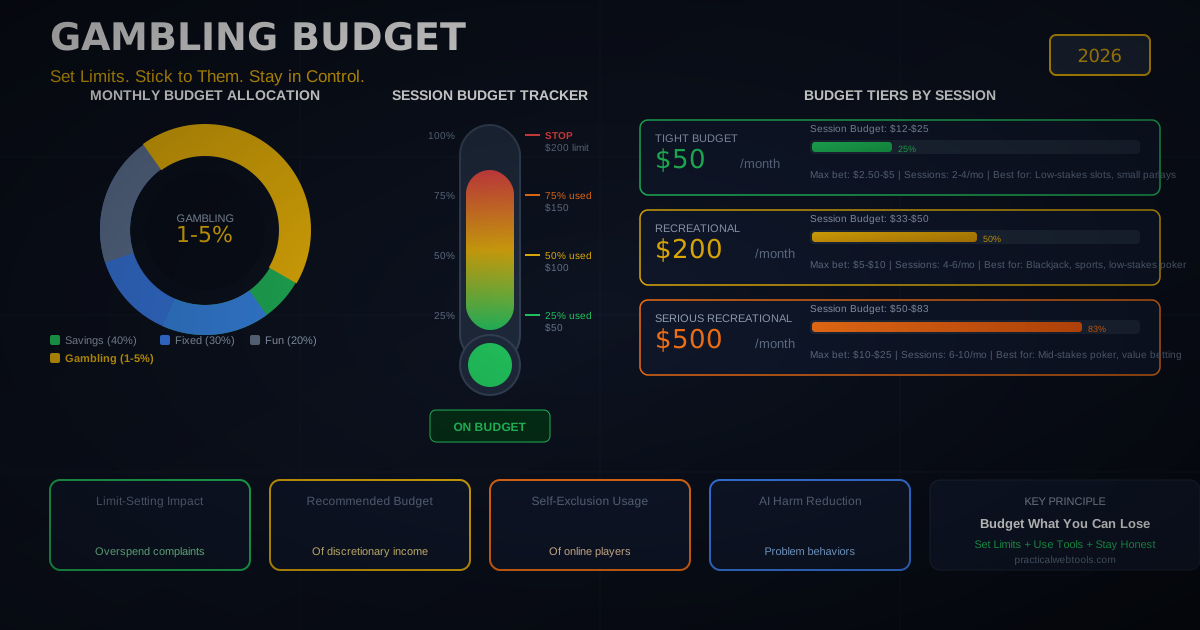
Bankroll and Session
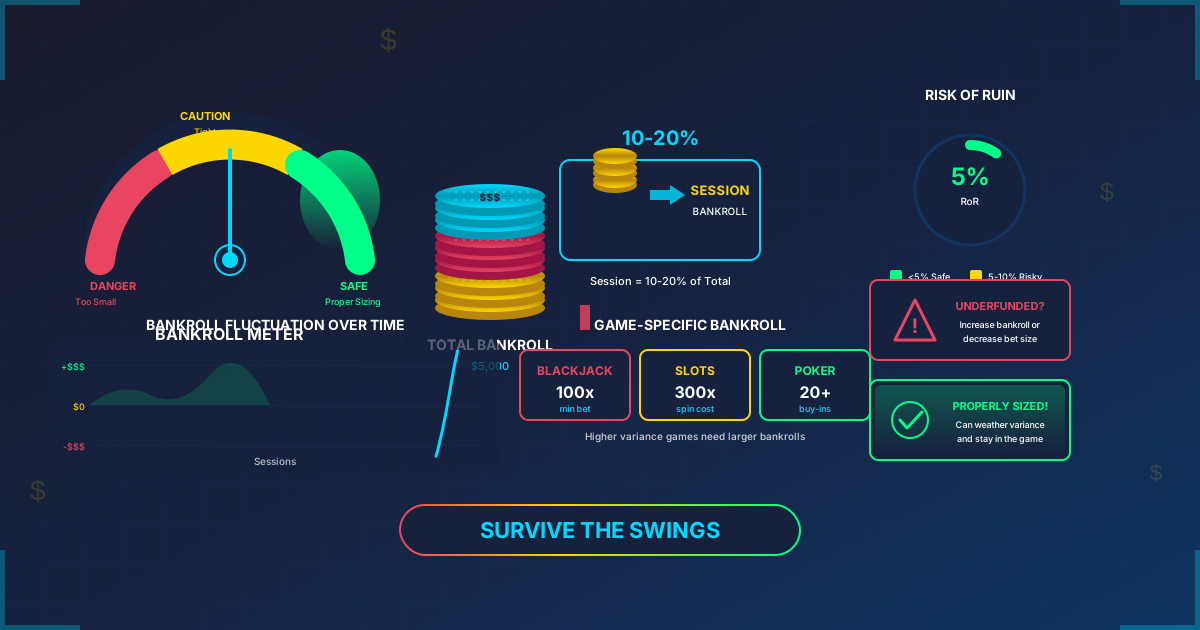
Bankroll Requirements
Session recommendations:

Pick'em Poker:
20-30× max bet

$1 machines:
$100-150 session roll

Lower than most VP:
Simplified variance
More predictable
Win Rate
How often you win:

About 35% of hands
Lower than JoB (~45%)

But average win higher:
Fewer hands, bigger pays
Balanced return overall
Common Mistakes
1. Ignoring Straight Draws
Mistake: Always pick highest card Problem: Straight draws have value Fix: Calculate full hand potential
2. Not Considering Given Cards
Mistake: Looking only at visible column cards Problem: Given cards matter most Fix: Evaluate all four together
3. Chasing Small Pairs
Mistake: Taking 8♣ to pair given 8s Problem: 8s don't pay! Need 9+ Fix: Know minimum paying pair
4. Overlooking Flush Potential
Mistake: Ignoring suited cards Problem: Flushes pay 15:1 Fix: Value flush draws properly
Frequently Asked Questions
Why is Pick'em Poker so simple?
Designed for players who find traditional VP too complex. One decision removes draw/hold confusion while keeping poker hand excitement.
What's the minimum paying hand?
Pair of 9s or better. Lower pairs (8s, 7s, etc.) don't pay. This is different from Jacks or Better.
How can such a simple game have good odds?
The casino can't exploit your mistakes as easily. One binary choice means perfect play is achievable by almost anyone.
Is there any skill in Pick'em?
Yes—choosing the correct column matters. Some decisions are obvious, others require calculation. Perfect strategy adds about 0.1%.
Why are hands only 4 cards?
Game design choice. You get 2 given + 2 picked = 4 cards. Standard poker rankings still apply.
Can I count cards in Pick'em?
Minimal value. The two given cards are known, but stack composition is random. No significant counting edge.
Pro Tips
-
Higher visible card usually wins: When close
-
Pair 9+ pays: Lower pairs worthless
-
Flush draws matter: 15:1 payout
-
Straight potential: Consider gaps
-
Simple strategy works: Few mistakes possible
Related Calculators
- Jacks or Better Calculator - Traditional VP
- Bonus Poker Calculator - Enhanced quads
- Video Poker Odds Calculator - General
- Poker Odds Calculator - Full poker
- Expected Value Calculator - Bet analysis
Conclusion
Pick'em Poker reduces video poker to one choice—pick the better column. This simplification removes complexity while offering 99.95% return, making it one of the best-paying casino games. Our calculator shows which column has higher expected value, turning this simple game into optimal strategy.
Calculate Pick'em Poker Odds Now →
Column A shows a Q♠, Column B shows a 7♣—with your K♠ 10♠ in hand, which completes the better poker hand? Our calculator reveals the math behind this simple choice.