PKO Progressive Knockout Calculator: Master Growing Bounty Strategy (2026)
PKO Progressive Knockout Calculator: Navigate the Bounty Growth Puzzle
Progressive Knockout (PKO) tournaments have become the most popular tournament format in online poker. The growing bounty mechanic creates unique strategic situations where chip leaders become walking targets and a single elimination can be worth more than a min-cash. Our PKO calculator tracks bounty growth, calculates adjusted pot odds, and shows you when to hunt and when to hide.
What Is a PKO Tournament?
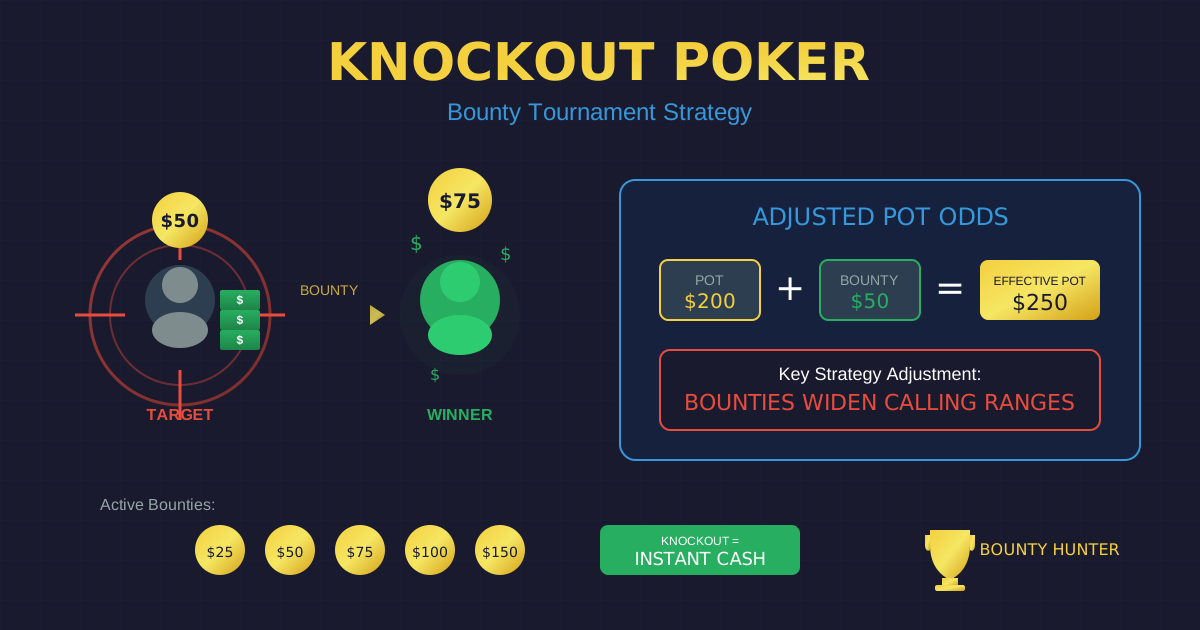
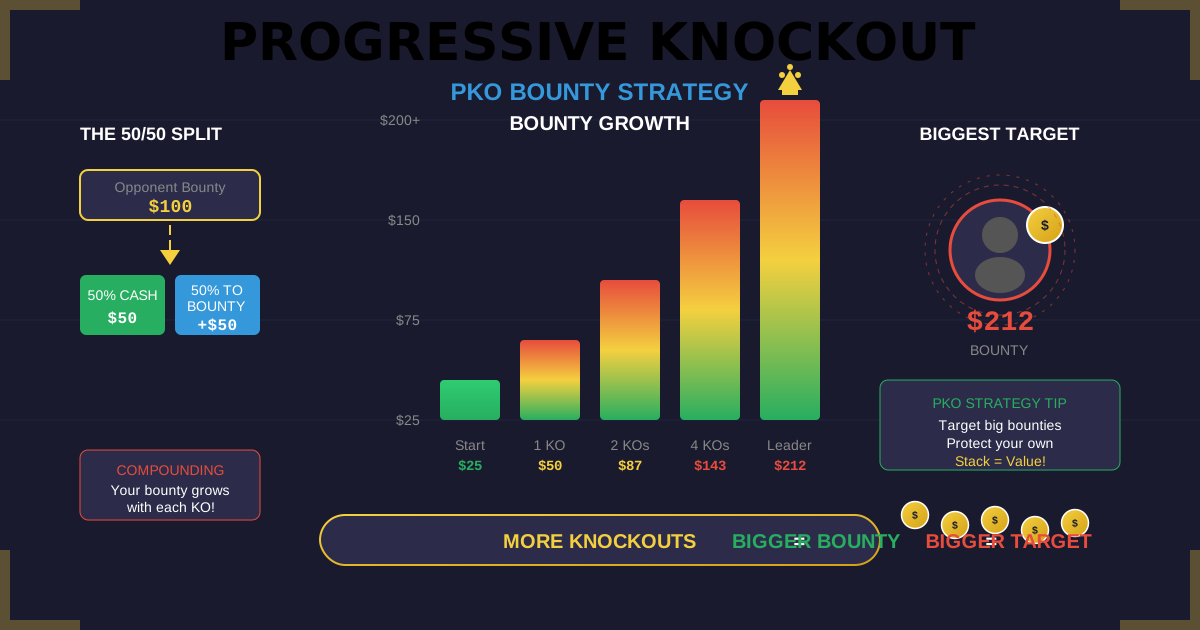
A Progressive Knockout tournament splits a portion of each buy-in into bounties that grow throughout the tournament. When you eliminate a player, you receive 50% of their bounty immediately as cash, and your own bounty increases by the other 50%. This creates compounding bounty values that can become massive by late stages.
Quick Answer: In PKO, bounties work like this: Eliminate a player with a $50 bounty, you get $25 cash immediately and your bounty grows by $25. If your bounty was $30, it's now $55. This compounding means late-tournament bounties can exceed the first-place prize pool share. The formula: Your New Bounty = Current Bounty + (Eliminated Player's Bounty / 2).
How to Use Our Calculator
Step-by-Step Instructions
- Enter Starting Bounty: Input the initial bounty value per player
- Enter Target's Bounty: Input the bounty of the player you might eliminate
- Input Pot Size: Current pot before your decision
- Calculate Bounty Value: See immediate cash plus bounty growth value
- Get Adjusted Ranges: View calling ranges adjusted for PKO math
Input Fields
| Field | Description | Example |
|---|---|---|
| Initial Bounty | Starting bounty per player | $25 |
| Target Bounty | Opponent's current bounty | $80 |
| Your Bounty | Your current bounty | $45 |
| Pot Size | Current pot | $6,000 chips |
| Call Amount | Required to call | $4,000 chips |
| Stack Coverage | Do you cover target? | Yes |
The Mathematics of PKO Bounties
Bounty Split Mechanics
When you eliminate a player in PKO:
Eliminated Player's Bounty: $100
You Receive Immediately: $50 (50% cash)
Added to Your Bounty: $50 (50% growth)
Net Effect: +$50 cash + $50 future value
Bounty Growth Calculation
Track how bounties compound:
Starting State (100 players, $25 starting bounty):
Total bounty pool: $2,500
Each player: $25 bounty
After Eliminating 3 Players:
Bounty 1: $25 → You get $12.50, bounty grows to $37.50
Bounty 2: $30 → You get $15, bounty grows to $52.50
Bounty 3: $40 → You get $20, bounty grows to $72.50

Total cash received: $47.50
Current bounty: $72.50
The Value of Bounty Growth
Your bounty growth has value because:
1. Someone eventually wins your bounty
2. But that's only when you bust
3. If you win, your bounty resets to zero
4. Bounty growth = chip-like value (investment in winning)
Valuing Bounty Growth:
Simple method: Count bounty growth at 50% value
You're 50% likely to "keep" it (win more knockouts)
You're 50% likely to lose it (get eliminated)
Total Bounty Value Formula
Calculate the full value of a potential elimination:
Total Bounty Value = Cash Received + (Bounty Growth × Survival Factor)

Example:
Target bounty: $100
Cash received: $50
Bounty growth: $50
Survival probability: 60% (based on your stack)
Bounty growth value: $50 × 0.60 = $30

Total value: $50 + $30 = $80
PKO Strategy by Bounty Size
Small Bounties (Early Tournament)
When bounties are at starting values:
Strategic Implications:
Bounty value: 1-2x starting
Adjustment: Minor (+3-5% calling range)
Chip accumulation still primary
Build stack for later bounty hunting
Play Style:
Standard tournament poker
Don't overvalue small bounties
Chips will translate to bigger opportunities
Patience over bounty chasing
Medium Bounties (Mid Tournament)
As bounties grow to 2-4x starting:
Strategic Implications:
Bounty value: Notable but not huge
Adjustment: Moderate (+5-10% calling range)
Start actively seeking knockouts
Balance chip building with bounty hunting
Decision Framework:
Target players you cover
Avoid chip leaders hunting your bounty
Calculate bounty-adjusted pot odds
Medium bounties justify wider calls
Large Bounties (Late Tournament)
When bounties reach 5x+ starting values:
Strategic Implications:
Bounty value: Potentially massive
Adjustment: Significant (+10-20% calling range)
Big bounties become primary targets
Entire strategy shifts around high-bounty players
Hunting Big Bounties:
A $200 bounty in a $22 buy-in = nearly 10x buy-in
This changes everything
Call much wider when covering this player
But protect when they cover you
Stack-Bounty Dynamics
Chip Leader = Bounty Leader
In PKO, chip leaders typically have the biggest bounties:
Correlation:
Most chips → Most eliminations → Biggest bounty
Chip leader with $300 bounty becomes everyone's target
Chip Leader Strategy:
You're being hunted
Players call wider against you
Tighten your shoving ranges
They're getting better odds to call you
Hunting Chip Leaders:
If you cover the chip leader:
Their bounty might be worth a buy-in
Call significantly wider
This is PKO's unique dynamic
Short Stack with Big Bounty
Players can have big bounties but few chips:
Scenario:
Player has $150 bounty but only 5 BB
This is the ultimate PKO target
Almost any hand is correct to call
Calling Range:
Standard call vs 5BB: ~35% of hands
With $150 bounty: ~55-70% of hands
The bounty value is enormous relative to risk
Small Stack Covering Big Bounty
What if you barely cover a big bounty?
Scenario:
You: 10 BB
Target: 8 BB with $100 bounty
You cover, so bounty in play
Analysis:
Risking 8 BB to win their stack + $100 bounty
Bounty alone might exceed your tournament equity
This dramatically widens calling range
Even hands like K4s become profitable calls
Real-World Examples
Example 1: Basic PKO Call Decision
Setup: $22 PKO, late stage. Opponent (15k) pushes all-in. You have 25k in BB. Their bounty is $45. Starting bounty was $11. You have JdTd.
Standard Analysis:
Pot: 18k (including blinds/antes)
Call: 15k
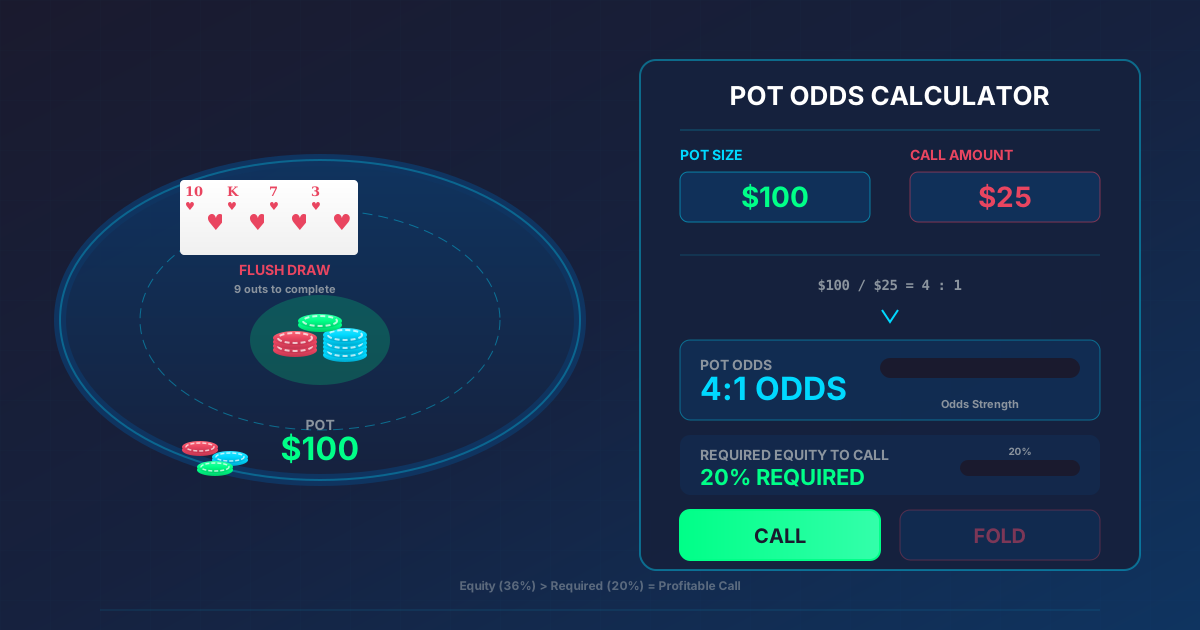
Pot odds: 18k:15k = 1.2:1
Required equity: 45%
JTs vs push range: ~42%
Standard: Close fold
PKO Analysis:
Bounty received if win: $22.50
Bounty growth: $22.50
Total bounty value: ~$35 (discounted)
Bounty in chip terms: ~10k equivalent

Adjusted pot: 28k
Adjusted pot odds: 28k:15k = 1.87:1
Required equity: 35%
JTs equity: 42%
PKO decision: Clear call
Example 2: Monster Bounty Opportunity
Setup: Final table of $109 PKO. Chip leader (200k) has $850 bounty. You have 220k with AhQh. They push from button.
Analysis:
Their bounty: $850 (worth ~8 buy-ins!)
You receive: $425 cash if you win
Your bounty grows: $425 (massive)

Even though chip leader is likely pushing wide:
The bounty value is enormous
AQs is very strong here
This is a slam-dunk call
Additional Consideration:
Winning this hand:
- You become overwhelming chip leader
- You have massive bounty
- You're favorite to win
- Immediate $425 cash
Example 3: Protecting Your Big Bounty
Setup: You have $200 bounty (chip leader). Small stack (10k) pushes. You have 80k with Ks5s.
Hunting You:
You're the target
Everyone wants your $200 bounty
K5s is normally a fold here
But Consider:
You cover them by a lot
Your bounty doesn't change by calling
You're not risking being eliminated
Even with a bounty, this is likely too loose
Decision: Fold K5s. Your bounty doesn't make weak hands good. It makes you a target, not a caller.
Example 4: Small Bounty, Big Stack
Setup: Short stack (4k) with only $15 bounty pushes. You have 40k with 9h8h in BB.
Analysis:
Small bounty ($15): ~$7.50 cash + $7.50 growth = ~$11 value
Pot: 8k
Call: 4k
Adjusted pot: ~10k (small adjustment)
Pot odds: 10k:4k = 2.5:1
Required equity: 28%
98s vs short push: ~40%
Decision: Call, but primarily because of the pot odds and hand equity. The bounty is a nice bonus but not the driver.
Example 5: Double Elimination Scenario
Setup: Two players all-in. Player A (10k, $60 bounty) and Player B (8k, $40 bounty). You have 25k with AcJc.
Maximum Bounty Scenario:
If you win both:
- $30 cash from A
- $20 cash from B
- Your bounty grows by $50
- Total bounty value: ~$75
Analysis:
Three-way pot: Your equity drops
AJ vs two all-ins: ~40%
But double bounty opportunity is massive
Call and hope to eliminate both
Example 6: Bubble with Bounties
Setup: 20 players left, 18 paid. You have $80 bounty, below average stack. Short stack ($30 bounty) pushes.
Conflicting Pressures:
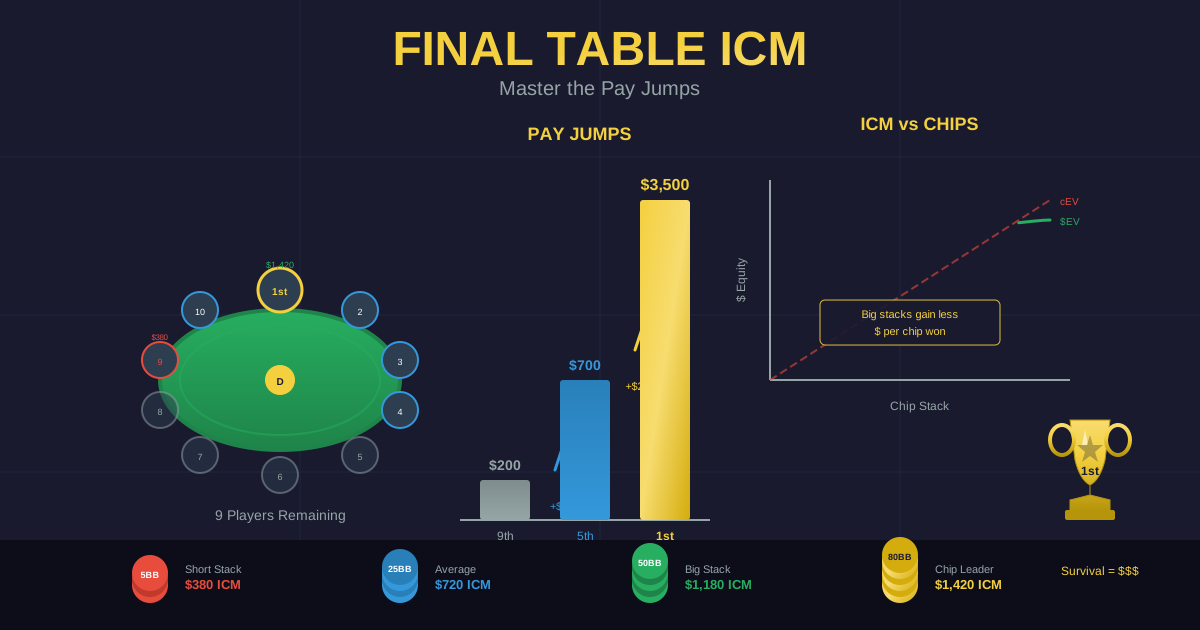
ICM: Survival matters, avoid marginal calls
PKO: Bounty adds value to calling
Resolution:
Calculate net effect:
ICM cost of calling: -$X tournament equity
Bounty gain if win: +$15 cash + $15 growth
If bounty value > ICM cost: Call
If ICM cost > bounty value: Fold
Decision Framework: At $30 bounty near bubble, ICM likely dominates. Bounties would need to be larger to overcome bubble pressure.
PKO-Specific Concepts
The Bounty Factor
A multiplier showing how much bounties affect decisions:
Bounty Factor = (Bounty Value) / (Call Amount in $)

Example:
$50 bounty, $22 buy-in at 5k starting stack
Call amount: 5k chips = ~$11 value
Bounty Factor: $25 / $11 = 2.27

Factor > 2: Major adjustment needed
Factor 1-2: Moderate adjustment
Factor < 1: Minor adjustment
Bounty EV vs Tournament EV
PKO requires balancing two types of value:
Tournament EV: Chip accumulation → Prize pool
Bounty EV: Knockouts → Immediate cash

Total PKO EV = Tournament EV + Bounty EV

Sometimes bounty EV > tournament EV
(Big bounty on small stack)
Sometimes tournament EV > bounty EV
(Small bounty on chip leader)
The Coverage Imperative
You only win bounties when you cover:
Critical rule: No coverage = No bounty

Even massive bounties are worthless if you can't eliminate
Always check coverage before adjusting for bounties
Partial coverage = Proportional bounty value
Common Mistakes to Avoid
-
Hunting Bounties You Can't Win: Calling against players who cover you gains no bounty value. Their bounty is irrelevant when they can eliminate you.
-
Ignoring Your Own Bounty Size: When you have a big bounty, opponents call wider against you. Adjust your shoving ranges down.
-
Overvaluing Small Bounties: A $15 bounty doesn't justify calling with garbage. Use actual math, not bounty excitement.
-
Forgetting Tournament EV: PKO is still a tournament. Chips matter. Don't hemorrhage tournament equity for small bounty edges.
-
Static Bounty Valuation: Bounty value changes with stack size, tournament stage, and survival probability. Recalculate constantly.
-
Misunderstanding Bounty Growth: The 50% that goes to your bounty has value, but discounted value. Don't count it at full face value.
Frequently Asked Questions
How do I value the bounty growth portion?
Discount it by your survival probability. If you're 60% to survive deep, count bounty growth at 60% value. Chip leaders count it higher; short stacks count it lower.
When do bounties override ICM?
When bounty value exceeds ICM cost. Calculate both, then compare. Large bounties in non-bubble situations usually override ICM.
Should I adjust ranges when I have a big bounty?
Yes, but defensively. Others call wider against you because your bounty improves their odds. Tighten shoving ranges to compensate.
How does PKO differ from regular bounty?
In regular bounty, all knockouts are worth the same. In PKO, early knockouts are small but late knockouts can be massive. Strategy shifts as bounties grow.
Is PKO more profitable than regular MTTs?
For skilled players who understand bounty math, PKO can offer edges because many players miscalculate bounty adjustments.
How important is coverage in PKO?
Critical. Bounty adjustments only apply when you cover. Always verify coverage before widening calling ranges.
What's the biggest bounty possible?
Theoretically, one player could accumulate all bounties by eliminating everyone. In a 1000-player $25 bounty PKO, that's a $12,500 bounty for the winner.
Should I play more or fewer hands in PKO?
Slightly more when you cover opponents with significant bounties. Slightly fewer when you have a big bounty and opponents cover you.
Pro Tips
- Track the top 5 bounties at all times - these are your primary targets
- Calculate your own bounty and expect wider calls against you
- Early PKO plays similar to regular MTT; adjustments grow with bounty sizes
- Big bounty on short stack = dream spot; be ready to call very wide
- Use bounty overlay to justify speculative hands that can flop big
Related Calculators
- Bounty Tournament Calculator - Fixed bounty calculations
- ICM Calculator - When ICM conflicts with bounties
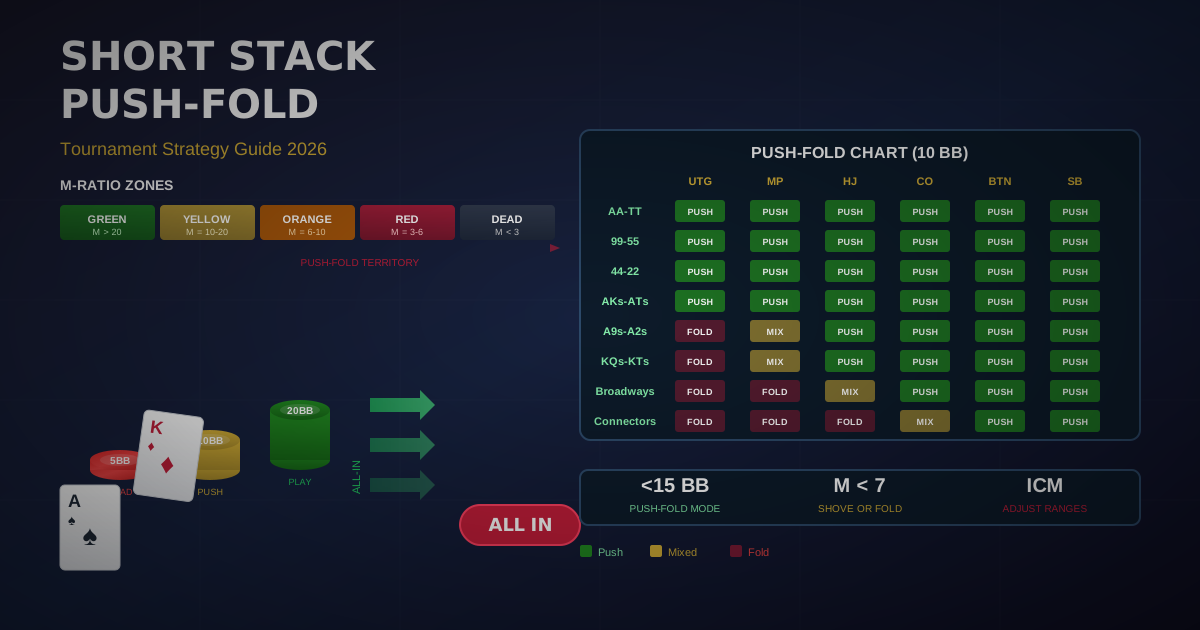
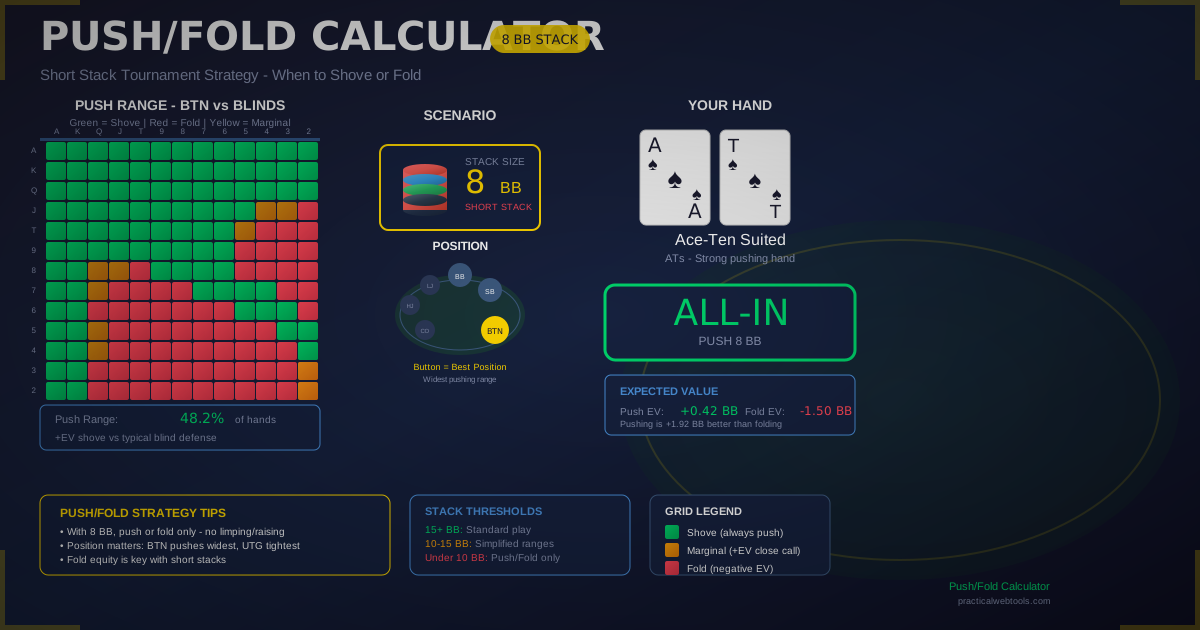
- Push/Fold Calculator - Base ranges to adjust
- Tournament Equity Calculator - Prize pool value
- Poker EV Calculator - Overall expected value
Conclusion
PKO tournaments reward players who master the unique mathematics of progressive bounties. Our PKO calculator tracks bounty growth, calculates adjusted pot odds, and shows you when enormous bounty value justifies calls that would be folds in any other format.
Dominate PKO by understanding the bounty growth mechanic, identifying high-value targets, and adjusting your ranges based on both coverage and bounty size. The players who solve PKO math extract significant value from knockouts while avoiding the trap of bounty hunting with negative EV hands.