Poker Chip Distribution Calculator: Starting Stacks Guide (2026)
Poker Chip Distribution Calculator: Setting Up Your Game
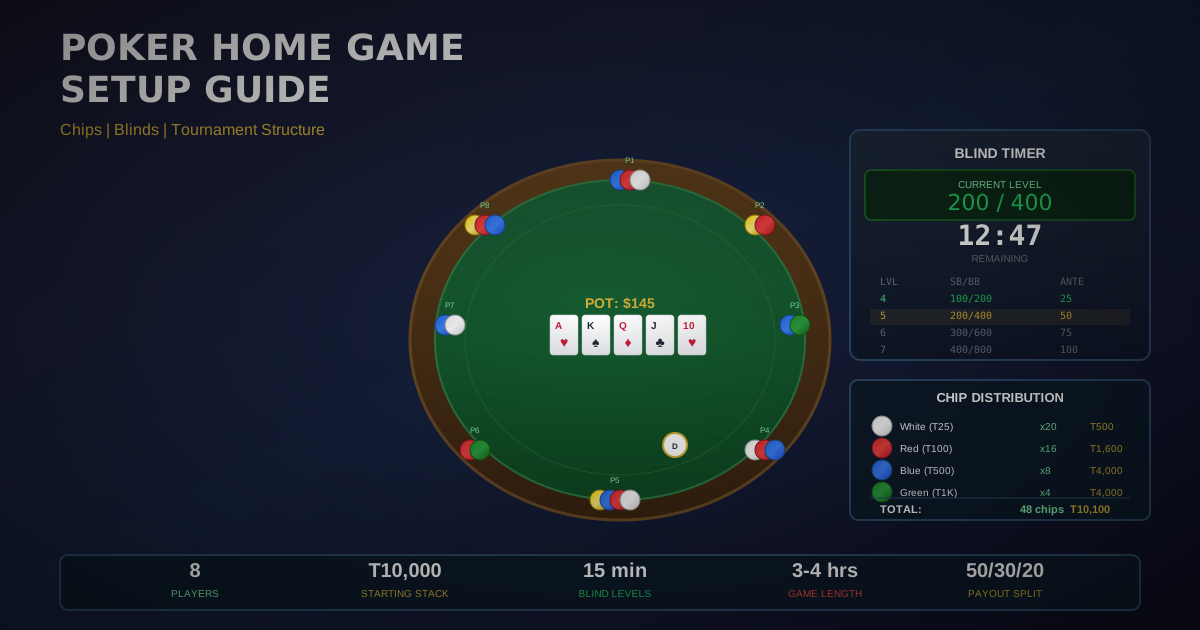
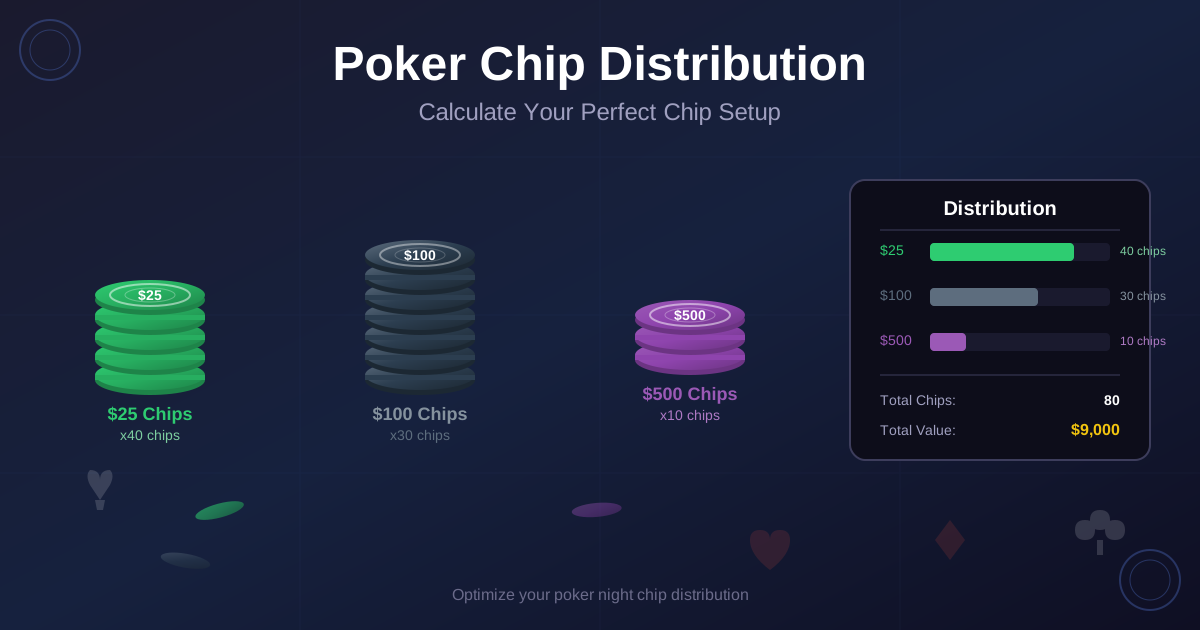
The right chip distribution ensures smooth gameplay—enough low denominations for blinds, higher chips for big pots. Our calculator designs optimal starting stacks based on player count, starting chips, and blind structure.
What Is Chip Distribution?
Chip distribution determines how many chips of each color each player receives at the start. Good distribution provides small chips for blinds and antes, medium chips for standard bets, and larger chips for big pots without constant color-ups.
Quick Answer: Standard distribution: 50% low value, 30% medium, 20% high. Example 10,000 stack: 20× $25 ($500), 16× $100 ($1,600), 17× $500 ($8,500) ≈ $10,600. Need 3-4 colors minimum. Total chips = players × chips per stack. Plan for rebuys if applicable.
How to Use Our Calculator
Use the Chip Distribution Calculator →
Enter game parameters to calculate optimal chip breakdown.
Step-by-Step Instructions
-
Enter Player Count: Expected attendance
-
Set Starting Chips: Per player
-
Input Starting Blinds: First level
-
Choose Color Scheme: Available denominations
-
View Distribution: Chips per stack
Input Fields Explained
| Field | Description | Example |
|---|---|---|
| Players | Game size | 8 players |
| Starting Stack | Per player | 10,000 chips |
| Starting Blinds | First level | 25/50 |
| Low Chip Value | Smallest denom | $25 |
| Medium Chip Value | Middle denom | $100 |
| High Chip Value | Largest denom | $500 |
Standard Distribution Rules
The 50-30-20 Rule
Percentage breakdown:

50% of value in low chips
30% of value in medium chips
20% of value in high chips

For 10,000 starting:
Low ($25): 5,000 value = 20 chips
Medium ($100): 3,000 value = 30 chips
High ($500): 2,000 value = 4 chips

Adjust based on blind structure
Alternative: The 4-3-2-1 Rule
For four denominations:

4 parts lowest
3 parts second
2 parts third
1 part highest

Example (10,000 stack):
40% in $25 = 160 chips
30% in $100 = 30 chips
20% in $500 = 4 chips
10% in $1000 = 1 chip
Minimum Chip Counts
Essential minimums per player:

Low chips: 15-25 (for betting small)
Medium chips: 10-15 (for raising)
High chips: 5-10 (for big bets)

Too few low chips = constant making change
Too many high chips = unwieldy stacks
Denomination Selection
Matching Blinds
Starting blind structure guides low chip:

25/50 blinds: $25 lowest chip
50/100 blinds: $50 lowest chip
100/200 blinds: $100 lowest chip

Lowest chip = small blind value
Allows exact blind posting
Color Standards
Common chip colors (casino standard):

White: $1
Red: $5
Blue: $10
Green: $25
Black: $100
Purple: $500
Yellow: $1,000

Home games can vary
Just be consistent
Progression Ratios
Standard ratio: 4:1 between levels

$25 → $100 (4×)
$100 → $500 (5×)
$500 → $2,000 (4×)

Allows easy chip conversion
2-for-1 or 4-for-1 color-ups
Sample Distributions
Home Game: 8 Players, 5,000 Chips
Blinds: 25/50
Duration: 3-4 hours

Per player:
12× $25 = $300
12× $100 = $1,200
7× $500 = $3,500
Total: $5,000

Total chips needed:
96× $25 chips
96× $100 chips
56× $500 chips
248 chips total
Tournament: 20 Players, 10,000 Chips
Blinds: 25/50
Duration: 5-6 hours

Per player:
20× $25 = $500
15× $100 = $1,500
8× $500 = $4,000
4× $1,000 = $4,000
Total: $10,000

Total chips needed:
400× $25 chips
300× $100 chips
160× $500 chips
80× $1,000 chips
940 chips total
Deep Stack: 10 Players, 25,000 Chips
Blinds: 50/100
Duration: 8+ hours

Per player:
16× $50 = $800
12× $100 = $1,200
14× $500 = $7,000
8× $1,000 = $8,000
8× $1,000 = $8,000
Total: $25,000

Larger stacks = more chip variety
Color-Up Planning
When to Color Up
Remove low chips when:
- No longer needed for blinds
- Stacks become unwieldy
- Blinds increase significantly

Example:
Start: 25/50 (need $25 chips)
Level 4: 200/400 ($25 no longer needed)
Color up $25 to $100
Color-Up Ratios
Easy conversions:

4× $25 = 1× $100
5× $100 = 1× $500
2× $500 = 1× $1,000

Plan denominations for clean ratios
Avoid odd conversions
Chip Race
Odd chips after color-up:

Each player with odd chips:
Get one card per odd chip
Highest card wins a replacement chip

Fair resolution
No one loses value unfairly
Total Chips Needed
Basic Calculation
Total chips = Players × Chips per color × Colors

8 players:
Low: 8 × 15 = 120 chips
Medium: 8 × 12 = 96 chips
High: 8 × 6 = 48 chips
Total: 264 chips minimum

Add 20% buffer for rebuys/add-ons
Rebuy Considerations
With rebuys:
Double initial chip count

8 players, 2 rebuys average:
Need: 8 × 3 = 24 buy-ins
Chip count: 24 × stack distribution

Or limit rebuys to remaining chips
Set Sizes
Standard chip set sizes:

300 chips: 6-8 players (tight)
500 chips: 8-10 players (comfortable)
750 chips: 10-12 players
1000 chips: 12-15 players

Bigger sets allow flexibility
Real-World Examples
Example 1: Friday Night Game
6 players, $50 buy-in, casual:
Starting chips: 2,500
Blinds: 25/50

Distribution per player:
10× $25 = $250
10× $100 = $1,000
2× $500 = $1,000
1× $250 (if available) or adjust
Total: ~$2,500

Total chips:
60× low, 60× medium, 12× high
Example 2: Charity Tournament
40 players, $100 entry, structured:
Starting chips: 15,000
Starting blinds: 50/100
20-minute levels

Distribution per player:
16× $50 = $800
12× $100 = $1,200
10× $500 = $5,000
8× $1,000 = $8,000
Total: $15,000

Total chips needed:
640× $50 = need 700
480× $100 = need 500
400× $500 = need 450
320× $1,000 = need 350
≈ 2,000 chips total
Example 3: Online-Style Deep Stack
10 players, 200bb starting:
Blinds: 50/100
Starting: 20,000 chips

Per player:
20× $50 = $1,000
20× $100 = $2,000
20× $500 = $10,000
7× $1,000 = $7,000
Total: $20,000

Lots of chips for post-flop play
All-in situations manageable
Example 4: Turbo Sit-n-Go
9 players, fast structure:
Starting: 3,000 chips
Blinds: 25/50, 15-min levels

Per player:
10× $25 = $250
10× $100 = $1,000
3× $500 = $1,500
1× $250 adjustment

Fewer chips needed
Quick blind escalation
Less variety required
Common Mistakes
1. Not Enough Small Chips
Mistake: Heavy on high denominations Problem: Can't make proper bets Fix: 50%+ value in low chips
2. Wrong Starting Denomination
Mistake: Lowest chip too high Problem: Can't post exact blinds Fix: Match lowest chip to small blind
3. Insufficient Total Chips
Mistake: Exact count, no buffer Problem: Problems if rebuys happen Fix: Add 20-30% extra chips
4. Ignoring Color-Up Needs
Mistake: No plan for chip removal Problem: Stacks become unwieldy Fix: Plan denominations for easy ratios
Frequently Asked Questions
How many chips per player?
Generally 30-50 chips per player in 3-4 colors. More chips = more flexibility but heavier stacks.
What colors should I use?
Stick to standards: white/red for low, green/black for medium, purple/yellow for high. Consistent colors reduce confusion.
Can I use different denominations than standard?
Yes, but ensure ratios work (4:1 or 5:1 between levels). $25-$100-$500 is common home game setup.
What about poker chip sets?
Most sets are 300 or 500 chips with fixed color ratios. May need to buy extra of certain colors.
How do I handle rebuys?
Either pre-allocate rebuy stacks or pull from remaining chips. Plan for average 1-2 rebuys per player.
When should I color up?
When lowest denomination is no longer needed for blinds and antes. Usually after 4-6 levels.
Pro Tips
-
Start with small blind: Lowest chip = small blind
-
50% in low: Half your value in smallest chips
-
Plan color-ups: Choose ratios that divide evenly
-
Buffer inventory: 20% extra for rebuys
-
Test distribution: Run practice hands before game
Related Calculators
- Poker Blind Structure Calculator - Level timing
- Poker Tournament Calculator - Prize pools
- Poker Stack Depth Calculator - Stack analysis
- Poker ICM Calculator - Equity distribution
- Poker Buy-In Calculator - Entry fees
Conclusion
Proper chip distribution ensures smooth gameplay—enough small chips for blinds, larger chips for big pots. Our calculator designs optimal starting stacks based on player count, chip values, and blind structure.
Calculate Chip Distribution Now →
Those 500-chip sets might look impressive, but without the right color mix, you'll spend half the game making change. Our calculator ensures every player starts with the chips they need for smooth action.