Poker Outs Calculator: Count Your Winning Cards (2026)
Poker Outs Calculator: Master Your Drawing Odds
Knowing how many outs you have—and what they mean for your equity—is fundamental to profitable poker. Our free poker outs calculator counts your winning cards and calculates your probability of hitting, helping you make mathematically correct drawing decisions.
What Are Poker Outs?
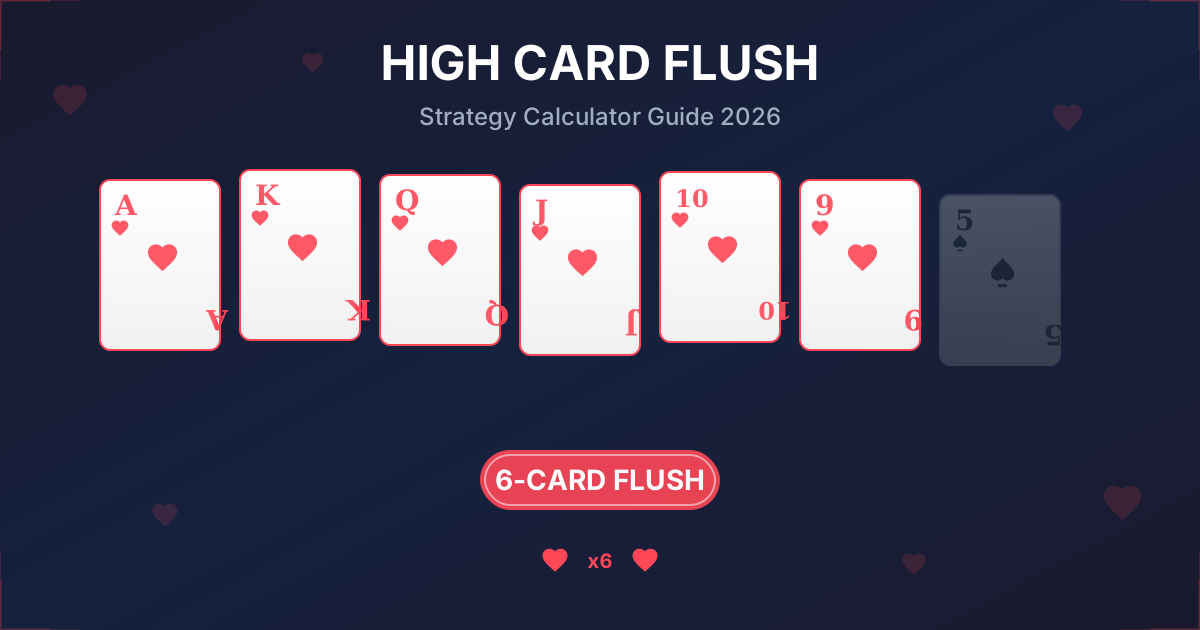
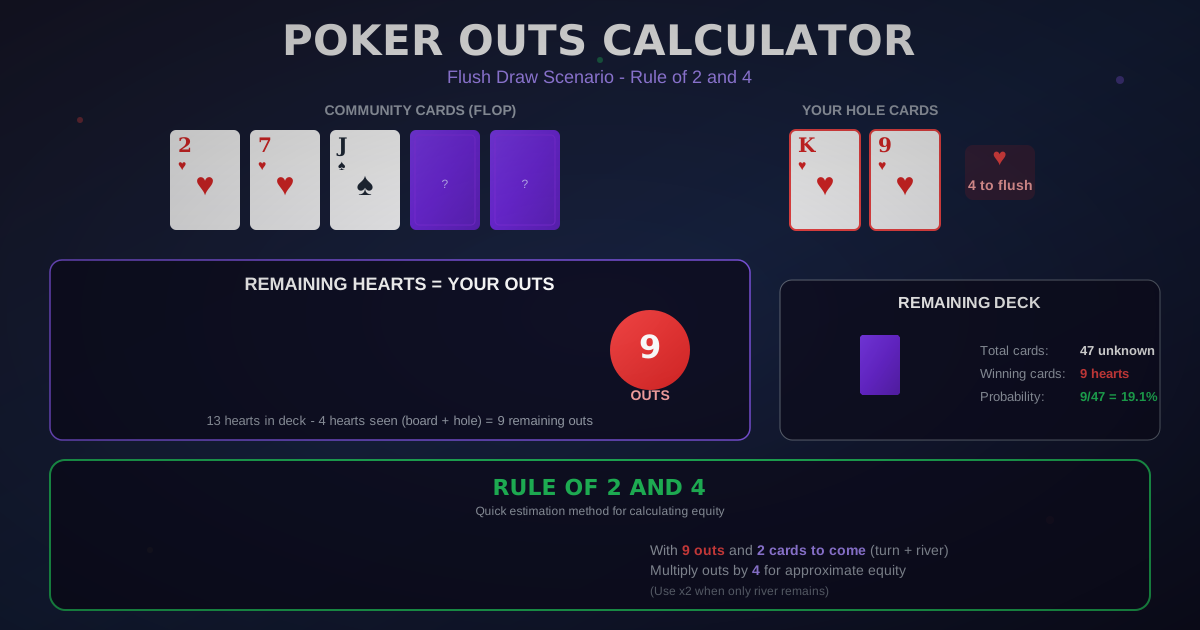
Outs are the unseen cards that will improve your hand to a likely winner. If you have four hearts and need one more for a flush, there are 9 remaining hearts in the deck—you have 9 outs.
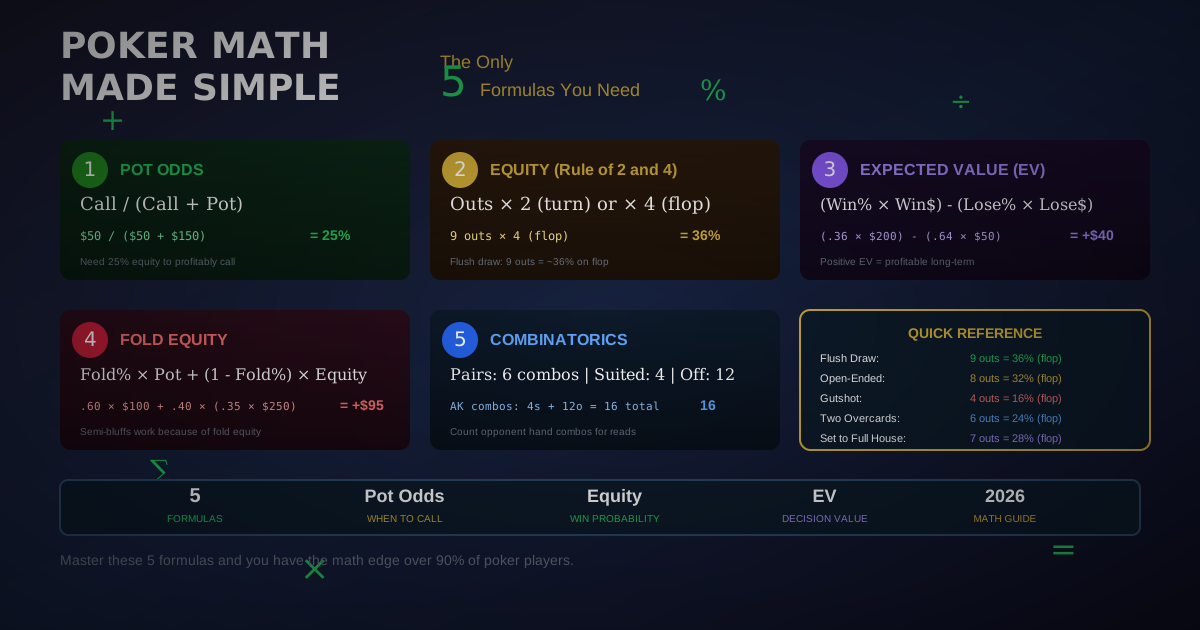
Quick Answer: Poker outs are cards remaining in the deck that complete your drawing hand. Count your outs, then use the Rule of 2 and 4 to estimate your winning percentage: multiply outs by 4 with two cards to come, or by 2 with one card to come.
How to Use Our Free Poker Outs Calculator
Use the Poker Outs Calculator →
Enter your hand and the board to see your outs count and win probability.
Step-by-Step Instructions
-
Enter Your Hole Cards: Input your two cards
-
Enter the Board: Add the flop (and turn if applicable)
-
Select Your Draw Type: Choose flush draw, straight draw, or let it auto-detect
-
View Your Outs: See the exact cards that help you and your equity percentage
Input Fields Explained
| Field | Description | Example |
|---|---|---|
| Hole Cards | Your two cards | Ah 9h |
| Board | Community cards | Kh 7h 2s |
| Draw Type | What you're drawing to | Flush draw |
Common Poker Outs Scenarios
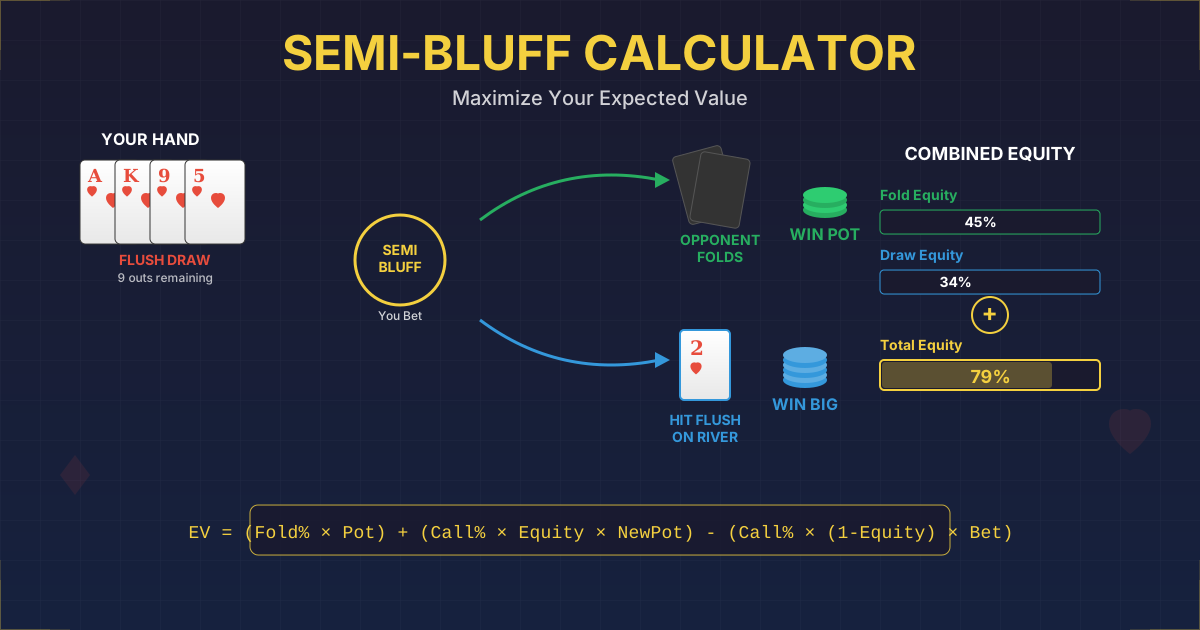
Flush Draw (9 Outs)
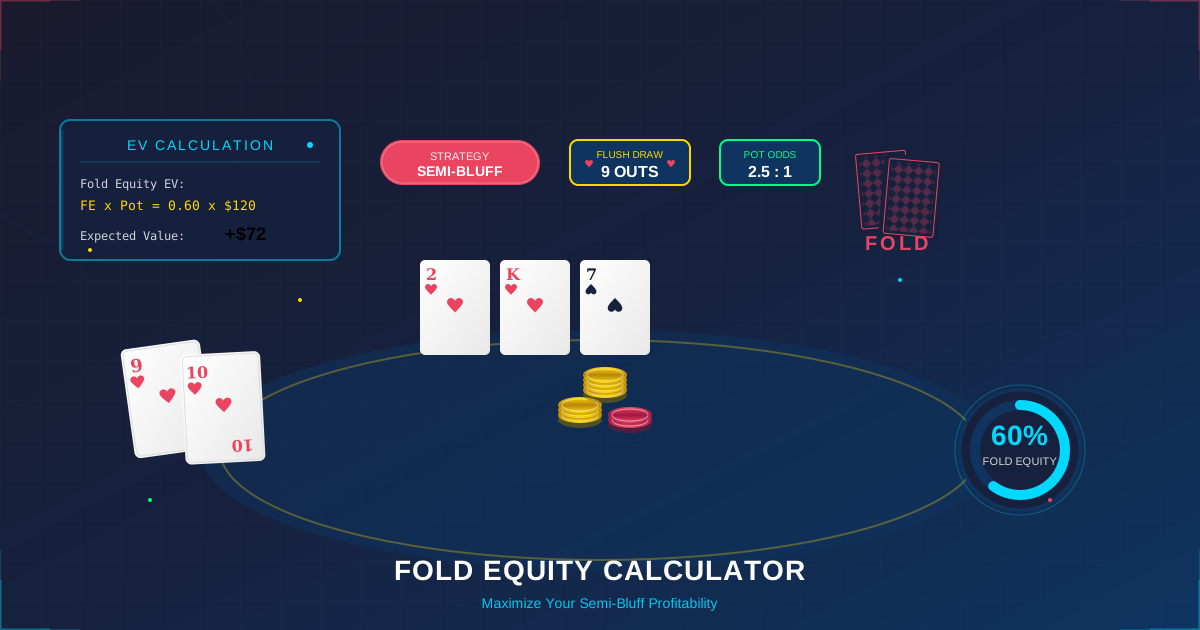
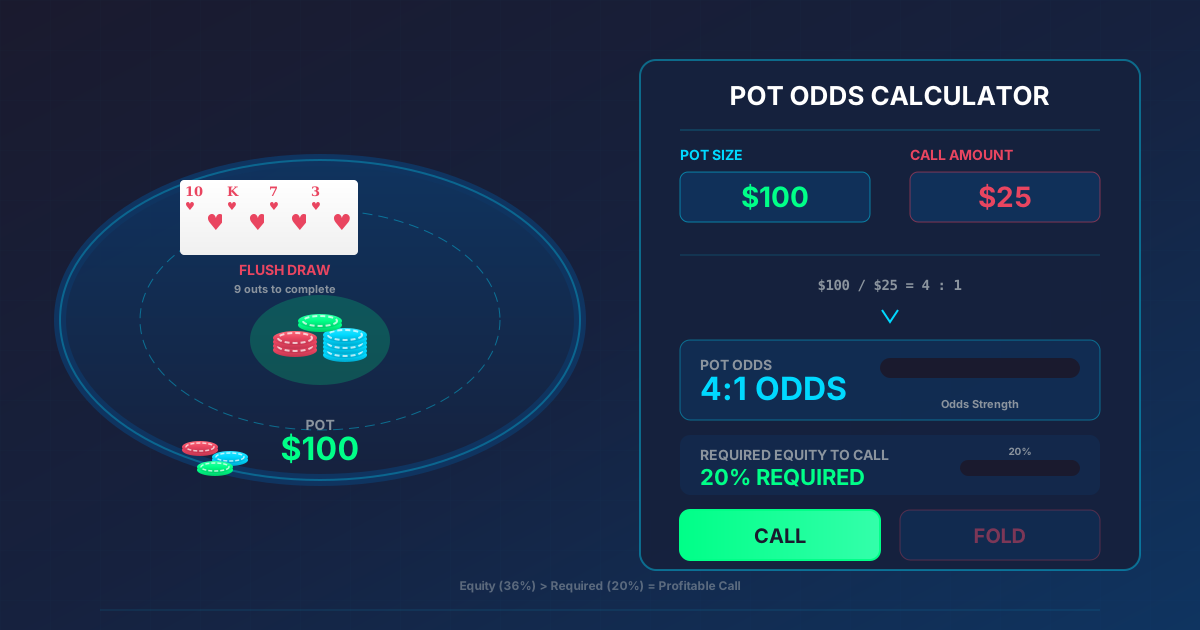
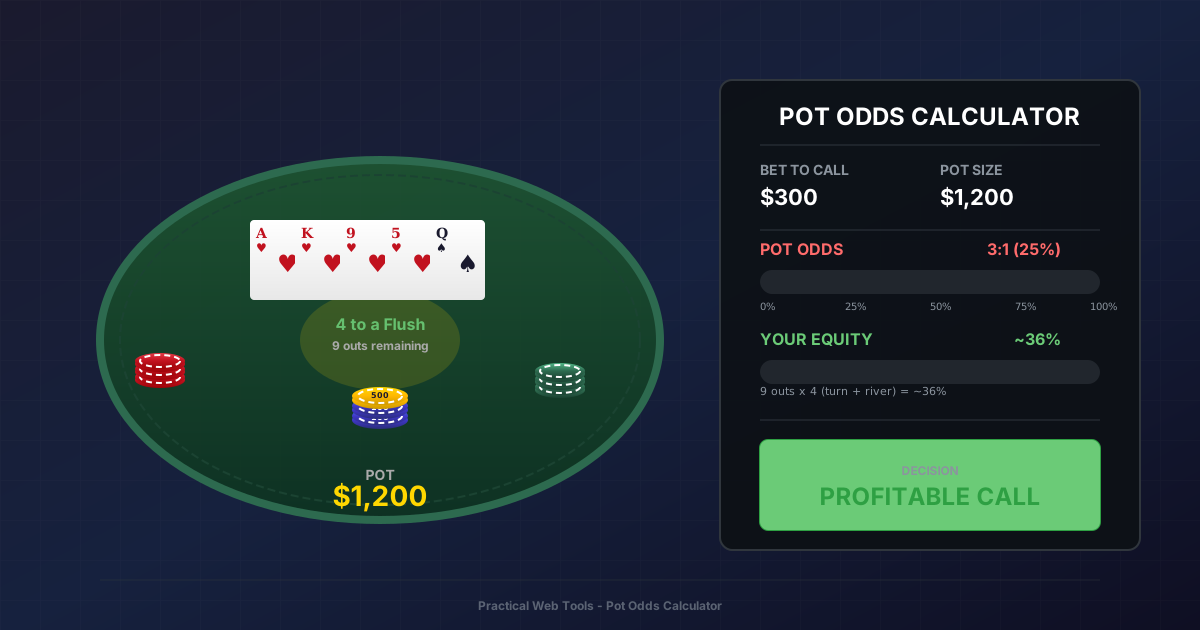
Situation: You hold Ah 9h. Board shows Kh 7h 2s.
Counting Outs:
- 13 hearts total in deck
- 4 hearts visible (2 in your hand, 2 on board)
- 9 hearts remain = 9 outs
Equity:
- Flop to river (2 cards): 9 × 4 = 36% (actual: 35%)
- Turn to river (1 card): 9 × 2 = 18% (actual: 19.6%)
Open-Ended Straight Draw (8 Outs)
Situation: You hold 8c 9c. Board shows 6h 7s Kd.
Counting Outs:
- Any 5 completes the straight (4 cards)
- Any 10 completes the straight (4 cards)
- 8 outs total
Equity:
- Flop to river: 8 × 4 = 32% (actual: 31.5%)
- Turn to river: 8 × 2 = 16% (actual: 17.4%)
Gutshot Straight Draw (4 Outs)
Situation: You hold Jc Tc. Board shows 8h 9s 2d.
Counting Outs:
- Only a 7 completes your straight
- 4 sevens remain = 4 outs
Equity:
- Flop to river: 4 × 4 = 16% (actual: 16.5%)
- Turn to river: 4 × 2 = 8% (actual: 8.7%)
Flush Draw + Gutshot (12 Outs)
Situation: You hold Jh Th. Board shows 8h 9s 2h.
Counting Outs:
- 9 hearts for the flush
- 4 queens for the straight (but Qh is already counted!)
- 9 + 3 = 12 outs
Equity:
- Flop to river: 12 × 4 = 48% (actual: 45%)
Overcards (6 Outs)
Situation: You hold AK. Board shows 7 5 2 rainbow.
Counting Outs:
- 3 Aces
- 3 Kings
- 6 outs (assuming opponent doesn't have AA, KK, AK, A7, etc.)
Equity:
- Flop to river: 6 × 4 = 24% (actual: 24%)
The Rule of 2 and 4
This shortcut lets you estimate equity in your head:
Rule of 4 (Flop to River)
Multiply your outs by 4 to estimate your equity with two cards to come.
Rule of 2 (Turn to River)
Multiply your outs by 2 to estimate your equity with one card to come.
Why It Works
- Deck has ~47 unknown cards on the flop
- Each out ≈ 2.13% per card (close to 2%)
- Two cards = multiply by 4 (approximately)
- One card = multiply by 2
Accuracy Table
| Outs | Rule of 4 | Actual (2 cards) | Rule of 2 | Actual (1 card) |
|---|---|---|---|---|
| 4 | 16% | 16.5% | 8% | 8.7% |
| 6 | 24% | 24.1% | 12% | 13.0% |
| 8 | 32% | 31.5% | 16% | 17.4% |
| 9 | 36% | 35.0% | 18% | 19.6% |
| 12 | 48% | 45.0% | 24% | 26.1% |
| 15 | 60% | 54.1% | 30% | 32.6% |
Note: The rule becomes less accurate with more outs because it doesn't account for overlap.
Complete Outs Reference Chart
| Draw Type | Outs | Flop-River | Turn-River |
|---|---|---|---|
| Gutshot straight | 4 | 16.5% | 8.7% |
| Two overcards | 6 | 24.1% | 13.0% |
| Open-ended straight | 8 | 31.5% | 17.4% |
| Flush draw | 9 | 35.0% | 19.6% |
| Flush + gutshot | 12 | 45.0% | 26.1% |
| Flush + open-ended | 15 | 54.1% | 32.6% |
| Flush + open-ended + pair | 21 | 70.0% | 45.7% |
Counting Outs Correctly
Discount Tainted Outs
Not all outs are "clean." If an out gives you a hand but gives your opponent a better hand, it's tainted:
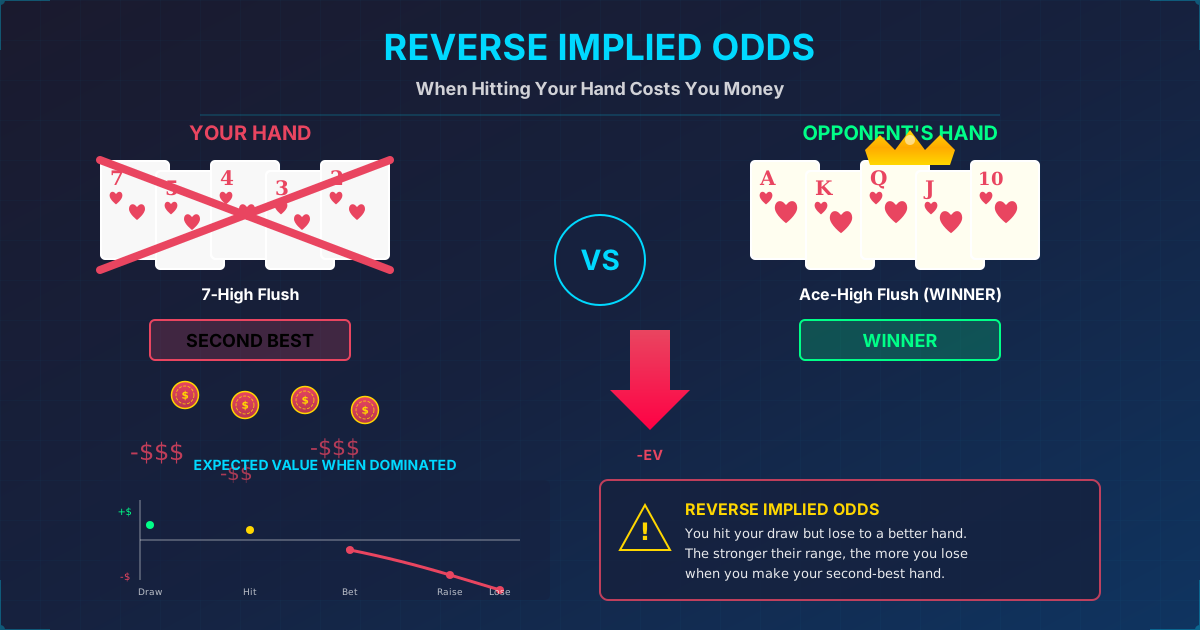
Example: You have Ah 5h on Kh 7h 6s 2d. You have 9 flush outs, but if opponent has Qh Jh, four of your "outs" (Qh, Jh, and potentially others) actually give them a better flush. Discount appropriately.
Account for Redraws
Sometimes your made hand can still lose:
Example: You have 98 on T76. Any J gives you the straight, but also puts four to a straight on board. Opponent might have QJ for a higher straight.
Don't Double-Count
When you have multiple draws, some outs may complete both:
Example: Flush draw + straight draw. If the card that completes your straight is also your flush suit, don't count it twice.
Common Outs Counting Mistakes
-
Counting "Dead" Outs: Cards that are already in opponents' hands or in the muck aren't available. In practice, treat all unseen cards as live.
-
Ignoring Tainted Outs: Just because a card completes your hand doesn't mean you win. Consider what hands opponent might have.
-
Forgetting Runner-Runner: Sometimes you have runner-runner outs (need two specific cards). These are typically 1-4% and often ignored, but can matter.
-
Overvaluing Pair Outs: If you have AK, hitting an Ace or King only gives you one pair—often not enough against a made hand.
-
Using Rule of 4 on the Turn: On the turn, use Rule of 2. Rule of 4 is only for flop-to-river calculations.
Frequently Asked Questions
How do I count outs quickly at the table?
Practice common scenarios until they're automatic:
- Flush draw = 9 outs (13 suited - 4 visible)
- Open-ender = 8 outs (4 cards each end)
- Gutshot = 4 outs (one rank only)
- Overcards = 6 outs (3 + 3)
What's the difference between clean outs and tainted outs?
Clean outs guarantee you the best hand. Tainted outs improve your hand but might give opponent a better hand. For example, making a flush when opponent might have a higher flush.
Should I call with a gutshot (4 outs)?
Usually no. With only 16.5% equity flop-to-river, you need better than 5:1 pot odds to call profitably. However, implied odds can make gutshots profitable against deep stacks when you're likely to get paid if you hit.
How accurate is the Rule of 2 and 4?
It's accurate within a few percentage points for most situations. It slightly overestimates with many outs (12+) but is excellent for quick mental math at the table.
What about backdoor draws?
Backdoor flush draw (need 2 more cards) adds about 4% equity. Backdoor straight draw adds 2-4% depending on type. Include these when calculating close decisions.
Can I have more than 21 outs?
Theoretically yes, but 15-21 outs represents monster draws (flush + straight + pair outs). With 21+ outs, you're often the favorite and should consider raising rather than just calling.
Using Outs with Pot Odds
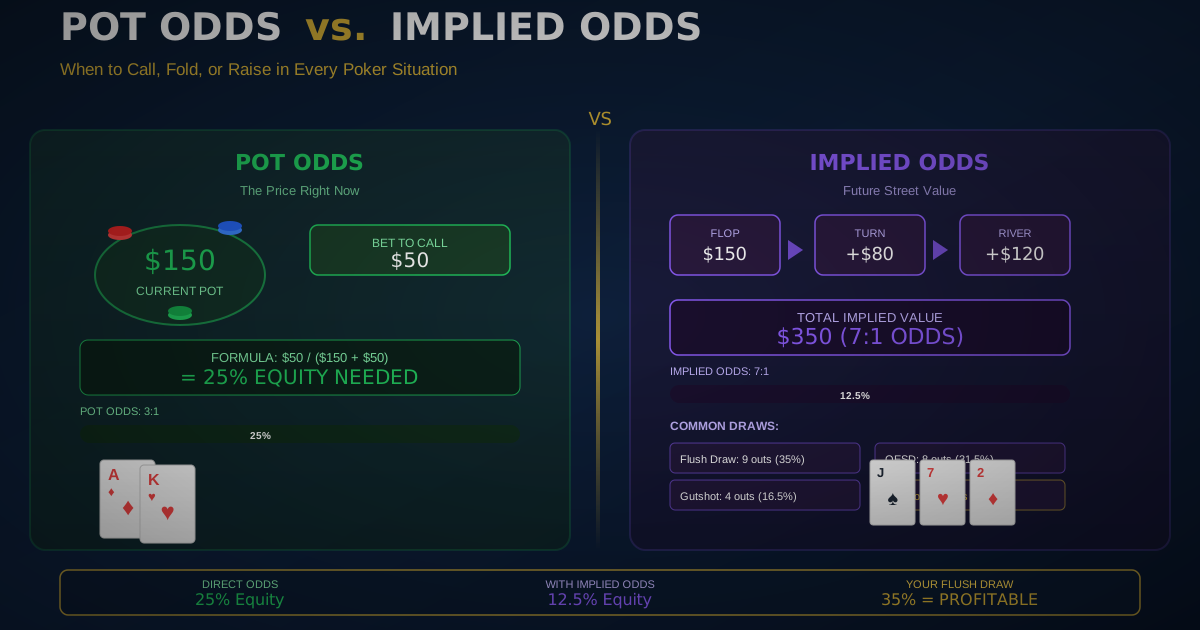
Once you know your outs and equity, compare to pot odds:
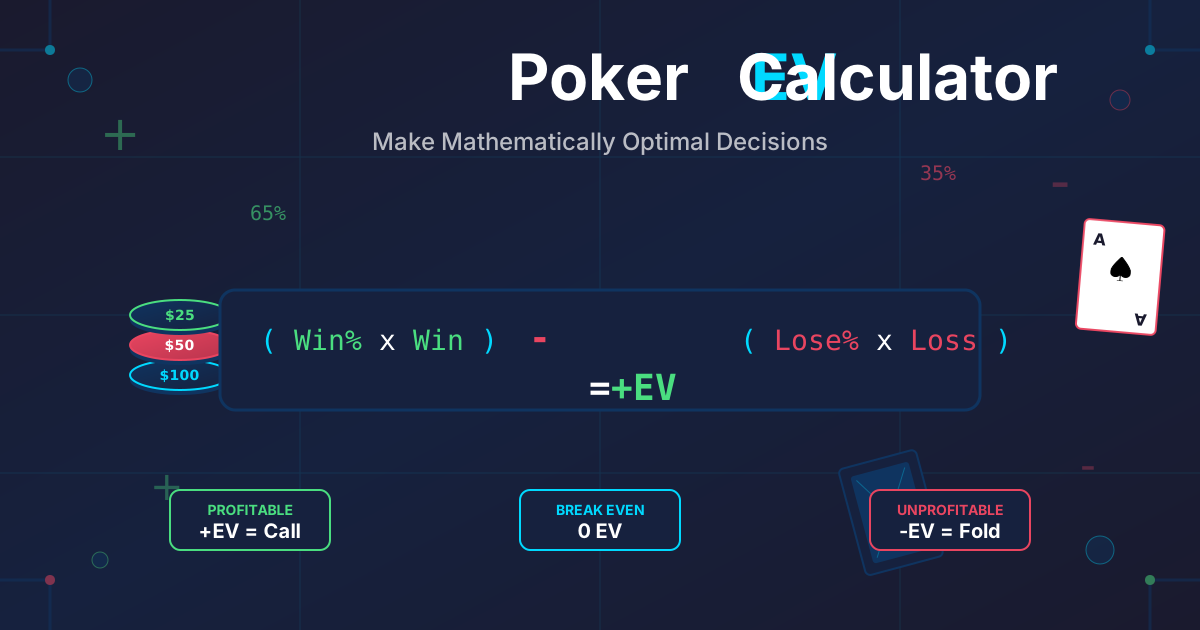
Formula:
If Equity % > Pot Odds %, call is profitable
Example:
- You have 9 outs (flush draw) = 35% equity flop-to-river
- Pot is $100, opponent bets $50
- Pot odds: $50 / ($100 + $50 + $50) = 25%
- 35% > 25% → Profitable call!
Pro Tips for Counting Outs
-
Memorize Common Draws: Don't recalculate flush draws every time. Know that 9 outs = 35% / 19%.
-
Round for Speed: 9 outs ≈ 36% (9×4) is close enough for in-game decisions.
-
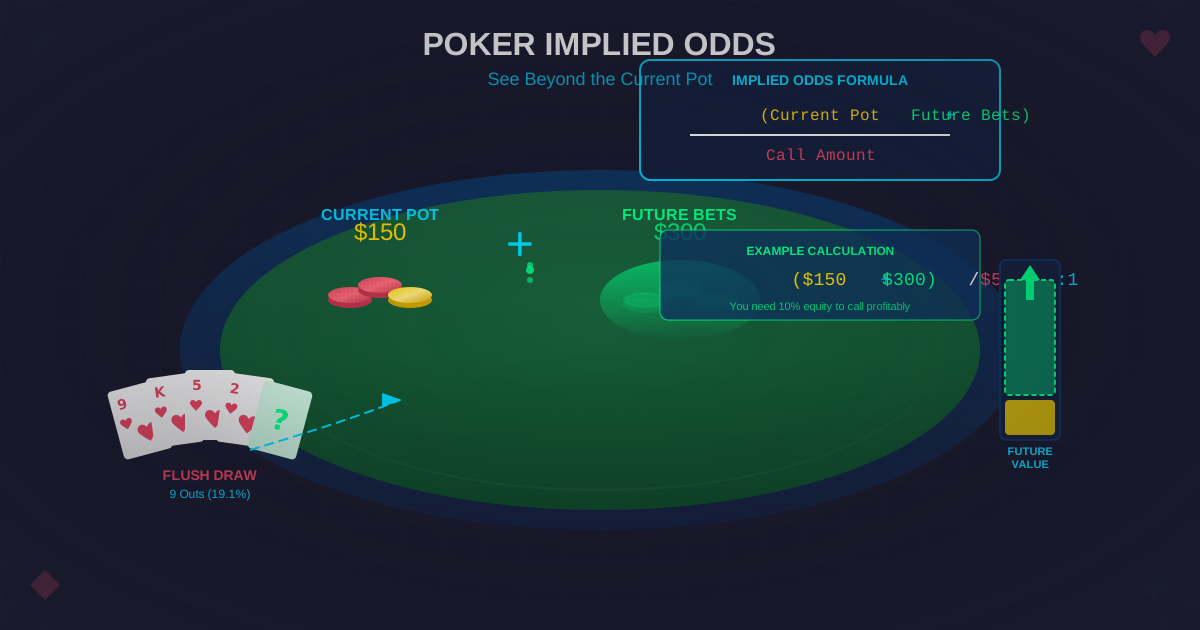
Consider Implied Odds: Weak pot odds can be offset by expected future bets when you hit.
-
Think About Opponent's Hand: Your "outs" depend on what opponent has. Against sets, your flush outs might not be good if board pairs.
-
Practice Away from the Table: Use our calculator to quiz yourself on different scenarios.
Related Poker Calculators
- Poker Equity Calculator - Full hand vs. hand analysis
- Pot Odds Calculator - Compare odds to equity
- Implied Odds Calculator - Factor in future winnings
- Poker EV Calculator - Expected value analysis
- Poker Hand Range Calculator - Range construction
Conclusion
Counting outs is one of poker's most essential skills. Every drawing decision comes down to comparing your outs (converted to equity) against the pot odds you're getting. Our free calculator does the math instantly, but understanding the underlying concepts makes you a better player.
Calculate Your Poker Outs Now →
Master your outs, know your equity, and never make another unprofitable drawing call again.