Poker Range Calculator: Hand Range Analysis Guide (2026)
Poker Range Calculator: Think in Ranges, Win More Pots
Thinking in hand ranges—rather than specific hands—separates winning players from losing ones. Our free range calculator helps you construct, visualize, and analyze ranges to make mathematically sound decisions.
What Is a Poker Range?
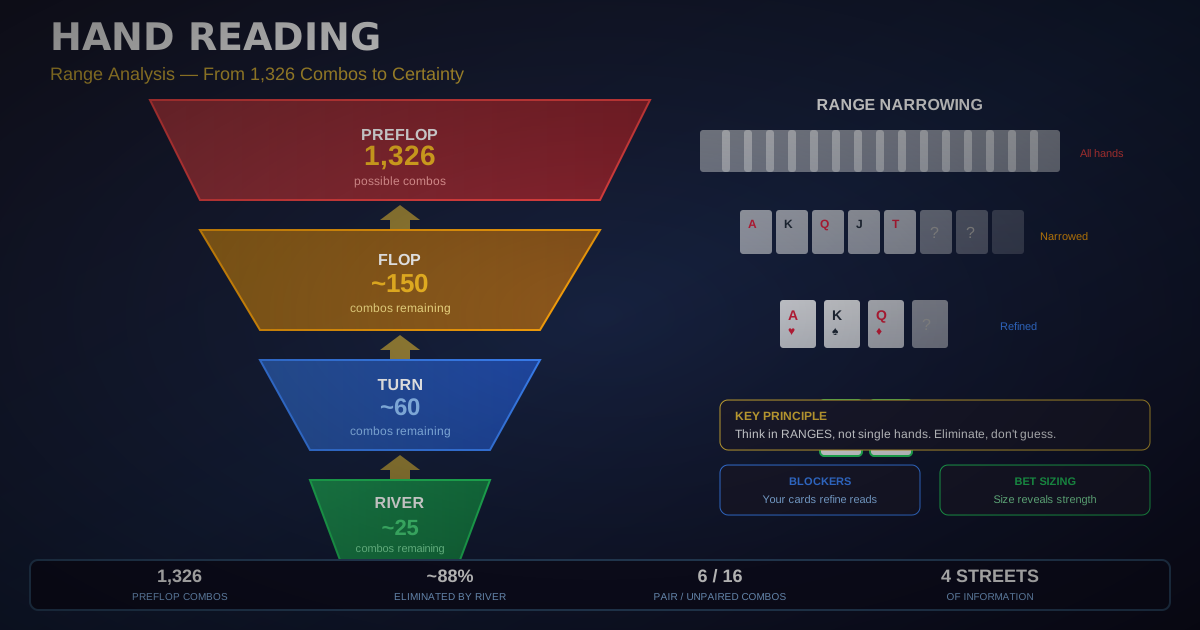
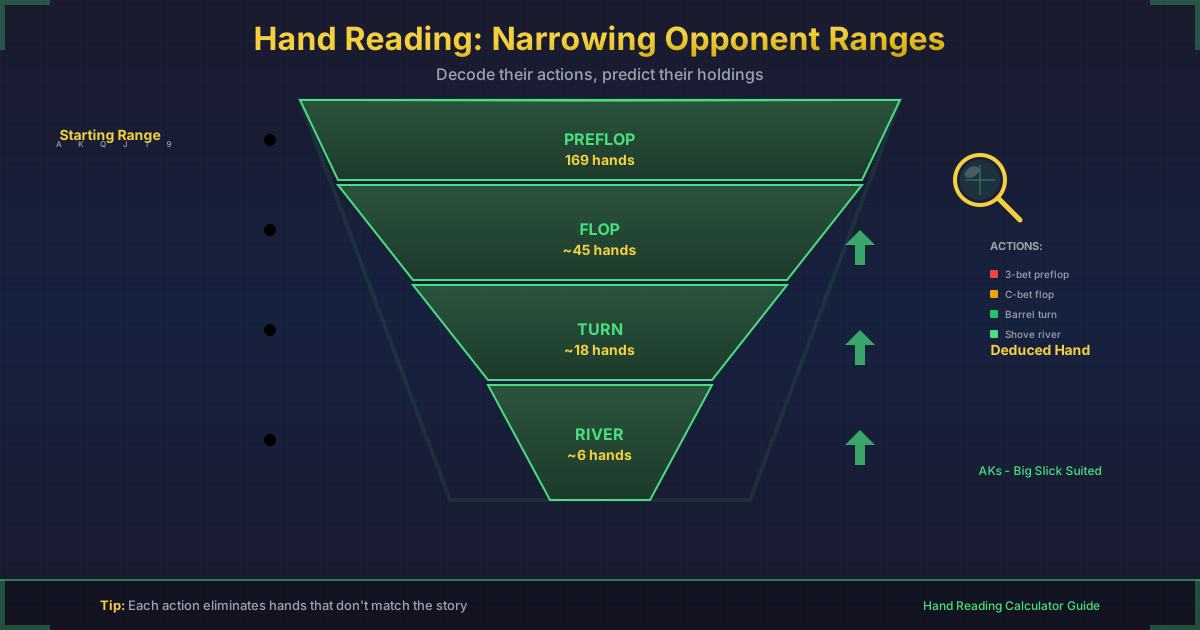
A range is all the hands a player could have in a given situation. Instead of putting opponents on one specific hand, skilled players assign a range of possible holdings based on their actions.
Quick Answer: If a tight player raises from early position, their range might be {AA, KK, QQ, JJ, TT, AKs, AKo, AQs}—maybe 5% of all hands. A loose button opener might have 40%+ of hands. Our calculator visualizes these ranges and calculates equity against them.
How to Use Our Free Range Calculator
Use the Poker Range Calculator →
Build ranges and see equity calculations instantly.
Step-by-Step Instructions
-
Select Hands: Click the hand matrix to add/remove hands
-
Use Presets: Load standard opening ranges by position
-
Input Opponent Range: Build villain's likely holdings
-
Calculate Equity: See your hand's equity vs. their range
Input Fields Explained
| Field | Description | Example |
|---|---|---|
| Your Hand | Your specific holding | A♠K♥ |
| Opponent Range | Their possible hands | Top 15% |
| Board | Community cards (if any) | K♣7♦2♠ |
| Position | Your seat at the table | Button |
Understanding the Hand Matrix
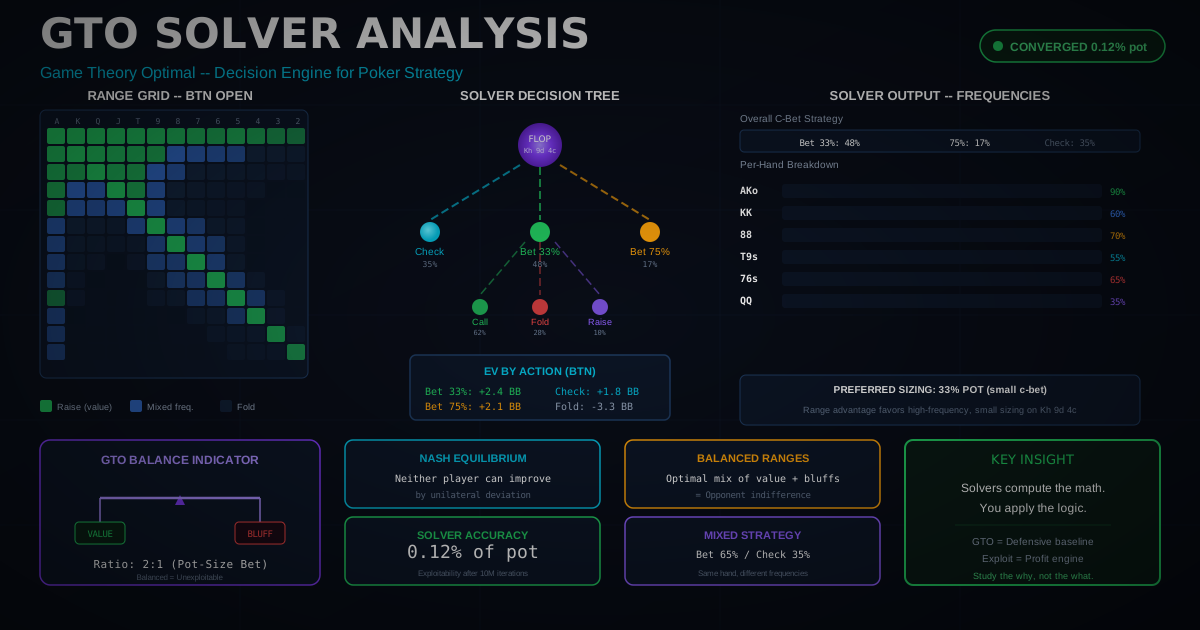
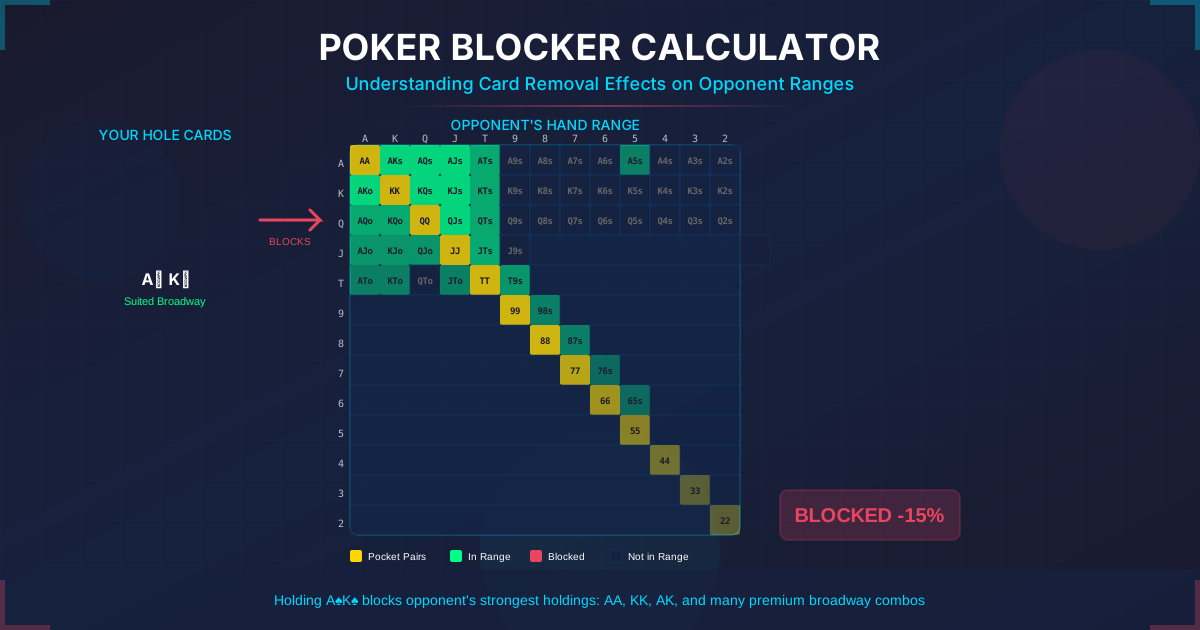
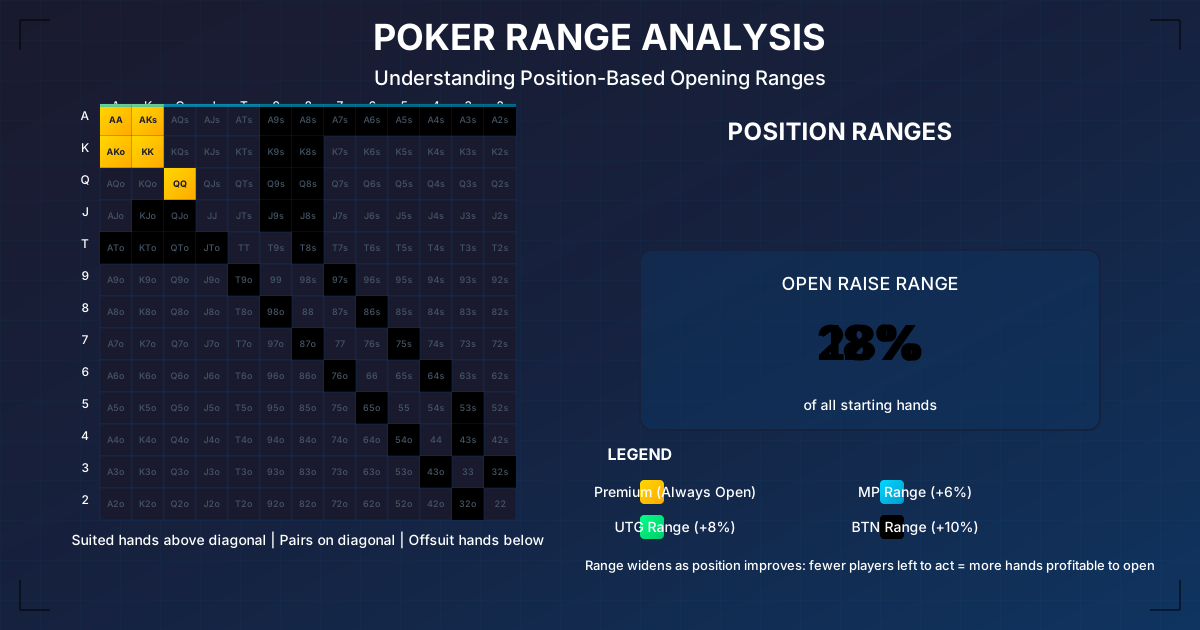
The 13×13 Grid
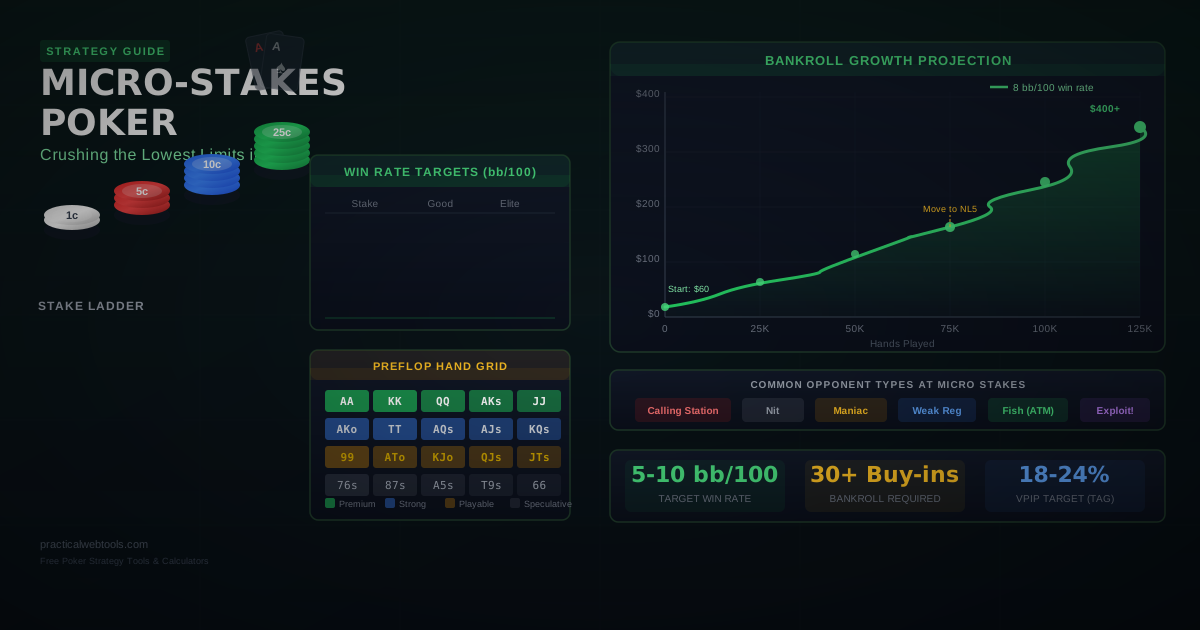
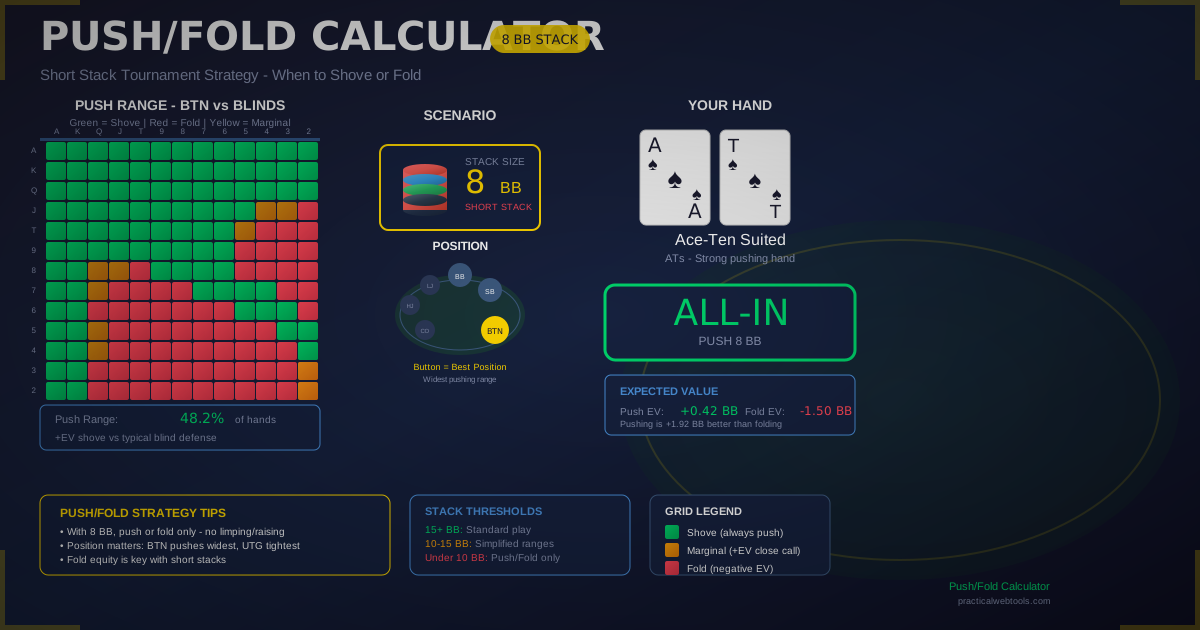
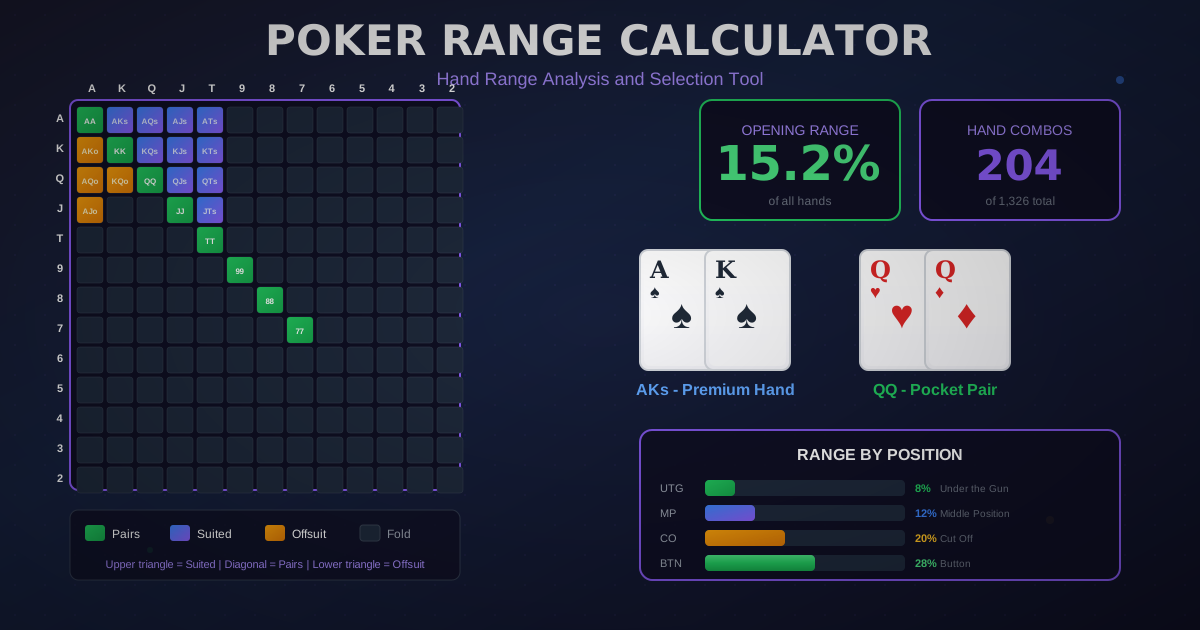
The matrix shows all 169 unique starting hand combinations:
| A | K | Q | J | T | 9 | 8 | 7 | 6 | 5 | 4 | 3 | 2 | |
|---|---|---|---|---|---|---|---|---|---|---|---|---|---|
| A | AA | AKs | AQs | AJs | ATs | A9s | A8s | A7s | A6s | A5s | A4s | A3s | A2s |
| K | AKo | KK | KQs | KJs | KTs | K9s | K8s | K7s | K6s | K5s | K4s | K3s | K2s |
| Q | AQo | KQo | QJs | QTs | Q9s | Q8s | Q7s | Q6s | Q5s | Q4s | Q3s | Q2s | |
| ... |
Legend:
- Diagonal: Pocket pairs (AA, KK, QQ...)
- Above diagonal: Suited hands (AKs, AQs...)
- Below diagonal: Offsuit hands (AKo, AQo...)
Range Notation
| Notation | Meaning | Hands Included |
|---|---|---|
| AA | Pocket aces only | AA |
| AK | Both suited and offsuit | AKs, AKo |
| AKs | Ace-king suited only | AKs |
| AKo | Ace-king offsuit only | AKo |
| 88+ | Pairs 88 and above | 88, 99, TT, JJ, QQ, KK, AA |
| ATs+ | Ace-ten suited and above | ATs, AJs, AQs, AKs |
| JTs-54s | Suited connectors JT to 54 | JTs, T9s, 98s, 87s, 76s, 65s, 54s |
Standard Opening Ranges
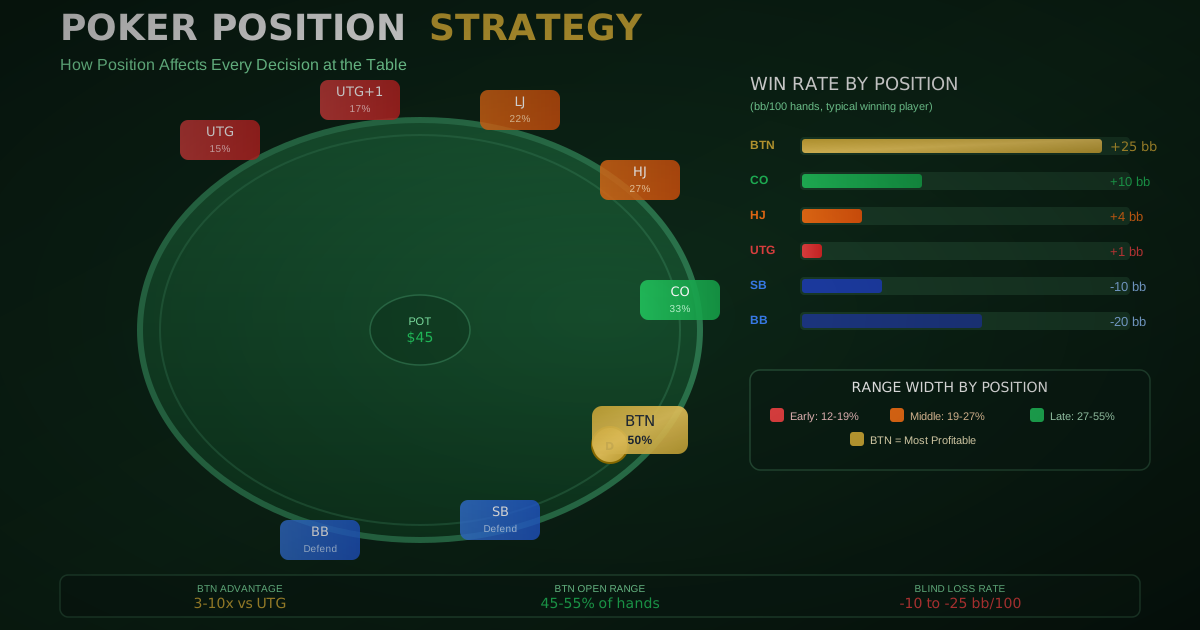
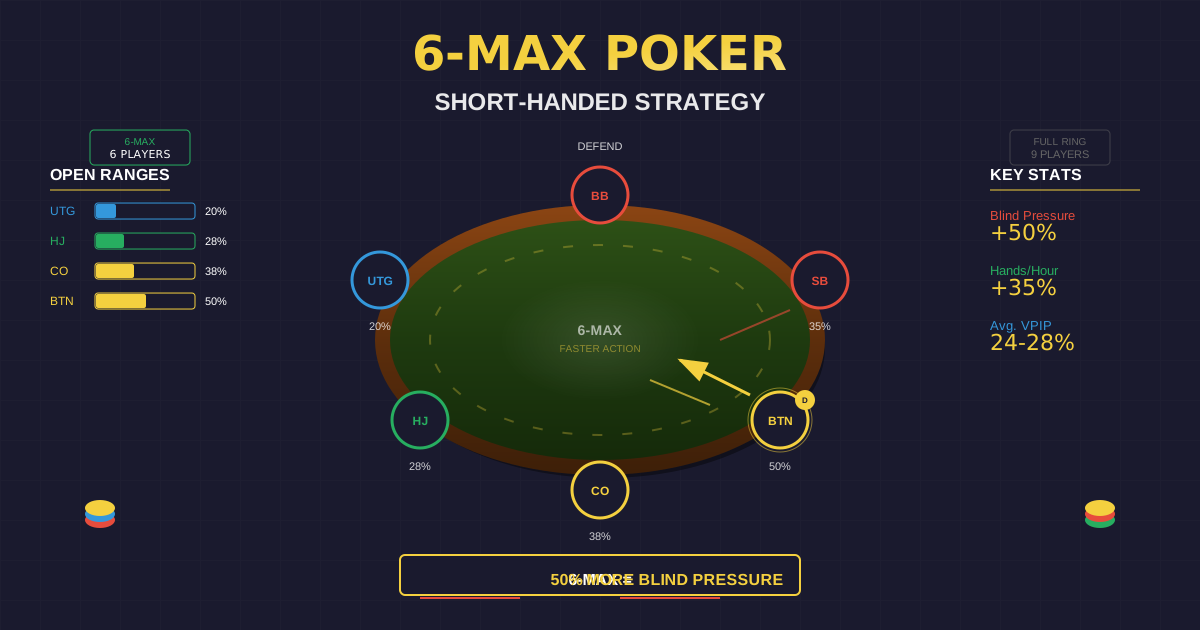
By Position (6-max, 100bb)
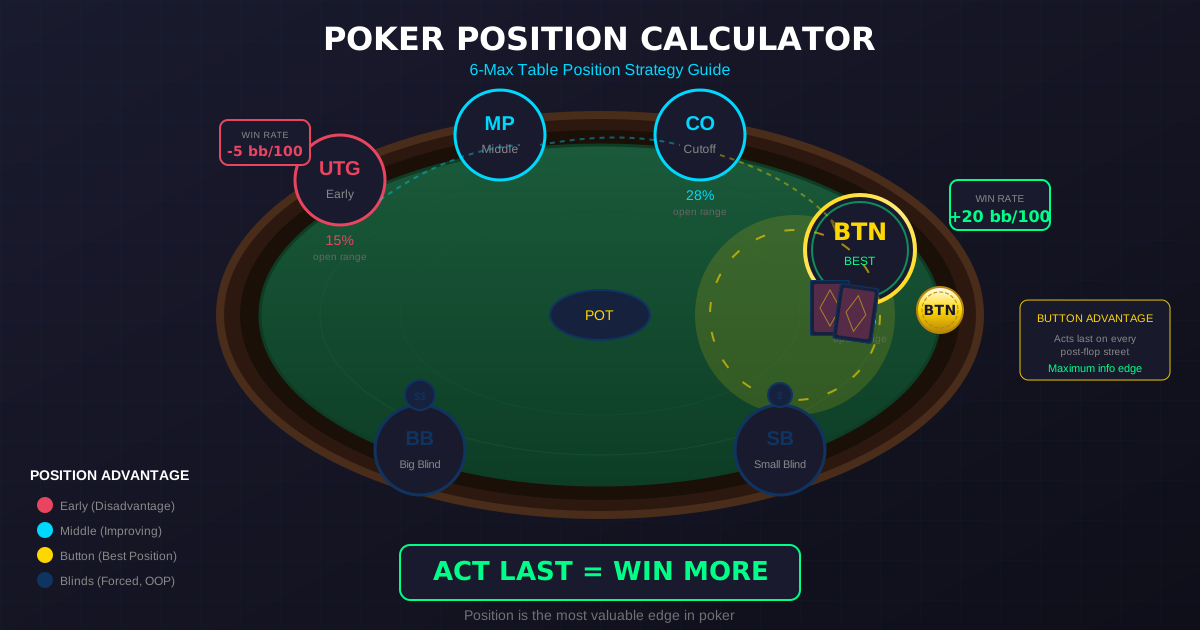
UTG (Under the Gun) - ~15%:
- Pairs: 66+
- Suited: ATs+, KQs, QJs, JTs
- Offsuit: AQo+
HJ (Hijack) - ~19%:
- Pairs: 55+
- Suited: A9s+, KJs+, QJs, JTs, T9s
- Offsuit: AJo+, KQo
CO (Cutoff) - ~27%:
- Pairs: 44+
- Suited: A4s+, K9s+, Q9s+, J9s+, T8s+, 97s+, 87s
- Offsuit: ATo+, KJo+, QJo
BTN (Button) - ~44%:
- Pairs: 22+
- Suited: A2s+, K5s+, Q7s+, J7s+, T7s+, 96s+, 85s+, 75s+, 64s+, 54s
- Offsuit: A7o+, K9o+, Q9o+, J9o+, T9o
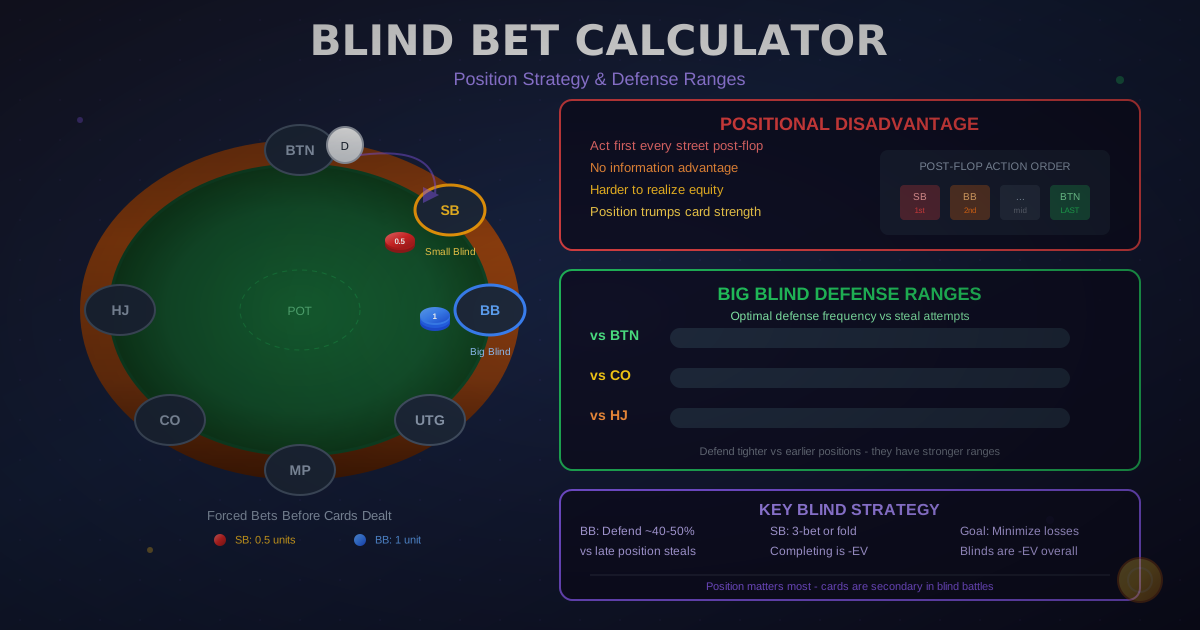
SB (Small Blind) - ~40% vs BTN:
- Wide defending and 3-betting range
- Includes many suited hands for playability
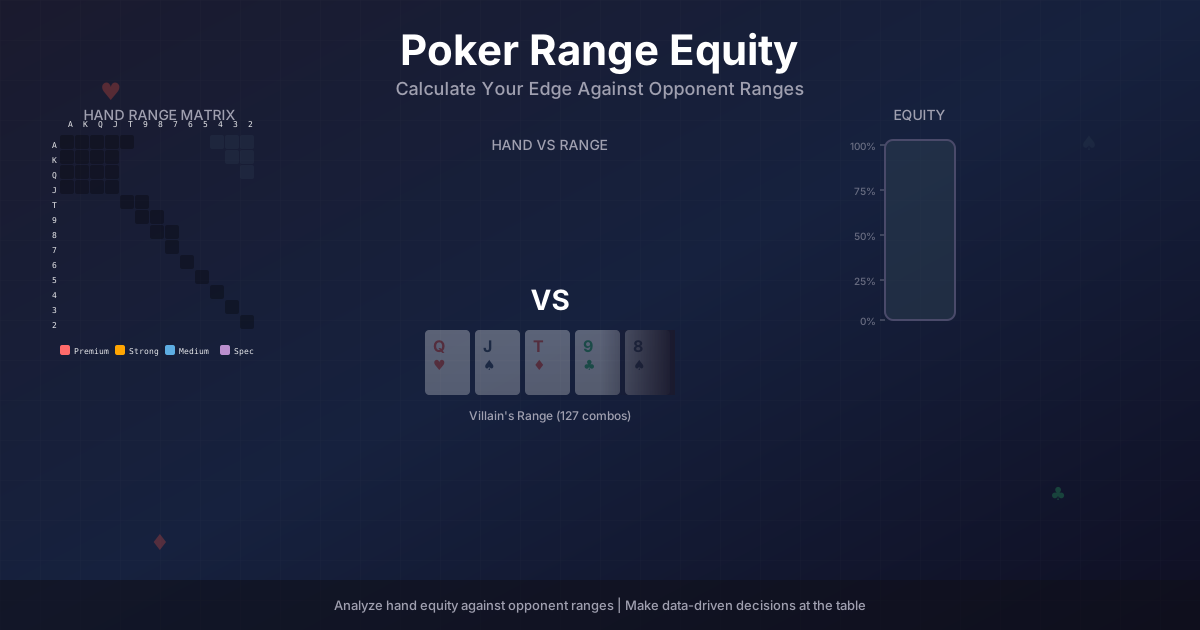
Range vs. Range Equity
Example 1: Preflop All-In
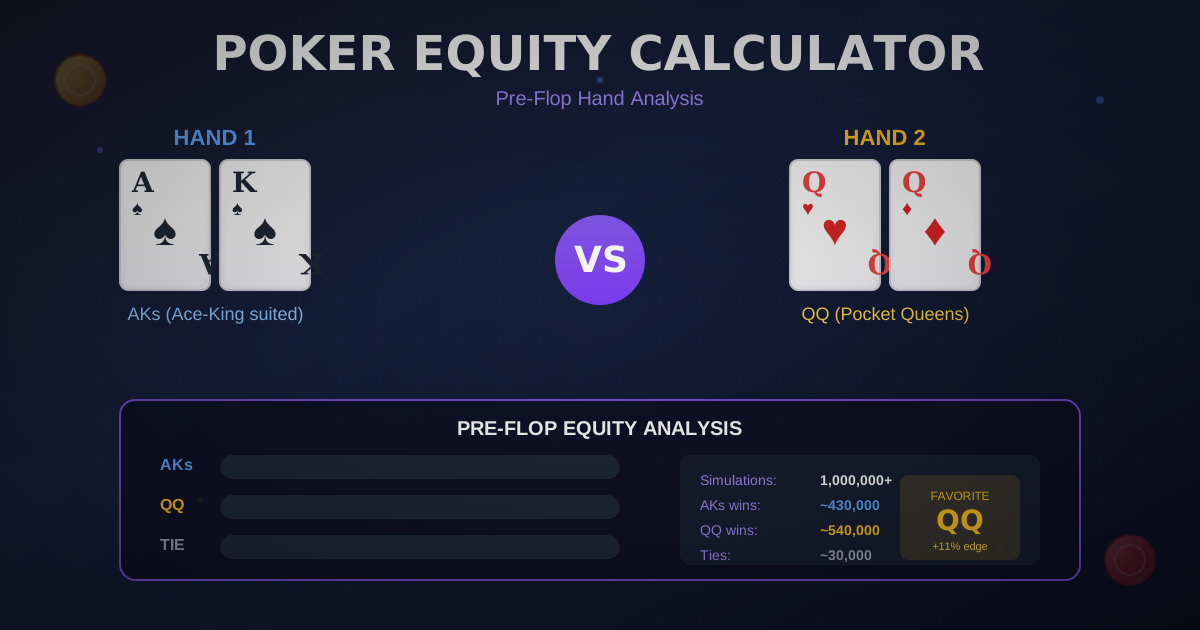
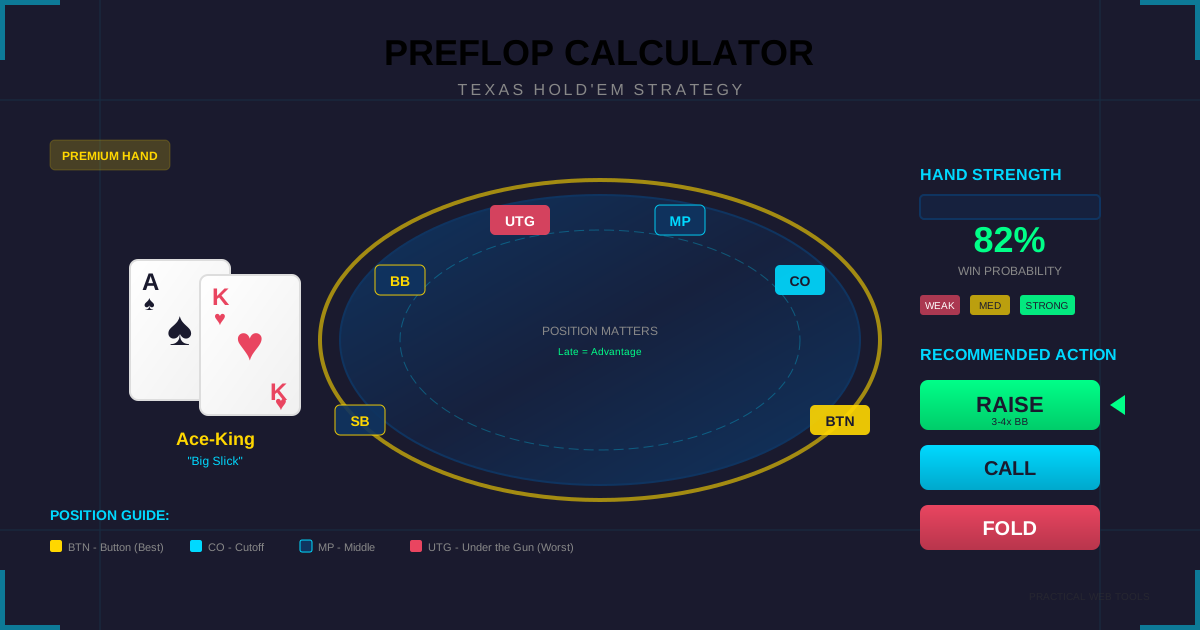
Your hand: A♠K♠ Opponent's range: {QQ+, AKs, AKo}
Equity calculation:
- vs AA: 12%
- vs KK: 30%
- vs QQ: 45%
- vs AK: 50% (tie often)
Weighted equity: ~34%
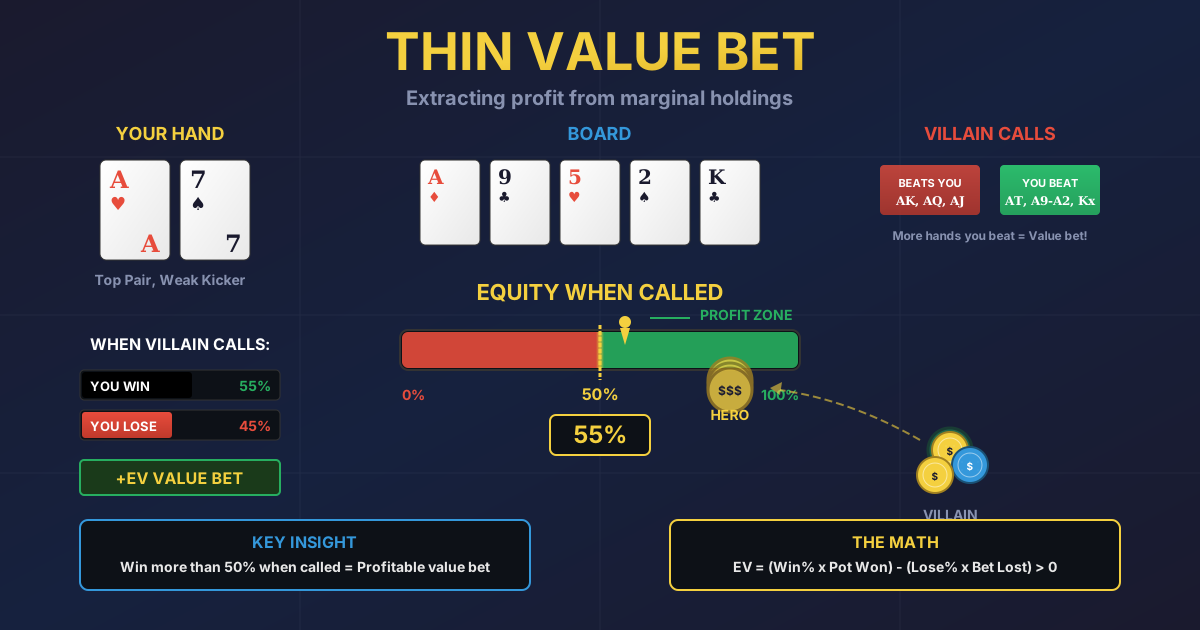
Example 2: Postflop Analysis
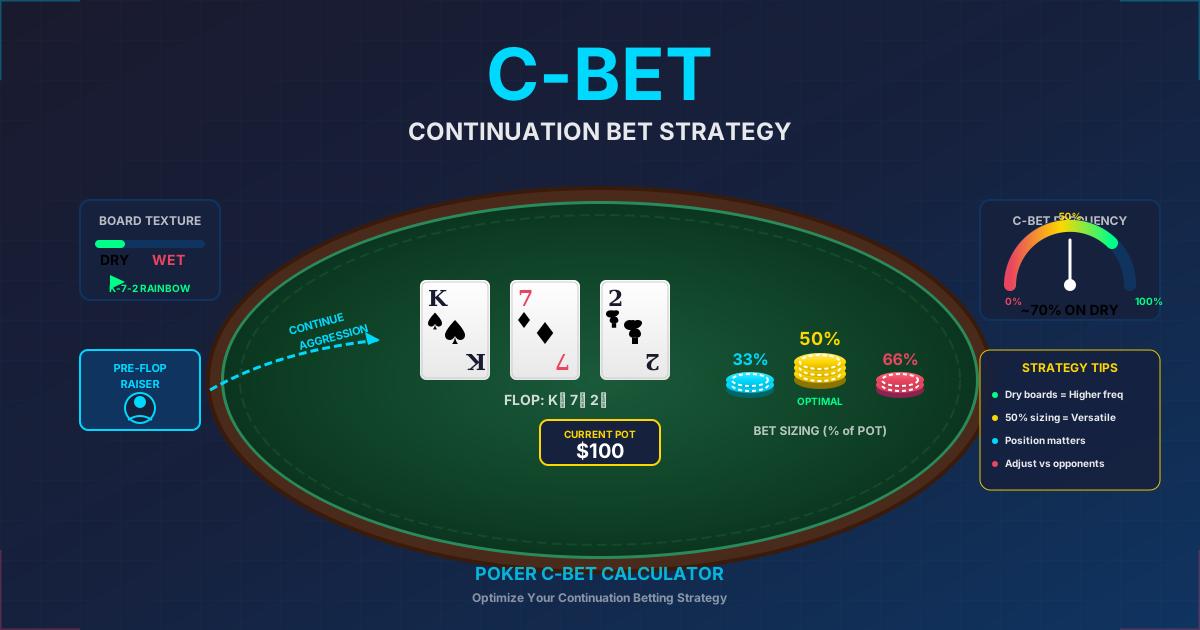
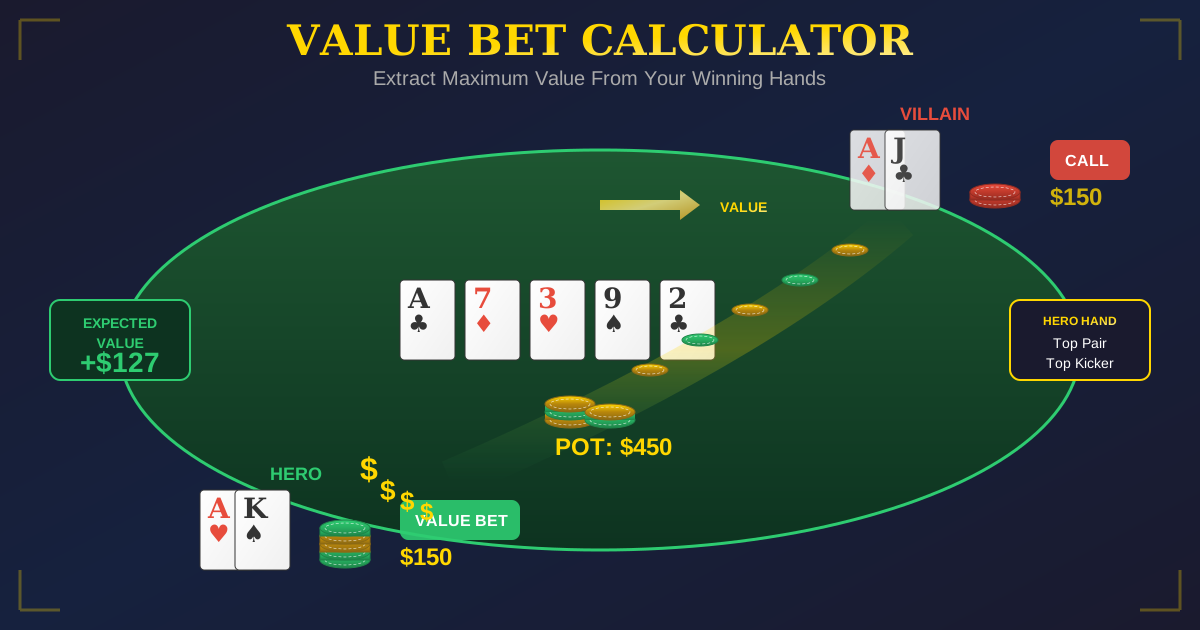
Your hand: A♥K♥ Board: K♣7♦2♠ Opponent's range: Continuation bet range
Calculator shows:
- Your TPTK beats most of their range
- Worry about KK, 77, 22
- Ahead of Ax, QQ, JJ continuation bets
Constructing Opponent Ranges
By Action
| Action | Typical Range |
|---|---|
| Early position raise | Top 12-18% |
| Late position raise | Top 25-45% |
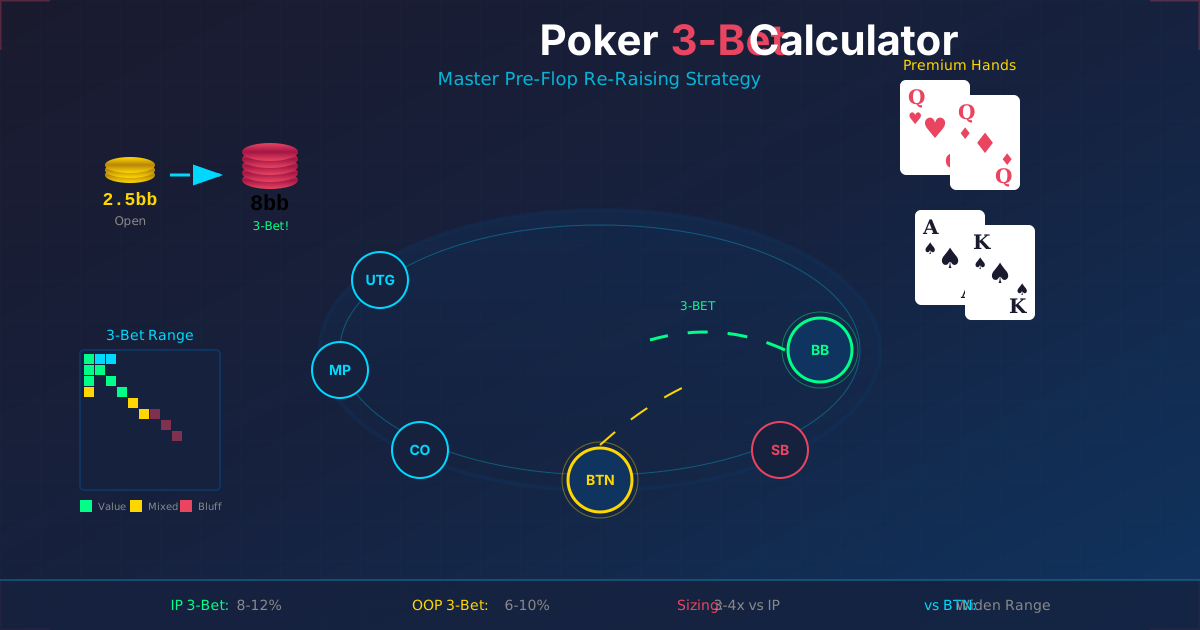
| 3-bet | Top 3-10% (or polarized) |
| 4-bet | Top 2-5% (premium heavy) |
| Cold call | Medium strength hands |
| Limp | Weak or trapping |
By Player Type
| Player Type | Opening Range | 3-Bet Range |
|---|---|---|
| Nit | 8-12% | 2-3% |
| TAG | 15-22% | 4-7% |
| LAG | 25-40% | 8-15% |
| Fish | 40-70% | Variable |
Adjusting for Tendencies
Observe and adjust:
- Does villain fold to 3-bets often? → Widen your 3-bet range
- Does villain call too much? → Value bet thinner
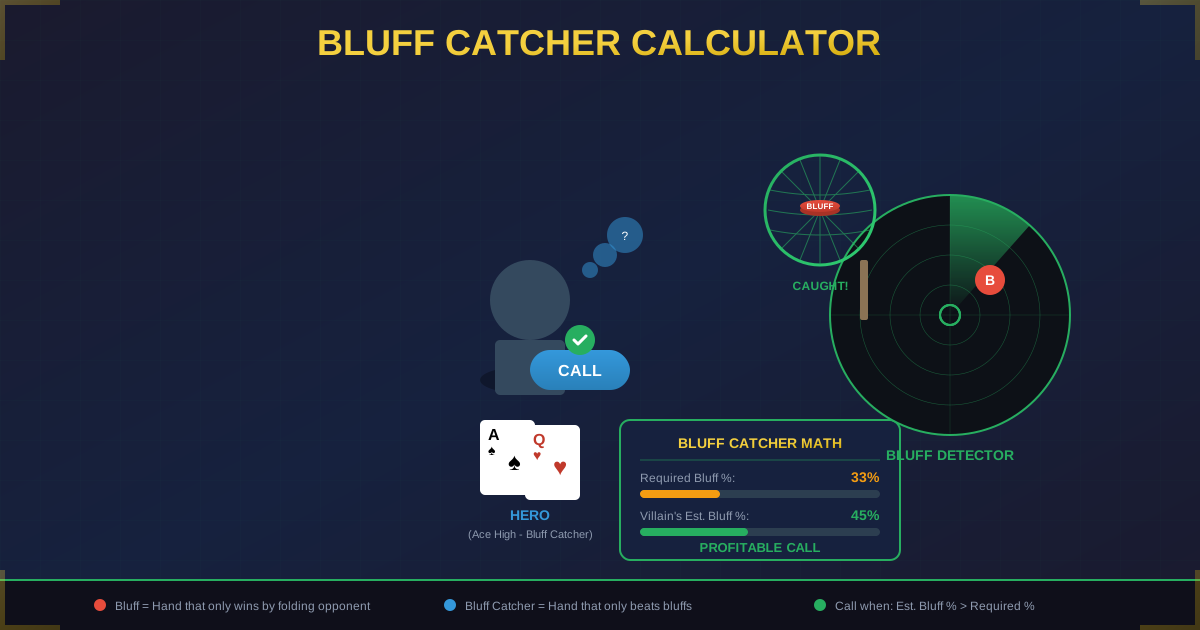
- Does villain bluff too much? → Call down lighter
Range Manipulation
Polarized vs. Merged Ranges
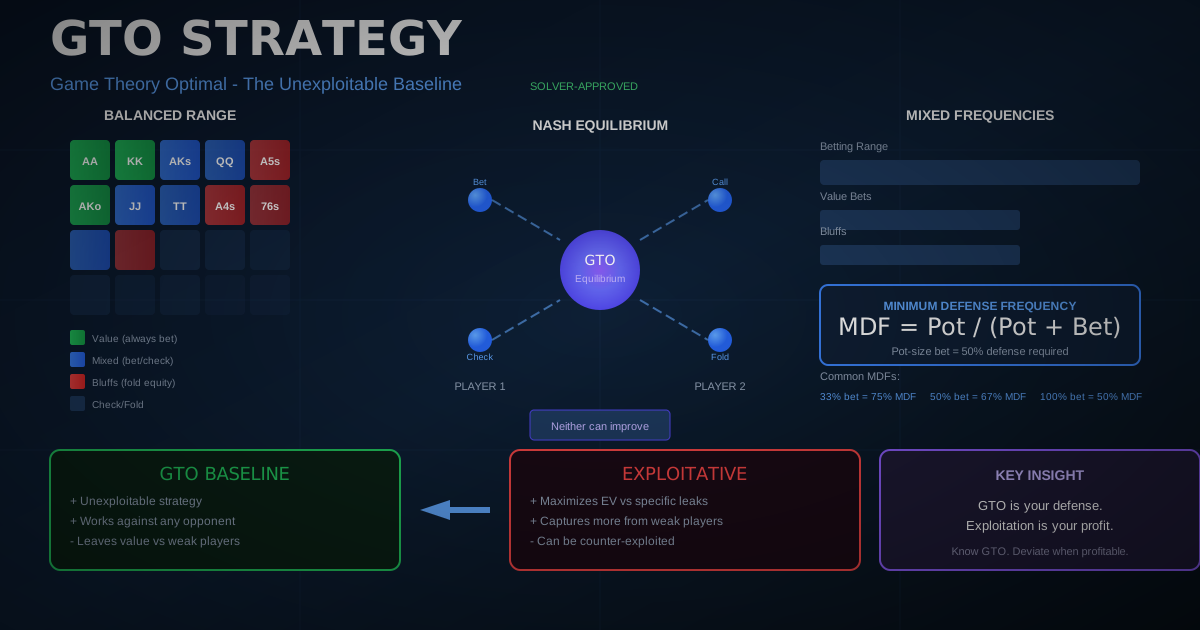
Polarized range: Very strong hands + bluffs
- Example: {AA, KK, QQ, A5s, A4s, A3s}
- Used in 3-betting and river betting
Merged range: Strong and medium-strength hands
- Example: {AA-99, AK-AT, KQ-KJ}
- Used in flatting and some value betting
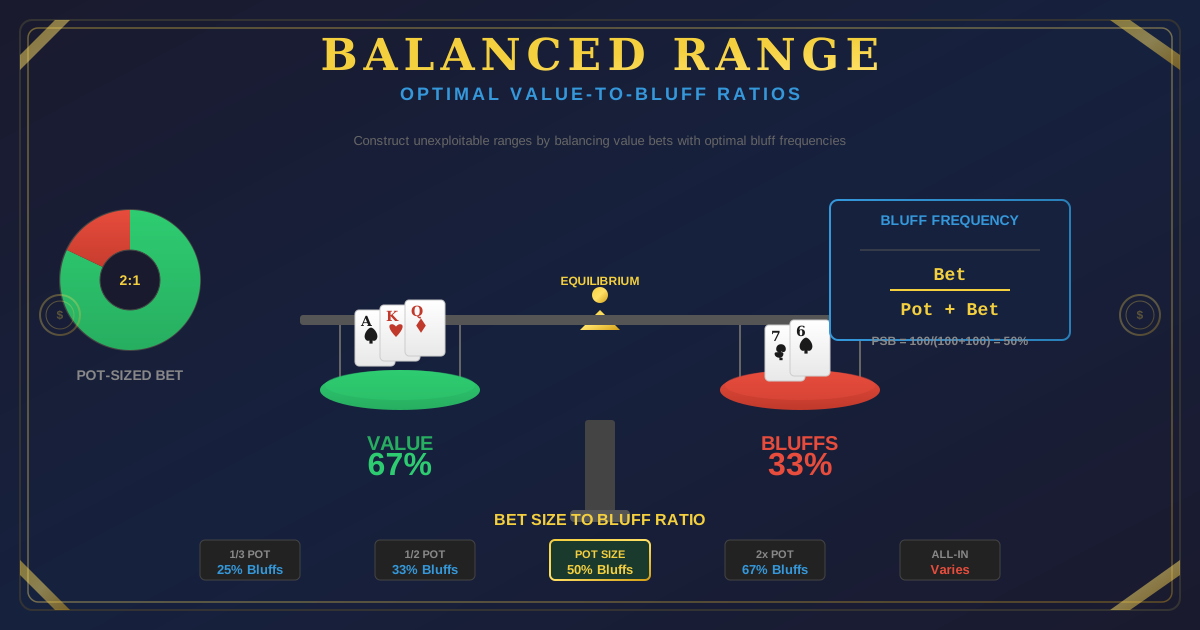
Balancing Your Ranges
Good players balance their ranges so opponents can't exploit them:
- Same action with different hand strengths
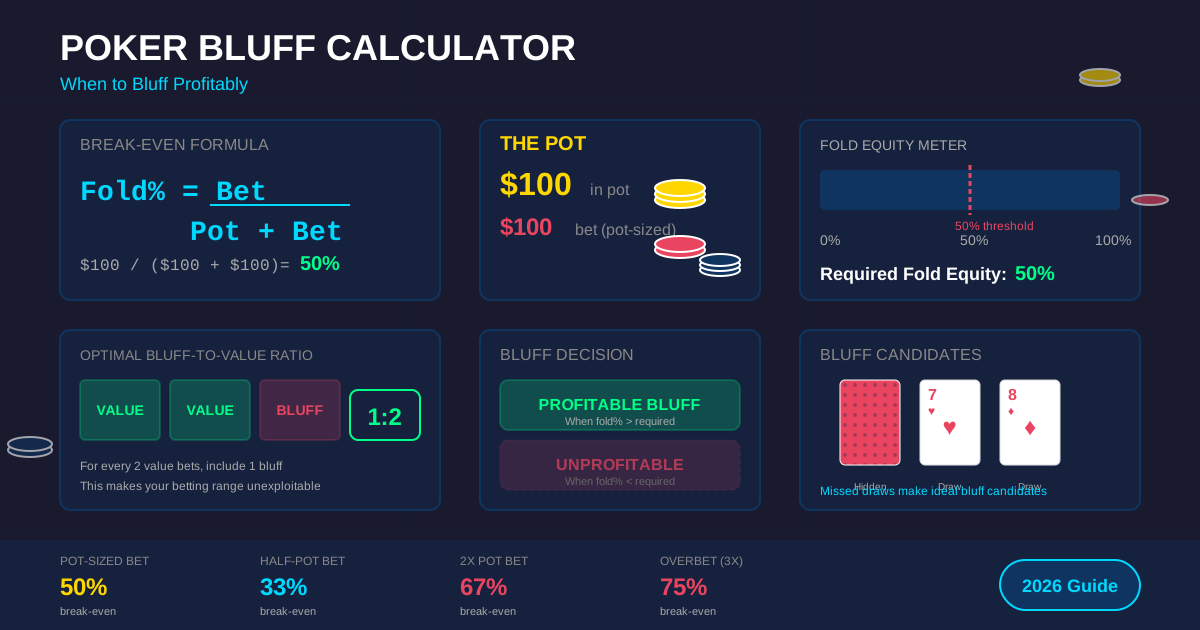
- Bluffs mixed with value at the right frequency
- Makes you difficult to play against
Common Range Mistakes
-
Hand-Reading Instead of Range-Reading: Putting opponents on exact hands is rarely accurate. Always think in ranges.
-
Static Ranges: Ranges change on every street based on actions. Update continuously.
-
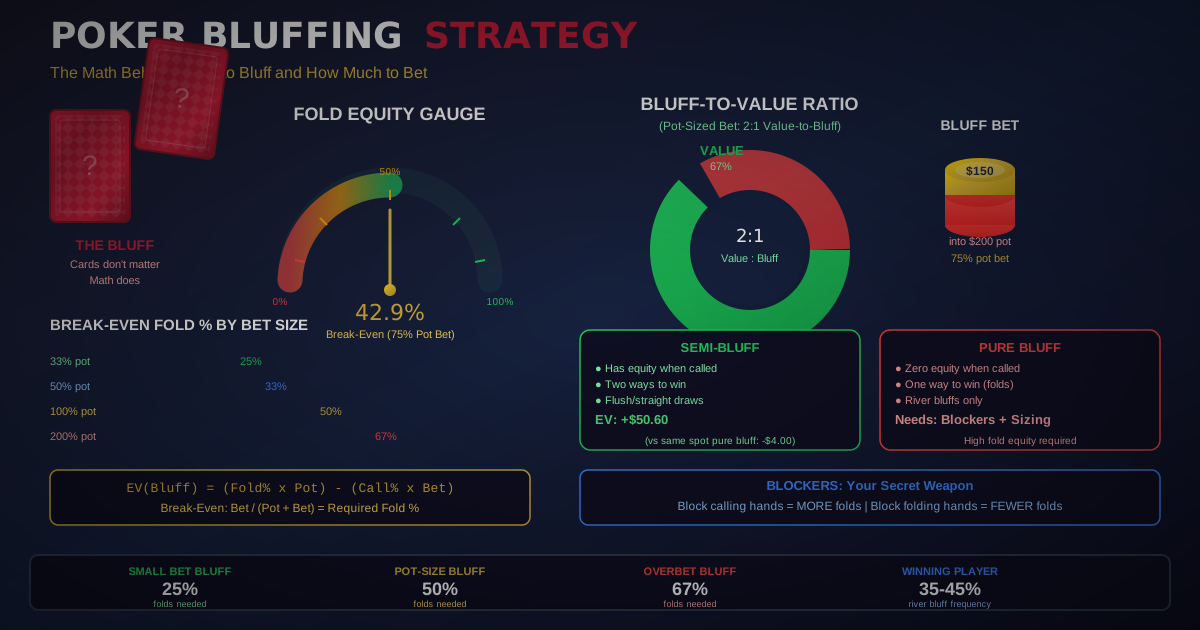
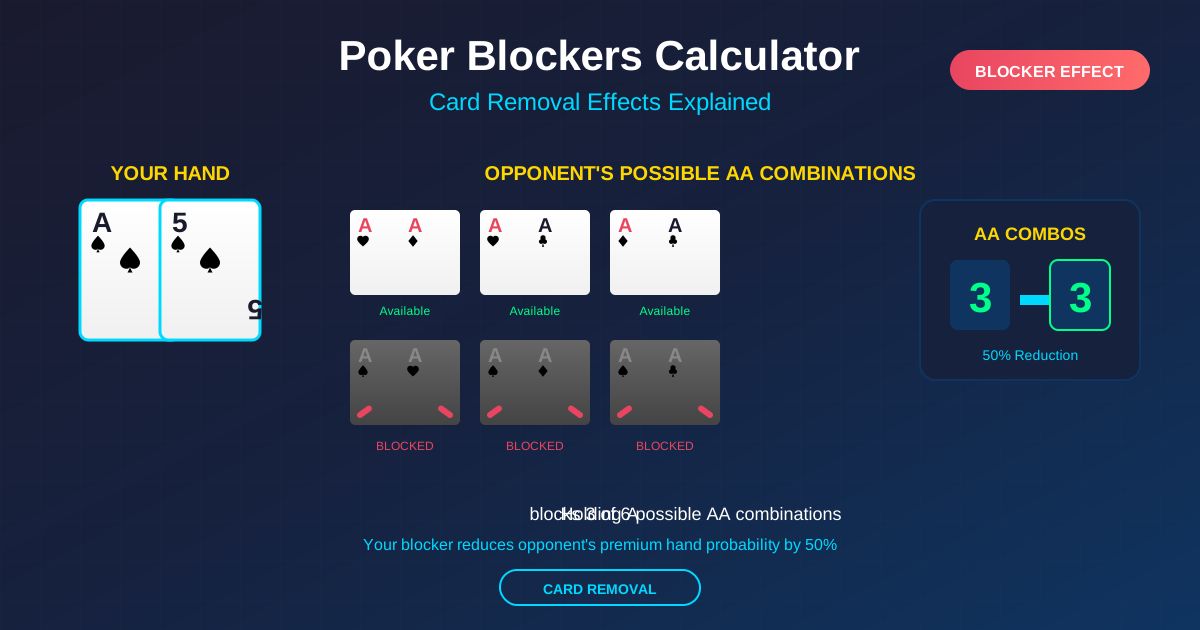
Ignoring Blockers: Your cards remove combinations from opponent's range. Account for this.
-
Symmetric Ranges: Opponents' ranges vary widely by position and player type. Don't assume everyone has the same range.
-
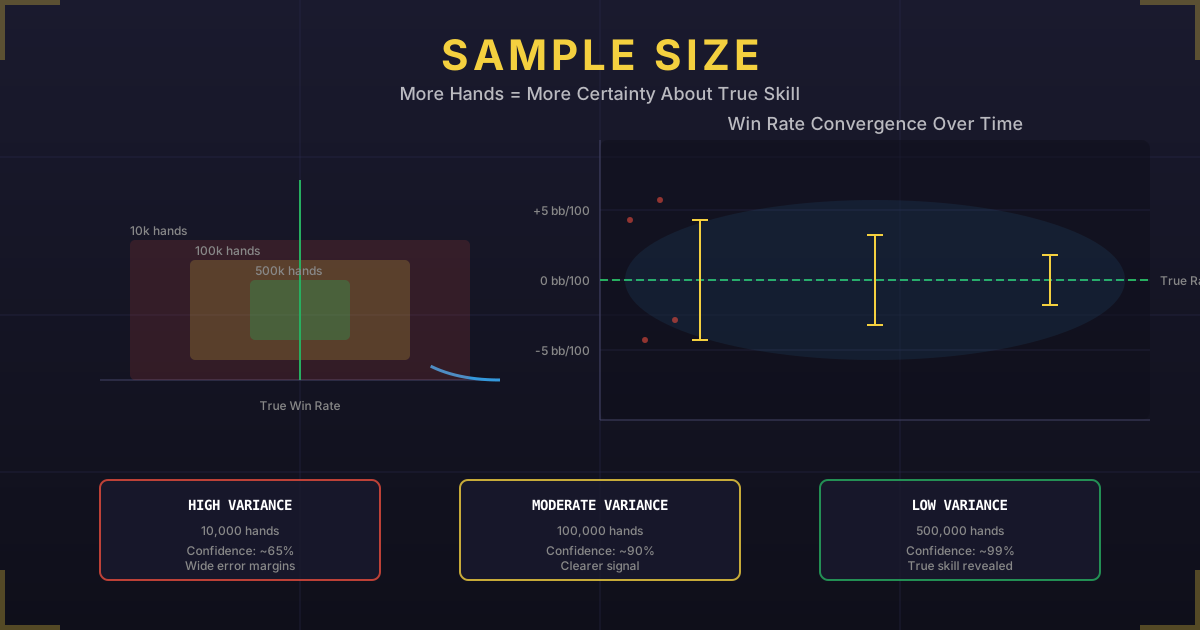
Results-Oriented Thinking: Opponent showed a surprising hand once? Don't over-adjust. Sample size matters.
Frequently Asked Questions
How do I know opponent's range?
Observe their patterns:
- What hands do they show down?
- How often do they open, 3-bet, call?
- Player type (tight, loose, passive, aggressive)?
Build ranges based on statistics and observations.
Should I balance my ranges?
Against good players, yes—balance protects you from exploitation. Against recreational players, exploit their weaknesses even if unbalanced.
How accurate are range calculators?
They calculate equity perfectly given the ranges you input. The skill is constructing accurate ranges—that's on you.
What are blockers?
Blockers are cards you hold that reduce opponents' possible holdings. Holding A♠ blocks AA and AK combinations.
How do I practice range reading?
- Review hands and assign ranges at each decision point
- Use tracking software range reports
- Study solver outputs to see optimal ranges
- Practice with our calculator
Do pros think in exact ranges?
Experienced players have internalized standard ranges and adjust intuitively. They don't calculate every combo—but their intuition is built on range analysis.
Advanced Range Concepts
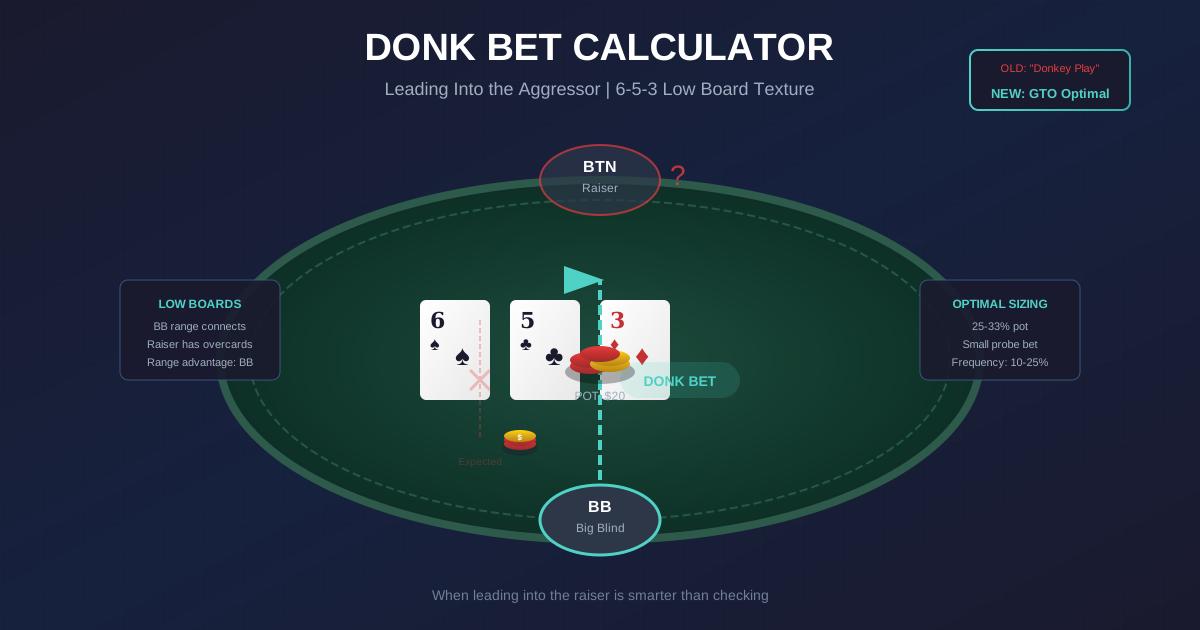
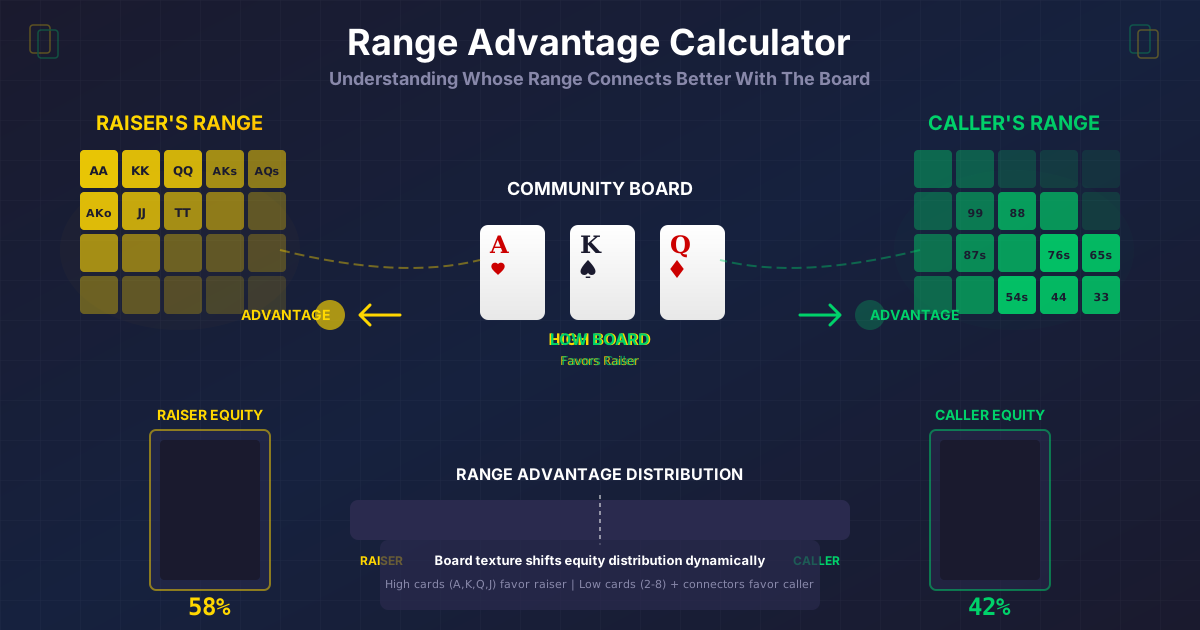
Range Advantage
The player whose range contains more strong hands has "range advantage." This affects:
- Who should bet more often
- Who should check more often
- Optimal bet sizing
Nut Advantage
The player who can have more "nut" hands (the best possible hands) has nut advantage. Important for:
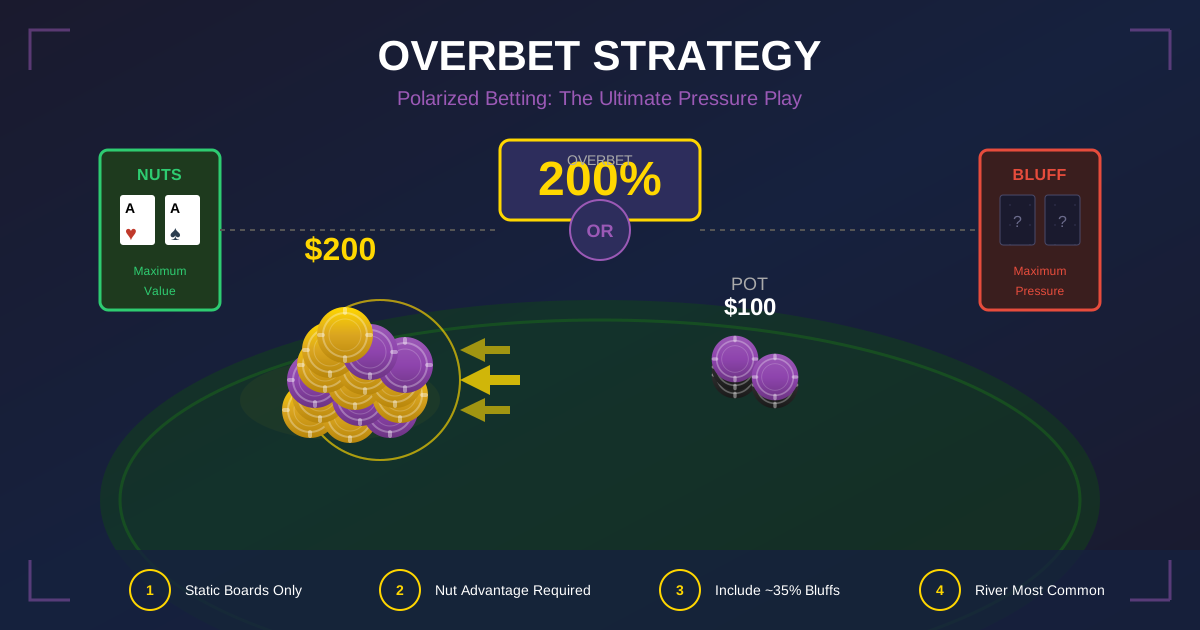
- Large bet sizing
- Polarized betting strategies
Equity Distribution
How evenly equity is distributed across your range:
- Condensed: Most hands have similar equity
- Polarized: Hands are very strong or very weak
- Affects betting frequency and sizing
Pro Tips for Range Analysis
-
Start simple: Master standard ranges before adjusting
-
Use presets: Load standard ranges, then modify
-
Consider all streets: Ranges narrow as hands progress
-
Blockers matter: Your cards affect what opponents can have
-
Practice constantly: Range reading improves with repetition
Related Poker Calculators
- Poker Equity Calculator - Hand vs. hand odds
- Poker Odds Calculator - Outs and drawing odds
- Pot Odds Calculator - Calling decisions
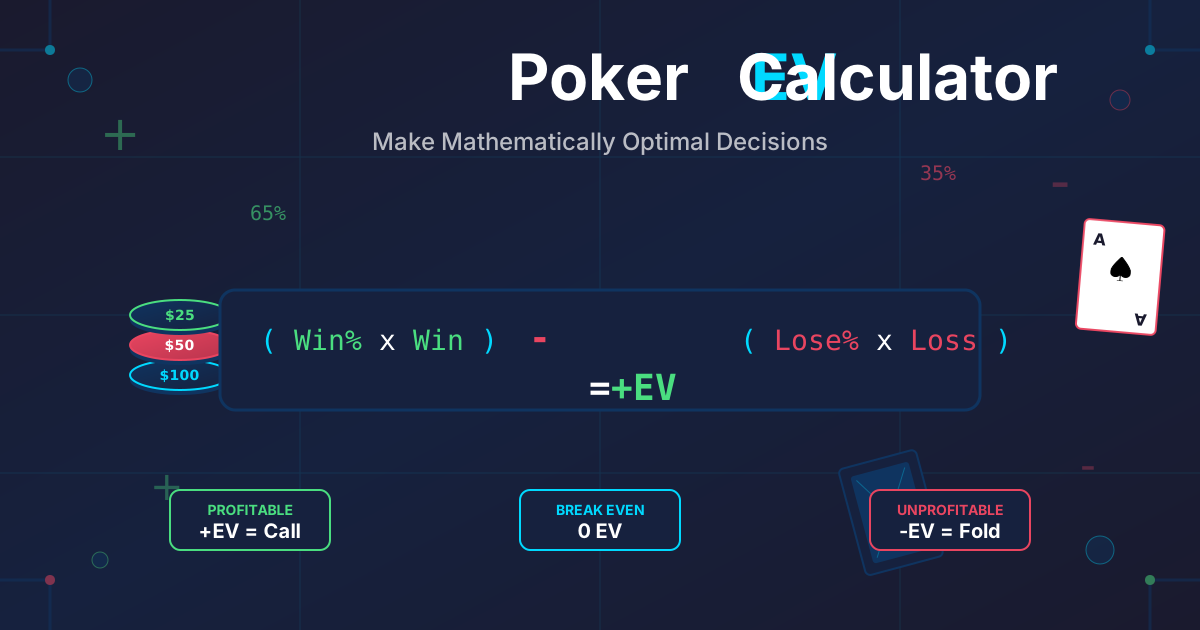
- Expected Value Calculator - Decision analysis
- ICM Calculator - Tournament ranges
Conclusion
Thinking in ranges is the foundation of modern poker strategy. Our free calculator helps you visualize ranges, calculate equity against them, and make better decisions. Stop guessing what opponents have—start analyzing what they could have.
Build and Analyze Poker Ranges Now →
Range analysis transforms poker from guesswork into mathematics. Master this skill, and you'll understand the game at a deeper level than most opponents.