Poker Variance Calculator: Understand Your Swings (2026)
Poker Variance Calculator: Prepare for the Swings
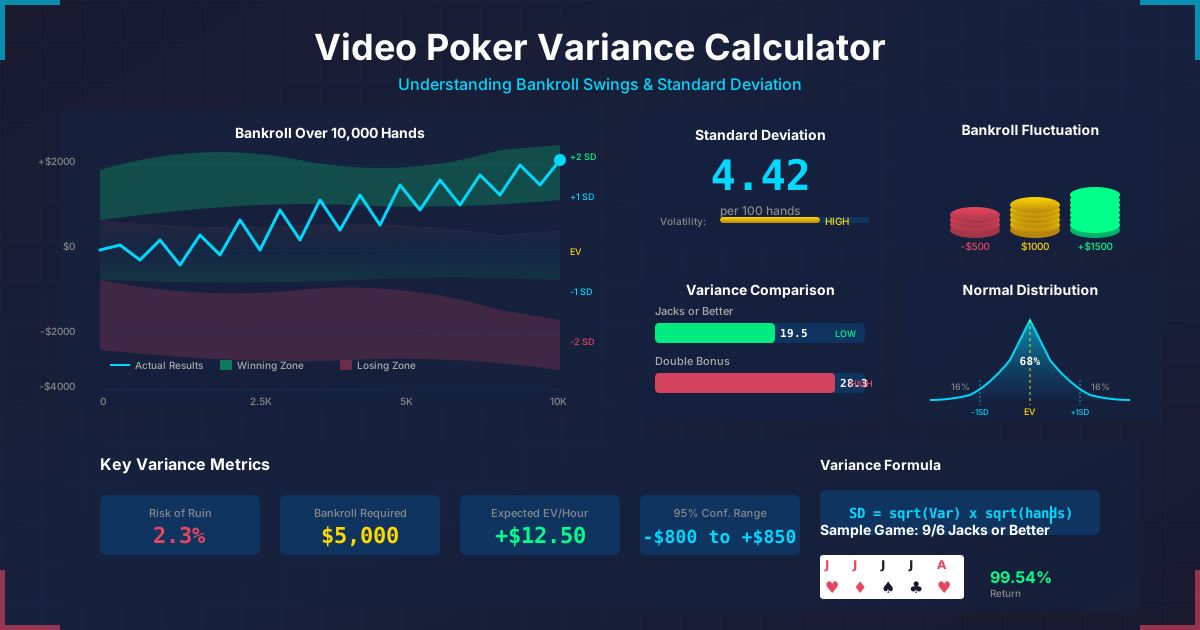
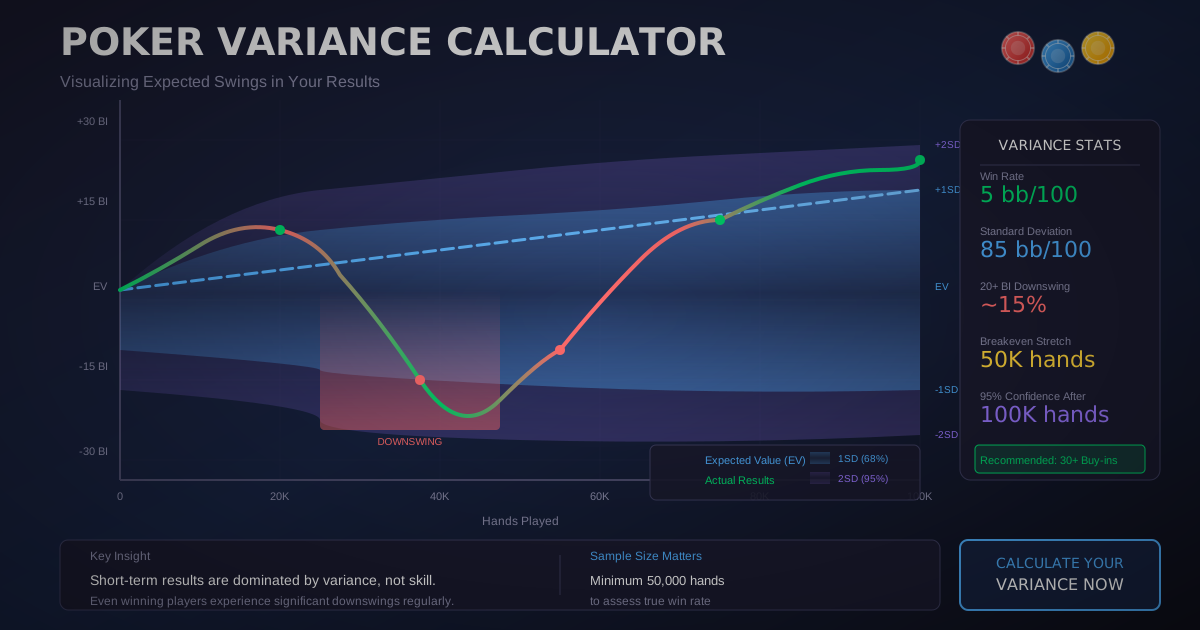
Poker variance is why winning players lose sessions and losing players win them. Our free variance calculator simulates thousands of outcomes based on your win rate and standard deviation, showing exactly what swings to expect—so you're mentally and financially prepared.
What Is Poker Variance?
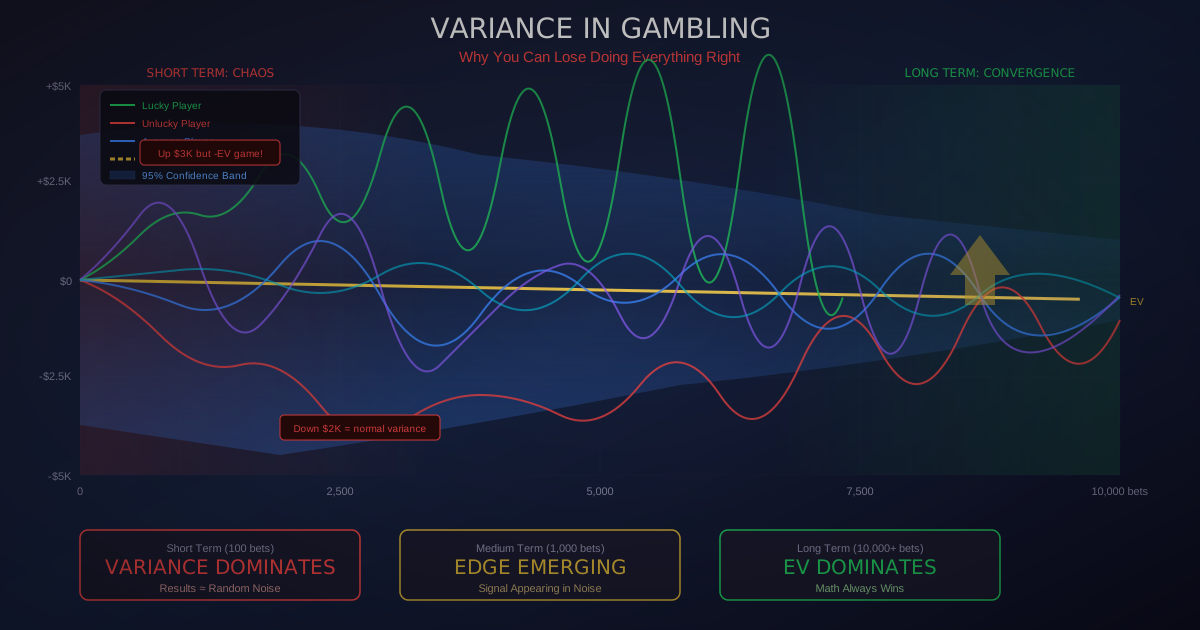
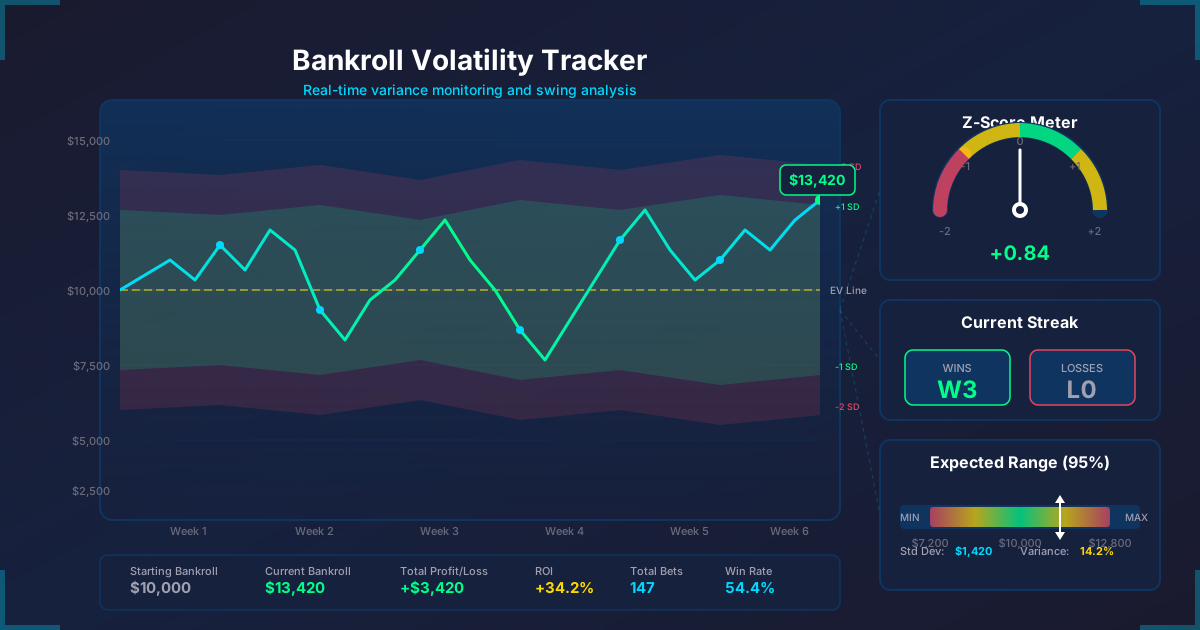
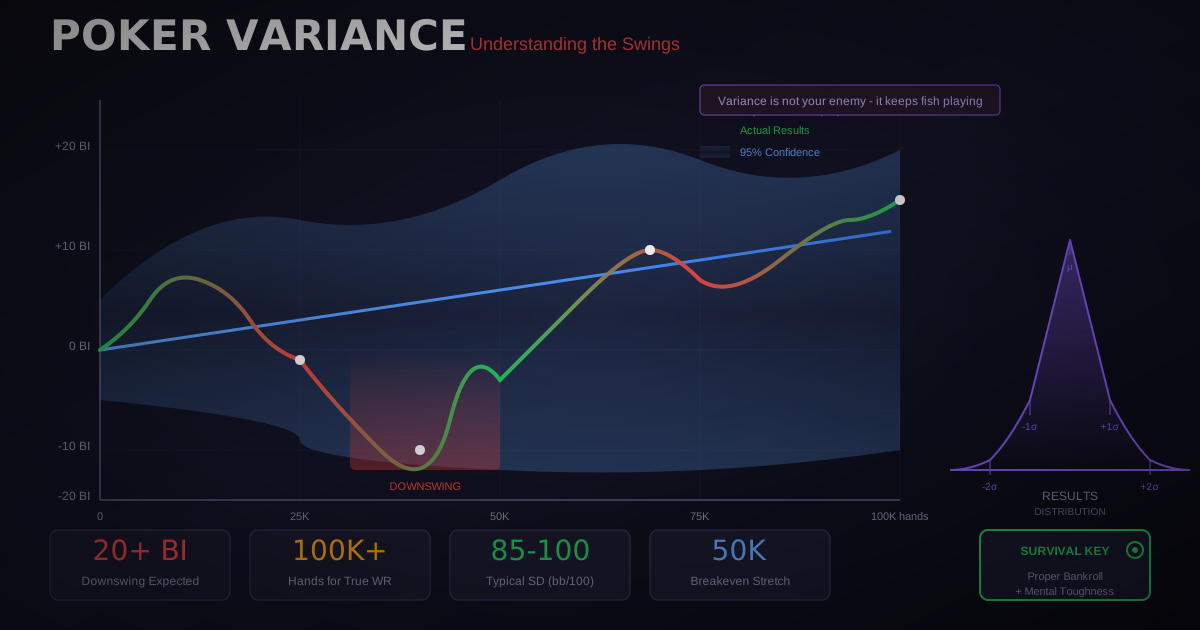
Variance measures how much your results deviate from your expected value. Even with a positive win rate, short-term results can vary wildly from expectation.
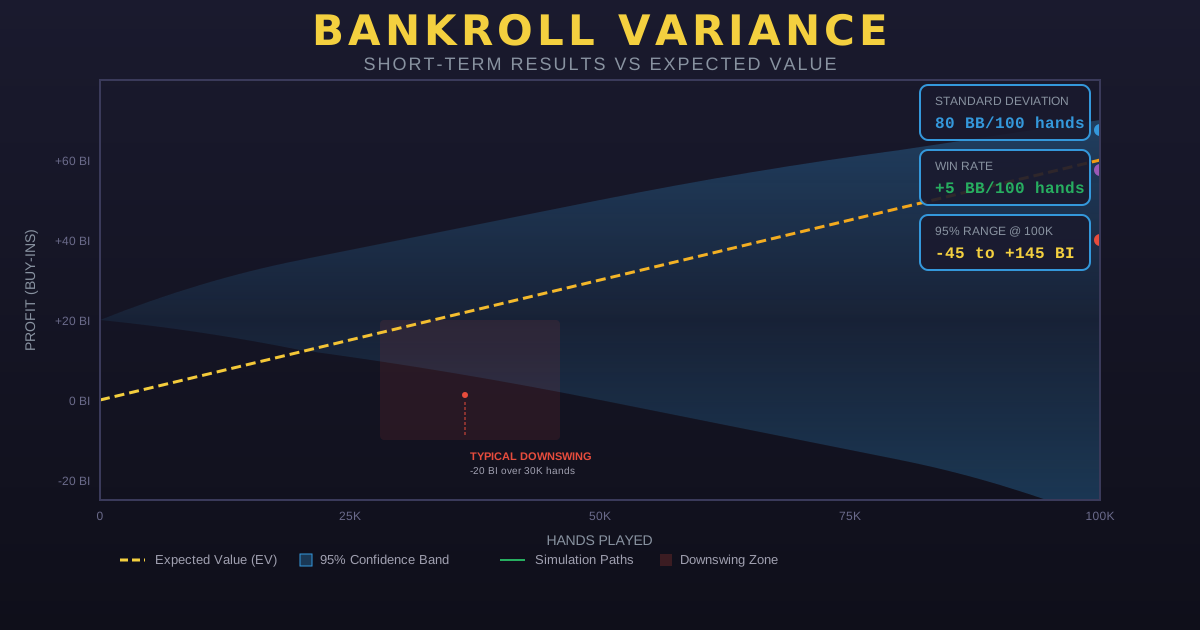
Quick Answer: A winning player with 5 bb/100 win rate and 80 bb/100 standard deviation will experience 30+ buy-in downswings in their career—this is mathematically expected, not bad luck. Our calculator shows the realistic range of outcomes for your specific situation.
How to Use Our Free Poker Variance Calculator
Use the Poker Variance Calculator →
Enter your win rate and hands to see the full range of expected results.
Step-by-Step Instructions
-
Enter Win Rate: Your bb/100 (big blinds per 100 hands)
-
Enter Standard Deviation: Typical is 70-100 bb/100 for NLHE
-
Input Number of Hands: Sample size to simulate
-
View Results: See confidence intervals and downswing probabilities
Input Fields Explained
| Field | Description | Example |
|---|---|---|
| Win Rate | bb/100 earned | 5 bb/100 |
| Standard Deviation | Typical variance | 80 bb/100 |
| Hands | Sample to simulate | 100,000 |
| Buy-Ins | Stack size in bb | 100 bb |
Understanding Standard Deviation
Typical Standard Deviation by Game Type
| Game Type | Standard Deviation (bb/100) |
|---|---|
| NL Hold'em (Full Ring) | 70-85 |
| NL Hold'em (6-max) | 85-100 |
| NL Hold'em (Heads-Up) | 100-120 |
| PLO (6-max) | 120-160 |
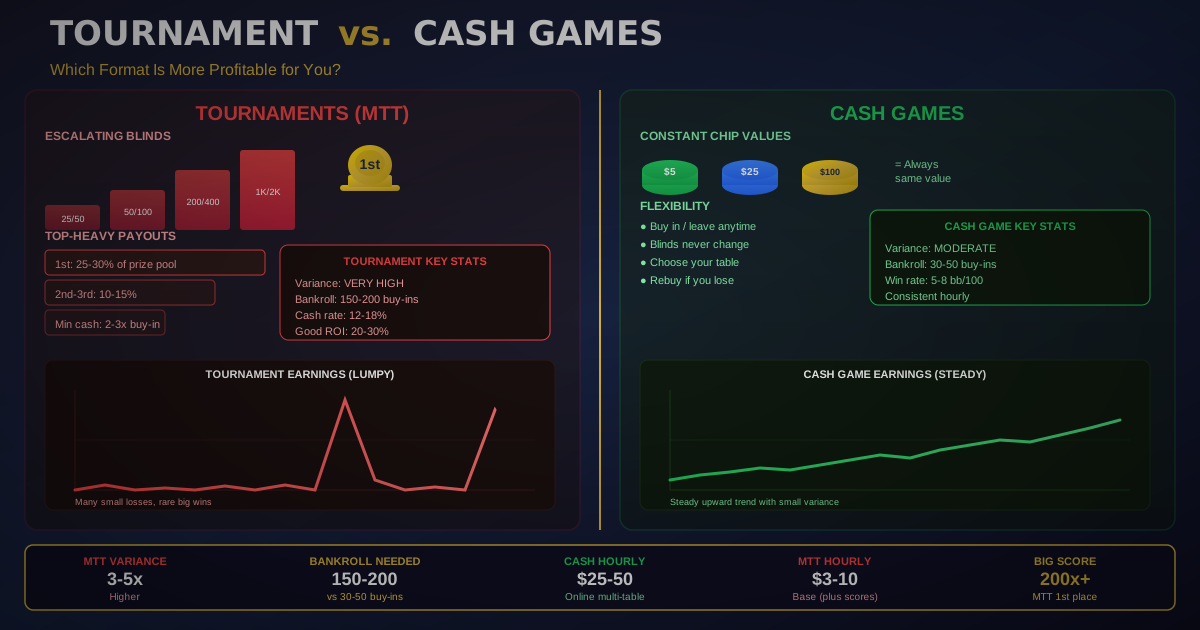
| Tournaments | 150-200+ |
Higher standard deviation = bigger swings from expected results.
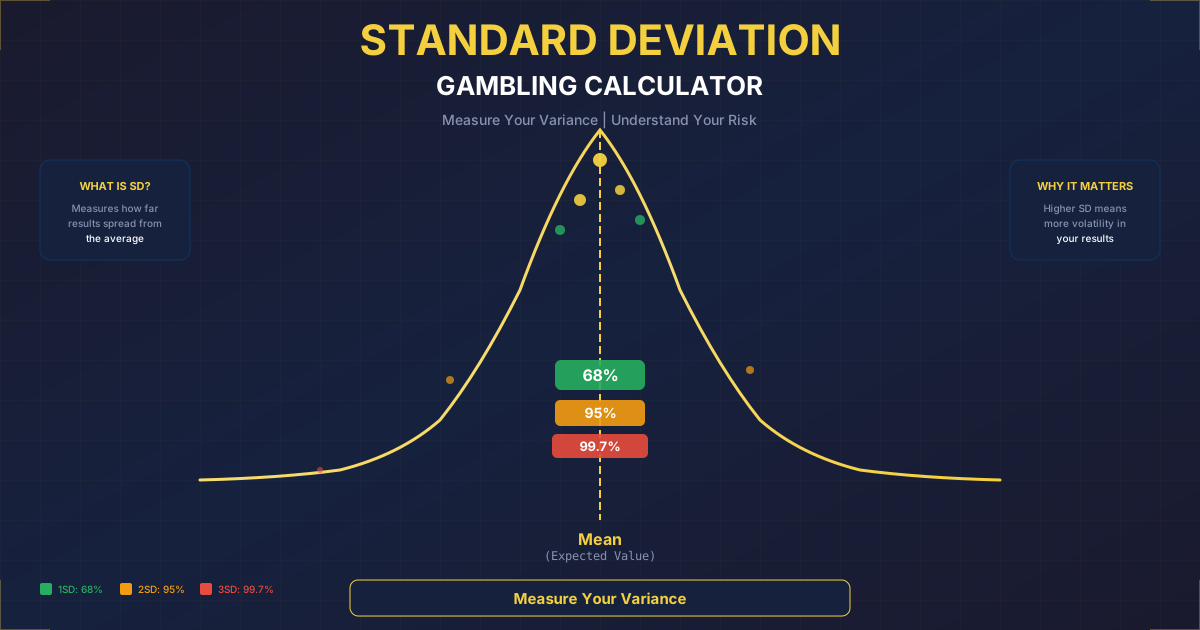
What Standard Deviation Means
If your SD is 80 bb/100:
- 68% of 100-hand sessions fall within ±80 bb of your EV
- 95% fall within ±160 bb
- 99.7% fall within ±240 bb
Variance Simulation Results
Confidence Intervals
For a 5 bb/100 winner over 100,000 hands:
| Confidence Level | Result Range (bb) |
|---|---|
| 70% | +2,500 to +7,500 |
| 95% | +500 to +9,500 |
| 99% | -1,000 to +11,000 |
Even at 99% confidence, a winning player can be down 10 buy-ins after 100,000 hands.
Expected Downswings
| Hands Played | Likely Max Downswing (5 bb/100 winner) |
|---|---|
| 25,000 | 15-20 buy-ins |
| 50,000 | 20-25 buy-ins |
| 100,000 | 25-35 buy-ins |
| 500,000 | 35-50 buy-ins |
These aren't worst-case scenarios—they're probable occurrences.
Real-World Variance Examples
Example 1: New Player Reality Check
Situation: You've played 10,000 hands and are down 5 buy-ins. Did you run bad or play bad?
Calculator Input:
- Assumed win rate: 2 bb/100 (new player at micro stakes)
- Standard deviation: 80 bb/100
- Hands: 10,000
Results:
- Expected value: +200 bb (+2 buy-ins)
- 95% confidence range: -340 bb to +740 bb
- Being down 5 buy-ins is within normal variance
Conclusion: At 10,000 hands, you can't determine if you're a winner or loser. Variance dominates.
Example 2: Breakeven Frustration
Situation: You're a 3 bb/100 winner over 50,000 hands but currently breakeven.
Calculator Analysis:
- Expected profit: 1,500 bb (15 buy-ins)
- 95% range: -300 bb to +3,300 bb
- Breakeven is well within normal variance
Reality: Even skilled players run at or below expectation for tens of thousands of hands. Patience is required.
Example 3: "Running Hot" Assessment
Situation: 8 bb/100 over 20,000 hands. Are you crushing it or running good?
Calculator Input:
- Observed win rate: 8 bb/100
- Standard deviation: 80 bb/100
- Hands: 20,000
Analysis:
- True win rate confidence interval is very wide
- Could be a 2 bb/100 player running hot
- Could be a 14 bb/100 crusher playing normally
- Need 50,000+ hands to narrow confidence interval
The Math Behind Variance
Standard Error Formula
Standard Error = SD / √(Hands / 100)
Example:
- SD: 80 bb/100
- Hands: 10,000
- SE = 80 / √100 = 8 bb/100
Your observed win rate is within ±8 bb/100 of true win rate (68% confidence).
95% Confidence Interval
CI = Win Rate ± (1.96 × Standard Error)
Example: 5 bb/100 ± (1.96 × 8) = 5 ± 15.7 bb/100
At 10,000 hands, a "5 bb/100 winner" could actually be anywhere from -10.7 to +20.7 bb/100.
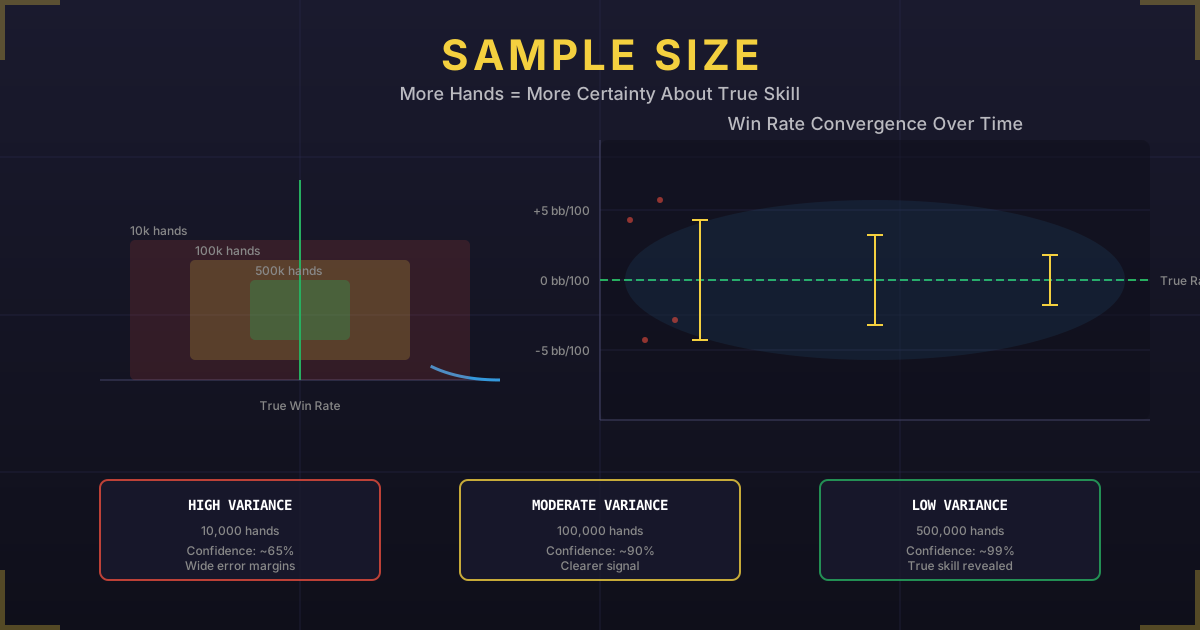
Hands Needed for Certainty
| Confidence in True Win Rate | Hands Needed |
|---|---|
| ±2 bb/100 | 60,000+ |
| ±1 bb/100 | 250,000+ |
| ±0.5 bb/100 | 1,000,000+ |
Knowing your true win rate requires enormous sample sizes.
Downswing Probability
Probability of Hitting X Buy-In Downswing
For a 5 bb/100 winner with 80 bb/100 SD:
| Downswing Size | Probability Over Career |
|---|---|
| 10 buy-ins | >95% |
| 20 buy-ins | ~80% |
| 30 buy-ins | ~50% |
| 40 buy-ins | ~25% |
| 50 buy-ins | ~10% |
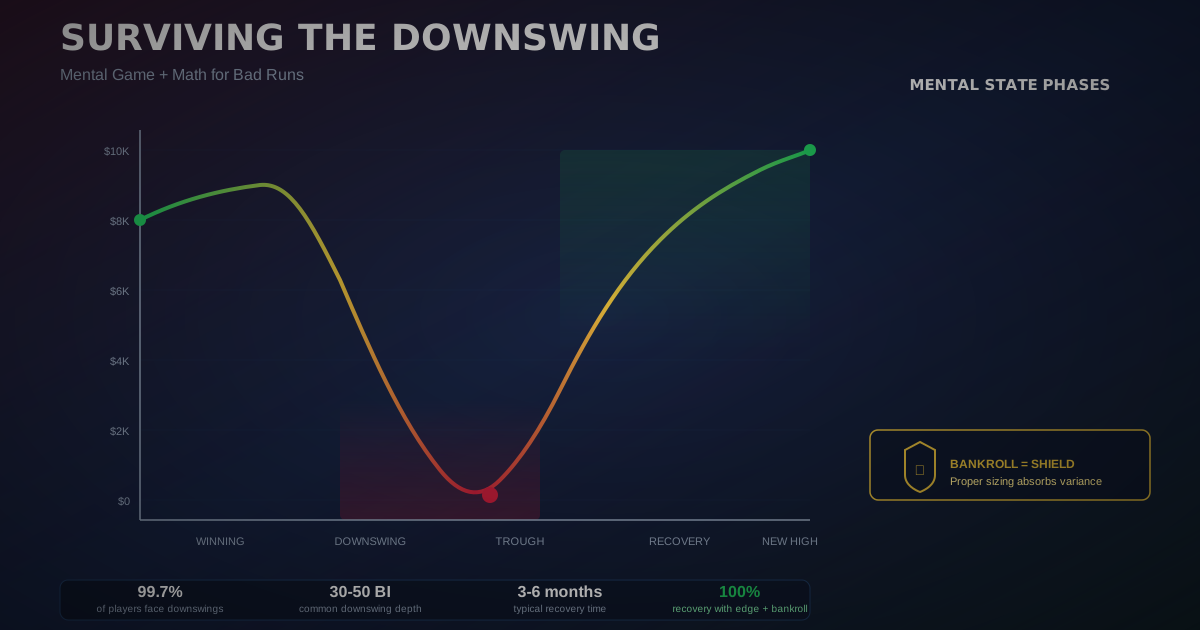
Key insight: 30 buy-in downswings happen to winning players. It's math, not luck.
Duration of Downswings
Downswings can last:
- Days at high volume
- Weeks at moderate volume
- Months at low volume
Mental preparation is as important as bankroll preparation.
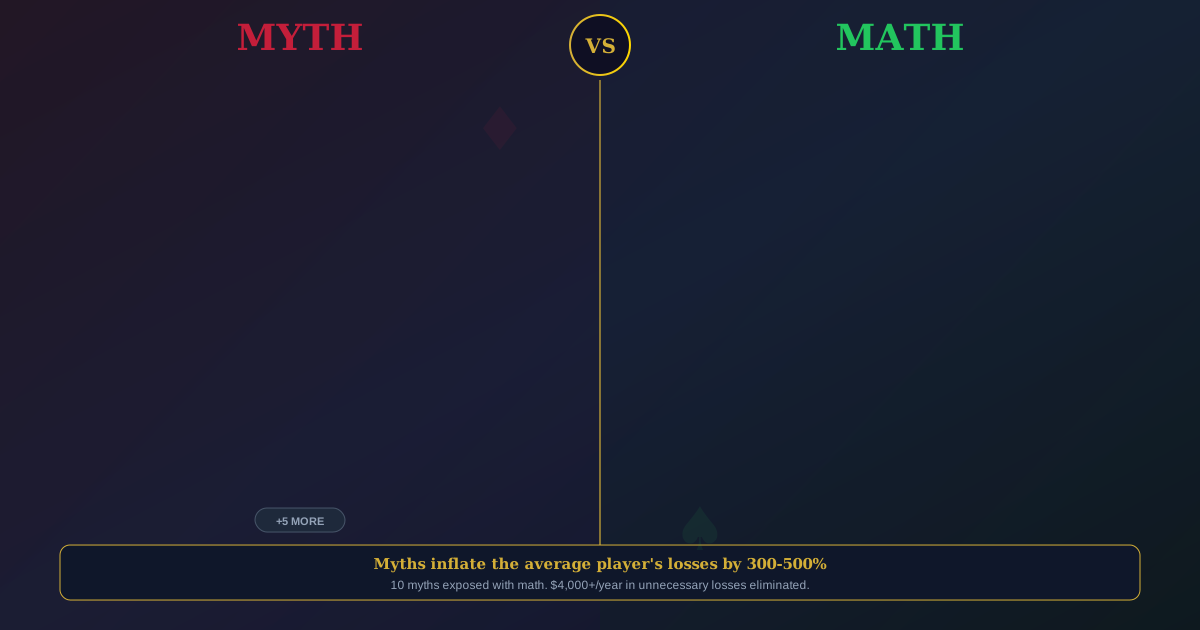
Common Variance Misconceptions
Myth 1: "I'm Due for a Heater"
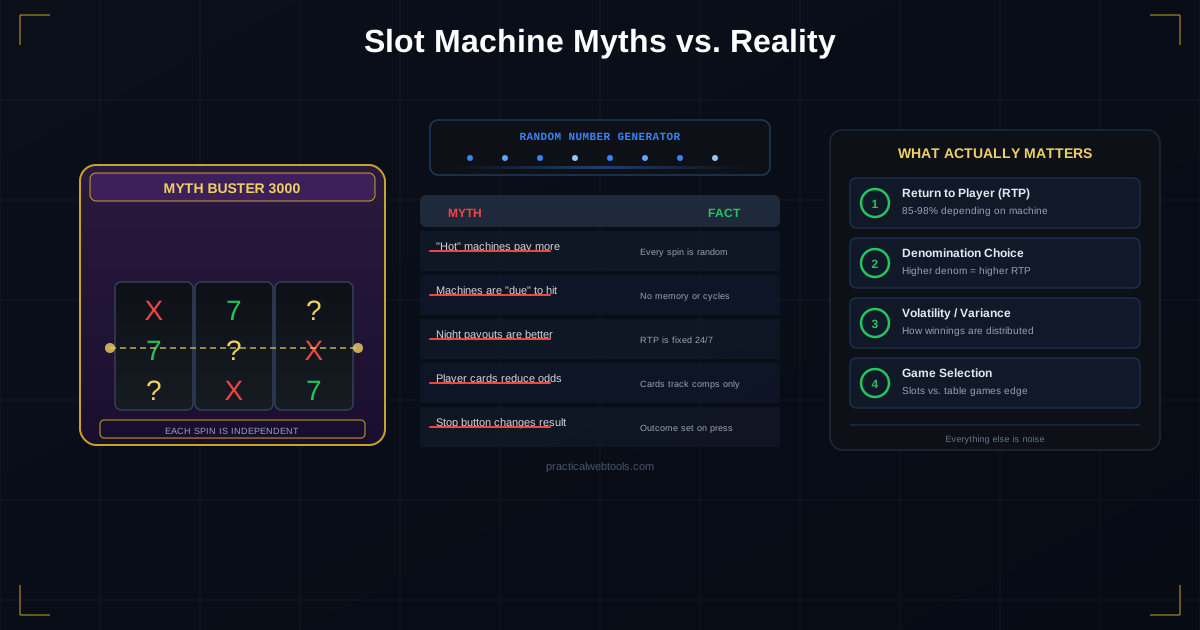
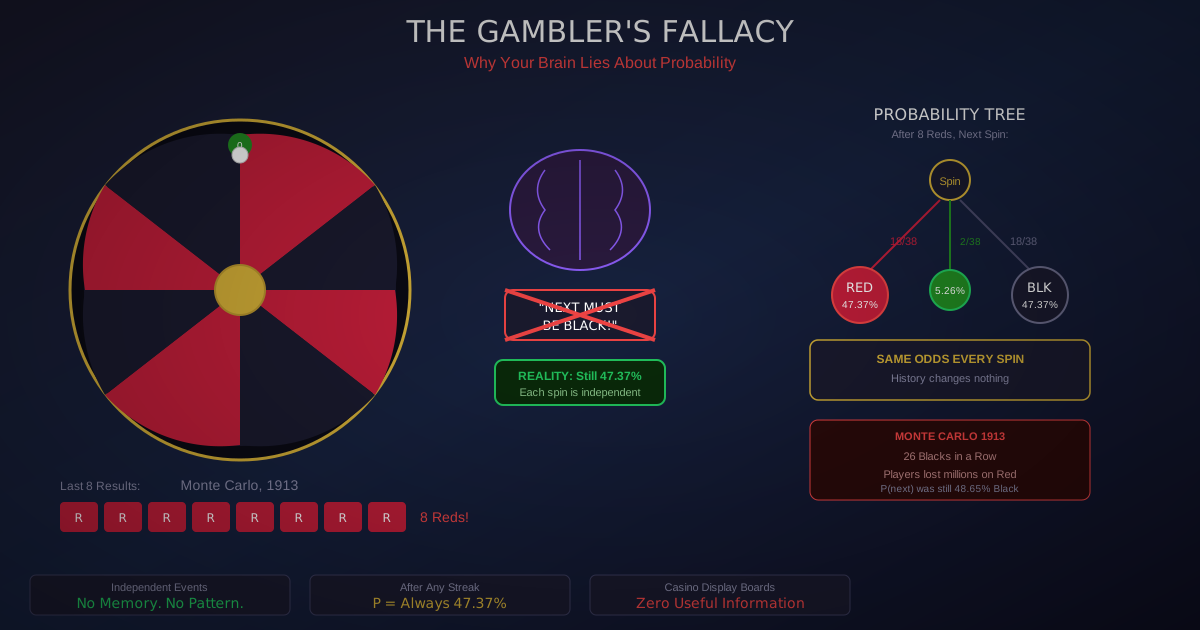
Each hand is independent. Past results don't affect future probability. If you've run bad, you're not "due"—variance doesn't have memory.
Myth 2: "I Run Worse Than Average"
Confirmation bias. Bad beats are memorable; winning coolers are forgotten. Track your results objectively to see reality.
Myth 3: "My Win Rate Is X Because I've Won X"
Observed results ≠ true win rate. You've experienced one sample from a probability distribution. The true rate requires massive samples to estimate.
Myth 4: "Downswings Shouldn't Happen to Good Players"
Downswings are mathematically certain for every player. Quality of play affects size and frequency, not existence.
Myth 5: "I Need to Change Something During Downswings"
Maybe, but probably not. Most downswings are variance, not leaks. Changing strategy during a downswing often makes things worse.
Frequently Asked Questions
How many hands until I know my win rate?
A rough estimate needs 50,000+ hands. Confidence within 1 bb/100 requires 250,000+ hands. Most players never reach true statistical significance.
What's a normal standard deviation?
For NL Hold'em cash: 75-100 bb/100. Higher for shorter stacks, PLO, or tournaments. Lower for tight players or full ring games.
Can I reduce variance?
Yes, through tighter play, avoiding marginal spots, and choosing lower-variance game types. But lower variance often means lower win rate too.
How do I handle variance mentally?
Focus on decisions, not results. Understand that downswings are expected. Have sufficient bankroll. Take breaks when tilting.
Is online variance different than live?
No, but you see more hands online, so you experience variance faster. Live feels smoother because you play fewer hands.
Should I move down during downswings?
If your bankroll requires it, yes. Moving down isn't failure—it's proper bankroll management protecting your ability to play.
Using Variance Data for Decisions
Bankroll Requirements
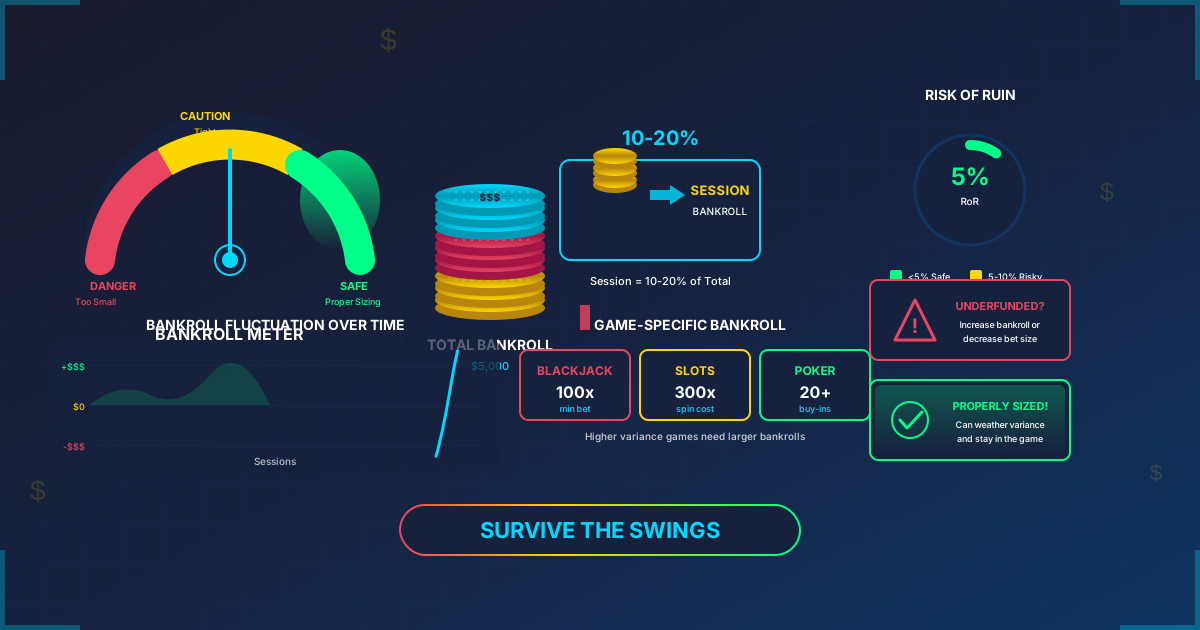
Variance calculator informs bankroll needs:
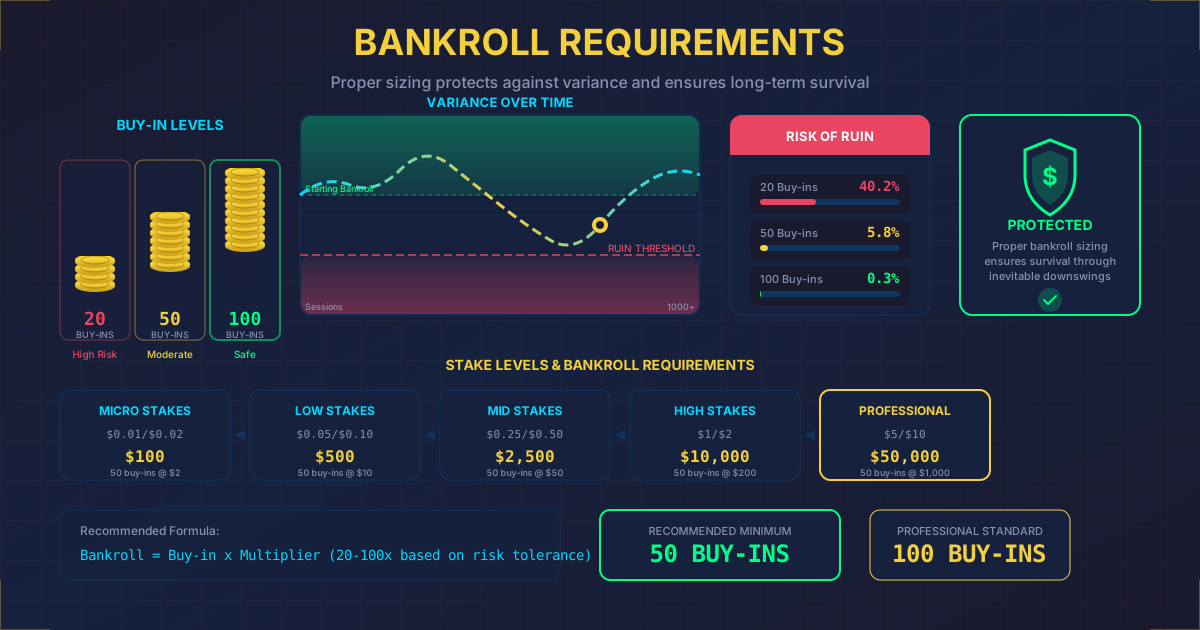
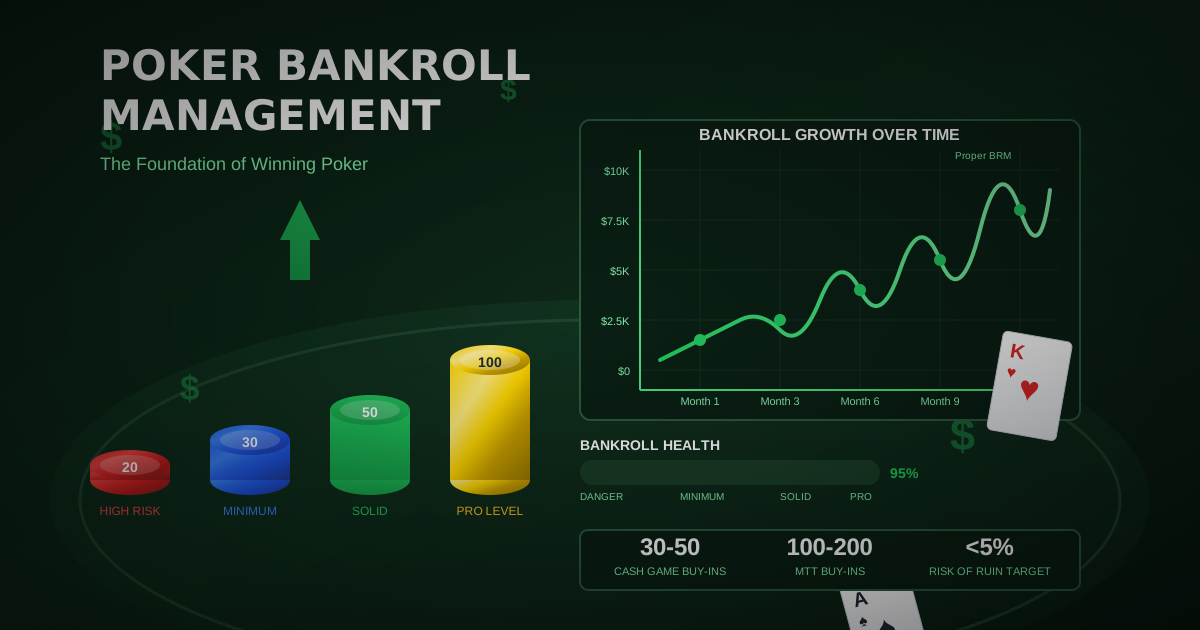
- 95% confidence of not busting = bankroll must exceed 95th percentile downswing
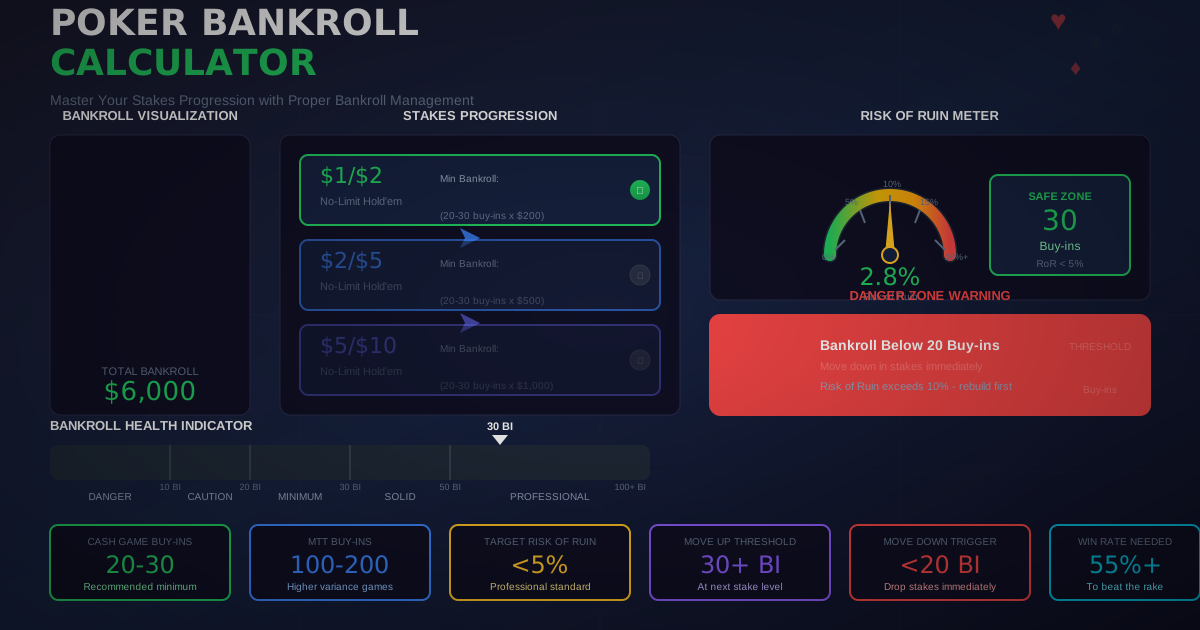
- For 5 bb/100 winner, 30 buy-ins gives ~5% risk of ruin
- More conservative players want 50+ buy-ins
When to Move Up Stakes
Don't move up after a heater—you might be experiencing positive variance. Move up when:
- Bankroll supports the new level
- Large sample confirms sustainable win rate
- You've beaten current stakes over extended period
Evaluating Your Play
Compare observed results to expected range:
- Results in middle of range: Likely playing near your true level
- Results at edge of range: Variance may be masking true ability
- Results outside range: Something unusual (good or bad) is happening
Pro Tips for Managing Variance
-
Track Everything: Use tracking software to build meaningful sample sizes
-
Focus on BB/100, Not Dollars: Normalizing results removes stake-based emotions
-
Review During Breakeven Stretches: Downswings are bad for analysis (results-oriented thinking). Breakeven is ideal.
-
Have Non-Poker Income: Reduces pressure that variance creates
-
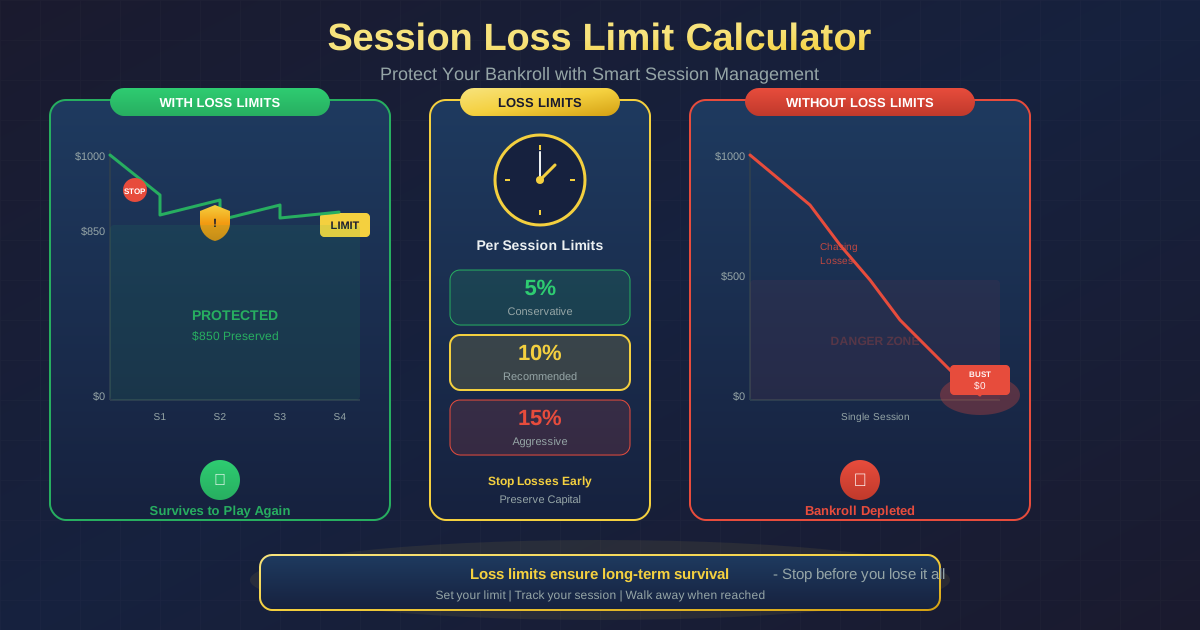
Set Stop-Loss Limits: Prevent tilt from turning normal downswings into disaster
Related Poker Calculators
- Poker Bankroll Calculator - Bankroll requirements
- Risk of Ruin Calculator - Bust probability
- Poker Equity Calculator - Hand odds
- Poker Hourly Rate Calculator - Expected earnings
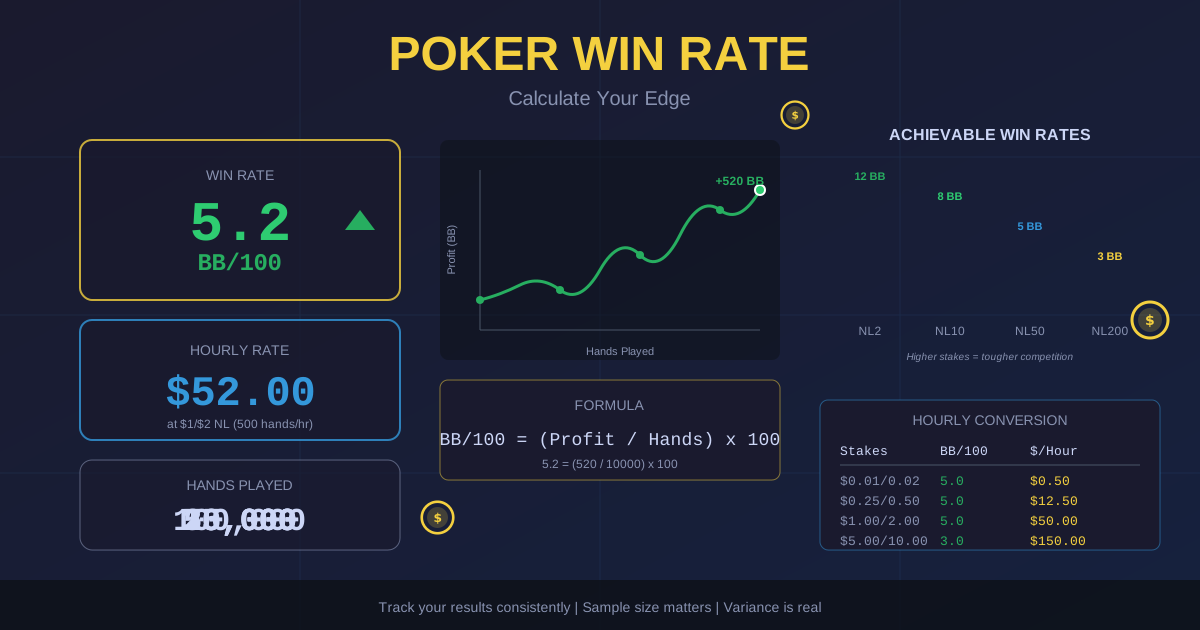
- Poker Win Rate Calculator - Results analysis
Conclusion
Variance is poker's great equalizer—it humbles winners and gives losers false hope. Our free calculator shows the mathematical reality of poker results, helping you understand that downswings are normal, heaters don't prove skill, and enormous sample sizes are needed to know your true ability.
Calculate Your Poker Variance Now →
Understanding variance transforms how you experience poker. Instead of riding an emotional rollercoaster, you'll see results as data points on a probability curve. That perspective is worth more than any strategy tip.