Roulette D'Alembert Calculator: The Gentle Progression System (2026)
Roulette D'Alembert Calculator: Slow and Steady Loses Less Fast
The D'Alembert system uses gentle progressions—raise one unit after losses, lower one unit after wins. Our calculator shows how this conservative approach plays out mathematically, why it's less volatile than Martingale, and why it still can't overcome the house edge.
What Is the D'Alembert System?
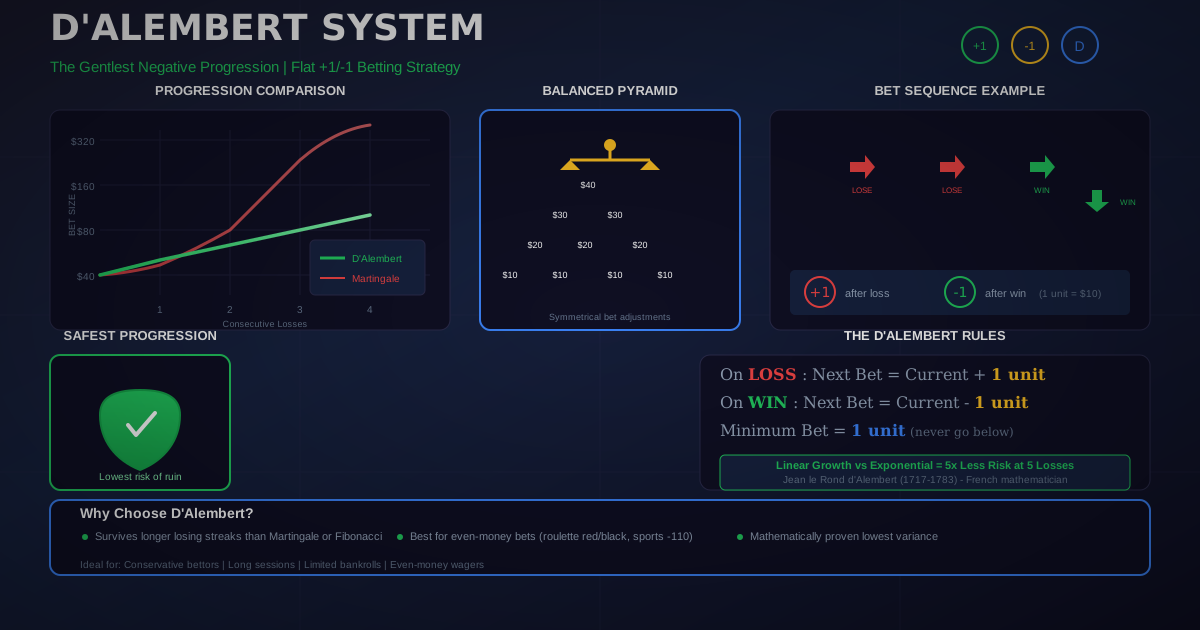
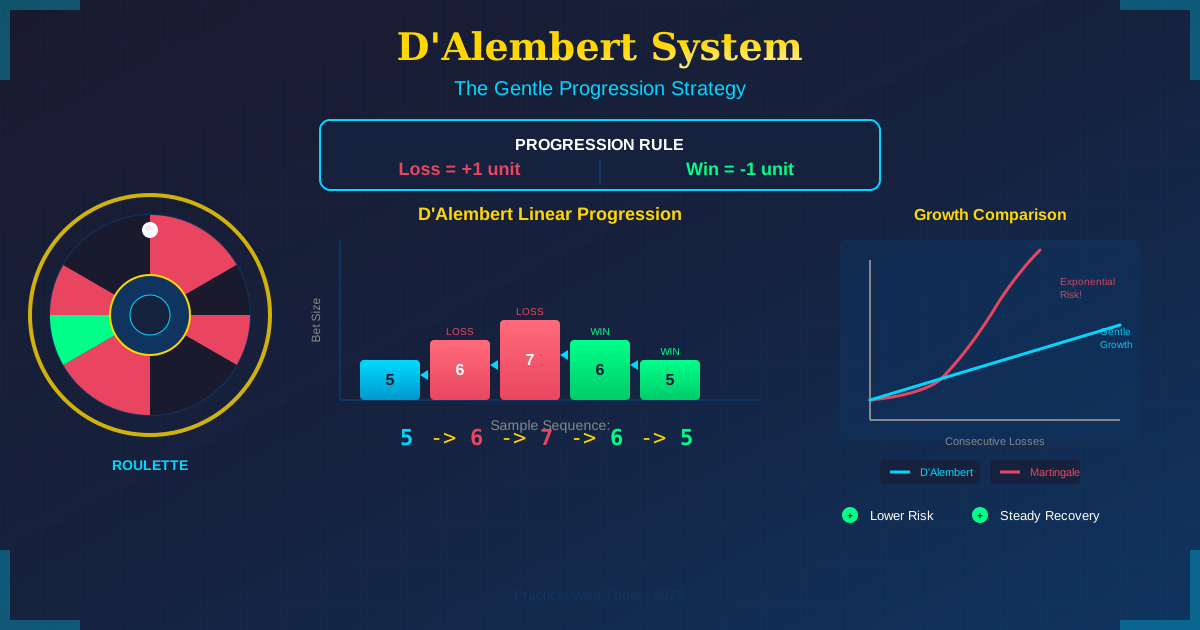
Named after French mathematician Jean le Rond d'Alembert, this system assumes wins and losses should balance out. After a loss, you increase your bet by one unit. After a win, you decrease by one unit. The progression is gradual compared to Martingale's aggressive doubling.
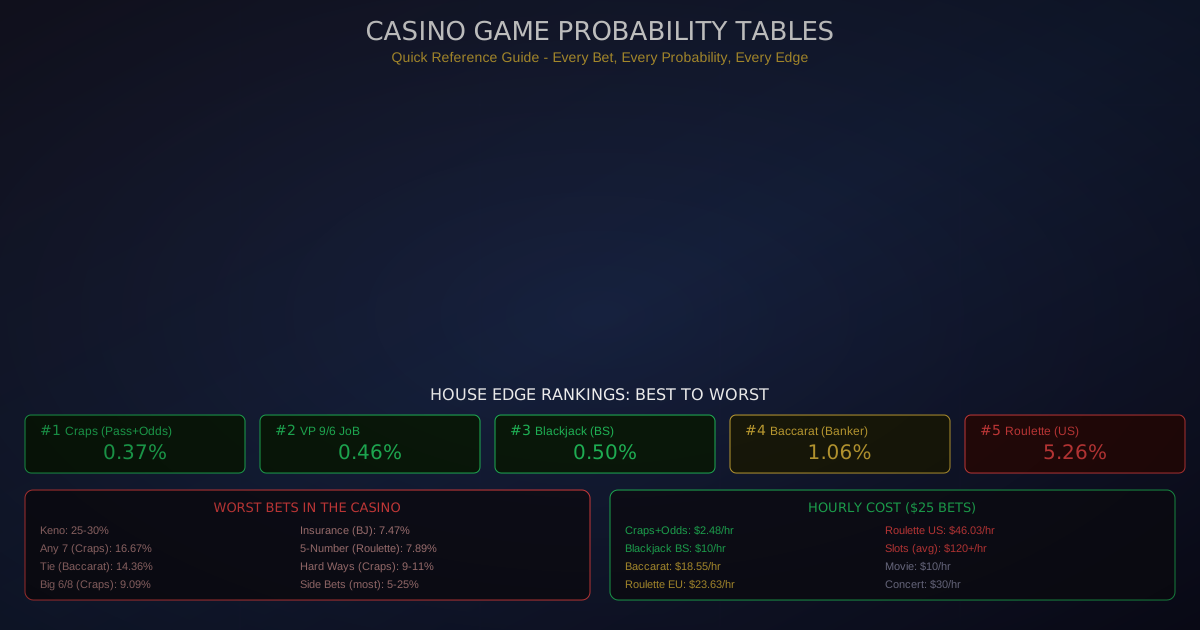
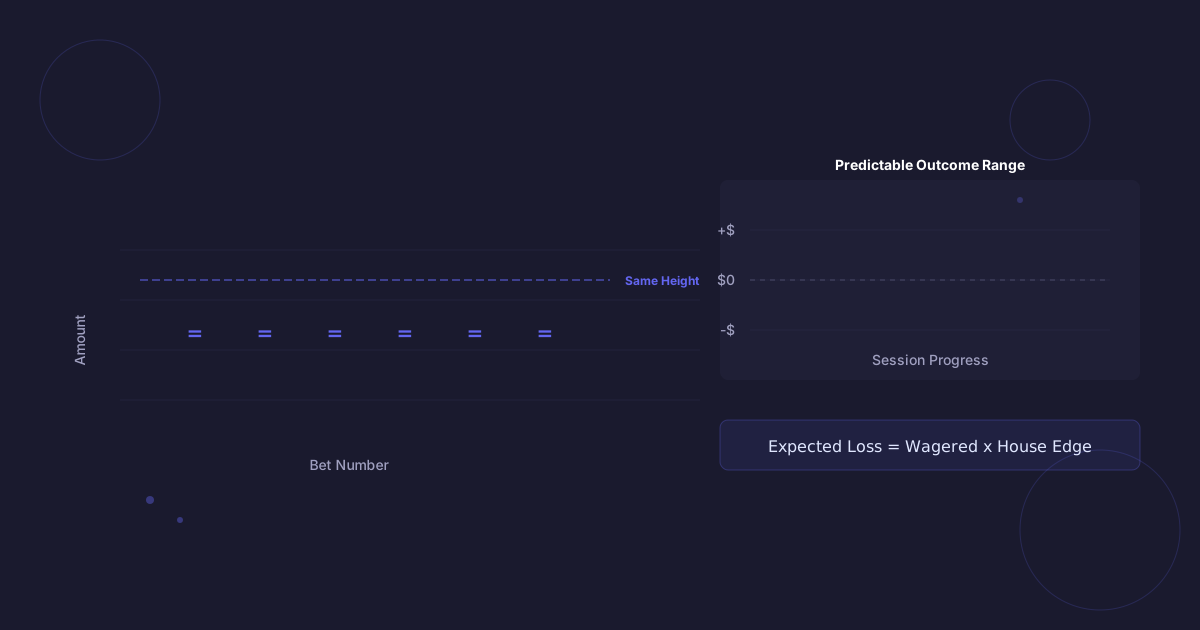
Quick Answer: D'Alembert increases bet by 1 unit after loss, decreases by 1 unit after win. Starting at 5 units: lose→6, lose→7, win→6, win→5. Unlike Martingale (double after loss), D'Alembert grows slowly. Expected loss still equals total wagered × house edge (2.70% European). You won't hit table limits quickly, but you can't overcome math. The system is psychologically gentler but mathematically identical in expected loss rate.
How to Use Our Calculator
Use the D'Alembert Calculator →
Enter starting parameters to simulate D'Alembert outcomes.
Step-by-Step Instructions
-
Set Base Unit: Your starting bet size
-
Enter Starting Bet: How many units to begin
-
Set Bankroll: Total gambling budget
-
Choose Sessions: Number of spins to simulate
-
View Results: Progression analysis
Input Fields Explained
| Field | Description | Example |
|---|---|---|
| Base Unit | Single unit value | $10 |
| Starting Bet | Initial bet in units | 5 units |
| Bankroll | Total budget | $1,000 |
| Number of Spins | Session length | 100 |
| Bet Type | Even money bet | Red/Black |
| Expected Loss | Mathematical expectation | $27 |
D'Alembert Mechanics
The Basic Rule
After LOSS: Add 1 unit
After WIN: Subtract 1 unit (minimum 1)

Example sequence (starting 5 units):
Spin 1: Bet 5, LOSE → Next bet 6
Spin 2: Bet 6, LOSE → Next bet 7
Spin 3: Bet 7, WIN → Next bet 6
Spin 4: Bet 6, WIN → Next bet 5
Spin 5: Bet 5, WIN → Next bet 4
Sample Progression
| Spin | Bet | Result | Profit/Loss | Cumulative | Next Bet |
|---|---|---|---|---|---|
| 1 | 5 | L | -5 | -5 | 6 |
| 2 | 6 | L | -6 | -11 | 7 |
| 3 | 7 | L | -7 | -18 | 8 |
| 4 | 8 | W | +8 | -10 | 7 |
| 5 | 7 | W | +7 | -3 | 6 |
| 6 | 6 | W | +6 | +3 | 5 |
Equal wins and losses = profit
Mathematical Analysis
The Equilibrium Assumption
D'Alembert's flawed assumption:
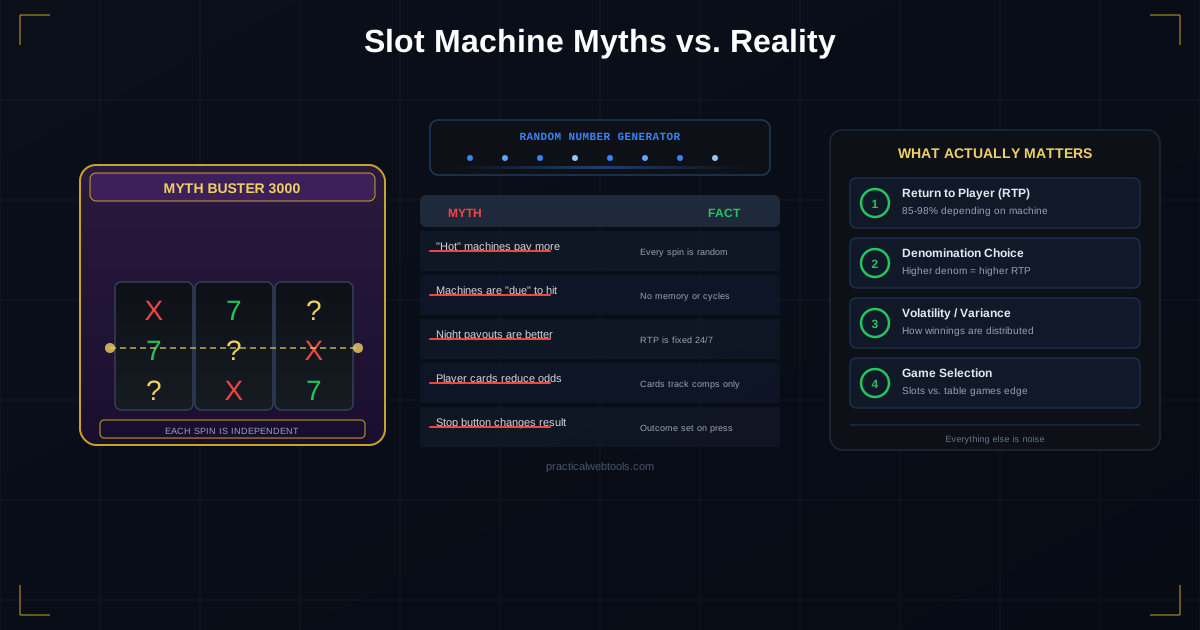
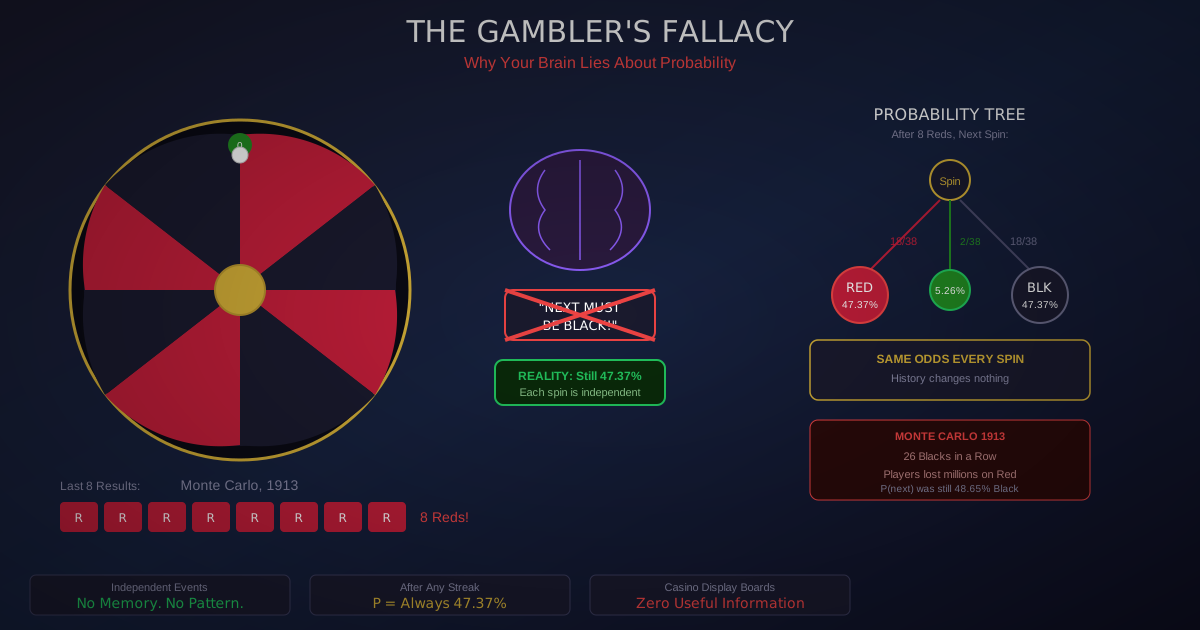
After losses, wins become more likely

Reality:
Each spin is independent
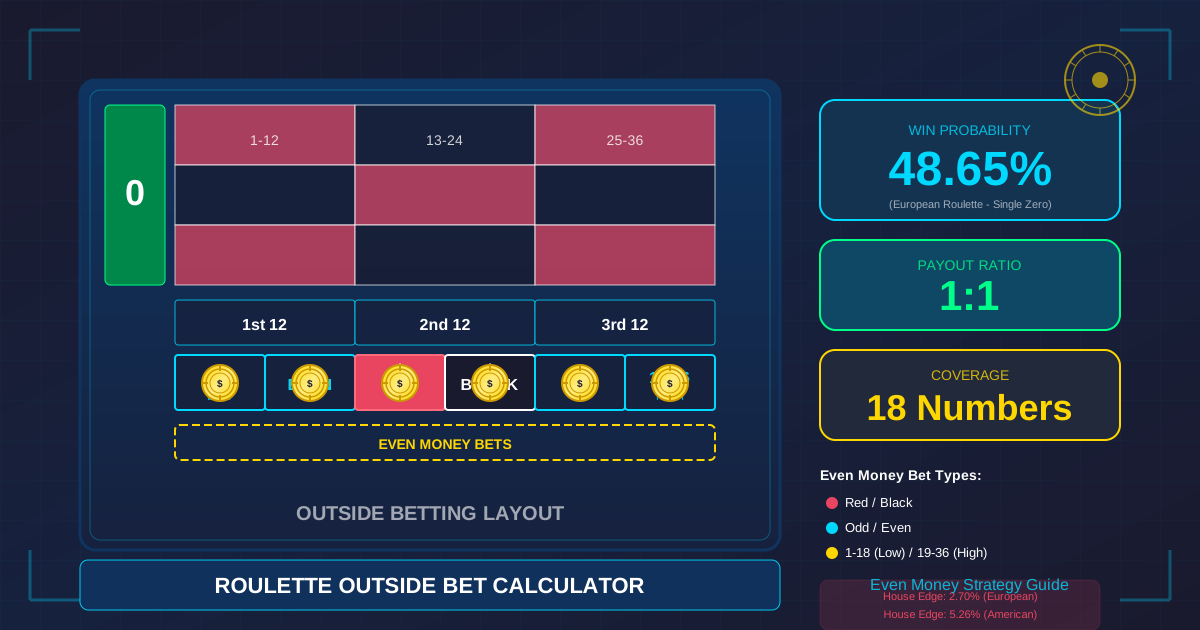
P(red) = 18/37 = 48.65% always
Previous results don't affect next spin
Why Equal Wins/Losses Profits
If you have N losses then N wins:
Total loss from increasing bets
Total win from decreasing bets

Example: Start 5, lose 3, win 3
Losses: 5 + 6 + 7 = 18
Wins: 8 + 7 + 6 = 21
Net: +3 units

But wins ≠ losses usually
And house edge accumulates
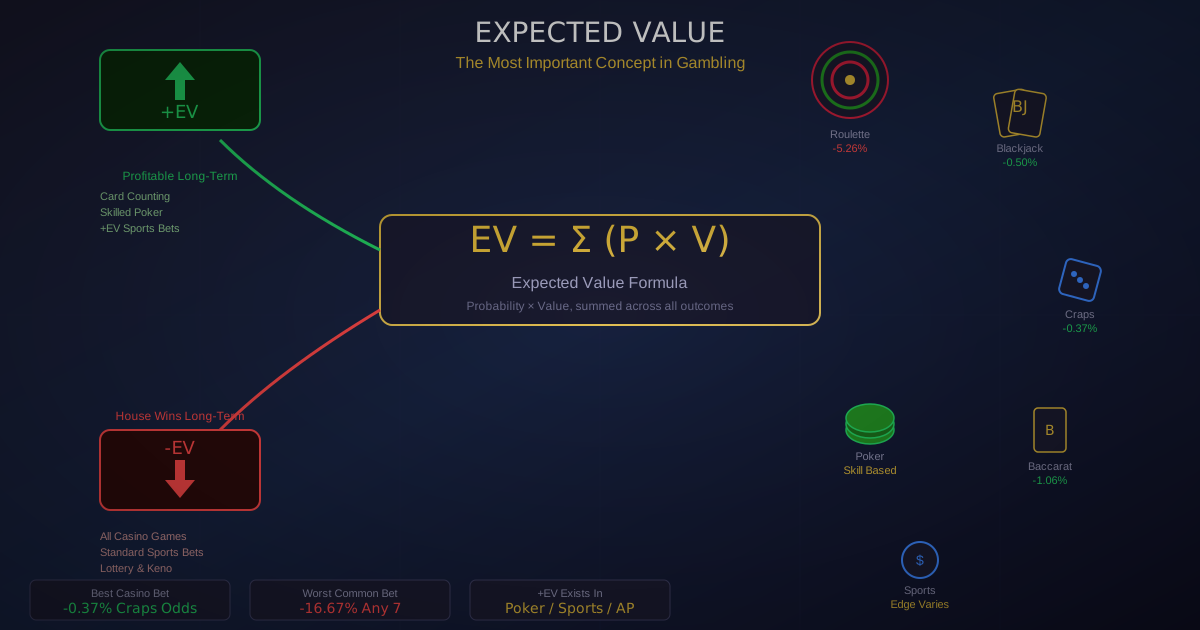
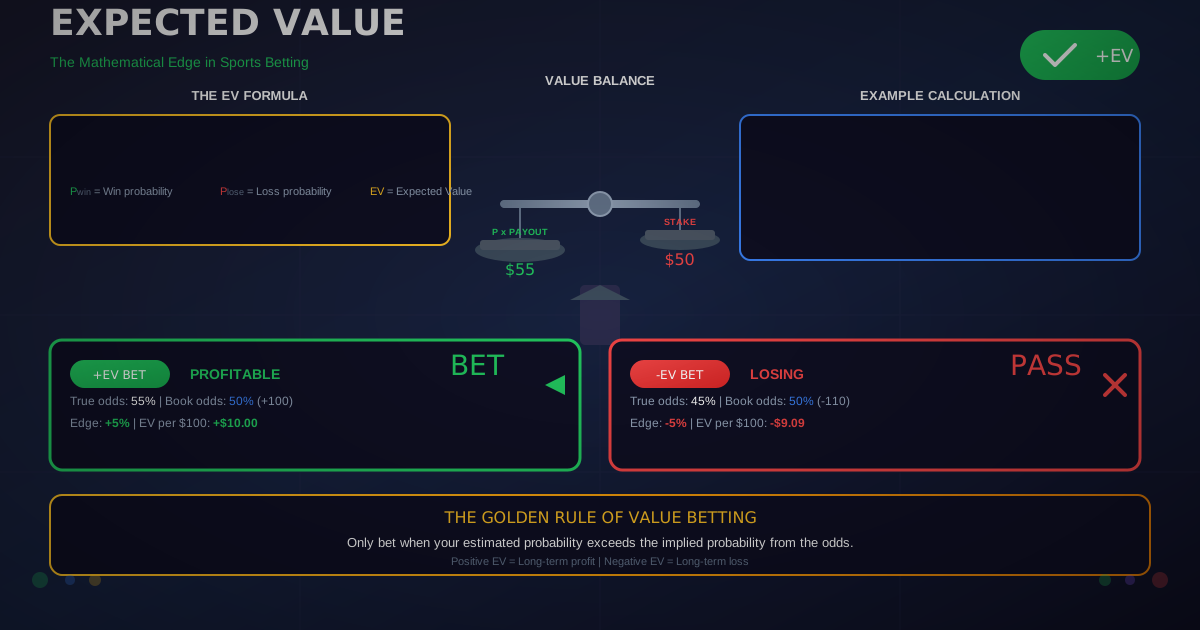
Expected Value Calculation
Every bet on red (European):
EV = (18/37 × 1) - (19/37 × 1) = -0.027

100 units wagered:
Expected loss = 100 × 0.027 = 2.7 units

D'Alembert doesn't change this
Just changes bet sizing pattern
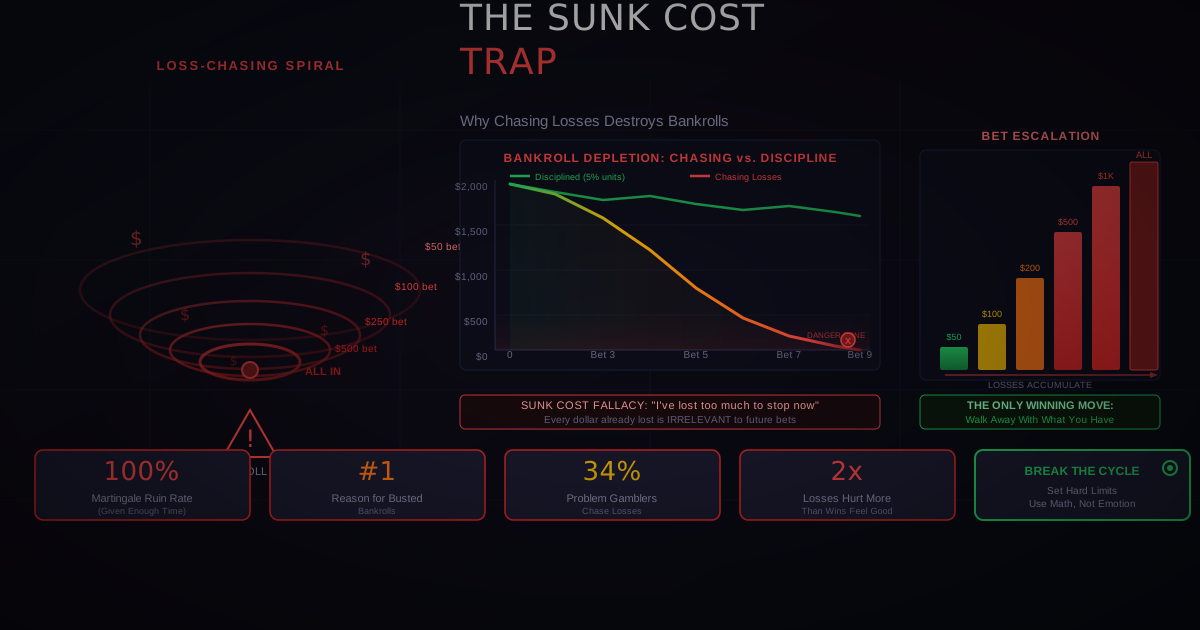
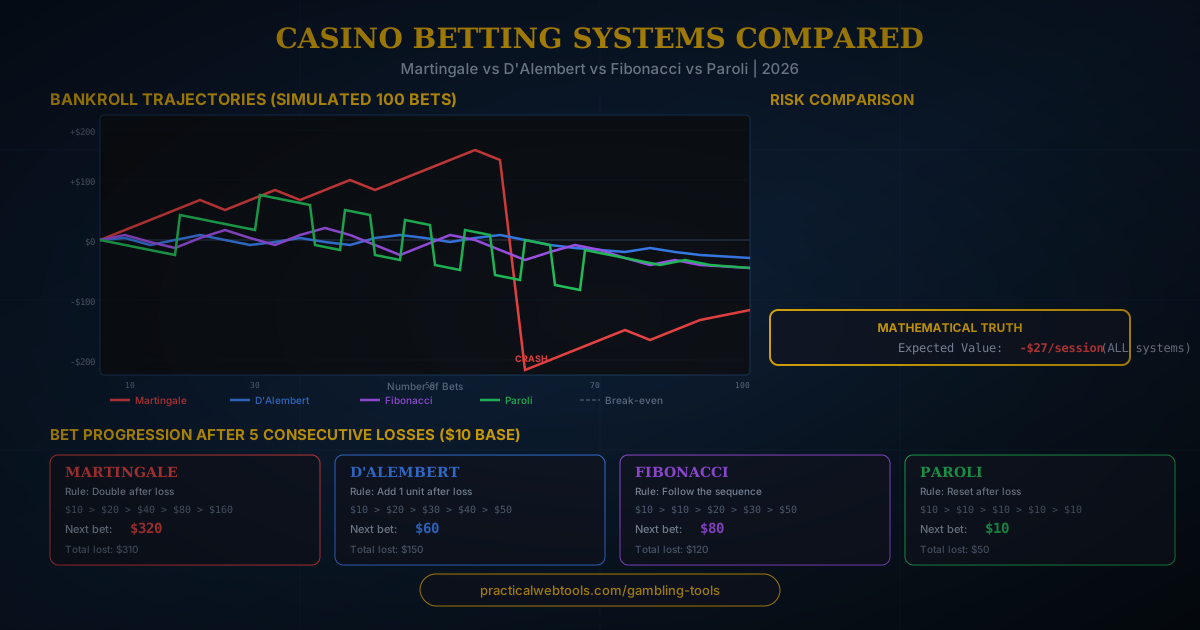
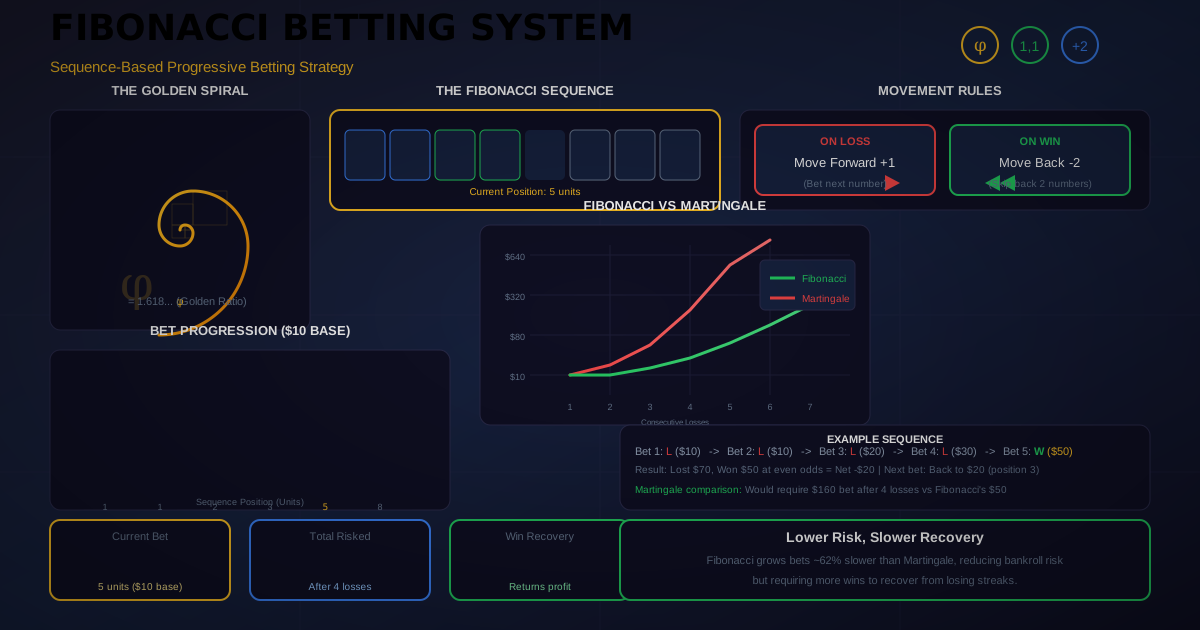
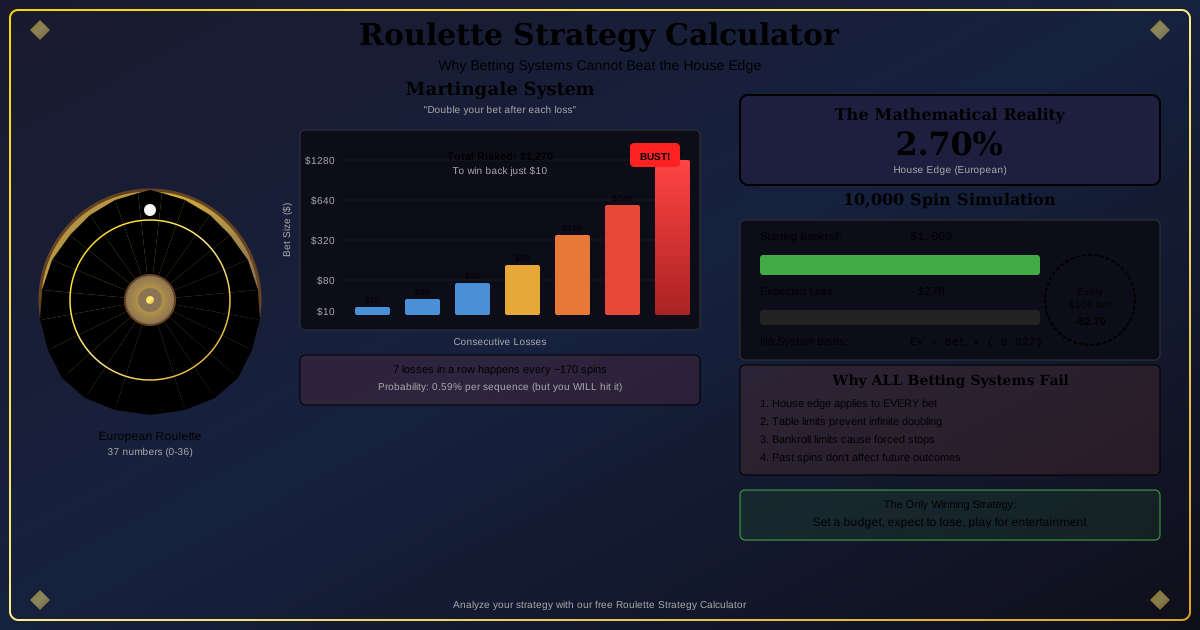
D'Alembert vs Martingale
Comparison
| Feature | D'Alembert | Martingale |
|---|---|---|
| After loss | +1 unit | ×2 bet |
| After win | -1 unit | Reset to base |
| Growth rate | Linear | Exponential |
| Bankroll risk | Lower | Higher |
| Table limit risk | Lower | Higher |
| Expected loss | Same rate | Same rate |
| Volatility | Lower | Higher |
Bet Growth Example
5-loss streak starting at $10:

D'Alembert:
$10 → $20 → $30 → $40 → $50 → $60
Total risked: $210

Martingale:
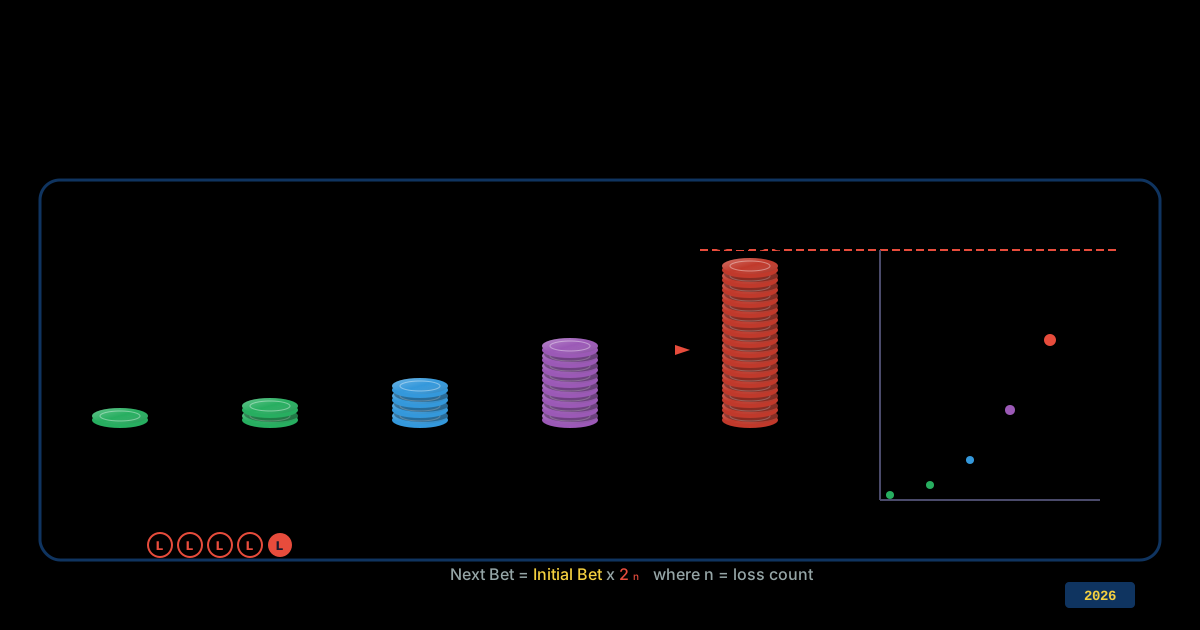
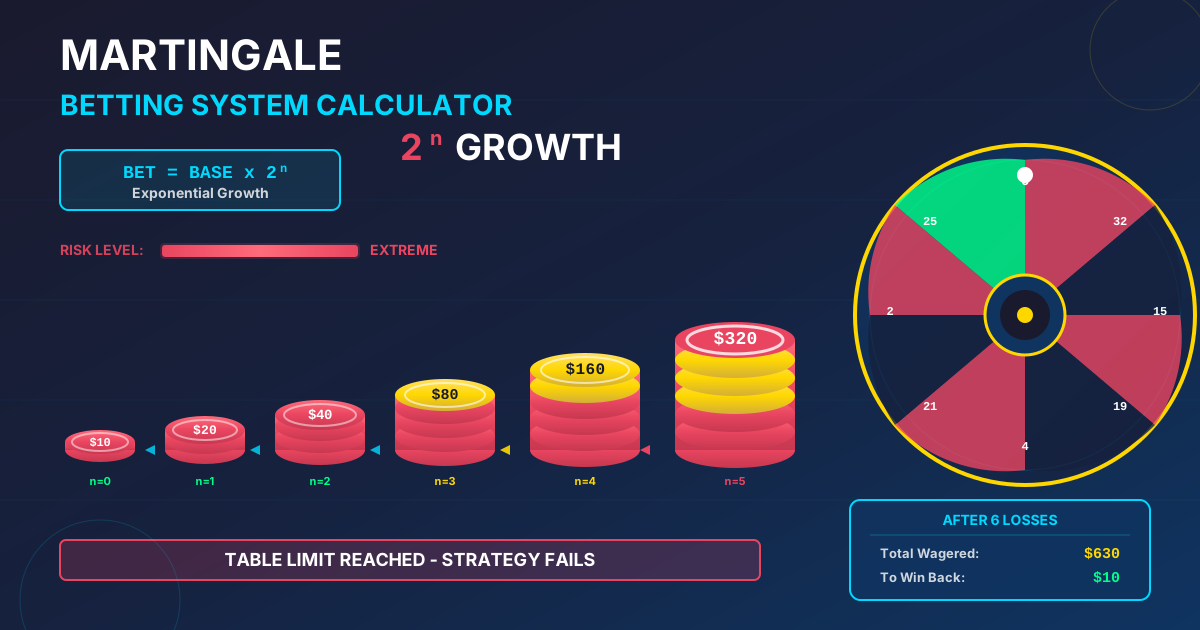
$10 → $20 → $40 → $80 → $160 → $320
Total risked: $630

D'Alembert grows 3× slower
Practical Implications
$1,000 bankroll, $10 base:

D'Alembert:
Can sustain ~20-loss streak
Unlikely to hit table limits

Martingale:
Bankrupt after 7-loss streak
Hits $500 table limit at spin 6
Real-World Examples
Example 1: Balanced Session
Setup: $10 base, start at 5 units, $500 bankroll Sequence: L-L-L-W-W-W-L-W
Progression:
Spin 1: $50, L, -$50 (Total: -$50)
Spin 2: $60, L, -$60 (Total: -$110)
Spin 3: $70, L, -$70 (Total: -$180)
Spin 4: $80, W, +$80 (Total: -$100)
Spin 5: $70, W, +$70 (Total: -$30)
Spin 6: $60, W, +$60 (Total: +$30)
Spin 7: $50, L, -$50 (Total: -$20)
Spin 8: $60, W, +$60 (Total: +$40)

4 wins, 4 losses = +$40 profit
Example 2: Losing Streak
Setup: $10 base, start at 5 units, $500 bankroll Sequence: L-L-L-L-L-L-L-L
Progression:
Spin 1: $50, L, -$50 (Total: -$50)
Spin 2: $60, L, -$60 (Total: -$110)
Spin 3: $70, L, -$70 (Total: -$180)
Spin 4: $80, L, -$80 (Total: -$260)
Spin 5: $90, L, -$90 (Total: -$350)
Spin 6: $100, L, -$100 (Total: -$450)
Spin 7: $110, L, -$110 (Total: -$560)
Spin 8: $120, L, Bankrupt

Still lose everything with bad luck
Just takes longer than Martingale
Example 3: Long Session
Setup: $5 base, start at 5 units, $500 bankroll 100 spins simulated
Typical results:
Expected: 48-49 wins, 51-52 losses
Small net loss (-$10 to -$30)
Bets ranged from $25-$75
Total wagered: ~$4,500
Expected loss: $4,500 × 2.7% = $121.50

Actual loss varies by variance
But long-term approaches expectation
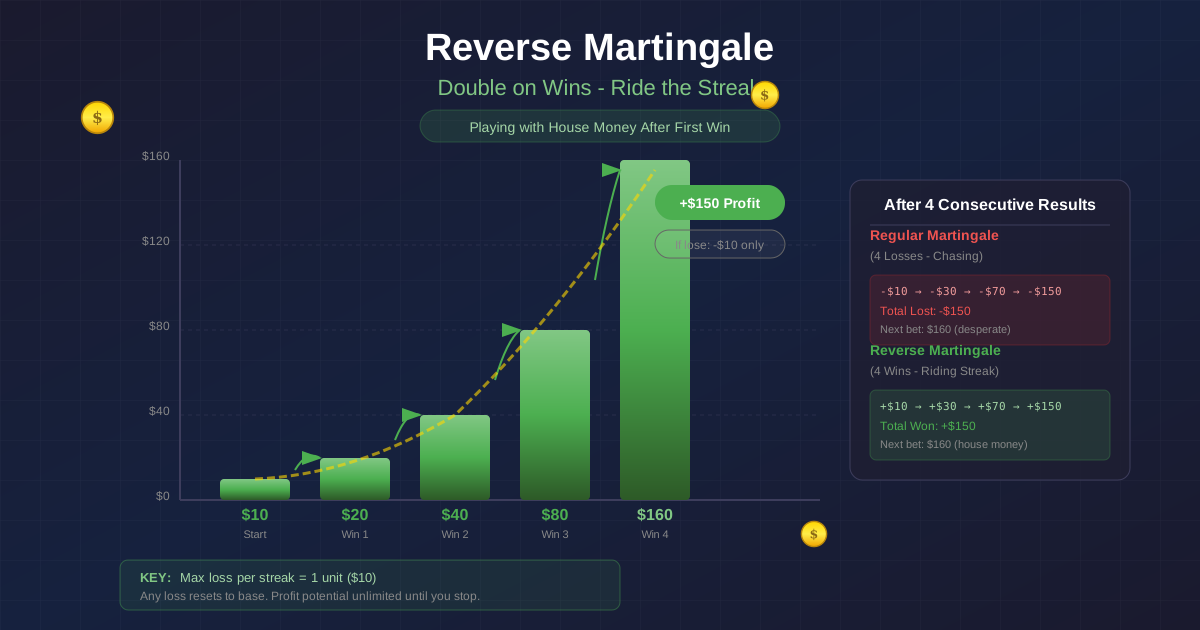
Reverse D'Alembert
The Opposite Approach
Reverse D'Alembert:
After WIN: Add 1 unit
After LOSS: Subtract 1 unit

Idea: Capitalize on winning streaks
Reduce exposure during losses
Reverse Example
| Spin | Bet | Result | Cumulative | Next Bet |
|---|---|---|---|---|
| 1 | 5 | W | +5 | 6 |
| 2 | 6 | W | +11 | 7 |
| 3 | 7 | W | +18 | 8 |
| 4 | 8 | L | +10 | 7 |
| 5 | 7 | L | +3 | 6 |
Same math, different feel
Comparison
| System | Best For | Risk Profile |
|---|---|---|
| Regular D'Alembert | Recovery from losses | Slower climb, gradual risk increase |
| Reverse D'Alembert | Riding hot streaks | Bet more when winning |
Session Planning
Recommended Starting Points
| Bankroll | Base Unit | Starting Bet | Max Bet |
|---|---|---|---|
| $200 | $5 | 3 units | 20 units |
| $500 | $10 | 5 units | 25 units |
| $1,000 | $20 | 5 units | 30 units |
| $2,000 | $25 | 5 units | 40 units |
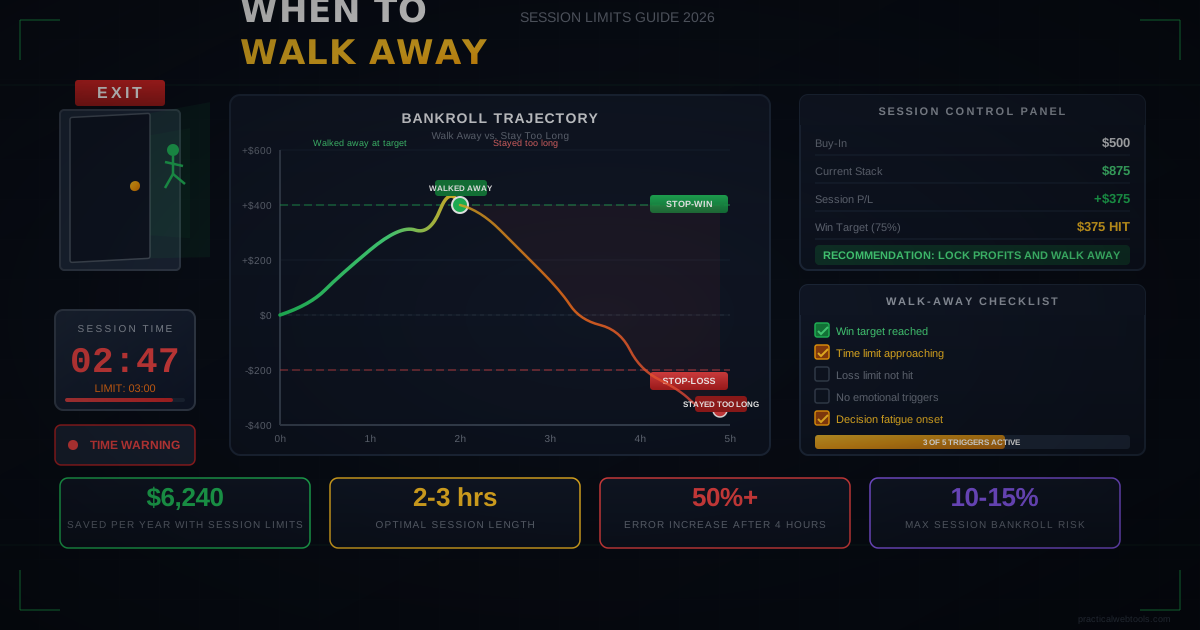
Setting Limits
Stop-loss: 50% of bankroll
Stop-win: 20-30% profit
Max bet: When to reset or quit

Example ($500 bankroll):
Stop at -$250 (loss limit)
Stop at +$100-150 (win goal)
Reset if bet reaches $200
Why D'Alembert Fails Long-Term
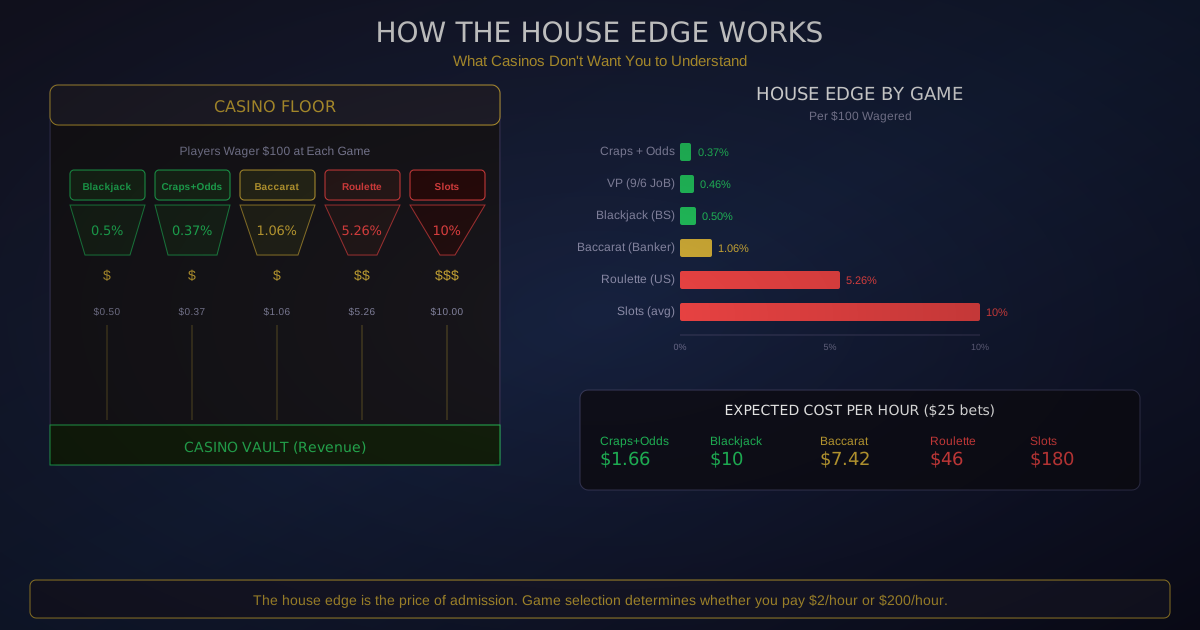
The House Edge Always Wins
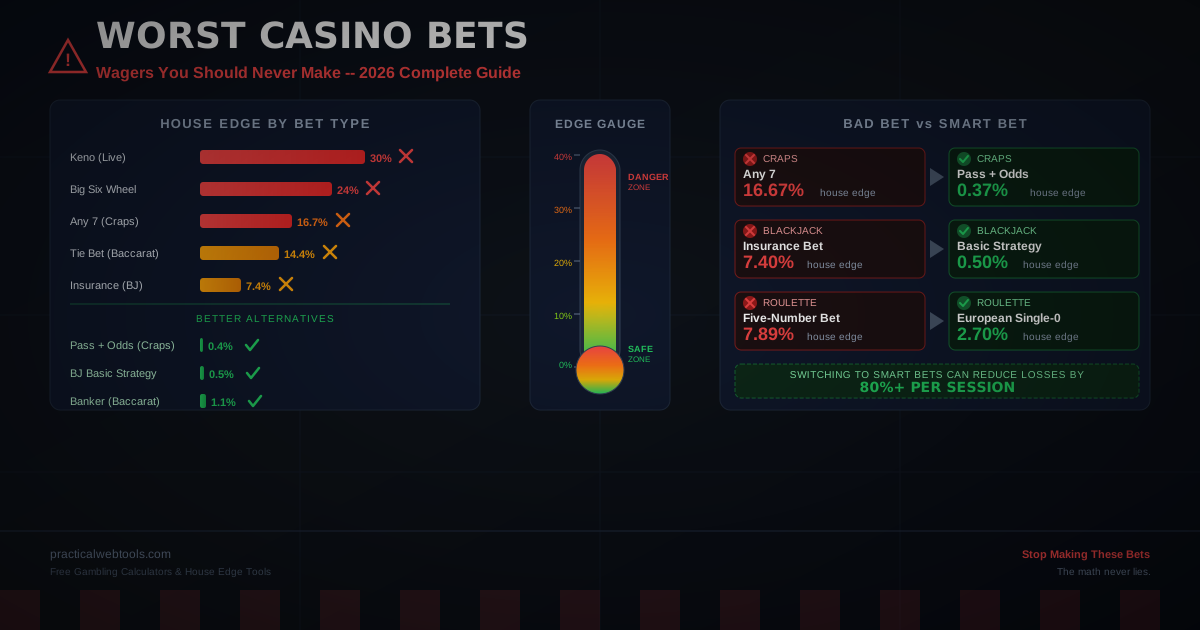
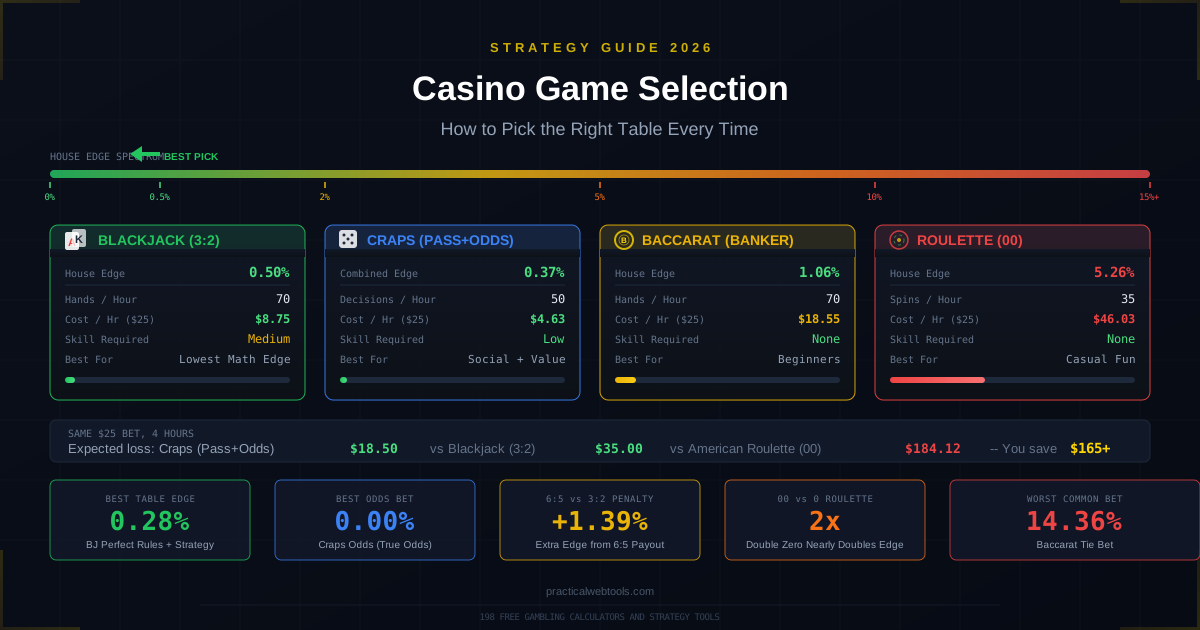
Every spin: -2.70% expected
1,000 units wagered: -27 units expected

Bet sizing doesn't change this
D'Alembert just spreads the loss
Over different bet amounts
The Equilibrium Fallacy
D'Alembert assumed:
Nature tends toward balance
Losses must be followed by wins

Reality:
Each spin is independent
No cosmic balance exists
House edge compounds continuously
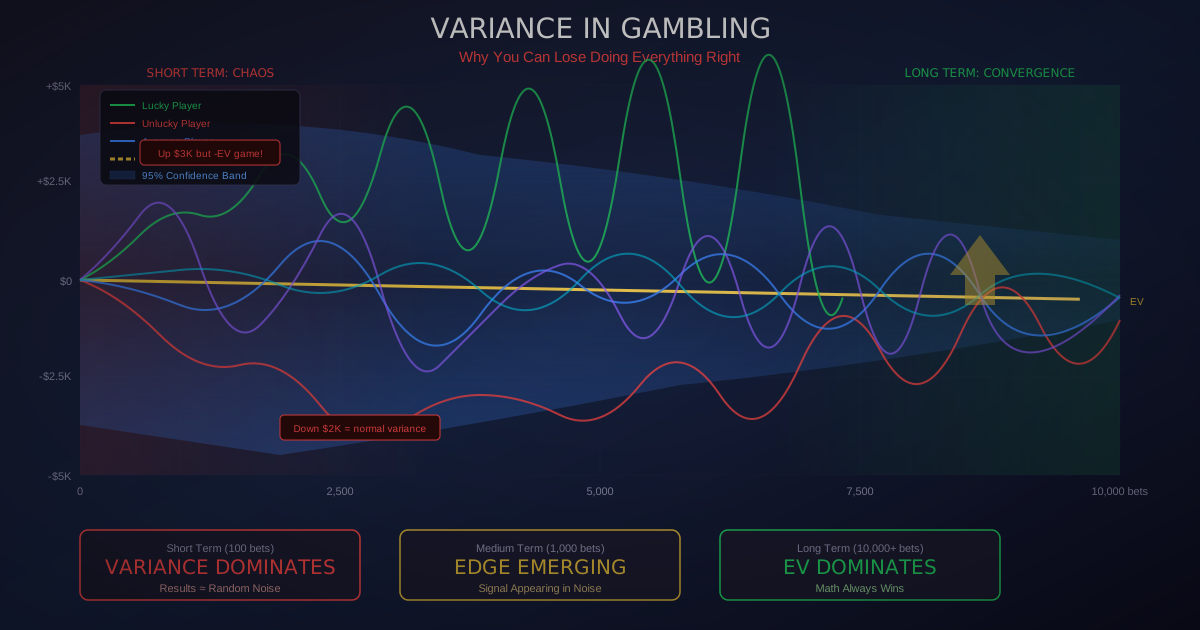
Variance Can Overwhelm
Even with gentle progression:
Extended losing streaks happen
20 losses in 100 spins is normal

D'Alembert after 15-loss streak:
Bet increased by 15 units
Still facing same 48.65% win rate
Advantages Over Aggressive Systems
Lower Volatility
D'Alembert variance: Low
Martingale variance: Very high

D'Alembert: Longer sessions
More entertainment per dollar
Less chance of instant ruin
Table Limit Immunity
Most table limits: $500-$5,000
D'Alembert rarely hits limits

$10 base, 5-unit start:
Need 45-loss streak to hit $500 limit
Probability: <0.001%
Psychological Comfort
Gradual increases feel manageable
No panic from exponential growth
Easier to quit at stop-loss
Better bankroll management
Common Mistakes
1. Starting Too High
Mistake: Start at 10+ units Problem: Less room for progression Fix: Start at 3-5 units
2. No Maximum Bet Limit
Mistake: Follow system indefinitely Problem: Bets can still grow too large Fix: Set max bet (e.g., 20 units)
3. Believing in Balance
Mistake: Expect wins to "catch up" Problem: Each spin is independent Fix: Accept randomness
4. Ignoring House Edge
Mistake: Focus only on progression Problem: Still losing 2.7% of all wagers Fix: Set strict session limits
Frequently Asked Questions
Is D'Alembert better than Martingale?
Lower risk, same expected loss rate. D'Alembert won't bankrupt you as quickly, but neither system beats the house edge.
Can D'Alembert win long-term?
No. Every roulette system faces 2.70% house edge on every bet. Bet sizing patterns don't change expected value.
What's the optimal starting bet?
3-5 units is common. Lower starts provide more room for progression; higher starts recover faster but risk more.
Should I use D'Alembert on other games?
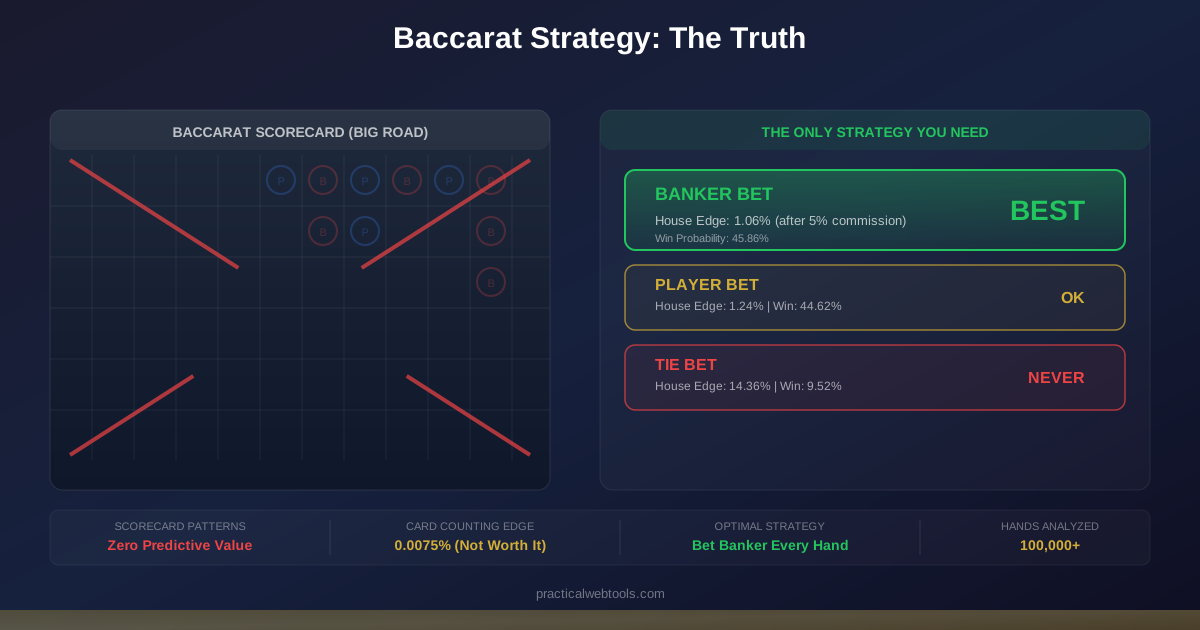
Works on any even-money bet (blackjack, baccarat, craps). Same principle: can't overcome house edge.
How long can I play with D'Alembert?
Longer than Martingale due to slower progression. A $500 bankroll might last 2-4 hours vs 30 minutes with Martingale.
What if I hit a very long losing streak?
Set a maximum bet limit (e.g., 15-20 units). If reached, either reset to base or quit the session.
Pro Tips
-
Start low: 3-5 units gives progression room
-
Set maximum bet: Cap at 15-20 units
-
Track carefully: Know your current bet level
-
Use stop limits: Stop-loss at 50%, stop-win at 25%
-
Accept the math: Entertainment, not income
Related Calculators
- Roulette Martingale Calculator - Aggressive system
- Roulette Odds Calculator - Bet probabilities
- Roulette European vs American - House edge comparison
- Expected Value Calculator - EV analysis
- Gambling Bankroll Calculator - Session sizing
Conclusion
The D'Alembert system offers gentler progression than Martingale—your bets grow linearly instead of exponentially, making it psychologically easier and less risky per session. Our calculator shows exactly how the progression unfolds and why, despite being "safer," it still can't overcome roulette's house edge.
Calculate D'Alembert Outcomes Now →
If you're going to use a betting system, D'Alembert is among the less harmful choices. You'll survive longer, hit table limits less often, and experience lower volatility. Just remember: no progression system changes the fundamental math. Our calculator helps you understand exactly what you're getting into.