Roulette Number Frequency Tracker Calculator: Pattern Analysis (2026)
Roulette Number Frequency Tracker: The Pattern Illusion
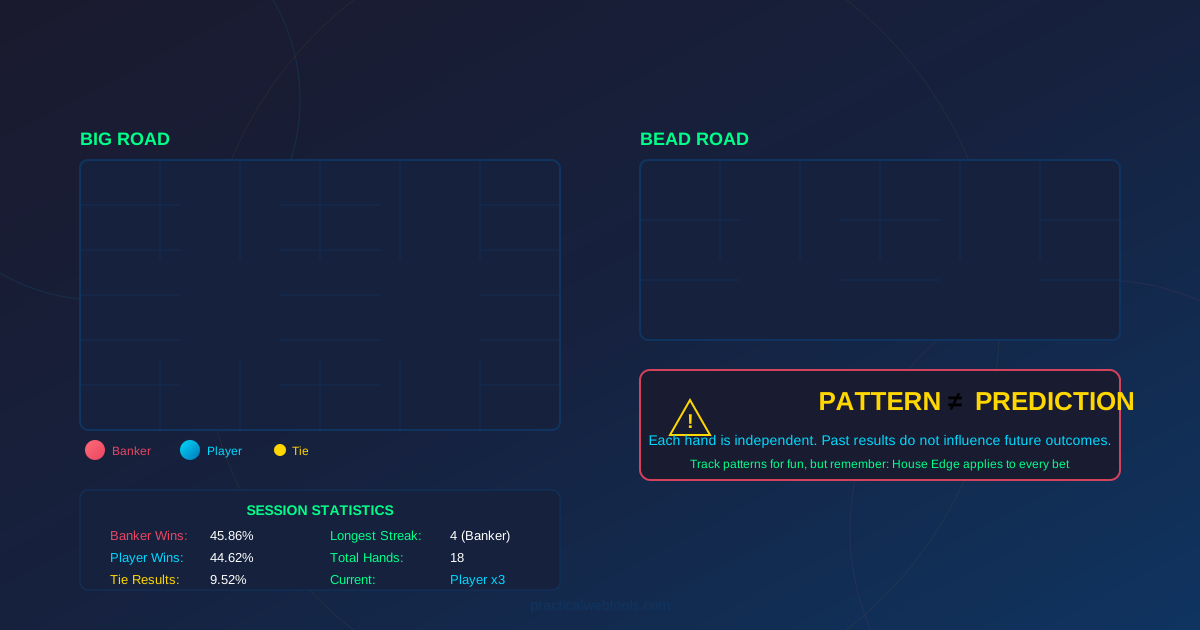
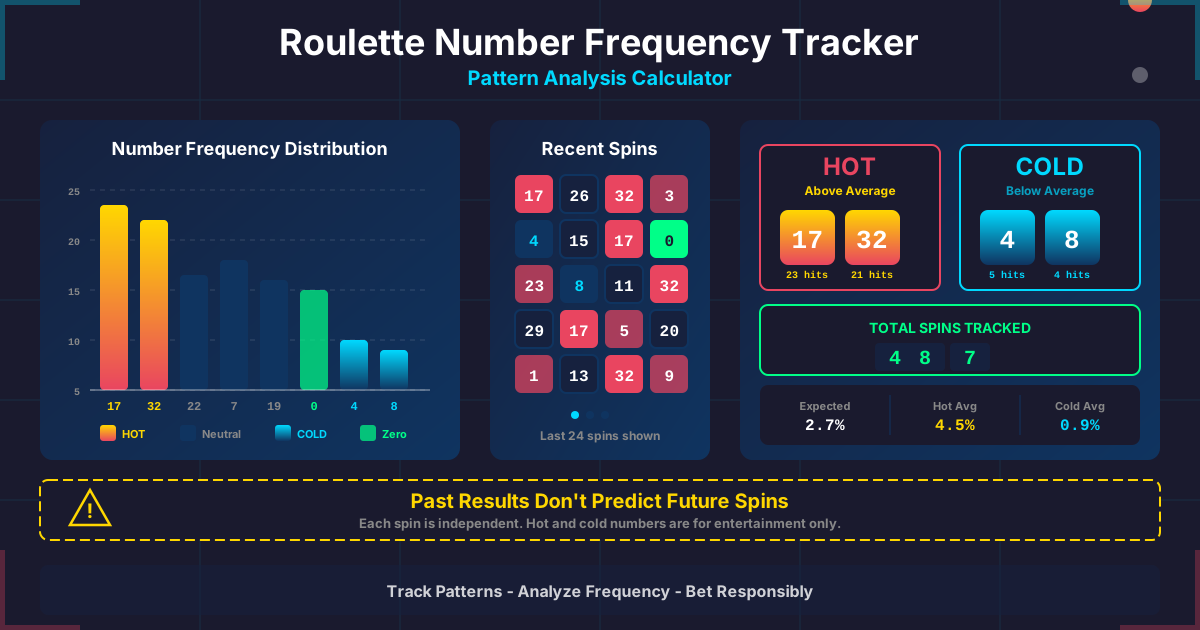
Tracking roulette numbers reveals fascinating patterns—but not predictive ones. Our frequency tracker shows you the math behind hot and cold streaks while explaining why past results never influence future spins.
What Is Number Frequency Tracking?
Frequency tracking records how often each number appears over a series of spins. Players use it to identify "hot" numbers (appearing frequently) and "cold" numbers (rarely appearing).
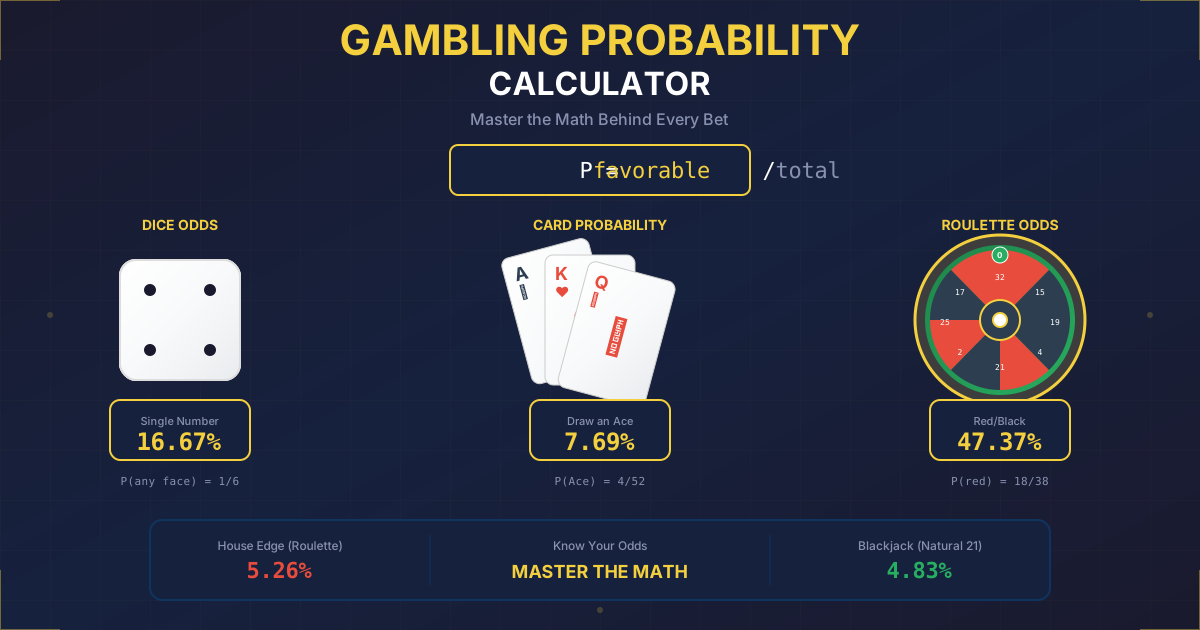
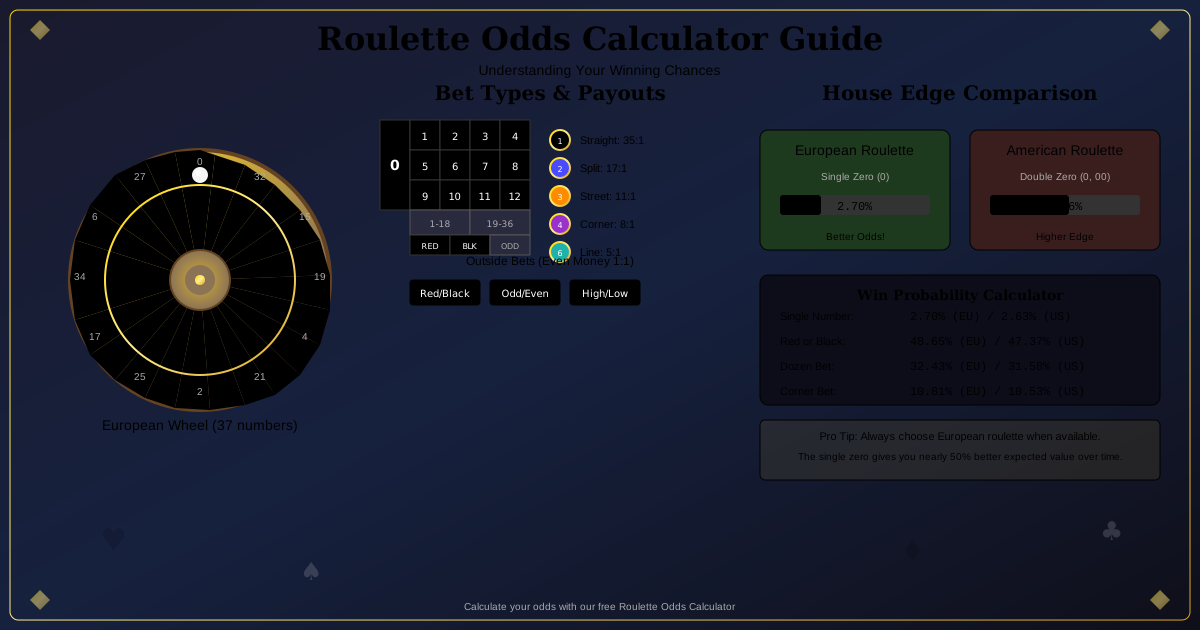
Quick Answer: Each roulette number has a 1/37 (European) or 1/38 (American) probability regardless of history. Over 1,000 spins, expect each number ~27 times (European), but actual results will vary significantly due to variance. Hot and cold numbers are statistical noise—tracking them is entertaining but not predictive. The wheel has no memory.
How to Use Our Frequency Tracker
Use the Roulette Number Frequency Tracker →
Input spin results to analyze number frequencies and statistical patterns.
Step-by-Step Instructions
-
Enter Spin Results: Numbers as they occur
-
View Frequency Chart: Hits per number
-
Identify Hot/Cold Numbers: Most and least frequent
-
See Expected vs Actual: Compare to probability
-
Analyze Patterns: Understand variance
Input Fields Explained
| Field | Description | Example |
|---|---|---|
| Spin History | Numbers hit | 17, 32, 0, 5, 17... |
| Total Spins | Sample size | 500 |
| Hot Numbers | Most frequent | 17 (18 hits) |
| Cold Numbers | Least frequent | 4 (8 hits) |
| Expected Hits | Statistical norm | 13.5 per number |
| Chi-Square | Deviation measure | 34.2 |
Expected Frequencies
European Roulette (37 numbers)
| Spins | Expected Hits/Number | Typical Range |
|---|---|---|
| 100 | 2.7 | 0-7 |
| 500 | 13.5 | 6-22 |
| 1,000 | 27.0 | 18-38 |
| 5,000 | 135.1 | 115-155 |
| 10,000 | 270.3 | 240-300 |
American Roulette (38 numbers)
| Spins | Expected Hits/Number | Typical Range |
|---|---|---|
| 100 | 2.6 | 0-7 |
| 500 | 13.2 | 6-21 |
| 1,000 | 26.3 | 17-36 |
| 5,000 | 131.6 | 112-152 |
| 10,000 | 263.2 | 233-293 |
Hot and Cold Numbers Explained
What Creates "Hot" Numbers
Expected distribution over 100 spins:
Each number expected: 2.7 hits
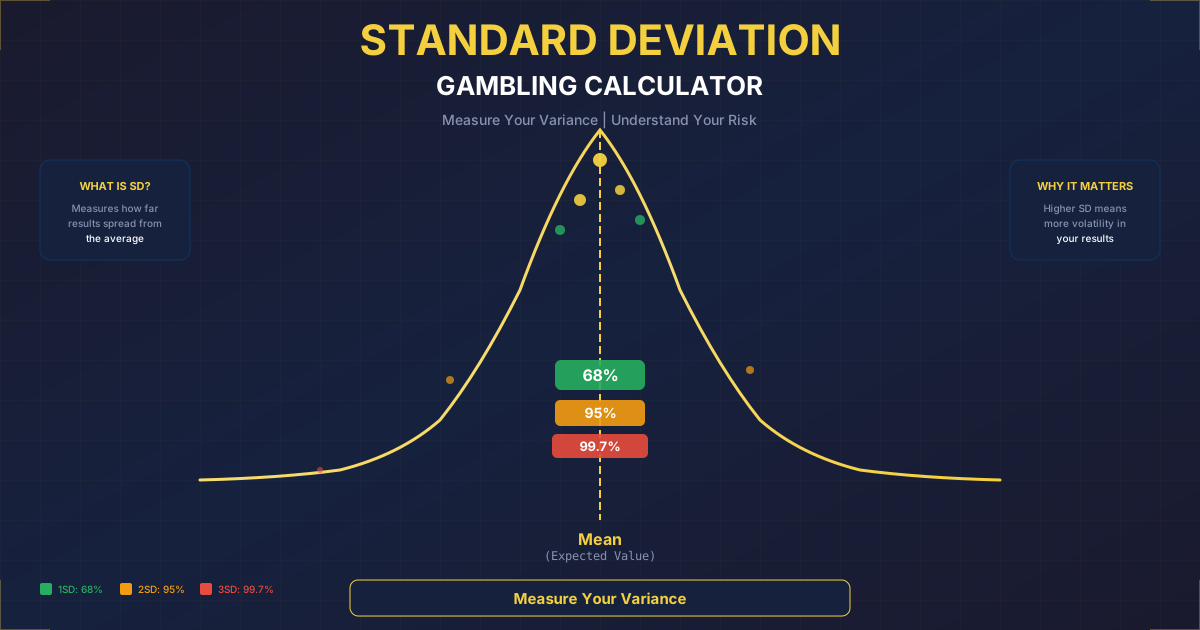
Standard deviation: ~1.6 hits

"Hot" number at 6 hits = 2 SD above average
Probability of any number hitting 6+: ~2.5%
Probability of at least one number hitting 6+: ~60%

Hot numbers are EXPECTED, not predictive
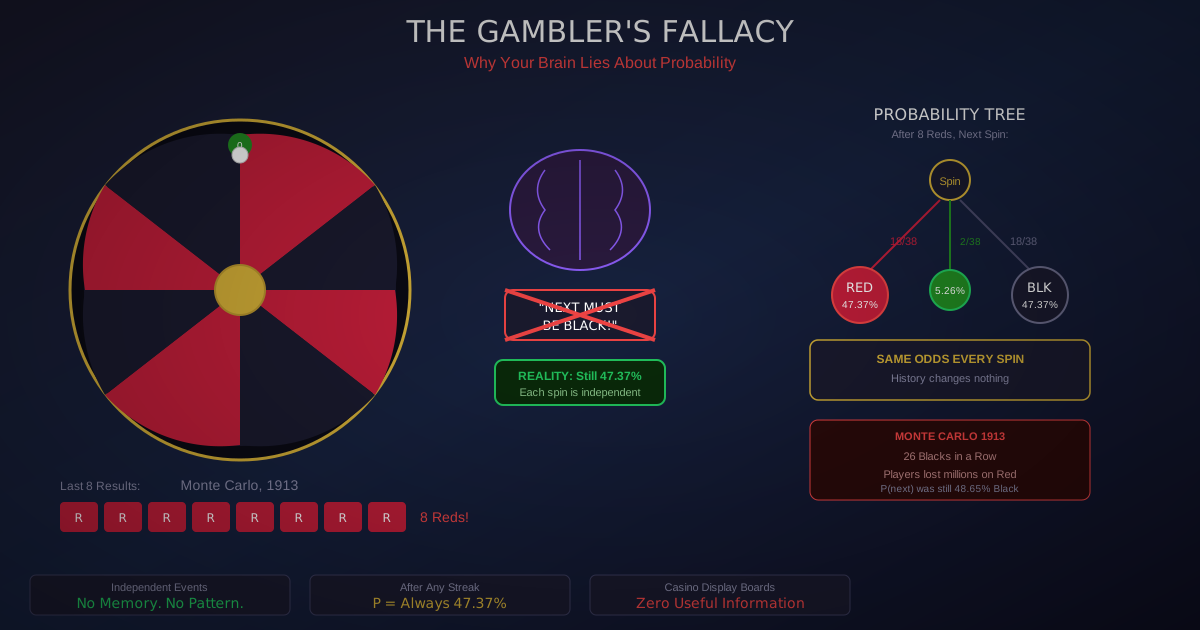
The Gambler's Fallacy
| Belief | Reality |
|---|---|
| "17 is hot, bet it!" | 17 has same 2.7% chance as always |
| "4 is cold, it's due!" | 4 has same 2.7% chance as always |
| "Red hit 5 times, black is due" | Red/black odds unchanged |
| "Pattern emerging" | Random noise, no pattern |
Statistical Analysis
Chi-Square Test
The chi-square test measures whether observed frequencies differ significantly from expected:
χ² = Σ[(Observed - Expected)² / Expected]

Example with 370 spins (European):
Expected per number: 10
If results range from 5-16 hits per number
χ² = Sum of all deviations squared

High χ² = unusual distribution (but not predictive)
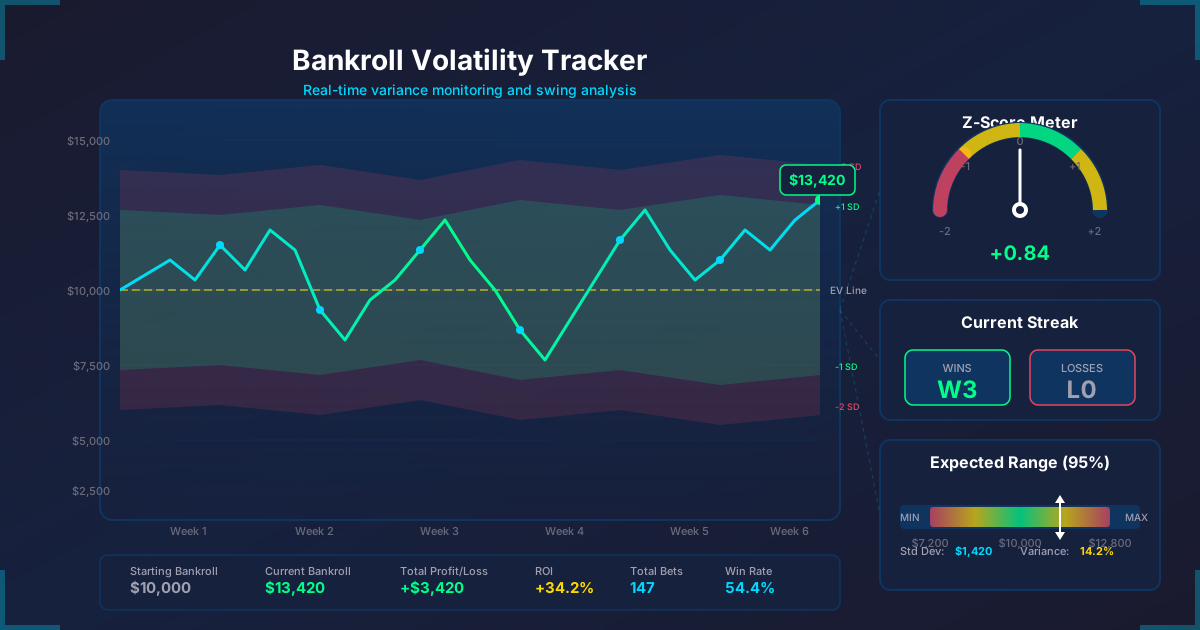
Standard Deviation Analysis
| Spins | SD per Number | "Hot" Threshold |
|---|---|---|
| 100 | 1.6 | 4+ hits above expected |
| 500 | 3.6 | 7+ hits above expected |
| 1,000 | 5.1 | 10+ hits above expected |
Real-World Examples
Example 1: Identifying Hot Numbers
Session: 200 spins tracked Expected per number: 5.4 hits Standard deviation: 2.3
Results:
- Number 17: 12 hits (hottest)
- Number 32: 11 hits
- Number 8: 1 hit (coldest)
- Number 22: 1 hit
Analysis:
- Number 17 is 2.9 SD above expected
- Number 8 is 1.9 SD below expected
- Both outcomes are within normal variance
- Neither predicts future results
Example 2: Long-Term Convergence
Data: 10,000 spins Expected per number: 270
Actual distribution:
| Range | Numbers | Expected |
|---|---|---|
| 230-250 | 5 | ~5 |
| 251-270 | 14 | ~14 |
| 271-290 | 13 | ~14 |
| 291-310 | 5 | ~5 |
Interpretation: Results converge to expected distribution over time.
Example 3: Streak Analysis
Scenario: Number 7 hasn't hit in 150 spins
Math:
- Probability of any specific number not hitting in 150 spins:
- P(no 7) = (36/37)^150 = 1.6%
But: With 37 numbers, probability that at least one number misses 150 spins is much higher (~45%).
Conclusion: Cold streaks are normal, not predictive.
Why Tracking Doesn't Help
Independence of Trials
| Concept | Explanation |
|---|---|
| Each spin is independent | Previous results don't affect probabilities |
| No mechanical bias | Modern wheels are precision instruments |
| RNG (electronic) | True random number generation |
| Law of large numbers | Only applies over infinite trials |
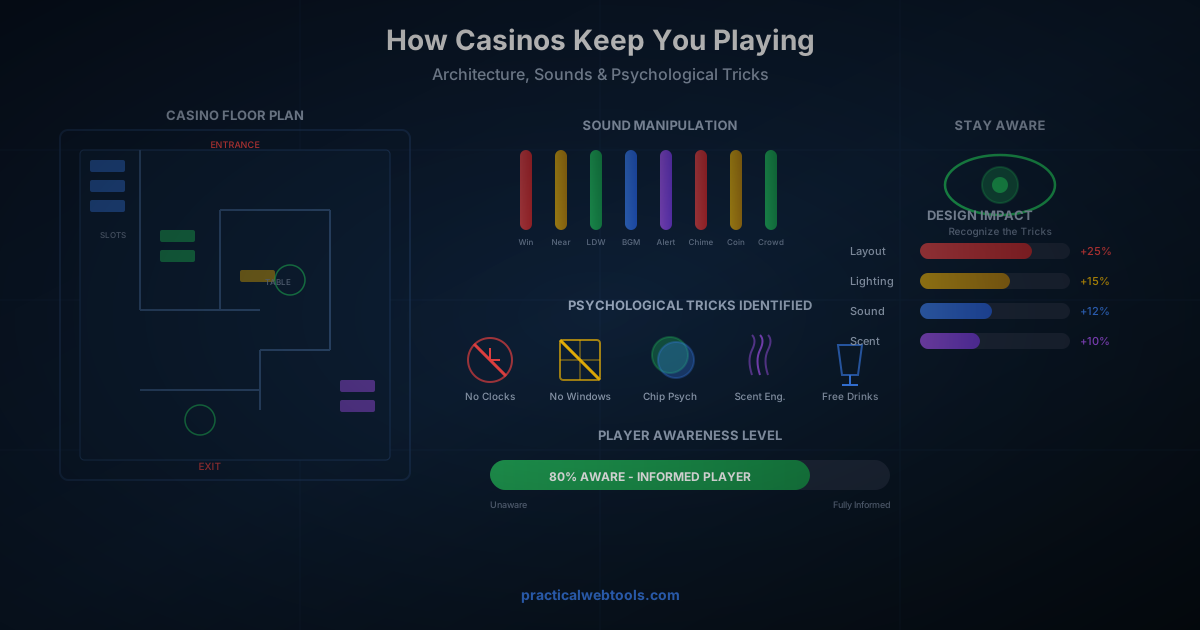
Casino Display Boards
| What They Show | Why |
|---|---|
| Recent numbers | Entertainment |
| Hot numbers | Encourage gambler's fallacy |
| Statistics | False sense of strategy |
| Real purpose | Keep players engaged and betting |
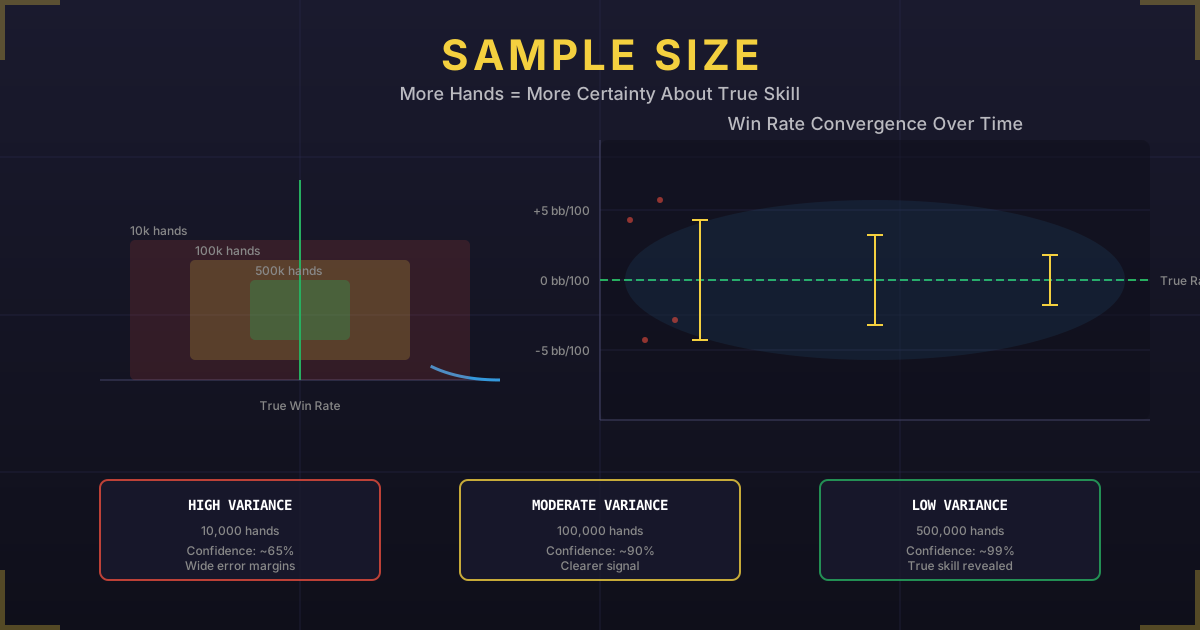
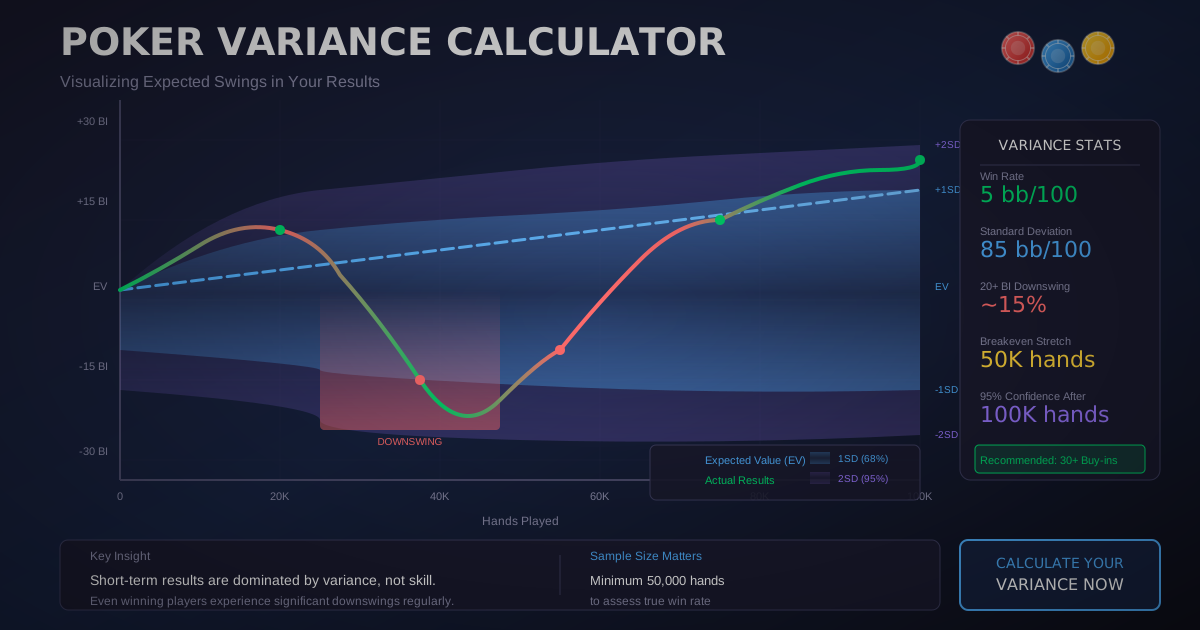
Variance Visualization
Expected Distribution (1,000 spins, European)
Numbers hitting:
<15 times: 1-2 numbers
15-20 times: 5-7 numbers
21-25 times: 10-12 numbers
26-30 times: 10-12 numbers
31-35 times: 5-7 numbers
>35 times: 1-2 numbers
Probability of Extremes
| Event | Probability |
|---|---|
| One number hits 2× expected (100 spins) | ~40% |
| One number hits 3× expected (100 spins) | ~5% |
| One number misses entirely (100 spins) | ~95% (very common) |
| All numbers within ±20% of expected (1000 spins) | ~30% |
Bias Testing (Physical Wheels)
When Tracking Might Matter
In rare cases, physical wheel defects can create real bias:
| Potential Bias | Detection Method |
|---|---|
| Wheel tilt | Sector analysis over 10,000+ spins |
| Worn frets | Individual number analysis |
| Ball track defect | Drop zone tracking |
| Dealer signature | Timing correlation (extremely rare) |
Reality Check
| Bias Type | Likelihood | Exploitability |
|---|---|---|
| Modern casino wheel | Near zero | Not exploitable |
| Older wheel | Very low | Requires massive tracking |
| Electronic roulette | Zero | True RNG |
Common Tracking Mistakes
1. Small Sample Conclusions
Mistake: "Number 17 hit 5 times in 50 spins—it's hot!" Problem: Expected variance explains this entirely Fix: Recognize 50 spins tells you nothing
2. Confirmation Bias
Mistake: Remembering hits, forgetting misses Problem: False pattern perception Fix: Track objectively with data
3. Believing Casino Boards
Mistake: Using displayed patterns for bets Problem: Designed to encourage bad bets Fix: Understand these are entertainment, not strategy
4. System Based on Patterns
Mistake: Betting patterns based on history Problem: Each spin is independent Fix: Accept randomness
Frequently Asked Questions
Do hot numbers actually hit more?
They did in the past (by definition), but have equal probability going forward. A "hot" number hitting again is coincidence, not prediction.
Should I bet on cold numbers because they're "due"?
No. The gambler's fallacy. Cold numbers have the exact same probability as any other number—their history is irrelevant.
Can I beat roulette by tracking numbers?
Not with frequency tracking alone. The house edge applies regardless of betting strategy. Only physical wheel bias (rare) could theoretically be exploited.
Why do casinos show number history?
To encourage gambling based on patterns. Players who bet "hot" or "cold" numbers bet more—the casino wins either way.
How many spins to identify real bias?
Minimum 10,000-30,000 spins to detect subtle physical bias with statistical confidence. Electronic games have no bias to detect.
Is electronic roulette truly random?
Yes. Licensed casinos use certified random number generators. There's no pattern to exploit.
Advanced Concepts
Law of Large Numbers
As sample size → infinity:
Observed frequency → theoretical probability

But "large" means MILLIONS of spins
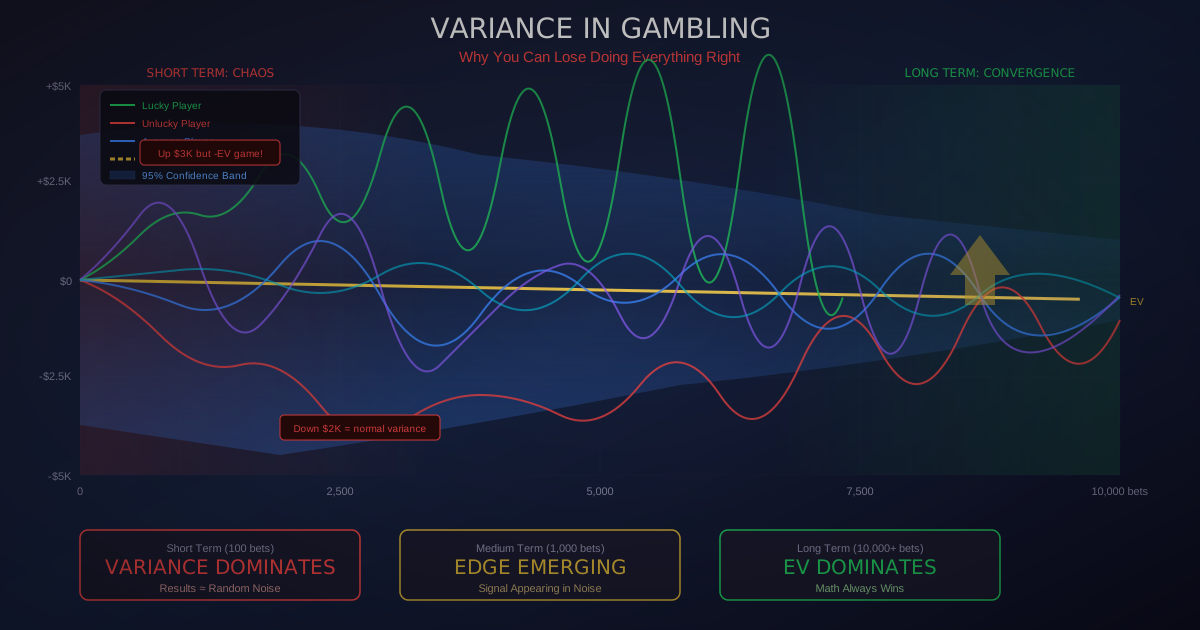
1,000 spins is not large enough
Regression to the Mean
Hot numbers don't stay hot
Cold numbers don't stay cold
Both regress toward expected frequency

This is NOT "correction"—it's statistics
Entropy Analysis
Perfect random = maximum entropy
Patterns = reduced entropy
Tracking can measure entropy but not predict outcomes
Pro Tips
-
Track for entertainment: Not for strategy
-
Understand variance: Hot and cold are normal
-
Ignore casino boards: They exploit fallacies
-
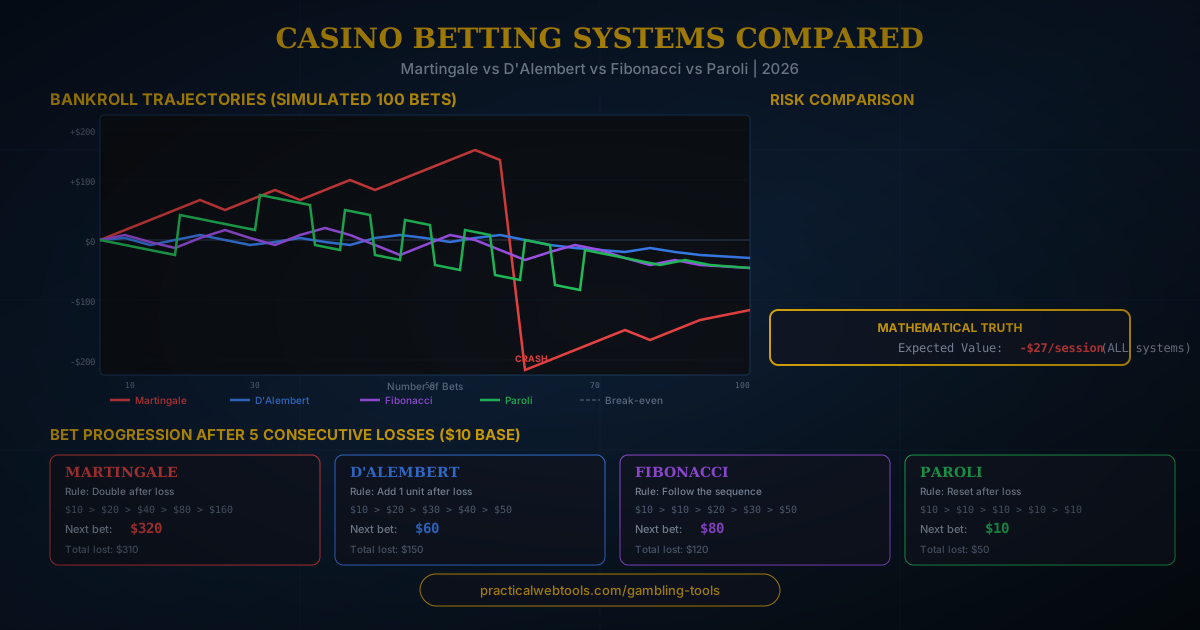
Accept randomness: The wheel has no memory
-
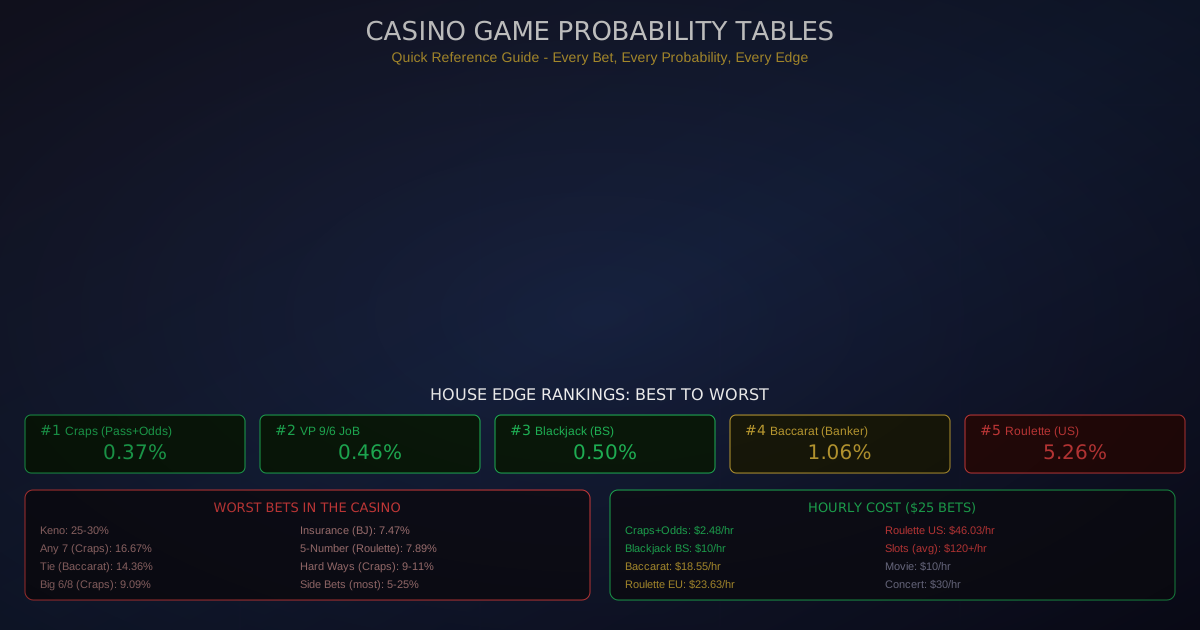
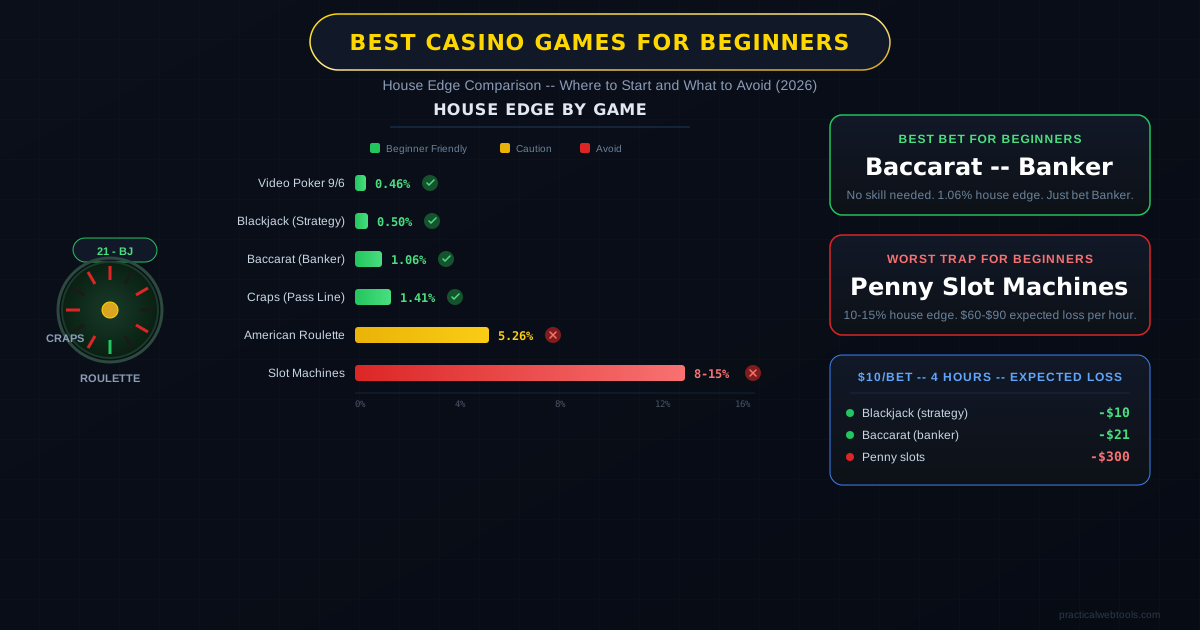
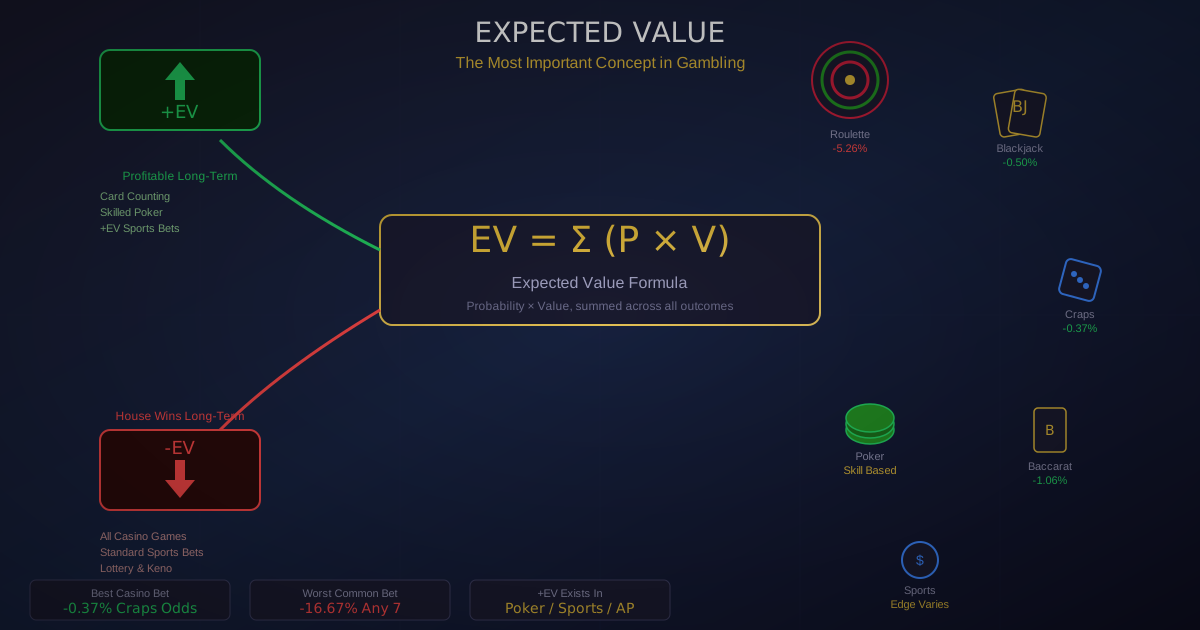
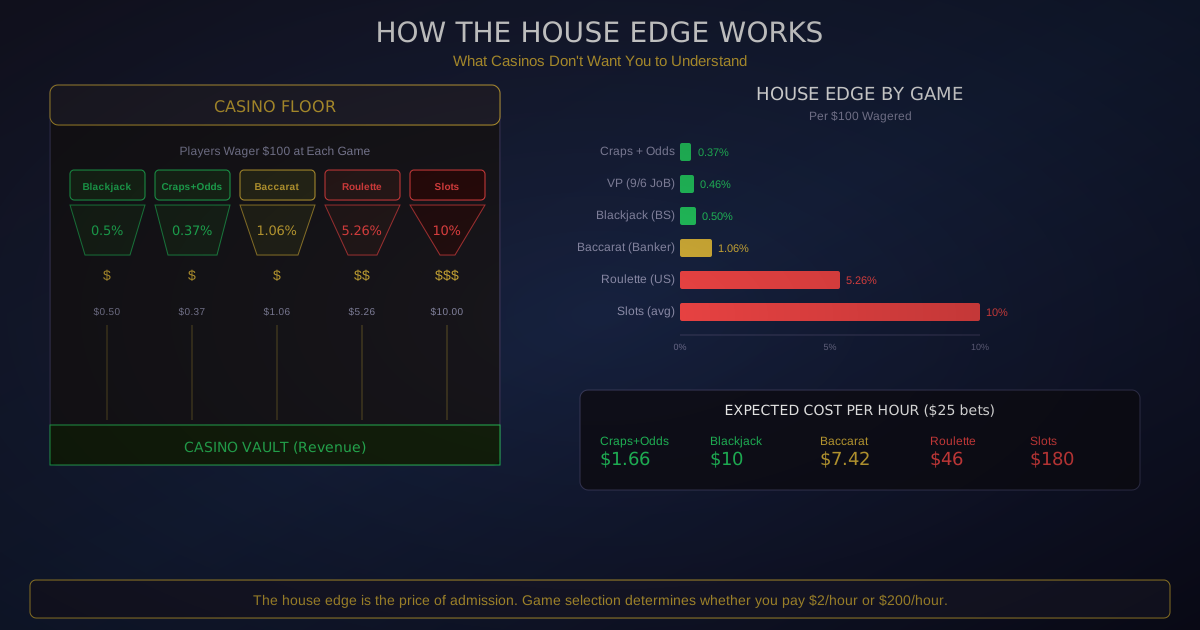
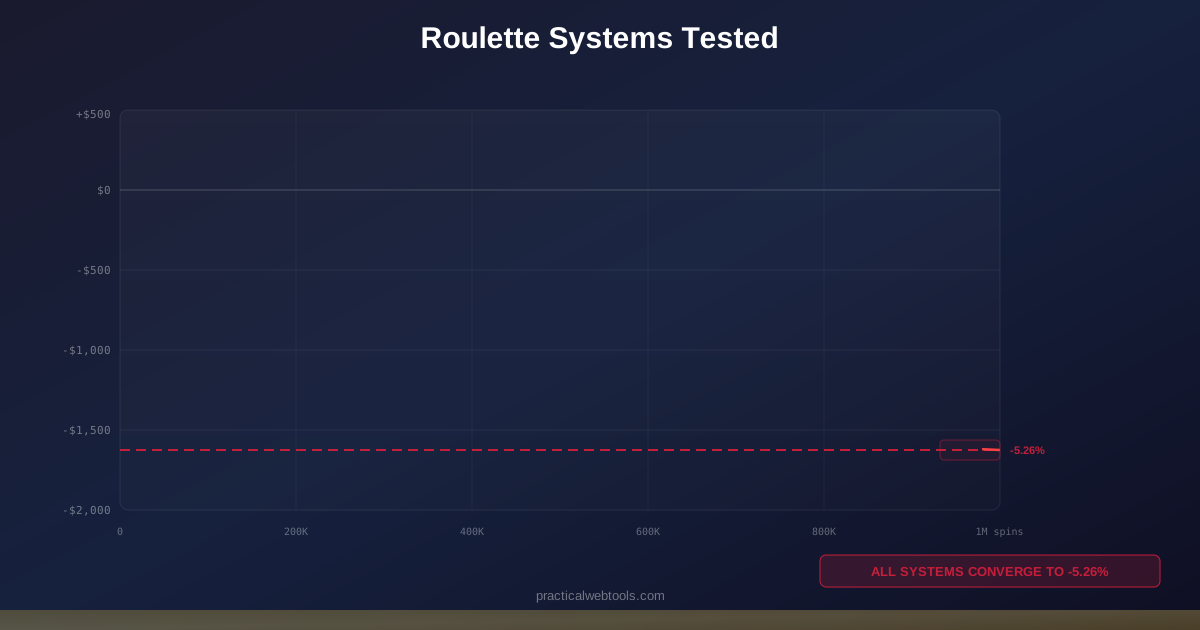
House edge is fixed: 2.7% (European) or 5.26% (American) regardless of patterns
Related Calculators
- Roulette Odds Calculator - Basic odds
- Roulette Expected Value Calculator - EV analysis
- Roulette House Edge Calculator - Edge by bet type
- Roulette Sector Betting Calculator - Wheel sectors
- Probability Calculator - Probability basics
Conclusion
Roulette number tracking reveals fascinating statistical patterns—and their total irrelevance to future spins. Our frequency tracker helps you visualize variance, understand hot and cold numbers, and ultimately accept that each spin is independent. Track numbers for entertainment, but never mistake patterns for predictions. The wheel truly has no memory.
Understanding roulette statistics means understanding randomness itself. Our tracker shows you exactly how numbers distribute over time—and why that distribution tells you nothing about the next spin. Track, analyze, and appreciate the mathematics, but bet responsibly knowing the house edge is constant.