Roulette Sector Bet Calculator: Neighbors & Call Bets Explained (2026)
Roulette Sector Bet Calculator: Master the Wheel Geography
Sector bets (call bets) target specific sections of the roulette wheel rather than the layout. Our calculator shows coverage, costs, and payouts for all traditional European wheel sectors and custom neighbor bets.
What Are Sector Bets?
Sector bets cover groups of numbers that are physically adjacent on the wheel, not the betting layout. These "announced bets" or "call bets" are common in European casinos and target wheel sections where the ball might land based on dealer signatures or wheel bias.
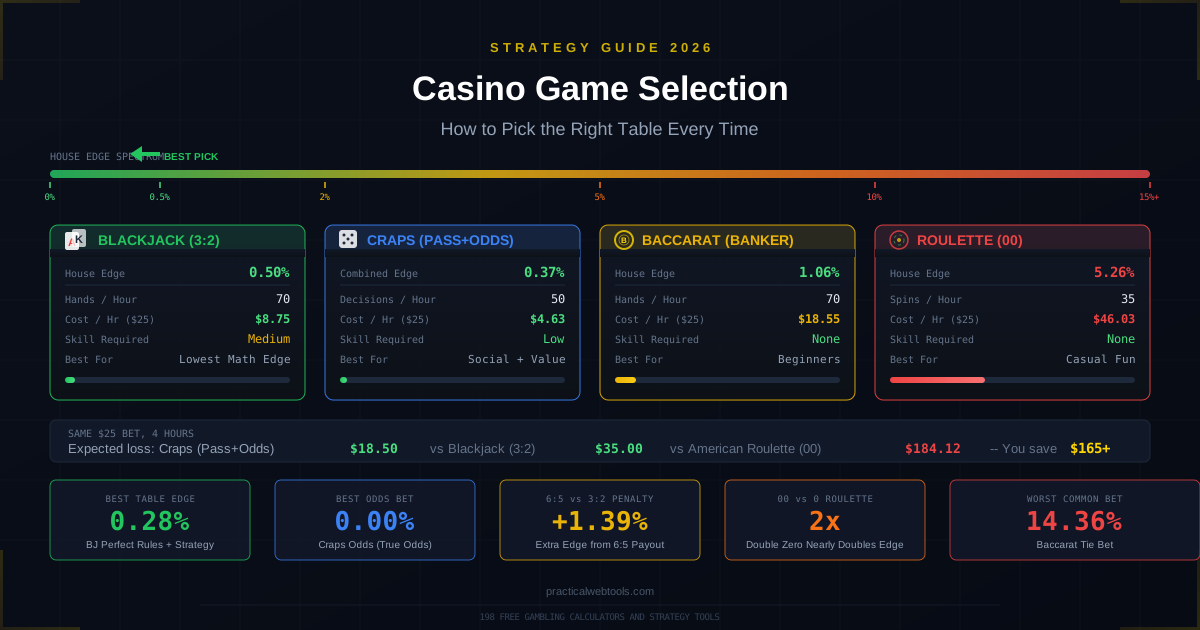
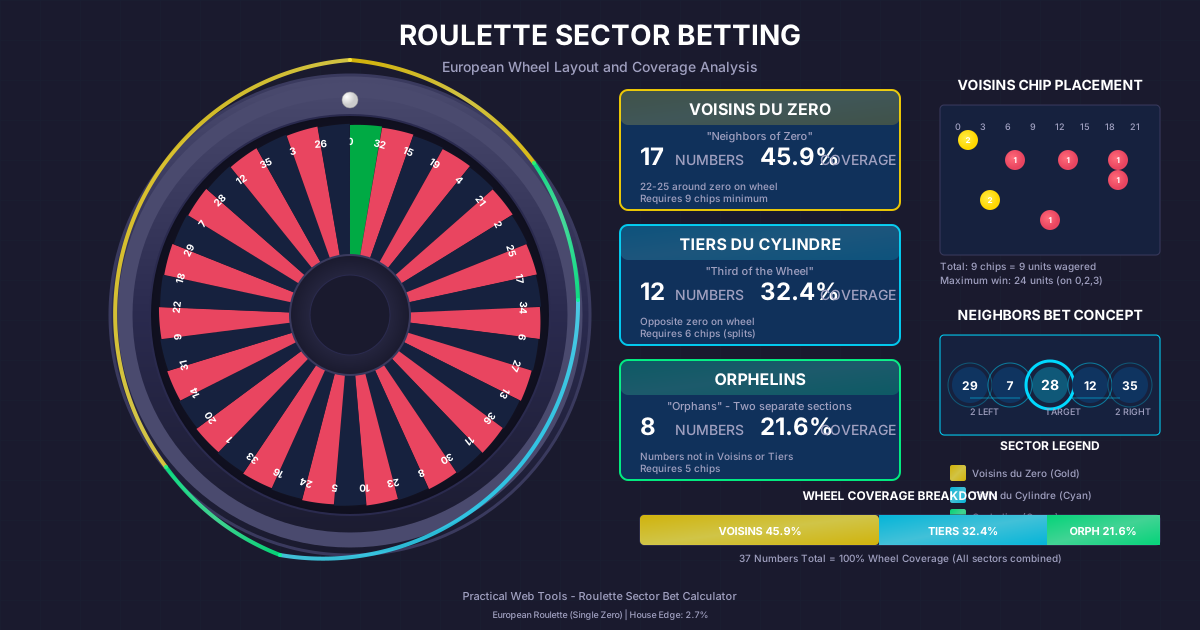
Quick Answer: Sector bets cover wheel neighbors, not layout neighbors. Voisins du Zéro covers 17 numbers around zero (9 chips). Tiers covers 12 numbers opposite zero (6 chips). Orphelins covers 8 remaining numbers (5 chips). "Neighbors" bets cover any number plus 2-4 adjacent wheel numbers. House edge remains 2.70%—sector bets don't change odds, just coverage patterns.
How to Use Our Calculator
Use the Roulette Sector Calculator →
Select sector type to see coverage and chip requirements.
Step-by-Step Instructions
-
Select Bet Type: Voisins, Tiers, Orphelins, or Neighbors
-
View Numbers Covered: Which pockets
-
See Chip Cost: Total units required
-
Check Individual Bets: Where chips go
-
Calculate Payouts: If each number hits
Input Fields Explained
| Field | Description | Example |
|---|---|---|
| Bet Type | Sector category | Voisins du Zéro |
| Numbers Covered | Wheel pockets | 17 numbers |
| Chips Required | Total cost | 9 chips |
| Coverage % | Wheel portion | 45.9% |
| Net Payout | Varies by number | +7 to +16 chips |
Classic Sector Bets
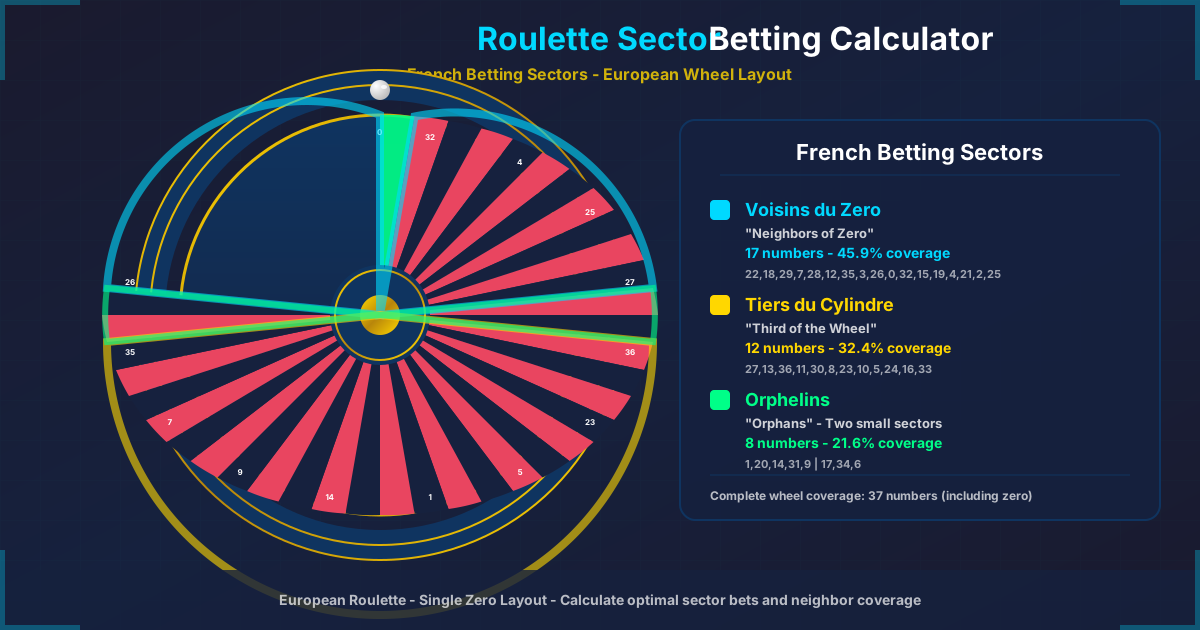
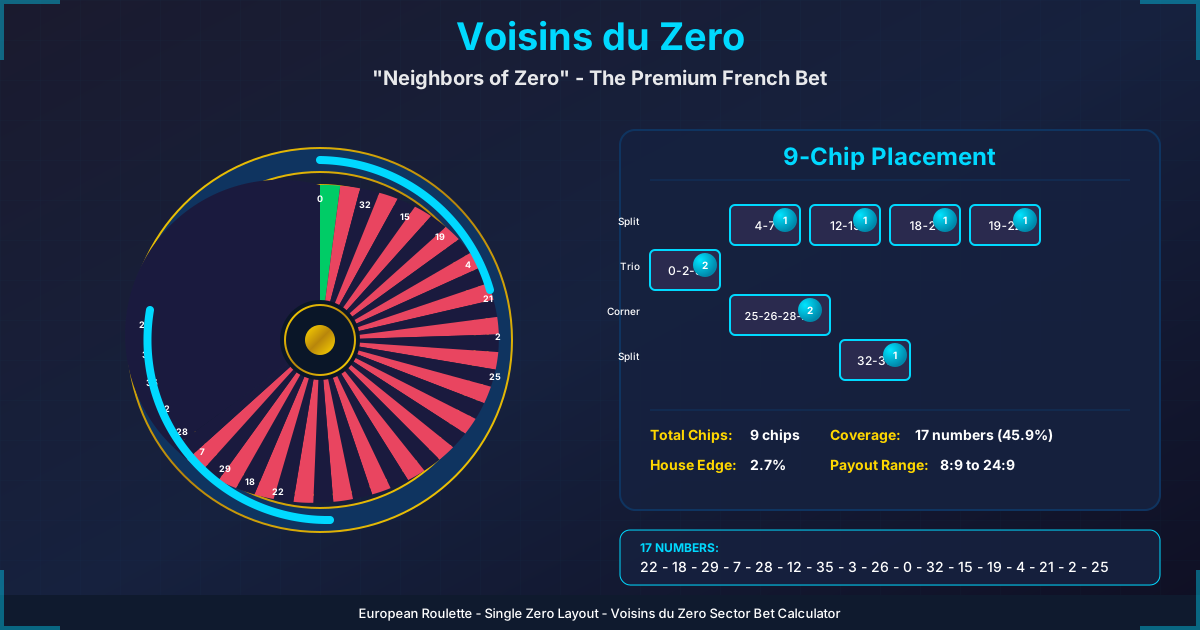
Voisins du Zéro (Neighbors of Zero)
Numbers: 22, 18, 29, 7, 28, 12, 35, 3, 26, 0, 32, 15, 19, 4, 21, 2, 25
Total: 17 numbers (45.9% of wheel)
Cost: 9 chips

Chip placement:
- 2 chips: 0-2-3 (trio)
- 1 chip: 4-7 (split)
- 1 chip: 12-15 (split)
- 1 chip: 18-21 (split)
- 1 chip: 19-22 (split)
- 2 chips: 25-26-28-29 (corner)
- 1 chip: 32-35 (split)
Payouts if hit:
| Number | Payout |
|---|---|
| 0, 2, 3 | +15 chips |
| 25, 26, 28, 29 | +9 chips |
| Others | +9 chips |
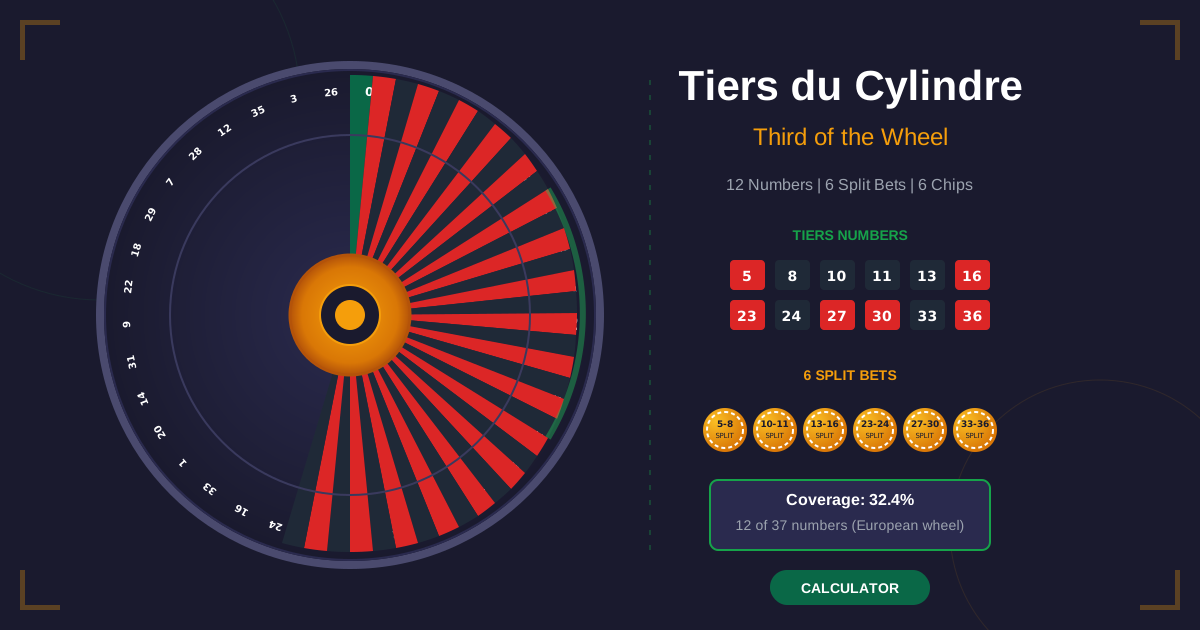
Tiers du Cylindre (Third of Wheel)
Numbers: 27, 13, 36, 11, 30, 8, 23, 10, 5, 24, 16, 33
Total: 12 numbers (32.4% of wheel)
Cost: 6 chips

Chip placement:
- 1 chip: 5-8 (split)
- 1 chip: 10-11 (split)
- 1 chip: 13-16 (split)
- 1 chip: 23-24 (split)
- 1 chip: 27-30 (split)
- 1 chip: 33-36 (split)
Payout: +12 chips on any hit
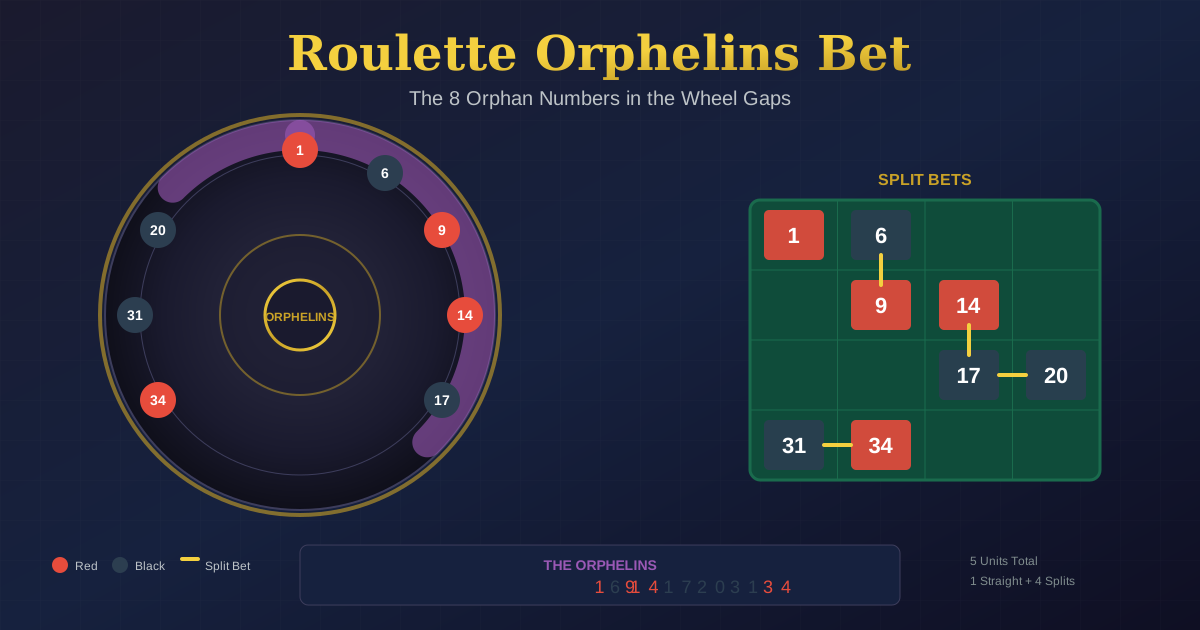
Orphelins (Orphans)
Numbers: 17, 34, 6, 1, 20, 14, 31, 9
Total: 8 numbers (21.6% of wheel)
Cost: 5 chips

Chip placement:
- 1 chip: 1 (straight up)
- 1 chip: 6-9 (split)
- 1 chip: 14-17 (split)
- 1 chip: 17-20 (split)
- 1 chip: 31-34 (split)

Note: 17 is covered by two splits
Payouts:
| Number | Payout |
|---|---|
| 1 | +31 chips |
| 17 | +13 chips |
| Others | +13 chips |
Jeu Zéro (Zero Game)
Numbers: 12, 35, 3, 26, 0, 32, 15
Total: 7 numbers (18.9% of wheel)
Cost: 4 chips

Chip placement:
- 1 chip: 0-3 (split)
- 1 chip: 12-15 (split)
- 1 chip: 26 (straight up)
- 1 chip: 32-35 (split)
Payouts:
| Number | Payout |
|---|---|
| 26 | +32 chips |
| Others | +14 chips |
Neighbors Bets
Standard Neighbors (5-Number)
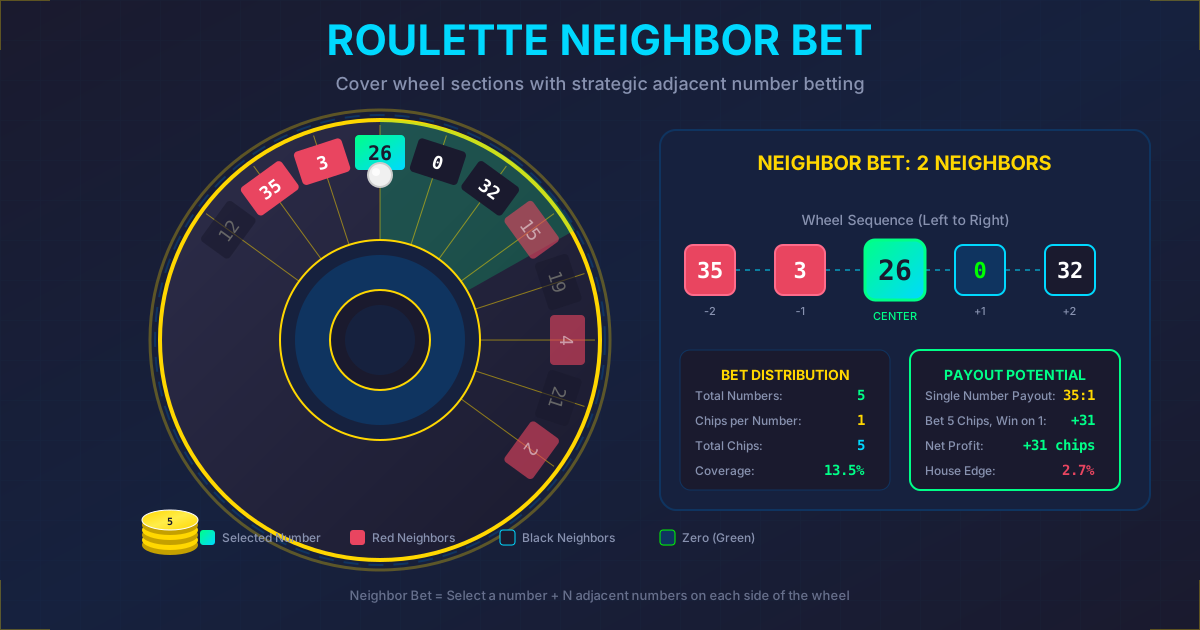
"26 and neighbors" covers:
26 and 2 numbers on each side on wheel

Example: 26 and neighbors (5 numbers)
Numbers: 3, 26, 0, 32, 15
Cost: 5 chips (1 each straight up)
Payout: +31 chips if any hits
Extended Neighbors
| Type | Numbers | Cost | Coverage |
|---|---|---|---|
| 3-number | Center + 1 each side | 3 chips | 8.1% |
| 5-number | Center + 2 each side | 5 chips | 13.5% |
| 7-number | Center + 3 each side | 7 chips | 18.9% |
| 9-number | Center + 4 each side | 9 chips | 24.3% |
Wheel Order (European)
Reading clockwise from 0:
0, 32, 15, 19, 4, 21, 2, 25, 17, 34, 6, 27, 13, 36, 11, 30, 8, 23, 10, 5, 24, 16, 33, 1, 20, 14, 31, 9, 22, 18, 29, 7, 28, 12, 35, 3, 26
Coverage Analysis
Sector Coverage Comparison
| Sector | Numbers | Coverage | Cost | House Edge |
|---|---|---|---|---|
| Voisins | 17 | 45.9% | 9 | 2.70% |
| Tiers | 12 | 32.4% | 6 | 2.70% |
| Orphelins | 8 | 21.6% | 5 | 2.70% |
| Jeu Zéro | 7 | 18.9% | 4 | 2.70% |
| Full cover | 37 | 100% | 37 | 2.70% |
Expected Value
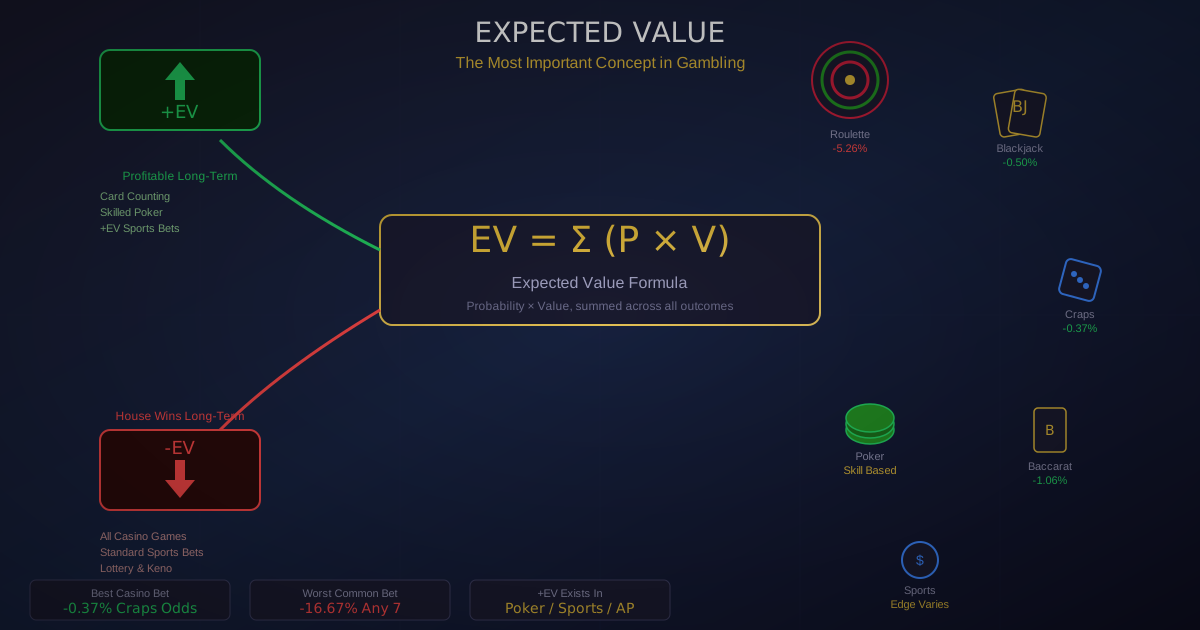
All sector bets have same EV:
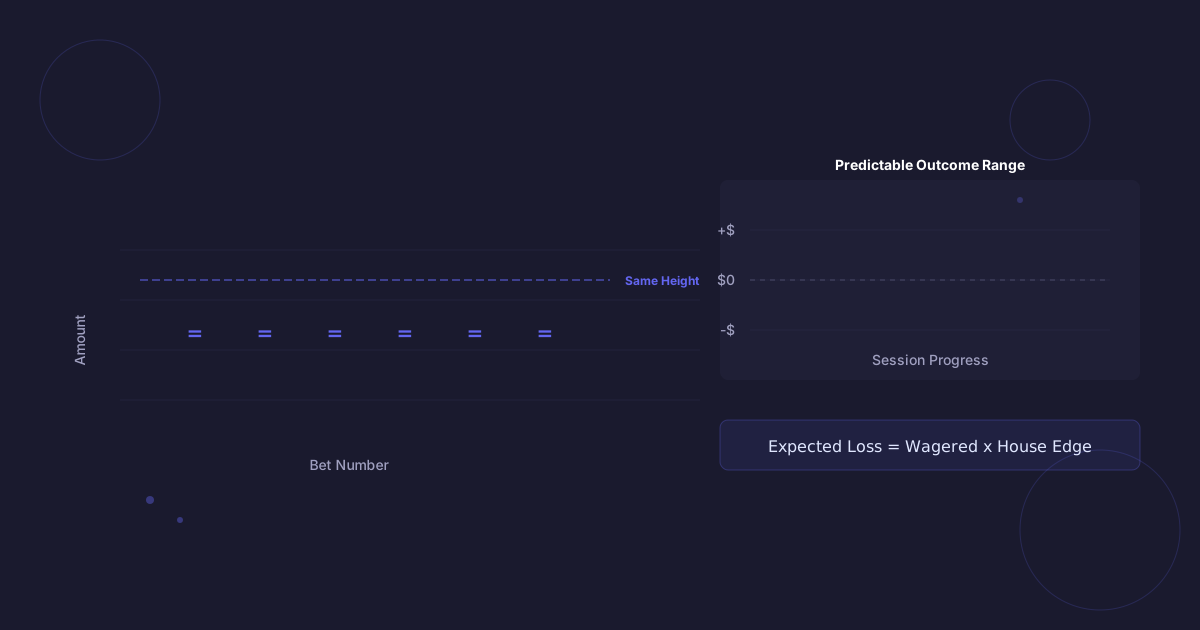
EV = -2.70% per chip wagered

Voisins (9 chips):
Expected loss = 9 × 0.027 = 0.243 chips

Tiers (6 chips):
Expected loss = 6 × 0.027 = 0.162 chips

No mathematical advantage to any sector
Real-World Examples
Example 1: Voisins du Zéro
Bet: 9 chips on Voisins Result: Ball lands on 28
Calculation:
28 is in corner bet: 25-26-28-29
Corner pays 8:1
Win: 8 chips + 2 chip bet returned = 10 chips
Cost was 9 chips
Net profit: +1 chip
Example 2: Neighbors Bet
Bet: "17 and neighbors" (5 chips) Numbers: 34, 6, 17, 27, 13 Result: Ball lands on 6
Calculation:
6 was straight up bet
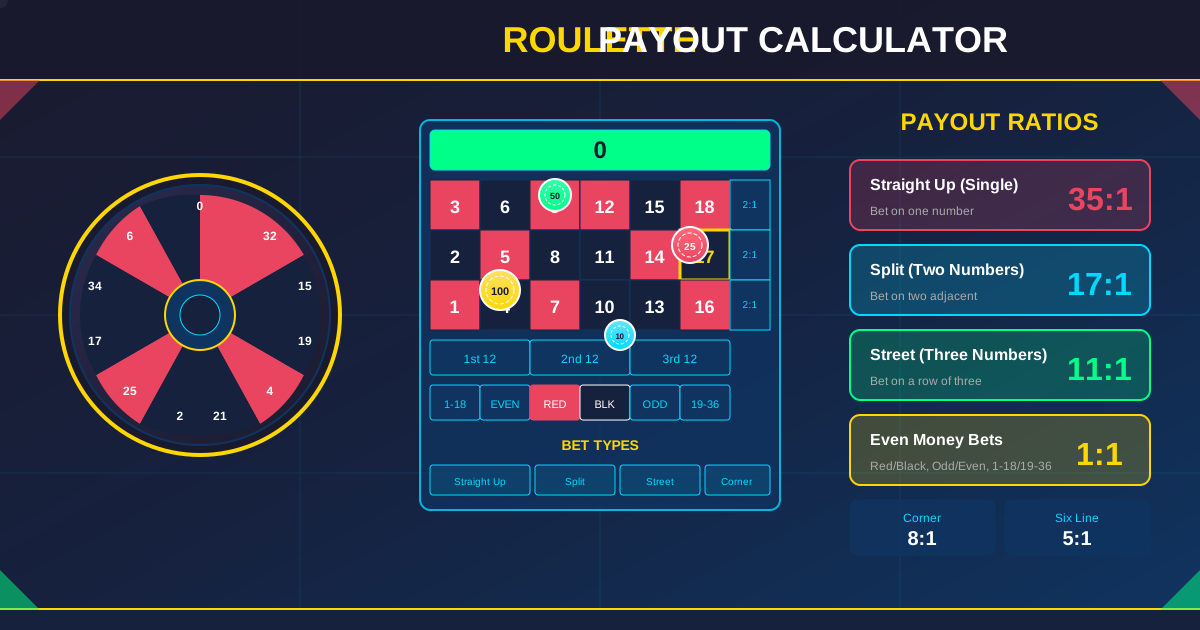
Straight up pays 35:1
Win: 35 + 1 = 36 chips
Cost was 5 chips
Net profit: +31 chips
Example 3: Full Wheel Coverage
Bet: Voisins + Tiers + Orphelins Total chips: 9 + 6 + 5 = 20 chips Coverage: 37 numbers (with overlaps at 17)
Result: Any number wins something
Guaranteed hit, variable payout
Overlap on 17: Extra coverage
Net payout: +6 to +31 chips
Never lose completely (but still -EV)
Example 4: Dealer Signature Play
Theory: Dealer releases ball at consistent point Strategy: Bet neighbors of predicted landing zone
Bet: 7-number neighbors around predicted sector Cost: 7 chips
Analysis:
If prediction accuracy > 18.9%:
Potential edge over standard odds

Reality: Very difficult to achieve
Dealer changes, wheel varies
Not a reliable strategy
Why Use Sector Bets?
Potential Reasons
| Reason | Validity |
|---|---|
| Wheel bias exploitation | Theoretical only |
| Dealer signature | Very difficult |
| Preference for wheel sections | Personal choice |
| Tradition/entertainment | Valid |
| Mathematical advantage | None |
Wheel Bias Theory
Concept: Physical wheel imperfections
Certain sectors hit more often

Reality:
Modern wheels: Precisely manufactured
Regular maintenance: Bias eliminated
Casino monitoring: Caught quickly

Not a viable strategy
Dealer Signature Theory
Concept: Dealer releases ball consistently
Predict landing based on release point

Challenges:
- Dealers rotate
- Ball bounce unpredictable
- Casino awareness
- Minimal edge if any
Sector Bet Variations
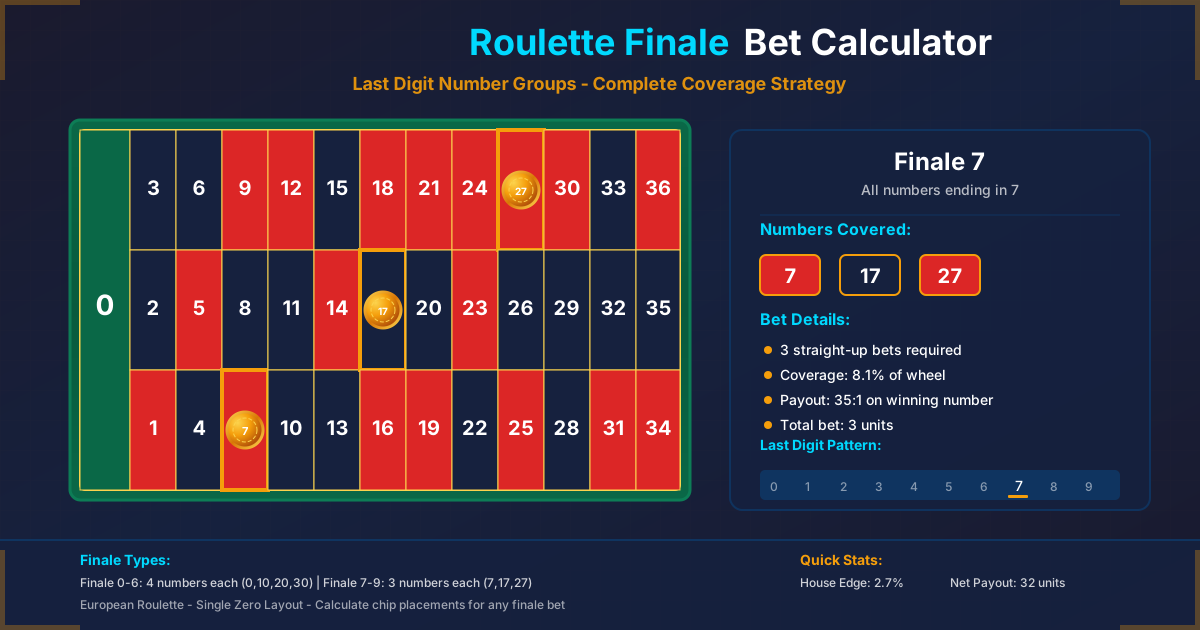
Finals (Finales)
Finale 4: All numbers ending in 4
Numbers: 4, 14, 24, 34
Cost: 4 chips

Finale 0: All numbers ending in 0
Numbers: 0, 10, 20, 30
Cost: 4 chips
Maximums
"Maximum on 17":
All bets involving 17 at table maximum

Straight up: Max
Splits (4): Max each
Street: Max
Corner: Max
Line: Max

Very expensive, covers one number heavily
Custom Sectors
"My lucky section":
Any consecutive wheel numbers

Example: 0-side 9 numbers
0, 32, 15, 19, 4, 21, 2, 25, 17
Cost: 9 chips straight up
Coverage: 24.3%
House Edge Remains Constant
Mathematical Truth
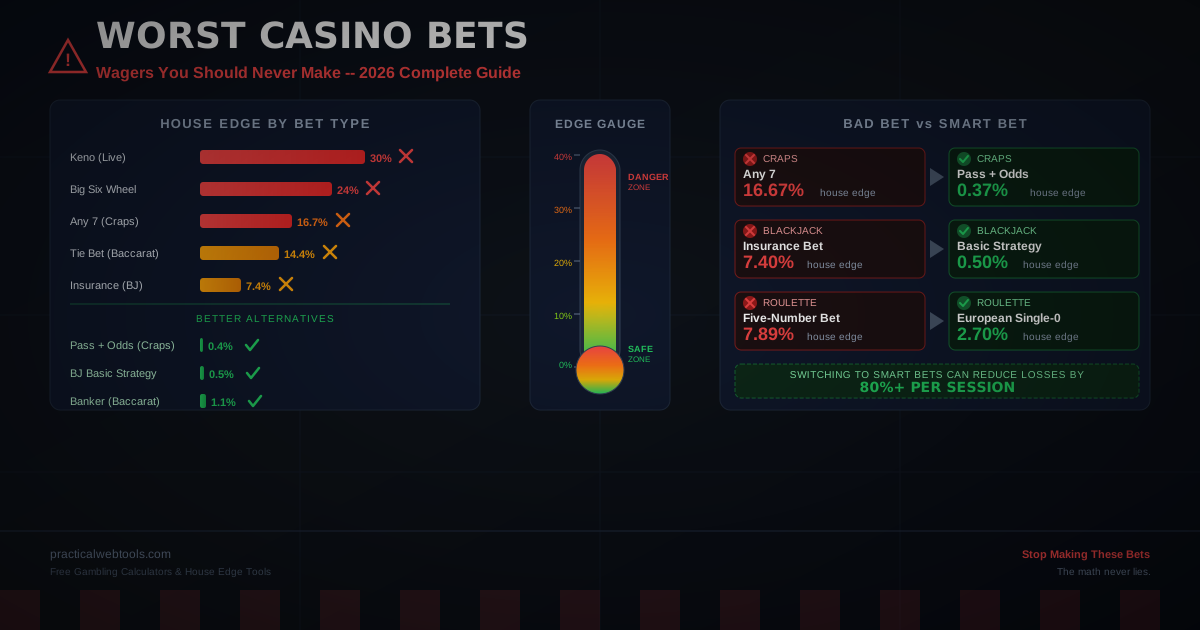
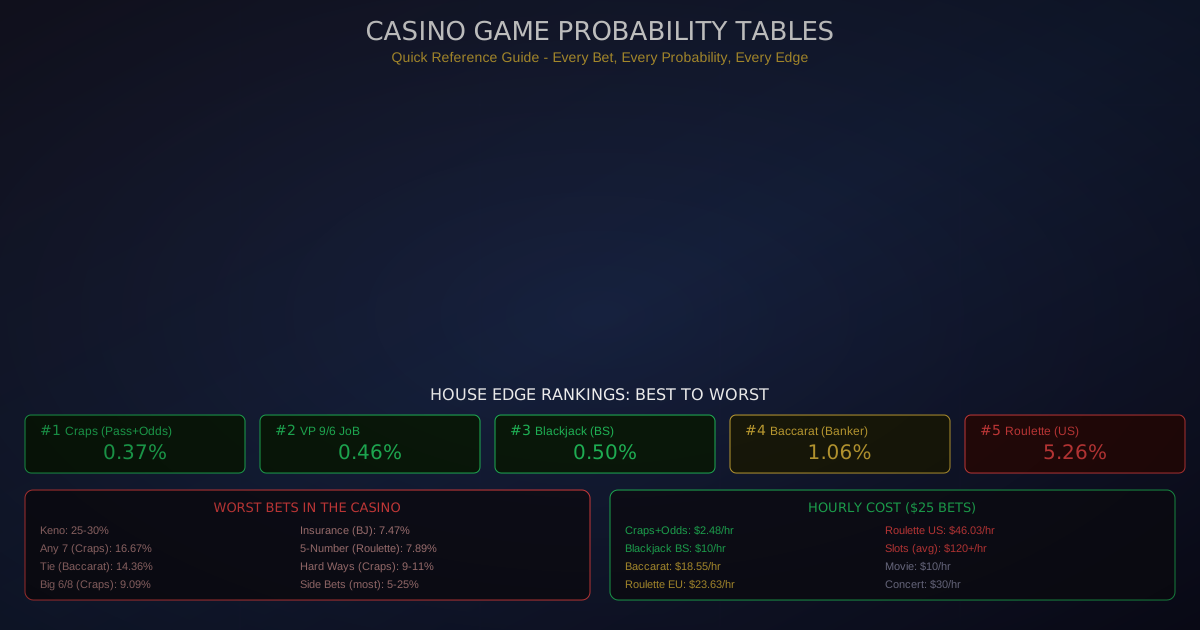
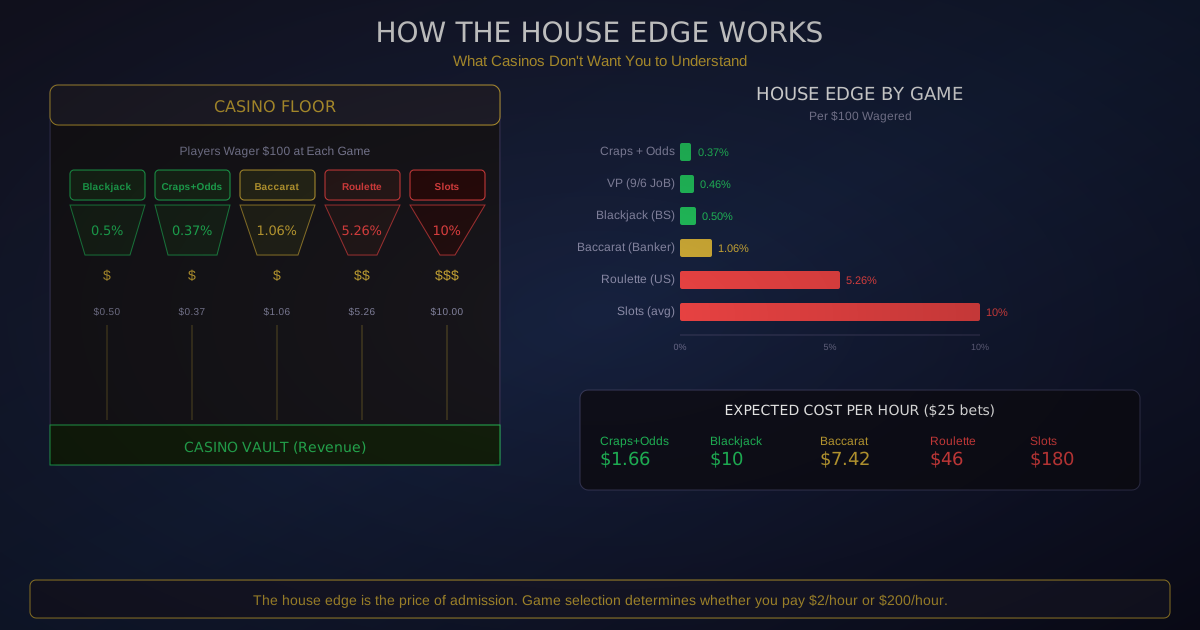
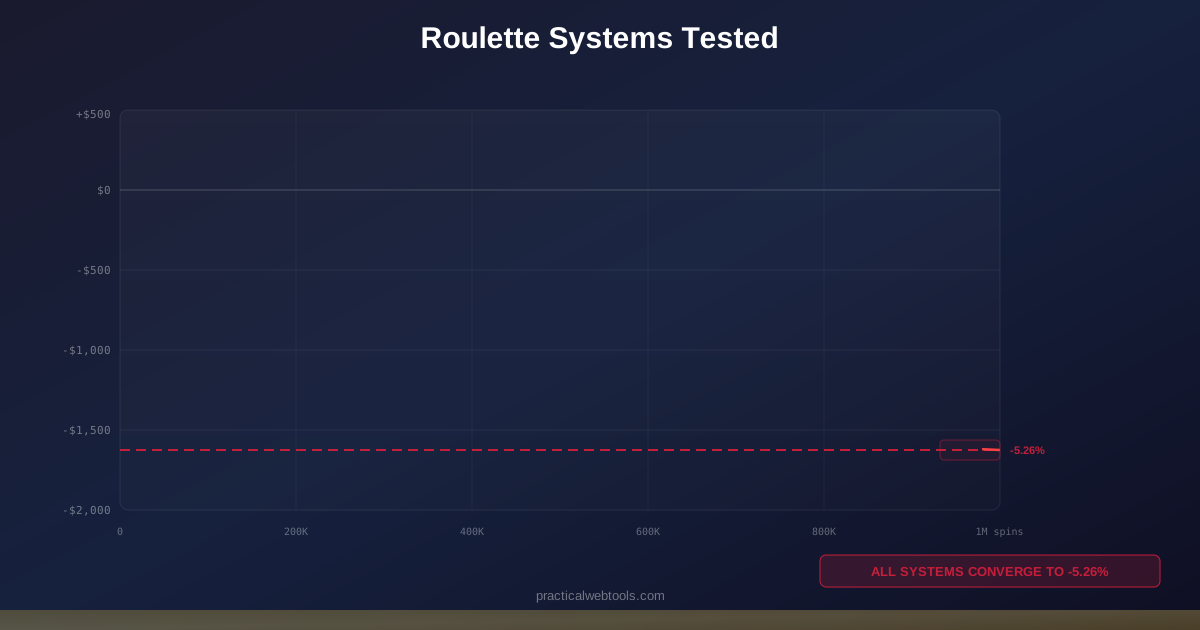
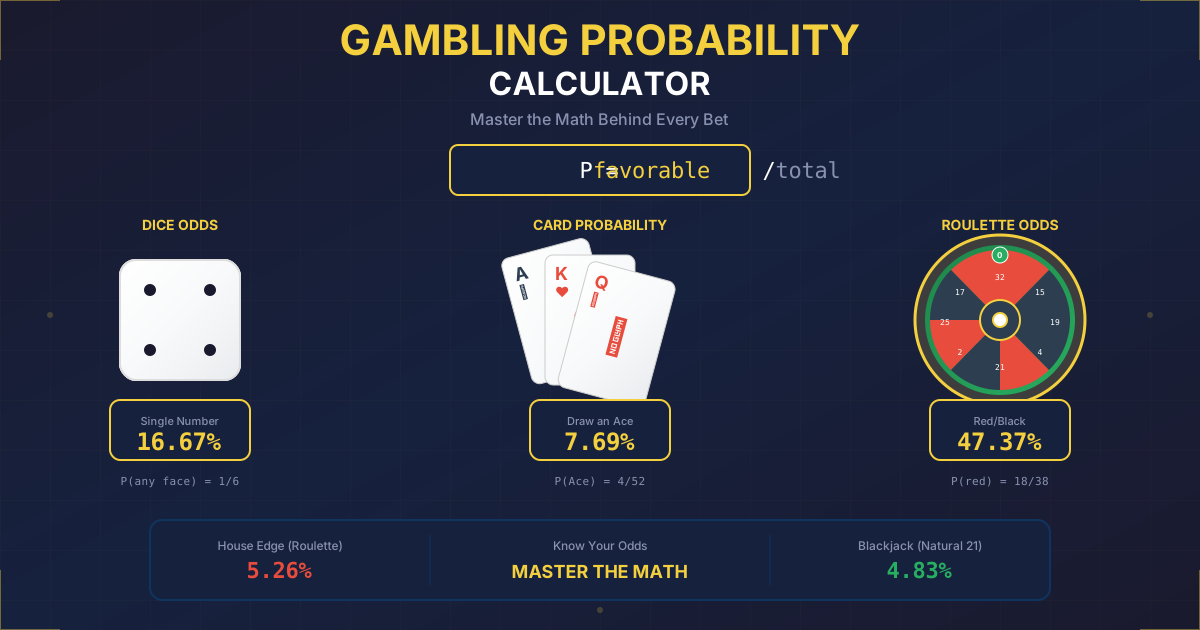
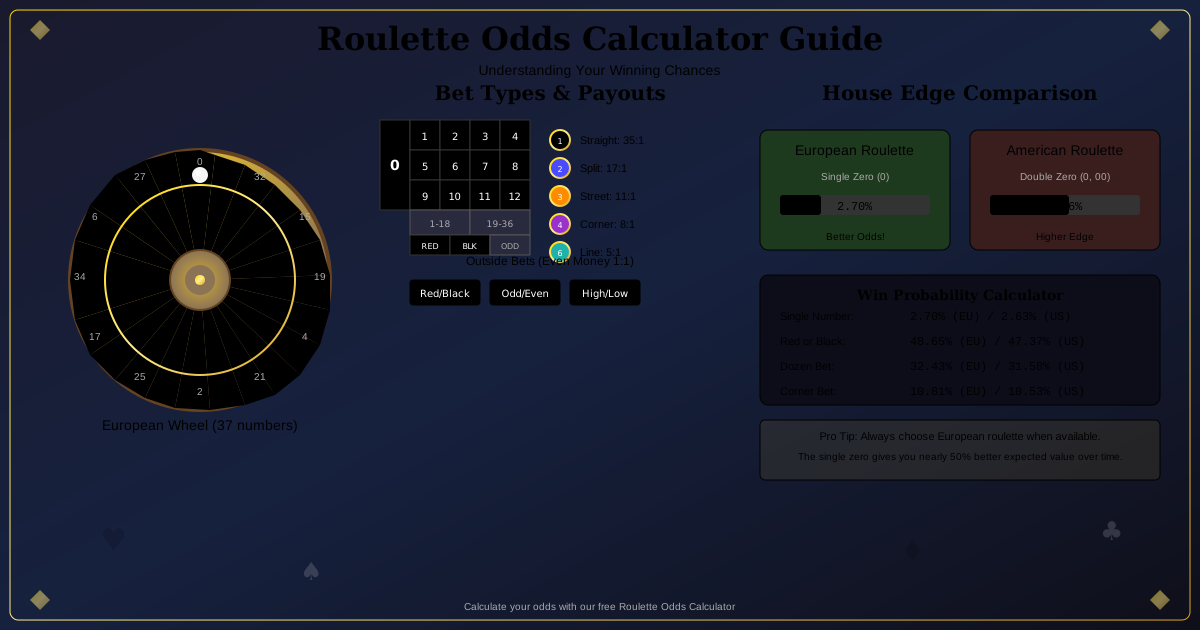
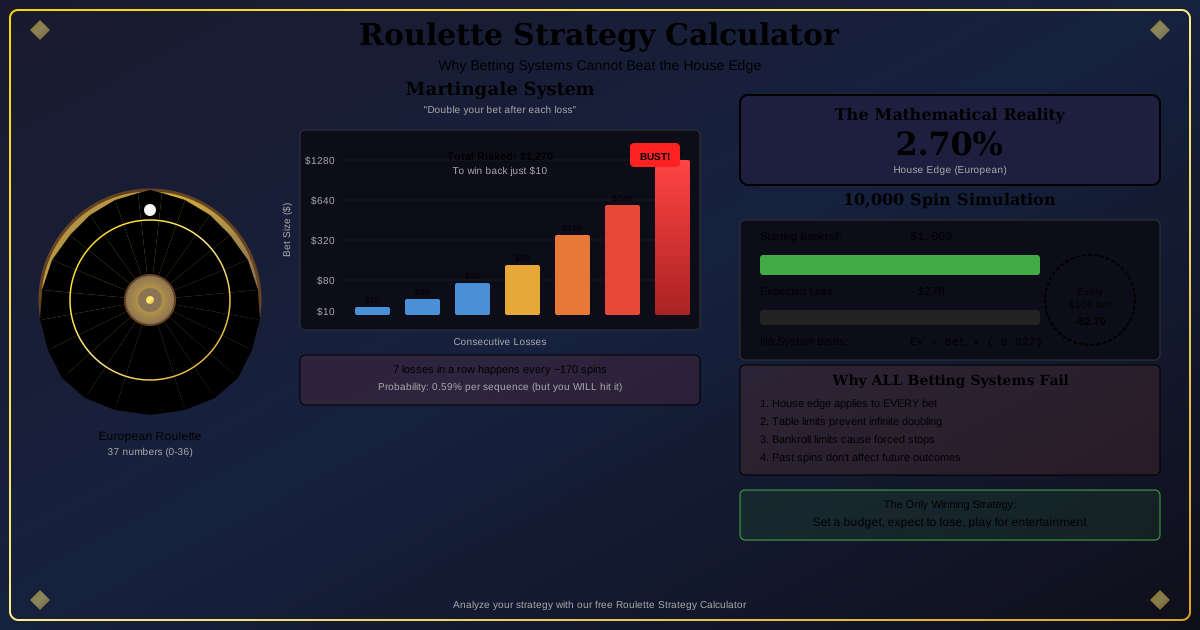
Every roulette bet: 2.70% edge (European)

Voisins: 2.70%
Tiers: 2.70%
Neighbors: 2.70%
Any combination: 2.70%

Covering more numbers doesn't help
Covering fewer numbers doesn't help
Patterns don't change expected value
Coverage vs Edge
| Coverage | Probability | Payout Adjustment | Edge |
|---|---|---|---|
| 1 number | 2.70% | 35:1 | 2.70% |
| 5 numbers | 13.5% | 7.4:1 effective | 2.70% |
| 17 numbers | 45.9% | Variable | 2.70% |
| 37 numbers | 100% | Guaranteed loss | 2.70% |
Common Misconceptions
"Sector Bets Have Better Odds"
False: Same 2.70% house edge as any bet
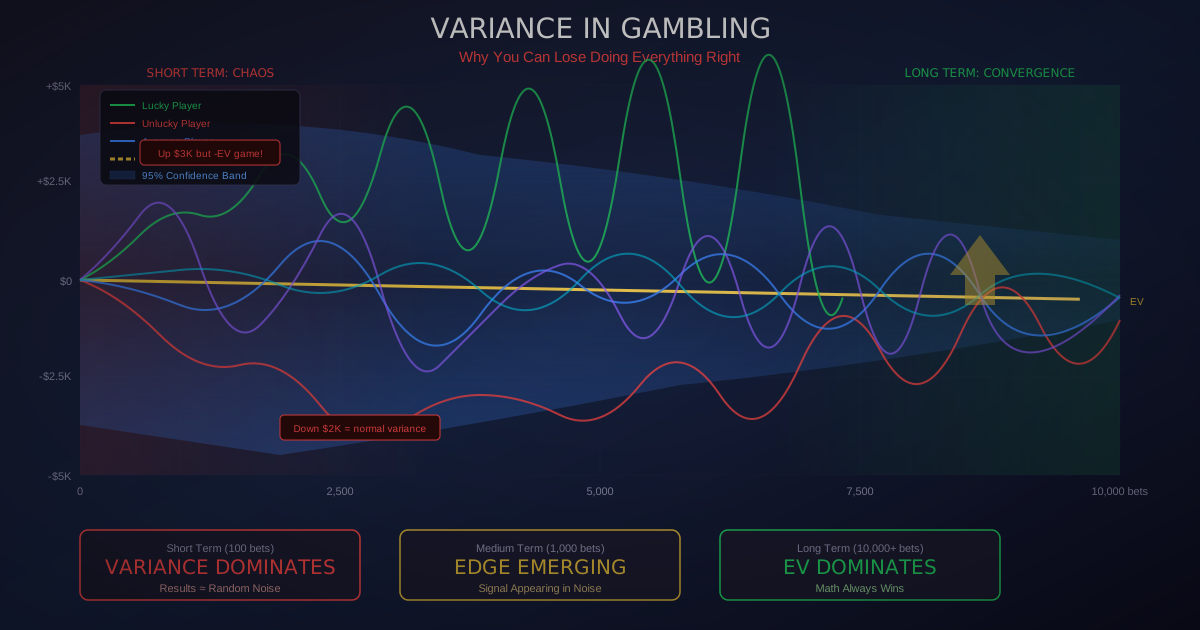
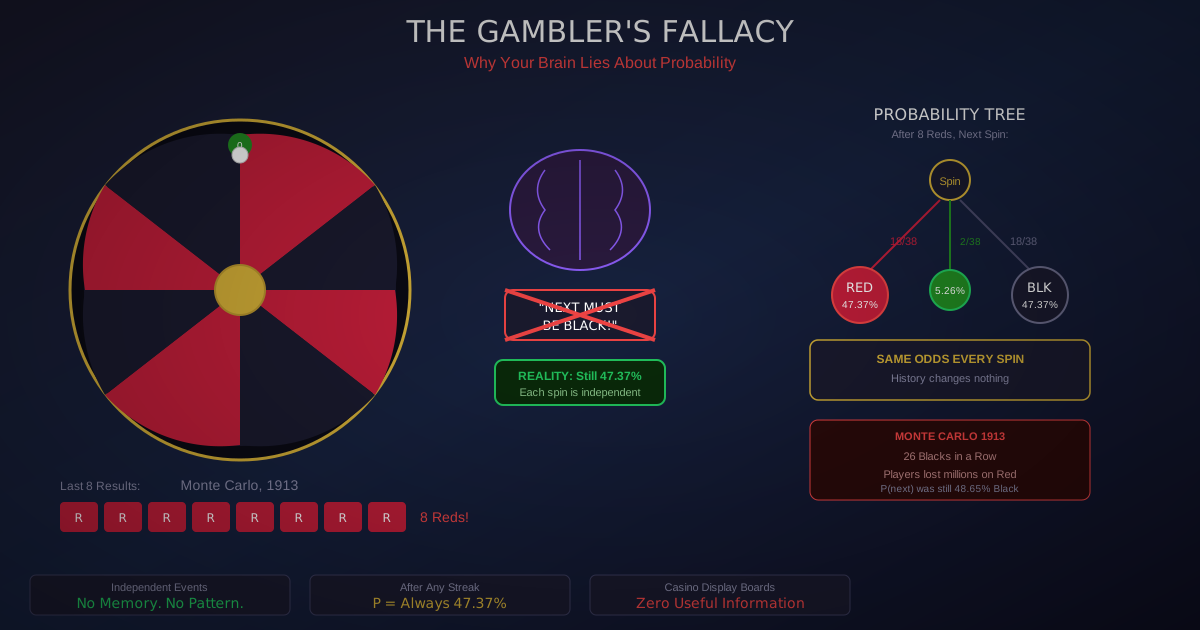
"Wheel Sections Are Due"
False: Each spin is independent
"Dealers Can Aim"
Mostly False: Modern conditions prevent this
"Covering More = Winning More"
False: Covering more costs more, proportionally same return
Frequently Asked Questions
Are sector bets available everywhere?
Mainly European casinos and online. American casinos rarely offer traditional call bets. Check table rules.
Can I make sector bets in American roulette?
Typically no—American wheels don't have call bet layouts. Number arrangement also differs.
What's the best sector bet?
None mathematically—all have 2.70% edge. Tiers is cheapest per-number coverage. Voisins covers the most numbers.
Do casinos limit sector bets?
Some limit call bets due to verification needs. Online casinos usually allow them freely.
Should I combine sector bets?
Combining bets doesn't change EV. It's personal preference for coverage pattern.
Is there any advantage to sector betting?
No mathematical advantage. Potential advantages (wheel bias, dealer signature) are theoretical and impractical.
Pro Tips
-
Learn wheel order: Know physical neighbors
-
Understand coverage: What each bet actually covers
-
Same edge always: Sector bets don't beat the house
-
Call clearly: Announce bets properly in live casinos
-
Track patterns for fun: Not for profit expectation
Related Calculators
- Roulette Odds Calculator - All bet probabilities
- Roulette European vs American - Wheel comparison
- Roulette Martingale Calculator - System analysis
- Expected Value Calculator - EV analysis
- House Edge Calculator - Edge comparison
Conclusion
Sector bets add strategic variety to roulette by targeting wheel sections rather than layout positions. Our calculator shows exactly what each call bet covers, costs, and pays. While sector bets don't change the mathematical edge, understanding them adds depth to your roulette knowledge and European casino experience.
Whether you're targeting Voisins du Zéro or custom neighbors, our calculator reveals the complete coverage and cost structure. Master the wheel geography, understand what you're betting on, and enjoy sector bets as part of your roulette repertoire—just don't expect them to beat the house edge.