Poker Sample Size Calculator: When Do Results Become Meaningful? (2026)
Poker Sample Size Calculator: Separate Signal from Noise
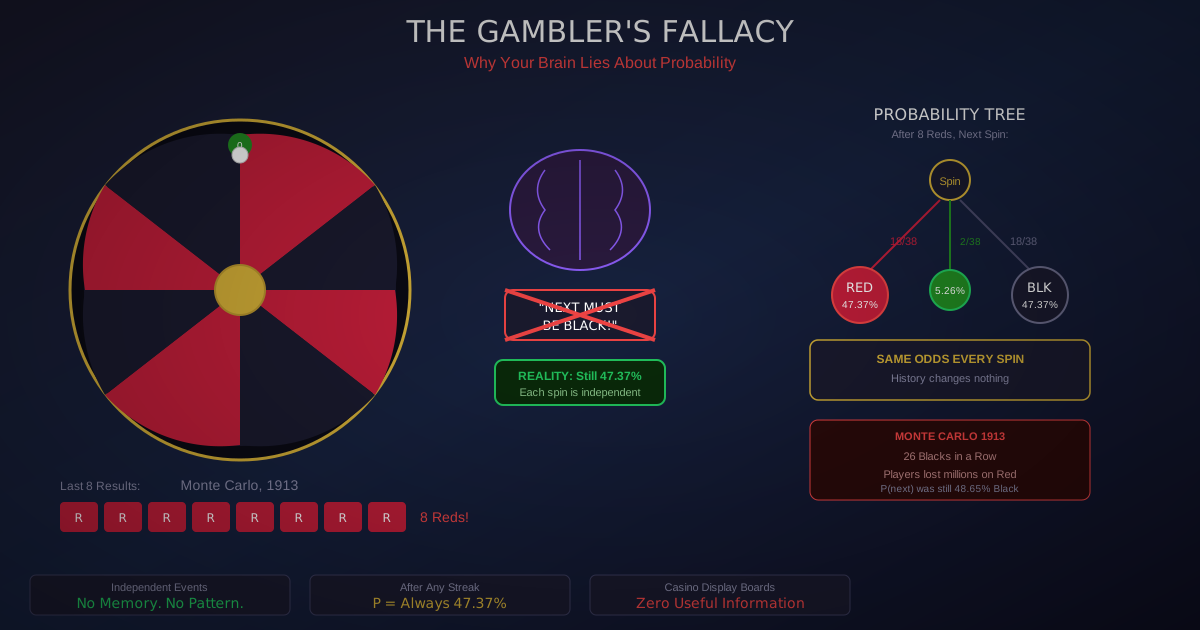
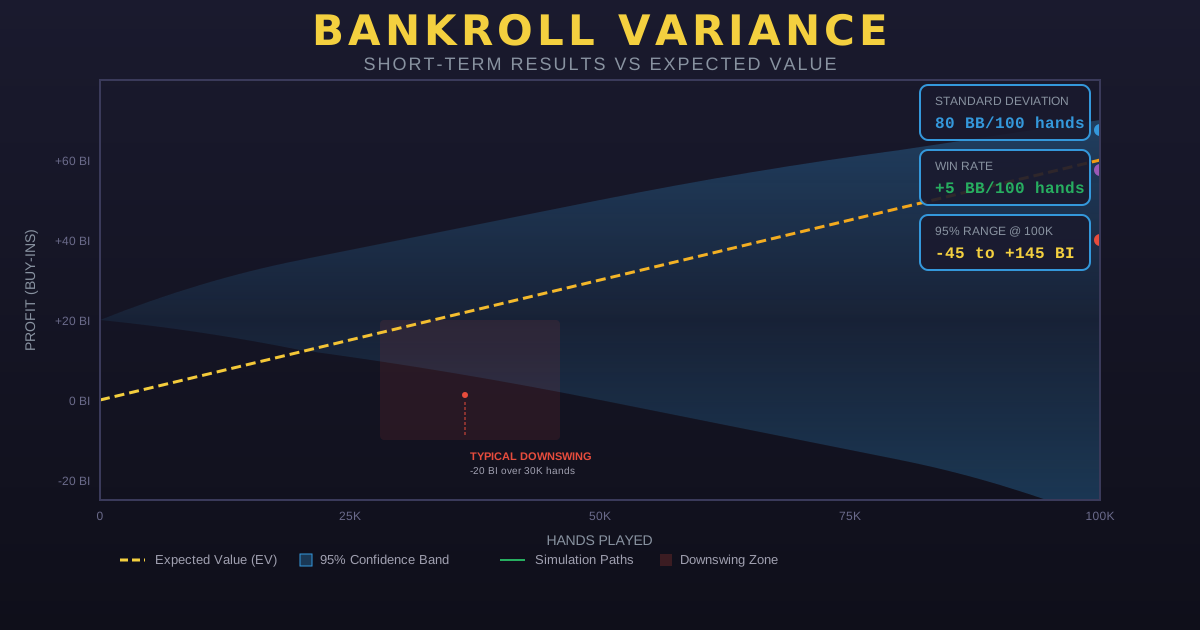
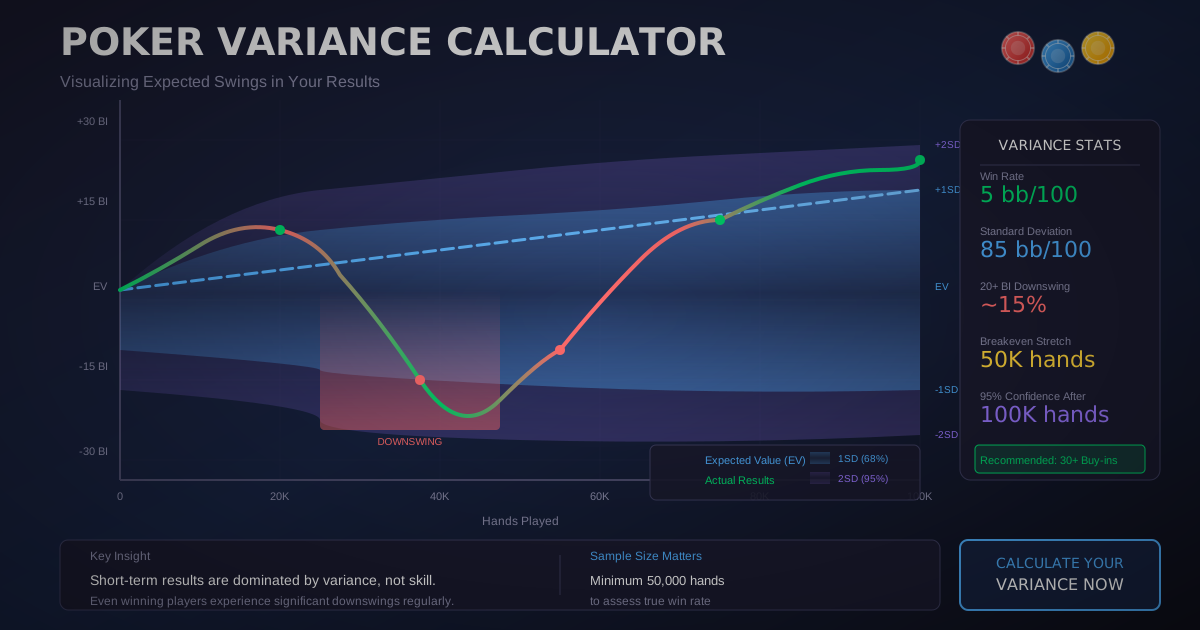
Poker players constantly struggle with a fundamental question: Are my results due to skill or luck? With extreme variance, short-term results tell you almost nothing. Our poker sample size calculator shows you exactly how many hands you need to play before your results become statistically meaningful, helping you make confident decisions about your game.
What Is Sample Size in Poker?
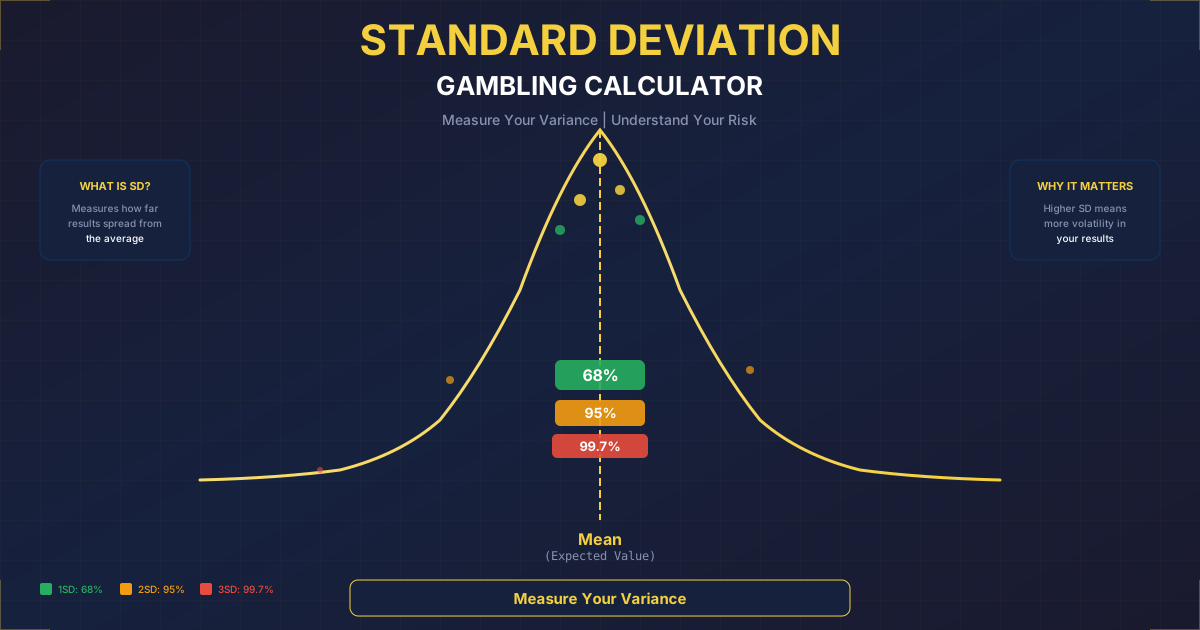
Sample size refers to the number of hands (or tournaments) you've played. In statistics, larger sample sizes produce more reliable estimates of your true win rate. Due to poker's high variance, enormous sample sizes are needed before results converge to your actual skill level.
Quick Answer: For a 95% confidence interval of ±1 BB/100 around your true win rate, you need approximately 640,000 hands (assuming 80 BB/100 standard deviation). For a rougher ±2 BB/100 estimate, you need 160,000 hands. Most recreational players never achieve statistically significant sample sizes - their results remain dominated by variance.
How to Use Our Calculator
Use the Poker Sample Size Calculator →
Step-by-Step Instructions
- Enter Your Estimated Win Rate: Input your suspected true win rate
- Enter Standard Deviation: Input typical SD (80-100 BB/100 for NLHE)
- Select Confidence Level: Choose 90%, 95%, or 99% confidence
- Select Precision: How close to true win rate (±1, ±2, ±3 BB/100)
- Calculate Sample Size: See hands needed for your requirements
Input Fields
| Field | Description | Example |
|---|---|---|
| Expected Win Rate | Your estimated true BB/100 | 5 BB/100 |
| Standard Deviation | Variance measure | 85 BB/100 |
| Confidence Level | Statistical certainty | 95% |
| Margin of Error | Acceptable imprecision | ±2 BB/100 |
| Current Sample | Hands played so far | 50,000 |
The Mathematics of Sample Size
The Sample Size Formula
Required sample size for a given precision:
n = (Z × SD / E)²

Where:
n = required hands (in hundreds)
Z = z-score for confidence level
SD = standard deviation (BB/100)
E = margin of error (BB/100)
Z-scores by confidence level:
90% confidence: Z = 1.645
95% confidence: Z = 1.96
99% confidence: Z = 2.576
Example Calculation
Goal: 95% confidence within ±2 BB/100
SD = 80 BB/100
E = 2 BB/100
Z = 1.96

n = (1.96 × 80 / 2)² = (78.4)² = 6,146.56

Hands needed = 6,147 × 100 = 614,700 hands
Confidence Interval Formula
Calculate the range of possible true win rates:
CI = Observed Win Rate ± (Z × SD / √n)

Example:
Observed: 5 BB/100
SD: 80 BB/100
Hands: 100,000
Z: 1.96 (95%)

CI = 5 ± (1.96 × 80 / √1000)
CI = 5 ± 4.96
CI = 0.04 to 9.96 BB/100
Your true win rate is somewhere between 0 and 10 BB/100 with 95% confidence.
Sample Size Requirements
Cash Game Sample Sizes
For 95% Confidence:
| Precision | Hands Needed | Time at 500 hands/hr |
|---|---|---|
| ±3 BB/100 | 272,000 | 544 hours |
| ±2 BB/100 | 614,000 | 1,228 hours |
| ±1.5 BB/100 | 1,092,000 | 2,184 hours |
| ±1 BB/100 | 2,458,000 | 4,916 hours |
Tournament Sample Sizes
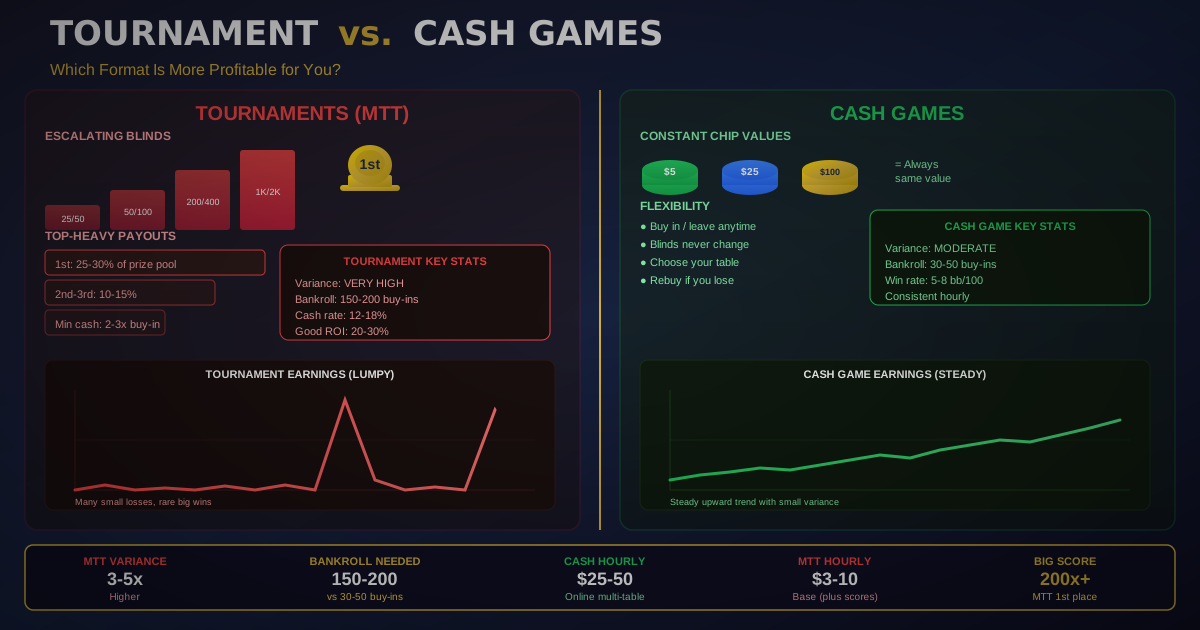
Tournaments have even higher variance (300-500% SD):
| Precision | Tournaments Needed |
|---|---|
| ±50% ROI | ~400 tournaments |
| ±25% ROI | ~1,600 tournaments |
| ±10% ROI | ~10,000 tournaments |
The Reality Check
Professional volume:
Full-time online grinder: ~100,000 hands/month
Annual volume: ~1,200,000 hands

Time for 95% CI of ±2 BB/100: ~6 months
Time for 95% CI of ±1 BB/100: ~2 years
Recreational volume:
Part-time player: ~10,000 hands/month
Annual volume: ~120,000 hands

Time for 95% CI of ±2 BB/100: ~5 years
Time for 95% CI of ±1 BB/100: ~20 years
Most players never achieve statistically meaningful samples.
Interpreting Small Sample Results
What 10,000 Hands Tells You
Scenario: You've won 4 BB/100 over 10,000 hands
Confidence Interval (95%):
SD: 80 BB/100
n: 100 (hundreds)
CI = 4 ± (1.96 × 80 / 10) = 4 ± 15.68

Range: -11.68 to +19.68 BB/100
Conclusion: You could be anything from a significant loser to an elite winner. This sample tells you almost nothing.
What 50,000 Hands Tells You
Scenario: You've won 4 BB/100 over 50,000 hands
CI = 4 ± (1.96 × 80 / √500) = 4 ± 7.02
Range: -3.02 to +11.02 BB/100
Conclusion: Still wide range. You might be break-even or a strong winner. Better, but inconclusive.
What 200,000 Hands Tells You
Scenario: You've won 4 BB/100 over 200,000 hands
CI = 4 ± (1.96 × 80 / √2000) = 4 ± 3.51
Range: +0.49 to +7.51 BB/100
Conclusion: Now we're getting somewhere. You're very likely a winning player, probably in the 2-6 BB/100 range.
Real-World Examples
Example 1: The Optimistic Beginner
Profile:
Hands played: 15,000
Observed win rate: 12 BB/100
Assumption: "I'm crushing these games!"
Reality:
95% CI = 12 ± (1.96 × 85 / √150) = 12 ± 13.6
Range: -1.6 to +25.6 BB/100

Probability of being a losing player: ~20%
Probability of being under 5 BB/100: ~50%
Conclusion: The 12 BB/100 is likely inflated by variance. True win rate probably much lower.
Example 2: The Struggling Regular
Profile:
Hands played: 80,000
Observed win rate: -1 BB/100
Assumption: "I'm a losing player"
Reality:
95% CI = -1 ± (1.96 × 80 / √800) = -1 ± 5.55
Range: -6.55 to +4.55 BB/100

Probability of actually being a winner: ~40%
Conclusion: May actually be a winning player running badly. Need more hands.
Example 3: The Confirmed Winner
Profile:
Hands played: 500,000
Observed win rate: 3.5 BB/100
Analysis:
95% CI = 3.5 ± (1.96 × 80 / √5000) = 3.5 ± 2.22
Range: +1.28 to +5.72 BB/100

Zero is outside the confidence interval
Conclusion: Statistically confirmed winning player. True rate likely between 2-5 BB/100.
Example 4: Moving Up Decision
Profile:
Current stakes: $0.50/$1
Hands: 100,000
Win rate: 6 BB/100
Question: Should I move to $1/$2?
Analysis:
95% CI: +1.04 to +10.96 BB/100
Confirmed winner at current stakes

But will 6 BB/100 translate to $1/$2?
Expect win rate to drop 2-4 BB/100 at higher stakes
Adjusted estimate: 2-4 BB/100 at $1/$2

Decision: Move up with proper bankroll, accept lower win rate
Example 5: Format Comparison
Profile:
6-max: 4 BB/100 over 150,000 hands
Full Ring: 7 BB/100 over 30,000 hands
Question: Which format am I better at?
Analysis:
6-max CI: 4 ± 4.06 = -0.06 to 8.06 BB/100
Full Ring CI: 7 ± 9.06 = -2.06 to 16.06 BB/100

Overlap exists between confidence intervals
Cannot conclude full ring is truly better
6-max has more reliable data
Conclusion: Need more full ring hands before switching formats based on results.
Example 6: Downswing Analysis
Profile:
Lifetime: 5 BB/100 over 300,000 hands
Last 50,000: -3 BB/100
Question: Am I playing worse or running bad?
Analysis:
Lifetime CI: 5 ± 2.87 = 2.13 to 7.87 BB/100
Recent CI: -3 ± 7.02 = -10.02 to 4.02 BB/100

Recent sample includes +5 BB/100 in confidence interval
This downswing is consistent with variance
Likely running bad, not playing bad
Variance Simulation Insights
Probability of Specific Outcomes
For a true 5 BB/100 winner over various samples:
10,000 Hands:
Probability of losing: 28%
Probability of 0-5 BB/100: 32%
Probability of 5-10 BB/100: 25%
Probability of 10+ BB/100: 15%
50,000 Hands:
Probability of losing: 14%
Probability of 0-5 BB/100: 36%
Probability of 5-10 BB/100: 36%
Probability of 10+ BB/100: 14%
200,000 Hands:
Probability of losing: 3%
Probability of 0-5 BB/100: 47%
Probability of 5-10 BB/100: 47%
Probability of 10+ BB/100: 3%
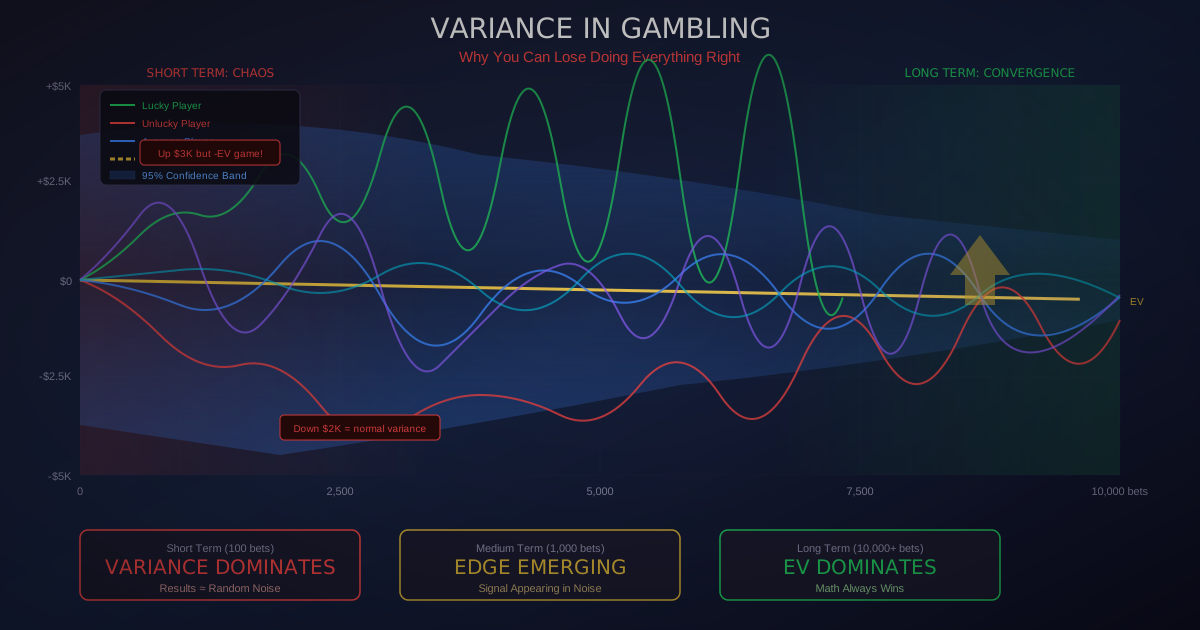
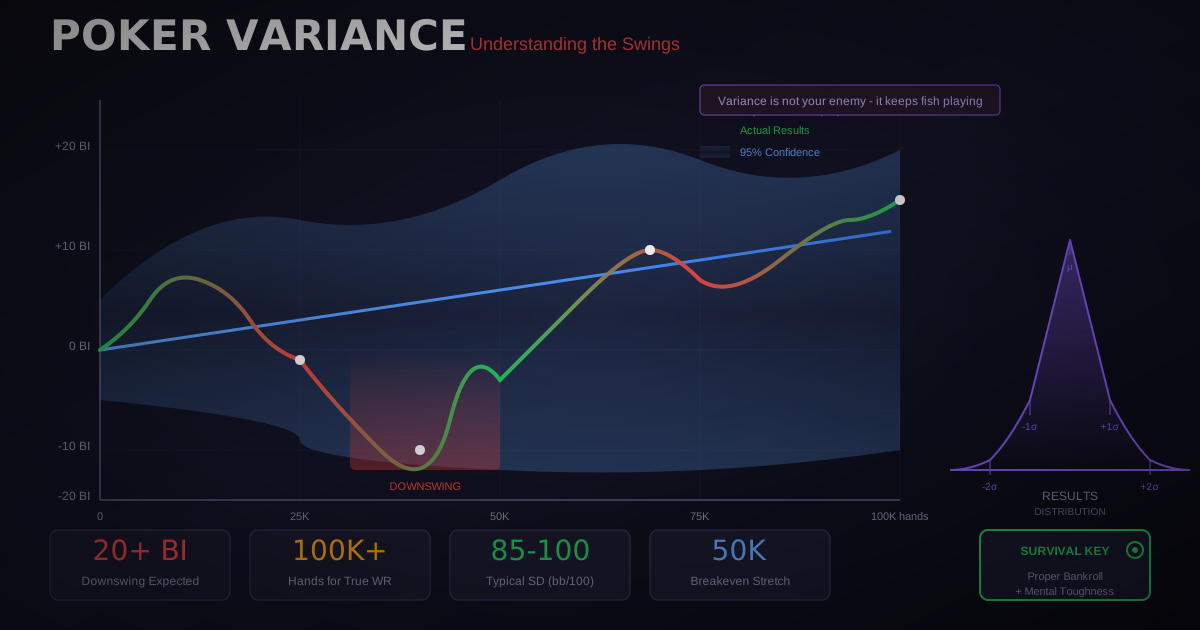
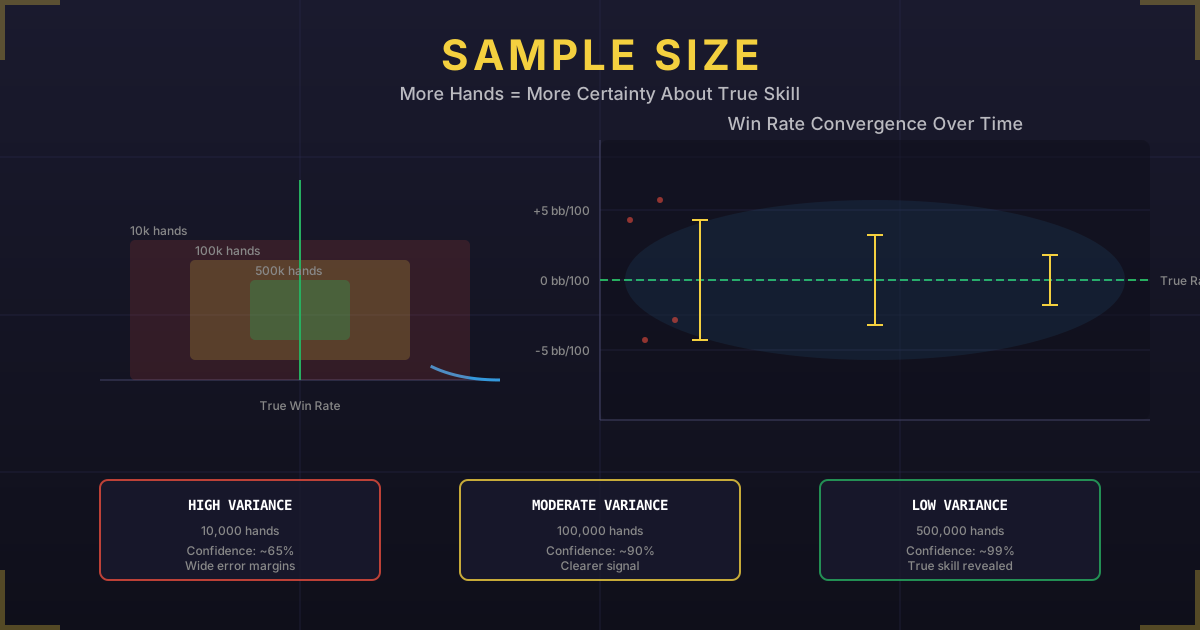
The Long Run Convergence
How results stabilize over time:
10,000 hands: ±15 BB/100 typical range
50,000 hands: ±7 BB/100 typical range
200,000 hands: ±3.5 BB/100 typical range
1,000,000 hands: ±1.5 BB/100 typical range
Common Mistakes to Avoid
-
Drawing Conclusions Too Early: 10,000 hands tells you almost nothing. Wait for statistically significant samples.
-
Ignoring Confidence Intervals: A 5 BB/100 win rate over small samples might actually be 0 or 10 BB/100.
-
Results-Based Format Switching: Don't switch formats based on small sample differences. Variance overwhelms signal.
-
Assuming Linear Improvement: Improving from 3 to 5 BB/100 is hard to detect in anything under 500,000 hands.
-
Over-Adjusting After Swings: Big upswings and downswings are normal variance. Don't radically change your game based on short-term results.
-
Forgetting Standard Deviation Varies: LAG players have higher SD, requiring even larger samples for the same precision.
Frequently Asked Questions
How many hands do I need to know if I'm a winning player?
For strong confidence (95%), approximately 100,000-200,000 hands gives you a reasonable estimate. For high confidence, 500,000+ hands are needed.
Why is poker variance so high?
All-in situations, multi-street betting, and opponent decisions create massive result swings. A single cooler can cost 100+ big blinds, overwhelming session results.
Does my playing style affect required sample size?
Yes. Aggressive, high-variance styles (LAG) have higher standard deviations, requiring larger samples for the same confidence level.
Can I reduce variance to need fewer hands?
Somewhat. Playing tighter, smaller pots reduces variance but also affects win rate. You can't eliminate variance without changing your edge.
What if my sample shows I'm break-even?
Check your confidence interval. If it includes positive win rates, you might be a winner running normally. If it's clearly centered on zero with large sample, address leaks.
How do tournament players deal with sample size issues?
Tournament variance is extreme. Most tournament players never achieve statistically significant samples. They rely on process, theory, and long-term tracking.
Should I stop playing during downswings?
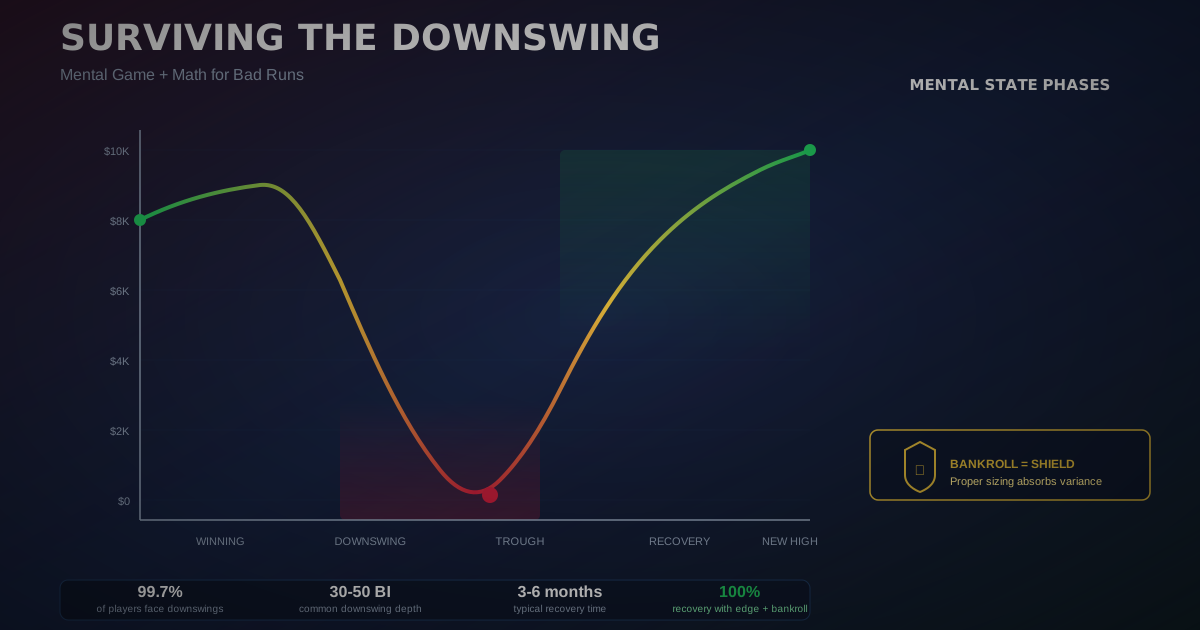
Not if you have sufficient bankroll and sample shows long-term profitability. Downswings are normal variance for winning players.
How do I know if I've improved?
Compare confidence intervals from different time periods. If they don't overlap and later period is higher, you've likely improved.
Pro Tips
- Track your standard deviation along with win rate for accurate sample size calculations
- Use simulation tools to visualize what your results could look like given different true win rates
- Don't compare results across different stakes without adjusting for field difficulty
- When in doubt about a decision based on results, default to larger sample sizes before acting
- Remember that even 100,000 hands only tells you your win rate within about ±5 BB/100
Related Calculators
- Win Rate Calculator - Calculate your current win rate
- Variance Calculator - Understand your variance profile
- Confidence Interval Calculator - Build intervals for any sample
- Bankroll Calculator - Required bankroll for your uncertainty
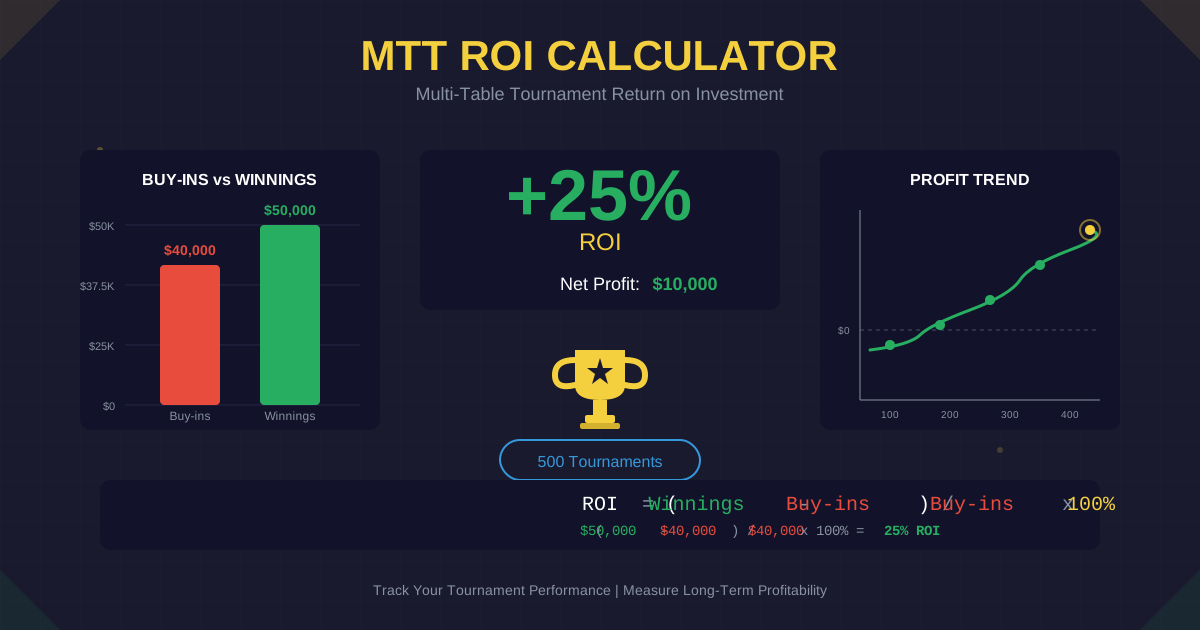
- MTT ROI Calculator - Tournament sample considerations
Conclusion
Sample size is the invisible force separating meaningful results from noise. Our poker sample size calculator shows you exactly how much data you need before trusting your results. Most players drastically underestimate the sample sizes required, leading to overconfidence during heaters and unnecessary despair during downswings.
Understand the mathematics, respect the variance, and make decisions based on statistically significant samples. In poker, the truth reveals itself only in the long run, and the long run is longer than most players ever play.