Satellite Tournament Calculator: Win Big Tickets on Small Budgets (2026)
Satellite Tournament Calculator: Win Tournament Tickets at a Fraction of the Cost
Satellites are poker's ultimate arbitrage opportunity. A $100 satellite can award a $10,000 seat, giving skilled players massive ROI potential. But satellite strategy differs fundamentally from regular tournaments because accumulating chips has zero value once you've secured enough for a ticket. Our satellite tournament calculator optimizes your strategy for flat payout structures where only survival matters.
What Is a Satellite Tournament?
A satellite tournament is a poker tournament where the prizes are seats (tickets) to a larger, more expensive tournament rather than cash. Multiple players win identical prizes, creating a "flat payout" structure that dramatically changes optimal strategy.
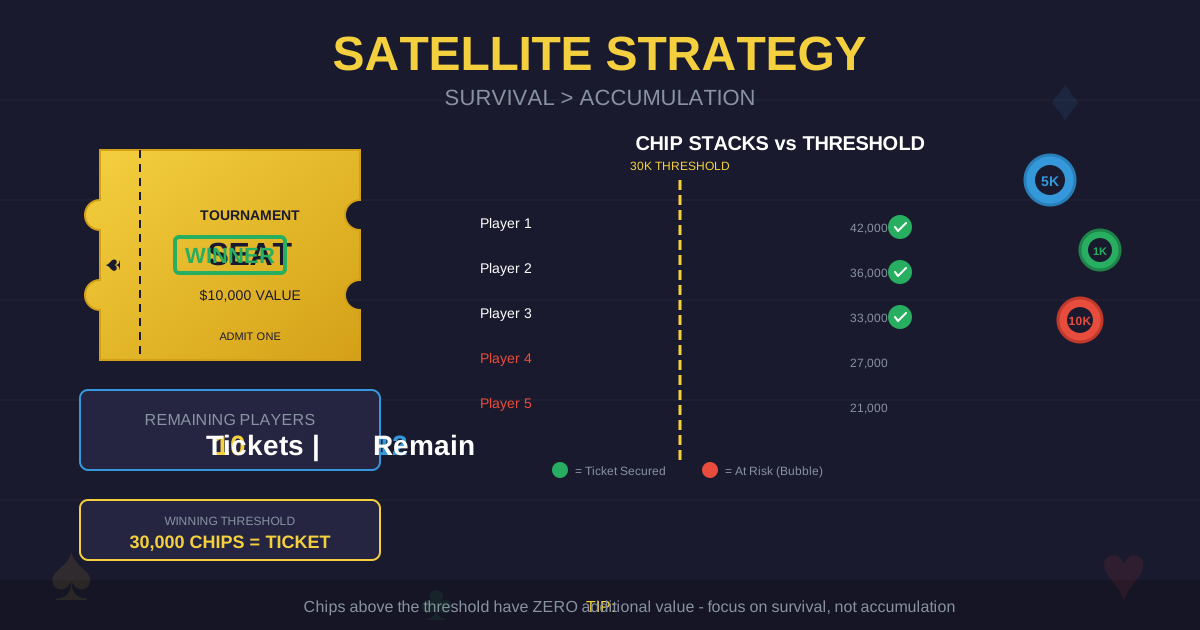
Quick Answer: In satellites, chips beyond what you need to survive have zero value. If top 10 win tickets and you have an average stack, your EV equals exactly one ticket share. ICM pressure is extreme: never gamble when folding guarantees a ticket. Calculate survival threshold: (Total Chips) / (Tickets Awarded) = chips needed per ticket.
How to Use Our Calculator
Use the Satellite Tournament Calculator →
Step-by-Step Instructions
- Enter Satellite Details: Input ticket value and number of tickets awarded
- Input Players Remaining: Enter how many players are left
- Enter Stack Sizes: Input your stack and opponent stacks
- Calculate Ticket Threshold: See how many chips guarantee a ticket
- Analyze Decisions: Get ICM-adjusted strategy for your situation
Input Fields
| Field | Description | Example |
|---|---|---|
| Ticket Value | Prize seat value | $10,000 |
| Tickets Awarded | Number of winners | 10 |
| Players Remaining | Current field | 15 |
| Your Stack | Your chip count | 45,000 |
| Average Stack | Field average | 30,000 |
| Chip Threshold | Guaranteed ticket level | 30,000 |
The Mathematics of Satellite Tournaments
Flat Payout Structure
Unlike regular tournaments with escalating prizes, satellites pay identical amounts to all winners:
Regular Tournament:
1st: $5,000
2nd: $3,000
3rd: $2,000
4th: $1,500
...escalating structure

Satellite (10 tickets):
1st-10th: $10,000 ticket each
11th+: $0
The Chip Threshold Calculation
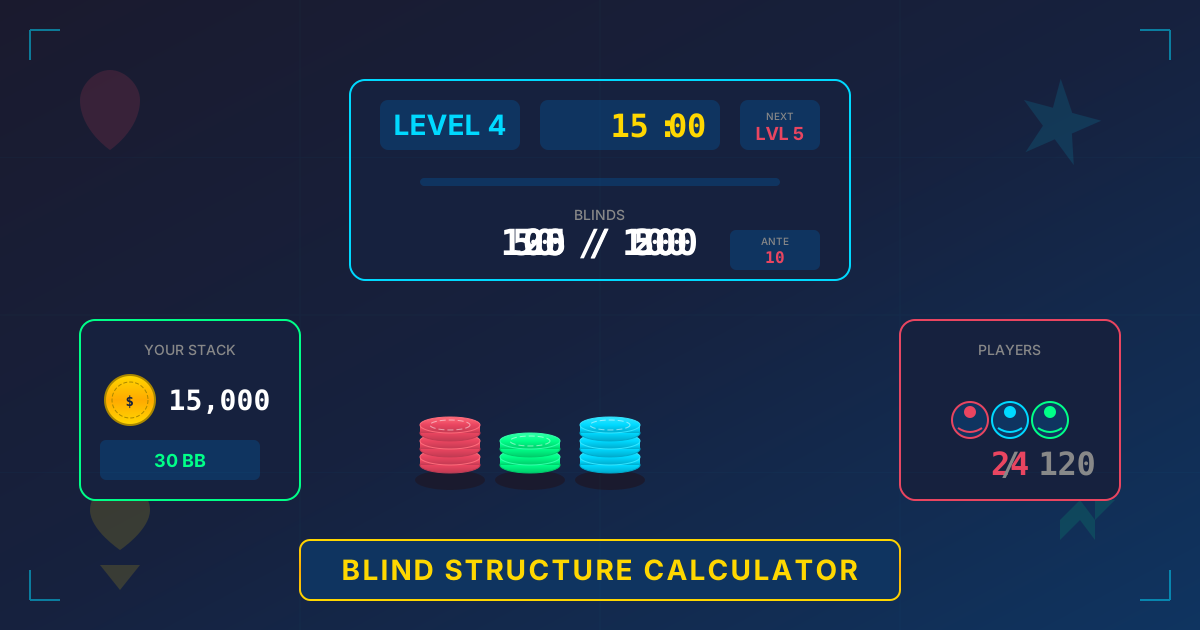
Calculate the minimum chips needed to guarantee a ticket:
Chip Threshold = Total Chips / Tickets Awarded

Example:
Total chips in play: 300,000
Tickets awarded: 10
Threshold: 300,000 / 10 = 30,000 chips

If you have 30,000+ chips and blinds can't eliminate you before 11th bustout, you're guaranteed a ticket.
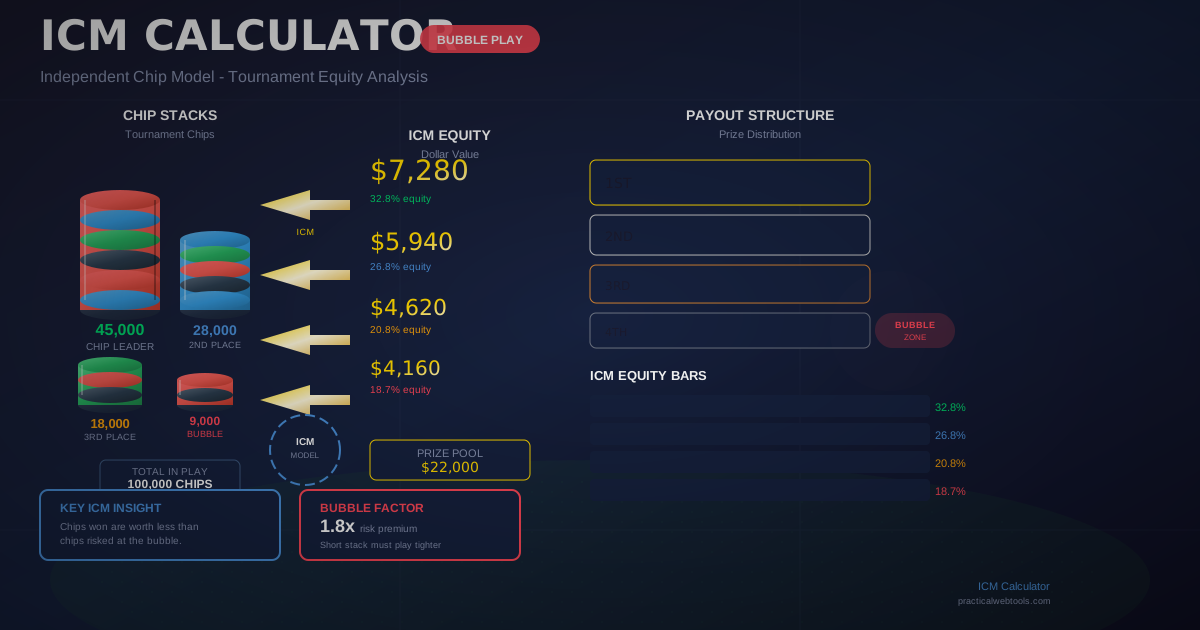
ICM in Satellites (Extreme Version)
Satellite ICM differs from regular ICM:
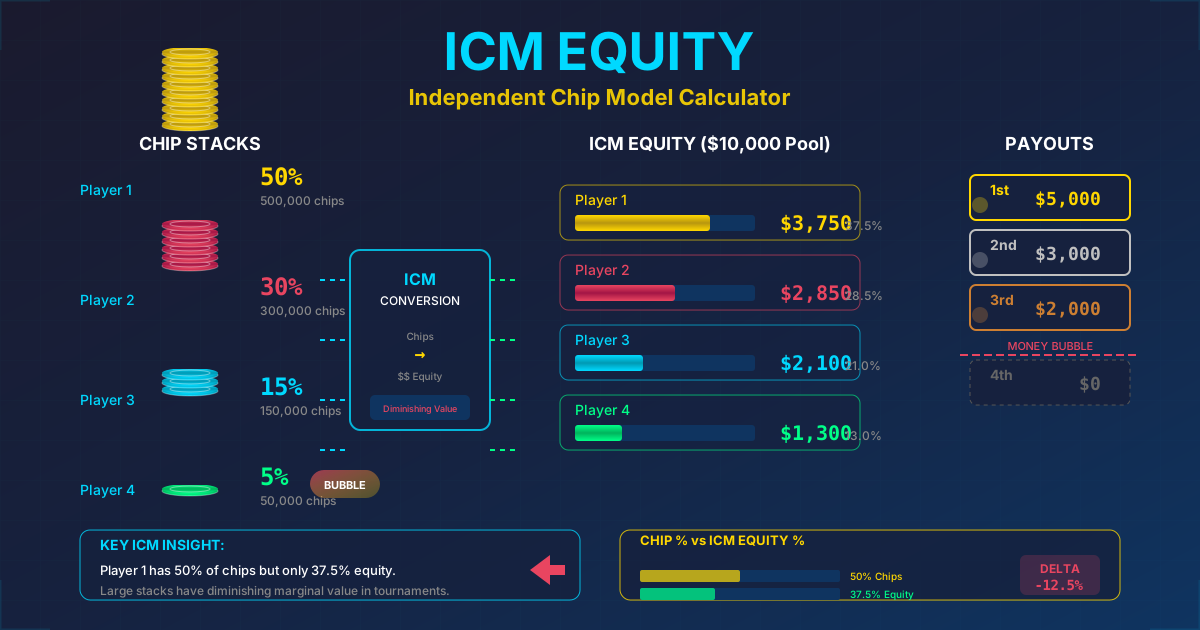
Regular Tournament ICM:
1st place: Worth most
Each position has different value
Chip accumulation helps climb ladder
Satellite ICM:
All ticket positions: Equal value
Non-ticket positions: $0 value
Chip accumulation past threshold: Worthless
Only goal: Survive to ticket
Satellite Strategy by Phase
Early Satellite Play
When the bubble is distant, play relatively normally:
Early Phase Adjustments:
Play standard TAG poker
Accumulate chips to build cushion
Don't take huge risks for small edges
Build toward survival threshold
Risk Assessment:
Standard call = OK if +EV
Flips = Generally acceptable early
Stack building = Important for buffer
Middle Satellite Play
As the bubble approaches, tighten significantly:
Middle Phase Strategy:
Tighten opening ranges by 20-30%
Avoid marginal confrontations
Don't attack other big stacks
Pick on short stacks carefully (only if very short)
Stack Management:
Above threshold: Play extremely tight
Near threshold: Moderate tightness
Below threshold: Still tight, but must act
Satellite Bubble Play
The bubble is where satellites become unique:
Bubble Dynamics:
Example: 12 players remain, 10 get tickets
2 players must bust before you can relax
Your goal: Don't be one of those 2 players
Extreme Adjustments:
Fold almost everything
Only play AA, KK, and maybe QQ/AK
Let other short stacks fight
Time is your friend if you have chips
Stack-Specific Satellite Strategy
Big Stack Strategy (2x+ Average)
Big stacks in satellites have unique power:
Big Stack Advantages:
Can survive to ticket without playing a hand
Opponents can't call you without risking ticket
Maximum leverage over medium/short stacks
Big Stack Approach:
Don't risk chips unnecessarily
Attack only desperate short stacks
Avoid other big stacks completely
You've already "won" - don't jeopardize it
What NOT to Do:
Don't try to "knock people out"
Don't accumulate for its own sake
Don't call all-ins with marginal hands
Extra chips are worthless past threshold
Medium Stack Strategy (Average)
Medium stacks must balance survival with activity:
Medium Stack Challenges:
Close to threshold but not safe
Blinds can erode buffer
Must stay ahead of short stacks
Optimal Approach:
Play tight but not ultra-tight
Fold marginal hands
Attack only micro-stacks
Avoid big stack confrontations
Short Stack Strategy (Below Average)
Short stacks face the most difficult decisions:
Short Stack Reality:
Must make moves to survive
But every shove risks elimination
Timing is critical
Push Timing:
When shorter stacks exist: Wait for them to bust
When you're shortest: Must push to survive
Don't blind out - that's guaranteed loss
Push Range Adjustments:
Normal short stack push: 35%+ of hands
Satellite short stack push: 20-25% of hands
Reason: Survival > chip accumulation
Micro Stack Strategy (Critical)
With very few chips, decisions become extreme:
Micro Stack Rules:
You're almost certainly busting OR doubling
Push wide enough to have fold equity
But not so wide that you're dominated
Timing: When 2+ shorter stacks exist, wait
When you're shortest, push immediately
Real-World Examples
Example 1: Big Stack on the Bubble
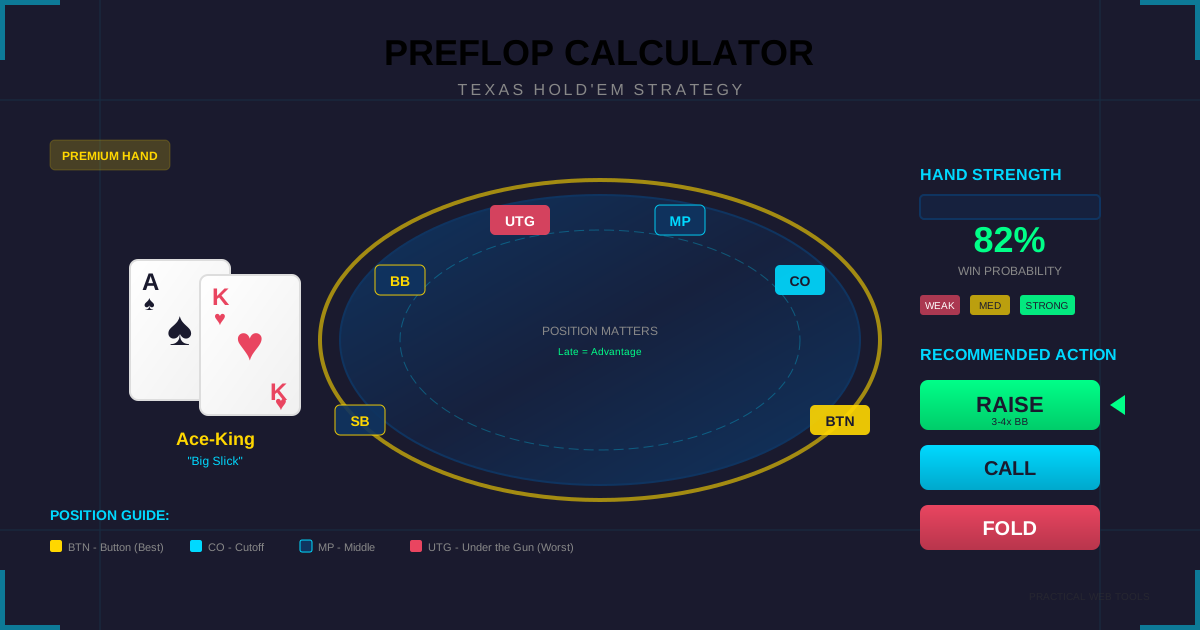
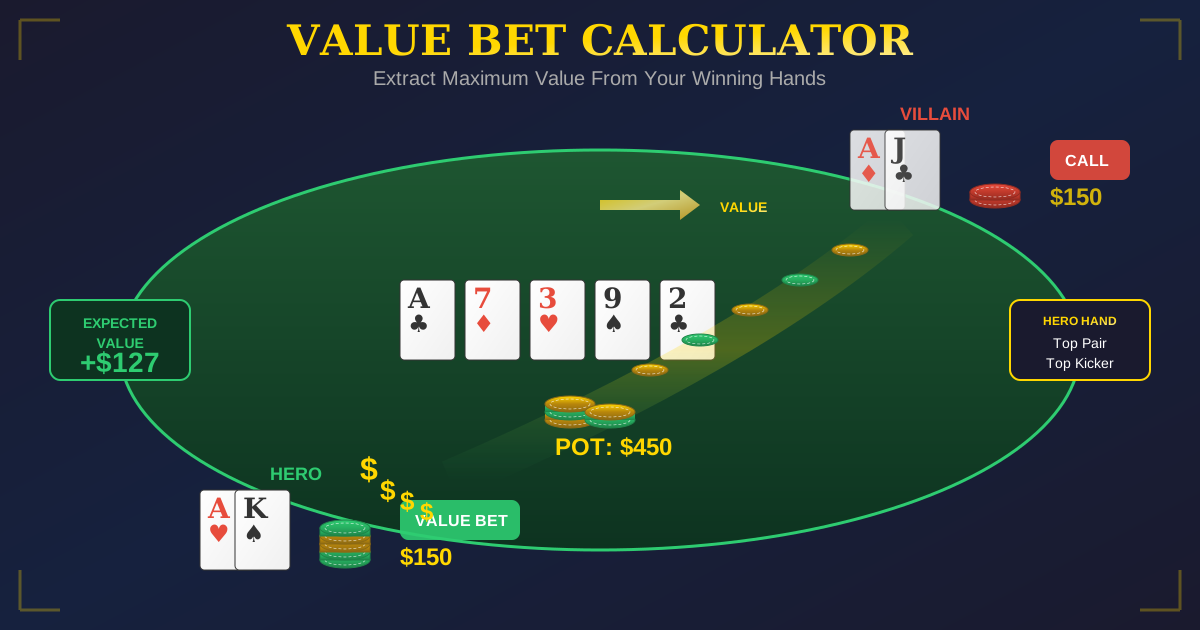
Setup: 11 players remain, 10 get $10k tickets. You have 80k (chip leader). Average is 27k. Shortest stack has 8k. UTG pushes 25k. Folds to you in BB. You have AhKh.
Analysis:
You're guaranteed a ticket if you fold
AK is a premium hand
But you don't NEED this confrontation
If you call and lose: Still have 55k (still safe)
Satellite Thinking:
If you fold: 100% ticket probability
If you call: 99.9% ticket probability
The 0.1% risk is not worth it
Action: Fold AK. You don't need the risk. Let others fight.
Example 2: Medium Stack Decision
Setup: 12 players, 10 tickets. You have 30k (exactly average). Short stack (10k) pushes. You're BB with QQ.
Analysis:
QQ is very strong vs push range
You cover the short stack
If you win: 40k (comfortable)
If you lose: 20k (short but alive)
Calculation:
QQ equity vs push range: ~70%
Win: Secure ticket position
Lose: Become short stack, risk bubble

But wait - if you fold:
Other players might call
Short stack might bust anyway
You stay at 30k, still average
Action: Consider folding even QQ. Let others take the risk. Only call if you believe folding puts you at risk of blinding out before the bubble bursts.
Example 3: Short Stack Desperation
Setup: 12 players, 10 tickets. You have 12k (shortest stack). Blinds 1k/2k. Second shortest has 15k.
Analysis:
You're the most at-risk player
Second shortest has only 3k more
You have 6 BB - must make a move soon
Push Strategy:
Wait is dangerous: Blinds coming
But second shortest might bust first
If you push and lose: Definitely out
If you wait and second shortest busts: You're safe
Optimal Play:
Position matters here
If second shortest is about to post blind: WAIT
If you're about to post blind: PUSH
Timing the desperation is crucial
Example 4: The Lock
Setup: 11 players, 10 tickets. You have 120k. Next biggest is 35k. You're in the BB. SB (15k) pushes. You have 72o.
Analysis:
You have FOUR TIMES the nearest stack
Even losing this pot, you have 105k
The 35k second place is not catching you
You're 100% getting a ticket no matter what
Action: Auto-fold. You can literally fold every hand and coast to a ticket. Don't call with 72o just because you can afford to lose.
Example 5: Stalling Considerations
Setup: 11 players, 10 tickets across two tables. Your table has the short stacks. You have an average stack.
Stalling Reality:
Other table will likely produce the bust
Playing slow keeps blinds moving at your table
Stalling too obviously gets penalties
Optimal Approach:
Use your full time bank legally
Don't tank on obvious decisions (looks bad)
If short stacks are at other table, you benefit
Don't collude but do play conservatively
Example 6: The Correct Fold of Aces
Setup: 11 players, 10 tickets. You have 50k. Another 50k stack pushes into you. You have AA.
Standard Play: Snap call with Aces.
Satellite Reality:
If you win: 100k chips (still just one ticket)
If you lose: $0 (no ticket)
Your current EV: ~0.9 tickets
Calling EV: 0.5 tickets (roughly)
The Math:
AA vs range: 80% equity
Win: EV = 0.95 tickets (near lock)
Lose: EV = 0 tickets

Call EV = (0.80 × 0.95) + (0.20 × 0) = 0.76 tickets
Fold EV = 0.90 tickets

Folding is +0.14 tickets better!
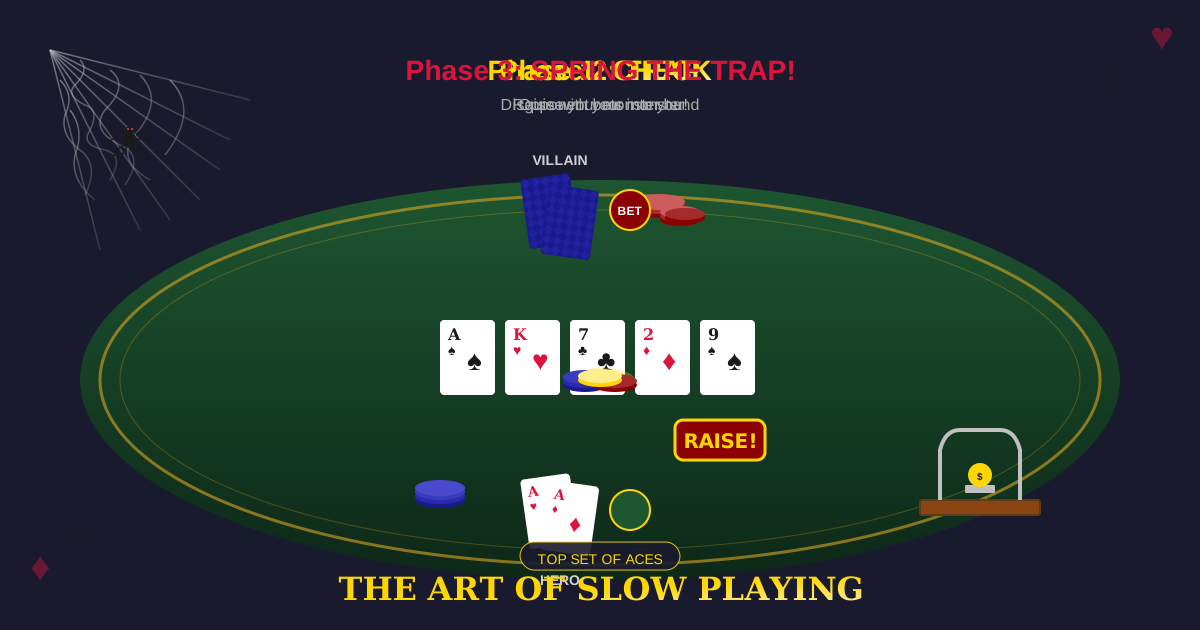
Action: Fold Aces. This is the most extreme satellite concept and correct.
Multi-Table Satellite Dynamics
Table Balancing Effects
When tables break, stack positions change:
Comfortable at Table 1: Might join Table 2 short stacks
Average becomes short when tables merge
Plan for table dynamics as field shrinks
Cross-Table Awareness
Pay attention to other tables:
Short stacks at other tables: Play tighter (they'll bust first)
Short stacks at your table: Might need to play more
Clock management across tables: Be aware of break timing
Common Mistakes to Avoid
-
Playing for Chips: Extra chips beyond survival threshold have zero value. Don't gamble to accumulate.
-
Hero Calling: In regular tournaments, hero calls can be profitable. In satellites, they're almost never correct near the bubble.
-
Attacking Other Big Stacks: Big stack vs big stack confrontations risk everything for nothing. Avoid completely.
-
Getting Blinded Out: While tight is correct, being too tight leads to blinding out. Make moves before it's too late.
-
Ignoring Table Dynamics: If all short stacks are at your table, you might need to play. If they're elsewhere, ultra-tight is correct.
-
Standard Tournament Thinking: Forget ladder climbing, chip accumulation, and aggression. Satellites reward survival, period.
Frequently Asked Questions
Should I ever fold pocket aces in a satellite?
Yes, in extreme situations. If folding guarantees a ticket and calling risks elimination, fold aces. This is the defining satellite concept.
How do I calculate if I'm "safe" for a ticket?
Calculate chips needed per ticket (total chips / tickets awarded). If you have more than that and can survive the blinds until enough players bust, you're safe.
When should I start playing satellite strategy?
Gradually tighten as the bubble approaches. At 2x the ticket spots (20 players for 10 tickets), begin significant adjustments. At 1.5x (15 for 10), play extremely tight.
Is satellite poker profitable long-term?
Very profitable for skilled players. The opportunity to win $10,000 seats for $100 creates massive ROI potential for those who understand flat payout dynamics.
How does satellite strategy differ from regular bubble play?
Regular bubbles have min-cash vs bustout dynamics. Satellite bubbles have ticket vs nothing dynamics. The reward for surviving is proportionally much larger in satellites.
Should I play satellites for events I can't afford directly?
That's exactly what satellites are for. If a $10,000 tournament is out of budget, $100 satellites offer access with proper bankroll management.
What if I win a satellite but can't play the main event?
Most satellites offer the option to unregister and take tournament dollars or cash equivalent. Check the specific terms before playing.
How important is stack size relative to survival threshold?
Critical. Above threshold with comfortable margin = play ultra-tight. Near threshold = tight but active. Below threshold = must make moves.
Pro Tips
- Calculate the chip threshold before the satellite starts and track it throughout
- Identify which players understand satellite dynamics and which play standard poker
- Position yourself at the table so short stacks post blinds before you
- Use your time bank legally to let blinds pass and field reduce
- Study ICM calculators specifically for flat payout structures
Related Calculators
- ICM Calculator - Tournament equity calculations
- Tournament Bubble Calculator - Bubble-specific ICM
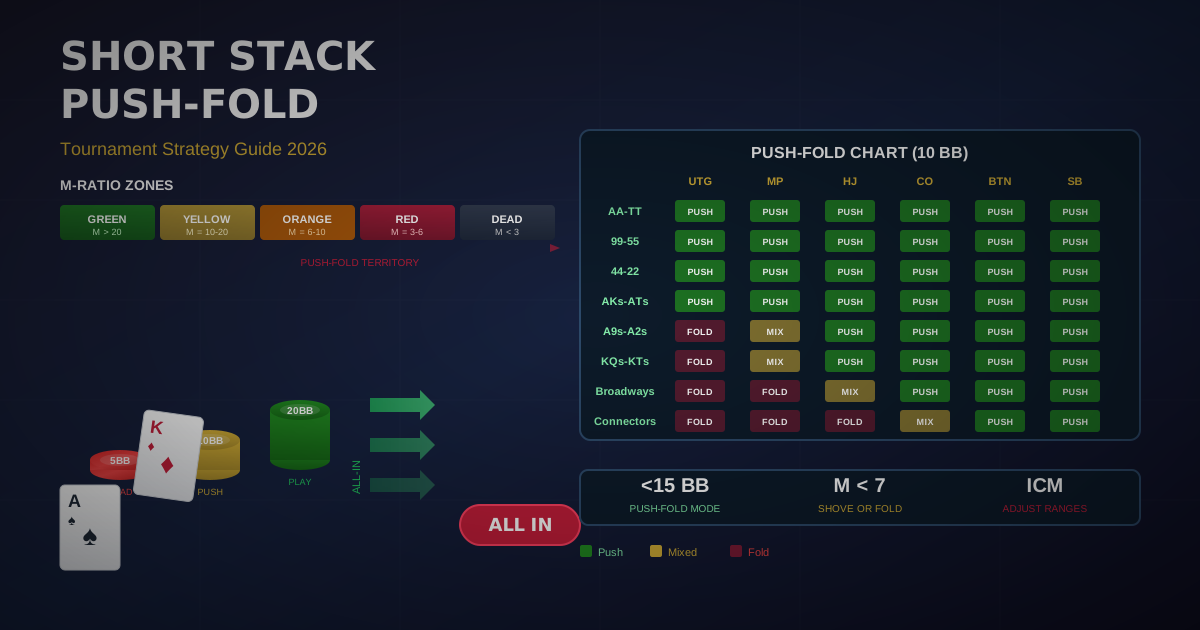
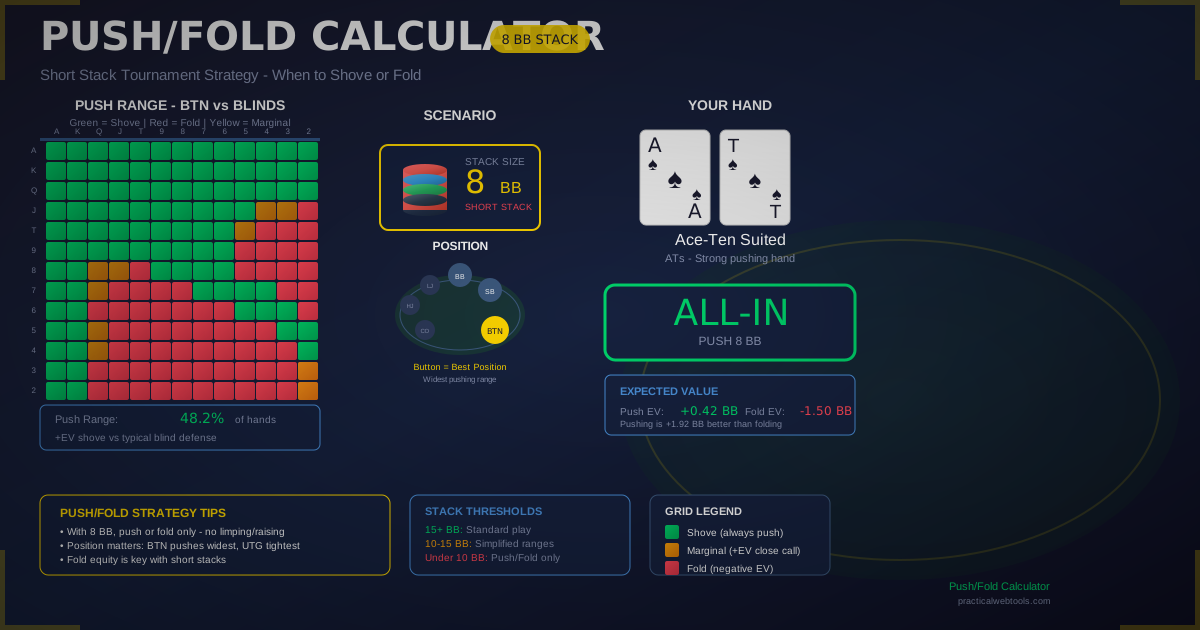
- Push/Fold Calculator - Short stack ranges
- Satellite ROI Calculator - Track satellite profitability
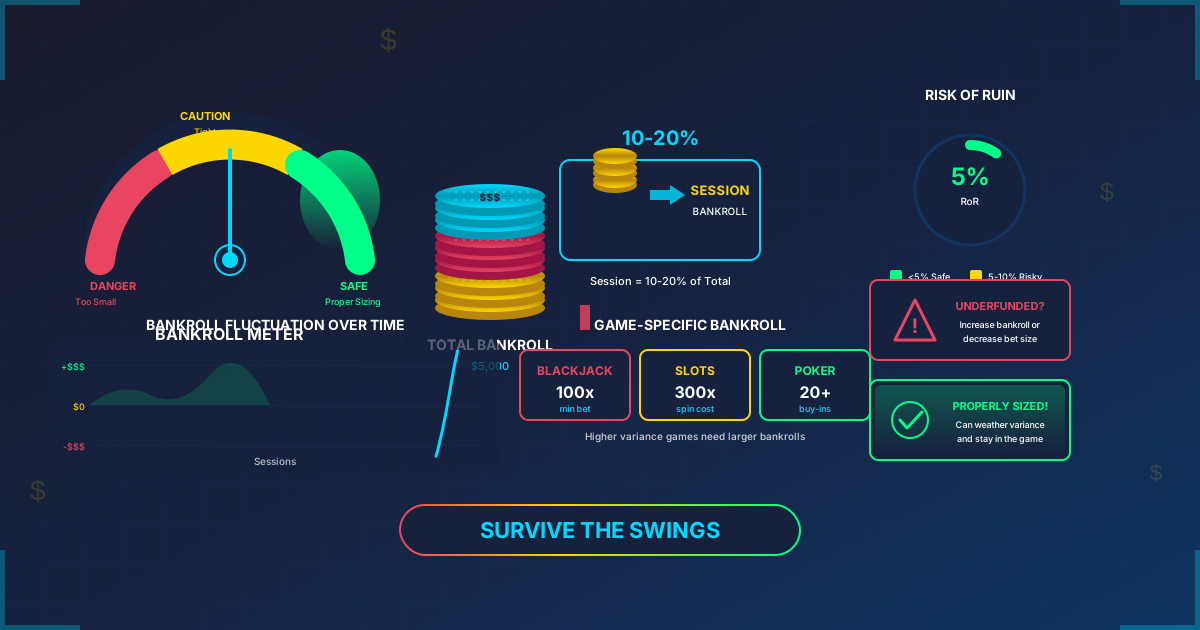
- Bankroll Calculator - Satellite bankroll requirements
Conclusion
Satellite tournaments offer incredible value for players who understand the unique dynamics of flat payout structures. Our satellite tournament calculator helps you identify when you're safe, when you need to make moves, and when to fold even premium hands for survival.
Master satellite strategy by internalizing one core concept: chips beyond survival threshold are worthless. Once you truly understand this, you'll make the folds that recreational players can't comprehend and collect tickets while they bust on the bubble.