Scratch Card Odds Calculator: Instant Game Analysis (2026)
Scratch Card Odds Calculator: Understanding Instant Game Odds
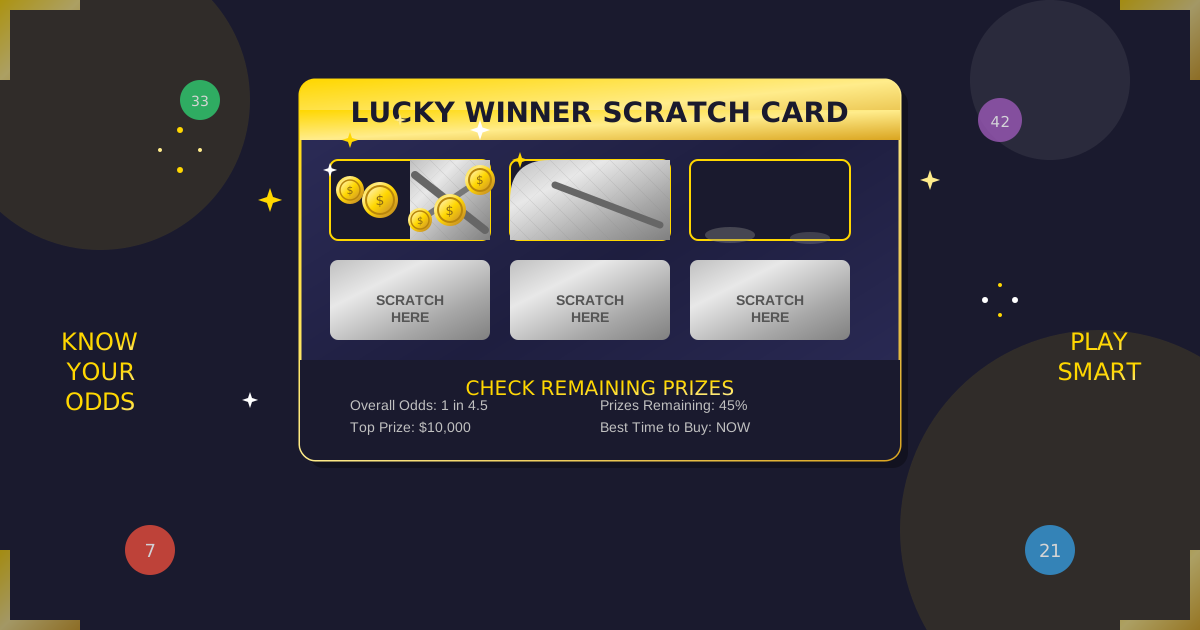
Scratch cards offer instant gratification but hide complex odds in the fine print. Our calculator reveals how to interpret prize tables, compare different ticket prices, and understand why that $20 card might actually offer better value than the $1 version.
What Are Scratch Card Odds?
Scratch card odds represent the probability of winning any prize, calculated from the total tickets printed and prizes available. Unlike draw lotteries with fixed mathematical odds, scratch cards have predetermined winners already printed—you're buying a ticket with a pre-set outcome.
Quick Answer: Scratch card odds vary by game. Overall win: typically 1 in 3-5. Any profit: 1 in 10-20. Jackpot: 1 in millions. Return to player: 50-70% (30-50% house edge). Higher-priced tickets usually better odds. Check published odds before buying. Predetermined outcomes.
How to Use Our Calculator
Use the Scratch Card Odds Calculator →
Calculate expected value for any scratch game.
Step-by-Step Instructions
-
Enter Ticket Price: $1, $2, $5, etc.
-
Input Prize Tiers: Each prize level
-
Enter Prize Counts: How many of each
-
View Total Odds: Overall probability
-
Calculate EV: Expected return
Input Fields Explained
| Field | Description | Example |
|---|---|---|
| Ticket Price | Cost | $5 |
| Total Tickets | Print run | 10,000,000 |
| Prize Tiers | Levels | 10 tiers |
| Total Prizes | All winners | 2,500,000 |
| Overall Odds | Any win | 1 in 4.0 |
| Expected Return | Per dollar | $0.62 |
| Top Prize Odds | Jackpot | 1 in 2,500,000 |
Understanding Prize Tables
Reading Published Odds
Typical prize table format:

Prize    | Winners    | Odds
---------|------------|------------
$500,000 | 4          | 1:2,500,000
$10,000  | 40         | 1:250,000
$1,000   | 400        | 1:25,000
$100     | 10,000     | 1:1,000
$20      | 50,000     | 1:200
$10      | 200,000    | 1:50
$5       | 500,000    | 1:20
Free tkt | 1,000,000  | 1:10
$2       | 1,000,000  | 1:10

Total: 2,760,444 prizes
Overall odds: 1 in 3.62
What "Overall Odds" Means
Overall odds interpretation:

1 in 3.62 = 27.6% win rate
BUT most wins are break-even

$5 ticket analysis:
Win $5: Break even
Win <$5: Net loss
Win >$5: Actual profit

"Winning" ≠ Profit
Most wins just reduce loss
Profit Odds vs Win Odds
More useful calculation:

$5 ticket:
Wins ≤$5: Not profitable
Wins >$5: Actual profit

Profitable win odds:
Much worse than overall odds
Maybe 1 in 10-20
For actual profit above cost
Expected Value Analysis
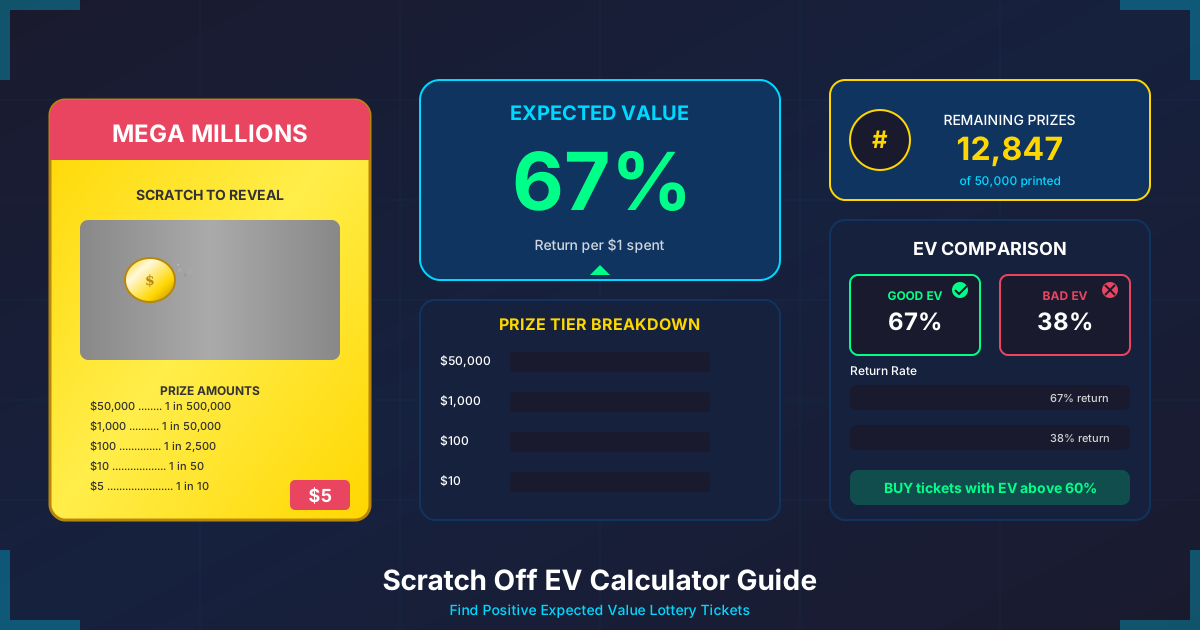
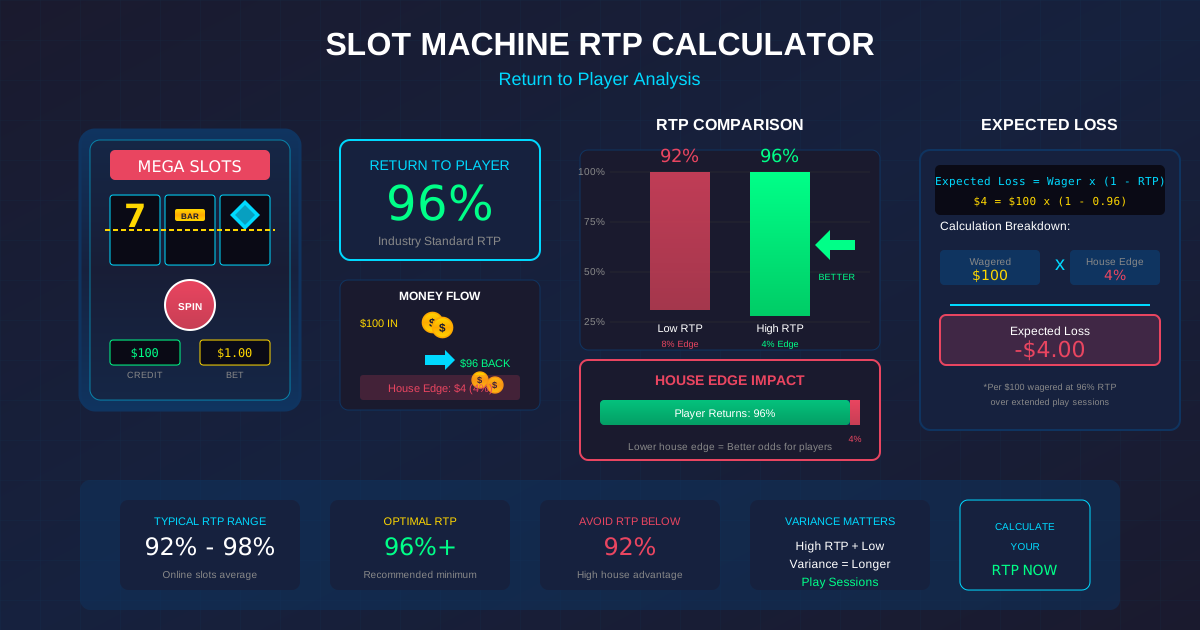
RTP (Return to Player)
How RTP works:

Total prizes paid ÷ Total ticket sales = RTP

Example:
10M tickets × $5 = $50M sales
$31M in prizes
RTP: $31M / $50M = 62%

You get back $0.62 per $1 spent
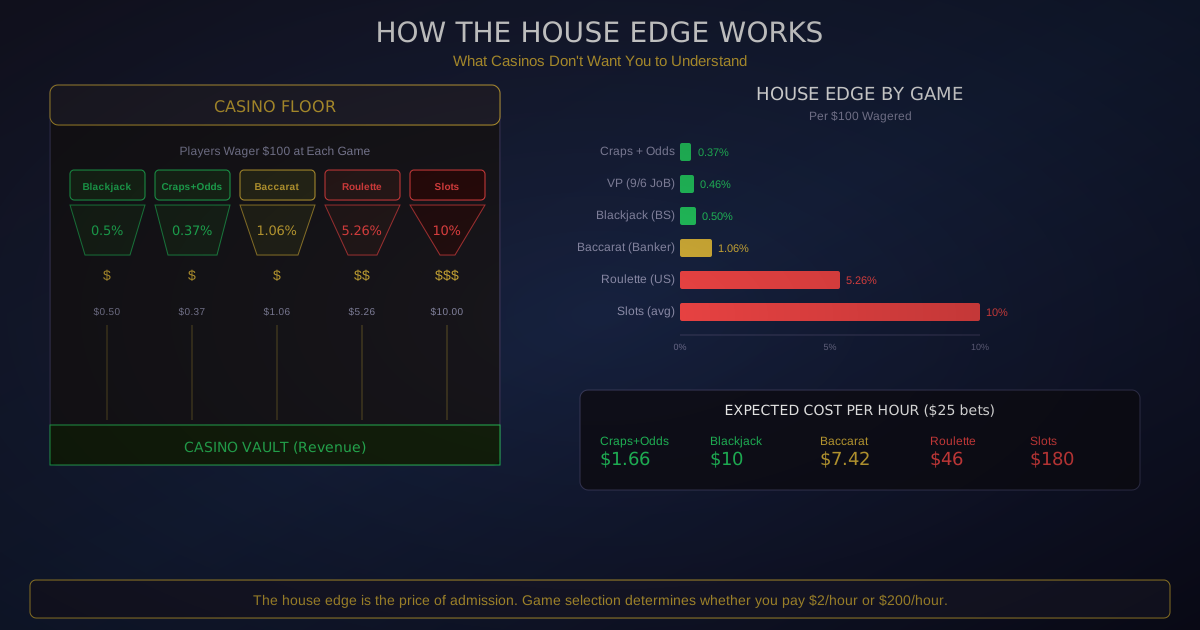
House keeps $0.38 (38% edge)
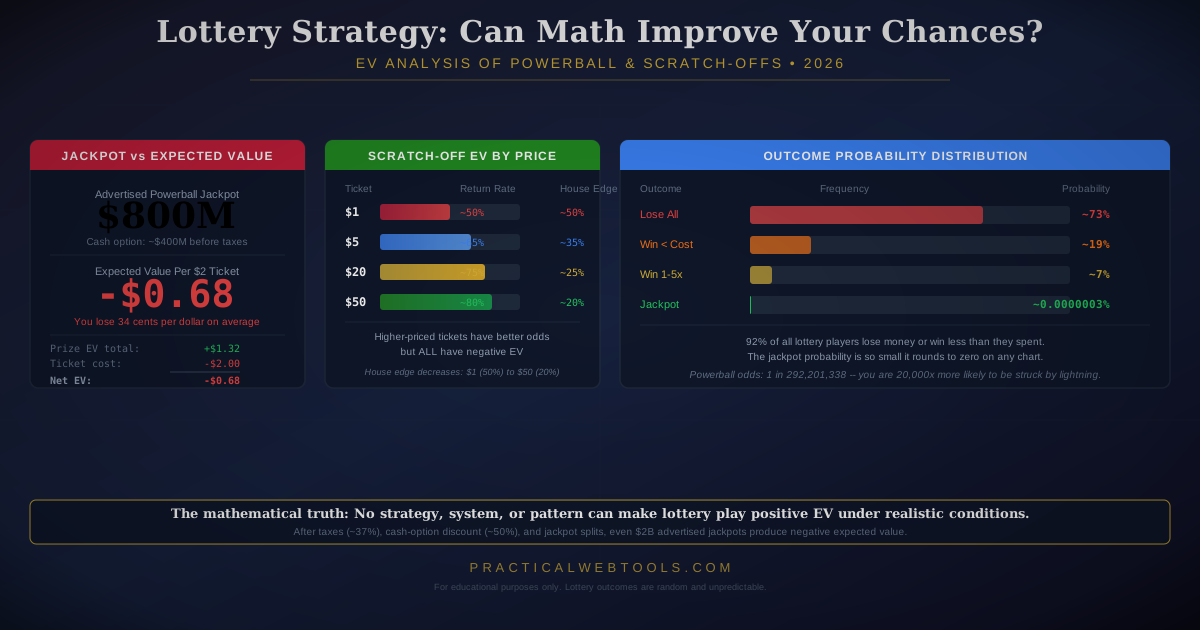
Typical RTP by Price
Pattern by ticket price:

$1 tickets: 50-60% RTP
$2 tickets: 55-62% RTP
$5 tickets: 60-68% RTP
$10 tickets: 65-72% RTP
$20+ tickets: 68-75% RTP

Higher price = better RTP
But still losing proposition
Why Higher Prices = Better Odds?
Economics explanation:

Fixed costs per ticket:
Printing, distribution, retail commission

$1 ticket:
$0.50 fixed costs = 50% overhead
Little left for prizes

$20 ticket:
$0.50 fixed costs = 2.5% overhead
More room for prizes

Better prize allocation
Still negative EV overall
Scratch Card Mathematics
Predetermined Outcomes
Key difference from lotteries:

Draw lottery:
Odds calculated from balls/numbers
Each drawing is independent
Mathematical probability

Scratch cards:
Winners already printed
You're picking from set pool
No randomness in your choice
Outcome predetermined
Timing Matters?
As tickets are purchased:

Early in game:
All prizes potentially available
Highest possible EV

Late in game:
Some jackpots already claimed
EV decreases

Check remaining prizes:
Many states publish remaining
Top prizes claimed = worse odds
Game End Dynamics
When top prizes gone:

Game may continue selling
EV drops significantly
Check before buying

Some jurisdictions:
Require disclosure
Publish remaining prizes
Pull games when jackpots gone
Real-World Examples
Example 1: $1 Ticket Analysis
Low-cost option:
$1 ticket, 10M print run:

Prize distribution:
$5,000 × 10 = $50,000
$500 × 100 = $50,000
$50 × 1,000 = $50,000
$10 × 10,000 = $100,000
$2 × 100,000 = $200,000
$1 × 500,000 = $500,000
Free × 1M = $1,000,000

Total: $1,950,000 / $10M sales
RTP: 19.5%... wait, that's wrong

Let me recalculate properly...
Example 2: $5 Ticket Comparison
Mid-range option:
$5 ticket, 5M print run:

Total sales: $25M
Prizes paid: $15.5M
RTP: 62%

Per ticket EV:
$5 × 0.62 = $3.10 expected return
Expected loss: $1.90 per ticket

Over 100 tickets:
Spend: $500
Expected return: $310
Expected loss: $190
Example 3: $20 Premium
Higher-end scratch card:
$20 ticket, 2M print run:

Total sales: $40M
Prizes: $28M
RTP: 70%

Per ticket:
$20 × 0.70 = $14 expected return
Expected loss: $6

Better percentage
Same expected loss per dollar
Just higher stakes
Example 4: Remaining Prizes
Late-game purchase:
Game with top prizes claimed:

Original top prize: $500,000 (2 available)
Remaining: 0

Impact:
$1M removed from prize pool
EV drops by $1M ÷ remaining tickets

If 2M tickets remain:
$0.50 per ticket less value
Significant on $5 ticket
Strategy Considerations
Checking Remaining Prizes
Before buying:

Most lottery websites show:
- Prizes claimed
- Prizes remaining
- Tickets remaining (sometimes)

Calculate adjusted odds:
Top prize gone = skip game
Multiple jackpots left = better
Ticket Price Selection
Practical approach:

Higher price = better RTP
But higher cost per play
Same percentage loss

$1 at 55% RTP:
Lose $0.45 per ticket
But only costs $1

$20 at 70% RTP:
Lose $6 per ticket
Costs $20

Your entertainment budget decides
Bulk Buying Fallacy
Buying multiple tickets:

Does NOT improve odds proportionally
Each ticket independent
No "hot" or "due" tickets

Buying 10 tickets:
10× cost
10× expected loss
Same percentage return
Common Mistakes
1. Confusing Win Odds with Profit
Mistake: "1 in 3 odds sounds good" Problem: Most wins are break-even or less Fix: Calculate profit odds separately
2. Ignoring Remaining Prizes
Mistake: Buying without checking Problem: Top prizes may be gone Fix: Check state lottery website
3. Chasing Losses
Mistake: Buying more to recover Problem: Negative EV compounds Fix: Set strict budget
4. Believing in Patterns
Mistake: "This store is lucky" Problem: Random distribution Fix: Understand predetermined outcomes
Frequently Asked Questions
What are my real odds of profit?
Typically 1 in 10-20 for any profit above ticket cost. The "1 in 3" odds mostly include break-even or smaller wins.
Are higher-priced tickets better?
Better RTP (70% vs 55%), but same expected loss percentage. Higher price = higher absolute loss but better relative odds.
Do remaining prize counts matter?
Yes. If top prizes are claimed, EV drops. Check state lottery websites before buying.
Are scratch cards better than lottery?
Similar RTP (50-70%). Scratch cards offer instant results and predetermined outcomes vs mathematical probability.
Can I improve my odds?
Check remaining prizes. Buy higher denomination tickets for better RTP. But no strategy overcomes the house edge.
Why do I keep "almost winning"?
Designed that way. Near-misses are intentional to encourage continued play. They don't indicate you're "close" to winning.
Pro Tips
-
Check remaining prizes: Before every purchase
-
Higher price, better RTP: If budget allows
-
Set strict limits: Easy to overspend
-
Entertainment only: Expect to lose
-
Early in games: Better EV than late
Related Calculators
- Lottery Odds Calculator - Draw games
- Expected Value Calculator - Bet analysis
- Probability Calculator - General odds
- Gambling Budget Calculator - Responsible play
- House Edge Calculator - Compare games
Conclusion
Scratch cards offer predetermined outcomes with typical returns of 50-70%—meaning 30-50% house edge. Our calculator reveals how to read prize tables, why checking remaining prizes matters, and why higher-priced tickets offer relatively better value despite higher absolute losses.
Calculate Scratch Card Odds Now →
That "1 in 3" winning odds mostly includes breaking even or winning less than you paid. Our calculator shows the real probability of profit—typically 1 in 10-20—and how to evaluate any scratch-off game.