Semi-Bluff Calculator: Master Profitable Bluffing with Equity (2026)
Semi-Bluff Calculator: Turn Your Draws Into Profit Machines
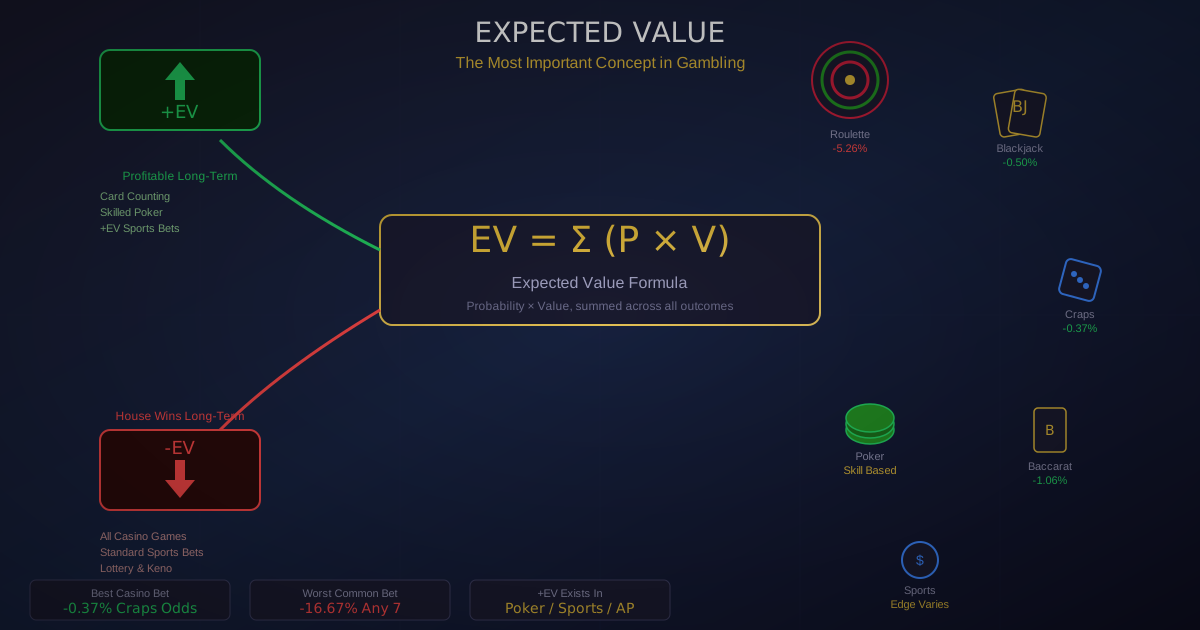
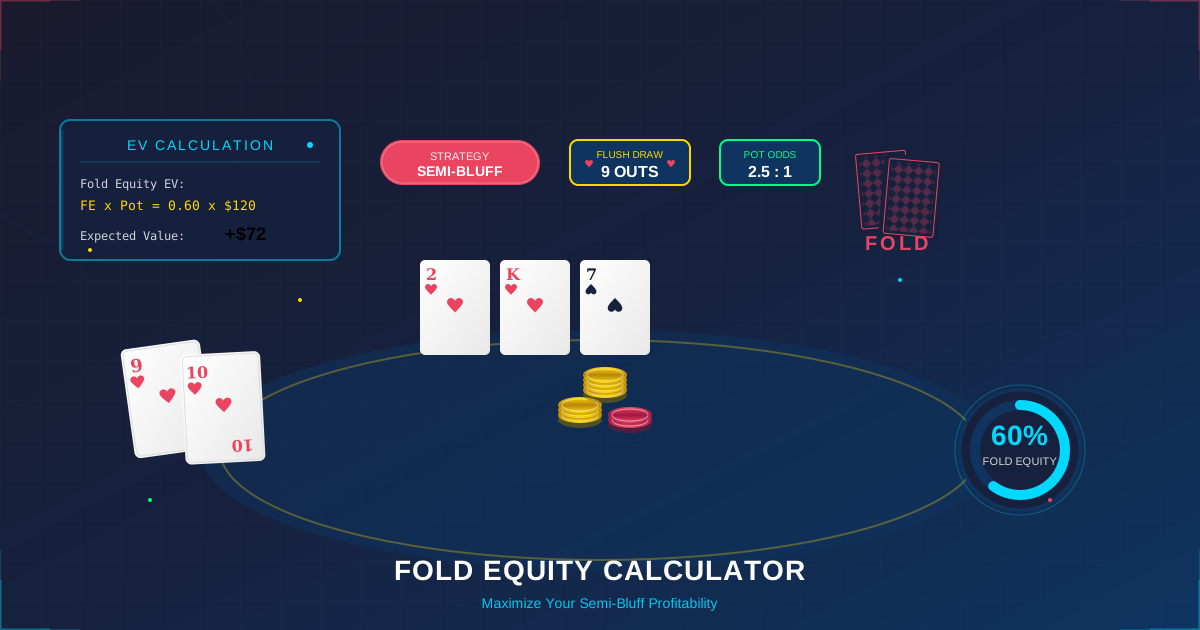
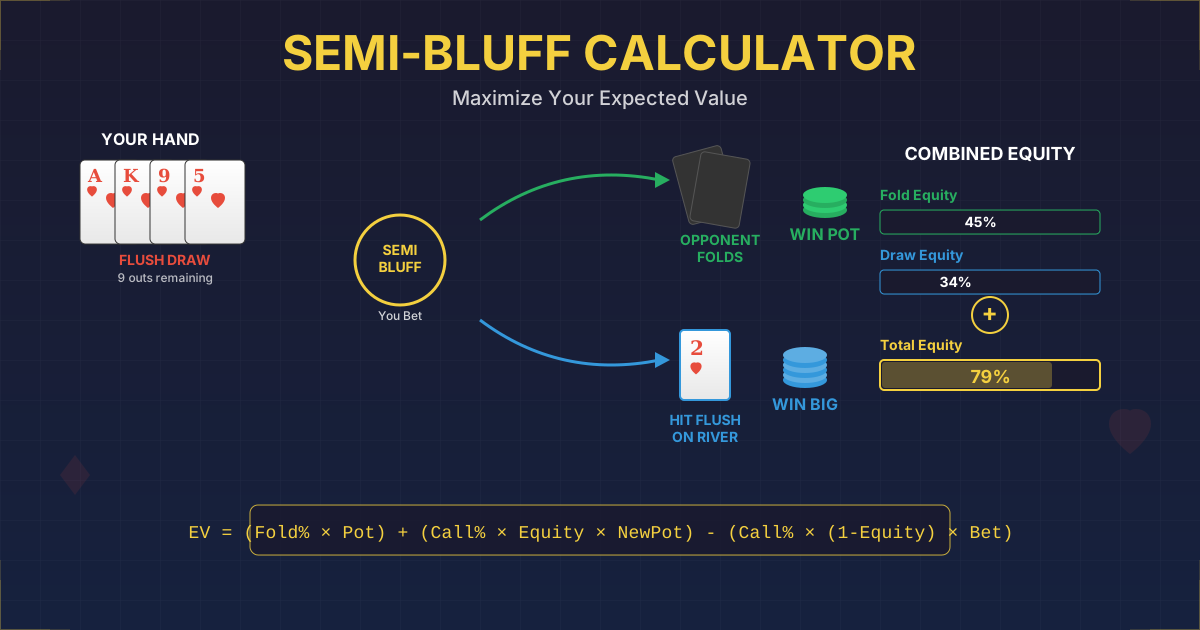
Semi-bluffing is the most powerful weapon in an aggressive poker player's arsenal. Unlike pure bluffs that rely entirely on your opponent folding, semi-bluffs combine fold equity with genuine hand equity to create profitable situations even when called. Our semi-bluff calculator quantifies exactly when and how much to bet with your draws for maximum expected value.
What Is a Semi-Bluff?
A semi-bluff is a bet or raise made with a hand that is likely behind at the moment but has significant potential to improve to the best hand. The defining characteristic separating semi-bluffs from pure bluffs is that semi-bluffs maintain equity when called.
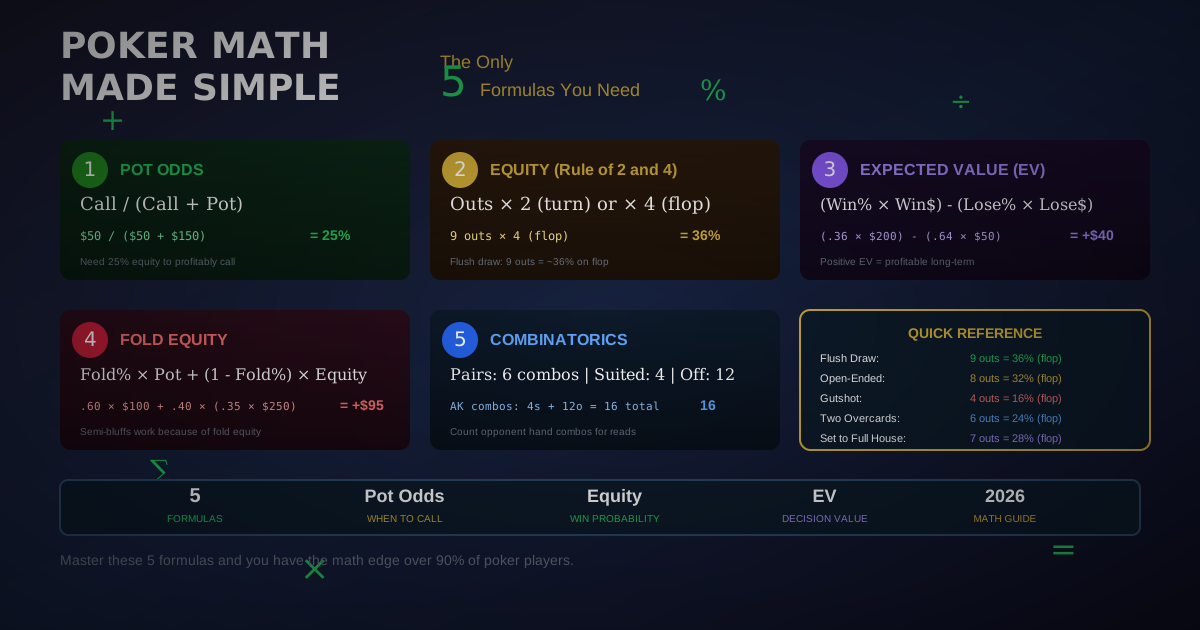
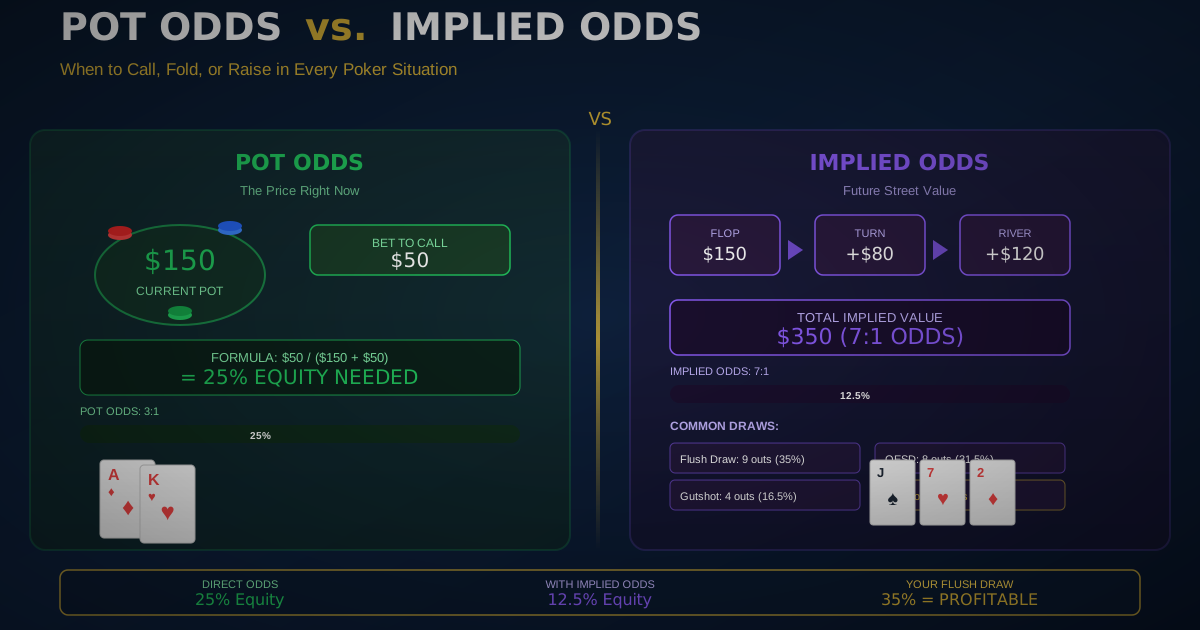
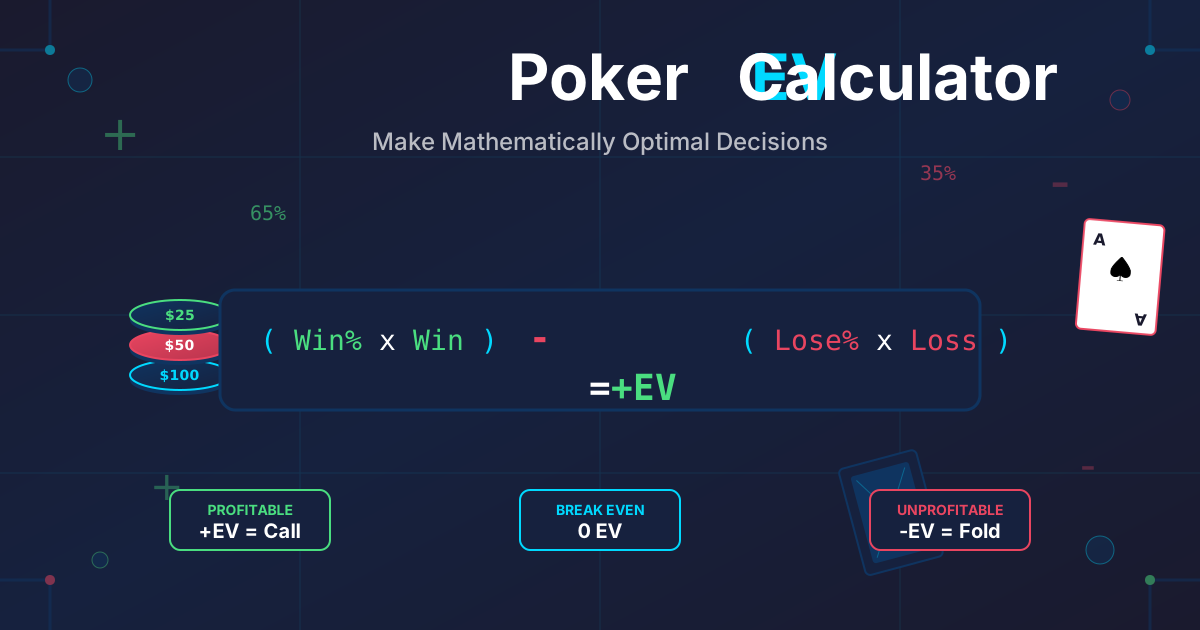
Quick Answer: Semi-bluff EV = (Fold Equity x Pot) + (Call Frequency x Your Equity x New Pot) - (Call Frequency x Villain Equity x Bet Size). With a flush draw (35% equity), betting $50 into $75 against 40% fold rate: EV = ($75 x 0.40) + ($175 x 0.35 x 0.60) - ($50 x 0.65 x 0.60) = +$17.25. Semi-bluff profitably when combined fold equity plus equity-adjusted returns exceed your investment.
How to Use Our Calculator
Use the Semi-Bluff Calculator →
Step-by-Step Instructions
- Enter the Current Pot Size: Input the total pot before your contemplated bet
- Enter Your Bet Size: Input the amount you plan to wager
- Input Your Hand Equity: Enter your estimated winning percentage if called and the hand goes to showdown
- Estimate Fold Equity: Input the probability your opponent folds to your bet
- Review the EV Calculation: See whether your semi-bluff shows positive or negative expected value
Input Fields
| Field | Description | Example |
|---|---|---|
| Pot Size | Current pot before your bet | $75 |
| Bet Size | Amount you plan to wager | $50 |
| Your Equity | Win rate if called to showdown | 35% (flush draw) |
| Fold Equity | Probability opponent folds | 40% |
| Remaining Streets | Cards to come (1 or 2) | 2 (flop) |
| Opponent Range | Estimated range strength | Top pair, medium kicker |
The Mathematics of Semi-Bluffing
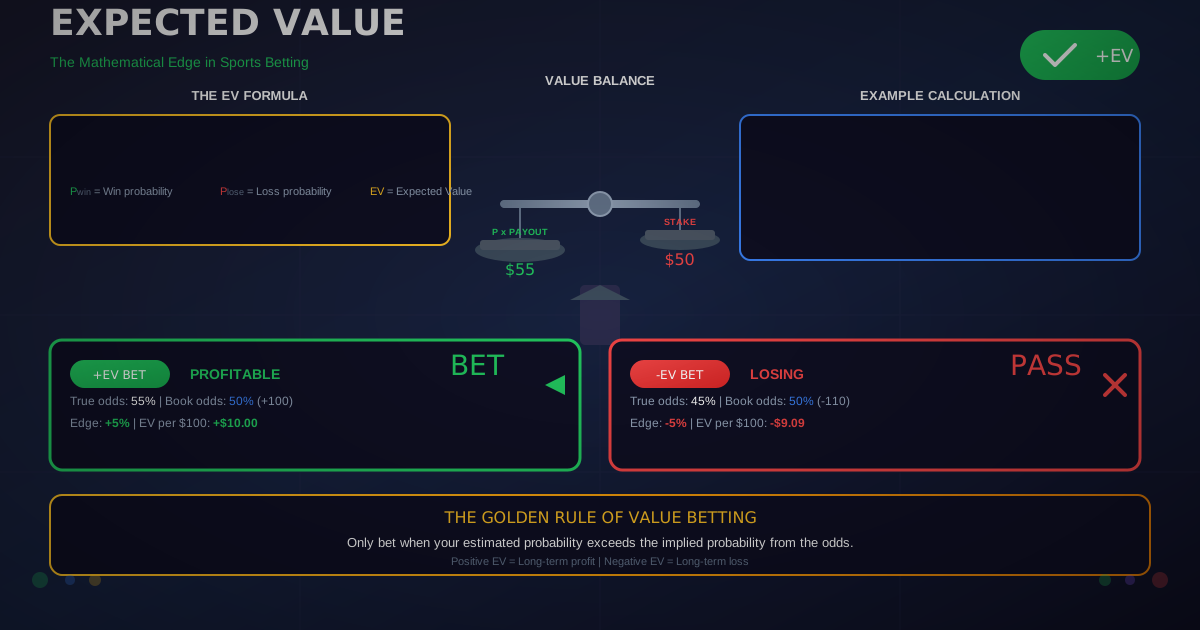
Understanding the EV Formula
The expected value of a semi-bluff breaks down into two scenarios:
Scenario 1: Opponent Folds
EV(fold) = Fold Frequency x Current Pot
Scenario 2: Opponent Calls
EV(call) = Call Frequency x [(Your Equity x New Pot) - (Villain Equity x Your Bet)]
Total Semi-Bluff EV:
Total EV = EV(fold) + EV(call)
Worked Example: Flush Draw on the Flop
You hold As7s on a Ks9s2h flop. The pot is $100 and you're considering a $70 bet.
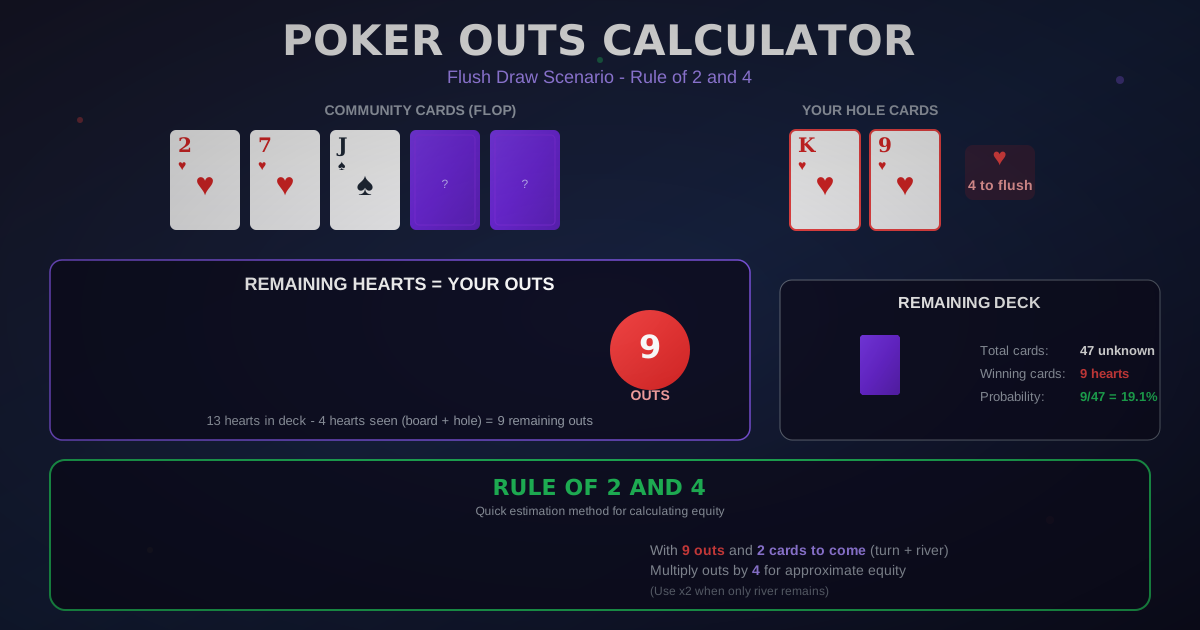
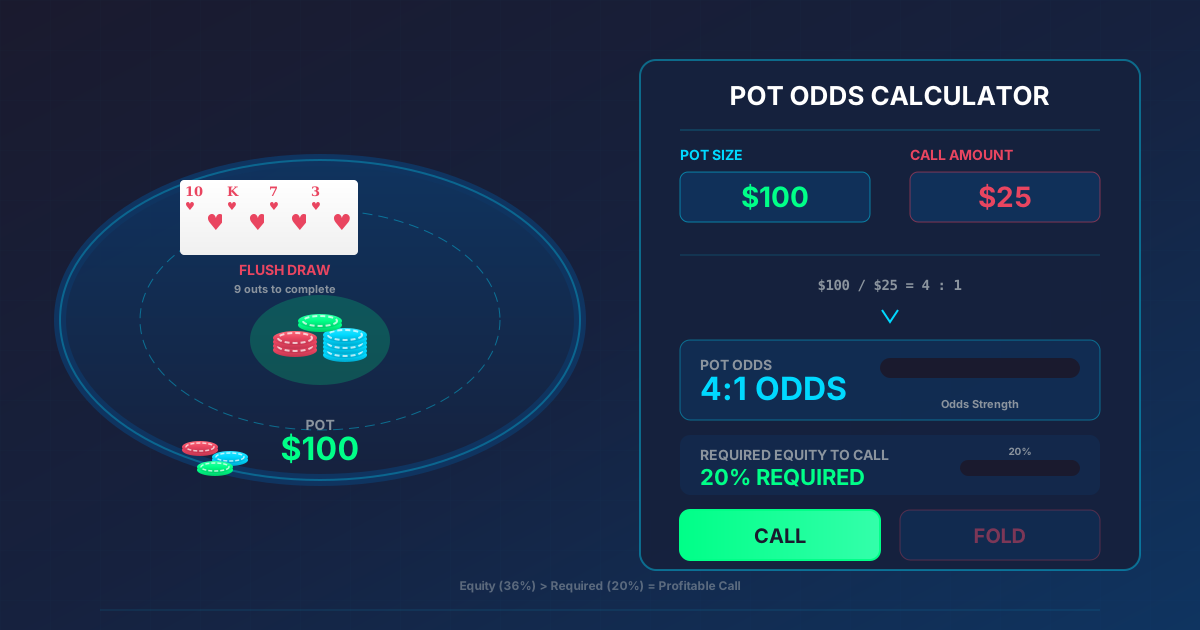
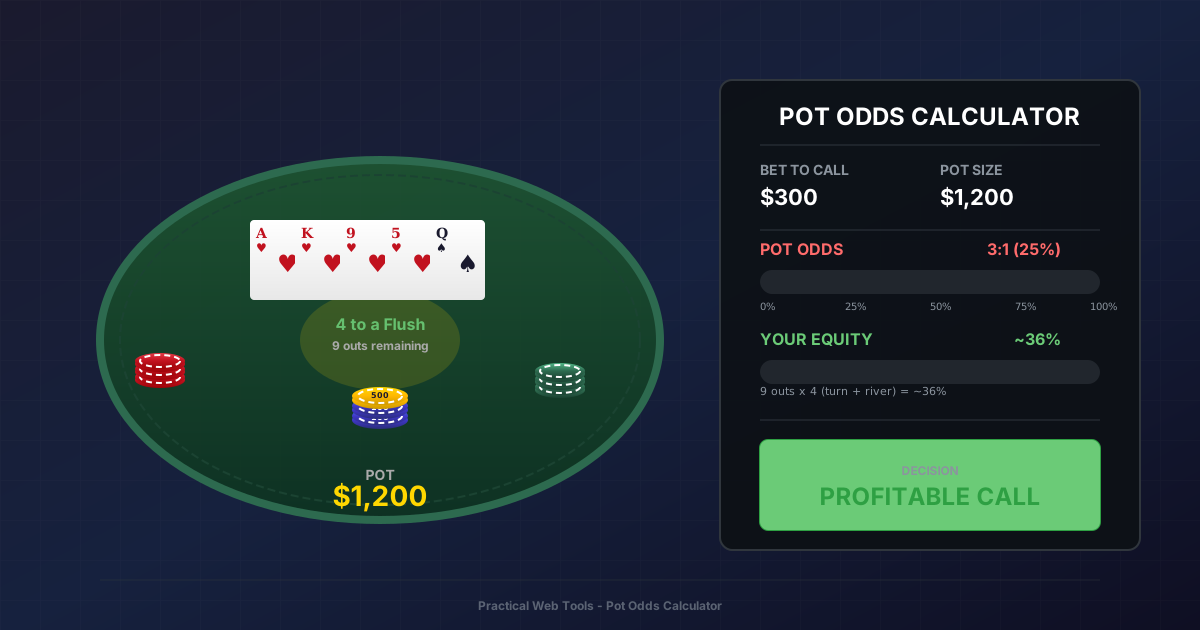
Your equity: 35% (9 flush outs = ~36% by river) Estimated fold equity: 35% (opponent has medium-strength hand)
EV(fold) = 0.35 x $100 = $35.00
EV(call) = 0.65 x [(0.35 x $240) - (0.65 x $70)]
EV(call) = 0.65 x [$84.00 - $45.50]
EV(call) = 0.65 x $38.50 = $25.03

Total EV = $35.00 + $25.03 = +$60.03
Your semi-bluff has positive expected value, making it a profitable play regardless of outcome.
When to Semi-Bluff: Key Factors
Factor 1: Your Hand Equity
Higher equity makes semi-bluffs more profitable when called:
| Drawing Hand | Approximate Equity | Semi-Bluff Quality |
|---|---|---|
| Flush draw + overcards | 45-50% | Excellent |
| Flush draw | 35% | Very Good |
| Open-ended straight draw | 32% | Good |
| Gutshot straight draw | 17% | Marginal |
| Two overcards | 24% | Fair |
| Backdoor draws only | 4-8% | Poor |
Factor 2: Fold Equity Assessment
Fold equity depends on multiple factors:
Opponent Tendencies:
- Tight players fold more frequently
- Calling stations provide minimal fold equity
- Aggressive players may raise, complicating decisions
Board Texture:
- Coordinated boards increase fold equity (more scare cards)
- Dry boards decrease fold equity (less perceived danger)
Bet Sizing:
- Larger bets generate more fold equity
- Overbets can create maximum fold equity against capped ranges
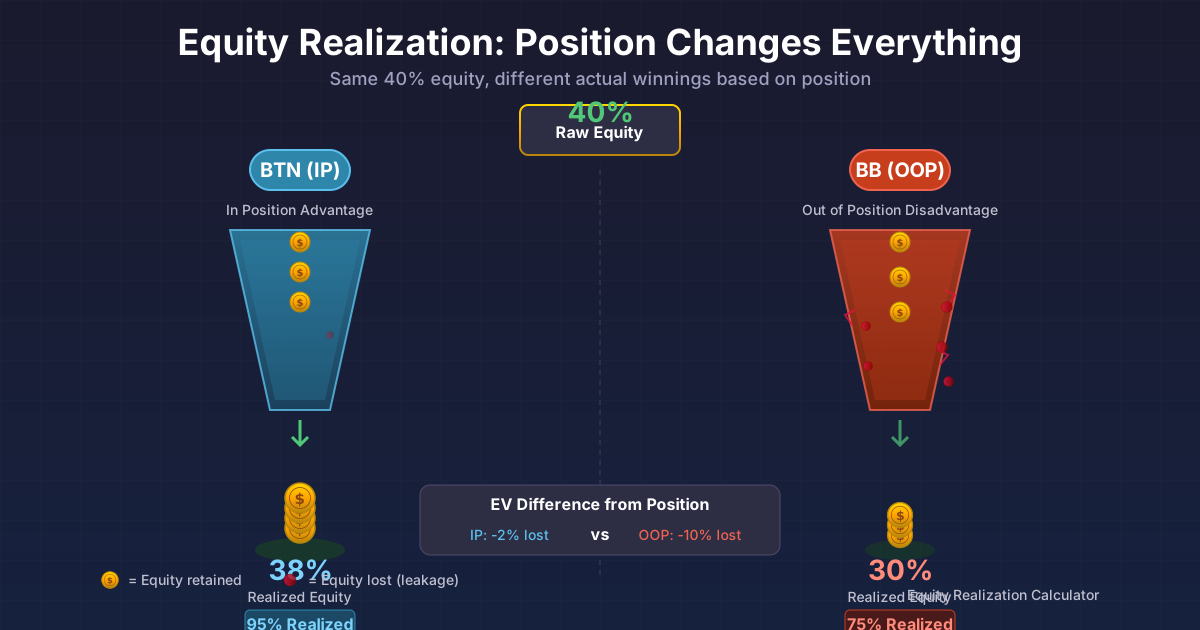
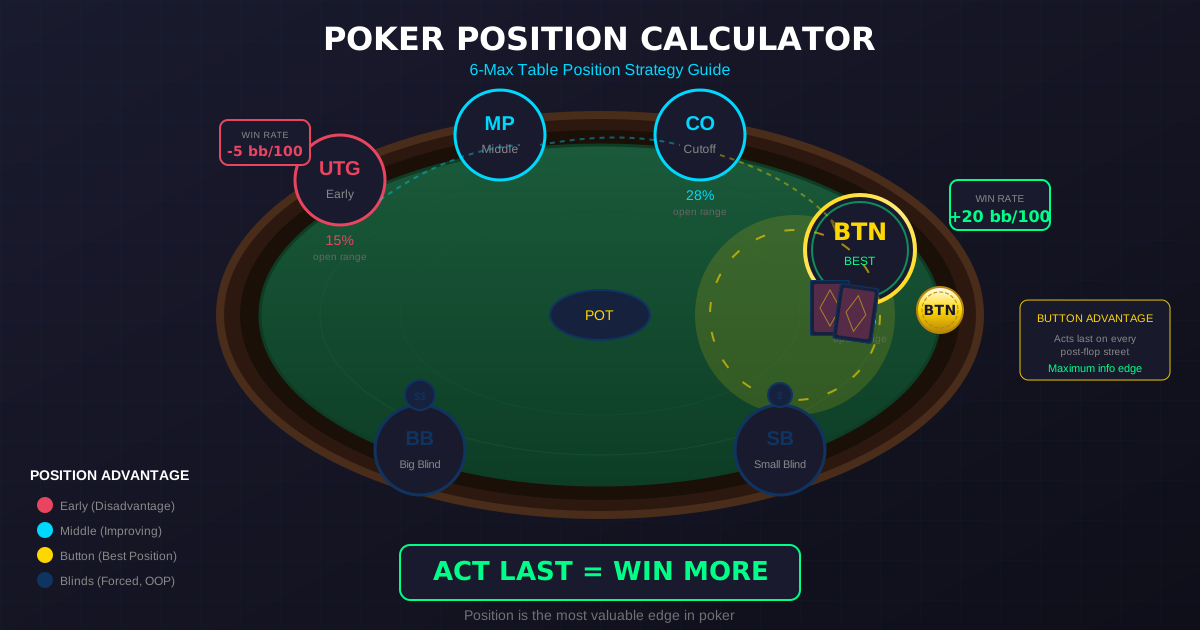
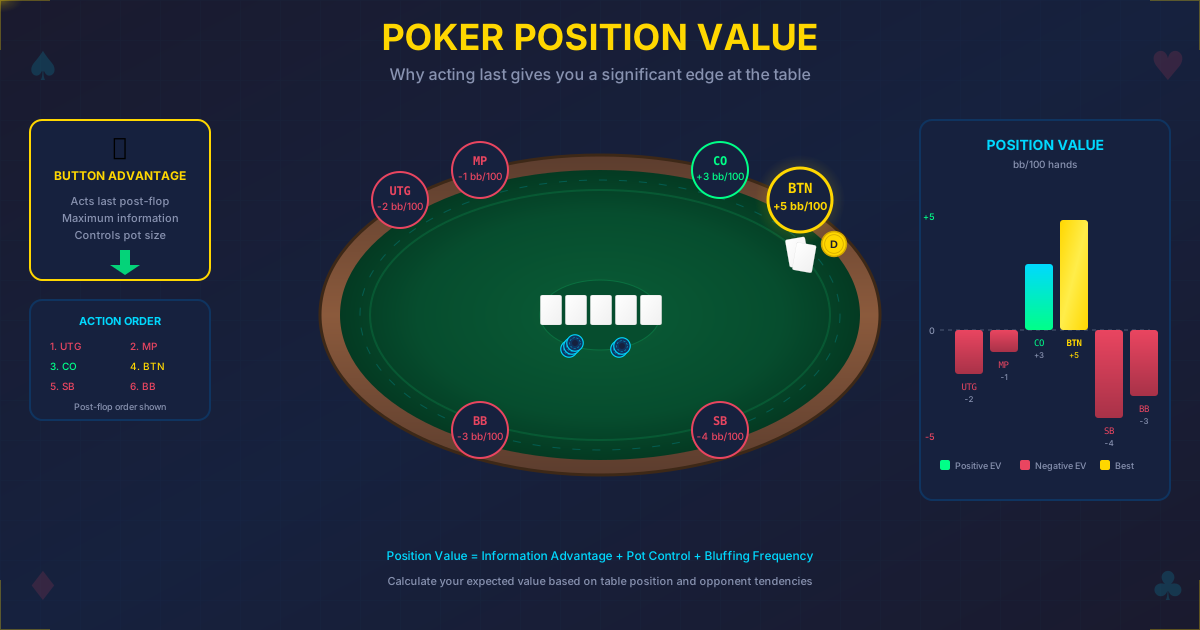
Factor 3: Position
Position significantly impacts semi-bluff profitability:
In Position Advantages:
- Control the action on future streets
- Realize your equity more efficiently
- Can check back if given free cards
Out of Position Challenges:
- Must bet to protect equity
- Vulnerable to raises
- Lower equity realization
Semi-Bluff Sizing Strategy
The Relationship Between Bet Size and Fold Equity
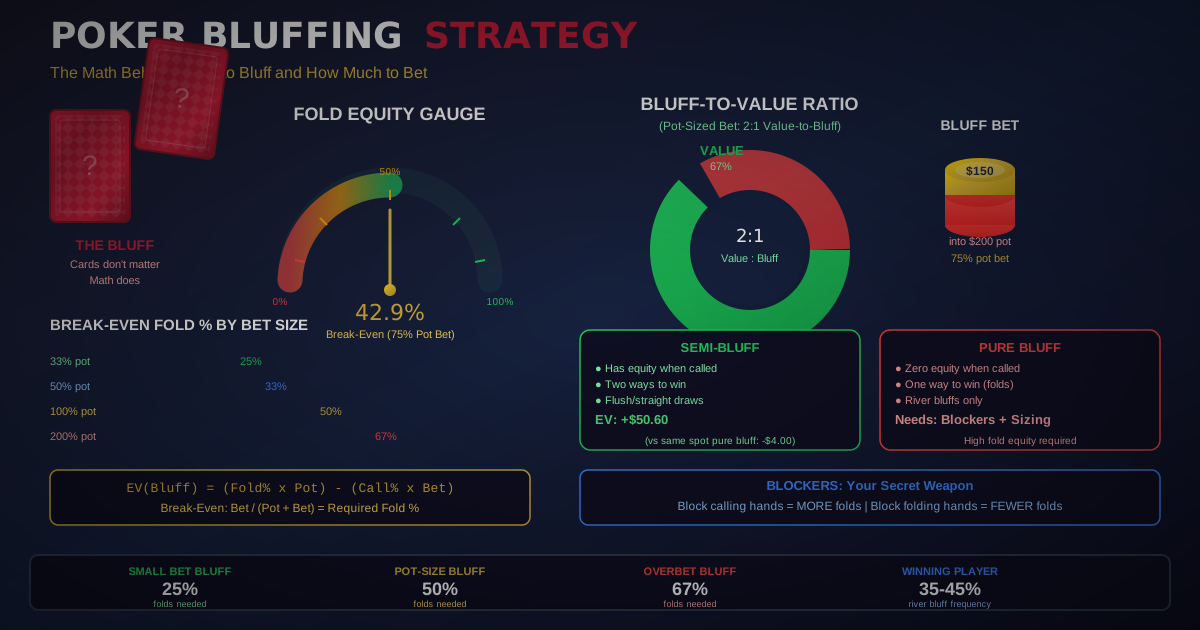
Larger bets increase fold equity but require more fold equity to break even:
| Bet Size (% of Pot) | Fold Equity Needed (0% hand equity) | Fold Equity Needed (35% equity) |
|---|---|---|
| 33% | 25% | 16% |
| 50% | 33% | 22% |
| 66% | 40% | 26% |
| 75% | 43% | 28% |
| 100% | 50% | 33% |
Optimal Sizing Principles
Small Bets (25-40% pot):
- Use when fold equity is low but you want to build the pot
- Effective on dry boards with weak ranges
- Allows multiple barrels without over-committing
Medium Bets (50-75% pot):
- Standard semi-bluff sizing
- Balances fold equity with risk
- Works across most board textures
Large Bets (100%+ pot):
- Maximum fold equity generation
- Use against capped ranges
- Requires strong conviction in fold equity estimate
Multi-Street Semi-Bluffing
Double Barrel Semi-Bluffs
When you semi-bluff the flop and brick the turn, consider:
Continue Barreling When:
- Turn card is a scare card (completing draws or overcards)
- Opponent's range is weak or capped
- Your perceived range includes strong hands
- Pot odds justify the additional investment
Check Behind When:
- Turn card is a blank that helps opponent's range
- You gain free equity realization
- Stack-to-pot ratio is unfavorable
- Opponent is unlikely to fold
Turn Semi-Bluff EV Calculation
Turn EV = (Fold% x Turn Pot) + (Call% x Draw Equity x River Pot) - (Call% x Miss Equity x Turn Bet)
Example: Turn Semi-Bluff
Turn pot: $180 Your bet: $120 Equity with one card to come: 18% (9 outs) Estimated fold equity: 50%
EV = (0.50 x $180) + (0.50 x 0.18 x $420) - (0.50 x 0.82 x $120)
EV = $90 + $37.80 - $49.20
EV = +$78.60
Real-World Examples
Example 1: Standard Flush Draw Semi-Bluff
Setup: You raise preflop with Qh9h and the big blind calls. Flop is Kh5h2c. Pot is $65. Opponent checks.
Your Equity: 35% (flush draw)
Analysis:
- Opponent likely has Kx, pocket pairs, or air
- Board is relatively dry, limiting scare cards
- Estimated fold equity: 30%
Calculation for $45 bet:
EV(fold) = 0.30 x $65 = $19.50
EV(call) = 0.70 x [(0.35 x $155) - (0.65 x $45)]
EV(call) = 0.70 x [$54.25 - $29.25] = $17.50

Total EV = $19.50 + $17.50 = +$37.00
Result: Strong semi-bluff opportunity with +$37 EV.
Example 2: Combo Draw Monster
Setup: You call a raise in position with 7s6s. Flop is 8s5h4c. Opponent bets $30 into $50. You raise to $90.
Your Equity: 54% (open-ended straight draw + backdoor flush)
Analysis:
- You have 8 straight outs plus backdoor flush potential
- Raising creates maximum fold equity
- If called, you're essentially flipping
Calculation:
Estimated fold equity: 45%
EV(fold) = 0.45 x $80 = $36.00
EV(call) = 0.55 x [(0.54 x $260) - (0.46 x $60)]
EV(call) = 0.55 x [$140.40 - $27.60] = $62.04

Total EV = $36.00 + $62.04 = +$98.04
Result: Raising with this combo draw is highly profitable.
Example 3: Marginal Semi-Bluff Decision
Setup: You have AdTc on a 9h7h3d flop. Pot is $40. You're considering a $25 bet.
Your Equity: 24% (two overcards, backdoor straight)
Analysis:
- Limited equity makes this borderline
- Need substantial fold equity to profit
- Estimated fold equity: 35%
Calculation:
EV(fold) = 0.35 x $40 = $14.00
EV(call) = 0.65 x [(0.24 x $90) - (0.76 x $25)]
EV(call) = 0.65 x [$21.60 - $19.00] = $1.69

Total EV = $14.00 + $1.69 = +$15.69
Result: Marginally profitable, but thin. Higher fold equity would improve significantly.
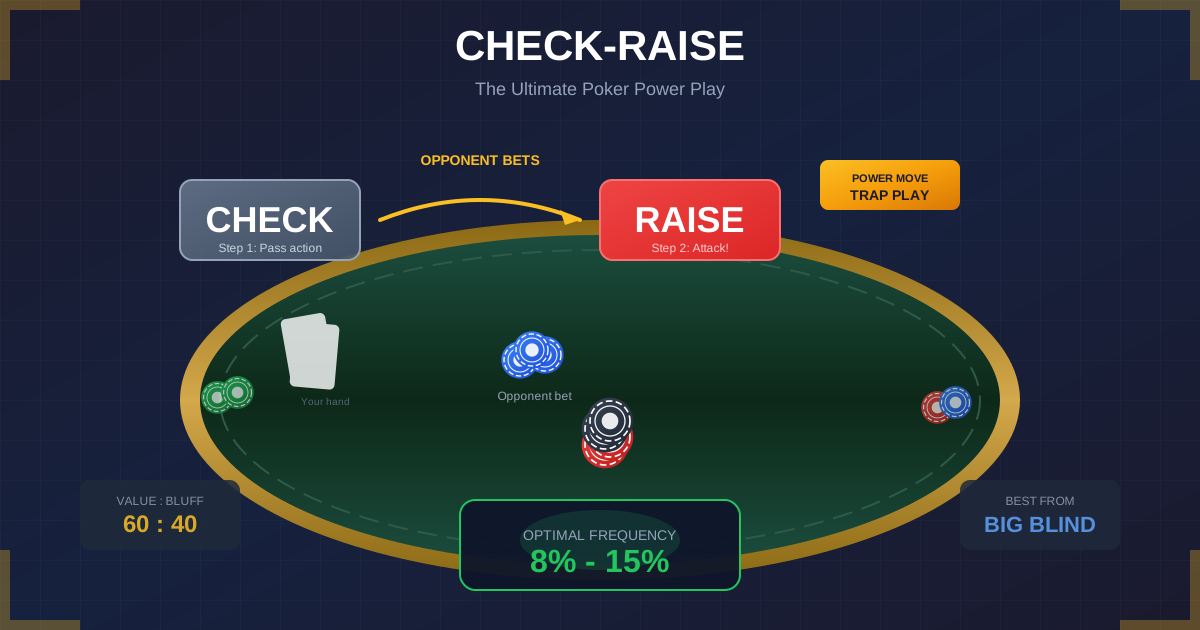
Example 4: Check-Raise Semi-Bluff
Setup: You defend the big blind with Jc9c. Flop is Tc8s2d. Opponent c-bets $20 into $35. You check-raise to $65.
Your Equity: 32% (open-ended straight draw)
Analysis:
- Check-raise creates maximum fold equity
- Represents sets, two pair, or overpairs
- Strong draw if called
Calculation with 50% fold equity:
EV(fold) = 0.50 x $55 = $27.50
EV(call) = 0.50 x [(0.32 x $165) - (0.68 x $45)]
EV(call) = 0.50 x [$52.80 - $30.60] = $11.10

Total EV = $27.50 + $11.10 = +$38.60
Result: Check-raise semi-bluff is highly profitable.
Example 5: River "Semi-Bluff" (No More Cards)
Setup: You miss your flush draw on the river. Pot is $200. Should you bluff $150?
Analysis: This is now a pure bluff since no cards remain. You need:
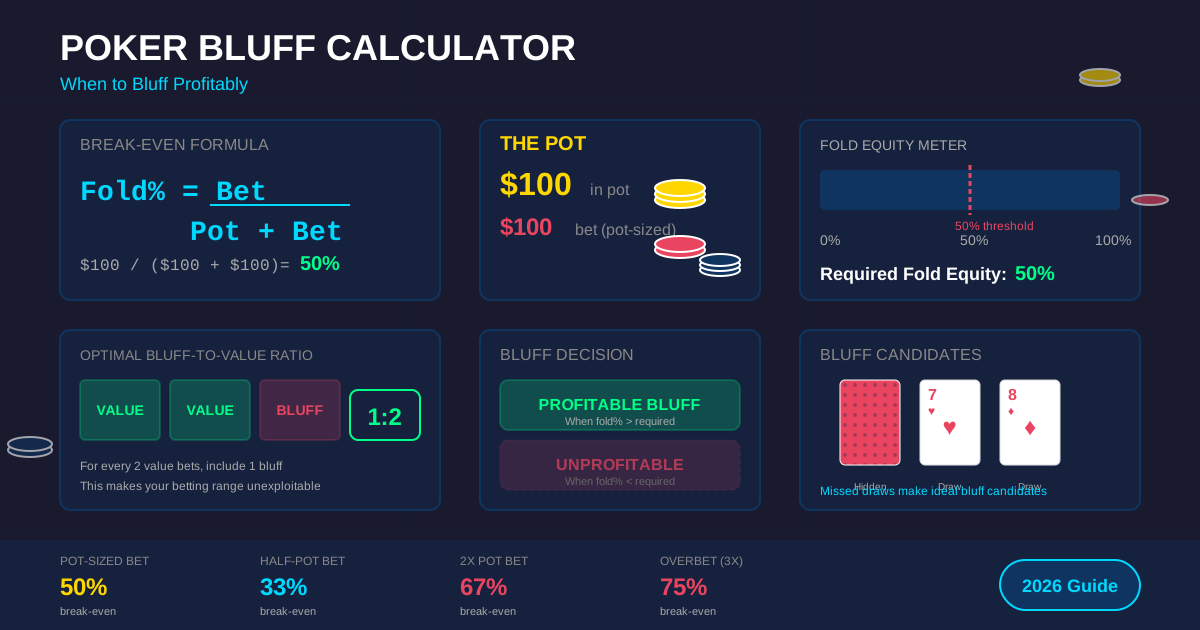
Required Fold Equity = Bet / (Pot + Bet)
Required Fold Equity = $150 / $350 = 42.9%
Result: You need opponent to fold at least 43% of the time for this bluff to break even.
Common Mistakes to Avoid
-
Semi-Bluffing Without Equity: Betting with gutshots against calling stations wastes chips. Ensure you have enough equity to justify your aggression when fold equity is limited.
-
Ignoring Position: Out of position semi-bluffs require higher fold equity to compensate for reduced equity realization. Adjust your frequencies accordingly.
-
Overestimating Fold Equity: Against calling stations, your fold equity approaches zero. Against these players, only bet when your equity alone justifies the bet.
-
Using Incorrect Equity Numbers: Remember that equity changes between streets. Flop draws have two cards to improve; turn draws have only one. Use the correct equity for your street.
-
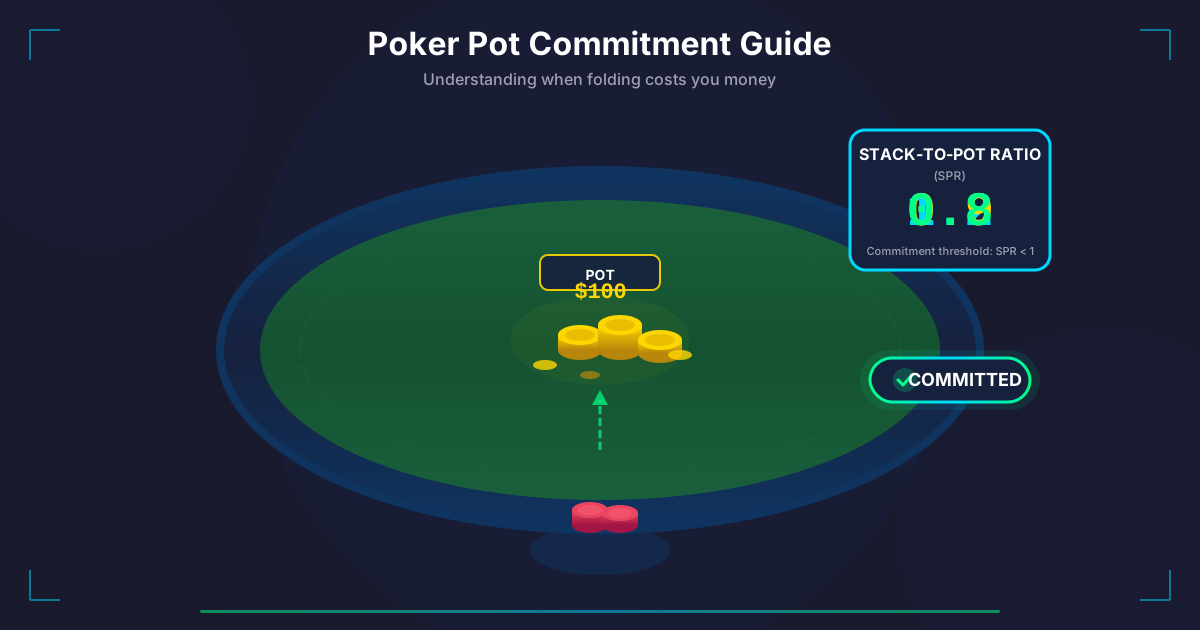
Failing to Consider Stack Depths: Short stack situations limit multi-street semi-bluffing. With 30 big blinds, you cannot barrel three streets without committing your stack.
-
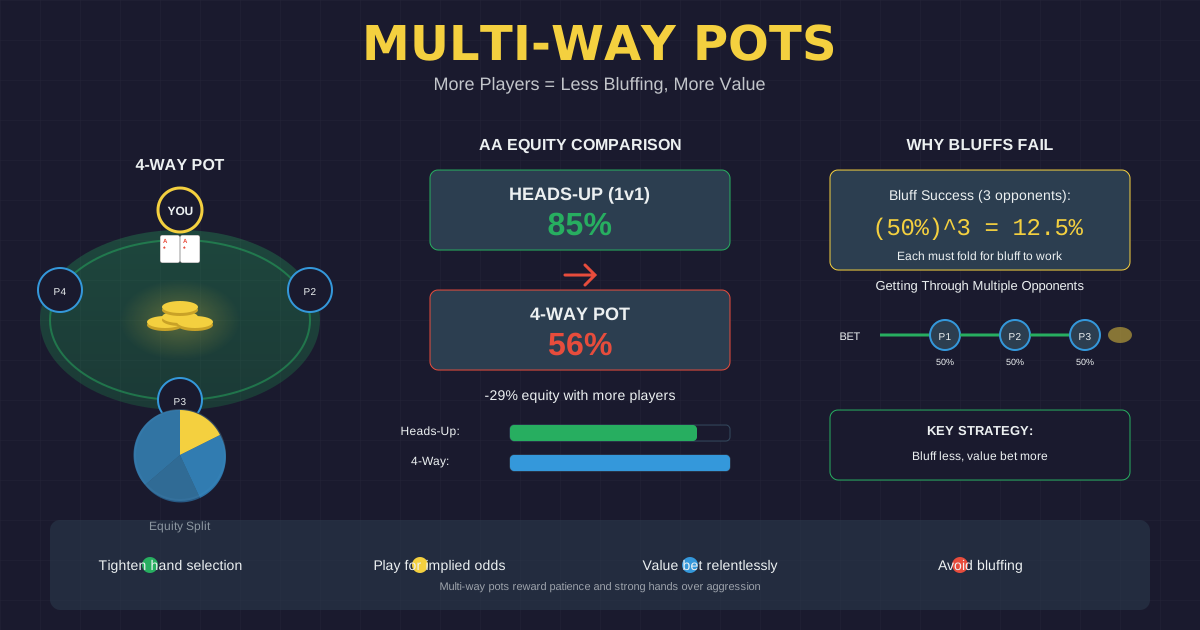
Semi-Bluffing Into Multiple Opponents: Each additional opponent dramatically reduces fold equity. Semi-bluffs work best heads-up.
Frequently Asked Questions
What is the difference between a semi-bluff and a pure bluff?
A semi-bluff is made with a hand that has significant equity to improve, such as a flush draw or straight draw. If called, you still have chances to win. A pure bluff is made with a hand that has little to no chance of winning if called, relying entirely on fold equity for profit.
How do I estimate fold equity accurately?
Fold equity estimation combines opponent reads, board texture analysis, and bet sizing. Against unknown opponents, assume moderate fold equity (30-40%) as a baseline. Tight players may fold 50%+, while calling stations might fold less than 20%. Track your results to calibrate estimates.
Should I semi-bluff with a gutshot straight draw?
Gutshots (4 outs, ~17% equity) are marginal semi-bluff candidates. They require high fold equity to profit. Against tight opponents or on scary boards, gutshot semi-bluffs can work. Against calling stations, avoid semi-bluffing gutshots.
How does bet sizing affect semi-bluff profitability?
Larger bets generate more fold equity but require opponents to fold more often to break even. With strong equity (35%+), smaller bets often suffice. With weak equity, you need larger bets to generate sufficient fold equity, but this increases risk.
When should I check my draws instead of semi-bluffing?
Check your draws when: fold equity is minimal (against calling stations), you're out of position against aggressive opponents who will raise, the board heavily favors your opponent's range, or you can profitably see free cards in position.
What is the minimum equity needed for a profitable semi-bluff?
There's no fixed minimum equity since fold equity compensates for lower hand equity. With 50% fold equity, even 15% hand equity can be profitable. With 20% fold equity, you need approximately 30%+ hand equity. Use our calculator to find your specific breakeven point.
How do multi-way pots affect semi-bluffing?
Multi-way pots dramatically reduce fold equity because each opponent must fold for your bluff to succeed immediately. With three opponents, even if each folds 50% of the time, combined fold equity is only 12.5%. Generally avoid semi-bluffing in multi-way pots unless you have very strong equity.
Should I semi-bluff the flop or wait for the turn?
Flop semi-bluffs build bigger pots for when you hit, and you have two cards to improve. Turn semi-bluffs face shorter odds but may have more credibility. Generally, semi-bluff the flop with strong draws (35%+ equity) and the turn with specific scare cards that improve your perceived range.
Pro Tips
- Calculate the "breakeven fold equity" before betting: Breakeven = (Bet - (Equity x (Pot + Bet))) / ((1 - Equity) x (Pot + Bet))
- Combo draws (flush draw + straight draw) are premium semi-bluff hands because they maintain 50%+ equity against most hands
- Use position to check back when fold equity is low, preserving your equity while controlling pot size
- Track your semi-bluff success rates against specific opponent types to refine your fold equity estimates
- When semi-bluffing multiple streets, plan your whole line before betting the flop to ensure favorable pot commitments
Related Calculators
- Poker Equity Calculator - Calculate your hand equity against opponent ranges
- Fold Equity Calculator - Determine how often opponents need to fold
- Poker EV Calculator - Compute expected value of any poker decision
- Pot Odds Calculator - Compare pot odds to your drawing odds
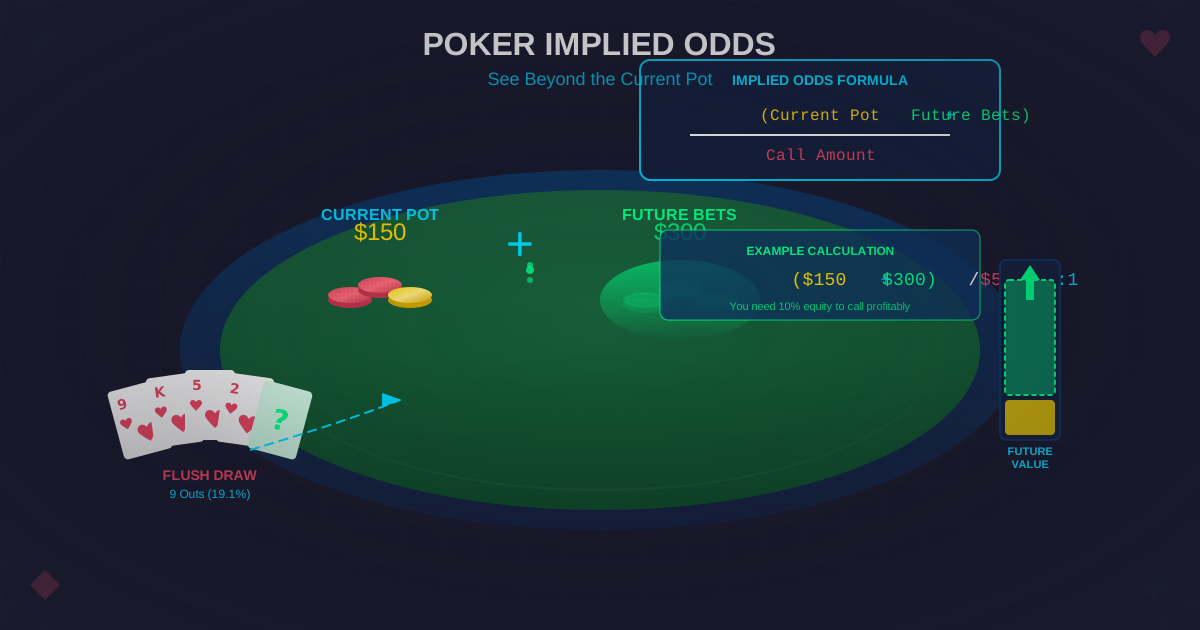
- Implied Odds Calculator - Factor in future betting when chasing draws
Conclusion
Semi-bluffing transforms passive drawing hands into aggressive money-makers. By combining fold equity with hand equity, you create mathematically profitable situations that don't rely on luck alone. Our semi-bluff calculator removes the guesswork, showing you exactly when aggression pays and when discretion preserves your stack.
Master the math behind semi-bluffing, and you'll exploit one of poker's most powerful concepts. Whether you're check-raising with combo draws or floating with backdoor equity, understanding your expected value separates winning players from break-even grinders.