Short-Handed Poker Calculator: Dominate 6-Max and Short Tables (2026)
Short-Handed Poker Calculator: Conquer 6-Max and Short Table Games
Short-handed poker demands a fundamentally different approach than full-ring games. With fewer players, the blinds come around faster, position becomes more valuable, and aggression pays off more frequently. Our short-handed poker calculator provides optimized ranges, positional adjustments, and aggression metrics specifically designed for 6-max and short table play.
What Is Short-Handed Poker?
Short-handed poker refers to any game with six or fewer players. The most common format is 6-max (six-handed), but short-handed play also occurs in tournaments as tables break and in cash games with fewer participants. The reduced player count creates a faster, more aggressive game.
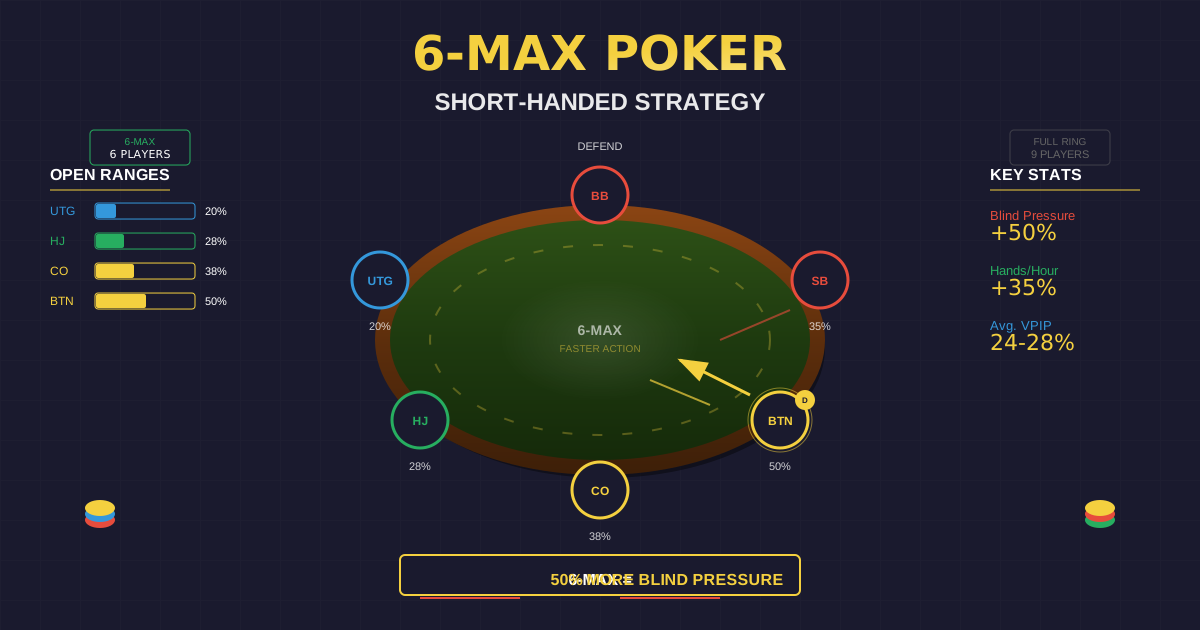
Quick Answer: In 6-max, play approximately 20-25% of hands from UTG, 25-30% from MP, 35-40% from CO, 45-55% from BTN, and defend 35-45% from the blinds. Compared to full-ring, widen all ranges by 5-10% because blinds come 50% faster. Aggression is paramount: open-raise rather than limp, 3-bet light, and fight for every pot.
How to Use Our Calculator
Use the Short-Handed Strategy Calculator →
Step-by-Step Instructions
- Select Table Size: Choose 6-max, 5-max, 4-max, or 3-handed
- Choose Your Position: Input your seat relative to the button
- View Opening Ranges: See optimal preflop opening ranges
- Check 3-Bet Ranges: Review 3-betting frequencies by position
- Adjust for Opponents: Modify ranges based on table dynamics
Input Fields
| Field | Description | Example |
|---|---|---|
| Table Size | Number of players | 6-max |
| Your Position | Seat at the table | Cutoff |
| Action to You | Previous action | Folds to you |
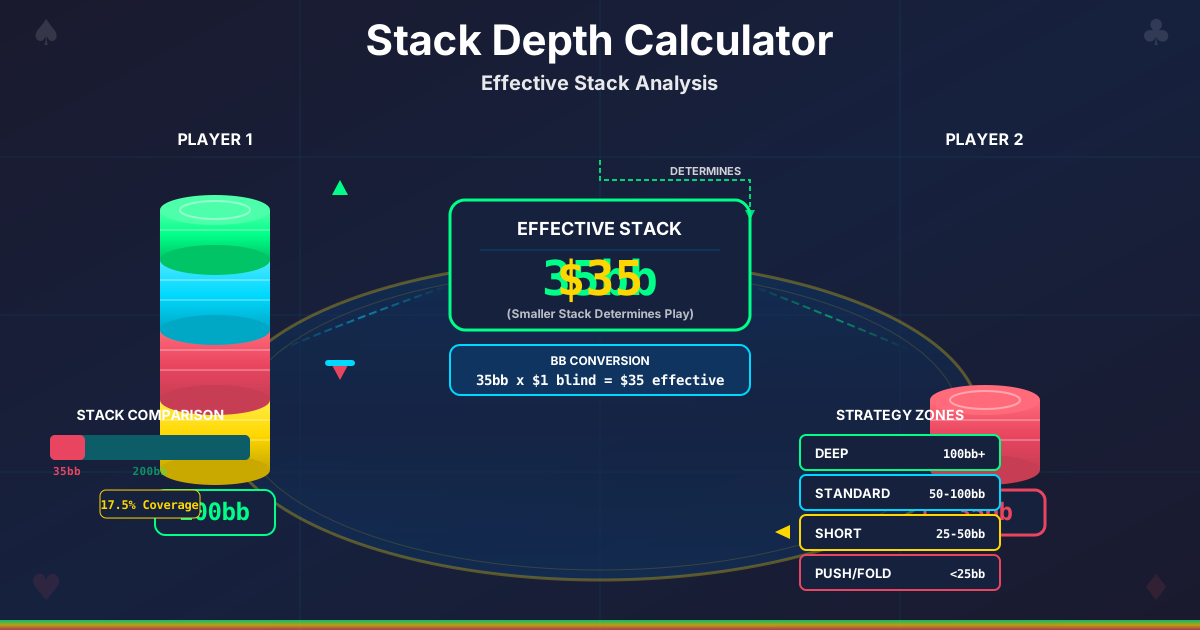
| Stack Depth | Effective stacks in BBs | 100 BB |
| Opponent Tendencies | Table dynamic | Loose-aggressive |
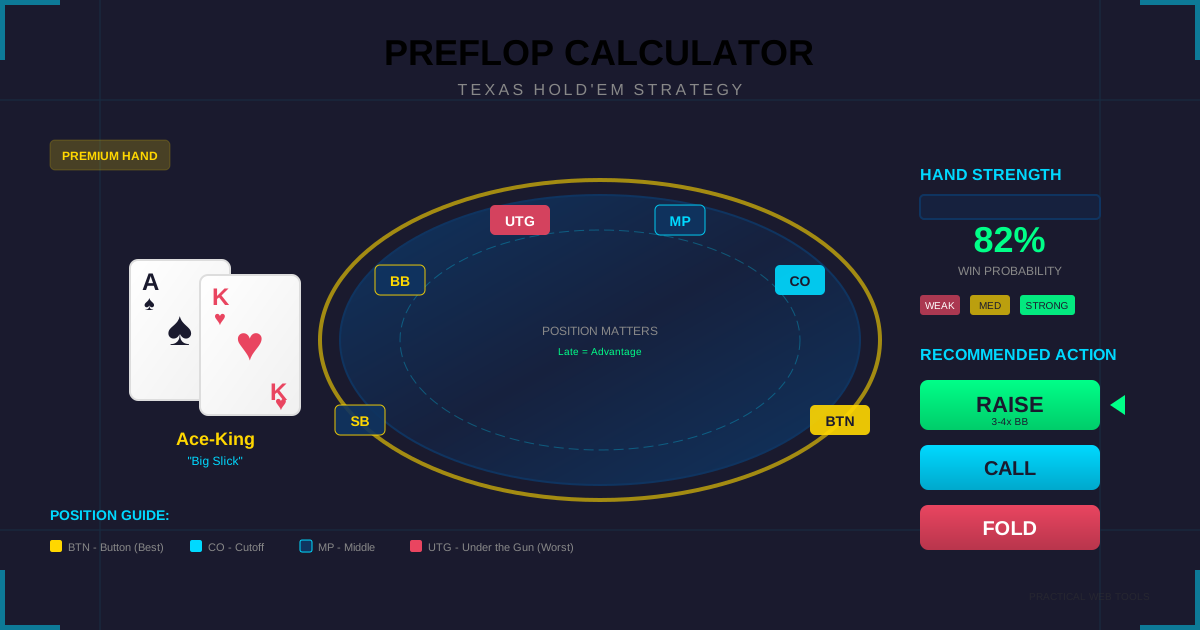
6-Max Position Breakdown
Position Names (6-Handed)
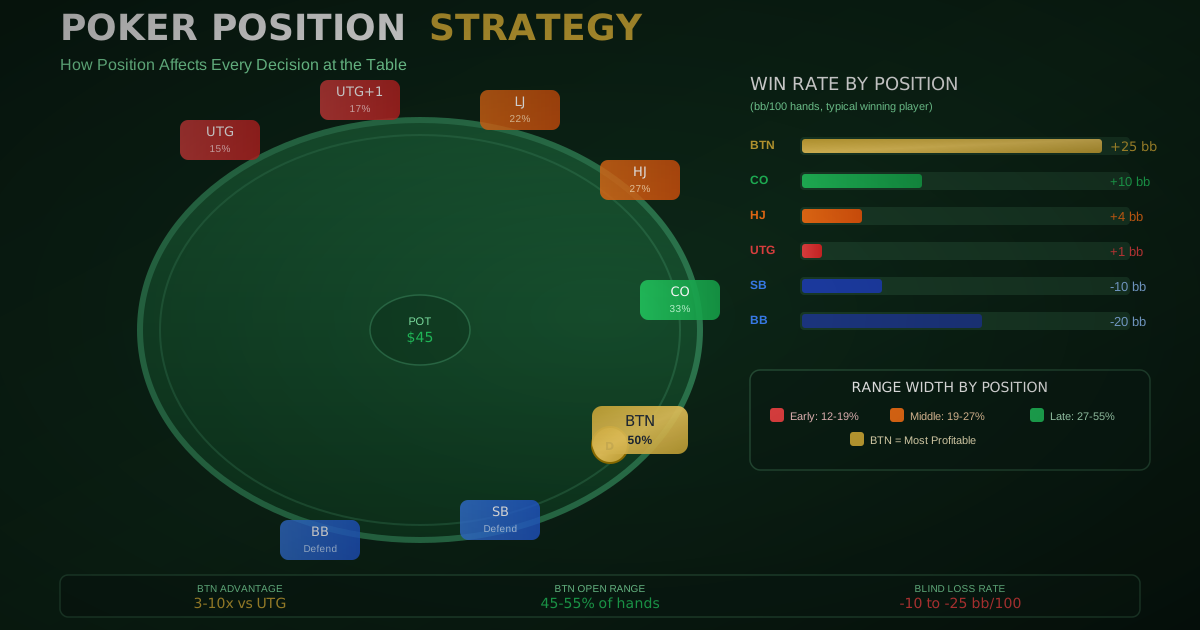
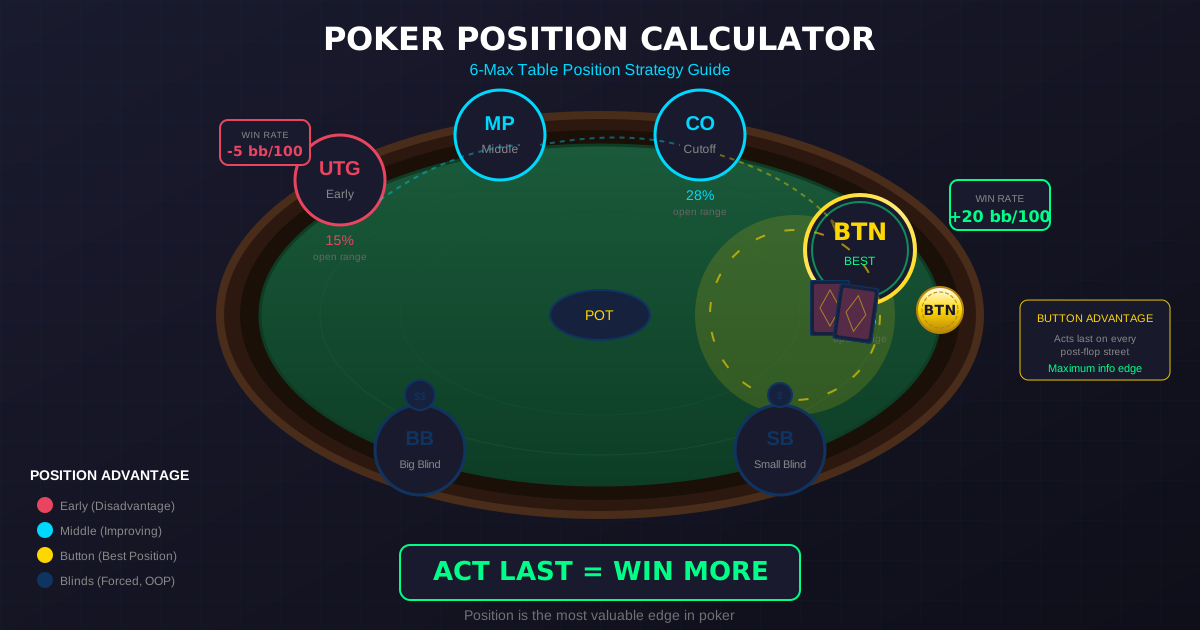
UTG (Under the Gun): First to act, 3 seats from button
HJ (Hijack): Second position, 2 seats from button
CO (Cutoff): One seat before button
BTN (Button): Dealer position, best seat
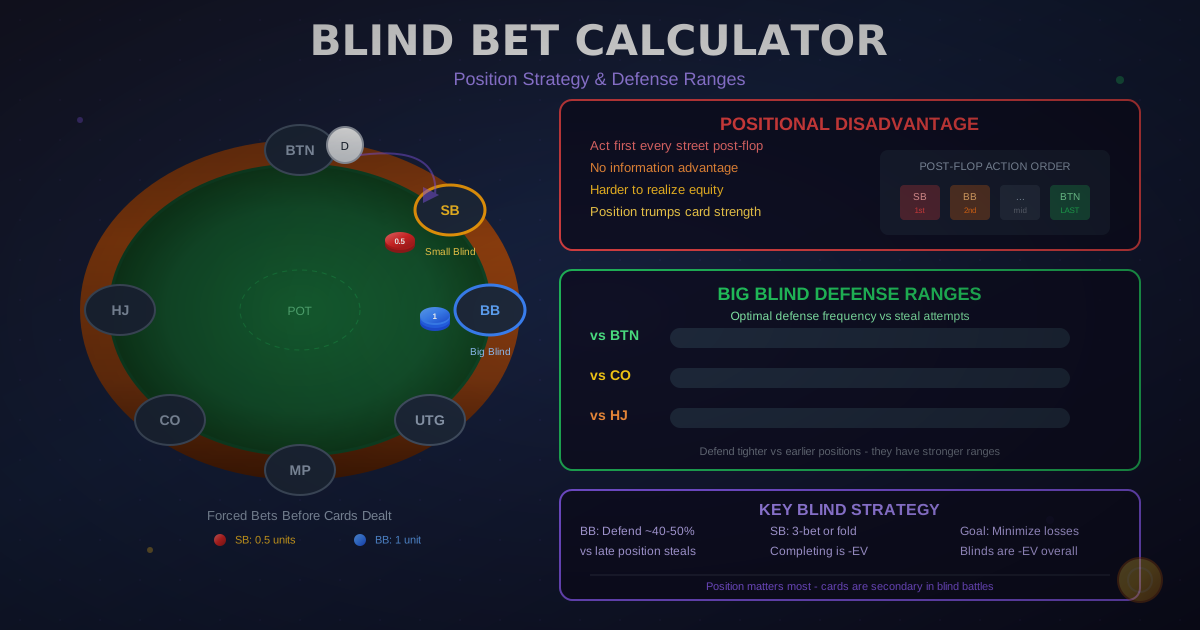
SB (Small Blind): Posts small blind
BB (Big Blind): Posts big blind
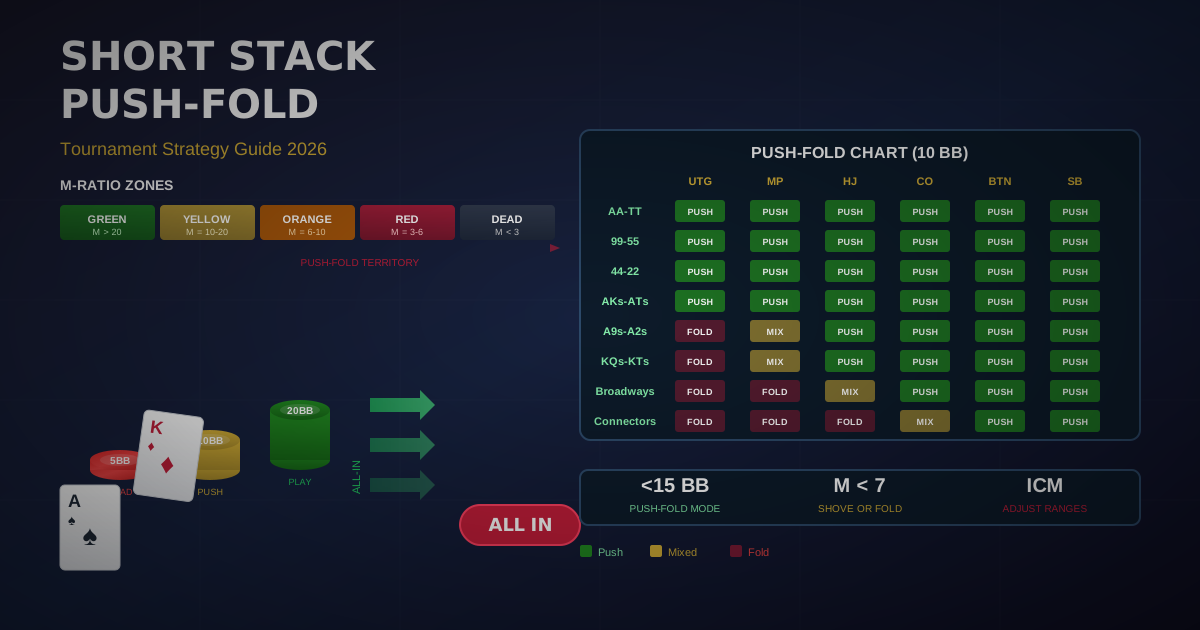
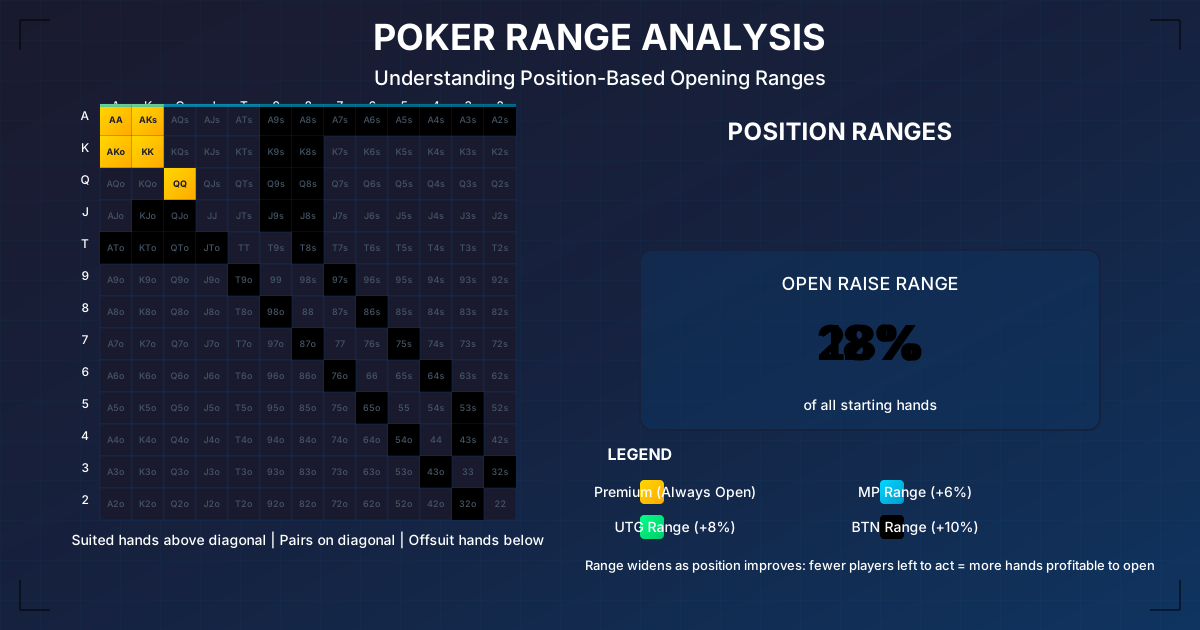
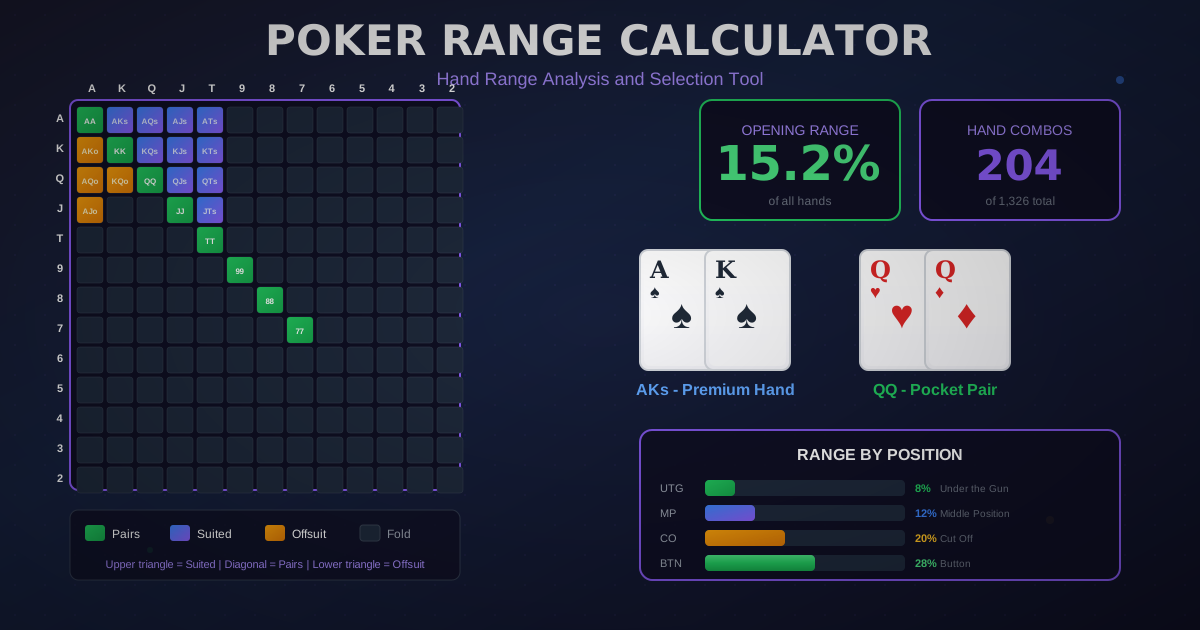
Opening Ranges by Position
UTG (Under the Gun) - ~20%:
Pairs: 22+
Suited: A2s+, K9s+, Q9s+, J9s+, T9s, 98s, 87s, 76s
Offsuit: ATo+, KJo+, QJo
HJ (Hijack) - ~25%:
Pairs: 22+
Suited: A2s+, K5s+, Q8s+, J8s+, T8s+, 97s+, 86s+, 75s+, 65s
Offsuit: A9o+, KTo+, QTo+, JTo
CO (Cutoff) - ~35%:
Pairs: 22+
Suited: A2s+, K2s+, Q4s+, J6s+, T6s+, 96s+, 85s+, 74s+, 64s+, 53s+
Offsuit: A5o+, K9o+, Q9o+, J9o+, T9o
BTN (Button) - ~50%:
Pairs: 22+
Suited: Any suited ace, K2s+, Q2s+, J4s+, T5s+, 95s+, 84s+, 73s+, 63s+, 52s+
Offsuit: A2o+, K5o+, Q7o+, J8o+, T8o+, 98o
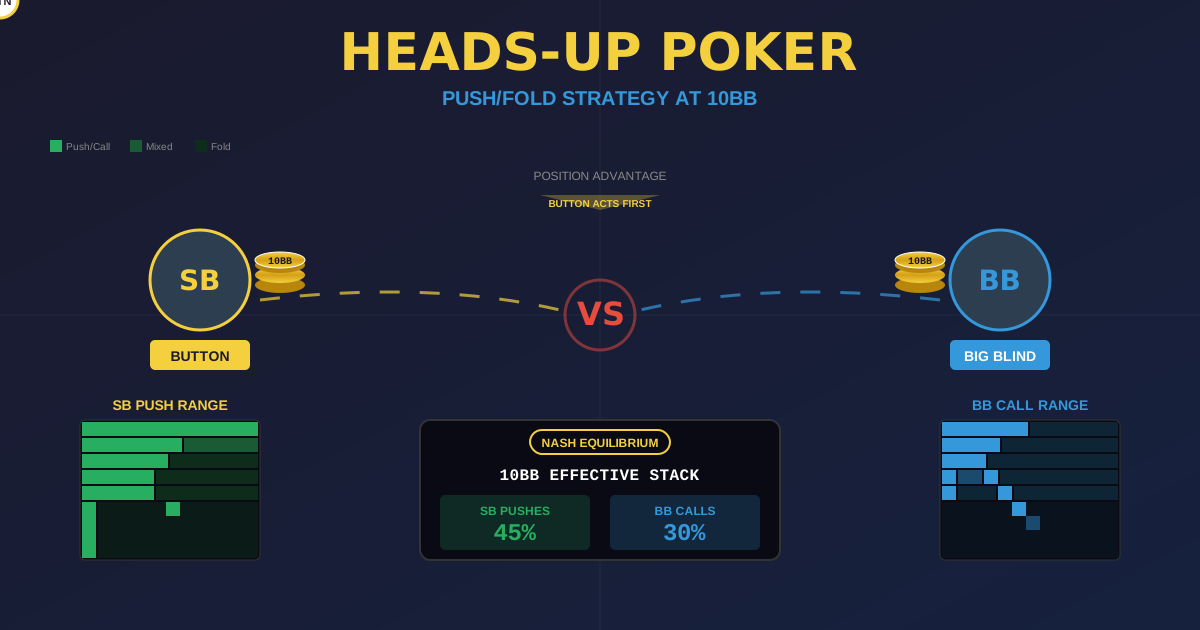
SB (Small Blind) - ~45% vs unopened:
Raise/Fold Strategy (no limping):
Pairs: 22+
Suited: A2s+, K2s+, Q3s+, J5s+, T6s+, 96s+, 85s+, 74s+, 64s+, 53s+
Offsuit: A2o+, K7o+, Q8o+, J9o+, T9o
Why Short-Handed Requires Wider Ranges
Blind Pressure
In 6-max, you post blinds 33% of hands versus 20% in full-ring:
Full Ring (9 players): Blinds every 9 hands = 1.5 BB/9 hands = 0.167 BB/hand
6-Max (6 players): Blinds every 6 hands = 1.5 BB/6 hands = 0.25 BB/hand

Difference: +50% blind pressure
To compensate, you must win pots 50% more frequently.
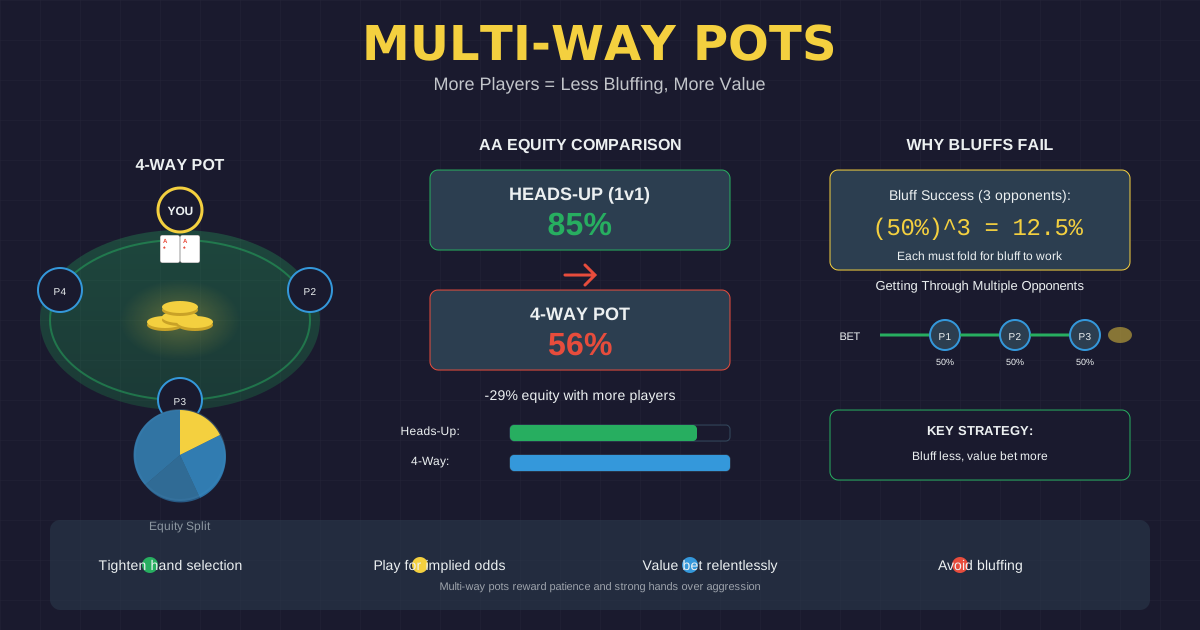
Reduced Player Count
Fewer players means:
- Wider opponent ranges (less likely to hold premiums)
- More steal opportunities (fewer players to get through)
- Higher positional value (act last more often)
- More heads-up pots (your skills matter more)
Mathematical Justification
Full Ring UTG Open:
8 players to act behind
Probability of at least one premium hand: ~35%
Tight range appropriate
6-Max UTG Open:
5 players to act behind
Probability of at least one premium hand: ~22%
Wider range profitable
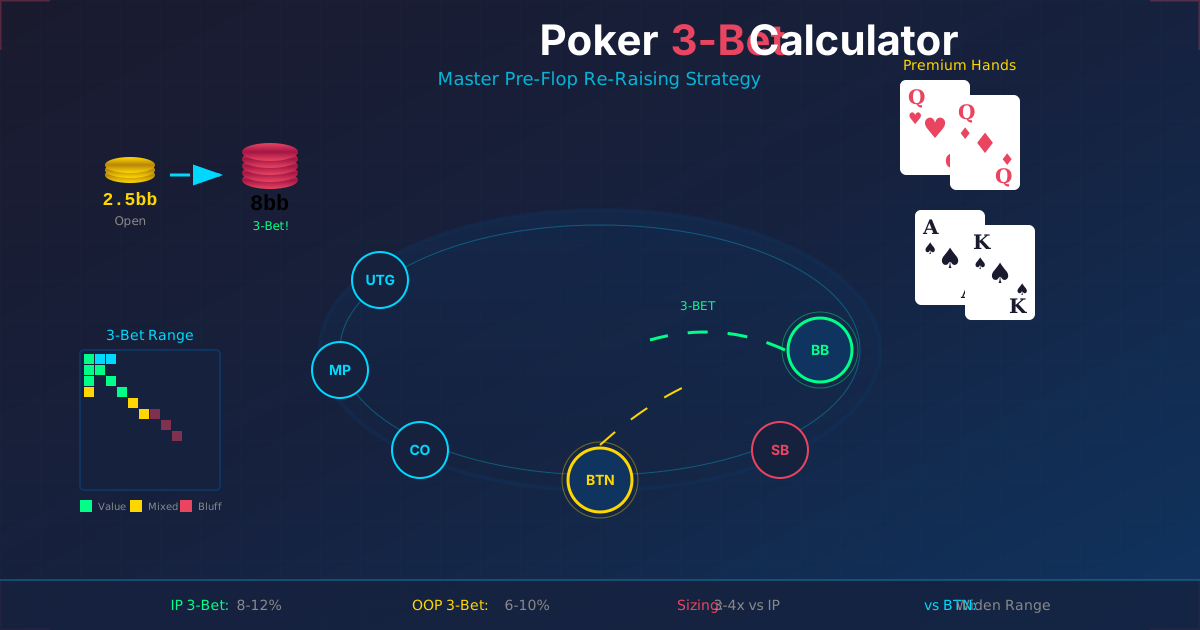
3-Betting Strategy in 6-Max
3-Bet Frequencies by Position
| Your Position | vs UTG Open | vs HJ Open | vs CO Open | vs BTN Open |
|---|---|---|---|---|
| HJ | 8-10% | - | - | - |
| CO | 9-11% | 10-12% | - | - |
| BTN | 10-12% | 11-13% | 12-15% | - |
| SB | 11-13% | 12-14% | 14-16% | 15-18% |
| BB | 10-12% | 11-13% | 13-15% | 14-17% |
3-Bet Range Construction
Value 3-Bets:
Always: AA, KK, QQ, AK
Usually: JJ, TT, AQs, AQo
Sometimes: 99, AJs, KQs
Bluff 3-Bets:
A5s-A2s (blockers, suit)
K9s-K5s (some blockers)
87s-65s (playability)
Q9s-J9s (removal effects)
3-Bet Sizing
In Position: 3x the open raise
Out of Position: 3.5-4x the open raise
Against 3x open: 9-10x (IP), 11-12x (OOP)
Against 2.5x open: 8-9x (IP), 10-11x (OOP)
Aggression Metrics for 6-Max
Key Statistics
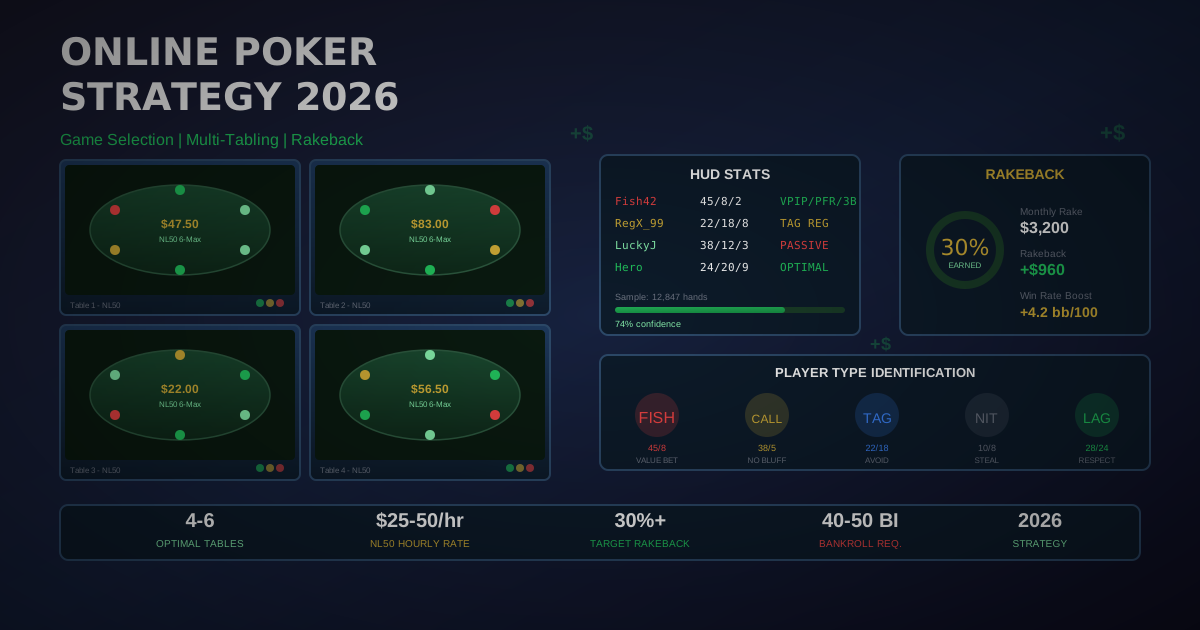
VPIP (Voluntarily Put Money in Pot):
Full Ring Winning Range: 15-20%
6-Max Winning Range: 22-28%
PFR (Preflop Raise):
Full Ring Winning Range: 12-17%
6-Max Winning Range: 19-25%
3-Bet Percentage:
Full Ring Average: 5-7%
6-Max Average: 8-11%
Steal Percentage:
Full Ring Average: 25-35%
6-Max Average: 35-50%
The Aggression Factor
AF = (Bets + Raises) / Calls
Passive: AF < 2
Balanced: AF = 2-3
Aggressive: AF > 3
6-Max Optimal: AF = 2.5-3.5
Real-World Examples
Example 1: UTG Opening Decision
Setup: 6-max cash game, 100 BB deep. You're UTG with Kd9d.
Full Ring Decision:
K9s not in standard UTG range
8 players behind = too many to get through
Action: Fold
6-Max Decision:
K9s IS in standard 6-max UTG range
Only 5 players behind
Good suited broadway hand
Action: Raise to 2.5 BB
Example 2: Button Steal Attempt
Setup: Folds to you on the button with 7h5h.
Analysis:
75s is in top 50% of hands
Only SB and BB to get through
Each will defend ~35-40%
Combined fold equity: ~36-42%
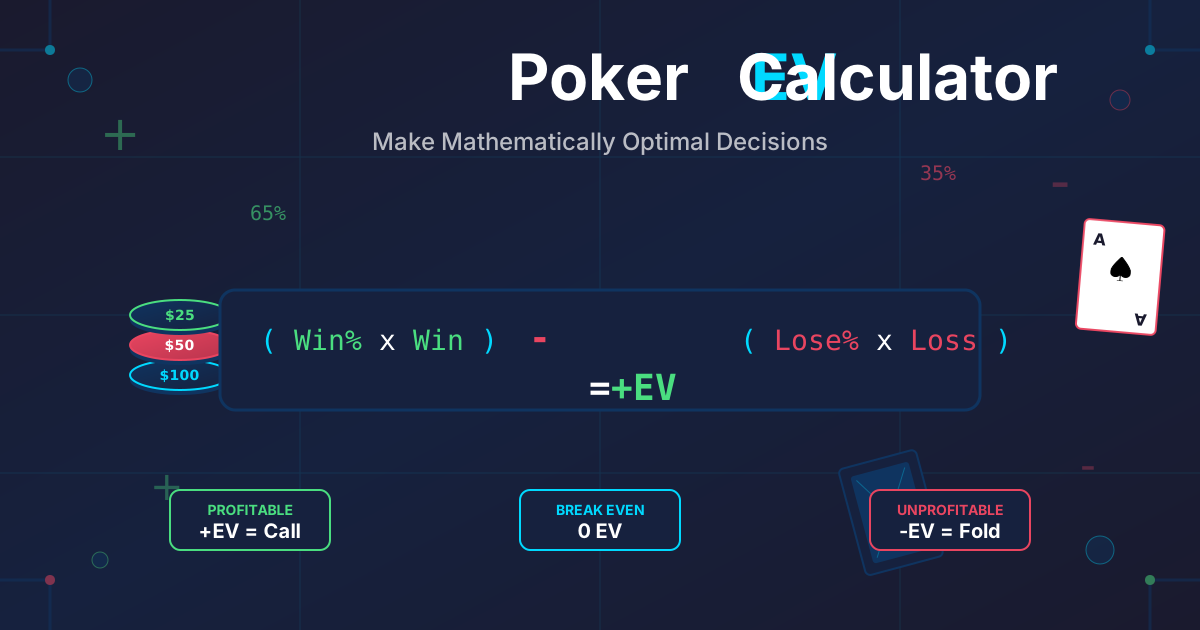
Calculation:
Raise to 2.5 BB
If both fold (42%): Win 1.5 BB = +0.63 BB EV
If called, we have playable hand
Overall EV: Positive
Action: Raise to 2.5 BB
Example 3: Small Blind Defense
Setup: CO raises to 2.5 BB. You're SB with Qc8c.
Options:
1. Fold: Safe but bleeds chips
2. Call: Playable but OOP
3. 3-Bet: Aggressive, takes initiative
Analysis:
Q8s = ~25th percentile hand
CO opening ~35% of hands
Our hand has decent equity vs wide range
Position is terrible (SB = worst seat)
Decision:
3-Bet to 9 BB or Fold
Calling OOP with marginal hand is worst option
3-bet with plan to barrel many flops
Action: 3-bet to 9 BB
Example 4: Defending Big Blind
Setup: Button raises to 2.5 BB. You're BB with Jh7h.
Analysis:
Button opening ~50%
J7s = ~35th percentile hand
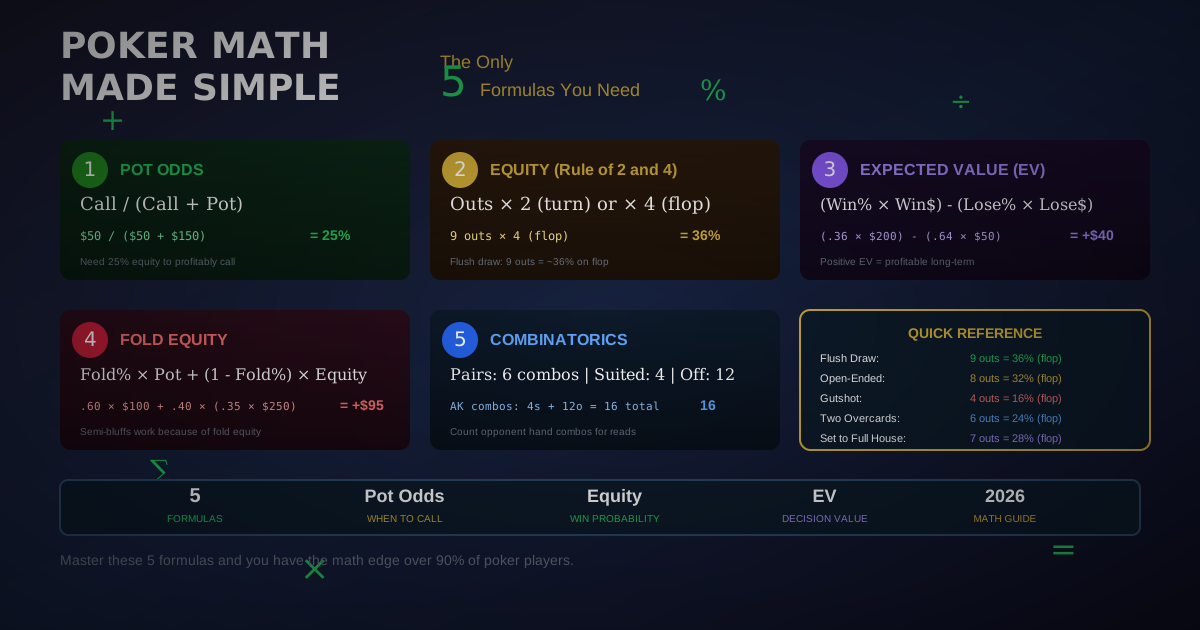
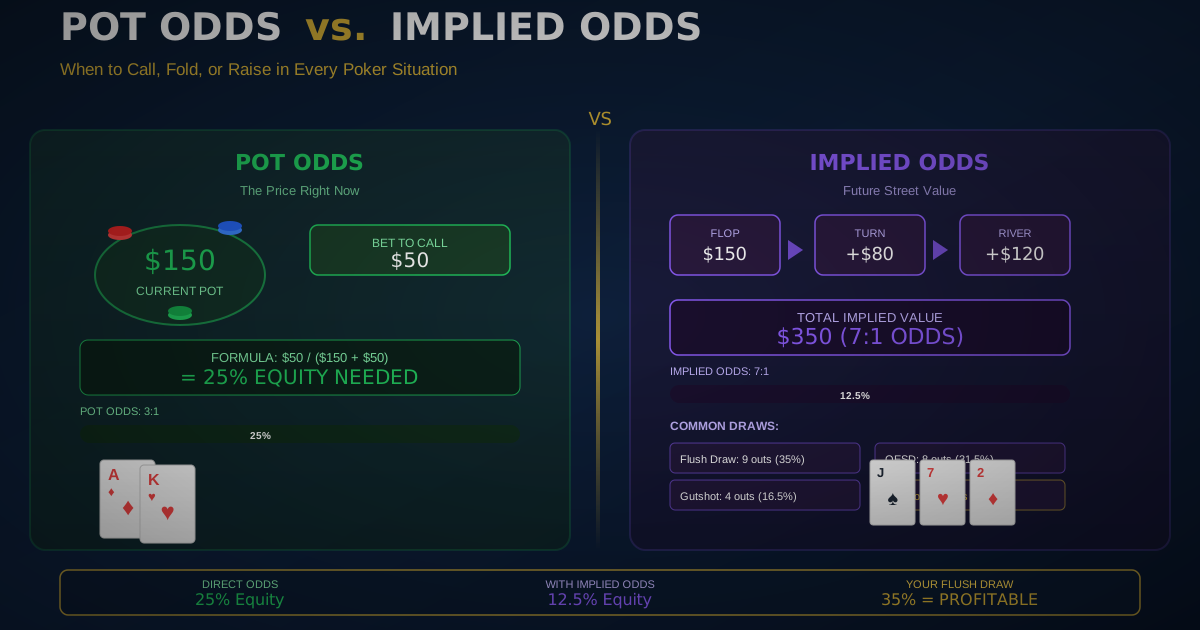
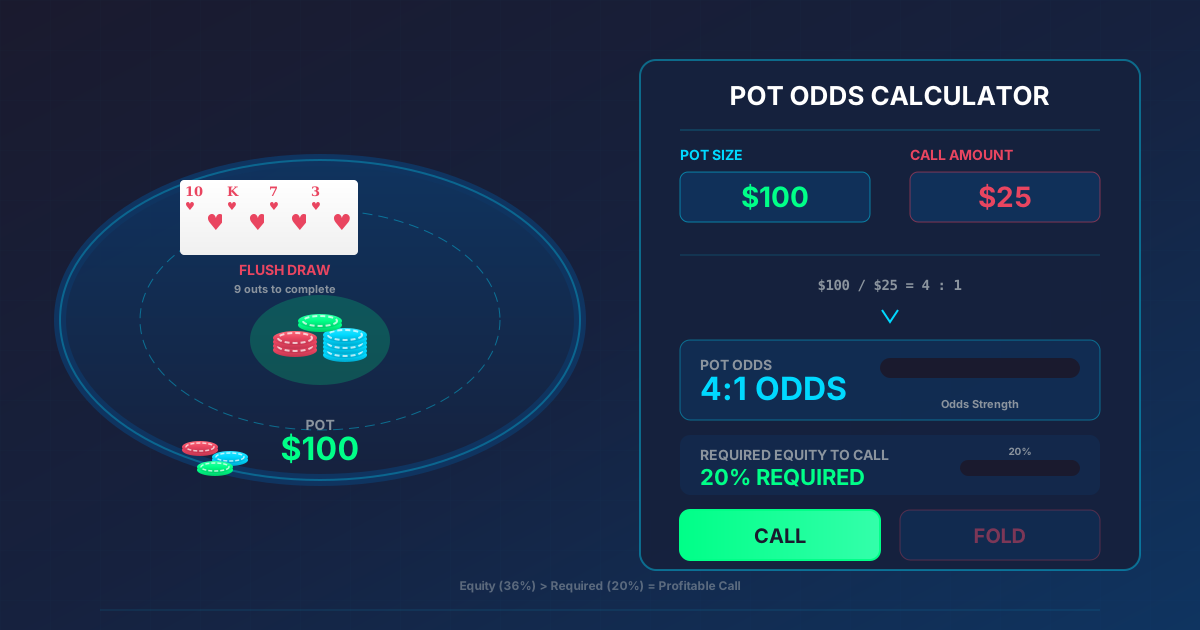
Getting 3.5:1 pot odds to call 1.5 BB more

Required equity: 1.5 / 5.5 = 27.3%
J7s equity vs 50% range: ~42%
Clear defend
Action: Call (or occasionally 3-bet as bluff)
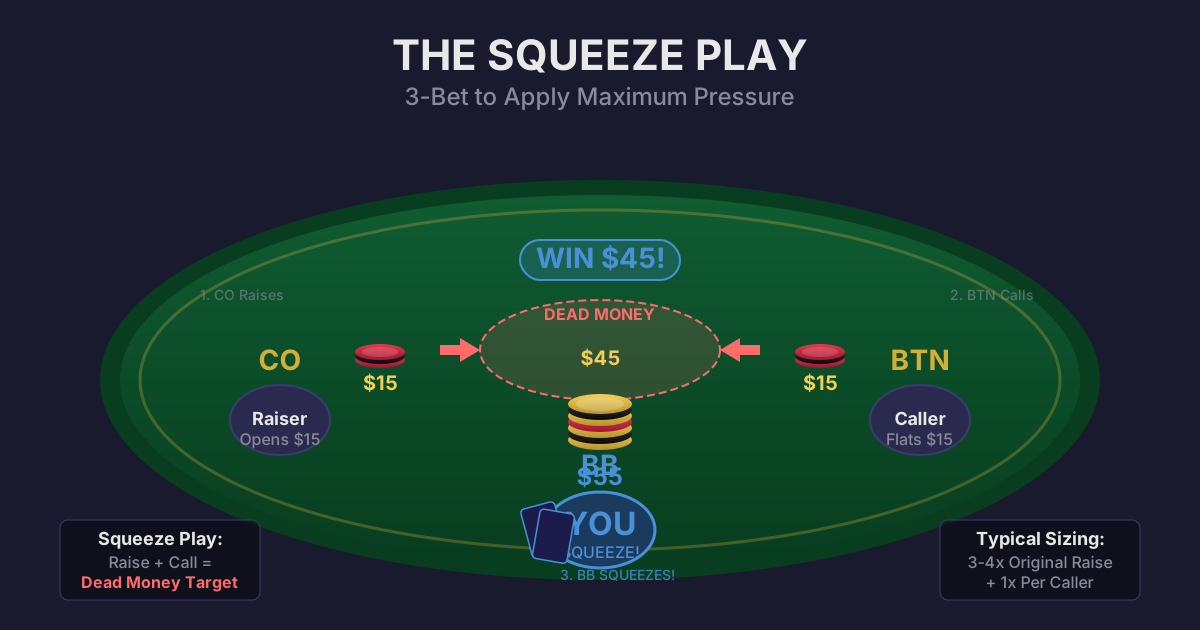
Example 5: 3-Bet Bluffing
Setup: HJ opens to 2.5 BB. You're on the button with 6s5s.
3-Bet Bluff Considerations:
HJ opening ~25% range
65s has good playability if called
Button position is ideal
HJ will fold many opens to 3-bet
Calculation:
3-bet to 7.5 BB
HJ folds ~55% of opening range
When fold: Win 4 BB (blinds + open)
When called: Play in position with playable hand
EV = (0.55 x 4) - (0.45 x [EV when called])
Action: 3-bet to 7.5 BB (profitable bluff)
Example 6: Postflop Adjustment
Setup: You open CO with Ad9c, BB calls. Flop: Kc 8d 4s.
6-Max C-Bet Strategy:
Board favors opener's range (CO has more Kx)
BB defends wide, has some 8x and random hands
A9 has backdoor straight, overcard
Action:
C-bet 33% pot
Targeting folds from underpairs, weak hands
Sets up turn barrel if called
Small sizing protects weak range
Short-Handed Postflop Adjustments
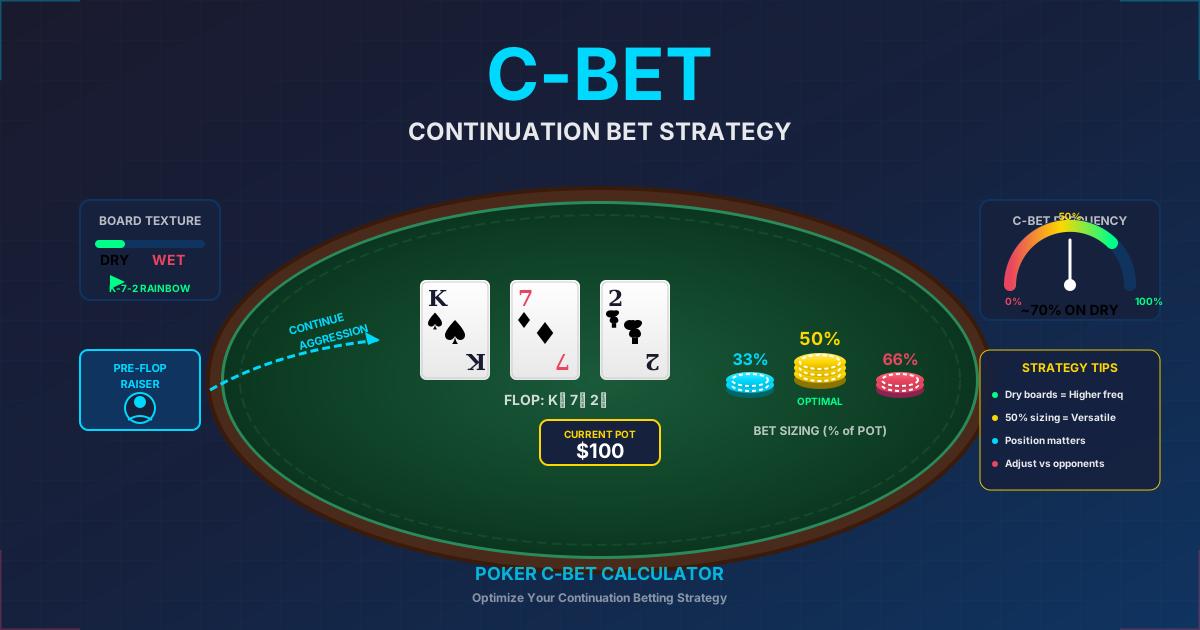
C-Bet Frequency Changes
Full Ring C-Bet Strategy:
Frequency: 55-65%
Sizing: 50-75% pot
Boards: More selective (more opponents)
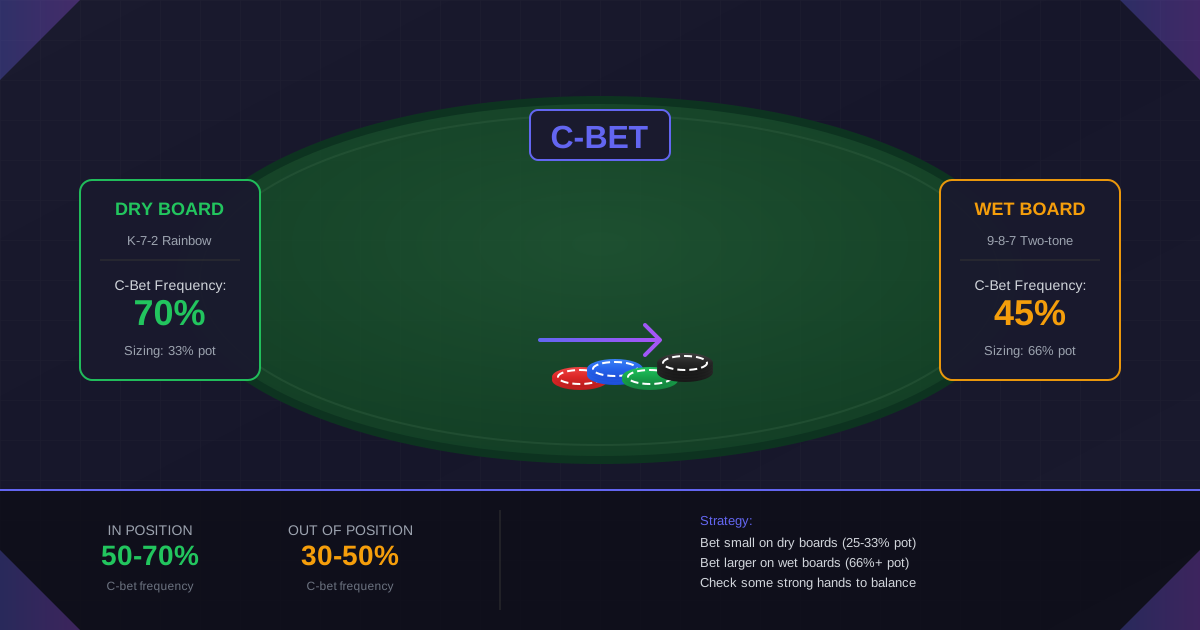
6-Max C-Bet Strategy:
Frequency: 65-75%
Sizing: 25-50% pot
Boards: More aggressive (wider caller ranges)
Turn and River Aggression
Multi-Barrel Frequency:
Full Ring: Selective, need strong hands
6-Max: More frequent, wider value and bluffs
Example Turn Ranges:
Value: Top pair+, strong draws
Bluff: Flush draws, OESD, gutshots
Check: Weak showdown, no equity
Blind Battle Dynamics
SB vs BB Confrontations
In 6-max, SB vs BB situations occur frequently:
SB Opening Strategy:
Open ~45-50% of hands
Use smaller sizing (2-2.5x)
Expect wide BB defense
Prepare for 3-bets
BB Defense Strategy:
Defend 50-60% vs SB open
3-bet 12-15% (value + bluffs)
Call with speculative hands
Fold worst offsuit garbage
SB Limp Strategy (Advanced)
Some players incorporate limps from SB:
Limp Range:
Suited connectors: 76s-54s
Small pairs: 22-55
Trap hands: AA, KK (occasionally)
Weak suited: K5s-K2s
Purpose:
- Reduce variance
- See cheap flops
- Balance raise range
- Exploit aggressive BBs
Common Mistakes to Avoid
-
Playing Full-Ring Ranges: Full-ring ranges are too tight for 6-max. You'll bleed blinds and miss profitable spots.
-
Over-Limping: Limping encourages multi-way pots where your edge diminishes. Raise or fold in most spots.
-
Under-Defending Blinds: With wider opens against you, you must defend wider. Don't surrender blinds to every steal attempt.
-
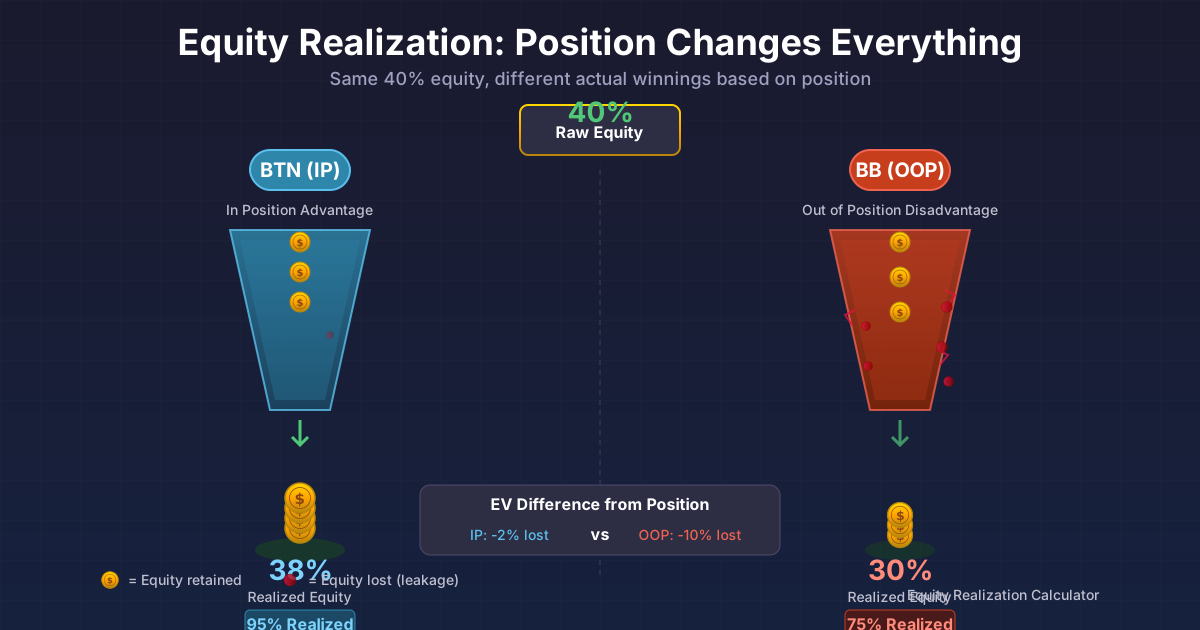
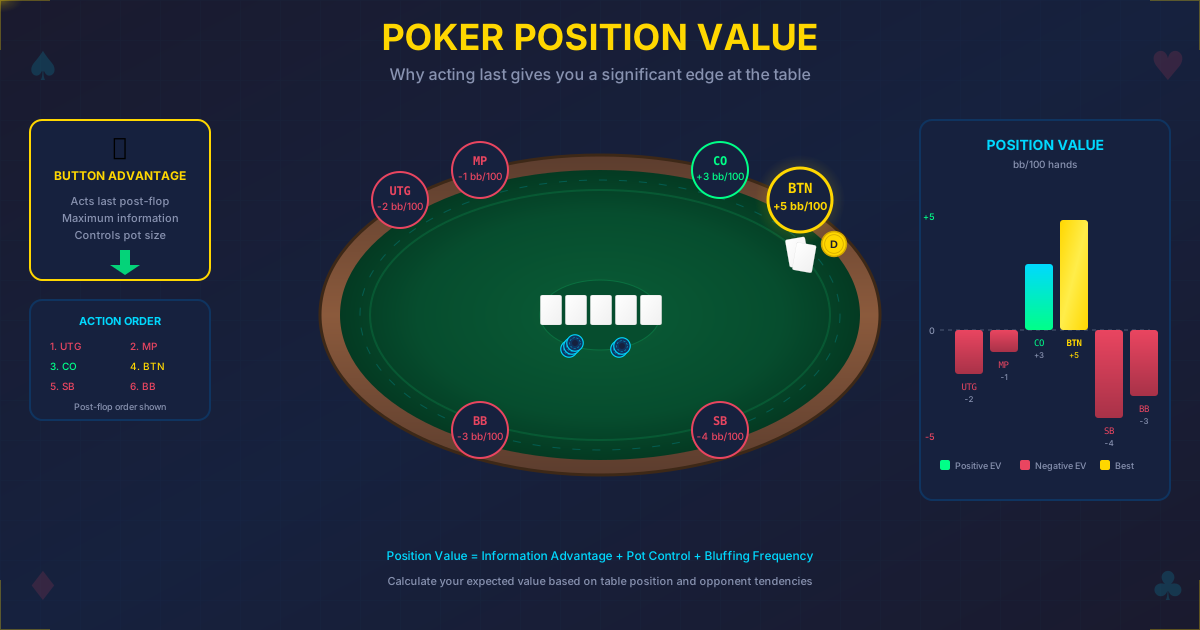
Ignoring Position Value: Position is even more valuable short-handed. Play tighter OOP and much looser IP.
-
Static 3-Bet Ranges: Adjust 3-bet ranges based on opponent tendencies. Tighter versus tight players, wider versus loose players.
-
C-Bet Every Flop: While c-bet frequency increases in 6-max, checking range on some boards protects your checking strategy.
Frequently Asked Questions
How much wider should I play in 6-max versus full-ring?
Approximately 5-10 percentage points wider at each position. UTG goes from ~12% to ~20%, CO from ~25% to ~35%, and BTN from ~40% to ~50%.
Should I ever limp in 6-max?
Generally no, except potentially from the SB with certain hands. Limping invites multi-way pots and surrenders initiative. Raise or fold is the standard approach.
What's a good VPIP/PFR for winning 6-max players?
VPIP around 22-28% and PFR around 19-25%. The gap should be small (3-5 points), indicating aggressive play. High VPIP with low PFR suggests too much calling.
How do I adjust against aggressive 3-bettors?
Either tighten your opening range or incorporate more 4-bet bluffs. Against very aggressive 3-bettors, 4-bet with AA/KK/AK plus bluffs like A5s/A4s.
Is position more important in 6-max or full-ring?
Equally important, but you're in good position more often in 6-max. With fewer players, you spend more time on the button and cutoff where you can play wider.
Should I adjust my strategy for 5-max or 4-max?
Yes, continue widening ranges as players decrease. At 4-max, BTN opens 55-60% and UTG plays like CO. At 3-max, treat it as heads-up with one extra player.
What's the biggest leak for full-ring players transitioning to 6-max?
Playing too tight. Full-ring players fold profitable hands and don't steal enough. Aggression and range expansion are essential adjustments.
How important are hand reading skills in 6-max?
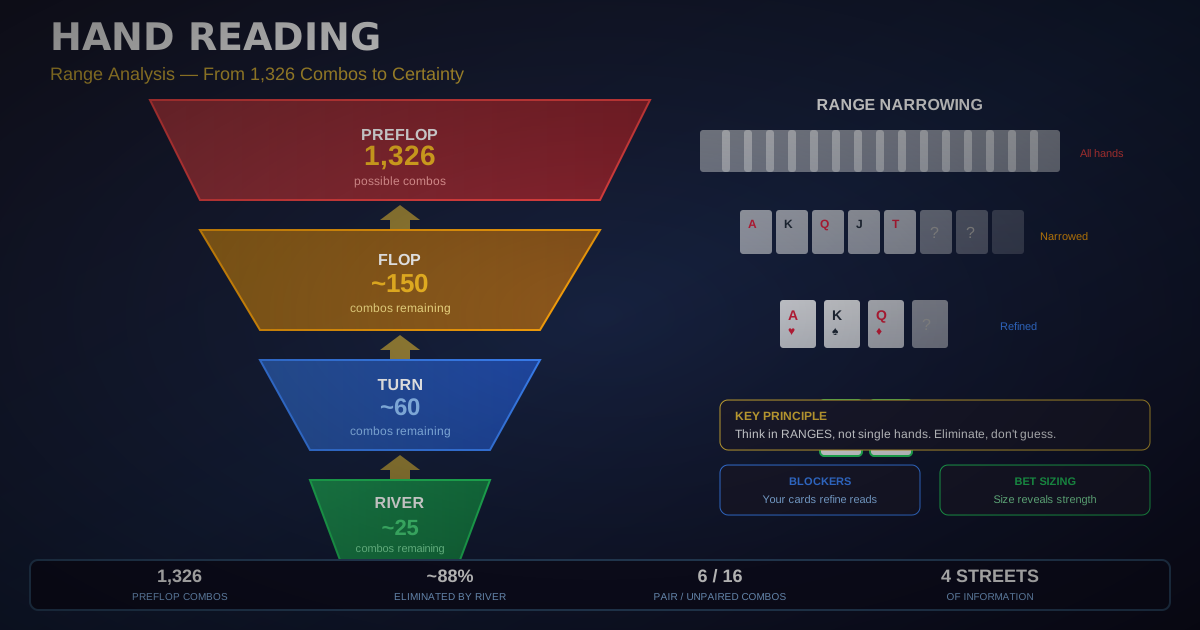
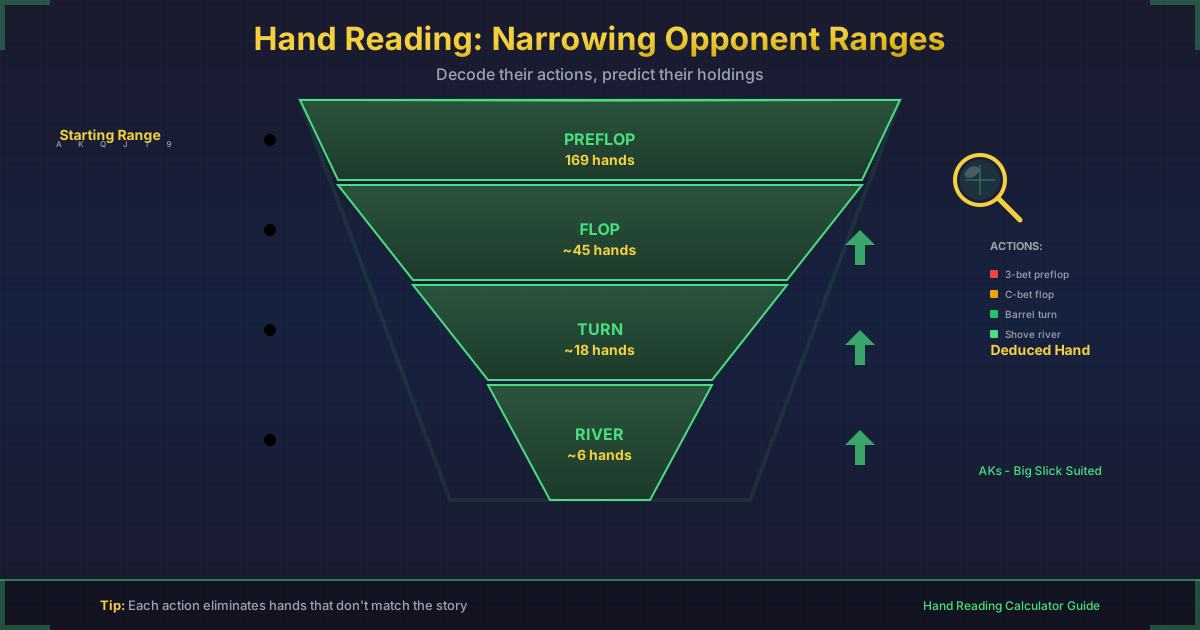
Extremely important. With wider ranges and more heads-up pots, accurately reading opponent ranges determines your edge. Study hand reading extensively.
Pro Tips
- Track your stats by position to identify leaks in your short-handed game
- Practice range versus range analysis to understand equity distribution
- Study 6-max solver outputs to refine positional strategies
- Focus on the blinds; most profits and losses occur in blind confrontations
- Develop a balanced 3-bet strategy with value hands and bluffs
Related Calculators
- Poker Equity Calculator - Calculate hand vs range equity
- Preflop Range Calculator - Build opening ranges
- 3-Bet Calculator - Optimize 3-betting strategy
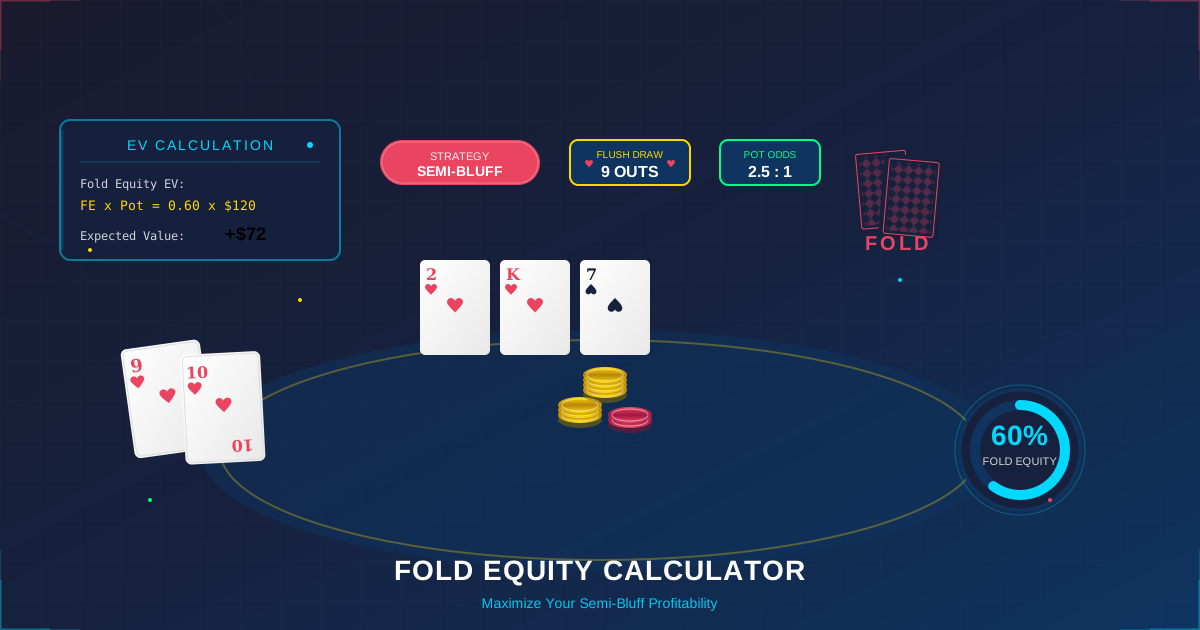
- Fold Equity Calculator - Calculate steal profitability
- Position Value Calculator - Quantify positional advantage
Conclusion
Short-handed poker rewards aggression, positional awareness, and wide range construction. Our short-handed strategy calculator provides the mathematical foundation for 6-max success, showing you exactly which hands to open, when to 3-bet, and how to adjust for table dynamics.
Master 6-max by widening your ranges, increasing your aggression, and exploiting positional advantages. The best short-handed players combine mathematical precision with adaptive play, adjusting their strategies as opponents reveal their tendencies.